• Skip to primary navigation
  • Skip to main content
  • Skip to primary sidebar
  • Home
  • About Us
    • Privacy Policy
    • Comment Policy
    • Disclosures & Disclaimers
  • Resources
    • Links, Essays & Articles
    • Fandomology!
    • CLAMP Directory
    • BlogRoll
  • Features & Columns
    • 3 Things Thursday
    • Adventures in the Key of Shoujo
    • Bit & Blips (game reviews)
    • BL BOOKRACK
    • Bookshelf Briefs
    • Bringing the Drama
    • Comic Conversion
    • Fanservice Friday
    • Going Digital
    • It Came From the Sinosphere
    • License This!
    • Magazine no Mori
    • My Week in Manga
    • OFF THE SHELF
    • Not By Manga Alone
    • PICK OF THE WEEK
    • Subtitles & Sensibility
    • Weekly Shonen Jump Recaps
  • Manga Moveable Feast
    • MMF Full Archive
    • Yun Kouga
    • CLAMP
    • Shojo Beat
    • Osamu Tezuka
    • Sailor Moon
    • Fruits Basket
    • Takehiko Inoue
    • Wild Adapter
    • One Piece
    • After School Nightmare
    • Karakuri Odette
    • Paradise Kiss
    • The Color Trilogy
    • To Terra…
    • Sexy Voice & Robo
  • Browse by Author
    • Sean Gaffney
    • Anna Neatrour
    • Michelle Smith
    • Katherine Dacey
    • MJ
    • Brigid Alverson
    • Travis Anderson
    • Phillip Anthony
    • Derek Bown
    • Jaci Dahlvang
    • Angela Eastman
    • Erica Friedman
    • Sara K.
    • Megan Purdy
    • Emily Snodgrass
    • Nancy Thistlethwaite
    • Eva Volin
    • David Welsh
  • MB Blogs
    • A Case Suitable For Treatment
    • Experiments in Manga
    • MangaBlog
    • The Manga Critic
    • Manga Report
    • Soliloquy in Blue
    • Manga Curmudgeon (archive)

Manga Bookshelf

Discussion, Resources, Roundtables, & Reviews

Michelle Smith

Ekiben Hitoritabi, Vol. 1

August 29, 2011 by Michelle Smith

By Jun Hayase | Published by Futabasha | Available in English at JManga

Even if JManga didn’t offer anything else to interest me, I think I would still love them forever for introducing me to Ekiben Hitoritabi. (The ekiben in the title refers to the boxed meals sold at train stations throughout Japan, while hitoritabi means “a trip undertaken alone.”)

Ekiben Hitoritabi is a slice-of-life story about an ordinary 35-year-old train enthusiast named Daisuke Nakahara whose wife gives him a ticket to Kyushu by special express sleeper train for their tenth anniversary. Once he gets to Kyushu, Daisuke begins making his way north by taking a variety of local and little-used rail lines. He’s accompanied throughout most of the first volume by a journalist named Nana, whom he educates on railroad history and exposes to the wide variety of tasty ekiben to be found at the stations they visit. When they’re not rhapsodizing over the contents of these ekiben, they’re admiring the scenery or the trains themselves.

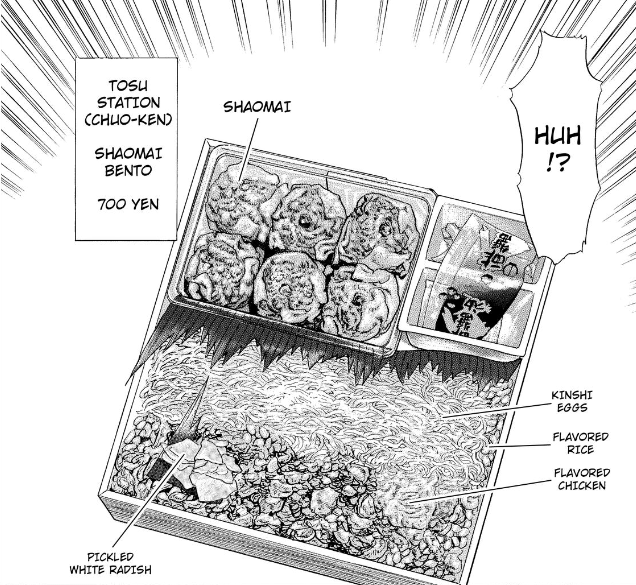
I don’t think this is a manga for everyone. The biggest source of tension, for example, is worrying whether Daisuke and Nana are going to miss their train when it’s taking longer than expected to procure ekiben. Daisuke likes everything he tastes—and, indeed, his love of ekiben has inspired him to open a bento shop of his own in Tokyo—and is in perpetually good spirits. There’s always a page turn before the contents of the bento are revealed, so that each always appears on the upper right-hand side, with each component identified. Someone is bound to make a remark about the taste permeating his/her mouth, too.

But it’s just so charming. (One learns a lot about Japanese geography, too.) Daisuke is content with his life and with taking his leisurely time, and he makes it look so awesome that I am frankly envious. Now I want to travel Japan by local rail and sample a bunch of ekiben! I must admit, though, that I’d be reluctant to try some of them. And the one that looked the best to me was the only one Daisuke had anything even slightly negative to say about. Here it is, the Shaomai Bento:

(Click to enlarge.)

Shaomai is the Kyushu term for shumai, and after noticing that many of the ekiben contain kinshi eggs, I had to look them up and I WANT SOME ON RICE RIGHT NOW. That, of course, is the danger with Ekiben Hitoritabi: reading it while hungry is sheer torture.

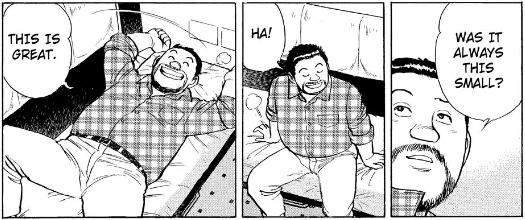
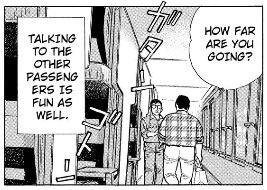
What’s not torture is the translation, which is better than I expected. I did get the sense that the work was spread between several people, however, because treatment of sound effects was inconsistent and some errors (like “bento’s” instead of “bentos”) cropped up only intermittently. I never had any issues with comprehension, though, and JManga welcomes feedback, so I did leave them a few notes about the minor problems I noticed. Splitting a word between two lines seemed to be an issue, for example:

On the whole, however, I am utterly delighted that I got to read Ekiben Hitoritabi. I doubt it would’ve sold too well in print format, so if digital is the only way I can get it, then I am just grateful to have the chance. Grateful and yet impatient, because I am going to need volume two pretty soon. And some kinshi eggs.

Ekiben Hitoritabi is up to volume thirteen in Japan and is still ongoing.

Filed Under: REVIEWS Tagged With: Futabasha, JManga

Pick of the Week: Lotsa Kodansha

August 29, 2011 by Sean Gaffney, David Welsh, Katherine Dacey, Michelle Smith and MJ 4 Comments

Take a look at the Manga Bookshelf bloggers’ picks from this week’s new releases!


SEAN: There’s any number of interesting titles due out this week (hurricane permitting), but the one that most catches my eye is Bloody Monday. First off, it’s from the brother/sister writing team responsible, under various pen names, for Drops of God, Getbackers, Kindaichi Case Files, Remote and Psycho Busters. Secondly, it’s an intense psychological techno-thriller with terrorists, computer viruses, and a lot of difficulty knowing who to trust. It might definitely appeal to the Death Note crowd who liked the manga’s tense back-and-forth plotting – or heck, even Die Hard fans, though there’s no obvious John McClane figure here. It’s also spawned 2 sequels, the last of which is still running in Japan.

DAVID: After the last few weeks of relative scarcity, it’s nice to see a diverse list, even if it isn’t a particularly bountiful one. For me, the highlight is the 13th volume of Hiroki Endo’s Eden: It’s an Endless World! This paranoid, post-apocalyptic drama almost always has something intriguing to offer, even when Endo strays too long in pet subplots that don’t seem entirely specific to the world he’s been building. I’m glad that Dark Horse continues to release this series, however slowly, though I always have to go back and refresh my memory of what happened during the last couple of volumes, because I’m an old man, and some of my brain cells go into retirement over an 18-month period. Of course, a new volume of The Kurosagi Corpse Delivery Service would make me even happier.

KATE: I normally loathe manga based on video games, but I was pleasantly surprised by Hiro Mashima’s Monster Hunter Orage: it’s funny, fast-paced, and smartly illustrated. Mashima does a fine job of adapting the source material, translating game play into an actual narrative and not just a series of monster-fighting set-pieces. Oh, and Mashima creates two awesome female leads, both of whom are smart, sensible, and handy with weapons. (Not surprisingly, they find the strong but dumb-as-toast hero a source of amusement and frustration.) No, it won’t change your life, or challenge your conceptions about what shonen manga is, but it’s a perfect read for a subway commute or a rainy afternoon.

MICHELLE: I agree with Kate’s assessment of Monster Hunger Orage 100%, but rather than simply say “ditto” I will cast my vote for Warning! Whispers of Love, a new one-volume title from Digital Manga Publishing. I admit that I am judging this one almost solely on its unconventional cover, but that strategy worked well for me with I Give to You, so why not employ it a second time? The blurb over at DMP’s site suggests that the hijinks might get a little too zany for my tastes—one of the boys seems to have an ear-swabbing fetish—but I’m willing to give it a shot, at least.

MJ: I’m going to stray from the usual Midtown list this week and pick out a title that became available at Boston’s Comicopia last week, Kodansha Comics’ re-release of Until the Full Moon from mangaka Sanami Matoh. Having completely missed the original English release from Broccoli Books, I admit I’m quite eager to give it a whirl, if for no other reason than my undying love affair with its brand of old-school shoujo artwork. I would be content with simply looking at this manga, but I’m hoping to find it enjoyable to read as well. Absolutely my must-read comic for the week.


Readers, what looks good to you this week?

Filed Under: PICK OF THE WEEK

Bookshelf Briefs 8/29/11

August 29, 2011 by Katherine Dacey, David Welsh, MJ and Michelle Smith 4 Comments

This week, Kate, David, MJ, & Michelle look at recent releases from Kodansha Comics, Viz Media, and Vertical, Inc.


Animal Land, Vol. 1 | By Makoto Raiku | Kodansha Comics – This odd little fable focuses on Monoko, a tanuki who discovers a human baby at the edge of a river. Monoko, herself an orphan, immediately identifies with Tarozo’s plight, and vows to raise him herself — a vow complicated by many factors, including an abundance of dangerous predators lurking just outside the tanukis’ village. Whether you’ll like Animal Land depends on how you feel about the tanukis, as they look like theme-park mascots with grotesquely oversized ears and china-doll faces. (I suppose we should be thankful that Makoto Raiku didn’t follow convention in super-sizing other parts of the tanukis’ anatomy, but still.) The tanukis’ behavior is just as outsized as their ears, steadily alternating between pratfalls and teary, anguished conversation, leaving little room for character development or new patterns of interaction. Younger readers won’t mind, but adults may find the tanukis’ odd appearance and frantic antics tiresome. – Katherine Dacey

Bokurano: Ours, Vol. 4 | By Mohiro Kitoh | Published by VIZ Media – Mangaka Mohiro Kitoh is beginning to tweak the established formula of Bokurano: Ours in some innovative ways. The presence of a pair of military observers (Seki and Tanaka) is making a big difference, for example, as they introduce more organization to what’s going on, resulting in some gatherings where the children interact with one another prior to someone being called for pilot duty. Too, it appears that two of the kids don’t actually have a binding contract to participate, which interjects an interesting complication to the story. (The kids assume this includes the lone fourth grader in their midst, but I somehow doubt she’ll be off the hook.) Lastly, the stakes are especially high for one of this volume’s pilots, who hopes to save a sick friend’s life with an organ donation, resulting in a cliffhanger that sent me to the SigIkki website for the resolution. Good stuff! – Michelle Smith

Oresama Teacher, Vol. 4 | By Izumi Tsubaki | Published by VIZ Media – I feel like I’m always unexpectedly learning something when I read Oresama Teacher. First, there was the informative sequence on how to foil attempts to tie you up, and now we learn techniques for dodging and deflecting blows as Mafuyu (in her mail guise, Natsuo) trains Hayasaka in the finer points of fighting so he’ll be prepared to square off against the members of a rival club who’re out to ambush the members of the Public Morals Club. Mafuyu is worried about how straightforward Hayasaka will fare in a fight, but comes to trust him and even realizes that, though gullible Hayasaka completely believes in and reveres two of her adopted personas, he also cares for her true self enough to put himself in jeopardy. With all the action and comedy, this isn’t really a romance manga, but I still think I may detect some feelings beginning to bloom… – Michelle Smith

Sayonara, Zetsubou-Sensei, Vol. 10 | By Koji Kumeta | Kodansha Comics – There’s a lot to like about Sayonara, Zetsubou-Sensei, from its crisp, confident artwork to its broad, equally confident characterization. But what’s really most impressive about this series is its ability to remain funny, volume after volume, while its format (and universe) remains unchanged. Nobody wearies of a gag manga faster than I do, but ten volumes in, I’m still laughing at Sayonara, Zetsubou-Sensei. Furthermore, volume ten is one of the series’ strongest so far. Jokes related to its then-new anime adaptation continue from the previous volume, enhancing (but not overwhelming) chapters revolving around subjects such as three-way standoffs, protecting “unnature,” entitlement, and “May sickness,” and even the volume’s most Japanese-specific jokes appear to translate effortlessly in the hands of new adapter Joshua Weeks. Still recommended. – MJ

Velveteen & Mandala | By Jiro Matsumoto | Vertical– If you read some of the cruder entries in Top Shelf’s AX anthology and found yourself saying, “I wish this was longer,” then Velveteen and Mandala is the book for you. Matsumoto pits dim, bickering schoolgirls against a horde of bemused zombies, throwing gobs of gross-out humor and precocious sexuality into the mix. Imagine a better-drawn Tokyo Zombie with female protagonists, and you’ll have the general idea. There’s certainly an audience for this sort of thing, but it’s equally certain that I’m not a member of that subset of comic fandom. To be honest, Velveteen and Mandala, with its indifferent plotting and feeble, familiar attempts at transgression tested my patience far more often than it rewarded it. Aside from some stylistic flourishes, there’s nothing here that you probably haven’t seen before, and it’s up to you whether you’re really eager to see it again. – David Welsh

Filed Under: Bookshelf Briefs Tagged With: animal land, bokurano: ours, oresama teacher, sayonara zetsubou-sensei, velveteen & mandala

43 Old Cemetery Road, Books 1-3 by Karen and M. Sarah Klise

August 28, 2011 by Michelle Smith

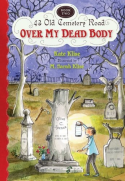
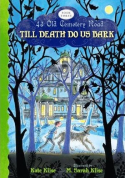
43 Old Cemetery Road is a quirky illustrated series for children that tells its ghostly story using letters, newspaper clippings, drawings, et cetera. There are three books in the series so far—Dying to Meet You (2009), Over My Dead Body (2009), and Till Death Do Us Bark (2011)—with a fourth (The Phantom of the Post Office) due in May 2012.

Dying to Meet You
What with the illustrations and the fact that the story is told through correspondence rendered in a large font, Dying to Meet You is a very quick read. And yet, for all that, it’s got some nuance!

Ignatius B. Grumply is a famous children’s author who hasn’t written anything for twenty years. Seeking to overcome his writer’s block, he rents a Victorian house in Ghastly, Illinois and is decidedly miffed to discover a boy and his cat living there. The boy, Seymour Hope, has been left behind by his parents, the owners of the home, who are on a lecture tour of Europe. They’re paranormal experts, and had moved into Spence Mansion hoping to confirm the existence of its rumored spectral resident. When Seymour could see her, but they couldn’t, they became convinced that a) ghosts don’t exist and b) their son is delusional.

But Olive C. Spence, the ghost of the woman who originally built the house, is indeed real! She sets out to drive Ignatius away at first, but after an incident with a chandelier causes more injury than she had intended, she begins to feel sorry for him and decides to help him with his book. It turns out that all of them have been rejected in one form or another: Seymour by his parents, Olive by the publishers who would never give her graphic epistolary mysteries a chance, and Ignatius by the woman he loved and upon whom he squandered his fortune.

Olive encourages “selfish and crabby” Ignatius to feel and care about others again, and thus achieves a warm and fuzzy ending where each of them gets something they want while drawing together into their own little family. It’s quite sweet, really. About the only complaint I could make is that some of the punny names are not funny—Paige Turner, Frank N. Beans, Shirley U. Jest—but I did have to snicker at Fay Tality and her dog, Mort, so they’re not all clunkers.

Over My Dead Body
Life at 43 Old Cemetery Road has been great since Ignatius, Olive, and Seymour began collaborating on a series of ghost stories. When a letter from Dick Tater, head of the International Movement for the Safety & Protection of Our Kids & Youth, arrives, however, everything is turned upside down. Tater objects to their living arrangements, especially the fact that custody of eleven-year-old Seymour was seemingly transferred via a rental lease, and his investigation results in Ignatius being committed to an asylum and Seymour being sent to an orphanage until his opportunistic parents deign to claim him.

The majority of the book is comprised of letters to and from Olive as everyone ponders how to escape confinement and satisfy the customers who have prepaid for the next three installments of their story. Dick Tater does various nefarious things, like canceling Halloween and instructing libraries to burn books that meet with his disapproval, and the book has a very pro-reading, pro-free thinking vibe as a result.

The book also features the second “just go with it” moment of the series. I assume this is going to be a recurring thing. In the first book, readers had to “just go with” the stipulation that sales of the trio’s stories (at $3 a pop, if I recall rightly) were sufficient to raise the $250,000 Seymour needed to buy Spence Mansion from his parents. Here, Ignatius and Olive (a ghost, mind you) are able to adopt Seymour simply by proving his parents don’t love him.

To this I say, “Whatever.” I am willing to go with it because it results in (nicely illustrated) passages like this, which I confess made me a bit verklempt. (Best attempted after you remind yourself of Seymour’s last name.)

And so, in a sense, we end where we began… in a 32½-room house built by a woman who, in her lifetime, never married or had children… and rented by a man who never married and always thought he disliked children… and purchased by a boy whose parents abandoned him. And so, even though one member of the family might still get grumpy now and then… and another might become cranky when she misplaces her glasses… neither would ever, could ever, abandon Hope.

Sniff.

Till Death Do Us Bark
One day, a shaggy dog follows Seymour home from the library. He has always wanted a dog, and so he asks his new parents, Ignatius and Olive, if he can keep him. They have reservations, and insist that he first attempt to find the dog’s owner, since he has a collar and everything. Seymour soon learns that the dog formerly belonged to Noah Breth, a wealthy man who recently died and whose children (Kitty and Kanine) are bickering over their presumed inheritance. But he doesn’t tell his parents this.

I must say that I did not like this book as well as the others. I like that Seymour admits that his goal was to be a perfect son, but that very quickly he was keeping secrets and running away. What I don’t like was how he was so passionately dog crazy when his best friend up ’til now has been his cat, Shadow. He didn’t show much concern that Shadow had seemingly run away after the dog showed up. And Ignatius, who is allergic to cats, suddenly had a flare-up and pledged to “get rid” of the cat once it was found. This is not the way to endear me to your characters, Klise sisters.

Of course, everything works out fine in the end and Shadow is nearby and well. The Breth siblings, who have been following a series of limericks devised by their late father on the hunt for his fortune, are shamed into suddenly becoming nicer people. A rare coin that everyone’s been looking for turns out to be exactly where it was telegraphed to be at the beginning of the story.

As a result, more than the other books, this one feels like something only children would enjoy. I hope the upcoming fourth book represents a return to form.

Filed Under: Books, Children's Fiction, Supernatural Tagged With: Karen and M. Sarah Klise

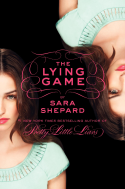
The Lying Game by Sara Shepard

August 25, 2011 by Michelle Smith

From the front flap:
The worst part of being dead is that there’s nothing left to live for. No more kisses. No more secrets. No more gossip. It’s enough to kill a girl all over again. But I’m about to get something no one else does—an encore performance, thanks to Emma, the long-lost twin sister I never even got to meet.

Now Emma’s desperate to know what happened to me. And the only way to figure it out is to be—to slip into my old life and piece it all together. But can she laugh at inside jokes with my best friends? Convince my boyfriend she’s the girl he fell in love with? Pretend to be a happy, carefree daughter when she hugs my parents good night? And can she keep up the charade, even after she realizes my murderer is watching her every move?

Review:
The Lying Game is the second collaborative effort between Sara Shepard and Alloy Entertainment (the team that brought you Pretty Little Liars) to be made into a TV series for ABC Family. I thought that this time I’d try reading the book before starting the show, so here we are.

Emma Paxton was raised by her unstable mother Becky until the age of five, when Becky skipped town while Emma was at a friend’s house. After Becky could not be located, Emma entered the foster care system, where she developed the ability to hold her tongue and become “whatever type of girl the situation needed [her] to be.” Now two weeks shy of her eighteenth birthday, Emma is hoping to make it through her senior year of high school and even dreams of attending USC and becoming an investigative journalist. Her skeevy foster brother has other plans, however, and Emma is soon accused of theft and told she must go when she turns eighteen.

Skeevy also shows Emma a video of a girl who looks just like her engaging in what looks like asphyxiation-for-kicks. From the video, Emma gleans that the girl is called Sutton and lives in Arizona. Googling leads to a Facebook page, and Emma’s message yields an invite from Sutton, who confirms that she was adopted. Without hesitation, Emma packs her bags and heads to Tucson.

Sutton fails to show for their appointed rendezvous, however, and when Sutton’s friends show up to whisk her off to a party, Emma finds herself using her adaptability skills to assume her sister’s role. Conveniently, Emma’s bag containing her cash and ID are stolen at this point. The next morning, she gets a note informing her that Sutton’s dead and that she’d better play along or she’ll be next. Emma tries various times to tell people what’s going on—Sutton’s parents, the police—but because Sutton was such a notorious prankster (more in a malicious way than a fun way) nobody believes her. Soon, Emma grows to suspect Sutton’s circle of friends may have offed their leader, and by the end of the book she’s learned the truth about the video but isn’t any farther along in discovering who killed her sister.

The Lying Game is definitely a guilty pleasure, and I already have the second volume in the series (Never Have I Ever) checked out from the library. Still, there are a couple of things about it that bugged me. The major issue for me is the choice to have Sutton stick around as an unseen-by-Emma ghostly presence. Conveniently, she has access to Emma’s thoughts, and so takes narrative duties, but in a really strange way. She’ll be narrating along omnisciently, referring to herself as “Sutton” or to things that belonged to her as “Sutton’s,” just like Emma might, and then all of a sudden she’ll switch into first person narration, using “me” and “mine.” It’s pretty distracting.

It’s also highly convenient that Sutton can’t remember many details of her past or see anything if Emma can’t see anything. She is, therefore, little use if Emma is in peril, though her timely recollections of snatches of memory do serve to heighten the dramatic tension when readers know something that Emma doesn’t. Mostly, however, I have the inkling that Sutton is there to react remorsefully when Emma discovers some of the horrible things she has done. Is Ghost!Sutton just a ploy to try to get us to care about her? In life, Sutton was a thoroughly nasty and entitled person, which makes this the second Shepard/Alloy series that focuses on the death of a girl so odious one wonders why she had any friends at all.

And that’s the second problem I had with The Lying Game: it’s too much like Pretty Little Liars. Granted, maybe that’s what fans of PLL want, but as I watched the action build towards a social event (a party, naturally) and watched Emma jump to conclusions I had the distinct feeling that I had been through all this before. There’s somewhat less focus on brand name fashions, at least.

Still, as mentioned, I will keep reading. And I’ll check out the show, too. Shepard is good at injecting twists into the story to hook a reader, and I like that Emma is beginning to have feelings for Ethan (a broody, poetry-reading boy) and seems poised to have an ally in her efforts going forward. Then they can jump to conclusions together, just like the girls in PLL!

Filed Under: Books, Supernatural, Suspense, YA Tagged With: Sara Shepard

Pick of the Week: JManga

August 22, 2011 by Michelle Smith, David Welsh, MJ, Katherine Dacey and Sean Gaffney 13 Comments

With only one volume of new manga shipping to Midtown Comics, this week’s pick looked bleak. Fortunately, David came to the rescue, by suggesting a new way for us to spend our money. See below!


MICHELLE: The big news in the manga sphere this week was JManga‘s launch on 8/17. I have already spent more money than I’d intended snapping up first volumes of some intriguing-looking series. All look potentially great, but I am perhaps most interested to read Ekiben Hitoritabi, a seinen series from Futabasha in which a train-loving man receives a trip around Japan from his wife on their tenth wedding anniversary. He proceeds to travel around, sampling the bentos available at the various stations. Like Sean mentioned in his recent review of Urameshiya, what I was really looking for out of JManga was a title I’d never heard of before that probably wouldn’t have sold well in a print edition. Ekiben Hitoritabi seems to fit the bill perfectly, and I’m really looking forward to reading it.

SEAN: As has been noted, I’ve already reviewed a manga from Futabasha, Urameshiya. I therefore wanted to highlight something new by another company. Shonen Gahosha has only free previews (in Japanese) of its titles best known here in America – Excel Saga, Hellsing, and Trigun). But it does have Volume 1 in English of a title that has not been released here – Soredemo Machi wa Mawatteiru, which translates approximately to ‘And Yet The Town Turns’ and is generally referred to as ‘Sore-Machi’. It’s about a maid cafe in a small town, and our plucky hero who tries to deal with events as best she can despite being not a particularly good maid. The manga also got an anime in Japan in late 2010, which might be why it’s available here, and is still running in Young King OURS, Shonen Gahosha’s best known magazine. In amongst all the worthy josei and seinen manga that my colleagues will no doubt be pushing, it’s nice to see a goofy, weird, slice-of-life maid comedy popping up as well to cater to slice-of-life fans and maid otaku (though I suspect this might be a bit too strange for the typical otaku).

MJ: With so much to choose from, I hardly know where to start! But I do have my eye on Hyakkiyakoushou, one of the site’s josei series from mangaka Ichiko Ima, previously licensed (but never published) by Aurora Publishing. I’m always a sucker for supernatural manga, and this one has lured me in with its free preview. There’s no new ground here, really, in terms of ghost stories, but it looks genuinely creepy and a little melancholy, both of which tend to appeal to me. It’s award-winning, according to the internet, with expressive artwork and some nice period details. The names of the first three chapters (“The Voice Calling from the Darkness”, “The Sea-Hare” and “Cherry Tree Sparrow”) appeal to my sensibilities as well. Looks like my kind of manga!

DAVID: One of my personal fascinations is fixated on comics that explore the way people work and the way that activity factors into their lives. I love just about any comic that’s set in a workplace in a meaningful way, and I think there are far too few of them. So the first offering to really grab my attention would have to be Anesthesiologist Hana by Nakao Hakua and Kabbei Matsumoto. The title is about as literal as you can expect from manga, offering a realistic depiction of the challenges of a young woman working as an anesthesiologist, an often-under-appreciated medical profession. The manga does not seem to offer a particularly realistic depiction of boobs, but you’re cutting out a lot of seinen if you use that as a limiting factor. I also find myself writing tag lines for the series: “She can put you to sleep, but her adventures will keep your pulse racing!”


Readers, have you checked out JManga? What looks good to you?

Filed Under: PICK OF THE WEEK Tagged With: JManga

Bookshelf Briefs 8/22/11

August 22, 2011 by Michelle Smith and Sean Gaffney 1 Comment

This week, Michelle and Sean take a look at several recent releases from Viz Media and Digital Manga Publishing.


Blue Exorcist Vol. 3 | By Kazue Kato | Published by Viz Media-The author here continues to flesh out both the magic world and the hero, as Rin gets a lot of chances to shine here. He’s shown at his best in the first chapter, where a familiar of the late Father Fujimoto has gone insane on learning of his death, and Rin is the only one to realize what Father Fujimoto GENUINELY wanted to have happen if this ever came to pass. (Also, he’s very cunning here, a necessary trait in a Jump hero, even Jump Square.) We’re also reminded, however, that he remains the son of Satan, and has powers that he can’t control – that may not even BE controllable. Luckily, we get a new badass introduced in the form of Shura, who also seems likely to be our fanservice character given that Shiemi is too shy to really fit that bill. Shiemi and Rin do get a ton of Ship Tease, however, especially towards the end where he’s forced to use his powers to save her life. Still quite solid shonen, if not groundbreaking.– Sean Gaffney

Itazura Na Kiss, Vol. 6 | By Kaoru Tada | Published by Digital Manga Publishing – Ordinarily, Itazura Na Kiss leaves me smiling, but this volume, despite the snifftastic first half during which Naoki finally admits his feelings for Kotoko and a whirlwind wedding ensues, is pretty aggravating. Once the newlyweds return from their honeymoon, Naoki announces that he’s going to delay filing the paperwork to make their marriage official because there are “some things [he] still need[s] to think over.” Poor Kotoko is left to flounder for two weeks until he finally deigns to offer an explanation, at which point he admits that he knew she was going to be confused and hurt by his behavior. Ass. Alas, it’s hard to sympathize with Kotoko much, because shortly thereafter she embarks on an excruciating stint as a student teacher, something for which she is supremely ill-suited. It’s very frustrating. I do applaud Tada-sensei for not ending the series when the two leads get married, however. – Michelle Smith

Kamisama Kiss, Vol. 4 | By Julietta Suzuki | Published by Viz Media-This volume expands on the previous one in focusing on Nanami’s growing love for Tomoe. Unfortunately, Tomoe is having none of it, and his reasoning seems a bit too cool to be realistic. This culminates in a scary scene on top of a skyscraper, where Tomoe tries to scare Nanami into dropping her attempts to get his affection, only to have it horribly backfire, almost leading to her death. Now things are even more awkward between them, and things aren’t helped by the arrival of an old foe of Tomoe’s, Ryu-Oh, who captures him and demands the return of his eye, lost hundreds of years ago. While the search for this shows off a particularly dense side of Nanami (gosh, why does she have the eye inside her after that ill girl who’s NOT HER DESCENDANT AT ALL swallowed it?), but also shows her true strength, as she realizes that she’s let her love for Tomoe change the way she acts. “Since when did I become so passive?” Fun romantic stuff, though clearly the romance will be slow going.– Sean Gaffney

Nura: Rise of the Yokai Clan Vol. 4 | By Hiroshi Shiibashi | Published by Viz Media-The fight at the end of last volume is wrapped up pretty quickly, but that doesn’t mean things are over for our mafia boss and his gang… erm, sorry, clan leader and his yokai. A new group is coming in to challenge his territory and Rikuo (and Nura) is going to have to think fast in order to stay alive. Actually, what impressed me most about this volume is that Rikuo does think fast – he’s quick to action, plans ahead, and is not afraid to ask advice of his subordinates. He impresses me more and more as a good leader. Oh, and he also brings out the giant can of whupass as Nura. As for the rest of the volume, the romantic rivalry between Yuki-Onna and Kana is amusing, but this is a Jump title based on battles, so I don’t expect much two-sided romance at all. Also, the minor villain based on the ‘mad dog’ persona is genuinely unsettling.– Sean Gaffney

Tegami Bachi: Letter Bee, Vol. 6 | By Hiroyuki Asada | Published by Viz Media – It’s been five years since Lag Seeing first met Gauche Seude, the letter carrier who transported him when he was but a lowly parcel. Gauche inspired Lag to become a “letter bee” himself, but once Lag achieves that goal he learns that Gauche has left government service and disappeared. After an unexpected and brief reunion in the fifth volume, Lag spends volume six making mail deliveries while trying to compose a letter that will reach amnesiac Gauche’s heart. This is a little disappointing, even though the deliveries are somewhat niftier than usual, since Gauche is easily the most interesting character in the series and I want to learn more about the anti-government group for which he’s working. Even when on the backburner, however, this development gives the story some direction and something to focus on besides whether Niche, Lag’s childlike companion, is wearing underwear. I approve. – Michelle Smith

Filed Under: Bookshelf Briefs

Roundtable: Flower of Life

August 21, 2011 by MJ, David Welsh, Michelle Smith, Sean Gaffney and Katherine Dacey 7 Comments

MJ: There’s a lot to love about Fumi Yoshinaga, from her expressive artwork to her rambling dialogue, and she’s one of those writers I consistently love, even for her weakest work. When I find myself searching for what really defines her, though, I always come back to Flower of Life. I’ve talked about this series on my own before, but there’s something about a story so warm and so driven by friendship that begs to be discussed with friends. To that end, I’ve begged asked my fellow bloggers to join me in this roundtable!

Every time I pick up this series, I’m struck again by just how odd it is. On one hand, it’s this meandering, slice-of-life manga filled with idiosyncratic characters, tangential dialogue, and no obvious central plotline. On the other, it’s eerily truthful and genuinely dramatic, often when I least expect it. For those of you re-reading the series or picking it up for the first time, how would you classify something like this? Or is there even any point to trying?

DAVID: I would categorize it as un-distilled Yoshinaga, to be honest, which is a category or genre all its own. Everything she does is really steeped in her own sensibility, and I think Flower of Life is possibly the best translated example of that. And it’s a little strange, but with this re-reading, I really noticed how sneakily structured the story is, at least in terms of its emotional arcs. They don’t really emerge as being as well-formed as they are when you read the series as it’s being published, but if you sit down with the whole series, you really get a lot of unexpected and resonant payoffs.

SEAN: I’ve only read one volume of the series so far, but I wasn’t particularly surprised by its idiosyncrasies, as I had researched it a bit and discovered it ran in Shinshokan’s ‘5th genre’ magazine Wings, which tends to be categorized as shoujo, has more of a josei audience, is predominately fantasy-oriented, and has a large contingent of what could be called ‘not quite BL’, including both Flower of Life and Antique Bakery. Actually, I was rather surprised to find that there wasn’t really any true BL in the volume of FOL I’d read at all, mostly as both that and AB are described as ‘gateway volumes’ for those who want a taste of the BL genre without any of that, y’know, actual GAY stuff. :) It’s just a slice-of-life school story starring a bunch of weirdos. I really enjoyed the volume I read, and will definitely seek out the others. If only for the bishie otaku.

KATE: One of the things that strikes me most about Flower of Life is how accurately it captures teenage experience. Yoshinaga clearly remembers her own adolescence, as she conveys the intensity and sincerity of her characters’ feelings with tenderness. Yet Flower of Life doesn’t behave like a typical young adult story, with characters striving toward a goal; Yoshinaga fiercely resists imposing an obvious dramatic arc on the material, even though her principal characters grow and change over time. I’d classify it as “slice of life,” but I hate that term because reviewers apply it indiscriminately to series as different as Azumanga Daioh and Saturn Apartments. Maybe “true to life”?

MICHELLE: “True to life” works for me! I’m not exactly sure how she does it, but there’s something so organic about the way that we’re introduced to the characters—a really sublime “show don’t tell” going on about their personalities—that, in time, one feels immersed in the class. Example: I am so weary of cultural festivals in manga I could scream, but the one in the second volume of Flower of Life is the best example of same I have EVER SEEN. And that’s because we’ve gotten to know the characters well enough to feel their excitement as they plan. Also, I think I could write 10,000 words about Majima (the aforementioned bishie otaku), but I assume we’re going to get to him later.

MJ: I’m happy to go with “true to life” as well, because that really is what it feels like. Also, Kate, I think your choice of words here is particularly apt. “Yoshinaga fiercely resists imposing an obvious dramatic arc on the material, even though her principal characters grow and change over time.” Yet, as David mentions, there really are some wonderful emotional arcs throughout the story. They just feel so natural, there’s never a sense that this is a result of “plot.” The characters simply live, and somehow it’s kind of a revelation when we realize what that really means.

Sean, it’s interesting that you mention BL here, because I wasn’t actually aware that Flower of Life was considered a “gateway” book, though I certainly spent much of the first volume under the same delusion as Harutaro.

And Michelle, I’m thrilled that you brought up the cultural festival, because I feel exactly the same way! And really, I think that’s where my 10,000 words on Majima would really get going.

DAVID: Can I take it back to how the characters really seem to breathe? Because I agree, and I do so even with the kind of heightened, commentary-rich dialogue. These people don’t just feel things and do things. They think and talk a whole lot, and while it’s not especially naturalistic dialogue, it’s very character-driven, and it actually makes the story barrel along rather than dragging it down.

SEAN: I had a lot of preconceptions before starting Book 1, and one of which was that it would be ‘sorta BL’, i.e. that it would feature gay characters but not gay relationships or something similar. You know, Wings-ish. The way that Tokyo Babylon is. This is probably why I was so amused at the revelation of the teacher’s gender, as having ‘him’ being a flaming gay man didn’t surprise me when I started the book. Which, of course, is exactly what Yoshinaga was going for, in order to get the payoff two chapters later. (There’s some great gags here – I loved the girl’s story about how to ‘properly’ sit on a toilet with a skirt – complete with visualization. Hilarious.)

MICHELLE: I had a similar experience, not because of Wings but just because of what I’ve read of Yoshinaga so far. Of course she’d have a gay couple in her story! I was actually kind of impressed she managed to fool me so thoroughly—as a hardened manga veteran I thought I was pretty savvy in regards to such tricks! It certainly puts all of Saito-sensei’s conversations with the students in a new light—often still inappropriate, but less potentially actionable than they first appeared.

I love, too, how Yoshinaga balances relatively lighthearted day-to-day stories for the students with some pretty serious dramatic issues for the adults, like Saito and Koyanagi’s relationship and the plight of Harutaro’s homebound sister, Sakura.

KATE: I’m really glad you mentioned the adults, Michelle, because Yoshinaga doesn’t reduce them to cartoons — evil principals, hot teachers, overbearing parents — but portrays them as real people struggling with real problems: maintaining authority in the classroom, establishing appropriate boundaries with colleagues and students. That’s one of the reasons I love this series so much: the conversations in the teacher’s lounge have the same ring of truth as the discussions at the manga club’s meetings.

MICHELLE: The presence of so many parents makes me very happy, actually. I especially love how helpful some are with the Christmas party the kids plan, and how the kids then come home and thank them, or tell them about how things went. Very few actual teens are super-powered orphans, after all.

DAVID: It’s reflective of one of the things I like most about Yoshinaga, no matter what category she’s visiting. Her characters tend to have rounded lives. They have friends or lovers, sure, but there are other people who populate their worlds. She’s open to the kinds of digressions that make stories richer for me.

MJ: Speaking of the Christmas party, I think it stands as a great example of why the story’s universe feels so real. The kids are initially over-optimistic in their planning, only to realize as the party actually approaches that they’re all under-prepared on some level. At this point, I’d expect a typical shoujo manga to go in one of two directions. Either the kids would pull together at the last minute and make their spectacular party dreams come true, or everything would be a spectacular failure, but somehow they’d have fun anyway, learning a lesson about what’s really important. Yoshinaga goes in neither of these directions. Instead, some things work out, some don’t, and the stuff that gets pulled together is for the most part not quite what they dreamed of, but adequate for reality. The real story is in the fun they have with each other and not any of the organizational close calls, just as in real life.

So, getting around to some of Michelle’s 10,000 words on Majima, one of the things Yoshinaga seems to specialize in is taking common manga tropes I generally find distasteful, and making them really interesting instead. I’m not a fan, for instance, of student-teacher romances, especially when the student is underage, but I have to admit that the obviously problematic relationship that develops here between emotionally-stunted Majima and his lonely teacher Saito is completely fascinating to me, in all its messed-up glory. Is it just me?

MICHELLE: It isn’t just you! I loved the scene where Saito finally breaks it off with Koyanagi-sensei, wanting him to remain the good father she always loved him for being, and runs into dispassionate Majima’s arms. But then I felt kind of bad for loving it so much. I shouldn’t be rooting for the teacher to choose her sixteen-year-old student!

MICHELLE: The message I got from this is “you don’t have to try to impress your friends, just be yourself.” That same idea comes through when Mikuni is allowed to see the true messiness of Harutaro’s room and they bond as a result. Really, Yoshinaga doles out quite a few lessons about friendship, like, “you don’t always have to like the same things in order to be friends” (Takeda, Isonishi, and Jinnai) or “you don’t always have to agree about everything” (Mikuni and Harutaro)” or “there are one-sided feelings even in friendships” (Yamane and Sakai). I feel like I should hand this out to teenagers as some kind of handbook.

MJ: Michelle, I’m totally with you. Also, I will point out that Yamane/Sakai is one of three questionably-canon “‘ships” I once begged for from fandom. I love their little book-borrowing story just that much.

DAVID: I don’t think I’d go quite so far as to say I liked the relationship, but I certainly understood it. It was a very credible part of the spectrum of imperfect connections that Yoshinaga portrays throughout the series. And I absolutely admire Yoshinaga’s ability to make me invested in a character like Majima without having to like him even a little bit. That’s a tough bit of acrobatics.

MJ: That’s exactly the thing, isn’t it? Yoshinaga doesn’t necessarily make us like everyone in Flower of Life or everything that happens in the story, but she makes it all so compelling, we dismiss the desire to reject it. As little as I like Majima, his character’s journey is one of the most interesting to me, because Yoshinaga never takes the easy way out with him.

I feel a little guilty, leaving Sean behind here when he’s just finished volume one. But Sean, I’m actually really interested in your comments earlier, because it sounds like Majima is actually the character you’re most interested in at this point.

SEAN: Yes, sorry for being so silent. I did only read Vol. 1, and am planning to review it tomorrow, so want to avoid repeating myself too much. :) And yes, Majima fascinated me, if only as there’s no glossing over his otaku-ness. He actually reminded me a bit of Naoto in Itazura Na Kiss, who is early, retro shoujo jerk, so doesn’t have the ‘soft edges’ or occasional pet the dog moments that our modern shoujo jerks get in order to make them appealing. Majima’s otaku creepiness is unapologetic and a little scary, especially to the Japanese who have a definite view of this sort of obsession. The joke, of course, is that he’s an older-looking handsome young man, who would no doubt have friends and potential lovers falling all over him were it not for… well, everything he says and does. Even when people THINK they understand him… witness the chapter where they think he’s offended by their teasing him and try to apologize… but he’s still upset as they go about it the wrong way. I’ll definitely be looking forward to Vols. 2-4, as I’m hoping that, while I’m sure he will gain some depth and kindness in there, he retains his basic creepy unlikeability that makes him so interesting.

MICHELLE: I find him fascinating for much the same reason: he doesn’t seem to have any redeeming qualities. Readers want to like him, but time and again, he gives us reasons not to. I think it’s a pretty stunning portrait of the fixated otaku, personally, with the arrogance and obsession coupled with a preference for 2-D girls (of a very specific forehead-showing, glasses-wearing type) and a lot of hostility towards real women (witness the top three things he has wanted to say to one).

I actually found myself wondering what Tohru Honda would make of him, someone whom her warmth could not penetrate and help to heal. I think she’d find him pretty terrifying.

KATE: I appreciate the fact that Yoshinaga doesn’t try to sand away Majima’s edges; I have a deep loathing for authors who give their curmudgeons and eccentrics falsely redeeming qualities. (It’s one of the reasons I can’t sit through an episode of House!)

Switching gears a bit, one of things I find most fascinating about Flower of Life is that it’s the least mean-spirited satire I’ve ever read. Yoshinaga is clearly having a ball poking fun at series like Genshinken — not to mention every shojo manga that involved a school play — yet at the same time, she isn’t mocking her characters for their passion; their let’s-make-a-manga enthusiasm is contagious. That kind of balance is very hard to pull off, since the story can easily tilt towards snark or flat-out hokum. The results remind me a little of Shaun of the Dead: it works equally well as a zombie-movie parody and a straight-ahead horror flick with comic elements.

DAVID: I think the Shaun of the Dead comparison is really apt, because the characters aren’t only reacting to each other as characters, they’re responding to the ways they fill certain genre tropes. Funny and great as the long set pieces are, like the school festival and Christmas party and study session, there are lots of little moments. A particular favorite is when Sumiko, the female otaku, tucks her hair behind her ear and reveals herself to be unexpectedly beautiful. That’s perfectly executed, especially for the reaction of the onlookers. They all recognize the moment, and it resonates with them, even beyond the actual surprise of the reveal. And I also love how Harutaro and Sakura totally geek out over how adorable Shota is. That’s like a Twitter conversation about favorite characters between enthusiastic fans. But really, that’ one of the great things about this series: that all of the characters are essentially fans of one another, finding those recognizable pop-culture resonances in the everyday people around each other, and celebrating them in these odd, quirky way.

MJ: That’s such a great way of describing it, David! And I think you and Kate have put your finger on one of the reasons the series’ warm feel really works for me. There’s no saccharine quality in it at all. The characters genuinely like each other (mostly) but so much of what holds them together as a group is a common point of reference. It’s odd that this should feel extraordinary, but when I’m reading Flower of Life I become aware of just how rare it is for a writer to really capture that sense of shared pop culture between characters.

MICHELLE: Another thing that prevents that saccharine feeling is that we’re not told over and over that they like each other. Yoshinaga simply shows it, over and over, in marvelous ways. Even the episode that comes closest to bullying—when several classmates gather around Shota and proclaim him a “good fatty”—seems to be born more of ignorance than genuine malice. And, of course, characters argue or disappoint one another. They’re not perfect sunshiney friends 100% of the time, but that doesn’t prevent them from being friends and may, in fact, bring them closer as they recognize their own faults in others.

MJ: As our time runs out, I guess we’d better wind this down. But honestly, I could talk about this manga forever. It’s a favorite that surprises me with its warmth and freshness every time I reread.

Thanks, all of you, for joining me here during such a busy week!

Filed Under: FEATURES Tagged With: flower of life, fumi yoshinaga, roundtables

Perfect by Sara Shepard

August 20, 2011 by Michelle Smith

From the front flap:
In a town where gossip thrives like the ivy that clings to its mansions, where mysteries lie behind manicured hedges and skeletons hide in every walk-in closet, four perfect-looking girls aren’t nearly as perfect as they seem.

Spencer, Aria, Emily, Hanna, and the best friend Alison were once the girls at Rosewood Day School. They were the girls everyone loved but secretly hated—especially Alison. So when Alison mysteriously vanished, the girls’ grief was tinged with… relief. And when Alison’s body was later discovered in her own backyard, the girls were forced to unearth some ugly memories of their old friend, too. Could there have been more to Alison’s death than anyone realizes?

Now someone named A, someone who seems to know everything, is pointing the finger at one of them for Alison’s murder. As their secrets get darker and their scandals turn deadly, A is poised to ruin their perfect little lives forever.

Review:
Shit just gets so much worse in this installment of the Pretty Little Liars series that all I can do is shake my head. And still, I continue to read and eagerly await the answers promised in the fourth volume (originally intended to be the end of the series), so make of that what you will.

Anyway, some fairly awful things happen to the titular liars in this book, set three weeks after Flawless, the majority of them courtesy of A. Aria is ousted from her home because her mom can’t stand to look at her since Aria has known about her father’s infidelity for three years without ever mentioning it. Emily is outed at a school swim meet, and her parents threaten to send her to live with puritanical relations in Iowa unless she attends de-gaying therapy. Hanna still hasn’t heard from her father and now her best friend Mona is pissed at her too, culminating in a cringeworthy moment at Mona’s big birthday party followed by Hanna getting hit by a car.

You might think this couldn’t be topped for dramatic potential, but Spencer (who spends most of the book angsting about an essay contest) discovers a personal history of blackouts and gradually begins to recall what happened the night Ali disappeared. Meanwhile, A gives out lots of clues and hints about the murder, though their veracity is suspect.

I think I may be running out of things to say about this series, so perhaps it will suffice to say “the whirlwind of cray-cray continues.” It’s hard to feel much sympathy for Aria’s plight—not so much the getting kicked out of her house thing, but what follows—or Spencer’s, because both are very much “you’ve made your bed, now you’ve got to lie in it” types of situations. Emily seems to have fewer chapters devoted to her this time, which makes me wonder whether Shepard realized the endless on-again, off-again relationship with Maya was getting boring.

As in the TV show, Hanna continues to be my favorite. While it’s absolutely awful reading about her utter humiliation at Mona’s party, it does seem to cause her to question what her quest for perfection has really been about. Maybe she’ll learn to embrace her dorky side and will stick with Lucas, the sweet-but-uncool boy who thinks she’s wonderful just the way she is. But then again, with this series, hoping for a happy ending for anyone is probably futile.

Filed Under: Books, Suspense, YA Tagged With: Sara Shepard

Me, Me, Me!

August 19, 2011 by Michelle Smith

Just a quick post this morning with a couple of links about me, me, me!

First, Justin Stroman interviewed me for his site, Organization Anti-Social Geniuses.

Second, the list of my votes for Hooded Utilitarian’s Best Comics Poll has now been published. I am left with a quandary, though, because I have since discovered that Fumi Yoshinaga’s Flower of Life is completely worthy to be among my top ten, but what should come off? Maybe I can emulate Spinal Tap and have a list that goes to eleven…

Filed Under: NEWS, UNSHELVED

Deception on His Mind by Elizabeth George

August 18, 2011 by Michelle Smith

From the front flap:
Balford-le-Nez is a dying seatown on the coast of Essex. But when a member of the town’s small but growing Asian* community is found dead on its beach, his neck broken, sleepy Balford-le-Nez ignites. Working solo, without her long-time partner Detective Inspector Thomas Lynley, Sergeant Barbara Havers must probe not only the mind of a murderer and a case very close to her own heart, but the terrible price people pay for deceiving others… and themselves.

* Evidently, Brits use the term “Asian” to apply to people whom Americans would call “Middle Eastern.”

Review:
As a fan of Detective Sergeant Barbara Havers, I was chuffed to discover that Deception on His Mind features Barbara in the role of main protagonist, as her superior officer, Detective Inspector Thomas Lynley, is away on his honeymoon. While I like Barbara even more after this outing, especially after she gives voice to one long-overdue “sod you” in the book’s final pages, I unexpectedly found myself missing Lynley.

This isn’t Barbara’s fault at all, however. Instead, I lay the blame at Detective Inspector Emily Barlow, an acquaintance of Barbara’s who is the lead investigator of the murder of Haytham Querashi, a Pakistani immigrant who has come to England to marry Sahlah Malik, daughter of a local businessman, and work in her father’s factory. Barbara gets involved in the case when her neighbor, Taymullah Azhar, is summoned by his cousin (Sahlah’s brother Mohannad) to help advise the family. She wants to help him out and when she discovers that Barlow is heading up the case, she offers to assist. It soon becomes apparent that Barlow harbors racist attitudes, as she spends the entire book focused on pinning the crime on Mohannad and balking any time Barbara finds evidence that suggests a white person might have been involved.

This, as you might imagine, gets incredibly frustrating. In fact, I think the whole theme of the book must be “people seeing only what they want to see,” because there are several characters who exhibit this quality. Sahlah’s friend, Rachel, is deluded that pregnant Sahlah will be able to have a happy-ever-after romance with rich and white Theo Shaw. And, failing that, that Sahlah would be content to spend her days living with her in a cozy flat by the sea. She and Sahlah have several tedious conversations about the unlikelihood of these events occurring, but Rachel never seems to get it. Meanwhile, Rachel’s mum, fit and attractive Connie, refuses to see facially deformed Rachel as anything but lovely and Yumn, Mohannad’s odious wife, sees herself as Allah’s gift to humanity for her ability to bear sons for her husband and abuses her position to order Sahlah about imperiously. (She also seems to have an unhealthy fixation with her children’s nether regions.)

Icky and irritating characters aside, the investigation into Querashi’s death is fairly interesting. I learned a new bit of British slang—cottaging—and really enjoyed the trust that develops between Barbara and Azhar. They’re an unlikely match, but now I totally want them to get together, especially since Azhar’s ray-of-sunshine daughter, Hadiyyah, loves Barbara so much and is loved in return. Events culminate in a rather exciting boat chase, and I liked that Barlow’s instinctive suspicions aren’t entirely wrong, after all. I was confused by a couple of things, however, and especially disappointed when Barbara failed to mention a bit of evidence that would prove Querashi’s good intentions when Barlow got it into her head that he’d been blackmailing Mohannad. I think George dropped the ball there.

Overall, this is not my favorite Lynley mystery, but it shows Barbara in a good light and offers interesting ramifications for her in the future. I’ve just discovered there’s a new Lynley mystery due in January, and my goal is to get caught up by then, so expect more reviews of this series in the months to come.

Filed Under: Books Tagged With: Elizabeth George

Flower of Life, Vols. 1-4

August 18, 2011 by Michelle Smith

By Fumi Yoshinaga | Published by Digital Manga Publishing

When Fumi Yoshinaga sets a series in high school, you just know that she’s not going to do it like anybody else.

Harutaro Hanazono is beginning his first year of high school thirteen months behind schedule due to a bout of leukemia. The manga begins as he introduces himself to his new classmates in a manner that communicates much about his character. He’s an honest, simple, and idealistic soul, so is very forthright with his classmates about his illness because he doesn’t like the prospect of keeping secrets from all of them or having to explain multiple times. What he fails to consider, however, is how this information will affect his classmates’ interactions with him, since they all treat him with more consideration than they might otherwise have done.

Harutaro quickly becomes friends with Shota Mikuni, a gentle, smart, and adorable overweight boy whose main flaw is his timidity. Mikuni is also friends with Kai Majima, an arrogant otaku who is such a fascinating character that he’s going to get his own paragraph later. Harutaro and Majima don’t get along very well, but this doesn’t stop Harutaro from joining Mikuni and Majima in the manga club, where he collaborates with Mikuni and gradually develops the ambition to become a professional manga artist.

Meanwhile, readers become acquainted with the rest of the class in the same organic way any new student would. The homeroom teacher is Shigeru Saito, who at first appears to be an effeminate gay man but who is actually a woman. (Yoshinaga fooled me there, I must admit.) Other classmates include Yamane, a mature student with a love for books; Sakai, a perpetually tardy girl with a knack for English; Aizawa, a girl sensitive to the feelings of others; Jinnai and Isonishi, close friends and nice, normal girls; Ozaki, a rather boisterous fellow; and Tsuji, a guy who looks so much like Ono from Antique Bakery that it’s disconcerting to see him nurturing feelings for a woman.

Because Yoshinaga introduces the cast of students in such a natural-feeling way, I found myself caring about them much more than I ordinarily do in a series set in high school. For one thing, I’m not sure there is any other series where I could rattle off the names and personality traits of seven supporting classmates. It doesn’t matter that these characters may not get tons of page time; they’re still fully realized people with their own problems and passions. I’ve written before about my weariness regarding school cultural festivals, but in Yoshinaga’s hands, the festival in the second volume of the series is the best I have ever read, hands down. For the first time, I really engaged with the excitement the characters were experiencing. The same holds true for the Christmas party they hold in volume three. (Plus, that dinky tree was genuinely amusing.)

One of the major things I love about Flower of Life is how Yoshinaga works in some subtle lessons on friendship into the story. Sumiko Takeda is not in Harutaro’s class but becomes friendly with them when her original shoujo manga is circulated around and becomes a hit. Takeda doesn’t care about fashion or clothes, and she’s at a loss when her mother gives her some money to buy an outfit for herself. While shopping, she runs into Jinnai and Isonishi, who decide to come along as consultants. Their first shopping experience is kind of a drag, as Takeda is unenthused by the clothes shopping and Jinnai and Isonishi are bored when Takeda geeks out in an art supply store, but on a second attempt, they’re able to work out an arrangement where everyone can pursue their individual interests and yet still have a good time together. This seems to say “You can like different things and still be friends.” Other lessons that crop up later include “You don’t need to try to impress your friends,” “There can be one-sided feelings even in friendship,” and “You might think it’s nice to be coddled, but is it really good for you?”

Another lesson, “You can disagree and still be friends,” is vitally important to Mikuni. He begins the series a timid guy, unwilling to stand out by expressing his opinion. When he gets passionate enough about something, though—and it’s usually manga—he will speak out. The first time this happens with Harutaro, Mikuni is worried that he’s damaged their friendship, but Harutaro is actually thrilled that Mikuni was able to express himself so honestly and their friendship deepens as a result. By the end of the series, Mikuni has gained enough confidence to express his vision to Takayama, the manga editor who gives their work a harsh critique, and rebound from criticism with a zeal to improve.

I’ve talked quite a lot about the student characters, but the adults figure into the story in big ways, as well. The manga club members discover early on that Saito-sensei is carrying on an affair with the very married Koyanagi-sensei, who used to be her teacher when she was a student ten years ago. Their troubled relationship dominates her thoughts until she finally calls it off in volume three, saying that she loved him because he was such a good father, and it pains her to see him sneaking around and betraying his family. Koyanagi’s unexpected successor is Majima, whose solution to Saito’s woes is to give her something else to be “moeh” about.

And now we come to Majima. I love that in painting this portrait of an otaku, Yoshinaga didn’t just give us a heavy-breathing perv with a penchant for maid costumes, but really shows us how he thinks and attempts to process the world. He is arrogant and a little creepy, with a large quantity of disdain for his fellow students. He seems to prefer 2-D representations of women with specific physical qualities over real women, whom he appears to resent. And yet… although initially detached and unfeeling in his relationship with Saito, he eventually comes a bit unhinged when her behavior—saying she loves him yet sleeping with Koyanagi—does not follow logical patterns. I don’t think he loves her, or is capable of really loving anyone, but he expected her feelings for him to stay the same—the only thing he knows about relationships he’s learned from manga and dating sims, where you win the girl and then she loves you always—and is completely thrown when this doesn’t turn out to be the case. I think the experience makes him a tiny bit more empathetic to others, and maybe it’ll be what he needs to become a better person, but man, how thoroughly unfair of Saito to embroil this poor kid in an adult love triangle that he was not remotely equipped to participate in. My opinion of her suffered a great deal as a result.

The plight of Harutaro’s homebound sister, Sakura, also plays a major role in the story, furnishing some surprisingly dark moments and eventually culminating in the revelation that Harutaro is not, as he had believed, fully cured. He takes the news hard, but once he’s had the chance to process it, he returns to school for his second year a changed man. For, you see, he has learned to lie. He has learned to consider the feelings of others before he speaks. Gone is the Harutaro that can’t abide secrets. Now we see that he has learned discretion—he might want to tell Mikuni the truth, but he will wait for a time when his friend is ready to hear it. He can keep it to himself for as long as it takes. He has grown up.

Lastly, I wanted to touch upon the art in the story, especially the nonverbal storytelling that Yoshinaga employs with such aplomb. The page below is from volume three, when Harutaro has gone to the hospital for his monthly exam. He speaks with the nurse about a fellow patient who has since died, and when he emerges from the hospital, he pauses to look up at the sky for a moment then continues on his way. He doesn’t say a thing, but it his thoughts are absolutely clear: “She will never see this sky again.”

Another trait of Yoshinaga’s art is the repetition of similar panels to highlight the evolution of a facial expression (see MJ’s example from Antique Bakery in a Let’s Get Visual column from last October) or situation. In the example below, from volume four, she not only uses this technique to show Majima as someone not fully invested in the drama of the moment, but also for simple humorous effect.


Flower of Life is really an extraordinary series. When Harutaro and Mikuni are working on their manga, they express the desire to include some universal truths about friendship and growing up in their story, and that is precisely what Fumi Yoshinaga has done. It’s funny, it’s touching, and it’s a classic. Go read it.

Flower of Life was published in English by Digital Manga Publishing and is complete in four volumes. I reviewed it as part of the Fumi Yoshinaga Manga Moveable Feast, the archive of which can be found here.

Review copy for volume four provided by the publisher.

Filed Under: REVIEWS Tagged With: digital manga publishing, fumi yoshinaga

Pick of the Week: Short Stack

August 15, 2011 by Sean Gaffney, MJ, David Welsh, Katherine Dacey and Michelle Smith 9 Comments

With only five new manga releases shipping to Midown Comics this week, what will our bloggers pick? See below to find out!


SEAN: It’s a smaller week this time around, but even if there were tons of titles, my pick would likely be the same. I found the first volume of Q Hayashida’s Dorohedoro to be my favorite out of all the SigIkki titles, and subsequent volumes have only added to my enjoyment. Its grim and unforgiving fantasy dystopia is lovingly detailed (you can pore through the backgrounds for hours), and its plot straight out of anyone’s nightmares (ever wake up with your head replaced with a giant lizard’s?). The reason that I can deal with its sordid underbelly is the wicked (and equally violent) sense of humor it has, with its main cast never seeming to let the bad things that happen to them crush their spirits. In fact, Ciaman and Nikaido, and their ‘evil’ counterparts Shin and Noi, can be quite jovial! Give this quirky series a try (if you don’t mind blood, it’s quite violent.) Plus, female creator!

MJ: This is a tricky pick for me, with nothing I’m really excited about shipping into Midtown Comics this week. With that in mind, I’m going to go completely off the list and get into the spirit of this week’s Manga Moveable Feast by recommending that everyone pick up something by Fumi Yoshinaga. My rereads this week include favorite older series Flower of Life and Antique Bakery, but there is plenty of newer or current Yoshinaga to check out if those are hard to find. Both Yen Press (Not Love But Delicious Foods Make Me So Happy) and Viz Media (Ooku, All My Darling Daughters) have served up recent helpings of Yoshinaga that should be relatively easy to acquire. I recommend keeping some snacks handy. Reading Yoshinaga always makes me hungry.

DAVID: It might have escaped your notice, but our long, national nightmare is finally over, and the Eisner Awards have finally given a prize to Naoki Urasawa. After an enormous number of nominations, he won a 2011 Eisner for 20th Century Boys. Conveniently enough, the 16th volume of this series arrives this Wednesday. Equally convenient is the fact that this is my favorite Urasawa title to be released in English, so I have no problem recommending it. One of my few complaints with Urasawa’s work is his inclination toward over-seriousness, so the generally wry tone of this series is especially welcome. It’s a great thriller that doesn’t neglect humor as it spins its various yarns. (Oh, and if you happen to have the Viz app on one of your various devices, you can now read Oishinbo in that format. This is something that bears repeating.)

KATE: After reading Bluewater’s unauthorized bio-comic of Lady Gaga, I’m morbidly curious about Fame: 50 Cent. The Lady Gaga comic was almost impossible to describe: it featured a middle-aged rock journalist who reluctantly agrees to write an article about Gaga, only to have a surreal experience when he listens to “Bad Romance.” (He actually imagines that he’s Lady Gaga; the sight of a balding, hairy man in one of Gaga’s most outre costumes was worth the cover price alone.) I don’t know that the 50 Cent story lends itself to such an avant-garde presentation, but given the sheer weirdness of Bluewater’s other Fame comics, I can’t imagine it will be boring.

MICHELLE Sometimes I feel like the only person who likes Bokurano: Ours. Indeed, it is very grim—there are quite a few similarities with Ikigami, actually—and somewhat repetitive, as members of a group of children sit quietly in the background until it is their turn to sacrifice their life piloting a giant robot that is ostensibly defending Earth. As you might expect, this is very depressing, but some creepy circumstances surrounding the arrival of the aliens makes me question is any of this even real? In addition to being cruel and horrible, is all of this just futile? Just a game? It’s this underlying mystery that keeps me coming back despite the need for a fluffy shoujo transfusion I typically feel afterwards.


Readers, what looks good to you this week?

Filed Under: PICK OF THE WEEK Tagged With: 20th century boys, bokurano: ours, dorohedoro, fame: 50 cent, fumi yoshinaga

Bookshelf Briefs 8/15/11

August 15, 2011 by David Welsh, MJ, Katherine Dacey, Michelle Smith and Sean Gaffney 11 Comments

This week, MJ, Michelle, David, Kate, & Sean check out recent releases from Viz Media, Bandai Entertainment, Vertical, Inc., & Dark Horse.


Dorohedoro, Vol. 4 | By Q Hayashida | VIZ – After reading the first volume of Dorohedoro, it was obvious to me that Q Hayashida had serious drawing chops and a vivid imagination, but the graphic violence, choppy storytelling, and eccentric cast kept me at arm’s length from the material. Revisiting the series at volume four, I’m pleased to report that Dorohedoro has improved: not only do the characters seem better defined, but the plot is more coherently presented, and the dialogue is crisper. The highpoint is a macabre baseball game that’s amusingly reminiscent of “Foul Play,” an EC Comics short from 1953. The characters’ dugout banter is genuinely funny, as are some of the grislier sight gags. Much as I appreciated these scenes, I’m still not sold on Dorohedoro — it’s well written and smartly drawn, but its visceral imagery and fantasy elements place it squarely in the Not My Thing category. – Katherine Dacey

Gantz, Vol. 18 | By Hiroya Oku Works. | Published by Dark Horse – As I spend the week of the current Manga Moveable Feast steeped in the humane, sexy comedy-drama of Fumi Yoshinaga, it’s always nice to take a break with something very different for contrast and perspective. And really, how much farther away can you go than this ridiculously, randomly violent smackdown of a comic? For the uninitiated, people on the verge of death are snapped up by a computer to don skintight suits and fight aliens. It’s every bit as absurd as that makes it sound, particularly since there’s virtually no successful, intentional satire in play. (Oku may be shooting for that, but any meta winks come off as just as straight-faced as the serious bits.) This volume is basically a long battle scene, but every volume is basically a long battle scene. And it’s always fun to try and concoct a justification for the fan-service-friendly back covers. – David Welsh

Kamisama Kiss, Vol. 4 | By Julietta Suzuki | Published by VIZ Media – Volume four is unequivocally the best volume of this series so far. Nanami has finally acknowledged that she’s in love with Tomoe, her fox yokai familiar, but he dismisses her feelings (in a scene that might give my fellow acrophobes some serious jibblies) as a side effect of puberty. It’s clear Tomoe feels more than he lets on, however, and he risks his own life to fulfill a desperate request from Nanami. To rescue him, she travels back into his past and sees a few things she’d rather not see, but emerges determined not to be so passive in their relationship. I enjoyed the InuYasha vibe I got from this volume—Nanami turns out to have a stone-like item inside her body that was originally consumed by the human woman Tomoe, a white-haired, pointy-eared demon bishounen, once loved—but more than that, it was genuinely exciting. More like this, please! – Michelle Smith

La Quinta Camera | By Natsume Ono. | Published by Viz – While I did enjoy this disparate collection of anecdotes, it’s pretty clear why Viz licensed a pile of other Natsume Ono stuff first. Compared to much of her later work, this is simply not as engaging, and the art is even more sketchy than usual. (The eyes of the characters give me a Scott Pilgrim feeling, for some reason.) And a lot of the intertwined characters slowly growing as the seasons change would be used to greater effect in her other Italian series, Ristorante Paradiso and Gente. Still, I ended up having fun with this anyway. The characters are likeable, and even though we only focus on them for a short period, it’s simply nice watching them interact. Much like a good European art film, there’s no actual plot or a major emotional catharsis. It’s just people watching. – Sean Gaffney

Natsume’s Book of Friends, Vol. 8 | By Yuki Midorikawa | VIZ – Though I’ve enjoyed previous installments of Natsume’s Book of Friends, volume eight has transformed me from follower to fan. The three stories provide some badly-needed background on Natsume, giving us a window into his life before he lived with the Fujiwaras, and helping us understand what a burden his “gift” truly is. Yuki Midorikawa’s mastery of the material is more assured than in previous volumes; though the stories offer plenty of supernatural twists, what really stays with the reader is the lovely way in which she maps Natsume’s journey from lonely outsider to cherished son and friend. Even the artwork is improving; Midorikawa’s layouts are more fluid and expressive than in the earliest chapters, making it easier to figure out what’s happening on a moment-to-moment basis. Recommended. – Katherine Dacey

The Story of Saiunkoku, Vol. 4 | By Kairi Yura and Sai Yukino | Published by VIZ Media – While it is certainly wonderful to read about a heroine as smart and capable as Shurei, Emperor Ryuki really steals the show in this volume. Not only is he proposing a measure allowing women to take the civil service exam, he’s doing it largely so that Shurei will be able to achieve her dream. Yes, he hopes that Shurei being in the palace will help him win her heart, but more than that, he simply wants her to be happy. Ryuki has absolute confidence in her abilities and, though he hasn’t given up his romantic pursuit, he would rather she come to him on her own terms, when she is ready. He reminds me a lot of Tamaki from Ouran High School Host Club, one of those oddly perceptive goofball types that I love so much. The recurring gag involving his misunderstanding of the phrase “midnight tryst” is also quite amusing.– Michelle Smith

Tales of the Abyss: Asch the Bloody, Vol. 1 | By Hana Saitou and Rin Nijyo | Bandai Entertainment – As someone whose consumption of Japanese media consists almost exclusively of manga, Bandai releases offer a very particular challenge. Though a few of their manga series genuinely start at the beginning, most——even those labeled “volume 1″——are offshoots of the company’s anime and game franchises, so reliant on the background and mythology of their source material that the learning curve for manga readers can seem impossibly steep. On the surface, Asch the Bloody falls into exactly this mold. Following the side story of one of the series’ antagonists, its early chapters read like gibberish to anyone not already familiar with the franchise. Fortunately, as the volume continues, its main character’s inner struggle between pride and self-loathing as he observes the life of his own “replica” becomes the story’s centerpiece, offering genuine food for thought, even for the uninitiated. Not bad, Bandai, not bad. – MJ

Twin Spica, Vol. 8 | By Kou Yaginuma. | Published by Vertical – I never quite know what tyo say about Twin Spica, which is why my reviewing of it is so erratic. I always enjoy each volume as I get it, and it never fails to bring a smile to my face. But frequently it’s a rueful or melancholy smile, the sort reserved for watching the fallibility of life, or seeing a sweet moment that you know will never last. This volume of Twin Spica is filled with such things. Asumi’s burgeoning teen romance is over almost before it starts, but for all the right reasons, and I think both of them end up being happier they had their feelings. Moreover, this volume finally gives some much needed depth to Shu, who’s been the most cryptic of the group of five. And, true to the tome of the series, the depth comes with a growing sense of unease, and a sense that the group is not going to be together for much longer. Twin Spica loves to highlight the fleeting springtime of youth, both to show its strength and to emphasize how fleeting it really is. Surprisingly mature. – Sean Gaffney

Filed Under: Bookshelf Briefs Tagged With: tales of the abyss

Flawless by Sara Shepard

August 13, 2011 by Michelle Smith

From the front flap:
In the exclusive town of Rosewood, Pennsylvania, where the sweetest smiles hide the darkest secrets, four pretty little liars—Spencer, Aria, Emily, and Hanna—have been very bad girls…

Spencer stole her sister’s boyfriend, Aria is brokenhearted over her English teacher, Emily likes her new friend Maya… as much more than a friend. And Hanna’s obsession with looking flawless is literally making her sick. But the most horrible secret of all is something so scandalous it could destroy their perfect little lives.

And someone named “A” is threatening to do just that. At first they thought A was Alison, their friend who vanished three years ago… but then Alison turned up dead. One thing’s for certain: A’s got the dirt to bury them all alive, and with every crumpled note, wicked IM, and vindictive text message A sends, the girls get a little closer to losing it all.

Review:
In this, the second book of the Pretty Little Liars series, bad things continue to happen to the pulchritudinous prevaricators, often of their own making but sometimes not. Spencer risks her family’s wrath (and her academic standing) by sneaking off to see Wren, her sister’s ex-boyfriend. Emily tries very hard to not be gay, and ends up taking as a date to the big charity dance a boy who may have killed Alison. Hanna is desperate to earn her father’s love, but A (and a bitchy soon-to-be step-sister) sees to it that he finds out about her various transgressions. And Aria tries to derail her father’s extramarital affair while growing closer to the guy who dumped Hanna, like, eight days ago.

While I could never claim that this series is a shining achievement in literature, it certainly is entertaining (in the most crackalicious way possible). Each book seems to cover about a week in the lives of these four girls and, seriously, if I had this much crazy crap going on in my life, I think I would end up catatonic. As before, chapters alternate between the four girls as they each deal with their own secrets and various threats from A. This time, they’ve decided that A must be Toby, a neighbor who took the blame when one of Alison’s pranks resulted in dire injury to his sister. By the end of the novel, they’ve convinced themselves that Toby also killed Alison for revenge, though the revelation of the existence of an airtight alibi throws that into question.

I can’t help but come at this series from the perspective of someone who’s been watching the TV show. The differences between the two versions of the story are widening, and it’s interesting to me to see how the producers of the show decided to take the story in new directions. On the show, for example, Aria is still (as of the last episode I saw, anyway) hooking up with her English teacher. Here, she seems to have moved on, and with Hanna’s ex, to boot. Spencer never had sex with Wren on the show, nor was it ever mentioned that she used to be a chronic sleepwalker. In the books, the girls have not resumed their friendship as enthusiastically. Most importantly, though, someone dies in this book who is still very much alive on the show!

This makes me happy, because I accidentally spoiled myself on the identity of A in the books. This robs me of some suspense while reading, unfortunately, but at the same time all these changes suggest that A could very well be someone completely different in the TV version, and that I can’t necessarily expect people who are benevolent in one format to be the same in another. That’s pretty neat.

For me, Pretty Little Liars is the epitome of a guilty pleasure.

Filed Under: Books, Suspense, YA Tagged With: Sara Shepard

  • « Go to Previous Page
  • Page 1
  • Interim pages omitted …
  • Page 135
  • Page 136
  • Page 137
  • Page 138
  • Page 139
  • Interim pages omitted …
  • Page 182
  • Go to Next Page »
 | Log in
Copyright © 2010 Manga Bookshelf | Powered by WordPress & the Genesis Framework