This week, MJ, Michelle, Kate, and Sean take a look at recent releases from Kodansha Comics, Vertical, Inc., and the Digital Manga Guild.
 @Full Moon, Vol. 2 | By Sanami Matoh | Kodansha Comics – Published a full ten years later than Matoh’s supernatural gender-bender Until the Full Moon, @Full Moon continues the story of pretty-boy vampire David and his werewolf husband Marlo (who turns into a woman on the night of each full moon). Though the new series features updated character designs and an internet-savvy title, it’s interesting to note how little else has changed. The series’ primary conflict still revolves around hapless romantic rivals attempting to break up the story’s main couple using revolutionary tactics like kidnapping. And though Matoh’s storytelling is more grounded than it was in 1998, there’s nothing unique enough to warrant more than a surface read. For readers like me, for whom the only draw of the original was Matoh’s gorgeous, retro artwork, I’d recommend passing on the cyber-age remake, though I must award a few points for sleeves. Not worth it for the lulz alone. – MJ
 Air Gear, Vol. 21 | By Oh!Great | Kodansha Comics – After slogging through the “Full Contact” edition of Tenjo Tenge, I had a strong suspicion that Air Gear wouldn’t be my cup of tea. Reading volume 21 didn’t do much to change my opinion of Oh!Great as a storyteller — he vacillates between dopey harem comedy and ultra-violent nonsense with whiplash-inducing frequency — but it did convince me that his artistry has improved dramatically since TenTen. I was genuinely impressed by his slick, sexy character designs, elegantly choreographed fight scenes, and bad-ass monsters, even if the plot didn’t make much sense. I can’t say I enjoyed Air Gear, exactly, but I finished the volume with a grudging respect for Oh!Great’s ability to draw cool stuff. – Katherine Dacey
 Cage of Eden, Vol. 3 | By Yoshinobu Yamada | Kodansha Comics – Cage of Eden is the manga equivalent of a frenemy. Sometimes it’s fun: Yoshinobu Yamada shamelessly borrows plot points from Lord of the Flies, Lost, and I Know What You Did Last Summer, creating an entertaining pastiche of chase scenes, monster fights, and teenage tribunals. Sometimes it’s a drag, however: Yamada seems to enjoy humiliating his female characters, who are groped and ogled at every turn. Only a third-act plot twist prevented me from throwing in the towel with Eden; it’s the kind of game-changing revelation that has the potential to move the story in an intriguing new direction, and make me (temporarily) forgive Yamada for his lousy treatment of Rion and Kanako. – Katherine Dacey
 Full Bloom, Vol. 1 | Story by Rio, Manga by Saori Mieno | Digital Manga Guild – In this 13+ offering from the Digital Manga Guild, we meet Masaki Shiina, a princely karate expert who is holding a torch for Nagi, the girl who disappeared three years ago right after Shiina confessed his feelings for her. When she and her twin brother—who also goes by “Nagi”—transfer to Shiina’s school, he is thrilled to see her again (despite her initially frosty reception) but also confused by the appeal of her equally lovely brother. As the volume progresses, we learn a few of the twins’ secrets—with the suggestion of more to come—and that Nagi may really like Shiina after all. This might sound confusing and/or dull, but Mieno’s languid execution of the story promotes a mysterious atmosphere. True, Shiina’s not the most fascinating character around, but overall, the romantic triangle is shaping up to be more interesting than such things generally are. I’m looking forward to volume two! – Michelle Smith
 Monster Hunter Orage, Vol. 3 | By Hiro Mashima | Kodansha Comics – The third volume of Monster Hunter Orage succeeds largely on the strength of Hiro Mashima’s wonderful cartooning. Watching Ailee and Sakya’s faces register amusement, irritation, bewilderment, and awe is a fine spectator sport; one could almost dispense with the dialogue in this goofy, somewhat aimless series, given how marvelously plastic the character designs are. Mashima also knows how to inject humor and suspense into the series’ rigid formula of track-fight-kill, whether he’s pitting the gang against a ferocious tundra jaguar or a herd of ‘tudinous lizards. The result is like a decent sitcom: it doesn’t push any creative boundaries, but offers a familiar and pleasing menu of laughs, conflicts, and big, toothy predators. – Katherine Dacey
 The Song of Rainfall | By Nawo Inoue | Digital Manga Guild – I gotta admit, it was the cover that drew me to this one. No matter what it was about, I had to read it. As it turns out, this is a collection of stories about three couples. In “The Man Wearing One Sock,” Itou’s lousy luck begins to change when adorable Aoi moves in next door. “In First Love’s Midst” is a relatively insubstantial piece about a boy named Shin and the childhood caretaker he has come to love. The title story, about a reserved professor and the stranger he invites in from the rain on account of a resemblance to his first love, is the longest, but though it’s enjoyable, it lacks a certain emotional punch. That said, I like the way Inoue draws her characters, and would definitely read something else by her in future. – Michelle Smith
 Twin Spica, Vol. 11 | By Kou Yaginuma | Vertical – Much of the first half of this volume deals with the fallout from last volume’s cliffhanger, and it’s handled perfectly, being achingly sad without quite getting overly sentimental. And it’s telling that it has a flashback to the five protagonists reiterating their dream to go to space together. This series balances those dreams with pragmatism, and while we want them all to succeed, intellectually we know by the end of the series, only Asumi’s going to be there. So we continue the ‘culling’ as it were – though I was pleased to see Marika’s story did not go the dark and downbeat way I thought it would – and come ever closer to the day when we know Mr. Lion is going to leave for good. Well-written stuff, though the end of this volume, coming so soon after the last one, does ring a bit false in terms of cliffhanger-ness. I’m not quite buying it. But this only detracts a little from a great series in its penultimate volume.-Sean Gaffney
 Based on a book by Osamu Dazai that’s described as “a decadent novelist’s autobiographical masterpiece,” No Longer Human depicts the story of Yozo Oba, a young man with no comprehension of what it feels like or how to be an ordinary person. We first meet him as a high school student, where he has learned that being the class clown is the one thing that enables him to connect to his classmates.


 He can’t go back to what he was exactly, so what else would he do but move on to something he could play at wholeheartedly with someone who is unlikely to notice? Yoshino’s lack of experience makes her the perfect fit for this phase, because she won’t burst his bubble, at least not for a while.
 KATE: I think I was the only person in the mangasphere who liked Nao Yazawa’s
  MICHELLE: There’s actually quite a bit on this list that I can see myself picking up at some point in time. Perhaps the most obvious pick is the third volume of Pretty Guardian Sailor Moon, but I think I’ll choose volume six of
  SEAN: It’s tough for me as well, as this week features volumes of two of the most essential shoujo series available in English. Tempted as I am to pick Sailor Moon – which is awesome – I’m going to make my pick the third omnibus of
  MJ: It’s not too often that I choose a BL title for this column, but I admit I’m pretty psyched to see the second volume of Kai Asou’s





 MJ: It’s nearly impossible for me to choose just one title, with new volumes of several favorites arriving at Midtown Comics this week. This week’s list runs the gamut when it comes to my personal tastes as well, with series as different as, say, Twin Spica and Pandora Hearts tempting me with pretty much equal power. But in the end, I’ll do the predictable thing, and throw my vote to volume ten of SangEun Lee’s supernatural sunjeong manhwa,
  MICHELLE: With MJso eloquently advocating for 13th Boy, a series I also feel strong affection for, I’m going to branch out a bit and recommend the first volume of
  SEAN: And since Michelle was kind enough to mention Durarara!!, it falls to me to plug another volume of my favorite light novel series coming out over here to date.


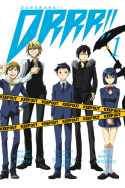
 SEAN: … I’ll be honest, nothing thrills me from this week’s manga list. Instead, my vote goes to Vol. 3 of IDW’s
  BRIGID: I probably wouldn’t do this if there were a stronger selection to choose from, but my pick is vol. 3 of
  KATE: My choice is the final volume of
  MICHELLE: Ordinarily, I’d cast my vote for volume five of Bokurano: Ours, but as I’ve done so at least once already, I’ll focus instead on volume 41 of


