• Skip to primary navigation
  • Skip to main content
  • Skip to primary sidebar
  • Home
  • About Us
    • Privacy Policy
    • Comment Policy
    • Disclosures & Disclaimers
  • Resources
    • Links, Essays & Articles
    • Fandomology!
    • CLAMP Directory
    • BlogRoll
  • Features & Columns
    • 3 Things Thursday
    • Adventures in the Key of Shoujo
    • Bit & Blips (game reviews)
    • BL BOOKRACK
    • Bookshelf Briefs
    • Bringing the Drama
    • Comic Conversion
    • Fanservice Friday
    • Going Digital
    • It Came From the Sinosphere
    • License This!
    • Magazine no Mori
    • My Week in Manga
    • OFF THE SHELF
    • Not By Manga Alone
    • PICK OF THE WEEK
    • Subtitles & Sensibility
    • Weekly Shonen Jump Recaps
  • Manga Moveable Feast
    • MMF Full Archive
    • Yun Kouga
    • CLAMP
    • Shojo Beat
    • Osamu Tezuka
    • Sailor Moon
    • Fruits Basket
    • Takehiko Inoue
    • Wild Adapter
    • One Piece
    • After School Nightmare
    • Karakuri Odette
    • Paradise Kiss
    • The Color Trilogy
    • To Terra…
    • Sexy Voice & Robo
  • Browse by Author
    • Sean Gaffney
    • Anna Neatrour
    • Michelle Smith
    • Katherine Dacey
    • MJ
    • Brigid Alverson
    • Travis Anderson
    • Phillip Anthony
    • Derek Bown
    • Jaci Dahlvang
    • Angela Eastman
    • Erica Friedman
    • Sara K.
    • Megan Purdy
    • Emily Snodgrass
    • Nancy Thistlethwaite
    • Eva Volin
    • David Welsh
  • MB Blogs
    • A Case Suitable For Treatment
    • Experiments in Manga
    • MangaBlog
    • The Manga Critic
    • Manga Report
    • Soliloquy in Blue
    • Manga Curmudgeon (archive)

Manga Bookshelf

Discussion, Resources, Roundtables, & Reviews

Michelle Smith

Pick of the Week: Picks & anti-Picks

February 27, 2012 by Sean Gaffney, Brigid Alverson, MJ, Michelle Smith and Katherine Dacey 5 Comments

This week’s haul at Midtown Comics inspires both some enthusiastic picks (and a couple of emphatic anti-picks) from the Battle Robot. Check them out below!


SEAN: Can I make xxxHOLIC my anti-Pick of the Week? :) Seriously, though, even though Midtown isn’t listing it, my store is getting in the 13th volume of Sayonara, Zetsubou-sensei. Over the last several volumes, the manga has found its way, almost ceasing to be about any of the characters at all. I can’t even recall the last time Nozomu tried to kill himself. Instead, it devotes itself to a typical cliched behavior every chapter, and then picks it apart until it explodes. And if that means less attention to character development, well, the characters are exaggerations to begin with, so it’s less about deepening them and more about honing them into sharp, cutting blades. Which is why, in this volume, they proceed to butcher an entire prison full of guards. Want to learn why? Read the book!

BRIGID: Although GTO tempts me, I’m going with vol. 2 of Gate 7 as my first choice. Although the first volume had its flaws—storytelling that managed to be both unclear and repetitive, to be specific—the art is beautiful, and by the end of the book CLAMP had me firmly in their grip with the promise of a historical/supernatural story set in old Kyoto. CLAMP can be really terrible or really good, and I’m hoping that after a stuttering start, this book will fall into the latter group.

MJ: Well, Sean, I’m going to cancel out your anti-Pick by picking it! Yes, I’ve heard the same disheartening things about the ending of xxxHolic as everyone else has (well, without explicit spoilers—so please don’t spoil me now!) but I’ve loved this series for 18 volumes, and I’m longing to read its conclusion for myself. Unlike many readers, I’ve actually quite enjoyed the series’ post-Young coda (see my thoughts on volume 18 here). Watanuki was my reason for reading from the very beginning, and he remains so to this day. I just have to see how his story ends, for better or worse.

MICHELLE: Don’t spoil me on xxxHOLiC, either! I still need to finish Tsubasa! Anyway, I’ve probably picked this series before, and I’ll probably pick it again, but I must cast my vote this week for the seventh volume of Itazura Na Kiss. This series has its ups and downs, with moments both delightful and infuriating, but I still look forward to each double-sized volume. I’m especially keen to see whether Naoki gets any nicer or Kotoko any more competent, but somehow I doubt that will happen any time soon.

KATE: My pick is Tenjo Tenge…. NOT! (I chalk up that feeble joke to the lingering effects of Vicks Vapo-Rub and cough syrup.) While I second Michelle’s enthusiastic endorsement of Itazura na Kiss, I’m casting my vote for volume three of Border. Technically speaking, Border is yaoi, but it reads more like The A-Team than Bad Teacher’s Equation — well, if Murdock occasionally made out with Mr. T. I guess that doesn’t make Border seem very entertaining, but I really enjoyed the first two volumes’ mixture of melodrama, suspense, and teamwork. This is yaoi for readers who like a big dose of plot with their smut. Oh, and lots of handsome men in camouflage.


Readers, what looks good to you this week?

Filed Under: PICK OF THE WEEK

Death Comes to Pemberley by P. D. James

February 24, 2012 by Michelle Smith

From the back cover:
P. D. James draws the characters of Jane Austen’s beloved novel Pride and Prejudice into a tale of murder and emotional mayhem.

It is 1803, six years since Elizabeth and Darcy embarked on their life together at Pemberley, Darcy’s magnificent estate. Elizabeth has found her footing as the chatelaine of the great house. Elizabeth’s sister Jane and her husband, Bingley, live nearby; her father visits often; there is optimistic talk about the prospects of marriage for Darcy’s sister Georgiana. And preparations are under way for their much-anticipated annual autumn ball.

Then, on the eve of the ball, the patrician idyll is shattered. A coach careens up to the drive carrying Lydia, Elizabeth’s disgraced sister, who with her husband, the very dubious Wickham, has been banned from Pemberley. She stumbles out of the carriage, hysterical, shrieking that Wickham has been murdered. With shocking suddenness, Pemberley is plunged into a frightening mystery.

Review:
When I learned about this book on NPR, I was torn between trepidation and mad curiosity. The latter, as you can see, won out, mostly because I am a huge fan of P. D. James and if figured that if anyone could treat Austen’s material with respect, she could. And, indeed, her treatment of these beloved characters did not give any offense, but neither did it give anything near the delight inspired by Austen’s original work.

First, a brief summary of the plot. It is Autumn 1803. Elizabeth and Darcy have been happily married for six years and have two sons. On the eve of the annual ball at Pemberley, Elizabeth’s willful sister Lydia shows up unannounced (and uninvited), freaking out because she and the coachman heard gunshots soon after her no-good husband Wickham went into the woods after his friend, Captain Denny. A search party finds a drunken Wickham with Denny’s body, at which point he utters words to the effect of, “It’s my fault. He was my only friend, and I have killed him.” The local magistrate conducts his inquiries, there is a formal inquest, there is a trial, and then the full story is revealed.

As a Pride and Prejudice continuation, the book is not odious. It is, however, lacking any of Austen’s sparkle. Events leave Elizabeth and Darcy little time to be alone together, except at the very end, where James tacks on an epilogue in which Darcy, after six years, suddenly apologizes for some of his conduct in the original novel. It makes me wonder whether James believes readers could not surmise that Darcy would feel regret over his more snooty actions without spelling it out. Gone too are Austen’s sly and thoughtful observations upon society, except for one brief instance wherein chronic invalids are suddenly recovered sufficiently to attend church in the hopes of catching a glimpse of the Pemberley residents.

The result, therefore, is a book that is dreadfully dull. I was relieved to see that Elizabeth and Darcy do not suddenly become sleuths, but found the revelation of what really happened in the woodland to be rather vague and unsatisfying. While I cannot condemn the book for any particular sin, about the only praise I can muster is that James does provide some interesting fates for various characters and proposes an intriguing complication regarding Wickham’s attempted elopement with Georgiana Darcy.

Is it worth reading? No, not really. But I doubt anyone will feel the urge to hurl the book across the room in disgust, either.

Filed Under: Books Tagged With: P. D. James

Off the Shelf: Princess Knight

February 23, 2012 by MJ and Michelle Smith 15 Comments

MICHELLE: As we occasionally do when the Manga Moveable Feast rolls around, MJand I have opted to dedicate this week’s Off the Shelf column to the topic at hand, which this month is the works of Osamu Tezuka. Specifically for our case, we’re going to be talking about Princess Knight, Tezuka’s shoujo manga about Sapphire, a princess who accidentally receives both a boy’s heart and a girl’s heart at the time of her birth, and who, when we pick up her story as an adolescent, has somewhat of an identity crisis while undergoing many wacky hardships/hijinks.

This is my first time reading the series. Whenever Ed Chavez from Vertical would solicit suggestions for Tezuka titles to license, I would always request Princess Knight. I wanted the series so much I even bought a few of the bilingual Kodansha editions. However, when I finally had both parts of the series in hand, I was content for a while to merely gaze upon them, content. And now that I have finally gotten around to reading it, I must say… I’m a little disappointed.

MJ: Well, as you may recall, I certainly had my issues with volume one, and these didn’t disappear when I read volume two. In some ways, I’d even say they became more pronounced. On the other hand, there were things I liked about it, so though I could characterize my experience as disappointing as well, I’m still glad I read it.

Should we get the least pleasant subjects out of the way straight off?

MICHELLE: Might as well. I guess my big problem with it is that it’s supposed to be so groundbreaking in terms of gender identities, but it actually does very little in this regard. When Sapphire has only a boy heart, she’s swaggering and brave. When she has only her girl heart, she’s weak and fragile. True, some of the growl-inducing comments do come from the villains or from those attempting to fool villains by approximating girlish behavior (“I suddenly want to take up cross-stitching and play the piano.”) but I do have to wonder how much of it Tezuka really believes, since he creates a swordswoman character, only to bedeck her armor with hearts and have her proudly admit that she’s entered a tournament to find a husband.

MJ: Yes, this was definitely the biggest hurdle for me as well. While I might have found it interesting to watch a character struggle with her gender identity in a society where clearly what you describe is set up as the standard for femininity vs. masculinity, that’s not really what Tezuka does here at all. Even when he has his chances to challenge these roles, he passes them up. For instance, the big female revolt that happens during the second volume seems to hinge mainly on the threat of the country’s men being left without anyone to clean their homes or look after their children. Even after it’s over, the only comment made by one of the defeated men is relief that his wife will come home and take care of the laundry that’s piled up.

I completely understand that both Tezuka and Princess Knight are a product of their time, but I’m genuinely confused as to why this seems to be held up as a great example of shoujo manga challenging gender roles.

MICHELLE: It seems very likely that Tezuka never intended it to be so, since so much of it takes a Loony Tunes approach to storytelling. Why, indeed, take a female revolt seriously? Instead, let’s play it for comedy by making the men out to be henpecked morons! That’s not to say there aren’t some darker aspects that I did like and wish could’ve been expounded upon. For example, while I don’t care about or believe in the “true love” that suddenly springs up between Sapphire and Prince Franz Charming, the characters set up as romantic rivals are actually interesting and meet tragic fates. It makes me wonder what kind of story Tezuka could’ve fashioned with Hecate and Captain Blood (aka Heinrich) as the leads!

MJ: Yes! Though I actually quite liked Sapphire, at least until she became completely consumed by her weirdly passive pursuit of Prince Franz, my favorite characters were Captain Blood and Hecate. I would have happily read entire books about them. I rather wished that Sapphire would ditch Franz and fall for Blood, but I suppose it was never meant to be.

MICHELLE: And, really, Hecate is probably the best example of a character who defies gender roles, since she’s perfectly happy defining herself for herself and has no wish to consume Sapphire’s girl heart (which her witch mother, Madame Hell, keeps trying to steal on her behalf) and take up some passive, “feminine” identity. She’s independent, level-headed, and one of the few truly good characters in the story. Plus, she can turn herself into a goat!

MJ: Speaking of all the heart-exchanging business, I’d say that probably the only time I actually appreciated it, was when Plastic ingests Sapphire’s boy’s heart, and suddenly becomes a decent man, instead of a selfish, sniveling boob.

MICHELLE: Oh yes, I quite agree! And he promptly begins championing women’s rights! This makes him the second character in the series (after Hecate) to go his own way and oppose the evil schemes of a parent. I wonder if this is Tezuka’s way of saying that the younger generation is going to get things right regarding equality whereas their parents are hopeless.

MJ: That may be a generous assumption, but I’ll give it to him if you will. You know, I think what’s most disappointing to me about Princess Knight is that I feel like I really could have liked it. Tezuka’s artwork is so much fun here, and so full of life. And I’m really fine with the “Looney Tunes approach,” as you so brilliantly put it. I think this manga could have been a lot of fun. But the gender issues are so profound, they kinda take over the whole thing for me.

MICHELLE: I’m not sure I could’ve liked it even without the gender issues giving me fits. The plotting is just so random sometimes. Early on, there’s a scene where Sapphire is letting herself be collected by Duke Duralumin’s men as a potential consort for his then-still-feeble-minded son, Plastic. And Franz rides in from, like, the next kingdom over to rescue her, and then rides back home again a few panels later. Or then there’s my favorite spot of wtf, the scene where Blood quickly escapes slavery by coercing a nearby beetle into chewing through some ropes. Everything’s so fast, furious, and madcap that poignant things aren’t given time to sink in.

MJ: Hee hee, yeah, it’s like that. Is it wrong that I find that fun? Or maybe I find it fun, because the poignant stuff doesn’t sit right. I can enjoy something that’s silly and madcap for that alone, and Princess Knight works better as that for me. Overall, I’d say I liked the silly, unbelievable parts the most. Also, I love every scene that Blood is in. Heh.

MICHELLE: It’s not wrong for anyone to like what they like! :) I’m just hard to please, comedy-wise, so many of the gags just left me blinking impassively at the page. I feel bad for being so down on Princess Knight, because now that it’s over I find myself growing fond of the idea of it again. And though it may not have lived up to its reputation for me, I nonetheless wonder if it wasn’t the origin of certain shoujo tropes, like, say, all of the guys instantly falling in love with the passive heroine, or the contingent of jealous fangirls.

MJ: As disappointed as I might have been with it, I really am grateful to have had the opportunity to read it. It may not be my favorite of Tezuka’s works (or really even close), but I’m quite enamored of his artwork, as always, and even now as I’m just flipping through, I’m struck by the beauty and flow of what’s on the page.

MICHELLE: Oh, I am definitely exceedingly grateful to the folks at Vertical for licensing the work and producing such a beautiful edition. I’m also pleased to note that I didn’t spot a single typo in their text, and found that the translation actually included some rather sophisticated words without any hint of awkwardness.

MJ: So thanks, Vertical, for giving us the chance to experience Princess Knight!

For more of this week’s MMF bounty, please visit the Osamu Tezuka MMF Archive, hosted by Kate Dacey at The Manga Critic!


More full-series discussions with MJ & Michelle:

Fullmetal Alchemist | Paradise Kiss | The “Color of…” Trilogy | One Thousand and One Nights| Please Save My Earth
Fruits Basket | Wild Adapter (with guest David Welsh)

Full-series multi-guest roundtables: Hikaru no Go | Banana Fish | Gerard & Jacques | Flower of Life

Filed Under: OFF THE SHELF Tagged With: Manga Moveable Feast, MMF, Osamu Tezuka, princess knight

Pick of the Week: Soulless, Higurashi, Kizuna

February 20, 2012 by MJ, Sean Gaffney and Michelle Smith 2 Comments

Things pick up this week at Midtown Comics, just in time for Presidents’ Day. Though we’re a bit short-staffed at Manga Bookshelf today, MJ, Sean, & Michelle have some books they’re excited to buy!


MJ: I’m a bit torn this week, I have to admit. On one hand, I’d like to recommend the latest volume of Nabari no Ou—the only manga to ever get me even remotely interested in ninja—or perhaps volume four of Bloody Monday, which I can’t help liking, despite its unbelievable premise. But after reading Kate’s recent review of Soulless, I think it’s won my vote. An “agreeable mishmash of Young Sherlock Holmes, Underworld, and Mansfield Park, with a dash of Jules Verne”?? Where do I sign up? I’ll be the first to admit that Yen Press’ “manga” adaptations of popular novels have mostly missed with me, but this one sounds like it’s right up my alley. Definitely a must-buy!

SEAN: As I noted in my Manga The Week Of post, I always get happier when I see a new volume of Higurashi: When They Cry. A combination of harem manga, horror manga, and mystery, it’s the bonds of friendship elements that keep me coming back. One Piece fans popularized the Western use of ‘Nakama’, a word meant to convey a close bond between a group that’s not quite family or friends, but something deeper – something unshakeable. Of course, with the Higurashi series that type of relationship is a long and unstable process, and we’ve seen in past arcs how mistrust and paranoia can ruin everything. Rena’s friends have helped her hide a corpse in the last volume… but was that really the right thing to do? Gripping stuff.

MICHELLE: There are certain titles that, when I see them on this list, everything else just sort of falls away. So, while I am definitely very keen to read Soulless, I must seize the opportunity to recommend Kazuma Kodaka’s landmark BL series, Kizuna, now in its fifth (and presumably final) volume. Maybe the trials and tribulations of yakuza in love just isn’t your thing, but the way the stories are told and the unique artwork are things that every BL fan should experience.

Readers, what looks good to you this week?

Filed Under: PICK OF THE WEEK Tagged With: higurashi when they cry, kizuna, Soulless

Going Digital: February 2012

February 19, 2012 by Michelle Smith, Sean Gaffney and MJ 4 Comments

Welcome to the latest Going Digital, Manga Bookshelf’s monthly feature focusing on manga available for digital viewing or download. Each month, the Manga Bookshelf bloggers review a selection of comics we’ve read on our computers, phones, or tablet devices, to give readers a taste of what’s out there, old and new, and how well it works in digital form.

This month, we’ll take a look at VIZ Media’s new manga for the NOOK Color, as well as a couple of titles from JManga. Device, OS, and browser information is included with each review as appropriate, to let you know exactly how we accessed what we read.


E-Readers

VIZ Manga on the NOOK Color

In last September’s Going Digital column, I wrote about my experience reading manga on a Kindle. The review included such sentiments as “Wow, this looks like crap,” and ended with this pithy observation:

I guess paying $6 for a Kindle edition of a book I didn’t like very much is better than paying $13 for same, but my advice to those considering reading manga on their Kindle is simple: “Don’t.”

So, when I was presented with the opportunity to check out the titles VIZ has made available for NOOK devices, I was quite eager to see how the experience would differ. As it turns out, the NOOK vastly outperforms the Kindle in all areas but one, and that one is not a deal-breaker.

The loaner model NOOK Color I received came pre-loaded with a few VIZ titles, so I can’t comment on the ease of buying and downloading manga from the Barnes and Noble site, but it looks pretty straightforward to me. There’s a WiFi connection on the device, so you can shop directly from the reader, as well. Books are accessible in the Library, which displays a nice gallery of color covers instead of a plain text list of titles. Simply tap the cover of your book of choice to open, and you’re good to go.

The first offering I perused was volume 31 of Bleach, and when I saw its cover come up full-screen, so crisp and beautiful, I am pretty sure I uttered a “wow” aloud. The inner pages are just as sharp, with clean, white backgrounds and legible text. Navigation is easy—gently tap the right side of the screen for the next page (granted, this is a little counter-intuitive when reading manga, as normally you’d be turning to the left) and the left side for the previous page. Tap the middle and a menu pops up, where one can scroll amongst all the pages in the volume and manage bookmarks, which one sets by pressing the “+” icon in the top right of the screen, creating a little digital “dog-ear” effect on the page.

At this point, I still hadn’t figured out how to zoom—I’m definitely a late adopter where technology is concerned, so there was a bit of a learning curve with touch-screen navigation—so I thought I’d check out some shoujo, which is known for its teensy asides and author-talk sections with small text. I found examples of both on a page of Absolute Boyfriend, and personally found the text legible, but once I discovered the “reverse-pinch method” of zooming in, it was a definite improvement. The screen is larger than the Kindle, so a single page looks pretty good as is. The NOOK’s got an auto-rotate function, which means that the display will shift to landscape mode if you turn the device on its side. This is helpful when you want to enjoy the scope of a two-page layout from an artistic standpoint, but not really practical for reading that way, unless you want to stay zoomed in all the time.

There are only two complaints I have about the NOOK, and one is exceedingly minor. In most respects, the sensitivity of the touch screen is a good thing, but as I held the device, I somehow kept placing my thumb in such a way that caused the system to repeatedly alert me to my lack of new notifications, which was annoying. The second issue is more significant, and that is that the NOOK is pretty heavy. According to Barnes and Noble, the NOOK Color weighs 15.8 ounces, but mine (with protective cover) clocked in at 20.8 ounces, which is equal to three print volumes of manga. Obviously, this is not extremely heavy, and even the fact that the latest Kindle supposedly weighs less than six ounces could not ever induce me to recommend it over the NOOK Color where reading manga is concerned. – Michelle Smith


Web Browser

Morita-san Wa Mukuchi Vol. 1 | By Tae Sano | Takeshobo, Manga Life Momo | JManga.com | Windows XP, Firefox 10.0

Readers of print manga in North America will be very familiar with the type of manga we get with Morita-san. It’s what’s termed a ‘4-koma’ style manga. Basically the equivalent to American comic strips such as Peanuts or Beetle Bailey, They’re 4 panels, mostly vertical, with quick punchlines and gag humor. Yes, there are the occasional serious 4-koma series, but they are definitely the exception. We;ve seen the high school band series K-On!, the high school eccentrics of Azumanga Daioh, and even spin-offs of popular titles like Haruhi Suzumiya and Shugo Chara.

This series has a lot of the same types of ingredients. With the exception of a token male or two to get one-liners, the cast is almost entirely cute and female. It takes place in a typical high school. There’s no real plot to speak of – we follow our heroine and her friends through the school year, being amused at their comedy antics. However, despite all of this, I found Morita-san to be quite a fun and pleasant experience. It has a very good hook. The heroine, the titular Morita, doesn’t speak. Note that she *can* speak – she just never gets a good opportunity. Either she thinks too long about what to say and everyone moves on, or she gets flustered, or the timing is wrong… as such, she spends the volume as a sort of ‘silent support’.

Her friends, and this is another reason I found this fun, don’t really bring this up or hold it against Morita at all. It’s just a quirk, like her best friend Miki’s being boy-crazy, or Hana’s being shy. They treat her like a good friend, and don’t even mention the silence – they always ask her opinion on things and the like. And Morita herself is a likeable heroine, being nice and sweet without getting overly sappy. (Her parents help here – her mother vacillates wildly between sweet adoring wife and jealous harridan, and it’s noted Morita got her reticence from her upbringing.) There’s even some mild yuri tease here, involving the cool Student Council President who everyone loves, as well as an unnamed girl who keeps trying to stalk… um, strike up a conversation with Morita only to misread whatever situation is going on. If you’re going to read 4-koma, it should be as fun and likeable as this. -Sean Gaffney

Hyakusho Kizoku, Vol. 1 By Hiromu Arakawa | Shinshokan, Wings | JManga.com | Mac OS 10.7.3, Chrome 17.0.963.56

As most Manga Bookshelf readers will already know, I’m a huge fan of Hiromu Arakawa’s epic shounen series Fullmetal Alchemist. In fact, the series even made my personal top ten. I consider Arakawa to be a truly exceptional storyteller, so when I heard that JManga was offering something new from her, I immediately ran over to read it. I was not disappointed in the least.

From the pages of the eccentric shoujo magazine Wings, Hyakusho Kizoku is a series of humor-tinged manga essays detailing life on a Hokkaido dairy farm. Though, on the surface, Hyakusho Kizoku may seem to share little in common with a fantasy epic like Fullmetal Alchemist, fans of FMA will quickly recognize Arakawa’s easy sense of humor, as well as her ability to create compelling, recognizable characters with just a few deft strokes.

The series is openly autobiographical, filled with anecdotes from Arakawa’s childhood and teen years that cover everything from her father’s habit of visiting the cow shed in winter wearing only his underpants, to a bit of light authorial ranting on topics like pesticides, government demands, and why Hokkaido would be better off as an independent country. And though her humor is a highlight, it’s not the only way in which Arakawa shows off her strengths. One particularly haunting lesson about the fate of a sick, newborn calf had me tearing up as I read—a feat achieved mainly through just a few poignant strokes of Arakawa’s pen, as she drew her own mournful, childish face and that of the unsuspecting calf.

If I sound like a hopeless fangirl, well, perhaps I am. But it’s a devotion well-earned by any author who can entertain equally well with action-packed fantasy and facts about cow dung. And fortunately, JManga does their part as well, offering up a clean, readable adaptation that lets the series’ conversational style shine.

While Hyakusho Kizoku may not be every FMA fan’s cup of tea, it certainly is mine. Highly recommended. – MJ

Filed Under: Going Digital Tagged With: Hyakusho Kizoku, Morita-san Wa Mukuchi, Nook, VIZ

Hallowed Murder by Ellen Hart

February 19, 2012 by Michelle Smith

From the back cover:
The police call Allison’s drowning a suicide, but her housemates at her University of Minnesota sorority insist it was murder. That’s when alumnae advisor Jane Lawless steps in to find out the truth.

Abetted by her irrepressible sidekick Cordelia, Jane searches for clues, and what she finds is as chilling as the Minnesota winter—for in those icy drifts, at a lonely vacation house, she risks everything to ensnare a cunning killer…

Review:
Minneapolis restaurateur Jane Lawless has volunteered to serve as an alumnae advisor for her former sorrority, Kappa Alpha Sigma. One morning, while out exercising with her reluctant friend, Cordelia Thorn, Jane discovers the body of one of the girls, Allison Lord. When the local police are quick to dismiss Allison’s death as suicide (which they attribute to confusion over her sexuality), Jane decides to do a little investigating of her own, eventually concluding that she’ll need to set herself up as bait to catch the killer.

I didn’t outright dislike Hallowed Murder, but it does have some major problems. Most significant is the fact that the culprit is not a surprise, thanks to a brief opening chapter that reveals their motive. Other aspects of the mystery are less transparent, though, and Hart at least managed to make me briefly suspect other characters. And speaking of the characters…. Jane is okay, and I like the aura of sadness that clings to her after the death of her long-time partner, Christine, but her friend Cordelia seems to have just one mode—obnoxious. Jane’s brother makes a couple brief appearances, but he is utterly insubstantial. Then there are the victim’s three closest friends, one of whom we scarcely meet before she apparently drops out of the sorority off-camera. Again, it’s not exactly bad, but it’s all quite superficial.

The same can be said of Hart’s writing style. As I look now at the quotes I jotted down, they don’t look so objectionable, but while I was reading they were jarringly simplistic. Too much tell, not enough show. Here are a couple of examples:

The early morning mist had settled around the base of the old bridge, making it appear to float above the water. It looked like a stage set. A perfect setting for a murder. Cordelia shuddered at her own morbidity.

Jane looked around at the young man taking notes. She had never been interrogated by the police before and did not like her words being cast in stone on some stenographer’s pad.

That second one could’ve been “Jane looked uneasily at the young man taking notes,” and it would’ve communicated all of that without seeming so… prim. This was a common problem, with dialogue and character thoughts frequently coming across as stiff and unnatural. Characters were also exceedingly forthcoming with their prejudices. Now, true, this was published in 1989, so perhaps open homophobia was more common, but characters with these opinions don’t even try to disguise them, and generally have no other positive attributes that would make them more three-dimensional—they’re just being used as ignorant mouthpieces. Here’s a quote from Susan Julian, another sorority advisor, after she learns about Allison’s sexual preference:

Having allowed a—I even hate to say the word—lesbian in our midst would destroy our reputation. We can only hope it doesn’t make the papers. I mean, no one would feel safe joining.

I haven’t yet decided whether to read Vital Lies, the second Jane Lawless mystery. The excerpt included in the back of my paperback was not very promising, but some mystery writers do improve over time. And, of course, Hart earns bonus points for managing to mention both Richard III and Doctor Who.

Additional reviews of Hallowed Murder can be found at Triple Take.

Filed Under: Books Tagged With: Ellen Hart

You Can Draw in 30 Days by Mark Kistler

February 18, 2012 by Michelle Smith

From the back cover:
Drawing is an acquired skill, not a talent—anyone can learn to draw! All you need is a pencil, a piece of paper, and the willingness to tap into your hidden artistic abilities. You Can Draw in 30 Days will teach you the rest. With Emmy award-winning, longtime public television host Mark Kistler as your guide, you’ll learn the secrets of sophisticated three-dimensional renderings, and have fun along the way.

In just 20 minutes a day for a month, you can learn to draw anything, whether from the world around you or from your own imagination. It’s time to embark on your creative journey. Pick up your pencil and begin today!

Review:
I was somewhat dubious when I set out to complete Mark Kistler’s instructional book, You Can Draw in 30 Days. Despite his claim that drawing is a skill and not a talent, and that anyone can learn to do it, I had no expectation that I would emerge from the experience with the ability to create vividly realistic drawings. And, indeed, that did not happen. I did, however, learn some interesting and useful techniques, and if the goal has been merely to gain confidence and a grasp of some basic fundamentals, then I’d say it’s been achieved.

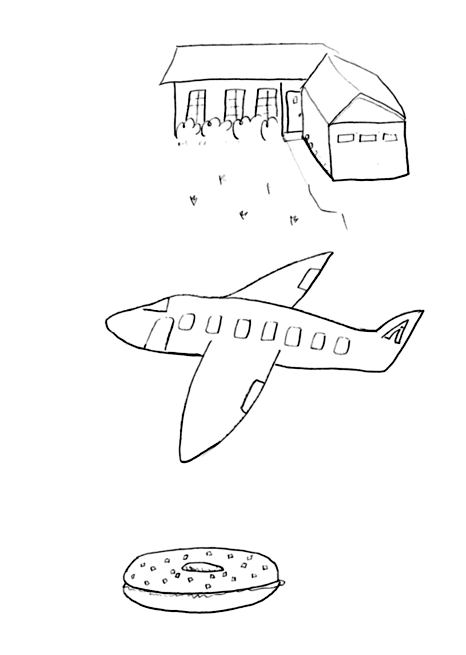
First, Kistler has students complete a pretest in which they draw a house, an airplane, and a bagel. Here’s mine. Please do not laugh at that pathetic airplane too much.

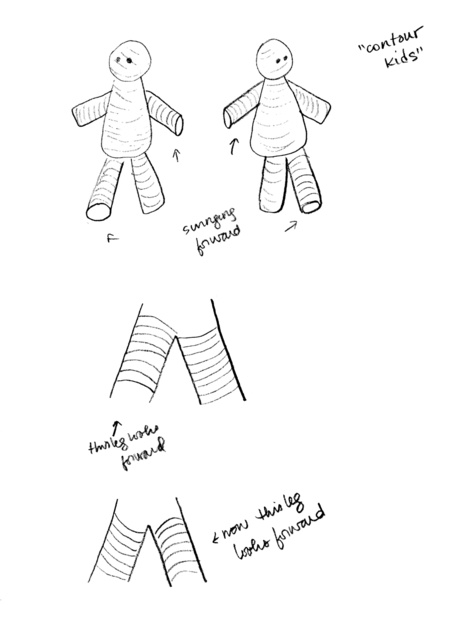
From there, students progress through a series of lessons designed to introduce and elaborate on nine “foundation elements,” which include concepts like overlapping, shading, and contour lines. These ideas are reiterated frequently throughout the book, and I enjoyed some more than others. For example, I got a little tired of drawing shadows all over everything, but the way that contour lines—here exemplified via figures Kistler has dubbed “contour kids”—can make objects appear to be in motion is extremely cool.

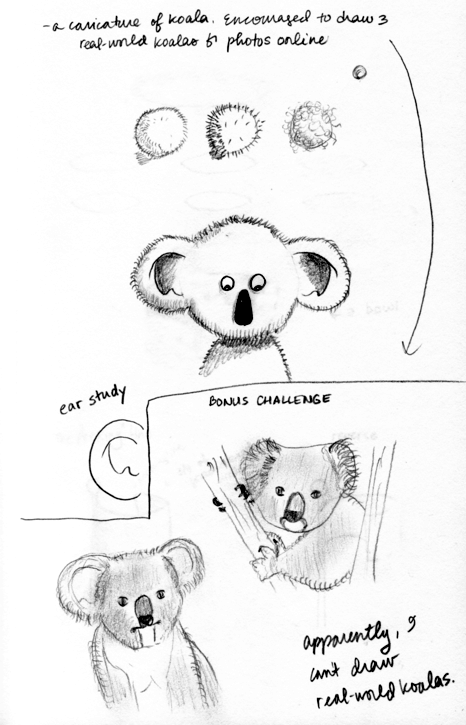
The first seven lessons focus on basic shapes—spheres, cubes, towers—but then Kistler begins tossing in some rather odd things like koalas, roses, scrolls, and rippling flags. Each lesson is still imparting some useful idea, but they do reveal that Kistler’s style is essentially cartoony. Here’s my koala, from lesson eight. The bonus challenge for that chapter was to draw some real-world koalas, and while my efforts look better to me now than they did originally, the fact remains that I did not (and still do not) feel well-equipped to actually faithfully reproduce a realistic-looking koala.

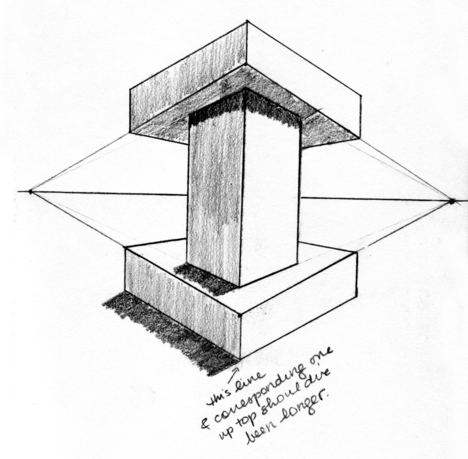
Beginning with lesson 22, Kistler focuses on drawing in one- or two-point perspective. I enjoyed these exercises a lot—possibly because I got to draw with a ruler, which made everything nice and crisp. Here’s my tower in two-point perspective, which looks pretty good despite a couple of minor flaws.

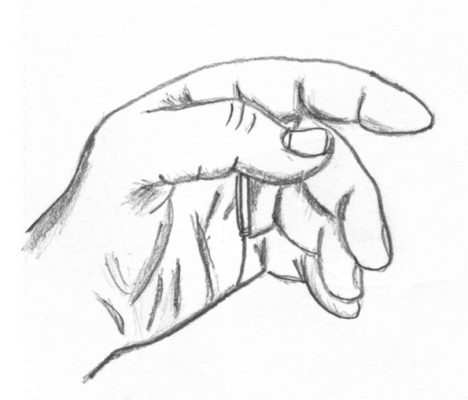
The final three chapters introduce drawing anatomy, and Kistler drops the ball here a bit. Instead of really trying to teach someone how to draw a face, he instructs students to trace an example, provides a few basic pointers, and then directs them to other books for more information. (Perhaps that’s why the included illustration of a student’s attempt is far less accomplished than other examples throughout the book.) Lessons on the eye and hand were better, though, and I’m rather proud of my results for the 30th and final lesson, “Your Hand of Creativity.”

On the whole, the progression of the lessons makes sense and I have few complaints. However, I must voice my objection to Kistler’s attempts to foment enthusiasm by asking lame questions throughout the book. “Are you inspired?” “Are you excited?” “Don’t you feel like a collegiate fine arts student?” This invites readers to say, “Um, no?” I get what he’s trying to do, but jeez. Enough is enough.

Ultimately, a better title for this book would have been You Can Draw Certain Things in 30 Days. I still don’t feel like I can draw well in general, but I think I’m a bit better than before. Certainly, I could apply these lessons to drawing everyday objects that fit the shapes covered in the book. So, if you ever need a picture of your loved one, don’t call me, but if it’s an open cardboard box you want, I’m your gal.

Additional reviews of You Can Draw in 30 Days can be found at Triple Take.

Filed Under: Books, Drawing, Nonfiction, Triple Take

BL Bookrack: February 2012

February 18, 2012 by MJ and Michelle Smith 11 Comments

Welcome to the February installment of BL Bookrack! This month, MJand Michelle take a look at two offerings from SuBLime Manga, VIZ Media’s new BL imprint, The Bed of My Dear King and Oku-San’s Daily Fantasies, as well as Rainy Day Love from the Digital Manga Guild. In Brief: volume two of Only Serious About You from Digital Manga Publishing’s Juné imprint, and volume one of Love Pistols from SuBLime.


The Bed of My Dear King | By Sakae Kusama | SuBLime Manga | Rated M (Mature) – This is my first SuBLime title—one of the first batch of digital-only releases, in fact. It appealed to me because it was described as “a suite of emotionally resonant, romantic stories.” Plus, the description included the words “unexpected” and “poignant.” So, does The Bed of My Dear King deliver on its claims? Well, mostly. Although, instead of “emotionally resonant” and “romantic,” the first words I’d use to describe the stories herein would be “quirky” and “memorable.”

The title story is about an electrician named Koga who visits the isolated mountain home of an initially surly sculptor to make a repair. The sculptor, who eventually reveals that his name is Takashi Tohno, gets a little more friendly and helpful as Koga attempts to get to the root of the problem, and when a sudden snow storm traps them together, a bit of booze leads to a “let me feel you up for my art” kind of encounter. I love Kusama’s use of big panels to evoke the wide open spaces around Tohno’s home, and though the pair decide to date pretty durn swiftly, the result is still an unforgettable story.

“Cherry” is about Ueno, an overachieving student council member who only slows down once his glasses get broken, and Tama, a boy who’s friendly to everyone in class but treats Ueno more formally than the rest. Ueno’s near-blind state results in a terribly cute “I’ll take you home by bike” scene and a promise that they can kiss or something after the school festival. You wouldn’t think a bike scene would make a story stand out so much from its BL compatriots, but it does.

The third and final story, “Flowers,” is the weakest of the three. Kumon, a runner, is curious about Ozu, his classmate. Rumors begin swirling that Ozu has impregnated a girl, and when Kumon asks him about it, Ozu trades the details for gradually escalating intimacy. This story has the potential to deal with some weighty issues, but doesn’t delve too deeply, and the ending is just kind of dumb. Kusama writes in her notes that these stories were serialized at different times, and I wouldn’t be surprised if this was an earlier effort.

All in all, this is an intriguing collection of stories and I’m glad I read it.

– Review by Michelle Smith


Oku-San’s Daily Fantasies| By Noboru Takatsuki | SuBLime Manga | Rated M (Mature) – I’ll be honest, here. Looking over the list of SuBLime Manga’s debut offerings, my initial reaction was one of disappointment. As a BL reader whose preferences lean towards thoughtful, carefully-developed romance and long-form storytelling, it was depressing to note that the imprint’s first few titles seemed to fall mainly into the categories of short stories, fluffy comedy, and gratuitous smut. Oku-San’s Daily Fantasies could be described as all three, but to a far more satisfying end than I ever would have imagined.

Oku is a bored office drone, whose single joy in life is fantasizing about Sudo, a local delivery man from a popular shipping company. In order to see Sudo as often as possible, Oku constantly orders things online, each time fantasizing about what might happen when his dream man arrives to deliver the package. Eventually, his orders extend to porn videos and sex toys, which he soon discovers are being sold to him by the company his neighbor works for. Once this discovery has been made, the neighbor, Yokoshima, drops by often, interrupting Oku’s fantasies with overly-exuberant friendliness and requests to try out new products. Though Oku initially finds this annoying, little by little, he finds himself warming up to Yokoshima. But can a real relationship ever live up to Oku’s fantasies?

There are a number of reasons why this manga really works, not the least of which is the fact that Oku’s (often hilarious) fantasies provide the opportunity for the author to include a whole lot of deliberately over-the-top, porno-rific sex scenes that actually serve the story. While even in the most serious romantic tales, sex sequences have a tendency to get in the way of the storytelling more than anything else, here they are actually a significant aspect of Oku’s character development, and even help to forward the plot. Even more surprising, is mangaka Noboru Takatsuki’s ability to write sexually-charged comedy that is actually funny, which is not something I generally associate with humorous BL manga. Takatsuki’s artwork is a highlight as well, serving the story’s comedy and erotica with equal skill.

Though SuBLime may not yet be satisfying my desire for epic, nuanced BL romance, they’ve managed to win me over with this charming bit of humorous smut. Surprisingly recommended.

– Review by MJ


Rainy Day Love | By Satomi Konno | Digital Manga Guild | Rated M (Mature)- One rainy day, Yuta Yoshizawa is working at his family’s senbei shop when Shizuno stops by. Graceful and handsome, Shizuno was a first-year member of the shogi club when Yuta was in his third year, and soon they’ve rekindled their friendship. In the blink of an eye, Yuta confesses his feelings, whereupon Shizuno reveals that he’s been in love with Yuta since sixth grade. After a brief interlude, during which these lovebirds realize that they don’t actually know each other at all, they start focusing their thoughts on consummating their relationship.

It’s not that Rainy Day Love is bad, really. It’s just really superficial. This is what I get for routinely judging BL by its covers—and this is a really nice one—but I somehow expected, from the title, more of a melancholy story. Instead, this is fast-paced and a little frivolous, with love confessions that are so abrupt and unconvincing that they made me go “Pfft!” and many scenes where super-deformed characters have dialogue like “Eep!” There is nothing wrong with a romance being silly—and there’s certainly something to be said for a story that doesn’t take its own drama seriously—but there’s nothing really compelling about it, either.

After Yuta and Shizuno manage to get it on, their story ends and the volume is rounded out with a couple tales about Yuta’s brother, Shoichi, and his friend Seigo, who’s been in love with him since elementary school. There’s really not much to recommend this, either, honestly. I guess if you like comedic BL about horndogs, then you might like Rainy Day Love. If you like more serious BL, like I do, then you’re probably going to be bored and disappointed.

– Review by Michelle Smith


In Brief:

Only Serious About You, Vol. 2 | By Kai Asou | Digital Manga Publishing | Rated YA (16+) – If volume one of Kai Asou’s Only Serious About You impressed me with its ability to craft a real, moving love story out of well-worn genre clichés, what’s most impressive about its second volume is its ability to make me forget that they were ever clichés to begin with. Though this volume’s primary conflict is divorced dad Oosawa’s struggle to maintain custody of his young daughter, the deeper issue here is his decision to accept his feelings for former playboy Yoshioka, and come out as his lover. Though the “only gay for you” syndrome is one of the genre’s least appealing tropes, here, it barely reads as a trope at all. On the negative side, Oosawa’s custody battle is resolved a tad too easily, but this is not nearly enough to sink a title this strong. Enthusiastically recommended. – MJ

Love Pistols | By Tarako Kotobuki | SuBLime Manga | Rated M (Mature) – Among the first four titles offered up by SuBLime Manga, Love Pistols would appear to be the closest to “my kind of BL,” at least on the surface. It’s a steamy, dramatic romance, told in multiple volumes (seven and counting), with some pretty complicated world-building and supernatural themes. Unfortunately so far, it’s also got a dull, controlling love interest, stunningly unappealing sex scenes, and just enough exposition to drown in. And while the tragic rarity of multi-volume BL ensures that I’ll give this series at least one more chance to win me over, there’s no denying the fact that reading its first volume was a distressingly unpleasant chore. Better luck next time, Love Pistols? Let’s hope so. – MJ


Review copies provided by the publishers. Cover art: The Bed of My Dear King © Sakae Kusama 2011, Oku-san’s Daily Fantasies © Noboru Takatsuki 2011, Love Pistols © Tarako Kotobuki 2004

Disclosure: MJ is currently under contract with Digital Manga Publishing’s Digital Manga Guild, as necessitated for her ongoing report Inside the DMG. Any compensation earned by MJin her role as an editor with the DMG will be donated to the Comic Book Legal Defense Fund.

Other recent BL reviews from MJ & Michelle: I Love You, Chief Clerk! (JManga); Only Serious About You, Vol. 2 (Juné).

Filed Under: BL BOOKRACK Tagged With: digital manga guild, digital manga publishing, Juné, love pistols, oku-san's daily fantasies, only serious about you, rainy day love, SuBLime, the bed of my dear king, yaoi/boys' love

Pick of the Week: Longshots

February 13, 2012 by MJ, Katherine Dacey, Sean Gaffney and Michelle Smith 1 Comment

Shipping slows down a bit this week at Midtown Comics, but the Battle Robot finds ways to spend their money, as always.


KATE: Though two of my all-time favorite shonen series appear on this week’s shipping list — those would be InuYasha and Kekkaishi, by the way — I’ll let another Battle Robot blogger sing their praises. My vote goes to The Art of The Secret World of Arrietty, a lovely coffee-table book featuring concept sketches, movie stills, and interviews with the creative team behind the Studio Ghibli film. Though the text is not as informative as it could be, the images are flat-out gorgeous; anyone who read Mary Norton’s The Borrowers, the book that inspired Arrietty, will be pleased at the way Studio Ghibli has brought her tiny characters to life. You’ll never look at a button or a thimble the same way again!

SEAN: This week seems to contain a lot of series that I’ve either never read or am so far behind on that a recommendation would be ridiculous. However, my own comic shop is getting a title that Midtown isn’t, the 3rd volume of A Certain Scientific Railgun. The second volume took a turn for the serious, which was greatly to its benefit, and I’m hoping that it will continue to keep up the pace. I’m also hoping for fewer tedious groping gags with the “lesbian” in the cast, but I’m fairly certain that I’ll be out of luck there. Still, give this Seven Seas series a try.

MICHELLE: I’m in a similar position to Sean this week: while I’ve been collecting Kekkaishi and 20th Century Boys, I am dreadfully far behind, and there’s no power on this earth that could induce me to read Haruka: Beyond the Stream of Time. But there is one title on the list that I’ve read and loved, and that’s InuYasha. I can’t really comment on the VIZBIG editions themselves, having bought each volume of the series singly, but I love the warm, ensemble sitcom feeling of the series overall, and envy those who get to experience it through these editions for the first time, since the art is printed in its original orientation, which didn’t happen with the single-volume releases until some time in the late thirties. Notorious for meandering reptition, sure, but for me, InuYasha is manga comfort food at its finest.

MJ: I’m going to go off-list and into the digital only realm this week, to recommend volume one of Keiko Kinoshita’s You and Tonight, due out soon at eManga from the Digital Manga Guild. I was a big fan of Kiss Blue, a two-volume series from the same creator that was released on DMP’s Juné imprint, and I’m actually working on editing another of her short series for my reporter’s stint at the DMG. I’m consistently impressed by Kinoshita’s subtle humor and delicate touch (she’s even won me over to the dreaded BL Anthology), so when I saw that another group was working on You and Tonight, it immediately jumped to the top of my list of must-buy BL. I’ve always been a fan of the best-friends-turned-lovers trope, and given that this was also the premise for Kiss Blue, I’m gathering that it’s a favorite of Kinoshita’s as well. The first volume is already available for the Nook and Kindle, so I expect it’ll go live on eManga in just a day or two. Now the question is, will I be able to hold off until it appears for sale on the iPad? Only time will tell.


Readers, what looks good to you this week?

Filed Under: PICK OF THE WEEK

Bookshelf Briefs 2/13/12

February 13, 2012 by MJ, Katherine Dacey, Sean Gaffney and Michelle Smith 3 Comments

This week, Kate, MJ, Sean, & Michelle take a look at recent releases from Kodansha Comics, Vertical, Inc., VIZ Media, Yen Press, Digital Manga Publishing, and JManga.


Bloody Monday, Vol. 3 | Story by Ryou Ryumon, Art by Kouji Megumi | Kodansha Comics – I can see why Bloody Monday appeals to teenage boys: not only do its adolescent heroes get to kick ass and match wits with evil adults, they also get to ogle beautiful villains and work alongside cute classmates. For an adult reader, however, the plot mechanics are too creaky to overlook the obvious wish-fulfillment angle. Too many scenes bog down in obvious explanation, as characters repeatedly tell each other things that one would hope world-class crime solvers would know — even if they’re only sixteen. The action scenes remain the series’ strength, as they’re the only time the exposition-dense chatter and obvious voice-overs are silenced in favor of good old-fashioned chases and shoot-outs. It’s a shame that Bloody Monday is such a mixed bag, as its paranoid, the Russians-are-out-to-get-us plot could be the basis of a terrific, globe-trotting thriller. – Katherine Dacey

Chi’s Sweet Home, Vols. 7-8 | By Konata Konami | Vertical, Inc. – Now that I own a cat, I’ve developed an even deeper appreciation for the genius of Konata Konami. So many of the details in Chi are beautifully observed, whether Chi is stalking new “prey” (a goldfish, a feather duster) or calculating the distance between two high perches. Konami also depicts new pet ownership with accuracy and warmth: like the Yamadas, I’ve spent a lot of time reading cat books in an effort to decode Francesca’s behavior, feed her the right food, and interpret symptoms of illness. I can’t speak to Chi’s relationship with Cocchi — my cat’s only animal companion is a frustrated herding dog — but even that feels right to me. A must for cat fanciers. – Katherine Dacey

Dengeki Daisy, Vol. 8 | By Kyousuke Motomi | VIZ Media – Make no mistake, this is easily the best volume of Dengeki Daisy yet. Okay, yes, part of the cliffhanger from last volume just sort of fizzles out, but it leads to Teru finally getting the full story (through flashbacks) about Kurosaki’s past as a dangerous hacker and his relationship with Soichiro and the various former coworkers with whom he still associates. Although mangaka Kyousuke Motomi can’t quite manage to write a compelling mystery plot—any attempts to hint at some vast conspiracy are generally vague and uninteresting, though we do get a little direction on who’s orchestrating the attacks on Teru—there’s still some good stuff here for fans of these characters, especially in the way Soichiro draws a young, heartbroken Kurosaki out of his shell. I do have to wonder, though, whether returning to the present day will feel like a let down after this. – Michelle Smith

Fairy Tail, Vol. 17 | By Hiro Mashima | Kodansha Comics – I have to admit, Mashima is starting to lose me here. There’s a lot going on in this volume provided you like fights – but if you’re not a big shonen fight fan, the only thing to grab a hold of is the big plot revelation, which brings back someone who I’m not really sure we all wanted to see back. Yeah, I know ‘no one dies in shonen comics’ has become somewhat of a cliche, but this just felt very underwhelming. It doesn’t help that I still have trouble holding the new characters in my head, be they heroes or villains. On the plus side, Erza being out of the action for most of the volume gives Gray a chance to shine. And the cliffhanger, involving Loke, makes me really want to know what happens next. Unfortunately, that’s not enough to save a substandard volume of this series.-Sean Gaffney

I Love You, Chief Clerk! | By Keiko Kinoshita | JManga – BL anthologies are probably my least favorite type of manga to review. With a handful of exceptions (est em, for example), BL mangaka, at least those currently published in English, seem to be especially inept at the admittedly difficult art of telling a satisfying, well-developed story in just one or two chapters. Happily, Keiko Kinoshita proves herself to be one of the exceptions. Despite its simplistic title, I Love You, Chief Clerk! is a charming collection of short romance manga that manage to get right to the heart of their stories without feeling rushed or skimpy. Kinoshita deftly introduces her characters and defines their relationships, past and present, with just a few sure strokes. She’s not concerned so much with resolution as she is with creating a few truly genuine moments, and that’s all it takes to bring her adorable short stories to life. Gratefully recommended. – MJ

Library Wars: Love & War, Vol. 7 | By Kiiro Yumi and Hiro Arikawa | VIZ Media – While readers have been reading about the not-quite-romance between Kasahara and Dojo, the plot has been slowly building up, and this is the volume where a lot of the plot cannons are fired. Following up on last volume, Tezuka gets a lot of development here, and I was also pleased to see Shibazaki’s lunch dates continue. But the real meat of this is the plot with our heroine, as a conspiracy tries to frame her and she has to lay low while her friends figure out who’s behind it. Seeing the social and normally upbeat Kasahara being so beaten down and downtrodden is quite heartbreaking, and more so when we know she’s “trying to be strong” – exactly what Dojo *doesn’t* want. For those who wanted more library wars in this manga, this is the volume to get.-Sean Gaffney

The Melancholy of Haruhi Suzumiya, Vol. 11 | Art by Haku Tsugano, Story by Nagaru Tanigawa, Characters by Noizi Ito | Yen Press – The eleventh volume of Haruhi Suzumiya irresistibly reminded me of a classic Star Trek plot line, in which a rift in time, a strange illness, or an amnesia-inducing event causes the crew to act out of character. For Harhui and her friends, the sudden rash of odd behavior begins when they’re banished to an alternate dimension; only by solving a math puzzle can they return to their normal lives. Newcomers will find this volume a difficult place to begin exploring this unique series, as the story relies too heavily on the reader’s prior knowledge of the characters. Die-hards, however, will find more of what they like: humorous interplay between characters, off-beat mysteries, and occasional bits of fanservice. -Katherine Dacey

Natsume’s Book of Friends, Vol. 11 | By Yuki Midorikawa | Viz Media – I know this is a monthly manga, but at times the author really seems to plot her arcs out to the individual volumes. The first half shows Natsume bonding even more with Tanuma and Taki (OT3!!!… sorry), and finding that he can rely on them to be there for him no matter what. Then in the 2nd half, we see that as much as he may want to open up, it’s simply not that easy given what he goes through every day… and what he went through as a child. We are our upbringing, after all. There’s also some nice yokai examination here – even the “nice” ones are still distrustful and uncomprehending about humanity. This even applies to Nyanko-sensei, who’s still saying he’s only hanging around to get the Book of Friends after all this time. Rather than admitting the deep bond he and Natsume have forged. Terrific stuff.-Sean Gaffney

No Longer Human, Vol. 3 | By Usamaru Furuya, Based on the novel by Osamu Dazai | Vertical, Inc. – In the afterword to volume three, Usamaru Furuya admits that as a teenager, he “found beauty” in the hero’s “ruinous lifestyle.” That admission is key to understanding the strengths and weaknesses of Furuya’s adaptation of No Longer Human. On the one hand, it’s immediate and visceral, depicting a young man’s fall from grace in symbolically rich imagery; Furuya has succeeded in translating an ambiguous text into a feverish nightmare of father-hate and drunken debauchery. On the other, many of the nuances of Dazai’s text have been filed away, making Yozo’s transformation seem more pedestrian than it did in the novel; it’s a Lifetime movie about addiction, minus a third-act redemption. Still, for readers new to Dazai’s work, Furuya’s adaptation provides a sturdy bridge between the original novel and the present day, showing readers that No Longer Human is as relevant now as it was in 1948. – Katherine Dacey

Only Serious About You, Vol. 2 | By Kai Asou | Digital Manga Publishing – Though I know of a few gay men who read and enjoy BL manga, the fact remains that it’s a genre written by women for women. Reading this second volume of Only Serious About You, however, made me think that here is a series I would recommend to any gay man, pre-existing manga fan or not. The evolution of the relationship between single dad Oosawa and his former customer, Yoshioka, is handled with sensitivity and realism, and the bond they share caring for Oosawa’s daughter, Chizu, is seriously touching. Yoshioka had a tough childhood, and helping to raise Chizu is like a healing experience for him, and when reserved Oosawa finally decides to accept all that Yoshioka’s willing to give, it’s sniffle time. The sense of family among these three is palpable, and a great example of the loving home two men can provide a child. A lovely, lovely story. More by Kai Asou, please! – Michelle Smith

Filed Under: Bookshelf Briefs

Pick of the Week: GTO & more

February 6, 2012 by Sean Gaffney, Michelle Smith, Katherine Dacey, MJ and Brigid Alverson 3 Comments

It’s a strong week for manga at Midtown Comics. See the Battle Robot’s picks below!


SEAN:God, I’ve missed Onizuka. My pick this week is the first volume of the ‘interquel’ GTO: 14 Days in Shonan, a 9-volume series that is supposed to fit in towards the end of GTO proper. The cast of the main series get a brief cameo, but the meat here is Onizuka arriving in a new neighborhood and having to deal with a new bunch of delinquent kids. And he is up to the job – for all his perving about getting laid (which he never does), or constantly getting into fights and winning despite severe injuries (I wince at every head blow he takes here, for reasons obvious to a seasoned GTO reader), the series in the end is about Onizuka caring about kids – the ones who used to be just like him – and showing them that the world isn’t as bad as they think it is. Whatever his motivations may be, he’s a wonderful teacher of the human spirit. Great to have him back.

KATE: With so many awesome titles arriving in stores this week — Bride of the Water God, Dawn of the Arcana, GTO: 14 Days in Shonan, Natsume’s Book of Friends, The Story of Saiunkoku — it’s difficult to limit myself to one. But if I *had* to pick one, my choice would be volume 20 of Slam Dunk. Takehiko Inoue’s deep affection for basketball is evident on every page; he immerses us in the game play to such a degree that the reader feels like she’s on the court, too, searching for an opening to the basket. Inoue’s affection for his characters is also evident on every page; even when they’re the butt of jokes, we still root for the Shohoku team to resolve their personal differences so that they can best their opponents. Slam Dunk places more emphasis on gameplay than Inoue’s other basketball manga, REAL, but is worth seeking out, even if you’re can’t cite Paul Pierce’s free-throw statistics for the 2009-10 season.

MICHELLE: I really, really love Slam Dunk, so I second Kate’s recommendation even while casting my own vote for volume one of A Devil and Her Love Song. This debut, about the attempts of an honest-to-a-fault girl to make friends in her new high school, surprised me by being far more than its comedic-seeming premise—and a couple of stereotypical-looking male characters—initially suggested. Maria is trying so hard, in her stoic way, and I found he way that she keeps desperately believing that things will work out to be very endearing. The supporting cast has some depth, as well, and I’ve heard good things about what’s to come. Definitely a very strong start to a promising series!

MJ: This week’s haul is pretty impressive (I really did love A Devil and Her Love Song), but I’m going to cast my vote for the sixth volume of The Story of Saiunkoku. Even if it wasn’t a smart, funny series with lovely period dressing and a truly awesome heroine, it would still be the series that inspired one of my favorite reviews ever. (Thank you, David!) Seriously, it’s just a charming, charming manga. And I’m a whole volume behind, so I’ve got extra shopping to do!

BRIGID: I could have gone for any one of the above, but since you all got there first, I’ll give some love to vol. 7 of Kamisama Kiss. I like Julietta Suzuki’s simple style and her sense of humor, and even if this is a story that has been told before, she puts a few new twists on it.


Readers, what looks good to you this week?

Filed Under: PICK OF THE WEEK

Bookshelf Briefs 2/6/12

February 6, 2012 by Michelle Smith, Katherine Dacey and Sean Gaffney Leave a Comment

This week, Michelle, Kate, and Sean take a look at recent releases from Kodansha Comics and Viz Media.


Arisa, Vol. 6 | By Natsumi Ando | Published by Kodansha Comics – Someone ought to invent an Arisa drinking game that involves taking a sip any time the characters are out in the woods and someone falls off a cliff. Seriously, I think that just happened a couple of volumes ago and here it is again. Despite the fact that Tsubasa stumbles (har har) upon a significant lead in the volume’s final pages, ensuring that I’ll be back for volume seven, I spent most of the volume annoyed. The good guys sure are making it easy for “the King” to undermine their efforts to learn his/her identity, to the point where it’s hard to summon any sympathy for them. It’s never a good sign when someone getting hit by a car actually makes me snicker. This series started off seeming really cool, but now it’s just kind of ridiculous. And that’s a shame. – Michelle Smith

Cage of Eden, Vol. 3 | By Yoshinobu Yamada | Kodansha Comics – You have to hand it to the author – he knows his audience. This is a story that really wouldn’t fly in Jump or Sunday, but in service-happy Magazine, it’s managed to be a success. And really, I can see why. Despite the egregious boob and panty shots, and the token loli that has been added towards the end, it’s the plot and characters that drive you onward. The teamwork/rivalry of Akira and Yarai plays out nicely, and Kohei’s breakdown is horrible yet compelling. This is very much classic boys’ literature – lots of fights with giant animals, buxom teenage girls, some small amount of romance, and plot twist after plot twist. It’d be a great manga to bring along to the beach. Just be aware that you’d finish the volumes to date very quickly, and might have trouble explaining the fanservice to anyone reading over your shoulder. – Sean Gaffney

Cross Game, Vol. 6 | By Mitsuru Adachi | Published by Viz Media – Comprising volumes twelve and thirteen of the original Japanese release, the feel of this sixth VIZ omnibus could be summed up as, “The final summer is just around the corner.” Seishu has missed their chance at the Spring Koshien, but as Ko and his friends enter their third and final year of high school, they’ve got just one more shot. Baseball is on everyone’s mind all the time, and we catch glimpses of some intense practice sessions, but just as much attention is devoted to the characters’ relationships. Much of the story revolves around Ko getting to know Akane, Wakaba’s look-alike, while Azuma and Aoba grow a little closer. It’s bittersweet, slice-of-life storytelling at its finest, and though I am really looking forward to the tournament ramping up, I’m sure the resolutions on the romantic front will be equally satisfying. Perenially recommended. – Michelle Smith

Shugo Chara-Chan!, Vol. 2 | Created by Peach-Pit, Manga by Napthalene Mizushima et al. | Kodansha Comics – If your primary complaint about Shugo Chara was that Amu’s guardians didn’t get enough time in the spotlight, this 4-koma spin-off title is for you. The stories — if they can be called that — focus on Ran, Miki, and Su as they bumble their way through a variety of stock manga situations: decorating a Christmas tree, getting dressed for a festival, baking cakes, playing with cute animals. The gags are too generic to make much of an impression, though the strips spoofing Arisa, Fairy Navigator Runa, and Hell Girl add a welcome jolt of visual and comic energy to an otherwise tepid volume. Strictly for hardcore Shugo Chara fans; newcomers won’t find enough here to sustain their interest. – Katherine Dacey

Filed Under: Bookshelf Briefs

I, Richard by Elizabeth George

February 3, 2012 by Michelle Smith

Book description:
Hailed by The New York Times as “a master of the British mystery,” award-winning author Elizabeth George is one of our most distinguished writers, cherished by readers on both sides of the Atlantic. Her first collection of short stories is an extraordinary offering that deftly explores the dark side of everyday people—and the lengths to which they will go to get what they want most…

In these five tantalizing and original tales, George plumbs the depths of human nature—and human weakness—as only she can. From the chilling tale of a marriage built on an appalling set of lies that only death can reveal, to the final, title story about a penniless schoolteacher whose ambition turns murderous, I, Richard is filled with page-turning drama, danger, and unmatched suspense.

Whether the setting is urban or suburban, affluent or middle class, no one is safe from menace. Thanks to Inspector Thomas Lynley, a squabbling group of Anglophiles discovers a killer in its midst. But little help is on hand when a picture-perfect town is shattered by an eccentric new resident’s horrifying pet project. And when a wealthy husband is haunted by suspicions about his much-younger wife, it becomes clear that a man’s imagination can be his own worst enemy…

Review:
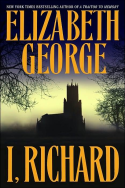
Well. That was different! And not, I’m afraid, in a terribly good way. I’ve furnished ample avidence of my admiration for George’s mystery novels in the past (and intend to read more of them in future), but I wasn’t too enamored of these short stories, primarily because most are variations on the theme of “things go wrong for the unsympathetic protagonist.” And that is not my favorite theme upon which to dwell. But let us forge onward into specifics!

“Exposure” is a rewrite of an earlier story, “The Evidence Exposed.” It concerns a group of Americans taking a summer course in The History of British Architecture who have come to Abinger Manor, residence of Detective Inspector Thomas Lynley’s aunt, for a tour. The characters are the highlight of this one, and though the crime is rather silly and the culprit’s motive murky, I still rather liked some of the quick portraits painted of those enrolled in the class. Lynley doesn’t get much to do, though, and poor Helen is relegated to being charming without actually, if I recall rightly, having a line of dialogue.

“The Surprise of His Life” is, ironically, possessed of an utterly predictable conclusion. After a lengthy introduction, in which George reveals drawing inspiration from the alleged crimes of O. J. Simpson, we meet a wealthy businessman who has begun seeing a psychic. She warns him to expect an external shock, so he goes off into all these flights of fancy about his wife having an affair and hires a private investigator who takes pictures of her with another man and… it’s just so obvious what’s going to happen that waiting for it to actually occur is maddening.

“Good Fences Aren’t Always Enough” is a weird little tale about the residents of Napier Lane, who are striving to be designated as one of their town’s Perfect Places to Live, and the small, grey, Russian immigrant whose overgrown, rat-infested yard stands in their way. Willow McKenna, a former foster child now obsessed with the idea of a big family and cozy community, is a fairly likeable lead and this, at least, didn’t end like I thought it was going to. It was a lot more… ordinary, in the end.

“Remember I’ll Always Love You” is the second story to feature a couple’s life ruined by extreme suspicion. Charlie Lawton’s husband, Eric, has just died at the age of 42. As she seeks out his parents, Charlie begins to realize that Eric was keeping a lot of things from her. A lot of really, really major things that are so out-of-left-field that she’s left reeling. This story is sort of admirably constructed in terms of what you think you know that it turns out you didn’t really know, but it feels flat somehow.

Lastly we have the title story, “I, Richard,” which contained both the high points and low points of the collection for me. I intensely disliked Malcolm Cousins, the ambitious would-be historian who has been engaged in an affair with the wife of a friend with the express purpose of coming into possession of a prized artifact when that friend should finally succumb to a weak heart. Malcolm is a sleazy git who gets what he deserves, but George uses him as a mouthpiece for some exonerating theories in support of Richard III, and that part I liked. The challenge is, of course, writing a modern-day story concerned with Richard III and not having it be too much like Josephine Tey’s marvelous The Daughter of Time, and George succeeds in that regard, I suppose.

Ultimately, this isn’t essential reading for fans of the Lynley/Havers mystery series. Lynley appears briefly in a story, but does very little, and there’s absolutely no bearing on anything that happens in other books. I’m not sure if I’m glad I read it or not, but I know for sure that I’ll not be doing so again.

Filed Under: Books, Mystery, Short Stories Tagged With: Elizabeth George

Off the Shelf: Shoujo staples & other stories

February 2, 2012 by MJ and Michelle Smith 16 Comments

MJ: Well, hi.

MICHELLE: Howdy!

MJ: It’s been a while since we did a regular column. I’m not sure what to say.

MICHELLE: Yeah, I was looking back at those today. Our last two columns have seen us both talking about the same series, and fairly epic ones at that! Oh no! Will our regular column measure up?!

MJ: I guess we’ll just have to try it and see! So, what have you been reading this week?

MICHELLE: Some very enjoyable things! First up is the third volume of Pretty Guardian Sailor Moon, which came out a couple of weeks ago.

For those who were put off by some of the silliness in Codename: Sailor V or by Usagi’s crybaby ways earlier on in this series, volume three should quell any doubts you may possess that Takeuchi can really bring out the big dramatic guns. As I’ve mentioned elsewhere previously, the pacing of the manga is approaching breakneck speed, so here we are in volume three and the first arc is already drawing to a close. But first, this occurs, and actually I am going to frame it in such a way that it’s as Buffy-esque as possible, ‘cos that’s what I do:

Usagi’s boyfriend, Mamoru, suddenly starts acting like a different person. He’s cold and cruel and is now working with the enemy! “Is this man somebody else now?!” she wonders. “Do I have to defeat him?! Kill him?!” A terrible evil is about to be unleashed upon the world and the only way to seal it up is to defeat the man she loves! But she does it. There’s a sweet kiss, and then there’s a sword.

Some fairly significant similarities to the end of Buffy‘s second season, I think! Anyway, I don’t want to spoil too much of it, but it’s pretty great. The second arc launches very quickly with the introduction of Chibi-Usa, a young girl who literally falls from the sky and starts observing Usagi and those around her. I was pleasantly surprised by how sympathetic Chibi-Usa is in the manga. She comes across more as lonely and frightened than bratty, and certainly more intriguing than the gemstone-named band of siblings who are facing off against our heroes.

Also pleasantly surprising was the copy editing this time. Typos have been a major problem with this title, and I’m happy to say I didn’t see a single one here. So, kudos on that, Kodansha. However, my fangirl heart just about broke when I saw Jupiter’s attack, “Sparkling Wide Pressure,” interpreted as “Spark Ring Wide Pressure.” Ordinarily I wouldn’t comment on translation choices, but man. This one really hurt.

MJ: I have to say, I can’t wait to read this. Seriously. I have it on my shelf and I WANT TO READ IT NOW. And I don’t have any fangirl preconceptions, which I’m gathering might be a plus for this series.

MICHELLE: I’d say so. There are many things I love about the anime, but there are definitely areas in which the manga is superior. One is, of course, Takeuchi’s lovely artwork, which is very flexible in terms of depicting Usagi as someone goofy and as someone elegant and mature. She frequently looks graceful in the manga in a way that she does not in the anime.

Still, it makes me sad that first-time readers might’ve thought that was really Jupiter’s attack phrase. I’ll have to be vigilant about pointing out things like that for their benefit!

Anyways, what’ve you been reading this week?

MJ: My first selection for the evening is a very different brand of shoujo than Sailor Moon, though also quite enjoyable. I’m speaking of the first volume of Miyoshi Tomori’s A Devil and her Love Song, just recently released by Viz.

I know you’ve read it, Michelle, but for the uninitiated, our heroine is Maria Kawai, a transfer student recently expelled from an elite Catholic school. She’s a girl who has always had difficulty making (and keeping friends), mainly because of her inability to control her harsh (if truthful) tongue. Maria is unusually perceptive, but most of what she has to say is decidedly not what people want to hear, and she gets off on the wrong foot pretty much immediately at her new school. On some level, Maria wants to fit in, but she’s just not cut out for the spirited shoujo sunshine role, and she’s pretty well aware of it.

Thanks, perhaps, to her very good looks (and a lovely singing voice), she is sort of befriended by two boys in her class, happy-go-lucky Yusuke Kanda and surly Shin Meguro. The two boys are, on the surface, typical shoujo love interests, and it feels immediately obvious that Maria will end up with cranky guy with a heart of gold, but just as Maria does not quite fit any of the standard heroine molds, neither do these two, who each have their own ways of dealing with the pressures of classroom socialization. So who she’ll ultimately end up with (if she ends up with someone at all) is anyone’s guess.

Like another of my favorite recent shoujo series, We Were There, this volume succeeds in part by taking familiar shoujo stereotypes and making them into real people, and I appreciate that very much.

I was pretty enthralled with this debut volume, and I’m looking forward to seeing where things go. My one small fear is that all the other girls in school (who so far have only really bullied Maria) will continue to be vilified to the end. I really dislike girl-hating stories for girls. But the first volume is written with such a sure hand, I feel confident that we’re in for something better than that. It’s the kind of manga that (so far) is continuously surprising.

MICHELLE: You’ve hit upon so much of what I loved about the volume! I like the boys, but Maria herself is the most compelling at this point, as she clings to her faith that things eventually will work out, that they will someday understand her if she just keeps trying. It’s pretty moving, actually!

As for the other girls, a comment left on my review suggests you’ll be pleased with their development, saying, “all the peer enemies are eventually shown to be more than their stereotypes.”

MJ: That is very heartening to hear! Though, again, I had high hopes, given nuanced the main characters have been so far. I’m happy to hear that my faith isn’t misplaced!

So, what else do you have for us this week?

MICHELLE: Well, speaking of nuanced characters… I read volume two of Wandering Son by Shimura Takako, presented in a gorgeous hardcover edition by Fantagraphics.

This is the story of two transgendered children, Shuichi Nitori and Yoshino Takatsuki, and their struggles to express their true selves. Lately, Shuichi and Yoshino have been going out in public dressed as a girl and a boy, respectively, and have befriended an adult woman named Yuki. They also go on a class trip and decide to start an exchange diary.

Okay, plot-wise, that may not sound like much, but it’s what Takako does with it that’s so special. Where volume one largely focused on how the characters themselves perceive their differences from other kids, this volume shows some ways in which others perceive those differences. Some responses are negative, like Shuichi’s seatmate on the school trip, who accuses him of squealing like a girl and calls him a “faggot” before Shuichi actually musters the strength to tell him off.

Some responses are neutral, like when Shuichi’s sister Maho discovers his secret. She’s not horrified, but she’s puzzled. At least she’s making an honest effort to understand as best a junior-high girl can. And then some responses are overwhelmingly positive, like when Shuichi and Yoshino’s friend Chiba AWESOMELY channels Anne of Green Gables as a means to dealing with taunting. I really love her.

Because this gamut of reactions is presented, and because daily life continues to transpire, the characters’ struggles seem even more sincere and realistic. Knowing that the misunderstanding they face now will only get greater the older and more certain they become, we realize just how fabulously lucky they are to have each other, even if they have to be careful not to exclude their other friends.

My one complaint is that a volume seems to go by so quickly that I am soon left bereft, pining for the next one!

MJ: This is another volume staring at me from the shelf that I’m simply dying to read. I need to take a month’s vacation and just read, read, read! I loved the first volume, as you know, and I’m thrilled (if not remotely surprised) to hear that it continues on in an equally lovely fashion. I admit I’m made even more anxious to read it based on that Anne of Green Gables thing. OH, MY HEART.

MICHELLE: I knew that part would please you!

I do have to ding Fantagraphics for the wording of their “story so far” section, though, which contains the sentence “The two spend their days going on somewhat perverse dates.” Now, true, certain dictionary definitions of “perverse” might reasonably apply in this situation, like “disposed to go counter to what is ordinary,” but that word also comes with connotations like “wicked” and “sinful” that should best be avoided. Surely they could’ve found a suitable synonym! Grumble grumble.

MJ: I’ve been pretty unhappy with the language they’ve used while marketing this series, so that doesn’t surprise me, I guess, but it’s still regrettable.

MICHELLE: What’s your second topic of the evening?

MJ: My second read this week is the perfect example of everything Wandering Son is not. That would be Hisaya Nakajo’s Hana-Kimi, a shoujo staple now being re-released in omnibus format by Viz. It’s a popular series I’ve never read, so definitely I’m the target audience for a release like this.

Unfortunately, I’d say my reaction to it was pretty mixed. While Wandering Son tackles gender identity with tender realism, like most other manga I’ve read with themes revolving around gender-bending, Hana-Kimi plays it for laughs, making sure to keep all the confusion safely on the outside. This isn’t unexpected, by any means, but it suffers gravely in comparison to a more thoughtful work.

So, Mizuki is a teen athlete who so deeply admires a young Japanese high jump champion, Izumi Sano, that she leaves America (where she lives abroad with her family) to come back to Japan and enroll in the all-boys boarding school Sano attends. Of course she must disguise herself as a boy, and of course she ends up being Sano’s roommate, because what good would a gender-bending romp be without lots of shower and clothing snafus?

Things progress pretty much as you might expect, with many of the boys finding themselves attracted to Mizuki and and one in particular questioning his sexuality based on these feelings. Meanwhile, Sano doesn’t know what he wants, and Mizuki isn’t even quite clear on the fact that she’s got the hots for him, despite her obsessive behavior. The school doctor, Hokuto, is a breath of fresh air, genuinely funny in a wonderfully wry way. Otherwise, though, it’s all distressingly… standard, I guess would be the term.

Oh, Michelle. I think that twenty years ago, I might have eaten this series up with a spoon, but I admit I was finding all the misunderstandings and hijinks fairly wearying. On the upside, spunky Mizuki doesn’t spend too much time being a shy wallflower, and Sano figures out her secret pretty early on (unbeknownst to her), so there isn’t quite as much blushing and farce-like door-slamming as there might have been otherwise. Still, if I’m looking for cross-dressing silliness, I think I’d just rather watch You’re Beautiful.

MICHELLE: Sometimes you come up with some absolutely perfect turns of phrase. “Making sure to keep all the confusion safely on the outside” is an example, encapsulating everything Hana-Kimi is in a nutshell.

Where you are the target for this reissue, I am not, because I have actually read it all before. In fact, one of the first reviews I ever wrote was of a volume of Hana-Kimi. So believe me when I tell you… it kind of gets worse. Oh, there are certainly some terrific volumes near the end, but there’s a lot of filler before then, and then the end completely and utterly fizzles to the extent where, though I did finish it for the sake of completeness, once I’d done that I promptly sold it. “Not a keeper!” There are aspects I kind of miss—Sano sure is pretty, especially early on—but I just can’t forget how dissatisfied it left me.

All that said, I hasten to add that I applaud any slightly older shoujo title coming back into the market in a fresh way, and hope that Basara, Please Save My Earth, and Boys Over Flowers will find their way to new audiences in the near future.

MJ: Sano is pretty, indeed, though I find I keep mentally comparing him to another depressed, recovering athlete, Eiji Okamura (Banana Fish), and you realize of course he has no chance with me in that comparison.

So, do you think we’ve lived up to the glory of our last two columns? We did discuss some pretty wonderful series tonight!

MICHELLE: I think we did! And it was pretty shoujo-licious, as well, which is a nice change of pace.

MJ: Agreed! Well… I guess this is goodnight!

MICHELLE: Until next week!

Filed Under: OFF THE SHELF Tagged With: a devil and her love song, hana-kimi, sailor moon, Wandering Son

Pick of the Week: Time Warp

January 30, 2012 by Sean Gaffney, Michelle Smith, Katherine Dacey, Brigid Alverson and MJ 1 Comment

We may have stepped into a wormhole this week at Midtown Comics, whose incoming manga list is comprised mainly of not-quite-fresh releases. Fortunately, this gives the Battle Robot an excuse to recommend some well-loved titles.


MICHELLE: This week’s new manga list at Midtown Comics is comprised mostly of Vertical titles, some of which have been available elsewhere for a while now. Still, this is a good opportunity to recommend No Longer Human, Usumaru Furuya’s intriguing adaptation of the novel by Osamu Dazai. MJand I devoted our most recent Off the Shelf column to the title, which I enjoyed far more than I expected to. Yes, it’s dark and rather depressing, but there’s enough distance and self-analysis from and by the protagonist that one can enjoy it without getting bogged down. I recommend the series heartily and look forward to volume three!

SEAN: I’m not quite sure why the 6th volume of sublime baseball manga Cross Game is three weeks later than it should have been, but that’s okay. It gives me another chance to rave about this very different type of shonen we’re seeing here. Make no mistake, this series is a classic example of everything that doesn’t sell well in North America: subtle character humor, low-key art, no fights, no supernatural content (unless you think Wakaba has reincarnated as Akane), and a bunch of baseball. And that’s what makes it one to cherish. As the market continues to contract and companies keep looking for things that the kids will buy, series like these that take chances will be fewer and farther between. Never mind that Adachi is a household name in Japan: here he’s a cult, and as such, deserves love.

KATE: Since I’m a proud owner of a cat, I feel duty-bound to recommend the seventh volume of Chi’s Sweet Home. It’s totally accessible to the feline-free, of course; I was an unabashed Dog Person at the time I reviewed volume one, and I thought it was utterly charming then. Now that I can compare my cat’s behavior with Chi’s, however, I have a new appreciation of Konami Konata’s artistry. She nails the small details, whether it’s the sound of Chi’s feet on a hard floor or Chi’s tendency to misconstrue everyday objects as “prey.” (So far, I’ve had limited experience with cat barf, though years of dog ownership have prepared me for the worst.) Not much happens in a typical volume of Chi’s Sweet Home, but the scenes are artfully staged, whether the intent is humorous or heart-tugging.

BRIGID: Hmpf. Midtown seems to be well behind the rest of the world, but given the list in front of me, I would go for one of the volumes of Twin Spica. I can’t say enough about how much I like this series, and the characters, and I also like that Vertical is releasing it in double-size volumes so we get a lot of pages for the money. Go Asumi!

MJ: With all these Vertical catch-up releases coming in, it’s tough to know which to choose, but I think I’ll take the opportunity to back up Michelle on this one and recommend No Longer Human. It’s the kind of series that leaves me mulling over it for days after I’ve finished a volume, so despite the fact that it “had me craving cheese puffs” (not so good for my waistline!), I highly recommend it.


Readers, what looks good to you this week?

Filed Under: PICK OF THE WEEK Tagged With: chi's sweet home, cross game, no longer human, twin spica

  • « Go to Previous Page
  • Page 1
  • Interim pages omitted …
  • Page 133
  • Page 134
  • Page 135
  • Page 136
  • Page 137
  • Interim pages omitted …
  • Page 187
  • Go to Next Page »
 | Log in
Copyright © 2010 Manga Bookshelf | Powered by WordPress & the Genesis Framework