Though my taste in manga is very particular, I’m much less discriminating in my reading habits. My willingness to try anything has yielded some wonderful surprises: Ai Morinaga’s Duck Prince, Taiyo Matsumoto’s No. 5, Shioko Mizuki’s Crossroad, Kazuo Umezu’s Scary Book, Motofumi Kobayashi’s Apocalypse Meow. The flipside of being a gourmand is that I’ve encountered my share of truly dreadful stuff, too — the kind of manga with such incoherent plots, unappealing characters, clumsy artwork, and tin-eared dialogue that they beg the question, Who thought this was a good idea?
Now that I’d donned my flame-proof pants, here are my candidates for the Manga Hall of Shame:
10. MIYUKI-CHAN IN WONDERLAND
CLAMP • Tokyopop • 1 volume
I’ve read my way through the highs and lows of the CLAMP canon, from the Gothic angst of Tokyo Babylon to the cutesy antics of Kobato, and can say with confidence that this odd one-shot represents the nadir of this talented quartet’s work. Miyuki-chan probably sounded like a great idea on paper: a young girl falls down a hole and finds herself in a sexed-up version of Lewis Carroll’s famous story. What better vehicle for Mokona and friends to demonstrate their talent for drawing fabulous costumes, Baroque hairdos, and trippy landscapes? Unfortunately, the story bears almost no resemblance to Alice in Wonderland; Miyuki-chan is just a pretext for CLAMP to draw scantily-clad beauties engaging in vaguely naughty behavior (usually making a pass at the vaguely horrified Miyuki or inviting her to play strip poker). The stories are short and repetitive, barely spanning 100 pages in total, and are so inane that they don’t work as pornography or parody. Strictly for the CLAMP completist.
 9. NIGHTMARES FOR SALE
KAORU OHASHI • AURORA PUBLISHING • 2 VOLUMES
The premise of Nightmares for Sale is pure comeuppance theater: in exchange for having their dearest wishes granted – in this case, by the proprietors of Shadow’s Pawn Shop – bad people receive their just desserts. For this old-as-the-hills premise to succeed, three basic conditions need to be met. First, the audience needs to understand the subject is unrepentantly bad and not merely flawed or misguided. Second, the audience needs to see the chain of decisions that lead to the subject’s downfall. And third, the punishment needs to fit the crime. Alas, manga-ka Kaoru Ohashi doesn’t satisfy these basic criteria in Nightmares for Sale. A few characters get what they deserve: an overly ambitious model grows uglier and uglier, a bully is reincarnated as her victim. Many of the stories are sloppily executed, however; we don’t learn how or why the subject is being punished until Shadow appears at the end of the story to tell us. By far the worst chapter is “Children of Darkness,” in which a woman is tormented by the spirit of her unborn child. No matter what your personal convictions on abortion, the story is both macabre and misogynist, and shows an astonishing lack of compassion for the subject’s situation. Not even the artwork can redeem this clunker: it’s both busy and generic, a hot mess of awkwardly posed bodies and poorly applied screentones. (Review originally posted at PopCultureShock, 11/28/07)

8. ARM OF KANNON
MASAKAZU YAMAHUCHI • TOKYOPOP • 9 VOLUMES
After a nearly three-year absence, archaeologist Tozo Mikami returns to his family with a mysterious object in tow: the Arm of Kannon, an ancient Buddhist relic that, unbeknownst to Mikami’s son Maso, is actually a parasitic weapon that feeds off its host’s life force while transforming him or her into a grotesque killing machine, complete with tentacles. Before we’re too far into volume one, the Arm of Kannon destroys Tozo, choosing Maso as its next host. What follows is an unholy marriage of gore, mystical mumbo-jumbo, and military conspiracy theories, as Maso rapes and dismembers people, gets captured by an army contractor (they want the Arm for their own dastardly purposes, natch), then kills some more. A third-act detour into the distant past adds unnecessary complications to the plot; it’s as if Yamaguchi got bored with his characters but realized that he hadn’t quite resolved things enough to simply end the story. The art is incredibly detailed, which is a mixed blessing; if you like your entrails rendered with anatomical specificity, Arm of Kannon might be your cup of tea. Anyone in search of a coherent plot or sympathetic characters, however, is advised to look elsewhere.
 7. THE DEVIL WITHIN
RYO TAKAGI • GO! COMI • 2 VOLUMES
Go! Comi has licensed some terrific shojo — think Afterschool Nightmare, Crossroad, Tenshi Ja Nai!! — but the perennially popular The Devil Within is not among them. The main problem is its singularly unappealing heroine, Rion, a teenager who was traumatized by a scary movie involving demonic possession. Since the characters in the film attack women, Rion logically concludes that all adult men are evil and develops a full-on shota complex, gushing about the purity and hairlessness of young boys to such a degree I worried that federal authorities might arrest her. The plot is just as awful as its heroine: forced into choosing among three prospective fiances — all adults — Rion instead pins her hope on a young neighbor who happens to be a fifteen-year-old trapped in a five-year-old’s body. Perhaps as punishment for her predilections, Rion endures some truly grotesque forms of abuse from her suitors, making The Devil Within easily one of the most repellent and ridiculous stories I’ve read.
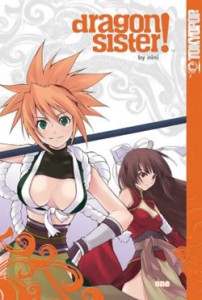
 6. DRAGON SISTER!
NINI • TOKYOPOP • 2 VOLUMES, SUSPENDED
Buried beneath the slapstick, speedlines, and extreme mammary close-ups is an intriguing premise: what if ancient China’s greatest warriors were, in fact, women? Dragon Sister! begins around 184 AD, when three brothers—Zhang Jiao, Zhang Bao, and Zhang Liang—acquire a set of magical scrolls capable of granting any wish. In their desire to overthrow the Han Dynasty, the brothers pray that no more heroes will be born, only beautiful women. Their scheme backfires, however, transforming them into a cabal of power-hungry girls. As the country descends further into chaos, young nobleman Liu Bei forms a volunteer army to oppose the Zhang sisters (formerly brothers), recruiting two busty babes, Zhang Fei and Guan Yu, to aid his cause. None of this is explained very clearly—we never have a sense of who the various factions are, or why Liu Bei remains faithful to a corrupt emperor. Instead, Nini treats us to a seemingly endless parade of costume failures, crude jokes, and scenes of predatory lesbianism, all delivered in speech that vacillates between present-day dudespeak and wuxia film formality. For the fanservice crowd. (Review originally posted at PopCultureShock, 11/2/08)
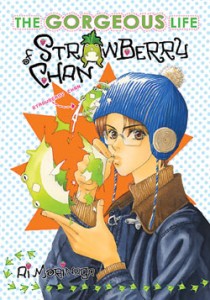
 5. THE GORGEOUS LIFE OF STRAWBERRY-CHAN
AI MORINAGA • MEDIA BLASTERS • 2 VOLUMES
I didn’t think it was possible to dislike anything by Ai Morinaga, but this sadistic boarding-school comedy proved me wrong. There’s no real story here; most of the “action” revolves around Akiyoshi, a fatuous pretty boy, and Strawberry-Chan, his talking frog. Akiyoshi delights in torturing his pet, squashing Strawberry-Chan, burying him alive, and even inflating him like a balloon via a well-placed straw. (If Morinaga is trying to make a greater point with her hero’s perverse antics, I can’t imagine what it is.) Adding insult to injury is the art, which is a riot of misapplied screentones, clashing patterns, and extreme facial close-ups—it’s the best representation of a migraine I’ve ever seen committed to paper, but some of the worst sequential art I’ve seen, period. (Review originally posted at PopCultureShock, 5/31/08)
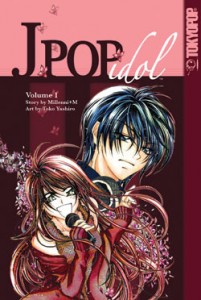
 4. J-POP IDOL
STORY BY MILLENNI+ M, ART BY TOKO YASHIRO • TOKYOPOP • 2 VOLUMES, SUSPENDED
Until Tokyopop releases a Glitter Cinemanga, otaku eager for overripe musical drama will have to content themselves with J-Pop Idol. But unlike Glitter, which is bad in a jaw-dropping, can’t-take-my-eyes-off-it way (read: awesomely bad), J-Pop Idol is just plain bad. A big part of the problem is the story, which has been hastily cobbled together from dozens of similar, Star Is Born narratives–so hastily, in fact, that many scenes feel like complete non-sequitors. One of the most egregious examples can be found in the very first pages, when the members of an up-and-coming girl group face a test of their friendship: after winning a major talent competition, only one of them is singled out for a recording contract. From the context, however, it’s impossible to see why producers chose Maki over band mates Kay and Naomi, as Maki lacks the charisma, talent, and sex appeal that distinguished Diana Ross from her fellow Supremes (or Beyonce from Destiny’s other Children, for that matter). The rest of volume one charts Maki’s attempt to build a recording career under the tutelage of handsome idol Ken, who motivates his protege with tough talk and hard lessons learned on his way to the top. There’s also a subplot involving tuberculosis that might not seem out of place in a Joan Crawford weepie, but seems downright ludicrous in a manga aimed at a teenage audience. The bottom line: J-Pop Idol may have been a “#1 hit mobile manga in Japan,” but that endorsement carries about as much weight as Paula Abdul’s enthusiastic cheerleading on American Idol. (Review originally posted at PopCultureShock, 3/10/08)
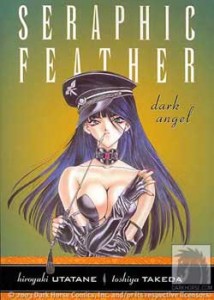
 3. SERAPHIC FEATHER
ART BY HIROYUKI UTATANE, STORY BY YO MORIMOTO AND TOSHIYA TAKEDA • DARK HORSE • 6 VOLUMES, SUSPENDED
I love me a good sci-fi tale as much as the next person, but Hiroyuki Utatane’s Seraphic Feather left me cold. How cold, you ask? Colder than the vacuum of space, I tell you.
The plot revolves around the discovery of an alien spaceship on the far side of the Moon. Various factions compete for the downed ship, hoping to unlock its powers using something called the Emblem Seeds. Running in tandem with the main plot are a love story between a young man named Sunao and his childhood friend Kei, who mysteriously re-appears after dying in an explosion on the Moon, and subplot involving Kei’s brother Apep, who mysteriously sprouts a pair of wings. The dialogue is pure Mystery Science Theater fodder, with characters frequently explaining things to one another that, presumably, they already know. Utatane seems more interested in drawing buxom girls and explosions than actually moving the plot along; though characters yell and grab each other by the arm on almost every page, the story is dead in the water long before the end of volume one. Anyone who finds the cover art sexy will find the actual story an even bigger let-down, as it’s much tamer than all those leather bustiers and riding crops might suggest.
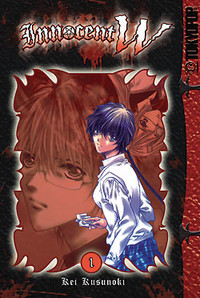
 2. INNOCENT W
KEI KUSONOKE • TOKYOPOP • 4 VOLUMES
I can’t decide if Kei Kusonoke is exceptionally efficient or just plain disgusting. To wit: on the very first pages of this three-volume series, she treats us to a panty shot of a girl with a gruesome injury. (Talk about two-fers.) Things don’t improve much from there, as the story quickly devolves into a Wiccan Battle Royale, pitting a group of young witches against an assortment of sadistic weirdos in a remote, wooded area. The hunters rape, torture, and mutilate the young women for sport, leaving a trail of dismembered corpses in the forest before the survivors gain the upper hand. Perhaps more disturbing than the actual story is the artwork: Kusonoke lavishes considerable attention on the characters’ costumes and hairstyles, but can’t be bothered to endow their faces with any expression; it’s as if the entire cast consumed large amounts of valium right before the mayhem began. They look bored. Funny, I was too…
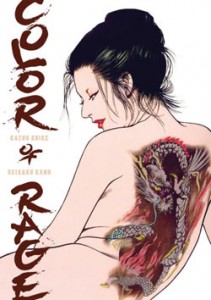
 1. COLOR OF RAGE
STORY BY KAZUO KOIKE, ART BY SEISAKE KANO • DARK HORSE • 1 VOLUME
First published in 1973, this historical drama plays like a mash-up of The Last Samurai, Rush Hour, and Mandingo. The story begins in 1783, when a whaling ship goes down off the coast of Japan. Two men — George, who’s Japanese, and King, who’s African-American — wash ashore, cut off their shackles, and head inland, only to discover a landscape populated by unscrupulous samurai and feudal lords who hold the peasants in thrall. For such a far-fetched premise to work, its principal characters’ thoughts, words, and actions need to make sense in historical context. Yet George and King behave like two modern action heroes deposited in feudal Japan, not two products of the eighteenth century; it wouldn’t be much of a stretch to imagine John Cho and Will Smith slashing and wise-cracking their way through a big-screen adaptation. Making things worse are several scenes of brutal misogyny — what the editors euphemistically call “pulpy sexiness” — that are made all the more cringe-worthy by the unexamined racial stereotypes on parade. Kazuo Koike is always pushing the boundaries of good taste — that’s part of what makes Crying Freeman and Lady Snowblood so much fun — but Color of Rage sails way over the line and keeps on going. (Review originally posted at PopCultureShock, 5/18/08)
* * * * *
I’ll be the first to admit that this list reflects my own biases. I don’t have much patience for fanservice, sadism, or gore for gore’s sake; if I’m going to be treated to dismembered bodies and panty shots, there needs to be a story and some memorable characters for me to be on board with it. I realize that some folks don’t feel the same way as I do, and that’s OK. There’s plenty of room for all of us under the manga-loving tent, even if we can’t agree on whether Arm of Kannon is awesome or awful. (In other words: hate the manga, not the critic.)
So what manga belong on your all-time worst list and why? Inquiring minds want to know!
POSTSCRIPT, 9/28/09: Over at Okazu, Erica Friedman posts her Yuri Manga Hall of Shame, five blisteringly funny critiques of books like Suzunari and Alice on Deadlines. Go, read, and be glad you dodged a 4-koma manga about cat clone twincest.
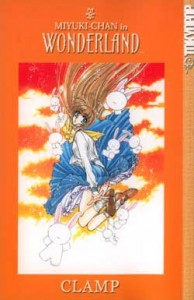 10. Miyuki-chan in Wonderland
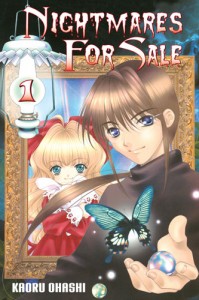 9. Nightmares for Sale
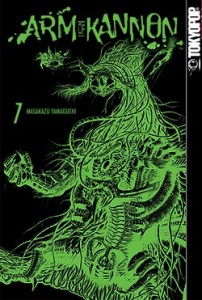 8. Arm of Kannon
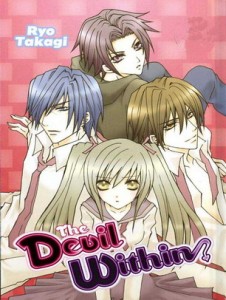 7. The Devil Within
 6. Dragon Sister!
 5. The Gorgeous Life of Strawberry-chan
 4. J-Pop Idol
 3. Seraphic Feather
 2. Innocent W
 1. Color of Rage
 After reading Missin’ and Missin’ 2, I’m convinced that novelist Novala Takemoto was a teenage girl in a previous life. But not the kind of girl who was on the cheerleading squad, the volleyball team, or the school council — no, Takemoto was the too-cool-for-school girl, the one whose unique fashion sense, sullen demeanor, and indifference to high school mores made her seem more adult than her peers, even if her behavior and emotions were, in fact, just as juvenile as everyone else’s. Though this kind of angry female rebel is a stock character in young adult novels, Takemoto has a special gift for making them sound like real girls, not an adult’s idea of what a disaffected teenager sounds like.
 Built in 1607, the Ooku, or “great interior,” housed the women of the Tokugawa clan, from the shogun’s mother to his wife and concubines. Strict rules prevented residents from fraternizing with outsiders, or leaving the grounds of Edo Castle without permission. Within the Ooku, an elaborate hierarchy governed day-to-day life; at the very top were the joro otoshiyori, or senior elders, who supervised the shogun’s attendants and served as court liaisons; beneath them were a web of concubines, priests, pages, cooks, and char women who hailed from politically connected families. This elaborate social system was mirrored in the physical structure of the Ooku, which was divided into three distinct areas — the Rear Quarters, the Middle Interior, and the Front Quarters — each intended solely ladies of a particular rank. The only male permitted into the Ooku (unescorted, that is), was the shogun himself, who accessed the “great interior” by means of the Osuzu Roka, a long corridor that connected the shogun’s living quarters with the imperial harem.
 Highbrow, lowbrow… and everything in between. That’s the slogan of
  In the year 2346 A.D., humans have colonized the Vulcan solar system, a region so inhospitable that the average life span is a mere thirty years. Rai and Thor, whose parents belong to Vulcan’s ruling elite, enjoy a life of rare privilege — that is, until a political rival executes their parents and exiles the boys to Kimaera, a penal colony reserved for violent criminals. To say Kimaera’s climate is harsh understates the case: daylight lasts for 181 days, producing extreme desert conditions and water shortages, while nighttime plunges Kimaera into arctic darkness for an equal length of time. Making the place even more treacherous is the flora, as Kimaera’s jungles team with carnivorous plants capable of eating humans whole.
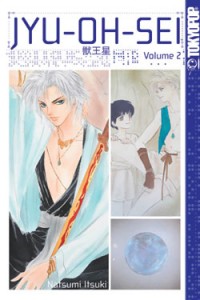 Though the story is well-executed, the artwork is something of a disappointment. Itsuki goes to great pains to create a diverse cast — a task at which she’s generally successful — but her character designs are generic and dated; I’d be hard-pressed to distinguish the Kimaerans from, say, the cast of RG Veda or Basara. Itsuki also struggles with skin color; her dark-skinned women bear an unfortunate resemblance to kogals, thanks to Itsuki’s clumsy application of screentone.
 Tegami Bachi has all the right ingredients to be a great shonen series: a dark, futuristic setting; rad monsters; cool weapons powered by mysterious energy sources; characters with goofy names (how’s “Gauche Suede” grab you?); and smart, stylish artwork. Unfortunately, volume one seems a little underdone, like a piping-hot shepherd’s pie filled with rock-hard carrots.
 The ocean occupies a special place in the artistic imagination, inspiring a mixture of awe, terror, and fascination. Watson and the Shark, for example, depicts the ocean as the mouth of Hell, a dark void filled with demons and tormented souls, while The Birth of Venus offers a more benign vision of the ocean as a life-giving force. In Children of the Sea, Daisuke Igarashi imagines the ocean as a giant portal between the terrestrial world and deep space, as is suggested by a refrain that echoes throughout volume one: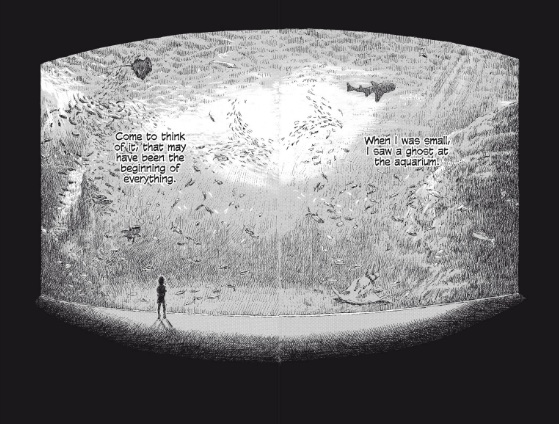
 If Phoenix is Tezuka’s Ring Cycle, Wagnerian in scope, form, and seriousness, then Dororo is Tezuka’s Don Giovanni, a playful marriage of supernatural intrigue and lowbrow comedy whose deeper message is cloaked in shout-outs to fellow artists (in this case,