 I read a Rumiko Takahashi manga for the same reason I watch an Alfred Hitchcock thriller: I know exactly what I’m going to get. Certain plot elements and motifs recur throughout each artist’s work — Hitchcock loves pairing a brittle blond with a rakish cad on the run from authorities, for example, while Takahashi loves pairing a female “seer” with a demonically-tinged boy — yet the craft with which Hitchcock and Takahashi develop such tropes prevents either artist’s work from feeling stale or repetitive. Takahashi’s latest series gives ample proof that while she may have a limited repertory, she’s the undisputed master of the supernatural mystery.
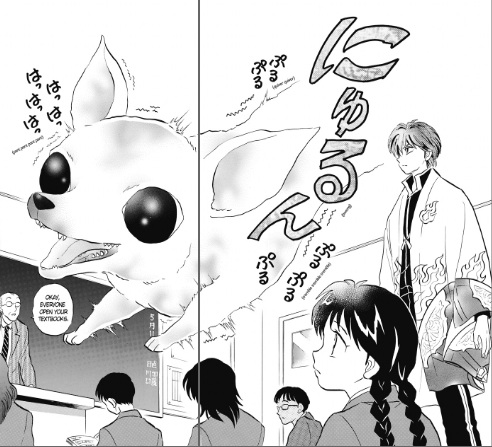
Sakura Mamiya and Rinne Rokudo, Rin-ne‘s oil-and-water leads, are a classic Takahashi pair: Sakura is a seemingly ordinary teenager with the ability to see ghosts, while Rinne is a hot-headed boy who’s part human and part shinigami. The two meet cute in Sakura’s tenth-grade classroom when Rinne arrives to claim his long-empty seat. “Looks like he made it,” Sakura whispers to a friend before realizing that she’s the only person who can see the tall, flame-haired boy in a fancy ceremonial robe. Sakura then watches Rinne attempt to banish an enormous Chihuahua demon to the afterlife — an exorcism that goes horribly (and comically) awry when the dog’s spirit merges with the spirit of a love-starved teen. Now forced to contend with an even more powerful, angry ghost, Rinne uses Sakura to lure it to the Wheel of Reincarnation, an enormous portal that separates the material and spirit worlds.
…


 Warning: the Surgeon General has determined that reading Moyasimon: Tales of Agriculture may be hazardous to your health. Individuals who routinely consume large quantities of yogurt, miso, or natto; keep stashes of Purell in their purses and desk drawers; or have an irrational fear of germs or dirt are cautioned against reading Moyasimon. Side effects include disgust, nausea, and a strong desire to wash one’s hands repeatedly. Those with stronger constitutions, however, may find this odd little comedy fun, if a little too dependent on gross-out humor for laughs.
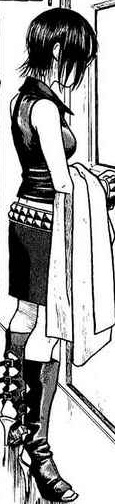 The humor is good-natured, though Masayuki Ishikawa indulges his inner ten-year-old’s penchant for gross-out jokes every chance he gets.He repeatedly subjects Tadayasu and Kei to Itsuki’s food fetishes, forcing them to watch Itsuki exhume and eat kiviak (a fermented seal whose belly has been stuffed with birds), or try a piece of hongohoe, a form of stingray sashimi so pungent it makes their eyes water. Ishikawa’s decision to render the bacteria as cute, roly-poly creatures with cheerful faces prevents the story from shading into horror, though it’s awfully hard to shake the image of bacteria frolicking in a bed of natto or around the slovenly Misato’s nostril.
 9. NIGHTMARES FOR SALE
 7. THE DEVIL WITHIN
 6. DRAGON SISTER!
 5. THE GORGEOUS LIFE OF STRAWBERRY-CHAN
 4. J-POP IDOL
 3. SERAPHIC FEATHER
 2. INNOCENT W
 1. COLOR OF RAGE
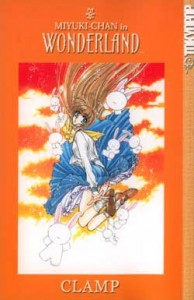 10. Miyuki-chan in Wonderland
 9. Nightmares for Sale
 8. Arm of Kannon
 7. The Devil Within
 6. Dragon Sister!
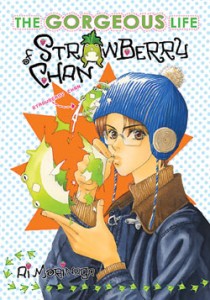 5. The Gorgeous Life of Strawberry-chan
 4. J-Pop Idol
 3. Seraphic Feather
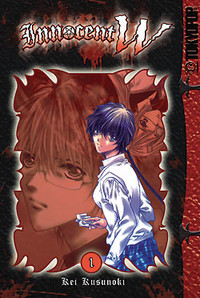 2. Innocent W
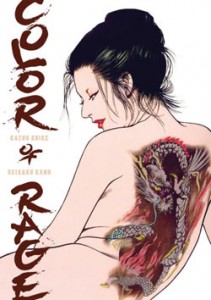 1. Color of Rage
 After reading Missin’ and Missin’ 2, I’m convinced that novelist Novala Takemoto was a teenage girl in a previous life. But not the kind of girl who was on the cheerleading squad, the volleyball team, or the school council — no, Takemoto was the too-cool-for-school girl, the one whose unique fashion sense, sullen demeanor, and indifference to high school mores made her seem more adult than her peers, even if her behavior and emotions were, in fact, just as juvenile as everyone else’s. Though this kind of angry female rebel is a stock character in young adult novels, Takemoto has a special gift for making them sound like real girls, not an adult’s idea of what a disaffected teenager sounds like.
 Built in 1607, the Ooku, or “great interior,” housed the women of the Tokugawa clan, from the shogun’s mother to his wife and concubines. Strict rules prevented residents from fraternizing with outsiders, or leaving the grounds of Edo Castle without permission. Within the Ooku, an elaborate hierarchy governed day-to-day life; at the very top were the joro otoshiyori, or senior elders, who supervised the shogun’s attendants and served as court liaisons; beneath them were a web of concubines, priests, pages, cooks, and char women who hailed from politically connected families. This elaborate social system was mirrored in the physical structure of the Ooku, which was divided into three distinct areas — the Rear Quarters, the Middle Interior, and the Front Quarters — each intended solely ladies of a particular rank. The only male permitted into the Ooku (unescorted, that is), was the shogun himself, who accessed the “great interior” by means of the Osuzu Roka, a long corridor that connected the shogun’s living quarters with the imperial harem.
 Highbrow, lowbrow… and everything in between. That’s the slogan of
  In the year 2346 A.D., humans have colonized the Vulcan solar system, a region so inhospitable that the average life span is a mere thirty years. Rai and Thor, whose parents belong to Vulcan’s ruling elite, enjoy a life of rare privilege — that is, until a political rival executes their parents and exiles the boys to Kimaera, a penal colony reserved for violent criminals. To say Kimaera’s climate is harsh understates the case: daylight lasts for 181 days, producing extreme desert conditions and water shortages, while nighttime plunges Kimaera into arctic darkness for an equal length of time. Making the place even more treacherous is the flora, as Kimaera’s jungles team with carnivorous plants capable of eating humans whole.