 American publishers have been trying to market light novels to manga fans for close to a decade, with mixed results. Though Dark Horse’s Vampire Hunter D books have sold more than 300,000 units, few other companies can claim similar success with light novels. TOKYOPOP, for example, launched its Pop Fiction imprint in 2006 with several high-profile series, among them The Twelve Kingdoms and Trinity Blood, but poor sales doomed the line to obscurity; by the time TOKYOPOP announced that it would be shuttering its North American publishing operation, it had scrapped its Pop Fiction imprint and drastically curtailed its light novel production.
Part of the problem was logistics: light novels pose a unique problem for retailers, who must decide whether the books should be shelved with graphic novels — where manga fans are more likely to find them — or with science fiction and fantasy books — where a broader readership might discover them. And part of the problem was quality: many of the light novels TOKYOPOP published were poor-to-middling, rendered in flat, functional prose that conveyed little of the energy or imagination of the best manga TOKYOPOP licensed. There were some genuine stand-outs in the Pop Fiction catalog, however, among them Kino’s Journey, a wistful travelogue about a young woman who wanders the globe on a talking motorcycle; Welcome to the NHK, a rude, hilarious expose on Japan’s hikokimori subculture; and Gosick, an old-fashioned murder mystery that’s equal parts Arthur Conan Doyle and Scooby Doo.
Described as a “modern twist on Holmes and Watson,” Gosick adheres to a tried-and-true formula in which a cold but brilliant detective is paired with a sincere but slightly dim sidekick who’s always a few clues behind the audience. In the case of Gosick, the Holmes stand-in is Victorique, the resident eccentric at the Saint Marguerite Academy in Sauville (a fictional European country, just in case you were about to visit the Wikipedia), while the Watson surrogate is Kazuya Kujo, the school’s sole Japanese student. Victorique is a little less degenerate than Conan Doyle’s greatest creation, favoring a pipe over a glass of absinthe; nonetheless, she shares Holmes’s contempt for small minds, superstitions, and emotionally driven decision-making. Her reputation for deductive reasoning leads the nearby town’s pretty-boy inspector to seek her advice whenever there’s a murder – which, given the size and geographical remoteness of the town, occurs with rather alarming frequency.
In the course of investigating a fortune teller’s death, Victorique and Kazuya board the Queen Berry, a ship which supposedly sank ten years earlier with a cargo of murdered children. The two endure a night of extreme violence and seemingly supernatural events as they comb the ship for clues about the old woman’s past. These scenes play like Ten Little Indians crossed with Battle Royale: the ship’s other passengers visit horrific deaths on one another, usually with sharp objects or booby traps. Interspersed with the carnage – which, despite my description, is pretty tame – are numerous conversations in which Victorique patiently debunks the notion that the Queen Berry is haunted, culminating in the kind of “if it wasn’t for those meddling kids I would have had my revenge!” ending familiar to Scooby Doo fans.
What sets Gosick apart from most of the light novels I’ve read — admittedly, a small and unscientific sampling — is the prose. As Carlo Santos noted in his review of volume one, “we get real paragraphs and sentences, with a good mix of description, dialogue and action to keep the story moving” instead of the “clipped, telegraphic sentences” characteristic of the Code Geass and Full Metal Panic novels. To be sure, no one will confuse Gosick with the stark lyricism of Snow Country or the biting snarl of Kamikaze Girls, but the prose is adequate to the task at hand. Aside from a few fussy and oft-repeated details about the characters’ appearance, most of the description focuses on the setting and the elaborate death-traps aboard the Queen Berry, keeping the readers’ attention squarely focused on the mayhem.
The plot may disappoint some contemporary mystery buffs; if you’re an ardent fan of Alexander McCall Smith or Tony Hillerman, you may find Gosick‘s parlor-room denouement too pat and old-fashioned to be genuinely satisfying. Readers who enjoyed Case Closed, The Kindachi Case Files, and Higurashi When They Cry, however, will find Gosick‘s exaggerated characters, Baroque murders, and slick illustrations right in their wheelhouse.
This is an expanded version of a review that originally appeared at PopCultureShock on 4/8/08.
GOSISCK, VOL. 1 • STORY BY KAZUKI SAKURABA, ART BY HINAKO HIRATA • TOKYOPOP • 192 pp.

 MICHELLE: There’s a lot of good stuff hitting Midtown Comics this week, including new volumes of several of my Shojo Beat favorites. But I simply must award my pick of the week to the 23rd and final volume of
  MJ: Well, wow, it’s incredibly tempting to second Michelle’s choice. I have a deep, deep love for Hikaru no Go, something you’ll all be hearing more about as the week goes on. In the interest of diversity, however, I’ll take up the torch for Usamaru Furuya’s
  DAVID: It’s certainly an embarrassment of riches this week, and I certainly second both Michelle and MJ’s choices, and there are new volumes of some utterly winning shôjo series (Kimi ni Todoke and The Story of Saiunkoku leap to mind), but I’m going to cast my vote for the


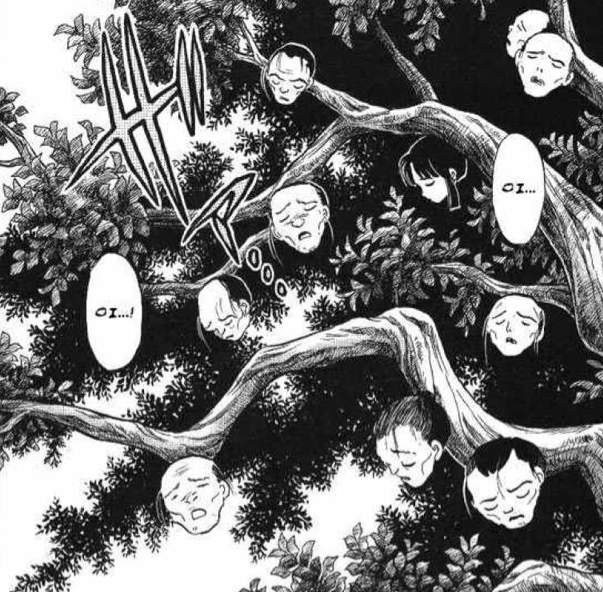




 KATE: If someone asked me, “Which Rumiko Takahashi title should I read first?”, I’d direct them to Mermaid Saga, one of Takahashi’s shortest — and best — series. Mermaid Saga focuses on Yuta, a four-hundred-year-old fisherman on a quest to restore his mortality. Yuta crisscrosses Japan in search of a mermaid who can grant his wish, along the way encountering thieves, murderers, and immortal beings, all of whom seek mermaid flesh for their own purposes.
  MICHELLE: If someone asked me the same question, I think my answer would be InuYasha. Despite its sprawl (56 volumes!) and its penchant for repetition, InuYasha is deservedly a shounen classic. When I reviewed
  MJ: As the least Takahashi-literate of the lot, I’m not sure my recommendation is really the best for a first read, though it’s certainly my favorite. Though I’ve finally begun to catch up on her lengthy catalogue, my heart still belongs to Maison Ikkoku, my own first Takahashi series. I’m a real sucker for grown-up romantic comedy and Maison Ikkoku hits the spot just as perfectly as can be. Warm, funny, and just over-the-top enough to make its rare, quiet moments really ring true, Maison Ikkoku is a veritable buffet of raw humanity, presented with true affection by its immensely skillful author.
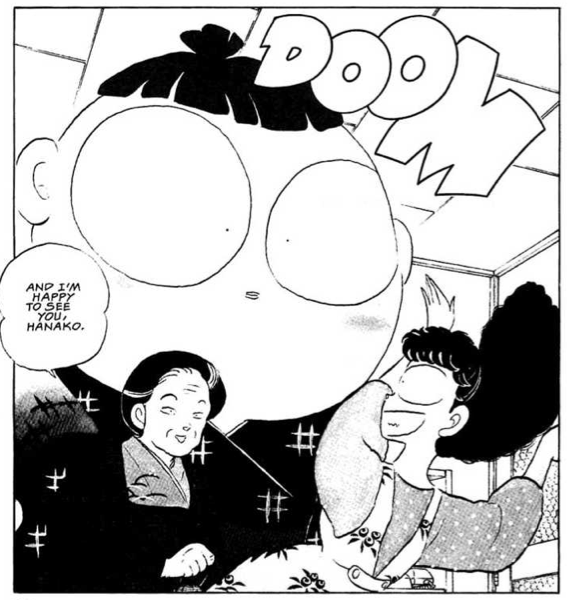
  DAVID: Would it be perverse of me to pick an out-of-print title as an introduction to Takahashi? Probably, but I hope I can be excused, because Rumic Theater should be in print at all times, possibly in hardcover with informative biographical pieces added. As I noted in



 DAVID: My pick for this week is the third volume of Natsume Ono’s Eisner-nominated
  KATE: Well, nuts, I was going to name House of Five Leaves my pick of the week as well before David said everything I might have said, only more eloquently. So I’m going to choose the sixth and final volume of
  MICHELLE: I’m certainly happy to see the fourth volume of Udon’s Silent Mobius: Complete Edition appearing on the list of new arrivals at last, but I am going to have to cast my vote instead for the fifth volume of Kaoru Tada’s classic shoujo romantic comedy,
  MJ: First, let me echo Kate’s sentiment, in that I was fully prepared to name House of Five Leaves, even if it was a repeat on the list, but given how beautifully David recommended it, my vote feels quite unnecessary. With that in mind, I’ll give a shout-out to Jun Mochizuki’s


