• Skip to primary navigation
  • Skip to main content
  • Skip to primary sidebar
  • Home
  • About Us
    • Privacy Policy
    • Comment Policy
    • Disclosures & Disclaimers
  • Resources
    • Links, Essays & Articles
    • Fandomology!
    • CLAMP Directory
    • BlogRoll
  • Features & Columns
    • 3 Things Thursday
    • Adventures in the Key of Shoujo
    • Bit & Blips (game reviews)
    • BL BOOKRACK
    • Bookshelf Briefs
    • Bringing the Drama
    • Comic Conversion
    • Fanservice Friday
    • Going Digital
    • It Came From the Sinosphere
    • License This!
    • Magazine no Mori
    • My Week in Manga
    • OFF THE SHELF
    • Not By Manga Alone
    • PICK OF THE WEEK
    • Subtitles & Sensibility
    • Weekly Shonen Jump Recaps
  • Manga Moveable Feast
    • MMF Full Archive
    • Yun Kouga
    • CLAMP
    • Shojo Beat
    • Osamu Tezuka
    • Sailor Moon
    • Fruits Basket
    • Takehiko Inoue
    • Wild Adapter
    • One Piece
    • After School Nightmare
    • Karakuri Odette
    • Paradise Kiss
    • The Color Trilogy
    • To Terra…
    • Sexy Voice & Robo
  • Browse by Author
    • Sean Gaffney
    • Anna Neatrour
    • Michelle Smith
    • Katherine Dacey
    • MJ
    • Brigid Alverson
    • Travis Anderson
    • Phillip Anthony
    • Derek Bown
    • Jaci Dahlvang
    • Angela Eastman
    • Erica Friedman
    • Sara K.
    • Megan Purdy
    • Emily Snodgrass
    • Nancy Thistlethwaite
    • Eva Volin
    • David Welsh
  • MB Blogs
    • A Case Suitable For Treatment
    • Experiments in Manga
    • MangaBlog
    • The Manga Critic
    • Manga Report
    • Soliloquy in Blue
    • Manga Curmudgeon (archive)

Manga Bookshelf

Discussion, Resources, Roundtables, & Reviews

Katherine Dacey

The Manga Revue: Junji Ito’s Cat Diary

December 12, 2015 by Katherine Dacey

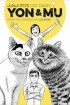
2015 has been a banner year for Junji Ito. In April, VIZ re-issued Gyo, Ito’s ick-tastic classic. Two months later, VIZ introduced readers to Fragments of Horror, the first new Ito title to arrive in the US in a decade. That was soon followed by the stateside debut of Junji Ito’s Cat Diary: Yon & Mu, a humorous anthology published by Kodansha Comics. I first heard about Cat Diary back in 2011, when Ryan Sands posted a few images at Same Hat! It sounded like something I’d like–I’m on record as being an animal sap–so I was delighted when Kodansha announced plans to release it this year. Here are my somewhat biased thoughts on Yon & Mu.

Cat_DiaryJunji Ito’s Cat Diary: Yon & Mu
By Junji Ito
Rated T, for readers 13+
Kodansha Comics, $10.99

On the surface, Junji Ito’s Cat Diary is a gag manga. J-Kun–a lightly fictionalized version of the author–reluctantly agrees to let his fiancee bring two cats into their home: Yon, a black-and-white cat with sinister markings on his back, and Mu, a Norwegian forest cat with a cute face and a wicked bite. Each story depicts Yon and Mu doing normal cat things, from coughing up hairballs to resisting unsolicited human affection. Readers familiar with Ito’s previous manga will get a chuckle at J-Kun’s over-the-top reactions to cat poop, scratched floors, and feather wands, as his grotesque facial expressions have been swiped from the pages of Gyo and Uzumaki. Surprisingly, these grimaces work just as well in the context of a domestic comedy, capturing the mixture of revulsion and love that cat behavior elicits. The uninitiated reader may also find these scenes amusing, if a bit excessive; surely a grown man realizes that cats can be jerks?

On a deeper level, however, Cat Diary is a meditation on human relationships. Though the ostensible plot focuses on J-Kun’s struggle to overcome his dislike of cats, the real story is Yon and Mu’s role in bringing J-Kun closer to his fiancee. J-Kun comes to love the cats–spoiler alert!–but the way in which he expresses those feelings demonstrates his journey from “me” to “we,” as his selfish concerns about the house give way to a shared sense of responsibility for the cats’ welfare. This human dimension of Cat Diary infuses it with a warmth that’s frequently missing from Ito’s work, and prevents the stories from reading like a collection of cat GIFs. (I can haz laffs now!)

On a totally shallow note, reading Cat Diary made me want to get my own Norwegian forest cat. I’m not sure if that’s an endorsement of Ito’s comedy chops, but it’s proof that he can draw the hell out of cute, furry things.

The verdict: You don’t need to be a cat person–crazy or otherwise–to enjoy this idiosyncratic manga, though a healthy respect for cats definitely helps.

Reviews: In the mood for shojo? Megan R. of The Manga Test Drive has you covered with in-depth reviews of The Demon Prince of Momochi House, First Love Monster, L♥DK, and Requiem of the Rose-King. Comics Alliance contributor Tom Speelman reflects on the legacy of Naruto, one of the world’s most popular manga.

Michael Burns on vol. 4 of Akame ga Kill! (Ani-TAY)
Megan R. on The Angel of Elhamburg (The Manga Test Drive)
Jordan Richards on vols. 5-7 of Assassination Classroom (AiPT!)
Sean Gaffney on vol. 7 of A Bride’s Story (A Case Suitable for Treatment)
Sheena McNeil on vol. 56 of Case Closed (Sequential Tart)
Lindsey Tomsu on vols. 1-3 of Dictatorial Grimoire (No Flying, No Tights)
Nick Smith on vol. 1 of Dragons Rioting (ICv2)
Michael Burns on vol. 8 of Food Wars! Shokugeki no Soma (Ani-TAY)
Justin Stroman on vol. 1 of Horimiya (Organization Anti-Social Geniuses)
Lindsey Tomsu on vols. 1-9 of Kanokon (No Flying, No Tights)
Jordan Richards on vol. 2 of Komomo Confiserie (AiPT!)
Karen Maeda on vol. 4 of Master Keaton (Sequential Tart)
Sarah on vol. 1 of Merman in My Tub (Anime UK News)
L.B. Bryant on vol. 1 of Monthly Girls’ Nozaki-Kun (ICv2)
Sarah on vol. 1 of Monthly Girls’ Nozaki-Kun (Anime UK News)
Austin Lanari on vol. 7 of New Lone Wolf & Cub (Comic Bastards)
Chris Beveridge on vol. 1 of Planetes (The Fandom Post)
Matt on vol. 2 of Prison School (Ani-TAY)
Matt on vol. 1 of School-Live! (Ani-TAY)
Josh Begley on vol. 6 of Vinland Saga (The Fandom Post)

Filed Under: MANGABLOG, REVIEWS Tagged With: Cat Diary, Junji Ito, Kodansha Comics, Manga Review

The Manga Revue: Deadman Wonderland and Livingstone

November 27, 2015 by Katherine Dacey

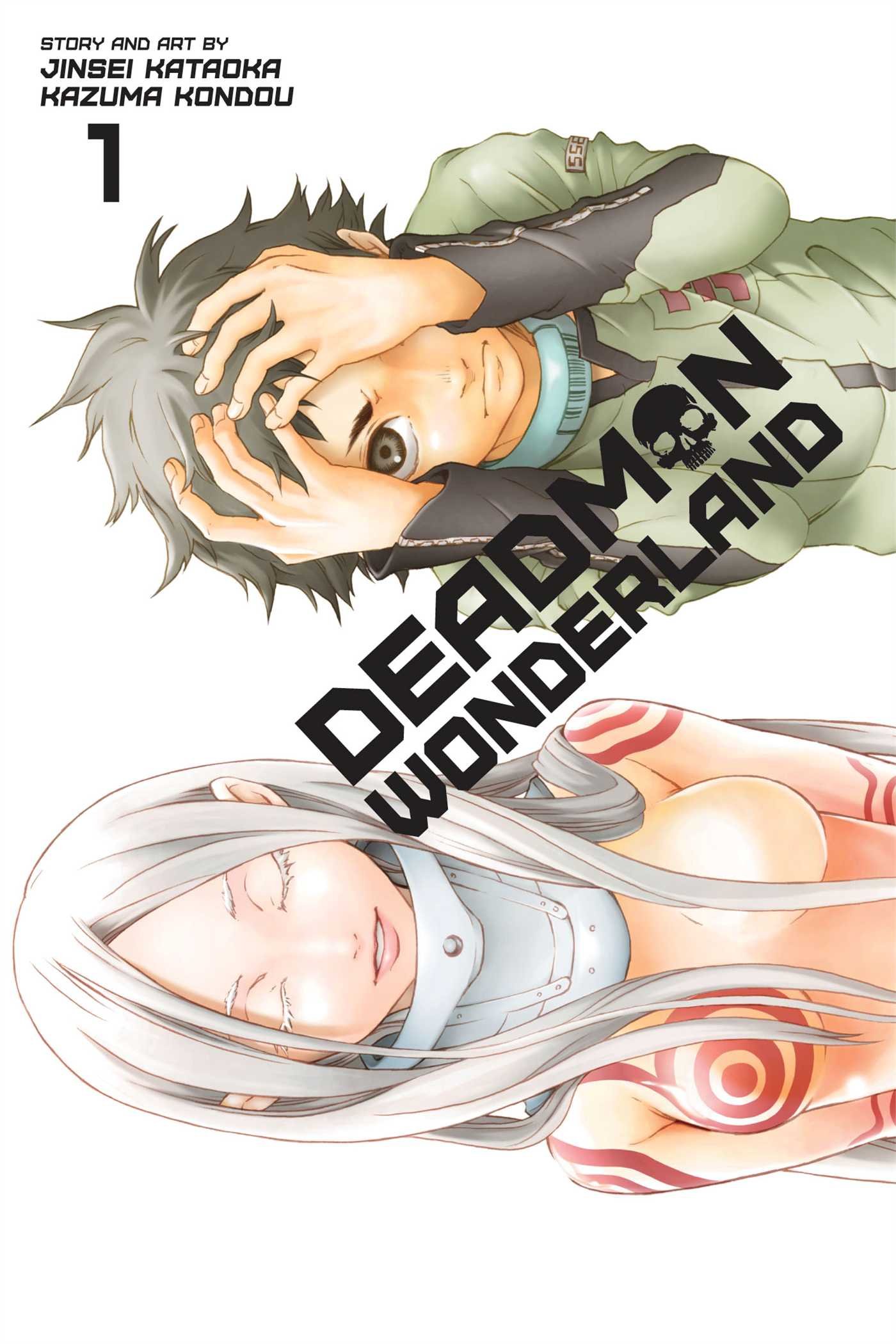
The November release of Jinsei Kataoka and Tomohiro Maekawa’s Livingstone provided me a nifty excuse to try Deadman Wonderland, an earlier series written and illustrated by Katoaka. Fans of Deadman Wonderland may know its complex licensing history here in the US: Tokyopop was its first publisher, releasing five volumes before going bankrupt in 2011. VIZ acquired the series in 2013, and is now just two volumes shy of the series’ grand finale, which arrives in February 2016. Whether you’re new to Kataoka’s work or have been a long-time fan, this column has something for you–so read on!

deadman_wonderland1Deadman Wonderland, Vol. 1
Story & Art by Jinsei Kataoka and Kazuma Kondou
Rated T+, for Older Teens
VIZ Media, $9.99

In the not-so-distant future, visitors flock to Deadman Wonderland, a prison-cum-theme park in Tokyo Bay where inmates fight to the death in front of paying crowds. Our guide to this Roman circus is newly minted prisoner Ganta Igarashi, an ordinary fourteen-year-old who’s been wrongfully convicted of murdering his classmates. Ganta’s fundamental decency is challenged at every turn; try as he might to cling to his humanity and clear his name, the prison’s arbitrary rules and roving gangs make it hard to be principled.

From my thumbnail description, you might conclude that Deadman Wonderland was cobbled together from parts of Judge Dredd, Rollerball, and Escape from New York–and you wouldn’t be wrong. What prevents Deadman Wonderland from reading like Rollerball 2: The Revenge is imaginative artwork. Jinsei Kataoka and Kazuma Kondou have created a Bizarro World Disneyland with rides, concessions, grinning animal mascots, and attractions like the Happy Dog Run, a lethal obstacle course featuring swinging blades and spike-filled pits. The characters who inhabit this landscape are a motley crew: though some telegraph their bad-guy status with tattoos and goofy haircuts, there are enough ordinary-looking prisoners that it’s impossible to judge who’s trustworthy. That uncertainty creates a strong undercurrent of tension in every scene, making Ganta’s routine activities–a conversation in the bathroom, a trip to the cafeteria–as fraught with peril as an actual contest.

The manga’s other great strength is pacing. Kataoka and Kondou resist the temptation to dole out too much information in the first volume; we’re never more than a clue or two ahead of Ganta, though perceptive readers may finish volume one with some notion of the prison’s true purpose. The authors’ expert timing also prevents us from dwelling on the story’s most shopworn elements, instead focusing our attention on how Ganta responds to new characters and new challenges.

All of which is to say: Deadman Wonderland is more fun than it has any right to be, considering the high body count and recycled plot points. Count me in for the next twelve volumes!

The verdict: Great art, smart pacing, and an appealing lead character make Deadman Wonderland a winner. (A note to parents, teachers, and librarians: this manga’s rating is justified.)

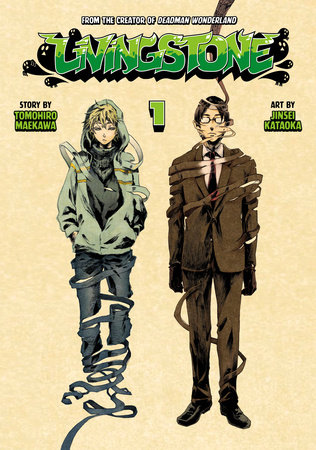
livingstoneLivingstone, Vol. 1
Story  by Tomohiro Maekawa, Art by Jinsei Kataoka
Rated 16+
Kodansha Comics, $10.99

Livingstone is a handsomely illustrated bore, the kind of manga in which the writer has dressed up a simple concept with a profusion of fussy details that don’t add depth or interest to the story. The title refers to human souls–or, more accurately, the rock-like form that human souls take after a person dies. Sakurai and Amano, the manga’s protagonists, work together to harvest livingstones, thus ensuring that a soul is properly passed from one person to the next. If a person dies before his appointed time, however, his soul curdles into a gooey blob of bad juju.

The manga has the rhythm of a cop show: in each chapter, Sakurai and Amano solve or prevent one unscheduled death, usually by negotiating with someone who’s planning to kill himself. Livingstone‘s intense fixation on suicide is off-putting; none of the would-be victims are particularly sympathetic, and Sakurai and Amano’s ministrations are so tone-deaf that it’s hard to know what message author Tomohiro Maekawa is hoping to impart to readers. Sakurai and Amano’s antagonistic bickering is supposed to inject a note of levity into the proceedings, I think, but the timing of the jokes and the staleness of the characterizations do little to offset the dour tone. By the end of volume one, I found myself feeling bummed out and irritated–never a good sign for a series that’s exploring a subject as serious as death.

The verdict: Nice art, lousy script; I liked this story better when it was called The Kurosagi Corpse Delivery Service.

Reviews: At Comics Worth Reading, Johanna Draper Carlson dives into the eleventh volume of Fumi Yoshinaga’s Ooku: The Inner Chambers, which she describes as “something like Macbeth in kimonos.” Megan R. of The Manga Test Drive offers an in-depth assessment of Oishinbo, “the longest running food manga in Japan,” while Seth Hahne, proprietor of Good OK Bad, weighs in on Yamada-Kun and the Seven Witches. Feeling crafty? Vertical Comics shares some early reviews of their latest Arnazi Aronzo book Cuter Stuff.

Connie on Alice in the Country of Hearts: Ace of Hearts (Slightly Biased Manga)
Lindsey Tomsu on The Celebration of Haruhi Suzumiya (No Flying No Tights)
Sean Gaffney on vol. 5 of A Certain Magical Index (A Case Suitable for Treatment)
Wolfen Moondaughter on vol. 27 of Claymore (Sequential Tart)
Allen Kesinger on vols. 1-2 of D-Frag (No Flying No Tights)
ebooksgirl on vol. 2 of The Devil Is a Part-Timer! High School! (Geek Lit Etc.)
Ken H. on vol. 1 of Devil Survivor (Sequential Ink)
Connie on vol. 32 of Eyeshield 21 (Slightly Biased Manga)
Kory Cerjak on vol. 50 of Fairy Tail (The Fandom Post)
Troy Nikandler on vol. 1 of Is It Wrong to Try to Pick Up Girls in a Dungeon? (Otaku Review)
Holly Saiki on Junji Ito’s Cat Diary: Yon & Mu (Examiner)
Karen Maeda on vol. 1 of Komomo Confiserie (Sequential Tart)
Sean Gaffney on vol. 1 of Log Horizon: Game’s End (A Case Suitable for Treatment)
Connie on vol. 1 of Meteor Prince (Slightly Biased Manga)
Wolfen Moondaughter on vol. 2 of My Hero Academia (Sequential Tart)
Johanna Draper Carlson on vols. 4-6 of My Love Story!! (Comics Worth Reading)
Justin Stroman on Oh! My Goddess (Organization Anti-Social Geniuses)
Kane Bugeja on vol. 6 of Seraph of the End: Vampire Reign (Snap 30)
Matthew Warner on vol. 18 of Tegami Bachi (The Fandom Post)
Wolfen Moondaughter on vol. 8 of Tiger & Bunny (Sequential Tart)
Frank Inglese on vol. 7 of World Trigger (Snap 30)
Sheena McNeil on vol. 1 of Yo-Kai Watch (Sequential Tart)
Dustin Cabeal on vols. 1-2 of Yo-Kai Watch (Comic Bastards)
Paige Sammartino on vols. 1-2 of Yo-Kai Watch (Women Write About Comics)

PS: Our Manga Bookshelf colleague Ash Brown is giving away the first volumes of four awesome shojo titles from Kodansha Comics, including LDK, Let’s Dance a Waltz, My Little Monster, and one of my personal favorites Say I Love You. Don’t dally; the contest closes on December 2nd!

Filed Under: MANGABLOG, REVIEWS Tagged With: Deadman Wonderland, Jinsei Kataoka, Kodansha Comics, Livingstone, Manga Review, viz media

The Manga Revue: Kill la Kill and Platinum End

November 20, 2015 by Katherine Dacey

File this column under I’m Not Dead Yet! November has been hectic, and it shows; my last post was over a month ago. Today’s column is an attempt to get back on track with regular updates. On the agenda are reviews of Kill la Kill, an adaptation of the wildly popular anime, and Platinum End, a new shonen series with an impeccable pedigree.

Kill_la_KillKill la Kill, Vol. 1
Comic by Ryo Akizuki; Story by TRIGGER and Kazuki Nakashima
No rating (best for readers 13+)
UDON Entertainment, $12.99

In my small and unscientific sampling of manga based on anime, I’ve read a lot of duds. Wolf’s Rain and Cowboy Bebop, for example, both fell flat in print, conveying little of the personalities or plot intricacies that made both animated series compelling. Kill la Kill is a more artful transfer of show to page, but suffers from some of the same issues as other anime-cum-manga.

Like the anime on which it’s based, the Kill la Kill manga see-saws between flamboyant parody and straight-faced action, mixing jokey conversations with bone-crunching fights. Navigating these tonal extremes in print proves challenging, however. The manga is funniest when skewering tropes that don’t need sound effects or color to make the joke stick–like equipping characters with goofy weapons or populating Honnouji Academy with students who look like extras from Mad Max: Beyond Thunderdome. 

The artists’ desire to spoof other cliches fall flat. On the page, heroine Ryuko Matoi’s barely-there power suit seems like blatant pandering to the male gaze; the artistic team lavishes considerable attention on Ryuko’s body, lovingly depicting her torso and buttocks from myriad angles. On the screen, however, the addition of sound puts a different spin on the material. The cheerful voice acting, peppy music, and snappy sound effects transform an exploitative sequence into an absurd riff on the indignities of fighting in a costume that consists of two well-placed suspenders and a dinner napkin. It isn’t deep, but it is funny, highlighting the stupidity of the “power up!” sequence that’s ubiquitous in anime, manga, and tokusatsu.

The manga suffers from the absence of color and sound in other passages, too. Without a voice actor to modulate the dialogue, almost EVERY PAGE READS LIKE THIS!!! OMG!!! ARE YOU LAUGHING YET??!!!! By the end of volume one, I felt pummeled into submission rather than amused by the affectionate send-up of Japanese pop culture’s most ubiquitous storytelling conventions.

The verdict: The manga looks like a million bucks, but the script strains too hard for effect.

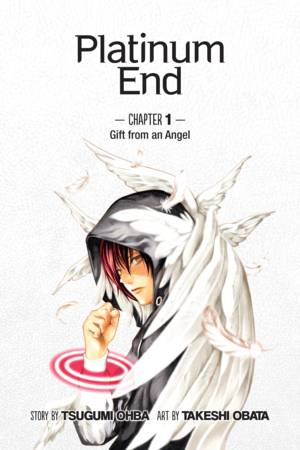
plantinum_endPlatinum End, Chapter 1
Story by Tsugumi Ohba, Art by Takeshi Obata
Rated T+, for teens over 13
VIZ Manga, $.99 (digital only)

Over the last twelve months, VIZ has been experimenting with digital-first releases, a strategy that’s worked well for high-profile shonen titles like One-Punch Man and Tokyo Ghoul. It’s not surprising, then, that VIZ is using the same roll-out for Platinum End, the latest collaboration between Death Note creators Tsugumi Ohba and Takeshi Obata. This time, however, VIZ is making the first chapter of the series available as a stand-alone option–a decision that may backfire if other readers find it as off-putting as I did.

The main issue is the story. It’s mawkish and violent, shamelessly manipulating the reader into feeling sorry for a sullen protagonist by mining familiar adolescent themes: “I was born into the wrong family!” “No one will miss me when I’m gone!” “They’ll be sorry when I’m powerful/rich/famous!” We’re first introduced to Mirai as he’s leaping to his death. As we learn through flashbacks, he was orphaned at eight, and forced to live with an aunt and uncle who treated him like a slave. Nasse, a guardian angel, foils Mirai’s suicide attempt and grants him superpowers that are supposed to make him happy.

Lest you worry that Ohba and Obata have lost their taste for violence, Mirai’s first road test of these newfound abilities results in a gruesome, sexually charged scene. Ohba and Obata have stacked the deck firmly against the victims, but the characters are so cartoonishly evil (and visually repulsive) that their punishment registers not as a justifiable act of vigilantism, but as a plot contrivance. Ohba takes other narrative shortcuts in these opening pages, saddling guardian angel Nasse with dialogue that baldly explains her reasons for helping Mirai–an amateurish and lazy way to justify her part in the drama.

Perhaps the most disappointing element of Platinum End is Obata’s artwork. Though the human characters are drawn with consummate attention to detail, Mirai’s angelic sidekick is utterly generic: she’s a wide-eyed cutie with wings, ringlets, and halo. When placed side by side with Obata’s greatest supernatural creations–Death Note‘s Ryuk and Rem–the paucity of imagination is startling. Obata’s shinigamis looked like otherworldly rock stars with their glassy eyes, Frankenstein scars, and feathery protrusions, whereas Nasse looks like something traced from How to Draw Manga (or perhaps a volume of Kobato). That’s a pity, because Obata’s artwork has carried me through rough patches in his other series; here, however, it doesn’t really do much other than emphasize how thin the story is.

The verdict: Platinum End may find its footing in later chapters, but the first 70 pages are such a let-down that I won’t be tuning in for later installments.

Reviews: At Adventures in Poor Taste, Jordan Richards posts a more positive assessment of Platinum End (though he shares some of my reservations about the lead female character). Also weighing in on the first chapter of Platinum End is Justin Stroman, who offers an in-depth, spoiler-heavy review at Organization Anti-Social Geniuses. Foodies may prefer to visit The Manga Test Drive, where Megan R. samples two culinary comics: Mixed Vegetables, a shojo rom-com about rival teen chefs, and Not Love But Delicious Foods Make Me So Happy!, an older Fumi Yoshinaga title.

Mark Pellegrini on vol. 2 of AKIRA (AiPT!)
Connie on Alice in the Country of Clover: Lizard Aide (Slightly Biased Manga)
Helen on The Ancient Magus’ Bride (Organization Anti-Social Geniuses)
Lori Henderson on Awkward (Manga Xanadu)
ebooksgirl on vol. 12 of Chi’s Sweet Home (Geek Lit Etc.)
Connie on vol. 2 of Citrus (Slightly Biased Manga)
Theron Martin on vol. 27 of Claymore (Anime News Network)
Chris Sims on COWA! (Comics Alliance)
Connie on vol. 13 of Dorohedoro (Slightly Biased Manga)
Terry Hong on Fragments of Horror (Book Dragon)
Jordan Richards on vol. 1 of JoJo’s Bizarre Adventure Part 2: Battle Tendency (AiPT!)
Christophe on Junji Ito’s Cat Diary: Yon & Mu (Anime UK News)
Ken H. on vol. 1 of Kiss Him, Not Me! (Sequential Ink)
Demeiza on vol. 1 of Livingstone (Anime UK News)
Johanna Draper Carlson on vol. 4 of Love Stage!! (Comics Worth Reading)
Wolfen Moondaughter on vols. 3-4 of Maid-Sama! (Sequential Tart)
Rebecca Silverman on vol. 1 of Monthly Girls’ Nozaki-Kun (Anime News Network)
Kane Bugeja on vols. 1-2 of One-Punch Man (Snap 30)
Al Sparrow on vol. 1 of Pandora in the Crimson Shell: Ghost Urn (Comic Spectrum)
Sean Gaffney on vols. 21-22 of Ranma 1/2 (A Case Suitable for Treatment)
Kristin on vol. 2 of Requiem of the Rose King (Comic Attack)
Alice Vernon on vol. 1 of Rose Guns Days: Season One (Girls Like Comics)
Sarah on vol. 3 of Servamp (Anime UK News)
Robert Prentice on vol. 8 of Food Wars! Shogugeki no Soma (Three If By Space)
ebooksgirl on vol. 1 of School Live! (Geek Lit Etc.)
Nick Creamer on vol. 3 of A Silent Voice (Anime News Network)
Danica Davidson on vol. 1 of So, I Can’t Play H (Otaku USA)
Jordan Richards on vol. 1 of UQ Holder (AiPT!)
Austin Lanari on issue 51 of Weekly Shonen Jump (Comic Bastards)
Ash Brown on vol. 8 of What Did You Eat Yesterday? (Experiments in Manga)
Wolfen Moondaughter on vol. 4 of Yukarism (Sequential Tart)

Filed Under: MANGABLOG, REVIEWS Tagged With: Kill la Kill, Manga Review, Platinum End, Takeshi Obata, Tsugumi Ohba, Udon Entertainment, viz media

VIZ Media Issues Statement Re: Manga Piracy

November 19, 2015 by Katherine Dacey

Last week, Japanese authorities arrested four men for posting chapters of One Piece to Manga Panda, a for-profit scanlation site. Friday’s arrest came on the heels of a similar bust in which two men were taken into custody for scanning another Weekly Shonen Jump title, The Seven Deadly Sins. In response to these arrests, VIZ Media issued a statement today affirming its support for international copyright enforcement:

On Friday, November 13th, four men in Japan were arrested by the Kyoto Prefectural Police on suspicion of illegally taking, digitizing and distributing manga content originally published in the Japanese edition of Weekly Shonen Jump. Weekly Shonen Jump is the world’s most-read weekly manga anthology and is published in Japan by VIZ Media’s parent company, Shueisha, Inc.

It is alleged that this content was illegally distributed internationally through the online scanlation site MangaPanda. The site is also alleged to be the supplier to additional perpetrators possibly involved in the cross-border violation of intellectual property rights and copyright law.

Digital piracy is a crime that steals what others have worked so hard to create. VIZ Media actively supports manga creators and manga fan culture, and is committed to making the highest possible quality content available to a global audience through licensed channels.

Predictably, some fans have used these breaking news stories to defend their interest in scanlations. At Anime News Network, for example, one user declared, “I feel bad for [Manga Panda]. They were doing good for the community. Luckily piracy isn’t killed so easily.” Other posters offered more specific justifications for their scanlation habit:

It’s all well and good if you can read Japanese, but if you can’t then limiting yourself to only licensed manga that is still readily available for purchase places a huge limitation on what you can read in a medium you supposedly enjoy.

Compared to Japan where you can check several series out in cheap magazines, I feel like I’d be the one getting cheated out of my money if I had to buy a full volume (again more expensive than in Japan) of every single series I wanted to check out. And what about licensed, incomplete series dead in the water? Tough luck, I guess.

Not all observers shared these sentiments; sprinkled throughout other ANN discussion threads were comments acknowledging the financial and legal consequences of scanning. “Manga isn’t made for free,” another user opined. “While I’m sure Oda is living his dream making One Piece it’s also his job, meaning he’s supposed to get paid for it and guess what?, it’s probably Shueisha who’s paying him.”

Speaking as someone whose academic research focuses on the American music industry, I admire pirates’ efficiency at delivering a desirable product to consumers quickly and cheaply. I understand why a student with limited financial means might justify reading scanlations instead of paying for legitimate copies. And I sympathize with the desire to “try before you buy”; in my seven years of manga reviewing, I’ve read hundreds of mediocre-to-terrible books, many of which I’ve bought myself. (FWIW, I don’t review scanlations. When I’ve received a review copy from a publisher, I’ve disclosed that information at the end of my critique.)

Yet none of these arguments acknowledge the cost of producing manga. Publishers have overhead–staff, computers, paper–that is built into the price of the books they sell. Creators devote hundreds of hours to producing a single chapter of a popular series, a process they repeat faithfully on a weekly or monthly schedule. (Creators also have overhead: assistants’ wages, supplies, software, cat toys.) Copyright is designed to protect both groups’ interests by giving them a specific window of time in which they can recoup their investment by controlling how and when a title like One Piece is distributed, both at home and abroad. When a pirate operation such as Manga Panda makes that property available for free, it deprives the copyright holders of royalty payments generated by the sale of authorized copies.

Not sure where you stand on this issue? I recommend reading this thread at Stack Exchange which provides a no-nonsense overview of how international law governs the reproduction of copyright-protected works.

Filed Under: MANGABLOG Tagged With: piracy, scanlations, viz media

The Manga Revue: The Complete Chi’s Sweet Home and Tokyo ESP

October 16, 2015 by Katherine Dacey

The theme of this week’s column: New(ish) Titles from Vertical Comics. Up for review: The Complete Chi’s Sweet Home, an omnibus treatment of Konami Kanata’s beloved cat comic, and Tokyo ESP, a new series about mutant teens with superpowers who want to save the world.

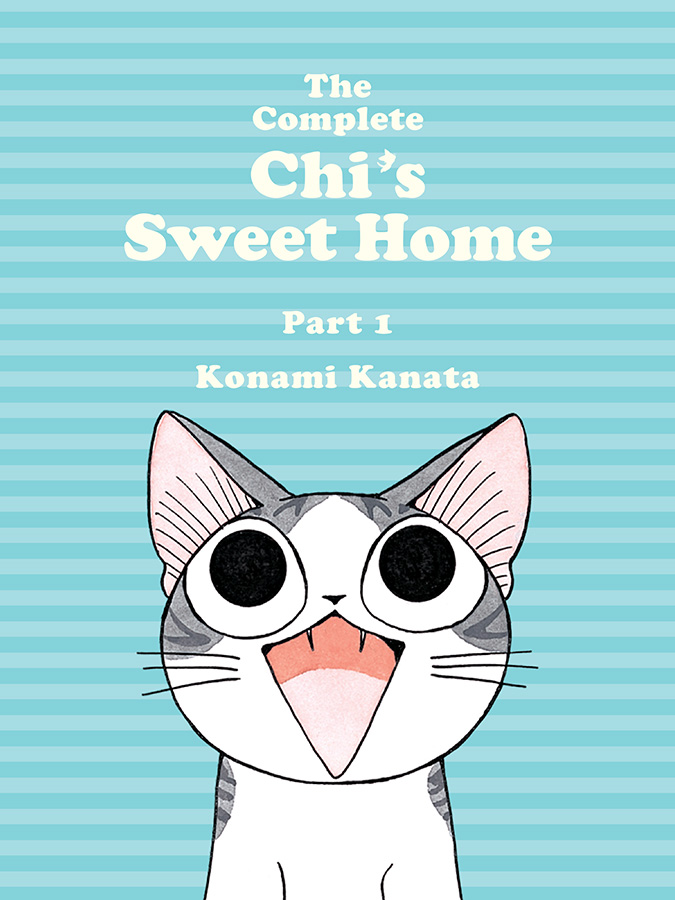
chi_complete_v_1The Complete Chi’s Sweet Home, Part One
By Konami Kanata
No rating; Suitable for all ages
Vertical Comics, $24.95

When I first reviewed Chi’s Sweet Home in 2010, I described it as “a deceptively simple story about a family that adopts a wayward kitten.” I argued that “Chi is more than just cute kitty antics; it’s a thoughtful reflection on the joys and difficulties of pet ownership, one that invites readers of all ages to see the world through their cat or dog’s eyes and imagine how an animal adapts to life among humans.”

Revisiting Chi’s Sweet Home five years later, I stand by my original assessment. I still found Chi’s behavior adorable — or should that be adowable? — and her family’s amused and exasperated reactions true to my own experiences as a cat owner. At the same time, however, I appreciated the opportunity to read more of Chi’s story in one sitting, as Konami Kanata does a fine job of recreating the day-to-day rhythm of living with a kitten or puppy, from the obvious — accidents, clawed furniture — the to subtle — mastering the art of jumping onto a table or chair, examining strange new objects. As an added bonus, the Complete edition includes a sprinkling of chapters from Kanata’s first big hit, FukuFuku: Kitten Tales, and a larger trim size that gives Kanata’s playful, charming watercolors more room to breathe.

The verdict: Chi is an indispensable addition to any animal lover’s bookshelf. Look for Part Two (which collects volumes 4-6) on January 16, 2016.

tokyoesp_v_1Tokyo ESP, Vol. 1
By Hajime Segawa
No rating; Suitable for older teens
Vertical Comics, $15.95

On paper, Tokyo ESP sounds like The X-Men or The Fantastic Four: a group of Tokyo residents begin manifesting cool new powers — teleporting, walking through walks — after exposure to a supernatural phenomenon. Some ESPers embrace the criminal possibilities of these gifts, while others vow to use them for good, pitting the two groups against each other in epic fashion.

Perhaps mindful of the similarities between his creation and Stan Lee’s, Hajime Segawa makes a game effort to individualize his creation with an abundance of quirky details: a flying penguin sidekick, a night sky filled with glowing fishes. As a result, long stretches of Tokyo ESP feel more like a spaghetti-throwing exercise than genuine world-building; the reader is never certain if there’s an underlying logic that would explain what we’re seeing, or if Segawa is making it up as he goes along. By the end of volume one, you may remember the flying penguin more clearly than anything that actually happened in those first nine chapters, as the plot is standard shonen fodder: super-powered teens saving the world.

The verdict: Your mileage may vary; some readers will undoubtedly find the sleek character designs and out-of-left-field plot developments appealing, while others will find the storytelling too frenetic to be engaging.

Reviews: Sean Gaffney takes a fond look at the final volume of Oh! My Goddess, which arrived in stores this week. Over at Comics & Cola, Zainab Akhtar reviews the fifth and final volume of Taiyo Matsumoto’s bittersweet Sunny.

Sarah on vol. 2 of The Ancient Magus’ Bride (Anime UK News)
Lori Henderson on vol. 1 of Assassination Classroom (Good Comics for Kids)
Matt Brady on vols. 2-4 of Assassination Classroom (Warren Peace Sings the Blues)
L.B. Bryant on vol. 6 of Assassination Classroom (The Otaku Review)
L.B. Bryant on vol. 1 of Black Bullet (ICv2)
Justin Stroman on vol. 1 of Bodacious Space Pirates: Abyss of Hyperspace (Organization Anti-Social Geniuses)
Connie on vol. 8 of Cross Game (Slightly Biased Manga)
Connie on vol. 16 of Dengeki Daisy (Slightly Biased Manga)
Connie on vol. 11 of Dorohedoro (Slightly Biased Manga)
Helen on Fuuka (Organization Anti-Social Geniuses)
Ash Brown on vol. 3 of Hide and Seek (Experiments in Manga)
Ian Wolf on vol. 1 of Komomo Confiserie (Anime UK News)
Austin Lanari on vol. 10 of Lone Wolf and Cub Omnibus (Comic Bastards)
Megan R. on Neon Genesis Evangelion: Angelic Days (The Manga Test Drive)
Steve Bennett on vol. 1 of One-Punch Man (ICv2)
Dustin Cabeal on vol. 2 of One-Punch Man (Comic Bastards)
Anna N. on vol. 1 of QQ Sweeper (The Manga Report)
L.B. Bryant on vol. 1 of Rose Guns Days: Season One (ICv2)
Jocelyn Allen on vol. 1 of Shashinya Kafka (Brain vs. Book)
Sean Gaffney on Showa 1953-1989: A History of Japan (A Case Suitable for Treatment)
Alice Vernon on Sword Art Online: Progressive (Girls Like Comics)
Erica Friedman on vol. 4 of Tsuki to Sekai to Etoile (Okazu)

Filed Under: MANGABLOG, REVIEWS Tagged With: chi's sweet home, Manga Review, Tokyo ESP, Vertical Comics

News Round-Up for NYCC 2015

October 11, 2015 by Katherine Dacey

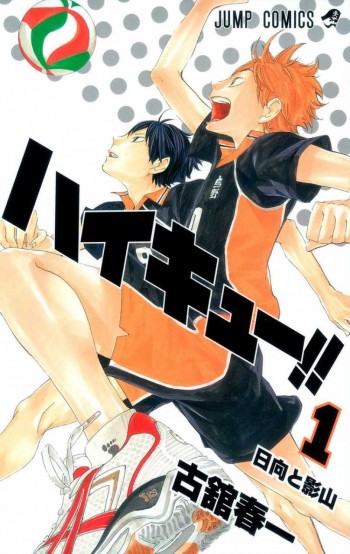
haikyuuGood news for manga readers: 2013-2014 was the first time since the mid-2000s that the industry enjoyed two consecutive years of sales growth. While the manga market isn’t as red-hot as it was in Tokyopop’s heyday, publishers released almost 800 new volumes in 2014, up 25% from 2013. [ICv2]

At its Friday panel, VIZ Media unveiled a diverse slate of titles that ran the gamut from shonen (Black Clover) to josei (Everyone’s Getting Married). Among the most interesting licenses were two sports manga: Haikyuu!, which focuses on a volleyball team, and Kuroko’s Basketball. VIZ also confirmed that it will be publishing Seventh Garden, Monster Hunter: Flash Hunter, and fan favorite Yona of the Dawn. [Crunchyroll]

Yen Press announced five new manga at NYCC, including an adaptation of Space Dandy and a new series by Yuji Iwahara (Cat Paradise, King of Thorn) called Dimension W. Also joining the Yen line-up in 2016 are Scumbag Loser, a cautionary tale about lying to your peers; Corpse Party: Blood Covered, another entry in the teens-fight-to-the-death-in-an-alternate-universe genre; and Unhappy Go Lucky!, a comedy about a group of unlucky middle-school students. [Anime News Network]

Yen isn’t the only company on the Space Dandy bandwagon: Kodansha Comics will be publishing I Am a Space Dandy!, another manga spin-off of the popular anime. Kodansha also revealed plans to publish the 4-koma Spoof on Titan. [Anime News Network]

At the Crunchyroll panel, the company introduced fans to its newest offerings, which include Arakawa Under the Bridge, a drama by Saint Young Men creator Hikaru Nakamura; Gugure! Kokkuri-san, a comedy about a little girl who inadvertently summons a fox demon; and Cuticle Detective Inaba, a supernatural comedy-thriller about a detective who’s half wolf, half man. (The “cuticle” in the title refers to the character’s pronounced interest in hair. Oh, manga…) [Anime News Network]

In a further sign of manga’s global reach, two companies announced that they would publish comics inspired by a signature title in their catalogs. Kodansha’s Attack on Titan and Dark Horse’s Lone Wolf and Cub 2100 projects will feature original stories by Faith Erin Hicks, Gail Simone, and other creators active in the American industry. [A Case Suitable for Treatment]

Although Vertical Comics did not announce any new manga acquisitions, it did give con-goers a sneak peek at an intriguing new project: audio light novels with music, sound effects, and voice acting. Look for the product line’s debut in spring 2016. [Crunchyroll]

Tokyo Ghoul, One-Punch Man, and Attack on Titan are fighting for the top spot on this week’s New York Times Manga Best Seller list. [New York Times]

Reviews: Michelle Smith and Sean Gaffney post a new set of Bookshelf Briefs, with short reviews of Assassination Classroom, He’s My Only Vampire, and QQ Sweeper.

Lori Henderson on vols. 1-2 of Beast Master (Manga Xanadu)
Terry Hong on The Complete Chi’s Sweet Home: Part One (Book Dragon)
Richard Gutierrez on vol. 2 of Is It Wrong to Pick Up Girls in a Dungeon? (The Fandom Post)
Wolfen Moondaughter on vol. 23 of Kaze Hikaru (Sequential Tart)
Kat Stevens on vol. 1 of L-DK (AiPT!)
Terry Hong on vol. 1 of One-Punch Man (Book Dragon)
Amy McNulty on vol. 72 of Naruto (Anime News Network)
Megan R. on Neon Genesis Evangelion (The Manga Test Drive)
Jordan Richards on vol. 6 of Noragami: Stray God (AiPT!)
Sheena McNeil on vol. 1 of QQ Sweeper (Sequential Tart)
Kate O’Neil on vol. 1 of Rose Guns Days: Season One (The Fandom Post)
SKJAM on Sanctuary (SKJAM! Reviews)
Wolfen Moondaughter on vol. 6 of Seraph of the End (Sequential Tart)
Rebecca Silverman on vols. 1-3 of Servamp (Anime News Network)
Anna N. on vol. 3 of So Cute It Hurts! (The Manga Report)
Plutoburns on Terra Formars (Pluto Burns)
Richard Gutierrez on vol. 1 of Tokyo ESP (The Fandom Post)
Garrett Gottschalk on vol. 1 of Ultraman (No Flying No Tights)
Ken H. on vol. 6 of Vinland Saga (Sequential Ink)
G.B. Smith on vol. 7 of Witchcraft Works (The Fandom Post)
Lori Henderson on Yurei Attack! The Japanese Ghost Attack Survival Guide (Manga Xanadu)

*Indicates YouTube review


Filed Under: MANGABLOG Tagged With: attack on titan, crunchyroll, Dark Horse, Kodansha Comics, Vertical Comics, VIZ, yen press

The Manga Revue: Say I Love You

October 2, 2015 by Katherine Dacey

This week, I’m catching up with Say I Love You, a shojo romance that’s been garnering strong reviews here and elsewhere since Kodansha began publishing it last August.

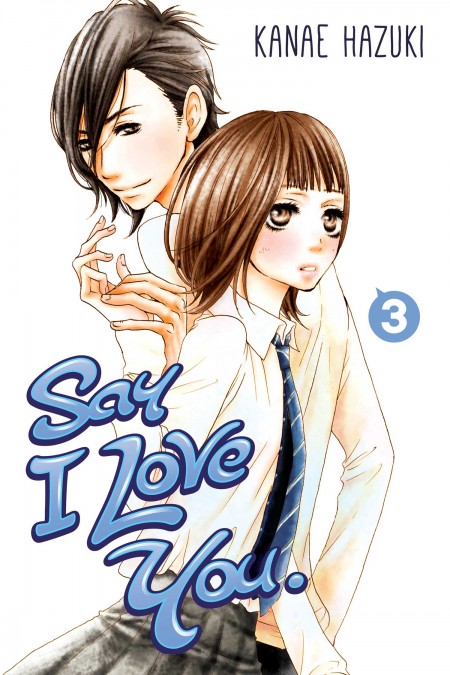
sayiloveyou3Say I Love You, Vols. 1-3
By Kanae Hazuki
Rated OT, for older teens
Kodansha Comics, $10.99

Back in the 1980s, filmmaker John Hughes peddled an intoxicating fantasy to thirteen-year-old girls: you might be the class misfit–the kid who wore the “wrong” clothes, listened to the “wrong” music, and had the “wrong” friends–but the hottest guy in school could still fall for you. Better still, he’d like you for being a “real” person, unlike the two-faced girls who inhabited his social circle. You’d have a bumpy road to your happily-after-ever, of course, since his friends felt compelled to say that you weren’t in his league, but in the end, your sincerity and quirkiness would prevail.

Say I Love You reads a lot like a manga version of Pretty in Pink or Some Kind of Wonderful, right down to the meet-cute between Mei, a moody loner, and Yamato, the most popular guy in school. Mei mistakenly believes that Yamato tried to peek up her skirt, and responds with a powerful roundhouse kick. Though Yamato’s friends demand an apology from her, Yamato is intrigued by Mei’s display of bravado and asks her out.

Mei is initially bewildered by Yamato’s courtship: why would someone as outgoing, handsome, and well regarded find her interesting? (You, dear reader, may also wonder why Yamato pursues Mei, given her generally sullen demeanor.) As Mei soon discovers, however, Yamato’s dating history is more complicated than she assumed; his good looks belie an earnest, thoughtful person who lost his virginity before he met someone he really cared about. He’s willing to endure a few tearful outbursts–not to mention some mixed signals–if it means he’ll get to know the real Mei before they go all the way.

And speaking of mixed signals, Say I Love You is refreshingly honest in acknowledging the full spectrum of teenage desire. Some characters embrace their feelings in healthy ways; others use sex to fill a void in their emotional lives; and still others are just beginning to explore their sexuality. Though many of the sexual encounters in the series are ill-advised, the teenage logic that underpins them rings true; an adult may feel an uncomfortable pang of recognition while reading Say I Love You.

The series’ greatest strength, however, is that author Kanae Hazuki is unusually generous with her supporting players. We’re privy to both Mei and Yamato’s thoughts, of course, but Hazuki also pulls the curtain back on other characters’ interior lives. In volume two, for example, mean girl Aiko becomes the temporary focus of the story, narrating her own transformation from a plump, pretty girl to a skinny, angry young woman who is furious that Yamato doesn’t like her. Her blunt self-criticism and body hang-ups remind younger readers that everyone wears a mask in high school; even students who seem outwardly blessed with good looks or talent are wrestling with the familiar demons of self-doubt and self-loathing.

If I had any criticism of Say I Love You, it’s that the plot twists are a little too by-the-book, with beach visits, Valentine’s Day agita, and misunderstandings of the “I saw you kiss her!” variety. In volume three, for example, Hazuki introduces Megumi, a model who’s hell-bent on making Yamato her boyfriend. When a direct approach doesn’t work–Yamato, of course, rebuffs Meg’s initial proposition–Meg transfers schools and ropes Yamato into becoming a model himself. I realize that “model,” “celebrity,” or “singer” epitomize a thirteen-year-old’s dream job, but the artifice and obviousness of diving into the modeling world feels like an unnatural direction for such a finely observed romance.

Perhaps the best compliment I could pay Say I Love You is that it has all the virtues of Pretty in Pink and Some Kind of Wonderful: it’s got a proud, tough heroine who’s skeptical of the popular kids, a sincere hot guy who can see past her bluster, and a veritable Greek chorus of peers who chart the ups and downs of their relationship. All it needs is a killer soundtrack.

Reviews: At Brain vs. Book, Joceyln Allen sings the praises of Takehiko Moriizumi’s Mimi wa Wasurenai, an untranslated short story collection. “It’s okay if you don’t read Japanese,” she explains, “you can just stare at the beauty on every page. Moriizumi makes manga like nothing I’ve ever seen before.” Go see for yourself!

Saeyong Kim on vol. 1 of 21st Century Boys (No Flying No Tights)
Jessikah Chautin on Awkward (No Flying No Tights)
SKJAM on vols. 1-2 of Captain Ken (SKJAM! Reviews)
Kat Stark on vol. 1 of Devil Survivor (AiPT!)
Jessikah Chautin on vol. 1 of Durarara!! Yellow Scarves Arc (No Flying No Tights)
SKJAM on Gimmick! (SKJAM! Reviews)
Kat Stark on vol. 1 of Kiss Him, Not Me! (AiPT!)
Ian Wolf on vol. 1 of the Kurosagi Corpse Delivery Service Omnibus (Anime UK News)
David Brooke on vol. 1 of Ninja Slayer Kills (AiPT!)
Anna N. on vol. 2 of Requiem of the Rose King (The Manga Report)
Ian Wolf on vol. 2 of Requiem of the Rose King (Anime UK News)
Rebecca Silverman on vol. 1 of Rose Guns Days, Season One (Anime News Network)
Marissa Lieberman on vol. 1 of Seraph of the End (No Flying No Tights)
Sean Gaffney on vol. 11 of Umineko: When They Cry (A Case Suitable for Treatment)
Ash Brown on vol. 2 of Wayward: Ties That Bind (Experiments in Manga)
Ken H. on vol. 3 of Yamada-kun and the Seven Witches (Sequential Ink)

Filed Under: MANGABLOG, REVIEWS Tagged With: Kodansha Comics, Manga Review, Say I Love You, shojo

The Manga Revue: Rose Guns Days Season One

September 25, 2015 by Katherine Dacey

In principal, a video game or visual novel ought to be a solid foundation on which to build a manga: the designers have already done the hard work of creating characters, endowing them with powers (or weapons), and setting them loose in a richly detailed environment. In practice, however, many game-franchises-cum-manga are a dreary affair, with thin plots and two-dimensional characters. I’ve largely sworn off the genre, but when my Manga Bookshelf colleague Sean Gaffney sang the praises of Rose Guns Days Season One, I thought I’d take it for a test drive.

Ryukishi07_RoseGunDays_1Rose Guns Days Season One, Vol. 1
Story by Ryukishi07, Art by Soichiro
Rated OT, for older teens
Yen Press, $13.00

Rose Guns Days has an intriguing premise: what if Japan had surrendered to the Allied Forces in 1944 instead of fighting until the bitter end? In Ryukishi07’s scenario, American and Chinese troops occupy Japan, carving out distinct spheres of influence while rebuilding the country in their respective images. Japanese citizens, meanwhile, are struggling to get by: work and food are scarce, creating an environment in which smuggling and prostitution flourishes.

Sounds interesting, no? If only the story was as compelling as the universe in which it unfolds! A close examination of Leo Shisigami, the principal character, offers insight into why Rose Guns Days reads like a pale imitation of better series. Shisigami’s got the skinny suit, tousled hair, and dangling cigarette made famous by Cowboy Bebop‘s Spike Spiegel, but their resemblance is pure surface; Leo is a cheerful blank whose only quirk–if it can be called that–is a fondness for pasta. After a meet-cute that’s shown not once but twice, Leo becomes a bodyguard for Rose Haibana, a pretty madam whose establishment caters to foreigners. The next 100 pages are a riot of kidnappings, fisticuffs, and golden-hearted hookers–no cliche goes unturned.

The artwork is similarly pedestrian. Though the supporting characters are rendered with loving attention to costumes, facial features, and body types, Rose looks like something pilfered from a twelve-year-old’s Deviant Art account: she barely has a nose or mouth, and her face is framed by two immobile locks of hair. The backgrounds, too, run the gamut from meticulously rendered to barely-there. Only a few panels capture the disruption and poverty caused by the occupying forces; most scenes appear to be taking place in a no man’s land of Photoshop fills and traced elements. What’s most disappointing, however, is that the artwork does nothing to bring depth or nuance to the original visual novel concept. Each scene feels like a collection of artful poses, rather than a dynamic presentation of a story with fistfights and car chases. With so little effort to adapt the material for a different medium, it begs the question, Why bother?

The verdict: Unless you’re a devotee of the visual novel series on which Rose Guns Days is based, skip it.

Reviews: Seth Hahne posts an in-depth assessment of Ikigami: The Ultimate Limit, while Erica Friedman reviews the Japanese edition of Rose of Versailles. Over at Snap30, Frank Inglese test drives the new Weekly Shonen Jump series Samon the Summoner, which debuted on September 21st.

Mark Pelligrini on vol. 1 of AKIRA (AiPT!)
Tyler Sewell on Bat-Manga! The Secret History of Batman in Japan (AiPT!)
Michael Burns on vol. 1 of Black Bullet (AniTAY)
Connie on vol. 31 of Blade of the Immortal (Slightly Biased Manga)
Rebecca Silverman on vol. 1 of Chiro: The Star Project (Anime News Network)
Lori Henderson on vol. 1 of The Complete Chi’s Sweet Home (Good Comics for Kids)
ebooksgirl on Cromartie High School (Geek Lit Etc.)
Vernieda Vergara on Gangsta (Women Write About Comics)
Patrick Moore on Fragments of Horror (Bento Byte)
Erica Friedman on vol. 2 of Iono The Fanatics, Special Edition (Okazu)
Helen on King’s Game: Origin (Organization Anti-Social Geniuses)
Jennifer Wharton on vol. 1 of Kiss of the Rose Princess (No Flying No Tights)
Kristin on vol. 1 of Komomo Confiserie (Comic Attack)
Megan R. on La Esperanca (The Manga Test Drive)
Thomas Maluck on The Legend of Zelda: A Link to the Past (No Flying No Tights)
Nic Wilcox on vol. 1 of Log Horizon (No Flying No Tights)
Amy McNulty on vol. 71 of Naruto (Anime News Network)
Sean Gaffney on vols. 1-2 of One-Punch Man (A Case Suitable for Treatment)
Connie on vol. 5 of Phantom Thief Jeanne (Slightly Biased Manga)
Ian Wolf on vol. 2 of Requiem for the Rose King (Anime UK News)
Jordan Richards on vol. 1 of Rose Guns Days Season One (AiPT!)
Karen Maeda on vol. 1 of Ultraman (Sequential Tart)
Austin Lanari on issue #43 of Weekly Shonen Jump (Comic Bastards)
Adam Capps on vol. 6 of Witchcraft Works (Bento Byte)
Connie on vol. 4 of X: 3-in-1 Edition (Slightly Biased Manga)
Lori Henderson on vol. 1 of Yu-Gi-Oh: 3-in-1 Edition (Good Comics for Kids)

Filed Under: MANGABLOG, REVIEWS Tagged With: Manga Review, Rose Gun Days, yen press

The Manga Revue: Komomo Confiserie

September 18, 2015 by Katherine Dacey

Apologies for missing last week’s deadline – the first week of the semester is always chaotic, and manga reviewing took a back seat to lesson prep. Now that school is underway again, however, the Manga Revue will run weekly on Fridays, as it did this summer.

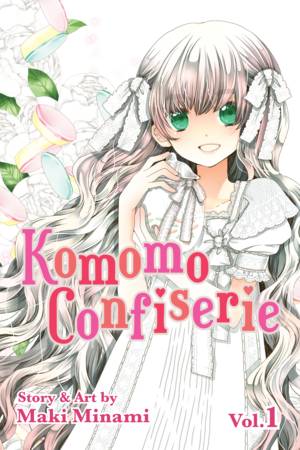
komomo_confiserieKomomo Confiserie, Vol. 1
By Maki Minami
Rated T, for teens
VIZ Manga, $6.99 (digital)

Flip through The Big Book of Shojo Plotlines, and there – between “I’m Having an Affair with My Homeroom Teacher” and “I’m a Spazz Who’s Inexplicably Irresistible” – you’ll find another time-honored trope: “I Was Mean to My Childhood Friend, and Now He’s Hot!” Komomo Confiserie embodies this plot to a tee: its wealthy heroine, Komomo, was spoiled rotten as a child, with an army of servants at her disposal. It was her special delight to order fellow six-year-old Natsu to make her sweets–he was the pastry’s chef son, after all–and terrorize him when he didn’t comply. When Komomo turns fifteen, however, her family loses everything, forcing her to get a job and attend public school. Natsu–now a successful baker in his own right–makes a seemingly chivalrous offer of employment to Komomo, who’s too guileless to realize that she’s walking into a trap.

You can guess the rest: Natsu revels in his new-found position of power, directing Komomo to perform menial tasks and scolding her for lacking the common sense to sweep floors or boil water. The fact that he’s cute only adds salt to the wound; Komomo vacillates between plotting her escape and speculating that Natsu bullies her out of love.

Whatever pleasure might come from witnessing Komomo’s comeuppance is undermined by the author’s frequent capitulations to shojo formula. Though Natsu frequently declares that bullying Komomo is his privilege – and his alone – he routinely helps her out of jams, bakes her sweets, and behaves a lot like someone who’s harboring a crush on her. Komomo, for her part, behaves like such a twit that it’s hard to root for her; even when she has an epiphany about friendship or hard work, her insights are as shallow as the proverbial cake pan.

The series’ redeeming strength is the artwork. Though Maki Minami frequently resorts to pre-fab backgrounds and Photoshopped elements, she does a fine job of representing the emotional rush that a sugary treat can elicit in even the most jaded adult. Komomo’s food reveries are a swirl of flowers, tears, and lacy doilies that neatly suggest the mixture of joy and sadness she experiences whenever a macaroon or a petit-four stirs up childhood memories. Too bad the rest of the story isn’t as sharply observed.

The verdict: Saccharine plotting and unsympathetic leads spoil this confection.

Reviews: Sean Gaffney and Michelle Smith post a fresh crop of Bookshelf Briefs, while Claire Napier kicks the tires on Ichigo Takano’s ReCollection and Kate O’Neil reminds us why a new installment of Kaze Hikaru is worth the wait. At Contemporary Japanese Literature, Kathryn Hermann posts a glowing review of Yurei: The Japanese Ghost, a collection of essays by manga scholar and translator Zack Davisson.

Erica Friedman on 2DK, G Pen, Mezamashidokei (Okazu)
Matthew Warner on vol. 5 of Ajin: Demi-Human (The Fandom Post)
Rebecca Silverman on vol. 1 of Alice in Murderland (Anime News Network)
Jordan Richards on vol. 1 of Attack on Titan: Colossal Edition (AiPT!)
Sean Gaffney on vol. 16 of Dorohedoro (A Case Suitable for Treatment)
Jordan Richards on vol. 1 of Inuyashiki (AiPT!)
Justin Stroman on vol. 1 of Inuyashiki (Organization Anti-Social Geniuses)
Megan R. on Here Is Greenwood (The Manga Test Drive)
Saeyoung Kim on K-On! High School (No Flying No Tights)
Sheena McNeil on vol. 2 of Love Stage!! (Sequential Tart)
Johanna Draper Carlson on vol. 3 of Love Stage!! (Comics Worth Reading)
Anna N. on vols. 1-2 of Maid-sama! (The Manga Report)
Ash Brown on Maria the Virgin Witch: Exhibition (Experiments in Manga)
Lesley Aeschliman on vol. 4 of Master Keaton (Watch Play Read)
Matthew Warner on vol. 3 of My Neighbor Seki (The Fandom Post)
Ash Brown on vol. 5 of Mushishi (Experiments in Manga)
Al Sparrow on vol. 1 of Nurse Hitomi’s Monster Infirmary (ComicSpectrum)
Joseph Luster on One-Punch Man (Otaku USA)
Sheena McNeil on vol. 4 of Pokemon X.Y. (Sequential Tart)
Sean Gaffney on vols. 19-20 of Ranma 1/2 (A Case Suitable for Treatment)
Matt on vol. 1 of Rose Guns Days: Season One (AniTAY)
Vernieda Vergara on The Science of Attack on Titan (Women Write About Comics)
Ken H. on vol. 2 of A Silent Voice (Sequential Ink)
Matt on vol. 3 of Sword Art Online Progressive (AniTAY)
Frank Inglese on vol. 7 of Terraformars (Snap30)
David Brooke on vol. 1 of Vinland Saga (AiPT!)
Frank Inglese on vol. 6 of World Trigger (Snap30)

Filed Under: MANGABLOG, REVIEWS Tagged With: komomo confiserie, Maki Minami, Manga Review, Pastry, shojo beat, viz media

The Manga Revue: Inuyashiki, Kurosagi Corpse Delivery Service and Tokyo Ghoul

September 4, 2015 by Katherine Dacey

I’m fresh out of snappy intros, so I’ll cut to the chase: this week’s column looks at Inuyashiki, The Kurosagi Corpse Delivery Service Omnibus Edition, and Tokyo Ghoul.

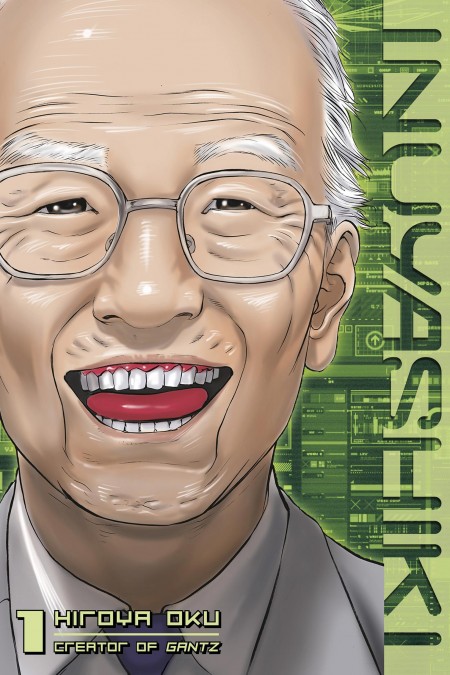
inuyashikiInuyashiki, Vol. 1
By Hiroya Oku
Rated OT, for older teens (16+)
Kodansha Comics, $12.99

Bette Davis famously declared that “Old age is no place for sissies,” a statement borne out by the first chapters of Hiroya Oku’s grimly compelling Inuyashiki. Its hero, a 58-year-old salaryman, is a picture of despair: his family loathes him, his co-workers ignore him, and his health is failing. In a blinding flash of light, however, his life changes. He wakes up to discover that his memories are intact but his body has changed; his once-frail limbs and failing eyes are now military-grade weapons, capable of withstanding lethal force. What to do with this gift? That question animates the final pages of volume one, as Ichiro tests his new body’s limits for the first time.

This final scene is a neat illustration of what’s good — and not so good — about Inuyashiki. Oku stages a suspenseful confrontation between Ichiro and a gang of teenage thugs; though we sense that Ichiro will prevail, how he gains the upper hand is a nifty surprise made more effective by Oku’s meticulously detailed illustrations. The incident that precipitates the showdown, however, is saddled with a heavy-handed script; Oku stokes the reader’s sense of righteous indignation by revealing that the thugs’ intended victim is a good but vulnerable man. By overemphasizing the victim’s inherent decency, Oku reduces him to a saintly caricature, a problem that also mars Ichiro’s early interactions with his family. (His kids are such ungrateful jerks you may root for Ichiro to use his powers on them.)

Even if Ichiro’s catharsis is less earned than contrived, watching him transform from terminal sad-sack to indestructible bad-ass is a deeply satisfying experience. He’s found his purpose and his spine, even if it’s taken him 58 years to do so. Now that’s a fantasy that any middle-aged reader can get behind.

The verdict: Pour yourself a scotch before reading; you’ll need the emotional fortification to navigate the early chapters.

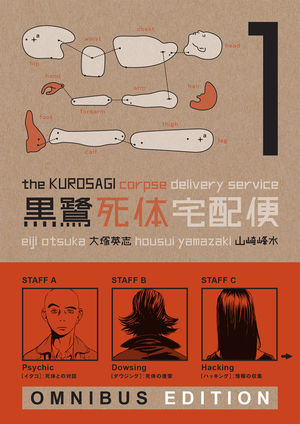
kurosagi_omnibus1The Kurosagi Corpse Delivery Service Omnibus Edition, Book One
By Eiji Ōtsuka and Housui Yamazaki
Rated OT, for older teens (16+)
Dark Horse, $19.99

Scooby Doo for grown-ups — that’s how I’d describe The Kurosagi Corpse Delivery Service, a macabre comedy about five cash-strapped college students who drive around in a van solving supernatural mysteries. The Kurosagi gang’s bread-and-butter are mysterious (and often violent) deaths. Through dowsing and channeling, they discover how and why their “clients” died, enabling the victims’ spirits to cross over to the other side.

The new omnibus edition — which collects the first three volumes of KCDS —  includes two of the series’ best stories: “Lonely People,” in which the gang stumbles across a portable altar with a mummy inside, and “Crossing Over,” in which the gang searches for the victim of an organ harvesting ring. Though the denouement of both “deliveries” include a few gruesome panels, the deadpan dialogue, expressive character designs, and snappy pacing prevent KCDS from sinking to the level of torture porn; the horrific imagery functions as a rim shot or an exclamation mark, not the main attraction. The self-contained nature of the stories is another plus: you can begin your KCDS odyssey almost anywhere in the series and still grasp what’s happening, though the crew’s origin story (“Less Than Happy,” the very first chapter) offers an interesting window into Buddhist university culture in Japan.

The verdict: If you haven’t tagged along on one of the Kurosagi crew’s “deliveries,” the omnibus edition gives you an economical way to do so.

Review copy provided by Dark Horse.

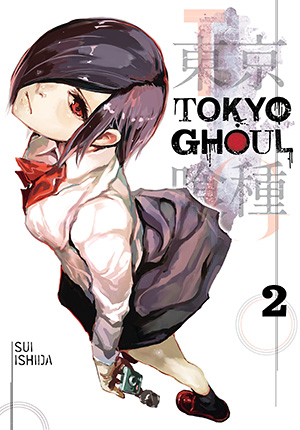
tokyo_ghoul2Tokyo Ghoul, Vol. 2
By Sui Ishida
Rated OT, for older teens (16+)
VIZ Media, $12.99

The first volume of Tokyo Ghoul reads like an urban legend: Ken Kaneki, earnest college student, goes out for dinner with a pretty girl, but wakes up in the hospital with a brand-new set of organs… that used to belong to his date. Within a few days of his release, Kaneki begins turning into a flesh-eating monster, a side effect of the transplant surgery. Volume two picks up where volume one left off: now caught between the human and demon worlds, Kaneki casts his lot with the demons of cafe Anteiku. They teach him tricks for passing as a human, and warn him about the deep divide between the ghouls who embrace their predator status and those who feel some kinship with humanity.

Although volume two introduces several new and potentially interesting characters, Kaneki’s wet-blanket personality continues to put a damper on the story: he whines and frets and refuses to do anything that might compromise the reader’s good opinion of him. As anyone who’s read Death Note knows, however, a charismatic, intelligent protagonist doesn’t have to be good or right to command the audience’s sympathy. Someone who’s flawed, misguided, or tempted to abuse a new-found power might actually invite more self-identification than a goody two-shoes lead.

The verdict: Tokyo Ghoul isn’t bad, just a little too obvious to sustain my interest.

Review copy provided by VIZ Media.

Reviews: Joe McCulloch looks at the new English-language version of Comics Zenon, Michelle Smith and Anna N. post a fresh set of Bookshelf Briefs, and Vernieda Vergara asks if Bleach has overstayed its welcome.

Connie on vol. 19 of Bakuman (Slightly Biased Manga)
Julie on The Desert Lord’s Bride (Manga Maniac Cafe)
Ash Brown on Dr. Makumakuran and Other Stories (Experiments in Manga)
Connie on vol. 3 of Earthian (Slightly Biased Manga)
Kory Cerjak on vol. 47 of Fairy Tail (The Fandom Post)
James Ristig on Full Metal Alchemist (How to Love Comics)
Matthew Alexander on vol. 1 of Hayate Cross Blade (The Fandom Post)
Connie on vol. 11 of Kamisama Kiss (Slightly Biased Manga)
Rebecca Silverman on vol. 23 of Kaze Hikaru (Anime News Network)
Lesley Aeschliman on vol. 1 of Komomo Confisere (WatchPlayRead)
Jordan Richards on vol. 1 of Komomo Confiserie (AiPT!)
Connie on vol. 14 of The Kurosagi Corpse Delivery Service (Slightly Biased Manga)
Angel Cruz on vols. 1-2 of Love at Fourteen (Women Write About Comics)
Lori Henderson on vols. 1-3 of Neon Genesis Evangelion (Manga Xanadu)
Ken H. on vol. 1 of Ninja Slayer Kills! (Sequential Ink)
Matthew Warner on vol. 10 of Nisekoi: False Love (The Fandom Post)
Connie on vol. 4 of No. 6 (Slightly Biased Manga)
Jocelyn Allen on Nobara (Brain vs. Book)
David Brooke on vol. 1 of Noragami: Stray God (AiPT!)
Lesley Aeschliman on vol. 1 of One-Punch Man (WatchPlayRead)
Kristin on vols. 1-2 of One-Punch Man (Comic Attack)
Jordan Richards on vol. 2 of One-Punch Man (AiPT!)
Matthew Warner on vol. 18 of Rin-ne (The Fandom Post)
Sarah on vol. 1 of The Royal Tutor (Anime UK News)
Al Sparrow on vol. 1 of So I Can’t Play H (Comic Spectrum)
Helen on Sweetness and Lightning (Organization Anti-Social Geniuses)
Dustin Cabeal on vol. 1 of Tokyo Ghoul (Comic Bastards)
Matthew Warner on vol. 1 of Tokyo Ghoul (The Fandom Post)
Connie on vol. 6 of Toradora! (Slightly Biased Manga)
Sheena McNeil on vol. 29 of Toriko (Sequential Tart)
Adam Capps on vol. 1 of Ultraman (BentoByte)
Michael Burns on vol. 3 of Yamada-Kun and the Seven Witches (AniTAY)

Filed Under: MANGABLOG, REVIEWS Tagged With: Dark Horse, Horror/Supernatural, Inuyashiki, Kodansha Comics, kurosagi corpse delivery service, Manga Review, Tokyo Ghoul, viz media

Vertical Confirms New 2016 License

August 31, 2015 by Katherine Dacey

kamikemo01Good news for folks who like fantasy: Vertical Comics just confirmed that it will be publishing MAYBE’s The Abandoned Sacred Beasts, which is currently running in Bessatsu Shonen Magazine. Look for volume one in May 2016.

The latest volumes of Tokyo Ghoul, Is It Wrong to Try to Pick Up Girls in a Dungeon?, and Monster Musume top this week’s NY Times Manga Best Seller list.

On September 4th, the NHK will begin airing the four-part series Urasawa Naoki no Manben. Each episode will focus on a different manga-ka, offering the viewer an in-depth look at the process of creating a series. Among the featured artists are Akiko Higushimura, Inio Asano, and Takao Saito.

Naruto creator Masashi Kishimoto has begun dropping hints about his next manga project, fueling speculation that he will formally announce the title at New York Comic Con.

Justin Stroman interviews Sekai Project publishing director Evan Mapoy about the company’s plans to license manga for the American market.

With 10 days to go, Last Gasp has raised $18,430 in its efforts to publish and distribute 4,000 copies of Keiji Nakazawa’s Barefoot Gen to schools and libraries around the country.

How should translators handle the catch-phrases that give JoJo’s Bizarre Adventure its unique flavor? Deb Aoki posed the question to Twitter, sparking a lively debate about the challenges of localizing manga for American audiences.

Headed to London this fall? The British Museum is sponsoring an exhibit called Manga Now: Three Generations, which will feature three commissioned works by Chiba Tetsuya, Hoshino Yukinobu and Nakamura Hikaru. The exhibit runs from September through mid-November.

Anime News Network is looking for a freelance reporter to cover movie screenings and events in Tokyo. More details here.

What’s arriving in bookstores next week? The Manga Bookshelf gang investigates.

It’s the end of the month, which means that Ash Brown is once again giving away manga. This month’s prize is Chicago, a two-volume series by Basara creator Yumi Tamura. The deadline to enter is September 2nd, so hop to it!

News from Japan: Yuu Watase has put Arata: The Legend on hiatus again, while Akiko Higashimura has just announced that she will debut a new series in Cocohana magazine this November: Bishoku Tantei, which translates to Gourmet Detective. (The tagline writes itself, doesn’t it?) Topping this week’s Japanese manga bestseller list are the latest volumes of Detective Conan, Terra Formars, and–what else?–Attack on Titan.

You know you want to read it: Hiro Mashima just published a Fairy Tail/Parasyte crossover story in the October issue of Afternoon.

The latest chapters of Yuichi Okano’s autobiographical manga Pecoross no Haha no Tamatebako (The Treasure Chest of Pecoross’ Mother) explore the impact of the 1945 Nagasaki bombing on its youngest survivors.

Reviews: Ian Wolf posts an early review of Inuyashiki, Claire Napier shares her thoughts on Space Brothers, and Austin Lanari tackles the latest issue of Weekly Shonen Jump. Over at the Smithsonian’s awesome BookDragon blog, Terry Hong looks at the latest volumes of Wandering Son and What Did You Eat Yesterday?, while Japan Times contributor Kanta Ishida writes about Hiromu Arakawa’s agro-centric manga Gin no Saji (Silver Spoon).

Michael Burns on vol. 6 of Barakamon (Ani-TAY)
Henry Ma on chapter 639 of Bleach (Ka Leo)
Gabriella Ekens on vols. 1-4 of Blood Blockade Battlefront (Anime News Network)
Rebecca Silverman on vol. 1 of Core Scramble (Anime News Network)
Anna N. on Cosplay Basics (The Manga Report)
Sheena McNeil on vol. 1 of The Demon Prince of Momochi House (Sequential Tart)
Matthew Warner on Dream Fossil: The Complete Short Stories of Satoshi Kon (The Fandom Post)
ebooksgirl on vol. 1 of The Devil Is a Part-Timer! (Geek Lit Etc.)
Kory Cerjak on vol. 46 of Fairy Tail (The Fandom Post)
Dae Lee on Fragments of Horror (Otaku Review)
Erica Friedman on vol. 1 of Iono The Fanatics: Special Edition (Okazu)
Rebecca Silverman on vol. 23 of Kaze Hikaru (Anime News Network)
Bruce P. on Kinoko Ningen no Kekkon (Okazu)
Helen on Lucky Star (Organization Anti-Social Geniuses)
Kimber on Manga Classics: Emma (The Book Ramble)
Lisa Rabey on Manga Classics: Emma (No Flying No Tights)
Adam Capps on vol. 1 of My Hero Academia (Bento Byte)
Justin Stroman on vol. 1 of My Hero Academia (Organization Anti-Social Geniuses)
Matthew Warner on vol. 2 of My Neighbor Seki (The Fandom Post)
Sheena McNeil on vol. 10 of Nisekoi: False Love (Sequential Tart)
Jessikah Chaustin on vol. 1 of Puella Magi Tart Magica: The Legend of Jeanne d’Arc (No Flying, No Tights)
Jocelyn Allen on Rafnas (Brain vs. Book)
Ken H. on vols. 5-6 of Say I Love You (Sequential Ink)
Ken H. on vols. 7-8 of Say I Love You (Sequential Ink)
Nick Creamer on vol. 1 of A Silent Voice (Anime News Network)
Michael Burns on vol. 2 of A Silent Voice (Ani-TAY)
Rebecca Silverman on vol. 5 of Spell of Desire (Anime News Network)
Ash Brown on vol. 5 of The Summit of the Gods (Experiments in Manga)
Rebecca Silverman on vol. 7 of Terra Formars (Anime News Network)
Leroy Douresseaux on vol. 7 of Tiger & Bunny (Comic Book Bin)
Matthew Warner on vol. 2 of Ubel Blatt (The Fandom Post)
Isaac Akers on vol.1 of Tokyo Ghoul (Otaku Review)
Chris Sims on vol. 1 of Ultraman (Comics Alliance)
Kelly Harrass on vol. 1 of Ultraman (Panels on Pages)
Kristin on vol. 1 of Ultraman (Comic Attack)
Sakura Eries on vol. 12 of Voice Over! Seiyu Academy (The Fandom Post)
Johanna Draper Carlson on vol. 9 of What Did You Eat Yesterday? (Comics Worth Reading)
Adam Capps on vol. 5 of Witchcraft Works (Bento Byte)
Leroy Douresseaux on vol. 6 of World Trigger (Comic Book Bin)
Matthew Alexander on vol. 3 of xxxHolic Rei (The Fandom Post)

Filed Under: MANGABLOG Tagged With: Barefoot Gen, Kickstarter, Masashi Kishimoto, Sekai Project, vertical

Summer Manga Review Index

August 28, 2015 by Katherine Dacey

yotsuba_figureIn a sure sign that the dog days of August are upon us, Manga Bookshelf’s most productive reviewer announced that he is taking a few days off for a well-earned vacation. We’re also in favor of poolside margaritas, so we decided to follow Sean’s lead this week. Never fear: we’ll be back in the saddle next Friday with reviews of Inuyashiki, The Kurosagi Corpse Delivery Service and Tokyo Ghoul.

Still looking for something to read? We’ve got you covered with a handy index to all the books we’ve reviewed this summer:

Total Number of Manga Reviewed: 19
Total Number of Books Reviewed: 1
Most Viewed: Alice in Murderland and Demon From Afar
Most Tweeted: Haven’t You Heard? I’m Sakamoto, My Hero Academia, and My Neighbor Seki
Favorite Manga of the Summer: One-Punch Man
Least Favorite Manga of the Summer: Twin Star Exorcists

Alice in Murderland, Vol. 1 (Yen Press)
The Ancient Magus’ Bride, Vol. 1 (Seven Seas)
A Brief History of Manga (Ilex Publishing)
Demon From Afar, Vol. 1 (Yen Press)
The Demon Prince of Momochi House, Vol. 1 (VIZ)
Dream Fossil: The Complete Stories of Satoshi Kon (Vertical Comics)
Evergreen, Vol. 1 (Seven Seas)
Fragments of Horror (VIZ)
Haven’t You Heard? I’m Sakamoto, Vol. 1 (Seven Seas)
Jojo’s Bizarre Adventure Part One: Phantom Blood, Vol. 1 (VIZ)
Love at Fourteen, Vol. 1 (Yen Press)
My Hero Academia, Vol. 1 (VIZ)
My Neighbor Seki, Vols. 1-3 (Vertical Comics)
One-Punch Man, Vols. 1-2 (VIZ)
Prison School, Vol. 1 (Yen Press)
Seraphim 266613336 Wings (Dark Horse)
A Silent Voice, Vol. 1 (Kodansha Comics)
Twin Star Exorcists, Vol. 1 (VIZ)
Ultraman, Vol. 1 (VIZ)
Your Lie in April, Vol. 1 (Kodansha Comics)

We’d also like to hear from you: Are there great reviewers or websites that we’ve overlooked in our weekly round-ups? Is there a series that you’d like to see featured in the Manga Revue? Have we neglected a genre or artist that you feel deserves a bigger audience? Tell us about it in the comments–and be sure to include links!

Filed Under: MANGABLOG Tagged With: Manga Review

The Manga Revue: Ultraman

August 21, 2015 by Katherine Dacey

Ultraman made his television debut in 1966, defending Earth from the dual scourge of aliens and giant monsters. What began as a 39-episode series soon blossomed into one of Japan’s most prolific franchises, yielding dozens of sequels, spin-offs, movies, video games–and now a manga, which has been running in Monthly Hero’s magazine since 2011. Today’s column looks at this incarnation of the Ultraman story, which arrived in stores on Tuesday.

For extra insight into Ultraman‘s history, I encourage you to check out Brigid Alverson’s interview with Tomohiro Shimoguchi and Eiichi Shimizu, the creators of the latest Ultraman manga.

Ultraman_2011Ultraman, Vol. 1
By Eiichi Shimizu and Tomohiro Shimoguchi
Rated T, for teens
VIZ Media, $8.99 (digital edition)

Dusting off a beloved franchise and making it appeal to a new generation is a hazardous undertaking: stray too far from the source material and incur the wrath of purists, but hew too closely to the original and risk camp. Manga-ka Eiichi Shimizu and Tomohiro Shimoguchi have found an elegant strategy for introducing Ultraman to contemporary readers, using the original premise of the 1966 TV show as a starting point for a new chapter in the story.

The prelude to volume one neatly outlines Ultraman’s origins. Shin Hayata, member of the Science Special Search Party (a.k.a. the Science Patrol), unwittingly becomes the host for Ultraman, a powerful alien tasked with ridding Earth of dangerous monsters. Only a few members of the Science Patrol know Ultraman’s true identity–a secret they keep from Hayata, who is unaware that he is the vessel for Ultraman’s powers. The story then leaps forward thirty years: Ultraman has returned to his own world, Hayata has retired from the Science Patrol, and his son Shinjiro is beginning to manifest powers of his own.

In contrast to the introduction, which is a model of economy, the first chapter sags under the weight of too much expository dialogue. The characters relate their histories and concerns in such bald declarations that the entire chapter reads like a rejected Mystery Science Theater 3000 script.  (A sample exchange: “We certainly don’t see much of each other these days.” “Right, even though I work at the Ministry of Defense, too.”) The pace improves with the sudden appearance of Be Mular–one of Ultraman’s old adversaries–who lures the inexperienced Shinjiro into a rooftop battle. Although the script has a familiar rhythm–powerful attacks punctuated by snappy one-liners–the fight choreography is well executed; you can almost feel the force of Shinjiro’s punches. Equally important, the fight’s outcome is not a foregone conclusion: the chapter ends on a cliffhanger just as Shinjiro realizes that he isn’t strong enough to protect his family from Be Mular… yet.

If the 2.0 version of Ultraman sounds like a radical departure from the original series, rest assured that Shimizu and Shimoguchi haven’t strayed too far from the show’s roots. The proof lies in the character designs: they’ve done a nice job of bringing Ultraman and Be Mular’s appearance in line with contemporary seinen aesthetics while preserving the look and feel of the original characters. Ultraman and Be Mular don’t exactly resemble their rubber-suited predecessors, but a long-time fan will recognize them as spiritual descendants–a fair compromise for a series that’s toeing the line between 1960s kitsch and 2010s pop culture.

The verdict: The first chapter is a tough slog, but the combat is staged with enough panache that I’ll be checking out volume two.

Review copy provided by VIZ Media.

Reviews: Here at Manga Bookshelf, Sean Gaffney and Michelle Smith tackle the latest volumes of Black Rose Alice, Citrus, Evergreen, and Food Wars! Further afield, Megan R. takes a nostalgic look at Kare Kano: His and Her Circumstances; Aimee A. deconstructs shojo stereotypes in Skip Beat!!; Seth Hahne praises Ajin: Demi-Human for its “fantastic cat-and-mouse” plotting; and Erica Friedman reviews Manga de Tsuzuru Yurina Hibi, a “non-fiction comic essay” about the relationship between a businesswoman and her girlfriend.

Alice Vernon on Akame ga Kill! (Girls Like Comics)
Wolfen Moondaugter on vol. 22 of Arata: The Legend (Sequential Tart)
Austin Lanari on The Art of Satoshi Kon (Comic Bastards)
Sean Gaffney on vol. 5 of Assassination Classroom (A Case Suitable for Treatment)
Nick Smith on Awkward (ICv2)
Emma Weiler on vols. 1-5 of Crimson Spell (No Flying No Tights)
Lesley Aeschliman on vol. 10 of Deadman Wonderland (WatchPlayRead)
Lori Henderson on vol. 1 of The Demon Prince of Momochi House (Manga Xanadu)
Frank Inglese on vols. 5-6 of Food Wars! Shokugeki no Soma (Snap30)
Sheena McNeill on vol. 7 of Food Wars! Shokugeki no Soma (Sequential Tart)
Johanna Draper Carlson on vol. 10 of Happy Marriage?! (Comics Worth Reading)
Rebecca Silverman on vol. 1 of Haven’t You Heard? I’m Sakamoto (Anime News Network)
Erica Friedman on vol. 2 of Hayate x Blade (Okazu)
Allen Kesinger on vols. 4-5 of High School DxD (No Flying No Tights)
Matthew Alexander on vol. 6 of Judge (The Fandom Post)
Sarah on vol. 2 of Karneval (Anime UK News)
Anna N. on vol. 5 of Kiss of the Rose Princess (The Manga Report)
Austin Lanari on The Kurosagi Corpse Delivery Service Omnibus Edition: Book One (Comic Bastards)
Ian Wolf on vols. 1-2 of Maid-Sama! (Anime UK News)
Kristin on Manga Classics: Emma (Comic Attack)
Ken H. on vol. 1 of My Hero Academia (Sequential Ink)
Ash Brown on The Science of Attack on Titan (Experiments in Manga)
Frank Inglese on vol. 1 of Tokyo Ghoul (Snap30)
Michael Burns on vol. 1 of Tokyo Ghoul (Ani-TAY)
Michael Burns on vol. 2 of Tokyo Ghoul (Ani-TAY)
Julie on vol. 2 of Tokyo Ghoul (Manga Maniac Cafe)
Lesley Aeschliman on vol. 1 of Ultraman (WatchPlayRead)
Elizabeth Lotto on vol. 1 of Ultraman (The Outer Haven)
Nick Lyons on vol. 1 of Ultraman (DVD Corner)
Rebecca Silverman on vol. 9 of What Did You Eat Yesterday? (Anime News Network)
Wolfen Moondaugter on vol. 2 of The World’s Greatest First Love: The Case of Ritsu Onodera (Sequential Tart)

Filed Under: MANGABLOG, REVIEWS Tagged With: Manga Review, Ultraman, viz media

The Manga Revue: A Brief History of Manga

August 14, 2015 by Katherine Dacey

I’m taking a break from shojo romances and shoot ’em ups this week and reviewing Helen McCarthy’s A Brief History of Manga, a slim introduction to the medium’s history, stars, and influential series.

9781781570982A Brief History of Manga
By Helen McCarthy
Ilex Press, $12.95

A Brief History of Manga is an odd duck: it’s too short and impressionistic to be a reference work, but too focused on historically significant titles to appeal to a casual Attack on Titan fan. That’s a pity, because Helen McCarthy’s generously illustrated book provides an accessible introduction to manga, from its prehistory to the present.

A Brief History of Manga begins with Toba Sojo’s famous Choju-jinbutsue-giga, a twelfth century scroll depicting frogs, rabbits, and monkeys engaged in human activities, then jumps ahead to the nineteenth century, when European ex-pats helped popularize new cartooning styles via influential publications such as The Japan Punch (1862). The rest of the book explores the emergence of longer-form storytelling, from the newspaper-style comics of Rakuten Kitazawa (1876-1955) to the cyberpunk manga of Masamune Shirow (b. 1961). Sprinkled throughout the book are callouts highlighting specific artists’ contributions to the medium, as well as summaries of famous series, thumbnail histories of important magazines, and milestones in the globalization of manga.

For a reader familiar with Frederick Schodt’s venerable Manga! Manga! The World of Japanese Comics (1983), many of McCarthy’s insights are old news. Schodt covered the early history of Japanese print culture in considerably more detail, painstakingly connecting the dots between Sojo’s frolicking animals, the birth of the Japanese publishing industry, and the emergence of the post-war manga market, bringing his narrative up to the 1980s. The final section of McCarthy’s book is a useful coda to Manga! Manga!, however, offering insights into more recent trends and titles, some well known–Boys Over Flowers, Death Note, Hetalia: Axis Powers–others less so–51 Ways to Save Her, Field of Cole, XX.

A Brief History of Manga has a more fundamental problem, however: its layout. Although the book’s designer has taken great pains to group images thematically, and link each entry with a timeline, the visual presentation is sometimes misleading. The 1931 entry, for example, pairs images of “manga pup” Norakuro with robot cat Doraemon without acknowledging the forty-year gap that separates the two characters. (Norakuro’s first story appeared in Shonen Club in 1931, while Doraemon debuted in 1969.) A caption informs the reader that Doraemon creator Hiroshi Fujimoto was born in 1933, but the main text never explicitly establishes the influence of Suiho Tagawa’s series on Fujimoto’s; even a simple, declarative sentence stating that Fujimoto had grown up reading Norakuro would have made this entry more valuable by demonstrating the role of pre-war children’s magazines in popularizing certain character types and storylines.

The first mention of gekiga–“1959: Manga’s Punk Movement Takes Root”–is similarly confusing. Although the text introduces gekiga pioneers Takao Saito (b. 1936) and Yoshihiro Tatsumi (1935-2015), the featured images are drawn from Fukushima Masami (b. 1948) and Kai Takizawa’s ultra-violent Prince Shotoku, a fascinating oddity from the late 1970s. While these images are among the most striking in the entire volume, they are not representative of early gekiga; it’s as if someone saw the word “punk” in the manuscript and set out to find the most visually outlandish artwork to emphasize McCarthy’s word choice. Complicating matters further is that the text never mentions Fukushima or Takizawa, or explains how their work built on the legacy of Saito and Tatsumi–no small oversight, given the pronounced differences between Prince Shotuko and Baron Air (1955) and Black Blizzard (1956), Saito and Tatsumi’s debut works.

I’m less bothered by McCarthy’s omissions than earlier reviewers were*; though it’s easy to cavil about missing works, McCarthy has chosen a representative sample of titles and authors across a wide spectrum of genres, demographics, and time periods. A manga newbie would find enough here to pique her interest, and perhaps steer her towards more comprehensive treatments of manga’s history. Knowledgable readers may find the quasi-encyclopedic format and emphasis on familiar material more frustrating, though they may be pleasantly surprised to discover new names and series through a careful scrutiny of the timeline. I did.

The verdict: A Brief History of Manga would make a swell gift for a new reader looking for information about the P.N.E. (that’s the Pre-Naruto Era).

* It’s worth noting that I heartily agree with Prof. Kathryn Hemmann’s concerns about the dearth of female creators in A Brief History of Manga. As Hemmann persuasively argues, this omission effectively silences some of the medium’s most influential and interesting voices. Click here to read Hemmann’s thoughts on the subject.

Reviews: Over at The Comics Journal, weekly columnist Joe McCullock compares the Dragon Ball comic with its most recent big-screen adaptation. Closer to home, Sean Gaffney and Michelle Smith post a new installment of Bookshelf Briefs. Kathryn Hemmann reviews Buchō wa onee, a bara title “about ferocious anthro muscleheads being adorable.”

Matt on vol. 11 of BTOOOM! (AniTay)
Sheena McNeil on vol. 55 of Case Closed (Sequential Tart)
Al Sparrow on vol. 1 of Chaika, The Coffin Princess (ComicSpectrum)
manjiorin on Clay Lord: The Master of Golems (Organization Anti-Social Geniuses)
Johanna Draper Carlson on Cool Japan Guide: Fun in the Land of Manga, Lucky Cats, and Ramen — A Comic Book Writer’s Personal Tour of Japan (Comics Worth Reading)
Ian Wolf on vol. 1 of The Demon Prince of Momochi House (Anime UK News)
Sheena McNeil on vol. 10 of Dogs: Bullets and Carnage (Sequential Tart)
Ken H. on vol. 49 of Fairy Tail (Sequential Ink)
Nick Creamer on Fragments of Horror (Anime News Network)
Austin Ganari on vol. 36 of Gantz (Comic Bastards)
Al Sparrow on vol. 1 of Is It Wrong to Try to Pick Up Girls in a Dungeon? (ComicSpectrum)
Matt on vol. 2 of Is It Wrong to Try to Pick Up Girls in a Dungeon? (AniTAY)
Lesley Aeschliman on vol. 3 of JoJo’s Bizarre Adventure, Part One: Phantom Blood (WatchPlayRead)
Sean Gaffney on vol. 3 of JoJo’s Bizarre Adventure, Part One: Phantom Blood (A Case Suitable for Treatment)
Kate O’Neil on vol. 2 of Let’s Dance a Waltz (The Fandom Post)
Ash Brown on vols. 1-2 of Maid-Sama! (Experiments in Manga)
Rebecca Silverman on vols. 1-2 of Maid-Sama! (Anime News Network)
Ash Brown on vol. 3 of Maria the Virgin Witch (Experiments in Manga)
Sean Gaffney on vol. 1 of My Hero Academia (A Case Suitable for Treatment)
SKJAM on vol. 1 of My Hero Academia (SKJAM! Reviews)
ebooksgirl on vol. 1 of Recorder and Randsell (Geek Lit Etc.)
Wolfen Moondaughter on vol. 18 of Rin-ne (Sequential Tart)
Julie on The Secret Princess (Manga Maniac Cafe)
Matthew Warner on vol. 5 of Seraph of the End (The Fandom Post)
Joceyln Allen on Sorairo no Kani (Book vs. Brain)
Anna N. on vol. 5 of Spell of Desire (The Manga Report)
Austin Lanari on issue 37-38 of Weekly Shonen Jump (Comic Bastards)
Wolfen Moondaughter on The World’s Greatest First Love: The Case of Ritsu Onodera (Sequential Tart)

Filed Under: MANGABLOG, REVIEWS Tagged With: A Brief History of Manga, Helen McCarthy, Ilex Press

The Manga Revue: Back to School Special

August 7, 2015 by Katherine Dacey

My inbox is overflowing with emails touting back-to-school deals on everything from sneakers to school supplies–a sure sign that the fall semester is right around the corner, and a nice reminder that Seven Seas, VIZ, and Vertical all have new (well, new-ish) school-themed comedies arriving in stores this month. Today, I take a look at Haven’t You Heard? I’m Sakamoto, a comedy about the World’s Most Fascinating High School Student; My Hero Academia, a shonen adventure about a teen who’s studying to become a superhero; and My Neighbor Seki, a gag series about a slacker who elevates procrastination to an art form.

sakamotoHaven’t You Heard? I’m Sakamoto, Vol. 1
By Miki Sano
Rated Teen
Seven Seas, $12.99

Haven’t You Heard? I’m Sakamoto is “The Aristocrats” of manga, a basic joke that yields endless variations, each more baroque than the last. The premise is simple: transfer student Sakamoto is handsome, brilliant, and athletic, making him a natural target for bullies and lovelorn girls. Any time a challenging situation arises–a bee in a classroom, a classmate injured by a softball–Sakamoto effortlessly meets that challenge, in the process revealing a previously undisclosed talent.

In the hands of a less imaginative storyteller, Sakamoto might be a wish-fulfillment character for every teenager who’s ever been tongue-tied or harassed by other students. Nami Sano puts a distinct spin on the material, however, portraying Sakamoto as so calculating and unflappable that he’s genuinely creepy; Sakamoto never smiles, laughs, or shows any discernible human emotion, even when confronted with other people’s tears or anger. (The real joke seems to be that everyone admires Sakamoto anyway.) I’m not sure that I LMAO, but Sakamoto’s odd persona and equally odd talents are a welcome rebuke to the school council presidents and earnest strivers who populate most teen-oriented manga; I’d much rather spend time with him than a standard-issue shonen prince.

The verdict: You’ll either find Sakamoto’s antics inspired or too weird to be amusing.

academiaMy Hero Academia, Vol. 1
By Kohei Horikoshi
Rated T, for teens
VIZ Media, $9.99

Meet Izuku Midoriya: he’s an ordinary teen living in a world where 80% of humanity possesses a super power. That doesn’t stop Izuku from aspiring to become a professional hero, however; since childhood, he’s dreamed about the day he might gain admission to prestigious U.A. High School, a training ground for future crime-fighters. A chance encounter with All Might, a celebrity superhero, gives Izuku a chance to prove his mettle and get the coaching he needs to pass the U.A. entrance exam.

Though the plot twists are unsurprising, and Izuku’s classmates familiar types (e.g. the Bully, the Spazzy Enthusiast), the breezy script propels My Hero Academia past its most hackneyed moments. The clean linework, playful superhero costumes, and artfully staged combat further enhance the series’ appeal; Kohei Horikoshi could give a master class on the reaction shot, especially when a supervillain is wrecking havoc on a downtown skyline. Most importantly, Horikoshi respects the sincerity of Izuku’s ambitions without letting the character’s earnest intensity cast a pall over the fun–in essence, it’s a Silver Age comic in modern shonen drag, with all the corny humor and fist-pumping action of Stan Lee and Steve Ditko’s best work on Spider-Man.

The verdict: My Hero Academia is as predictable as death and taxes, but a smart script and crisp artwork help distinguish it from other titles in the Shonen Jump catalog.

sekiMy Neighbor Seki, Vols. 1-3
By Takuma Morishige
Unrated
Vertical Comics, $10.95

Like Haven’t You Heard? I’m Sakamoto, My Neighbor Seki is a one-joke series: middle-school student Seki goofs off during class, much to the consternation of his seat mate Rumi. Seki isn’t just doodling in his notepad, however. He pets kittens, builds elaborate sculptures from shoji pieces, runs an intraschool mail service, and hosts a tea ceremony. To vary the rhythm of the joke-telling, artist Takuma Morishige occasionally transplants the action from the schoolroom to the playground, though the set-up remains the same; Seki does something outrageous and Rumi reacts, prompting the teacher to scold Rumi for not paying attention.

Given Seki‘s slender premise, it’s not surprising that each volume is a hit-and-miss affair. In volume one, for example, Seki knits a cactus plushie using a double-ended afghan hook. Rumi initially scoffs at his choice of tool; as she observes, “The hallmark of afghan knitting is its unique thickness and softness. It’s a texture best utilized when making sweaters,” not stuffed animals. When she sees the final results, however, she concedes that Seki has chosen the perfect technique and materials for his cactus, sending her into a rapturously funny meditation on yarn. Not all the gags are as successful: Seki’s penchant for staging elaborate scenes with action figures is moderately amusing at first, but grows more tiresome with each new and less imaginative iteration. Still, it’s impossible to deny the energy, creativity, and specificity with which Morishige brings Seki’s exploits to life, making this series more “win” than “fail.”

The verdict: My Neighbor Seki is best enjoyed in one or two chapter installments; when read in large bursts, some scenarios read like 4-koma strips stretched to epic and unfunny proportions.

Reviews: Over at Manga Connection, manjiorin reviews the first four volumes of Princess Jellyfish, which are currently available on Crunchyroll. TCJ columnist Joe McCulloch jumps in the WABAC machine for a nostalgic look at Even a Monkey Can Draw Manga. In honor of 801 Day, Megan R. reviews a title from the Tokyopop/BLU Manga catalog, Shout Out Loud.

Matthew Alexander on vol. 1 of Aoi House (The Fandom Post)
Michael Burns on vol. 5 of Assassination Classroom (AniTAY)
Nick Creamer on vol. 4 of A Bride’s Story (Anime News Network)
Rebecca Silverman on vol. 1 of First Love Monster (Anime News Network)
Michael Burns on vol. 7 of Food Wars! Shokugeki no Soma (AniTAY)
SKJAM! on Fragments of Horror (SKJAM! Reviews)
Connie on vol. 1 of Junjo Romantica (Slightly Biased Manga)
Sean Gaffney on vols. 1-2 of Maid-Sama! (A Case Suitable for Treatment)
Wolfen Moondaughter on vols. 1-2 of Maid-Sama! (Sequential Tart)
Lesley Aeschliman on vol. 1 of My Hero Academia (WatchPlayRead)
Adam Capps on vol. 3 of My Neighbor Seki (Bento Byte)
Connie on No Touching At All (Slightly Biased Manga)
Adam Capps on vol. 75 of One Piece (Bento Byte)
Ken H. on vols. 9-11 of Sankarea: Undying Love (Sequential Ink)
Matthew Warner on vol. 7 of Say I Love You (The Fandom Post)
ebooks girl on vol. 1 of Shiba Inuko-san (Geek Lit Etc.)
confusedmuse and Helen on Shugo Chara (Organization Anti-Social Geniuses)
Marissa Lieberman on vol. 1 of Spell of Desire (No Flying No Tights)
manjiorin on vol. 1 of Tokyo Ghoul (Manga Connection)
Ian Wolf on vol. 1 of Twin Star Exorcists (Anime UK News)
Connie on vol. 1 of Twittering Birds Never Fly (Slightly Biased Manga)
Connie on vol. 2 of Twittering Birds Never Fly (Slightly Biased Manga)
Lori Henderson on vols. 3-4 of Until Death Do Us Part (Manga Xanadu)
Sarah on vol. 9 of What Did You Eat Yesterday? (Anime UK News)
Connie on vol. 1 of World’s Greatest First Love (Slightly Biased Manga)
Alice Vernon on xxxHolic (Girls Like Comics)
SKJAM! on vol. 1 of Yamada-Kun and the Seven Witches (SKJAM! Reviews)
Ash Brown on vol. 2 of Your Lie in April (Experiments in Manga)

Filed Under: MANGABLOG, REVIEWS Tagged With: I'm Sakamoto, Manga Review, My Hero Academia, My Neighbor Seki, Seven Seas, Shonen Jump, Vertical Comics, viz media

  • « Go to Previous Page
  • Page 1
  • Interim pages omitted …
  • Page 43
  • Page 44
  • Page 45
  • Page 46
  • Page 47
  • Interim pages omitted …
  • Page 89
  • Go to Next Page »
 | Log in
Copyright © 2010 Manga Bookshelf | Powered by WordPress & the Genesis Framework