• Skip to primary navigation
  • Skip to main content
  • Skip to primary sidebar
  • Home
  • About Us
    • Privacy Policy
    • Comment Policy
    • Disclosures & Disclaimers
  • Resources
    • Links, Essays & Articles
    • Fandomology!
    • CLAMP Directory
    • BlogRoll
  • Features & Columns
    • 3 Things Thursday
    • Adventures in the Key of Shoujo
    • Bit & Blips (game reviews)
    • BL BOOKRACK
    • Bookshelf Briefs
    • Bringing the Drama
    • Comic Conversion
    • Fanservice Friday
    • Going Digital
    • It Came From the Sinosphere
    • License This!
    • Magazine no Mori
    • My Week in Manga
    • OFF THE SHELF
    • Not By Manga Alone
    • PICK OF THE WEEK
    • Subtitles & Sensibility
    • Weekly Shonen Jump Recaps
  • Manga Moveable Feast
    • MMF Full Archive
    • Yun Kouga
    • CLAMP
    • Shojo Beat
    • Osamu Tezuka
    • Sailor Moon
    • Fruits Basket
    • Takehiko Inoue
    • Wild Adapter
    • One Piece
    • After School Nightmare
    • Karakuri Odette
    • Paradise Kiss
    • The Color Trilogy
    • To Terra…
    • Sexy Voice & Robo
  • Browse by Author
    • Sean Gaffney
    • Anna Neatrour
    • Michelle Smith
    • Katherine Dacey
    • MJ
    • Brigid Alverson
    • Travis Anderson
    • Phillip Anthony
    • Derek Bown
    • Jaci Dahlvang
    • Angela Eastman
    • Erica Friedman
    • Sara K.
    • Megan Purdy
    • Emily Snodgrass
    • Nancy Thistlethwaite
    • Eva Volin
    • David Welsh
  • MB Blogs
    • A Case Suitable For Treatment
    • Experiments in Manga
    • MangaBlog
    • The Manga Critic
    • Manga Report
    • Soliloquy in Blue
    • Manga Curmudgeon (archive)

Manga Bookshelf

Discussion, Resources, Roundtables, & Reviews

Katherine Dacey

One-Punch Man, Vols. 1-2

January 6, 2017 by Katherine Dacey

In a scene that would surely please Jack Kirby, One-Punch Man opens with a pow! splat! and boom!, as Saitama, the eponymous hero, goes mano-a-mano with the powerful Vaccine Man, a three-story menace with razor-sharp claws. Though Vaccine Man is formidable, he has a pronounced Achilles’ heel: chattiness. “I exist because of humankind’s constant pollution of the environment!” he tells Saitama. “The Earth is a single living organism! And you humans are the disease-causing germs killing it! The will of the earth gave birth to me so that I may destroy humanity and their insidious civilization!” Vaccine Man is so stunned that Saitama lacks an equally dramatic origin story that he lets down his guard, allowing Saitama to land a deadly right hook.

And so it goes with the other villains in One-Punch Man: Saitama’s unassuming appearance and matter-of-fact demeanor give him a strategic advantage over the preening scientists, cyborg gorillas, were-lions, and giant crabmen who terrorize City Z. Saitama’s sangfroid comes at a cost, however: the media never credit his alter ego with saving the day, instead attributing these victories to more improbable heroes such as Mumen Rider, a timid, helmet-wearing cyclist. Even the acquisition of a sidekick, Genos, does little to boost Saitama’s visibility in a city crawling with would-be heroes and monsters.

If it sounds as if One-Punch Man is shooting fish in a barrel, it is; supermen and shonen heroes, by definition, are a self-parodying lot. (See: capes, spandex, “Wind Scar.”) What inoculates One-Punch Man against snarky superiority is its ability to toe the line between straightforward action and affectionate spoof. It’s jokey and sincere, a combination that proves infectious.

Saitama is key to ONE’s strategy for bridging the action/satire divide: the character dutifully acknowledges tokusatsu cliches while refusing to capitulate to the ones he deems most ridiculous. (In one scene, Saitama counters an opponent’s “Lion Slash: Meteor Power Shower” attack with a burst of “Consecutive Normal Punches.”) ONE’s script is complemented by bold, polished artwork; even if the outcome of a battle is never in question, artist Yusuke Murata dreams up imaginative obstacles to prevent Saitama from defeating his opponents too quickly, or rehashing an earlier confrontation.

Is One-Punch Man worthy of its Eisner nomination? Based on what I’ve read so far, I’d say yes: it’s brisk, breezy, and executed with consummate skill. It may not be the “best” title in the bunch–I’d give the honor to Moyocco Anno’s In Clothes Called Fat–but it’s a lot more fun than either volume of Showa: A History of Japan… Scout’s honor.

The verdict:  Highly recommended.

One-Punch Man, Vols. 1-2
Story by ONE, Art by Yusuke Murata
Rated T, for teens
VIZ Media, $6.99 (digital)

This review originally appeared at MangaBlog on June 12, 2015.

Filed Under: Manga, Manga Critic, REVIEWS Tagged With: Comedy, one punch man, Shonen Jump, VIZ

Short Takes: Food Wars, Manga Dogs, and Yukarism

January 6, 2017 by Katherine Dacey

Did you receive an Amazon or RightStuf gift certificate this holiday? If so, this post is for you! Below, I’ve reviewed the first volumes of three series that debuted in 2014, offering a quick-and-dirty assessment of each. Already read Food Wars? Fear not—I’ve also tackled Manga Dogs, a comedy about a teen manga artist, and Yukarism, a time-traveling, gender-bendering manga from Chika Shiomi (Canon, Yurara).

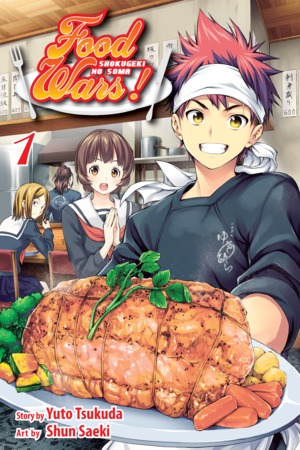
thumb-10857-FDW_01_webFood Wars, Vol. 1
Story by Yuto Tsukada, Art by Shun Saeki
Rated T+, for Older Teens
VIZ Manga, $9.99

Food Wars begins with an only-in-manga scenario: Soma Yukihira’s dad shutters the family’s greasy spoon restaurant and lights out for America, leaving his son behind. With no place to go, Soma enrolls at Totsuki Culinary Academy, a hoity-toity cooking school that prides itself on its wealthy alumnae, rigorous curriculum, and high attrition rate. Soma’s working-class background is a major handicap in this environment, but his can-do attitude and culinary instincts allow him to triumph in difficult situations, whether he’s salvaging an over-salted pot roast or wowing an unscrupulous developer with a simple potato dish.

In theory, I ought to hate Food Wars for its cartoonish characters and abundant cheesecake, two qualities I generally despise in a manga. But here’s the thing: it’s fun. Soma repeatedly shows up bullies and snobs with his ability to transform everyday dishes into haute cuisine, proving that good food doesn’t need to be fancy. Though Soma’s foes are stock types—the Busty Bitch, the Rich Mean Boy, the Teacher With Impossibly High Standards—Shun Sakei’s crisp caricatures make them seem like fresh creations. I wish I could say the same for Sakei’s abundant fanservice, which quickly wears out its welcome with porny images of women enjoying Soma’s cooking. These pin-up moments are supposed to be funny, I guess, but the heavy emphasis on heaving cleavage and bare skin seems more like a concession to teenage male taste than an organic part of the story.

The verdict: I can’t decide if Food Wars is a guilty pleasure or a hate read, but I’ve just purchased volumes 2-4.

Manga Dogs 1Manga Dogs, Vol. 1
By Ema Toyama
Rated T, for Teens
Kodansha Comics, $10.99

Manga Dogs has a terrific premise: a teenage artist decides to enroll in her school’s manga program, only to discover that her teacher is inept, and her classmates are pretty-boy otakus with no skill or work ethic. When Kanna’s classmates discover that she’s actually a published artist, Fumio, Fujio, and Shota glom onto her in hopes of breaking into the business—even though her debut series is on the verge of being cancelled.

With such a ripe set-up, it’s a pity that Manga Dogs is DOA. Part of the problem is that the script panders to the reader at every turn, whether it’s poking fun at reverse-harem tropes or saddling the characters with pun-tastic names inspired by famous manga creators. The author spends too much time patting the reader on the back for “getting” the jokes and not enough time writing genuinely funny scenarios or imbuing her characters with more than one personality trait each. The other issue is pacing: the story and artwork are both frenetic, with characters screaming, jumping, and flapping their arms on almost every page. By the end of the third chapter, I felt as if someone had beaten me up for my lunch money while asking me, “Do you think I’m funny? No? Now do you think I’m funny?”

The verdict: Just say no.

1421575906Yukarism, Vol. 1
By Chika Shiomi
Rated T, for Teen
VIZ Media, $9.99

Yukarism combines the supernatural elements of Rasetsu with the historical drama of Sakuran, then adds a dash of gender-bending weirdness for good measure. The story revolves around Yukari, a best-selling author whose novels explore the history of Edo’s red-light district. Though fans attribute the abundant details in his writing to research, Yukari has an even better strategy for learning about the past: he visits it! When he returns to the 1800s, however, Yukari becomes Yumurasaki, a top-earning oiran (or courtesan) enmeshed in a web of political intrigue, lust, and violence.

Given the complexity of the plot, it’s not surprising that the first volume of Yukarism is a bumpy ride. The tone see-saws between broad physical comedy and brooding melodrama, making it difficult to know if Yukari’s plight is being played for laughs or sniffles. The script, on the other hand, is too pointed; manga-ka Chika Shiomi is so intent on telling us what Yukari is thinking and seeing that she forgets the old dictum about showing, not telling. The same kind of editorial interventions result in at least one character waxing profusely about how handsome and cool Yukari is, just in case we haven’t realized that he’s supposed to be handsome and cool. Now that the basic parameters of the story have been established, however, Shiomi can dispense with the heavy-handed dialogue and do what she does best: write sudsy supernatural romances with beautiful characters in beautiful costumes.

The verdict: Volume two should be a pure guilty pleasure.

These reviews originally appeared at MangaBlog on January 2, 2015.

Filed Under: Classic Manga Critic, Manga, Manga Critic, REVIEWS Tagged With: Cooking and Food, kodansha, shojo, Shonen, VIZ

Assassination Classroom, Vol. 1

January 6, 2017 by Katherine Dacey

Americans steadfastly believe that all students need to succeed are a few good teachers—think of how many movies you’ve seen about an unorthodox educator who helps a group of misfits, losers, or underachievers realize their full potential against all odds. Perhaps that’s why American publishers hesitated before licensing Assassination Classroom, a comedy that outwardly conforms to the tenets of the genre while poking fun at its hoariest cliches.

Assassination Classroom‘s star teacher is Koro-sensei, a super-powered alien who can wipe out an army with a swish of a tentacle. His students are class 3-E, the troublemakers and flunkies of Kunugigaoka Junior High School. Instead of studying calculus or Shakespeare, however, Koro-sensei’s charges are learning how to kill him and save Earth in the process—in other words, it’s To Sir With Lethal Force.

If the script isn’t quite as edgy as my summary suggests, Assassination Classroom scores points for the sheer ridiculousness of the premise. Koro-sensei’s relentless enthusiasm and high standards match those of other fictional educators—Michelle Pfeiffer in Dangerous Minds, Robin Williams in Dead Poets Society—but are applied to such activities as shooting and stabbing. He gives the same kind of inspirational speeches that you’d find in those movies, too, reminding his charges that he specifically requested the job because he knows the students’ true potential.

In one scene, for example, timid student Okuda presents Koro-sensei with three deadly potions, imploring him to sample them. “I’m not good at surprise attacks!” she tells him. “But I love chemistry! And I really put my heart and soul into this!” Koro-sensei cheerfully obliges, offering to help Okuda “research a poison that can kill me.” When Okuda proves more skillful at mixing chemicals than persuading her target to drink them, Koro-sensei reminds her that “in order to kill someone, you need to understand how they feel,” skills that she can cultivate through—what else?—reading and writing.

The exchange between Okuda and Koro-sensei is complemented by some of the best visual gags in volume one. One of the poisons, for example, neutralizes Koro-sensei’s Cheshire grin into a flat line, prompting a student to exclaim, “You look like an emoticon!” Although Koro-sensei’s face is the essence of simplicity—a circle with pin-dot eyes and a toothy smile—this subtle tweak of his appearance yields a big pay-off laugh-wise.

At the same time, however, the poison episode illustrates Assassination Classroom‘s biggest flaw: Yusei Matsui wants to have his cake and eat it, too, soft-pedaling the humor with an uplifting, awwww-worthy moment in almost every chapter. Students unironically vow to do their best after Koro-sensei points out the flaws in their technique, saves them from harm, or gives them a pep talk. None of the students harbor a grudge against him—at least not for very long—or question the value of Koro-sensei’s lessons. (Makes you wonder: is Koro-sensei guilty of grade inflation?)

Still, I enjoyed volume one enough to continue with the series, even if Matsui’s efforts to express the Shonen Jump dictum of “friendship, effort, victory” sometimes blunt the edge of his satire.

ASSASSINATION CLASSROOM, VOL. 1 • BY YUSEI MATSUI • RATED T+, FOR OLDER TEENS • VIZ MEDIA

This review originally appeared at MangaBlog on December 18, 2014.

Filed Under: Manga, Manga Critic, REVIEWS Tagged With: Comedy, Shonen Jump Advanced, VIZ, Yusei Matsui

Barakamon, Vol. 1

January 6, 2017 by Katherine Dacey

Barakamon is a textbook fish-out-of-water story: an impatient city slicker finds himself in the country where life is slower, folks are simpler, and meaningful lessons abound. Its hero, Seishuu Handa, is a calligrapher whose fiery temper and skillful but unimaginative work have made him a pariah in Tokyo. His foils are the farmers and fishermen of Gotou, a small island on the southwestern tip of Japan that’s inhabited by an assortment of eccentrics, codgers, and naifs.

If this all sounds a little too familiar, it is; you’ve seen variations on this story at the multiplex, on television, and yes, in manga. (I think I liked it better when it was called Cold Comfort Farm, and starred Kate Beckinsale and Rufus Sewell.) Satsuki Yoshino does her best to infuse the story with enough humor and warmth to camouflage its shopworn elements, throwing in jokes about internet pornography, dead frogs, and bad report cards whenever the story teeters on the brink of sentimentality. The mandates of the genre, however, demand that Handa endure humiliations and have epiphanies with astonishing regularity—1.5 times per chapter, by my calculations.

From time to time, however, Yoshino finds fresh ways to show us Handa’s slow and fitful progress towards redemption. The first chapter provides an instructive example: Handa angrily dismisses his six-year-old neighbor Naru when she declares his calligraphy “just like teachers write.” After seeing Naru’s wounded expression, Handa chastises himself for lashing out at a kid. Handa never musters an apology to Naru, but makes restitution by joining her for a series of small adventures. The experience of swimming in the ocean, scrambling over a wall, and watching a sunset prove liberating, leading Handa to an explosive outburst of creativity punctuated by a few high-flying kicks. (Now that’s what I call action painting.) The results are messy, but the message is clear: Handa has the potential to be a genuine artist if he can connect with his playful side.

Like the story, the artwork is serviceable if not particularly distinctive. Yoshino creates enough variety in her character designs that the reader can easily distinguish one islander from another—an important asset in a story with many supporting players. Yoshino’s grasp of anatomy, however, is less assured. When viewed from the side, for example, Handa’s Tokyo nemesis has a cranium like a gorilla’s and a chest to match; when viewed from above, however, the Director appears small and wizened. Other characters suffer from similar bodily distortions that exaggerate their necks, arms, and torsos, especially when Yoshino attempts to draw them from an unusual vantage point.

Yoshino is more successful at creating a sense of place. Through a few simple but evocative images of the harbor and coastline, she firmly establishes the seaside location. She also uses architectural details to suggest how old the village is; though locals enjoy such modern conveniences as television, their homes look otherwise untouched by modernity. Yoshino is less successful in creating a sense of space, however. It’s unclear, for example, if Naru lives a stone’s throw from Handa’s house—hence her frequent intrusions—or if she lives a mile down the road.

The dialogue, too, plays an important role in establishing the setting. Faced with the difficult task of rendering the Gotou dialect, translators Krista and Karie Shipley chose a broad Southern accent for the local population. That decision neatly illustrates the cultural divide between Handa and his neighbors, but at the cost of nuance; a few jokes that hinge on vocabulary simply can’t be conveyed by this particular adaptation strategy. (The Shipleys’ translation notes are helpful in demystifying these exchanges.) Most of the punchlines, however, need no such editorial interventions to enjoy; certain elements of city slicker/country bumpkin humor transcend culture.

My verdict: Barakamon has enough charm and energy to engage the reader, even if the story isn’t executed with enough precision or subtlety to transcend the basic requirements of the fish-out-of-water genre.

BARAKAMON, VOL. 1 • BY SATSUKI YOSHINO • RATED T, FOR TEENS • YEN PRESS

This review originally appeared at MangaBlog on November 19, 2014.

Filed Under: Manga, Manga Critic, REVIEWS Tagged With: Comedy, Satsuki Yoshino, yen press

The Manga Revue: I Am a Hero

June 4, 2016 by Katherine Dacey

Can the market support another zombie comic? That’s the question at the heart of this week’s column, as I examine Kengo Hanazawa’s I Am a Hero, a manga about a geeky artist living through a zombie apocalypse. Bone appetit!

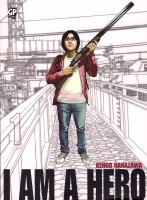
I_am_a_HeroI Am a Hero, Vol. 1
By Kengo Hanazawa
Rated Older Teen, for ages 16+
Dark Horse, $19.99

At first glance, I Am a Hero looks like a Walking Dead clone, complete with gun-toting vigilantes and hungry zombie hordes. Peel back its gory surface, however, and it becomes clear that I Am a Hero is really a meditation on being trapped: by a dead-end job, by thwarted expectations, and by fears, real and imagined.

The “hero” of Kengo Hanazawa’s series is thirty-five-year old Hideo Suzuki. Though Hideo tasted success with the publication of his own manga, his triumph was short-lived: Uncut Penis was cancelled just two volumes into its run. He now toils as a mangaka’s assistant, working alongside other middle-aged artists whose professional disappointment has curdled into misogyny and grandiosity.

Compounding Hideo’s problems is his fragile mental state. He hallucinates, talks to himself, and barricades the door to his apartment against an unspecified threat, in thrall to the voices in his head. Despite his tenuous grasp on reality, Hideo is the only one of his co-workers who notices the small but telling signs that something is deeply amiss in Tokyo. Hideo soon realizes that his long-standing fears might actually be justified, and must decide whether to hunker down or flee the city.

Getting to Hideo’s do-or-die moment, however, may be a challenge for some readers. The first act of I Am a Hero is a tough slog: not only does it focus on a cluster of strenuously unpleasant characters, it documents their daily routines in painstaking detail. The tedium of these early chapters is occasionally punctuated by vivid, unexplained imagery that calls into question whether the zombies exist or are a figment of Hideo’s imagination. What the reader gradually realizes is that Hideo’s paranoia makes him alive to the possibility of catastrophe in a way that his bored, self-involved co-workers are not; they’re too mired in everyday concerns to notice the growing body count, a point underscored by the banality of their workplace conversations, and their shared belief that women are the real enemy.

When the zombie apocalypse is in full swing, Hanazawa delivers the gory goods: his zombies are suitably grotesque, retaining just enough of their original human form to make their condition both pitiable and disturbing. Hanazawa stages most of the action in tight spaces–an artist’s studio, a pedestrian footbridge, a hallway–giving the hand-to-hand combat the stomach-churning immediacy of a first-person shooter game. Only when Hanazawa cuts away to reveal a fire-ravaged, chaotic landscape do we fully appreciate the extent to which Tokyo has succumbed to the zombie plague.

It’s in these final moments of the book that Hideo glimpses an alternative to his miserable existence–the loneliness, anonymity, and failure that, in his words, have prevented him “from being the hero of my own life.” How he escapes these emotional traps–and those pesky zombies–remains to be seen, but it seems like a journey worth taking. Count me in for volume two.

A word to parents: I Am a Hero is less gory than either The Walking Dead or Fear the Walking Dead, but contains scenes of disturbing violence and frank sexual content. Dark Horse’s suggested age rating seems appropriate for this particular title.

Reviews: At Brain vs. Book, Jocelyn Allen looks at two untranslated series: Akina Kondoh’s A-ko-san no Koibito, a josei manga about a woman juggling two love interests, and Machiko Kyo’s Nekojou Mu-Mu, a comic about an outrageously cute cat. Matt Brady, host of Warren Peace Sings the Blues, weighs in on the third installment of JoJo’s Bizarre Adventure: Phantom Blood. And at Three if By Space, Robert Prentice explains why My Hero Academia is truly a comic for all ages.

  • Manjiorin on The Birth of Kitaro (The OASG)
  • Demelza on Blood C: Demonic Moonlight (Anime UK News)
  • Adrienne on Cute Life of Mary and Lola (Heart of Manga)
  • Che Gilson on vol. 1 of Fairy Girls (Otaku USA)
  • Tony Yao on Food Wars: Shokugeki no Soma (Manga Therapy)
  • Marissa Lieberman on vol. 1 of Gakkyu Hotel: School Judgment (No Flying No Tights)
  • A Library Girl on vol. 7 of His Favorite (A Library Girl’s Familiar Diversions)
  • Michael Burns on vol. 2 of How to Raise a Boring Girlfriend (AniTAY)
  • Steve Foxe on vol. 1 of I Am a Hero (Paste Magazine)
  • Svetlana Fedotov on vol. 1 of I Am a Hero (Fangoria)
  • Helen on Itihasa (The OASG)
  • Anna N. on vol. 20 of Kamisama Kiss (Manga Report)
  • Khursten Santos on Minori no Te (Otaku Champloo)
  • Saeyong Kim on vol. 1 of Monthly Girls’ Nozaki-Kun (No Flying No Tights)
  • Sean Gaffney on vol. 3 of Monthly Girls’ Nozaki-Kun (A Case Suitable for Treatment)
  • Gabe Peralta on vol. 3 of Monthly Girls’ Nozaki-Kun (The Fandom Post)
  • Gabe Peralta on vol. 1 of My Youth Romantic Comedy Is Wrong as I Expected (The Fandom Post)
  • Ken H. on vol. 1 of Mysterious Girlfriend X (Sequential Ink)
  • Kory Cerjak on vol. 1 of Mysterious Girlfriend X (The Fandom Post)
  • Matthew Alexander on vol. 11 of Path of the Assassin (The Fandom Post)
  • Matthew Alexander on vol. 12 of Path of the Assassin (The Fandom Post)
  • Jason Thompson on vol. 1 of Princess Jellyfish (Otaku USA)
  • Nic Willcox on vol. 1 of Puella Magica Homura Tamura (No Flying No Tights)
  • David Brooke on vol. 2 of Real Account (AiPT!)
  • Rebecca Silverman on vol. 4 of Requiem of the Rose King (Anime News Network)
  • Lori Henderson on The Secret Sakura Shares (Manga Xanadu)
  • Sarah on vol. 5 of Servamp (Anime UK News)
  • Matt on vol. 7 of A Silent Voice (AniTAY)
  • Jason Thompson on Sweetness & Lightning (Otaku USA)
  • Nic Willcox on vol. 1 of Sword Art Online: Girls’ Ops (No Flying No Tights)
  • Demelza on vol. 1 of To the Abandoned Sacred Beasts (Anime UK News)
  • Daniel Boyd on vol. 3 of Ultraman (No Flying No Tights)
  • Sarah on vol. 10 of What Did You Eat Yesterday? (Anime UK News)
  • Sophie Knight on What Is Obscenity? The Story of a Good-for-Nothing Artist and Her Pussy (The Japan Times)
  • Michelle Martinez on What Is Obscenity? The Story of a Good-for-Nothing Artist and Her Pussy (New York Journal of Books)
  • ebooksgirl on vol. 12 of Yotsuba&! (Geek Lit Etc.)
  • Marissa Lieberman on vol. 1 of Yowamushi Pedal (No Flying No Tights)

Filed Under: MANGABLOG, REVIEWS

DMP Kickstarts Controversy

May 30, 2016 by Katherine Dacey

On May 27th, DMP Kickstarted an effort to publish Kodomo no Jikan, a manga about a third-grade teacher and his precocious student. If that title rings a bell, that’s because Seven Seas initially planned to release Kodomo no Jikan in 2007, sparking angry responses from readers who felt the series crossed the line between comedy and child exploitation. (You can read more about the original controversy here.) [Kickstarter]

The numbers are in, and One Piece is once again Japan’s best-selling manga series, moving almost 6.5 million copies between November 2015 and May 2016. Other strong performers include Assassination Classroom, Attack on Titan, The Seven Deadly Sins, and My Hero Academia. [Anime News Network]

Is One-Punch Man the new Attack on Titan? A quick glance at the New York Times Manga Bestseller List suggests this superhero spoof may be the New Big Thing: volumes one, two, and six all make the cut. [NY Times]

Fox announced that Rosa Salazar (Maze Runner: The Scorch Trials) will play the title role in its forthcoming Battle Angel Alita adaptation. The film, which will be directed by Robert Rodriguez, is tentatively scheduled for a summer 2018 release; James Cameron will produce. [The Hollywood Reporter]

Back in 2009, Barefoot Gen artist Keiji Nakazawa penned a letter to President Barack Obama in which expressed hope that Obama would “come to Hiroshima and Nagasaki, hear the voices of the atomic bomb survivors first-hand, and visit the Peace Memorial Museum here in Hiroshima.” Nakazawa also declared his “unwaivering support” for the president’s anti-nuclear initiatives. Alas, Nakazawa did not live to see his wish fulfilled; he passed away in 2012. [The Mainichi]

Erica Friedman rounds up all the latest yuri news, including word of a new Cardcaptor Sakura anime. [Okazu]

What’s new on shelves this week? The Manga Bookshelf gang sorts the wheat from the chaff. [Manga Bookshelf]

Ash Brown is giving away a copy of Paradise Residence, the latest from Oh! My Goddess creator Kosuke Fujishima. The deadline to enter the drawing is June 1st. [Experiments in Manga]

Why do some OOP manga command hundreds of dollars while others net a measly dollar or two on eBay? Krystallina takes an in-depth look at the second-hand manga market, and offers tips for figuring out which titles are most likely to go out of print. [The OASG]

LM publishes the third installment of her series The Sparkling World of Shojo Manga, in which she traces the development of shojo from the beginning of the twentieth century to today. Her latest post focuses on pioneering mangaka Riyoko Ikeda, best known in the English-speaking world for The Rose of Versailles. [The Lobster Dance]

Reviews: At Soliloquy in Blue, Michelle Smith posts a glowing review of Nichijou: My Ordinary Life, while fellow MB blogger Ash Brown weighs in on josei classic Tramps Like Us.

  • Justin Cabeal on vol. 1 of 7th Garden (Comic Bastards)
  • Krystallina on vol. 1 of Anne Happy: Unhappy Go Lucky! (The OASG)
  • Rebecca Silverman on The Birth of Kitaro (Anime News Network)
  • Johanna Draper Carlson on vols. 1-4 of The Devil is a Part-Timer! (Comics Worth Reading)
  • Matthew Alexander on vol. 1 of Die Wergelder (The Fandom Post)
  • Rebecca Silverman on vol. 1 of The Heiress and the Chauffeur (Anime News Network)
  • Kristin on vol. 2 of Honey So Sweet (Comic Attack)
  • Jordan Richards on vol. 1 of I Am a Hero (AiPT!)
  • Sheena McNeil on vol. 15 of Library Wars (Sequential Tart)
  • Megan R. on Love Machine (The Manga Test Drive)
  • Matthew Warner on vol. 7 of My Neighbor Seki (The Fandom Post)
  • Ladd Goldstein on vol. 1 of Ninja Slayer: Last Girl Standing (Bento Byte)
  • Sheena McNeil on vol. 20 of Oresama Teacher (Sequential Tart)
  • Mariko on vol. 3 of Otome no Teikoku (Okazu)
  • Jordan Richards on vol. 1 of Paradise Residence (AiPT!)
  • Matthew Alexander on vol. 8 of Path of the Assassin (The Fandom Post)
  • Megan R. on Pretty Men Fighting Dirty (The Manga Test Drive)
  • Megan R. on The Prime Minister’s Secret Diplomacy (The Manga Test Drive)
  • Dustin Cabeal on vols. 2-3 of Prison School (Comic Bastards)
  • SKJAM on vol. 1 of Princess Jellyfish (SKJAM! Reviews)
  • Sean Gaffney on vols. 27-28 of Ranma 1/2 (A Case Suitable for Treatment)
  • Matt on vol. 2 of Real Account (AniTAY)
  • Anna N. on vol. 4 of Requiem of the Rose King (Manga Report)
  • Krystallina on vol. 3 of School-Live! (The OASG)
  • Matt on vol. 1 of Servant X Service (AniTAY)
  • Nick Creamer on vol. 6 of A Silent Voice (Anime News Network)
  • Matthew Warner on vol. 11 of Terra Formars (The Fandom Post)
  • Nick Creamer on vol. 5 of UQ Holder! (Anime News Network)
  • Julie on A Wife of Convenience (Manga Maniac Cafe)

Filed Under: MANGABLOG

The Manga Revue: Guardians of the Louvre

May 20, 2016 by Katherine Dacey

Whew–it’s been a while! Life got in the way of blogging for a few months, but the summer forecast looks good for manga reviewing. On the docket this week: Jiro Taniguchi’s Guardians of the Louvre, part of an ongoing graphic novel series published by NBM/Comics Lit that also includes Glacial Period, On the Odd Hours, and Rohan at the Louvre.

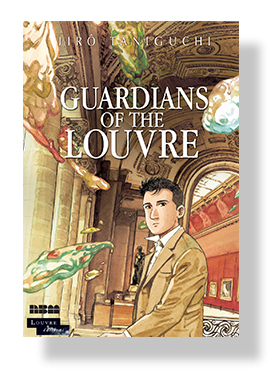
COVERLAYOUT.inddGuardians of the Louvre
By Jiro Taniguchi
No rating
NBM Graphic Novels, $24.99

One part Times of Botchan, one part Night at the Museum, Jiro Taniguchi’s Guardians of the Louvre is a stately, handsomely illustrated manga that never quite rises to the level of greatness.

The premise is simple: a Japanese artist lies ill in his Parisian hotel room, feverishly dreaming about the museum’s galleries. In each chapter, the hero is temporarily transported to a particular place and time in the Louvre’s history, rubbing shoulders with famous artists, witnessing famous events, and chatting with one of the museum’s most famous works–the Nike of Samothrace, who takes the form of a stone-faced tour guide. If the set-up sounds like The Times of Botchan, it is, though Guardians of the Louvre is less ambitious; Taniguchi’s primary objective is to celebrate the museum’s collection by highlighting a few of its most beloved works, rather than immersing the reader in a specific milieu.

The artist-as-time-traveler schtick is a little hackneyed, but provides Taniguchi with a nifty excuse to showcase the breadth of his artistry, offering the reader a visual feast of rural landscapes, gracious country manors, war-ravaged cities, and busy galleries. Using watercolor and ink, Taniguchi convincingly recreates iconic paintings by Van Gogh and Corot, effortlessly slipping into each artist’s style without slavishly reproducing every detail of the originals. Taniguchi’s characters are rendered with a similar degree of meticulousness, though their waxen facial expressions sometimes mar scenes calling for a meaningful display of emotion.

What prevents Guardians of the Louvre from taking flight is its relentlessly middlebrow sensibility. In one scene, for example, the Nike of Samothrace leads our unnamed hero through an empty Salle des États, home of the Mona Lisa. The artist examines the painting closely, musing about the tourist hordes that normally throng the gallery. “It’s not about art appreciation anymore. It’s wholly a popular tourist destination” he says wistfully. If his character was anything more than an audience surrogate, his comment might have registered as a thoughtful meditation on the commercialization of fine art, or the outsized fame of Da Vinci’s canvas. Absent any knowledge of who he is or what kind of art he creates, however, his remarks sounds more like a moment of bourgeois snobbery: don’t these peasants realize the Louvre is filled with other remarkable paintings?

A similarly pedestrian spirit animates the chapters documenting the 1939 evacuation of the Louvre. To be sure, the mechanics of packing and transporting the art are fascinating; Taniguchi’s expert draftsmanship conveys the complexity and physical demands of the task in vivid detail, inviting us to ride along with Delacroix’s monumental Raft of the Medusa on its perilous journey from Paris to Versailles. The dialogue that frames these passages, however, is rife with cliches. “They were ready to risk everything to evacuate the paintings,” the Nike solemnly informs our hero before implying that this operation was a little-known episode in French history–a strange claim, given the story’s romantic treatment in popular culture: surely the Nike has read All the Light We Cannot See or watched The Monuments Men?

The manga’s most effective passages, by contrast, are wordless. We see our hero wander through a forest where Corot silently paints the undulating boughs, and a medieval town where Van Gogh sets up his easel in a sun-drenched hay field. In these fleeting moments, Taniguchi’s sensual imagery allows us to step into the artist’s shoes and relive the creative process that yielded Recollection of Mortefontaine and Daubigny’s Garden for ourselves. If only the rest of the manga wasn’t so insistent on telling us how to appreciate these paintings.

Reviews: Sean Gaffney gives Rokudenashiko’s autobiographical manga What Is Obscenity? the thumbs-up. Over at The Fandom Post, Matthew Alexander jumps in the WABAC Machine for a look at Shaman Warrior, one of the first manhwa published by Dark Horse.

  • Julie on Abby and the Playboy Prince (Manga Maniac Cafe)
  • Helen on A Centaur’s Life (The OASG)
  • Megan R. on Earthian (The Manga Test Drive)
  • Frank Inglese on vol. 10 of Food Wars!! Shokugeki no Soma (Snap 30)
  • Richard Prenice on vol. 11 of Food Wars!! Shokugeki no Soma (Three if By Space)
  • Matt on vol. 2 of Forget Me Not (Ani-TAY)
  • Seth Hahne on A Girl on the Shore (Good OK Bad)
  • Michael Burns on vol. 2 of Handa-kun (Ani-TAY)
  • Matthew Alexander on vol. 1 of He Is My Master (The Fandom Post)
  • Infinitespeech on vol. 1 of I Am a Hero (The Fandom Post)
  • Kory Cerjak on vol. 3 of JoJo’s Bizarre Adventure, Part 2: Battle Tendency (The Fandom Post)
  • Nick Creamer on vol. 4 of My Hero Academia (Anime News Network)
  • Nick Creamer on vol. 1 of Mysterious Girlfriend X (Anime News Network)
  • Chris Beveridge on vol. 2 of Nichijou (The Fandom Post)
  • Dustin Cabeal on vols. 13-15 of Nisekoi: False Love (Comic Bastards)
  • Dustin Cabeal on vol. 1 of Prison School (Comic Bastards)
  • Kristin on vol. 1 of Shuriken and Pleats (Comic Attack)
  • Frank Inglese on vol. 5 of Tokyo Ghoul (Snap 30)
  • Robert Prentice on vol. 6 of Tokyo Ghoul (Three If By Space)
  • Julie on Wife by Contract, Mistress on Demand (Manga Maniac Cafe)
  • Frank Inglese on vol. 9 of World Trigger (Snap 30)
  • ebookgirl on vol. 11 of Yotsuba&! (Geek Lit Etc.)

Filed Under: MANGABLOG, REVIEWS

VIZ Has Banner Year, Kodansha Offers Humble Bundle

May 16, 2016 by Katherine Dacey

PokemonBrigid is wrapping up a busy stint TCAF, so I’ll be subbing for her this week. Here’s a quick round-up of new and noteworthy developments:
ICv2 buries the lede in this interview with Viz Media’s Beth Kawasaki, who tells them “This last fiscal year was our best ever, in the history of the company, and we do have some hit kids’ titles contributing greatly to that.” Emphasis ours. The most popular of those kids’ properties are Pokemon, Yo-kai Watch, and Legend of Zelda, and there’s a Pokemon cookbook on the way. [ICv2]

The latest volume of Akame ga Kill! tops the New York Times Manga Bestseller List, followed by the first volumes of I Am a Hero, Tokyo Ghoul, and One-Punch Man. [The New York Times]

Yen Press announced a new light novel license: Goblin Slayer! [Anime News Network]

There are just two days left to download Kodansha Comics’ Humble Bundle, which includes the first three volumes of Attack on Titan, the first two volumes of Ajin: Demi-Human and Inuyashiki, and the first volumes of The Seven Deadly Sins, Parasyte, and Space Brothers. Proceeds benefit The Comic Book Legal Defense Fund. [Crunchyroll]

Should vendors and guests of Anime Expo be subject to background checks? The Society for the Promotion of Japanese Animation (SJPA) is considering such a policy; Christopher MacDonald, however, worries that this initiative may backfire. [Anime News Network]

In case you missed it: Ryan Holmberg posts a new installment of What Was Alternative Manga?, focusing on the work of Nakashima Kiyoshi. [The Comics Journal]

What’s arriving in your local bookstore this week? The Manga Bookshelf gang investigates. [Manga Bookshelf]

Despite the backlash against DreamWorks’ Ghost in the Shell film, Hollywood seems bullish on manga and anime properties. Among the projects currently in the pipeline are Death Note (courtesy of Netflix) and AKIRA (courtesy of Warner Brothers). [The Hollywood Reporter]

News from Japan: Of the Red, the Light, and the Ayakashi will finish its run in Monthly Comic Gene on June 15th… This dedicated cosplayer trekked to Mongolia to recreate scenes from Kaoru Mori’s A Bride’s Story… Which Shonen Jump character is sexiest? Japanese readers recently voted, expressing a strong preference for villains… Yotsuba&! creator Kiyohiko Azuma will share the Tezuka Cultural Prize with Kei Ichinoseki, author of Hanagami Sharaku.

Reviews: Over at The Comics Journal, Robert Kirby reviews the provocatively titled What Is Obscenity? The Story of a Good-for-Nothing Artist and Her Pussy. Closer to home, Michelle Smith and Sean Gaffney offer a fresh batch of Bookshelf Briefs that include the latest installments of Barakamon, Maid-Sama!!, and What Did You Eat Yesterday?

Johanna Draper Carlson on vol. 1 of Anne Happy: Unhappy Go Lucky! (Comics Worth Reading)
Johanna Draper Carlson on vol. 4 of Emma (Comics Worth Reading)
Erica Friedman on vols. 1-2 of Futaribeya (Okazu)
Incendiary Lemon on The Gods Lie (Anime UK News)
Terry Hong on Guardians of the Louvre (Book Dragon)
Lori Henderson on The Infernal Devices Trilogy (Manga Xanadu)
Ian Wolf on vols. 1-2 of Maga-Tsuki (Anime UK News)
Sheena McNeil on vol. 1 of Midnight Stranger (Sequential Tart)
Megan R. on Mr. Flower Groom (The Manga Test Drive)
SKJAM! on vol. 1 of Mysterious Girlfriend X (SKJAM! Reviews)
Sean Gaffney on vol. 78 of One Piece (A Case Suitable for Treatment)
Rebecca Silverman on vol. 1 of The Other Side of Secret (Anime News Network)
Mariko S. on vol. 2 of Otome no Teikoku (Okazu)
Megan R. on Passion (The Manga Test Drive)
Ken H. on vol. 1 of Princess Jellyfish (Sequential Ink)
Johanna Draper Carlson on vol. 1 of Servant x Service (Comics Worth Reading)
Laura on vol. 1 of Shuriken and Pleats (Heart of Manga)
Megan R. on Three Wolves Mountain (The Manga Test Drive)
Johanna Draper Carlson on vol. 10 of What Did You Eat Yesterday? (Comics Worth Reading)
Terry Hong on vol. 10 of What Did You Eat Yesterday? (Book Dragon)
Ash Brown on What Is Obscenity? The Story of a Good-for-Nothing Artist and Her Pussy (Experiments in Manga)
Matt on vol. 2 of Yowamushi Pedal (Ani-TAY)
Sean Gaffney on vol. 2 of Yowamushi Pedal (A Case Suitable for Treatment)

Filed Under: MANGABLOG

The Manga Revue: Brave Dan and FukuFuku: Kitten Tales

March 5, 2016 by Katherine Dacey

Do you own a cat tea cosy? Is there an enormous feline jungle gym in your living room? Have you lost entire afternoons to watching YouTube videos of cats opening doors, playing pianos, and riding Roombas? If you answered “yes” to at least one of the following questions, this week’s column is for you, as I’ll be reviewing two cat-centric comics: Osamu Tezuka’s Brave Dan–a boy-and-his-tiger story–and Kanata Konami’s FukuFuku: Kitten Tales–a manga about cats doing normal cat things.

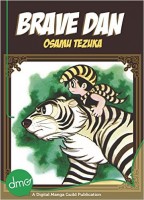
brave_danBrave Dan
By Osamu Tezuka
Rated Teen, for readers 13 and up
Digital Manga Publishers, Inc., $15.95

Brave Dan begins as a rollicking adventure: Kotan, an orphaned Ainu boy, befriends Dan, a “man-eating” tiger, and embarks on a quest with him to find a valuable treasure. The pair dodges bullets, escapes from a helicopter, and tangles with guardian spirits in their search for the tomb of an ancient Ainu warrior. As the story enters its final act, however, a darker subplot emerges, one in which Dan is forced to confront the wisdom of associating with humans.

Though Tezuka makes frequent reference to Kotan’s Ainu heritage, this plot strand is more window dressing than serious thematic element; Kamuiroji’s tomb looks more like a set from a Flash Gordon or Tarzan serial than an authentic expression of Ainu culture. (Granted, it’s a pretty nifty tomb; Indiana Jones would have had a field day exploring it.) Tezuka is on firmer ground when staging a chase or a fight. In one memorable scene, for example, Dan plunges into a lake to save Kotan from an enormous spider-demon. Tezuka captures the fluidity and speed of Dan’s attacks with a few carefully chosen “snapshots” of him tumbling and twisting in the water, struggling to crush the monster with his paws. Small details–such as the trail of bubbles from each of Dan’s legs–remind us that in this underwater setting, Dan has a fleeting window of opportunity to save his friend. By the time that he and Kotan burst to the lake’s surface, we’re gasping for air, too–a testament to Tezuka’s ability to transport the reader to the scene of the action.

Tezuka’s artwork also plays an important role in garnering sympathy for Dan, establishing the tiger’s bravery, intelligence, and unwavering loyalty to Kotan. Though Tezuka can’t resist some ham-fisted touches–Dan actually shakes his paw at the sky in one scene–Dan’s essential tigerness is never compromised. The emphasis on Dan’s animal nature reminds us that his friendship with Kotan can only exist apart from human society; kind and smart as Dan may be, adults perceive him as a threat, to be killed or contained in a zoo.

The bottom line: If you still bear scars from reading The Yearling and Old Yeller, be warned: Dan is as doomed as those other noble animal protagonists. Less sensitive souls, however, can enjoy Brave Dan as both a gonzo adventure story and a meditation on the perils of interspecies friendships. Recommended for readers ten and up.

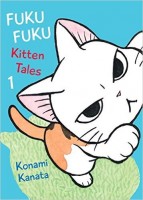
Fuku Fuku Kitten TalesFukuFuku: Kitten Tales, Vol. 1
By Kanata Konami
All Ages
Vertical Comics, $10.95

FukuFuku: Kitten Tales is perfectly calibrated to elicit an “awwww” and a chuckle on every page. The title character–a spunky calico–does predictably cute things: she falls asleep in odd places, escapes from a sudsy bath, plays with her food, and snatches a fish from the table. Unlike Chi, star of Konami’s other hit manga, FukuFuku doesn’t voice her thoughts about her new owner, or the strangeness of her new surroundings; she simply does what she pleases. Konami’s minimalist artwork captures the nuances of FukuFuku’s moods surprisingly well, however, as Konami bends and stretches the kitten’s moon-shaped face into an astonishing range of smiles, scowls, and grimaces. Absent a plot or a deeper sense of how FukuFuku sees her world, the story hits fewer emotional notes than Chi’s Sweet Home, focusing almost exclusively on the kind of ordinary cat behavior that’s been documented copiously on YouTube. You may find that the vignettes–charming as they are–have a sameness about them that prevents them from being genuinely funny or surprising.

The bottom line: As with Chi’s Sweet Home, Konami demonstrates a talent for drawing winsome kitties doing winsome things. She’s also cornered the market on disdainful feline reaction shots.

Reviews: ANN columnist Rebecca Silverman posts an early review of Inio Asano’s critically lauded drama Goodnight Pun-Pun, while Seth Hahne, host of Good OK Bad, tackles another Asano work: A Girl on the Shore.

Mark Pelligrini on vol. 3 of AKIRA (AiPT!)
Sean Gaffney on vol. 7 of Blood Lad (A Case Suitable for Treatment)
Adrienne on vol. 1 of Bloody Mary (Heart of Manga)
Sean Gaffney on The Boy and the Beast (A Case Suitable for Treatment)
Julie on The Cinderella Solution (Manga Maniac Cafe)
Julie on Crowns and a Cradle (Manga Maniac Cafe)
ebooksgirl on vol. 1 of FukuFuku: Kitten Tales (Geek Lit Etc.)
Karen Maeda on vol. 1 of JoJo’s Bizarre Adventure, Part 2: Battle Tendency (Sequential Tart)
Wolfen Moondaughter on vol. 23 of Kimi ni Todoke: From Me to You (Sequential Tart)
Nick Creamer on vol. 3 of My Hero Academia (Anime News Network)
David Brooke on vol. 5 of One-Punch Man (AiPT!)
Ash Brown on vol. 1 of Persona 4 (Experiments in Manga)
Jordan Richards on vol. 1 of Pokemon Adventures (AiPT!)
Sheena McNeil on vol. 2 of QQ Sweeper (Sequential Tart)
Wolfen Moondaughter on vol. 1 of Gakyuu Hotei: School Judgment (Sequential Tart)
Rebecca Silverman on vol. 3 of Umineko When They Cry Episode 5: End of the Golden Witch (Anime News Network)
Austin Lanari on issue no. 13 of Weekly Shonen Jump (Comic Bastards)

Filed Under: MANGABLOG, REVIEWS Tagged With: Brave Dan, Classic Manga, DMP, FukuFuku, Kanata Konami, Manga Review, Osamu Tezuka, Vertical Comics

The Manga Revue: Handa-Kun

February 26, 2016 by Katherine Dacey

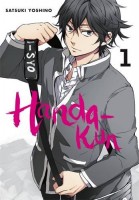
VIZ isn’t the only manga publisher experimenting with digital-first releases; Yen Press has also rolled out new titles in digital form before introducing print editions. One of the latest Yen titles to make the leap from web to page is Handa-kun, Satsuki Yoshino’s comedy about a talented teen calligrapher. If the premise sounds familiar, that’s because the title character also stars in Yoshino’s later series Barakamon–which begs the question, is Handa-kun just for fans, or will it appeal to the uninitiated? Read on for my verdict.

handakunHanda-kun, Vol. 1
By Satsuki Yoshino
Rated T, for teens
Yen Press, $15.00

By the time we meet Sei Handa in the first pages of Barakamon, he’s a twenty-something jerk who bristles at criticism, resents authority, and resists overtures of friendship. The tenth-grader we meet in Handa-kun isn’t as curmudgeonly, but he has a problem: he constantly misreads other people’s motives, whether he’s interpreting a love letter as a threat or perceiving a job offer as a “shady” attempt to unload stolen clothing. For all his weirdness, however, Handa’s classmates worship him, viewing his odd behavior and sharp calligraphy skills as proof of his coolness.

Author Satsuki Yoshino wrings a surprising number of laughs from this simple premise by populating the story with a large, boisterous cast of supporting players. Though the outcome of every chapter is the same–female suitors and male rivals alike profess their sincere admiration for Handa–the path to each character’s epiphany takes unexpected turns. Yoshino complements these humorous soliloquies with expressive, elastic artwork that sells us on the characters’ transformations.

In the volume’s best chapter, for example, Yoshino pits Handa against a bespectacled nerd named Juniichi. Juniichi’s entire self-image is rooted in his years of service as class representative–that is, until one of his peers nominates Handa for the honor. Yoshino makes us feel and smell Juniichi’s desperation by showing us how Juniichi sweats, grimaces, and paces his way through the vote-counting process, flagging or rallying with each ballot. By chapter’s end, Juniichi’s cheerful declaration that “Right now, I feel the best I have ever felt in my life” seems like the natural culmination of this fraught emotional journey–even though, of course, his feeling is rooted in a false sense of Handa’s moral rectitude.

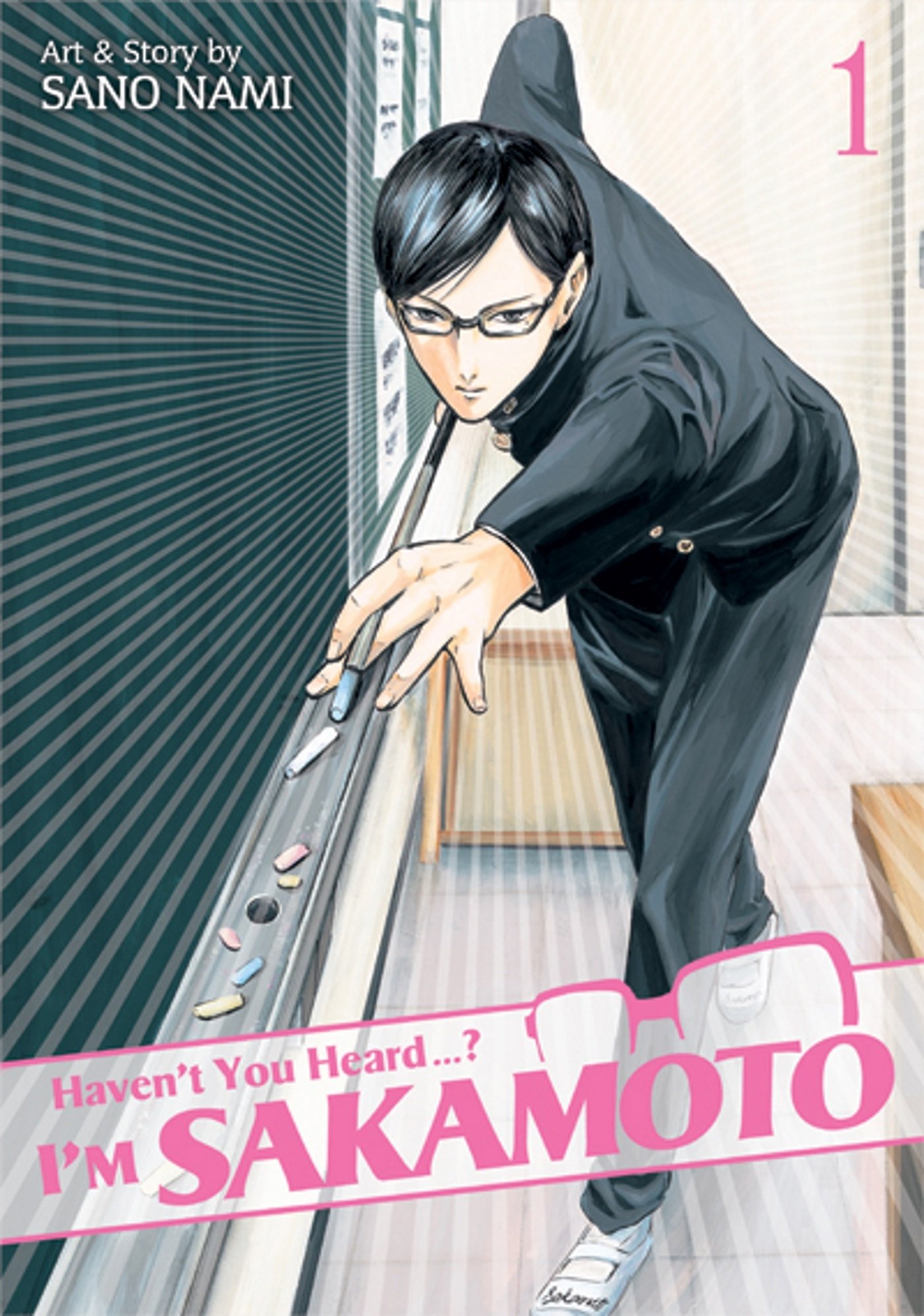
My primary concern about Handa-kun is that the series will overstay its welcome. Handa seems fundamentally unable to learn from his interactions with peers, and his classmates seem just as clueless in their blind adoration of him. If Yoshino doesn’t take steps to change this dynamic–perhaps by introducing a character who is genuinely unimpressed with Handa–the series risks settling into a predictable routine. For a few volumes, however, the current set-up will do just fine, offering the same brand of off-kilter humor as Haven’t You Heard? I’m Sakamoto.

The bottom line: The first volume is funny enough to appeal to newbies and die-hard Barakamon fans.

Reviews: Megan R. jumps in the WABAC machine for a close look at two BL titles from the mid-00s: Brother (originally published by Drama Queen) and Love Pistols (originally published by BLU Manga). At The OASG, Justin Stroman convenes a round table discussion of Kentaro Miura’s Giganto Maxima.

Theron Martin on vol. 1 of Angel Beats!: Heaven’s Door (Anime News Network)
Matt on vol. 1 of Die Wergelder (Ani-TAY)
Matt on vol. 1 of Dimension W (Ani-TAY)
Julie on vol. 1 of FukuFuku: Kitten Tales (Manga Maniac Cafe)
Helen on vol. 1 of Ga-Rei (The OASG)
Sarah on vols. 2-3 of Kiss Him, Not Me! (Anime UK News)
Sheena McNeil on vol. 8 of Kiss of the Rose Princess (Sequential Tart)
Karen Maeda on vol. 3 of Komomo Confiserie (Sequential Tart)
Terry Hong on vol. 5 of Master Keaton (Book Dragon)
Ken H. on vol. 7 of Noragami (Sequential Ink)
SKJAM! on vols. 10-11 of Ooku: The Inner Chambers (SKJAM! Reviews)
Plutoburns on Parasistence Sana (Plutoburns)*
Marissa Lieberman on vol. 1 of School-Live! (No Flying No Tights)
Matt on vol. 2 of School-Live! (Ani-TAY)
Kane Bugeja on vol. 7 of Seraph of the End (Snap 30)
Sarah on vol. 4 of Servamp (Anime UK News)
Rebecca Silverman on vol. 1 of Taboo Tattoo (Anime News Network)
Nic Creamer on vol. 3 of UQ Holder! (Anime News Network)
Michael Burns on vols. 5-6 of Yamada-kun and the Seven Witches (Ani-TAY)

* Denotes a video review

Filed Under: MANGABLOG, REVIEWS Tagged With: Barakamon, Handa-kun, Manga Review, yen press

The Manga Revue: Behind the Scenes!!

February 8, 2016 by Katherine Dacey

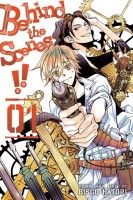
It’s a snowy day here in Boston, giving me the perfect excuse to tunnel under a blanket and read a goofy, light-hearted story. My escapism of choice: Bisco Hatori’s latest series, Ouran University Host Club Behind the Scenes!!

BehindTheScenes-01Behind the Scenes!!, Vol. 1
By Bisco Hatori
Rated T, for teens
VIZ Media, $9.99

Behind the Scenes!! embodies what’s good–and not so good–about Bisco Hatori’s storytelling.

In the plus column, Hatori has a knack for writing ensemble pieces in which the principal characters exhibit a genuine fondness for one another. The stars of her latest series are Shichikoku University’s Art Squad, a scrappy outfit that makes props for the Film Club–or, more accurately, clubs, as there are several students groups competing for the Art Squad’s services, each with their own aesthetic objectives. Ranmaru, the series’ protagonist, gets a crash course in film making when he stumbles into the middle of an Art Squad project: a low-budget horror flick. As penance for disrupting the shoot, Ranmaru joins the Art Squad and is quickly pressed into service painting props, folding paper cranes, and building a fake hot spring.

These scenes–in which Ranmaru and the gang tackle set-design challenges–are among the series’ most enjoyable. Not only do they give us a sneak peek at the movie-making process, they also show us how the club members’ friendly overtures embolden the timid, self-doubting Ranmaru to let go of his painful childhood and become part of a community. In one exchange, for example, Ranmaru tells a fellow squad member about a black-and-white film that made a powerful impression on him. Hatori cuts between scenes from this imaginary film and Ranmaru’s face, registering how powerfully Ranmaru identified with the film’s principal character, a toy robot who dreams of flying. The symbolism of the toy is hard to miss, but the directness and simplicity with which Hatori stages the moment leavens the breezy tone with a note of poignancy.

In the minus column, Hatori often strains for comic effect, overwhelming the reader with too many shots of characters mugging, shouting, and flapping their arms. The Art Squad’s interactions with various student directors give Hatori license to indulge this tendency; the auteurs’ snits and whims frequently force the Art Squad members to behave more like the Scooby Doo gang–or Hollywood fixers–than actual college students juggling coursework and extra-curriculars. (The Art Squad even has a goofy dog mascot.)

At the same time, however, these wannabe Spielbergs bring out the best in Hatori’s draftsmanship. Each one’s personality is firmly established in just a single panel: one looks like a refugee from Swingin’ London (or perhaps an Austin Powers film); another dresses like a Taisho-era author, swanning around campus in a yukata; and a third sports a shaggy mane, Buddy Holly glasses, and a female entourage. The efficiency with which Hatori introduces these characters, and the range of personalities they embody, demonstrate just how crisp and distinctive her artwork can be. That Hatori’s heroes are visually bland by comparison says less about her skills, I think, than it does her desire to make Ranmaru’s new “family” seem normal–well, as normal as anyone who specializes in making fake zombie guts can be.

The bottom line: Tentatively recommended. If Hatori can tone down her characters’ antic behavior, Behind the Scenes!! could be a winner.

Reviews: Sean Gaffney and Michelle Smith post a fresh crop of Bookshelf Briefs. Also new at Manga Bookshelf: Sean tackles the first volume of orange (no, that’s not a typo), Anna N. reviews Takeshi Obata’s kiddie-thriller School Judgment, and Ash Brown weighs in on Hiroaki Samura’s stylish (and bloody) manga Die Wergelder. Further afield, translator Jocelyn Allen posts her annual doujinshi round-up.

Sara Dempster on The Angel of Elhamburg (No Flying No Tights)
Matthew Warner on vol. 5 of Ani-Emo (The Fandom Post)
Michael Burns on vols. 7-8 of Barakamon (AniTAY)
Johanna Draper Carlson on vol. 12 of Chi’s Sweet Home (Comics Worth Reading)
Adam Brunell on vol. 12 of Deadman Wonderland (ComicSpectrum)
SKJAM! on Dream Fossil (SKJAM! Reviews)
Josh Begley on vol. 2 of Emma (The Fandom Post)
Patrick Moore on vol. 1 of Honey So Sweet (Bentobyte)
Sean Gaffney on vol. 1 of How to Raise a Boring Girlfriend (A Case Suitable for Treatment)
Ken H. on Junji Ito’s Cat Diary: Yon & Mu (Sequential Ink)
Kory Cerjak on vol. 13 of Magi (The Fandom Post)
Megan R. on Millennium Prime Minister (The Manga Test Drive)
Rebecca Silverman on vol. 12 of My Little Monster (Anime News Network)
Exile on vol. 1 of My Monster Secret (AniTAY)
Jocelyn Allen on Night Worker (Brain vs. Book)
Matthew Warner on vol. 2 of Puella Magi Tart Magica (The Fandom Post)
Matt on vol. 5 of A Silent Voice (AniTAY)
Terry Hong on vol. 2 of Ultraman (Book Dragon)
Nick Creamer on vol. 2 of UQ Holder! (Anime News Network)
Frank Inglese on Uzumaki Naruto: Illustrations (Snap 30)
Sheena McNeil on vol. 3 of Yo-Kai Watch (Sequential Tart)


Filed Under: MANGABLOG, REVIEWS Tagged With: Bisco Hatori, Manga Review, shojo beat, viz media

The Manga Revue: Giganto Maxia

January 29, 2016 by Katherine Dacey

Kentaro Miura’s Berserk is a rite of passage for manga readers: you may not have soldiered past the second volume, but you tried because a Real Manga Fan told you that it was The Most Amazing Manga Ever. I freely admit that I didn’t finish Berserk–too violent for me, I’m afraid–but I marveled at its intricate plotting, feverish pace, and deadly seriousness. (Also: Miura’s penchant for awful names.) When Dark Horse announced that it had acquired Giganto Maxia, I decided to treat this new series as a second “date” with Miura–a chance to decide if I’d judged his work unfairly the first time around. Here’s how that date went.

giganto_maxiaGiganto Maxia
By Kentaro Miura
Rated 16+, for older teens
Dark Horse, $13.99

Let’s start with the good: Giganto Maxia is a visual feast that’s every bit as imaginative as Hayao Mizayaki’s Nausicaa of the Valley of the Wind. Kentaro Miura’s pages abound in war-ravaged landscapes, fantastic fighting machines, and bizarre creatures that straddle the fence between human and animal. The specificity of his vision, and the care with which he stages battle scenes, obviates the need for dialogue; we can almost hear and feel what the characters are experiencing on every page.

Miura’s script, however, is as tin-eared and self-serious as a high school literary rag. The two leads–Prome, a pale mystic who looks like a young girl, and Delos, a warrior slave–spend an inordinate amount of time describing what’s happening around them, even when the pictures make it abundantly clear. Yet for all their chatter, neither character provides much useful information about the post-apocalyptic world in which Giganto Maxia takes place: who are the Olympians? Why are they so intent on annihilating other tribes? And what, exactly, are the Giganto? The absence of these details leaves a big hole in the story: the characters’ motivation for fighting the Giganto. At the end of the volume, we’re not really sure what Prome and Delos stand for, or what’s at stake if they fail–two fatal flaws in a series that desperately wants the reader to get swept up in their quest.

The bottom line: A talky script and barely-there characters sink this smart-looking fantasy series.

The publisher provided a review copy.

Reviews: Sean Gaffney and Michelle Smith round up the latest volumes of Arpeggio of Blue Steel, Kimi ni Todoke, and Non Non Biyori at Manga Bookshelf; Sean also reads The Testament of New Sister Devil so that you don’t have to. Over at Women Write About Comics, Amanda Vail and Paige Sammartino offer “short & sweet” reviews of Barakamon, Are You Alice?, and My Hero Academia.

Nick Creamer on vol. 3 of The Ancient Magus’ Bride (Anime News Network)
Gary Thompson on vol. 10 of Black Jack (The Fandom Post)
Demelza on Fairy Tail (Anime UK News)
Megan R. on Gate 7 (The Manga Test Drive)
Nick Creamer on vol. 7 of Genshiken: Second Season (Anime News Network)
Sean Rogers on A Girl on the Shore (The Globe and Mail)
Sheena McNeil on vol. 1 of Honey So Sweet (Sequential Tart)
Rebecca Silverman on vol. 1 of Honey So Sweet (Anime News Network)
Matt on vol. 2 of Inuyashiki (AniTAY)
Sean Gaffney on Kagerou Daze III: The Children Reason (A Case Suitable for Treatment)
Claire Napier on Memoirs of Amorous Gentlemen (Comics Alliance)
Michael Burns on vol. 13 of Nisekoi (AniTAY)
Matthew Warner on vol. 76 of One Piece (The Fandom Post)
Matthew Warner on vol. 3 of One-Punch Man (The Fandom Post)
Rebecca Silverman on vol. 4 of One-Punch Man (Anime News Network)
Matthew Warner on vol. 3 of Peepo Choo (The Fandom Post)
Sheena McNeil on vol. 5 of Pokemon X.Y. (Sequential Tart)
Helen on vol. 1 of ReLife (The OASG)
Matt on vol. 4 of A Silent Voice (AniTAY)
Saeyong Kim on vol. 3 of Thermae Romae (No Flying No Tights)
Sarah on Tsubasa WoRLD CHRoNiCLE: Niraikani (Anime UK News)
Charlotte Finn on Wandering Son (Comics Alliance)


Filed Under: MANGABLOG, REVIEWS Tagged With: Dark Horse, Kentaro Miura, Manga Review

The Manga Revue: Idol Dreams and Monthly Girls’ Nozaki-Kun

January 15, 2016 by Katherine Dacey

Happy New Year! (Is it too late to extend that greeting to readers?) For my first column of 2016, I dove into my pile of unread books and chose two that I’d meant to review last year. The first is Arina Tanemura’s Idol Dreams, a body-swap comedy about a thirty-something office lady; the second is Izumi Tsubaki’s Monthly Girls’ Nozaki-Kun, a 4-koma series about a hunky high school manga artist who just happens to be the author of a popular girls’ comic.

idol-dreams-vol-1Idol Dreams, Vol. 1
By Arina Tanemura
Rated T, for readers 13 and up
VIZ Media, $9.99

Chikage Deguchi is at a crossroads: once a pretty, popular high school student, she’s become a sexless, thirty-something office drone who’s mocked by her co-workers. After making a fool of herself at a high school reunion, Chikage’s childhood friend Tokita stages a unique intervention, offering Chikage a drug that transforms her into a 15-year-old girl for a few hours a day. Chikage then does what any self-respecting 31-year-old would do: she pursues a (part-time) career as a teen idol.

Setting aside the question of whether anyone would voluntarily relive their teenage years, Idol Dreams has a bigger problem: tone. Arina Tanemura can’t decide if her story will revel in its absurdity or play things straight, and veers wildly between wacky show-biz hijinks and clumsy office scenes that are meant to establish just how awful Chikage’s adult life is. In the afterword to the story, Tanemura cheerfully vents her frustrations at being asked to do “a magical girl series for adults” without recourse to “too much screentone,” “gags and comedic touches,” or “super-stylish atmosphere.” Oddly enough, I don’t think these restrictions are the true source of the problem; if anything, Tanemura’s artwork is more polished and appealing in Idol Dreams than in Phantom Thief Jeanne or I.O.N. The real issue is the lead character: Tanemura never really explains why temporarily impersonating a 15-year-old would solve any of Chikage’s issues, especially since Chikage’s teenage alter ego is a wet noodle, too. The underlying message seems to be that recapturing youthful beauty is a pathway to empowerment–not a particularly novel or uplifting idea, given the developed world’s obsession with Botox, face lifts, wrinkle cream, and 17-year-old models.

The bottom line: I never thought I’d say this, but Idol Dreams is the rare Tanemura manga that would benefit from more zaniness and sparkly backgrounds.


monthly_girlsMonthly Girls’ Nozaki-Kun
, Vol. 1
By Izumi Tsubaki
Rated T, for teen readers
Yen Press, $13.00

Monthly Girls’ Nozaki-Kun is a textbook example of what happens when a great idea bumps up against the limitations of a restrictive format. The set-up is comedy gold: tenth-grader Chiyo Sakura confesses her romantic feelings to hunky classmate Umetarou Nozaki, only to have him casually respond, “Do you want to come to my place right now?” Flustered, Chiyo agrees but is surprised when Nozaki doesn’t put the moves on her; instead, he puts her to work on a chapter of his hit shojo manga Let’s Fall. Chiyo’s attempts to extricate herself from Nozaki’s employ or clarify her feelings for him only make things worse, as Nozaki is both romantically inexperienced and genuinely obtuse.

So far, so good: the concept provides plenty of fodder for jokes and pratfalls. The four-panel format, however, locks each character into a holding pattern in which he or she is doomed to repeat the same behavior over and over again. The supporting cast is big enough to prevent Monthly Girls from reading like a month’s worth of Cathy or Garfield strips, but the rhythm of every gag is virtually the same, whether author Izumi Tsubaki is introducing a new character, poking fun at shojo manga cliches, or demonstrating just how socially inept Nozaki really is; long stretches of Monthly Girls read like a Henny Youngman set, albeit with stranger–and funnier–material. Take my manga… please!

The bottom line: Some of the jokes are genuinely funny, but the series already feels like it’s chasing its tail by the end of chapter three.

Odds and Ends: Organization Anti-Social Geniuses has a new look, a new name, and a new URL. You’ll now find Justin Stroman and the gang at http://www.theoasg.com/. Manga vlogger Pluto Burns took a break from reviewing books and conducted a great interview with Carolina Manga Library founder Laura Mehaffey. If you’re not familiar with the good work that Mehaffey and her staff are doing, click here to learn more about this traveling book collection.

Reviews: Sean Gaffney, Anna N. and Michelle Smith post their first Bookshelf Briefs column of 2016. On the agenda: D-Frag!, My Love Story!!, Pandora Hearts, and Saki. Elsewhere on the web, Rebecca Silverman and Kory Cerjak review the first volume of Yowamushi Pedal, my pick for Best New Manga of 2015.

Chris Kirby on vol. 1 of 7 Billion Needles (The Fandom Post)
Karen Maeda on vol. 7 of Assassination Classroom (Sequential Tart)
Matthew Warner on Ayako (The Fandom Post)
Sheena McNeil on vol. 1 of Bloody Mary (Sequential Tart)
Megan R. on CLAMP School Detectives (The Manga Test Drive)
Justin on Confession (The OASG)
Kate O’Neil on vol. 5 of Demon from Afar (The Fandom Post)
Sean Gaffney on vol. 3 of Emma (A Case Suitable for Treatment)
Sean Gaffney on vol. 1 of Honey So Sweet (A Case Suitable for Treatment)
Ash Brown on vol. 3 of JoJo’s Bizarre Adventure, Part 1: Phantom Blood (Experiments in Manga)
Sheena McNeil on vol. 19 of Kamisama Kiss (Sequential Tart)
Ken H on vol. 1 of LD♥K (Sequential Ink)
Rebecca Silverman on vol. 1 of Livingstone (Anime News Network)
Lori Henderson on vol. 1 of Monthly Girls’ Nozaki-Kun (Manga Xanadu)
Dustin Cabeal on vol. 2 of My Hero Academia (Comic Bastards)
Sean Gaffney on vol. 1 of Of the Red, the Light, and the Ayakashi (A Case Suitable for Treatment)
Kane Bugeja on vol. 3 of One-Punch Man (Snap 30)
David Brooke on vol. 4 of One-Punch Man (AiPT!)
Dustin Cabeal on vol. 4 of One-Punch Man (Comic Bastards)
SKJAM! on vol. 18 of Rin-ne (SKJAM! Reviews)
Ken H. on vol. 9 of Say I Love You (Sequential Ink)
Helen on vol. 1 of Student Council’s Discretion (The OASG)
Patrick Moore on vol. 8 of Tiger & Bunny (Bento Byte)
Che Gilson on Tokyo Ghoul (Otaku USA)
Marion Olea on vol. 2 of Tokyo Ghoul (No Flying No Tights)
Frank Inglese on vols. 8-9 of Vagabond: VIZBIG Edition (Snap 30)
Ash Brown on vol. 7 of Vinland Saga (Experiments in Manga)
SKJAM! on vol. 7 of Vinland Saga (SKJAM! Reviews)
Megan Rupe on vols. 1-2 of Yo-Kai Watch (No Flying No Tights)


Filed Under: MANGABLOG, REVIEWS Tagged With: 4-koma, Arina Tanemura, Manga Review, shojo, viz media, yen press

The Most Anticipated Manga of 2016

January 4, 2016 by Katherine Dacey

We’re kicking off 2016 with a look at the manga titles and trends we’re most excited about. Joining me and Brigid is manga journalist and critic Deb Aoki, former guide to AboutManga.com, current host of Manga Comics Manga, and Publishers Weekly contributor.

What new manga are we looking forward to this year?

New Fruits BasketBRIGID: Fruits Basket! Natsuki Takaya’s tangled tale of a cursed family was one of the first shoujo manga I ever read, and I’m looking forward to re-reading it with a more experienced eye (and a better translation).

The other upcoming manga that everyone seems to be looking forward to is Princess Jellyfish, which Kodansha is publishing in double-sized omnibus volumes. This josei title about a bunch of nerdy girls living in their own rooming house sounds like it will be a lot of fun.

In terms of continuing series, I loved the first volume of Planetes and I’m looking forward to more. It’s a smart science fiction story with likeable characters and thoughtful storylines, and Dark Horse’s new edition is a beautiful two-volume omnibus that really feels like something special. I can’t wait to read more of Hiroya Oku’s Inuyashiki, about two humans given extreme superpowers in a freak accident—one uses them for good, one… doesn’t—and Yoshitoki Ōima’s A Silent Voice, an amazingly powerful story that’s about bullying but also about alienation and redemption. One more: Your Lie in April, which has kind of slid under the radar, a shonen romance about musicians that, like A Silent Voice, goes beyond the standard shonen romance tropes and has relatable characters experiencing real emotions.

On a general note: When I was compiling my lists of the best new and ongoing manga series of 2015, I was struck by how many really good manga debuted in 2015. From all accounts, 2016 is going to be even better.

haikyuuDEB: I’m most excited about the trend where manga publishers are taking chances on titles and genres that were once considered the third rail/extra risky to license, like sports manga. Super excited about the Summer 2016 arrival of the first volumes of Haikyu!! by Haruichi Furudate and Kuroko’s Basketball by Tadatoshi Fujimaki from Shonen Jump/VIZ Media! I love Haikyu!! a lot — been watching the first and second seasons on Crunchyroll over and over again. the characters are really wonderful — it’s delightful to see the team grow and reach new heights every time. It’s got lots of heart and humor as well as exciting sports action. It’s now one of my all-time faves!

I’ve also been enjoying the recently released Yowamushi Pedal by Wataru Watanabe, a manga about a hapless anime otaku who discovers that he has a talent for bicycle racing. Big ups to Yen Press for publishing this fairly long series in double-sized volumes.

queen-emeraldas-smallAnother example of manga publishing biz in the US dipping their toes into riskier fare is the upcoming publication of three classics: Rose of Versailles by Riyoko Ikeda from Udon Entertainment, Queen Emeraldas by Leiji Matsumoto from Kodansha Comics, and Otherworld Barbara by Moto Hagio from Fantagraphics Books.  For too long, the classics that are the foundation of manga in Japan have been largely unavailable in English. I’m hoping that these titles succeed so we can someday get more.

Also super excited about having more manga by Asano Inio available in English. Solanin and What a Wonderful World! are go-to recommendations for anyone who loves indie comics and is curious about manga. Now VIZ Media is publishing the mind-bending Goodnight Pun Pun, and A Girl on the Shore, coming from Vertical Comics. Both should be on your pre-order lists, as these are beautifully drawn, thought-provoking books that everyone will be talking about in the months to come.

rose-of-versailles-udonKATE: I share Deb’s excitement about classic manga. It’s a risky undertaking for any publisher, especially when so many readers are young (under 20) and not particularly curious about the medium’s roots. It will be interesting to see if UDON can pitch Rose of Versailles to the Shojo Beat crowd; though the artwork is a little dated, the melodrama, costumes, and kick-butt female lead have obvious parallels with titles in VIZ, Kodansha, and Yen’s catalogs. Who knows? It could be a surprise hit.

Speaking of vintage titles, I’m ecstatic about Drawn & Quarterly’s new Kitaro volumes. D&Q will be releasing these previously untranslated stories in slimmer, kid-friendly editions–a departure from their 2013 Kitaro release, which screamed “prestige project!” I think that’s a smart move: adults with an interest in Shigeru Mizuki’s work will buy it in almost any format, but younger manga fans need a length and trim size that reflects their own reading habits.

Another title on my must-read list is Jiro Taniguchi’s Guardians of the Louvre, which NBM Publishing will be releasing in April. The previous installment of the Louvre series–Hirohiko Araki’s Rohan at the Louvre–was the ultimate otaku two-fer: a ghost story and a standalone chapter in the JoJo’s Bizarre Adventure saga. Taniguchi’s book will undoubtedly be a more sober affair, but one I’m anticipating with the same eagerness: I can’t wait to see how Taniguchi integrates the museum’s famous collection into his story.

fukufukuIn the just-for-fun department, I Am a Hero, a zombie thriller from Dark Horse, is near the top of my list, as are VIZ’s Haikyu! (mentioned by Deb above), Vertical’s FukuFuku: Kitten Tales, and the final installment of DC Comics’ Batman: The Jiro Kuwata Batmanga. I’m also looking forward to Wandering Island, a story about a gutsy young woman who runs an air mail service in a remote corner of Japan. The illustrations are by Kenji Tsurata, the creator of the criminally under-appreciated Spirit of Wonder, which was published by Dark Horse in 1998.

Last but not least, I’d also make a plug for The Osamu Tezuka Story: A Life in Anime and Manga. This visual biography clocks in at a hefty 900 pages, highlighting important periods in Tezuka’s career as an illustrator and animator. Its author, Toshio Ban, worked closely with Tezuka in the 1970s and 1980s, giving Ban a unique perspective on his subject. As an added bonus for American readers, Stone Bridge Press brought in Frederick L. Schodt to do the translation.

How about conventions—does anything look particularly tempting?

DEB: I’m always curious to see what Toronto Comic Arts Festival will be bringing as their guests this May. Last year was Gurihiru and Aya Kanno, prior years brought Konami Kanata, Moyoco Anno, Akira Himekawa, Usamaru Furuya, Est Em, Natsume Ono and Yoshihiro Tatsumi to name just a few. I don’t know what they have planned, but I know it’ll be worth the trip!

As booth space and tickets get harder and harder to get at San Diego Comic-Con, Anime Expo in Los Angeles has turned into the Japanese content biz must-go show. I’ve noticed that more companies from Japan are buying booths, and see lots of meetings / business being conducted at the show.

It’s great that AX is getting bigger and bigger, but I worry that it creates a situation where the anime/manga world becomes even more segregated/separated from the general pop culture community that converges at Comic-Con and similar American shows. This is especially irksome because it seems like most of the Western comics / pop culture press corps basically ignore / don’t report on / don’t attend Anime Expo or any of the announcements that come out of this show.

This pisses me off because anime/manga matter more than ever — especially as its fandom tend to skew younger, are more active, and more interested in all kinds of entertainment from US and Japan compared to their counterparts on the superhero side of the comic shop. So much for my “be less crabby in 2016” resolution… ;-)

KATE: I had a blast attending shows like New York Comic Con and Wondercon in the late 2000s. The last time I attended NYCC, however, I felt that the show had taken a much sharper turn towards the television, film, and gaming industries, and was losing its identity as a comics convention. The manga publishers were still there, of course, but it was harder to circulate and interact with editors and sales reps because of the enormous crowds. That experience pretty much soured me on going to any more big conventions. TCAF always sounds like a blast, but the timing never works for me; I’m always knee-deep in final exams and student papers when it rolls around!

BRIGID: I echo Deb’s concern about AX, but it does seem like this year, the news was spread across a broader swath of conventions—and many of the new licenses, including Fruits Basket, were announced on Twitter. The presence of so many people from the Japanese publishers—not just creators but editorial staff as well—was very noticeable this year and shows that the publishers are taking the American audience seriously. It also enhanced the experience to see, for instance, the editor of Noragami explaining the process of how it went from sketches to finished page. I’m looking forward to more of that at the larger shows as well as the more intimate experience at the smaller shows, where the creators and their readers are not so far apart.

Any predictions about the industry?

DEB: Almost all signs point to a healthier, more robust manga publishing business in 2016, which is a great thing. I don’t see the same rush to publish anything and everything vaguely manga-ish (even crappy manga) that I saw prior to the crash of the late 2000’s — publishers seem to be making more careful choices, more calculated risks. The fact that they’re taking any risks at all — by expanding genres, offering their stories via more digital channels and doing more simulpub/same day as Japan releases, is a good sign.

I’m also intrigued/encouraged by the efforts being made by Japanese manga publishers to welcome submissions by creators from outside of Japan, like Comics Zenon’s Silent Manga Audition contests and the Japanese edition of Shonen Jump’s latest contest to get published in their online magazine, Jump Plus. It’s no secret that many up-and-coming comics creators from around the world are inspired by manga, so it’ll be very interesting to see what happens when more of these creators get exposure in Japan and guidance from Japan’s top-notch manga editors.

magus1KATE: I’m consistently impressed by Seven Seas’ tenacity and business acumen, but not so impressed with the actual titles they license. Last year, however, Seven Seas published The Ancient Magus’ Bride and acquired Orange, neither of which fit the profile of a typical Seven Seas manga; if anything, both seemed like the kind of titles that CMX used to license. That gamble has paid off with Bride, which recently cracked the NY Times Manga Bestseller list. My prediction: Seven Seas will continue to make bold licensing choices in 2016, even as vampire-monster girls remain their core business.

BRIGID: I see publishers taking manga more seriously as the audience expands. While the “pile ‘em high and sell ‘em cheap” attitude that made Tokyopop and Viz’s Shonen Jump lines such a success ten years ago works well with teen readers, who gobble up manga in quantity, publishers are starting to cater to older readers who want a somewhat better experience. The oversized omnibus isn’t that much more expensive than single volumes, but it allows for a more satisfying reading experience, and publishers often include extras like better quality covers and color pages. Viz’s new edition of Monster, Dark Horse’s Planetes, and Yen Press’s Emma are all examples of this, and Kodansha gets a shoutout for not only its superb editions of Vinland Saga but its deluxe Attack on Titan Colossal Edition. This seriousness goes beyond production values to the licensing of quality manga that might not have found a market in earlier years, including Inuyashiki and Naoki Urasawa’s Master Keaton.

gekiga01If any publishers are reading this, I have a very specific licensing request. There’s a small French publisher called Lezard Noir that is publishing some amazing manga in French; I spoke to the publisher when I was in Angouleme two years ago and was really impressed with his line, which includes Minetaro Mochizuki’s Chiisakobé, Bonten Taro’s Sex & Fury, and Masahiko Matsumoto’s Gekiga Fanatics. I’m not the only one—every year at least one of his books is picked as an official selection by the Angouleme festival. I’d love to see some U.S. publishers pick up these titles in a similar format—I think they would have a lot of appeal to those older, more sophisticated manga readers.

Filed Under: FEATURES, MANGABLOG Tagged With: Drawn & Quarterly, fantagraphics, Kodansha Comics, Leiji Matsumoto, Most Anticipated Manga, moto hagio, NBM Publishing, Ryoko Ikeda, Seven Seas, Stone Bridge Press, Udon Entertainment, Vertical Comics, viz media, yen press

The Best and Worst Manga of 2015

December 30, 2015 by Katherine Dacey

After a two-year hiatus from blogging, I donned my critic’s cap again in 2015. I’ve enjoyed writing my quasi-weekly column, but composing a year-end list reminded me why I stepped off the reviewing treadmill in 2012: mediocre books! This year yielded a veritable bumper crop of so-so manga, titles that were competently executed but otherwise unmemorable thanks to an abundance of generic characters, cliché settings, and predictable plot twists; you’d be forgiven for feeling that you’d read many of 2015’s debuts before, even if the artists were new to the US market.

Lurking among the paint-by-number romances and boy-saves-world titles, however, were a few gems. I’ve done my best to highlight the titles that made me feel something, whether that feeling was love, hate, or a mixture of both. To that end, I’ve included my nominees for the worst manga of 2015 alongside the books that made me laugh and cry.

Yowamushi-Pedal-Volume-1Best New Series: Yowamushi Pedal
By Wataru Watanabe • Yen Press
You know the rap on sports manga: American readers won’t buy it, and don’t like it. Yowamushi Pedal might just change that, however, thanks to a story that plays well across the nerd-jock divide. Onoda, the hero, is a self-professed otaku whose weekly bike rides into Akihabara have transformed him into a secret Lance Armstrong clone. Though Onoda wants to revive his school’s anime club, his amazing hill-climbing skills and stamina get noticed by more seasoned riders, all of whom convince Onoda to join the cycling team. The series’ races are nail-biting, page-turning affairs, but it’s the in-between stuff that makes Yowamushi Pedal work. Onoda doesn’t just discover a new skill; he discovers a community of people who share his passion for riding and respect his talent. In short, Yowamushi Pedal is a coming-of-age story in which a bike becomes the nerdy hero’s vehicle—pun intended—for self-actualization.

One-Punch ManBest New Shonen Series: One-Punch Man
By ONE and Yusuke Murata • VIZ Media
One-Punch Man is the ultimate have-your-cake-and-eat-it-too manga. On the surface, it’s an affectionate spoof of shonen clichés that pokes fun at goofy costumes, over-the-top training sessions, and speech-prone villains. On a deeper level, however, One-Punch Man is a great adventure series about an ordinary but strong-willed individual who sets out to rid his city of monsters, only to discover that there’s a much greater threat to mankind than the lobster-men and were-lions that roam the streets. The result is a sincere, gut-bustingly funny manga that reads like a Silver Age superhero comic, splats and all. (Reviewed at Manga Blog on 6/12/15.)

Horimiya_cover1Best New Romance Manga: Horimiya
By Hero and Daisuke Hagiwara • Yen Press
Horimiya is one of 2015’s most pleasant surprises, a teen rom-com that avoids cliché situations by focusing on the characters’ lives outside school. At first glance, its lead characters look like opposites: Kyouko is the class queen, while Izumi is a quiet loner. When they bump into each other off campus, however, they quickly realize they have more in common than their carefully constructed identities would suggest–a realization that leads to friendship and flirtation. In less imaginative hands, Kyouko and Izumi’s budding romance would be subjected to endless tests–school plays, beach trips, hot transfer students–but the authors resist the urge to trot out these over-used scenarios, relying instead on more ordinary settings for comedic (and dramatic) grist. It’s the perfect antidote to the wacky misunderstandings that drive the plots of Cactus’ Secret, Special A, and a dozen similar titles.

Cat_DiaryBest New Gag Manga: Junji Ito’s Cat Diary: Yon & Mu
By Junji Ito • Kodansha Comics
Draw a Venn diagram that shows the overlap between Junji Ito fans and cat lovers, and you’ve found the small but perfect audience for Junji Ito’s Cat Diary, a collection of anecdotes about Ito’s beloved pets Yon and Mu. Though the manga’s jokes explore familiar terrain, Ito’s exaggerated reaction shots are priceless, capturing the mixture of love and disgust that cats inspire in their owners. (Imagine Edvard Munch drawing a gag manga about cats, and you get the general idea.) Ito is refreshingly honest about the way animals change the dynamic between people, too; in some of the manga’s most memorable scenes, Ito and his fiancée compete fiercely for their cats’ affection, plying Yon and Mu with toys, treats, and cuddles. Though the prevailing tone is campy, Ito’s obvious affection for his cats helps prevents the Diary from becoming too arch. (Reviewed at Manga Blog on 12/12/15.)

ludwig_kansiBest Historic Title: Ludwig B.
By Osamu Tezuka • DMP, Inc.
Left unfinished at the time of Osamu Tezuka’s death, Ludwig B. is a fictionalized biography of Beethoven. Tezuka only completed two volumes, but oh, those two volumes! Tezuka draws evocative scenes of Beethoven at the keyboard, using striking visual metaphors to convey the sound of Beethoven’s music. Tezuka also does a good job of capturing the dynamic between Beethoven and his father, revealing the extent to which Johann’s drinking, gambling, and stage-parenting cast a long shadow over Beethoven’s adult life. Purists should note that Tezuka takes frequent liberties with the historical record, creating a mustache-twirling villain named Franz Kreuzstein to serve as a foil for the young, determined Beethoven. If you’re not offended by such creative license, however, Ludwig B. offers an interesting glimpse into Beethoven’s development as a composer, and Tezuka’s lifelong fascination with Beethoven.

planetesBest Reprint Edition: Planetes
By Makoto Yukimura • Dark Horse
Listen up, manga publishers: if you’re going to do a new edition of a fan favorite, Dark Horse’s two-volume omnibus of Planetes is a swell example of how to do it right. The story has a crisp new translation, full-color pages, and a bigger trim size that gives Makoto Yukimura’s artwork room to stretch out. Better still, the new edition collects more chapters in each volume, allowing newcomers to read far enough into Planetes for Yukimura’s episodic character studies to gel into a more coherent story about space travel and social inequality; by the time newbies reach the end of volume one, they’ll be hooked, too.

sakamotoBest Manga I Thought I’d Hate: Haven’t You Heard? I’m Sakamoto
By Nami Sano • Seven Seas
In theory, Haven’t You Heard? I’m Sakamoto is a one-note samba: the titular character is handsome, good at everything, and unfailingly logical in all situations. In practice, however, Haven’t You Heard? is the Goldberg Variations of gag manga, taking stock scenes and putting a bizarre twist on them. The secret? Sakamoto is just a little too perfect, behaving more like a well-programmed android than a flesh-and-blood person. His peculiar brand of sangfroid confounds enemies and admirers alike; no one can decide if he’s cool or crazy, or where his loyalties might lie, making it impossible to predict how he’ll respond to each new challenge. (Reviewed at The Manga Critic on 8/7/15.)

jojo_phantom_blood1Worst Manga I Thought I’d Love: JoJo’s Bizarre Adventure, Part 1: Phantom Blood
By Hirohito Araki • VIZ Media
At the risk of becoming the Armond White of manga critics, I’m nominating Hirohito Araki’s bone-crunching, chest-thumping saga for Most Exhausting New Series of 2015. That’s because Phantom Blood is a prime example of all-caps theater, the sort of manga in which every word balloon is filled with emphatic punctuation, and every plot twist seems like the brainchild of six teenage boys hopped up on Mountain Dew. In small doses, this more-is-more approach to storytelling can be amusing, but in longer installments, the cumulative effect of so much narrative excess is numb resignation; I didn’t feel entertained so much as punched in the face. (Reviewed at Manga Blog on 5/22/15.)

mizuki_hitlerMost Disappointing Manga: Shigeru Mizuki’s Hitler
By Shigeru Mizuki • Drawn & Quarterly
Shigeru Mizuki’s Hitler is one of the artist’s lesser works, uncomfortably see-sawing between character study and history lesson in its efforts to show us the man behind the Third Reich. Mizuki’s signature blend of cartoonish figures and photo-realistic backgrounds have been deployed to powerful effect in Non Non Ba and Onwards Towards Our Noble Deaths. Here, however, Shigeru’s hybrid style is a poor match with the subject; seeing Hitler reduced to a crude caricature makes it all too easy to view the book as a curiosity, rather than a serious meditation on evil. The virtual absence of the Holocaust is an even greater shortcoming; Shigeru Mizuki’s Hitler never grapples with the Fuhrer’s most disturbing legacy save for one blurry image of stacked corpses. Perhaps Mizuki felt the subject was too complex to explore in this biography, but it’s hard to imagine any dramatization of the Fuhrer’s life that fails to examine his virulent anti-Semitism.

* * * * *

So what are other folks saying about 2015’s best titles? My Manga Bookshelf colleagues just posted their Pick of the Year, with Ash Brown posting a separate, more detailed run-down of his favorite titles at Experiments in Manga. At the B&N Sci-Fi & Fantasy Blog, Brigid Alverson has posted separate lists for her favorite new and continuing series.

Filed Under: MANGABLOG, REVIEWS Tagged With: Best Manga of 2015, Dark Horse, DMP, Drawn & Quarterly, Junji Ito, Kodansha Comics, Osamu Tezuka, Seven Seas, Shigeru Mizuki, viz media, yen press

  • « Go to Previous Page
  • Page 1
  • Interim pages omitted …
  • Page 42
  • Page 43
  • Page 44
  • Page 45
  • Page 46
  • Interim pages omitted …
  • Page 89
  • Go to Next Page »
 | Log in
Copyright © 2010 Manga Bookshelf | Powered by WordPress & the Genesis Framework