• Skip to primary navigation
  • Skip to main content
  • Skip to primary sidebar
  • Home
  • About Us
    • Privacy Policy
    • Comment Policy
    • Disclosures & Disclaimers
  • Resources
    • Links, Essays & Articles
    • Fandomology!
    • CLAMP Directory
    • BlogRoll
  • Features & Columns
    • 3 Things Thursday
    • Adventures in the Key of Shoujo
    • Bit & Blips (game reviews)
    • BL BOOKRACK
    • Bookshelf Briefs
    • Bringing the Drama
    • Comic Conversion
    • Fanservice Friday
    • Going Digital
    • It Came From the Sinosphere
    • License This!
    • Magazine no Mori
    • My Week in Manga
    • OFF THE SHELF
    • Not By Manga Alone
    • PICK OF THE WEEK
    • Subtitles & Sensibility
    • Weekly Shonen Jump Recaps
  • Manga Moveable Feast
    • MMF Full Archive
    • Yun Kouga
    • CLAMP
    • Shojo Beat
    • Osamu Tezuka
    • Sailor Moon
    • Fruits Basket
    • Takehiko Inoue
    • Wild Adapter
    • One Piece
    • After School Nightmare
    • Karakuri Odette
    • Paradise Kiss
    • The Color Trilogy
    • To Terra…
    • Sexy Voice & Robo
  • Browse by Author
    • Sean Gaffney
    • Anna Neatrour
    • Michelle Smith
    • Katherine Dacey
    • MJ
    • Brigid Alverson
    • Travis Anderson
    • Phillip Anthony
    • Derek Bown
    • Jaci Dahlvang
    • Angela Eastman
    • Erica Friedman
    • Sara K.
    • Megan Purdy
    • Emily Snodgrass
    • Nancy Thistlethwaite
    • Eva Volin
    • David Welsh
  • MB Blogs
    • A Case Suitable For Treatment
    • Experiments in Manga
    • MangaBlog
    • The Manga Critic
    • Manga Report
    • Soliloquy in Blue
    • Manga Curmudgeon (archive)

Manga Bookshelf

Discussion, Resources, Roundtables, & Reviews

Ash Brown

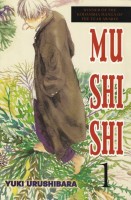
Mushishi, Vol. 1

January 16, 2015 by Ash Brown

Mushishi, Volume 1Creator: Yuki Urushibara
U.S. publisher: Del Rey
ISBN: 9780345496218
Released: January 2007
Original release: 2000
Awards: Japan Media Arts Award, Kodansha Manga Award

I no longer remember what first led me to pick up Yuki Urushibara’s debut manga Mushishi. It was probably mostly coincidence: the series started being released in English around the same time I started to really get into manga and was trying all sorts of things. I’m grateful for whatever reason it was that convinced me to read Mushishi because it became one of my favorite manga series. I love its quiet creepiness and beautiful storytelling. Mushishi was well-received both in Japan and abroad by both fans and critics. Among other recognitions and honors, Mushishi has earned a Japan Media Arts Award as well as a Kodansha Manga Award. Mushishi, Volume 1 was originally published in Japan in 2000. The English-language edition was initially released by Del Rey Manga in 2007 and, sadly, has since gone out of print. Happily, in 2014, Kodansha Comics released a digital edition of Mushishi in English.

Mushi–a category of primordial beings fundamental to the living world which may take on many forms. Truly understood by very few people, they are studied by mushishi, or mushi masters. Ginko is one such mushishi, making his living by traveling across the Japanese countryside, learning all that he can about mushi, and attempting to help those unfortunate enough to have come under the creatures’ influence. Mushi are often to blame for unusual natural phenomena and strange, otherwise unexplainable illnesses. Ginko is an expert, but even he is faced with circumstances beyond his knowledge and control; where mushi are involved, nothing is ever entirely certain. Sometimes the harm caused by the mushi has already been done and is irreversible, leaving humans to deal with the aftermath. They must learn to coexist or else risk their lives or sanity.

Although there is some continuity between the stories, Mushishi is largely episodic and each chapter in the first volume of the series stands well on its own. “The Green Gathering” introduces the concept of mushi while Ginko investigates a young man with the power to grant life to the things he draws. In “The Soft Horns” Ginko aids the residents of a snowbound village suffering from a peculiar kind of hearing loss. Mushi have invaded the dreams of a man in “The Pillow Path” with devastating and dire consequences. Urushibara’s award-winning “The Light in the Eyelids” was actually the very first Mushishi manga. The story follows a young girl whose eyes have become so painfully sensitive to light that she has been blindfolded and shut away by her family in a dark storehouse. The final story in Mushishi, Volume 1 is “The Traveling Bog” in which a swamp disappears and then reappears again and again, drawing ever closer to the sea each time.

Urushibara was influenced tremendously by older Japanese folk stories, but in developing Mushishi she draws on that inspiration to create a world and mythology of her own. Although the tales in Mushishi, Volume 1 are new, they still have a very familiar, traditional feeling to them that I find immensely appealing. I also enjoy the subtle horror present in many of the stories in Mushishi. While occasionally the manga and its imagery is disconcerting or even disturbing, Mushishi isn’t overly graphic or violent. Instead its creepiness derives from the fear of the unknown or the unknowable and the close intertwining of life and death. Mushi do not always bring misfortune, they can also be a benevolent force, but they are something beyond the understanding  and power of most humans, and that can be frightening. In Mushishi, Volume 1 Ginko is shown trying to bridge the gap that exists between mushi and humans, but he often struggles to find the perfect balance between sharing his knowledge and protecting life.

Filed Under: REVIEWS Tagged With: del rey, Japan Media Arts Award, Kodansha Manga Award, manga, mushishi, Yuki Urushibara

Manga the Week of 1/21

January 15, 2015 by Sean Gaffney, Ash Brown, MJ, Michelle Smith and Anna N 2 Comments

SEAN: Remember how I said that January was quiet? That does not apply to next week, which is simply a ton of stuff.

It’s even bigger as I missed some titles last week. Basically, I get street dates from Amazon, mostly. The exceptions are Dark Horse and DMP (and sometimes One Peace or Gen), which ship to comic shops 2 weeks before bookstores, so I use Diamond Comics’ street dates then. I forgot to check last week, and there was a pile of DMP stuff. So here it is:

There’s a sequel to Apple & Honey called His Rose-Colored Life.

Does the Flower Blossom? has its first volume. It seems to involve an ad man trying to get past a broken heart.

ASH: This series is from Blue Morning‘s Shoko Hidaka, so I’ll definitely be checking it out.

MJ: Oh, yes!

SEAN: In non-BL news, we have the 3rd volume of the quirky Hentai Prince and the Stony Cat.

Lastly, we have Murmur of the Heart, whose… sequel came out two weeks ago? In any case, it’s by the author of Blue Sheep Reverie.

missions10

Now, on to the giant pile actually out NEXT week. Kodansha has the 10th volume of addictive and frustrating shoujo potboiler Missions of Love.

ASH: So, so addictive.

SEAN: My Little Monster’s cast is equally screwed-up, but I scream at them a little less in the 6th volume. Only a little, though.

MICHELLE: I’m looking forward to this one!

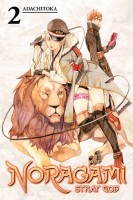
SEAN: And there’s a third volume of fantasy series Noragami.

ASH: I’ve been rather enjoying Noragami thus far.

SEAN: From Seven Seas, we have a third volume of Arpeggio of Blue Steel, whose gritty SF-ness has helped to overcome its ‘cute girls are battleships’-ness.

There’s a 4th omnibus of wacky pseudo-incest comedy I Don’t Like You At All, Big Brother!!.

And a 2nd of the straight up horror of Magical Girl Apocalypse.

And the final volume of Zero’s Familiar Chevalier, which I suspect may be the last in the franchise given the death of its creator.

Speaking of final volumes, From the New World ends for Vertical with its 7th volume next week.

Viz has the 3rd omnibus of Urasawa’s Monster, which does not star either Godzilla OR Gamera. Human monsters are enough here.

ASH: Still very happy this series is getting a re-release.

ANNA: Me too! I need to finally read it.

SEAN: There’s a 2nd volume of the Resident Evil tie-in manga.

And a 4th Terra Formars.

akame1

A new series debuts from Yen, and if you’re tired of the ‘dark fantasy’ genre, well, you’re in a very small minority. Akame Ga Kill! isn’t a title I know much about, but it had a popular anime, and has a striking young woman with a sword on its cover. I look forward to checking it out.

ASH: I have yet to tire of dark fantasy, which means I’ll be giving Akame Ga Kill! a look.

We’ve mostly caught up with Black Butler in Japan, so a new release isn’t as common as it once was. Here’s the 19th volume.

MICHELLE: I always seem to read these, even if I’m not terribly enthusiastic about the series.

SEAN: Who likes Goong? Who wants a 17th omnibus? Is it you? It is!

MICHELLE: It’s meeeeeeeee!

ANNA: I WANT IT!

MJ: And me! Me! Me!

SEAN: Inu x Boku SS spent much of its last volume reinventing itself, and I’m hoping things start moving a bit faster with this 6th one.

I keep forgetting Kingdom Hearts exists – Amazon doesn’t code it with the other manga. They’re up to the 5th volume of 358 / 2 Days, which is not 179 for reasons that I’m sure would make sense if I read it.

I’m not sure how much longer The Melancholy of Suzumiya Haruhi-chan can keep toddling along, especially now that it’s gotten to Sasaki, but I’m always happy to see a new volume, as it’s simply funny – and better characterized than the main manga, oddly enough.

Milkyway Hitchhiking was a popular title when the first volume came out, so I suspect the Manga Bookshelf team is looking forward to Vol. 2 twice as much!

MICHELLE: I may actually (gasp) write a long review of volumes one and two!

ASH: The first volume was lovely!

ANNA: This was not on my radar too, but if it is good enough to get Michelle to write a long review, I want to read it!

MJ: I will be talking about this a lot, soon! I finally have my first volume and I’m already in love.

SEAN: Watamote hits its 6th volume, and I still really hate typing out its full title. Even Diamond just solicits it as ‘I’m Not Popular’.

secret1

Did you like Doubt? And Judge? Or do you just like people in animal masks? Well, you’re in luck! Secret will give you as much survival game as you want. It’d been coming out digitally in chapter form for some time, now here’s the first collected volume.

I can’t believe this 24th volume is the second to last Soul Eater. It’s been a fun ride. And hey, the covers are still pitch black.

Sword Art Online’s Aincrad was an awesome world, which makes it a shame that its plot was resolved in one book. That’s why we now have Sword Art Online Progressive, which goes back and retells the story at a more relaxed, in-depth pace. It also places far more emphasis on Asuna. This is Vol. 1 of the manga; the novel’s Vol. 1 ships in March.

Ubel Blatt Vol. 1, the 2nd omnibus of Ubel Blatt put out by Yen, collects the Japanese Vol. 2 and 3. I originally tried to make that more confusing for humor value, but really, it speaks for itself.

ASH: That it does.

SEAN: Omnibus #2 is the 3rd and last one for Umineko When They Cry: Alliance of the Golden Witch. Will Ange manage to save her brother in 1986 even though she’s in 1998? Don’t get your hopes up. After this, we’ll be halfway through the eight arcs!

And lastly, Omnibus #3 gives us another volume of Until Death Do Us Part.

MICHELLE: I liked the first omnibus more than I expected to, and I keep meaning to get back to it. One of these days!

SEAN: Surely there is something here for everyone. What’s for you?

Filed Under: FEATURES, manga the week of

Manazuru

January 14, 2015 by Ash Brown

ManazuruAuthor: Hiromi Kawakami
Translator: Michael Emmerich
U.S. publisher: Counterpoint
ISBN: 9781582436005
Released: August 2010
Original release: 2006
Awards: Art Encouragement Prize, Japan-U.S. Friendship Commission Prize

My introduction to the work of Hiromi Kawakami was through the annual literary journal Monkey Business: New Writing from Japan which regularly features her short fiction. In fact, her quirky series of vignettes, “People from My Neighborhood,” is one of the recurring selections that I most look forward to from issue to issue. Recently I was reminded that some of her long form work had also been translated, most notable her award-winning novels The Briefcase and Manazuru. Of the two, Manazuru was the first to be released in English. The novel, originally published in Japan in 2006, was selected for the Japanese Literary Publishing Project and has also been translated into several other languages, including French, German, and Russian. Michael Emmerich’s English translation of Manazuru was published by Counterpoint Press in 2010 and received a Japan-U.S. Friendship Commission Prize. Manazuru was also very well received in Japan; Kawakami was awarded an Art Encouragement Prize from the Ministry of Education for the novel’s literary achievements.

Over a decade ago, Kei Yanagimoto’s husband Rei disappeared without a trace. No one seems to know what happened to him or where he went, why he abandoned Kei and their three-year-old daughter Momo, or if he is alive or dead. But life continues on for Kei. She and Momo now live together with her aging mother and she’s even having an affair with Seiji, a married man she met through her work as a freelance writer. But she still misses Rei tremendously and she feels his absence daily. As Momo grows older and matures she becomes more distant and Kei is afraid that she may lose her daughter as well. Kei has yet to come to terms with Rei’s disappearance and struggles to remember and to forget at the same time. When Kei discovers “Manazuru” written in a diary that Rei left behind she finds herself compelled to return to that seaside town again and again, chasing after some sort of long-lost memory. Manazuru holds meaning for Kei, for her past and for her future, if only she can open herself to discover it.

Manazuru is a poetic and atmospheric novel with a touch of the surreal. The narrative is told entirely from Kei’s perspective in an almost stream-of-conscious fashion as she moves from moment to moment in her life and from memory to memory. There is an intense sense of longing present in Manazuru. It is very clear that Kei loves and adores Rei. His disappearance is difficult for Kei to accept but even more difficult is not knowing the reasons why he is gone; Kei’s internal self is understandably in turmoil. As the novel progresses, and as Kei searches her very soul for answers and remembers more and more about herself and about her husband, what is real and what is imagined begin to increasingly blur together. Kei’s perception of the truth unravels and frays, lending a dreamlike quality to Manazuru, only to be woven together again as she forms a new understanding and acceptance of everything that has passed.

Overall, Manazuru is quiet, ethereal, and melancholic. The slow and subdued drive of the novel comes almost exclusively from Kei’s thoughts and feelings rather than from outside of herself. More than it is about an action-heavy plot, Manazaru is about Kei’s relationship with and to others, especially her family and her lover, but that doesn’t mean that the novel is lacking in drama. Kei’s mother never liked Rei to begin with; Momo starts to look more and more like her father; Seiji is Rei’s complete opposite, but that only serves to repeatedly remind Kei of her husband. Although Rei is missing, he is very much the largest presence in Kei’s life, a shadow that haunts her and that obscures the people around her. The more Kei tries to remember the more she forgets and the more she tries to forget the more she remembers. Manazuru is a meditation on memory, loss, and letting go. It’s a beautifully poignant and moving work.

Filed Under: REVIEWS Tagged With: Art Encouragement Prize, Hiromi Kawakami, Japan-U.S. Friendship Commission Prize, Novels

Pick of the Week: My Neighbor Seki

January 12, 2015 by Ash Brown, Sean Gaffney, Michelle Smith, MJ and Anna N 1 Comment

seki1ASH: There may not be many manga shipping out this week, but one of those volumes just so happens to be the debut of a series that I’m particularly looking forwad to–My Neighbor Seki. If I recall correctly, Vertical was initially planning on releasing “best of” collections, but happily plans changed and we should get to see the entire series. The anime adaptation was marvelous, so I’m very glad to get a chance to read the original manga.

SEAN: SekiSekiSekiSekiSekiSekiSeki…

MICHELLE: Couldn’t have said it better myself, Sean.

MJ: I’m in complete agreement with everyone here. Seki all the way.

ANNA: I have to agree with everyone! Seki sounds like the most interesting title by far shipping this week.

What looks good to you this week?

Filed Under: PICK OF THE WEEK

My Week in Manga: January 5-January 11, 2015

January 12, 2015 by Ash Brown

My News and Reviews

Well, last week unintentionally became a week filled with gay-themed manga here at Experiments in Manga, not that that’s something I’m going to complain about. But, first things first, the WataMote manga giveaway winner was announced. The post also includes a list of otaku manga available in English for anyone looking for something to read in that sub-genre. And now, back to the gay manga! I posted two in-depth manga reviews last week. The first review was of Takeshi Matsu’s English-debut More and More of You and Other Stories, a collection of gay erotic doujinshi. It’s both a fun and funny volume, so I hope to see more of Matsu’s work translated in the future. Over the weekend, I also posted a review of What Did You Eat Yesterday?, Volume 5 by Fumi Yoshinaga. I continue to really enjoy the series’ mix of food and contemporary gay life. The sixth volume was actually released last week, so I’m a little behind in my reviews, but it’s still a great series.

Elsewhere online, Digital Manga launched its first non-Tezuka Kickstarter project, an effort to reprint and restock the first six volumes of Ayano Yamane’s Finder boys’ love series. (Like many of Digital Manga’s recent Kickstarter projects, I have mixed feelings about this one.) In licensing news, Seven Seas and Yen Press announced quite a few new titles on social media. Sean has a nice roundup of the licenses over at A Case Suitable for Treatment. For those who are interested in the history of manga or are more academically inclined, be sure to check out Ryan Holmberg’s most recent What Was Alternative Manga? column, “The Fukui Ei’ichi Incident and the Prehistory of Komaga-Gekiga” at The Comics Journal and the second part of Nicholas Theisen’s manga studies essay “Takeuchi Osamu and Manga Expression” at Comics Forum.

Quick Takes

Alice in the Country of Hearts, Omnibus 2Alice in the Country of Hearts, Omnibuses 2-3 (equivalent to Volumes 3-6) by Soumei Hoshino. I was taken by surprise by how much I enjoyed the first omnibus of Alice in the Country of Hearts and so soon found myself tracking down the rest of the series. I became a little less enamored with the manga the more I read, but in the end I still thoroughly enjoyed the series and I definitely plan on picking up some of the spinoffs. Because Alice in the Country of Hearts is based on a romance adventure game, it’s not too surprising that Alice is eventually paired off with one of the multitude of people who have expressed intense interest in her. However, I didn’t really like who it was she ended up with in Alice in the Country of Hearts because he’s a violent jerk. Granted, I can say that and not really spoil too much since so many of the guys in the series are violent jerks–they feel so strongly for Alice that more than one of them actually wants to, or even tries to, kill her. This certainly adds to the ominous atmosphere of Alice in the Country of Hearts, which is one of the things I particularly like about the series. What I was hoping to see and what the manga doesn’t quite deliver on was more explanation about the world itself and about the “game” that is being played. I suspect some of the other Alice series may expand on this, though.

Citrus, Volume 1Citrus, Volume 1 by Saburouta. I know quite a few people who were very excited for Citrus, Seven Seas’ most recent yuri acquisition. I didn’t know much about the series, but I’m always interested in seeing, and reading, more yuri in English. Yuzu is boisterous young woman whose life has been thrown into turmoil after her mother remarries. She has a new name, a new high school, and even a new sister. Mei and Yuzu don’t really get along that well and their relationship gets even more complicated when Mei suddenly kisses Yuzu, but not out of any sort of true affection. Yuzu’s not entirely sure what’s going on with her new sibling, but after the kiss she can’t get her out of her mind and begins to develop non-sisterly feelings for Mei. Quite a few things in the first volume of Citrus strained my suspension of disbelief–I cannot and will never be convinced that Yuzu’s mother completely failed to mention before they all actually moved into the same household together that as part of her remarriage Yuzu would be gaining a stepsister–but it is an intriguing start to the series. The manga has great potential for melodrama. Mei is somewhat of a mystery at this point, and I’m curious to learn more about her. She puts up a good front for most people, but she’s incredibly manipulative and Yuzu’s one of very few people who knows about and has seen that side of her.

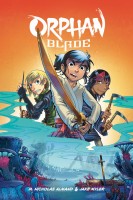
Orphan BladeOrphan Blade written by M. Nicholas Almand and illustrated by Jake Myler. After previewing some of Myler’s work in progress for Orphan Blade, I was really looking forward to reading the graphic novel. Unfortunately, while there were some aspects of the comic that I really appreciated (it’s nice to see a gay protagonist), overall I was disappointed with Orphan Blade, especially since it had such great potential. The setting is an alternate-universe, 17th-century Japan in which the world was overrun with kaijū. But now that most of the monsters have been destroyed, humans are once again at war with each other. Particularly coveted are Artifacts, weapons of immense power fashioned out of the bodies and bones of the defeated kaijū. Hadashi is a young man who comes into possession of one of those Artifacts, but it possesses him in return. For the most part, Myler’s artwork is excellent. The monster and character designs, while lacking cohesiveness, are great and I love the colors. Orphan Blade is surprisingly violent, bloody, and gruesome. There are plenty of dynamic battles, however the action is frequently confusing and difficult to follow which is particularly problematic since a large part of the graphic novel is devoted to fight sequences. I like the world and basic premise of Orphan Blade, but the story feels inexpertly cobbled together in places, which may be explained by the fact that Almand sadly passed away before the comic’s completion.

Filed Under: FEATURES, My Week in Manga Tagged With: Alice in the Country of, Citrus, comics, Jake Myler, M. Nicholas Almand, manga, Saburouta, Soumei Hoshino

What Did You Eat Yesterday?, Vol. 5

January 11, 2015 by Ash Brown

What Did You Eat Yesterday?, Volume 5Creator: Fumi Yoshinaga
U.S. publisher: Vertical
ISBN: 9781939130808
Released: November 2014
Original release: 2011

I have thoroughly been enjoying the English-language release of Fumi Yoshinaga’s manga series What Did You Eat Yesterday?. This probably shouldn’t be too much of a surprise since the series brings together so many of my loves and interests: manga, Fumi Yoshinaga, food, and queer life, just to name a few. What Did You Eat Yesterday?, Volume 5 was originally published in Japan in 2011 while the English translation of the volume was released by Vertical in 2014. Vertical made many fans of Yoshinaga, myself included, very happy when it licensed What Did You Eat Yesterday?, a somewhat niche title, but a series with the potential to appeal to a variety of audiences. Food and handsome gay men are common themes in many of Yoshinaga’s manga and are frequently even found within the same work, which is certainly the case with What Did You Eat Yesterday?. Though not my favorite Yoshinaga manga, it’s still a great series and one that I enjoy.

Food brings people together, sometimes in unanticipated ways. Shiro’s friendship with Kayoko, which started when they decided to split a watermelon that was on sale at the supermarket, has continued to deepen. Though they were once complete strangers, they have now become regular cooking buddies, sharing recipes and food. Her family likes Shiro as well, though at times he’s treated as something of a novelty simply because he’s gay. Kayoko’s husband even makes a point to introduce Shiro to a member of his tennis club, assuming they’ll get along well since Kohinata happens to be gay, too. They actually do, in an odd sort of fashion, and eventually Shiro, Kohinata, and Kenji and Wataru–their respective boyfriends–all end up sharing a meal together. In a roundabout sort of way, it’s thanks to that watermelon that they ever met. Food can help turn acquaintances into friends and can strengthen the existing bonds between family members as traditions are passed along from one person to the next.

One of my favorite chapters in What Did You Eat Yesterday?, Volume 5 was actually when Shiro visited his parents for the New Year holiday. For the most part, What Did You Eat Yesterday? is fairly episodic, although there is ongoing character development. However, Shiro returning home for the New Year celebration is a recurring event in the series which has already happened several times in the manga’s earlier volumes. Generally, there’s also some family drama involved with these visits. Shiro’s parents initially struggled when he came out to them, but it’s marvelously touching to see how much more accepting and even supportive they have become of their son’s homosexuality. There is a really wonderful scene with Shiro and his mother cooking together in the fifth volume of What Did You Eat Yesterday?. Sometimes the series’ focus on food feels completely separated from its story, but here it was a perfect combination, the cooking furthering the characters’ personal growth and connections.

While the food and recipes are prominent parts of What Did You Eat Yesterday?, not to mention some of the reasons that I enjoy the series, the characters and their relationships are just as important to the manga and are what really make it successful as a work. It makes perfect sense to me since I associate family with food, but family relations are a frequent focus in What Did You Eat Yesterday?, especially those between Shiro and his parents as well as those between Shiro and Kenji as they continue to make a life and home together. The fifth volume also reveals more about Kenji’s past and his own unfortunate family situation. What Did You Eat Yesterday? largely tends to follow Shiro and therefore not as much is known about Kenji, so I particularly appreciate when the story turns towards him for a time. Yoshinaga’s characters in What Did You Eat Yesterday?, are believable flawed and complex individuals with histories and subtle depth, making the series particularly gratifying.

Filed Under: REVIEWS Tagged With: fumi yoshinaga, manga, vertical, what did you eat yesterday?

More and More of You and Other Stories

January 9, 2015 by Ash Brown

More and More of You and Other StoriesCreator: Takeshi Matsu
Publisher: Bruno Gmünder
ISBN: 9783867877930
Released: November 2014

Takeshi Matsu is a popular creator of gay manga in Japan, his work appealing to both male and female readerships. He initially started out working for shounen magazines, at one point even winning an award for his manga. Matsu moved on to creating erotic gay manga around the age of thirty and was successful enough that he was actually able to make a career of it. It wasn’t until 2014 that any of Matsu’s work was officially translated and released in English. He was one of the nine mangaka featured in Massive: Gay Erotic Manga and the Men Who Make It which included his short manga “Kannai’s Dilemma,” and he became the first creator after Gengoroh Tagame to have a major release of gay manga printed in English. More and More of You and Other Stories, published by the Germany-based Bruno Gmünder as part of its Gay Manga line, collects several of Matsu’ self-published doujinshi in a single volume for the very first time. Although the individual manga are available in Japanese, the anthology itself is an original English-language release.

More and More of You and Other Stories collects four of Matsu’s manga, beginning with the titular and longest, “More and More of You.” It’s a surprisingly sweet and even romantic story about a young man named Kosuke who is in love with his childhood friend and neighbor Shokichi, who just so happens to now be one of his high school teachers as well. Sho actually returns his feelings, although neither one of the men has admitted it to the other, and the romantic inclinations of some of Kosuke’s classmates only complicate matters further. “Go West” is an erotically charged parody of the Chinese classic The Journey to the West, following the sexual escapades and battles of Sanzo and his small crew as they cruise their way through the gay clubs from Ni-chōme to Doyama-chō. Things get a little heated in the kitchen and in the bedroom when two cooks of rival cuisines begin dating in “Recipe for Love” while “Tales from the Kitchen” features several autobiographically-based gag manga.

Because More and More of You and Other Stories is a collection of erotic doujinshi, it’s not too surprising that each chapter somehow incorporates the characters’ masturbatory fantasies or other sexual encounters. Matsu’s men tend to be lanky, muscular, and very well-endowed. More and More of You and Other Stories can be explicit, but there’s also a lot of playfulness and humor to the sex. Even when the plot includes drama and conflict, ultimately Matsu’s manga is delightfully upbeat and sometimes even hilarious. As just one example, the absolutely ridiculous pillow talk of “Recipe for Love” as the two men rhapsodize about their lover’s body in terms of food is highly amusing. A few of the jokes and references made in “Go West” will make more sense to readers who have at least passing familiarity with The Journey to the West, but no prior knowledge is needed to appreciate the impressive sexual prowess and the rather interesting, psychically-enhanced sexual abilities and powers of the characters.

It’s very clear that Matsu enjoyed creating the manga collected in More and More of You and Other Stories. Because the selections were originally all self-published, he had the freedom to develop the works exactly in the way that he wanted and chose to do. As a result More and More of You and Other Stores is both a fun and funny volume. Even the manga included that aren’t primarily comedies have humor and charm to them. The characters are likeable and by and large are obviously enjoying all of the sex that they are having. Another thing that I particularly welcomed about More and More of You and Other Stories is that in part it’s a food manga, which I love. I also happen to have an interest in The Journey to the West in its various incarnations, so it was as if More and More of You and Other Stories was made with me in mind. In the afterword Matsu mentions that he hopes to have the opportunity to release additional collections of his manga in English; I know that I’d certainly like to see them!

Filed Under: REVIEWS Tagged With: Bruno Gmünder, Gay Manga, manga, Takeshi Matsu

Manga the Week of 1/14

January 8, 2015 by Sean Gaffney, Ash Brown, Michelle Smith, MJ and Anna N 2 Comments

SEAN: In between two fairly hefty weeks, we have a low number of titles out this week. Let’s take them one by one.

Kodansha has a 6th volume of its shonen fantasy The Seven Deadly Sins.

seki1

Vertical has a debut I’ve been waiting for ever since it was announced: My Neighbor Seki, from Media Factory’s Comic Flapper. The story of a girl who is constantly distracted in class by her next-desk neighbor’s attempts to… well, revealing more would spoil the surprise. It’s been nominated for awards, it’s had an anime, and it is really, really funny. Absolutely one to watch out for.

ASH: I’ve been really looking forward to this debut! The anime adaptation was absolutely delightful.

MICHELLE: I didn’t have this on my radar at all and then Vertical kindly sent me a copy. Researching it yielded cautious optimism and now I’m downright eager.

MJ: I am so ready for this.

ANNA: I also didn’t have this on my radar before, but it sounds interesting!

SEAN: Lastly, there’s a 53rd volume of Case Closed, and Shinichi… sorry, Jimmy… is still a kid.

MICHELLE: I have occasionally dabbled in Case Closed and found it entertaining enough, but I just can’t get excited about it.

SEAN: What (Seki) will you be buying (Seki) next week? (hint: Seki.)

Filed Under: FEATURES, manga the week of

Manga Giveaway: WataMote Giveaway Winner

January 7, 2015 by Ash Brown

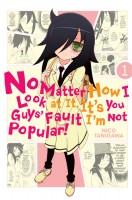
No Matter How I Look at It, It’s You Guys’ Fault I’m Not Popular!, Volume 1And the winner of the WataMote giveaway is…MegaKnogga!

As the winner, MegaKnogga will be receiving a copy of the first volume in Nico Tanigawa’s No Matter How I Look at It, It’s You Guys’ Fault I’m Not Popular! (hereafter referred to as WataMote) as published by Yen Press. Because WataMote is a humorous, if sometimes painful, story about otaku, for this giveaway I asked that entrants tell me a little about their favorite otaku or otaku manga. Check out the WataMote giveaway comments for the detailed responses.

Some otaku manga (or manga with great otaku characters) available in English:

Barakamon by Satsuki Yoshino
Blood Lad by Yuuki Kodama
Flower of Life by Fumi Yoshinaga
Fujoshi Rumi by Natsumi Konjoh
Galaxy Angel by Kanan
Gin Tama by Hideak Sorachi
Genshiken by Shimoku Kio
Hayate the Combat Butler by Kenjiro Hata
I’ll Give It My All… Tomorrow by Shunju Aono
Insufficient Direction by Moyoco Anno
Kiss Him, Not Me by Junko
Love Stage!! written by Eiki Eiki, illustrated by Taishi Zaou
Lucky Star by Kagami Yoshimizu
My Girlfriend Is a Geek written by Pentabu, illustrated by Rize Shinba
No Matter How I Look at It, It’s You Guys’ Fault I’m Not Popular! by Nico Tanigawa
Oh My Goddess! by Kosuke Fujishima
Oreimo by Sakura Ikeda
Ouran High School Host Club by Bisco Hatori
Peepo Choo by Felipe Smith
Welcome to the N.H.K. written by Tatsuhiko Takimoto, illustrated by Kendi Oiwa

Welcome to the N.H.K. got quite a few mentions, which made me happy (the novel is great, as are the manga and anime adaptations), as did a few of my other otaku favorites like Fujoshi Rumi and Genshiken (and Flower of Life and Gin Tama, too!). Thank you to everyone who participated and shared; there are a few manga that I definitely need to pick up. I hope to see you all again for the first manga giveaway of 2015!

Filed Under: UNSHELVED Tagged With: manga, Nico Tanigawa, Watamote

Pick of the Week: Drug & Drop & more

January 5, 2015 by Sean Gaffney, Michelle Smith, Ash Brown, Anna N and MJ 1 Comment

potwSEAN: Meteor Prince looks fun, and there’s lots of my favorites out. That said, I suspect this week will be a landslide, and who am I to get in its way? Drug & Drop is the continuations of fan favorite Legal Drug after a 10-year absence. The characters look prettier, the plot looks heavier, the crossovers to other CLAMP works are stronger, and the BL tease is, of course, off the charts. Also, Legal Drug was very well-written. If you liked xxxHOLIC but wish Watanuki and Doumeki were gayer, this is the title for you!

MICHELLE: I still love My Love Story!! with all my being, but even so, I am going to have to pick Drug & Drop, too. It’s just been so long in coming, and at least something that was left hanging is getting continued.

ASH: While I’ll definitely be reading Drug & Drop, my love for My Love Story!! will not be denied. One of my favorite shoujo series to debut last year, I’m looking forward to reading even more of it if for no other reason than the manga simply makes me incredibly happy.

ANNA: There are so many great manga out that I want to pick! But I am forever distracted by the lure of the new, so I’m going to have to go with Meteor Prince just because the premise is so ridiculous.

MJ: I’m sure there are plenty of perfectly lovely titles coming out this week, but the truth is, I can’t see anything but Drug & Drop. I was a fan of Legal Drug, but even more than that, I’m a fan of abandoned CLAMP titles coming back to life. Drug & Drop stands not only as an exiting title in its own right, but also as a beacon of hope for fans of X, or really any abandoned series from anyone, in my view. My point is, IT CAN BE DONE. With the right publisher, it can be done. So let’s hear it for Drug & Drop! PS: For the record, if you didn’t think Watanuki and Doumeki were gay, I don’t know what series you were reading. ;)

What looks good to you this week?

Filed Under: PICK OF THE WEEK

My Week in Manga: December 29, 2014-January 4, 2015

January 5, 2015 by Ash Brown

My News and Reviews

Happy New Year, everyone! Things are already off to a good start at Experiments in Manga. The last manga giveaway of 2014 is currently underway and there’s still time to enter for a chance to win No Matter How I Look at It, It’s You Guys’ Fault I’m Not Popular!, Volume 1 by Nico Tanigawa. All you have to do is tell me a little about some of your favorite otaku. The honor of the first in-depth manga review of the year, and in fact the very first post of 2015, goes to Hiroaki Samura’s Vigilance, the thirtieth and penultimate volume of Blade of the Immortal. I still love the series after all this time, and this installment has some particularly nice fight sequences. Finally, December’s Bookshelf Overload was posted over the weekend as well.

There were a few interesting things from Vertical this week, including a roundup of the happenings of 2014 and what fans can look forward to from the publisher in 2015. Another enlightening read from Vertical’s Tumblr account tackles sports, sports fiction, and sports manga and the challenges it presents to the North American market. Also, in case you missed it, Vertical is now on ask.fm and is answering all sorts of questions there. Last but not least, thanks to the success of its release of Mobile Suit Gundam: The Origin, Vertical is looking into publishing more Gundam manga. If you’re interested and haven’t already, be sure to take Vertical’s Gundam survey which will be open through the end of today.

Elsewhere online, Khursten has made a manga resolution for the year to feature josei more at Otaku Champloo. Organization Anti-Social Geniuses debuted a new feature, Inside the Industry, with Inside the Manga Industry with Lillian Diaz-Przybyl. The Hairpin has an excellent interview with Anne Ishii who, among other things, is the translator and one of the editors of the newly released Massive: Gay Erotic Manga and the Men Who Make It (which I recently reviewed; it’s great).

Quick Takes

Blue Morning, Volume 1Blue Morning, Volumes 1-5 by Shoko Hidaka. I’ve been meaning to read Blue Morning for a while but have only now gotten around to it. The benefit of this is that I had five volumes that I could read all at once. The drawback, of course, is the long wait until the sixth volume is released. I loved Blue Morning. It’s a moody, slow-burning boys’ love series with beautiful, elegant artwork and well-developed, subtly nuanced characters. A dramatic period piece, the manga takes place during Japan’s Meji era in which the country’s social, political, and economic structures underwent great change. The story focuses on Akihito Kuze who, after being orphaned, is suddenly thrust into Japan’s peerage as a viscount at the age of ten. Tomoyuki Katsuragi, the Kuze family steward, becomes his tutor and guardian. As he grows Akihito ends up developing feelings for Katsuragi and their relationship undergoes an intense evolution and power reversal. The romantic elements of Blue Morning are important, but much of the plot is actually focused on the political maneuverings of both Katsuragi and Akihito to raise the family’s status, though the each of the men have their own reasons for doing so.

KnightsSidonia10Knights of Sidonia, Volumes 10-12 by Tsutomu Nihei. I decided to save up a few volumes of Knights of Sidonia since they read so quickly and I wanted to enjoy a larger chunk of the story. But even though there are quite a few major developments in these particular volumes, including the introduction of an important new character, somehow it just feels like Nihei is stalling for time and that there wasn’t actually much forward movement in the series. Even so, it was still an enjoyable read and I still like the manga. Knights of Sidionia remains a rather peculiar series, a combination of horror, science fiction and, of all things, romantic comedy. Sidonia’s hero Tanikaze, despite being incredibly awkward socially, has managed capture the romantic interest of quite a few of the other characters, basically amassing one of the most unusual harems that I’ve ever come across in manga. And while he has all sorts of domestic challenges to deal with now that his house has five residents more or less living there, he’s also one of humanity’s best pilots in the fight for survival against the Gauna. The war is entering a new stage, new technology has been developed, and the Gauna continue to gain new abilities.

Say I Love You, Volume 4Say I Love You, Volume 4 by Kanae Hazuki. Four volumes in, Say I Love You continues to set itself apart from many of the other shoujo manga series that are currently being released with its very realistic approach to young adult relationships, romance, and sexuality. The characters show a believable mix of maturity and immaturity, at times handling themselves extraordinarily well and at other times ending up a mess of confused emotions. This volume also introduces a new character, Kai, whom I’m particularly looking forward to seeing more of. In the afterword Hazuki mentions that she believes that manga “isn’t just for showing the nice side of things,” a belief that I think comes through in Say I Love You. There are the wonderful moments between characters as they grow closer, but every relationship has its ups and downs and Hazuki isn’t afraid to show the emotional pain and turmoil experienced by her characters as part of that growth. Regret, jealousy, selfishness, and uncertainty all have a role to play as do happiness, affection, altruism, and confidence. None of the characters are perfect and they all make mistakes as they navigate new and sometimes surprising relationships.

Ping Pong: The AnimationPing Pong: The Animation directed by Masaaki Yuasa. Taiyō Matsumoto’s breakout manga was a five-volume series from the mid-1990s called Ping Pong. I’ve become a fan of Matsumoto’s work and would love to read Ping Pong, but it’s probably unlikely to ever be licensed. However, the eleven-episode anime adaptation made me very happy. The style of animation is somewhat unusual, reminiscent of Matsumoto’s loose but deliberate lines and uses a variety of palettes ranging from monochrome to pastel to vivid colors. I was particularly impressed by the series’ sound design and effective use of music. Smile and Peco are close friends and the strongest members of their school’s table tennis club but they both approach the game very differently. On its surface, Ping Pong is a fairly straightforward tale about competitive table tennis, but the series has prominent psychological elements and more depth than it might appear at first glance. Peco and Smile aren’t the only important players in Ping Pong; the protagonists and antagonists of the series are in constant flux. I enjoyed the Ping Pong anime immensely; I’ll definitely be picking up the physical release this summer.

Filed Under: FEATURES, My Week in Manga Tagged With: anime, blue morning, Kanae Hazuki, knights of sidonia, manga, Ping Pong, Say I Love You, Shoko Hidaka, Tsutomu Nihei

Bookshelf Overload: December 2014

January 4, 2015 by Ash Brown

It may have been the last month of the year, but that certainly didn’t stop me at all from acquiring a slightly absurd amount of manga. Part of that is thanks to Right Stuf’s major holiday sales. I picked up a couple of anime series–Shiki and Princess Tutu–as well as a rather large stack of mostly out-of-print boys’ love manga for super cheap. Also thanks to the sale, I finally got around to picking up the new Tokyo Babylon omnibuses. Other than that, most everything else was either a preorder or a gift. December was a particularly notable month for gay manga. Bruno Gmünder’s releases of Takeshi Matsu’s More and More of You and Other Stories (which I believe technically came out in November) and Gengoroh Tagame’s Fisherman’s Lodge are now both available. From Fantagraphics there was Massive: Gay Japanese Manga and the Men Who Make It and it’s fantastic. I’ll be reviewing Matsu’s English debut in the very near future and my review of Massive has already been posted. Chromatic Press also had some notable releases in December. Ellery Prime’s Gauntlet, the first Sparkler Monthly original novel to receive a print edition, is now available. As is one of the books that I’m most excited about (so much so, there’s even a quote from me on its cover), the paperback of the second volume of Lianne Sentar’s Tokyo Demons, Add a Little Chaos. I actually reviewed the novel back in July, but needless to say, I loved it and it looks great in print.

Manga!
Ajin: Demi-Human, Volume 2 by Gamon Sakurai
Alice in the Country of Hearts, Omnibus 2 by by Soumei Hoshino
Alley of First Love by Ellie Mamahara
Barakamon, Volume 2 by Satsuki Yoshino
Citrus, Volume 1 by Saburouta
Desire written by Maki Kazumi, illustrated by Yukine Honami
Dorohedoro, Volume 14 by Q Hayashida
Drug and Drop, Volume 1 by CLAMP
Fairy Tail, Volume 43 by Hiro Mashima
Fisherman’s Lodge by Gengoroh Tagame
Just Around the Corner by Toko Kawai
Knights of Sidonia, Volume 12 by Tsutomu Nihei
Little Fluffy Gigolo Pelu, Volumes 1-2 by Junko Mizuno
Massive: Gay Japanese Manga and the Men Who Make It edited by Anne Ishii, Chip Kidd, Graham Kolbeins
Master Keaton, Volume 1 written by Hokusei Katsushika, Takashi Nagasaki, illustrated by Naoki Urasawa
Mobile Suit Gundam: The Origin, Volume 8: Operation Odessa by Yoshikazu Yasuhiko
More and More of You and Other Stories by Takeshi Matsu
My Love Story!!, Volume 3 written by Kazune Kawahara, illustrated by Aruko
New Lone Wolf and Cub, Volume 3 written by Kazuo Koike, illustrated by Hideki Mori
Ninth Love by Lalako Kojima
Opus by Satoshi Kon
Passionate Theory by Ayumi Kano
Renai Sample by Homunculus
Sankarea: Undying Love, Volume 9 by Mitsuru Hattori
Say I Love You, Volume 4 by Kanae Hazuki
Steppin’ Stone, Volumes 1-2 by Shiuko Kano
Stones of Power by Azumi Isora
Tokyo Babylon, Omnibuses 1-2 by CLAMP
You See, Teacher…, Volume 1 by Ei Tachibana
Warning! Whispers of Love by Puku Okuyama
Witchcraft Works, Volume 2 by Ryu Mizunagi

Manhwa!
Lie to Me by Youngran Lee

Comics!
Corto Maltese: Under the Sign of Capricorn by Hugo Pratt
Gaylord Phoenix by Edie Fake
In These Words, Chapter 12 by Guilt | Pleasure
Lucidity by Guilt | Pleasure
The P. Craig Russell Library of Opera Adaptations, Volumes 1-3 by P. Craig Russell
The Ring of the Nibelung by P. Craig Russell

Light Novels!
Gauntlet by Ellery Prime
Cold Fever by Narise Konohara
Is It Wrong to Try to Pick Up Girls in a Dungeon?, Volume 1 by Fujino Omori
Tokyo Demons, Book 2: Add a Little Chaos by Lianne Sentar

Novels!
Manazuru by Hiromi Kawakami
The Strange Library by Haruki Murakami
The Sound of the Mountain by Yasunari Kawabata

Collections!
The Great Mirror of Male Love by Ihara Saikaku

Anime!
Princess Tutu directed by Junichi Sato
Shiki directed by Tetsuro Amino

Filed Under: Bookshelf Overload, UNSHELVED

Blade of the Immortal, Vol. 30: Vigilance

January 2, 2015 by Ash Brown

Blade of the Immortal, Volume 30: VigilanceCreator: Hiroaki Samura
U.S. publisher: Dark Horse
ISBN: 9781616554842
Released: October 2014
Original release: 2012
Awards: Eisner Award, Japan Media Arts Award

Vigilance is the thirtieth and penultimate volume in the English-language edition of Blade of the Immortal, the long-running and award-winning manga series by Hiroaki Samura. In Japan, the series was only thirty volumes long, but due to slight differences in how the manga was released early on in its English-language run, Dark Horse’s edition of consists of thirty-one volumes. Vigilance, published in 2014, is equivalent to the twenty-ninth volume of the series’ Japanese edition originally released in 2012. Blade of the Immortal is a series that has particular significance for me. It was one of the very first manga that I ever read and it was one of the first series that I decided to collect in its entirety. I have been reading and collecting Blade of the Immortal for years now. The previous volume, Beyond Good and Evil, marked the beginning of the series’ end and Vigilance brings it that much closer. I was very curious to see how Samura would continue to advance the series.

The final confrontation between the remnants of Anotsu Kagehisa’s Ittō-ryū and Habaki Kagimura’s Rokki-dan has begun. Numerous casualties have been incurred by each side and countless innocent lives have been caught in the fray as the two groups try to destroy each other. At one point they were fighting for their ideals–Anotsu striving to restore martial glory and the way of the sword to Japan while Habaki worked to prevent that from happening in order to maintain the dominance of the shogunate–but now they are fighting simply to survive long enough to crush the other. Even if they are successful in killing their foes they may not live to see the fruits of their victory. Habaki is challenging Anotsu head on while the Ittō-ryū’s strongest fighter, Makie, is left to face multiple opponents under Habaki’s direct command despite her failing health. And on the periphery of this all, Manji and Rin stand against one of Habaki’s most imposing men even though they, too, seek Anotsu’s demise.

At this point in Blade of the Immortal the series’ story is drawing very close to its ultimate conclusion. There is very little plot development in Vigilance, and there doesn’t need to be; the series has been building up to these final volumes. Instead, the focus of Vigilance is on the deadly battles currently in progress. Samura’s artwork has always been dynamic in Blade of the Immortal, conveying a tremendous sense of movement and drama, but the action sequences and fight choreography in Vigilance may very well be some of the series’ best. Makie’s fight against an entire team of adversaries is particularly impressive and breathtaking. Her talent is astounding and on full display. She is constantly in motion, with an acute awareness of her surroundings, using both her weapon and her body in tangent to strike and defend. While she may not have the brute strength that so many of the other fighters in Blade of the Immortal possess, her agility and martial skill far surpass any of them.

The other two battles being simultaneously waged in Vigilance are also well-developed and each has a different feel than Makie’s. Manji’s style of fighting has come to rely very heavily on his near-immortality, leading him to attempt feats that would otherwise be unthinkable. He is also able to put to good use in some rather curious ways the bizarre regenerative powers of his body. The manga’s horror elements are readily apparent in his fight. There’s even a hearkening back to the death mandalas of the early series, which is a particularly nice touch. The confrontation between Anotsu and Habaki is different still. Like all of the other fighters who have managed to survive this long they are both exceptionally skilled swordsmen, however tactics and strategy play a much more prominent role in their death match. The way they fight is both intelligent and refined. Manji, Rin, Makie, Anotsu, and Habaki are now locked into their final battles. It will be very interesting to see exactly how things will turn out in the series’ conclusion, Final Curtain.

Filed Under: REVIEWS Tagged With: Blade of the Immortal, Dark Horse, Eisner Award, Hiroaki Samura, Japan Media Arts Award, manga

Manga the Week of 1/7

January 1, 2015 by Sean Gaffney, Michelle Smith, Ash Brown, Anna N and MJ 4 Comments

SEAN: January is a relatively quiet month for manga, usually, and this is a quieter first week of the month, though you might not guess it by the large number of titles coming out way. It’s COMPARATIVELY smaller.

drugdrop1

CLAMP fans have been waiting for this one forever, and it’s finally here. The first volume of Drug & Drop comes out next week. The sequel to Legal Drug, which ran in the shoujo magazine Asuka, this runs in Young Ace, a seinen title. Despite that, I suspect the audience is still the same: CLAMP fans. Expect crossovers.

MICHELLE: *Kermit flailing*

ASH: Looking forward to seeing where things go!

ANNA: Yay!

MJ: This, this, this, this, HAPPY NEW YEAR TO ME. Yes.

SEAN: There’s also a 7th omnibus of Lone Wolf & Cub.

ASH: I’m really enjoying the omnibus edition of this series.

SEAN: Digital Manga Publishing has a pile of new titles. KinokoInu – Mushroom Pup looks adorable, and its 2nd volume ships next week.

ASH: I was pleasantly surprised by the first volume of Mushroom Pup, but then I like quirky manga.

SEAN: The third volume of Lovephobia is not something I’d call adorable based on its cover, but hey, the inside might prove me wrong. (For the record, the series runs in ‘Comic B’s Log Kyun!’. I’m always wary of magazines with onomatopoeic sounds in their name.)

And A Waltz in the Clinic, which is the sequel to A Murmur of the Heart, seems to have sensuous hand-licking, judging by the cover.

Alice in the Country of Clover gives us The Lizard Aide, which I believe is the first volume in this series to have Gray as the love interest. So, Gray fans, this is for you! Sadly, the artist is the same one as the Nightmare Trilogy, so don’t read it for the prettiness.

Girls Und Panzer has taken its tankery games to much higher stakes with Volume 3, as Miho now faces expulsion from her family if she loses. How will she fare? And what will Yukari do, given she’s the ‘star’ of the manga series?

Strike Witches begins a new tie-in series with the first volume of One-Winged Witches. I’m trying not to be critical, but even its FANS say this 2-volume manga series is for lovers of panties and that’s about it.

Viz has a smaller but robust set of shonen and shoujo for us. 07-GHOST trundles along with Volume 14. There seems to be a woman on the cover! Wait, 07-GHOST has women in the cast? :)

MJ: Heh.

SEAN: Bleach and Naruto both have their 10th 3-in-1 omnibuses out next week.

Jaco the Galactic Patrolman is a one-shot manga from the creator of Dragon Ball and Dr. Slump! I’m not sure if it was always meant to be this short, but in any case, more Toriyama is always nice to see, especially when he’s funny, as he seems to be here.

MICHELLE: I have yet to read Dragon Ball, and Dr. Slump! wasn’t my thing, but I have quite enjoyed Toriyama’s one-shots (especially COWA!), so I’m looking forward to this one a lot!

ASH: Oh, COWA! That was a delightful manga.

SEAN: Kiss of the Rose Princess has a 2nd volume. I thought the first was goofy fun, but a bit slight. Can it grab me further with this one?

MICHELLE: I am wondering that myself.

ANNA: It is fun, but I agree about the first volume being on the slight side. Still, nothing wrong with shoujo brain candy!

meteor1

SEAN: Viz’s new shoujo debut is Meteor Prince, by Meca Tanaka. it’s another short one, only two volumes, and is likely far more acceptable than the student/teacher romance of her more famous series Faster Than A Kiss. Old-school fans will also recognize her as the author of Omukae Desu and Pearl Pink.

MICHELLE: Wow, what a premise on this one. “It’s hardly surprising then that a naked alien prince falls from the sky to tell her that out of all the girls in the universe, he’s come to Earth to mate with her.”

ANNA: OK, that sounds hilarious.

MJ: Agreed. Like, Moon Child hilarious.

SEAN: My Love Story!! was one of the most exciting releases of 2014, and the start of 2015 sees its 3rd volume. Will our lead couple progress in their romance, or is shyness the order of the day? (I can take an educated guess…)

MICHELLE: <3 <3 <3

ASH: Love this series so much!!

ANNA: Agreed!

SEAN: Nisekoi continues to be one of the better harem series I’ve seen in ages, and I am greatly looking forward to the 7th volume (which, yes, has been out digitally since March of last year).

And there’s One Piece, with its 73rd (!) volume. The last cliffhanger promised Rebecca would have a moment of awesome, but I admit I’m skeptical. Perhaps more important to its Western fans, will Doflamingo and Law square off?

MICHELLE: In the most recent volume of Magi, there’s a scene of happy islanders feasting on a giant sea monster and man, that made me crave more One Piece like whoa. I’m glad I won’t have to wait too long.

SEAN: I tend to skip the endless Pokemon releases when I talk about manga here, so I will guiltily note that we see the 26th Pokemon Adventures ship next week, along with the 6th Black and White volume.

Lastly, there’s a 6th Ranma 1/2 omnibus, and a new semi-regular, as Kuno and Kodachi’s father returns from an extended vacation, and he’s just as bad if not worse than his offspring.

What are you starting off the year with?

Filed Under: FEATURES, manga the week of

Manga Giveaway: WataMote Giveaway

December 31, 2014 by Ash Brown

It may be the last day of December, but there’s still time for one more manga giveaway before the year is through. For this month’s giveaway, participants will have the opportunity to win the first volume of Nico Tanigawa’s manga series No Matter How I Look at It, It’s You Guys’ Fault I’m Not Popular! as published by Yen Press. (From here on out, I’m just going to refer to it by its Japanese abbreviation WataMote). As always, the giveaway is open worldwide!

No Matter How I Look at It, It’s You Guys’ Fault I’m Not Popular!, Volume 1

I enjoy reading manga about otaku. It’s a term that has a slightly different meaning in English than it does in Japanese, but generally speaking otaku refers to someone with an extreme or obsessive interest in something.  Often this is assumed to be an interest in anime or manga, but it can really be a specific interest in anything. I myself could probably be considered an otaku, which is probably one of the reasons I like otaku manga–it’s easy for me to identify with many of the characters and the things they enjoy. Some otaku manga though, like Watamote, do occasionally make for uncomfortable reads. Watamote can be hilarious, but it can also be a bit painful since Tomoko is so incredibly and terribly awkward. I do like her, though, and find her endearing in her odd sort of way.

So, you may be wondering, how can you win the first volume of WataMote?

1) In the comments below, tell me a little about your favorite otaku manga or favorite otaku from manga. (If you don’t have one, you can just mention that.)
2) If you’re on Twitter, you can earn a bonus entry by tweeting, or retweeting, about the contest. Make sure to include a link to this post and @PhoenixTerran (that’s me).

There it is! Each person can earn up to two entries for this giveaway and has one week to submit them. If you have trouble leaving comments, or if you would prefer, entries can be sent directly to me by e-mail using the address phoenixterran(at)gmail(dot)com. The comments will then be posted here in your name. The giveaway winner will be randomly selected and announced on January 7, 2015. Happy New Year, everyone!

VERY IMPORTANT: Include some way that I can contact you. This can be an e-mail address in the comment form, a link to your website, Twitter username, or whatever. If I can’t figure out how to get a hold of you and you win, I’ll just draw another name.

Contest winner announced–Manga Giveaway: WataMote Giveaway Winner

Filed Under: FEATURES Tagged With: manga, Nico Tanigawa, Watamote

  • « Go to Previous Page
  • Page 1
  • Interim pages omitted …
  • Page 108
  • Page 109
  • Page 110
  • Page 111
  • Page 112
  • Interim pages omitted …
  • Page 140
  • Go to Next Page »
 | Log in
Copyright © 2010 Manga Bookshelf | Powered by WordPress & the Genesis Framework