• Skip to primary navigation
  • Skip to main content
  • Skip to primary sidebar
  • Home
  • About Us
    • Privacy Policy
    • Comment Policy
    • Disclosures & Disclaimers
  • Resources
    • Links, Essays & Articles
    • Fandomology!
    • CLAMP Directory
    • BlogRoll
  • Features & Columns
    • 3 Things Thursday
    • Adventures in the Key of Shoujo
    • Bit & Blips (game reviews)
    • BL BOOKRACK
    • Bookshelf Briefs
    • Bringing the Drama
    • Comic Conversion
    • Fanservice Friday
    • Going Digital
    • It Came From the Sinosphere
    • License This!
    • Magazine no Mori
    • My Week in Manga
    • OFF THE SHELF
    • Not By Manga Alone
    • PICK OF THE WEEK
    • Subtitles & Sensibility
    • Weekly Shonen Jump Recaps
  • Manga Moveable Feast
    • MMF Full Archive
    • Yun Kouga
    • CLAMP
    • Shojo Beat
    • Osamu Tezuka
    • Sailor Moon
    • Fruits Basket
    • Takehiko Inoue
    • Wild Adapter
    • One Piece
    • After School Nightmare
    • Karakuri Odette
    • Paradise Kiss
    • The Color Trilogy
    • To Terra…
    • Sexy Voice & Robo
  • Browse by Author
    • Sean Gaffney
    • Anna Neatrour
    • Michelle Smith
    • Katherine Dacey
    • MJ
    • Brigid Alverson
    • Travis Anderson
    • Phillip Anthony
    • Derek Bown
    • Jaci Dahlvang
    • Angela Eastman
    • Erica Friedman
    • Sara K.
    • Megan Purdy
    • Emily Snodgrass
    • Nancy Thistlethwaite
    • Eva Volin
    • David Welsh
  • MB Blogs
    • A Case Suitable For Treatment
    • Experiments in Manga
    • MangaBlog
    • The Manga Critic
    • Manga Report
    • Soliloquy in Blue
    • Manga Curmudgeon (archive)

Manga Bookshelf

Discussion, Resources, Roundtables, & Reviews

Archives for March 2021

Bookshelf Briefs 3/31/21

March 31, 2021 by Sean Gaffney and Ash Brown Leave a Comment

Black Clover, Vol. 24 | By Yuki Tabata | Viz Media – New arc, new villains, new desperate fighting, new nameless characters being killed to give our named leads resolve and fury, and the same old fighting. I’ve said before that, in ripping off every shonen series around it, Black Clover is not really doing a bad job. That said, it’s also not standing out—by definition, this is gonna be pretty generic. Asta shouts and beats up bad guys, Noelle snarks at him, Charmy is back to being superdeformed and eating far too much, etc. You can easily see why this is now the third-longest-running series in Shonen Jump. But you can also see why it’s roundly mocked, and is never going to be at a point where it amazes the readers with its clever surprises. – Sean Gaffney

Delicious in Dungeon, Vol. 9 | By Ryoko Kui| Yen Press – I forgot to brief the last volume of this, which means it’s been almost a year and a half. This “caught up with Japan” series, however, is always worth a deep read, and this time around, after some amusing but goofy stuff involving succubuses, we get to the core of the volume, which is Laios and Kabru’s contrasting viewpoints. Laios’ desire to have a community in the dungeon where everyone can live in peace and harmony… and also eat animals, which theoretically would be happier dying like this than with their current circumstance, contrasts with Kabru still seeing Laios as a dangerously unhinged madman who won’t stop going on about eating the things that kill everyone in the dungeon. Must read, still. – Sean Gaffney

Fiancee of the Wizard, Vol. 2 | By Syuri Nakamura and Masaki Kazuka | Yen Press -This volume moved a lot faster than I was expecting. It also leaves the titular fiancee on the sidelines for most of the book—there’s a battle to defeat the demon lord, but given she doesn’t have much magic or fighting skill, she’s not involved. The wizard IS involved, and we get quite a few scenes from the POV of his party, featuring a hero who I will politely call “naive” and two more savvy characters, including a princess who Filimena assumes is exactly the sort of person he will immediately fall for. She’s wrong, and as always Edy’s inability to not be an awkward jerk masks his true feelings. This ends with a wedding, but there are apparently more volumes. – Sean Gaffney

An Incurable Case of Love, Vol. 6 | By Maki Enjoji | Viz Media – The series ends with the seventh volume, which is good, because this is the one where I started to get a bit annoyed with the characters—Dr. Tendo is usually very good at understanding Nanase, but he’s very bad at communicating his own wants, needs, and desires. The sister of the woman he was unable to save is now in the hospital, reminding him that he really does want to do this research—but he also loves Nanase, and does not want to be separated from her. If he managed to communicate this properly to Nanase… well, OK, the series would likely then be six volumes instead of seven. Miscommunication is the lifeblood of most shoujo and josei romance titles, but that doesn’t make it any less frustrating. – Sean Gaffney

Magus of the Library, Vol. 4 | By Mitsu Izumi | Kodansha Comics – Word of warning for this volume: you will meet about 25 new cast members, complete with character bios. Fortunately, I don’t think we will have to remember them all at once. In any case, most of this volume is a standard “first days at school” sort of story, complete with the stern teacher, our hero stressing out about which path he will be taking, and a reunion with the person who was the biggest influence on his life. Now comes the question of where the story will be going as there’s a bit of an implication that the mentor is going to be kicking down a few pillars of society. Oh yes, and there is also the gorgeous art, which is still probably the main reason to read this series. – Sean Gaffney

Our Teachers Are Dating!, Vol. 2 | By Pikachi Ohi | Seven Seas – We continue to read the Pixie Stix of yuri manga, and it certainly delivers, being so sweet you may want to read Inio Asano afterwards for balance. There are a few “new couple” problems here, mostly as they haven’t really opened up to each other yet because they’re still in the first bloom of love. Most of this volume revolves around the school festival, so we get to see them compete in a three-legged race, walk around buying things from their students, dress in each other’s work outfits (and, later in an omake, in each other’s old high school uniforms). They are also still very physically attracted to each other—sex is plentiful here. Still a must-read for those who like sweet yuri manga but without the high schoolers. – Sean Gaffney

Penguin Gentlemen | By Kishi Ueno | Yen Press – Sometimes something magical can happen when a manga creator throws seemingly random and disparate interests together in a work. In the case of Penguin Gentleman, that oddly compelling combination consists of good-looking clothes, good-looking men, and good-looking… penguins?? At its heart, Penguin Gentleman is an informational and educational manga about these aquatic, flightless birds. Ueno’s enthusiasm for them is catching; I felt like I had to share all of the interesting things I was learning with others. However, it’s the manga’s ridiculous conceit that makes it so entertaining. For whatever reason (a reason actually is given, but it’s not at all important), the main characters of Penguin Gentleman are penguins who have taken on human form. And dress in tuxedos, of course. And work together at a bar, because why not? There’s not really much of a story, just the humor resulting from translating penguin behaviour into a human setting. – Ash Brown

Sacrificial Princess and the King of Beasts, Vol. 12 | By Yu Tomofuji | Yen Press – There’s a celebratory parade at the start of this volume… one which Sariphi is not participating in, despite the feelings of the king. Now, to be fair, this allows her to have an adorable adventure with a platypus who is trying to grow stronger (and also see the King), but it does not change the central problem, which is that even though Sariphi has managed to win over most of the court by now, the relationship between beastmen and humans is still fractured almost beyond repair. So she decides to act as an envoy to bring a peace offering… with results that are amusing but also a little alarming. We’re clearly coming close to the endgame here, and I like that this volume has Sariphi taking control. – Sean Gaffney

Snow White with the Red Hair, Vol. 11 | By Sorata Akiduki | Viz Media – At long last, Zen and Shiroyuki are taking that important step—they’re moving in together… well, OK, not quite. Zen is having Shiroyuki moved into his section of the palace, with the rest of his aides such as Mitsuhide and Kiki, who are still… kind of teased? You get the sense the author knows folks really want them to be a couple, but also doesn’t really want to go there given their regular interaction is so much fun. Speaking of Kiki, she also gets to pose as Zen’s supposed bridal candidate, mostly to get the rumors off his back, because he is NOT ready to go full public with his herbalist just yet. That said, the cliffhanger promises a sea change in this story. Still must-read shoujo manga. – Sean Gaffney

We’re New at This, Vol. 4 | By Ren Kawahara | Kodansha Comics – Thank goodness the author realizes that they could not have a young, horny married couple who are constantly turned on by each other be virgins for TOO long. Yes, at last, our leads have consummated, oddly as a result of the normally steady Sumika forgetting tickets to a concert they were going to. This is framed with a flashback showing her stern, unforgiving father yelling at her, and contrasting this with the far more easygoing Ikuma forgiving her. This is really good, as it gives good character background, explaining a lot of why Sumika is the way she is, and also allows for a good reason that they finally can move past embarrassment or overexcitement and show how much they love each other. Oh yes, and still funny. – Sean Gaffney

Filed Under: Bookshelf Briefs

The World’s Strongest Rearguard: Labyrinth Country’s Novice Seeker, Vol. 5

March 31, 2021 by Sean Gaffney

By Tôwa and Huuka Kazabana. Released in Japan as “Sekai Saikyou no Kouei: Meikyuukoku no Shinjin Tansakusha” by Kadokawa Books. Released in North America by Yen On. Translated by Alexandra McCullough-Garcia.

This was, in all honestly, probably the strongest volume of Rearguard to date. It still features everything that you’ve come to expect from Rearguard: lots of people praising Arihito and his party (but mostly Arihito) endlessly, lots of “which level up should I take” talk that goes on for 10-15 pages, lots of everyone being 100% in love with Arihito and his not getting it at all, etc. There are some nice relaxing moments, as they do actually try to take a day off and stay at a beach resort. There are thrilling battles, as they manage to find the one hidden dungeon in the middle of said resort. There is, believe it or not, development of the ongoing plot. There is a battle towards the end where I actually wondered if they’d be able to pull it off without fatalities, as I briefly forgot what series I was reading. And there are giant electric penguins, twenty feet high, as Rearguard manages to cross over with Scott of the Sahara, of all things. It’s quite a book.

As always with this series (the book helpfully reminds us it’s only been EIGHT DAYS since the start of Book 1), we pick up right where we left off, with Arihito and Seraphina getting details on the aftermath of their big fight – oh yes, and saving the life of the guy who lost his soul, which was considered nearly impossible but, Arihito. He also finds out more about their two biggest goals, and needless to say, they’re both very, very difficult: Elitia’s former party is wracked with internal strife and possible evilness, and rescuing her friend seems unlikely. And we find that it requires a lot of sacrifice to try to restore a demi-human to their former selves, and they’ll always be marked by it – literally. Arihito, of course, cares not a fig about how hard it is. He has resolve. He has his strong companions. He has the protection of a God. And he has his OP powers, which are causing even those on the highest level to watch him.

Despite three deadly battles, lots of discussion of possible death of party members and friends, and an ending that implies trying to rescue the person who tries to destroy them, this book remains jovial, relaxed, and easy-going. Arihito’s badassery is balanced out quite nicely by the badassery of everyone else in his party, and he does not have to always get in the final hit a la Kirito. Even the harem aspect boggles the mind – this book, like many of the others, talks about the fact that when Arihito sleeps behind his party, they all get aroused, to the point where they all try to bid on an item that puts a cone of silence around a person so they that can quietly take care of themselves. And yet… it’s never explicit, and it’s not even really done to titillate. Even when they fight the 20-foot-high electric penguin, they befriend it and take it to their zoo, as it was lonely and can now play with other penguins. The whole series is just so… NICE.

The next volume is not scheduled yet as I write this, and we’re almost caught up with Japan. Still, I enjoyed this even more than usual. If you can stomach the premise, it’s definitely worth a read.

Filed Under: REVIEWS, world's strongest rearguard

Bottom-Tier Character Tomozaki, Vol. 6

March 30, 2021 by Sean Gaffney

By Yuki Yaku and Fly. Released in Japan as “Jaku Chara Tomozaki-kun” by Gagaga Bunko. Released in North America by Yen On. Translated by Winifred Bird.

Despite what some people may think, particularly those who watch the opening of the recent anime adaptation, these light novels are not meant to be a romantic comedy. That is not to say they don’t have elements of it – they certainly do, and that’s the subject of much of this book. Tomozaki has been kicking the dating can down the road, at first simply as he didn’t want “get a girlfriend” to be a goal Hinami sets for him to tick off, but, as she correctly points out, he needs to start examining his own feelings and ask himself if there is a girl he really likes. Because there’s certainly someone who likes him… in fact, is there more than one? This isn’t a harem comedy, but it may be a love triangle, as, after several scenes showing Tomozaki accidentally being seductive (we see it, she sees it, he does not), he gets an honest to God confession. There’s just one problem – he needs to actually have some love for himself first.

Having seemingly run out of heroines to put on the cover (sorry, Tsugumi, maybe next time), Mimimi gets a second appearance, and she gets a lot to do. The school festival is coming up, which is right in her wheelhouse, even if she doesn’t actually want to be in charge of it. Meanwhile, in addition to being on the festival committee (which he volunteered for even before Hinami assigned it to him), Tomozaki is getting into social media! Yes, he has an Instagram account now, and his job is to fill it with specific photos Hinami asks him to get. This, of course, involves him getting into situations where he can easily get those photos… some more easily than others. It’s a good lesson for Tomozaki, who needs to be reminded “this is what normal teens do, and I am a normal teen”. Meanwhile, he reads Kikuchi’s stories… and suddenly knows that they should do for the festival. A play, written by her.

The whole book is filled with great scenes (as you can see by my devoting two paragraphs to a summary of it), but two particularly stand out to me. The first is when Hinami talks to him about which girls he likes, and says the idea of “I must only love one woman and be steadfast and true” is, to put it bluntly, virgin thinking. Real life is not like manga and anime (or even light novels), and high school romance does not have to be a deep commitment. Given how earnest Tomozaki is in general, I’m not sure how much he’ll take this to heart, but hey. The other scene is near the end, after Tomozaki has gone with Mizusawa to Tsugumi’s school’s festival, with Mizusawa taking on the role of teacher this time. As with Hinami, he points out that dating someone else does not have to be a OTP commitment. But after Tomozaki gets confessed to, and tries to do his usual “but I’m just a loser” waffling, Mizusawa tears him apart, pointing out (accurately) how rude that is to the girl who likes him. I actually cheered.

We may have a long wait to resolve the cliffhanger of Tomozaki responding to this confession – the next volume is a short story collection. But honestly, I think the reader can intuit the way that it’s going to go anyway. In any case, light novel readers, particularly ones who enjoyed the anime, will love this.

Filed Under: bottom-tier character tomozaki, REVIEWS

Pick of the Week: BL, Shamisen, and Railway Stations

March 29, 2021 by Katherine Dacey, Sean Gaffney, Ash Brown and Anna N Leave a Comment

KATE: I only have eyes for one series this week: BL Metamorphosis, a series that’s rueful, funny, and heart-warming without ever being sappy. One of the things I love most about BL Metamorphosis is that Kaori Tsurutani treats the main characters’ interest in BL with respect; there are no cheap jokes at either heroine’s expense, just a thoughtful and loving exploration of what it means to be a dedicated manga reader at any age.

SEAN: BL Metamorphosis is definitely on my list, and I agree with everything Kate said. My pick this week is Those Snow-White Notes, a series getting an anime soon, which is probably the only reason it got a digital release here at all, as it’s about the shamisen – no, not Kyon’s cat from Haruhi Suzumiya, but the traditional Japanese stringed instrument. This is, honestly, what “digital-only” releases were meant for.

ASH: As far as continuing series goes, BL Metamorphosis is at the top of my list this week – it’s a truly wonderful series. If Those Snow-White Notes is ever released in print, it will absolutely be my pick. (That being said, I might make an exception and read it even though I usually avoid digital releases.) While it’s not manga, my official pick this week actually goes to the novel Yokohama Station SF as I’ve been on a speculative fiction prose kick lately.

ANNA: I find the idea of shoujo horror intriguing and we haven’t had a ton of that genre translated, so I’m going to pick Love and Heart (Koi to Shinzou).

Filed Under: PICK OF THE WEEK

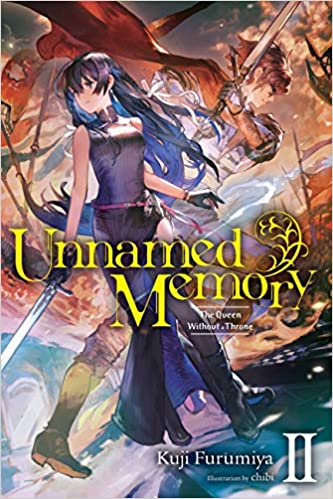
Unnamed Memory, Vol. 2

March 28, 2021 by Sean Gaffney

By Kuji Furumiya and chibi. Released in Japan by Dengeki Bunko. Released in North America by Yen On. Translated by Sarah Tangney.

This is a highly enjoyable volume of Unnamed Memory, although the story placement felt very odd. I joked when I was halfway through the book that I’d reached the end and the other 150 pages would just be light music. That’s because the story that covers the first part of the novel feels very much like a climax, the sort of thing you’d have to wrap things up with a bang. Instead, after that blockbuster we get a few lighter in tone short stories of varying length, followed by another longer story for the last fifth or so that gets serious and dramatic once again. Fortunately the stories all read well, and at its core the book is about the relationship between impulsive, outgoing Oscar and cool and calculating (except when it comes to Oscar) Tinasha. We’re still in the time promised in their contract, but that time is rapidly coming to a close. Can Oscar win her over? Will he even be able to, given her own past and the threats of other witches?

The book starts off in a disturbing fashion, as our heroes find a wannabe mage who killed most of a family and imprisoned their souls in daggers. This leads indirectly into the main plot of the first half, as Tinasha abandons Oscar after meeting a man from her past long thought dead – Lanak, who wants her back… well, “wants’ may given him more agency than he really has here. What’s worse, as this happens, towns across the land are having everyone in them suddenly vanish – seemingly dead. Is Tinasha behind this? Has she gone to the dark side? (No. Come on, you guessed that.) After this crisis, Tinasha fights a kraken, shows Oscar a very pretty lagoon, battles against time to stop her getting hit by an aphrodisiac, watches Oscar go behind her back to stop a brothel that allegedly uses a song that can kill you, and, in the last, more serious story, fights a god.

As with the first book, the novel’s main strength is that it lacks any of the gimmicks that light novels are littered with today. It’s a simple fantasy, with no one from Japan, no game worlds or stats, and none of the usual anime shtick. I particularly liked the story about the killer song (clearly, I suspect, meant to be based around the song “Gloomy Sunday”, which has indeed been banned a few times for supposedly making people suicidal) as it has more than one good fakeout, and also gives us a chance to see Tinasha at her most furious. She and Oscar are clearly a great couple, and he knows it, and I think she does too, but it’s going to take a lot more to get her to actually commit to it than what we have now. She does NOT want to be tied down that closely. Still, when you trust a man enough to disembowel you in the most careful way possible, that’s a keeper.

The third book ends with a brief cliffhanger showing us one of the witches is working to destroy the bond between Oscar and Tinasha, which should not be surprising – there are five witches for a reason – but also makes me wonder if the next book will actually feature their contract running out at last. In any case, those bored with isekai and harems should definitely add this to their must-read list.

Filed Under: REVIEWS, unnamed memory

So I’m a Spider, So What?, Vol. 11

March 26, 2021 by Sean Gaffney

By Okina Baba and Tsukasa Kiryu. Released in Japan as “Kumo Desu ga, Nani ka?” by Kadokawa Books. Released in North America by Yen On. Translated by Jenny McKeon.

Ever since the start of the entire series, there has been a certain disconnect between what the fans want to get out of these books and what the author is giving to them. Let’s face it, if the fans of the series were in charge, we’d be seeing a lot more spider and a lot less of the human side of things. And those folks are really going to hate this book, because it’s entirely on the human side of things. Yes, White gets one or two appearances here and there, but this is the first book she gets no scenes as a narrator. Instead this book fleshes out Julius, the hero of humanity and Shun’s older brother, showing his hero’s journey, his doubts, his weaknesses, and his resolve, along with giving greater depth to the rest of his party. Of course, we’re still in the past, so we know what happens to that party. But that’s probably Book 12’s problem – this one is here to remind you that the humans are also in this narrative.

The book, as with most previous books, flits back and forth between several viewpoints. The primary one is Julius’, as he starts off, despite being the hero, being dismissed and protected by the soldiers around him, who are not all that thrilled with a 12-year-old being their chosen savior. Despite this, he ends up getting involved anyway as they try to figure out why children all over the land are getting kidnapped and who is behind it. (We, as the reader, know all these answers, of course.) He has a beloved mentor figure, who gets brutally murdered halfway through the book, in the best beloved mentor tradition. He has his best friend as snarky sidekick, and a priestess who is clearly head over heels in love with him, but he’s ignoring that for now. Things are going quite well… if only the world was not gearing up for a new war, started by the Demon Lord, who is apparently so awful demons are fleeing their own lands to get away from her.

Again, it takes an entire volume that is mostly away from their perspective to remind us that this is a “rooting for the Empire” sort of story, and that White, Ariel and company are the bad guys to most of the rest of the world. This isn’t really a funny volume in the series – the comedy comes from Sophia’s diary of her life in boarding school, which is, if I’m honest, not really that funny. We get various points of view of other characters in Julius’ party, giving them depth and backstories, and showing how they view Julius as opposed to his own mostly negative thoughts. I will admit, it’s hard to deny that this book is trying to flesh out what is otherwise going to be a bunch of “who cares?’ corpses in the next book, which promises to giver Julius’ last moments from his own perspective. It’s a necessary thing, though, to give the writing better depth.

This is not to say it isn’t frustrating, and I’m sure a lot of fans really, really want the past to catch up with the present (which we last saw in Vol. 6) pretty darn quick. Till then, enjoy this look at the evil spider and her evil demon friends from a different viewpoint.

Filed Under: REVIEWS, so i'm a spider so what?

Manga the Week of 3/31/21

March 25, 2021 by Sean Gaffney, Anna N, Michelle Smith, Ash Brown and MJ Leave a Comment

SEAN: March ain’t going out like a lamb when it comes to manga.

ASH: True, that!

SEAN: Airship has two print books; Grimgar of Fantasy and Ash 14.5 and Mushoku Tensei 9.

Denpa’s website lists femme fatale: The Art of Shuzo Oshimi for next week. An artbook dedicated to the creator of Flowers of Evil, Blood on the Tracks and more.

They’ve also got The Girl with the Sanpaku Eyes 2 listed.

Ghost Ship has Yuuna and the Haunted Hot Springs 13.

No debuts from J-Novel Club, but we do get the 10th and final volume of The Combat Baker and Automaton Waitress. We also see Demon Lord, Retry! 6, The Epic Tale of Reincarnated Prince Herscherik 4, Holmes of Kyoto 4, My Instant Death Ability is So Overpowered, No One in This Other World Stands a Chance Against Me! 4, and The White Cat’s Revenge as Plotted from the Dragon King’s Lap 4. Desu.

Kaiten Books has a 2nd volume of My Dad’s the Queen of All VTubers?!.

Debuting in print for Kodansha is Chasing After Aoi Koshiba (Kyou, Koshiba Aoi ni Aetara), a yuri manga from Ichijinsha’s Comic REX. It’s got the writer of Masamune-kun’s Revenge (ehh…) and the artist of Bottom-Tier Character Tomozaki (yay!). A girl hopes to meet up with her first love at a reunion.

ASH: Seems like it has potential.

MJ: Agreed.

Also in print: Don’t Toy with Me, Miss Nagatoro 6, Heaven’s Design Team 4, The Quintessential Quintuplets 13, and Shikimori’s Not Just a Cutie 3.

Digitally we get two debuts. The first is She’s My Knight (Ikemen Kanojo to Heroine na Ore!?), which runs in Kodansha’s Palcy, and features a popular young man having to deal with falling in love with a girl more popular AND more manly than he is!

ANNA: This sounds amusing.

SEAN: We also get Those Snow-White Notes (Mashiro no Oto). This is a biggie, as it’s already 27 volumes in Japan. It’s multi-award winning, runs in Weekly Shonen Magazine, is by the author of Baby & Me and A Vampire and His Pleasant Companions, and is for the Shamisen what Chihayafuru is for Hyakunin Isshu. It also has an anime this spring!

MICHELLE: I’m super excited about this one!

ASH: I love shamisen so much.

MJ: Okay, I’m ready!

SEAN: And we get A Condition Called Love 7, Elegant Yokai Apartment Life 21, How Do You Do, Koharu? 2, I Want To Hold Aono-kun So Badly I Could Die 7, My Unique Skill Makes Me OP Even at Level 1 3, and Saint Young Men 11.

MICHELLE: I need to get caught up on several of these.

MJ: Same here.

SEAN: Seven Seas debuts two manga based on light novels they also have. Drugstore in Another World: The Slow Life of a Cheat Pharmacist (Cheat Kusushi no Slow Life: Isekai ni Tsukurou Drugstore) runs in Takeshobo’s Web Comic Gamma Plus, and is about… well, the title.

ASH: So many titles these days are helpful like that, perhaps overly so.

SEAN: And there is also ROLL OVER AND DIE: I Will Fight for an Ordinary Life with My Love and Cursed Sword! (“Omae Gotoki ga Maou ni Kateru to Omou na” to Yuusha Party o Tsuihou Sareta node, Outo de Kimama ni Kurashitai), which runs in Micro Magazine’s Comic Ride, and combines yuri and gore-filled grimdark quite nicely.

Seven Seas also has the digital debut of four more Alice books, which focus on Elliot March and Tweedle Dee/Dum. If I recall correctly, the Twins books were the smuttiest in the series.

ANNA: No thank you!

SEAN: They’ve also got BL Metamorphosis 4, the third and final volume of Ghostly Things, High-Rise Invasion 17-18, Himouto! Umaru-chan Vol. G1 (also a final volume, sort of – it’s a one-shot continuation), the fifth and final volume of How to Treat Magical Beasts: Mine and Master’s Medical Journal, Made in Abyss 9, Miss Kobayashi’s Dragon Maid 10, and Precarious Woman Executive Miss Black General 6.

MICHELLE: Someday I really will read BL Metamorphosis.

ASH: You really should! It is wonderful.

MJ: I also need to read it!

SEAN: Two debuts for Yen On. The first is a spinoff. I Was a Bottom-Tier Bureaucrat for 1,500 Years, and the Demon King Made Me a Minister (Hira Yakunin Yatte 1500-nen, Maou no Chikara de Daijin ni Sare Chaimashita) features Beelzebub and her demonic crew from I’ve Been Killing Slimes for 300 Years having adventures of their own.

The other is Yokohama Station SF, the story of a boy who is allowed to search the giant subway terminal that the world of Japan has become. This looks pretty cool, actually.

MICHELLE: It looks super cool! I always love stories about exploring sprawling structures (like BLAME, for example).

ASH: I’m definitely picking this one up! It looks like it should help fill the SF hole left by Viz’s Haikasoru imprint being on hiatus.

MJ: This one sounds so interesting!

Also out next week: 86 ~Eighty-Six~ 7, new reprints of the 5th and 6th Haruhi Suzumiya novels, The Hero Is Overpowered But Overly Cautious 6, and Rascal Does Not Dream of Siscon Idol (the 4th in the series).

Yen Press has many manga debuts next week. We start with Can’t Stop Cursing You (Dareka o Norawazu ni Irarenai Kono Sekai de), a dark little horror title from Gangan Online. A curse detective uses their powers to track down killers.

ASH: I’m curious about this one.

MJ: This actually does sound like my kind of thing.

Goblin Slayer Side Story II: Dai Katana gets a manga version of its light novel. It runs in Square Enix’s Manga Up!.

Love and Heart (Koi to Shinzou) is a shoujo horror title from Hakusensha’s Manga Park. A college woman recovering from a breakup now finds she has a new roommate, who says he’s her old childhood friend. But… is he?

ANNA: I’m intrigued by the idea of shoujo horror.

MICHELLE: Yeah, this could be interesting.

ASH: Shoujo horror is one of my faves.

MJ: Ooooooooo.

SEAN: Love of Kill (Koroshi Ai) runs in Media Factory’s Comic Gene, and is about a pair of assassins engaging in… sigh… a deadly game of cat and mouse. (No, they’re not cats and mice, I just sighed at the cliche.) I’ve actually heard this is pretty cool.

ANNA: Sometimes I enjoy assassins!

ASH: Likewise!

MJ: Me too!

SEAN: Lastly, we see When a Magician’s Pupil Smiles (Mahou Tsukai no Deshi ga Warau Toki), a 3-in-1 omnibus collecting the entire manga. It ran in Shonen Gangan, and also seems to fall into the horror suspense theme Yen’s March debuts are falling into.

ASH: I tend to enjoy a fair amount of the subgenre, so I’m okay with the trend.

SEAN: In non-debuts, we get 86 ~Eighty-Six~’s second manga volume, Bungo Stray Dogs 18, Carole & Tuesday 2, Do You Love Your Mom? 4 (manga version), Fiancee of the Wizard 3, Im – Great Priest Imhotep 8, Kaiju Girl Caramelize 4, Karneval 11, Last Round Arthurs 2 (manga version), Lust Geass 3, Reborn As a Polar Bear 5, Strawberry Fields Once Again 2, That Time I Got Reincarnated as a Slime: The Ways of the Monster Nation 4, and The Vampire and His Pleasant Companions 2.

ASH: I am so far behind on my Yen reading!

SEAN: Oof. There is a lot there. Do you see favorites?

Filed Under: FEATURES, manga the week of

Our Crappy Social Game Club Is Gonna Make the Most Epic Game, Vol. 2

March 24, 2021 by Sean Gaffney

By Oriori Siki and Azuri Hyuga. Released in Japan as “Jakushou Soshage-bu no Bokura ga Kamige wo Tsukuru Made” by Overlap Bunko. Released in North America by J-Novel Club. Translated by Mikey N.

I enjoyed the first volume of this series a lot more than I expected, and I’m pleased to see that the second volume rewards my expectations by being just as good. Once again, there is technically a bit of harem comedy here, but not much – the main guy and girl like each other but are too shy, and the new girl introduced here might like the guy too, but clearly sees which way the wind is blowing. Other than that, this book once again looks at how failures from the past can cause an inability to move forward, be it in regards to a person’s passion and confidence, or in their own emotional turmoil and rage. Last time I was impressed with just how perpetually angry Eru is, and that gets even worse here, as I’m amazed that she didn’t end the book by simply killing the cast. The reason her anger soars even higher is one of the catalysts of it: new girl Aina.

The club has been invited to a competition in Tokyo. A number of schools are there, and they’re paired in groups of two to compete with each other to see who can build the best game around a theme. Unfortunately, just as they need to buckle down, various disasters pile up, chief among them being the aforementioned Aina (who also gets the cover art), a former actress now trying to be a voice actress and someone who has a nasty past history with Eru, to the point where Eru is physically violent the first time she sees her. Fortunately, the group keeps working together, but no one can get to the heart of what the issues between them are, and neither one are talking. More to the point, Aina has a cheery, somewhat ditzy personality that proves to be a mask she takes on and off… as Kai finds out when she starts trying to manipulate him.

I will admit, I did think a lot of Ami from Toradora! as I was reading about Aina, but they don’t really go in quite the same direction. The book, for the most part, emphasizes the difficulties in getting a group like this to communicate properly – a group of artists and gamers, most of whom are introverts in some way, and with resentment and jealousy seething around. This is even true of Kai, who finds himself not only falling for the bouncy Nanaka, but also seeing her own potential, which he feels will far outstrip his own. (Kai has to be told to stop denigrating himself at least five times in this book.) Eru and Aina’s past is filled with the sort of horrible shit that teenagers do to each other, and (like a lot of those sorts of things) is resolved a little more easily than everyone expected. And there are a lot of good conversations here between Kai and the main girls, very few of which involve romance at all. Oh yes, word of warning: we not only get a tiny, drill-haired arrogant princess girl as their opponent, but there’s ALSO a minion she has to LITERALLY stand on and make herself taller. It was about eight anime cliches in the space of three pages.

Basically, if you don’t mind all the gaming talk, which can get a bit inside baseball, this is simply a fun group to read about. Even Kai’s older sister, who is written to be “the annoying one”, is not TOO annoying. Fans of series that try to examine why teenagers are the way they are should give this a try.

Filed Under: our crappy social game club is gonna make the most epic game, REVIEWS

The Sorcerer’s Receptionist, Vol. 3

March 23, 2021 by Sean Gaffney

By Mako and Maro. Released in Japan as “Mahousekai no Uketsukejou ni Naritaidesu” by ArianRose. Released in North America digitally by J-Novel Club. Translated by Roko Mobius.

There is an expression, “go big or go home”, that gets used a lot, and frequently it’s warranted, but sometimes? Sometimes you want to stay small, and are rather nonplussed that everything is suddenly so big. I feel that way about this third and final volume of The Sorcerer’s Receptionist, which has had two volumes of daily life stuff with the occasional hint of dark backstory, but crams all that backstory into the third ad makes our tsundere heroine the Chosen One in about three or four different ways. It almost feels like too much, and I feel bad that we didn’t get another volume mostly filled with Nanalie sitting behind a desk. That said, the plot we do get here is certainly well-handled, the fights are exciting, and the backstory does make sense and ties in with everything else, so this is mostly me complaining that the story does not match the one I was expecting. For most folks, this is a pure shoujo fantasy ending, complete with The End of the World.

The book is for the most part divided into three chunks. The first has Nanalie and her friends going on a vacation to Hawaii… or its fantasy equivalent. Sadly, the vacation goes south when Nanalie is immediately kidnapped by a fish monster who brings her back to the Sea People Kingdom… where one of them wants her to be his bride! After this, Nanalie disguises herself as a barmaid in order to help her friend Benjamine determine if the guy she’s not quite dating yet is cheating on her. Finally, we get Wizard Olympics, as various groups from all over the world come to see who are the best in the land. Nanalie, naturally, is… not participating, she’s working reception. That said, you just know she’ll somehow be pulled in eventually. More to the point, what is draining the Ice Magic users of their energy? And just who IS Nanalie anyway?

As I said above, this book is doing a LOT. Its predecessors were long books, but this is the longest, and other publishers would probably have made it a two-parter. Throughout it all, Nanalie remains much the same. The selling point of the book is her attitude towards Rockmann, and that does not change until the VERY end of this book, when she has a chance to recontextualize everything she’s known about him and go “oh wait, no, that’s love”. It helps that there is a weird time-travel sort of event midway through the book, which is probably the most egregious plot device we get here. Better handled is her background and that of her parents, as we’d seen for the entire series that her mom remained tight-lipped about her own magic, and honestly the hair should have tipped us off. The best part of the book is the ending, where Nanalie, having saved the world, discovered her origins, and fallen in love, is offered any reward she could possibly want… and chooses to stay at her job. I could have done without the “I don’t want anything to change” part, but otherwise it is pure Nanalie to say “No, I do not want all this, I want to keep doing my dream work, thanks.

There is a sequel being written by the author on their website, but it doesn’t look complete yet, and it’s uncertain if the publisher would pick it up. Still, this is a perfectly good ending, and I’m pretty sure that even if she DOES now realize her own feelings, Nanalie will still spend the rest of her life going “aw man, it’s that guy again. Why is he always around me?”.

Filed Under: REVIEWS, sorcerer's receptionist

Pick of the Week: Tale As Old As Time

March 22, 2021 by Sean Gaffney, Michelle Smith, Katherine Dacey, Anna N, Ash Brown and MJ Leave a Comment

SEAN: My pick this week is Beauty and the Feast, a title about a young widow who still hasn’t recovered from the loss of her husband, the teenage boy living alone next door who plays baseball, and the food that brings them together – she cooks it, he eats it. I do worry that this book – sold as a romcom, and with a mature rating – will go in a direction I’d rather it didn’t. But if it sticks with food and how to heal after a tragedy, I’ll be quite happy.

MICHELLE: I share your trepidation, but the cover for the first volume looks wholesome enough for me to also give Beauty and the Feast my pick this week.

KATE: I second Sean’s pick of the week; non-competitive food manga is my jam! (No pun intended.)

ANNA: I’m not going to be the one to break this streak!

ASH: I won’t be the one, either. Whether competitive or non-competitive, fantastical or realistic, I’m always here for another helping of food manga! Beauty and the Feast is my pick this week, too.

MJ: I hoped I might be the one to break the unanimity this week, but no. Beauty and the Feast is my pick, too! I’m a little worried about where it might lead, but I live in hope.

Filed Under: PICK OF THE WEEK

Zoku Owarimonogatari: End Tale (cont.)

March 22, 2021 by Sean Gaffney

By NISIOISIN and VOFAN. Released in Japan by Kodansha BOX. Released in North America by Kodansha Books. Translated by Ko Ransom.

Yes, this is about 3 months late, but now that it’s come out digitally, I can actually catch up with it fairly easily. The final book in the ‘Final Season’ arc, we get to have one last visit with most of the characters we know and love… or do we? Having graduated AND solved the whole Ogi Oshino problem, Araragi is at a bit of a loose end, especially as he doesn’t have his exam results yet. And then as he gets up one morning he finds himself taking a trip through the looking glass… literally. Finding himself in a seeming mirror world, with most of his reliable allies missing, changed, or unhelpful, can he find a way to get back to his own world? Or wait, is this even a mirror world at all? This final volume has all the usual NISIOISIN traits, and rambles on a lot, but mostly is here to show the growth that a lot of characters have or haven’t gotten, and where they could end up in the future.

Featured on the cover is Sodachi and… also Sodachi, and while the alternate selves in this book are largely played with lightly, Sodachi’s own arc in here is tragic, as it has to be. Featuring a girl who was adopted by Araragi’s parents, presumably after discovering her parents’ abuse, she’s well-adjuster, teasing, has a wonderful relationship with Araragi, and is, above all, happy – all things that elude the Sodachi we are all familiar with. In a book looking at things Araragi has regretted, this is his biggest regret, along with Nadeko, and just like Nadeko there’s not much he can do except just stay away from her in the long run. The other reverse character taken seriously is Kissshot Acerolaorion Heartunderblade, who isn’t a vampire in this world but that doesn’t mean she isn’t powerful… TOO powerful, as Araragi witnesses.

Not to spoil anything that’s not already obvious, but the best gag in the book is the fact that, while everyone else in the book is showing their “hidden” other side, Tsukihi is exactly the same because she has no hidden sides. As Ogi said in the previous volume, she lives eternally in the moment. The second best joke in the book is Yotsugi’s sudden expressiveness, a gag that, much like the reverse writing we get for the first few chapters, has to vanish because it’s too much of a pain in the neck. And of course we finally get our first look at Toe Gaen, Kanbaru’s mother and Izuko Gaen’s older sister, who may be dead but that’s not stopping her taking a bath with Araragi, because this is just that kind of series. The book suggests she’s there as a symptom of Izuko’s own regrets, rather than Kanbaru’s, which probably explains why she’s less nasty here than she is in Kanbaru’s dreams. Oh yes, and kudos to Senjogahara for having moved on from imitating Hanekawa on her dates with Araragi to imitating Mayoi.

And so, having fulfilled its final duty to its author – dressing Araragi up in a girls’ uniform, just like Ii-chan in Zaregoto (who is namechecked), the Monogatari Series has come to an end. Oh sure, there’s like 10 more books after this one, but they don’t have an anime, and they are all, with the possible exception of Musubimonogatari, not essential additions to the canon. Not to mention Vertical is now Kodansha Books, who seem a bit more interested in Pretty Boy Detectives and cooking/language books. Will we get more? I’d say it’s as likely as Index: New Testament! Wait, is that good news?

Filed Under: monogatari series, REVIEWS

Yona of the Dawn 28 and Prince Freya 4

March 21, 2021 by Anna N

I hit a bit of a pandemic wall in my manga reading, so hoping to feel less bad about my backlog by posting some quick takes on my recent reading. Maybe I’ll have more energy next month!

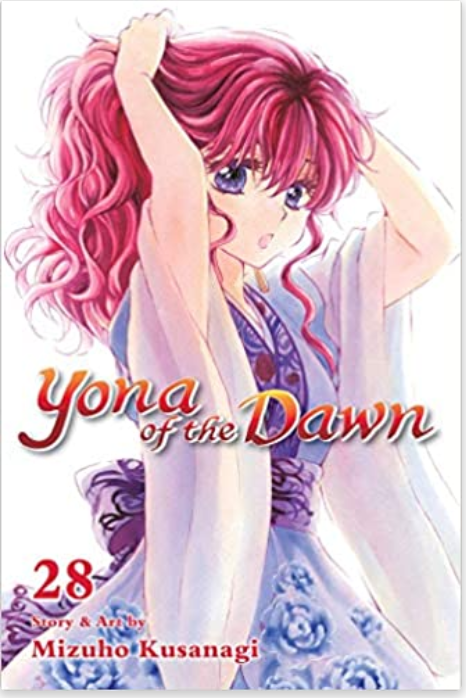
Yona of the Dawn 28 by Misuho Kusanagi

Yona of the Dawn

Yona of the Dawn is such a consistently satisfying fantasy series with a depth and nunace that few authors are able to pull off. This volume was extremely amusing to me because it featured Tae-jun freaking out a bunch. Tae-jun was extremely worried about his not very great covert support of Yona possibly being found out by his older brother and chief of the fire tribe Kyo-ga. Tae-jun also had the best hysterical facial expressions when he yelled about the need for separate rooms for Hak and Yona. All along as Yona has been traveling the country helping people, there have been hints of what might happen if a cult of personality develops around her as the true heir to the Crimson Dragon King and her new Four Dragon Warriors. These undercurrents were brought to the surface by Su-Won’s advisor lurking around being menacing to anyone in his vicinity. There’s clearly more conflict coming with both political maneuvering and with upcoming battles, but this was a great spacer volume with plenty of wonderful character development moments.


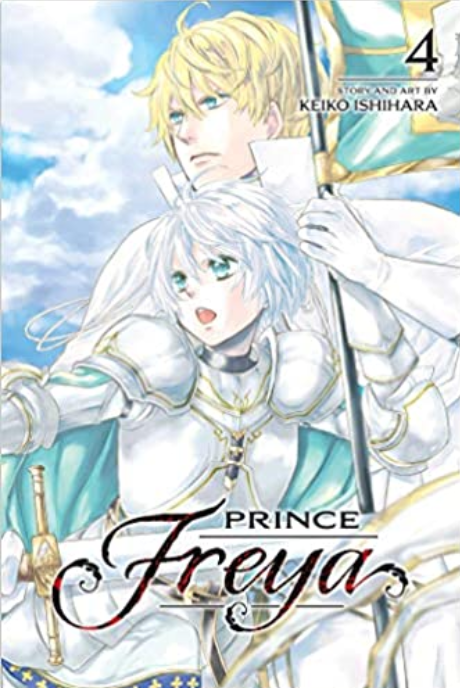
Prince Freya 4 by Keiko Ishihara

Prince Freya

I have come to realize that I read this manga much like I would read a Harlequin romance. Are there inexplicable plot twists? Yes! Do I care about really understanding what’s going on? Not so much! While there are no cases of pregnesia in this manga we do get the shocker of Aleksi coming back from the dead in the company of a group of forest people who express just how metal they are by wearing stag skull masks and making vague pronouncements in an odd tone of voice. Meanwhile, Julius continues to develop more feelings for his charge, and Freya as Prince Edward manages to inspire her subjects even more. An additional complication comes up when Freya has to meet the emotionally unstable king and attempt to pull off a much more complicated bit of acting. This is one of those series that I just read, let wash over me, and don’t worry about the plot twists and complications. I’m expecting some love triangle shenanigans with Julius and Aleksi in the next few volumes, along with the swashbuckling battle scenes that have become a fixture in this manga.

Filed Under: Manga Reviews, REVIEWS Tagged With: Prince Freya, yona of the dawn

Girls Kingdom, Vol. 2

March 20, 2021 by Sean Gaffney

By Nayo and Shio Sakura. Released in Japan by GL Bunko. Released in North America by J-Novel Club. Translated by Philip Reuben.

For those of you who sighed with relief when Kirara got her heart’s desire at the end of the last volume of Girls Kingdom, hoping that now she would be a normal character that would not make you want to throw yourself out the nearest window whenever she appeared on the page, well, I have some bad news for you. Turns out that’s just her, and everything she does is designed to make us cringe and cringe hard. Honestly, it’s almost a relief when, several times in this book, she’s left at the mercy of the twin Ayakas, who are of course also terrible but they are terrible in a far more acceptable yuri light novel way. Fortunately, Kirara is not the focus of this book, it’s still Misaki, who remains a great protagonist, desiring to improve herself in the present while, admittedly, having very little regard about her future. Which, again, contrasts her with everyone else in this school whose entire purpose she was completely ignorant of when she applied.

After a prologue where our newly minted maids make a grand tour of all the other hot spots on campus, which is good in that it gives up a quick character sketch of most of the cast but also leans a bit TOO hard on the wacky side, the story essentially has two main plotlines. The first involves Kirira’s mistress Kagura, who plans to start a sporting goods store after graduation, and her desire to have the school’s star volleyball player, Minako (yes, it went there – she even has a ribbon in her hair. No talking cats, though) promote the company. Minako, though, already has an agreement with a mom-and-pop store, and is stubborn about dropping it. The other story involves the restaurant we saw in the first book, which is always empty and gets few return customers. What are Erisu and her admittedly eccentric and goofy staff doing wrong?

Kirara only features in the Kagura plot, mostly out of desperation to get promoted as soon as possible, and drags Misaki along with her. Fortunately, the bulk of the book is still reflected through Misaki, a decidedly non-rich girl (her backstory helps make more sense of the whole “I saw there was free room and board so did not bother to check why” phenomenon) who provides sensible solutions to problems. She is the sort who, when told she is doing something wrong, does not furiously deny it or sink into depression, but thinks hard about how to fix that. She works well with Himeko, a young lady who has to have her own thinking process explained to her multiple times. The yuri here is still mostly on the MariMite level, though I doubt Yumi and Sachiko ever bathed together as much as Misaki and Himeko do. There’s even a side story towards the end of the book about two other residents of the Sky Salon who I would go so far as to call an actual couple.

So, one frustrating character, but overall I still quite enjoy this series, which knows what its audience wants and delivers it with all the subtlety of a pie to the face. But it’s tasty pie.

Filed Under: girls kingdom, REVIEWS

Slayers: The Darkness in Vezendi

March 19, 2021 by Sean Gaffney

By Hajime Kanzaka and Rui Araizumi. Released in Japan by Fujimi Fantasia Bunko. Released in North America by J-Novel Club. Translated by Elizabeth Ellis.

We are slowly starting to edge towards an ongoing narrative, even though for the most part these books still try their best to be books that can be read entirely on their own. That’s harder here, as we get the villains from the 2nd and 4th books seemingly teaming up to try to take out Lina… and the others, but mostly Lina. This should not be surprising – as Lina has been going around the countryside wiping out more and more people, even leaving out the Dragon Slave and Giga Slave, she’s attracted a name for herself, and there are a few folks who want her to stop doing that – particularly demons. Unfortunately for them, Lina feels no real need to change any of her habits – she still gleefully goes out bandit hunting at night, and while she can justify it to Amelia as needing traveling funds, there’s no denying that she also does it as she loves beating the shit out of people. Good news for her, then, this book is full of fights.

Zelgadis is on the cover, and those of you know know light novel cover art know what that means. Right – he does very little in this book. The plot involves Zuma, the hired killer from the 4th book, suddenly reappearing saying that he never finished the job he was hired for, mysteriously having two whole arms again, and demanding that Lina travel to Vezendi or innocents will die. Despite the fact that their party is one larger than expected (Xellos is back, and Amelia and Zelgadis are furi… well, actually, no, they take it quite well), they arrive and are hired as guards to a local merchant who Zuma says he’s going to kill. Oh yes, and Seigram, the villain from the SECOND novel, is also back… somewhat randomly… and trying to kill Lina. Do all of these things have a common element? Can Lina avoid getting killed? And can Lina avoided getting savagely roasted by her “friends”?

It is somewhat interesting still to see the differences between the novels and their far better known anime adaptation. I’ve talked before about Lina’s narration, and how she frequently skews things to make herself look better, but it’s actually a bit more than that: her inner thoughts are very cool, logical, and collected, even during a fight. The girl who will explode if you look at her wrong shows up sometimes, but it’s far rare than the anime. Amelia, as well, also feels “cooler”. While she does go on about justice, she is also not above beating the crap out of bandits, and literally says to Lina that if she dies Amelia will loot her corpse. WOW. She’s also far more competent in these books. And Gourry… OK, you’ve got me there, Gourry has been getting dumber by the book, and now appears to have reached anime levels, though he still sometimes steps in as the voice of common sense when needed.

The epilogue is not so much of a cliffhanger as an “ah, there it is”, and it comes as a surprise to no one, least of all Lina. I’m interested to see what happens in the next book, which is the final one in this loose “arc”. That said… these are still books that function more as a tasty snack than as a full meal.

Filed Under: REVIEWS, slayers

Downfall

March 19, 2021 by Katherine Dacey

Downfall is the story of Karou Fukazawa, a deeply flawed, forty-something manga artist whose career has stalled, marriage has soured, and self-esteem has curdled into a toxic form of self-pity. He lies; he procrastinates; he cheats on his wife; he berates his assistants. Though he eventually finds a path forward, his journey is not one of self-discovery or personal growth, but of resignation, of realizing that the life he’d imagined for himself turned out to be deeply disappointing.

Inio Asano underscores the depth of Fukuzawa’s self-loathing in the way he depicts Downfall‘s female characters. Fukazawa’s wife Nozomi, for example, is a successful manga editor in her own right, but she carries herself like a remorseful child, shoulders slumped, eyes downcast, and lips pursed. Fukuzawa complains that Nozomi devotes too much time to her job, criticizing her for paying more attention to the artists in her portfolio than to him, and excoriating her for not supporting him. His sense of entitlement is so powerful, in fact, that he coerces her into sex during a particularly nasty argument, a scene that’s so visceral, awkward, and claustrophobic that it’s genuinely hard to read, not least because it is such an unflinching portrayal of his narcissism.

Other female characters fare worse than Nozomi. Yunbo and Marimekko, two sex workers whom Fukazawa visits, are drawn in the same grotesque fashion as the pompous, foolish, and hypocritical characters in Dead Dead Demon’s Dedededestruction and Goodnight, Punpun. Fukazawa’s contempt for these women is thrown into sharp relief when contrasted with Chifuyu, an escort who reminds Fukazawa of an old girlfriend. Chifuyu is a gamine figure, with stylishly cropped hair, cat-like eyes, and a lithe body—a symbol of youth, possibility, and sexual desirability, unburdened by years of marital and professional disappointments—whereas Yunbo and Marimekko are awkward and unattractive, less individuals than vessels for Fukuzawa’s rage, and reminders of how much shame he feels over his faltering career.

As damning as all this sounds, Downfall isn’t simple misery porn. Fukuzawa is a rotten person, to be sure, but his ennui is genuine, rooted in the question of what it really means to turn one’s passion into a career. For Fukuzawa, that question is all-consuming, as he wrestles with the difficulty of making art in the context of the commercial publishing industry, where deadlines, reader surveys, and fickle fans exact their tolls. Fukuzawa also struggles with the manga industry’s voracious appetite for new talent, as he watches his book sales plunge while young, inexperienced artists find the kind of readership and acclaim that he himself once enjoyed. Even as I recoiled from Fukazawa’s sourness and misogyny, his professional dilemma resonated with me as a fellow forty-something with a career in the arts. What is the emotional and creative cost of making art on demand? How do you continue telling a story, creating art, or writing music when you are fundamentally disillusioned with the process? If you allow work to consume you in the name of becoming an expert, what remains when you reach those benchmarks of success? 

To explore these questions, Asano eschews a conventional narrative form, instead juxtaposing past and present in a rondo-like fashion (ABACA). The “B” and “C” sections take place in the present, unfolding in a linear manner, while the “A” section revisits a specific moment in Fukuzawa’s past: a youthful relationship that ended when Fukuzawa’s girlfriend declared, “As long as you keep drawing manga… you’ll keep on hurting people.” Asano is particularly adept at capturing the way in which the past and present sit side by side in the mind of an agitated person, rendering Fukuzawa’s memories as vividly as the present-day scenes, with consummate attention to small but meaningful details. From the way Fukazawa remembers this relationship—reciting the same observations about his girlfriend over and over again—it’s clear that he views this moment as a turning point in his life, and an explanation for who he has become. 

Yet these final pages feel less like a condemnation of Fukuzawa’s selfishness than a plea to understand his behavior: I renounced love for art. For me, at least, that feels like a cop-out, a way for Fukuzawa—and perhaps Asano—to tacitly acknowledge the character’s monstrous behavior while suggesting that it was somehow inevitable, pre-ordained, or natural. Viewed from a feminist perspective, though, it’s awfully hard to muster sympathy for a character who justifies his tantrums, violence, and vicious remarks as necessary to his art, especially when so much of his vitriol is directed at women. Your mileage may vary.

DOWNFALL • STORY AND ART BY INIO ASANO • TRANSLATED BY JOCELYNE ALLEN • EDITED BY PANCHA DIAZ • TOUCH-UP ART AND LETTERING BY JOHANNA ESTEP • VIZ MEDIA • 246 pp. • RATED MATURE (sexual situations, violence)

Filed Under: Manga, Manga Critic, REVIEWS Tagged With: Inio Asano, VIZ Signature

  • Page 1
  • Page 2
  • Page 3
  • Go to Next Page »
 | Log in
Copyright © 2010 Manga Bookshelf | Powered by WordPress & the Genesis Framework