• Skip to primary navigation
  • Skip to main content
  • Skip to primary sidebar
  • Home
  • About Us
    • Privacy Policy
    • Comment Policy
    • Disclosures & Disclaimers
  • Resources
    • Links, Essays & Articles
    • Fandomology!
    • CLAMP Directory
    • BlogRoll
  • Features & Columns
    • 3 Things Thursday
    • Adventures in the Key of Shoujo
    • Bit & Blips (game reviews)
    • BL BOOKRACK
    • Bookshelf Briefs
    • Bringing the Drama
    • Comic Conversion
    • Fanservice Friday
    • Going Digital
    • It Came From the Sinosphere
    • License This!
    • Magazine no Mori
    • My Week in Manga
    • OFF THE SHELF
    • Not By Manga Alone
    • PICK OF THE WEEK
    • Subtitles & Sensibility
    • Weekly Shonen Jump Recaps
  • Manga Moveable Feast
    • MMF Full Archive
    • Yun Kouga
    • CLAMP
    • Shojo Beat
    • Osamu Tezuka
    • Sailor Moon
    • Fruits Basket
    • Takehiko Inoue
    • Wild Adapter
    • One Piece
    • After School Nightmare
    • Karakuri Odette
    • Paradise Kiss
    • The Color Trilogy
    • To Terra…
    • Sexy Voice & Robo
  • Browse by Author
    • Sean Gaffney
    • Anna Neatrour
    • Michelle Smith
    • Katherine Dacey
    • MJ
    • Brigid Alverson
    • Travis Anderson
    • Phillip Anthony
    • Derek Bown
    • Jaci Dahlvang
    • Angela Eastman
    • Erica Friedman
    • Sara K.
    • Megan Purdy
    • Emily Snodgrass
    • Nancy Thistlethwaite
    • Eva Volin
    • David Welsh
  • MB Blogs
    • A Case Suitable For Treatment
    • Experiments in Manga
    • MangaBlog
    • The Manga Critic
    • Manga Report
    • Soliloquy in Blue
    • Manga Curmudgeon (archive)

Manga Bookshelf

Discussion, Resources, Roundtables, & Reviews

Archives for January 2020

Invaders of the Rokujouma!?, Vol. 31

January 31, 2020 by Sean Gaffney

By Takehaya and Poco. Released in Japan as “Rokujouma no Shinryakusha!?” by HJ Bunko. Released in North America digitally by J-Novel Club. Translated by Warnis.

And so I finally finish my Rokujouma catchup. This is also where the upcoming print boxset that was Kickstartered will end, as it had to cut off somewhere, and this is as good a place as any given the series is still coming out in Japan. It’s another one of those “three short stories from the online site and one half-book original” novels, only in this case the half-book overwhelms the short stories even more than usual. The short stories aren’t bad – first there’s a Triathlon our heroes are competing in, and we focus on Clan, who is out of shape, and Yurika, who is in shape but has little motivation. It’s cute, even though they’re also both very pathetic. We then get Harumi and Maki playing board games, which if nothing else shows off how desperately these two nice introverts need someone else to bounce off of. And Shizuka and Ruth have another sentai battle, bringing back Ruth’s beetle phobia, which, let’s face it, no one wanted to bring back.

The half-novel is the first of the “what ifs” the author said he was doing, but it’s framed as also being canon – in the brief interval between when Koutarou and company bring Nalfa back to Room 106 and when she wipes everyone’s memories, the idea of alternate universes comes up. Koutarou was relieved to hear that there are universes where his mother is alive, and Nalfa offers to show him one of those in a dream. (Pointedly, we don’t see that world, possibly as I suspect it would be rather sweet but dull.) The girls all then realize they can look at a world where they won and Koutarou is their boyfriend, and after a jan-ken-pon competition, Harumi is the first to see what that life would be like. She ends up sort of providing color commentary on the dream world, which works because it’s her but I was relieved when the afterword said it would not continue after this.

The “Harumi wins” world is very similar to this one, oddly – it takes place over about the first 8-9 books, and the rest of the cast still arrive and are trying to get control of Room 106. They’re barely in the story, though, as here Koutarou is all about Harumi. Amusingly, it’s because their initial meeting went worse than in canon – when trying to pull away from the dude harassing her, she sprains her wrist and Koutarou has to give first aid. This allows two very hands-off people to touch earlier than usual, and everything springboards from there – Koutarou opens up to her faster, she realizes she’s in love faster, and they confess rapidly. That said, which that world’s Koutarou and Harumi are blissfully happy, OUR Harumi is dissatisfied. A life without the rest of the cast just isn’t the same, even if their real-life romance isn’t resolved. Another reminder that found family story beats sappy romance story.

In Vol. 33 we’ll apparently get Clan’s “what if” story next, but before that it’s back to the ongoing plot. Till then, enjoy this what if that also reminds you that the main plot is best.

Filed Under: invaders of the rokujouma!?, REVIEWS

Manga the Week of 2/5/20

January 30, 2020 by Sean Gaffney, Michelle Smith, Ash Brown, Anna N and MJ Leave a Comment

SEAN: It’s February! The worst month! And it’s a day longer this year! Why not read some really good manga, then?

ASH: Sounds like a good plan.

ANNA: Indeed.

MJ: I’m in.

SEAN: We’ll start with J-Novel Club, who have a plethora of releases, both print and digital. Full Metal Panic! gets a print omnibus of its first three volumes in a fancy hardcover edition that looks cool. Fans won’t want to miss it.

Isekai Rebuilding Project (Isekai Saiken Keikaku) is another one from Kodansha’s Legend Novels, and is about what happens after the hero arrives from another world, bringing with him smartphones, modern economics, and weaponry… and then leaves them to their own devices. Yes, it’s an isekai cleanup squad for when things don’t go according to keikaku. The cover art looks fantastic.

ASH: That really is a great cover.

SEAN: Outer Ragna (Game Jikkyou ni yoru Kouryaku to Gyakushuu no Outer Ragna) is also from Legend Novels, and doesn’t quite have an isekai, but the gamer now finds he can ‘possess’ the heroine to help save the world.

They’ve also got the 2nd Faraway Paladin manga, How NOT to Summon a Demon Lord 8 in print, If It’s For My Daughter I’d Even Defeat a Demon Lord 7 in print, In Another World with My Smartphone 8 in print, the 3rd Infinite Dendrogram manga, and The Magic in This Other World Is Too Far Behind! 7 in print.

Kodansha, in print, has Boarding school Juliet 10 and Granblue Fantasy 3.

The digital debut is Let’s Kiss in Secret Tomorrow (Ashita, Naisho no Kiss Shiyou), a Dessert manga with an unusual premise: the couple start the manga together, as childhood friends turned lovers. But they’re in high school, and now have to hide their relationship. And the guy is suddenly really hot! Can they stay together?

MICHELLE: I will at least give it a try, since I generally like things from Dessert.

MJ: It had me at “childhood friends turned lovers.”

SEAN: Also digitally: Drifting Dragons 6, Our Precious Conversations 6, Smile Down the Runway 6, The Tale of Genji: Dreams at Dawn 10, To Be Next to You 2, and To Write Your Words 3.

MICHELLE: To Be Next to You was pretty interesting, too, in that the heroine seems like the outsider (and out of her depth) in the love story the object of her affections is experiencing with another girl.

SEAN: Seven Seas has but one title: a digital release of Classroom of the Elite light novel 4.5 (yes, it’s one of those .5 novels).

TOKYOPOP has RePlay, a done in one BL manga from Comic Magazine LYNX. It’s about BL and baseball. (Insert Michelle comment here.)

MICHELLE: Crud. I may have to patronize TOKYOPOP.

ASH: I try to avoid TOKYOPOP, too, but some of the licenses are very tempting.

ANNA: I’m going to be strong and just read BL from SuBLime. You can’t trick me TOKYOPOP!

MJ: I’ll wait for Michelle to read it first.

SEAN: It’s the first week of the month, and you know what that means. No debuts for Viz this month, though!

Shonen: Blue Exorcist 23, Food Wars! 34, JoJo’s Bizarre Adventure 4-4, Jujutsu Kaisen 2, My Hero Academia 23, My Hero Academia SMASH! 3, Seraph of the End 18, Twin Star Exorcists 17, and We Never Learn 8.

Shoujo: Ao Haru Ride 9, Shortcake Cake 7, Takane & Hana 13, and Yona of the Dawn 22. Getting all of these.

MICHELLE: Yep, every single one of the shoujo, and several of the shounen, as well.

ASH: JoJo and Yona are where my priorities are but, yeah, there’s a lot of good stuff in those lists.

ANNA: My favorite week for shoujo releases.

MJ: I’ve fallen behind on most of this, but I will catch up!

SEAN: Lastly, some Yen Press stragglers, including a couple of debuts. The Hero Is Overpowered But Overly Cautious has its manga debut, and should be highly amusing.

IM: Great Priest Imhotep is getting its print debut. It runs in Shonen Gangan and is to Magi what Black Clover is to Fairy Tail.

ASH: I’ll admit I’m curious.

MJ: Well, huh.

SEAN: And there is also Hinowa Ga CRUSH! 3 and Though You May Burn to Ash 6, which has a surprising number of volumes given that you’ve already burned to ash.

ASH: I do a double-take every time I see this series mentioned. XD

SEAN: What manga is spicing up your February doldrums?

Filed Under: FEATURES, manga the week of

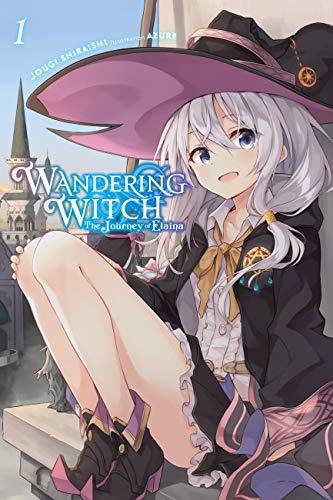
Wandering Witch: The Journey of Elaina, Vol. 1

January 30, 2020 by Sean Gaffney

By Jougi Shiraishi and Azure. Released in Japan as “Majo no Tabitabi” by GA Novels. Released in North America by Yen On. Translated by Nicole Wilder.

I suspected going in, judging by the blurb, that this would be less a light novel and more of a short story collection, and I was mostly correct. Elaina is our protagonist, and we do learn bits and pieces about her as the book goes on, but it’s clear the main thrust of the series is “Elaina goes to [X], events happen, Elaina leaves [X]. Which is fine, as some of the stories are quite good. The publisher did a good job not just giving in and calling it “Elaina’s Journey”, because yes, this does remind the reader of a certain motorcycle-riding protagonist we all know. Elaina’s short stories are less concerned with a moral than Kino’s, though – in fact, some of the weaker stories in this book come from when it does seem to try to awkwardly hammer home a “deep down we’re all the same” sort of lesson to be learned. Fortunately, Elaina is not really the sort to take in valuable lessons. She just wants to walk around.

As the title implies, Elaina is a young witch who is wandering around her world, which is one where witches are known and tolerated in most countries, visiting cities, towns and villages to take in what they’re like. As she does this, some of the places she goes are very entertaining and funny; some are rather creepy and horrific; and some are designed to tell us more about Elaina herself – in both flashbacks and the present day – to show us how she got to be a witch and why she’s so dedicated to wandering around and not staying longer than three days (again, does this sound familiar, Kino fans?). The supporting cast is pretty much zero; there is a recurring gag about a muscle-headed brother searching for his sister that pops up a few times, but that’s less for the character development and more for the gag.

Elaina herself is somewhat dry and frosty; at times the book can feel like a tsukkomi wandering the world of bokes. She used to be worse – one of the better stories involves us meeting her teacher when Elaina was an apprentice, and having the arrogance stripped out of her. Now she’s helpful… sometimes despite herself… but still seems removed from events, never getting too emotionally involved. Several stories here do not have happy endings, or end on a sad or scary note; we see Elaina leaving the country on her broom and never looking back. In the final story of the book, where the present-day Elaina meets her old teacher, there are hints that there’s more to Elaina than meets the eye (I’m curious about her mom as well), and I suspect we may find out she’s more important than she makes herself out to be.

As you’d expect given the format, the book is quite variable; some stories hit hard, some miss entirely. And, as I’ve hinted in the review, you do get the sense that the publisher would have been better off just license rescuing Kino’s Journey instead. But Wandering Witch is certainly an interesting journey in the end, and I enjoy Elaina’s matter-of-fact, slightly smug narrative voice. I’ll be looking for more of this.

Filed Under: REVIEWS, wandering witch

Shortcake Cake, Vol 7

January 29, 2020 by Anna N

Shortcake Cake Volume 7 by suu Morishita

As I was picking up this volume of Shortcake Cake, I started thinking about how genuinely fond of many of the current Shojo Beat titles. It is quite an accomplishment to develop a line of manga that inspires the feeling that you are seeing a friend again when you get a new volume of a series in your hands, but so many of the current Shojo Beat lineup invoke that feeling for me. Shortcake Cake continues to explore the classic romantic tradition of a love triangle (or possibly quadrangle) as Ten now realizes that she has feelings for Riku after she originally rejected him. In a great scene that takes full advantage of the iconic setting of stairs leading up to a shrine, Riku asks Ten if she likes him, and after a few beats of silence and slightly shifting facial expressions, Ten breaks the tension by balling up her fists and punching herself on either side of her face. Riku grabs her wrists to ask what she’s doing, and she blurts out “I like you.” Morishita’s cinematic approach to paneling switches from character to character, incorporating silent reaction shots coupled with blushes and awkward glances that makes this love confession iconic.

shortcake cake 7

One of the things I like about this series is the way it switches easily between emotional scenes and more comedic aspects of teenage life. Ten continues her confession by saying that she hopes she can make Riku like her back, and asks him to give her some time to win his affection. He says he’ll wait, and Ten thinks that she needs to make up for how she made Riku feel in the past. Ten decides that she’s going to actually attempt to be feminine, and what follows is a crash course in skin care and makeup application from Ageha. Ten also attempts to mirror Riku’s body language to deepen their connection in a hilarious scene. While Ten flits around trying out random advice from friends, Riku seems fairly patient and low key, except when he has to deal with an attempt to clear the air from Chiaki. In settings that recall the places where they’ve spoken in the past, Ten and Riku are open with their feelings and embark on an actual relationship.

With the way this series is developing, I’m not expecting the love confessions in this volume to be the last ones, which is a good thing because Morishita executes them so well. It is pretty adorable seeing Ten and Riku together and on the same page, but I’m very curious to see what happens when Rei figures out what is going on. Rei is largely absent from this volume, except for a single vignette after the main story, so I’m expecting him to show up soon. Shortcake Cake presents teen romance with a depth and emotional resonance that sets it apart from many other series. I’m still unsure who Ten is going to end up with, and that continues to keep me intrigued as a reader.

Filed Under: Manga Reviews, REVIEWS Tagged With: shojo beat, shortcake cake, shoujo, viz media

The Rose of Versailles, Vol. 1

January 29, 2020 by Sean Gaffney

By Riyoko Ikeda. Released in Japan as “Versailles no Bara” by Shueisha, serialized in the magazine Margaret. Released in North America by Udon Entertainment. Translated by Mari Morimoto.

At last, one of the most iconic manga ever has reached the shores of North America. It’s been a long wait since the license was first announced, and I’m sure there are some asking whether it was worth it. I am here to tell you that yes, it was. The volume of Rose of Versailles I am holding in my hands (both hands, it’s quite heavy) is gorgeous, a hardcover with high-quality paper, the first of five omnibus volumes (the “Complete Edition” from Japan). The art is breathtaking – I normally read manga fairly quickly, but it took me days to get through this book, as I kept stopping every panel to look at some fresh new detail. The characters are all compelling and drive the story well, although I admit that I like some of them more than others. The dialogue is also fantastic and will make you go back and reread when you aren’t going back to reread because of the art. It’s just… really amazing, folks.

The story frames itself as being about three people born the same year: Hans Axel von Fersen, a Swedish prince; Oscar Francois de Jarjayes, a noblewoman raised as a man; and Marie Antoinette Josephe Jeanne de Lorraine D’Autriche, better known as just Marie Antoinette, future Queen of France. The first half of the volume is very much about Marie Antoinette in its entirety; Oscar is there, but as a mere supporting player, popping up to snark at the other nobles and then getting back to her job with the Royal Guards. We see Marie as a well-meaning but naive and gullible teenager, thrust into the spotlight far too soon, and later in the book this gets even worse when Louis XV dies and she becomes Queen. Oscar is there at timees to try to guide her towards being more mature, but is not very successful at it, mostly as there are any number of hangers-on who are trying to manipulate a lonely and innocent Queen. And then there’s Fersen, who arrives at court and falls deeply in love with Marie Antoinette.

This is soap opera, of course, but of the best kind – if you’re going to go big and overdramatic, the court of Louis XV and XVI is the place to do it. Marie Antoinette is both sympathetic and frustrating, and you can see how difficult it can be to do the right thing when you have so many people who are standing besides you “giving helpful advice”. There’s also a subplot involving a pair of poor sisters, Jeanne and Rosalie; one manipulates men to move up into nobility, the other ends up attached to Oscar after her mother is killed by a mysterious noblewoman. I was, I admit, less enamored of these two; Rosalie, in particular, can grate. And then there’s the art. Rose of Versailles is most familiar for its iconic shoujo poses, and those do look beautiful and dramatic, but there’s also lots of silliness as well, and much of the humor in the volume comes from over the top comedy reactions to everyone’s antics. (Oscar, in particular, gets some magnificent funny faces.)

I hope I don’t need to tell everyone that this is worth reading immediately. If you were beginning to despair worrying it would never come out, fear not; it’s here, and it’s magnificent. Immerse yourself in it.

Filed Under: REVIEWS, rose of versailles

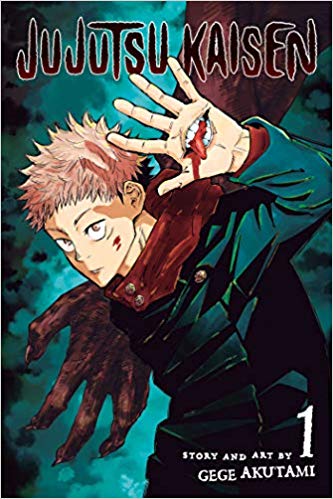
Jujutsu Kaisen, Vol. 1

January 28, 2020 by Anna N

Jujutsu Kaisen Volume 1 by Gege Akutami

Fending off supernatural threats is a shonen staple, so how does Jujutsu Kaisen stack up? It very much felt like an early effort from a mangaka, which it is, but the first volume has a few flashes of humor and a central premise that is both disgusting and entertaining.

jujutsu kaisen volume 1

Yuji Itadori is a teenager who enjoys hanging out with the occult club despite his superhuman strength and speed. He’s being targeted for his athletic abilities by the track coach, but manages to maintain his new supernatural hobby by winning a bet about his shot put abilities. Megumi Fushiguro, a student from another school with actual occult abilities, is investigating the presence of a cursed object when he encounters Yuji and his new friends. It turns out that the occult club has gotten their hands on an artifact that is actually quite cursed, and Yuji and Megumi have to team up to save his friends from demonic destruction. Along the way, Yuji casually eats a demonic finger in order to get cursed energy to fend off the evil spirits. This ends up giving Yuji a semi-manageable case of spirit possession, but also makes him useful to demon hunters because he’s basically a walking container for cursed objects, as long as he eats them. There’s a particular demon who is the source of the cursed digits, and Yuji is going to join a team hunting down the relics of the evil Sakuna.

The art throughout this volume is serviceable but a bit rough, there’s little mobility in the characters’ facial expressions and while the action scenes are easy to follow they’d be a lot more entertaining with some shifts in perspective or more dynamic paneling. I’m curious to see if the art improves more as the series continues to develop. The demons do look appropriately freaky and scary.

Yuji’s motivations for fighting demons are introduced with a lack of subtly. Then again, I guess one does not expect delicately and subtle plot points from a Shonen Jump manga. There were a few moments that I thought were hilarious enough to be engaging. When Yuji is figuring out how many digits he is going to have to consume, the total number is high due to a surprising reason which is tossed off in casual conversation. I also enjoyed Yuji’s low-key approach to performing dramatic physical feats. The end of the volume sets up the new occult fighting team and their sparsely populated high school that has a curriculum dedicated to fighting evil, and it’ll be interesting to see how that develops. Ultimately this first volume reminded me that sometimes one has to give a manga two volumes before deciding to follow a series or not, and that is what I’ll be doing with Jujutsu Kaisen.

Filed Under: Manga Reviews, REVIEWS Tagged With: Shonen, Shonen Jump, viz media

The Asterisk War: Resurgence of Savagery

January 28, 2020 by Sean Gaffney

By Yuu Miyazaki and okiura. Released in Japan by MF Bunko J. Released in North America by Yen On. Translated by Haydn Trowell.

Sometimes I jinx myself. Last time I was happily going on about how Asterisk War may have been cliched but hit all the right notes and was really fun to read. So it’s no surprise that here I am, reading the 12th volume, and finding things that I’m dissatisfied with. This is the last ‘setup’ volume before the next battle, the Lindvolus, and so the author is dragging the characters to where they need to be. For Ayato, who isn’t taking part in the battle (after all, it’s Julis who needs to win it), this will involve getting threatened and blackmailed. For the rest of the cast, it will involve learning about the new Big Bad and what he’s trying to do… well, actually, no one is quite sure what he is trying to do. For Orphelia, it’s starting to look like all she’ll be getting is a merciful death. And for Julis, who likely will have to administer that death, this volume is basically terrible, and it’s no surprise that she ends it distancing herself from her friends.

Firstly, Haruka is awake, and actually fulfilling a plot function, which is nice. Less nice is that the plot function she is filling is damsel in distress, though she has more agency than most of those. She’s up and telling people about the bad guy (her real father), and the scenes where she trains Ayato to realize why he’s still coming up short in controlling his powers are quite good. But the blackmail scene, where Ayato is threatened by revealing that Haruka essentially has a bomb next to her heart that will go off if Ayato doesn’t obey orders, feels like a cliche in the bad way, which Asterisk War doesn’t normally do. In addition, while I enjoyed the flashbacks to bad guy’s school years and him meeting a mysterious student with great powers (who seems very familiar), we only get one chapter of it, and it felt a bit out of place towards the start of the book.

There’s no additional confessions in the Ayatobowl sweepstakes, though his sister is happy he has so many girls after him. Instead, everyone is training for the Lindvolus, which promises to be at least the next three books, so we’d better get ready. We get a look at some of the other participants, some of whom we’ve seen before, and some of whom are new characters. Which is good, because this is a series with a tiny cast that absolutely needed more new characters. Yes, I’m joking. Actually, a lot of these little scenes were quite good, and were probably the parts of the book I enjoyed the most. But in the end the main thing this book was after was the break Julis, and also to drive her away from her friends, and it succeeded admirably. Which is fine, but a little depressing. I like Julis.

Next volume opens the tournament, so expect our heroes to be beating on a lot of supposedly strong folks who will nevertheless be sacrificed to the plot. Asterisk War continues to be a light breezy read that loves its cliches. For good and ill.

Filed Under: asterisk war, REVIEWS

Pick of the Week: Rose’s Turn

January 27, 2020 by Ash Brown, Anna N, Sean Gaffney, Michelle Smith, Katherine Dacey and MJ Leave a Comment

ASH: Back in 1983, Frederik L. Schodt introduced Riyoko Ikeda’s highly-influential manga The Rose of Versailles to English-reading audiences when he provided and except of it in his work Manga! Manga!: The World of Japanese Comics. Since then the license was a seemingly unobtainable prize. Even after Udon Entertainment announced the rights to release a English translation of The Rose of Versailles, the series languished for years. I wasn’t going to believe it until I saw it, but my faith has been restored – in 2020, I am finally holding the first glorious hardcover volume in my hands. Everyone else should be, too.

ANNA: I am so excited for The Rose of Versailles. I’m waiting for my copy, but will have a mini-celebration when I have it in my hands. There could be no other pick of the week!

SEAN: It feels like the last thirty-odd years of mainstream manga in North American has led up to this moment. The Rose of Versailles is not only long-awaited, but its presentation shows it was worth the wait. It’s magical.

MICHELLE: I find I still can’t believe it, despite credible reports of its existence. When my copy comes, I just might cry.

KATE: My copy of Rose of Versailles just arrived, and it’s gorgeous! So many epaulets! So many galaxy eyes! So many tears! I’m already swooning and I haven’t finished chapter one. (I guess it’s my pick of the week, too.)

MJ: It’s hard to believe this time has finally come! I don’t have my copy of The Rose of Versailles yet, but when it arrives, like Michelle, I think there’s a good chance I’ll cry!

Filed Under: PICK OF THE WEEK

Invaders of the Rokujouma!?, Vol. 30

January 27, 2020 by Sean Gaffney

By Takehaya and Poco. Released in Japan as “Rokujouma no Shinryakusha!?” by HJ Bunko. Released in North America digitally by J-Novel Club. Translated by Warnis.

I’ve been trying to catch up with Rokujouma, which threw me off my schedule by coming out in packs of 3 for a while. This is the first of the “post-finale” volumes, except of course it isn’t post-finale at all, there’s still stuff to be done. Forthorthe has “come out” to Earth, and now all sort of treaty negotiations have to take place, which will involve not screwing things up on either end. Third parties are trying to “fix” things on either side, they still can’t quite admit the presence of the magical world and the underground dwellers as well just yet, and even the yakuza is getting involved, thanks to finding a well-meaning chump – you can probably guess who that chump is. It’s also the start of a new school year. Mackenzie’s sister is now a first year, and is horrified to find her brother dates around. And we also meet a new transfer student from Forthorthe, seemingly the sister of a reporter who’s there as part of an initial exchange program, but boy, she sure seems familiar…

This book was not quite as solid as the last few have been – three’s a sense of “your series is too popular to end, please write more” to a degree. The bad guy is nephew of the bad guy from Forthorthe, and is there to be a bad guy and not much more – likewise the big battle near the end, while it is nice to see all the girls joining together to fight, felt like nothing we hadn’t seen before. And much as I love Yurika no matter what, I’m not as much a fan of her when she’s in Big Stupid mode, so seeing her happily running drugs and weapons for the yakuza, having not bothered to ask what’s in the suspicious boxes, made me feel a bit annoyed. That said, I did really like the bit where it’s pointed out to a despairing Yurika that Koutarou is being mean to her, meaning he’s not actually worried she’s in real trouble with the law here.

More interesting are the two new students. Nalfa Laren is, of course, the goddess whose plot we resolved in 29. She erased everyone’s memories, including her own (with an escape hatch for Kiriha in case of an emergency) and is living the life of a happy-go-lucky student – perhaps a bit TOO happy-go-lucky, given her clumsy tendencies which even make Yurika worry. We also get to meet McKinley, who idolized her brother till she found out he dares to date multiple women and is now furious with him. Alas, her adoration of Koutarou is fully justified, because Koutarou really IS that awesome – after all, he may have 9 (10?) women in love with him, but that doesn’t mean he’s dating any of them. Yet. She is basically a little sister character who is overly romantic, and that’s fine.

The next volume is another “half short-stories, half book” one, only in this case the half-book is the promised alternate universe, this first one being “Koutarou chooses to date Harumi”. We’ll see how that goes. Till then, enjoy Rokujouma 30, which is dancing a bit too fast to justify the ongoing plot, but is still decent.

Filed Under: invaders of the rokujouma!?, REVIEWS

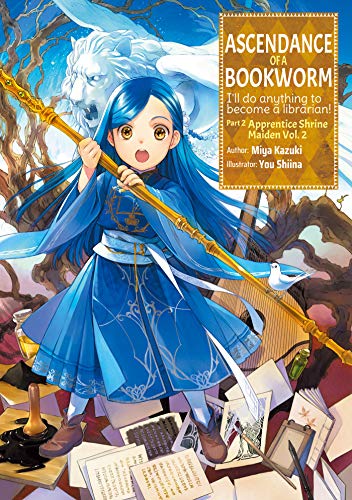
Ascendance of a Bookworm: I’ll Do Anything to Become a Librarian!, Part 2: Apprentice Shrine Maiden, Vol. 2

January 26, 2020 by Sean Gaffney

By Miya Kazuki and You Shiina. Released in Japan as “Honzuki no Gekokujou: Shisho ni Naru Tame ni wa Shudan wo Erandeiraremasen” by TO Books. Released in North America digitally by J-Novel Club. Translated by quof.

We’ve sort of gotten to have a light and dark side to these new Bookworm volumes. The light is the travails of Myne the merchant and orphanage director, as she finally succeeds in making a book for her as yet unborn little sister, and in passing also invents the exacto knife, the roller brush, and the like. This part is a fun little slice-of-life series, and everyone in it is nice. Benno may be grumpy, but he’s nice at heart, the attendants are (eventually) nice, the plucky young orphans are nice… it’s relaxing to read. And then there’s the dark side of the book that gets into the life of the noble class and magic, where we realize that Myne having absurd amounts of mana is going to shake this world to its foundations, that there is a definite class war going on beyond just the High Bishop, and that Myne is being desperately coached by the High Priest so that she doesn’t grow up to be imprisoned and forcibly bred. It’s a big “YIKES” all around.

Also meriting “Yikes” is the ending to the novel, where the High Priest decides to find out once and for all what’s up with Myne. The way he does it will be familiar to anime watchers, as he gives her a magic potion that allows him to look through her memories. He does this without her consent – the potion is meant for criminals – and the fact that he feels bad about it and she later consents after the fact does not ameliorate this. It does, however, allow her to ‘refresh’ her memories of her past self, and say goodbye, at least in her own mind, to her mother, so some good does come of it. It also shows the High Priest why Myne is the way she is, and I hope will lead to him being a stronger ally in the future, though honestly, he is already doing a pretty good job given she’s now dealing with assassination attempts.

The cover, as ever, is sort of an abstract image showing bits of the plot. We see scattered books, which are from when an arrogant noble (who we will no doubt see again) decides to break up Myne’s book room for the lulz. The background features a runaway trombe, which is a lot more terrifying when it’s a blood-eating plant creatures that is slowly killing Myne, who is for once straight-up terrified (though we now learn she can psychically communicate with Lutz when under great stress, which doesn’t help much here but might down the road). The lion is there to show us that magic is a much bigger deal on the ‘noble’ side of the walls. And the staff is because she’s there to bless the land, which, as noted, is not helped by the Knight who, primed by the High Bishop, decides to try to kill her off. I can’t see things going well for him.

This is another very long book, but the last half flew by. We also get two short stories going into the heads of one of Myne’s new attendants, who learns Myne is not like other blue shrine maidens, and one of Myne’s chefs, who rightly sees this as a means to a better career that doesn’t involve being a waitress/sex worker. The worldbuilding in this book likes to remind you that career options for non-rich women in this world are not optimal and a lot of the service ones involve sex work in some way or another. On the bright side, the battle sequence towards the end of this volume is going to look amazing when animated this spring. In any case, this is an essential light novel read.

Filed Under: ascendance of a bookworm, REVIEWS

Der Werwolf: The Annals of Veight, Vol. 6

January 25, 2020 by Sean Gaffney

By Hyougetsu and Nishi(E)da. Released in Japan by Earth Star Novels. Released in North America by J-Novel Club. Translated by Ningen.

A lot of these light novels were originally based on webnovels where readers no doubt left comments on what made them happy and what made them unhappy. This may be why each succeeding volume of Der Werwolf has managed to top itself when it comes to Veight’s superhuman powers of humility, with a number of “I’m just a lowly vice commander” lines or their equivalents here, even while he strategizes, leads armies into battle, decides the course of a throne war, and manages to get the best military leader of the Empire settled in Veight’s own land. It beggars belief a bit, and the rest of the cast are finding it less and less tolerable. Veight’s past has almost never been focused on, but what little he’s mentioned implies he was a standard Japanese NEET who was crushed by women and expectations and therefore has a horrible opinion of himself. If anyone’s going to be able to force him to admit his own accomplishments, it’s going to have to be someone who can take that into account. Sadly, the only other person who knew is now dead.

After the political maneuvering of the last volume, this volume is mostly wars and battles, as Ivan kicks off the throne war in earnest by killing his own father. He’s got the most military-minded of his brothers on his side, and also has more troops. Prince Ashley is technically in charge, but has the weaker hand. Veight, though, can see that his own lands would benefit more from negotiating with Ashley than with Ivan, and thus has Eleora to throw her troops behind Ashley. Most of the book consists of, as you’d expect in a climate like this one, waiting and preparing for battle, rather than battle itself. Veight can also help things out by secretly transforming and leading his werewolf corps, who take out a few bigwigs. That said, in the end it’s Eleora and Ashley who end up on top… though the body count is lower than I expected. There’s also lots of the usual banter you’d expect from Der Werwolf.

I was pleased to see Airia managing to make a short appearance in the book despite mostly communicating with Veight through letters. This leads to the other big thing that has only gotten bigger since the series began, which is Veight’s denseness when it comes to other women liking him. Again, this is meant to be a reflection of his sad former Japanese life, but frankly I think much of it comes from the fact that the series is not yet ready for him to be having love affairs – something he himself says here. That said, saying that he was Airia’s fiancee comes back to bite him, as he has to deny it in front of her, and then can’t figure out why she’s so angry. I still say she’s the obvious leader in the campaign for Veight’s heart, but he doesn’t do himself any favors by shooting himself in the foot like this.

The next volume looks to wrap things up up North and have Veight return to his own people. In the meantime, this is a solid volume of Der Werwolf, which gives readers more of what they want.

Filed Under: der werwolf, REVIEWS

Bookshelf Briefs 1/25/20

January 25, 2020 by Ash Brown, Sean Gaffney and Michelle Smith Leave a Comment

Again!!, Vol. 12 | By Mitsurou Kubo | Kodansha Comics – For better or worse, Again!! has always been unpredictable. I appreciate that it didn’t always follow the expected story beats, but at the same time, the inconsistency has been frustrating. For example, Imamura’s fluctuating dedication to the Ouendan had him proclaim at one point how much he wanted his grandma to see him cheering, and had that occurred it would’ve been a heart-tugging moment. But it didn’t happen. Instead, Imamura returns from another do-over (this time, flashing to a future in which his death inspired the other characters) with an apathetic attitude that eventually prompts him to return to 2014—a future where his grandmother is dead—without apparently a single pang about it. The ending is also kind of abrupt and ambiguous. In the end, I find myself wishing this had been more predictable, ‘cos at least it would’ve been more satisfying. – Michelle Smith

Chihayafuru, Vol. 18 | By Yuki Suetsugu | Kodansha Comics (digital only) – This volume is full of choices for Chihaya. It’s time to complete another career survey, and this time she fills in a more realistic goal than becoming Queen. It’s also less ambitious, however, and thus her karuta advisor comes to see her play at the Yoshino Club Tournament to ask someone with more experience whether Chihaya really has the potential to become Queen. Happily, she’s playing with more precision and focus than ever, but her next opponent is Haruka Inokuma, a 4-time former Queen, so her chances really hinge on how she fares in that match. (I suspect Taichi vs. Arata is in the offing, as well.) Too, the school trip conflicts with the Master/Queen qualifiers, and Chihaya must choose which side of herself she wants to cultivate more. I seriously love this series and am eagerly anticipating the next volume! – Michelle Smith

Dr. STONE, Vol. 9 | By Riichiro Inagaki and Boichi | Viz Media – Perhaps being interesting was too much to ask, but Taiju and Yuzuriha are at least contributing now that they’ve been added to Senku’s team—Taiju by being a literal tank soaking up damage, and Yuzuriha by apparently taking all the statues that Tsukasa smashed and sewing them together, presumably so they can be revived. If this seems farfetched, it’s no more so than finding the hospital where Tsukasa’s terminally ill little sister was located and unstoning her, which apparently also cures her illness. That said, Tsukasa may not be the end boss, as there’s another who’s been waiting for the moment to make his debut as a Big Bad. This continues to be ridiculous but also cool. – Sean Gaffney

Hatsu*Haru, Vol. 10 | By Shizuki Fujisawa | Yen Press – Best Couple get the cover, and I continue to be more interested in them than I am Riko and Kai, who are cute and all but also somewhat predictable. The four of them go to the hot springs, mostly as Riko is too nervous to be alone with Kai, and Takaya learns that Ayumi leaves herself wide open. After a cute but slight Valentine’s chocolate chapter, the best part comes when Ayumi gets a bad cold and Takaya visits, meeting her parents and finding out she’s actually pretty rich and her family are famous film creators. Ayumi is not yet ready to reciprocate Takaya’s feelings, but she does open up to him about wanting to seek her own path. It’s great to see, and we have three volumes left after this, so I’m sure it will work out. – Sean Gaffney

ROADQUEEN: Eternal Roadtrip to Love | By Mira Ong Chua | Seven Seas – While not technically manga, ROADQUEEN will likely still appeal both stylistically and thematically to readers who enjoy Japanese comics. In particular, the volume makes an excellent addition to Seven Seas’ catalog of yuri titles. ROADQUEEN originated as a short online comic, followed up by a much longer multi-chapter sequel. Both of these stories and an additional bonus comic are collected in this volume. Leo, the prince of Princess Andromeda Academy, only has eyes for Bethany—her motorcycle. At least until Vega arrives on the scene and steals Bethany away. Vega promises she’ll give the bike back, but only after Leo proves that she can be a decent lesbian (not to mention human being). ROADQUEEN is deliberately over-the-top, Chua obviously having a lot of fun playing with tropes, but it can actually be very touching, too. With an abundance of humor and a ton of heart, ROADQUEEN is an absolute delight. – Ash Brown

Saki the Succubus Hungers Tonight, Vol. 1 | By Mikokuno Homare and studio HIP-CATs | Ghost Ship – I will admit that for a title that’s coming out via the Ghost Ship label, which means “borderline porn,” this is pretty cute. Saki is a fairly new, still virginal succubus who has been thrown out of her family home as she’s old enough to be finding men to “feed” on, but she’s honestly a bit too shy for all that. She is thus near starvation when found by Renta, an adult salaryman who is also a virgin. They clearly fall for each other pretty fast, but are also both innocent and clueless, so nothing happens… well, OK, something happens, she manages to “feed,” but the plot is still “will they ever actually do anything” and the answer is likely “no.” Still, for tease, this is relatively cute and sweet. – Sean Gaffney

Snow White with the Red Hair, Vol. 5 | By Sorata Akiduki | Viz Media – Welp, despite what I thought, the series does not end just because the main couple confessed. Indeed, most of the volume involves separating the two—not by design, but simply as Shirayuki has been invited to another country for a get together… her old country, where Prince Raj is. Indeed, after having it out with her a couple of volumes ago, Raj is seemingly turning over a new leaf, but that doesn’t mean he’s comfortable around her at all—he never expected she’d accept the invitation. Her bodyguard for this journey is Obi, and I note that this series is very good at having a bunch of guys in it who are not immediately in love with the heroine. Whether that’s true of the new villain introduced here, who knows? – Sean Gaffney

Teasing Master Takagi-san, Vol. 7 | By Soichiro Yamamoto | Yen Press – Having established that our leads will end up married with a child in the future, the series can now slowly move forward in increments, culminating in the final chapter here, where Nishikata, of his own volition, asks Takagi to the summer festival. But we’re also looking back, as we get to see how the two of them first met, and how Nishikata’s two basic qualities—a nice guy with great faces when he’s embarrassed or upset—inspire Takagi almost immediately. I’m not sure this is exactly when she falls for him, but she certainly has by the end of this book, which gives us another nice blushing reaction from her. Oh yes, and there’s still plenty of teasing. You expected something else? – Sean Gaffney

The Way of the Househusband, Vol. 2 | By Kousuke Oono | VIZ Media – This was another fun volume of The Way of the Househusband, in which Tatsu tries aerobics and yoga, intimidates a yakuza by offering him kitchen gadgets, eradicates stubborn stains in Masa’s laundry, plays volleyball with housewives, and more. I really appreciate that we saw more of Miku, his wife, this time around, and probably my favorite chapter is the final one, in which her parents drop by for a visit. Even though the fish-out-of-water setup in this series reminds me of the premise of Saint Young Men, The Way of the Househusband is not only visually superior (better art, great pacing to jokes), but has more heart, especially the bonus chapter in which we see Miku’s dad practicing for the moment when he asks Tatsu if he wants to go outside and play catch. I stop short of calling the manga sweet, but it’s wholly endearing. Highly recommended. – Michelle Smith

Yowamushi Pedal, Vol. 13 | By Wataru Watanabe | Yen Press – Yowamushi Pedal, Vol. 13 | By Wataru Watanabe | Yen Press – OK, I was probably foolish to think the race would end in this volume. We’re gonna have to wait for fourteen. But in return, we get so much shonen sports at its best. Midousuji does his best, but then crashes and burns. Instead, it’s Manami who gets the bulk of this book, where we discover that he enjoys shifting gears higher when he should be doing the opposite, just to make things even more fun. That said, he shouldn’t dismiss our hero, Onoda, who has his pedaling and his Pretty Princess song to keep him going forever. (Oh yes, and his mother shows up—apparently at rando, as he never told her about the race? This was the funniest part of the book.) Things should end next volume… well, at least this race. – Sean Gaffney

Filed Under: Bookshelf Briefs

Invaders of the Rokujouma!?, Vol. 29

January 24, 2020 by Sean Gaffney

By Takehaya and Poco. Released in Japan as “Rokujouma no Shinryakusha!?” by HJ Bunko. Released in North America digitally by J-Novel Club. Translated by Warnis.

I’ve been saying for a while now that the “harem total” in this series is not going to get larger or smaller, and in this volume I am proved wrong. That said, if you’re going to add someone to a pile of girls who are as much a found family as romantic rivals, go big or go home. God joins the party here, in the presence of the being who greeted Koutarou in Volume 1. For a while it was thought to be Harumi/Alaia in some way, but now we know that that wasn’t thinking quite grandiose enough. Before we get to that point, though, we continue the theme of the previous books, as one by one the cast vanish from Koutarou’s life, essentially his worst fear, and he has to deal with it. He doesn’t deal with it very well. Fortunately, the dwindling group of women in his life are able to figure out what is going on long enough for him to go back to the place it all began… and also set up some intriguing alternate universes.

The cover art… and the plot… and every single thing about the book, really… might make you assume this is the last book in the series. It’s certainly the final part of the “main” plot that the author originally came up with – this is where he envisioned it ending, no matter how many books it turned out to be. But the cast are becoming third-years (except for the graduated Harumi), and we’re going to be seeing what happens next starting with Vol. 30. As for this book, there’s not much to it aside from emotional beats. They’re very good emotional beats, don’t get me wrong, but I do wish Koutarou had sort of figured out that when he is standing next to a girl and reminiscing about all the good times they’ve had since book 1, she’s going to be the next to go. There is a bit of a “memory reset” at the end, but it’s entirely voluntary, and you understand why they did it.

The interesting thing, to me, was the concept of the alternate universes brought up by Nalfalaren. The one we’ve been reading is the only one in like 5 billion or so where Koutarou revives her with all nine girls who are “part of her” at his side. In other words, this is the only harem end universe. We see one of the alternate universes towards the end of this book, as Koutarou has to deal with a world where none of the cast ever showed up in Room 106 and he ended up dating Shiori Kashiwagi, who readers may recall as having a crush on him a few books back, and is entirely a normal girl. It’s good to know someone is there to help Koutarou get over the tragedies in his life regardless, but it’s still nice to see the ending I think readers wanted, which is ambiguous but also feels right.

Next time we’re getting a continuation, but we’re also going to start to see some of those “alternate universes” where Koutarou was able to settle on one of the girls. Either way, you don’t have to worry about the cast vanishing from your lives anytime soon.

Filed Under: invaders of the rokujouma!?, REVIEWS

Manga the Week of 1/29/20

January 23, 2020 by Sean Gaffney, Michelle Smith, Anna N, Ash Brown and MJ 1 Comment

SEAN: The end of the month, and it’s time for lots and lots of stuff. What have we got?

First of all, jumping to the front of the queue because of what it is, we have Udon’s debut of The Rose of Versailles. You should know this one. One of the most influential manga ever. It’s hardcover. It’s almost 500 pages. You will all read it. It’s definitely Pick of the Week, so you’ll have to pardon the double pictures.

MICHELLE: *Kermit flailing*

ANNA: Back before there was an actual industry for translated manga in the United States, I read the excerptr of The Rose of Versailles that was translated in Frederik R. Schodt’s Manga! Manga! The World of Japanese Comics. I am so excited to read this.

ASH: I’ve read that excerpt, too! (It’s a great book.) I am absolutely thrilled The Rose of Versailles is finally becoming a reality in English.

MJ: I’m so excited, I can barely type. This release has taken a while, and I have no doubt it will be worth the wait!

SEAN: Cross Infinite World has another shoujo light novel, this one called The Misfortune Devouring Witch is Actually a Vampire?! (Ijippari na Majo Dono e). You can tell the title has been Westernized as it’s a ?!, not a !?.

ASH: Ha!

SEAN: Dark Horse has the 3rd Elfen Lied omnibus.

Ghost Ship has three titles, one a debut. Saki the Succubus Hungers Tonight (Saki-chan wa Konya mo Peko Peko) runs in Houbunsha’s Weekly Manga Times, and features a young and innocent succubus who is trying to get… male bodily fluids from a guy without doing anything really dirty. It’s sort of cute in a “not quite porn” way.

MJ: This is… not what I’m looking for in manga. Or really anything at all. I kind of regret reading this description.

SEAN: They’ve also got Yokai Girls 9 and Yuuna and the Haunted Hot Springs 8.

J-Novel Club has two new light novel series debuting. By the Grace of the Gods (Kami-tachi ni Hirowareta Otoko) is another reincarnation isekai series from Hobby Japan, but this one seems to involve very nice people. The hero is nice, the gods are nice, the slimes are nice… it seems nice. Expect “slice of life”.

The other title comes from the PASH! Books imprint, and is The World’s Least Interesting Master Swordsman (Jimi na Kensei wa Soredemo Saikyou desu). The plot really, really sounds like One-Punch Man to me… a reincarnated guy who swings his sword to get stronger… for 500 years… suddenly finds he’s super strong. But his swordsmanship is boring. I suspect this one will live and die by the supporting cast.

Also from J-Novel Club is How NOT to Summon a Demon Lord 12, Kokoro Connect 8, and Record of Wortenia War 4.

On the manga side, J-Novel Club has a 2nd Discommunication and the 3rd How a Realist Hero Rebuilt the Kingdom.

Kodansha’s print debut has already come out digitally: Living-Room Matsunaga-san, a shoujo series from Dessert. A young woman moves into a boarding house filled with oddballs, and finds herself looked after by an older man.

MICHELLE: I’d been meaning to read this one!

ASH: I’m curious, too.

MJ: This sounds interesting! Or possibly creepy? It seems like it could go either way!

SEAN: Also out in print is The Quintessential Quintuplets 7.

No digital debuts for Kodansha, but we do get Altair: A Record of Battles 14, Boarding School Juliet 14, DAYS 16, Drowning Love 16, Guilty 4, and Watari-kun’s ****** Is about to Collapse 2.

MICHELLE: Huzzah for more DAYS!

SEAN: Seven Seas has two debut light novels, one print and one digital. The print we saw before digitally: SCP Foundation: Iris Through the Looking Glass. It tied into the SCP Foundation universe.

The digital-first debut is At Night, I Become a Monster (Yoru no Bakemono). It’s from the author of I Want to Eat Your Pancreas, so expect good writing and melancholy. A boy turns into a monster during the evenings, and runs into a classmate.

MICHELLE: Hm, interesting!

ASH: I’m waiting for the print, but I am intrigued.

MJ: Interested.

SEAN: Also out from Seven Seas: The Dungeon of Black Company 4, Magika Swordsman and Summoner 12, My Monster Secret 19, and Toradora! light novel 9.

For Udon, see The Rose of Versailles above. Just thought I’d mention it again. The Rose of Versailles. Officially out in English. And looking amazing.

MICHELLE: I still can’t really believe it, honestly. I’ll believe it when I’m holding it in my hands.

ANNA: I’m trying to mentally prepare.

ASH: One of my most anticipated releases of the current and past several years.

MJ: What everyone else said. I mean. AAAAAAAAAAAAAAA.

SEAN: Vertical has a 4th APOSIMZ.

The rest of Yen Press, but we’re not close to done. Yen On’s debut is Wandering Witch: The Journey of Elaina (Majo no Tabitabi). A Softbank Creative series about, well, a wandering witch. The premise makes it sound like a happier, more positive version of Kino’s Journey.

Yen On also has A Sister’s All You Need 6, Goblin Slayer 9, and Torture Princess 3.

Also, in an effort to make all their books available digitally, Yen On now has digital debuts of two older series that were print-only. Rokka: Braves of the Six Flowers Vols. 1-6, and the standalone The Hero and His Elf Bride Open a Pizza Parlor in Another World.

Three debuts… sort of… in the manga department. Toilet-Bound Hanako-kun is a digital-only series now making its print debut. It also has an anime running now. It runs in GFantasy, so expect it to be a shonen series for girls.

ASH: I’m here for it! Looking forward to giving the series a try.

MJ: Did you say GFantasy? You know I’m here for that.

SEAN: The other debuts are adaptations of light novels. I’ve Been Killing Slimes for 300 Years (and Maxed Out My Level) runs in Gangan Online, and The World’s Strongest Rearguard runs in Kadokawa’s Comic Walker. The former is cute fluff, the latter is bad but fun.

We also get Aoharu x Machinegun 16, Final Fantasy: Lost Stranger 4, High School Prodigies Have It Easy Even in Another World 6, Horimiya 13, Murcielago 13, No Matter How I Look at It It’s You Guys’ Fault I’m Not Popular! 15, and The Saga of Tanya the Evil 9.

Again, and I cannot emphasize it enough, Rose of Versailles. Anything apart from that?

Filed Under: FEATURES, manga the week of

Kitaro: The Trial of Kitaro

January 23, 2020 by Sean Gaffney

By Shigeru Mizuki. Released in Japan as “Gegege no Kitaro” by Kodansha and Shogakukan, serialized in various magazines. Released in North America by Drawn & Quarterly. Translated by Zack Davisson.

This is the final volume of D&Q’s Kitaro collections, and, while Kitaro has never really been serialized in a plot or characterization way, it picks an apt final story to end on. The largest story in the book is the titular Trial, where Kitaro is brought up against the Yokai Supreme Court and charged with helping humans at the cost of yokai. Which, admittedly, there’s a grain of truth to. A number of Kitaro’s adventures have featured him helping hapless humans who are being used and/or outright tortured by yokai – indeed, we’ll see some later in this collection. That said, no surprises for guessing who’s really gotten Kitaro into this mess. After much foofaraw, the trial ends with Kitaro agreeing that he will not only help innocent humans beset by yokai, but also the reverse – such as not helping the shady TV producers who are manipulated by Nezumi Otoko into the documentary stat starts this all off.

As this is the final Kitaro review I’m writing up (presumably), I’d like to expound once again on Nezumi Otoko, the Donald Duck to Kitaro’s Mickey Mouse. The trial story features perhaps Nezumi Otoko at his most iconic – setting up the entire situation in the first place for cash, teaming up with an even worse yokai, framing Kitaro and testifying against him, and then quickly rolling over when things turn against him. Of all the many and varied yokai we’ve seen over the course of the series, Nezumi Otoko’s actions are perhaps the most jaw-dropping – even the evil yokai are more consistent in what they do day to day. But of course Kitaro gives the reason why Nezumi Otoko is who he is – he’s half human, and it’s the humanity in him that makes him crafty and a bit of a complete snake. That said, for Kitaro to continually hang out with him after everything shows he has the patience of a saint… or that Nezumi Otoko has the love of the author.

The rest of the stories in the volume are more typical, featuring the classic Kitaro way of doing things… get devoured and killed by the enemy, then come back and do something about it. The most interesting story other than the trial episode has to deal with a cursed toilet in the middle of the woods (yes, really) and Kitaro also losing all his hair… which, as is pointed out by Nezumi Otoko, is one of the sources of his strength. Honestly, without it he’s almost unrecognizable. I also liked the story of the merman who blackmails/tortures Kitaro into getting him fish, and actually ends up living in a mansion as a human. This leads to the dark punchline where Kitaro agrees to turn him INTO a human, and then the merman finding out that life as a human is not all that greater after all. Also, watch out for the cute maid working in the merman’s mansion who walks off with Kitaro in the end – Mizuki rarely drew cute girls in this series.

The seven volumes of Kitaro released over here, as well as the compilation that came first, do so much to show off the strengths of Shigeru Mizumi as an artist and storyteller. They’re a must for any library. Ge! Ge! Ge-ge-ge-no-geeeeee…

Filed Under: kitaro, REVIEWS

  • Page 1
  • Page 2
  • Page 3
  • Page 4
  • Go to Next Page »
 | Log in
Copyright © 2010 Manga Bookshelf | Powered by WordPress & the Genesis Framework