• Skip to primary navigation
  • Skip to main content
  • Skip to primary sidebar
  • Home
  • About Us
    • Privacy Policy
    • Comment Policy
    • Disclosures & Disclaimers
  • Resources
    • Links, Essays & Articles
    • Fandomology!
    • CLAMP Directory
    • BlogRoll
  • Features & Columns
    • 3 Things Thursday
    • Adventures in the Key of Shoujo
    • Bit & Blips (game reviews)
    • BL BOOKRACK
    • Bookshelf Briefs
    • Bringing the Drama
    • Comic Conversion
    • Fanservice Friday
    • Going Digital
    • It Came From the Sinosphere
    • License This!
    • Magazine no Mori
    • My Week in Manga
    • OFF THE SHELF
    • Not By Manga Alone
    • PICK OF THE WEEK
    • Subtitles & Sensibility
    • Weekly Shonen Jump Recaps
  • Manga Moveable Feast
    • MMF Full Archive
    • Yun Kouga
    • CLAMP
    • Shojo Beat
    • Osamu Tezuka
    • Sailor Moon
    • Fruits Basket
    • Takehiko Inoue
    • Wild Adapter
    • One Piece
    • After School Nightmare
    • Karakuri Odette
    • Paradise Kiss
    • The Color Trilogy
    • To Terra…
    • Sexy Voice & Robo
  • Browse by Author
    • Sean Gaffney
    • Anna Neatrour
    • Michelle Smith
    • Katherine Dacey
    • MJ
    • Brigid Alverson
    • Travis Anderson
    • Phillip Anthony
    • Derek Bown
    • Jaci Dahlvang
    • Angela Eastman
    • Erica Friedman
    • Sara K.
    • Megan Purdy
    • Emily Snodgrass
    • Nancy Thistlethwaite
    • Eva Volin
    • David Welsh
  • MB Blogs
    • A Case Suitable For Treatment
    • Experiments in Manga
    • MangaBlog
    • The Manga Critic
    • Manga Report
    • Soliloquy in Blue
    • Manga Curmudgeon (archive)

Manga Bookshelf

Discussion, Resources, Roundtables, & Reviews

Archives for December 2017

Manga the week of 12/13/17

December 7, 2017 by Sean Gaffney, Michelle Smith, Ash Brown and Anna N 1 Comment

SEAN: A relatively light week next week, possibly as all the titles were pulled into the black hole that is the week after next, which crushes all in its path.

J-Novel Club has a new debut, Walking My Second Path in Life. It sounds really great, being about a princess who’s tired of being used and then forgotten about so decides to masquerade as a male squire and try to become a knight. It’s also written by someone with the penname “Otaku de Neet”, so there’s that. I am thus cautiously optimistic?

Kodansha’s digital releases now outstrip their print by about 5 to 1. On the print side, there’s a 4th Aho-Girl, a 6th Clockwork Planet, a 3rd Kigurumi Guardians, and a 7th Princess Jellyfish, which I’m finally falling behind on (and feeling guilty).

MICHELLE: I always delight in a new Princess Jellyfish!

ASH: Indeed! I’m still incredibly happy that the series is being released in print. (And that we’ll be getting Tokyo Tarareba Girls, too!)

ANNA: Good stuff!

SEAN: In ongoing digital titles, we have, and try to say this all in one breath: Aoba-kun’s Confessions 5, Black Panther and Sweet 16 5, Chihayafuru 7, Domestic Girlfriend 12, Drowning Love 6, Grand Blue Dreaming 4 (that’s getting print later next year), House of the Sun 12, Kokkaku: Moment by Moment 3, and PTSD Radio 2. Eeesh. Chihayafuru is my pick from that pile.

MICHELLE: Mine, too, but I do still intend to check out Drowning Love and a couple others.

SEAN: Seven Seas has Vol. 13 of A Centaur’s Life, which continues to be the most deeply random ongoing series I’ve ever read.

ASH: I’ve definitely fallen behind, but the manga can be really interesting even if its tone and direction can be somewhat erratic.

SEAN: They also have a 7th Dance in the Vampire Bund omnibus, which I think takes in some of the sequels and side-stories.

And the print edition of the 4th Grimgar of Fantasy and Ash light novel.

SuBLime has two titles next week, with a 6th Don’t Be Cruel (still putting Elvis in my head every time I see it) and a 4th Deluxe Edition for Finder.

ASH: The deluxe edition is really nice, especially for fans who haven’t already invested in the series. (And it includes additional content to entice those who already have.)

SEAN: Vertical has a 6th massive volume for BLAME!, which I discovered at Anime NYC I’ve been mispronouncing all this time.

MICHELLE: It’s, like, bu-rah-mu or something, isn’t it?

SEAN: It’s apparently BLAM, as if written without the E.

We are almost finished with Itsuwaribito, though I could be lying. Sure seems that Vol. 22 is the second to last, though.

ASH: Ha!

SEAN: And Magi has a 27th volume, and may be killing off one of its main characters? Though somehow I doubt that.

MICHELLE: Volume 26 ended on quite the cliffhanger, so I’m definitely looking forward to this.

ANNA: Soooo far behind with this series. One day!

SEAN: Lastly, we see the debut of Splatoon. This series, based on the third person shooter game, is actually one of several manga that have come out. This one is Shogakukan’s title from CoroCoro Comic Special. Given it ran in CoroCoro, I expect it is geared for younger readers.

Are you getting anything next week, or saving up for the hell that is bearing down on us?

Filed Under: FEATURES, manga the week of

The Promised Neverland, Vol. 1

December 7, 2017 by Sean Gaffney

By Kaiu Shirai and Posuka Demizu. Released in Japan as “Yakusoku no Neverland” by Shueisha, serialization ongoing in the magazine Weekly Shonen Jump. Released in North America by Viz Media. Translated by Satsuki Yamashita.

This review, out of necessity, talks about the first volume of The Promised Neverland. If you want to be unspoiled, go read it first.

Holy Mother of God. It’s been a long, long time since I’ve had a manga, particularly a Jump manga (which tend to be slow starters), make my jaw drop quite as much as The Promised Neverland did. Everything seemingly comes together in this. The art style fits with the writer perfectly, there are many, many page turn reveals and amazing facial expressions. The three leads are likeable, whip-smart and yet not perfect, and you really, really want them to win out. There’s also a love of friendships and family that I will always adore when it’s handled this well. And yes, let’s just get it out of the way, there is some amazing horrific stuff here, with most of the book being a tense, nail-biting thriller but occasionally dipping its toe very effectively into pure horror. The Promised Neverland is RIVETING.

The cover and first couple of pages might lead you to believe that we’re going to be seeing some sort of warm, fluffy, Anne of Green Gables style story. We meet Emma and get her POV of the orphanage she’s spent most of her life in. Sure, the title page may look a little grim and ominous, but let’s disregard it for now as she seems so happy! Emma is one of the oldest in the orphanage, and along with her best friends Norman and Ray she spends the day herding the younger kids, having immense amounts of fun, and taking the DAILY TEST, the first of those page-turning reveals I mentioned above. At this point, the reader knows something grim is coming. Still, it’s not until we hear that one of the youngest kids is leaving that day that we think “uh oh”. And sure enough, soon we’re up to our neck in mysteries, from “what’s outside the orphanage?” to “why did that happen to Conny?” to “why are we still here even though we’re all 11 years old?”. Now Emma, Norman and Ray have to outsmart the adults – something easier said than done.

I feel like going on and on about the things I loved in this. Ray’s cynical intelligence and Emma’s boundless emotional enthusiasm are balanced nicely in the middle by Norman, and honestly I’m glad Emma is not beaten down by this (yet), as without her the title would be even grimmer than it already is. I also love the fact that Emma refuses to simply try to run away with just Ray and Norman – she absolutely won’t save herself at the expense of all the younger orphans. Again, there are some nice themes of family throughout this volume, and I appreciate that Emma’s viewpoint was allowed to carry the day. We hear that the three kids are incredibly intelligent, and see this displayed throughout the book… except they’re also outsmarted quite a bit by adults with more experience than they have.

Flaws? Well, Krone skirts the edge of being a racial stereotype, but part of that may be simply due to the fact that she’s meant to be a villain, and honestly compared to some other ways Jump has treated black people I’m willing to let it pass for now, especially as I enjoyed the way the cast is multiethnic. Mostly, though, The Promised Neverland hits it out of the park. I want it to be February already so that I can read more. Highly recommended (unless you really hate horror-based stories – it’s pretty damn dark, trust me).

Filed Under: promised neverland, REVIEWS

Manga Giveaway: A Cache of Kodansha Comics Winner

December 6, 2017 by Ash Brown

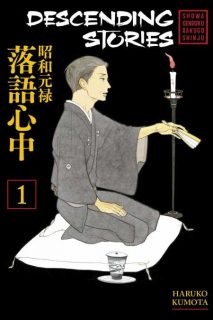
Descending Stories: Showa Genroku Rakugo Shinju, Volume 1Kigurumi Guardians, Volume 1
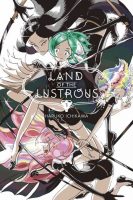
Land of the Lustrous, Volume 1Love and Lies, Volume 1

And the winner of the manga giveaway for a cache of Kodansha Comics is… Dawn!

As the winner, Dawn (whose terrific Anime Nostalgia Podcast also happens to be hosting a giveaway right now) will be receiving the first volumes of Descending Stories: Showa Genroku Rakugo Shinju by Haruko Kumota, Kigurumi Guardians by Lily Hoshino, Land of the Lustrous by Haruko Ichikawa, and Love & Lies by Musawo, all of which debuted in English from Kodansha Comics this past year. In addition to its print releases, Kodansha Comics has also had a particularly good showing in 2017 digitally. And so for this giveaway, I asked participants to tell me a little about their own reading habits and preferences when it comes to print versus digital manga. The responses were really great, so be sure to check out the giveaway comments!

Kodansha Comics’ 2017 Print Manga Debuts
Aho-Girl by Hiroyuki
Appleseed Alpha by Iou Kuroda
Battle Angel Alita by Yukito Kishiro
Cardcaptor Sakura: Clear Card by CLAMP
Clockwork Planet by Kuro
Descending Stories: Showa Genroku Rakugo Shinju by Haruko Kumota
Fairy Tail: Rhodonite by Kyouta Shibano
Fairy Tail: S by Hiro Mashima
Frau Faust by Kore Yamazaki
Ichi-F: A Worker’s Graphic Memoir of the Fukushima Nuclear Power Plant by Kazuto Tatsuta
Kigurumi Guardians by Lily Hoshino
Kiss Me at the Stroke of Midnight by Rin Mikimoto
Land of the Lustrous by Haruko Ichikawa
Love and Lies by Musawo
Neo Parasyte M by Various
That Time I Got Reincarnated as a Slime written by Fuse and illustrated by Taiki Kawakami
To Your Eternity by Yoshitoki Oima
Toppu GP by Kosuke Fujishima
Waiting for Spring by Anashin
Wake Up, Sleeping Beauty by Megumi Morino

Kodansha Comics’ 2017 Digital Debuts
Ace of the Diamond by Yuji Terajima
All-Out by Shiori Amase]
All-Rounder Meguru by Hiroki Endo
Altair: A Record of Battles by Kotono Kato
Aoba-kun’s Confessions by Ema Toyama
Ayanashi by Yukihiro Kajimoto
Beauty Bunny by Mari Yoshino
Black Panther and Sweet by Pedoro Toriumi
Blame! Academy and So On by Tsutomu Nihei
Chihayafuru by Yuki Suetsugu
Cosplay Animal by Watari Sakou
Days by Tsuyoshi Yasuda
Deathtopia by Yoshinobu Yamada
Domestic Girlfriend by Kei Sasuga
Drifting Dragons by Taku Kuwabara
Drowning Love by George Asakura
Elegant Yokai Apartment Life written by Hinowa Kouzuki, illustrated by Waka Miyama
The Full-Time Wife Escapist by Tsunami Umino
Giant Killing written by Masaya Tsunamoto, illustrated by Tsujitomo
Grand Blue Dreaming written by Kenji Inoue, illustrated by Kimitake Yoshioka
GTO: Paradise Lost by Toru Fujisawa
Hotaru’s Way by Satoru Hiura
House of the Sun by Taamo
Hozuki’s Coolheadedness by Natsumi Eguchi
I Want to Hold Aono-kun So Badly I Could Die by Umi Shiina
I’m in Love and It’s the End of the World by Taamo
Kasane by Daruma Matsuura
Kokkoku: Moment by Moment by Seita Horio
Koundori: Dr. Stork by You Suzunoki
Love’s Reach by Rin Mikimoto
Lovesick Ellie by Fujimomo
Magical Sempai by Azu
Museum by Ryousuke Tomoe
My Brother the Shut In by Kinoko Higurashi
Our Precious Conversations by Robico
Peach Heaven by Mari Yoshino
PTSD Radio by Masaaki Nakayama
Rave Master by Hiro Mashima
Real Girl by Mao Nanami
Shojo Fight! by Yoko Nihonbashi
A Springtime with Ninjas by Narumi Hasegaki
Tokyo Tarareba Girls by Akiko Higashimura
Tsuredure Children by Toshiya Wakabayashi
Until Your Bones Rot by Yae Utsumi
Wave, Listen to Me! by Hiroaki Samura

Assuming that I didn’t miss any (I’m sure I have and some of the digital titles probably haven’t even been revealed yet), Kodansha Comics had twenty print debuts last year (most if not all of which are also available digitally) and forty-five digital debuts (a few of which will eventually be released in print, too). By the end of the year, Kodansha Comics will have debuted more than sixty-five new titles in addition to its other continuing series! It’s great to see how much is being published in English these days in print and digitally, and not just by Kodansha Comics. Thank you to everyone who shared your reading preferences with me! Both digital and print manga have their pros and cons, so I found all of your responses very interesting. I hope to see you again at the end of December for one last giveaway here at Experiments in Manga!

Filed Under: Giveaways, Lists, UNSHELVED Tagged With: Descending Stories, Haruko Ichikawa, Haruko Kumota, Kigurumi Guardians, Land of the Lustrous, Lily Hoshino, Love and Lies, manga, Musawo

your name. Another Side: Earthbound

December 6, 2017 by Sean Gaffney

By Arata Kanoh, Makoto Shinkai and Hiyori Ashikawa. Released in Japan by Kadokawa Shoten. Released in North America by Yen On. Translated by Taylor Engel.

your name was an astonishingly popular movie (and I assume did OK as a novel), so it’s no surprise that there would be a desire to see more of the world. It’s also no surprise that any side stories are not going to be written by Makoto Shinkai, who has no doubt already moved on to his next great work. Instead, this collection is by Arata Kanoh, who has done this sort of thing before – he has a 5 Centimeters Per second novel out in Japan, and seems to specialize in these sorts of books. What we get here is a collection of four short stories set in the world of your name (all on the Mitsuha side of the swap – sorry, Tokyo, no one cares about your end) and expanding on the points of view of three of the side characters (in case you’re wondering, the first story is more about Taki being not very Mitsuha-ish and making people “see another side” of her with his threatening bullies and doing Michael Jackson Smooth Criminal dances while in her body). As with many side story collections, it’s a mixed bag.

The second story focuses on Teshigawara, one of Mitsuha’s friends, and his POV on what’s been going on. One of the running gags through this volume is how horrible Taki and Mitsuha are at this bodyswapping, as absolutely everyone can see something is going on but can’t figure out what. It’s put down to stress, or possession by a fox spirit, etc. We get a few of the scenes in the original novel on his end, and see his frustration at the two girls talking about leaving this dead-end village when they graduate. He’s in a family business, expected to take it over, and rather frustrated about the whole thing, and therefore hearing them going on about how boring it is there is making his teeth grind.

The best story in the collection deals with Yotsuha, Mitsuha’s younger sister who spent most of the original novel staring suspiciously at her sister groping herself. Again, she knows something’s up with her sister, but can’t quite pin it down, and is casting around for reasons for the personality change. It’s a good look at events from the persopective of a 10 to 11-year-old tomboy, and we see the love that Yotsuha has for her sister, even if it doesn’t necessarily come out the way she wants. She also gets to experience what Mitsuha’s going through in another, more mystical way.

The final story was my least favorite, though that’s not the fault of the book – I just can’t bring myself to like Toshiki, Mitsuha’s father, and this story is an effort to give us backstory and show us how he turned into such an ass, as well as expand on Mitsuha’s mother. It didn’t help that we get a terrifying amount of cultural history regarding the past of the village’s rituals and how it got wiped out, which is meant to be interesting but I found a bit exhausting. I’m not sure I buy the “perhaps it was fate’s plan that I turn into a jerk and become Mayor” idea either.

That said, if you enjoyed your name, this is a pretty good followup to it. It’s not essential, but allows you to enter into that world one more time, which is just the sort of thing some readers love.

Filed Under: REVIEWS, your name

Bookshelf Briefs 12/5/17

December 5, 2017 by Michelle Smith and Sean Gaffney Leave a Comment

Son of Cornucopia of Briefs!

Akashic Records of Bastard Magica Instructor, Vol. 2 | By Hitsuji Tarou, Tsunemi Aosa and Kurone Mishima | Seven Seas – Last time I said Glenn was too irritating, this time the opposite may be the case. Part of that is due to the fact that this is mostly just a big battle, as Rumia has been kidnapped and Sistine and Glenn have to rescue her. This involves a pile of fights, some of which are more exciting than others. The final fight is an anticlimax, partly as the villain is dull and gives up very easily, and partly as Rumia, in order to contrast with Sistine, is also quite dull. The best part was Glenn pushing Sistine out of the building, frankly. This is an OK series if you like magical high schools, but there’s honestly better ones out there. – Sean Gaffney

Anonymous Noise, Vol. 5 | By Ryoko Fukuyama | Viz Media – As I’ve said before, the quality of this series is dependent on the amount of music depicted in it, and this volume has a LOT of music, making it easily the best volume to date. Nino can be good at playing and singing, or she can blow everyone away with her voice and emotions, but she cannot, seemingly, do both at the same time. The result is a concert that looms towards trainwreck the entire time but never quite gets there, riding entirely on the skill of the band and Nino’s desperate cries of the heart. The art here is stunning, and remains the best reason to read it. The romance, honestly, is the weak link, and you’d really like it to resolve itself but know that it won’t. Get this for the band. – Sean Gaffney

Everyone’s Getting Married, Vol. 7 | By Izumi Miyazono | VIZ Media – The more things change, the more they stay the same. Ryu has been offered a promotion to the Washington, DC branch of his news organization, and, with encouragement from Asuka, decides to accept. They attempt to make the most of the months they have left, including a few fun dates and an outing in which Ryu introduces Asuka to his brother. He even proposes, sort of. “In spirit,” he says. But still, once he’s gone, we get essentially the same stuff as before. Vague glimpses at Asuka’s job, her brother showing up to poke his nose into her business, and, most significantly, yet more of Kamiya and his persistent angling for Asuka’s affections. It’s not bad, but it’s a dynamic that I’m pretty tired of. Still, it’s a quick, light read, so I’ll probably keep following it. – Michelle Smith

Frau Faust, Vol. 2| By Kore Yamazaki | Kodansha Comics – I must admit, I was very disappointed at the big plot twist of Frau Faust‘s second volume. I really liked the badass adult heroine, so seeing her, though the bargain she has with her demon, have her body stripped away so she looks younger and cuter strikes me as not the best bargain I’ve ever had. That said, her personality remains the same, and it wouldn’t matter if she was young or old, nothing was going to be able to stop Marion getting himself into trouble, as he possesses a thirst for knowledge second only to her own. And most of the horror in this book is given over to a creepy church with an evil priest and nun, always popular with readers. Despite the age regression, I’m still enjoying Frau Faust. – Sean Gaffney

The Full-Time Wife Escapist, Vol. 6 | By Tsunami Umino | Kodansha Comics – I expected to be happy and relieved when these two awkward failboats finally got it together, confessed they liked each other, and had their first time. And I was. The good news is that it does not in any way detract from the fact that they are still two really awkward massive failboats, even as they deepen their relationship. Because they still can’t think of it as a relationship—in particular, Mikuri is panicking at the fact that being his real wife means giving up on the income she’s been getting. Which you could argue is meant to be a comment on the sheer amount of unpaid work the average wife goes through, but I think is more meant to show that Mikuri has serious compartmentalization issues. I love this series. – Sean Gaffney

Idol Dreams, Vol. 4 | By Arina Tanemura | Viz Media – Idol Dreams has always been “problematic but readable,” and both qualities amp up in this fourth volume, as Chikage deals with her decision to date Ru as a 15-year-old. She thinks of things as an adult, so can’t really understand a teenage boy’s drives and desires, which almost leads to tragedy, and does lead to her doing something very cruel in order to “fix” things. The other problem is Chikage’s complete and total lack of self-worth. This is, after all, a woman who tried to kill herself near the start of the series. It’s so bad that she even gets “confidence” lessons from the other girls in the office. Tanemura is always readable, but I still can’t see this ending in any way other than everyone being very, very unhappy. – Sean Gaffney

Kiss Me at the Stroke of Midnight, Vol. 2 | By Rin Mikimoto | Kodansha Comics – Despite still having issues deciding how much of a comedy it’s supposed to be, this is a better volume than the first. Our heroes have gotten together, though of course given Kaede’s idol status it’s a big secret—if found out, Hinana could be in big trouble. I liked the added depth we got from Hinana here—she does initially have confidence in her relationship with Kaede, but is still a teenage girl, so lies can persuade her. She also reveals that she’s adopted, which means she feels the need to excel in school, and being around Kaede all the time is not helping, especially when he keeps trying to distract her. (The sniffing scene was a highlight). I’m having sufficient fun to continue. – Sean Gaffney

Ooku: The Inner Chambers, Vol. 13 | By Fumi Yoshinaga | VIZ Media – As ever with Ooku, time moves on, and when I first started reading this volume, I missed the beloved group of characters involved with eradicating the redface pox. Soon, though, I realized that Iesada, the first female shogun in over sixty years, is awesome, and that Takiyama, her new senior chamberlain, is likewise awesome. Moreover, her female senior councilor (becoming more of a rarity as the male population recovers) Abe Masahiro is seriously awesome. Now they (especially Takiyama and Masahiro) are as beloved to me as the other group! The moral of the story is: never doubt Yoshinaga. She even knows how to give a reader goosebumps via a dramatic reappearance of a symbolic kimono design! I’m so happy there are at least two more volumes of this. – Michelle Smith

A Polar Bear in Love, Vol. 1 | By Koromo | Yen Press – This is a cute and seemingly heartwarming manga, but its relationship between predator and prey makes me a bit uncomfortable. I think the manga artist is aware of this—we get constant reassurance from the polar bear that he does not, in fact, want to eat the seal but has fallen in love with him instead. And the fact that they’re both male is also not overlooked. There’s a lot more going on here than you’d expect in a series that’s meant to run on “ooooh, adorable animals!” Still, there’s no denying that the seal is terrified the entire time and unable to really escape for a while, and the fact that he’s slowly starting to fall for the polar bear does not really quiet my misgivings. Warily recommended. – Sean Gaffney

Requiem of the Rose King, Vol. 7 | By Aya Kanno | Viz Media – Say what you will about Kanno, she really knows how to drag out the canon scenes to serve her own interests. And serve them very well, as this is another volume of Rose King that you absolutely can’t put down once you start reading it. Margaret’s downfall will be very familiar to readers of the Henry VI plays, but that doesn’t make it less tragic. As for Richard and Henry, Richard seems to be descending closer and closer to madness, and he doesn’t even need Joan of Arc’s ghost this time around—his mother fills in nicely. Add to this Anne being ABSOLUTELY BADASS, and you have another volume of what may be the best Shojo Beat series out there that isn’t Shojo Beat. You need to be reading this. – Sean Gaffney

Sword Art Online: abec Artworks | By abec | Yen Press – It’s always nice to see a series do well enough to justify licensing the artbook, and I’ve always liked abec’s work. We get some gorgeous art here, of course, along with some insight into the process (such as Kirito being added to the cover of book seven by editorial fiat). There’s also a short story at the end by Reki Kawahara, which involves an artist who’s trying to figure out a way to paint in Aincrad, whose game nature does not make it easy on artists requiring a large canvas. There are also lots of pieces unseen by North American fans, as we get art for promos and magazines. Basically, anyone who is a fan of Sword Art Online should be getting this. It’s also out digitally, but that may not do it justice—go for the bigger print book. – Sean Gaffney

Tokyo Tarareba Girls, Vol. 9 | By Akiko Higashimura | Kodansha Comics (digital only for the moment) – I was equal parts anticipating and dreading this final volume of Tokyo Tarareba Girls, because I wanted a happy ending for Rinko and Key and Mr. Hayasaka, which was going to be impossible. That said, I’m quite satisfied with how things turned out. I won’t give away any plot details, but I loved how Rinko both changed and did not change, in that instead of saying “what if” and regretting the state of things, she’s now determined to say “because” and be grateful for events and people who have helped her grow as a person. She’s now more honest with herself and with others, and yet she’s still the Rinko who periodically gets sloppy drunk with her friends. This is a really strong conclusion that even made me a little sniffly! – Michelle Smith

Filed Under: Bookshelf Briefs

A Polar Bear in Love, Vol. 1

December 5, 2017 by Katherine Dacey

Don’t be fooled by the cute cover: A Polar Bear in Love is neither gag strip nor conventional rom-com about an improbable couple overcoming their differences. It’s a fitfully amusing, sometimes melancholy reflection on what it’s like to fall in love for the first time, filled with the awkward moments and misunderstandings that all dating newbies experience.

The set-up is simple: Polar Bear falls head-over-paws for Lil’ Seal. Lil’ Seal, for his part, is understandably terrified by Polar Bear’s declaration of love and suffers violent tremors and visions of his imminent demise. Author Koromo complicates this one-joke premise, however, by revealing that both Polar Bear and Lil’ Seal are male, and that neither of them are old enough to understand what it means to be in an adult relationship. Polar Bear, for example, labors under the impression that it’s normal for people to eat their loved ones. While that sounds like a cutesy, kids-believe-the-darndest-things punchline, Polar Bear’s belief is rooted in a fundamental law of the Arctic: the strong eat the weak. His own experiences with love, loss, and scavenging tug — OK, yank — on the heartstrings in an unexpected way, revealing the extent to which his carnivorous instincts are complicated by his desire for friendship.

The art, too, is deceptively minimalist. Both Polar Bear and Lil’ Seal are rendered as thick outlines against a wintery landscape, an artistic decision that allows Koromo to deform her characters for maximum humorous effect, but also underscores the fact that their white fur coats are intended to camouflage them from one another. Though the characters’ conversations are distinctively human, their physical movements are not; even when Polar Bear clasps Lil’ Seal to his chest in a tender embrace — a seemingly anthropomorphic moment — Koromo poses Polar Bear firmly on his haunches, capturing the muscular weight of his enormous hind quarters, and emphasizing the disparity between his size and Lil’ Seal’s.

But is it good, you ask? I’m not sure. There’s a brisk efficiency in Koromo’s artwork and a few delightfully absurd moments that illustrate the major gap between what Polar Bear says and what Lil’ Seal hears — an apt metaphor for what happens when two people try sorting out their feelings for one another. The story never finds a consistent rhythm or tone, however, lurching between somber reflections on arctic survival and antic scenes of Polar Bear glomping Lil’ Seal. The same is true of the characters; in some scenes, their chatter pegs them as worldly seven- or eight-year-olds, while other conversations make them seem like jejune high schoolers.

What I can say, however, is that I was genuinely surprised by A Polar Bear in Love. The manga didn’t follow any obvious formula, and wasn’t afraid to explore dark or weird emotional terrain in the service of character development. I wish I’d laughed more, or found the narrative less circular, but I won’t lie: a few scenes made me sniffle and feel protective of Polar Bear, despite his penchant for over-the-top pronouncements and bone-crushing hugs. His sincerity carried me past volume one’s weaker moments, and made me curious about what’s next for him and his harp seal pal.

A POLAR BEAR IN LOVE, VOL. 1 • STORY AND ART BY KOROMO • TRANSLATED BY TAYLOR ENGEL • YEN PRESS • 160 pp. • RATED A, FOR ALL AGES

Filed Under: Manga, Manga Critic, REVIEWS Tagged With: Comedy, Koromo, Polar Bear, yen press

Astra: Lost in Space, Vol. 1

December 5, 2017 by Sean Gaffney

By Kenta Shinohara. Released in Japan as “Kanata no Astra” by Shueisha, serialized in the magazine Shonen Jump +. Released in North America by Viz Media. Translated by Adrienne Beck.

As fans of Weekly Shonen Jump know, not every series that comes out in Japan, or even is a hit in Japan, gets licensed here in North America. And in the modern digital age, it has become much easier to follow the Japanese publication and theorize about the next pickup, or whine about why such and such a title is still not licensed despite being up to Vol. 22 or so. The mid to late 00s, in fact, had a bunch of those “not quite” titles, including my pet favorite Medaka Box, as well as Beelzebub and Supernatural Detective Neuro. And there was also Sket Dance, a very popular comedy that ran for over thirty volumes in Japan, but I think suffered from comparisons to Gintama (comedy about a group that theoretically helps people, any romance is played for laughs, cast full of weirdos), no “supernatural” elements, and lack of a real plot. I mention all this because the author’s new series which has been licensed, Astra, has improved on much of this. It’s got fantastic elements, it has an overarching plot, and it’s five volumes long rather than 32.

The premise is that sometime in the future a group of teens go on a survival camp to another planet, where they are supposed to have fun and do cool camping things. It’s all perfectly controlled and safe. They even brought along one character’s little sister to take care of. Unfortunately, the moment they arrive, they are all sucked into a mysterious orb and deposited in the middle of deep space some five thousand light years from home. Even the Rolling Stones weren’t that far away. They manage to board an abandoned ship… but find it needs repair, and they need food and water or they will die. So they land on a nearby planet, and proceed to forage. Naturally, this involves dealing with various alien plants and animals, ranging from hilarious to terrifying. And learning a bit about each other along the way.

The cast is not particularly original here, ranging from the overenthusiastic hero and heroine to the stoic smart guy to the haughty rich girl who secretly just wants to have friends. If Shonen Jump ever had a casting call for a generic shonen series, these are the people who would turn up. That said, they bounce well off each other, and none of them (not even the haughty girl) are overly irritating. There are also a number of amusing moments, despite the rather serious-sounding plot. You can tell the author is more experienced with comedy, particularly tsukkomi – a number of scenes are along the lines of “character says something dumb, the others respond with retorts”. The drama is also done well, though, with tragic pasts deployed at just the right moment to be relevant, and not overstaying their welcome.

This is the very definition of a good, solid Jump title. It’s the sort of thing you’d probably drop if it ran on over 20 volumes, but since it’s not going to I’m happy to see what happens next. And who knows, if it sells well maybe we’ll get Sket Dance too.

Filed Under: astra: lost in space, REVIEWS

My Week in Manga: November 27-December 3, 2017

December 4, 2017 by Ash Brown

My News and Reviews

The most recent manga giveaway at Experiments in Manga is currently underway! The winner will be announced on Wednesday, so there’s still a little time left to enter for a chance to win four of Kodansha Comics’ print debuts from 2017: Haruko Kumota’s Descending Stories: Showa Genroku Rakugo Shinju, Lily Hoshino’s Kigurumi Guardians, Haruko Ichikawa’s Land of the Lustrous, and Musawo’s Love & Lies. (Also, a couple other giveaways are going on right now that I would like to highlight: The Manga Test Drive’s annual holiday giveaway and Taneka Stott’s third annual queer comics giveaway.) Last week I finally managed to post the in-depth review that I’ve been working on for a while now, taking a closer look at Knights-Errant, Volume 1 by Jennifer Doyle. Knights-Errant is a fantastic comic, a queer-positive, dark historical fantasy with a compelling story and characters. I highly, highly recommend the series. (It can also be read online for free at Sparkler Monthly!) Initially I was intending to write one more in-depth review before the year was over (and before I retire Experiments in Manga), but after some thought I think that Knights-Errant will have the honor of receiving the last. However, I am still working on and will be posting my random musings on some of year’s notable releases, so there is that to look forward to.

Quick Takes

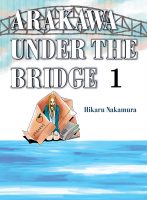
Arakawa Under the Bridge, Omnibus 1Arakawa Under the Bridge, Omnibus 1 (equivalent to Volumes 1-2) by Hikaru Nakamura. My introduction to Arakawa Under the Bridge was through its anime adaptation, an incredibly quirky and bizarre work which I found to be highly entertaining. Only later did I discover that the creator of the original manga was also the creator of Saint Young Men, a series that I hope might one day be translated as well. (Despite interest from fans and publishers alike, Saint Young Men has been unlicensable for the North American market, but I can’t help hoping that if Arakawa Under the Bridge is successful that might change.) Arakawa Under the Bridge is an absolutely ridiculous manga and I enjoyed it immensely. The chapters are short and somewhat episodic so the narrative flow can be disjointed, but Nakamura eventually develops a nice rhythm as more of the increasingly large, and strange, cast is introduced. The absurdity of the characters is really what makes Arakawa Under the Bridge work. I’m particularly fond of Sister, an ex-mercenary who crossdresses as a nun, but the manga is filled with astonishing personalities.

A Polar Bear in Love, Volume 1A Polar Bear in Love, Volume 1 by Koromo. Stories about star-crossed lovers aren’t especially rare, but none in my experience are quite like A Polar Bear in Love. Granted, at this point only one of the pair is actually in love. As impossible as it seems, Mr. Polar Bear as fallen for Li’l Seal. Understandably, considering the normal order of the food chain, Li’l Seal is a bit concerned by this. They’re both males, too, but the real issue is that Li’l Seal expects to be eaten at any moment. The power dynamics are a little tricky, but over the course of the first volume, Mr. Polar Bear demonstrates the earnestness of his love and at least tries not to be too pushy about his feelings. Li’l Seal slowly realizes he might not actually be on the menu, but that’s not going to solve everything about their relationship, either. A Polar Bear in Love can be both incredibly adorable and surprisingly dark, occasionally even at the same time. Even while being anthropomorphized, Li’l Seal and and Mr. Polar Bear also have to face more realistic concerns of survival. On the surface A Polar Bear in Love is delightfully silly manga, but it also has a thing or two to say about love and relationships.

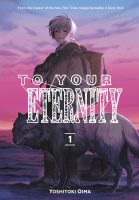
To Your Eternity, Volume 1To Your Eternity, Volume 1 by Yoshitoki Oima. I have been following Oima’s progress as an artist and storyteller with great interest. Oima’s first major work was the manga adaptation of Tow Ubukata’s novel Mardock Scramble, parts of which I actually greatly preferred over its source material. However, what really impressed me was her powerful original series, A Silent Voice. When Kodansha Comics announced it would be releasing To Your Eternity, Oima’s current ongoing series, I immediately took note and looked forward to reading it with great anticipation. The first chapter of To Your Eternity is one of the most beautifully devastating narratives that I’ve read in a while and it seems as though it may only be a prelude for what is to come. (It also includes a fairly significant plot twist which makes the series a little difficult to discuss without giving away major spoilers.) Oima has created a complex fantasy world complete with it’s own legends and lore exploring the meaning of life and loyalty to family and community. To Your Eternity is absolutely heartbreaking, unsettling, and striking in both its story and artwork. I definitely plan on reading more.

Filed Under: FEATURES, My Week in Manga Tagged With: Arakawa Under the Bridge, Hikaru Nakamura, Koromo, manga, Polar Bear in Love, To Your Eternity, Yoshitoki Oima

Pick of the Week: Neverland

December 4, 2017 by Sean Gaffney, Katherine Dacey, Michelle Smith, Anna N and Ash Brown Leave a Comment

SEAN: There are a few intriguing volumes out this week, and I’d argue Wake Up, Sleeping Beauty is my clear runner-up, but there has been SO much good buzz about The Promised Neverland that I simply can’t resist making it my pick of the week. I want to see what the fuss is about.

KATE: This week, I’m all in for The Promised Neverland. After seeing so many people praising it, I decided to check it out for myself and boy howdy — it’s a nail-biter! If you need more persuading, I’ve offered a more thoughtful explanation of why you should be reading Neverland here.

MICHELLE: This wasn’t on my radar until Ash posted the link to Kate’s review, and now I’m going to be picking it like everyone else! Wake Up, Sleeping Beauty and Drifting Dragons are debuts I plan to check out, as well.

ASH: Perhaps unsurprisingly, I’m in agreement with everyone else here! While there are a few things that I’m interested in this week, my pick absolutely goes to The Promised Neverland.

ANNA: I’m not going to break this pattern! The Promised Neverland looks very interesting, that’s my pick too!

Filed Under: PICK OF THE WEEK

Re: ZERO -Starting Life in Another World – Ex, Vol. 1

December 4, 2017 by Sean Gaffney

By Tappei Nagatsuki and Shinichirou Otsuka. Released in Japan by Media Factory. Released in North America by Yen On. Translated by Kevin Steinbach.

We’ve already seen DanMachi get a side story novel series licensed, but much as Aiz is theoretically the star of the novels, Bell Cranel is always lurking just around the corner. This side series for Re: ZERO is a different kettle of fish, taking place before Subaru’s arrival in Lugnica, with each volume (there are only two to date) focusing on a different side character with no chance of Subaru appearing. Given that my main issue with Re: ZERO is Subaru himself, I welcome this development with open arms. Instead we get the backstory for Crusch and Ferris, showing how they grew up together, along with a third member of their group who had just as big an impact – Fourier, a Prince of the Kingdom who has a crush on Crusch that is clearly visible from space, but hasn’t actually done about it. Of course, Re: ZERO readers know what happened to the entire royal family from the main series. Uh oh.

That said, the first half of this novel is relaxing and fun. Fourier reminds me a lot of Tamaki from Ouran High School Host Club, both in appearance and personality, and he makes a perfect third in the friendship with the emotionally reserved Crusch and the snarky tease Ferris. Also like Tamaki from Ouran, we see that when he gets serious he can move mountains, which helps immensely as the book eventually does turn deadly serious. The narrative implies that he has a special power that comes out in a crisis; unfortunately, as the entire Royal Family ends the novel dead (this can’t really be a spoiler, right? We already know it from the main series), we will likely never know what that power is. The final scenes of the novel are still heartbreaking even if you do know it’s coming, with excellent writing and one of the most tear-jerking “out of context” color pages I’ve ever seen.

Of course, Crusch and Ferris are the characters we know from the main series, and they’re good too. Ferris gets an abusive childhood that makes sense in terms of the plot but is still wretched, and his father is really a nasty piece of work. There’s also a plot twist I won’t spoil, which if nothing else shows you how abusers can justify their abuse even when covering up its true intentions. Crusch is, unsurprisingly, badass throughout, but the ability to see her inner monologue at times is very helpful, and obviously we now know what’s really driving her in her campaign for the Kingdom. There’s also some good development here for Julius, the knight mostly known in the main series for getting into nasty fights with Subaru. Here we see him get a sense of what being a Royal Knight really means, as well as seeing how clever people can sometimes hide behind “acting the fool” in order to not attract attention.

Basically, this is a must-read for any Re: ZERO fan. The second volume will feature Wilhelm and his own tragic past, and I cannot wait.

Filed Under: re: zero, REVIEWS

Idol Dreams, Vol. 4

December 3, 2017 by Anna N

Idol Dreams Volume 4, by Arina Tanemura

I’m always up for any Arina Tanemura manga, but I do spend a great deal of time while I am reading Idol Dreams mentally preparing for disaster to strike, as the storyline of a hapless editor with no self confidence and few social skills reliving her teen years as an aspiring idol singer named Hikari with the help of magic pills just seems fraught with traumatic situations. This volume definitely went somewhat into the danger zone, as Chikage in her 15 year old persona decides to go out on at date with her fellow teen idol Ru. The volume opens with Chikage telling Tokita all about her teen romance plans, and he doesn’t point out the inherent problems of Chikage dating someone half her age very strongly, but he does ask the pointed question, “Are you going to tell him that you’re actually 31?” GOOD QUESTION TOKITA!

Chikage is nervous about her upcoming date and gets some tips from one of her coworkers. Quite frankly, as a reader, I was nervous about this date too as it seems like a horrible idea, but my anxiety was blunted somewhat when Ru decided to cross dress so his fans wouldn’t recognize him. Chikage and Ru go out, looking like a couple of girlfriends. Really, the only possible happy ending for this manga is for Chikage to not emotionally damage any of the teenagers she’s hanging out with, and gain enough confidence to actually become a functional adult. There are some slight signs of progress with her adult life in this volume, as she shows how adept she is at dealing with an editorial emergency at work.

As Chikage learns more about Ru, she realizes that she can’t continue to go out with him, but she chooses to break up with him in a particularly cruel way. Chikage’s lack of emotional intelligence is leaving plenty of distress in her wake, but I’m not sure if she realizes what she’s doing. I do miss Tanemura’s more teenage-centric manga, but I’m certainly curious about what will happen next in Idol Dreams.

Filed Under: Manga Reviews, REVIEWS Tagged With: idol dreams, shojo beat, shoujo, viz media

SP Baby, Vol. 1

December 3, 2017 by Sean Gaffney

By Maki Enjoji. Released in Japan as “SP x Baby” by Shogakukan, serialized in the magazine Petit Comic. Released in North America by Viz Media. Translated by JN Productions.

The cover for SP Baby (the ‘x’ has been removed from the North American title, for reasons that are unclear, particularly as the SP is not particularly obvious – I think it stands for Security Police) is meant to be viewed horizontally, I think. with the front and back together showing us the lead couple. It’s a good summary of the power dynamics of the couple itself, like many manga romance covers. Tamaki is the heroine, and she has her hand extended to stop some unseen person from coming closer, while the other is shoved up against the wall. Her face doesn’t make it clear if she’s guarding her charge from an attack or trying to stop anyone seeing him with his arm around her. Meanwhile, Kagetora is the hero, and is a ninja who… wait, he’s not a ninja? Nonsense, he’s named Kagetora. All manga characters named Kagetora are ninjas, it’s a rule. In any case, he’s standing there with one arm around Tamaki’s waist and the other posed artfully in the air, staring at the reader with a smirk that makes me worry he’s going to say something like “My bodyguard – I think I’ll keep her”. It is a great cover for showing exactly what you get in the manga itself.

Despite the occasional snark in the above paragraph, I found SP Baby enjoyable more than I expected. Tamaki is fairly hapless, but it’s in a likeable, realistic way. She’s looking for work but has an extreme case of bad luck, and it has a tendency to get others hurt. Her only close people seem to be her younger brother (who’s a non-entity) and her childhood friend Natsu, who is tall, good-looking, likes the heroine but seems to be unaware that she is into him. He’s also a blond in a josei series, never a good sign. One day while looking for work, she spots a man being chased and attempts to stop his attacker… who it turns out is actually the man’s bodyguard, trying to get him to do some unpleasant task. Turns out Kagetora is the nephew of the prime minister, so has a lot of people after him for various reasons. And whatever bad luck Tamaki may have, she can also kick. So Kagetora hires her to be another bodyguard for him. But is this really the first time they’ve met?

The author previously did Happy Marriage?!, and I get the sense that if you enjoyed that you’ll like this, and if you didn’t it’s probably not your thing. That said, I did enjoy Happy Marriage?!, and I liked this as well, forced kisses aside. For one, I liked the fact that the forced kiss was immediately called out. I also enjoyed the various bits of bodyguard training we saw – Tamaki can kick, but she needs to learn more if she’s going to be able to protect anyone. And the couple is cute. You hope they get together. In fact, they’d better get together soon, the second volume is the last. Josei fans should have fun with this.

Also, if Kagetora is revealed to be a ninja in Vol. 2 I will laugh and laugh.

Filed Under: REVIEWS, sp baby

Legend of the Galactic Heroes: Mobilization

December 2, 2017 by Sean Gaffney

By Yoshiki Tanaka. Released in Japan as “Ginga Eiyū Densetsu” by Tokuma Shoten. Released in North America by Haikasoru. Translated by Tyran Grillo.

These novels seem to have been alternating between political intrigue and space battles, and as you might guess that means the majority of this volume is the latter. And some fantastic space battles they are, showing off good strategies, the horrors of war (one of Those Two Guys is even killed off), and a battle of wits between Yang and Reinhard. As for who wins, well, as you can imagine, it’s not as clear cut as all that. There is a decisive winner of the war, though, and that leads to the scene that everyone has been waiting five books for, which is Reinhard and Yang meeting face to face. It’s not a very long scene at all, and the two respect each other but don’t really change their mind about much of anything. Still, it’s iconic, and I imagine must be one of the highlights of the anime series. Of course, there’s still five books to go in the main series, so the question is where does LoGH go from here?

Perhaps a romantic comedy? Unlikely, but it’s not an accident that each main character has a capable and beautiful young assistant. That said, Frederica’s feelings for Yang have been far more noticeable, whereas it’s harder to get a read on Hilda (as the two generals mirror each other, so do their aides). Given that, it’s unsurprising that Yang takes the plunge here, with perhaps one of the most awkward proposals ever recorded on paper. It’s still nice to see, and combined with the war being over you sort of hope that Yang gets his wish to settle down, retire, and become a historian as he’s always wanted. That is highly unlikely to happen, sadly. As for Hilda, she’s far more active in the plot, but any potential romance (which, given the differences between the Empire and the Alliance, I expect would be more a political than romantic arrangement) is scuppered by her actions here to ensure Reinhard’s safety, which are very clever, work 100%, and absolutely infuriate him. Reinhard has never grown up in many ways, and it’s never more clear than in the scenes at the close of the battle, where he can’t accept what’s actually happened.

As always with LOGH, there’s about twenty other things also happening. Much to my surprise, the bratty child Emperor has not yet been terminated with extreme prejudice, but he has been made completely irrelevant, which works just as well. Julian is back with Yang, though that also means he has to deal with Yang and Frederica getting together, which (as a teenager with a crush on Frederica himself) is vexing. And there is still politics and intrigue, mostly on the Alliance side – in fact, given this is the midpoint of the series, it seems appropriate that a decisive and crushing final victory… is completely averted, leaving everyone pretty unhappy.

As you may notice, I’ve been trying to be less spoilery than usual, because the joy of this volume really is trying to guess what’s going to happen. Of course, the amusing thing is that the main audience for these novels may be fans who have already seen the anime. That said, if you’re on the fence and you like dense, verbose space opera, you absolutely have to be reading this.

Filed Under: legend of the galactic heroes, REVIEWS

Knights-Errant, Vol. 1

December 1, 2017 by Ash Brown

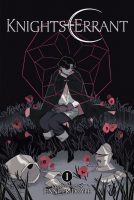
Knights-Errant, Volume 1Creator: Jennifer Doyle
Publisher: Chromatic Press
ISBN: 9781987988239
Released: November 2016
Original run: 2015-2016

Jennifer Doyle’s series Knights-Errant had its beginnings as a webcomic in 2009. It was Doyle’s first attempt at a long-form comic. Somewhat unsatisfied with how the story’s structure was developing, Doyle decided to reboot the series as Knights-Errant: Pavane. The subtitle was eventually dropped and Knights-Errant ultimately became a part of Chromatic Press’ online multimedia magazine Sparkler Monthly in 2015. As a beautifully illustrated, queer-positive historical fantasy with compelling characters and engaging story, Knights-Errant was a perfect addition to the lineup. In 2016, the first volume of Knights-Errant was released in both print and digital formats. The book is in full-color and collects the first three chapters of Knights-Errant serialized online between 2015 and 2016 in addition to content not previously released: a short comic, “Anton & Beppe,” exploring the backstory of those characters, and a short story, “Justice,” written by Doyle’s partner Ursula Wood and featuring the characters Kadeen and Oswald.

The city of Adigo in North Vetal is under siege by the army of its own king. The population is slowly starving, essentially being held hostage by an influential but traitorous margrave whose loyalty to his god comes before his faith in the monarchy. Not all of the margrave’s soldiers share or support their commander’s fervent beliefs, however. At least one guard, Beppe, is working to end the deadly impasse by conspiring with a criminal. Wilfrid, after some amount of convincing, has become vital to Beppe’s plans. Jailed for stabbing two men, Wilfrid is given a choice: certain death by hanging for the crime or almost certain death by attempting to guide the king’s forces into the city. But only the latter gives Wilfrid the chance of surviving long enough to seek retribution and exact revenge. Wilfrid’s fundamental goals may only temporarily align with those of the soldiers who are are hoping break the margrave’s self-destructive control over the city and its people, but it is a risk that they are all willing to take.

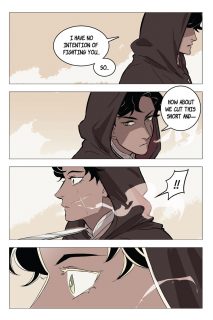
Doyle has on occasion described Knights-Errant as a “hate/love letter” to Kentaro Miura’s Berserk. While that influence and inspiration can be seen in the comic, Knights-Errant is more than just a response to a single series–it is a brilliant work based completely on its own merits and worth. One of the many things that I particularly love about Knights-Errant, and one of Doyle’s intentions behind its creation, is the inclusion of queer themes and representation. Notably in the first volume, Wilfrid’s gender is naturally complex and Beppe’s closest and most intimate relationship is with his fellow guardsman Anton. But these sorts of personal qualities make up only one aspect of the series’ believably imperfect and multi-faceted characters. The layered portrayal of both the antagonists and protagonists–many of whom are dealing with traumatic pasts, grim presents, and potentially tragic futures–is excellent. The evocative artwork, colored with subdued but striking tones, seems to effortlessly carry and support the emotional weight demanded by the story. However, in part due to the comic’s admittedly dark and sardonic sense of humor, Knights-Errant does manage to avoid being overly oppressive.

Knights-Errant is a nuanced tale of politics, religion, intrigue, and revenge. It’s amazing how high the stakes have already risen in the first volume with the main players and the beginnings of the underlying plot having only just been introduced. The fate of a city and the lives both within and outside of its walls are at stake, and the threat of psychological and physical violence that the series’ main characters must personally face is tremendous. The entire situation is extremely volatile and everyone knows it–whatever happens next will not only have a major impact on the people who are directly involved, it may very well change the course of history for the kingdom as a whole. The tension and pacing in the first volume of Knights-Errant is magnificent, the intertwining complexities of the characters’ individual stories unfolding within the context of a much larger narrative developing on an even grander scale. Everything about Knights-Errant is intense in the best way possible, from the sophisticated dynamics of the characters’ relationships, to the intricacies of the plot and fully-realized setting, to the dramatic and expressive artwork. The comic is incredibly easy to recommend.

Filed Under: REVIEWS Tagged With: Chromatic Press, comics, Jennifer Doyle, Knights-Errant

Anonymous Noise, Vol. 5

December 1, 2017 by Anna N

Anonymous Noise Volume 5 by Ryoko Fukuyama

I think Fukuyama should give other mangaka lessons on designing compelling covers. The cover for this volume of Anonymous Noise features a great image of Miou rocking out with her guitar. Speaking of Miou, in my mind, I think the best possible ending for this series would be for Nino and Miou to forswear all men, and run off to form an all girl supergroup. This being shoujo manga, I think the series is going to continue along with some conventional love triangles until everything is resolved.

I tend to prefer Anonymous Noise when it focuses more on the music than the romantic drama aspects of the story, so I was looking forward to this volume, where Nino and Yuzu’s band In No Hurry goes up against Momo and Miou’s Silent Black Kitty in a battle of the bands. At 5 volumes in, I’m still not finding the romance storylines in this series very compelling, as Nino is revered as a muse and pulled back and forth by her two childhood friends as though they are squabbling over a shiny toy. I did enjoy seeing Nino’s determination as she approaches practicing for her big concert, and there was a great scene of sassy comebacks as the rival bands unexpectedly find themselves on a radio show together, where they argue about who is the most angsty. I wish the series had a few more self-aware humorous bits like this.

Momo has an emotional confrontation with Nino right before she’s about to perform, which is an action I think is so overwhelmingly selfish, it causes me to not be very invested in the whole Nino/Momo romance that this series has built up over several volumes. Nino’s reaction to her emotional trauma is to take her fugue-like state while singing to the next level, and she responds with an incredible performance, even if she is emotionally out of control. The art is consistently super stylish, and I enjoy the dynamic performance scenes of Nino scream-singing. While I might not be very invested in the romance side of Anonymous Noise, it reliably brings the drama with every volume, and I do enjoy the series when the focus is centered more on the music that the characters all love.

Filed Under: Manga Reviews, REVIEWS Tagged With: Anonymous Noise, shojo beat, shoujo, viz media

  • « Go to Previous Page
  • Page 1
  • Page 2
  • Page 3
  • Page 4
  • Page 5
  • Go to Next Page »
 | Log in
Copyright © 2010 Manga Bookshelf | Powered by WordPress & the Genesis Framework