• Skip to primary navigation
  • Skip to main content
  • Skip to primary sidebar
  • Home
  • About Us
    • Privacy Policy
    • Comment Policy
    • Disclosures & Disclaimers
  • Resources
    • Links, Essays & Articles
    • Fandomology!
    • CLAMP Directory
    • BlogRoll
  • Features & Columns
    • 3 Things Thursday
    • Adventures in the Key of Shoujo
    • Bit & Blips (game reviews)
    • BL BOOKRACK
    • Bookshelf Briefs
    • Bringing the Drama
    • Comic Conversion
    • Fanservice Friday
    • Going Digital
    • It Came From the Sinosphere
    • License This!
    • Magazine no Mori
    • My Week in Manga
    • OFF THE SHELF
    • Not By Manga Alone
    • PICK OF THE WEEK
    • Subtitles & Sensibility
    • Weekly Shonen Jump Recaps
  • Manga Moveable Feast
    • MMF Full Archive
    • Yun Kouga
    • CLAMP
    • Shojo Beat
    • Osamu Tezuka
    • Sailor Moon
    • Fruits Basket
    • Takehiko Inoue
    • Wild Adapter
    • One Piece
    • After School Nightmare
    • Karakuri Odette
    • Paradise Kiss
    • The Color Trilogy
    • To Terra…
    • Sexy Voice & Robo
  • Browse by Author
    • Sean Gaffney
    • Anna Neatrour
    • Michelle Smith
    • Katherine Dacey
    • MJ
    • Brigid Alverson
    • Travis Anderson
    • Phillip Anthony
    • Derek Bown
    • Jaci Dahlvang
    • Angela Eastman
    • Erica Friedman
    • Sara K.
    • Megan Purdy
    • Emily Snodgrass
    • Nancy Thistlethwaite
    • Eva Volin
    • David Welsh
  • MB Blogs
    • A Case Suitable For Treatment
    • Experiments in Manga
    • MangaBlog
    • The Manga Critic
    • Manga Report
    • Soliloquy in Blue
    • Manga Curmudgeon (archive)

Manga Bookshelf

Discussion, Resources, Roundtables, & Reviews

Archives for December 2017

Bookshelf Overload: November 2017

December 16, 2017 by Ash Brown

Since in a few weeks I will be retiring Experiments in Manga, this will be the final Bookshelf Overload posted here. However, I am thinking of ways that I might be able to feature some of the interesting media that I find by leveraging my Twitter account more effectively. As for the things that found their way into my home in November, I once again picked up more anime than I generally do. (Granted, two of those, Skip Beat! and Mind Game were the results of Kickstarters that I supported way back when.) November saw the release of several debuts that I was particularly excited about, including  ACCA: 13-Territory Inspection Department, Volume 1 by Natsume Ono, Arakawa Under the Bridge, Omnibus 1 by Hikaru Nakamura, To Your Eternity, Volume 1 by Yoshitoki Oima (okay, technically it was released on the last day of October), as well as the Parasyte tribute anthology Neo-Parasyte M. I also recently discovered that a small publisher based out of Yokohama, Black Hook Press, is releasing gekiga manga in translation, such as Takashi Fukutani’s Dokudami Tenement. One more acquisition from November that I’d like to highlight is Denise Schroeder’s The Good Prince, Volume 1 which collects the first three chapters of that  webcomic. My introduction to Schroeder’s work was through the utterly charming comic Before You Go, so I’m happy to get my hands on more of her work in print.

Manga!
ACCA: 13-Territory Inspection Department, Volume 1 by Natsume Ono
Arakawa Under the Bridge, Omnibus 1 by Hikaru Nakamura
Complex Age, Volumes 3-4 by Yui Sakuma
Delicious in Dungeon, Volume 3 by Ryoko Kui
Descending Stories: Showa Genroku Rakugo Shinju, Volume 3 by Haruko Kumota
Devilman Grimoire, Volume 1 written by Go Nagai, illustrated by Rui Takato
Dokudami Tenement, Volume 1 by Takashi Fukutani
Erased, Omnibus 3 by Kei Sanbe
Food Wars!: Shokugeki no Soma, Volume 19 written by Yuto Tsukuda, illustrated by Shun Saeki
The Girl from the Other Side: Siúil, a Rún, Volume 3 by Nagabe
In This Corner of the World by Fumiyo Kouno
Kakegurui: Compulsive Gambler, Volume 1 written by Homura Kawamoto, illustrated by Tōru Naomura
Land of the Lustrous, Volumes 2-3 by Haruko Ichikawa
Murciélago, Volume 4 by Yoshimurakana
Neo-Parasyte M by Various
Ōoku: The Inner Chambers, Volume 13 by Fumi Yoshinaga
A Polar Bear in Love, Volume 1 by Koromo
Requiem of the Rose King, Volume 7 by Aya Kanno
Shirley, Volume 1 by Kaoru Mori
Skip Beat!, Omnibus 2-12 by Yoshiki Nakamura
Sweetness and Lightning, Volume 8 by Gido Amagakure
To Your Eternity, Volume 1 by Yoshitoki Oima

Comics!
After Laughter by Jonathan Djob Nkondo
As the Crow Flies by Melanie Gillman
Barbara by Nicole Miles
A Body Beneath by Michael DeForge
Elysium by Caroline Dougherty and Femi Sobowale
Everyone’s an Aliebn When Ur a Aliebn Too by Jomny Sun
The Good Prince, Volume 1 by Denise Schroeder
Goro, Issue 2 by Sarah Horrocks
A Long Distance by Jean Wei
Love Your Rogue by Billie Snippet
Men + Monsters, Volume 1 by Aero Zero
Musings of a Muslim Hipster by Areeba Siddique
The Pit of Tar by Jeremy Sorese
Sukibito Diary by Chu Nap
Super Tokyoland by Benjamin Reiss
What Is Left by Rosemary Valero-O’Connell

Artbooks!
Sari Sari by Corinne Caro and Issel De Leon

Novels!
Legend of the Galactic Heroes, Volume 5: Mobilization by Yoshiki Tanaka

Anthologies!
The Ise Stories: Ise Monogatari translated by Joshua S. Mostow and Royall Tyler
Panic and Deaf by Xiaosheng Liang

Anime!
Genocidal Organ directed by Shukō Murase
In This Corner of the World directed by Sunao Katabuchi
Kaiba directed by Masaaki Yuasa
Mind Game directed by Masaaki Yuasa
Skip Beat! directed by Kiyoko Sayama
Tokyo Godfathers directed by Satoshi Kon
Your Name directed by Makoto Shinkai

Film!
Funeral Parade of Roses directed by Toshio Matsumoto

Filed Under: Bookshelf Overload, UNSHELVED

Walking My Second Path in Life, Vol. 1

December 16, 2017 by Sean Gaffney

By Otaku de Neet and Kurodeko. Released in Japan as “Watashi wa Futatsume no Jinsei wo Aruku!” by Earth Star Entertainment. Released in North America digitally by J-Novel Club. Translated by Shirley Yeung.

It can be somewhat difficult to recommend light novel series at times, particularly the ones that are licensed over here, which tend to be marketed to the anime/manga fan, and generally speaking the male anime/manga fan. Many is the time I’ve read a series with many points to recommend it, only to have the storyline have a hero who gains about eight other women in love with him, or where the story is fine but the illustrations do nothing but show off the half-naked female form. Even The Faraway Paladin, which is about the closest comparison I can make to the title I’m reviewing, has elements of the classic “reincarnated in another world” story to it, though that lessens as the series goes along. But Walking My Second Path in Life is the first light novel I’ve read, I believe, that I can honestly say: this does not feel like a light novel. It feels like a romance book (with little to no romance) written for the average female North American reader.

Our heroine is the twin sister of the new Queen of a country. In fact, Fie is also, technically, married to the King as well – the twin sisters were a package deal. The problem is that Fie is the Unfavorite, and also has a reputation for being horrible. As such, the King gives her a pavilion of the palace to live in, with servants who one by one quit till she’s left alone to, presumably, starve to death. (The King’s callous motivations are rather ambiguous throughout.) Choosing not to do this, she instead comes across a flyer trying to get squires for the company of knights. She thus decides to cut off her hair, dress as a boy named Heath, and use the rudimentary sword training she got as a princess when someone bothered to give her the time of day to become a knight. The rest of the book is her life as a squire after achieving this, which (despite her best efforts) keeps occasionally intersecting with her old life – not least of which being the identity of her company commander.

The unfortunately named Otaku de Neet (it’s apparently a tortuous kanji pen name, but it leaves the fan who knows those two terms feeling very wary) has done an excellent job with Fie, who is your typical bright, enthusiastic young lad sort… except she (the book uses female pronouns throughout, and also calls her “Fie” in narration- Heath is a secret identity, after all) has a crafty, snarky, mean side to her as well. The mean side to her actually makes up some of the best scenes in the book, such as when she (in a flashback as Princess Fie) beats up rapist pedophiles with impunity, or when she gets around the fact that one of the squires has found out her secret by blackmailing him and treating him as a dog (trust me, it’s far more lighthearted and hilarious than it sounds). She’s a nice person at heart, though, be it Fie or Heath, and the rest of the main cast are also people who, while some are more fleshed out than other, I genuinely enjoy reading about. (I am morbidly curious about the other twin, who Fie never interacts with in this book.)

I won’t spoil some of the other great scenes – suffice to say the entire chapter with Cain is a treasure from beginning to end. I will note there is an attempted rape of an underage servant here, but Fie nips that in the bud before anything can happen. The illustrations are cute and fit the materials quite well. Even the squad member who dresses up as a woman in order to spy on the enemy is treated with (relative) respect and not made into the “comedy gay man”. Plus, since it’s only two volumes so far in Japan, you’re not laying out a lot of cash. I can’t even call it a fantasy – there doesn’t appear to be any magic in this world, it’s just a straight up medieval kingdom sort of world. If you like books with (pardon the expression) strong female leads, I highly recommend this series, possibly the biggest pleasant surprise I’ve seen from J-Novel Club to date.

Filed Under: REVIEWS, walking my second path in life

The Melancholy of Suzumiya Haruhi-chan, Vol. 11

December 15, 2017 by Sean Gaffney

By Nagaru Tanigawa and Puyo. Released in Japan as “Suzumiya Haruhi-chan no Yuutsu” by Kadokawa Shoten, serialized in the magazine Shonen Ace. Released in North America by Yen Press. Translated by Paul Starr.

And now, the end is near. And so we face the final curtain. Since the Haruhi Suzumiya novels began in Japan in 2003, we’ve seen two manga, two anime series, a movie, two manga spinoffs, and two anime of said manga spinoffs. In 2006, Haruhi was the hottest franchise around. But in 2017, quietly, the last Haruhi spinoff has come to an end, and as far as I can tell there’s nothing out there to replace it. The novels are effectively finished, as the author apparently has massive writer’s block. The main manga ended, and Nagato Yuki-chan’s manga ended. And now we have the final volume of Haruhi-chan, though the decision to end it here does appear to be fairly last-minute – if it weren’t for the word ‘Final’ on the cover and the author moving on to his next project, you’d never know it was over. And yet, it is over. There is no new Haruhi content coming from Japan.

As an ending, of course, it doesn’t work, because as I said above it has that “suddenly cancelled” feel to it. But as a volume, it’s pretty much giving Haruhi-chan readers exactly what they got the previous ten volumes. We get comedic takes on the main series, with Haruhi’s Giants set to destroy the world being created for the pettiest of reasons. There are comedic takes on Haruhi-chan’s plot (such as it is), with Mikuru desperate to have Haruhi hypnotized into thinking she’s a cat again so that she can be cuddled. There is the occasional story with Achakura, though you get the sense that once Ryoko became the heart and soul of the Nagato Yuki-chan franchise Puyo lost interest in her mini-me form. Yasumi is also still around, showing if nothing else that we haven’t moved past the final volume of the novels. (Sasaki and company are absent – the fact that any future anime is allergic to Sasaki almost became a running gag in the Nagato Yuki-chan anime.)

Puyo’s stuff seems to work best when he leans on the fourth wall to a degree. The opening chapter, after an amusing dream sequence, is a very matter-of-fact Haruhi getting up and getting dressed for school, with the punchline being that once she puts on the headband she turns into her goofy Haruhi-chan self. At one point, Haruhi somehow arranges it so that she has a chyron below her saying she has “a shocking statement”, causing everyone to wonder what the heck it is. An entire chapter is drawn where only Haruhi is the focus – something she immediately notices and tries to fix, as she’s in a swimsuit and notices that the gaze is fairly male. (No surprise, most of the readers of this series were male as well). The second to last chapter is my favorite – Haruhi is late, so Mikuru and Yuki are waiting alone, and Mikuru is trying desperately to have a non-awkward conversation with Yuki. We even get flashbacks to the novels, where adult Mikuru said Yuki was difficult for her to deal with. Her flailing effort to be interested in Yuki’s game is a failure on her end, but the punchline here is really sweet and heartwarming.

Gag comics are not for everyone, and honestly at 11 volumes this one probably went on longer than it should have. But I usually found a great deal to enjoy as I read it – Puyo knows the series inside and out, and allows the characters to be exaggerated while never feeling out of character, even if they’re the butt of the joke. If you enjoyed the Haruhi franchise and want to delve into it one more time, the book makes a pretty decent wake. Oh yes, and Kyon is a deer, because why not go out with one last impenetrable Japanese pun?

Filed Under: melancholy of haruhi suzumiya, REVIEWS

Manga the Week of 12/20/17

December 14, 2017 by Sean Gaffney, Michelle Smith, MJ, Katherine Dacey, Ash Brown and Anna N 2 Comments

SEAN: Are you ready? 3-2-1 let’s jam.

MICHELLE: *cracks knuckles in a preparatory fashion*

ASH: Get everybody and the stuff together, because there’s a lot of it!

KATE: There is SO MUCH MANGA that even I had to chime in.

SEAN: We start with Bookwalker, who has the second volume of their light novel The Combat Baker and the Automaton Waitress. I felt it was a good series for them to pick up (certainly better than their other LN series), and will be getting this volume.

J-Novel Club has the 4th volume of Arifureta: From Commonplace to World’s Strongest, which remains the top choice for those who like overpowered isekai and take it Very Seriously Indeed.

Kodansha has many, many things, both digital and print, which I will tackle alphabetically, starting with a 4th All Out!!.

MICHELLE: Woot!

SEAN: Attack on Titan has a big change coming with the 23rd volume, one that (like everything Attack on Titan has ever done) has gotten a mixed reaction.

Cardcaptor Sakura remains one of CLAMP’s most beloved franchise, despite age, appalling Nelvana dubs, and Tsubasa World Chronicle. Now we finally get a sequel with Clear Card, which apparently picks up where the old series left off. I will give it a shot, though I warn you I’m mostly reading for Tomoyo.

MICHELLE: This has been available digitally for a while, and I read it in that format. It’s a cute start, and I loved seeing Kero-chan again.

MJ: I’m obviously on board for this.

ANNA: I enjoy early CLAMP, and am leery of recent CLAMP. That being said, due to my love of Cardcaptor Sakura, I will check this out.

ASH: Same! I really do love Cardcaptor Sakura, though.

SEAN: DEATHTOPIA has its 7th and penultimate volume coming out next week.

And there’s also a 4th volume of Elegant Yokai Apartment Life.

If you haven’t yet picked up Ghost in the Shell’s hardcover deluxe editions, why not get them in a handy box set?

We’ve caught up with Japan for Happiness, so it’s nice to see a 6th volume drop.

ASH: I need to catch up with this series, myself!

KATE: The last volume of Happiness had a big time jump and shift in emphasis — something that worked surprisingly well, and and promoted one of the most interesting (and resourceful) supporting characters to a leading role.

SEAN: Inuyashiki comes to an end with its 10th and final volume. It’s always been a bit too weird for me, but then I felt the same way about Gantz.

Kasane has an 8th volume of suspense and horror.

The digital debut next week is The Prince’s Black Poison, a Betsufure romance that honestly sounds like exactly the sort of title I avoid, but what the hey. Recommended for those who like handsome manipulative men. It’s by the author of Gakuen Prince, which was also very much filled with those.

MICHELLE: Oh dear.

ANNA: Feeling sort of meh on this.

SEAN: And Real Girl has a 9th volume of whatever it is Real Girl does, besides remind me how many of these Kodansha digital titles I have yet to sample.

Say “I Love You” has come to its 18th and final volume. Despite the occasional overdose of melodrama, I greatly enjoyed this series, and am happy to see the conclusion after a long wait (we had, again, caught up with Japan).

MICHELLE: I’ve been awaiting this release for a long time!

SEAN: If you haven’t picked up A Silent Voice’s 7 volumes, Kodansha has a box set for you! (Both this and the Ghost in the Shell box are clearly meant for Christmas purchases.)

Speaking of the author of A Silent Voice, we’re getting a 2nd To Your Eternity next week as well.

ASH: Definitely picking this one up. The first volume was very good and surprising in ways that I didn’t expect.

KATE: What Ash said; To Your Eternity is definitely on my short list of Best Sci-Fi manga of 2017.

SEAN: A 6th Tsuredure Children has more 4-koma romance.

And Until Your Bones Rot has a 3rd volume of what is, let’s face it, NOT 4-koma romance.

Seven Seas is next. Arpeggio of Blue Steel is up to its 12th volume, and I’m still really interested in it, which is surprising given it’s about a bunch of cute girls who are really boats.

There’s also a 3rd “not Alice in the Country of Hearts, but the next best thing” series Captive Hearts of Oz.

Unlucky it may be, but the fact that Magical Girl Apocalypse has gotten to Vol. 13 means it’s popular as well.

Seven Seas is starting to pick up light novels that aren’t J-Novel Club print editions, and we begin with Monster Girl Doctor, whose title speaks for itself, though I’m not sure how this falls on the scale between ‘fetishey’ and ‘spooky’ monster girls.

And if that’s too millennial for you, how about a series from the 1980s? We get the first in the Record of Lodoss Wars novels, The Grey Witch, in a fancy hardcover edition.

MJ: It’s hard for me to dismiss something from the 80s…

ASH: It really is fancy! I’m looking forward to giving the Lodoss novels a try.

SEAN: Chi’s Sweet Coloring Book is a spinoff from Vertical featuring lots and lots of pictures of Chi to color.

Speaking of cats, Nekomonogatari (Black): Cat Tale is the first of a two-part set in the Monogatari series that finally resolves most of Tsubasa Hanekawa’s ongoing issues.

And there’s also a 4th Flying Witch.

Viz gives us a 3rd Golden Kamuy, which I suspect will have a bit less cooking and a bit more life-threatening violence this time around, but who knows?

ASH: I plan on finding out!

KATE: I seem to be stalking you through this week’s column, Ash! I’m butting in to say GOLDEN KAMUY IS AWESOME. I think Asirpa deserves her own damn series. Heck, it could be a cooking manga and I’d read it.

SEAN: If you want to get someone something terrifying for Christmas, you absolutely can’t go wrong with Shiver, a collection of stories selected by the author, Junji Ito.

ASH: I’m always happy to see more Ito being released! This collection should be great.

KATE: Nothing says “Deck the halls” than a little Junji Ito, I always say.

SEAN: And if you want to give some yuri manga, there’s a 2nd Sweet Blue Flowers omnibus.

MICHELLE: Yay!

ANNA: Behind on this already but I’m gonna read it!

ASH: You absolutely should! I’m so glad this series is finally getting the treatment it deserves in English.

SEAN: Lastly (for Viz only, trust me – we’re not even halfway), we have the 2nd Tokyo Ghoul: re.

And now on to Yen Press, pausing only to scream until our throats are raw and we are coughing up blood. (pause) There we go. Onward.

First off, we have the digital-only titles. Aphorism 13 is the second to last volume, and is for fans of survival manga.

Corpse Princess is up to its 14th volume, but it still has a long way to go. It should appeal to fans of fanservice and zombies.

And Saki 13 means we’re close to catching up, but that’s an ongoing series, so no worries there either. Recommended to those who like mahjong and breasts, not in that order.

On the Yen On side, we finish the digital catch-up for Accel World (9-11) and Irregular at Magic High School (5).

There’s also a new digital release of an older, pre-Yen On title. Kieli was a 2009 series of novels about a girl who can see ghosts, and it had an associated manga as well. Yen now has the digital rights to the novels, so we get the first one next week.

There are also a GIANT number of ongoing and new light novels in print. We get a 12th Accel World, which is in the midst of Haruyuki dealing with another mysterious threat.

The Asterisk War’s 5th volume wraps up its tournament arc, I believe… or should I say, it’s first tournament arc.

Baccano! starts a new 2-volume arc taking place in 1933 and subtitled The Slash. This first volume will show us what happened to that Mexican stereotype of an assassin from the Drug & the Dominoes book.

The Devil Is a Part-Timer! 9 has far less part-time work than expected, as the devil has returned to his homeland to rescue Emi and Alas Ramus.

Goblin Slayer 4 will feature what sounds like a collection of short stories judging from the description. And probably goblins being slayed.

The Irregular at Magic High School’s
6th volume starts a new arc called the Yokohama Disturbance Arc, which I think was the final arc adapted for the anime.

Is It Wrong to Try to Pick Up Girls in a Dungeon? asks the same question again, only this time it’s Monsters. Bell says no, others think differently. Vol. 10 drops next week.

KonoSuba’s 4th volume has the inevitable Hot Springs arc.

Rokka: Braves of the Six Flowers has a 3rd volume, and I must admit if the storyline is “who’s the traitor” I may bail.

The first light novel debut is The Saga of Tanya the Evil, which is another isekai. A Japanese HR manager with a cold, ruthless reputation is killed, and then reincarnated by God. Not with the best intentions, though – God dislikes his logical attitude and so puts him in a world where magic exists and there is constant warfare. Oh, and he’s in the body of a little girl.

Sword Art Online has reached a dozen volumes, and we’re still in the midst of the epic Alicization arc. We finally see Alice again, but is she brainwashed? Can Kirito and Eugeo save her?

The other light novel debut this month already has its manga coming out from Kodansha, and is the 2nd of the three ‘ridiculous’ light novels Yen licensed recently. That Time I Got Reincarnated As a Slime arrives next week.

We’re nearly at the end! Only 28 more titles to go! And they’re all Yen Press. We start with a 6th volume of spinoff Akame Ga KILL! ZERO.

Angels of Death is a survival manga with psychological overtimes, which comes from the oddball Comic Gene. I’m not sure what to think of it.

An 8th Aoharu x Machinegun is shipping next week.

And a 5th Bungo Stray Dogs will give us literary references galore.

Light novel adaptations galore! Starting with a 4th manga of Death March to the Parallel World Rhapsody.

Dragons Rioting has a 9th volume, which is also its final volume.

If you like the idea of Goblin Slaying but hate prose, I have good news, the first volume of Goblin Slayer is for you.

I know little about Graineliers except it’s from GFantasy, it has two male leads, and it’s not BL but feels like it should be.

MJ: Did you say GFantasy? Count me in!

ASH: It’s also by Rihito Takarai (of Ten Count fame) so I’m very curious to see how this series develops. If nothing else, the artwork should be great.

SEAN: Manga based on an unlicensed light novel, part one: the 10th volume of High School DxD.

Manga based on an unlicensed light novel, part two: the 8th and final volume of How to Raise a Boring Girlfriend.

After a year’s hiatus, the Kagerou Daze manga picks up again with Vol. 7, and should be arriving more regularly from now on. For light novel fans, the story here is different from the LN (and indeed the Mekakucity Actors anime.)

A 5th Kiniro Mosaic gives you vague yuri galore.

If you liked the idea of Magical Girls dying tragically but hate prose… well, you know. Magical Girl Raising Project, now in manga form.

The 11th Melancholy of Suzumiya Haruhi-chan is the last, which I’m pretty sure means there are no current ongoing projects for this franchise, be it anime, manga, spinoff manga, spinoff anime, or the original novels. We should take off our hats and mourn the end of an era.

My Youth Romantic Comedy Is Wrong as I Expected gets a 7th manga volume, though I’m not sure which novel volume it’s adapting.

No Matter How Much I… sigh. WataMote gives us an 11th volume. Sorry, I’m exhausted.

Of the Red, the Light and the Ayakashi ends with its 9th volume, though I believe there is a Volume 10 with side/after stories.

ASH: Another series that I’ve been enjoying but need to catch up on!

MICHELLE: Aha! I had been thinking it was complete in 9, and then recently noticed there’s actually a tenth. Nice to have an explanation for that!

SEAN: One Week Friends is a Gangan Joker title about a cute friendship and the amnesia that threatens to tear it apart.

Re: Zero finishes its adaptation of the 2nd arc with the 4th A Week at the Mansion volume.

Rose Guns Days has a 2nd volume of its 3rd arc.

School-Live! does not come to an end with this 9th volume per se, but I think the series is on hiatus right now, so this may be the last for some time.

And a 3rd Smokin’ Parade arrives as well.

I enjoyed the first novel of So I’m a Spider, So What?, though am curious as to how a book that’s half internal dialogue will translate to manga. We’ll see with this first manga volume.

Strike the Blood’s manga has a Vol. 9, which, like the light novels, has Yukina and only Yukina on each cover.

Sword Art Online has the manga adaptation of the Calibur arc complete in one volume. It’s a great arc if you like the supporting cast, who all play a role – for the last time to date, in fact.

If you feel that yokai manga have gotten too serious lately, you should enjoy A Terrified Teacher at Ghoul School, a GFantasy title that is terminally ridiculous.

ASH: Yokai comedy, you say? Count me in!

Umineko When They Cry begins its 7th arc, Requiem of the Golden Witch. Battler is nowhere to be found. Nor is Beatrice. Instead meet Kinzo’s heir Lion Ushiromiya. Oh, did I mention this first omnibus is 826 pages?

Lastly (yes, I promise, we are at the end), there’s a 7th omnibus of Yowamushi Pedal, which should be SUPER EXCITING.

MICHELLE: Yay!

ASH: I know I’m excited!

SEAN: (falls over) So are you getting everything on this list, or just most of it?

Filed Under: FEATURES, manga the week of

Mixed Bathing in Another Dimension: The Turbulent Underwater Baths

December 14, 2017 by Sean Gaffney

By Nagaharu Hibihana and Masakage Hagiya. Released in Japan as “Isekai Konyoku Monogatari” by Overlap. Released in North America digitally by J-Novel Club. Translated by Sophie Guo.

I have to hand it to this volume of Mixed Bathing, it may have the most synonyms for “breasts” that I’ve seen in any light novel to date. I’m not sure whether to put this down to the original Japanese or the translation, but in any case, kudos to whoever made it so that I can read the word ‘bazongas’ in the midst of this. That said, the truly interesting thing about this volume is despite the fact that it ups the fanservice considerably, to the point where the middle third of the book is almost entirely the cast bathing naked and trying to show themselves off to Touya, it STILL all feels rather innocent. Touya is a teenage boy who likes girl’s bodies, but he’s still a really nice kid despite that, and Haruno, who has reunited with him, is exactly the same. In fact, that may be the most frustrating thing for fans of harem titles – despite reuniting for Haruno’s group, and thus adding a few more females, things are still super, super chaste. Not even a welcome back kiss.

The plot, such as it is, is that Touya’s group take their submarine to the Water Kingdom to a) find out what’s happened to Haruno, and b) get another blessing, as Haruno is now filling in for the Wind Goddess, whose corporeal body was destroyed in the current battle that’s gearing up. After meeting up and bathing for about 70-80 pages, we then get a bunch of things happening at once, as they’re attacked by the demon forces and have to fight back. They also learn more about what really happened 500 years ago, and I must admit I was very impressed with this. It’s always interesting seeing how history can be rewritten or changed over the course of a few centuries, and seeing that the kingdom of Ares destroying all the other countries may have been merely a metaphor for something else was great.

The downside is, of course, that the pace of this series is crawling. To some extent that’s its charm, but when you make even In Another World with My Smartphone look fast-paced and frenetic, you may be doing your job a little too well. And, of course, there’s the complete lack of conflict among the good guys. There’s a brief scene where Haruno and Clena meet and “have a chat”… and we don’t get to see it at all! The POV stays with Touya as he proceeds to show all the girls the seductive value of washing hair. Intensely frustrating. Whatever the chat was, it seems to have been peacefully settled, though, and once again you realize this is going to be a relatively conflict-free harem once the whole war against the demons gets taken care of. It’s refreshing, in a kind of boring sort of way.

All that said, I’m still enjoying this series, and I do like that, unlike a lot of other isekais that I know, the cast is made up of a bunch of sweetie-pies. And if nothing else, the reader will improve their vocabulary when it comes to the female bosom. We’re caught up with Japan, so it may be a bit before the 6th book, though.

Filed Under: mixed bathing in another dimension, REVIEWS

To Love Ru, Vols. 1-2

December 13, 2017 by Sean Gaffney

By Saki Hasemi and Kentaro Yabuki. Released in Japan by Shueisha, serialized in the magazine Weekly Shonen Jump. Released in North America by Ghost Ship. Translated by Alex Gaspard, Adapted by J.P. Sullivan.

As I began to read To Love Ru, a series about a hapless boy with a crush on his polite young friend whose life is turned upside down by the arrival of an alien girl with weird gadgets and her various enraged fiancees, I could not help but think “if they wanted Urusei Yatsura, why not just license Urusei Yatsura?”. That said, I know the reasons, and I also have no doubt that To-Love-Ru will sell better than UY ever did or would do. Honestly, To Love Ru being licensed at all is almost as surprising as a UY rescue would be – it was widely considered one of the Jump series that was never going to get over here because Viz simply didn’t want it. But Shueisha has loosened up their licensing restrictions a bit, and now we are allowed to get one of Jump’s iconic raunchy comedies via Seven Seas’ new imprint for racier titles, Ghost Ship.

I admit at first I was not really seeing what made this any different from Seven Seas’ other racy titles, like Monster Musume. As I said above, our hero is Rito, a classic “sad male harem protagonist” – Ataru Moroboshi would kick his ass – who is trying and failing to confess to fellow student Haruna that he likes her. One day, he is in his bath when out pops Lala, an alien running away from her home and her problems. Sadly, her problems come with her, and they then become Rito’s problems, mostly as she’s now declaring that he’s her fiancee, and transferring into his school. In among this, there are her various cutely named inventions, which don’t quite do what they should, and also tend to explode. Will he be able to confess to Haruna, who seems to like him? Will he fall for Lala? Will more girls show up in the next volume to add to the harem list? The last is most likely.

To Love Ru is not going to be winning any prizes for its main cast, as they are all rather nice and sweet and somewhat boring. This includes Lala, much to my surprise, who you’d think would at least try to be the traditional ‘gets jealous at the drop of a hat’ that the role entails. But no, she’s airheaded but really nice, and seems perfectly happy to help Rito and Haruna, despite, of course, also being engaged to him. Haruna is also pretty generic, and suffers from comparison to Nisekoi’s Onodera (yes, I know Nisekoi came out years after this in Japan). As for the content, the nipples aren’t eliminated, which makes a change from most shonen manga, but the one thing that struck me was in the hot springs chapter, Haruna is groped by a female classmate – not uncommon in this sort of title – but a little lower than the normal breast groping, shall we say. That did surprise me, and from what I understand is a harbinger of things to come.

To Love Ru’s elements are all there, and I can see why it ran so long, despite various real life difficulties (which I won’t get into now). But I dunno, even with the added sexy content, it still feels very vanilla and a bit dull. Of course, technically this is a ‘classic’ title given it’s over 10 years old by now, so it’s not meant to be cutting edge. Still, I prefer my alien princesses angry and throwing electricity.

Filed Under: REVIEWS, to love ru

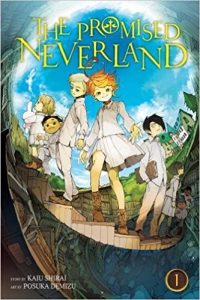
The Promised Neverland, Vol 1

December 12, 2017 by Anna N

The Promised Neverland by Kaiu Shirai and Posuka Demizu

This series is one of more intriguing debuts that I’ve read from the Shonen Jump line in a long time. It is also a very difficult series to write about due to a pretty dramatic plot twist that happens around 40 pages into the manga, but I’m going to be deliberately vague and avoid spoilers.
The series opens with a semi-idyllic portrayal of life in an orphanage in what looks like a non-specific European country. Emma, Norman, and Ray are some of the oldest orphans, and each is gifted with some special talents. Emma is a tremendous athlete, Norman is incredibly smart, and Ray is a strategic thinker who is constantly honing his powers of observation. The orphans are cared for by a woman named Mom, who they all love as the only adult in their lives. As the first few pages unfold, small details in the art start to unsettle the reader. Why do all the orphans have numeric sequences tattooed on their necks? Why do they all have to dress in white? Why are they subjected to what looks like insanely detailed IQ tests in the morning, and then given the freedom to roam around the woods that surround the orphanage in the afternoon?

The orphans make a discovery that causes them to question the environment that they’ve been raised in, and their unique personalities and perspectives cause them to band together to start to assess their situation and develop a plan of action. While Emma is smart, one of the greatest things she brings to the team is moral clarity and a sense of urgency. The two boys are more cerebral, with Norman being more book smart, and Ray serving as a mastermind who is initially focused most on what is practical to accomplish. This volume focuses mainly on the orphans testing their assumptions and working together to figure out how The Promised Neverland doesn’t really live up to the fairy-tale aspects of the title. The art in the series features faces that are a but smushy, but very expressive of emotion. Emma’s hairstyle looks like a reference to Duck in Princess Tutu, so I found that amusing. The Promised Neverland is incredibly dark, but seeing how resourceful the orphans are brings an element of hope into play for the reader. The first volume of the series easily draws the reader into the sinister world the orphans are resisting. Extremely entertaining, and I’m already impatient for the next volume.

Filed Under: Manga Reviews, REVIEWS Tagged With: Shonen, Shonen Jump, The Promised Neverland, viz media

Bookshelf Briefs 12/12/17

December 12, 2017 by Michelle Smith and Sean Gaffney Leave a Comment

Captain Harlock: Dimensional Voyage, Vol. 2 | By Leiji Matsumoto and Kouiti Shimaboshi | Seven Seas – Harlock has a scar. This is useful information in this volume, as in some panels it’s the only way to tell that you’re looking at him and not Tadashi, who has that same hair that seems to be blowing in the wind even in the corridors of a spaceship. The highlight of this second volume, though, may be the flashback to the first meeting of Harlock and Tochiro, which we’ve seen before in other adaptations and no doubt will again, but is always fun to show off what a badass Tochiro is despite looking like a short creepy guy. There’s also more drama from the Mazon, who now have a bounty out on Harlock. Dimensional Voyage continues to be a decent adaptation in any case. – Sean Gaffney

Cells at Work!, Vol. 5 | By Akane Shimizu | Kodansha Comics – We reunite with a cell with a history of befriending germs. He’s feeling lonely and bored, and wishes he could save someone and earn their gratitude. The chance presents itself and he ends up saving… some cute bacteria. Turns out, they’re good bacteria, and the whole volume consists of White Blood Cell giving the cell a tour of the digestive system, during which each variety of good bacteria finds its specialty and ends up saving the day. The cell bravely protects the bacteria throughout, and meanwhile we get an actually fairly dramatic return of Cancer Cell who is being protected by a regulatory cell, and who pitches his version of utopia in which the body’s cells revolt and refuse to kill each other for the body’s sake. There was almost some kind of plot there for a second! All in all, this was a pretty fun volume. – Michelle Smith

A Centaur’s Life, Vol. 13 | By Kei Murayama | Seven Seas – You never quite know from chapter to chapter what kind of Centaur’s Life you’ll get. Sometimes the “wtf” comes from the historical or political chapters, such as the retelling of the movie The Thing with snakes, or the ongoing war with the frogs (and their human advisor). But oftentimes it’s also with our main cast. We get another chapter devoted to Michi and Mitsu, the lesbian couple in the series, which shows us that one is the heir to a yakuza family, complete with assassination attempts. And sometimes there’s bizarre dream sequences, like Suu and Hime setting fire to the creepiest “factory” you’ve ever seen. Sure, sometimes we get adorable toddler sequences, but they’re fewer and fewer in number. The author has dreams, that’s for sure. – Sean Gaffney

Food Wars!: Shokugeki no Soma, Vol. 21 | By Yuto Tsukuda and Shun Saeki | Viz Media – More exams, and much as I’m enjoying these chapters the arc is already feeling dragged out. Turns out that when you actively try to suppress the resisters by cheating, it doesn’t work, as they’re clever enough—and good enough chefs—to get around such petty tricks. Which leaves more time for sightseeing in Hokkaido and bonding with unusual pairings—I was amused at seeing Ikumi, Isami, Erina and Megumi walking around town and thinking it’s an unusual group, only for Isami to say the exact same thing. Things may get harder soon, though, as now Soma has to fight Hayama, and the ingredient is absolutely stacked in his favor. Is this the end for our hero? Well, no. But find out why next time. – Sean Gaffney

Giant Killing, Vol. 8 | By Masaya Tsunamoto and Tsujitomo | Kodansha Comics (digital only) – ETU’s game against Osaka continues, though it’s not going well, as the first half ends with the score 2-0. And yet Tatsumi smirks, sure that his counterattack is going to be effective. Soon, though, it becomes clear that he had misjudged Natsuki’s confidence, as the latter fumbles chance after chance that his teammates worked their butts off to create. Seeing the continued growth of ETU members is great, but I also really liked getting a glimpse inside the mind of Kubota, one of the Osaka forwards, who looks plain and unassuming, but who makes great split-second decisions (wholly unlike Natsuki) and who spurs Tsubaki to greatness. I kind of want him to join ETU, in fact, though that seems unlikely. The volume concludes before the match does, so I am definitely looking forward to volume nine! – Michelle Smith

Haikyu!!, Vol. 18 | By Haruichi Furudate | VIZ Media – Karasuno has made it to the finals of the qualifying round, where they’re up against the prefectural favorite, Shiratorizawa. They lost the first set, but in the second they’re starting to get a hang for how to combat their powerhouse rival. Surprisingly, Tsukishima is utterly key to this, as he’s the one who figures out some of their patterns and timing, and starts blocking them in such a way that allows Nishinoya to do his thing. Somehow, Tsukishima has really endeared himself to me lately, and I love seeing him actually get fired up and relentless about something in his own way. (I also adored the Potteresque poster at the end featuring him!) The volume ends with each team struggling to make two consecutive points and take the second set. How does this series manage to become even more nail-bitey each time?! Not that I’m complaining. – Michelle Smith

Haikyu!!, Vol. 18 | By Haruichi Furudate | Viz Media – The evolution of Tsukishima from “tall grumpy asshole” to “CLEVER tall grumpy asshole” has been highly rewarding, and this volume shows off his maturation to excellent effect, to the point where he actually leads some of the strategy. He’d do well in JoJo’s Bizarre Adventure, I think. Nishinoya is also impressive throughout, and there are the occasional moments for our two leads. It’s still a tight game, though, and we get a lot of chapters devoted to showing us that while they have one really talented guy, that’s not quite all they have. The cliffhanger shows us veering back and forth between set points, but this is best 3-of-5, so I’m sure we have a ways to go. Excellent sports manga. – Sean Gaffney

Helvetica Standard: Italic | By Keiichi Arawi | Vertical Comics – As with the first volume, we start with the Helvetica Standard 4-komas. They have the strange sense of humor we know and love from Arawi, but do suffer a bit from lacking a lovable main cast—there are some recurring roles, but it’s even more random than Nichijou was. After this we get the original art that was used for the DVD/Blu-Ray covers, and again I like the way he works surreal art styles into them. He enjoys playing with the space given to him, sometimes in a very Escher way, and dislikes leaving blank space when he can fill it with something else. This is inessential, but I was pleased to see it anyway, and it’s whetted my appetite for the new series City in the spring. -Sean Gaffney

Kuroko’s Basketball, Vol. 17-18 | By Tadatoshi Fujimaki | Viz Media – As you’d expect, Seirin have managed to score some points by the end of this omnibus, so they aren’t shut out. Things still aren’t looking good, though, despite their amazing secret weapon—Kuroko actually shooting and scoring! He’s sort of hit-and-miss, but it’s another unpredictable aspect to his game. Things aren’t going nearly as well for Kagami, who’s finding it very hard to get past the huge and somewhat arrogant Murasakibara on the other team. He wants to get back in ‘the zone,’ but easier said than done. As for Kiyoshi, well, he’s still injured, and thus can’t contribute the way he wants. Though hopefully Riko beating the injury out of him offscreen may help. Exciting stuff. – Sean Gaffney

Queen’s Quality, Vol. 2 | By Kyousuke Motomi | Viz Media – After some terrifying sequences last time, we’re dealing with the aftermath—a lot of the students that Ms. Hayashi had been “dealing with” are also infested with bugs. As for Ms. Hayashi herself, she’s dying—and only Fumi seems to want to try to take the “save her” option. Of course, saving her might involve becoming the Black Queen again, but Fumi is able to move past that and become… possibly Fuyu? Whoever it is that takes over Fumi, she brings a memory of the traumatic death of her mother with her. But it’s not all drama and thrilling tension—Fumi’s choice of a weapon to fight with is a gag that will make you laugh hysterically, something Motomi excels at. Definitely recommended for shoujo fans. – Sean Gaffney

Waiting for Spring, Vol. 3 | By Anashin | Kodansha Comics – This third volume shows off more of the love triangle between Mitsuki, Towa and Aya, but two of those three are just so awkward that there’s not really any danger of sparks flying—even the one-on-one basketball game between the two guys is cut short by Mitsuki, who has a sneaking suspicion it would go badly for Towa. We also get the addition of another female friend, not always something that happens in a shoujo series. She’s shy but also straightforward, and has a pretty obvious crush, so I hope their friendship can survive things. This isn’t top-drawer shoujo, but it’s pleasant enough, and the lead girl is indecisive but not dragged around by the plot as much as some. – Sean Gaffney

Welcome to the Ballroom, Vol. 8 | By Tomo Takeuchi | Kodansha Comics – It’s not that this volume of Welcome to the Ballroom is bad by any stretch, but for 99% of it, Tatara and Chinatsu are failing to communicate as partners, and it’s a bit excruciating. I suppose enduring this does make it all the sweeter when they finally achieve a few measures of harmony whilst competing in the Metropolitan Tournament, though. I did enjoy seeing Tatara briefly looking manly, and it seems like he’s on the verge of overcoming his timid personality. There are a couple of brief panels that look like Tatara’s mother abandoning the family when Tatara was a kid, which suggests he’s afraid to drive people away by really expressing himself, but Chinatsu is just the one to demand that from him. After all of their struggles, it sure will be gratifying to see them get it together. – Michelle Smith

Filed Under: Bookshelf Briefs

Incaders of the Rokujouma!?, Vol. 8

December 12, 2017 by Sean Gaffney

By Takehaya and Poco. Released in Japan as “Rokujouma no Shinryakusha!?” by Hobby Japan. Released in North America digitally by J-Novel Club. Translated by Warnis.

Just as Volume 7 had a focus on Theia’s evil counterpart while also starting to make plans to soften her up and add her to the harem, so this 8th volume does the same for Yurika, with Maki’s determination to destroy Koutarou undone by his basic goodness and niceness. The book is well-written enough that I’m all right with the repetition, but I do hope that we aren’t adding too many more girls to the pile. This isn’t Little Apocalypse. Of course, one could argue that Yurika isn’t really a member of the harem group yet either, as she still hasn’t quite had the “oh, I’m in love with him” moment that several of the others have. As for Maki, she’s spent her entire life being unable to trust anyone and constantly betrayed, so it’s no wonder that she’s going to fall for a guy who doesn’t actually do that. Whether that sticks, we shall have to see.

I found the first half of the book stronger than the second, mostly due to its focus on Yurika. She is absolutely the butt monkey of this series, and as a normal girl may be almost too whining and pathetic to bear. We see, over and over again, how she fails at some of the most basic things. And yet give her a chance to actually do her magical girl job and she becomes amazing. I’d suggest that it’s like Sailor Moon, but Usagi was never this competent when powered up. She gains a second staff from Koutarou’s trip to the past (we haven’t gotten Vol. 8.5 yet, but it’s hinted it’s from Yurika’s past counterpart) which is essentially a spell wikipedia, and combining it with her own magic staff she’s suddenly far more dangerous, much to Maki’s surprise. Of course, Koutarou gives her the staff saying “look, now you can do REAL magic”, which hurts, but you can’t have everything.

After a badass fight showing Yurika at her best, alas, she has to be frozen in ice for the second half so that Koutarou can bond with Maki as they battle a sort of demonic Abominable Snowman. Koutarou is in many ways your typical harem protagonist, but he lacks many of the traits that set many fans’ teeth on edge – there is little to no falling into boobs or walking in on girls changing, he doesn’t realize that the girls like him but not in a “you lost me” Shirou Emiya sort of way. And he’s a good strategist, but needs a hand when it comes to the physical stuff most of the time, which is why Theia’s powered armor is so useful. Basically, while you know he’s going to get all the girls as the’s the protagonist of a harem series, there’s no real sense he hasn’t earned it. I do sometimes wish he’d be a bit more quirky, as he can fall into the generic trap, but for the most part I just like him.

So we’ve resolved the dark magical girls for now, though I’ve no doubt that plot will return. Next time we go back in time with Vol. 8.5 and finish Koutarou and Clan’s Excellent Adventure. Till then, a very good Rokujouma for fans of the series, and an excellent one for Yurika fans.

Filed Under: invaders of the rokujouma!?, REVIEWS

Pick of the Week: The Calm Before the Storm

December 11, 2017 by Sean Gaffney, Michelle Smith, Katherine Dacey, Anna N and Ash Brown Leave a Comment

MICHELLE: Ordinarily, I would be all about picking Chihayafuru at this juncture, but Princess Jellyfish is in a really dramatic spot right now and I think it has the slight edge. But really, you should read both.

SEAN: I’ve fallen behind on both Chihayafuru and Princess Jellyfish, so will turn to light novels for my pick. The premise for Walking My Second Path in Life sounds great, and does not appear, fingers crossed, to be an isekai. I’m a sucker for princesses who resolve to become knights, really.

KATE: I’m hoarding my change for next week.

ASH: I will definitely need all the change that I can get for next week but, like Michelle, I simply can’t resist picking up the latest volume of Princess Jellyfish!

ANNA: I have to admit, I’m behind on both Chihayafuru and Princess Jellyfish, but I’m still very excited that they are both coming out. I’m a little more attached to Chihayafuru though, so that is my pick!

Filed Under: PICK OF THE WEEK

My Week in Manga: December 4-December 10, 2017

December 11, 2017 by Ash Brown

My News and Reviews

Last week at Experiments in Manga I announced the winner of the Cache of Kodansha Comics giveaway. The post also includes a list of Kodansha Comics’ manga debuts from 2017. Before the year is over and Experiments in Manga enters retirement I will be holding one last manga giveaway. This week, however, I will be posting the final Bookshelf Overload feature. As for other thing found elsewhere online: Anime Feminist has been posting some really interesting content lately, including but certainly not limited to an interview with Arina Tanemura. Iron Circus Comix recently revealed that it would be releasing Japanese creator Sachiko Kaneoya’s first English-language collection. And speaking of Iron Circus Comix, the publisher’s most recent Kickstarter for Niki Smith’s erotic graphic novel Crossplay may also be of interest. Another Kickstarter project that is worth taking a look at is for the second volume of Minna Sundberg’s fantastic comic Stand Still, Stay Silent. (I enjoyed the first book tremendously.)

Quick Takes

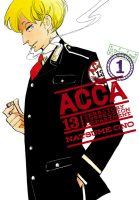
ACCA: 13-Territory Inspection Department, Volume 1ACCA: 13-Territory Inspection Department, Volume 1 by Natsume Ono. My first encounter with Ono’s work was through the anime adaptation of House of Five Leaves. After watching it, I immediately sought out the original along with Ono’s other manga available in English. I was very happy when Yen Press announced it would be releasing ACCA (which itself recently received an anime adaptation). The country of Dowa is divided into thirteen separate districts, each of which independently operates a branch of ACCA, a civil service-orientated organization. Jean Otus works for ACCA’s Inspection Department which is always on the alert for and investigates possible corruption within the agency. When the situation demands it, Jean’s colleagues at the office are shown to be quite capable at their jobs, but most of their time seems to be spent bantering over pastries. This does reinforce the perception that the Inspection Department has become superfluous in a time of peace and prosperity, but I also find it to be a delightful bit of characterization. The first volume of ACCA is a slow burn, but it has incredible atmosphere and I enjoyed it greatly.

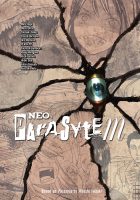
Neo-Parasyte MNeo-Parasyte M by Various. It’s been a while since I first read it, but I still remember the huge impression that Hitoshi Iwaaki’s horror manga series Parasyte made on me. (I really need to reread it again sometime in the near future.) Last year Kodansha Comics released Neo-Parasyte F, a shoujo/josei anthology created as a tribute to the original Parasyte. It was a fantastic anthology, so I was very excited when its shounen/seinen counterpart (and technically its predecessor) was also licensed. As a whole, I think that Neo-Parasyte F worked better or at least more consistently for me than Neo-Parasyte M, but there are still some terrific stories in the collection. The roster of contributors is rather impressive, too. Of particular note, a piece by Moto Hagio opens the volume. As is to be expected, most of the short manga in the anthology require at least a basic familiarity with Parasyte to be fully appreciated. The twelve stories in Neo-Parastye M take a variety of approaches. Some are more serious while others are more comedic, and a few can even be described as endearing. Not every contribution is successful, but overall Neo-Parasyte M is a great collection.

Filed Under: FEATURES, My Week in Manga Tagged With: ACCA, manga, Natsume Ono, Parasyte

Yona of the Dawn, Vol. 9

December 11, 2017 by Sean Gaffney

By Mizuho Kusanagi. Released in Japan as “Akatsuki no Yona” by Hakusensha, serialization ongoing in the magazine Hana to Yume. Released in North America by Viz. Translated by JN Productions, Adapted by Ysabet Reinhardt MacFarlane.

First of all, let’s just stand back in awe at the fact that our heroes are now named “The Dark Dragon and the Happy Hungry Bunch”, something that is both hilarious and awesome. The name is indicative of their status as semi-secret bandits, but also the sheer improvised nature of this whole enterprise – after gathering the Dragons, we’re now regrouping and seeing how best to let Yona figure out what to do next. “Help people” is the obvious choice, but help people how? Well, turns out there’s injustice right in front of them, what with the fire tribe officials shaking down the poor villages for money and taking children as collateral when they can’t pay up. Thus it is time to kick ass, take names, and pose dramatically. Unfortunately, when you’re the village saviors, you’d better be aware that there can be a cost to your actions.

I’ll admit I was not expecting that kid who confronted the bandits – you know, the other bandits who aren’t so happy – to be killed off, but it’s a good lesson narratively. The Happy Hungry Bunch can try to save the villages they come across, but there will always be places they can’t be, and villagers they can’t save. If they’re going to bring about a revolution, rather than just be Robin Hoods, a different strategy is needed. We also get a return to Sinha’s issues, with his medusa-like eyes that brand him as a monster, going back to his childhood. Yona’s faith in him pulls him back from the brink, but it’s a chilling sequence that reminds you how powerful all of these guys are. Something which Yona is also understanding, as she asks Hak to teach her swordfighting in addition to archery so she can be more well-rounded. Yona the princess has become Yona the terrorist, with all that this entails.

Despite the drama, the humor in this volume is not limited to the Happy Hungry Bunch. Tae-Jun returns, still devastated by the fact that he “killed” Yona back at the start of the manga, and the humor is that he’s basically become a broken shell of a man who is damn-near suicidal, which would be uncomfortable if the tone weren’t so light. I’m not sure of Kusanagi plans to do a more dramatic plot with him next volume, but for the moment I’m perfectly happy with him being comic relief, as the chapters with him moping around like a sad puppy are hysterical. I suspect finding that Yona is alive will fill him with a new burning desire, but sadly he’s about #15 in the ‘Yona love interest’ sweepstakes, so I suspect more comic relief may be in the offing instead.

Yona of the Dawn is content to move slowly at this point, building its characters and increasing the tension that something needs to be done. Yona’s now resolved to get even stronger, but toward what end? Will we get a few more volumes of wandering through random villages? Possibly, but I still plan on enjoying them. Yona is always a treat to read.

Filed Under: REVIEWS, yona of the dawn

How NOT to Summon a Demon Lord, Vol. 1

December 10, 2017 by Sean Gaffney

By Yukiya Murasaki and Takahiro Tsurusaki. Released in Japan as “Isekai Maou to Shoukan Shoujo Dorei Majutsu” by Kodansha. Released in North America digitally by J-Novel Club. Translated by Garrison Denim.

Occasionally I get asked by people why I sometimes clearly read things that are not remotely in my genre or that I think I will dislike. The answer is that sometimes I’m wrong and I turn out to enjoy it quite a bit. Of course, sometimes I’m right and I can’t even manage to finish the volume. And then there are titles like this one, where I finished the title with a sense of “well, that had some really annoying bits but wasn’t quite as bad as it could have been”. I will note right off the bat that if you are the sort of reader who enjoys these sorts of stories – isekai with an overpowered hero, slave girls who have to obey him, one large and one small breasted girl to start, lots of fanservice and the occasional cool battle – this is a very good title to get. The writing is competent, as you’d expect with a Kodansha novel. Its market is young horny men, and it delivers.

Well, delivers to a degree. The light novel market has not gotten to the point where we’re getting explicit light novels, and so as expected our hero is surrounded by attractive girls who are falling for him but nothing happens. This is fairly realistic, given that our hero is a gamer who was transported to another world but still has zero social skills or ability to talk to women. The way he gets around this is by pretending to be the game character he played online, Diablo, who is the titular demon lord. This works well when facing down evil minions or town guards, but less so when he’s got a handful of boob, at which point his brain simply turns off. He’s summoned, somehow, though there’s a question as to who actually did it. Rem is the tsundere catgirl who’s a skilled mage with a terrible secret. Shera is the airheaded elfgirl who has a hidden past and a desire to use summoning magic. And, due to the botched summoning and the nature of “Diablo” as a character, they are also now his slaves.

I’ve made no secret of the fact that I dislike the fantasy world style slavery in these sorts of isekai, particularly when it seems to be used as an excuse to get the hero a harem who can’t reject him. Diablo (his real name comes up occasionally, but for all intents and purposes he goes by his game title here) is not abusing it beyond the occasional grope, and doesn’t really order them to do anything awful, but again, the idea is “well, slavery exists here, so let’s accept it”, rather than the push back against it that I’ve enjoyed in some other novels. It’s also another book that leans heavily on the technical side to a degree, as the fantasy world is sort of like Diablo’s old game but not quite, and being an actual Demon Lord here rather than a computer creation, he has to figure out things like how much MP he can drain before it affects him. This can be interesting, but can also drag, depending how much of a gamer you are.

This isn’t terrible – the two female leads are actually amusing in a bratty rivals sort of way, and their backstories promise some interesting plots down the road. Diablo’s schtick may remind fans of Overlord, but there’s far less of a sense that we’re actually going to see a villain in the making the way that Overlrod gives us. I was also reminded of Death March, but that seems like damning with faint praise. I’m definitely picking the novel over the manga, which apparently doubles the fanservice and has Diablo being far more perverse – that’s out in 2018 from Seven Seas. In the end, another in a long line of “only if you like isekai”.

Filed Under: how not to summon a demon lord, REVIEWS

ACCA: 13-Territory Inspection Department, Vol. 1

December 9, 2017 by Sean Gaffney

By Natsume Ono. Released in Japan as “ACCA – 13-ku Kansatsuka” by Square Enix, serialized in the magazine Big Gangan. Released in North America by Yen Press. Translated by Jocelyne Allen.

It’s rare that I read a Japanese manga translated into English and think to myself “I think I’d have liked this even better in the original French.” But that’s the sort of mood that ACCA gives off. It’s not something that I’m unused to with the works of Natsume Ono, whose art seems designed to constantly be showing people descending into hole in the wall cafes and small, dingy apartments. But even when the canvas opens up – much of the action in this book takes place in large rooms and wide streets – it feels like I’m reading a manga directed by François Truffaut. The plot of this story is fairly standard – various shady goings-on are happening but are for the most part dealt with by our hero, who seems unassuming but is Very Clever Indeed. But honestly, I don’t read Ono’s stories for the plot, I read them for the evocative mood that she sets. With ACCA, she has another big success.

No, that’s not Sanji on the cover, though he is blond and does smoke throughout the volume – indeed, smoking is why he’s famous, in a country where cigarettes are a luxury item. Jean is instead near the top of a group of inspectors whose job it is to inspect other inspectors. The first chapter sets out precisely what he does and his attention to small details, while also dealing with a plot to close down the agency (I wonder if it was devised as a one-shot?). He and a subordinate (who is seen depressed at the end of the chapter, possible as she realizes she’s not in the rest of the book) root out small-time corruption, then he quickly wraps up and returns to not-Paris, where his department survives to audit another day. For now – he’s also beset by jealous regular police officers, mysterious higher-ups with plans and schemes, and his sister, who wants him to just help her run the expensive apartment building they’re in charge of.

As I said before, the plot is mostly irrelevant. There was an anime of this about a year ago, and I’d be interested to see how the dialogue was handled – much of it cries out to be murmured rather than spoken, perhaps with one of the deadpan smirks that Jean occasionally gives us. I also enjoy it when I notice the scenery as much as I do the plot and characters – Dowa, somewhat ridiculously, is a country shaped like a bird, and is filled with fantastic bakeries and high-ceilinged government buildings for Jean and some of the other characters (particularly his female counterpart, Mauve) to sweep out of dramatically. Well, Mauve sweeps dramatically. Jean sort of shuffles like a French Columbo – sorry, like a Dowan Columbo.

There are hints of an expansion on the plot and a possible betrayal in the cliffhanger for this volume. That said, I still say this is the sort of volume you read while sitting out on the 4th-floor balcony of your city apartment, sipping bitter coffee and eating a croissant from the bakery down the road. I’m happy I picked it up.

Filed Under: acca, REVIEWS

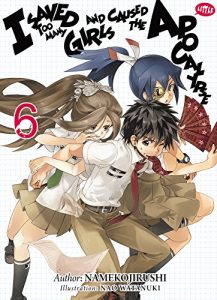
I Saved Too Many Girls and Caused the Apocalypse, Vol. 6

December 8, 2017 by Sean Gaffney

By Namekojirushi and Nao Watanuki. Released in Japan as “Ore ga Heroine o Tasukesugite Sekai ga Little Mokushiroku!?” by Hobby Japan. Released in North America digitally by J-Novel Club. Translated by Adam Lensenmayer.

Despite the occasional attempt to tie things together between sections, this is what we always knew was coming in a series this large: a short story collection. The good thing about this is that everything takes place around Rekka’s school and neighborhood, so we get to relax a bit after the high stakes of the last volume. The bad thing, of course, is that low stakes events sometimes don’t equal high impact. The first story in this volume deals with Lea, the human-looking leviathan from Volume 2, and her attempts to actually hold down a job and earn money so she does not have to rely on “nice young men” buying her meals. Lea’s ‘clueless yet strong’ character is not really top tier among the heroines, and the addition of a terrible gay stereotype (which I was going to give a pass until he took the perverted customer into the back room for punishment – yes, the guy was a lech, but no. don’t do that) did not help matters. Thankfully, things pick up a bit after that.

Only two heroines on the cover and added to the pile (that’s a total of 15 now, if you’re counting), but both of them are solid additions. Little Apocalypse sometimes tends to forget it’s meant to be a parody, but it’s a bit better on that front this time around – Rekka has never been more clueless about the fact that all these girls are in love with him. Given that, if you’re going to add memorable new heroines you need to make them ‘types’ so they stand out. Thus we have the teasing, large-breasted literature club girl, Midori, who is thought to be a ghost but in reality is simply quiet and weird – except around Rekka, whom she loves to hug from behind because, well, did I mention the large breasts? Despite the stereotype, she’s a lot of fun – it makes you realize we never really had a ‘tease’ among the heroines till now, and it gives a nice dynamic. The other heroine is Momone, who is not only Student Council President but also a Shrine Maiden and Demon Hunter. Honestly, you could fit three heroines in that description, but she does it all herself. Her blunt forcefulness is also something new added to the heroine lineup.

Neither one of these girls needs saving by Rekka, as R notes – they aren’t “traditional” heroines the way the rest of the group has been, they’re more like Hibiki (who gets a short story at the end dealing with a vengeful ghost, which reads like an episode of Urusei Yatsura so much that I’m going to check my DVDs to see if they actually did that one). That said, it’s fairly clear by the end of the book that they both like Rekka just as much as the rest of them. The final story here is R reporting to her superiors on her progress, which is pretty much near zero. It does have R serving to remind us that this is technically HER story – the story of how she’s stopping the Apocalypse by going back in time and helping Rekka. Which so far seems to involve dragging him around then house as he sleeps so that she can watch TV late at night.

So overall a decent addition to the series, and these books are always so short that they’re a light, snack-like read as you wait for the next Arifuerta or something similar to come down the pike.

Filed Under: i saved too many girls and caused the apocalypse, REVIEWS

  • « Go to Previous Page
  • Page 1
  • Page 2
  • Page 3
  • Page 4
  • Page 5
  • Go to Next Page »
 | Log in
Copyright © 2010 Manga Bookshelf | Powered by WordPress & the Genesis Framework