• Skip to primary navigation
  • Skip to main content
  • Skip to primary sidebar
  • Home
  • About Us
    • Privacy Policy
    • Comment Policy
    • Disclosures & Disclaimers
  • Resources
    • Links, Essays & Articles
    • Fandomology!
    • CLAMP Directory
    • BlogRoll
  • Features & Columns
    • 3 Things Thursday
    • Adventures in the Key of Shoujo
    • Bit & Blips (game reviews)
    • BL BOOKRACK
    • Bookshelf Briefs
    • Bringing the Drama
    • Comic Conversion
    • Fanservice Friday
    • Going Digital
    • It Came From the Sinosphere
    • License This!
    • Magazine no Mori
    • My Week in Manga
    • OFF THE SHELF
    • Not By Manga Alone
    • PICK OF THE WEEK
    • Subtitles & Sensibility
    • Weekly Shonen Jump Recaps
  • Manga Moveable Feast
    • MMF Full Archive
    • Yun Kouga
    • CLAMP
    • Shojo Beat
    • Osamu Tezuka
    • Sailor Moon
    • Fruits Basket
    • Takehiko Inoue
    • Wild Adapter
    • One Piece
    • After School Nightmare
    • Karakuri Odette
    • Paradise Kiss
    • The Color Trilogy
    • To Terra…
    • Sexy Voice & Robo
  • Browse by Author
    • Sean Gaffney
    • Anna Neatrour
    • Michelle Smith
    • Katherine Dacey
    • MJ
    • Brigid Alverson
    • Travis Anderson
    • Phillip Anthony
    • Derek Bown
    • Jaci Dahlvang
    • Angela Eastman
    • Erica Friedman
    • Sara K.
    • Megan Purdy
    • Emily Snodgrass
    • Nancy Thistlethwaite
    • Eva Volin
    • David Welsh
  • MB Blogs
    • A Case Suitable For Treatment
    • Experiments in Manga
    • MangaBlog
    • The Manga Critic
    • Manga Report
    • Soliloquy in Blue
    • Manga Curmudgeon (archive)

Manga Bookshelf

Discussion, Resources, Roundtables, & Reviews

Archives for August 2017

Manga the Week of 9/6/17

August 31, 2017 by Sean Gaffney, Anna N, Ash Brown and Michelle Smith 2 Comments

SEAN: September begins, and it’s back to school with a giant crush of manga. As always.

Dark Horse has a 3rd volume of Psycho-Pass prequel Inspector Shinya Kogami.

J-Novel Club gives us a 5th digital Grimgar of Fantasy and Ash novel, which… may not be depressing? Possibly?

And there’s also a 6th Invaders of the Rokujouma!?, which gives focus to our favorite underground priestess.

Did you know that Pumpkin Scissors is still running to this day? Somehow? It’s true! Kodansha is still rescuing it digitally with Vol. 13.

MICHELLE: I did not!

SEAN: On to non-Del Rey stuff, we have a 5th volume of GTO Paradise Lost, the latest in the author’s “no matter what I try to write, only Onizuka seems to sell” sequel.

ASH: I’ll admit, although I greatly enjoyed GTO, I haven’t really been keeping up with the sequels.

SEAN: And a 3rd Kounodori: Dr. Stork, which I am now behind on. Yay!

We also have two debuts from Kodansha digitally, that actually came out this week but Kodansha dropped them secretly as always. Black Panther and Sweet 16 (Kurohyou to 16-sai) is a Nakayoshi title that nevertheless seems very racy. It also has a weak female lead and pushy male lead. Ergh.

MICHELLE: Pass.

ANNA: I feel like I have seen this too many times before…

SEAN: And Elegant Yokai Apartment Life (Youkai Apato no Yuuga na Nichijou) runs in Shonen Sirius, and is what it sounds like – protagonist moves into an apartment filled with yokai.

MICHELLE: Hm. Maybe.

ANNA: That sounds promising, but I have a high tolerance for yokai titles.

ASH: As do I, for that matter.

SEAN: You want print? How about the 8th Sweetness and Lightning?

MICHELLE: Yay!

ASH: The series is such a delight! (And yes, print, please!)

SEAN: And there is also the 2nd Waiting for Spring for shoujo fans. Its first volume was unoriginal but soothing.

MICHELLE: I think there’s room for a series like that in my heart. I plan to read volumes one and two together.

ANNA: I have the first volume and haven’t read it yet, but soothing shoujo sounds nice.

Seven Seas has an 11th Arpeggio of Blue Steel, which continues to be the Tom Clancy novel of anthropomorphic personifications.

The debut next week is Captain Harlock: Dimensional Voyage, the 2014 manga sequel that apparently updates Harlock for the 21st century. Despite the fact that it runs in Champion Red, I look forward to it.

ASH: I’m looking forward to giving this one a try, too.

SEAN: And there’s the 8th Golden Time. Still a soap opera, still enjoyable to me.

And Tales of Zestria has a 2nd volume.

ASH: Whoops, I’d already forgotten about this series (probably because it’s based on a video game I’m not particularly familiar with), but it seems like it could have potential.

SEAN: Vertical gives us the 2nd Mobile Suit Gundam Wing manga, which continues to adapt Endless Waltz.

And now for Viz. So much Viz. Starting with the 4th Anonymous Noise, which I hope features some nice screaming.

MICHELLE: Volume three was the first time I had a “this is actually kind of cool” moment, so I will keep going for a little while to see if that becomes a trend.

ANNA: I think it has gotten better as the series develops, and I enjoy the screaming scenes.

SEAN: Bloody Mary’s 8th volume is not about vampires!… wait, yes, sorry. It is.

MICHELLE: *snerk*

ANNA: SO behind on this series, but I enjoyed the vampire angst in the early volumes.

SEAN: Boruto has a 2nd manga volume, which I imagine means the anime has already long since passed it.

Death Note gets an all-in-one edition, and at 2400 pages it comes close to taking the crown for best blunt object.

ASH: I really want to see one of these in person, just to see how it’s put together. I’ve been assured that the spine will hold up, but what about the readers?!

SEAN: Everyone’s still not getting married in the 6th Everyone’s Getting Married.

ANNA: I so enjoy this series. Hooray for Shojo Beat’s stealth josei publication practices!

SEAN: Haikyu!! 15 is out. But you knew that, as it’s a monthly. It’d be weirder if it weren’t out next week.

MICHELLE: I actually have a nice little pile of Haikyu!! to read now. I expect a mini-marathon will be great fun.

ANNA: I have a difficult time reading this series because my kids steal each volume.

ASH: Like Michelle, I’ve (unintentionally) been preparing for a mini-marathon as well. But I do enjoy Haikyu!! so incredibly much.

SEAN: Kimi Ni Todoke crawls to its conclusion some more. I dearly love it every time I read it, but admit that I wish it would hurry up.

MICHELLE: Yeah, I still can’t tell whether it’ll end after high school or actually follow the characters into their college endeavors.

ANNA: I need to get caught up!

SEAN: It’s the end for My Love Story!!, which has a lucky 13th volume to end on. Will the rain in Spain defeat our separated couple? Will we get a sweet happy ending! (spoilers: we will.)

MICHELLE: I’m counting on it!

ANNA: Such a great series.

ASH: It really is wonderful!

SEAN: And Nisekoi is also almost-but-not-quite done with this 23rd volume.

Chibi Sasuke’s Sharingan Legend is a superdeformed parody that aims to show us the humorous side of Sasuke. It should be about 4 pages long, then.

One Piece’s 21st 3-in-1 takes us to Fish-Man Island, so it’s slowly catching up with the main volumes.

One-Punch Man’s 12th volume will have some quality punching.

ASH: Excellent.

SEAN: And speaking of Quality, QQ Sweeper finally gets its sequel/reboot with Queen’s Quality. I love this author, so definitely want to read this.

MICHELLE: I’m glad this is finally out!

ANNA: Yay!

ASH: I’ve somehow still not managed to finish QQ Sweeper, but I’m glad we’re getting Queen’s Quality, too!

SEAN: Skip Beat! has a 39th volume, which I hope wraps up the arc with Kyoko’s mother.

MICHELLE: I just read it and it’s great. Of course.

ANNA: Skip Beat is always great, but I am also not fond of Kyoko’s mother.

SEAN: Lastly, it’s not a long Viz list unless it ends with a Yu-Gi-Oh volume, and we get the 2nd of “Arc V” here.

Got your pencils and paper? Or tablets and digital pens, whatever the kids use these days. Also, manga?
Filed Under: FEATURES, manga the week of

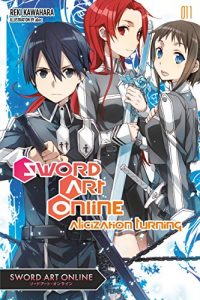
Sword Art Online, Vol. 11: Alicization Turning

August 31, 2017 by Sean Gaffney

By Reki Kawahara and abec. Released in Japan by ASCII Mediaworks. Released in North America by Yen On. Translated by Stephen Paul.

I don’t think I’ve ever come across a book that more perfectly summarizes the best and the worst of Sword Art Online in one handy gulp. The high points of this book are excellent, and the low points are incredibly frustrating. Put together, though, we have a series that continues to intrigue even as the main cast that isn’t Kirito continues to be entirely absent – Asuna gets a few pages in the middle, but for the most part we are entirely in Kirito’s fantasy world here. Fortunately, the first half of the book or so gives another break from Kirito’s first person, as we get a long stretch narrated by Eugeo, who is nice and earnest and a good contrast to Kirito. I was expecting that we would see more training at the knight academy, probably ending up in the giant fighting tournament that had been lampshaded earlier. But then things went entirely off the rails.

Let’s get the bad out of the way first. We have yet ANOTHER instance where female characters are captured and threatened with rape, so that we may see how irredeemably evil the villains are (Kawahara’s villains remain his giant weak point – he can’t write nuance) and also justify Kirito’s violence towards them. This is even more annoying because we’d barely gotten to know Tiese and Ronie, so the threat doesn’t have as much of a reader impact as it did with Asuna and Shino, assuming the reader impact cannot just be narrowed down to “rolls eyes, sighs”. And then due to the plot moving on, we don’t see the girls after this, which just makes it more blatant it was done for pure “damsels in distress” reasons. I understand in the original webnovel this was taken from, the girls actually were raped – thank heavens for small favors that this was changed. SO BORED WITH RAPE THREATS, KAWAHARA.

Of course, disposing of the two villains does mean that the plot makes a right turn, as now Kirito and Eugeo are captured by the Synthesis Knights and brought to the Central Cathedral… which was their goal, to be fair, but probably not as prisoners to be judged. Things pick up a great deal here, as we find that Alice (remember Alice?) is one of the knights, but doesn’t seem to remember Eugeo at all. Kirito takes up the narration again here, and it works out well, showing off his smarts in knowing when to push hard on “this is a game world with game rules” – breaking the chains was particularly good. What’s more, after a long and highly interesting fight scene that shows us the knights may in fact be brainwashed, we are given a long, long infodump by a new character that actually feels realistic and welcome, telling us a lot more about the Underworld, how it got its start, and the evil woman now at the head of it all.

In the end, this is book 3 of a 10-book arc, so there’s a limit to how far it can take things. But once you get past Kawahara deciding that nothing adds to drama quite like rape threats, it’s enjoyable and fun, with excellent fight scenes. Just… get a new gimmick. I beg you.

Filed Under: REVIEWS, sword art online

Manga Giveaway: A Variety of Vertical Comics

August 30, 2017 by Ash Brown

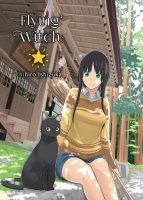
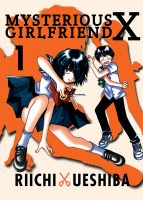
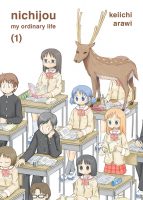
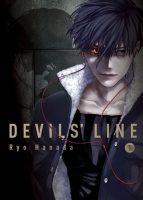
It’s nearly the end of August which means it’s time for another giveaway at Experiments in Manga! Earlier this month I celebrated the blog’s seventh anniversary, and I’d like to continue that celebration by offering you all the chance to win not one, not two, not three, but four volumes of manga. In this particular case the first volumes of Ryo Hanada’s Devils’ Line, Chihiro Ishizuka’s Flying Witch, Riichi Ueshiba’s Mysterious Girlfriend X, and Keiichi Arawi’s Nichijou: My Ordinary Life, all of which have been published in English by Vertical Comics. As usual, the giveaway is open worldwide!

Devils' Line, Volume 1Flying Witch, Volume 1Mysterious Girlfriend X, Omnibus 1Nichijou: My Ordinary Life, Volume 1

I’ve been a big fan of Vertical releases for years, not only of its manga, but its prose works, too, both fiction and nonfiction. (Two of my younger sisters also greatly enjoy Vertical’s puzzle books, although I think it’s been a few years since the last one was published). In 2014, Vertical launched Vertical Comics, an imprint specializing in the publisher’s manga and anime-related titles. Since then, Vertical Comics has continued to expand and offer more and more manga of a wide variety–there seems to be a little bit of something for just about everyone. And I’m always happy to give just about any manga a chance when it’s released by Vertical Comics.

So, you may be wondering, how can you win a variety of Vertical Comics?

1) In the comments below, tell me a little about your favorite manga that has been released by Vertical Comics. (If you don’t have a favorite, or haven’t read any, simply mention that instead.)
2) If you’re on Twitter, you can earn a bonus entry by tweeting, or retweeting, about the contest. Make sure to include a link to this post and @PhoenixTerran (that’s me).

And it’s as easy as that! Giveaway participants can earn up to two entries and have one week to submit comments. If needed or if preferred, comments can also be sent to me at phoenixterran(at)gmail(dot)com and I will then post them here in your name. The giveaway winner will be randomly selected and announced on September 6, 2017. Best of luck to you all!

VERY IMPORTANT: Include some way that I can contact you. This can be an e-mail address in the comment form, a link to your website, Twitter username, or whatever. If I can’t figure out how to get a hold of you and you win, I’ll just draw another name.

Contest winner announced–Manga Giveaway: A Variety of Vertical Comics Winner

Filed Under: FEATURES, Giveaways Tagged With: Chihiro Ishizuka, Devils' Line, Keiichi Arawi, manga, Mysterious Girlfriend X, Nichijou, Riichi Ueshiba, Ryo Hanada

JoJo’s Bizarre Adventure: Stardust Crusaders, Vol. 4

August 30, 2017 by Sean Gaffney

By Hirohiko Araki. Released in Japan as “Jojo no Kimyou na Bouken” by Shueisha, serialized in the magazine Weekly Shonen Jump. Released in North America by Viz. Translated by Evan Galloway, original translation and adaptation by Alexis Kirsch and Mayumi Kobayashi.

For all of the cool fight scenes and new arrogant villains, there is a certain sameness to Stardust Crusaders that I just can’t seem to escape from. It doesn’t help that this arc of JoJo’s is essentially a road movie/extended chase scene, and so we don’t really get much plot beyond “who will turn up in which Middle Eastern town to attack our heroes?”. To be fair, some of those villains are interesting, and there’s a lot of “the villain thinks they will be saved by the main villain, but no, they are just another pawn” here, but I’ll tell you; reading Jotaro’s story is a lot like traveling across the Midwest and staying at the same Holiday Inn with the same wallpaper every single night. Fortunately, there is the art if nothing else; JoJo’s always LOOKS really cool.

As I’ve observed before, there is a huge love of Western music that we’ve seen throughout the series, particularly in the naming of its various characters (mostly villains, but let’s not forget R.E.O. Speedwagon too). It reminds me of a previous old-school manga Viz used to release back in the day, Bastard!!. And just like that series, some of the names have to be changed to avoid litigation. Here we have Enyaba on the cover, who is Enya with a -ba added to her name to let us know she’s a wizened granny. There is also Dan of Steel, who is named after Steely Dan, of course, and like the item the band named themselves after, he proves to be a giant dick. An enterprising young fan could probably give us a nice JoJo’s soundtrack filled with songs from the bands and artists mentioned here. It also helps to emphasize the ‘road’ feel of this storyline.

The fights are the same, filled with action and horror, also continuing the body possession from last time. Fortunately, there is also a helping of humor, some of it gross (Polnareff and his tendency to need to use the bathroom – which rebounds nastily on him here) and some of it amusing if a bit sad (Joseph was always street smart rather than intelligent, but a lot of times here he becomes stupid for the sake of the gag). The humor is needed to offset the grisliness of the battles here, with many of the villains being taken out in highly grotesque ways. For all that Dio is meant to be the main villain of this arc, and I’ve no doubt he will be appearing in the final volumes, so much of this is like a video game where you have to battle endless mid-boss after mid-boss. The journey here in JoJo’s is definitely more important than the destination, and therefore this volume gets the same opinion as the others: I liked it, but like the first two arcs better.

Filed Under: jojo's bizarre adventure, REVIEWS

Otherworld Barbara, Vols. 1-2

August 29, 2017 by Michelle Smith

By Moto Hagio | Published by Fantagraphics

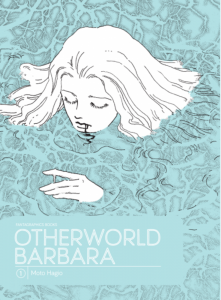
otherworldIt’s 2052 and Tokio Watarai, a dream pilot, is coming home to Japan for the first time in three years. Although his ex-wife and son are in Japan, he’s actually returning for a job involving a girl who’s been sleeping for seven years since being found with her parents’ hearts in her stomach. Her name is Aoba, and when Tokio enters her dream it’s all about an island called Barbara in which kids can fly and cannibalism factors in to funeral rites. Soon, he learns that his son, Kiriya, actually invented Barbara. So how is Aoba able to dream about it?

That introductory paragraph actually simplifies the story greatly. There’s also Tokio’s horrid ex-wife Akemi and the creepy priest Johannes whom she loves and who could possibly be Aoba’s grandfather but also head of an American orphanage in which cloned children were created, including one called Paris who comes to Japan and believes Kiriya might be a boy he knew called Taka. There’s Kiriya’s massive angst, his dreams of Mars, his dream conversations with Aoba, the girl Laika who fancies him, a psychiatrist who treated Aoba who is killed by a tornado she created, his identity-swapping and cross-dressing fraternal twin children, anti-aging research (potentially conducted upon the residents of Barbara) including a suit that turns Aoba’s grandma into a young woman who calls herself Marienbad and has a fling with Tokio, Daikoku’s ominous hinting that Kiriya will kill Tokio someday, parental regrets, etc.

By the end of the first volume, so very many plot threads are in the air that I was not at all sure that Hagio-sensei would be able to make everything make sense in the end. To use just one example: If Barbara is just a dream—and, indeed, no such island actually exists—then how is it possible that the blood of its residents is used for anti-aging medicine? And yet we see evidence that such advances are already in the works. And because of all this plot stuff, there’s not a lot of time for building solid relationships. There is angst aplenty, especially courtesy of Kiriya, but the whole Marienbad/Tokio hookup, for example, is just extremely random. The strongest bond, though, is definitely the love Tokio feels for his son and his regret over having been a crappy father.

Happily, the second volume does make with the answers, starting almost immediately. Not everything is answered with absolute certainty—one particular narrative thread takes a completely unexpected and surprisingly poignant turn. Even 90% of the way through, I would’ve said there was no way Otherworld Barbara would be able to make me cry, and yet it did. I won’t reveal how, but I loved the devastating consequences of a desperate act on Tokio’s part, and how it led him to have faith that Aoba’s dream of Barbara really could be shaping a vision of the future. That ending makes everything else worthwhile. Too, I enjoyed the contrast between Hagio’s uncomplicated, light-filled artwork and the dark and weird story she told.

Ultimately, Otherworld Barbara is definitely worth reading. Thank you, Fantagraphics, for releasing it!

Otherworld Barbara is complete in two 2-in-1 editions.

Review copies provided by the publisher

Filed Under: Josei, Manga, REVIEWS, Sci-Fi Tagged With: moto hagio

The Devil Is a Part-Timer!, Vol. 8

August 29, 2017 by Sean Gaffney

By Satoshi Wagahara and 029. Released in Japan by ASCII Mediaworks. Released in North America by Yen Press. Translated by Kevin Gifford.

Well, I’d talked about how much I love the daily life scenes in this series, and that’s still true. The author even throws in a classic one right at the beginning just to soften us up. But yeah, those days are, if not gone for good, at least gone for now. Because one of Maou’s larger flaws is tending to act impulsively and worry about consequences after the fact, and so the events of the 6th book are coming back at him with a vengeance. I won’t say that he ends the book completely defeated, but what with most of the cast being captured or incapacitated in some way, things aren’t looking good. I also said in the review of Vol. 6 that I suspected we’d be headed back to Enta Isla, and while we aren’t there yet, it’s very clear that we’re setting up a book or two over there next time. Fortunately, despite all these events, the writing remains first rate.

Yes, that’s a new girl on the cover, and if you think she looks like Alas Ramus, you’re on the right track. Her personality seems to be ‘hyperactive child’, despite appearing to be about 13 or so, and Maou has a lot more trouble dealing with her, which doesn’t bode well for his fatherhood skills when Alas Ramus grows up. (Can Alas Ramus grow up?) Of course, Maou is a little bit stressed out, mostly as Emi and Alas Ramus returned to Enta Isla for a visit and have not come back, despite it being well past the time she said she would. Leaving aside the wisdom of Emi returning to Enta Isla after the events of the previous books (Emi is fairly straightforward, so I can see her doing this), the absence makes Maou realize just how much Emi is a part of his life now. Of course, he doesn’t realize this right away, but takes most of the book, and a few talking tos by Chiho and Suzuno, in order to grasp it. Oh yes, and the worst part – he’s trying to get a motor scooter license (for the job, of course), and was so stressed he failed the exam! Which means more expenses.

Emi’s absence is not just noted by the fantasy characters, of course. First of all, if this takes much longer she’s going to need to look for a new job, as she’s currently AWOL at the call center. Secondly, Rika is very upset about the whole thing, and she runs to Ashiya is case he knows anything and ends up caught up in the attack on Japan that the forces of evil have launched to destroy Maou’s “demon generals”. The book balances on an edge as to whether Ashiya is going to tell her all about them or not, but of course he’s spared the choice by the bad guys showing up. The last half of the book has a lot of cool fight scenes, which if they ever do Season 2 of this series will look quite good animated, and Chiho gets to act cool. Still, there’s no getting around that Maou is in trouble, Emi is in trouble, Ashiya is in trouble, and those who can help are either too human or too injured. Excellent stuff, but now we have to wait to see what happens next.

Filed Under: devil is a part-timer!, REVIEWS

Bookshelf Briefs 8/28/17

August 28, 2017 by Michelle Smith and Sean Gaffney Leave a Comment

Black Clover, Vol. 8 | By Yuki Tabata | Viz Media – This one’s all fighting, but the fighting is really good. There’s, if not genuine casualties, at least genuine damage (I wonder about Kahono’s voice in the future), and a minor villain who’s easy to hate and makes you root for Asta to pound him into sand. Noelle also gets to level up, and we get a lot more attention paid to Finral and Vanessa, two of the Black Bulls we hadn’t really seen beyond surface impressions. Vanessa is ‘the older drunk girl,’ and it’s hard not to think “Fairy Tail ripoff,” but she’s quite likeable, and Finral’s “I am secretly terrified” is also relatable. And through it all there’s Asta, carrying on and never giving up even when all common sense tells him it’s useless. This has actually gotten quite good, if still unoriginal. – Sean Gaffney

Skip Beat!, Vol. 39 | By Yoshiki Nakamura | VIZ Media – What an uplifting volume of Skip Beat!. Saena’s flashback comes to a close and Kyoko’s feelings about her mother have settled somewhat. She has accepted that she’s always going to want to attain her mother’s love, and even more calmly determined to achieve her acting goals. And so now we move into the next arc, where Kyoko is evidently going to be auditioning for a role on the samurai drama Moko will have a part in whilst also investigating a Love-Me case involving an actress using shady means to eliminate the competition. There’s some good stuff with Ren and Sho in this volume, but mostly it’s about Kyoko declaring her ambitions with clear-eyed focus, and I will never not love that. – Michelle Smith

Toriko, Vol. 39 | By Mitsutoshi Shimabukuro | Viz Media – As always, the more that Toriko is about strange and bizarre foods and the preparation thereof, the better it is. As such, I definitely enjoyed the first half, showing us Komatsu and company managing to do the impossible once again through his sheer power of food love (I also enjoyed the joke where he briefly got his old, volume one nose back), more than the second half, which featured Toriko and Starjun doing a lot of shonen battle moves in their face-off against the battle wolf. We also get some backstory for Neo and his all-devouring appetite, which gives a nice dose of creepy horror in an otherwise standard shonen series. Toriko is still enjoyable, but I admit I am counting down till its end. – Sean Gaffney

What Did You Eat Yesterday?, Vol. 12 | By Fumi Yoshinaga | Vertical Comics – How much you enjoy volume twelve will likely depend on how much you can tolerate the petulant antics of Mr. Kohinata’s boyfriend, Wataru, also known as “Gilbert,” who throws a tantrum for a stupid reason and runs off to hide in a café for a month waiting to be found. This does lead to the most tension-filled moment in the series for some time, in which Mr. Kohinata makes a pass at Shiro, and though I’m disappointed that Shiro even considers it, he’s obviously unwilling to jeopardize his relationship with Kenji. Of course, there is cooking throughout, though some recipes seem strange to me (cabbage and sardine spaghetti?) and a new clerical worker at the law firm who has figured out Shiro’s sexual orientation, but doesn’t seem inclined to broadcast the information. Still extremely good, even with Wataru and the sardines. – Michelle Smith

Yowamushi Pedal, Vol. 6 | By Wataru Watanabe | Yen Press – Oh, how I do love this series. The initial drama involves Onoda being involved in a crash and ending up in last place and having to pass one hundred riders in order to rejoin his teammates and take over pulling them up the mountain so that Makishiba, who has been waiting for another climber to rely on so he could give attaining the mountain checkpoint his all, can race one last time against Toudou from Hakone. Toudou is a comical character, but I absolutely loved the joy he and Makishiba experienced just to be facing off against each other again. Dialogue isn’t deep (think “Sharghh!!”) but the mutual respect and gratitude is. Also, I am 1000% positive doujinshi exists for this pairing. Can’t wait for the next volume! – Michelle Smith

Filed Under: Bookshelf Briefs

That Time I Got Reincarnated As a Slime, Vol. 1

August 28, 2017 by Katherine Dacey

I’m a sucker for a great title, a tendency that’s yielded a bumper crop of disappointments through the years; I still haven’t purged the memory of a Screaming Broccoli album I purchased in 1988, or the 90 minutes I spent watching So I Married an Axe Murderer. I’m pleased to report That Time I Got Reincarnated As a Slime proved a better gamble than punk-rock vegetables, offering enough solid jokes and weird plot developments to sustain this reader’s interest. What surprised me the most about Reincarnated, however, wasn’t the premise — that’s clearly advertised in the title — nor the hero’s appearance — again, see title — but the story’s fundamentally optimistic message: there are always second chances in life.

The first chapter introduces us to Mikami, a 37-year-old virgin trapped in a lousy job. On a fateful afternoon, he impulsively saves a junior colleague from a knife-wielding attacker, an act of heroism that costs Mikami his life — as a human being, at least — and leads to his reincarnation in a fantasy realm that looks remarkably like World of Warcraft, Game of Thrones, and a hundred MMORPGs. Guided by an unseen dungeon master, Mikami reinvents himself as Rimuru, a slime monster who absorbs his enemies’ powers by eating them — a trick that quickly enables Rimuru to do remarkable things from healing the wounded to spinning thread.

What’s more remarkable about Rimuru is that he immediately puts his powers to work — for other people. (Well, monsters, really.) In chapter two, for example, he teaches a community of goblins how to defend themselves against a numerically superior opponent, helping them build sophisticated fortifications that repel a snarling pack of direwolves. (Paging George R.R. Martin!) Rimuru also bestows names on each member of the tribe, an act that transforms the once small and homely goblins into strapping specimens. That would be a good joke in and of itself, but it lands with greater impact because Rimuru’s act of generosity is consistent with what we saw of his human self, both in the prologue and in a brief flashback to his interactions with colleagues.

And speaking of jokes, Stephen Paul’s crisp translation plays an instrumental role in bridging the gap between the original novels and their manga adaptation by creating a distinctive, sardonic voice for Rimuru that situates him somewhere between audience surrogate and hero. The tone of Rimuru’s monologues captures the mixture of enthusiasm, wonder, and bewilderment with which he approaches new situations, great and small. After bestowing the names Gobta, Gobchi, Gobstu, Gobte, and Gobto on a family of goblins, for example, Rimuru heads off criticism from the reader by declaring, “I didn’t claim I was some kind of naming virtuoso!”, while a fortune teller’s romantic predictions prompt him to ask the same questions we’re thinking: “Do slimes even have genders? How do they multiply? Cell division?”

What Paul’s translation can’t do is goose the pacing. Manga-kaTaiki Kawakami makes a game effort to handle the first volume’s exposition as efficiently as possible, which results in many static panels of Rimuru learning the rules of play from the unseen dungeon master. Though the dialogue is punchy, the story unfolds in fits and starts, seesawing between short, intense bursts of action and leisurely scenes of Rimuru chatting with other characters, pondering one of his new-found abilities, or describing something that happened off camera. These info-dump passages are all the more tedious because Rimuru lacks the limbs, eyes, or mouth to adequately register surprise or awe at what he learns; what features he has — two pencil-line eyebrows — are frozen in a perma-scowl.

The other disappointing element of the manga adaptation is the paucity of female characters in volume one, a problem that series creator Fuse cheerfully acknowledges. “It’s quite possible not to have a heroine in a traditional sense,” he opines in the manga’s epilogue, “but not having any female characters whatsoever is a problem. There’s no beauty in the manga.” Kawakami’s strategy for addressing this issue is not to introduce an important character a little sooner than she appeared in the novels, or expand one of the minor female characters into a more essential figure, but to pile on the fan service by turning any gathering of female characters into a harem scene; I’m still scrubbing my eyeballs after reading a chapter in which an attractive elfling uses Rimuru as a boob shelf. (Worse still: someone cracks wise about E.I.L.F.s, a quip that wouldn’t have been funny in 2003, let alone 2017.)

For all its flaws, however, Reincarnated has its heart in the right place, using Rimuru’s adventures to demonstrate that it’s possible to make the most of any situation, no matter how improbable or unpromising it may seem at the outset. Better still, Reincarnated imparts its moral with tongue firmly in cheek, never lapsing into sappy earnestness about doing one’s best, or sacrificing yourself for the greater good. Of course, we haven’t seen what will happen if and when Rimuru stumbles into a second chance at romance, though volume one offers a few tantalizing clues about a future love interest. Here’s hoping that Rimuru begins his second — and potentially more terrifying — journey of romantic self-discovery without losing his wit or his wits.

THAT TIME I GOT REINCARNATED AS A SLIME, VOL. 1 • CREATED BY FUSE • MANGA BY TAIKI KAWAKAMI • CHARACTER DESIGNS BY MITZ VAH • TRANSLATED BY STEPHEN PAUL • KODANSHA COMICS • RATED: TEEN (13+) • 240 pp.

Filed Under: Manga, Manga Critic Tagged With: Fantasy, Gaming Manga, Kodansha Comics, That Time I Got Reincarnated As a Slime

Pick of the Week: Scrounging for Choices

August 28, 2017 by Sean Gaffney, Michelle Smith, Katherine Dacey, Ash Brown and Anna N Leave a Comment

SEAN: Despite the large number of manga available this week, my pick is the latest book in the Monogatari Series, the 2nd Nisemonogatari. I enjoy this series despite its fanservice, but this one may be challenging even with that. Toothbrushes out!

MICHELLE: As Sean predicted, the new releases that appeal to me the most are Kodansha’s digital sports manga. Days is shounen fun, but Giant Killing offers a seinen slant that makes it unique and my pick for this week.

KATE: I’m backing Michelle’s play by picking Giant Killing and Days, too. I’d love to see even more sports manga available in English, and supporting Kodansha’s digital publishing efforts seems like the best way to encourage them to be bolder in their licensing choices. We need manga about golfing, running, synchronized swimming, mountain biking, kayaking, sailing, speed skating, agility training, sled dog racing… the possibilities are endless!

MICHELLE: I’m still holding out hope for Mitsuru Adachi’s Rough, too. (Though not from Kodansha, obviously.)

ASH: Were I a digital reader this would be a great week of releases for me with new volumes of Giant Killing, Saki, and Space Brothers coming out. Limiting myself to print releases though there’s not much that I’m super-excited about, but I am very curious about the debut of Kigurumi Guardians.

ANNA: There’s not a ton out there that I’m reading this week, although I’m very happy that more sports manga is being released. I’m picking Altair: A Record of Battles volume 3, because that’s what I’m most likely to read… someday!

Filed Under: PICK OF THE WEEK

My Week in Manga: August 21-August 27, 2017

August 28, 2017 by Ash Brown

My News and Reviews

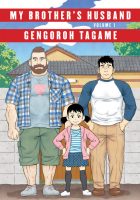
I was away last week traveling for work as well as for yet another family wedding (this year has been full of them), but I still managed to post a review before it was all said and done. It’s several month’s later than I really intended it to be since the manga was actually released back in May, but I’ve finally reviewed the first omnibus of My Brother’s Husband by Gengoroh Tagame. The manga was easily one of my most anticipated releases for 2017. I’ve actually been collecting the series in Japanese (even though my reading comprehension of the language isn’t quite where it needs to be yet), but I am incredibly happy that it’s being translated into English. I’m not sure when the second and final omnibus is scheduled to be released, but there’s not question that I’ll be picking it up once it’s available.

Quick Takes

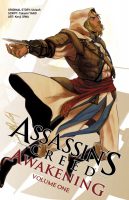
Assassin's Creed: Awakening, Volume 1Assassin’s Creed: Awakening, Volume 1 written by Takashi Yano and illustrated by Kenji Oiwa. There have been numerous Assassin’s Creed comic adaptations published by Titan Comics, so including Yano and Oiwa’s Awakening  as part of its catalog seems an obvious choice to make even though the publisher doesn’t typically release many manga. Admittedly, I’ve not played very much of any of the Assassin’s Creed video games (although what I have played I’ve largely liked) and I’m not especially familiar with Assassin’s Creed IV: Black Flag, the installment upon which Awakening is loosely based. What primarily drew me to the series was the involvement of Oiwa, one of the creators behind the manga adaptations of Otsuichi’s Goth and Welcome to the N.H.K., both of which I greatly enjoyed. Awakening alternates between two stories taking place in different time periods which turn out to be deeply connected to each other although the depth of that connection isn’t immediately clear. The first, and the one I prefer, is set in the early eighteenth century and follows Edward Kenway, a pirate captain who gets caught up in the conflict between the Templars and Assassins. Centuries later, that conflict is still ongoing, impacting the life of Masato Yagyu and his family in unexpected ways.

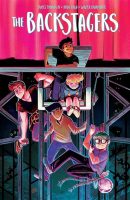
The Backstagers, Volume 1: Rebels without ApplauseThe Backstagers, Volume 1: Rebels without Applause written by James Tynion IV, illustrated by Rian Sygh, and colors by Walter Baiamonte. I believe The Backstagers first came to my attention when it was featured on a list of ongoing comics series which included trans characters. And indeed, one of the characters in The Backstagers–and an important main character at that–is a transguy, something that is almost unheard of in mainstream comics. (Also of note, the series’ co-creator and illustrator is also trans, which I hadn’t initially realized.) That was enough to make me interested in the series, and the first volume was more than enough to make me a fan. The Backstagers is set at an all-boys high school and largely follows the stage crew of the drama club. Jory, a recent transfer student, who at first he thought he wanted to be an actor ultimately finds himself swept up in the magic of what happens behind the scenes. Quite literally, actually. The Backstagers is a tremendous amount of high-energy fun with brightly colored artwork and sparkles, blushing, and flowers galore. The comic is also delightfully queer and diverse, breaking down gender stereotypes by presenting a wide variety of masculinities. I absolutely loved the first volume of The Backstagers and definitely look forward to more.

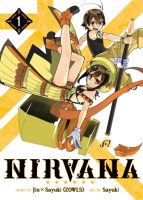
Nirvana, Volume 1Nirvana, Volume 1 by Jin and Sayuki. Due to her selflessness and devotion to volunteer efforts, Yachiyo Hitotose has become known as the Modern-Day Florence Nightingale. While on a trip to help those in need overseas, Yachiyo’s flight crashes and she suddenly finds herself reincarnated in another world known as Gulgraf. Believed to be the new embodiment of the divine goddess Sakuya, the bringer of light, Yachiyo has naturally taken upon herself to rescue and protect the residents of Gulgaf from the powers of darkness. As well-meaning as she is, Yachiyo will still need plenty of help if she wants to make a difference, especially as there are those who already want her dead. And so she sets off on an adventure, traveling across the world in search of allies as she learns to control the new powers she has been granted. Nirvana does seem to at least in part be be inspired by Buddhist and Hindu mythologies and mysticism–which honestly is what compelled me to give the series a try–but at this point they seem to be used mostly as a veneer and to provide the series’ most basic narrative structure and worldbuilding. I wasn’t as captivated as I was hoping to be with Nirvana, but I was still entertained by the first volume which takes a much more comedic approach than I was expecting.

Filed Under: FEATURES, My Week in Manga Tagged With: Assassin's Creed, Backstagers, comics, James Tynion IV, Jin, Kendi Oiwa, manga, Nirvana, Rian Sygh, Sayuki, Takashi Yano, Walter Baiamonte

My Brother’s Husband, Omnibus 1

August 27, 2017 by Ash Brown

My Brother's Husband, Omnibus 1Creator: Gengoroh Tagame
Translator: Anne Ishii
U.S. publisher: Pantheon Books
ISBN: 9781101871515
Released: May 2017
Original release: 2015-2016
Awards: Japan Media Arts Award

Gengoroh Tagame is an extremely influential manga creator known worldwide for his work in sadomasochistic, homoerotic fantasies. More recently, however, he has garnered a significant amount of attention for his series My Brother’s Husband, a four-volume manga aimed at general audience which directly addresses homophobia and other forms of discrimination in Japanese culture–one of the first works of its kind created for a prominent, mainstream magazine. My Brother’s Husband began serialization in Monthly Action in 2014 and would go on to win a Japan Media Arts Excellence Award in 2015. The series is one of the very few manga which I have made the point of collecting in the original Japanese, but I was absolutely thrilled when it was licensed for an English-language release. Translated by Anne Ishii, who has been instrumental in bringing Tagame’s work as a whole to English-reading audiences, the first omnibus in Pantheon Books’ hardcover edition of My Brother’s Husband was published in 2017 and is equivalent to the first two Japanese volumes released in 2015 and 2016.

Yaichi is a single father in Japan raising his young daughter Kana. Following the unexpected death of his estranged twin brother Ryoji, his brother’s Canadian husband Mike Flanagan arrives to meet the family and pay his respects. Yaichi’s life is suddenly upended–out of touch with Ryoji for years, he had never entirely come to terms with the fact that his younger brother was gay, but with Mike around it becomes something impossible for him to ignore. As for Kana, she is absolutely delighted to discover an uncle who she never knew existed and manages to convince her father to allow Mike to stay in their home while he’s in the area. As the days pass, the three of them become closer despite the occasional awkward clash of cultures; Mike’s kindhearted, gentle nature combined with Kana’s infectious exuberance and curiosity force Yaichi to reflect on his own learned attitudes and preconceived notions regarding homosexuality as well as confront the gulf that formed between him and Ryoji because of them. Through Mike, Yaichi is finally able reconnect with and learn more about his brother and who he was.

My Brother's Husband, Omnibus 1, page 110Tagame’s message of kindness, love, and acceptance in My Brother’s Husband is not at all subtle. At times it may come across as obvious or even like preaching to the choir for some readers, but the manga is really intended more for those who, like Yaichi, have casually conformed with and promulgated a culture of discrimination and misinformed stereotypes within society without putting much thought into it than it is for those who have personally experienced the negative effects of that discrimination. Even so, My Brother’s Husband still has plenty to offer that will appeal to a wide audience. The series is in turns heartwarming and heartbreaking, an honest and earnest exploration of family and the complex and often complicated relationships that exist between people. It’s a beautiful and moving story supported by strong, expressive artwork. Unsurprisingly, considering his artistic background, Tagame particularly excels in the realistic portrayal of adult masculine forms, but Kana’s cute character design can be quite effective as well. The backgrounds in the manga are fairly simple, the focus of Tageme’s illustrations is definitely on the characters, their facial expressions and body language adeptly conveying their thoughts and feelings, helping to establish the emotional core of the manga.

I unequivocally love the three lead characters and the development of their relationships in My Brother’s Husband. One of ways this is frequently accomplished in the manga which I particularly appreciate is through the sharing of meals and food, a natural and important way that people form connections in real life which serves to further cement those that exist in My Brother’s Husband. In addition to providing the series’ primary point of perspective, Yaichi is also probably the most well-rounded character. He has his flaws, but he is also a devoted and caring father who is willing to challenge his own internalized prejudices, initially for the sake of his daughter but ultimately for himself and the others, like Mike, he has come to care about as well. Seeing Yaichi slowly grow as a person and become more accepting over the course of the first omnibus of My Brother’s Husband has been wonderful. Mike, while overall coming across as a less nuanced character, is still a very positive and sympathetic portrayal of a gay man, his incredible patience and understanding adding to what makes him so immensely endearing. And of course there’s Kana, too, who can so easily love others despite their differences, her youth and innocence allowing her an amount of freedom and flexibility that’s not as easily accessible to adults who have already become set in their ways. I am very much looking forward to the continuation and conclusion of the story of these three in the second omnibus of My Brother’s Husband.

Filed Under: REVIEWS Tagged With: Gengoroh Tagame, Japan Media Arts Award, manga, My Brother's Husband

Skip Beat! Vol. 39

August 26, 2017 by Anna N

Skip Beat! Volume 39 by Yoshiki Nakamura

This shortish storyline dealing with Kyoko’s mother is one of my least favorite Skip Beat! episodes, perhaps because Nakamura is so good at portraying Saena as cold and distant in a way that would damage anyone’s psyche, that the efforts to humanize her by detailing the events that led up to her abandonment of her daughter still fall short of making her a character that I feel any sympathy for. But part of what makes Skip Beat! so entertaining for so long is the way many of the characters have been emotionally damaged in different ways, and there’s no easy fix for getting over trauma.

As Kyoko progresses through the series it is fascinating to see how her reactions to setbacks both change and stay the same, but the end result is that she becomes a stronger person. Kyoko’s control and composure when confronting her mother demonstrates how much more resilient she’s become, and her response to the encounter is to dedicate herself to becoming successful with her own goals.

One of the reasons why I like Skip Beat! so much is that Ren Tsuruga often is placed in what is sometimes a more feminine position for shoujo manga tropes. In this volume in particular, he’s left waiting and worrying about a terse text from Kyoko, and he ends up pretending to casually drop by to check on her. Patient waiting is the best way to deal with Kyoko when she’s still so emotionally fragile, but it’ll be interesting to see what happens when they are both ready for a relationship.

While Kyoko has come pretty far, it is clear that maintaining her rage at Sho is her safe space. I don’t think that it is a coincidence that after the confrontation with her mother, she ends up in a confrontation with Sho. Seeing how gently Kyoko and Ren interact with each other is certainly a big contrast to all the yelling and shin kicks that occurs when Kyoko and Sho are in the same room. As the volume seems to be setting up another acting challenge for Kyoko, I’m looking forward to seeing what she is able to accomplish next with all the emotional turmoil behind her.

Filed Under: Manga Reviews, REVIEWS

Manga the Week of 8/30/17

August 23, 2017 by Sean Gaffney, Ash Brown, Anna N and Michelle Smith 2 Comments

SEAN: STUFF!

ASH: Lots of stuff!!

SEAN: J-Novel Club starts us off, with a second volume of color-coded heroine series Demon King Daimaou.

And also a second volume of Infinite Dendrogram, which seems to be… just about a gamer in a VR world. What, he’s not trapped or anything? Pff.

Another Del Rey rescue bites the dust with the 21st and final volume of Alive.

ASH: It’s been a long time since I’ve read the beginning of Alive. Now that the series has been completed, maybe it’s time I revisit it.

SEAN: Aho Girl was amazingly stupid but amusing, so I look forward to Volume 2.

On the digital front, Altair: A Record of Battles has a 3rd volume.

And on the Michelle front, there’s a 4th DAYS.

MICHELLE: Heh, you know it! Also, I really do need to read Altair.

ASH: Same!

ANNA: I haven’t read the first volume of Altair yet, but I will!

SEAN: The title that nobody remembers (even Amazon, who hasn’t listed it), we get a 3rd DEATHTOPIA from the creator of Cage of Eden.

More Michelle volumes with a 5th Giant Killing.

MICHELLE: Seinen sports manga is such fun!

ASH: I want this series in print so, so much! The anime adaptation was great, too.

SEAN: House of the Sun got of to a fast start but slowed down after that. Here’s a 6th book.

MICHELLE: I’ve started this series but struggled to connect with the characters. I haven’t given up, though.

SEAN: Briefly back to print for a debut. Kigurumi Guardians is a shoujo title from Nakayoshi, but its creator, Lily Hoshino, is better known for her BL titles. No surprise then that this manga has a lot of pretty boys.

MICHELLE: I’m hoping this is fun.

ASH: Hoshino’s manga can be a little hit-or-miss for me, but I’m definitely curious.

ANNA: Hmm, I am curious too!

SEAN: Another forgotten by Amazon digital title, B&N lists a 29th Space Brothers volume. Apologies for forgetting to mention the first 28 or so. It’s a great series.

ASH: Yes!

SEAN: Seven Seas has a sea of titles next week, including three debuts. The first is Absolute Duo. It’s based on a light novel. It’s from Comic Alive. It takes place at an academy filled with fighting. My lineface can possibly be seen from space, but I’ll add it just in case. :|

MICHELLE: Heehee.

SEAN: Akashic Records of Bastard Magical Instructor is another debut this week. It’s based on a light novel. It’s from Shonen Ace. It takes place at an academy filled with fighting. :|

MICHELLE: *snerk*

SEAN: A Certain Scientific Accelerator has hit its 6th volume, and despite ALSO being a spinoff of a light novel title that runs in an otaku-oriented magazine and taking place at an academy filled with fighting, I quite enjoy it.

Theoretically, Don’t Meddle with My Daughter should get points for at least NOT being based off a light novel or taking place at an academy of fighting students. However, it runs in Young King and apparently has two doujinshi sequels by the author that are actual porn, so let’s just say my hopes are not high. It’s about a retired superhero mom who returns to action to protect her daughter, who is now taking over the family business, so to speak. Oh yes, it’s also by the creator of Dance in the Vampire Bund. It’s almost the perfect anti-Manga Bookshelf title.

MICHELLE: Sounds like it.

ANNA: It could be the Manga Bookshelf Kryptonite.

SEAN: And along the same lines, we have a 12th Monster Musume, which can be very ecchi. And not only that, but…

Yes, we’ve hit the trifecta of vaguely H titles, an 8th Pandora in the Crimson Shell! BINGO!

On the Vertical front, there is a 9th Cardfight!! Vanguard, which has fights… with cards! (Yeah, yeah, shut up.)

Vertical also has the 2nd Nisemonogatari novel, Tsukihi Phoenix, which features the youngest of the Araragi siblings, though honestly Karen’s toothbrushing scene will likely get all the attention. Also, are fans still going to be dagnabbit mad? Probably.

Yen has some digital titles, with new Corpse Princess (12), Gesellschaft Blume (2), IM: Great Priest Imhotep (2), and Saki (12). Something for everybody.

ASH: Saki!

SEAN: And of course there’s always a Yen straggler, and next week it’s Dimension W’s 7th volume. Why they always delay one or two books to the next week, I dunno. It’s one of those manga mysteries.

As you can see, there is much to choose from, though my colleagues may be staring at this and saying “Yeah, um…” So what are you getting?

Filed Under: FEATURES, manga the week of

Cosplay Animal, Vol. 1

August 23, 2017 by Sean Gaffney

By Watari Sakou. Released in Japan by Kodansha, serialized in the magazine Dessert. Released in North America digitally by Kodansha Comics. Translated by Rose Padgett.

Of of the more encyclopedia manga reference sites out there, Baka-Updates, has its listings of manga divided into tags, and I’ve frequently found myself looking at the work of a specific author or genre and wondering which tags were commonly used. In addition to the obvious ‘shonen’, ‘shoujo’, etc, there are things like ‘love triangle’, ‘strong female lead’, etc. And a lot of the shoujo titles tend to have the word ‘smut’ attached to them. These are the shoujo titles that run in order-skewing magazines like Sho-Comi or Dessert where the relationship expands to include sex fairly rapidly, and includes it often. A few years back you’d never have seen these sorts of titles over here, but now we have a certain number of them, mostly from Viz; Ai Ore, Butterflies Flowers, and the like. That said, while I have seen young women surrendering to passion, driven by their desires, and having a grand old time in these books, I’m not sure I’ve ever seen a heroine quite as horny as Rika in Cosplay Animal.

Rika is a college girl with a fetish for costumes, particularly school uniforms – and I mean fetish, we hear over and over again about how much it turns her on. One day she posts to a hookup site and starts talking with a high school boy who’s having relationship issues, and as they talk she texts a picture of her in her old school uniform. She decides to go see him, and finds that not only is he super hot, he also works as a waiter – another uniform! Of course, at first he thinks she’s a high school girl. Then, when he finds out the truth, he finds her fetish a bit lame. But eventually they work things out, and now Rika is dating a guy who will not only agree to have sex with her in a uniform, but can give her multiple orgasms. The end! Only, of course, not the end.

This volume has only Cosplay Animal’s first-chapter, which is clearly a one-shot, and its one-chapter sequel, also clearly meant to be a one-shot. Something about the series made the editors reward it with a longer run, and I’m pretty sure it’s Rika, who is simply straight up ridiculous. The series verges on being completely horrible but it isn’t quite, and what makes it compulsively readable is that Rika really is that over the top – if she were a more realistic, emotionally fragile young shoujo heroine this would be tasteless. As it is you can’t even get offended because of the silliness. That said, the manga cannot sustain this pace forever, and I can’t help but notice that it ran for 14 volumes. Something is going to have to give to fill up that space. I hope the character development is just as whacked out as the start was.

There are also three unrelated short stories at the end of this, which in fact take up more room in the volume than the main series. Cockblocked! is memorable mostly for the title, and features a girl trying to have sex with her older tutor but having difficulties due to a past family trauma. Servants of the Flesh deals with two young people in different schools, one male, one female, who have the same reaction to being called ignorant virgins a while back – to learn EVERYTHING IT IS POSSIBLE TO KNOW ABOUT SEX. Of course, they are still virgins. Sparks fly when they meet each other trying to help a friend at each of their respective schools, and end up being super hot once they both take their giant nerd glasses off. Again, it’s the sheer ludicrousness that makes the short work, though it gets buried in sex info because of the leads. The Touch of an Angel, the Kiss of a Devil is the most ‘normal’ story in the book, and therefore the dullest. I wonder if it was the author’s first, it seems so generic.

Cosplay Animal is a fun manga to read, but be warned: do not have any expectations of it being anything other than pervy shoujo froth. If that’s what you’re looking for, Rika is here for you.

Filed Under: cosplay animal, REVIEWS

My Big Sister Lives in a Fantasy World: The Strongest Little Brother’s Commonplace Encounters with the Bizarre?!

August 22, 2017 by Sean Gaffney

By Tsuyoshi Fujitaka and An2A. Released in Japan as “Neechan wa Chuunibyou” by Hobby Japan. Released in North America digitally by J-Novel Club. Translated by Elizabeth Ellis.

Well, we’ve reached the 5th volume, which is usually around when a lot of light novel series decide to give us a series of interconnected short stories, and that’s the case here, as our heroes’ club advisor (who is the villain from the prior book, returned to be a counselor for Yuichi for reasons I won’t bother to get into as they’re stupid) explains that the other villains will probably have a rest period before they try to attack again and restart the main plot. Of course, Yuichi is who he is, so this doesn’t mean that his life becomes a normal romantic school comedy. Every week brings a fresh new series of supernatural things for him to punch, rivals to take down, and girls to rescue. Why? Well, because he is who he is, trained by his older sister.

As I’ve discovered with a lot of these short story books, the rule of thumb is that the longer the story, the better it is. This means the book gets better as it goes along, as the final two stories are definitely the longest and best. But it also means you start by wading through a lot of drek. The first story (and connected prologue) attempts to show us that Kanako and her writing career is still relevant to the plot, but I’m fairly sure that’s not the case – mostly it’s there to make fun of light novels. We then get a story of a yokai who tries to seduce men, but looks like a little girl, which at least keeps the lolicon jokes down to a mere 2-3 per page, but is otherwise meh. The third story introduces a friend/lackey of Mutsuko, who has new powers she wants to test on Yuichi. The main thrust of the story is that the girl is very fat, which Yuichi seeks to remind us of constantly. I was more amused by her constantly slipping into different types of over the top speech patterns – it reminded me of the otaku from Oregairu, and distracted me from the endless fat comments. The other yokai stories are so dull I’ve already forgotten them.

The last two stories, though, are decent, and help to make the book at least get a low passing grade. The story with Yoriko attracting the attention of a delinquent, and then a yakuza with a thousand men at his command, is merely an excuse to see how ridiculous things can get, which honestly is why I read this series in the first place, so I was quite pleased – they got very ridiculous. Also, their mother is Kasumi Tendo – I was very disappointed she didn’t say “Ara, ara”. The final story deals with spirits, and whether Yuichi can punch them with his manly fists of justice (answer: of course he can). It’s more of a hodgepodge than the previous story, seeming content to throw plot ingredients into a nabe pot and see what comes out, but it was also fun, even if the ending was slightly predictable (I say slightly only because I guessed the wrong ghost).

The cliffhanger may be the most interesting part of the book (which doesn’t speak well of it), seeming to introduce Yuichi’s next major foe, a protagonist from a different world who honestly reminds me of the hero from Little Apocalypse. (Boy, wouldn’t that be a crossover?) Also, don’t think I didn’t notice Natsuki simply vanishing midway through the book. We’ve only got two more to go in this series, so keep reading if you’re a fan. Otherwise, skip it.

Filed Under: my big sister lives in a fantasy world, REVIEWS

  • Page 1
  • Page 2
  • Page 3
  • Page 4
  • Go to Next Page »
 | Log in
Copyright © 2010 Manga Bookshelf | Powered by WordPress & the Genesis Framework