• Skip to primary navigation
  • Skip to main content
  • Skip to primary sidebar
  • Home
  • About Us
    • Privacy Policy
    • Comment Policy
    • Disclosures & Disclaimers
  • Resources
    • Links, Essays & Articles
    • Fandomology!
    • CLAMP Directory
    • BlogRoll
  • Features & Columns
    • 3 Things Thursday
    • Adventures in the Key of Shoujo
    • Bit & Blips (game reviews)
    • BL BOOKRACK
    • Bookshelf Briefs
    • Bringing the Drama
    • Comic Conversion
    • Fanservice Friday
    • Going Digital
    • It Came From the Sinosphere
    • License This!
    • Magazine no Mori
    • My Week in Manga
    • OFF THE SHELF
    • Not By Manga Alone
    • PICK OF THE WEEK
    • Subtitles & Sensibility
    • Weekly Shonen Jump Recaps
  • Manga Moveable Feast
    • MMF Full Archive
    • Yun Kouga
    • CLAMP
    • Shojo Beat
    • Osamu Tezuka
    • Sailor Moon
    • Fruits Basket
    • Takehiko Inoue
    • Wild Adapter
    • One Piece
    • After School Nightmare
    • Karakuri Odette
    • Paradise Kiss
    • The Color Trilogy
    • To Terra…
    • Sexy Voice & Robo
  • Browse by Author
    • Sean Gaffney
    • Anna Neatrour
    • Michelle Smith
    • Katherine Dacey
    • MJ
    • Brigid Alverson
    • Travis Anderson
    • Phillip Anthony
    • Derek Bown
    • Jaci Dahlvang
    • Angela Eastman
    • Erica Friedman
    • Sara K.
    • Megan Purdy
    • Emily Snodgrass
    • Nancy Thistlethwaite
    • Eva Volin
    • David Welsh
  • MB Blogs
    • A Case Suitable For Treatment
    • Experiments in Manga
    • MangaBlog
    • The Manga Critic
    • Manga Report
    • Soliloquy in Blue
    • Manga Curmudgeon (archive)

Manga Bookshelf

Discussion, Resources, Roundtables, & Reviews

Archives for February 2012

Subtitles & Sensibility: Three with Ken’ichi Matsuyama

February 22, 2012 by Jaci Dahlvang 4 Comments

Last spring at the Seattle International Film Festival, I discovered Ken’ichi Matsuyama through a sold-out screening of Norwegian Wood. The film came back to Seattle this winter, so I took the opportunity to see it again and then decided to check out a few other Matsuyama films.

An adaptation of the popular Haruki Murakami novel, Norwegian Wood is an overwhelmingly sad picture which played better the second time through.

The film centers on Toru (Matsuyama), a university student who is torn between the tragedy of his past and the possibilities for his future. The past is represented by Naoko, the longtime girlfriend of his best friend Kizuki. After his inexplicable suicide, Naoko and Toru try to process the devastation together. For Naoko, it is impossible to deal with, and as she sinks into depression she threatens to pull Toru down with her.

However, at university Toru meets Midori (the utterly charming Kiko Mizuhara), who gives him the opportunity to choose life.

The first time around I found the film very heavy, unsurprisingly! It is more emotionally intense than the novel, partially because the film is more present, whereas the novel was reflective. The novel left space for humor, like expanding the character of Toru’s roommate Storm Trooper, and it took us out of the potentially-claustrophobic triangle of Toru, Naoko, and Midori by allowing more space for characters like Naoko’s eventual roommate Reiko to develop.

However, I am nothing if not understanding of the limits of adaptation. Tonal departures or character embellishments which work in a novel can easily feel out of place in a film.

More importantly, Norwegian Wood is a gorgeous piece of cinema. I was better able appreciate the unique textures, both visual and aural, when I saw it the second time. Overall the film is very lush, and it was easy for me to get lost in the visuals of everything from the gorgeous landscapes of the countryside to the patterning of fabric, and the excellent sound design between the university and the woods. Toru is swept through the film on waves—waves of sorrow, waves of protesters, and waves of wind through the long grasses on his long walks with Naoko—and I was willing to be swept along with him.

::

I followed it up with another, rather different adaptation. Death Note, based on the manga of the same name, is the story of Light, a college student with dubious ethics who discovers a notebook. It’s the death note of the title, and it is quite a find. If you write someone’s name in it, they die.

Of course, it isn’t quite that simple. We quickly learn the many rules of the death note, and to the credit of the plot, the rules appear perfectly timed to answer audience questions.

Light (Tatsuya Fujiwara, devilishly creepy) uses the notebook to become a sort of Dexter Morgan from afar, causing the deaths of people who he thinks truly deserve it. However, he quickly begins using it in his own self-interest, killing the innocent, and manipulating the rules to manipulate people. Having not read the manga yet, I don’t know if Light is so unapologetically unpleasant in that as well. I hope so! I like the idea of a main character that the audience is so quickly turns against.

Light is accompanied in his adventures by a Shinigami named Ryuk, a sort of death god who owned the notebook before, dropped it in hopes someone interesting would pick it up, and now is just curious what shenanigans Light might get up to. Ryuk is essentially the world’s worst imaginary friend. The character, delivered via cartoonish CGI, resembles nothing so much a death metal version of the Joker, if the Joker was addicted to apples.

Ken’ichi Matsuyama, offscreen for over half of the film, plays the mysterious L, a reclusive genius detective. He’s an almost-otherworldly character, pale and compact, locked away in a hotel room and outsmarting criminals from afar. He steals the movie with his physicality alone, nearly unrecognizable between this and his role as Toru. Shoulders hunched, he hides behind eye makeup & shaggy hair, living off of sweets.

Both L and Light are childlike, existing very little in the real world and instead hiding away in their respective rooms, playing out a high-stakes game of strategy virtually. With all of the screens (television news, security footage, and the like) it’s almost a video game with real-world consequences.

Speaking of consequences, ladies do not fare well in Death Note despite my early hopes, particularly for Naomi Misora, a stellar FBI agent. One is introduced solely as a set-up for the second film, and others exist to be manipulated by Light via the notebook.

The whole structure of Death Note is frustrating because Light has absolute power with the book. He kills from afar, and after the deaths have been played out we take no pleasure in learning how the manipulations work. We’re seeing the strings of a show we didn’t enjoy the first time around, and as the film progresses and the deaths become more elaborate, I started to despair that anything will stop Light.

Thanks to the cliffhanger ending, I’m going to have to check out the second film to see if it ever happens. I’ll be sure to report back.

::

In contrast, Gantz was also a film based on a manga series and split into two parts, but the first film worked as a complete story on its own. Though clearly there are many unanswered questions regarding the mechanics of the plot and the fate of secondary characters, Kurono undergoes a satisfying character arc. There’s an emotional conclusion if not a technical one.

Gantz is strange, the sort of picture that would play really well with a midnight, cult-film crowd. It opens with the accidental death of two high school students, Kurono (Kazunari Ninomiya) and Kato (Matsuyama). Rather than moving on to any traditional afterlife, they find themselves in an unfurnished apartment along with a few other people and a large black sphere.

The sphere has brought them here to participate in a life-or-death game, fighting against aliens who have been living on Earth. There are some rules to the game, though it seems fewer rules than were involved in Death Note.

Gantz features nice effects, great character design on the aliens, and very stylish cinematography by Taro Kawazu.

The film definitely raised a lot of questions. Are they really dead? Are they in limbo? How are they able to return to their old lives after missions? I have a lot of questions, so I’ll definitely be checking out the second film here as well!


Review copies of Death Note and Gantz provided by New People Entertainment.
Filed Under: Subtitles & Sensibility Tagged With: death note, gantz, norwegian wood

Manga the Week of 2/29

February 22, 2012 by Sean Gaffney

It’s a 5th week that’s really a 4th week, so there’s actually quite a lot of manga shipping.

Dark Horse has a very busy week compared to their usual (their usual being no manga at all lately). A new volume of Gantz, which is at 21 volumes yet still providing the violence and latex outfits everyone wants. Speaking of what everyone wants, Volume 1 of Gate 7, much like its predecessor Kobato, featured CLAMP trying a bit too hard to be CLAMP. I’m hoping Volume 2 goes a little lighter on their standard tropes and heavier on plot and characterization.

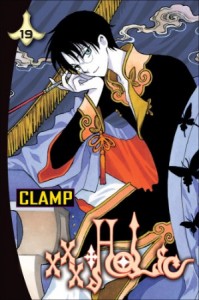
I wish I didn’t have to give it the cover spotlight, but it’s the final volume, and it used to be awesome, so here it is. Del Rey’s last manga series ends with the publication of Vol. 19 of xxxHOLIC. The early volumes of this series were possibly the best thing CLAMP has ever done not named Card Captor Sakura. This last one… is out this week. :)

A trio of new manga from DMP. After much delay, we get the 7th volume of Itazura na Kiss. Featuring everyone’s least favorite hero. Let’s hope he gets a sweet moment or two this time around. There’s also Vol. 3 of the awesomely named Bad Teacher’s Equation, and the more sedately named Border. Both by the same author. I wonder if she did them at the same time?

Midtown comics lists Vol. 4 of cyberpunk series Mardock Scramble as coming in next week. My shop says it is also getting the 13th volume of Sayonara, Zetsubou-sensei, which will answer the all-important question, “Can a translator last longer than 4 volumes on this series without burning out and leaving?”

Vertical has Volume 11 of its brand new series, GTO The Early Years. Yes, both those things are correct. Vol. 1-10 were released by Tokyopop, and Vertical is picking up where they left off. Known in Japan as Shonan Jun’ai Gumi, this series lasted even longer than GTO, and is how the world first got to know Onizuka. This volume should contain Vol. 21-22 of the original. Ed says if sales are good, they may go back to put 1-10 back in print. Get it! Onizuka rules!

Lastly, Midtown lags a week behind everyone else, as most of Diamond’s shops got Vol. 5 of Tenjo Tenge this week. It has kicking! And boobies! It is hard to imagine a more appropriate manga for 13 year old boys. Who, of course, should not be reading it. At least not in North America. M for Mature, folks.

So what appeals to you this week?

Filed Under: FEATURES

Tell JManga: It’s time to go global!

February 22, 2012 by Brigid Alverson

First, an important public service announcement: Do you think that the JManga digital manga site should be available to the entire world, not just the U.S. and Canada? Then let them know, via Twitter or by “liking” their globalization post on Facebook, because this is apparently being debated right now in the JManga Secret Headquarters, and your opinion could make a difference.

Here’s my look at this week’s new manga releases at MTV Geek.

It’s a good time to be a yaoi fan, as the new releases, digital and print, just keep on coming. Animate USA announced several new titles, including Kou Yoneda’s one-shot Kanjou Spectrum, and Viz’s brand-new imprint SuBLime Manga announced two more, Youka Nitta’s Kiss Ariki and Hinako Takanaga’s Awkward Silence. Digital Manga announced more new titles, both print and digital, via Twitter.

If that’s not your cup of tea, head over to JManga, which announced five new digital releases this week (including the foodie manga Kodoku no Gourmet) and will have ten more for us next week.

The Manga Moveable Feast continues its focus on Osamu Tezuka this week, and Kate Dacey rounds up all the Day Two commentary at The Manga Critic.

News from Japan: Hikaru Nakamura, who is back from maternity leave, will resume work on Saint Young Men in issue 56 of Morning 2, which is out next month.

Reviews

Carlo Santos on vol. 9 of Bakuman (ANN)
Sean T. Collins on Onward Towards Our Noble Deaths (Attentiondeficitdisorderly)
Erica Friedman on vol. 2 of Princess Knight (Okazu)
Anna on vol. 6 of The Story of Saiunkoku (Manga Report)
Sean Gaffney on vol. 8 of Toriko (A Case Suitable for Treatment)
Joy Kim on Twin Spica (Joy Kim)

Filed Under: MANGABLOG

Toriko, Vol. 8

February 22, 2012 by Sean Gaffney

By Mitsutoshi Shimabukuro. Released in Japan by Shueisha, serialization ongoing in the magazine Weekly Shonen Jump. Released in North America by Viz.

It’s been a while since I did a full review of Toriko, but this is a good volume to talk about, as it’s less fight and more food oriented. After finishing off the cliffhanger from last volume (and getting to meet several of the side-villains face to face), Toriko reunites with Komatsu and goes to Gourmet Town, the #1 town to get fantastic food. While there they meet up with a legendary chef, the elderly but insanely strong and intelligent (as with most elderly manga women) Setsuno, who gives the two of them a taste of a legendary soup. A soup that is still incomplete, and needs one more ingredient. This leads to the cliffhanger of this volume, as both Toriko and Komatsu must journey to “Ice Hell” to find said ingredient…

In general, successful Jump series seem to fall into a pattern of “fighting + friendship + X”, where X is a variable. Plus ninjas, plus pirates, plus mangaka, plus Nisioisin… that type of thing. Here it’s food, and while much of Toriko is sitting back and watching insanely strong men battle each other, the food is not just an added extra to make the story palatable. First of all, even with the occasional ‘reader suggestion’ thrown in, the different types and varieties of food show off the author’s prodigious imagination. But food also controls the plot and the main characters. They live for it. A lot of the scenes in this volume will be familiar to fans of Oishinbo or similar titles – the initial reaction of happiness, followed by a description of what they just ate, possibly delineating the ingredients used. This is Jump foodie manga.

This volume also has several strong scenes between Toriko and Komatsu, including Setsuna, reminiscing on her own partnership with Jiro (who she was also romantically involved with), noting what good partners Toriko and Komatsu make. Now, I don’t think that any Jump title currently running is written primarily for the magazine’s growing BL audience. No, not even Reborn. But certainly a lot of what attracted the BL fandom in the first place is here – men in close friendships, with lots of bonding and fights and befriending former enemies. Komatsu is in many ways the perfect uke, and he’s surrounded by strong partners – not just Toriko, but also Coco and Sunny from previous volumes – all of whom initially see him as rather pathetic but then grow to treasure him as Komatsu’s true talents in food preparation are revealed. There’s also a dearth of women in this story – Rin has been around, and she has a crush on Toriko, but he completely ignores it. So while this isn’t a BL story, it does have everything that drew BL fans to Jump in the first place, and does not go out of its way to disappoint them.

I’m impressed by the world building going on here. A lot of titles like this give off a feeling that the author is making stuff up from week to week, but several of the plot points here seem to be well planned. Komatsu’s naivete is useful in this regard, as Toriko can explain various things to him, but there’s a casualness to it that doesn’t make it seem like exposition. I particularly liked the references to the Colonel sending a duplicate to Ice Hell rather than himself – it’s made mysterious while also being obvious for the reader.

Toriko is great fun, and looks to be starting another big arc. Hopefully it will continue to balance its big fights and male bonding with more delicious food. Recommended for Jump fans.

Filed Under: REVIEWS

Special undead edition: New Kurosagi and Twilight on the way

February 21, 2012 by Brigid Alverson

Good news for fans of Kurosagi Corpse Delivery Service: Dark Horse will have a new volume next month, the first since September 2010. Crunchyroll has the details and an exclusive preview.

On the other hand, John Jakala is wondering why Viz has released so few digital volumes of non-Shonen Jump manga lately.

Sakura Con is looking amazingly good this year; ANN has the guest lineup, which includes Kodansha editor Katsushi Ota, Toradora! artist Zekkyō, and Full Metal Panic artist Retsu Tateo.

These things are never guaranteed, but ANN has spotted a listing for a graphic adaptation of Stephenie Meyer’s New Moon, presumably a followup to the Twilight graphic novels published by Yen Press.

Reviews

Lori Henderson on vols. 14 and 15 of Black Jack (Manga Village)
Connie on vol. 3 of Blue Exorcist (Slightly Biased Manga)
Lori Henderson on The Book of Human Insects (Manga Xanadu)
Connie on Chayamachi’s Collection: BLANC (Slightly Biased Manga)
Lesley Aeschliman on vol. 7 of Chobits (Blogcritics)
Connie on vol. 3 of Cross Game (Slightly Biased Manga)
Connie on vol. 12 of Kimi ni Todoke (Slightly Biased Manga)
Connie on vol. 6 of Natsume’s Book of Friends (Slightly Biased Manga)
Leroy Douresseaux on vol. 5 of Tenjho Tenge (The Comic Book Bin)

Filed Under: MANGABLOG

Kimagure Orange Road coming to Facebook

February 20, 2012 by Brigid Alverson

It’s only February, but it already looks like this year’s trend will be digital licensing of niche properties. The latest announcement came at Katsucon over the weekend, when creator Izumi Matsumoto announced that his Kimagure Orange Road will be published in English viz NTT Solmare’s ComicFriends Facebook app as well as on Kindle and iBooks.

Meanwhile, at Kuriousity, Lissa Pattillo spots some new yaoi titles in digital and in print from Digital Manga, Yaoi Press, and SuBLime.

Returning to the present, the Manga Bookshelf bloggers discuss their Pick of the Week.

This month’s Manga Moveable Feast celebrates the work of Osamu Tezuka, and your host Kate Dacey kicks it off with an introduction to Tezuka at The Manga Critic. Connie adds a Guide to English Language Editions of Tezuka’s Work at Slightly Biased Manga. Rob McMonigal adds his appreciation of Tezuka at Panel Patter. Lori Henderson focuses on Tezuka in her Manga Wrap-Up post, and Kate rounds up all the MMF links in her Day One post, and here’s an odd bit of Tezuka news: The Brazilian cartoonist Mauricio de Sousa is about to publish an original comic that uses Tezuka’s characters, an arrangement that sprang from the friendship between the two creators and has been blessed by Tezuka’s editor.

Michelle Smith discusses reading Viz manga on the Nook, and MJ and Sean Gaffney review some new JManga selections, in the latest Going Digital column at Manga Bookshelf.

Erica Friedman has the latest yuri anime and manga news in this week’s edition of Yuri Network News at Okazu.

ANN’s Brian Hanson sums up the problem with Mangastream, and all of scanlation: “Essentially, our little niche fandom has done a great job of supporting itself, but a terrible job of supporting anything resembling an actual industry.” And if you haven’t read Deb Aoki’s editorial, go check it out now, and don’t miss the lively discussion in the comments section.

Helen McCarthy has some thoughts on Eric Khoo’s film Tatsumi.

News from Japan: The nominees for the 16th Tezuka Osamu Cultural Prize have been announced, and they include Chica Umino’s March Comes In Like a Lion and Hajime Isayama’s Attack on Titan, which Kodansha Comics will be publishing in English later this year. Crunchyroll’s Mikikazu Komatsu takes a look at Kochi Indies Magazine, which is aimed at aspiring manga-ka. Also: Here are some scans of a K-ON! x One Piece doujinshi to start your week off right. Shun Matsuena is drawing a Kenichi the Mightiest Disciple spinoff for Shonen Sunday to celebrate the release of the OVA.

Reviews: MJ and Michelle Smith turn in some short reviews of recent yaoi manga in their latest BL Bookrack column at Manga Bookshelf. Ash Brown discusses this week’s manga reading at Experiments in Manga.

Justin on Ayako (Organization Anti-Social Geniuses)
Erica Friedman on vol. 2 of A Certain Scientific Railgun (Okazu)
Kristin on vol. 2 of Dawn of the Arcana and vol. 18 of Hayate the Combat Butler (Comic Attack)
Lesley Aeschliman on vol. 1 of Honey Hunt (Blogcritics)
Carlo Santos on vol. 55 of Naruto (Anime News Network)
Kate Dacey on vol. 1 of Soulless (The Manga Critic)

Filed Under: MANGABLOG

Pick of the Week: Soulless, Higurashi, Kizuna

February 20, 2012 by MJ, Sean Gaffney and Michelle Smith 2 Comments

Things pick up this week at Midtown Comics, just in time for Presidents’ Day. Though we’re a bit short-staffed at Manga Bookshelf today, MJ, Sean, & Michelle have some books they’re excited to buy!


MJ: I’m a bit torn this week, I have to admit. On one hand, I’d like to recommend the latest volume of Nabari no Ou—the only manga to ever get me even remotely interested in ninja—or perhaps volume four of Bloody Monday, which I can’t help liking, despite its unbelievable premise. But after reading Kate’s recent review of Soulless, I think it’s won my vote. An “agreeable mishmash of Young Sherlock Holmes, Underworld, and Mansfield Park, with a dash of Jules Verne”?? Where do I sign up? I’ll be the first to admit that Yen Press’ “manga” adaptations of popular novels have mostly missed with me, but this one sounds like it’s right up my alley. Definitely a must-buy!

SEAN: As I noted in my Manga The Week Of post, I always get happier when I see a new volume of Higurashi: When They Cry. A combination of harem manga, horror manga, and mystery, it’s the bonds of friendship elements that keep me coming back. One Piece fans popularized the Western use of ‘Nakama’, a word meant to convey a close bond between a group that’s not quite family or friends, but something deeper – something unshakeable. Of course, with the Higurashi series that type of relationship is a long and unstable process, and we’ve seen in past arcs how mistrust and paranoia can ruin everything. Rena’s friends have helped her hide a corpse in the last volume… but was that really the right thing to do? Gripping stuff.

MICHELLE: There are certain titles that, when I see them on this list, everything else just sort of falls away. So, while I am definitely very keen to read Soulless, I must seize the opportunity to recommend Kazuma Kodaka’s landmark BL series, Kizuna, now in its fifth (and presumably final) volume. Maybe the trials and tribulations of yakuza in love just isn’t your thing, but the way the stories are told and the unique artwork are things that every BL fan should experience.
Readers, what looks good to you this week?

Filed Under: PICK OF THE WEEK Tagged With: higurashi when they cry, kizuna, Soulless

An Introduction to Osamu Tezuka

February 19, 2012 by Katherine Dacey

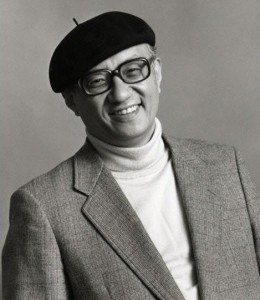
February 9, 2012 marked the twenty-third anniversary of Osamu Tezuka’s death. His career in the manga industry spanned five decades, from the early days of the akahon market to the industry’s zenith, when comics accounted for nearly 40% of all books sold in Japan. Over the course of his life, Tezuka produced more than 150,000 pages of manga; created such iconic characters as Astro Boy, Kimba the White Lion, and Black Jack; launched a manga magazine and an animation studio; and mentored such artists as Hiroshi Fujimoto and Shotaro Ishimonori. The extent of Tezuka’s influence on Japanese visual culture is hard to understate; few modern creators have had such a profound impact on the medium in which they worked.

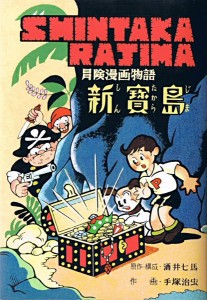
In Dreamland Japan: Writings on Modern Manga (1996), Frederik L. Schodt argues that Tezuka’s most important legacy was the story comic, “an intricate novelistic format” that anticipated the long-running stories in Weekly Shonen Jump, Morning, and Nakayoshi (234). Tezuka’s first story comics — New Treasure Island (1947), Jungle Emperor (1950-54), Astro Boy (1952-68), Princess Knight (1953-56) — were aimed at children, but his later work demonstrated that the format was well-suited to exploring adult themes, too.

Tezuka also pioneered a new way of drawing stories. As Schodt explains, Tezuka borrowed techniques from Walt Disney films “to create a sense of motion with his page layouts” — in essence, to bring the movie-going experience to the printed page (235). Tezuka’s example proved exceptionally powerful; the dynamic, visually-driven storytelling of Astro Boy and New Treasure Island continue to influence contemporary artists, especially in the world of shonen manga.

Tezuka would have been pleased, I think, to see how widely his stories are being read today, both in Japan and throughout Asia, the Americas, and Europe. In the United States alone, eighteen of Tezuka’s manga have been adapted for English-speaking audiences, Astro Boy, Black Jack (1973-83), and Phoenix (1956-89) among them.

Through these translations, I’ve developed a complicated relationship with Tezuka’s work. I love his art: his fluid layouts, his brilliant caricatures, his tripped-out dream sequences, and Freudian sex scenes. I also love his ambition: many of his stories — especially from the later stages of his career — have the sweep and social conscience of a Tolstoy novel, but the lurid, trashy soul of a Brian DePalma thriller.

Whenever I read one of Tezuka’s books, however, I’m reminded of the social, cultural, and temporal distance between his world and mine, even when I’m engrossed in the story and invested in the characters. Reading Swallowing the Earth (1968), for example, I was confronted by images that upset me. As a feminist, I winced at Tezuka’s depiction of Polynesian women as Hottentot Venuses, libidinous monsters with enormous lips and grotesquely rounded bodies. As an American, I struggled through Earth‘s racial warfare subplot with a mixture of dismay and horror: how could someone as fundamentally humane as Tezuka unwittingly tap into white supremacist fantasy when dramatizing the injustice of segregation?

Even when it infuriates me — as passages in Apollo’s Song (1970), Ayako (1972-73), and The Book of Human Insects (1970) have done — I’m still irresistibly drawn to his work. I admire Tezuka’s willingness to wrestle with the dark side of human nature, to create heroes and villains of genuine moral complexity. I also admire Tezuka’s playful side: his tendency to break the fourth wall, write himself into stories, bestow Dickensian names on his characters, and draw elaborate crowd scenes that would have made Busby Berkeley green with envy.

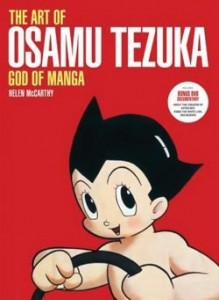
In the last ten years, there’s been an explosion of English-language articles and books aimed at readers like me, fans who recognize Tezuka’s important role in shaping the modern anime and manga industries, but want to learn more about his life, career, and artistic process. Helen McCarthy’s The Art of Osamu Tezuka: God of Manga (2009) is an excellent example of this trend; though she meticulously explains Tezuka’s star system and elucidates recurring themes in his work, she argues that Tezuka was “first and foremost a maker of popular entertainment,” and should be understood as such.

The complexity and size of Tezuka’s oeuvre has inspired American scholars to write about him as well. Flip through a volume of Mechademia, or browse the Asian Studies aisle at your local bookstore, and you’ll find scholars writing about Tezuka’s artistic legacy from a variety of perspectives. Some of these works — such as Natsu Onoda Power’s God of Comics: Osamu Tezuka and the Creation of Post-WWII Manga (2009) — make a conscious effort to bridge the gap between Ivory Tower and fandom, while others are clearly intended for academic audiences.

The goal of this month’s Manga Movable Feast is to create a space where all of Tezuka’s admirers — fans, critics, and scholars — can interact, sharing their reactions to his work, assessing his artistic legacy, reviewing titles new and old, and engaging with the messier, more problematic aspects of his work. Anyone can contribute: all you need to do is send me a link to a Tezuka-themed essay, podcast, or review, and I’ll feature it in one of my daily round-ups. (Email or Twitter are the best way to submit links; Twitter submissions should be directed to @manga_critic.) Note that the feast runs from today (Sunday, February 19th) through Saturday, February 25th. For more information, please visit the Osamu Tezuka MMF archive.

This is an expanded version of an essay that appeared at The Manga Critic on 12/14/10.

Filed Under: Manga, Manga Critic Tagged With: Manga Movable Feast, Osamu Tezuka

MMF: An Introduction to Osamu Tezuka

February 19, 2012 by Katherine Dacey 15 Comments

February 9, 2012 marked the twenty-third anniversary of Osamu Tezuka’s death. His career in the manga industry spanned five decades, from the early days of the akahon market to the industry’s zenith, when comics accounted for nearly 40% of all books sold in Japan. Over the course of his life, Tezuka produced more than 150,000 pages of manga; created such iconic characters as Astro Boy, Kimba the White Lion, and Black Jack; launched a manga magazine and an animation studio; and mentored such artists as Hiroshi Fujimoto and Shotaro Ishimonori. The extent of Tezuka’s influence on Japanese visual culture is hard to understate; few modern creators have had such a profound impact on the medium in which they worked.

In Dreamland Japan: Writings on Modern Manga (1996), Frederik L. Schodt argues that Tezuka’s most important legacy was the story comic, “an intricate novelistic format” that anticipated the long-running stories in Weekly Shonen Jump, Morning, and Nakayoshi (234). Tezuka’s first story comics — New Treasure Island (1947), Jungle Emperor (1950-54), Astro Boy (1952-68), Princess Knight (1953-56) — were aimed at children, but his later work demonstrated that the format was well-suited to exploring adult themes, too.

Tezuka also pioneered a new way of drawing stories. As Schodt explains, Tezuka borrowed techniques from Walt Disney films “to create a sense of motion with his page layouts” — in essence, to bring the movie-going experience to the printed page (235). Tezuka’s example proved exceptionally powerful; the dynamic, visually-driven storytelling of Astro Boy and New Treasure Island continue to influence contemporary artists, especially in the world of shonen manga.

Tezuka would have been pleased, I think, to see how widely his stories are being read today, both in Japan and throughout Asia, the Americas, and Europe. In the United States alone, eighteen of Tezuka’s manga have been adapted for English-speaking audiences, Astro Boy, Black Jack (1973-83), and Phoenix (1956-89) among them.

Through these translations, I’ve developed a complicated relationship with Tezuka’s work. I love his art: his fluid layouts, his brilliant caricatures, his tripped-out dream sequences, and Freudian sex scenes. I also love his ambition: many of his stories — especially from the later stages of his career — have the sweep and social conscience of a Tolstoy novel, but the lurid, trashy soul of a Brian DePalma thriller.

Whenever I read one of Tezuka’s books, however, I’m reminded of the social, cultural, and temporal distance between his world and mine, even when I’m engrossed in the story and invested in the characters. Reading Swallowing the Earth (1968), for example, I was confronted by images that upset me. As a feminist, I winced at Tezuka’s depiction of Polynesian women as Hottentot Venuses, libidinous monsters with enormous lips and grotesquely rounded bodies. As an American, I struggled through Earth‘s racial warfare subplot with a mixture of dismay and horror: how could someone as fundamentally humane as Tezuka unwittingly tap into white supremacist fantasy when dramatizing the injustice of segregation?

Even when it infuriates me — as passages in Apollo’s Song (1970), Ayako (1972-73), and The Book of Human Insects (1970) have done — I’m still irresistibly drawn to his work. I admire Tezuka’s willingness to wrestle with the dark side of human nature, to create heroes and villains of genuine moral complexity. I also admire Tezuka’s playful side: his tendency to break the fourth wall, write himself into stories, bestow Dickensian names on his characters, and draw elaborate crowd scenes that would have made Busby Berkeley green with envy.

In the last ten years, there’s been an explosion of English-language articles and books aimed at readers like me, fans who recognize Tezuka’s important role in shaping the modern anime and manga industries, but want to learn more about his life, career, and artistic process. Helen McCarthy’s The Art of Osamu Tezuka: God of Manga (2009) is an excellent example of this trend; though she meticulously explains Tezuka’s star system and elucidates recurring themes in his work, she argues that Tezuka was “first and foremost a maker of popular entertainment,” and should be understood as such.

The complexity and size of Tezuka’s oeuvre has inspired American scholars to write about him as well. Flip through a volume of Mechademia, or browse the Asian Studies aisle at your local bookstore, and you’ll find scholars writing about Tezuka’s artistic legacy from a variety of perspectives. Some of these works — such as Natsu Onoda Power’s God of Comics: Osamu Tezuka and the Creation of Post-WWII Manga (2009) — make a conscious effort to bridge the gap between Ivory Tower and fandom, while others are clearly intended for academic audiences.

The goal of this month’s Manga Movable Feast is to create a space where all of Tezuka’s admirers — fans, critics, and scholars — can interact, sharing their reactions to his work, assessing his artistic legacy, reviewing titles new and old, and engaging with the messier, more problematic aspects of his work. Anyone can contribute: all you need to do is send me a link to a Tezuka-themed essay, podcast, or review, and I’ll feature it in one of my daily round-ups. (Email or Twitter are the best way to submit links; Twitter submissions should be directed to @manga_critic.) Note that the feast runs from today (Sunday, February 19th) through Saturday, February 25th. For more information, please visit the Osamu Tezuka MMF archive.

This is an expanded version of an essay that appeared at The Manga Critic on 12/14/10.

Filed Under: Manga Critic Tagged With: Manga Movable Feast, Osamu Tezuka

Going Digital: February 2012

February 19, 2012 by Michelle Smith, Sean Gaffney and MJ 4 Comments

Welcome to the latest Going Digital, Manga Bookshelf’s monthly feature focusing on manga available for digital viewing or download. Each month, the Manga Bookshelf bloggers review a selection of comics we’ve read on our computers, phones, or tablet devices, to give readers a taste of what’s out there, old and new, and how well it works in digital form.

This month, we’ll take a look at VIZ Media’s new manga for the NOOK Color, as well as a couple of titles from JManga. Device, OS, and browser information is included with each review as appropriate, to let you know exactly how we accessed what we read.


E-Readers

VIZ Manga on the NOOK Color

In last September’s Going Digital column, I wrote about my experience reading manga on a Kindle. The review included such sentiments as “Wow, this looks like crap,” and ended with this pithy observation:

I guess paying $6 for a Kindle edition of a book I didn’t like very much is better than paying $13 for same, but my advice to those considering reading manga on their Kindle is simple: “Don’t.”

So, when I was presented with the opportunity to check out the titles VIZ has made available for NOOK devices, I was quite eager to see how the experience would differ. As it turns out, the NOOK vastly outperforms the Kindle in all areas but one, and that one is not a deal-breaker.

The loaner model NOOK Color I received came pre-loaded with a few VIZ titles, so I can’t comment on the ease of buying and downloading manga from the Barnes and Noble site, but it looks pretty straightforward to me. There’s a WiFi connection on the device, so you can shop directly from the reader, as well. Books are accessible in the Library, which displays a nice gallery of color covers instead of a plain text list of titles. Simply tap the cover of your book of choice to open, and you’re good to go.

The first offering I perused was volume 31 of Bleach, and when I saw its cover come up full-screen, so crisp and beautiful, I am pretty sure I uttered a “wow” aloud. The inner pages are just as sharp, with clean, white backgrounds and legible text. Navigation is easy—gently tap the right side of the screen for the next page (granted, this is a little counter-intuitive when reading manga, as normally you’d be turning to the left) and the left side for the previous page. Tap the middle and a menu pops up, where one can scroll amongst all the pages in the volume and manage bookmarks, which one sets by pressing the “+” icon in the top right of the screen, creating a little digital “dog-ear” effect on the page.

At this point, I still hadn’t figured out how to zoom—I’m definitely a late adopter where technology is concerned, so there was a bit of a learning curve with touch-screen navigation—so I thought I’d check out some shoujo, which is known for its teensy asides and author-talk sections with small text. I found examples of both on a page of Absolute Boyfriend, and personally found the text legible, but once I discovered the “reverse-pinch method” of zooming in, it was a definite improvement. The screen is larger than the Kindle, so a single page looks pretty good as is. The NOOK’s got an auto-rotate function, which means that the display will shift to landscape mode if you turn the device on its side. This is helpful when you want to enjoy the scope of a two-page layout from an artistic standpoint, but not really practical for reading that way, unless you want to stay zoomed in all the time.

There are only two complaints I have about the NOOK, and one is exceedingly minor. In most respects, the sensitivity of the touch screen is a good thing, but as I held the device, I somehow kept placing my thumb in such a way that caused the system to repeatedly alert me to my lack of new notifications, which was annoying. The second issue is more significant, and that is that the NOOK is pretty heavy. According to Barnes and Noble, the NOOK Color weighs 15.8 ounces, but mine (with protective cover) clocked in at 20.8 ounces, which is equal to three print volumes of manga. Obviously, this is not extremely heavy, and even the fact that the latest Kindle supposedly weighs less than six ounces could not ever induce me to recommend it over the NOOK Color where reading manga is concerned. – Michelle Smith


Web Browser

Morita-san Wa Mukuchi Vol. 1 | By Tae Sano | Takeshobo, Manga Life Momo | JManga.com | Windows XP, Firefox 10.0

Readers of print manga in North America will be very familiar with the type of manga we get with Morita-san. It’s what’s termed a ‘4-koma’ style manga. Basically the equivalent to American comic strips such as Peanuts or Beetle Bailey, They’re 4 panels, mostly vertical, with quick punchlines and gag humor. Yes, there are the occasional serious 4-koma series, but they are definitely the exception. We;ve seen the high school band series K-On!, the high school eccentrics of Azumanga Daioh, and even spin-offs of popular titles like Haruhi Suzumiya and Shugo Chara.

This series has a lot of the same types of ingredients. With the exception of a token male or two to get one-liners, the cast is almost entirely cute and female. It takes place in a typical high school. There’s no real plot to speak of – we follow our heroine and her friends through the school year, being amused at their comedy antics. However, despite all of this, I found Morita-san to be quite a fun and pleasant experience. It has a very good hook. The heroine, the titular Morita, doesn’t speak. Note that she *can* speak – she just never gets a good opportunity. Either she thinks too long about what to say and everyone moves on, or she gets flustered, or the timing is wrong… as such, she spends the volume as a sort of ‘silent support’.

Her friends, and this is another reason I found this fun, don’t really bring this up or hold it against Morita at all. It’s just a quirk, like her best friend Miki’s being boy-crazy, or Hana’s being shy. They treat her like a good friend, and don’t even mention the silence – they always ask her opinion on things and the like. And Morita herself is a likeable heroine, being nice and sweet without getting overly sappy. (Her parents help here – her mother vacillates wildly between sweet adoring wife and jealous harridan, and it’s noted Morita got her reticence from her upbringing.) There’s even some mild yuri tease here, involving the cool Student Council President who everyone loves, as well as an unnamed girl who keeps trying to stalk… um, strike up a conversation with Morita only to misread whatever situation is going on. If you’re going to read 4-koma, it should be as fun and likeable as this. -Sean Gaffney

Hyakusho Kizoku, Vol. 1 By Hiromu Arakawa | Shinshokan, Wings | JManga.com | Mac OS 10.7.3, Chrome 17.0.963.56

As most Manga Bookshelf readers will already know, I’m a huge fan of Hiromu Arakawa’s epic shounen series Fullmetal Alchemist. In fact, the series even made my personal top ten. I consider Arakawa to be a truly exceptional storyteller, so when I heard that JManga was offering something new from her, I immediately ran over to read it. I was not disappointed in the least.

From the pages of the eccentric shoujo magazine Wings, Hyakusho Kizoku is a series of humor-tinged manga essays detailing life on a Hokkaido dairy farm. Though, on the surface, Hyakusho Kizoku may seem to share little in common with a fantasy epic like Fullmetal Alchemist, fans of FMA will quickly recognize Arakawa’s easy sense of humor, as well as her ability to create compelling, recognizable characters with just a few deft strokes.

The series is openly autobiographical, filled with anecdotes from Arakawa’s childhood and teen years that cover everything from her father’s habit of visiting the cow shed in winter wearing only his underpants, to a bit of light authorial ranting on topics like pesticides, government demands, and why Hokkaido would be better off as an independent country. And though her humor is a highlight, it’s not the only way in which Arakawa shows off her strengths. One particularly haunting lesson about the fate of a sick, newborn calf had me tearing up as I read—a feat achieved mainly through just a few poignant strokes of Arakawa’s pen, as she drew her own mournful, childish face and that of the unsuspecting calf.

If I sound like a hopeless fangirl, well, perhaps I am. But it’s a devotion well-earned by any author who can entertain equally well with action-packed fantasy and facts about cow dung. And fortunately, JManga does their part as well, offering up a clean, readable adaptation that lets the series’ conversational style shine.

While Hyakusho Kizoku may not be every FMA fan’s cup of tea, it certainly is mine. Highly recommended. – MJ

Filed Under: Going Digital Tagged With: Hyakusho Kizoku, Morita-san Wa Mukuchi, Nook, VIZ

Hallowed Murder by Ellen Hart

February 19, 2012 by Michelle Smith

From the back cover:
The police call Allison’s drowning a suicide, but her housemates at her University of Minnesota sorority insist it was murder. That’s when alumnae advisor Jane Lawless steps in to find out the truth.

Abetted by her irrepressible sidekick Cordelia, Jane searches for clues, and what she finds is as chilling as the Minnesota winter—for in those icy drifts, at a lonely vacation house, she risks everything to ensnare a cunning killer…

Review:
Minneapolis restaurateur Jane Lawless has volunteered to serve as an alumnae advisor for her former sorrority, Kappa Alpha Sigma. One morning, while out exercising with her reluctant friend, Cordelia Thorn, Jane discovers the body of one of the girls, Allison Lord. When the local police are quick to dismiss Allison’s death as suicide (which they attribute to confusion over her sexuality), Jane decides to do a little investigating of her own, eventually concluding that she’ll need to set herself up as bait to catch the killer.

I didn’t outright dislike Hallowed Murder, but it does have some major problems. Most significant is the fact that the culprit is not a surprise, thanks to a brief opening chapter that reveals their motive. Other aspects of the mystery are less transparent, though, and Hart at least managed to make me briefly suspect other characters. And speaking of the characters…. Jane is okay, and I like the aura of sadness that clings to her after the death of her long-time partner, Christine, but her friend Cordelia seems to have just one mode—obnoxious. Jane’s brother makes a couple brief appearances, but he is utterly insubstantial. Then there are the victim’s three closest friends, one of whom we scarcely meet before she apparently drops out of the sorority off-camera. Again, it’s not exactly bad, but it’s all quite superficial.

The same can be said of Hart’s writing style. As I look now at the quotes I jotted down, they don’t look so objectionable, but while I was reading they were jarringly simplistic. Too much tell, not enough show. Here are a couple of examples:

The early morning mist had settled around the base of the old bridge, making it appear to float above the water. It looked like a stage set. A perfect setting for a murder. Cordelia shuddered at her own morbidity.

Jane looked around at the young man taking notes. She had never been interrogated by the police before and did not like her words being cast in stone on some stenographer’s pad.

That second one could’ve been “Jane looked uneasily at the young man taking notes,” and it would’ve communicated all of that without seeming so… prim. This was a common problem, with dialogue and character thoughts frequently coming across as stiff and unnatural. Characters were also exceedingly forthcoming with their prejudices. Now, true, this was published in 1989, so perhaps open homophobia was more common, but characters with these opinions don’t even try to disguise them, and generally have no other positive attributes that would make them more three-dimensional—they’re just being used as ignorant mouthpieces. Here’s a quote from Susan Julian, another sorority advisor, after she learns about Allison’s sexual preference:

Having allowed a—I even hate to say the word—lesbian in our midst would destroy our reputation. We can only hope it doesn’t make the papers. I mean, no one would feel safe joining.

I haven’t yet decided whether to read Vital Lies, the second Jane Lawless mystery. The excerpt included in the back of my paperback was not very promising, but some mystery writers do improve over time. And, of course, Hart earns bonus points for managing to mention both Richard III and Doctor Who.

Additional reviews of Hallowed Murder can be found at Triple Take.

Filed Under: Books Tagged With: Ellen Hart

Soulless: The Manga, Vol. 1

February 18, 2012 by Katherine Dacey

Soulless is saucy in the best possible sense of the word: it’s bold and smart, with a heroine so irrepressible you can see why author Gail Carriger couldn’t tell Alexia Tarabotti’s story in just one book.

As fans of Carriger’s Parasol Protectorate novels know, Alexia is a sharp-tongued woman living in Victorian London — or rather, a steampunk version of Victorian London in which vampires and werewolves co-exist with the “daylight” (read: “human”) world. As she would in the real nineteenth-century England, Alexia faces pressure to marry, a prospect complicated by her age — she’s twenty-six — her ethnicity — her father was Italian — and her prodigious intellect. Alexia has one additional strike against her, albeit one that doesn’t affect her marriageability: she’s soulless, a “preternatural” being who can neutralize the vampires and werewolves’ power, temporarily reducing them to mortal form.

Plot-wise, Soulless is an agreeable mishmash of Young Sherlock Holmes, Underworld, and Mansfield Park, with a dash of Jules Verne for good measure. The basic storyline is a whodunnit: Alexia becomes the prime suspect in a string of supernatural disappearances around London, and must collaborate with Lord Collan Maccon, a belligerent werewolf detective, to clear her name. What they discover in the course of their investigation is a grand conspiracy worthy of an Indiana Jones movie, complete with evil scientists, vampire “hives,” sinister-looking laboratories, and a golem; all that’s missing is the Ark of the Covenant and a few Nazi generals.

At the same time, Soulless is a romance. Alexia would make a swell Austen heroine, as she faces the kind of obstacles to marriage that would elicit sympathy from the Dashwood girls and Fanny Price. The greatest of these hurdles isn’t her name or her age, however; it’s Alexia’s firm conviction that marriage should not be a socially or financially expedient union, but a true partnership. Paging Elizabeth Bennett!

Given how many genres are present in the text — it’s a crime procedural, a thriller, an urban fantasy, a comedy of manners, and a bodice ripper — it’s astonishing how well all the tropes mesh. Some of that success can be attributed to the dialogue. The characters’ peppery exchanges are an affectionate parody of British costume dramas; substitute “soulless” for “penniless,” and Alexia could easily be a character in Sense and Sensibility. A few passages strain too hard for effect — would anyone have really chosen “comestibles” over “food” when complaining about a party? — but for the most part, Carriger finds a convincing tone that’s neither faux-archaic nor casually contemporary.

Soulless’ other great strength is its appealing cast of characters. Alexia and Maccon are clearly the stars of this imaginary universe; anyone who’s read Middlemarch or Emma will immediately recognize that Alexia and Maccon are The Main Couple, as they spend most of volume one denying their mutual attraction and trading zingers. (“I may be a werewolf and Scottish, but despite what you may have read about both, we are not cads!” Maccon declares in a fit of Darcy-esque pique.) In the spirit of the best nineteenth-century novels, however, Carriger situates her lovebirds inside a vibrant community, albeit one inhabited by grumpy werewolves and flamboyant vampires in lieu of parsons, baronets, and virtuous maidens. Though these supporting characters don’t always get the screen time they deserve, Lord Akeldama, Professor Lyall, and Ivy Hisselpenny enliven the narrative with sharp observations and sound advice for Alexia and Maccon.

Manga artist Rem, best-known for her work on Vampire Kisses, does a fine job of translating Carriger’s prose into pictures. Though Rem’s attention to period detail is evident in the characters’ sumptuous costumes and lavishly furnished parlors, her meticulousness extends to the action sequences as well. An early fight between Alexia and a vampire is expertly staged, making effective use of dramatic camera angles and overturned furniture to capture the intensity of their struggle. Rem also manages to fold many of Carriger’s steampunk flourishes — zeppelins, steam-powered carriages, “glassicals” — into the story without overwhelming the eye; if anything, I found the subtlety of the steampunk elements an improvement on the novel, where the object descriptions sometimes felt like tangents.

The only drawback to the artwork is Alexia herself. In the novels, Carriger describes her as plain and full-figured; in the manga, however, Rem depicts Alexia as a buxom, wasp-waisted babe with a pouty mouth and a pretty face. That transformation is certainly in keeping with manga aesthetics — even the plainest young characters are usually pleasing to the eye — but not with the source material; as a reader, one of the real pleasures of Soulless is watching the heroine triumph on the strength of her character and brains, not the size of her bust.

On the whole, however, Rem has succeeded in taking a justifiably popular novel and making it work in a different medium on its own terms; readers new to Carriger’s work will be as enchanted with this cheeky, fun adaptation as her hardcore fans. Recommended.

Review copy provided by Yen Press. Volume one of Soulless: The Manga will be released in March 2012.

SOULLESS: THE MANGA, VOL. 1 • STORY BY GAIL CARRIGER, ART AND ADAPTATION BY REM • YEN PRESS •  208 pp. • RATING: OLDER TEEN (VIOLENCE, SEXUAL SITUATIONS, NUDITY)

Filed Under: Manga, Manga Critic, REVIEWS Tagged With: Gail Carriger, Rem, Soulless, steampunk, Vampires, Werewolves, yen press

Soulless: The Manga, Vol. 1

February 18, 2012 by Katherine Dacey 17 Comments

Soulless is saucy in the best possible sense of the word: it’s bold and smart, with a heroine so irrepressible you can see why author Gail Carriger couldn’t tell Alexia Tarabotti’s story in just one book.

As fans of Carriger’s Parasol Protectorate novels know, Alexia is a sharp-tongued woman living in Victorian London — or rather, a steampunk version of Victorian London in which vampires and werewolves co-exist with the “daylight” (read: “human”) world. As she would in the real nineteenth-century England, Alexia faces pressure to marry, a prospect complicated by her age — she’s twenty-six — her ethnicity — her father was Italian — and her prodigious intellect. Alexia has one additional strike against her, albeit one that doesn’t affect her marriageability: she’s soulless, a “preternatural” being who can neutralize the vampires and werewolves’ power, temporarily reducing them to mortal form.

Plot-wise, Soulless is an agreeable mishmash of Young Sherlock Holmes, Underworld, and Mansfield Park, with a dash of Jules Verne for good measure. The basic storyline is a whodunnit: Alexia becomes the prime suspect in a string of supernatural disappearances around London, and must collaborate with Lord Collan Maccon, a belligerent werewolf detective, to clear her name. What they discover in the course of their investigation is a grand conspiracy worthy of an Indiana Jones movie, complete with evil scientists, vampire “hives,” sinister-looking laboratories, and a golem; all that’s missing is the Ark of the Covenant and a few Nazi generals.

At the same time, Soulless is a romance. Alexia would make a swell Austen heroine, as she faces the kind of obstacles to marriage that would elicit sympathy from the Dashwood girls and Fanny Price. The greatest of these hurdles isn’t her name or her age, however; it’s Alexia’s firm conviction that marriage should not be a socially or financially expedient union, but a true partnership. Paging Elizabeth Bennett!

Given how many genres are present in the text — it’s a crime procedural, a thriller, an urban fantasy, a comedy of manners, and a bodice ripper — it’s astonishing how well all the tropes mesh. Some of that success can be attributed to the dialogue. The characters’ peppery exchanges are an affectionate parody of British costume dramas; substitute “soulless” for “penniless,” and Alexia could easily be a character in Sense and Sensibility. A few passages strain too hard for effect — would anyone have really chosen “comestibles” over “food” when complaining about a party? — but for the most part, Carriger finds a convincing tone that’s neither faux-archaic nor casually contemporary.

Soulless’ other great strength is its appealing cast of characters. Alexia and Maccon are clearly the stars of this imaginary universe; anyone who’s read Middlemarch or Emma will immediately recognize that Alexia and Maccon are The Main Couple, as they spend most of volume one denying their mutual attraction and trading zingers. (“I may be a werewolf and Scottish, but despite what you may have read about both, we are not cads!” Maccon declares in a fit of Darcy-esque pique.) In the spirit of the best nineteenth-century novels, however, Carriger situates her lovebirds inside a vibrant community, albeit one inhabited by grumpy werewolves and flamboyant vampires in lieu of parsons, baronets, and virtuous maidens. Though these supporting characters don’t always get the screen time they deserve, Lord Akeldama, Professor Lyall, and Ivy Hisselpenny enliven the narrative with sharp observations and sound advice for Alexia and Maccon.

Manga artist Rem, best-known for her work on Vampire Kisses, does a fine job of translating Carriger’s prose into pictures. Though Rem’s attention to period detail is evident in the characters’ sumptuous costumes and lavishly furnished parlors, her meticulousness extends to the action sequences as well. An early fight between Alexia and a vampire is expertly staged, making effective use of dramatic camera angles and overturned furniture to capture the intensity of their struggle. Rem also manages to fold many of Carriger’s steampunk flourishes — zeppelins, steam-powered carriages, “glassicals” — into the story without overwhelming the eye; if anything, I found the subtlety of the steampunk elements an improvement on the novel, where the object descriptions sometimes felt like tangents.

The only drawback to the artwork is Alexia herself. In the novels, Carriger describes her as plain and full-figured; in the manga, however, Rem depicts Alexia as a buxom, wasp-waisted babe with a pouty mouth and a pretty face. That transformation is certainly in keeping with manga aesthetics — even the plainest young characters are usually pleasing to the eye — but not with the source material; as a reader, one of the real pleasures of Soulless is watching the heroine triumph on the strength of her character and brains, not the size of her bust.

On the whole, however, Rem has succeeded in taking a justifiably popular novel and making it work in a different medium on its own terms; readers new to Carriger’s work will be as enchanted with this cheeky, fun adaptation as her hardcore fans. Recommended.

Review copy provided by Yen Press. Volume one of Soulless: The Manga will be released in March 2012.

SOULLESS: THE MANGA, VOL. 1 • STORY BY GAIL CARRIGER, ART AND ADAPTATION BY REM • YEN PRESS •  208 pp. • RATING: OLDER TEEN (VIOLENCE, SEXUAL SITUATIONS, NUDITY)

Filed Under: Manga Critic Tagged With: Gail Carriger, Rem, Soulless, steampunk, Vampires, Werewolves, yen press

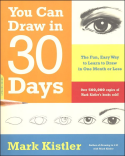
You Can Draw in 30 Days by Mark Kistler

February 18, 2012 by Michelle Smith

From the back cover:
Drawing is an acquired skill, not a talent—anyone can learn to draw! All you need is a pencil, a piece of paper, and the willingness to tap into your hidden artistic abilities. You Can Draw in 30 Days will teach you the rest. With Emmy award-winning, longtime public television host Mark Kistler as your guide, you’ll learn the secrets of sophisticated three-dimensional renderings, and have fun along the way.

In just 20 minutes a day for a month, you can learn to draw anything, whether from the world around you or from your own imagination. It’s time to embark on your creative journey. Pick up your pencil and begin today!

Review:
I was somewhat dubious when I set out to complete Mark Kistler’s instructional book, You Can Draw in 30 Days. Despite his claim that drawing is a skill and not a talent, and that anyone can learn to do it, I had no expectation that I would emerge from the experience with the ability to create vividly realistic drawings. And, indeed, that did not happen. I did, however, learn some interesting and useful techniques, and if the goal has been merely to gain confidence and a grasp of some basic fundamentals, then I’d say it’s been achieved.

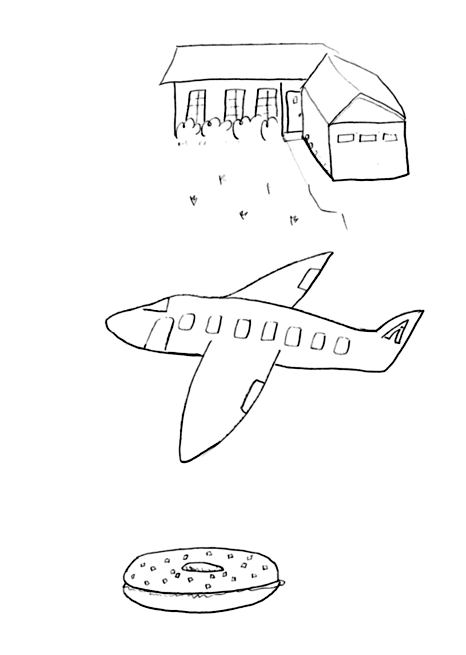
First, Kistler has students complete a pretest in which they draw a house, an airplane, and a bagel. Here’s mine. Please do not laugh at that pathetic airplane too much.

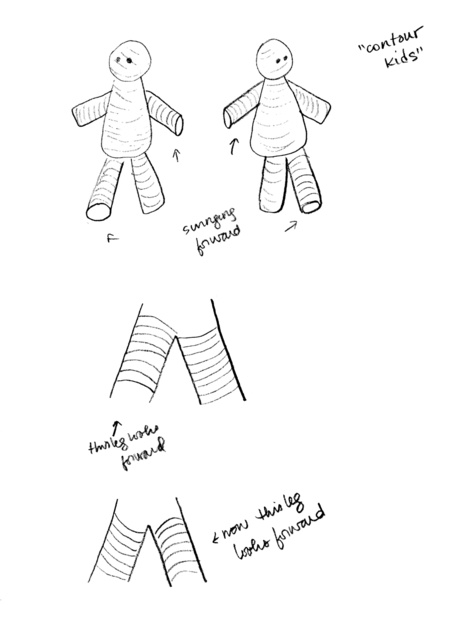
From there, students progress through a series of lessons designed to introduce and elaborate on nine “foundation elements,” which include concepts like overlapping, shading, and contour lines. These ideas are reiterated frequently throughout the book, and I enjoyed some more than others. For example, I got a little tired of drawing shadows all over everything, but the way that contour lines—here exemplified via figures Kistler has dubbed “contour kids”—can make objects appear to be in motion is extremely cool.

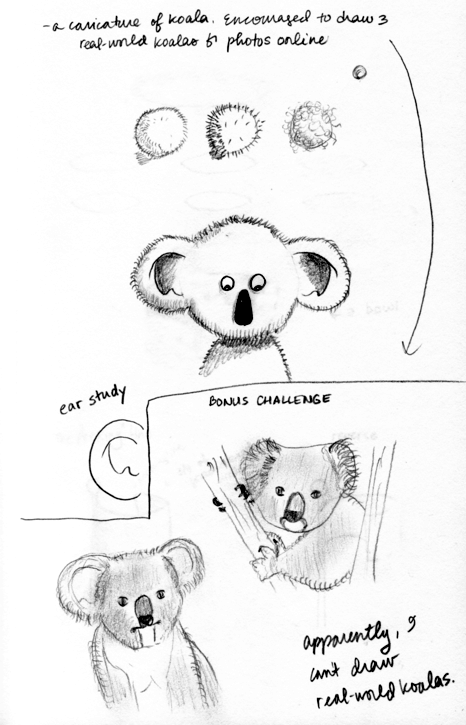
The first seven lessons focus on basic shapes—spheres, cubes, towers—but then Kistler begins tossing in some rather odd things like koalas, roses, scrolls, and rippling flags. Each lesson is still imparting some useful idea, but they do reveal that Kistler’s style is essentially cartoony. Here’s my koala, from lesson eight. The bonus challenge for that chapter was to draw some real-world koalas, and while my efforts look better to me now than they did originally, the fact remains that I did not (and still do not) feel well-equipped to actually faithfully reproduce a realistic-looking koala.

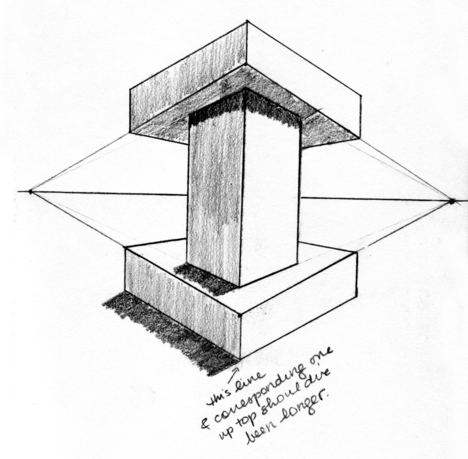
Beginning with lesson 22, Kistler focuses on drawing in one- or two-point perspective. I enjoyed these exercises a lot—possibly because I got to draw with a ruler, which made everything nice and crisp. Here’s my tower in two-point perspective, which looks pretty good despite a couple of minor flaws.

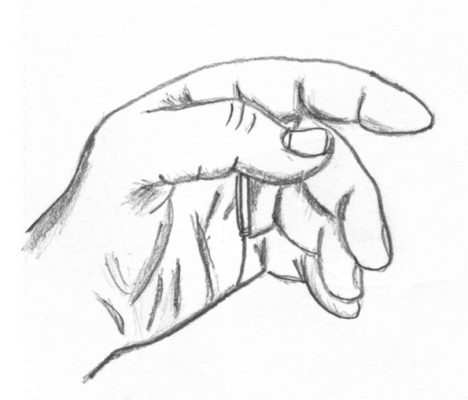
The final three chapters introduce drawing anatomy, and Kistler drops the ball here a bit. Instead of really trying to teach someone how to draw a face, he instructs students to trace an example, provides a few basic pointers, and then directs them to other books for more information. (Perhaps that’s why the included illustration of a student’s attempt is far less accomplished than other examples throughout the book.) Lessons on the eye and hand were better, though, and I’m rather proud of my results for the 30th and final lesson, “Your Hand of Creativity.”

On the whole, the progression of the lessons makes sense and I have few complaints. However, I must voice my objection to Kistler’s attempts to foment enthusiasm by asking lame questions throughout the book. “Are you inspired?” “Are you excited?” “Don’t you feel like a collegiate fine arts student?” This invites readers to say, “Um, no?” I get what he’s trying to do, but jeez. Enough is enough.

Ultimately, a better title for this book would have been You Can Draw Certain Things in 30 Days. I still don’t feel like I can draw well in general, but I think I’m a bit better than before. Certainly, I could apply these lessons to drawing everyday objects that fit the shapes covered in the book. So, if you ever need a picture of your loved one, don’t call me, but if it’s an open cardboard box you want, I’m your gal.

Additional reviews of You Can Draw in 30 Days can be found at Triple Take.

Filed Under: Books, Drawing, Nonfiction, Triple Take

BL Bookrack: February 2012

February 18, 2012 by MJ and Michelle Smith 11 Comments

Welcome to the February installment of BL Bookrack! This month, MJand Michelle take a look at two offerings from SuBLime Manga, VIZ Media’s new BL imprint, The Bed of My Dear King and Oku-San’s Daily Fantasies, as well as Rainy Day Love from the Digital Manga Guild. In Brief: volume two of Only Serious About You from Digital Manga Publishing’s Juné imprint, and volume one of Love Pistols from SuBLime.


The Bed of My Dear King | By Sakae Kusama | SuBLime Manga | Rated M (Mature) – This is my first SuBLime title—one of the first batch of digital-only releases, in fact. It appealed to me because it was described as “a suite of emotionally resonant, romantic stories.” Plus, the description included the words “unexpected” and “poignant.” So, does The Bed of My Dear King deliver on its claims? Well, mostly. Although, instead of “emotionally resonant” and “romantic,” the first words I’d use to describe the stories herein would be “quirky” and “memorable.”

The title story is about an electrician named Koga who visits the isolated mountain home of an initially surly sculptor to make a repair. The sculptor, who eventually reveals that his name is Takashi Tohno, gets a little more friendly and helpful as Koga attempts to get to the root of the problem, and when a sudden snow storm traps them together, a bit of booze leads to a “let me feel you up for my art” kind of encounter. I love Kusama’s use of big panels to evoke the wide open spaces around Tohno’s home, and though the pair decide to date pretty durn swiftly, the result is still an unforgettable story.

“Cherry” is about Ueno, an overachieving student council member who only slows down once his glasses get broken, and Tama, a boy who’s friendly to everyone in class but treats Ueno more formally than the rest. Ueno’s near-blind state results in a terribly cute “I’ll take you home by bike” scene and a promise that they can kiss or something after the school festival. You wouldn’t think a bike scene would make a story stand out so much from its BL compatriots, but it does.

The third and final story, “Flowers,” is the weakest of the three. Kumon, a runner, is curious about Ozu, his classmate. Rumors begin swirling that Ozu has impregnated a girl, and when Kumon asks him about it, Ozu trades the details for gradually escalating intimacy. This story has the potential to deal with some weighty issues, but doesn’t delve too deeply, and the ending is just kind of dumb. Kusama writes in her notes that these stories were serialized at different times, and I wouldn’t be surprised if this was an earlier effort.

All in all, this is an intriguing collection of stories and I’m glad I read it.

– Review by Michelle Smith


Oku-San’s Daily Fantasies| By Noboru Takatsuki | SuBLime Manga | Rated M (Mature) – I’ll be honest, here. Looking over the list of SuBLime Manga’s debut offerings, my initial reaction was one of disappointment. As a BL reader whose preferences lean towards thoughtful, carefully-developed romance and long-form storytelling, it was depressing to note that the imprint’s first few titles seemed to fall mainly into the categories of short stories, fluffy comedy, and gratuitous smut. Oku-San’s Daily Fantasies could be described as all three, but to a far more satisfying end than I ever would have imagined.

Oku is a bored office drone, whose single joy in life is fantasizing about Sudo, a local delivery man from a popular shipping company. In order to see Sudo as often as possible, Oku constantly orders things online, each time fantasizing about what might happen when his dream man arrives to deliver the package. Eventually, his orders extend to porn videos and sex toys, which he soon discovers are being sold to him by the company his neighbor works for. Once this discovery has been made, the neighbor, Yokoshima, drops by often, interrupting Oku’s fantasies with overly-exuberant friendliness and requests to try out new products. Though Oku initially finds this annoying, little by little, he finds himself warming up to Yokoshima. But can a real relationship ever live up to Oku’s fantasies?

There are a number of reasons why this manga really works, not the least of which is the fact that Oku’s (often hilarious) fantasies provide the opportunity for the author to include a whole lot of deliberately over-the-top, porno-rific sex scenes that actually serve the story. While even in the most serious romantic tales, sex sequences have a tendency to get in the way of the storytelling more than anything else, here they are actually a significant aspect of Oku’s character development, and even help to forward the plot. Even more surprising, is mangaka Noboru Takatsuki’s ability to write sexually-charged comedy that is actually funny, which is not something I generally associate with humorous BL manga. Takatsuki’s artwork is a highlight as well, serving the story’s comedy and erotica with equal skill.

Though SuBLime may not yet be satisfying my desire for epic, nuanced BL romance, they’ve managed to win me over with this charming bit of humorous smut. Surprisingly recommended.

– Review by MJ


Rainy Day Love | By Satomi Konno | Digital Manga Guild | Rated M (Mature)- One rainy day, Yuta Yoshizawa is working at his family’s senbei shop when Shizuno stops by. Graceful and handsome, Shizuno was a first-year member of the shogi club when Yuta was in his third year, and soon they’ve rekindled their friendship. In the blink of an eye, Yuta confesses his feelings, whereupon Shizuno reveals that he’s been in love with Yuta since sixth grade. After a brief interlude, during which these lovebirds realize that they don’t actually know each other at all, they start focusing their thoughts on consummating their relationship.

It’s not that Rainy Day Love is bad, really. It’s just really superficial. This is what I get for routinely judging BL by its covers—and this is a really nice one—but I somehow expected, from the title, more of a melancholy story. Instead, this is fast-paced and a little frivolous, with love confessions that are so abrupt and unconvincing that they made me go “Pfft!” and many scenes where super-deformed characters have dialogue like “Eep!” There is nothing wrong with a romance being silly—and there’s certainly something to be said for a story that doesn’t take its own drama seriously—but there’s nothing really compelling about it, either.

After Yuta and Shizuno manage to get it on, their story ends and the volume is rounded out with a couple tales about Yuta’s brother, Shoichi, and his friend Seigo, who’s been in love with him since elementary school. There’s really not much to recommend this, either, honestly. I guess if you like comedic BL about horndogs, then you might like Rainy Day Love. If you like more serious BL, like I do, then you’re probably going to be bored and disappointed.

– Review by Michelle Smith


In Brief:

Only Serious About You, Vol. 2 | By Kai Asou | Digital Manga Publishing | Rated YA (16+) – If volume one of Kai Asou’s Only Serious About You impressed me with its ability to craft a real, moving love story out of well-worn genre clichés, what’s most impressive about its second volume is its ability to make me forget that they were ever clichés to begin with. Though this volume’s primary conflict is divorced dad Oosawa’s struggle to maintain custody of his young daughter, the deeper issue here is his decision to accept his feelings for former playboy Yoshioka, and come out as his lover. Though the “only gay for you” syndrome is one of the genre’s least appealing tropes, here, it barely reads as a trope at all. On the negative side, Oosawa’s custody battle is resolved a tad too easily, but this is not nearly enough to sink a title this strong. Enthusiastically recommended. – MJ

Love Pistols | By Tarako Kotobuki | SuBLime Manga | Rated M (Mature) – Among the first four titles offered up by SuBLime Manga, Love Pistols would appear to be the closest to “my kind of BL,” at least on the surface. It’s a steamy, dramatic romance, told in multiple volumes (seven and counting), with some pretty complicated world-building and supernatural themes. Unfortunately so far, it’s also got a dull, controlling love interest, stunningly unappealing sex scenes, and just enough exposition to drown in. And while the tragic rarity of multi-volume BL ensures that I’ll give this series at least one more chance to win me over, there’s no denying the fact that reading its first volume was a distressingly unpleasant chore. Better luck next time, Love Pistols? Let’s hope so. – MJ


Review copies provided by the publishers. Cover art: The Bed of My Dear King © Sakae Kusama 2011, Oku-san’s Daily Fantasies © Noboru Takatsuki 2011, Love Pistols © Tarako Kotobuki 2004

Disclosure: MJ is currently under contract with Digital Manga Publishing’s Digital Manga Guild, as necessitated for her ongoing report Inside the DMG. Any compensation earned by MJin her role as an editor with the DMG will be donated to the Comic Book Legal Defense Fund.

Other recent BL reviews from MJ & Michelle: I Love You, Chief Clerk! (JManga); Only Serious About You, Vol. 2 (Juné).

Filed Under: BL BOOKRACK Tagged With: digital manga guild, digital manga publishing, Juné, love pistols, oku-san's daily fantasies, only serious about you, rainy day love, SuBLime, the bed of my dear king, yaoi/boys' love

  • « Go to Previous Page
  • Page 1
  • Page 2
  • Page 3
  • Page 4
  • Interim pages omitted …
  • Page 6
  • Go to Next Page »
 | Log in
Copyright © 2010 Manga Bookshelf | Powered by WordPress & the Genesis Framework