• Skip to primary navigation
  • Skip to main content
  • Skip to primary sidebar
  • Home
  • About Us
    • Privacy Policy
    • Comment Policy
    • Disclosures & Disclaimers
  • Resources
    • Links, Essays & Articles
    • Fandomology!
    • CLAMP Directory
    • BlogRoll
  • Features & Columns
    • 3 Things Thursday
    • Adventures in the Key of Shoujo
    • Bit & Blips (game reviews)
    • BL BOOKRACK
    • Bookshelf Briefs
    • Bringing the Drama
    • Comic Conversion
    • Fanservice Friday
    • Going Digital
    • It Came From the Sinosphere
    • License This!
    • Magazine no Mori
    • My Week in Manga
    • OFF THE SHELF
    • Not By Manga Alone
    • PICK OF THE WEEK
    • Subtitles & Sensibility
    • Weekly Shonen Jump Recaps
  • Manga Moveable Feast
    • MMF Full Archive
    • Yun Kouga
    • CLAMP
    • Shojo Beat
    • Osamu Tezuka
    • Sailor Moon
    • Fruits Basket
    • Takehiko Inoue
    • Wild Adapter
    • One Piece
    • After School Nightmare
    • Karakuri Odette
    • Paradise Kiss
    • The Color Trilogy
    • To Terra…
    • Sexy Voice & Robo
  • Browse by Author
    • Sean Gaffney
    • Anna Neatrour
    • Michelle Smith
    • Katherine Dacey
    • MJ
    • Brigid Alverson
    • Travis Anderson
    • Phillip Anthony
    • Derek Bown
    • Jaci Dahlvang
    • Angela Eastman
    • Erica Friedman
    • Sara K.
    • Megan Purdy
    • Emily Snodgrass
    • Nancy Thistlethwaite
    • Eva Volin
    • David Welsh
  • MB Blogs
    • A Case Suitable For Treatment
    • Experiments in Manga
    • MangaBlog
    • The Manga Critic
    • Manga Report
    • Soliloquy in Blue
    • Manga Curmudgeon (archive)

Manga Bookshelf

Discussion, Resources, Roundtables, & Reviews

manga

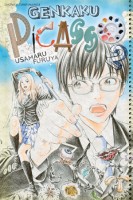
Genkaku Picasso, Vol. 2

January 21, 2014 by Ash Brown

Genkaku Picasso, Volume 2Creator: Usamaru Furuya
U.S. publisher: Viz Media
ISBN: 9781421537542
Released: February 2011
Original release: 2009

Genkaku Picasso was the second multi-volume manga series by Usamaru Furuya to be released in English. The first was a seinen gag manga called Short Cuts which, like Genkaku Picasso, was published by Viz Media. Genkaku Picasso is very different from Short Cuts. It’s an example of one of Furuya’s few shōnen manga and is currently his only shōnen series available in English. Furuya is an extremely versatile artist, changing styles, genres, and demographics to suit his needs. He had his start in alternative manga, but Genkaku Picasso, while quirky, is a more mainstream title. Initially serialized in Jump SQ, the second volume of Genkaku Picasso was released in Japan in 2009. Viz Media published Genkaku Picasso, Volume 2 under its Shonen Jump imprint in 2011. I found the first volume of Genkaku Picasso to be intriguing, but more uneven and less compelling than some of the other manga by Furuya that I had read. But with the second volume, the series finds its footing.

After a bizarre near-death experience, Hikari Hamura, given the nickname Picasso by his classmates, finds himself in an even stranger predicament. Chiaki Yamamoto, a victim of the same accident that nearly killed Picasso, is now small enough to fit in his pocket and is sporting angel wings. Picasso himself has gained the ability to see into people’s hearts and minds. Compelled to draw what he sees, he can literally enter into the psyches of others through his illustrations. Using this newfound power, Picasso is able to help his fellow classmates. Not that he really wants to go to all that effort. In fact, he’d much rather be left alone to concentrate on his artwork. But unless he wants to let his arm rot away–another peculiar consequence of his accident–Picasso must do what he can to help those around him. With Chiaki’s assistance and prodding he has successfully resolved some of his classmates problems and has even gained a few friends in the process, but Picasso is still incredibly reluctant to get involved.

Although there has always been an ongoing story in the series, the beginning of Genkaku Picasso felt fairly episodic. However, with the second volume the series starts to become a bit more cohesive. The stories in the first volume seemed to be resolved a little too simply and cleanly, but as Genkaku Picasso progresses it becomes apparent that it’s not really that easy. Picasso has helped some of his classmates (though they are only aware of that subconsciously) but they continue to have problems; he hasn’t solved everything for them. The first volume’s stories had a “one and done” sort of feel to them while the issues in the second volume, even after they are initially resolved, are long-lasting challenges. They are things that the characters may very well struggle with for the rest of their lives. I much prefer this approach since realistically matters of the heart and mind are not so easily mended. I think Genkaku Picasso becomes a stronger, better series with the inclusion of these more complicated and nuanced narratives.

From the very beginning one of Genkaku Picasso‘s strengths has been its artwork, something that continues to be a highlight in the second volume. Furuya uses a variety of art styles in the series. Picasso enters the drawings he creates of other people’s hearts. They are filled with beautiful, surreal, and even disturbing imagery, allowing Furuya to creatively illustrate and explore the characters’ internal states of mind. But probably the greatest reason that I find the second volume of Genkaku Picasso to be more effective than the first is that the problems that Picasso must help to try to solve happen to be more relevant to me personally. For me, many of the stories in the first volume were little far-fetched while those in the second volume are a bit more realistic and universal. Most of them focus on love, romance, gender, or sexuality which are themes that I have a particular interest in. I could personally identify with the characters in Genkaku Picasso, Volume 2 in ways that I previously couldn’t. I did enjoy the first volume of Genkaku Picasso, but I was able to appreciate the second volume even more.
Filed Under: REVIEWS Tagged With: genkaku picasso, manga, Shonen Jump, Usamaru Furuya, viz media

My Week in Manga: January 13-January 19, 2013

January 20, 2014 by Ash Brown

My News and Reviews

There were three posts at Experiments in Manga last week, only two of which were mine. First up was my review of Negi Banno’s S.S. Astro, Volume 1, a yonkoma manga about a group of young, twenty-something high school teachers. Sadly, the series was canceled before a second volume could be released. The review is the second manga for my Year of Yuri review project. My other post last week is a part of my continuing efforts to track down manga podcasts. Discovering Manga: Podcasts, Part 3 takes a look a three ongoing podcasts that started in 2013. Also last week, I was happy to welcome Jocilyn Wagner as a guest to Experiments in Manga with her review of Hiroki Ugawa’s Shrine of the Morning Mist, Volume 1.

On to interesting things found online! Alexander Hoffman posted a Lessons from the Crater Project over at Manga Widget, which is a great summary of the events surrounding the Kickstarter project for Osamu Tezuka’s The Crater. The Daily Dot has an excellent overview of the debate over Zoë Hange gender in Attack on Titan, which has apparently become rather heated in some circles. Opening Ceremony took time to talk to the wonderful folks behind Massive–New-to-OC Brand MASSIVE on Husky Gay Asian Erotica. I also particularly enjoyed reading Tony Yao’s post The Beautiful Negativity of Seinen over at Manga Therapy.

One last thing: Usamaru Furuya’s birthday is on January 25. In honor of that, I’m declaring this week Usamaru Furuya Week at Experiments in Manga. Basically, it’s an excuse for me to get around to reviewing the rest of his manga, which I’ve been meaning to do ever since I hosted the Usamaru Furuya Manga Moveable Feast a couple of years ago. So, I’ll be posting a whopping five reviews this week! I hope you enjoy.

Quick Takes

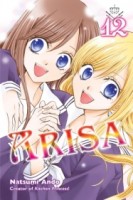
Arisa, Volume 12Arisa, Volume 12 by Natsumi Ando. Since its beginning Arisa has gone through so many disconcerting twists and turns, how is it possible that the twins look so utterly happy on the cover of the final volume? For the most part, I was satisfied with the ending of Arisa. Things aren’t resolved as happily as the cover might imply, which I find appropriate considering the darker aspects of the story. And I wouldn’t want everything to be tied up neatly. Once again though, some of the plot twists are a little ridiculous and over-the-top. I’m all for heightened drama, but I also like it to at least make some logical sense. Admittedly, Arisa can be a bit of a mess. Even so, I really enjoyed reading the series. Also included in this volume is a rather silly side story that takes place before the events of the main series. In this case it’s Arisa posing as her sister instead of the other way around. The results are amusing though not particularly believable. Granted, at this point I’m not expecting Arisa to be particularly believable anyway.

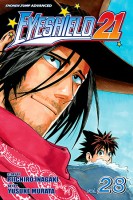
Eyeshield 21, Volume 28Eyeshield 21, Volumes 28-31 written by Riichiro Inagaki and illustrated by Yusuke Murata. I’ve discovered that, for some reason, I really like sports manga, even when that sport is something that I’m not particularly interested in in real life. For example, American football. Yet here I am thoroughly enjoying Eyeshield 21, completely caught up in the Deimon Devil Bats’ fight to reach the Christmas Bowl. And a fight it is. These volumes focus on the game between the Devil Bats and the Hakushu Dinosaurs with an emphasis placed on football as a combat sport. (I’ve actually never really thought of football that way before, so that was an interesting take on the sport for me.) The Dinosaurs have a habit of intentionally sending their opponents to the hospital, so it’s a fairly rough game. The face-off between the two teams also shows just how far Sena has come as a player since the beginning of the series. Once a weakling pushover, he’s now become much more confident in his abilities and in himself. I’m very excited to read more of Eyeshield 21.

Hetalia: Axis Powers, Volume 4Hetalia: Axis Powers, Volumes 4-5 by Hidekaz Himaruya. I know just as many people who absolutely hate the Hetalia franchise as I do people who absolutely love it. I wouldn’t necessarily call myself a rabid fan, but it is a series I follow. I do, however, generally prefer the anime adaptation over the original manga. For some reason, even though the anime and the manga both make the same jokes, I find the anime to be funnier. There are times that I just can’t seem to figure out what the punchline is supposed to be in the manga. The manga still can make me laugh, though, and I even occasionally learn a bit of history in the process, which I appreciate. The number of countries involved in Hetalia continues to grow with these volumes, including more female personifications which is nice to see. The Netherlands in particular seems to get a fair amount of page time this time, too. Hetalia does rely heavily on stereotypes for its humor, but I don’t get the feeling that they’re being used maliciously or to be deliberately offensive.

White BrandWhite Brand by Youka Nitta. Although I didn’t realize it until reading the afterword, apparently White Brand was Nitta’s first collection of boys’ love short stories. I’ve now read several of Nitta’s manga, but it seems that they tend to be fairly hit-or-miss for me. Despite Embracing Love actually being one of my favorite yaoi series, none of Nitta’s other works have really grabbed me. That hasn’t especially changed with White Brand, though I did like it more than The Prime Minister’s Secret Diplomacy. White Brand collects five short boys’ love manga. I’m not sure if it was an intentional or not, but a recurring theme throughout most of the stories is opposites. “White Brand” is about cousins with different color skin tones. “Teal End” is about two men from different countries. “Exhibition Painting” features men from very different classes and walks of life. “One Size Fits All” is somewhat frivolous story about a tall model and a much shorter man. “Hasta la Vista, Baby” is the only story that this play on opposites isn’t immediately obvious.

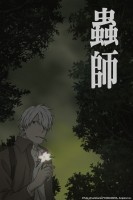
MushishiMushishi: Sun-Eating Shade directed by Hiroshi Nagahama. I won’t lie–I love both the Mushishi manga and the anime. I was very excited when the special episode was announced and thrilled when Crunchyroll picked it up so that I could actually watch it. Although about twice as long as the individual episodes of the anime series, Sun-Eating Shade matches the tone, atmosphere, and ambiance perfectly. I was very happy to see that the same animation style was kept for the special episode. The backgrounds are still gorgeous, the music is still haunting, the pacing is still relaxed and unhurried. Mushishi has always been a rather episodic series, but I liked how Sun-Eating Shade made references to and loosely tied together several stories adapted in the first season of the anime. If someone didn’t enjoy the original anime series, there is nothing in Sun-Eating Shade that will change their mind. But established Mushishi fans (like me) probably won’t be disappointed with the special episode. I’m looking forward to the second season of Mushishi a great deal.

Filed Under: FEATURES, My Week in Manga Tagged With: anime, arisa, Eyeshield 21, Hetalia, Hidekaz Himaruya, manga, mushishi, Natsumi Ando, Riichiro Inagaki, Youka Nitta, Yusuke Murata

Fairy Tail, Vol. 32

January 20, 2014 by Derek Bown 1 Comment

fairytail32Fairy Tail, Vol. 32 | by Hiro Mashima | Yen Press – The Grand Magic Games start in earnest with a game of “The Hidden” where the contestants must discern which of their opponents is real, in a way that makes me think Hiro Mashima was playing a bit of Assassin’s Creed at the time he wrote this story. Gray and Juvia try to win it for Fairy Tail, but the sinister Raven Tail marks them and constantly harasses them until they end the game at the bottom ranks.

From there, the tournament continues into regular combat with Fairy Tail doing their best but due to outside influence both Lucy and Jellal (who is disguised as Mystogan) lose their battles, ending with both their teams in dead last. It all ends, after some other battles from the different competing guilds, with Charle making a dire prediction for their future.

Where I enjoyed the last volume a lot more than I thought I would, this volume was a couple steps backward for me. The biggest problem is that we see exactly why tournament arcs are such a tiresome trope in action manga. It’s nothing but fights for several chapters as we get through all the non-Fairy Tail wizards. That’s not to say the fights aren’t interesting. In fact Mashima does mix things up by including other types of competition, and Lucy and Jellal’s fights are well done. In Jellal’s case it’s a matter of just being really funny, but Lucy’s fight is another matter.

While the outside interference and unfair methods practiced by Raven Tail during Lucy’s fight really make us hate them, I find that the fight falls flat because I am unable to suspend my disbelief that nobody would notice that Flare is threatening Bisca and Alzack’s kid to keep Lucy from fighting back. Are we seriously supposed to believe that these two don’t even bother looking at their kid from time to time? Even if they aren’t worried about her being kidnapped, being surrounded by friends and all, isn’t it common practice for parents to at least glance at their child every once in a while? I’m pretty sure that if I were a parent I would like to keep my child at least in my peripheral vision.

And if they were keeping her in their peripheral vision, how did they not notice the speck of bright red that suddenly appeared in the corner of their eyes! It’s all used to make Natsu look cool, which we’ve had more than enough of, when a different manga artist would have played how obvious the whole thing was as a laugh.

But the biggest problem with the volume is the stretch of individual fights right towards the end. We get the big game, we get Lucy’s fight, but then suddenly we get a bunch of characters fighting that we don’t care about. And while Jellal and Jura’s fight is great, we’ve still been fatigued on fights in general by the end and the volume itself doesn’t leave a good taste in our mouths. So as far as essential volumes of Fairy Tail go this one is not among them. There certainly are worse volumes out there but were I not an avid collector, as most manga fans are, I’d consider skipping this one.

A major problem this time around, even compared to last month’s volume, is the excessive fanservice. The fight with Lucy and Flare is impossible to take seriously solely because most of the panel layout seems to be to show off the assets of the fighters in the most erotic way possible. I don’t like to dismiss Lucy as the fanservice character, since she has had some great moments in the series, but her inclusion in the story is feeling more like she’s the one selling all the copies of this series to a target demographic of teenagers who haven’t figured out how to type the word “hentai” into google.

And yet, complain though I might, I do still enjoy this series. This just happens to be a volume that doesn’t have the useful distraction of good story or humor to distract from Mashima’s descent into complete ecchi artist.

Filed Under: FEATURES & REVIEWS, MANGA REVIEWS, REVIEWS Tagged With: Fairy Tail, manga, MANGA REVIEWS

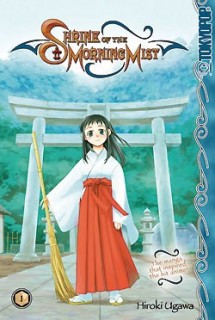
Shrine of the Morning Mist, Vol. 1

January 19, 2014 by Jocilyn Wagner

I am very pleased to introduce Jocilyn Wagner to readers of Experiments in Manga. Jocilyn doesn’t currently have a platform of her own, but she was still interested in occasionally writing about manga. And so, I’m happy to offer up some space here and welcome her to Experiments in Manga as a guest.

Greetings and Salutations! Some of you might know me from my love of yuri and occasional manga and light novel translations, but that’s not what I’m doing this time. Instead… I thought I’d introduce you to some of the most forgotten and/or unappreciated (usually for good reason) manga I own, which have, in all likelihood, never before been reviewed on a Manga Bookshelf blog!

* * *

I’d like to begin with a title that was so under-sold and under-appreciated it literally debuted at number 92 in graphic novel sales. The year was 2006; it was the end of an era. I’d just wrapped up my undergrad and year-long stint as president of the Western Michigan Anime Addicts and my heart was still full of some of the incredible anime we’d enjoyed: Paradise Kiss, Madlax, Last Exile, Read or Die, the list goes on. In my youthful vigor and utter boredom I was working on one of the many anime subtitling teams (in the days before Crunchyroll a great many of these existed if you can believe it!) editing scripts for #Ishin, when I was asked to finish up work on a silly series no one was watching. It was bizarre, ugly and ridiculously cute, and the episodes were so short it would be a breeze. I’m speaking of course of Asagiri no Miko (朝霧の巫女). You may now groan and pinch your noses in despair and hopefully save yourself the trouble of reading the following review of TokyoPop’s 2006 edition of the series they called “Shrine of the Morning Mist.”

Shrine of the Morning Mist, Volume 1

The name has always been something of a sticking point with me since a literal translation would be closer to “shrine maiden of the morning mist” but then, I suppose TokyoPop didn’t want to confuse people with the bull in a china shop, Kannazuki no Miko, for which they’d already used the term (never mind the fact that the miko in Asagiri no Miko actually resemble real miko and Himeko and Chikane are rather infamous, but not for their pious purity), but I digress.

Ugawa Hiroki’s story is usually seen as a seinen action comedy, but I always thought of it as a supernatural slice-of-life romance. In the fine tradition of early 2000s dating sims, the story revolves around a loner teenage dude (Amatsu Tadahiro, usually referred to as Hiro) who returns to the home of his childhood and some of the girls he left heartbroken in his wake. In this case, the brokenhearted is his cousin Yuzu who is painted to be a fiery but loveable tsundere, as well as his closest childhood friend. Yuzu is the middle child of three girls: Kurako, the eldest, is quiet, thoughtful and spiritually driven and has made it her goal to bring the two star-crossed lovers back together. She reminds me of a cross between Belldandy and Toudou Shimako. Yuzu’s younger sister Tama-chan is the fun rascal who dotes on “Hiro Onii-chan” but often speaks with a maturity beyond her years. Actually she very closely resembles Yukino’s sister Kana from Kare Kano, except she isn’t a manga geek. Their father, in his insane knee-jerk reactions to everything, sketchy behavior and extreme unpopularity could easily be mistaken for Shimura-sensei of Azamanga Daioh! fame. A chapter or two into the series, we’re introduced to the girls’ mother Miyuki. I’m not at all sure how to describe Miyuki since she isn’t given a lot of dialogue in this volume. She’s really rather unlike other manga moms: she arrives on the scene with a samurai-like speed, agility and appearance, wielding a bouken and saves Hiro from becoming breakfast to a giant cyclops. The reader’s told she’d been sent to Izumo, so one might infer she’s a gifted Shinto priestess, but it’s not at all clear at this point. Finally, we’re introduced to Koma-san, a mysterious short-tempered but otherwise solemn woman who claims to have known Hiro’s father, though he had died before Hiro was born and this woman looks to be in her mid-to-late 20s. The way Koma is drawn, I can’t help but be reminded of Yumura Kirika, except Koma is endowed with some rather annoying feline qualities. No doubt inspired by a little known game at the time, Tsukihime.

The plot is tragically somewhat thin. Hiro has been traveling, searching out his way in life and has finally come home to the quiet town of his childhood (Miyoshi, in Hiroshima Prefecture). His cousins, the Hieda sisters put him up for the night but are hesitant to let him go since it’s obvious Yuzu still has feelings for him. From the moment he arrives, Hiro is hellhounded by a mysterious sorcerer who wears a tengu mask and summons a host of cruel-intentioned spirits to eliminate Hiro and his spiritual potential before it upsets the balance of something or other. Tengu-san and Hiro have many annoying random encounters in which Tengu-san is always easily defeated by the sisters, and a thoroughly incompetent yet nevertheless unappreciative Hiro is saved from certain doom in the nick of time. One might compare Hiro to Morisato Keiichi, except Hiro’s not all that nice or mature. He’s also unmoved by Yuzu’s total red-faced embarrassment (which comes into play whenever he’s around), though he obviously remembers what transpired between them five years ago. Yuzu’s mom and sisters are constantly trying to push Hiro and Yuzu together. That’s basically the entire plot.

Tune in next time for another segment of The Manga That Time Forgot/Was Hoping To Forget. ~jocilyn

Filed Under: FEATURES Tagged With: Hiroki Ugawa, manga, Shrine of the Morning Mist, Tokyopop

Discovering Manga: Podcasts, Part 3

January 17, 2014 by Ash Brown

Manga Dome PodcastOver the last few years, I’ve made an effort to track down podcasts that feature manga. I haven’t found that many that focus on manga exclusively, but there are anime and comics podcasts that address manga at least on occasion. A few months ago I posted Discovering Manga: Podcasts Redux which was a quick update and overview of podcasts that I had discovered and written about in the past. The post also included a list of podcasts that I was aware of but hadn’t written about yet. And so, as promised, here is a quick look at a few of the podcasts from that list, all of which happen to have started in 2013.

The first episode of the Manga Dome Podcast was released in April 2013. The podcast generally updates weekly around Sunday and is the work of Lori Henderson of Manga Xanadu, a manga blog that I’ve been following for a few years now. The blog has written posts as well, but nowadays the focus seems to be on the podcast. Generally, Manga Dome is a one-person show although recently the podcast had its first guest. Each episode is around ten minutes or so in length and features news, reviews, and other commentary. As might be implied by its name, the focus of Manga Dome is on manga. Lori knows her own taste in manga quite well but is still willing to try manga that might be out of her comfort zone. She doesn’t tend to enjoy manga with heavy ecchi elements, nor is she a particular fan of horror and gore. Shoujo, mysteries, and fantasy are more to her liking. What I probably appreciate most about Manga Dome is Lori’s emphasis on digital manga. It’s nice to be able to get a quick rundown on the digital landscape as well as other manga news.

Another podcast devoted to manga is the Weekly Shonen Jump Podcast which started in May 2013. This podcast is put together by a crew of manga editors and others who work for Viz Media. It provides an insider’s look into Viz’s digital Weekly Shonen Jump and includes a recap of the most recent issue. Released on Mondays, each episode is around an hour in length and generally follows the same format, starting out with introductions (which is handy as different people participate each week), followed by news, the Weekly Shonen Jump review, and ending with questions from listeners (gathered from the show comments, Twitter, Facebook, and surveys.) Although the focus of the Weekly Shonen Jump podcast is on Weekly Shonen Jump, it’s also about manga in general. I particularly like listening to the Weeekly Shonen Jump podcast to learn more about the publishing side of the manga industry, but everyone participating are fans as well. Since there is a group involved the podcast’s style tends to be somewhat conversational, which I enjoy.

As part of August 2013’s 801 Manga Moveable Feast, Otaku Champloo’s Khursten Santos invited two of her fellow fujoshi to talk with her about boys’ love manga. It went over very well and she had so much fun that the Fujojocast was born. Fujojocast doesn’t have a set schedule and there have only been three episodes so far, all over an hour in length. Despite some sound and microphone issues, I’ve enjoyed them all. Fujojocast features fans, translators, and academics from all over the world who share an unabashed love for boys’ love. I appreciate the women’s enthusiasm and intelligent conversation immensely. As the host, Khursten sets the episodes’ themes and leads and organizes the discussions. Fujojocast isn’t always about manga specifically, and it’s not always strictly about boys’ love, either. Other topics discussed include anime (the second episode is all about Free!: Iwatobi Swim Club, for example), conventions, merchandise, shipping, and general fujoshi fandom. I’m definitely looking forward to future episodes, whenever they might come out.

Filed Under: FEATURES Tagged With: manga

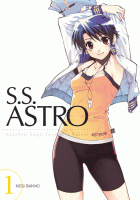
S.S. Astro: Asashio Sogo Teachers’ Room, Volume 1

January 15, 2014 by Ash Brown

S.S. Astro, Volume 1Creator: Negi Banno
U.S. publisher: Yen Press
ISBN: 9780759528987
Released: August 2008
Original release: 2007

S.S. Astro: Asashio Sogo Teachers’ Room is a yonkoma, or four-panel, manga created by Negi Banno. The first volume of S.S. Astro was originally published in Japan in 2007. Yen Press released the English translation of the manga in 2008, around the same time that it was licensing several other yonkoma manga series. As for S.S. Astro, only one volume was ever released. As far as I can tell, the series has been on hiatus since 2007 in Japan. Although I believe that Banno has created more S.S. Astro strips than those found in the first volume, there have not been enough to collect into a second volume. I have no idea if Banno plans to ever return to the S.S. Astro manga, but because so many years have passed it seems increasingly unlikely. S.S. Astro was actually one of the first yonkoma manga that I ever read. I originally came across it a few years back while searching for manga in English with yuri elements, which used to be a little more difficult to find than it is now.

Seven years after she graduated, Izumi Maki is back at her old high school. Except this time she’s one of the ones responsible for molding the young minds of Tokyo’s Asashio Integrated Public High School. It’s her first year as a teacher. Maki’s now in charge of both health and physical education classes, not to mention a home room with nearly forty students. (Now she just somehow needs to find a way to remember all of their names.) Maki’s not the only fresh blood at Asashio. Her good friend Yuko Nagumo, the new Japanese instructor, is also a first year teacher. The nursing teacher Setsuna Arai has a couple of years of experience on them and Maki’s backup teacher Kaname Karasuma, the instructor for the school’s English course, has even more. She also has a huge crush on Maki, not that Maki has noticed. Throw in all of the other teachers and their quirks, as well as Maki’s older brother, and high school is just as entertaining and complicated as it was the first time around.
Yonkoma manga tend to be fairly hit-or-miss for me, but in the case of S.S. Astro it’s mostly a hit. As with many four-panel manga, whether or not someone actually likes the series will depend on whether or not the reader likes the characters as they are. Although there are plenty of running jokes in S.S. Astro, the series tends to be episodic without much of an overarching plot and very little in the way of character development. Fortunately, I do like the characters. Quite a bit, actually. Maki’s a scatterbrain but earnest. Nagumo can put away an impressive amount of food and is closet fujoshi. Arai has a delightfully sadistic streak. Of the four main characters, Karasuma is the most responsible one, at least when she isn’t completely lovestruck. About halfway through the first volume of S.S. Astro the rest of the Asashio staff are more thoroughly introduced. Prior to that they were largely relegated to the background. I like the other teachers as well and wish more time could have been spent getting to know them better, too.
Quite a few manga licensed in English take place in a school setting. What helps to set S.S. Astro apart is that it focuses on the teachers rather than on the students. I find this to be a refreshing change of pace. One of the reasons that I’m particularly fond of S.S. Astro is that the manga focuses on the adults and their lives and relationships. Granted, the main cast are all relatively young and still in their twenties, but there are some older characters as well. Maki and the others can be immature at times, but in the end they are adults with adult responsibilities. Which is not to say there isn’t room for fun in S.S. Astro; being an adult has its perks, too. Video games, drinking parties, and a little bit of workplace romance (straight and otherwise) all have their place in the series. The artwork tends to be rather cute, too. In general, I find S.S. Astro to be fun and funny. S.S. Astro may not be a manga that I go out of my way to recommend to people, but it is one that I quite enjoy. I only wish that there was more of it.
Filed Under: REVIEWS Tagged With: manga, Negi Banno, S.S. Astro, Year of Yuri, yen press

My Week in Manga: January 6-January 12, 2014

January 13, 2014 by Ash Brown

My News and Reviews

Two reviews were posted at Experiments in Manga last week! The honor of the first in-depth manga review of the month (and of the year, for that matter) goes to Tetsu Kariya and Akira Hanasaki’s Oishinbo, A la Carte: Fish, Sushi & Sashimi. I love food, I love manga, and so I love Oishinbo, too. I happen to really like fish and sushi as well, so I particularly enjoyed this volume. I also posted a review for Edogawa Rampo’s mystery adventure The Fiend with Twenty Faces which is the first novel in his series The Boy Detectives. I’ve read some of his stories and essays written for adults, but this was his first work for younger audiences that I read. It’s a lot of fun.

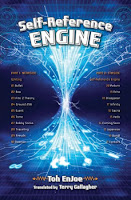
As for news and other interesting things found online: The English translation of Toh EnJoe’s Self-Reference Engine (one of my most notable release of 2013) has been nominated for a Philip K. Dick Award. The University of Michigan will be hosting an international conference on Natsume Sōseki from April 18 through April 20. (If you happen to be in Michigan around then, it’s be free and open to the public!) After months of no news, it looks like those who supported the Kickstarter for Osamu Tezuka’s The Crater may actually receive their rewards. And finally, Joe McCulloch takes a look at some of Suehiro Maruo’s most recent work over at The Comics Journal. Now if only more of his manga would be licensed in English!

Quick Takes

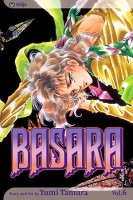
Basara, Volume 6Basara, Volumes 6-10 by Yumi Tamura. I love this series so much! It really is a shame that Basara is going out-of-print in English, but at least Viz has begun to release it digitally as well. The story is epic and engaging and the characters are complex and multi-layered. These particular volumes of Basara include the Okinawa story arc, which I especially enjoyed. It’s very interesting to see how Tamura is using events and politics from throughout Japan’s history to inform her post-apocalyptic world and culture. There are definite echos from the Warring States period, World War Two, and so on. Just as it was historically, in Basara Okinawa is a separate country from Japan that maintains its own traditions, relies heavily on trade, is largely at the mercy of foreign military influence, and is beset by natural disasters. Also, it’s the homeland of karate, which plays a part in some of the battles. (As a karateka myself, I couldn’t help but appreciate this.) I’m really looking forward to reading more of the series.

Entangled CircumstancesEntangled Circumstances by Kikuko Kikuya. I ended up enjoying Entangled Circumstances much more than I thought I would. I found the first chapter or so to actually be a little boring, but by the end of the volume Entangled Circumstances had managed to turn itself into a rather funny, and even a little sweet, boys’ love story. Actually, bonus chapters after the main story were the funniest and probably the favorite part of the manga for me because of that. Shibui and Himeko were once college classmates, but now they work at the same advertising agency. Himeko’s been in love with Shibui for a while now, but after a past awkward love confession, things have been strained between the two men. Often they seem to act like high schoolers rather than full-grown adults, so it’s difficult to take Entangled Circumstances completely seriously. It’s a lighthearted and fluffy sort of manga. The manga is nothing extraordinary, and I don’t know that I will necessarily need to read it again, but it was quite enjoyable.

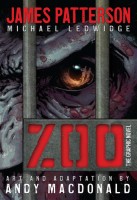
ZooZoo by Andy MacDonald. I haven’t read the original novel Zoo, a science fiction thriller written by James Patterson and Michael Ledwidge, but MacDonald’s graphic novel adaptation somehow came into my possession, so I figured I’d give it a try. Since I haven’t read the original, I can’t definitively say how the graphic novel works as an adaptation, but I get the impression that MacDonald has been very faithful to the source material. The Zoo graphic novel can be somewhat text-heavy and some of the plot lines are a little compressed (though not exactly rushed) but I was never confused as to what was going on. Even so, I may have rolled my eyes a bit at the plot’s development and some of the rather predictable “twists.” Unfortunately, Zoo just doesn’t have that original or great of a story to begin with and I had a difficult time suspending my incredulity. The ending in particular was rather disappointing. Zoo starts out as a fairly action-packed, and bloody, doomsday scenario, but its heavy-handed moral can be a bit much.

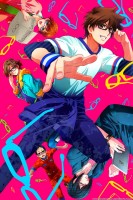
MeganebuMeganebu! directed by Soubi Yamamoto. I already knew that I enjoyed Yamamoto’s visual style from her previous work and so I wasn’t disappointed by Meganebu!‘s brightly colored and slightly eccentric animation. Even so, it took a few episodes for the series to really grow on me. There’s not really much of a plot to Meganebu!. There are the members of the Glasses Club and their continuing efforts to create a pair of glasses with X-Ray vision (with some very unexpected and explosive results) but mostly the series just follows their daily lives and the trouble they all get into. Once I got over the fact that Meganebu! is fairly pointless, I could sit back and enjoy its peculiar sense of fun. As a glasses wearer myself, I could particularly appreciate all of the humor surrounding eyeglasses. To the members of the Glasses Club, glasses are more than just a fashion accessory. Neither are they simply used to correct vision. Glasses have the power to change the world. Meganebu! is an absurd anime, but I’ll admit to enjoying it.

Filed Under: FEATURES, My Week in Manga Tagged With: Andy MacDonald, anime, basara, comics, Kikuko Kikuya, manga, Meganebu, Yumi Tamura

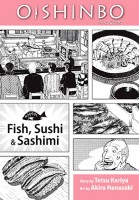
Oishinbo, A la Carte: Fish, Sushi & Sashimi

January 8, 2014 by Ash Brown

Oishinbo, A la Carte: Fish, Sushi & SashimiAuthor: Tetsu Kariya
Illustrator: Akira Hanasaki

U.S. publisher: Viz Media
ISBN: 9781421521428
Released: July 2009
Original release: 2005
Awards: Shogakukan Manga Award

With over one hundred volumes, it is very unlikely that the award-winning food manga Oishinbo will ever be licensed in its entirety in English, especially considering that the series is still ongoing at this point. However, seven volumes of Oishinbo, A la Carte have been released by Viz Media under its Signature imprint. These volumes are thematic collections which select stories from throughout the series proper. Fish, Sushi & Sashimi was the fourth Oishinbo, A la Carte collection to be published by Viz and was released in 2009. However, in Japan Fish, Sushi & Sashimi was actually the fifth volume in the series and was published in 2005. As a lover of both food and manga, it probably shouldn’t be too surprising that I enjoy Oishinbo immensely. And I’m not the only one. The series, written by Tetsu Kariya and illustrated by Akira Hanasaki, has been in serialization since 1983 and in 1987 the creators received a Shogakukan Manga Award for their work.

Because Oishinbo, A la Carte is a selection of stories from Oishinbo, the overarching story of the original series is obscured. Instead of the ongoing plot, the focus of Oishinbo, A la Carte is very much on the food itself. Fish, Sushi & Sashimi collects eight different stories centered around fish. Sushi rolls are probably one of the first things that come to many people’s minds when considering Japanese fish dishes, but not a single one will be found in Fish, Sushi & Sashimi. Generally, the fare tends to be simpler and fish the primary ingredient. The fish specifically featured in Fish, Sushi & Sashimi include white trevally, chub mackerel, sweetfish, tiger blowfish, freshwater goby, flounder, salmon, and shinko, many of which are considered to be some of the best and most desirable or delectable fish in Japan. There is also a wide variety of preparations shown, everything from raw sashimi to fried tempura.

When dealing with fish as a source of food, freshness is key. This is true for most seafood, too, and is something that most people probably know. However, Fish, Sushi & Sashimi shows that there is much more involved in the freshness of fish than just how long it has been since it has been caught. Fish are very sensitive to changes in the environment in which they live. Simply put, quality fish come from quality waters. The healthier and less polluted those waters, the better the fish. Additionally, the same fish can taste significantly different due to seasonal changes, where it is caught (and how far it has traveled afterwards), or when in its life-cycle it is eaten. As is often the case in the Oishinbo, A la Carte stories that I have so far read, Fish, Sushi & Sashimi emphasizes the importance of locally sourced and sustainable foods, which is particularly true of fish.

One of the highlights of Oishinbo, A la Carte is Hanasaki’s artwork. The people tend to be stylized but the food is always realistically drawn. The catching and cleaning of the fish, the steps in the various dishes’ preparations, and the skilled knife-work employed are all important to Fish, Sushi & Sashimi. Because Fish, Sushi & Sashimi focuses on aquatic life both in and out of its natural environments, Hanasaki also has the opportunity to beautifully illustrate Japan’s oceans, rivers, and other waterways. Another thing that particularly struck me about this volume of Oishinbo, A la Carte was how many young people were included in the stories. Family drama has always been a part of Oishinbo with the intense father-son rivalry between Kaibara Yūzan and Yamaoka Shirō. It’s extremely entertaining to watch them battle it out over and with food, but it’s also nice to see some more wholesome family relationships in the series, too.

Filed Under: REVIEWS Tagged With: Akira Hanasaki, manga, Oishinbo, Shogakukan Manga Award, Tetsu Kariya, viz media, VIZ Signature

My Week in Manga: December 30, 2013-January 5, 2014

January 6, 2014 by Ash Brown

My News and Reviews

Last week I announced the 4-Koma for You Winner. In case you’re looking for something to read, the post includes a list of yonkoma manga that have been released in print in English, too. I also posted December’s Bookshelf Overload last week, for those of you interested in following my adventures in buying way too much manga and other media. Finally, over the weekend I posted a review of Delavier’s Mixed Martial Arts Anatomy. This is one of the most tangentially related reviews I’ve written at Experiments in Manga. Why is it here? Simply because I’m a karateka and found it to be a useful book. It’s a great strength training resource for any martial artist. Plus, it has lots of illustrations.

I’ve more or less been on vacation for the last two weeks, so I haven’t been online much except to make sure that things were updated here at Experiments in Manga. Even so, there were two things in particular that caught my eye recently. First and foremost, the Massive anthology of gay manga originally scheduled to be published by PictureBox has been picked up by Fantagraphics! Right now, it looks like we should see the release sometime in October 2014. The other news that I was excited to hear about is that we’ll be getting a second season of the Mushishi anime nearly ten years after the first season aired. I loved Yuki Urushibara’s original manga (which is now unfortunately out-of-print in English) and I loved the first anime series so I’m looking forward to the second season a great deal.

Quick Takes

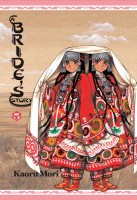
A Bride's Story, Volume 5A Bride’s Story, Volume 5 by Kaoru Mori. The art in A Bride’s Story always blows me away. Mori’s illustrations are so beautiful and detailed that it’s no surprise that there’s such a long wait in between each volume’s release. Most of the fifth volume of the series is devoted to the wedding between the twins and their husbands-to-be. The best word that I can think of to describe this volume is “joyous.” Mori shows the preparations that both families make for the happy occasion–a celebration that lasts an entire week. There’s dance and song, levity, plenty of food, and numerous guests. It’s extremely satisfying to see the entire community’s participation in the event. The manga as a whole is a gorgeous work, but the wedding itself is quite lovely. I enjoyed seeing the twins’ story develop. Their outgoing personalities might be annoying for some readers, but in the end I found the two of them to be quite endearing. Now begins the long wait for the next volume of A Bride’s Story.

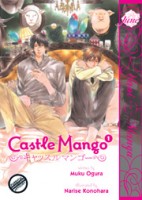
Castle Mango, Volume 1Castle Mango, Volume 1 written by Narise Konohara and illustrated by Muku Ogura. Despite what the cover and title page of Digital Manga’s release indicate, Konohara wrote Castle Mango while Ogura was responsible for the artwork. Konohara is the same author who wrote About Love, which I quite enjoyed, so I was interested in reading Castle Mango. Both manga are slightly atypical boys’ love stories. Instead of being straightforward man-meets-man romances, the stories are more layered. There is an emphasis on well-developed characters and actual plot; it’s not just about getting guys into bed with each other. The leads of Castle Mango are rather unusual as well. Yorozu’s family owns and runs a love hotel while Tagame is a well-known porn director. Yorozu more or less blackmail’s Tagame into a relationship in order to keep him away from his brother, but he doesn’t even really like the older man. Their story is concluded in the second and final volume of Castle Mango. I’m very curious to see how things unfold, so I’ll definitely be picking it up.

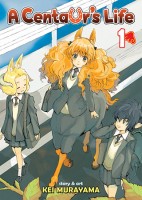
A Centaur's Life, Volume 1A Centaur’s Life, Volume 1 by Kei Murayama. One of several “monster girl” manga recently released by Seven Seas, A Centaur’s Life is far less ecchi than the other titles. Plus, this one includes plenty of monster boys in addition to the monster girls, which I greatly appreciate. The manga is definitely centered around the series’ young women, though. The titular centaur is Kimihara Himeno; the manga is mostly a slice-of-life story which follows her and her other high school friends. (As a side note, I adore Himeno’s wild mass of hair on the cover.) Some people might find reading the first chapter a little uncomfortable as the story revolves around the girls’ privates, but following chapters are much less questionable. Overall, the manga was rather charming. And I am interested in learning more about the world that Murayama has imagined; it seems that some significant thought has been put into it. Although not the focus of the series, politics, law, cultural differences, disputes between races, and history have all been taken into consideration.

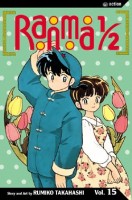
Ranma 1/2, Volume 15Ranma 1/2, Volumes 15-20 by Rumiko Takahashi. It’s been so long since I’ve read any of Ranma 1/2 that I had forgotten how much I love the series. After the main characters and basic premise are established, the manga becomes fairly episodic so it’s easy to pick up part way through the series and still know what’s going on. I find Ranma 1/2 to be hilarious and particularly enjoy the absurd martial arts that Takahashi comes up with. These particular volumes feature martial arts based around eating food extremely quickly and cheerleading, just to give two examples. I like the characters and I like the story, as silly and superfluous as it can be. Akane and Ranma seem to be no closer to getting married than they were at the beginning of the series. They argue quite a bit, but there are moments of genuine affection, too. Granted, those moments are frequently interrupted and don’t tend to last very long. The series’ off-the-wall comedy won’t be to everyone’s taste, but for me Ranma 1/2 is highly entertaining and a lot of fun.

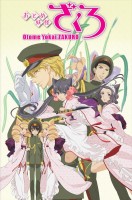
Otome Yokai ZakuroOtome Yokai Zakuro directed by Chiaki Kon. The Otome Yokai Zakuro anime is based on an ongoing manga series by Lily Hoshino (which hasn’t been licensed in English.) The story takes place in an alternate version of Japan’s Meiji Era in which yokai and humans coexist. The office of Spirit Affairs is created in order to improve relations between the two groups. It’s made up of a small contingent of military officers and half-spirit girls who team up to work together. I’ll admit, I liked the first part of the series which explored the concerns over Japan’s Westernization and loss of traditions through the conflicts between humans and yokai much more than I did its end. Seeing as the opening has a bit of a spoiler in it, the series’ major plot twist was clearly planned well in advance, but it just didn’t seem to flow well as a whole as the narrative suddenly changes direction. The romantic subplots are broadcast from the very first episode–it’s obvious who will be falling in love with who–so none of those developments were particularly surprising or unexpected, either.

Filed Under: FEATURES, My Week in Manga Tagged With: anime, Bride's Story, Castle Mango, Centaur's Life, Kaoru Mori, Kei Murayama, manga, Muku Ogura, Narise Konohara, Otome Yokai Zakuro, Ranma 1/2, Rumiko Takahashi

Manga Giveaway: 4-Koma for You Winner

January 1, 2014 by Ash Brown

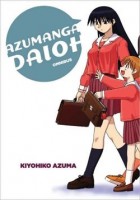
Azumanga Daioh OmnibusAnd the winner of the 4-Koma for You manga giveaway is…Cassandra!

As the winner, Cassandra (who currently writes at The Huge Anime Fan) will be receiving the Yen Press omnibus of Kiyohiko Azuma’s yonkoma manga Azumanga Daioh. For this giveaway, I asked entrants to tell me a little about the four-panel manga that they had read. Check out the 4-Koma for You comments for all of the details. And if you’re looking for some yonkoma manga to read, I’ve taken this opportunity to pull together a list of some of the titles that have been licensed in English.

4-Koma Manga in English (in print)
.hack//4Koma by Koichi Sumimaru
Azumanga Daioh by Kiyohiko Azuma
Bloody Brat written by Yuuki Kodoma, illustrated by Kanata Yoshino
ChocoMimi by Konami Sonoda
Crayon Shinchan by Yoshito Usui
Dojin Work by Hiroyuki
GA: Geijutsuka Art Design Class by Satoko Kiyuduki
Great Place High School by Naduki Koujima
Hetalia: Axis Powers by Himaruya Hidekaz
Ichiroh! by Mikage
K-ON! by Kakifly
Lucky Star by Kagami Yoshimizu
Neko Ramen by Kenji Sonishi
Palepoli by Usamaru Furuya (excerpted in Secret Comics Japan)
Oh My Goddess!: Adventures of the Mini-Goddesses by Kosuke Fujishima
Shoulder-a-Coffin Kuro by Satoko Kiyuduki
Shugo Chara Chan! by Peach-Pit
S.S. ASTRO: Asashio Sogo Teachers’ Room by Negi Banno
Sunshine Sketch by Ume Aoki
Suzunari! by Shoko Iwami
Tori Koro by Hairan
Welcome to Wakaba-soh by Chaco Abeno

Filed Under: UNSHELVED Tagged With: manga

My Week in Manga: December 23-December 29, 2013

December 30, 2013 by Ash Brown

My News and Reviews

Last week I posted a review of Hinoki Kino’s manga No. 6, Volume 4. The series has been getting better with each installment and things are starting to get really good. I also wrote a little bit about some of the manga, comics, and fiction releases that for me were particularly Notable in 2013. It’s not exactly a “best of” list, and it isn’t exactly a list of my favorite manga of the year, either. Basically it’s a list of interesting releases from 2013. And speaking of 2013, there’s still time to enter the last manga giveaway of the year! Check out the 4-Koma for You manga giveaway for a chance to win the omnibus edition of Kiyohiko Azuma’s yonkoma manga Azumanga Daioh.

Quick Takes

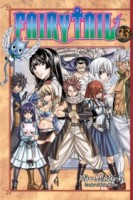
FairyTail, Volume 33Fairy Tail, Volume 33 by Hiro Mashima. It’s the second day of the Grand Magic Games and it’s still not looking good for the two Fairy Tail teams, although some of their members have surprising victories. Unfortunately, considering their prior string of defeats, it’s not enough to make much of a difference this early in the tournament. There are some great battles and moments of humor in this volume, but I still don’t find the tournament arc to be as compelling as the arcs that came before it. New characters continue to be introduced; I particularly enjoyed the addition of Bacchus, a powerful wizard from the Quatro Cerberus guild. Personality-wise, he can be a bit of a drunken jerk and isn’t always particularly likeable. What caught my interest is that his style of magic is based on Piguaquan, a legitimate Chinese martial art. Not too surprising considering his name, Bacchus combines this with Zui Quan, or “drunken fist.” Granted, it’s the fictionalized version of drunken fist that requires the practitioner to actually be intoxicated, but this is fitting and meshes well with the existing magic systems in Fairy Tail.

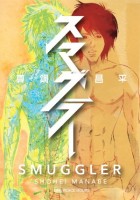
SmugglerSmuggler by Shohei Manabe. Originally released in English by Tokyopop, Smuggler is now available in a new edition from One Peace Books. I missed the manga the first time around, and since it also received a live-action film adaptation, I was particularly curious to read it. Kinuta is a failed actor who has accumulated a fair amount of debt. In order to pay back what he owes he has been smuggling and illegally dumping cargo outside of Tokyo. What he didn’t initially realize was that he was helping to transport and dispose of dead bodies for the yakuza. And now that he does know, Kinuta owes the mob his life as well as his money. When a job goes terribly wrong and an extraordinarily dangerous assassin escapes on his watch, Kinuta suddenly finds himself pulled even deeper into Japan’s underworld. Smuggler is a dark and violent manga, quickly paced, and unrelenting. It’s definitely not for the faint of heart. Smuggler held my interest, and there were some marvelously gut-wrenching scenes, but in the end I can’t say that the manga left much of a lasting impression on me.

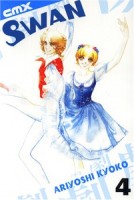
Swan, Volume 4Swan, Volumes 4-9 by Kyoko Ariyoshi. I am still completely in love with Swan and am astounded that it has taken me this long to actually get around to reading it. The series is incredibly well done–it’s just so intense and passionate, not to mention beautifully drawn. I’m also learning a bit more about ballet and its history as I read, which I count as a bonus. There are quite a few themes being addressed in these particular volumes. One of the themes that is especially prominent deals with sacrifice and what people are willing to give up in order to pursue what the truly love. It’s not always an easy decision. As someone who was deeply involved in the performing arts (in my case music, not dance), it’s a conflict with which I can personally identify. The characters in Swan all have to struggle to find the balance between their lives as dancers and their relationships with other people. Matters of love and romance complicate things greatly, but they also serve as a source of inspiration for creative expression. Swan piles on the drama and it’s fantastic.

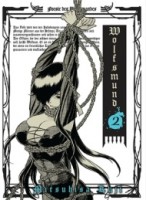
Wolfsmund, Volume 2Wolfsmund, Volume 2 by Mitsuhisa Kuji. While the first volume of Wolfsmund was violent and intense, the second volume is arguably even more so. In response to the rebellion gaining strength and numbers, the questioning of those trying to cross through the Wolf’s Maw at Sankt Gotthard Pass has become even more invasive and thorough. The gate’s overseer Wolfram–who is almost always shown with a terrifyingly pleasant smile on his face–seems to take particular delight in this. In order to get the information he needs, he’s more than willing to order the death or torture of a person no matter who they are. Cruelty isn’t limited to Wolfram. Even the rebellion’s heroes are capable of terrible deeds. I am a fan of dark historical manga, so Wolfsmund is right up my alley. Wolfsmund is definitely for mature readers. Considering its brutal nature (women and girls in particular suffer greatly in this volume) it’s not a series that I would recommend to just anyone. That being said, I am looking forward to the next volume.

Filed Under: FEATURES, My Week in Manga Tagged With: Fairy Tail, Hiro Mashiba, Kyoko Ariyoshi, manga, Mitsuhisa Kuji, Shohei Manabe, Smuggler, swan, Wolfsmund

Random Musings: Notable in 2013

December 28, 2013 by Ash Brown

Despite having written at Experiments in Manga for over three years, I have never once attempted to create a “best of the year” list and I’m not about to start. However, I thought it would be interesting to write a post reflecting on what I have read in the past year. This isn’t a best of list. It’s not even necessarily a list of my favorite releases of the year (although, some of them certainly are). Instead, it’s a collection of manga, comics, and fiction from 2013 that, for one reason or another, were particularly notable for me.

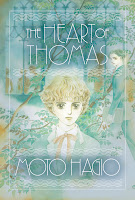
The Heart of ThomasI’ll start out with Moto Hagio’s The Heart of Thomas. Fantagraphics released the entire series in a beautiful, hardcover omnibus. Technically, I think it was published at the end of 2012, but I wasn’t able to get my hands on one until 2013. I adore Hagio’s manga and wish more of it was available in English. The Heart of Thomas in particular is a historically significant work and one of the precursors to the boys’ love genre. Plus, it’s a wonderful work in its own right.

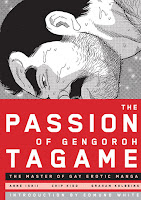
The Passion of Gengoroh TagameThe Passion of Gengoroh Tagame: The Master of Gay Erotic Manga probably couldn’t be more different from The Heart of Thomas, but I anticipated its release just as much. Tagame is an incredibly influential gay comics artist. The volume was not only the first collection of his work to be released in English, it was also the first collection of bara manga to be released in print. Happily, it won’t be the last. More of Tagame’s manga is already scheduled to be published.

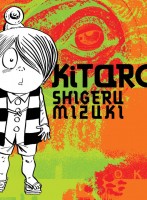
KitaroI have become increasingly interested in yokai over the last few years. And so I was thrilled when Drawn & Quarterly released Kitaro by Shigeru Mizuki. The volume collects stories from the first few volumes of Mizuki’s GeGeGe no Kitaro which is the yokai manga that started it all and which continues to influence creators to this day. I found Kitaro to be utterly delightful and can understand why it’s so well-loved. I hope more of the series will be translated.

Mobile Suit Gundam: The Origin, Volume 1I picked up Mobile Suit Gundam: The Origin for one reason–it was written and drawn by Yoshikazu Yasuhiko. I’m not at all a Gundam fan, but I am a fan of Yasuhiko’s work. Even so, I didn’t anticipate how much I would enjoy The Origin. The manga ended up being an extremely well done space opera. It doesn’t hurt that Vertical’s edition of the series is one of the highest quality manga releases available in English, either. I’m still not a Gundam fan, but I am a fan of The Origin.

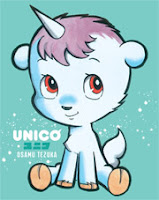
UnicoAnother manga that I was pleasantly surprised by was Osamu Tezuka’s Unico. As much as I appreciate Tezuka’s work, I will admit to have grown a little tired of it. (I wish that other classic manga received the same amount of attention in English.) I approached Unico more as a curiosity than anything else; the full-color artwork and unusual page layouts had caught my attention. It turned out to be an endearing manga that is both heartbreaking and charming.

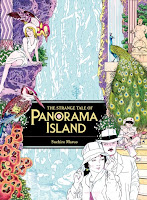
The Strange Tale of PanoramaAfter years of delay, Suehiro Maruo’s The Strange Tale of Panorama Island was finally released by Last Gasp in 2013. The manga is an adaptation of Edogawa Rampo’s novella Strange Tale of Panorama Island which, coincidentally, was also released in English in 2013. I cannot think of a more perfect artist to adapt Rampo’s work; Maruo’s exquisite, sensual, and erotically charged illustrations with hints of the macabre are an ideal fit. The Strange Tale of Panorama Island was worth the wait.

Wandering Son, Volume 4As for continuing series in 2013, Takako Shimura’s Wandering Son remains a manga that is incredibly important to me on a very personal level. I’m pretty sure that I’ve mentioned it before, but Wandering Son has quite literally been life-changing for me. In addition to that, I simply think it’s a wonderfully sensitive and sincere look at personal identity. Fantagraphics released both the fourth and fifth volumes of Wandering Son in 2013; I’m looking forward to reading more of the series great deal.

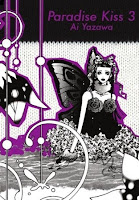
Paradise Kiss, Part 32013 also saw the release of Ai Yazawa’s Paradise Kiss, Part 3–the third and final volume in Vertical’s edition of the series. I missed out on the manga when it was originally licensed by Tokyopop and I’m very glad to have had the opportunity to read it. Over the last year, I have been extremely impressed by Yazawa’s work. I don’t have a particular interest in fashion, but the complex characters and complicated relationships in Paradise Kiss were extraordinary.

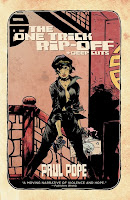
The One Trick Rip-Off + Deep CutsThe One Trick Rip-Off + Deep Cuts is a fantastic anthology which collects fifteen comics by Paul Pope, including those he created for Kodansha while in Japan. The volume makes a great introduction to Pope’s comics, exhibiting a nice range of styles and stories selected from nearly a decade of his work. The influence of manga can be seen in the collection, but Pope definitely has his own approach to comics. I’ve become very fond of his work and the quirkiness of his stories and characters.

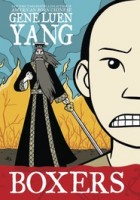
BoxersWritten and illustrated by Gene Luen Yang with colors by Lark Pien, the Boxers & Saints duology is honestly one of the best comics that I read in the past year. It’s a powerful retelling of the Boxer Rebellion–a violent uprising in China that began in the late 1800s–from two different sides of the conflict, neither of which were entirely in the right. Yang put a tremendous amount of research into the work, making it historically accurate while still maintaining a very human element to the story.

Self-Reference EngineI already knew that I enjoyed Toh EnJoe’s short stories and essays and so I was excited for the release of Self-Reference Engine, the first book-length work of his to be translated into English. It’s not quite a novel, and it’s not quite a collection of short stories, but whatever it is it’s good stuff. I expected Self-Reference Engine to be intellectually stimulating as well as entertaining, and it was, but I wasn’t prepared for how funny and mind-bending it would be.

Filed Under: FEATURES Tagged With: comics, manga, Novels

No. 6, Vol. 4

December 27, 2013 by Ash Brown

No. 6, Volume 4Creator: Hinoki Kino
Original story: Atsuko Asano

U.S. publisher: Kodansha
ISBN: 9781612623580
Released: December 2013
Original release: 2012

Hinoki Kino’s manga series No. 6 is an adaptation of a series of nine science fiction novels written by Atsuko Asano. The fourth volume of the No. 6 manga was originally published in Japan in 2012. The English-language edition of No. 6, Volume 4 was released by Kodansha Comics in 2013. My introduction to No. 6 was actually through the anime adaptation, but I have been enjoying the manga’s rendition of the story as well. I have had a fondness for dystopian fiction ever since I was introduced to the genre in high school and so I am particularly pleased that a manga series like No. 6 is being released in English. I did find the first volume to be a little rushed and disjointed in places, but each subsequent volume has continued to improve and the series has settled into an excellent pace. The characters and world-building have also been developing rather nicely. Because the series keeps getting better, I was looking forward to reading the fourth volume.

Shion’s close friend Safu has been arrested by the Security Bureau of No. 6 and taken to the Correctional Facility, which may very well mean her death. Rat has known about Safu’s predicament for some time, but it’s something that he has been keeping a secret from Shion, concerned that he would put his own life at risk in order to rescue Safu. Rat is soon proven correct when, by chance, Shion discovers that Safu has been taken. Shion is prepared to do anything that he can to save her, even if that means doing it alone. But, despite his reservations, Rat isn’t about to let that happen. Infiltrating the Correctional Facility won’t be easy. Both Shion and Rat have been classified as dangerous criminal fugitives by No. 6’s authorities which severely limits their movements outside of West Block. Simply getting information about what is happening in No. 6 is a difficult task which will require all of the connections and influence that the two young men can muster. They are at a definite disadvantage and their situation is nearly impossible, but Rat and Shion are determined to come out of it alive however unlikely.

While the previous volume or so took time to further establish the relationships between the characters in the manga, No. 6, Volume 4 ratchets up the pace again, moving the plot forward quite handily. This is not to say that Kino has forgotten the series’ main players for the sake of the story. In fact, there are some absolutely wonderful character moments in the fourth volume. These are critical for the development of both the plot and the characters themselves. It is quite clear by this point in the manga that Shion and Rat deeply care about each other. But in No. 6, Volume 4 Shion is forced to confront just how vicious Rat can be, something that he has been avoiding. Rat has never hesitated to intimidate or threaten other people and is a master manipulator. Though up until now he has largely (but not completely) kept his overt violence in check, when given a reason and opportunity he can be absolutely terrifying. Rat’s actions in this volume are nominally for Shion’s sake, but he also has an intense, deep-seated hatred and anger towards No. 6 which lends to his brutality.

West Block has always been a violent place, but at least its residents are honest and forthright about it. They hold no delusions as they often literally have to fight to survive. On the other hand, there’s No. 6. The city is presented as a perfect society even though it is anything but. Granted, most of No. 6’s citizens are completely unaware that anything untoward is going on and those who do suspect find themselves conveniently disappeared. Because of this, No. 6 is actually the more terrifying of the two places. What exactly is going on in No. 6 has yet to be made clear. There have been some hints, and Shion and the others have uncovered a few clues, but even some of No. 6’s highest ranking officials aren’t privy to that information. All that is known is that some sort of terrible experiment is being conducted on the city’s population. However, the goal, purpose, and motivation behind that experiment hasn’t been revealed yet. With plenty of questions remaining to be answered and the story increasing in intensity, I’m definitely looking forward to reading the next volume of No. 6.

Filed Under: REVIEWS Tagged With: Atsuko Asano, Hinoki Kino, kodansha, Kodansha Comics, manga, no. 6

Manga Giveaway: 4-Koma for You (Azumanga Daioh)

December 25, 2013 by Ash Brown

2013 may be nearing its end, but there’s still time for one more manga giveaway here at Experiments in Manga before the year is over! For December’s giveaway, you all have a chance to win a copy of the Yen Press omnibus edition of Kiyohiko Azuma’s yonkoma manga Azumanga Daioh. The entire series collected in one convenient volume! As always, the giveaway is open worldwide.

Azumanga Daioh Omnibus

If I recall correctly, Azumanga Daioh was the first yonkoma manga that I ever read. Yonkoma, or 4-koma, is a four-panel format frequently used for gag manga. I know several people who consider Azumanga Daioh to be one of the best examples of yonkoma manga currently available in English. Yonkoma tends to be fairly hit-or-miss for me, but I was consistently entertained by Azumanga Daioh–it’s a goofy yet charming series.

So, you may be wondering, how can you win a copy of the Azumanga Daioh omnibus?

1) In the comments below, tell me a little about a four-panel manga that you have read and why you did, or didn’t, like it. (Haven’t read any? You can simply mention that.)
2) If you’re on Twitter, you can earn a bonus entry by tweeting about the contest. Make sure to include a link to this post and @PhoenixTerran (that’s me).

And there you have it! Each person can earn up to two entries for this giveaway. As usual, there will be one week to submit comments. Entries may also be sent via e-mail to phoenixterran(at)gmail(dot)com and I will post them in your name. The giveaway winner will be randomly selected and announced on January 1, 2014. Good luck and a Happy New Year, everyone!

VERY IMPORTANT: Include some way that I can contact you. This can be an e-mail address, a link to your website, Twitter username, or whatever. If I can’t figure out how to get a hold of you and you win, I’ll just draw another name.

Contest winner announced–Manga Giveaway: 4-Koma for You Winner

Filed Under: FEATURES Tagged With: azumanga daioh, Kiyohiko Azuma, manga

My Week in Manga: December 16-December 22, 2013

December 23, 2013 by Ash Brown

My News and Reviews

Two reviews were posted last week at Experiments in Manga. The first review was for Yaya Sakuragi’s boys’ love manga Bond of Dreams, Bond of Love, Volume 3. Although the series isn’t my favorite work by Sakuragi, I tend to enjoy her manga and Bond of Dreams, Bond of Love has been growing on me. The second review was for Tales of Moonlight and Rain, the most recent English translation of Ueda Akinari’s Ugetsu monogatari, a collection of short stories about ghosts and other mysterious happenings that was originally published in Japan in 1776. It may be over two centuries old, but it’s still a great read.

I came across quite a few interesting things online last week: The Advocate posted its 10 Great Graphic Novel Gifts. It’s a great list of queer comics that came out this year and it includes a few excellent manga selections as well; Some Fog uses Kazuo Umezu’s Drifting Classroom as an example on how to creat comics–Lessons from Umezu; Voting has opened for the second Manga Translation Battle; The Comic Book Legal Defense Fund reports that Core Magazine Pleads Guilty in Japanese Obscenity Case, feeling that a “guilty plea would be a better option than a protracted legal battle.; On a happier note, the Toronto Comic Arts Festival has announced it’s initial list of featured guests. Among other great comics creators, Est Em will be coming to TCAF 2014!

Quick Takes

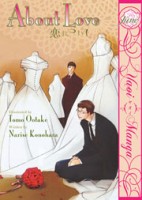
About LoveAbout Love written by Narise Konohara and illustrated by Tomo Ootake. Despite his family’s misgivings over his choice of career, Asaka has become an enthusiastic wedding planner. But recently things haven’t been going so well–several of the couples that he has been working with have canceled their weddings. That’s when he reunites with his first client, a man by the name of Sasagawa who has the perfect marriage and serves as an inspiration to Asaka. However, his marriage isn’t nearly as perfect as it seems. About Love is a slow-burning romance; Asaka and Sasagawa’s relationship takes a great deal of time to develop and solidify, but it’s a natural progression from acquaintances, to friends, to possibly something greater. About Love focuses on the emotional connection between the two men more than it does on their physical intimacy, although that has a role to play as well. In addition to their evolving relationship, About Love addresses some issues of same-sex marriage and there are other gay and lesbian couples important to the story as well.

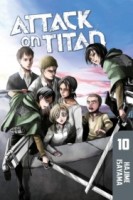
Attack on Titan, Volume 10Attack on Titan, Volume 10 by Hajime Isayama. I’m not entirely sure how Isayama pulls it off, but it’s rather impressive how many twists and turns Attack on Titan has been taking lately. I went into this volume expecting a respite from major plot reveals since there have been so many recently. I was wrong. The focus of the tenth volume is on 104th’s struggle to survive against a massive titan attack on the castle in which they were hoping to hide and recover. They are without weapons or maneuvering gear, making their situation particularly precarious. This alone would have been enough to carry the volume and there are some very exciting moments in the fight. But no. After an extended action sequence, Isayama throws in not one but two (well, maybe three depending on how you’re counting) major story twists. Although there are still plenty of questions that need to be answered, the titans themselves are becoming less of a mystery. I actually kind of miss when they were beyond humanity’s comprehension, but I’m still interested in seeing how things play out.

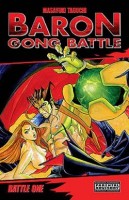
Baron Gong Battle, Volume 1Baron Gong Battle, Volumes 1-6 by Masayuki Taguchi. Only six out of the nine volumes of Baron Gong Battle have been released in English. After his girlfriend is horrifically murdered by a Neo Hume, Baron is determined to seek revenge against those who killed her. The Neo Hume’s are extraordinarily powerful creatures born out of the Nazi’s biological experiments. Baron Gong Battle is an utterly absurd and violent action-packed manga series that can be a tremendous amount of trashy fun when it’s not being completely offensive. Baron is an over-the-top badass and the dialogue is extreme. However, the more that I read, the less enamored I became with Baron Gong Battle. The manga’s utter ridiculousness is highly entertaining, and it becomes more and more outrageous as the series progresses, but I soon became tired of the role that the women play. Occasionally they can be very competent fighters, but more often than not they seem to only be a part of the series in order to fawn over Baron and to run around mostly if not entirely naked.

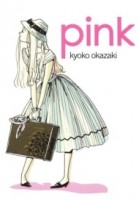
PinkPink by Kyoko Okazaki. While I didn’t find Pink to be as brutal or as hard-hitting as Okazaki’s later work Helter Skelter, I still think that the manga is an excellent work and I enjoyed it a great deal. Pink is rather curious manga filled with rather curious characters. In general, they are much more likeable than those in Helter Skelter, but they are definitely an odd bunch. Yumi works as a part-time call girl in order to feed her pet crocodile Croc. Although Yumi’s on great terms with her younger stepsister Keiko–a precocious girl with a bottomless stomach–she and her stepmother hate each other. Things get a little complicated when Yumi becomes involved with Haruo, her stepmother’s manstress and wannabe novelist. I was actually surprised by how much of the Pink was told from Haruo’s perspective. His strange relationships with these three women, and Croc, forms the basis for much of the story. But even so, it’s Yumi who really seems to be the focus of the manga. Pink has a very cynical and oddball sense of humor which I could appreciate.

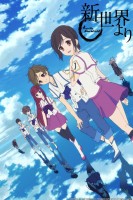
From the New WorldFrom the New World directed by Masashi Ishihama. Overall I really liked the story and setting of the From the New World anime, an adaptation of the novel by the same name written by Yusuke Kishi (which sadly has yet to be licensed in English.) However, I frequently found the series’ pacing and narrative structure to be frustrating and somewhat disjointed. Saki, the main protagonist, also had an annoying habit of echoing back whatever was being said to her by someone else. I did like that the story focused on the characters at several different points in their lives. From the New World takes place in what is eventually revealed to be a post-apocalyptic environment. I actually would have liked to have seen more about how society reached the point that it is at in the series; most of the past events are merely hinted at. From the New World deals quite a bit with the terrible lengths humanity is willing to go to when driven by fear. It’s very well done in places. The anime also gets bonus points for the nice use of music from Dvořák’s From the New World symphony.

Filed Under: FEATURES, My Week in Manga Tagged With: anime, attack on titan, Baron Gong Battle, From the New World, Hajime Isayama, Kyoko Okazaki, manga, Masayuki Taguchi, Narise Konohara, Tomo Ootake

  • « Go to Previous Page
  • Page 1
  • Interim pages omitted …
  • Page 29
  • Page 30
  • Page 31
  • Page 32
  • Page 33
  • Interim pages omitted …
  • Page 60
  • Go to Next Page »
 | Log in
Copyright © 2010 Manga Bookshelf | Powered by WordPress & the Genesis Framework