• Skip to primary navigation
  • Skip to main content
  • Skip to primary sidebar
  • Home
  • About Us
    • Privacy Policy
    • Comment Policy
    • Disclosures & Disclaimers
  • Resources
    • Links, Essays & Articles
    • Fandomology!
    • CLAMP Directory
    • BlogRoll
  • Features & Columns
    • 3 Things Thursday
    • Adventures in the Key of Shoujo
    • Bit & Blips (game reviews)
    • BL BOOKRACK
    • Bookshelf Briefs
    • Bringing the Drama
    • Comic Conversion
    • Fanservice Friday
    • Going Digital
    • It Came From the Sinosphere
    • License This!
    • Magazine no Mori
    • My Week in Manga
    • OFF THE SHELF
    • Not By Manga Alone
    • PICK OF THE WEEK
    • Subtitles & Sensibility
    • Weekly Shonen Jump Recaps
  • Manga Moveable Feast
    • MMF Full Archive
    • Yun Kouga
    • CLAMP
    • Shojo Beat
    • Osamu Tezuka
    • Sailor Moon
    • Fruits Basket
    • Takehiko Inoue
    • Wild Adapter
    • One Piece
    • After School Nightmare
    • Karakuri Odette
    • Paradise Kiss
    • The Color Trilogy
    • To Terra…
    • Sexy Voice & Robo
  • Browse by Author
    • Sean Gaffney
    • Anna Neatrour
    • Michelle Smith
    • Katherine Dacey
    • MJ
    • Brigid Alverson
    • Travis Anderson
    • Phillip Anthony
    • Derek Bown
    • Jaci Dahlvang
    • Angela Eastman
    • Erica Friedman
    • Sara K.
    • Megan Purdy
    • Emily Snodgrass
    • Nancy Thistlethwaite
    • Eva Volin
    • David Welsh
  • MB Blogs
    • A Case Suitable For Treatment
    • Experiments in Manga
    • MangaBlog
    • The Manga Critic
    • Manga Report
    • Soliloquy in Blue
    • Manga Curmudgeon (archive)

Manga Bookshelf

Discussion, Resources, Roundtables, & Reviews

manga

Manga Giveaway: Yumi Tamura Giveaway

August 26, 2015 by Ash Brown

It’s almost the end of the month which means it’s yet again time for another giveaway at Experiments in Manga. This month I’m offering up an entire series: Yumi Tamura’s two-volume shoujo action thriller Chicago! The series was released in English by Viz Media a decade or so ago, but is now out of print. This month’s giveaway will give you a chance to snag a complete set of the manga. And, as always, the giveaway is open worldwide!


Chicago, Volume 1: The Book of SelfChicago, Volume 2: The Book of Justice

Chicago probably wouldn’t have come across my radar if it wasn’t for the fact that it was created by Yumi Tamura. Tamura is also the mangaka of Basara, a series that I absolutely love. Back when I was trying to track down some of the harder-to-find print volumes of Basara (the print edition is going out of print, but a digital version is now available), I discovered that Tamura’s Chicago and Wild Com. had also been translated. And so, simply because I enjoyed Tamura’s work so much on Basara, I picked them up. There are other mangaka whose work I will read no matter what it is, too, including but certainly not limited to Moyoco Anno, Usamaru Furuya, Fumi Yoshinaga, and Takeshi Obata. It can be interesting to see both the similarities and differences among the manga created by the same person; some mangaka have an incredible range.

So, you may be wondering, how can you win Yumi Tamura’s Chicago?

1) Are there any mangaka whose work you enjoy so much that you make a point to read anything they create? If so, tell me a little about them and what you like about their manga in the comments below. (If not, you can simply mention that.)
2) If you’re on Twitter, you can earn a bonus entry by tweeting, or retweeting, about the contest. Make sure to include a link to this post and @PhoenixTerran (that’s me).

There you go! It’s as easy as that. You all have one week to submit comments and each person can earn up to two entries for this giveaway. If you have trouble with the comment form, or if you would prefer, entries can also be sent directly to me at phoenixterran(at)gmail(dot)com. I will then post the comments here in your name. The giveaway winner will be randomly selected and announced on September 2, 2015. Good luck to you all!

VERY IMPORTANT: Include some way that I can contact you. This can be an e-mail address in the comment form, a link to your website, Twitter username, or whatever. If I can’t figure out how to get a hold of you and you win, I’ll just draw another name.

Contest winner announced–Manga Giveaway: Yumi Tamura Giveaway Winner

Filed Under: FEATURES, Giveaways Tagged With: Chicago, manga, Yumi Tamura

My Week in Manga: August 17-August 23, 2015

August 24, 2015 by Ash Brown

My News and Reviews

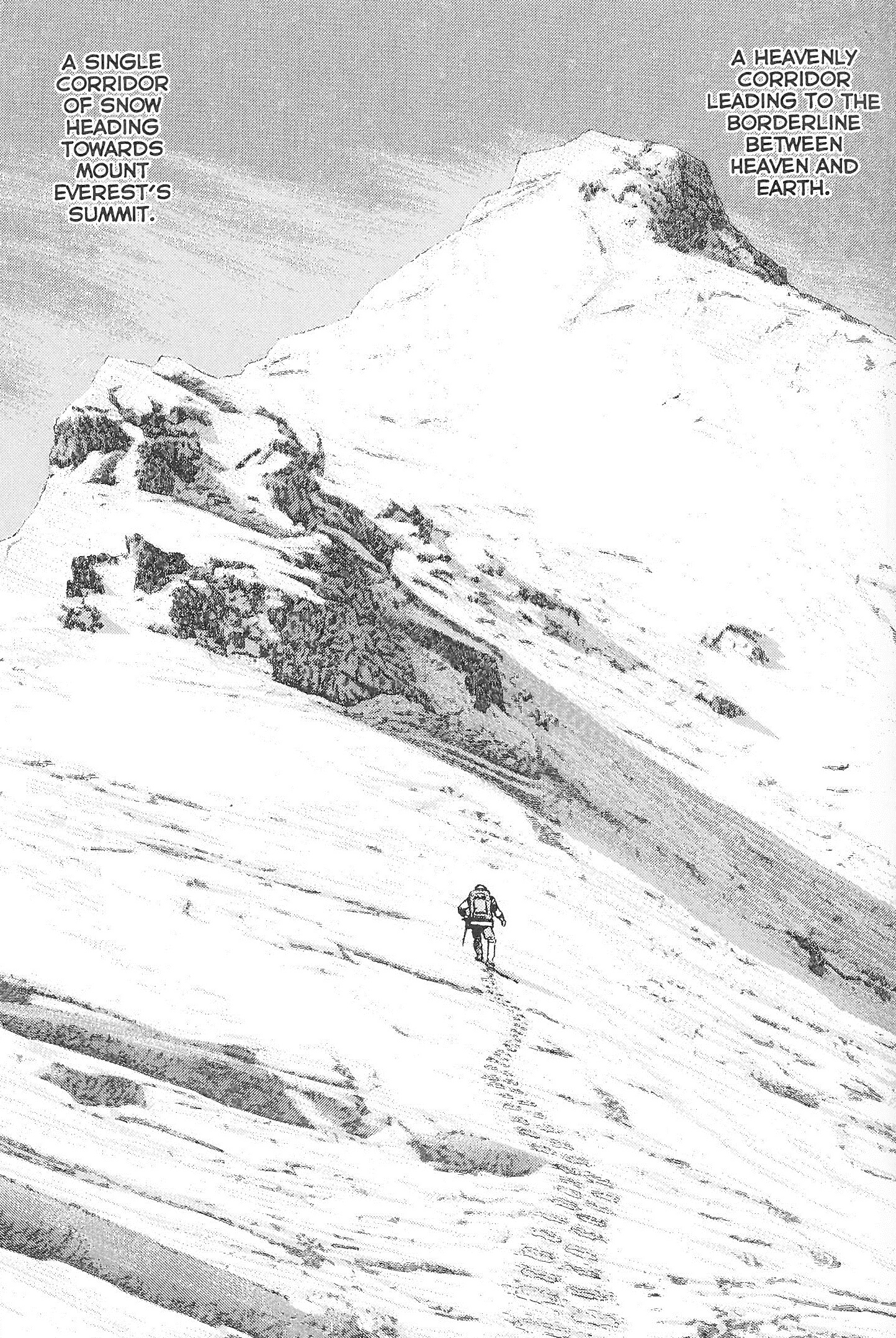
Last week Experiments in Manga reached its fifth anniversary, so I wrote a somewhat lengthy post about what I’ve been up to online and offline over the last year. Thank you again to everyone who has shown support and encouragement for Experiments in Manga over the years. Apparently, people actually want to see another five years, so I guess I better get to work on that. With that in mind, have two more in-depth reviews! Last week I took a look at Rikao Yanagita’s surprisingly entertaining The Science of Attack on Titan, one of the two non-manga books that Kodansha Comics has released so far. (The other one was related to Attack on Titan, as well.) I also reviewed Baku Yumemakura and Jiro Taniguchi’s The Summit of the Gods, Volume 5, which is the final volume in one of my favorite series. The writing and artwork in The Summit of the Gods is superb; I’m so glad that the entire manga is now available in English.

A few other things caught my eye online last week. Mangabrog has translated an article from 2013 that provides a tour through Inio Asano’s workspace. More information has been revealed about Kodansha’s digital efforts and the publisher is aiming high: digital editions of two thousand volumes translated into English by the end of 2017. Occasionally manga makes its way to NPR (which I believe is how I actually first learned about and became interested in Death Note). Most recently, one of NPR’s contributors featured a few great romantic manga: Kaoru Mori’s Emma, Ichigo Takano’s Orange, and Ai Yazawa’s Nana. I haven’t had a chance to read Orange yet, but considering the quality of Emma and Nana, I’m now looking forward to Seven Sea’s upcoming print release of the series even more. The game of manga tag continues to make it rounds, this time Narrative Investigations’ Helen tackles the questions.

Quick Takes

Castle Mango, Volume 2Castle Mango, Volume 2 written by Narise Konohara and illustrated by Muku Ogura. While I liked the first volume of Castle Mango, I really enjoyed the second and final volume of the series. Castle Mango is an unusual boys’ love manga; most of it doesn’t have anything to do with romance. The close relationship between Yorozu and Togame begins with a terribly manipulative lie, but it eventually develops into something real for both of them. In the first volume, the two men frequently seemed to have an almost father-son sort of vibe, but by the end of the series I was slightly more convinced by their intimacy as boyfriends. It does take a little while to get there though; they spend a large portion of the second volume apart. Togame is trying to give Yorozu space, feeling that it’s in the younger man’s best interest, but he doesn’t really go about it in the best way. Unfortunately, this is happening at the same time that Yorozu is struggling to take care of his little brother and his family’s business (a love hotel) when his mother is hospitalized. Yorozu is in the process of shedding the last of his immaturity and makes some terrible decisions in the process. In many ways, Castle Mango is more about Yorozu’s growth as a person than anything else.

Give to the Heart, Volume 1Give to the Heart, Volumes 1-4 by Wann. After a long period of silence, about a year ago Netcomics quietly began publishing books in print again. Give to the Heart was the first manhwa to be released after the publisher’s hiatus. I was interested in reading the series because I wanted to support Netcomics, but also because it was created by Wann. (I had previously read and thoroughly enjoyed Wann’s collection of short manhwa 9 Faces of Love.) At first Give to the Heart seemed like it was going to largely be fantasy fiction, but as the series progresses, more and more science fictional elements are introduced. The ongoing story is about Sooyi, a young woman who became the wife of Ganok, the demon king who controls all water, but who is now attempting to escape him. Not only that, she is trying to find a way to kill him as well, or at least cause him as much pain as possible even if that means sacrificing her own life in the process. Though it is implied that Sooyi and Ganok were at one point content and happy as a pair, their current relationship obviously has its problems. Actually, considering the extreme imbalance of power between them—Ganok being a cruel god and Sooyi being a human with a strong will—that’s been true from the very beginning.

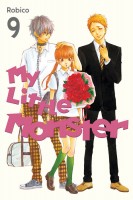
My Little Monster, Volume 9My Little Monster, Volume 9 by Robico. So, Haru and Shizuku are now officially a couple, although not much has actually changed in their relationship. But now that that has been settled, the other romantically interested parties are more or less able to move on with their lives. As a result, the plot of My Little Monster is now able to move along as well. This particular volume includes summer vacations and festivals, which is fairly standard for a high school romance, but Haru’s family drama is starting to come to the forefront of the story again. Underneath the humor of My Little Monster there seems to have been something ominous lurking waiting to be revealed. Haru’s brother Yuzan isn’t as terrifying as he once was, but there is definitely something going on between him and Haru and with Haru’s reluctance to interact with the rest of his family. Haru is trying to keep Shizuku from finding out the details, though eventually he’s really going to need to come clean with her and explain his situation. But, while Shizuku is still in the dark, at least readers get to learn a bit more. I continue to enjoy My Little Monster, especially the series’ quirky characters, and I’m happy to see the manga continue to gain some forward momentum.

Filed Under: FEATURES, My Week in Manga Tagged With: Castle Mango, Give to the Heart, manga, manhwa, Muku Ogura, My Little Monster, Narise Konohara, Robico, Wann

The Summit of the Gods, Vol. 5

August 21, 2015 by Ash Brown

The Summit of the Gods, Volume 5Author: Baku Yumemakura
Illustrator: Jiro Taniguchi

U.S. publisher: Fanfare/Ponent Mon
ISBN: 9788492444403
Released: July 2015
Original release: 2003
Awards: Angoulême Prize, Japan Media Arts Award

Baku Yumemakura’s novel The Summit of the Gods (which, sadly, hasn’t been translated into English) was published in Japan in 1998 and would go on to win the Shibata Renzaburo Award. In 2000, Yumemakura was paired up with the immensely talented artist Jiro Taniguchi to create a manga adaptation of the novel. The Summit of the Gods manga continued to be serialized through 2003 and was collected as a five-volume series. The manga also became and award-winning work, earning an Angoulême Prize and a Japan Media Arts Award among many other honors and recognitions. In addition to being one of my favorite manga by Taniguchi, The Summit of the Gods is actually one of my favorite manga in general. As such, I was waiting with great anticipation for the publication of the fifth and final volume of the series in English by Fanfare/Ponent Mon. I was thrilled when it was finally released in 2015.

Photographer Makoto Fukamachi followed the legendary climber Jouji Habu to Mount Everest to document one of the most difficult and dangerous ascents to ever be attempted: a solo climb of the southwest face in the winter without oxygen. The agreement between them was that neither one of the men would interfere with the other’s climb no matter what happened. But when Fukamachi’s life is in danger Habu rescues him anyway, putting his own life and the success of his ascent at risk. Fukamachi ultimately survives, returning to Japan to find a media frenzy; not only was Habu an infamous climber, his assault on Everest was an illegal one. And then there’s the matter of the camera that Habu had in his possession. Believed to have belonged to George Mallory, it draws considerable attention once its existence comes to light. Fukamachi’s connection to Habu and to the camera makes him a person of interest as well. Even without the additional scrutiny from the public he would find readjusting to a normal life after his fateful Everest climb to be challenging if not impossible.

Summit of the Gods, Volume 5, page 2013Three stories have become irrevocably intertwined in The Summit of the Gods: the story of George Mallory and Andrew Irvine’s’ final climb and disappearance on Mount Everest, the story of Jouji Habu’s efforts to become the greatest known climber more for himself than for any sort of fame, and the story of Makoto Fukamachi as he strives to untangle his own feelings about climbing and about life by trying to unravel the mysteries surrounding those of the others. The Summit of the Gods can be read in two different ways. It can be approached simply as a compelling tale of adventure and survival or, either alternatively or simultaneously, as a stunning metaphor for any human struggle against seemingly overwhelming odds. Climbing requires great physical and mental fortitude, and life can be just as demanding. The characters in The Summit of the Gods not only pit themselves against nature, they challenge themselves to overcome their own personal weaknesses and limitations.

Facing oneself—being able to objectively recognize the extent of one’s own abilities and admit the possibility of failure—isn’t necessarily an easy thing to do. It can also be a very lonely thing. This, too, is emphasized in The Summit of the Gods through Yumemakura’s writing and Taniguchi’s artwork. Even when working together, the climbers must ultimately rely on themselves and can only trust and depend on others so far. In the end they face the mountain and face their personal demons alone. The characters also show a constant struggle against their own insignificance, a hard-fought battle to find meaning in their lives. Taniguchi’s vistas are gorgeous and sweeping, showing just how small a person is in comparison to the rest of the world. But this also makes the climbers’ perseverance and achievements all the more remarkable. The Summit of the Gods is a phenomenal work with great writing and fantastic art, effectively telling a thrilling drama that also has great depth to it.

Filed Under: REVIEWS Tagged With: Angoulême Prize, Baku Yumemakura, Fanfare/Ponent Mon, Japan Media Arts Award, Jiro Taniguchi, manga, summit of the gods

My Week in Manga: August 10-August 16, 2015

August 17, 2015 by Ash Brown

My News and Reviews

Last week was a two-review week at Experiments in Manga. Both reviews were of manga and, more specifically, both reviews were of shoujo manga. First up was the first omnibus of Hiro Fujiwara’s Maid-sama!. The series was originally licensed by Tokyopop, which released the first eight volumes, but the manga was more recently rescued by Viz Media’s Shojo Beat imprint. Though he has his moments, I’m not particularly fond of the male lead Takumi at this point, but I absolutely adore the female protagonist Misaki. If for no other reason, I’ll be reading more of Maid-sama! for her sake. The second in-depth review from last week was of Setona Mizushiro’s After School Nightmare, Volume 5. I continue to find After School Nightmare to be both compelling and highly distressing. The review is part of my ongoing monthly horror manga review project; September’s review will focus on the fifth volume of Yuki Urushibara’s Mushishi.

As for a few other interesting manga-related posts found online last week, Comic Attack has a nice interview with Stacy King, the editor of Udon Entertainment’s Manga Classics line. (I’ve written a little bit about Udon’s Manga Classics in the past.) Also, Mangabrog has posted a translation of an interview of Kiyohiko Azuma, the creator of Yotsuba&!, from 2014. A few weeks ago I posted some random musings about my manga collection as part of a game of manga tag. One of the people who I specifically tagged to participate was Manga Xanadu’s Lori Henderson. She recently posted her own responses to the manga tag questions and Justin at Organization Anti-Social Geniuses took time to provide some answers, too. I really enjoy reading about other manga enthusiast’s collections. If you’re interested, be sure to check the posts out!

Quick Takes

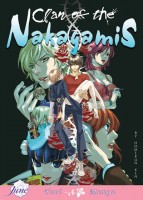
Clan of the Nakagamis, Volume 1Clan of the Nakagamis, Volumes 1-2 by Homerun Ken. Although only two volumes of Clan of the Nakagamis have been released in English, it’s actually a three-volume boys’ love series. It’s unlikely that the third volume will be officially translated, but the manga tends to be fairly episodic. The final volume may be “missing,” but at least the series’ story doesn’t depend on it. Clan of the Nakagamis was brought to my attention due to the fact that Norikazu Akira, whose manga I’ve enjoyed, is somehow related to Homerun Ken. (She’s either one of the members of the two-person creative team or their older sister; I’m not entirely sure which.) Clan of the Nakagamis is intentionally ridiculous, a mashup of all sorts of unrelated tropes that the mangaka found amusing or were particularly fond of, everything from student-teacher relationships, to family conglomerates, to crossdressers. I actually wasn’t particularly impressed by the first volume of Clan of the Nakagamis, finding it to be too chaotic and lacking in cohesiveness, but I did legitimately enjoy the second. I even laughed out loud. It probably helped that it had a more coherent story and improved artwork.

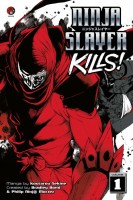
Ninja Slayer Kills, Volume 1Ninja Slayer Kills!, Volume 1 by Koutarou Sekine. Ninja Slayer started as a series of novels, supposedly written by a couple of Americans, that inspired a recent anime adaptation as well as at least three different manga series (two of which have been licensed for English-language release). Sekine’s Ninja Slayer Kills! is the franchise’s shounen manga offering. It’s intended to be approachable and understandable even for readers who aren’t familiar with Ninja Slayer. I’m not sure it’s successful in accomplishing that, though. Very little of the story, characters, or setting is explained beyond broadly establishing a tale of super-powered revenge in a gritty near future. The first volume is mostly battle after battle and not much more. The fight scenes and their setups are marvelously epic, but unfortunately the action itself is difficult to follow so they lose their impact. That’s a significant flaw since so much of the manga is focused on these martial conflicts. On their own, the character designs of the cybernetic ninja are great, but they tend to blend together in the actual manga, which also makes determining what exactly is going on a challenge.

A Silent Voice, Volume 2A Silent Voice, Volume 2 by Yoshitoki Oima. I was greatly impressed by the first volume of A Silent Voice. It was a hard read due to its subject matter, specifically its realistic portrayal of bullying—how utterly cruel kids can be to each other and how adults, whether intentionally or not, can often encourage such behavior. While there is still some tragedy and darkness in the second volume, overall it’s a much lighter read; where the first is heartbreaking, the second makes it seem as though forgiveness and change is possible. Shoya, feeling that it is impossible to redeem himself for his past cruelty, plans to take his own life after apologizing to Shoko for adding so much misery to hers. But when he meets her again they end up forming an unexpected friendship instead. Even more surprisingly, Shoya eventually becomes friends with her younger sibling as well (though he doesn’t known that’s who the kid is at the time). Shoya recognizes that he can’t undo the harm that he’s already caused to Shoko and her family, but he’s slowly doing what he can to make up for it. I still think that A Silent Voice is one of the very best manga to debut this year.

Filed Under: FEATURES, My Week in Manga Tagged With: Clan of the Nakagamis, Koutarou Sekine, manga, Ninja Slayer, Silent Voice, Yoshitoki Oima

After School Nightmare, Vol. 5

August 14, 2015 by Ash Brown

After School Nightmare, Volume 5Creator: Setona Mizushiro
U.S. publisher: Go! Comi
ISBN: 9781933617473
Released: October 2007
Original release: 2006

After School Nightmare by Setona Mizushiro is a manga series that I honestly find disconcerting, so much so that even though I also find it compelling, I could never bring myself to read past the first few volumes until recently. The manga is a dark and intense psychological drama dealing with issues of abuse, gender, and personal identity. Despite being a series that is quite obviously fantasy-horror, some of the themes actually hit fairly close to home for me. Mizushiro has skillfully crafted a chilling setting and ominous atmosphere for After School Nightmare in which to explore both nightmares and reality. The ten-volume series was published in English by the now defunct Go! Comi and so is sadly out-of-print, but it seems to still be fairly easy to find. After School Nightmare, Volume 5 was first published in Japan in 2006 while the English translation was released in 2007. The series reaches its halfway point with this volume, but the intensity of the drama and psychological horror shows no sign of letting up anytime soon.

After having let his feelings be pulled one way and then another, Mashiro has made his decision: In order to live as a man he has rejected Sou and his aggressive advances in favor of his girlfriend Kureha. Mashiro tells himself that it’s because Kureha is the one who needs him the most, never considering that Sou might need him, too. Ultimately though, Mashiro’s decision is a selfish one and not nearly as gallant as he would like to believe or portray. Although he has been living as a boy for most of his life, he is still incredibly insecure in his gender identity, mostly due to the fact that his body has both male and female characteristics. By dating Kureha and by becoming her self-proclaimed guardian and protector, Mashiro hopes to unequivocally establish his masculinity for himself and for others, something he doesn’t believe would be possible if he recognized having feelings for another guy. But even though Mashiro has made his decision, he still has lingering doubts.

After School Nightmare, Volume 5, page 52Many of the characters in After School Nightmare are broken, damaged, or incomplete individuals who are attempting to put the pieces of their lives together to form, or reform, some sort of whole. That is part of the purpose of the titular after school nightmare—a special class that, through shared dreams, forces them to confront their greatest fears and in the process reveal them to the other students as they all try to determine who they really are as people. It can actually be quite painful and heart-wrenching to witness the events unfold both within the nightmares and outside of them; truly terrible and horrifying things occur that strongly influence the characters’ physical, mental, and emotional well-being. At this point in the series Mashiro’s personal struggles and torments are the ones about which the most is known, but After School Nightmare, Volume 5 begins to reveal more about Sou’s tragedies which previously had largely only been hinted at.

From the beginning of After School Nightmare, Sou has been shown to be one of the strongest and most assertive characters in the series which is why seeing him in such a vulnerable state in the fifth volume is especially distressing. Sou is an unlikeable person in many ways—among other things showing a shocking lack of respect for Mashiro, the person he supposedly loves—but I can’t help but feel some empathy for him as he is caught up in multiple extremely unhealthy and manipulative relationships. And he’s not always the one doing the manipulating; his relationship with his sister and the control she seem to have over him is particularly troubling. Mashiro’s rejection hits Sou hard, too, certainly much harder than either of them really expected. At first Sou reacts in anger, but ultimately he tries to lives in forced denial of his feelings. Considering how the rest of After School Nightmare has progressed so far, I don’t anticipate that this method of coping will turn out well for any of the people involved.

Filed Under: REVIEWS Tagged With: after school nightmare, Go! Comi, manga, Setona Mizushiro

Maid-sama!, Omnibus 1

August 12, 2015 by Ash Brown

Maid-sama!, Omnibus 1Creator: Hiro Fujiwara
U.S. publisher: Viz Media
ISBN: 9781421581309
Released: August 2015
Original release: 2006-2007

Maid-sama! is an eighteen-volume manga series created by Hiro Fujiwara. The series was initially licensed for English translation by Tokyopop, which released the first eight volumes of the manga between 2009 and 2011. More recently, Maid-sama! was rescued by Viz Media. The manga is being released under the Shojo Beat imprint in an omnibus edition, each English-language omnibus collecting two volumes of the series’ original Japanese release. The first Maid-sama! omnibus was published in 2015 and includes the first and second volumes of the manga published in 2006 and 2007 respectively. (The first volume also contains Fujiwara’s earlier short manga “A Transparent World.”) Maid-sama! was Fujiwara’s first major success as a mangaka. However, it wasn’t until Viz’s release of Maid-sama! that the series came to my attention when I noted the enthusiastic response of fans surrounding its return. I was therefore very happy to have the chance to read a review copy of the first omnibus in order to see what the excitement was all about.

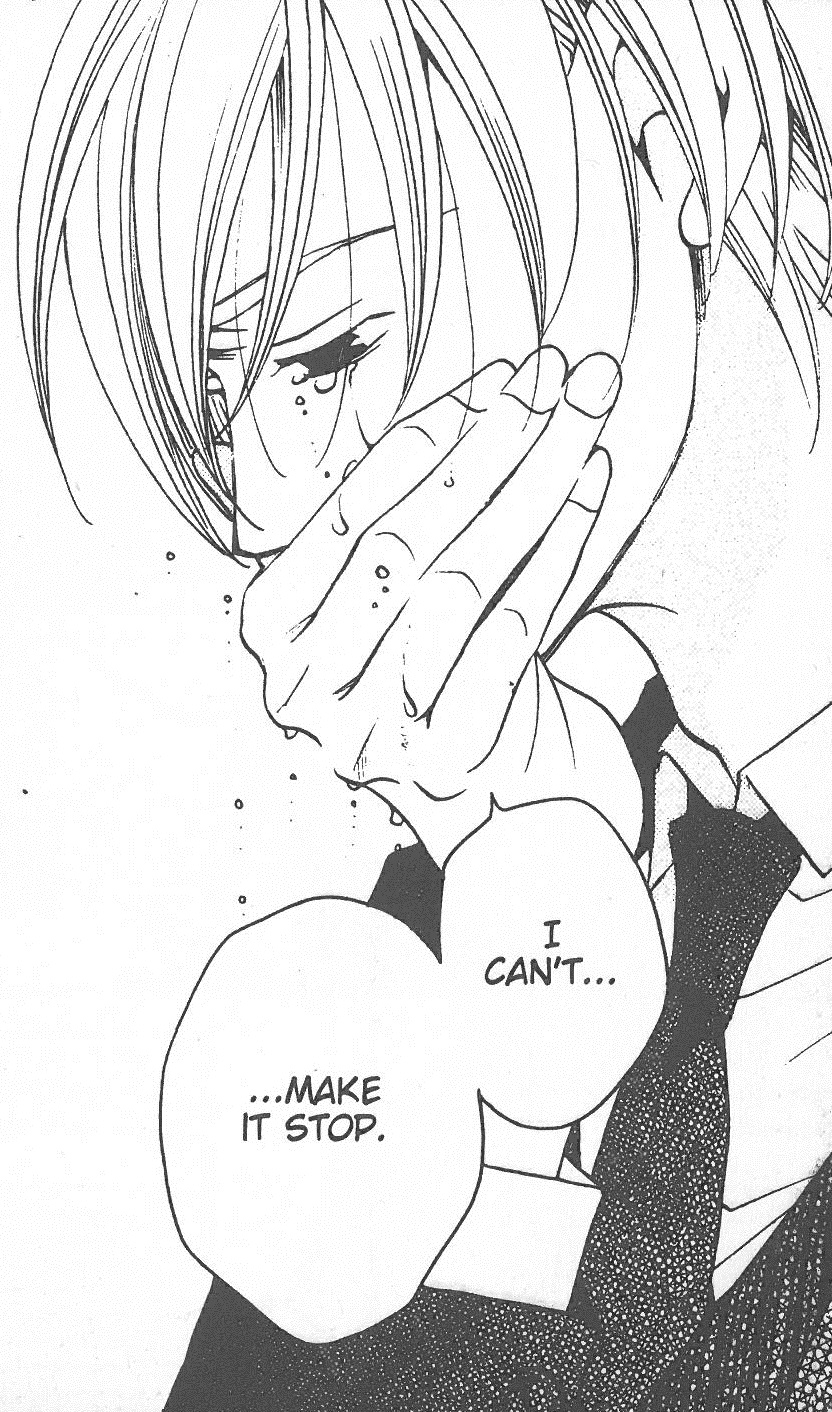
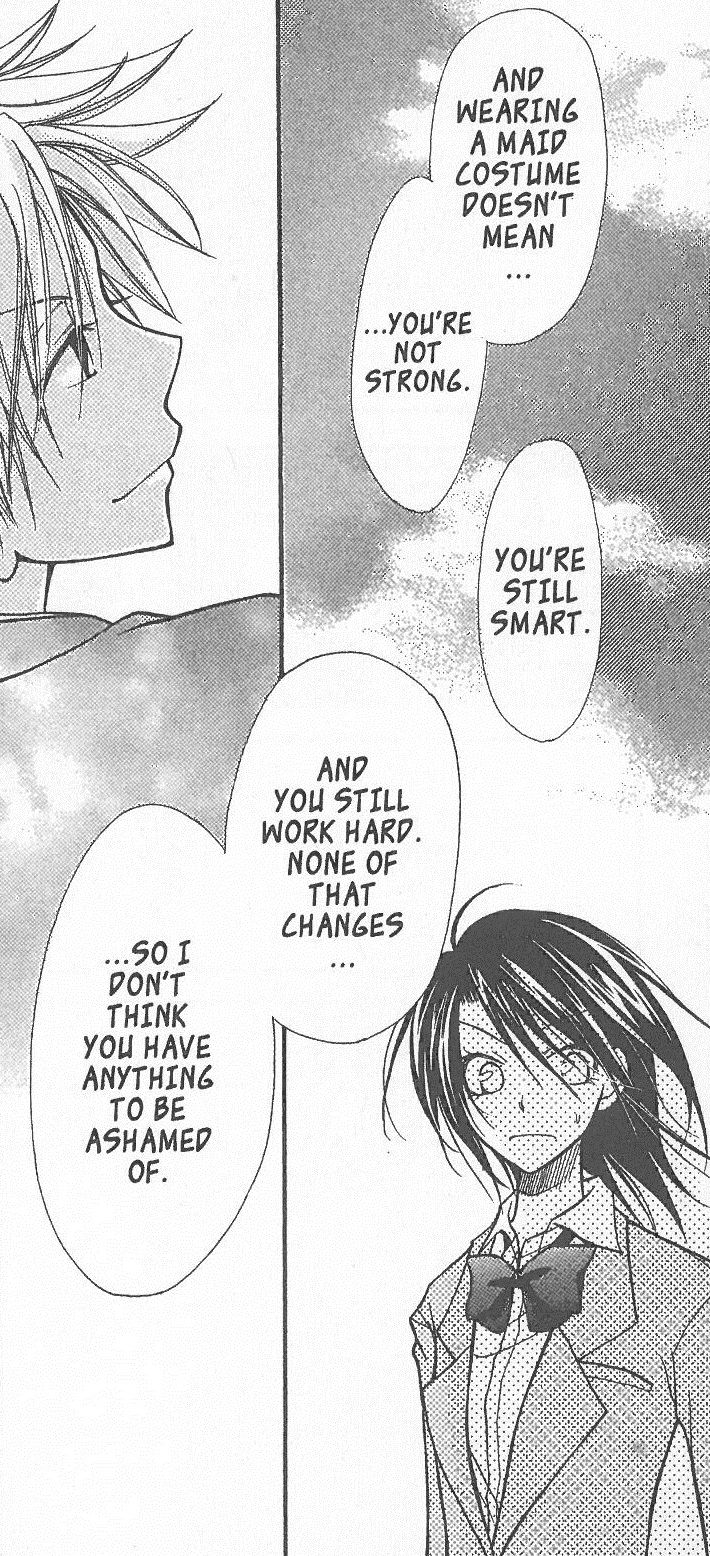
Seika High School, previously an all-boys’ school, has only been co-ed for a couple of years. The student population is still largely male—the boys outnumbering the girls four to one—and Seika High still has a bad reputation. And so Misaki Ayuzawa has decided to take things into her own hands, becoming Seika’s first female student council president in order to clean up the school’s act, improve it standing, and create a more welcoming environment for young women. Misaki rules over Seika with an iron fist, though not everyone appreciates her strength and intelligence or the changes she’s making. Because of that, she’s particularly careful to keep the fact that she works part-time at a maid cafe a secret; she doesn’t want to ruin her image or risk losing what little authority she has. But then her classmate Takumi Usui discovers how she’s spending her time after school. Misaki has caught his attention and interest, perhaps even romantically, though understandably she’s not very happy about the awkward turn of events.

Maid-sama!, Omnibus 1, page 34I absolutely adore Misaki. She’s a smart, strong, motivated, hard-working, competent, capable, and highly accomplished individual. She’s not perfect though. Her drive to overachieve and handle everything by herself along with her reluctance to rely on the help of others means that she frequently overextends herself, wearing herself down. Misaki could stand to relax a little, but the believable combination of her strengths and weaknesses make her the most well-developed character in the series. While I love Misaki, I am significantly less enamored with Takumi. Sometimes he can be a great guy, but on occasion he can be an utter creep. His skills and talents match and even surpass those of Misaki, often in superbly ridiculous ways which are admittedly amusing, but he seems to frequently be emphasizing that she’s a girl as if that somehow makes her inferior. I want to see the Takumi who supports Misaki for who she is and who doesn’t feel the need to dominate her. Early on in Maid-sama! it seems this would be a possibility, but the more of the omnibus I read the less likely it appeared that the series would be going in that direction.

Although in part Maid-sama! is a romance, ultimately that particular plot line in the manga is the one that interests me the least. (If I actually liked Takumi more than I currently do, I would probably feel differently.) I enjoy the series most when it focuses on Misaki as she grows as a person. I like seeing her become less of a tyrant as the president as she learns to consider other people and their needs instead of completely overruling them without making an effort to hear their concerns. At first she is disliked by almost all of the students, but as time passes more and more of them, male and female alike, come to admire, trust, and appreciate her and where she is leading Seika High. Although there are certain things about Maid-sama! that bother me—most notably the distinct possibility of Takumi being idealized as a romantic lead—overall I did find the beginning of the series to be entertaining and a lot of fun. And since I do like Misaki so incredibly well, at this point I definitely plan on reading more of Maid-sama!.

Thank you to Viz Media for providing a copy of Maid-sama!, Omnibus 1 for review.

Filed Under: REVIEWS Tagged With: Hiro Fujiwara, maid sama!, manga, shojo beat, viz media

My Week in Manga: August 3-August 9, 2015

August 10, 2015 by Ash Brown

My News and Reviews

Okay! In addition to the usual My Week in Manga feature, I managed to post three other things last week. First up was the announcement of the Sparkler Monthly Giveaway Winner, which also includes a list of the current, ongoing series being released in Sparkler Monthly (which is only a fraction of the total content). The other two posts were in-depth manga reviews; I took a look at a couple of Kodansha Comics’ recent releases. The first in-depth review of the month went to Naoshi Arakawa’s Your Lie in April, Volume 2, which I enjoyed. But then again, it’s a music manga, so it’s not too surprising that I like it. I also reviewed Masayuki Ishikawa’s Maria the Virgin Witch, Volume 3. It’s the last volume of the series, although the seque Exhibition is scheduled to be released in English later this year. Maria the Virgin Witch is somewhat uneven, but I still found it to be both intriguing and engaging.

As seems to always be the case nowadays, life was keeping me very busy last week, but I still came across some interesting things  elsewhere online. A translation of an interview of Daisuke Igarashi, for example. Last week also marked the seventieth anniversary of the dropping of the atomic bombs on Hiroshima and Nagasaki by the United States. It’s quite timely then that Last Gasp launched a Kickstarter project to create a hardcover edition of Keiji Nakazawa’s Barefoot Gen with schools and libraries specifically in mind. To coincide with this, Paul Gravett reposted his article “Keiji Nakazawa: Barefoot in Hiroshima”. Barefoot Gen is a tremendous work. One of the Manga Moveable Feasts was even devoted to it back in the day. If anyone is interested in learning more about Nakazawa himself as well as some of the historical context surrounding Barefoot Gen, his autobiography was translated into English several years ago.

Quick Takes

Prophecy, Volume 3Prophecy, Volume 3 by Tetsuya Tsutsui. The first volume of Prophecy is the one that left the greatest impression on me, but in general it’s a very strong series. I didn’t find the second volume to be quite as compelling as the first, but the third provides a mostly satisfying conclusion to the series even though in some ways it felt a little anticlimactic. One of the members of Paperboy tips off the police and soon the Cyber Crimes Division has been able to identify the four terrorists. As the investigators draw closer and closer to capturing the men, they begin to notice what at first seem to be mistakes, slip ups, and inconsistencies in the group’s behavior. However, everything falls into place once Paperboy’s true motivations for committing all of the crimes are revealed. Prophecy is a realistic, smart, and engaging series with the added bite of social commentary. There’s apparently also a Prophecy spin-off series. I don’t think that it has been licensed, or that there are any current plans to do so, but I’d certainly be interested in reading it.

xxxHolic, Omnibus 6xxxHolic, Omnibus 6 (equivalent to Volumes 16-17) by CLAMP. For the most part I have been enjoying xxxHolic since the beginning of the series, but I think this omnibus has been my favorite so far. I really liked its brooding, ominous atmosphere. The humor that was so prevalent earlier in the series is actually almost entirely gone. The comedy in xxxHolic could be fun, but I have a particular penchant for the series’ supernatural angst, and that’s definitely taken the forefront in the last few volumes. I also initially found the crossover between Tsubasa: Reservoir Chronicle and xxxHolic to be intriguing, but I’ll admit that I was happy to see that the other series didn’t intrude too much in this omnibus. Instead, xxxHolic is focusing on how Watanuki and the others are coping now that Yuko is gone. Watanuki takes it especially hard and his tendency to slip in and out of dreams is becoming increasingly dangerous. There’s not much that the people who care about him can actually do except to watch over and support him as best as they can.

Yamada-kun and the Seven Witches, Volume 3Yamada-kun and the Seven Witches, Volume 3 by Miki Yoshikawa. There really are witches in this series! With its good-natured comedy and gender play, I’ve liked Yamada-kun and the Seven Witches a great deal from the very start. But with the third volume, Yoshikawa has started to really develop the series’ worldbuilding and is diving even further into the details of how the magic works. The relationships between the characters are also becoming more fleshed-out and complicated, which I’m enjoying as well. One of the things that I particularly appreciate about the series is that it seems perfectly okay for a guy to be crushing on another guy. Yes, it’s because there are some strange supernatural powers at work, but it’s also not treated like something gross. The setup also allows kissing to freely occur regardless of gender, which is fun. There’s still plenty of fanservice in Yamada-kun and the Seven Witches, as one would probably expect from a shounen series full of gender- and body-swapping, but I generally find it to be tastefully done.

Filed Under: FEATURES, My Week in Manga Tagged With: clamp, manga, Miki Yoshikawa, Prophecy, Tetsuya Tsutsui, xxxholic, Yamada-kun and the Seven Witches

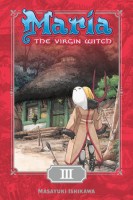
Maria the Virgin Witch, Vol. 3

August 9, 2015 by Ash Brown

Maria the Virgin Witch, Volume 3Creator: Masayuki Ishikawa
U.S. publisher: Kodansha
ISBN: 9781632360823
Released: June 2015
Original release: 2013

Maria the Virgin Witch is a three-volume manga series (four volumes if counting the sequel Exhibition) created by Masayuki Ishikawa. It was actually because the series was by Ishikawa, who is also the creator of Moyasimon (which I enjoy), that it first came to my attention. The first volume of Maria the Virgin Witch intrigued me, and the second ends with the heroine in a rather dire-looking situation, so I was very curious to see how the story would continue to play out in the third. Happily, Kodansha Comics was kind enough to send a review copy along to me. Maria the Virgin Witch, Volume 3 was originally published in Japan in 2013. Kodansha’s English-language edition of the volume was released in 2015. Despite being a short series, the narrative of Maria the Virgin Witch has the tendency to be a little unfocused, but I still find the manga to be consistently engaging. I especially appreciate the quirkiness of the series in general as well as the quirkiness of its characters specifically.

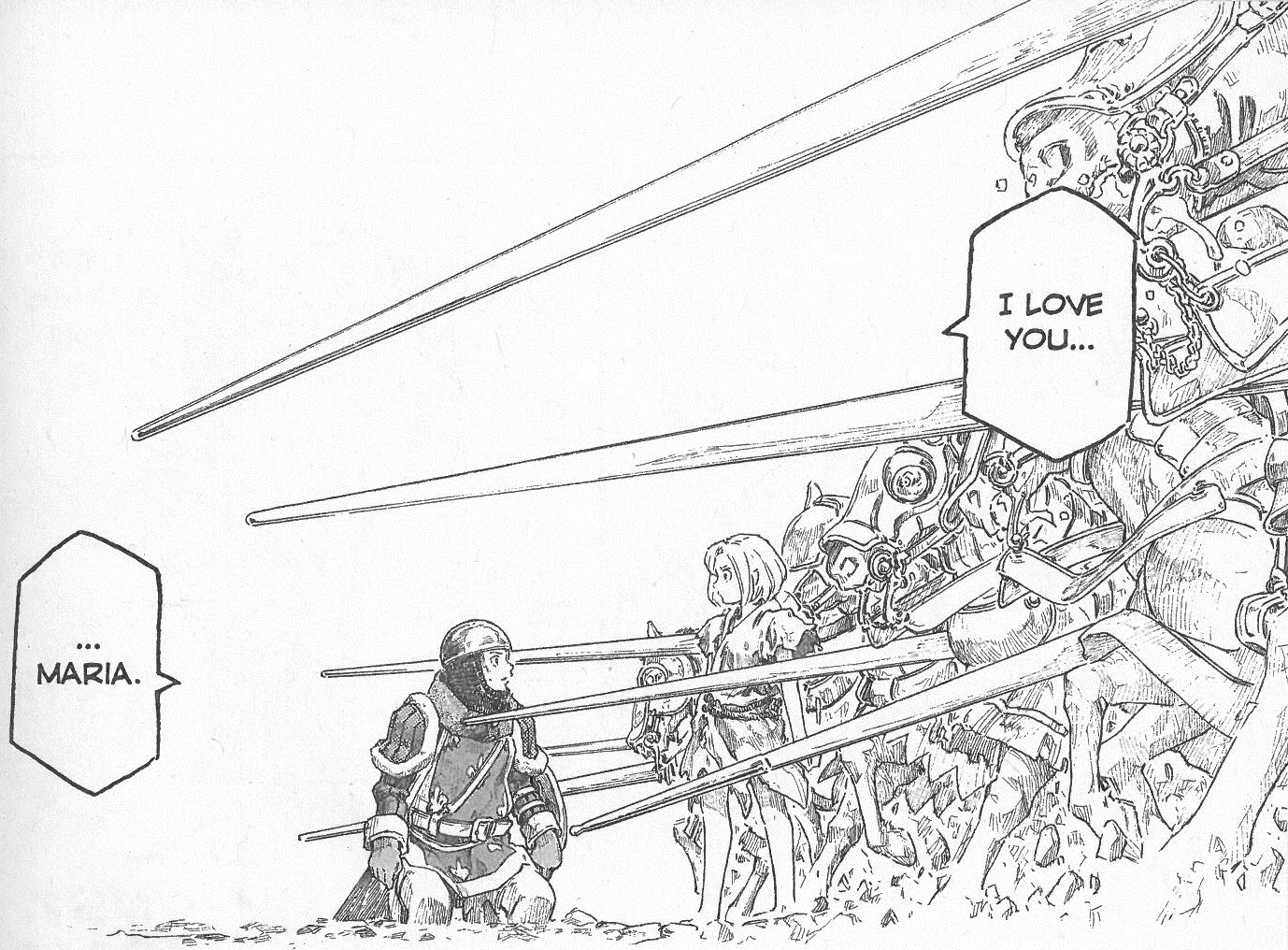
Maria had been warned by the Archangel Michael: If the young witch continued to interfere with the natural order of the world she would be struck down. However, so devoted to ending the long-lasting war between France and England, Maria continued to flaunt her powers, even while in the presence of Michael’s messenger Ezekiel. Now the time has come for her to face the consequences of her actions. She was, however, somehow able to survive what was intended to be a fatal blow from Michael’s spear. But she’s still vulnerable and must rely on the protection of her two owl familiars and the kindness of her fellow witches who don’t necessarily approve of her efforts to force a peace. Maria was at one point alone in the world—the Heavens, other witches, and even some of the humans she was trying to save all standing against her—but over time her earnestness and innocence has earned her some friends, a few of whom could have at one time been counted among her enemies. But even with their support Maria is beginning to lose her naiveté, realizing that bringing happiness to humanity may be more complicated than she initially considered.

Maria the Virgin Witch, Volume 3, page 154Maria the Virgin Witch has always been a peculiar mix of quirky humor and more serious philosophical and theological reflection. There are a lot of ideas that Ishikawa was able to work into such a short series, although at the same time it’s difficult to thoroughly explore all of them in only three volumes. (It actually makes me wonder if Maria the Virgin Witch was originally intended to be a longer story.) The third volume brings up questions about Maria’s family and backstory without really answering them. Also, apparently many if not all witches are loners, something that wasn’t clearly established until now. Maria’s close friendship with the English witch Viv develops suddenly, and their discussions about the true meaning of happiness and love come across as a little forced. It was as if Ishikawa needed to rush in order to make sure that the heart of the series was addressed and made absolutely clear, paring down the seemingly extraneous elements introduced earlier in the manga.

Although overall the narrative of Maria the Virgin With is somewhat uneven, in the end I did largely enjoy the series and I would like to read Exhibition as well. Since the very beginning of the manga, I’ve been particularly fond of Maria herself. While she and the other witches feel more contemporary in thought and appearance than the rest of the series’ setting, I do appreciated her struggle to come to terms with not only her own position in the world, but also the role of the higher powers of Heaven. It’s a debate that humankind has been wrestling with for ages and is one more link between the manga’s historical backdrop and the present day. Ishikawa explores the answer to this timeless question through Maria’s growth as a character. She begins as a young, determined woman seeking to right the wrongs of the world, becoming wiser and more mature as she is confronted with the often brutal realities of life. But importantly, Maria never loses her ideals or succumbs to despair, which is why so many people come to love her so dearly.

Thank you to Kodansha for providing a copy of Maria the Virgin Witch, Volume 3 for review.

Filed Under: REVIEWS Tagged With: kodansha, Kodansha Comics, manga, Maria the Virgin Witch, Masayuki Ishikawa

Your Lie in April, Vol. 2

August 7, 2015 by Ash Brown

Your Lie in April, Volume 2Creator: Naoshi Arakawa
U.S. publisher: Kodansha
ISBN: 9781632361721
Released: June 2015
Original release: 2012
Awards: Kodansha Manga Award

Your Lie in April is an eleven-volume manga series created by Naoshi Arakawa that began serialization in Japan in 2011. The manga is one of Arakawa’s earliest professional works. Even so, Your Lie in April would go on to win a Kodansha Manga Award in 2013 and in 2014 the series’ anime adaptation debuted. Although I haven’t actually seen it yet, it was the anime that first brought Your Lie in April to my attention. As a lover of both manga and music (in addition to being a musician myself), the basic premise of Your Lie in April appealed to me a great deal. I was glad that Kodansha Comics licensed the series since I’m always excited to see more music manga released in English. I largely enjoyed the first volume of Your Lie in April and so was happy to receive a review copy of the second as well. Your Lie in April, Volume 2 was originally published in Japan in 2012 while the English translation was released in 2015.

Kosei hasn’t played the piano publicly for years, having tried to give it up after the death of his mother and a disastrous performance in competition. He has become so psychologically distraught that he literally can no longer his own music; the sound seems to disappear when he begins to seriously play. Very few people actually know why Kosei no longer performs or competes, and his closest friends continue to encourage him to play despite his reluctance. Somehow Kaori manages to bully him into serving as her accompanist in the second round of her violin competition at the last minute. She’s a passionate and headstrong musician who other pianists find difficult work with, sometimes even refusing to accompany her. But Kaori wants to be remembered by her audiences and she is convinced that Kosei, who was once well-known as a child prodigy, can help her do that. Except that he’s never been an accompanist before, they’ve never practiced together, and he hasn’t even had the change to study the score.

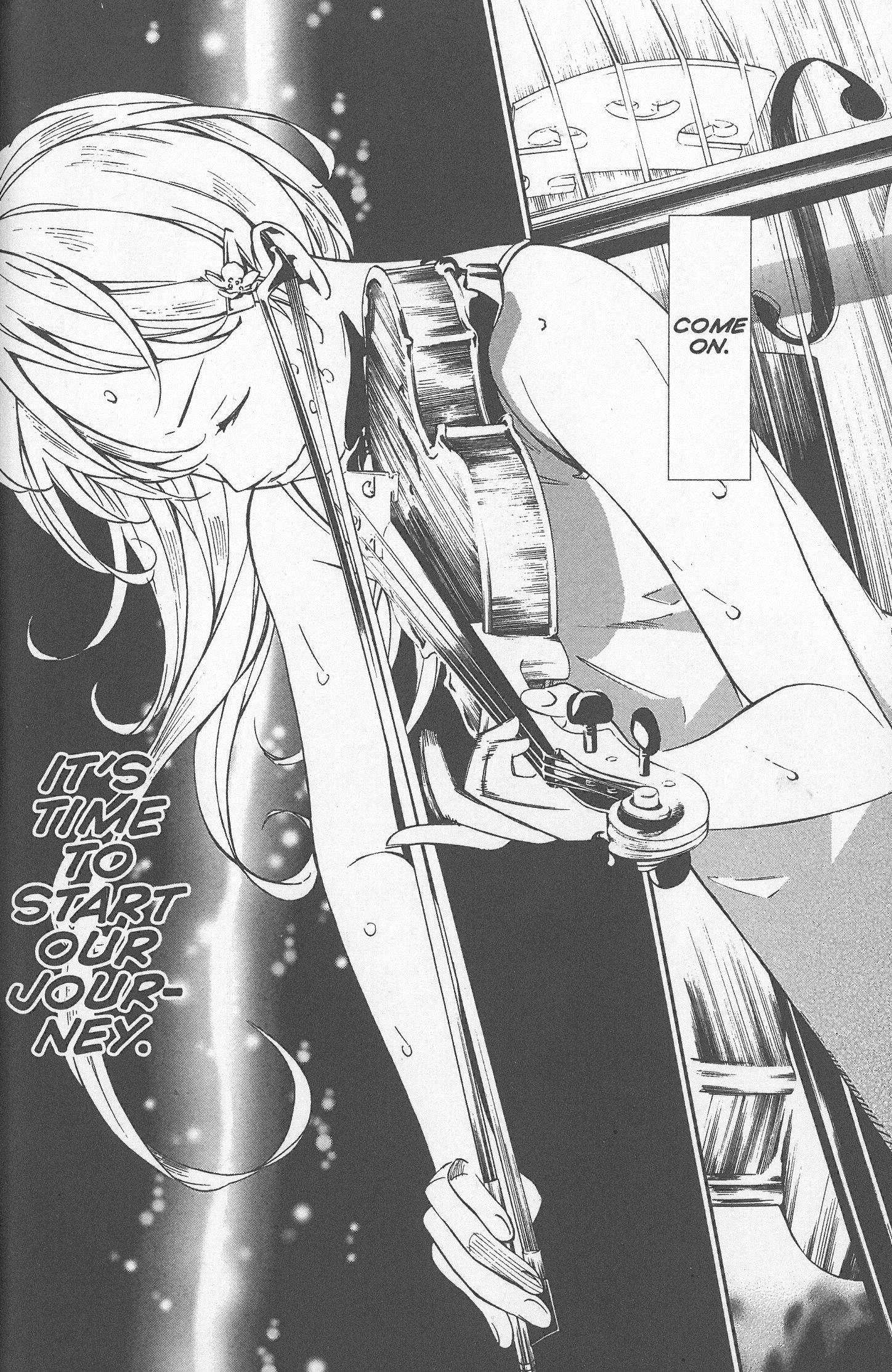
YourLieApril2-68Though Your Lie in April can be somewhat melodramatic at times, I appreciate that Arakawa is leveraging the psychological states of the series’ characters in order to further the story. Kosei being thrust into the spotlight and once again experiencing the thrill of performance doesn’t simply make everything all right or solve his problems. If anything, it actually makes matters more complicated. He continues to be torn between wanting to play and never wanting to touch the piano again. Hovering over Kosei is the shadow of his dead mother, an abusive woman who demanded perfection from him and his playing. But she was also the person who first taught him to love music. By the end of her life she had become cruel, but Your Lie in April, Volume 2 reveals that before she became ill she was much kinder and gentler person. It doesn’t excuse how she eventually treated her son, though it does help to explain in part why Kosei remained and continues to be devoted to her throughout the pain and suffering that was inflicted upon him.

What little is known about Kosei’s mother so far in Your Lie in April provides an interesting counterpoint to what little is known about Kaori. They are both musicians, they both are partly responsible for drawing Kosei into the world of music and, as the second volume of the series shows, they both struggle with physical illness. However, whereas Kosei’s mother became cruel, Kaori’s illness has caused her to devote herself to her music, striving to leave a lasting impression on those around her. No matter what happens in the future, Kosei’s relationship with Kaori, like the one with his mother, will be a formative one. He, at least, will never be able to forget her. She is an inspiration dragging him out of his personal darkness. This is something that is visually reinforced in the manga as well. Kaori is almost always shown in the light, sometimes she even seems to be the source of light, while Kosei is frequently seen in shadow, especially when he is playing. But Kaori is challenging and changing him. The time may come when Kosei will be able to freely stand in the light, too.

Thank you to Kodansha for providing a copy of Your Lie in April, Volume 2 for review.

Filed Under: REVIEWS Tagged With: kodansha, Kodansha Comics, Kodansha Manga Award, manga, Naoshi Arakawa, Your Lie in April

My Week in Manga: July 27-August 2, 2015

August 3, 2015 by Ash Brown

My News and Reviews

The Sparkler Monthly Year 3 Kickstarter campaign ends tonight, so this is one of my last opportunities to give it a shout-out! I actually spent a lot of last week trying to draw attention to the project and the spectacular work being done by the staff and creators of Sparkler Monthly. For example, my most recent giveaway, which is currently underway, is for the second book in Tokyo Demons (one of my favorite series ever, not just one of my favorite Sparkler series) as well as one additional Sparkler goody of the winner’s choice. And for my final in-depth review for the month of July, I featured Heldrad’s delightful Orange Junk, Volume 1, a romantic comedy strongly influenced by shoujo manga. I also posted July’s Bookshelf Overload over the weekend, which I also managed to briefly tie into Sparkler Monthly.

In publishing news, Bruno Gmünder is adding two more volumes of gay manga to its catalog for the 2015 Fall/Winter season—Takeshi Matsu’s Dr. Makumakuran and Other Stories and Gengoroh Tagame’s The Contracts of the Fall—and Breakdown Press will be releasing Ding Dong Circus and Other Stories, 1967-1974 by alt-mangaka Sasaki Maki. Ryan Holmberg, the collection’s translator and editor, recently wrote about Sasaki Maki for The Comics Journal. Also of note, Kodansha has plans to expand its digital distribution. There were also a couple of interesting interviews posted last week: over at Anime News Network Deb Aoki talked with mangaka Miki Yoshikawa in addition to one of Yoshikawa’s editors, and Organization Anti-Social Geniuses spoke with Marlene First, one of the manga editors at Viz.

Quick Takes

Akame ga Kill!, Volume 1Akame ga Kill!, Volume 1 written by Takahiro and illustrated by Tetsuya Tashiro. It seems as though every dark fantasy manga that has been released in English recently has a similar plot—the current ruling government and upper classes of society are staggeringly corrupt and a small group of exceptionally skilled fighters are battling against them. In many of the stories, the twist is that the “bad guys” are really the “good guys,” though it’s not much of a twist anymore since it’s becoming increasingly common. In Akame ga Kill!, that group is a team of assassins who target high-profile nobles and government officials. It’s a decent premise, but I’m not entirely convinced by Akame ga Kill!. Plot developments seem to occur more out of convenience than anything else, and despite delving into their various backstories the characters don’t yet have much depth to them. Takahiro mentions in the postscript that he finds Tashiro’s action scenes particularly eye-catching. I’m not familiar with Tashiro’s other manga, but when comes to Akame ga Kill! I was actually a little disappointed with the fight sequences. Battles happen so quickly that it appears as though nothing happens at all, and on occasion the action is skipped over completely. This conveys impressive speed, but I’d like to actually see the fights.

Let's Dance a Waltz, Volume 2Let’s Dance a Waltz, Volume 2 by Natsumi Ando. If it wasn’t for the series’ unfortunate focus on Himé’s weight loss, I would be really enjoying Let’s Dance a Waltz. The first volume ends with her losing more than forty pounds after two weeks of intensive dance study. I would be willing to begrudgingly move on from this, except that the second volume never lets the reader forget about it. The manga seems to constantly emphasize that someone has to be slim to be of worth. It really is a shame, because I like so many of the other elements of Let’s Dance a Waltz. I love the dancing in the series and Himé’s developing passion for it as a sport. The second volume includes her first contest, which is partly an effort to compel Tango to compete once again. And I love the delicious melodrama surrounding the competitors and the dynamics of their tangled personal relationships. Yūsei cares tremendously for his dance partner Sumiré, but she seems to have feelings for Tango. They both want to see Tango return dance, but that also means that he will become their opponent in the ballroom. Himé is in love with Tango, too, which introduces tension into her friendships with all three of them. There’s so much to like about Let’s Dance a Waltz, but the handling of the weight issues in the series honestly bothers me.


Filed Under: FEATURES, My Week in Manga Tagged With: Akame ga Kill, Let's Dance a Waltz, manga, Natsumi Ando, Takahiro, Tetsuya Tashiro

My Week in Manga: July 20-July 26, 2015

July 27, 2015 by Ash Brown

My News and Reviews

I posted one in-depth manga review last week, Sengoku Basara: Samurai Legends, Omnibus 2 by Yak Haibara. It’s the final omnibus in the series, collecting the third and fourth volume of Haibara’s Sengoku Basara 2 manga adaptation. I get a huge kick out of Sengoku Basara. It’s incredibly over-the-top but actually does manage to incorporate some legitimate history. Samurai Legends stands fairly well on its own, too, so no previous knowledge of the franchise is necessary. The other post last week (other than the usual My Week in Manga feature, of course) was something a little different: I was tagged in a game of manga tag, so I had an excuse to talk a bit about my collection. It was fun, so I hope others found it interesting.
Otakon was last week and there were some pretty great licenses announced. Viz Media picked up Inio Asano’s Goodnight Pun Pun as well as Takeshi Obata’s artbook Blanc et Noir and Keiko Ishihara’s The Heiress and the Chauffeur. Vertical will be releasing Riichi Ueshiba’s Mysterious Girlfriend X, Ryo Hanada’s Devil’s Line, and Kaori Ozaki’s The Gods Lie. (Ozaki is also the creator of Immortal Rain, which I love, so I’m especially excited for this one.) Kodansha Comics has plans to publish Yui Sakum’s Complex Age, Nao Emoto’s Forget Me Not, and most notably Leiji Matsumoto’s classic manga Queen Emeraldas! Also of note, Sekai Project, which primarily releases visual novels, has a new manga publishing initiative, starting with Satoru Sao, Takumi Yanai, and Daisuke Izuka’s GATE.

Elswhere online, Viz posted an interview with Canadian comics creator Faith Erin Hicks talking about many things, including her love of manga. (Also, her comics are great and well-worth checking out.) Organization Anti-Social Geniuses interviewed Kurt Hassler from Yen Press’ at Anime Expo. (All those manga recently licensed for digital release? There is a possibility we’ll be seeing them in print!) Graham Kolbeins of MASSIVE posted an impassioned but thoughtful explanation of how online piracy negatively impacts creators of gay manga. Deb Aoki has posted the audio and transcript of the gay manga panel from TCAF earlier this year. (It’s was a great panel that I only touched upon briefly in my TCAF roundup, so I’m glad it’s now available for anyone to read/listen to!) Finally, I’d like to draw everyone’s attention to an excellent post by Christopher Butcher about “othering” in the comics industry: Shifts and Living History

Quick Takes

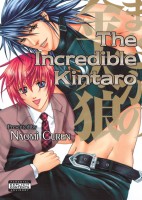
Incredible KintaroThe Incredible Kintaro by Naomi Guren. In Japanese folktales, Kintaro is a young boy with incredible strength who, among other things, runs around in the mountains with his trusty axe wearing nothing but a bib and wrestling bears. Those legends partly inspire The Inncredible Kinato, except that the youth is now a virile bishōnen. He does still spend a lot of time with very little clothing on and his junk hanging out, though. Currently, Kintaro is working as a janitor in order to protect his childhood love and friend Makoto. After his grandfather dies, Makoto is serving as the acting principal at the private high school where he is also a student, becoming a target of all the other men who would like to take control of the institute. And since the school’s motto is “Heart, Lust, Body,” that means it’s his virginity that’s at stake. The Incredible Kintaro is an intentionally ludicrous boys’ love manga. Makoto finds himself in all sorts of dubious situations, the teachers coming up with some rather creative scenarios to win his body if not his heart. The characters are shallow, so The Incredible Kintaro must rely on its bizarre premise and sense of humor to carry the story. Readers will need a high tolerance for the absurd to really enjoy the volume.

Johnny Wander, Volume 1Johnny Wander, Volume 1-3 written by Ananth Panagariya and illustrated by Yuko Ota. I was first introduced to the online comic Johnny Wander through several of the strips devoted to the cats in the character’s lives. They were hilarious and I was hooked. Johnny Wander isn’t always about cats, though. Actually, it really isn’t about anything. Johnny Wander is a sequence of short, one-page, autobiographically-inspired comics. Although there are recurring characters, scenarios, and even the occasional running joke, most of the individual comics stand completely on their own merits. They’re brief glimpses into somewhat nerdy, after-college, daily life and they’re very funny. The cast consists of family, friends, and roommates (and cats). The setting is made up of the various cities and apartments (some of which are kind of sketchy even if they’re fondly remembered) in which they’ve lived. It’s incredibly ordinary and wonderful at the same time. Johnny Wander is entertaining, delightful, and charming, made up of the types of stories and jokes that people who know each other well will reminisce about, and tell and retell over the years. I really do love this series, and it just recently began updating again!

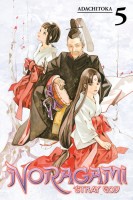
Noragami: Stray God, Volume 5Noragami: Stray God, Volume 5 by Adachitoka. Although it hasn’t completely disappeared, at times I miss the quirky humor that was fairly prevalent in the early volumes of Noragami. But I must say, the drama in recent installments has been increasingly intense and engaging. The fifth volume in particular is an especially excellent addition to the series, and it ends on one heck of a cliffhanger. Although not everything has yet been revealed, the fifth volume delves into the unfortunate history between Yato and Bishamonten, which turns out to be much more complicated than many realize. Importantly, with Bishamonten finding it difficult to control her numerous shinki, it seems as though the two of them are now facing a very similar situation. It didn’t end well the first time, which ignited their current feud and Bishamonten’s desire for vengeance, and it looks like they are now on the brink of another tragedy. Kugaha is manipulating the entire situation, successfully igniting a confrontation between Yato and Bishamonten in the hopes that she will die in the process. The intrigue in Noragami has reached new heights and the battles between gods has become even more perilous; I need to know what happens next.

Filed Under: FEATURES, My Week in Manga Tagged With: Adachitoka, Ananth Panagariya, Johnny Wander, manga, Naomi Guren, Noragami, Yuko Ota

Random Musings: Manga Tag

July 24, 2015 by Ash Brown

Earlier this month, Megan of The Manga Test Drive (which is one of my favorite manga review blogs and worth checking out if you haven’t already) gave a tour of her manga shelves and answered some questions about her collection as part of a game of manga tag. And wouldn’t you know it, I was tagged at the end! I thought it would be fun to participate, and it gives me a chance to talk a bit about my own manga collection, so here goes!

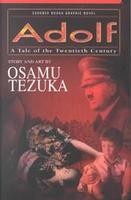
Adolf, Volume 1: A Tale of the Twentieth Century1. What was your first manga?
The first manga that I ever read was Osamu Tezuka’s Adolf as published by Viz way back in the day. I came across it while helping a friend locate materials for his thesis about the Jewish population in Japan during World War II. I’m fairly certain that the first manga I purchased for myself was Blade of the Immortal by Hiroaki Samura at the recommendation of my fantastic local comic book shop.

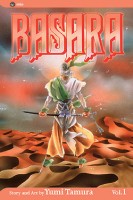
Basara, Volume 12. What is your most expensive manga?
Considering the amount of manga that I accumulate, I try very hard to keep my habit as inexpensive as possible. But sometimes it just can’t be helped and exceptions must be made. I discovered and fell in love with Basara after most of the series went out of print and ended up spending more than I really wanted to find a complete set. But I did get a couple of Basara artbooks out of the deal, too, which was cool.

Gunslinger Girl, Omnibus 13. What was your least expensive manga?
Relatively recently, my good friend Traci (who did a guest video review for me a couple of years ago) gifted me with her collection of Yu Aida’s Gunslinger Girl. She was moving out of the state and had to be very selective with the books she could take with her. As a result, I inherited a bunch of comics, most of which I still need to actually read. (I dread my next move; my collection is huge.)

Project X: Cup Noodle4. What is the most boring manga you own?
This was probably the question that I found the most difficult to answer. I’m going to guess that Project X: Cup Noodle by Tadashi Katoh might be the most boring manga that I own, but it doesn’t seem entirely fair to say that since I haven’t actually read it yet. However, I don’t expect that the manga will be terribly exciting, even though it may be interesting and at the very least educational. I could be wrong, though!

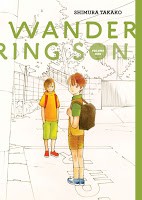
Wandering Son, Volume 15. What is your favorite manga series?
I have way too many favorites to narrow it down to one, so instead I’ll just highlight the series that has been the most personally meaningful—Takako Shimura’s Wandering Son. As someone who is all sorts of queer, the manga’s earnest and sensitive exploration of personal identity, including gender identity, made a huge impact on me; it’s not an exaggeration when I call Wandering Son life-changing.

Real, Volume 16. What is the most relatable manga series you own?
This took some thought, but in the end I’m going to go with Takehiko Inoue’s Real. It might seem like an odd choice for me seeing as I’m not really a basketball enthusiast and am currently fortunate enough not to need a wheelchair, but Inoue’s characterization in Real is phenomenal. He has created incredibly complex individuals with whom I can strongly identify with even though they’re unlike me in many ways.

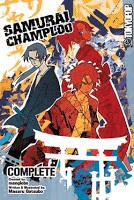
Samurai Champloo: The Complete Series7. What is one manga you own that is based off an anime?
It’s certainly not always the case, but many manga based on anime often leave something to be desired. I’ve still collected a few, though. Samurai Champloo was one of the first anime series I ever watched and it remains a favorite. Sadly, the Samurai Champloo manga by Masaru Gotsubo didn’t overly impress me. But, it has its moments, and I’m enough of a completist that I’ve held onto it.

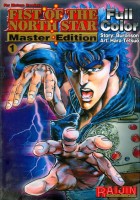
Fist of the North Star: Master Edition, Volume 18. What is your rarest manga?
I’m not certain it’s necessarily the rarest manga that I own, but let’s just say I hope I never need to purchase the colorized master edition of Buronson and Tetsuo Hara’s Fist of the North Star ever again. The sixth volume alone, even used, would cost several hundred dollars to replace. But I’ve actually got all sorts of interesting, uncommon, and unusual things kicking around.

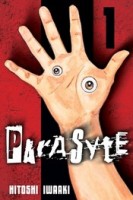
Parasyte, Volume 19. What is the most reprinted manga you own?
Well, assuming we’re talking about the different releases of a manga rather than the number of printings, that would be Hitoshi Iwaaki’s Parasyte. In English, the manga started out in Tokyopop’s MixxZine before being collected as individual volumes. Tokyopop eventually lost the license and Del Rey Manga picked it up. Kodansha Comics rescued the series after that. (I have the Del Rey version, though.)

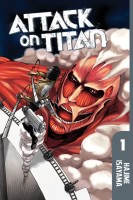
Attack on Titan, Volume 110. What is the most popular manga you own?
At the moment, that would probably be Hajime Isayama’s Attack on Titan along with its numerous spinoffs. The immense popularity of Attack on Titan fascinates me, so I like to keep up with the series. (In some ways, I’m almost more interested in the fandom than I am in the franchise itself.) Even though I do find parts of the manga to be extremely frustrating, other parts can be very engaging.

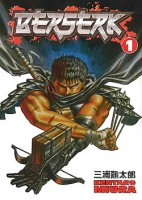
Berserk, Volume 111. What is the most damaged manga you own?
I try to take very good care of my collection and am largely successful, but thanks to my cat Lysander (affectionately and sometimes not-so-affectionately known as Stupid), I have a few volumes of Kentaro Miura’s Berserk that I need to get around to replacing. Lysander used a box of full of manga as a scratching post, so some of them look like they were mauled by a tiger. I’ve still not forgiven him for that.

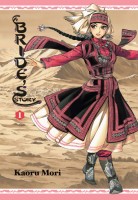
A Bride's Story, Volume 112. Which manga has the most amazing art?
I’m with Megan on this one. Kaoru Mori’s work in A Bride’s Story is absolutely stunning. It’s incredibly detailed, beautifully drawn, and thoroughly researched. There are a lot of mangaka whose artwork that I love and appreciate, but the illustrations in A Bride’s Story really do amaze me. In addition to the frequently breathtaking artwork, I also enjoy the series’ story, characters, and setting immensely.

The Four Immigrants Manga13. What is the oldest published manga that you own?
I’m pretty sure the oldest manga that I have in translation is The Four Immigrants Manga by Henry (Yoshitaka) Kiyama. The Japanese compilation was published in 1931. I’ve also collected the work by Masaichi Mukaide released in North America the 1970s, some of the earliest manga to be published in English. Granted, depending on the definition of “manga” being used, those may or may not count.

Prison School, Omnibus 114. What is the newest published manga you own?
Let’s see… what came out this week? I actually picked up the first omnibus of Akira Hiramoto’s Prison School. I’m intensely curious about this manga since it’s such an extreme shift in tone from Hiramoto’s earlier series, Me and the Devil Blues. I have a feeling Prison School will be a very divisive series. If for no other reason, it’s something that I want to read myself in order to have an informed opinion.

Cross Game, Omnibus 115. What are some of the most recent manga you have purchased?
Not counting all of the preorders that I’ve recently placed (and there have been many) the most recent manga that I purchased was a complete set of Cross Game by Mitsuru Adachi. I’ve actually been meaning to do this for a while now. (Sorry, Viz, for taking so long!) And as for my most recent out-of-print find, I was very happy to finally get my hands on Akimi Yoshida’s Banana Fish!

So there you have it! A very brief look at a very small selection of my manga collection. (Where is all the shoujo and josei?! The alt manga?! And everything else!?) Like Megan, I’m next going declare a free-for-all. If you’d like to answer some manga tag questions about your collection, either in the comments below or elsewhere, go for it! I’d love to keep talking about manga with you all. I’m also specifically going to tag my fellow bloggers manjiorin at Manga Connection and Lori Henderson at Manga Xanadu in case they’d like to participate, too. It’s been fun; hopefully you’ve found this diversion interesting!

Filed Under: FEATURES, Random Musings Tagged With: manga

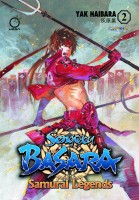
Sengoku Basara: Samurai Legends, Vol. 2

July 22, 2015 by Ash Brown

Sengoku Basara: Samurai Legends, Omnibus 2Creator: Yak Haibara
U.S. publisher: Udon Entertainment
ISBN: 9781926778594
Released: February 2013
Original release: 2008-2009

Yak Haibara’s four-volume manga series Sengoku Basara 2 is an adaptation of the video game known by the same name. The manga was released in English by Udon Entertainment in two omnibus volumes under the title Sengoku Basara: Samurai Legends. The second omnibus, collecting the third and fourth volumes of Haibara’s Sengoku Basara 2 released in Japan in 2008 and 2009 respectively, was published in 2013. The Sengoku Basara franchise had its beginnings in 2005 as a series of video games but it has since spawned multiple manga and anime series among other things. Samurai Legends was actually my introduction to Sengoku Basara as a whole and it stands fairly well as its own work. Prior exposure to Sengoku Basara isn’t really necessary to enjoy or understand Samurai Legends, although it might not hurt to have some basic knowledge of Japan’s Warring States period upon which it is very loosely based.

In the aftermath of the devastating defeat of the armies of both Kai Takeda and Kenshin Uesugi at Kawanaka Island, very little stands between the forces of Hideyoshi Toyotomi and Masamune Date to prevent them from clashing head on. While there are now fewer contenders vying for control over Japan, the battle for supremacy is still fierce. Toyotomi relies on his own power and strength as well as the skills of his master strategist Hanbei Takenaka, destroying anyone and anything in his path and using fear to rule. Date, too, has an excellent strategist in the talented Kojuro Katekura, but his rise to power has been significantly less destructive, at least when compared to that of Toyotomi. Knowing that they must contend with each other, the two warlords have set their sights on Odawara Castle, a fortress that if conquered will grant the victor an immense advantage in claiming Japan as his own.

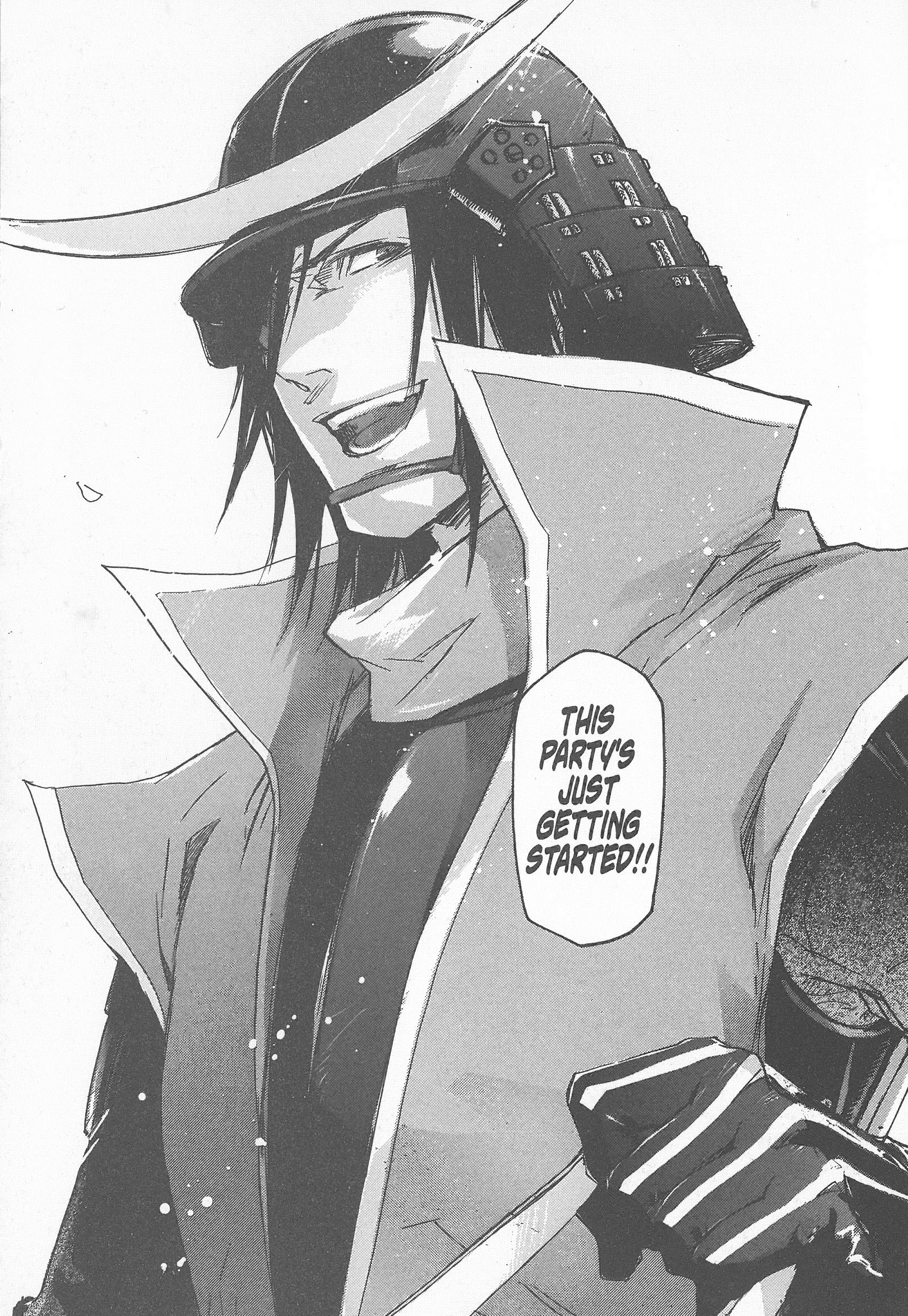
Sengoku Basara: Samurai Legends, Omnibus 2, page 209While Samurai Legends is inspired by actual historical figures and events from Japan’s sixteenth-century, the manga, like the rest of Sengoku Basara, makes no attempt at realism or authenticity. Quite the opposite in fact—the series is deliberately over-the-top and anachronistic. The dialogue and trash talk is very contemporary in its style, giving the characters tremendous attitudes with a modern bent. (“Dude, seriously? You wanna dance with me!?”) Additionally, Date’s army is basically portrayed as a bōsōzoku gang, complete with pompadours, although his forces do ride horses instead of motorcycles. And when it comes to actually battling things out, a frequent occurrence in Samurai Legends, the amount of damaged caused and incurred by the overpowered fighters is impressive to say the least, though hardly believable. But that’s part of what makes Sengoku Basara so great. It’s ridiculous and outrageous.

The first omnibus of Samurai Legend moved fairly quickly from one battle to the next. The second omnibus also as plenty of action, but the pacing doesn’t seem quite as frantic. Haibara takes more time to delve into the personal motivations of the primary players in the series’ conflict, revealing what drives them to conquer and unify Japan. While in the end the characters still aren’t particularly subtle or nuanced, this does provide them with more depth. I appreciate it when there is more complex meaning behind a fight than a simple lust for power; the second omnibus clarifies the underlying purpose of the war, making the battles even more thrilling. Samurai Legends is a bombastic series, and a least one major continuity error does slip in amid all of the excitement. However, I’m actually willing to forgive this simply because the manga is so incredibly entertaining otherwise. In the immortal words of Keij Maeda, “As long as you’re having fun, it’s all good.”

Filed Under: REVIEWS Tagged With: manga, Sengoku Basara, Udon Entertainment, Yak Haibara

My Week in Manga: July 13-July 19, 2015

July 20, 2015 by Ash Brown

My News and Reviews

Two in-depth reviews were posted at Experiments in Manga last week. The first took a look at Mushishi, Volume 4 by Yuki Urushibara. The review is part of my monthly horror manga review project; next month I’ll be bouncing back to Setona Mizushiro’s After School Nightmare. Mushishi continues to be one of my favorite manga series. The second review was of A Sky Longing for Memories: The Art of Makoto Shinkai, the most recent artbook to be released by Vertical. It’s a gorgeous volume to simply look at, but I also learned a little about art design and digital illustration while reading it, too. Also of note, over at Organization Anti-Social Geniuses, I and six other manga and anime enthusiasts weighed in on the question “What Was the Biggest Announcement at Anime Expo/SDCC?”

There were a few other manga-related posts at OASG last week, too, including some great tips on getting manga for cheap, advice from manga letterers, and an interview with Kodansha’s Ben Applegate from San Diego Comic-Con. A couple of other convention-related articles that I came across: Brigid Alverson talked to Tokyopop’s Stu Levy and Deb Aoki summarizes some of the recent manga news. Also, the audio recordings of some of the SDCC panels, including the Best and Worst Manga panel, have been posted.

In licensing news, Seven Seas announced The Other Side of Secret manga series by Hideaki Yoshikawa. Seven Seas will also be releasing a newly-illustrated omnibus of L. Frank Baum’s The Wonderful Wizard of Oz & The Marvelous Land of Oz. (This will be similar to Seven Seas’ edition of Lewis Carroll’s Alice’s Adventures in Wonderland and Through the Looking-Glass which was quite charming.) Finally, a couple of interesting reads I happened upon: Léopold Dahan wrote about studying the magazine Garo and Kevin Frane discussed gender in Quantum Devil Saga: Avatar Tuner. (Frane is the translator of the series in English, and I really enjoyed the first volume, but I’m looking forward to the following volumes even more now.)

Quick Takes

After I WinAfter I Win by Kaname Itsuki. Out of all the boys’ love manga that I’ve so far read, I think After I Win is the one that is the quickest to reach the all-important love confession. Only three pages into the manga and the leads—the beautiful Hiyori and his underclassman and roommate Kasumi—have admitted their feelings for each other. Granted, it takes most of the rest of the volume for them each to realize that the other young man actually meant what he said. After I Win is probably also the boys’ love manga with the most masturbation scenes that I’ve come across. (In the afterword, Itsuki mentions that it was her intention to feature at least one such scene in every chapter.) Hiyori and Kasumi spend so much time getting it on on their own rather than getting it on together for two main reasons: the aforementioned confusion regarding how seriously they should take each other’s confession, and the fact that Hiyori gets so nervous with anticipation and excitement that he tends to get nauseous. But even considering this, and despite his angelic appearance, Hiyori is very dirty-minded and looks forward to the opportunity to cement his relationship with Kasumi physically. After I Win, perhaps surprisingly, is actually pretty cute.

Alice in the Country of Hearts: My Fanatic Rabbit, Volume 1Alice in the Country of Hearts: My Fanatic Rabbit, Volumes 1-2 by Psyche Delico. After reading and enjoying the first Alice in the Country of Hearts manga series, I asked fellow enthusiasts to recommend which among the multitude of Alice manga I should follow-up with. My Fanatic Rabbit wasn’t mentioned a single time. So why did I tackle it next? Mostly because Psyche Delico was involved. (I loved her other manga released in English, Love Full of Scars.) My Fanatic Rabbit is more or less a retelling of Alice in the Country of Hearts, except that Alice has decided to stay with the Hatter mafia rather than Julius, ultimately falling in love with the March Hare. There are some cute romantic parts scattered throughout the series, especially towards the end, as well as some genuinely funny moments, but overall the manga really isn’t especially strong. It doesn’t stand well on its own and those who have read the first series won’t find much new, either. Maybe in part because it’s a shorter series, neither the characters nor the world have much of chance to develop and simply must be taken as is. My Fanatic Rabbit will likely appeal most to those who want to see Elliot and Alice together.

Aquarion Evol. Volume 1Aquarion Evol, Volumes 1-3 written by Shoji Kawamori, illustrated by Aogiri. Despite taking place twelve thousand years after Genesis of Aquarion, its sequel Aquarion Evol doesn’t make much sense at all to those who aren’t already familiar with the franchise. At least that’s the case for the ongoing manga series; perhaps the anime does a better job of initiating newcomers. Having seen neither of the anime series, I can only say that the story of the Aquarion Evol is a mess and nearly impenetrable at first. By the third volume things begin to be explained a little more coherently, but the manga seems to be taking a lot of shortcuts with the plot and character development. Probably because of my confusion, I generally wasn’t overly impressed with the Aquarion Evol, but there were still some things that I liked about it. The various supernatural powers are interesting (there’s even a music-based one!) as are the somewhat bizarre gender dynamics and curious sexual overtones. The artwork is attractive, too, with exciting action sequences and nice character designs. The mecha are difficult to tell apart at first glance, though. I wonder if I might actually enjoy the Aquarion Evol anime, but I find the manga to be frustrating.

Fantasy Sports, Volume 1Fantasy Sports, Volume 1 by Sam Bosma. Before stumbling upon Fantasy Sports, I hadn’t previously read any of Bosma’s work. I definitely want to read more now because Fantasy Sports was fantastic. It apparently started out as a self-published, black-and-white comic called Fantasy Basketball, but it was later expanded and colored for release by Nobrow and made the first installment in an ongoing series. I absolutely loved the comic and can’t wait to read future volumes of Fantasy Sports. The story follows Wiz, a young magic user and intern at The United and Ancient Order of Mages. Her mentor in the guild is Mug, a hulk of a man who usually solves his problems through brute strength and who doesn’t know a thing about magic. They don’t really get along very well, making their job raiding and searching for treasure even more difficult. During their most recent expedition, they encounter an ancient mummy who they must defeat in a game of basketball if they hope to escape with the fortune and their lives intact. It’s a slim volume, but with great art, great colors, and great characters, not to mention just enough silliness and adventure, the first volume of Fantasy Sports is a tremendous amount of fun.

Filed Under: FEATURES, My Week in Manga Tagged With: Alice in the Country of, Aogiri, Aquarion Evol, comics, Fantasy Sports, Kaname Itsuki, manga, Psyche Delico, Sam Bosma, Shoji Kawamori

Mushishi, Vol. 4

July 15, 2015 by Ash Brown

Mushishi, Volume 4Creator: Yuki Urushibara
U.S. publisher: Del Rey
ISBN: 9780345499233
Released: May 2008
Original release: 2003
Awards: Japan Media Arts Award, Kodansha Manga Award

Although the ten-volumes series Mushishi was Yuki Urushibara’s professional debut as a mangaka, it has been very well-received by both critics and fans. The manga began its serialization in 1999 and would go on to win a Japan Media Arts Award in 2003 and a Kodansha Manga Award in 2006 among other honors and recognitions. Mushishi, Volume 4 was originally published in Japan in 2003. In 2008, Del Rey Manga released the first English-language edition which is now sadly out-of-print. However, as of 2014, the volume has been made available digitally by Kodansha Comics. Mushishi was a series that I stumbled upon when it was initially being released in English. The manga quickly became and continues to be one of my favorite series; Mushishi was one of the first manga that I made a point to collect in its entirety. I love the series’ quiet, creepy atmosphere, its emphasis on life and nature, and the influence of traditional Japanese culture and folklore on the stories being told.

Mushishi, Volume 4 collects five stories. The volume opens with “Picking the Empty Cocoon,” telling the tale of a family with close connections to both mushi and mushishi. They are the caretakers of uro, a particularly useful but dangerous type of mushi. In “One-Night Bridge,” Ginko is invited to a remote village in a deep valley to investigate the case of a young woman who fell to the bottom of the gorge but somehow survived. Except that she’s never been the same since her accident. Plants growing out of season allow a brother and sister to weather harsh winters in “Spring and Falsehoods,” but the mushi that cause the phenomenon aren’t as benign as they first appear. In the fourth story, while traveling through the mountains, Ginko stumbles upon a small family living in a vast bamboo grove. They seem to be trapped there, unable to leave no matter how hard they try; they always end up circling back to their home. The volume concludes with “The Sound of Trodden Grass,” which provides a little more insight into Ginko’s past.

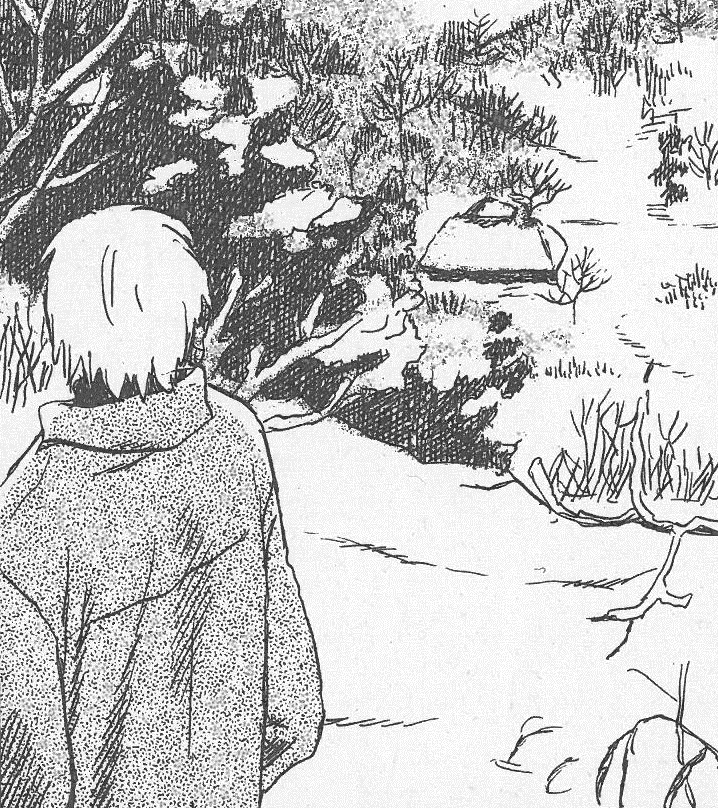
Mushishi, Volume 4, page 112For the most part, Mushishi tends to be fairly episodic. Except for the presence of Ginko, out of all of the stories included in the fourth volume only “The Sound of Trodden Grass” has an explicit connection to any of the other chapters in the series, and it’s only a tangential one. Although none of the stories in Mushishi, Volume 4 are directly related to one another plot-wise, there was one similarity shared between them all that particularly struck me: the prominent role played by families. Looking back, this actually isn’t at all an uncommon theme in Mushishi—families, as well as other tightly knit communities and groups, are frequently featured in the manga. However, through the illness and other problems that follow them, mushi are shown to cause great strife in those relationships. Circumstances caused by mushi’s existence can drive people apart, but in some cases they may actually draw them together. Familial ties are strong and not easily broken, but mushi’s close connection to nature and life and death (including those of humans) is sometimes in conflict with them and they are just as enduring.

The stories in Mushishi are often reminiscent of folktales and legends originating from Japan; Urushibara clearly draws some inspiration directly from that lore. For example, “In the Cage” with its children born of bamboo recalls the story of Kaguya-hime. The fourth volume of Mushishi is influenced by Japanese history, as well. “The Sound of Trodden Grass” features a group of wanderers displaced by mushi known as the Watari who are based on the Sanka people of Japan. (This is even more meaningful to me now after having read Kazuki Sakuraba’s novel Red Girls: The Legend of the Akakuchibas in which the Sanka also play a part.) Some of Mushishi‘s stories can be rather spectacular, with mushi causing phenomena verging on the paranormal, while others are more subdued. Mushi are said to be very close to the original form of life and are therefore inseparable from nature, but they remain mysterious. Mushishi is a collection of tales that delve into that terrifying unknown. Urushibara combines elements of folklore and history along with her own imagination to successfully create a series that feels familiar while still being new.

Filed Under: REVIEWS Tagged With: del rey, Japan Media Arts Award, Kodansha Manga Award, manga, mushishi, Yuki Urushibara

  • « Go to Previous Page
  • Page 1
  • Interim pages omitted …
  • Page 14
  • Page 15
  • Page 16
  • Page 17
  • Page 18
  • Interim pages omitted …
  • Page 60
  • Go to Next Page »
 | Log in
Copyright © 2010 Manga Bookshelf | Powered by WordPress & the Genesis Framework