• Skip to primary navigation
  • Skip to main content
  • Skip to primary sidebar
  • Home
  • About Us
    • Privacy Policy
    • Comment Policy
    • Disclosures & Disclaimers
  • Resources
    • Links, Essays & Articles
    • Fandomology!
    • CLAMP Directory
    • BlogRoll
  • Features & Columns
    • 3 Things Thursday
    • Adventures in the Key of Shoujo
    • Bit & Blips (game reviews)
    • BL BOOKRACK
    • Bookshelf Briefs
    • Bringing the Drama
    • Comic Conversion
    • Fanservice Friday
    • Going Digital
    • It Came From the Sinosphere
    • License This!
    • Magazine no Mori
    • My Week in Manga
    • OFF THE SHELF
    • Not By Manga Alone
    • PICK OF THE WEEK
    • Subtitles & Sensibility
    • Weekly Shonen Jump Recaps
  • Manga Moveable Feast
    • MMF Full Archive
    • Yun Kouga
    • CLAMP
    • Shojo Beat
    • Osamu Tezuka
    • Sailor Moon
    • Fruits Basket
    • Takehiko Inoue
    • Wild Adapter
    • One Piece
    • After School Nightmare
    • Karakuri Odette
    • Paradise Kiss
    • The Color Trilogy
    • To Terra…
    • Sexy Voice & Robo
  • Browse by Author
    • Sean Gaffney
    • Anna Neatrour
    • Michelle Smith
    • Katherine Dacey
    • MJ
    • Brigid Alverson
    • Travis Anderson
    • Phillip Anthony
    • Derek Bown
    • Jaci Dahlvang
    • Angela Eastman
    • Erica Friedman
    • Sara K.
    • Megan Purdy
    • Emily Snodgrass
    • Nancy Thistlethwaite
    • Eva Volin
    • David Welsh
  • MB Blogs
    • A Case Suitable For Treatment
    • Experiments in Manga
    • MangaBlog
    • The Manga Critic
    • Manga Report
    • Soliloquy in Blue
    • Manga Curmudgeon (archive)

Manga Bookshelf

Discussion, Resources, Roundtables, & Reviews

Manga Critic

The Girl From the Other Side: Siúil, a Rún, Vol. 1

January 17, 2017 by Katherine Dacey

On the surface, The Girl From the Other Side: Siúil, a Rún looks like a fairy tale. It unfolds in a long-ago, far-away place governed by one simple rule: humans and Outsiders must never cross paths. The principal characters are Shiva, a young girl, and Teacher, an Outsider who adopted Shiva after finding her alone in the woods. At first glimpse, their situation seems idyllic, two opposites living harmoniously in a charming little cottage — that is, until the human and demon worlds take interest in Shiva, testing Teacher’s commitment to protecting her.

Probe a little deeper, however, and it becomes clear that the manga’s nuanced characterizations elevate Shiva and Teacher from fairy tale archetypes to fully realized characters. Shiva, for example, talks and acts like a real six-year-old, toggling between moments of impetuousness and thoughtfulness. Though she is obviously fond of Teacher, she fantasizes about a reunion with her aunt, fervent in her desire to rejoin the human world. Shiva has an inkling that Teacher might be “sad” if she left, but she cannot fully appreciate his anguish over their possible separation. (Translator Adrienne Beck and adaptor Ysabet Reinhardt MacFarlane deserve special mention for voicing Shiva’s dialogue with naturalism; Shiva never sounds older or wiser than her years.)

The sophisticated artwork, too, plays an important role in transporting the reader to a specific place and time, rather than simply “long ago.” Nagabe’s elegant pen and ink drawings demonstrate a superb command of light; using washes and cross-hatching, she evokes a world lit by fire, where the glow of a candle casts a small spell against the darkness, and monsters lurk in the shadows. Her figure drawings are likewise strong, neatly conveying the characters’ personalities in a few well-chosen details. Teacher, for example, is a clever amalgamation of animal and demon parts. His most menacing features — his mouthless face and piercing eyes — are tempered by the way he carries himself; he’s fastidious in his movements and dress, gliding through the woods with the graceful, upright posture of a dancer.

Lest The Girl From the Other Side sound mawkish or precious, the brisk pacing and crisp dialogue prevent the story from sagging under the poignancy of the characters’ dilemma. It’s perhaps a little early to nominate it for a “Best of 2017” award, but this promising first volume demonstrates a level of craft, imagination, and restraint that’s sorely lacking in many fantasy manga. Highly recommended.

THE GIRL FROM THE OTHER SIDE: SIUIL, A RUN, VOL. 1 • BY NAGABE • SEVEN SEAS • RATING: ALL AGES

Filed Under: Manga, Manga Critic, REVIEWS Tagged With: Fantasy, Girl from the Other Side, Nagabe, Seven Seas

Welcome (Back) to The Manga Critic!

January 12, 2017 by Katherine Dacey


Welcome! My name is Kate Dacey, and I’ve been writing about comics since 2006 for sites like PopCultureShock, The School Library Journal, and MangaBlog. Though I’m passionate about comics in general, my first love is manga. I count Rumiko Takahashi, Katsuhiro Otomo, Kaoru Mori, Fumi Yoshinaga, Naoki Urasawa, and Osamu Tezuka among my favorite artists, as their work showed me the full potential of the comics medium.

I first created the Manga Critic in 2009. Back then, TOKYOPOP, CMX, and Del Rey were actively publishing material, Yen Press was the new kid on the block, and the New York Times was just beginning to acknowledge manga sales in its weekly bestseller lists. It was an exciting time: some weeks yielded as many as 50-60 new volumes of manga, and important artists — Hayao Miyazaki, Moto Hagio — were making the rounds at San Diego and New York Comic-Cons.

Though there were an astonishing number of manga-themed websites, blogs, and LiveJournals, many of these sites catered to self-professed otakus. For someone who primarily identified as a reader, I found the conversations at these sites unwelcoming, as I was more invested in the quality of the stories I read than in the fine details. I hankered for an online community where the hardcore fan and the occasional reader would feel equally welcome — and equally entitled to their opinions. When I didn’t find such a space, I set out to make one, and the Manga Critic was born.

For three years, I had a blast. I got shout-outs at the New Yorker and New York Times’ websites, a re-tweet from Roger Ebert that nearly crashed Manga Bookshelf, and enough passionate reader comments to fill a football stadium. (There are *still* a few people who are sore about my review of Blood Alone.) Then I hit the wall: I’d reviewed one too many books about teenage ninjas, wacky afterschool clubs, ruthless assassins, sexy robots, and vampire Romeos, and it showed. I put the Manga Critic in mothballs, and stopped blogging for almost two years.

In the immediate aftermath of shutting down my site, I felt relief: no more volumes of Highschool of the Dead to review! No more comments from infuriated teenaged boys! At the same time, however, I missed discussing and discovering new manga with thoughtful readers, an experience that I couldn’t fully replicate through Twitter or Tumblr feeds. So after several years of deliberation — and a few sporadic posts at MangaBlog — I decided that 2017 was the right time to bring back the Manga Critic.

HOW TO NAVIGATE THE SITE

If you’re new to manga, you’ll find several ways to discover new series and artists at the Manga Critic, from the Year in Review, an archive of my annual best-and-worst lists, to Recommended Reading, a series of articles highlighting different types of manga (e.g. horror, shojo). If you’re already a serious manga reader, you’ll find features that cater to your interests as well, including Manga Artifacts, an occasional column exploring Japanese comics published before 2000, and The Best Manga You’re Not Reading, a column highlighting great series that aren’t getting the attention they deserve. I also post occasional capsule reviews on Mondays — Bookshelf Briefs, a joint effort among the six Manga Bookshelf bloggers — and round-ups of manga industry news.

If you’re new to this site, I’ve compiled a short list of articles from the original Manga Critic (2009-2012). These essays provide a good introduction to my writing and reviewing style:

  • Ayako
  • The Best Manga You’re Not Reading: Benkei in New York
  • Manga Artifacts: Love Song
  • The Manga Hall of Shame: Wounded Man
  • My Favorite Shojo Manga: Kaze Hikaru
  • On Criticism: The 7 Deadly Sins of Reviewing
  • Rumiko Takashi’s Rumic Theater
  • Sexy Voice and Robo and Harriet the Spy
  • Summer, Fireworks and My Corpse

You’ll also find a wealth of sources on manga, manhwa, and comics for kids, all of which can be accessed through the Resources menu.

Going forward, I anticipate posting one major article each month, and one short review or news story each week. To stay abreast of what’s happening here at the Manga Critic, you can subscribe to my Twitter feed or the Manga Bookshelf Facebook page.

A WORD OF THANKS

Last but not least, I wanted to acknowledge three people for their encouragement and support: Brigid Alverson, who graciously gave me a place to hang out while The Manga Critic was on hiatus; Claire Dacey, who created the site’s funky new banner; and MJ, who played a major role in making the site functional and attractive. Thank you, ladies!

Filed Under: Manga Critic

I Am a Hero, Vol. 1

January 6, 2017 by Katherine Dacey

At first glance, I Am a Hero looks like a Walking Dead clone, complete with gun-toting vigilantes and hungry zombie hordes. Peel back its gory surface, however, and it becomes clear that I Am a Hero is really a meditation on being trapped: by a dead-end job, by thwarted expectations, and by fears, real and imagined.

The “hero” of Kengo Hanazawa’s series is thirty-five-year old Hideo Suzuki. Though Hideo tasted success with the publication of his own manga, his triumph was short-lived: Uncut Penis was cancelled just two volumes into its run. He now toils as a mangaka’s assistant, working alongside other middle-aged artists whose professional disappointment has curdled into misogyny and grandiosity.

Compounding Hideo’s problems is his fragile mental state. He hallucinates, talks to himself, and barricades the door to his apartment against an unspecified threat, in thrall to the voices in his head. Despite his tenuous grasp on reality, Hideo is the only one of his co-workers who notices the small but telling signs that something is deeply amiss in Tokyo. Hideo soon realizes that his long-standing fears might actually be justified, and must decide whether to hunker down or flee the city.

Getting to Hideo’s do-or-die moment, however, may be a challenge for some readers. The first act of I Am a Hero is a tough slog: not only does it focus on a cluster of strenuously unpleasant characters, it documents their daily routines in painstaking detail. The tedium of these early chapters is occasionally punctuated by vivid, unexplained imagery that calls into question whether the zombies exist or are a figment of Hideo’s imagination. What the reader gradually realizes is that Hideo’s paranoia makes him alive to the possibility of catastrophe in a way that his bored, self-involved co-workers are not; they’re too mired in everyday concerns to notice the growing body count, a point underscored by the banality of their workplace conversations, and their shared belief that women are the real enemy.

When the zombie apocalypse is in full swing, Hanazawa delivers the gory goods: his zombies are suitably grotesque, retaining just enough of their original human form to make their condition both pitiable and disturbing. Hanazawa stages most of the action in tight spaces–an artist’s studio, a pedestrian footbridge, a hallway–giving the hand-to-hand combat the stomach-churning immediacy of a first-person shooter game. Only when Hanazawa cuts away to reveal a fire-ravaged, chaotic landscape do we fully appreciate the extent to which Tokyo has succumbed to the zombie plague.

It’s in these final moments of the book that Hideo glimpses an alternative to his miserable existence–the loneliness, anonymity, and failure that, in his words, have prevented him “from being the hero of my own life.” How he escapes these emotional traps–and those pesky zombies–remains to be seen, but it seems like a journey worth taking. Count me in for volume two.

A word to parents: I Am a Hero is less gory than either The Walking Dead or Fear the Walking Dead, but contains scenes of disturbing violence and frank sexual content. Dark Horse’s suggested age rating seems appropriate for this particular title.

BY KENGO HANAZAWA • PUBLISHED BY DARK HORSE • RATED 16+ FOR VIOLENCE, GORE, LANGUAGE AND PARTIAL NUDITY

* This review originally appeared at MangaBlog on June 4, 2016.


Filed Under: Manga, Manga Critic, REVIEWS Tagged With: Dark Horse, Horror/Supernatural, Kengo Hanazawa, Zombies

Guardians of the Louvre

January 6, 2017 by Katherine Dacey

One part Times of Botchan, one part Night at the Museum, Jiro Taniguchi’s Guardians of the Louvre is a stately, handsomely illustrated manga that never quite rises to the level of greatness.

The premise is simple: a Japanese artist lies ill in his Parisian hotel room, feverishly dreaming about the museum’s galleries. In each chapter, the hero is temporarily transported to a particular place and time in the Louvre’s history, rubbing shoulders with famous artists, witnessing famous events, and chatting with one of the museum’s most famous works–the Nike of Samothrace, who takes the form of a stone-faced tour guide. If the set-up sounds like The Times of Botchan, it is, though Guardians of the Louvre is less ambitious; Taniguchi’s primary objective is to celebrate the museum’s collection by highlighting a few of its most beloved works, rather than immersing the reader in a specific milieu.

The artist-as-time-traveler schtick is a little hackneyed, but provides Taniguchi with a nifty excuse to showcase the breadth of his artistry, offering the reader a visual feast of rural landscapes, gracious country manors, war-ravaged cities, and busy galleries. Using watercolor and ink, Taniguchi convincingly recreates iconic paintings by Van Gogh and Corot, effortlessly slipping into each artist’s style without slavishly reproducing every detail of the originals. Taniguchi’s characters are rendered with a similar degree of meticulousness, though their waxen facial expressions sometimes mar scenes calling for a meaningful display of emotion.

What prevents Guardians of the Louvre from taking flight is its relentlessly middlebrow sensibility. In one scene, for example, the Nike of Samothrace leads our unnamed hero through an empty Salle des États, home of the Mona Lisa. The artist examines the painting closely, musing about the tourist hordes that normally throng the gallery. “It’s not about art appreciation anymore. It’s wholly a popular tourist destination” he says wistfully. If his character was anything more than an audience surrogate, his comment might have registered as a thoughtful meditation on the commercialization of fine art, or the outsized fame of Da Vinci’s canvas. Absent any knowledge of who he is or what kind of art he creates, however, his remarks sounds more like a moment of bourgeois snobbery: don’t these peasants realize the Louvre is filled with other remarkable paintings?

A similarly pedestrian spirit animates the chapters documenting the 1939 evacuation of the Louvre. To be sure, the mechanics of packing and transporting the art are fascinating; Taniguchi’s expert draftsmanship conveys the complexity and physical demands of the task in vivid detail, inviting us to ride along with Delacroix’s monumental Raft of the Medusa on its perilous journey from Paris to Versailles. The dialogue that frames these passages, however, is rife with cliches. “They were ready to risk everything to evacuate the paintings,” the Nike solemnly informs our hero before implying that this operation was a little-known episode in French history–a strange claim, given the story’s romantic treatment in popular culture.

The manga’s most effective passages, by contrast, are wordless. We see our hero wander through a forest where Corot silently paints the undulating boughs, and a medieval town where Van Gogh sets up his easel in a sun-drenched hay field. In these fleeting moments, Taniguchi’s sensual imagery allows us to step into the artist’s shoes and relive the creative process that yielded Recollection of Mortefontaine and Daubigny’s Garden for ourselves. If only the rest of the manga wasn’t so insistent on telling us how to appreciate these paintings.

Guardians of the Louvre
By Jiro Taniguchi
No rating
NBM Graphic Novels, $24.99

This review originally appeared at MangaBlog on May 20, 2016.

Filed Under: Manga, Manga Critic, REVIEWS Tagged With: Jiro Taniguchi, Louvre Museum, NBM/Comics Lit

Handa-Kun, Vol. 1

January 6, 2017 by Katherine Dacey

By the time we meet Sei Handa in the first pages of Barakamon, he’s a twenty-something jerk who bristles at criticism, resents authority, and resists overtures of friendship. The tenth-grader we meet in Handa-kun isn’t as curmudgeonly, but he has a problem: he constantly misreads other people’s motives, whether he’s interpreting a love letter as a threat or perceiving a job offer as a “shady” attempt to unload stolen clothing. For all his weirdness, however, Handa’s classmates worship him, viewing his odd behavior and sharp calligraphy skills as proof of his coolness.

Author Satsuki Yoshino wrings a surprising number of laughs from this simple premise by populating the story with a large, boisterous cast of supporting players. Though the outcome of every chapter is the same–female suitors and male rivals alike profess their sincere admiration for Handa–the path to each character’s epiphany takes unexpected turns. Yoshino complements these humorous soliloquies with expressive, elastic artwork that sells us on the characters’ transformations.

In the volume’s best chapter, for example, Yoshino pits Handa against a bespectacled nerd named Juniichi. Juniichi’s entire self-image is rooted in his years of service as class representative–that is, until one of his peers nominates Handa for the honor. Yoshino makes us feel and smell Juniichi’s desperation by showing us how Juniichi sweats, grimaces, and paces his way through the vote-counting process, flagging or rallying with each ballot. By chapter’s end, Juniichi’s cheerful declaration that “Right now, I feel the best I have ever felt in my life” seems like the natural culmination of this fraught emotional journey–even though, of course, his feeling is rooted in a false sense of Handa’s moral rectitude.

My primary concern about Handa-kun is that the series will overstay its welcome. Handa seems fundamentally unable to learn from his interactions with peers, and his classmates seem just as clueless in their blind adoration of him. If Yoshino doesn’t take steps to change this dynamic–perhaps by introducing a character who is genuinely unimpressed with Handa–the series risks settling into a predictable routine. For a few volumes, however, the current set-up will do just fine, offering the same brand of off-kilter humor as Haven’t You Heard? I’m Sakamoto.

The bottom line: The first volume is funny enough to appeal to newbies and die-hard Barakamon fans.

Handa-kun, Vol. 1
By Satsuki Yoshino
Rated T, for teens
Yen Press, $15.00

This review originally appeared at MangaBlog on February 26, 2016.

Filed Under: Manga, Manga Critic, REVIEWS Tagged With: Barakamon, Comedy, Handa-kun, Satsuki Yoshino, yen press

Behind the Scenes!!, Vol. 1

January 6, 2017 by Katherine Dacey

Behind the Scenes!! embodies what’s good–and not so good–about Bisco Hatori’s storytelling. In the plus column, Hatori has a knack for writing ensemble pieces in which the principal characters exhibit a genuine fondness for one another. The stars of her latest series are Shichikoku University’s Art Squad, a scrappy outfit that makes props for the Film Club–or, more accurately, clubs, as there are several students groups competing for the Art Squad’s services, each with their own aesthetic objectives. Ranmaru, the series’ protagonist, gets a crash course in film making when he stumbles into the middle of an Art Squad project: a low-budget horror flick. As penance for disrupting the shoot, Ranmaru joins the Art Squad and is quickly pressed into service painting props, folding paper cranes, and building a fake hot spring.

These scenes–in which Ranmaru and the gang tackle set-design challenges–are among the series’ most enjoyable. Not only do they give us a sneak peek at the movie-making process, they also show us how the club members’ friendly overtures embolden the timid, self-doubting Ranmaru to let go of his painful childhood and become part of a community. In one exchange, for example, Ranmaru tells a fellow squad member about a black-and-white film that made a powerful impression on him. Hatori cuts between scenes from this imaginary film and Ranmaru’s face, registering how powerfully Ranmaru identified with the film’s principal character, a toy robot who dreams of flying. The symbolism of the toy is hard to miss, but the directness and simplicity with which Hatori stages the moment leavens the breezy tone with a note of poignancy.

In the minus column, Hatori often strains for comic effect, overwhelming the reader with too many shots of characters mugging, shouting, and flapping their arms. The Art Squad’s interactions with various student directors give Hatori license to indulge this tendency; the auteurs’ snits and whims frequently force the Art Squad members to behave more like the Scooby Doo gang–or Hollywood fixers–than actual college students juggling coursework and extra-curriculars. (The Art Squad even has a goofy dog mascot.)

At the same time, however, these wannabe Spielbergs bring out the best in Hatori’s draftsmanship. Each one’s personality is firmly established in just a single panel: one looks like a refugee from Swingin’ London (or perhaps an Austin Powers film); another dresses like a Taisho-era author, swanning around campus in a yukata; and a third sports a shaggy mane, Buddy Holly glasses, and a female entourage. The efficiency with which Hatori introduces these characters, and the range of personalities they embody, demonstrate just how crisp and distinctive her artwork can be. That Hatori’s heroes are visually bland by comparison says less about her skills, I think, than it does her desire to make Ranmaru’s new “family” seem normal–well, as normal as anyone who specializes in making fake zombie guts can be.

The bottom line: Tentatively recommended. If Hatori can tone down her characters’ antic behavior, Behind the Scenes!! could be a winner.

Behind the Scenes!!, Vol. 1
By Bisco Hatori
Rated T, for teens
VIZ Media, $9.99

This review originally appeared at MangaBlog on February 8, 2016.

Filed Under: Manga, Manga Critic, REVIEWS Tagged With: Bisco Hatori, Comedy, shojo, VIZ

The Best and Worst Manga of 2015

January 6, 2017 by Katherine Dacey

After a two-year hiatus from blogging, I donned my critic’s cap again in 2015. I’ve enjoyed writing my quasi-weekly column, but composing a year-end list reminded me why I stepped off the reviewing treadmill in 2012: mediocre books! This year yielded a veritable bumper crop of so-so manga, titles that were competently executed but otherwise unmemorable thanks to an abundance of generic characters, cliché settings, and predictable plot twists; you’d be forgiven for feeling that you’d read many of 2015’s debuts before, even if the artists were new to the US market.

Lurking among the paint-by-number romances and boy-saves-world titles, however, were a few gems. I’ve done my best to highlight the titles that made me feel something, whether that feeling was love, hate, or a mixture of both. To that end, I’ve included my nominees for the worst manga of 2015 alongside the books that made me laugh and cry.

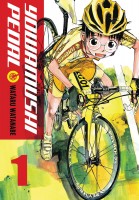
Yowamushi-Pedal-Volume-1Best New Series: Yowamushi Pedal
By Wataru Watanabe • Yen Press
You know the rap on sports manga: American readers won’t buy it, and don’t like it. Yowamushi Pedal might just change that, however, thanks to a story that plays well across the nerd-jock divide. Onoda, the hero, is a self-professed otaku whose weekly bike rides into Akihabara have transformed him into a secret Lance Armstrong clone. Though Onoda wants to revive his school’s anime club, his amazing hill-climbing skills and stamina get noticed by more seasoned riders, all of whom convince Onoda to join the cycling team. The series’ races are nail-biting, page-turning affairs, but it’s the in-between stuff that makes Yowamushi Pedal work. Onoda doesn’t just discover a new skill; he discovers a community of people who share his passion for riding and respect his talent. In short, Yowamushi Pedal is a coming-of-age story in which a bike becomes the nerdy hero’s vehicle—pun intended—for self-actualization.

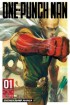
One-Punch ManBest New Shonen Series: One-Punch Man
By ONE and Yusuke Murata • VIZ Media
One-Punch Man is the ultimate have-your-cake-and-eat-it-too manga. On the surface, it’s an affectionate spoof of shonen clichés that pokes fun at goofy costumes, over-the-top training sessions, and speech-prone villains. On a deeper level, however, One-Punch Man is a great adventure series about an ordinary but strong-willed individual who sets out to rid his city of monsters, only to discover that there’s a much greater threat to mankind than the lobster-men and were-lions that roam the streets. The result is a sincere, gut-bustingly funny manga that reads like a Silver Age superhero comic, splats and all.

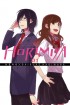
Horimiya_cover1Best New Romance Manga: Horimiya
By Hero and Daisuke Hagiwara • Yen Press
Horimiya is one of 2015’s most pleasant surprises, a teen rom-com that avoids cliché situations by focusing on the characters’ lives outside school. At first glance, its lead characters look like opposites: Kyouko is the class queen, while Izumi is a quiet loner. When they bump into each other off campus, however, they quickly realize they have more in common than their carefully constructed identities would suggest–a realization that leads to friendship and flirtation. In less imaginative hands, Kyouko and Izumi’s budding romance would be subjected to endless tests–school plays, beach trips, hot transfer students–but the authors resist the urge to trot out these over-used scenarios, relying instead on more ordinary settings for comedic (and dramatic) grist. It’s the perfect antidote to the wacky misunderstandings that drive the plots of Cactus’ Secret, Special A, and a dozen similar titles.

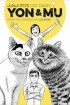
Cat_DiaryBest New Gag Manga: Junji Ito’s Cat Diary: Yon & Mu

By Junji Ito • Kodansha Comics
Draw a Venn diagram that shows the overlap between Junji Ito fans and cat lovers, and you’ve found the small but perfect audience for Junji Ito’s Cat Diary, a collection of anecdotes about Ito’s beloved pets Yon and Mu. Though the manga’s jokes explore familiar terrain, Ito’s exaggerated reaction shots are priceless, capturing the mixture of love and disgust that cats inspire in their owners. (Imagine Edvard Munch drawing a gag manga about cats, and you get the general idea.) Ito is refreshingly honest about the way animals change the dynamic between people, too; in some of the manga’s most memorable scenes, Ito and his fiancée compete fiercely for their cats’ affection, plying Yon and Mu with toys, treats, and cuddles. Though the prevailing tone is campy, Ito’s obvious affection for his cats helps prevents the Diary from becoming too arch.

ludwig_kansiBest Historic Title: Ludwig B.
By Osamu Tezuka • DMP, Inc.
Left unfinished at the time of Osamu Tezuka’s death, Ludwig B. is a fictionalized biography of Beethoven. Tezuka only completed two volumes, but oh, those two volumes! Tezuka draws evocative scenes of Beethoven at the keyboard, using striking visual metaphors to convey the sound of Beethoven’s music. Tezuka also does a good job of capturing the dynamic between Beethoven and his father, revealing the extent to which Johann’s drinking, gambling, and stage-parenting cast a long shadow over Beethoven’s adult life. Purists should note that Tezuka takes frequent liberties with the historical record, creating a mustache-twirling villain named Franz Kreuzstein to serve as a foil for the young, determined Beethoven. If you’re not offended by such creative license, however, Ludwig B. offers an interesting glimpse into Beethoven’s development as a composer, and Tezuka’s lifelong fascination with Beethoven.

planetesBest Reprint Edition: Planetes
By Makoto Yukimura • Dark Horse
Listen up, manga publishers: if you’re going to do a new edition of a fan favorite, Dark Horse’s two-volume omnibus of Planetes is a swell example of how to do it right. The story has a crisp new translation, full-color pages, and a bigger trim size that gives Makoto Yukimura’s artwork room to stretch out. Better still, the new edition collects more chapters in each volume, allowing newcomers to read far enough into Planetes for Yukimura’s episodic character studies to gel into a more coherent story about space travel and social inequality; by the time newbies reach the end of volume one, they’ll be hooked, too.

sakamotoBest Manga I Thought I’d Hate: Haven’t You Heard? I’m Sakamoto
By Nami Sano • Seven Seas
In theory, Haven’t You Heard? I’m Sakamoto is a one-note samba: the titular character is handsome, good at everything, and unfailingly logical in all situations. In practice, however, Haven’t You Heard? is the Goldberg Variations of gag manga, taking stock scenes and putting a bizarre twist on them. The secret? Sakamoto is just a little too perfect, behaving more like a well-programmed android than a flesh-and-blood person. His peculiar brand of sangfroid confounds enemies and admirers alike; no one can decide if he’s cool or crazy, or where his loyalties might lie, making it impossible to predict how he’ll respond to each new challenge.

jojo_phantom_blood1Worst Manga I Thought I’d Love: JoJo’s Bizarre Adventure, Part 1: Phantom Blood

By Hirohito Araki • VIZ Media
At the risk of becoming the Armond White of manga critics, I’m nominating Hirohito Araki’s bone-crunching, chest-thumping saga for Most Exhausting New Series of 2015. That’s because Phantom Blood is a prime example of all-caps theater, the sort of manga in which every word balloon is filled with emphatic punctuation, and every plot twist seems like the brainchild of six teenage boys hopped up on Mountain Dew. In small doses, this more-is-more approach to storytelling can be amusing, but in longer installments, the cumulative effect of so much narrative excess is numb resignation; I didn’t feel entertained so much as punched in the face. (Reviewed at Manga Blog on 5/22/15.)

mizuki_hitlerMost Disappointing Manga: Shigeru Mizuki’s Hitler
By Shigeru Mizuki • Drawn & Quarterly
Shigeru Mizuki’s Hitler is one of the artist’s lesser works, uncomfortably see-sawing between character study and history lesson in its efforts to show us the man behind the Third Reich. Mizuki’s signature blend of cartoonish figures and photo-realistic backgrounds have been deployed to powerful effect in Non Non Ba and Onwards Towards Our Noble Deaths. Here, however, Shigeru’s hybrid style is a poor match with the subject; seeing Hitler reduced to a crude caricature makes it all too easy to view the book as a curiosity, rather than a serious meditation on evil. The virtual absence of the Holocaust is an even greater shortcoming; Shigeru Mizuki’s Hitler never grapples with the Fuhrer’s most disturbing legacy save for one blurry image of stacked corpses. Perhaps Mizuki felt the subject was too complex to explore in this biography, but it’s hard to imagine any dramatization of the Fuhrer’s life that fails to examine his virulent anti-Semitism.

* * * * *

So what are other folks saying about 2015’s best titles? My Manga Bookshelf colleagues just posted their Pick of the Year, with Ash Brown posting a separate, more detailed run-down of his favorite titles at Experiments in Manga. At the B&N Sci-Fi & Fantasy Blog, Brigid Alverson has posted separate lists for her favorite new and continuing series.

This article originally appeared at MangaBlog on December 30, 2015.

Filed Under: Classic Manga Critic, Manga, Manga Critic, Recommended Reading Tagged With: BEST MANGA, Dark Horse, DMP, Drawn & Quarterly, Osamu Tezuka, Seven Seas, VIZ, yen press

Junji Ito’s Cat Diary: Yon & Mu

January 6, 2017 by Katherine Dacey

On the surface, Junji Ito’s Cat Diary is a gag manga. J-Kun–a lightly fictionalized version of the author–reluctantly agrees to let his fiancee bring two cats into their home: Yon, a black-and-white cat with sinister markings on his back, and Mu, a Norwegian forest cat with a cute face and a wicked bite. Each story depicts Yon and Mu doing normal cat things, from coughing up hairballs to resisting unsolicited human affection.

Readers familiar with Ito’s previous manga will get a chuckle at J-Kun’s over-the-top reactions to cat poop, scratched floors, and feather wands, as his grotesque facial expressions have been swiped from the pages of Gyo and Uzumaki. Surprisingly, these grimaces work just as well in the context of a domestic comedy, capturing the mixture of revulsion and love that cat behavior elicits. The uninitiated reader may also find these scenes amusing, if a bit excessive; surely a grown man realizes that cats can be jerks?

On a deeper level, however, Cat Diary is a meditation on human relationships. Though the ostensible plot focuses on J-Kun’s struggle to overcome his dislike of cats, the real story is Yon and Mu’s role in bringing J-Kun closer to his fiancee. J-Kun comes to love the cats–spoiler alert!–but the way in which he expresses those feelings demonstrates his journey from “me” to “we,” as his selfish concerns about the house give way to a shared sense of responsibility for the cats’ welfare. This human dimension of Cat Diary infuses it with a warmth that’s frequently missing from Ito’s work, and prevents the stories from reading like a collection of cat GIFs. (I can haz laffs now!)

On a totally shallow note, reading Cat Diary made me want to get my own Norwegian forest cat. I’m not sure if that’s an endorsement of Ito’s comedy chops, but it’s proof that he can draw the hell out of cute, furry things.

The verdict: You don’t need to be a cat person–crazy or otherwise–to enjoy this idiosyncratic manga, though a healthy respect for cats definitely helps.

Junji Ito’s Cat Diary: Yon & Mu
By Junji Ito
Rated T, for readers 13+
Kodansha Comics, $10.99

This review originally appeared at MangaBlog on December 12, 2015.

Filed Under: Manga, Manga Critic, REVIEWS Tagged With: Cats, Comedy, Junji Ito, yen press

Short Takes: Deadman Wonderland and Livingstone

January 6, 2017 by Katherine Dacey

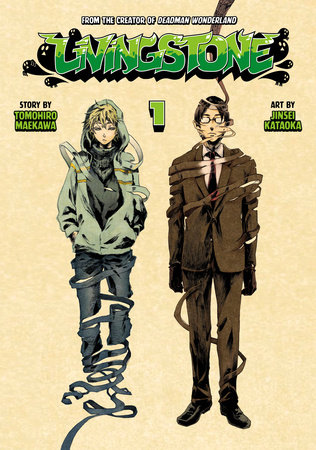
The November release of Jinsei Kataoka and Tomohiro Maekawa’s Livingstone provided me a nifty excuse to try Deadman Wonderland, an earlier series written and illustrated by Katoaka. Fans of Deadman Wonderland may know its complex licensing history here in the US: Tokyopop was its first publisher, releasing five volumes before going bankrupt in 2011. VIZ acquired the series in 2013, and is now just two volumes shy of the series’ grand finale, which arrives in February 2016.

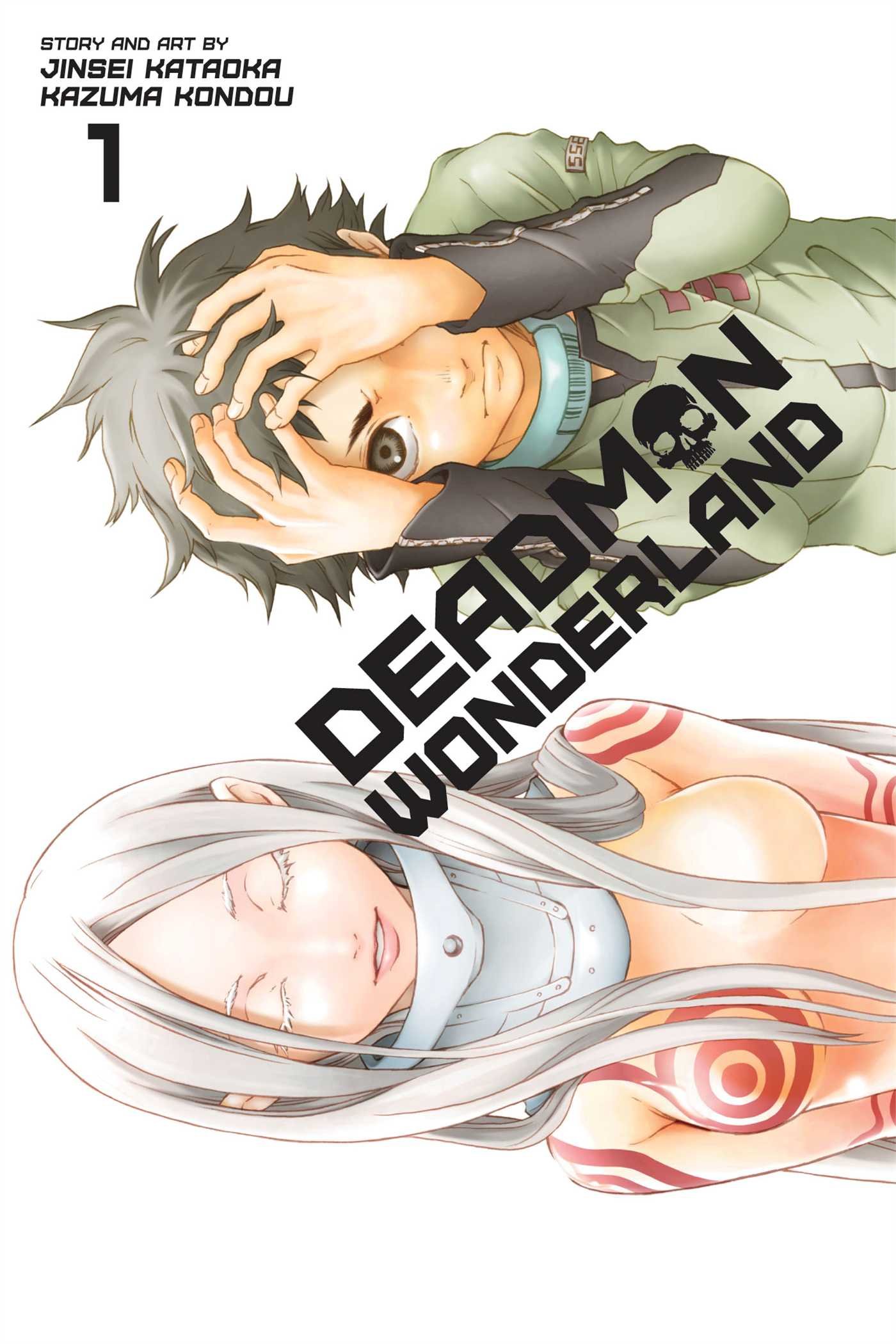
deadman_wonderland1Deadman Wonderland, Vol. 1
Story & Art by Jinsei Kataoka and Kazuma Kondou
Rated T+, for Older Teens
VIZ Media, $9.99

In the not-so-distant future, visitors flock to Deadman Wonderland, a prison-cum-theme park in Tokyo Bay where inmates fight to the death in front of paying crowds. Our guide to this Roman circus is newly minted prisoner Ganta Igarashi, an ordinary fourteen-year-old who’s been wrongfully convicted of murdering his classmates. Ganta’s fundamental decency is challenged at every turn; try as he might to cling to his humanity and clear his name, the prison’s arbitrary rules and roving gangs make it hard to be principled.

From my thumbnail description, you might conclude that Deadman Wonderland was cobbled together from parts of Judge Dredd, Rollerball, and Escape from New York–and you wouldn’t be wrong. What prevents Deadman Wonderland from reading like Rollerball 2: The Revenge is imaginative artwork. Jinsei Kataoka and Kazuma Kondou have created a Bizarro World Disneyland with rides, concessions, grinning animal mascots, and attractions like the Happy Dog Run, a lethal obstacle course featuring swinging blades and spike-filled pits. The characters who inhabit this landscape are a motley crew: though some telegraph their bad-guy status with tattoos and goofy haircuts, there are enough ordinary-looking prisoners that it’s impossible to judge who’s trustworthy. That uncertainty creates a strong undercurrent of tension in every scene, making Ganta’s routine activities–a conversation in the bathroom, a trip to the cafeteria–as fraught with peril as an actual contest.

The manga’s other great strength is pacing. Kataoka and Kondou resist the temptation to dole out too much information in the first volume; we’re never more than a clue or two ahead of Ganta, though perceptive readers may finish volume one with some notion of the prison’s true purpose. The authors’ expert timing also prevents us from dwelling on the story’s most shopworn elements, instead focusing our attention on how Ganta responds to new characters and new challenges.

All of which is to say: Deadman Wonderland is more fun than it has any right to be, considering the high body count and recycled plot points. Count me in for the next twelve volumes!

The verdict: Great art, smart pacing, and an appealing lead character make Deadman Wonderland a winner. (A note to parents, teachers, and librarians: this manga’s rating is justified.)

livingstoneLivingstone, Vol. 1
Story  by Tomohiro Maekawa, Art by Jinsei Kataoka
Rated 16+
Kodansha Comics, $10.99

Livingstone is a handsomely illustrated bore, the kind of manga in which the writer has dressed up a simple concept with a profusion of fussy details that don’t add depth or interest to the story. The title refers to human souls–or, more accurately, the rock-like form that human souls take after a person dies. Sakurai and Amano, the manga’s protagonists, work together to harvest livingstones, thus ensuring that a soul is properly passed from one person to the next. If a person dies before his appointed time, however, his soul curdles into a gooey blob of bad juju.

The manga has the rhythm of a cop show: in each chapter, Sakurai and Amano solve or prevent one unscheduled death, usually by negotiating with someone who’s planning to kill himself. Livingstone‘s intense fixation on suicide is off-putting; none of the would-be victims are particularly sympathetic, and Sakurai and Amano’s ministrations are so tone-deaf that it’s hard to know what message author Tomohiro Maekawa is hoping to impart to readers. Sakurai and Amano’s antagonistic bickering is supposed to inject a note of levity into the proceedings, I think, but the timing of the jokes and the staleness of the characterizations do little to offset the dour tone. By the end of volume one, I found myself feeling bummed out and irritated–never a good sign for a series that’s exploring a subject as serious as death.

The verdict: Nice art, lousy script; I liked this story better when it was called The Kurosagi Corpse Delivery Service.

These reviews originally appeared at MangaBlog on November 27, 2015.

Filed Under: Classic Manga Critic, Manga, Manga Critic, REVIEWS Tagged With: Horror/Supernatural, Jinsei Kataoka, Kazuma Kondou, kodansha, Sci-Fi, Tomohiro Maekawa, VIZ

Say I Love You, Vols. 1-3

January 6, 2017 by Katherine Dacey

Back in the 1980s, filmmaker John Hughes peddled an intoxicating fantasy to thirteen-year-old girls: you might be the class misfit–the kid who wore the “wrong” clothes, listened to the “wrong” music, and had the “wrong” friends–but the hottest guy in school could still fall for you. Better still, he’d like you for being a “real” person, unlike the two-faced girls who inhabited his social circle. You’d have a bumpy road to your happily-after-ever, of course, since his friends felt compelled to say that you weren’t in his league, but in the end, your sincerity and quirkiness would prevail.

Say I Love You reads a lot like a manga version of Pretty in Pink or Some Kind of Wonderful, right down to the meet-cute between Mei, a moody loner, and Yamato, the most popular guy in school. Mei mistakenly believes that Yamato tried to peek up her skirt, and responds with a powerful roundhouse kick. Though Yamato’s friends demand an apology from her, Yamato is intrigued by Mei’s display of bravado and asks her out.

Mei is initially bewildered by Yamato’s courtship: why would someone as outgoing, handsome, and well regarded find her interesting? (You, dear reader, may also wonder why Yamato pursues Mei, given her generally sullen demeanor.) As Mei soon discovers, however, Yamato’s dating history is more complicated than she assumed; his good looks belie an earnest, thoughtful person who lost his virginity before he met someone he really cared about. He’s willing to endure a few tearful outbursts–not to mention some mixed signals–if it means he’ll get to know the real Mei before they go all the way.

And speaking of mixed signals, Say I Love You is refreshingly honest in acknowledging the full spectrum of teenage desire. Some characters embrace their feelings in healthy ways; others use sex to fill a void in their emotional lives; and still others are just beginning to explore their sexuality. Though many of the sexual encounters in the series are ill-advised, the teenage logic that underpins them rings true; an adult may feel an uncomfortable pang of recognition while reading Say I Love You.

The series’ greatest strength, however, is that author Kanae Hazuki is unusually generous with her supporting players. We’re privy to both Mei and Yamato’s thoughts, of course, but Hazuki also pulls the curtain back on other characters’ interior lives. In volume two, for example, mean girl Aiko becomes the temporary focus of the story, narrating her own transformation from a plump, pretty girl to a skinny, angry young woman who is furious that Yamato doesn’t like her. Her blunt self-criticism and body hang-ups remind younger readers that everyone wears a mask in high school; even students who seem outwardly blessed with good looks or talent are wrestling with the familiar demons of self-doubt and self-loathing.

If I had any criticism of Say I Love You, it’s that the plot twists are a little too by-the-book, with beach visits, Valentine’s Day agita, and misunderstandings of the “I saw you kiss her!” variety. In volume three, for example, Hazuki introduces Megumi, a model who’s hell-bent on making Yamato her boyfriend. When a direct approach doesn’t work–Yamato, of course, rebuffs Meg’s initial proposition–Meg transfers schools and ropes Yamato into becoming a model himself. I realize that “model,” “celebrity,” or “singer” epitomize a thirteen-year-old’s dream job, but the artifice and obviousness of diving into the modeling world feels like an unnatural direction for such a finely observed romance.

Perhaps the best compliment I could pay Say I Love You is that it has all the virtues of Pretty in Pink and Some Kind of Wonderful: it’s got a proud, tough heroine who’s skeptical of the popular kids, a sincere hot guy who can see past her bluster, and a veritable Greek chorus of peers who chart the ups and downs of their relationship. All it needs is a killer soundtrack.

Say I Love You, Vols. 1-3
By Kanae Hazuki
Rated OT, for older teens
Kodansha Comics, $10.99

This review originally appeared at MangaBlog on October 2, 2015.

Filed Under: Manga, Manga Critic, REVIEWS Tagged With: Kanae Hazuki, kodansha, Romantic Comedy

Komomo Confiserie, Vol. 1

January 6, 2017 by Katherine Dacey

Flip through The Big Book of Shojo Plotlines, and there – between “I’m Having an Affair with My Homeroom Teacher” and “I’m a Nutjob Who’s Inexplicably Irresistible” – you’ll find another time-honored trope: “I Was Mean to My Childhood Friend, and Now He’s Hot!” Komomo Confiserie embodies this plot to a tee: its wealthy heroine, Komomo, was spoiled rotten as a child, with an army of servants at her disposal. It was her special delight to order fellow six-year-old Natsu to make her sweets–he was the pastry’s chef son, after all–and terrorize him when he didn’t comply. When Komomo turns fifteen, however, her family loses everything, forcing her to get a job and attend public school. Natsu–now a successful baker in his own right–makes a seemingly chivalrous offer of employment to Komomo, who’s too guileless to realize that she’s walking into a trap.

You can guess the rest: Natsu revels in his new-found position of power, directing Komomo to perform menial tasks and scolding her for lacking the common sense to sweep floors or boil water. The fact that he’s cute only adds salt to the wound; Komomo vacillates between plotting her escape and speculating that Natsu bullies her out of love.

Whatever pleasure might come from witnessing Komomo’s comeuppance is undermined by the author’s frequent capitulations to shojo formula. Though Natsu declares that bullying Komomo is his privilege – and his alone – he routinely helps her out of jams, bakes her sweets, and behaves a lot like someone who’s harboring a crush on her. Komomo, for her part, behaves like such a twit that it’s hard to root for her; even when she has an epiphany about friendship or hard work, her insights are as shallow as the proverbial cake pan.

The series’ redeeming strength is the artwork. Though Maki Minami frequently resorts to pre-fab backgrounds and Photoshopped elements, she does a fine job of representing the emotional rush that a sugary treat can elicit in even the most jaded adult. Komomo’s food reveries are a swirl of flowers, tears, and lacy doilies that neatly suggest the mixture of joy and sadness she experiences whenever a macaroon or a petit-four stirs up childhood memories. Too bad the rest of the story isn’t as sharply observed.

The verdict: Saccharine plotting and unsympathetic leads spoil this confection.

Komomo Confiserie, Vol. 1
By Maki Minami
Rated T, for teens
VIZ Manga, $6.99 (digital)

This review originally appeared at MangaBlog on September 18, 2015.

Filed Under: Manga, Manga Critic, REVIEWS Tagged With: Cooking and Food, Maki Minami, shojo beat

Ultraman, Vol. 1

January 6, 2017 by Katherine Dacey

Dusting off a beloved franchise and making it appeal to a new generation is a hazardous undertaking: stray too far from the source material and incur the wrath of purists, but hew too closely to the original and risk camp. Manga-ka Eiichi Shimizu and Tomohiro Shimoguchi have found an elegant strategy for introducing Ultraman to contemporary readers, using the original premise of the 1966 TV show as a starting point for a new chapter in the story.

The prelude to volume one neatly outlines Ultraman’s origins. Shin Hayata, member of the Science Special Search Party (a.k.a. the Science Patrol), unwittingly becomes the host for Ultraman, a powerful alien tasked with ridding Earth of dangerous monsters. Only a few members of the Science Patrol know Ultraman’s true identity–a secret they keep from Hayata, who is unaware that he is the vessel for Ultraman’s powers. The story then leaps forward thirty years: Ultraman has returned to his own world, Hayata has retired from the Science Patrol, and his son Shinjiro is beginning to manifest powers of his own.

In contrast to the introduction, which is a model of economy, the first chapter sags under the weight of too much expository dialogue. The characters relate their histories and concerns in such bald declarations that the entire chapter reads like a rejected Mystery Science Theater 3000 script.  (A sample exchange: “We certainly don’t see much of each other these days.” “Right, even though I work at the Ministry of Defense, too.”) The pace improves with the sudden appearance of Be Mular–one of Ultraman’s old adversaries–who lures the inexperienced Shinjiro into a rooftop battle. Although the script has a familiar rhythm–powerful attacks punctuated by snappy one-liners–the fight choreography is well executed; you can almost feel the force of Shinjiro’s punches. Equally important, the fight’s outcome is not a foregone conclusion: the chapter ends on a cliffhanger just as Shinjiro realizes that he isn’t strong enough to protect his family from Be Mular… yet.

If the 2.0 version of Ultraman sounds like a radical departure from the original series, rest assured that Shimizu and Shimoguchi haven’t strayed too far from the show’s roots. The proof lies in the character designs: they’ve done a nice job of bringing Ultraman and Be Mular’s appearance in line with contemporary seinen aesthetics while preserving the look and feel of the original characters. Ultraman and Be Mular don’t exactly resemble their rubber-suited predecessors, but a long-time fan will recognize them as spiritual descendants–a fair compromise for a series that’s toeing the line between 1960s kitsch and 2010s pop culture.

The verdict: The first chapter is a tough slog, but the combat is staged with enough panache that I’ll be checking out volume two.

Ultraman, Vol. 1
By Eiichi Shimizu and Tomohiro Shimoguchi
Rated T, for teens
VIZ Media, $8.99 (digital edition)

This review originally appeared at MangaBlog on August 21, 2015.

Filed Under: Manga, Manga Critic, REVIEWS Tagged With: Seinen, Ultraman, VIZ

A Brief History of Manga

January 6, 2017 by Katherine Dacey

A Brief History of Manga is an odd duck: it’s too short and impressionistic to be a reference work, but too focused on historically significant titles to appeal to a casual Attack on Titan fan. That’s a pity, because Helen McCarthy’s generously illustrated book provides an accessible introduction to manga, from its prehistory to the present.

A Brief History of Manga begins with Toba Sojo’s famous Choju-jinbutsue-giga, a twelfth century scroll depicting frogs, rabbits, and monkeys engaged in human activities, then jumps ahead to the nineteenth century, when European ex-pats helped popularize new cartooning styles via influential publications such as The Japan Punch (1862). The rest of the book explores the emergence of longer-form storytelling, from the newspaper-style comics of Rakuten Kitazawa (1876-1955) to the cyberpunk manga of Masamune Shirow (b. 1961). Sprinkled throughout the book are callouts highlighting specific artists’ contributions to the medium, as well as summaries of famous series, thumbnail histories of important magazines, and milestones in the globalization of manga.

For a reader familiar with Frederick Schodt’s venerable Manga! Manga! The World of Japanese Comics (1983), many of McCarthy’s insights are old news. Schodt covered the early history of Japanese print culture in considerably more detail, painstakingly connecting the dots between Sojo’s frolicking animals, the birth of the Japanese publishing industry, and the emergence of the post-war manga market, bringing his narrative up to the 1980s. The final section of McCarthy’s book is a useful coda to Manga! Manga!, however, offering insights into more recent trends and titles, some well known–Boys Over Flowers, Death Note, Hetalia: Axis Powers–others less so–51 Ways to Save Her, Field of Cole, XX.

A Brief History of Manga has a more fundamental problem, however: its layout. Although the book’s designer has taken great pains to group images thematically, and link each entry with a timeline, the visual presentation is sometimes misleading. The 1931 entry, for example, pairs images of “manga pup” Norakuro with robot cat Doraemon without acknowledging the forty-year gap that separates the two characters. (Norakuro’s first story appeared in Shonen Club in 1931, while Doraemon debuted in 1969.) A caption informs the reader that Doraemon creator Hiroshi Fujimoto was born in 1933, but the main text never explicitly establishes the influence of Suiho Tagawa’s series on Fujimoto’s; even a simple, declarative sentence stating that Fujimoto had grown up reading Norakuro would have made this entry more valuable by demonstrating the role of pre-war children’s magazines in popularizing certain character types and storylines.

The first mention of gekiga–“1959: Manga’s Punk Movement Takes Root”–is similarly confusing. Although the text introduces gekiga pioneers Takao Saito (b. 1936) and Yoshihiro Tatsumi (1935-2015), the featured images are drawn from Fukushima Masami (b. 1948) and Kai Takizawa’s ultra-violent Prince Shotoku, a fascinating oddity from the late 1970s. While these images are among the most striking in the entire volume, they are not representative of early gekiga; it’s as if someone saw the word “punk” in the manuscript and set out to find the most visually outlandish artwork to emphasize McCarthy’s word choice. Complicating matters further is that the text never mentions Fukushima or Takizawa, or explains how their work built on the legacy of Saito and Tatsumi–no small oversight, given the pronounced differences between Prince Shotuko and Baron Air (1955) and Black Blizzard (1956), Saito and Tatsumi’s debut works.

I’m less bothered by McCarthy’s omissions than earlier reviewers were*; though it’s easy to cavil about missing works, McCarthy has chosen a representative sample of titles and authors across a wide spectrum of genres, demographics, and time periods. A manga newbie would find enough here to pique her interest, and perhaps steer her towards more comprehensive treatments of manga’s history. Knowledgable readers may find the quasi-encyclopedic format and emphasis on familiar material more frustrating, though they may be pleasantly surprised to discover new names and series through a careful scrutiny of the timeline. I did.

The verdict: A Brief History of Manga would make a swell gift for a new reader looking for information about the P.N.E. (that’s the Pre-Naruto Era).

* It’s worth noting that I heartily agree with Prof. Kathryn Hemmann’s concerns about the dearth of female creators in A Brief History of Manga. As Hemmann persuasively argues, this omission effectively silences some of the medium’s most influential and interesting voices. Click here to read Hemmann’s thoughts on the subject.

A Brief History of Manga
By Helen McCarthy
Ilex Press, $12.95

This review originally appeared at MangaBlog on August 14, 2015.

Filed Under: Books, Classic Manga Critic, Manga Critic, REVIEWS Tagged With: Helen McCarthy, Manga History

Short Takes: Back to School Edition

January 6, 2017 by Katherine Dacey

My inbox is overflowing with emails touting back-to-school deals on everything from sneakers to school supplies–a sure sign that the fall semester is right around the corner, and a nice reminder that Seven Seas, VIZ, and Vertical all have new (well, new-ish) school-themed comedies arriving in stores this month. Today, I take a look at Haven’t You Heard? I’m Sakamoto, a comedy about the World’s Most Fascinating High School Student; My Hero Academia, a shonen adventure about a teen who’s studying to become a superhero; and My Neighbor Seki, a gag series about a slacker who elevates procrastination to an art form.

sakamotoHaven’t You Heard? I’m Sakamoto, Vol. 1
By Miki Sano
Rated Teen
Seven Seas, $12.99

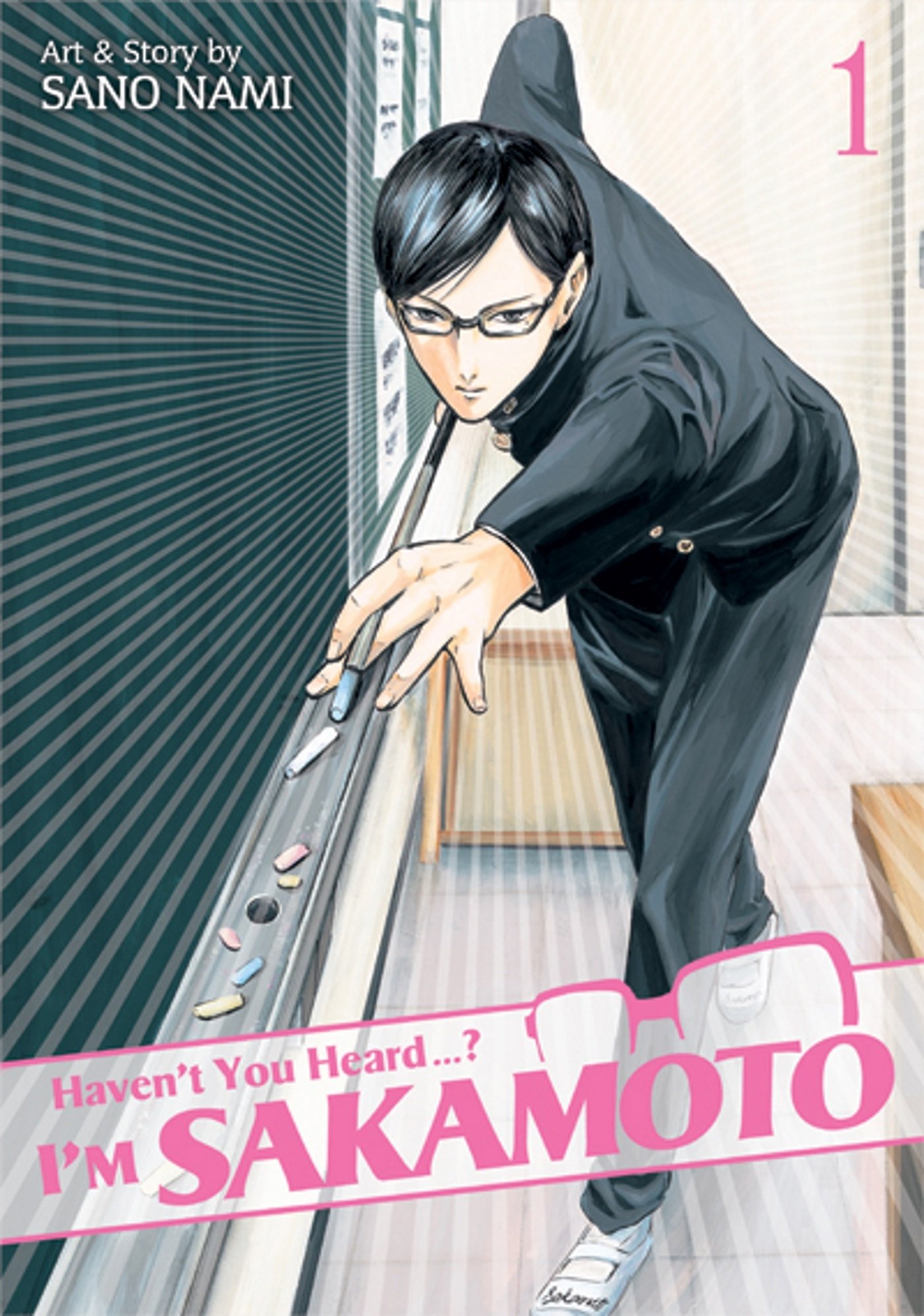
Haven’t You Heard? I’m Sakamoto is “The Aristocrats” of manga, a basic joke that yields endless variations, each more baroque than the last. The premise is simple: transfer student Sakamoto is handsome, brilliant, and athletic, making him a natural target for bullies and lovelorn girls. Any time a challenging situation arises–a bee in a classroom, a classmate injured by a softball–Sakamoto effortlessly meets that challenge, in the process revealing a previously undisclosed talent.

In the hands of a less imaginative storyteller, Sakamoto might be a wish-fulfillment character for every teenager who’s ever been tongue-tied or harassed by other students. Nami Sano puts a distinct spin on the material, however, portraying Sakamoto as so calculating and unflappable that he’s genuinely creepy; Sakamoto never smiles, laughs, or shows any discernible human emotion, even when confronted with other people’s tears or anger. (The real joke seems to be that everyone admires Sakamoto anyway.) I’m not sure that I LMAO, but Sakamoto’s odd persona and equally odd talents are a welcome rebuke to the school council presidents and earnest strivers who populate most teen-oriented manga; I’d much rather spend time with him than a standard-issue shonen prince.

The verdict: You’ll either find Sakamoto’s antics inspired or too weird to be amusing.

academiaMy Hero Academia, Vol. 1
By Kohei Horikoshi
Rated T, for teens
VIZ Media, $9.99

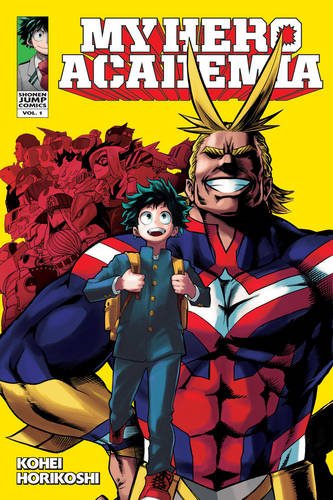
Meet Izuku Midoriya: he’s an ordinary teen living in a world where 80% of humanity possesses a super power. That doesn’t stop Izuku from aspiring to become a professional hero, however; since childhood, he’s dreamed about the day he might gain admission to prestigious U.A. High School, a training ground for future crime-fighters. A chance encounter with All Might, a celebrity superhero, gives Izuku a chance to prove his mettle and get the coaching he needs to pass the U.A. entrance exam.

Though the plot twists are unsurprising, and Izuku’s classmates familiar types (e.g. the Bully, the Spazzy Enthusiast), the breezy script propels My Hero Academia past its most hackneyed moments. The clean linework, playful superhero costumes, and artfully staged combat further enhance the series’ appeal; Kohei Horikoshi could give a master class on the reaction shot, especially when a supervillain is wrecking havoc on a downtown skyline. Most importantly, Horikoshi respects the sincerity of Izuku’s ambitions without letting the character’s earnest intensity cast a pall over the fun–in essence, it’s a Silver Age comic in modern shonen drag, with all the corny humor and fist-pumping action of Stan Lee and Steve Ditko’s best work on Spider-Man.

The verdict: My Hero Academia is as predictable as death and taxes, but a smart script and crisp artwork help distinguish it from other titles in the Shonen Jump catalog.

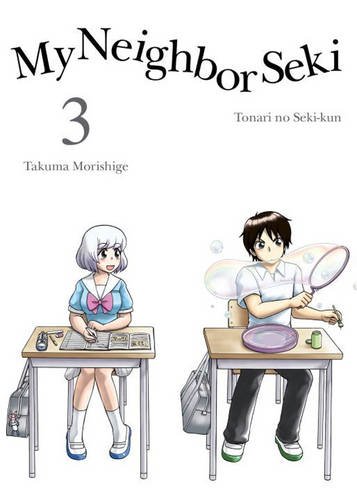
sekiMy Neighbor Seki, Vols. 1-3
By Takuma Morishige
Unrated
Vertical Comics, $10.95

Like Haven’t You Heard? I’m Sakamoto, My Neighbor Seki is a one-joke series: middle-school student Seki goofs off during class, much to the consternation of his seat mate Rumi. Seki isn’t just doodling in his notepad, however. He pets kittens, builds elaborate sculptures from shoji pieces, runs an intraschool mail service, and hosts a tea ceremony. To vary the rhythm of the joke-telling, artist Takuma Morishige occasionally transplants the action from the schoolroom to the playground, though the set-up remains the same; Seki does something outrageous and Rumi reacts, prompting the teacher to scold Rumi for not paying attention.

Given Seki‘s slender premise, it’s not surprising that each volume is a hit-and-miss affair. In volume one, for example, Seki knits a cactus plushie using a double-ended afghan hook. Rumi initially scoffs at his choice of tool; as she observes, “The hallmark of afghan knitting is its unique thickness and softness. It’s a texture best utilized when making sweaters,” not stuffed animals. When she sees the final results, however, she concedes that Seki has chosen the perfect technique and materials for his cactus, sending her into a rapturously funny meditation on yarn. Not all the gags are as successful: Seki’s penchant for staging elaborate scenes with action figures is moderately amusing at first, but grows more tiresome with each new and less imaginative iteration. Still, it’s impossible to deny the energy, creativity, and specificity with which Morishige brings Seki’s exploits to life, making this series more “win” than “fail.”

The verdict: My Neighbor Seki is best enjoyed in one or two chapter installments; when read in large bursts, some scenarios read like 4-koma strips stretched to epic and unfunny proportions.

These reviews originally appeared at MangaBlog on August 7, 2015.

Filed Under: Classic Manga Critic, Manga, Manga Critic, REVIEWS Tagged With: Comedy, My Hero Academia, Seven Seas, Shonen Jump, vertical, VIZ

Fragments of Horror

January 6, 2017 by Katherine Dacey

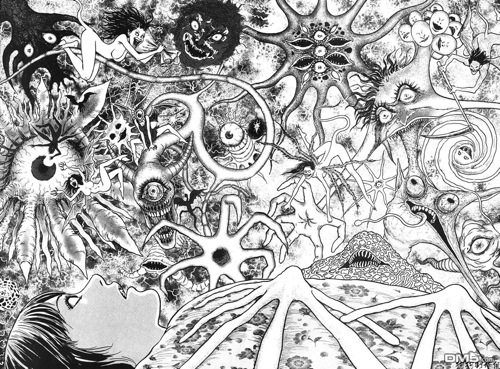
Uncanny–that’s the first word that comes to mind after reading Junji Ito’s Fragments of Horror, an anthology of nine stories that run the gamut from deeply unsettling to just plain gross. Ito is one of the few manga-ka who can transform something as ordinary as a mattress or a house into an instrument of terror, as the opening stories in Fragments of Horror demonstrate. Both “Futon” and “Wood Spirit” abound in vivid imagery: apartments infested with demons, floors covered in eyes, walls turned to flesh, rooves thatched in human hair. Watching these seemingly benign objects pulse with life is both funny and terrifying, a potent reminder of how thin the dividing line between animate and inanimate really is.

Taut–that’s another word I’d use to describe Fragments of Horror. Each story is a model of economy, packing 60 or 70 pages of narrative into just 20 or 30. “Dissection Chan,” for example, explores the forty-year relationship between Tatsuro, a surgeon, and Ruriko, a woman who’s obsessed with vivisection. In a brief flashback to Tatsuro’s childhood, Ito documents the unraveling of their friendship, capturing both Ruriko’s escalating desire to cut things open and Tatsuro’s profound shame for helping her procure the tools (and animals) necessary for her experiments. Three or four years have been packed into this seven-page vignette, but Ito never resorts to voice-overs or thought balloons to explain how Tatsuro feels; stark lighting, lifelike facial expressions, and evocative body language convey Tatsuro’s emotional journey from curious participant to disgusted critic.

Not all stories land with the same cat-like tread of “Dissection Chan.” “Magami Nanakuse,” a cautionary tale about the literary world, aims for satire but misses the mark. The central punchline–that authors mine other people’s suffering for their art–isn’t executed with enough oomph or ick to make much of an impression. “Tomio • Red Turtleneck”  is another misfire. Though it yields some of the most squirm-inducing images of the collection, it reads like a sixteen-year-old boy’s idea of what happens if your girlfriend discovers that you’ve been stepping out on her: first she’s angry at you, then she’s angry at the Other Woman, and finally she forgives you after you grovel and suffer. (In Tomio’s case, suffering involves grotesque humiliation with a cockroach–the less said about it, the better.)

Taken as a whole, however, Fragments of Horror is testament to the fecundity of Ito’s imagination, and to his skill in translating those visions into sharp, unforgettable illustrations like this one:

ito_horror_interior

PS: I recommend pairing this week’s review with 13 Extremely Disturbing Junji Ito Panels, a listicle compiled by Steve Fox. (The title is a little misleading: the images are unsettling, but are generally SFW.)

Fragments of Horror
By Junji Ito
Rated T+, for older teens
VIZ Media, $17.99

This review originally appeared at MangaBlog on July 17, 2015.

Filed Under: Manga, Manga Critic, REVIEWS Tagged With: Horror/Supernatural, Junji Ito, Short Stories, VIZ

  • « Go to Previous Page
  • Page 1
  • Interim pages omitted …
  • Page 7
  • Page 8
  • Page 9
  • Page 10
  • Page 11
  • Interim pages omitted …
  • Page 39
  • Go to Next Page »
 | Log in
Copyright © 2010 Manga Bookshelf | Powered by WordPress & the Genesis Framework