• Skip to primary navigation
  • Skip to main content
  • Skip to primary sidebar
  • Home
  • About Us
    • Privacy Policy
    • Comment Policy
    • Disclosures & Disclaimers
  • Resources
    • Links, Essays & Articles
    • Fandomology!
    • CLAMP Directory
    • BlogRoll
  • Features & Columns
    • 3 Things Thursday
    • Adventures in the Key of Shoujo
    • Bit & Blips (game reviews)
    • BL BOOKRACK
    • Bookshelf Briefs
    • Bringing the Drama
    • Comic Conversion
    • Fanservice Friday
    • Going Digital
    • It Came From the Sinosphere
    • License This!
    • Magazine no Mori
    • My Week in Manga
    • OFF THE SHELF
    • Not By Manga Alone
    • PICK OF THE WEEK
    • Subtitles & Sensibility
    • Weekly Shonen Jump Recaps
  • Manga Moveable Feast
    • MMF Full Archive
    • Yun Kouga
    • CLAMP
    • Shojo Beat
    • Osamu Tezuka
    • Sailor Moon
    • Fruits Basket
    • Takehiko Inoue
    • Wild Adapter
    • One Piece
    • After School Nightmare
    • Karakuri Odette
    • Paradise Kiss
    • The Color Trilogy
    • To Terra…
    • Sexy Voice & Robo
  • Browse by Author
    • Sean Gaffney
    • Anna Neatrour
    • Michelle Smith
    • Katherine Dacey
    • MJ
    • Brigid Alverson
    • Travis Anderson
    • Phillip Anthony
    • Derek Bown
    • Jaci Dahlvang
    • Angela Eastman
    • Erica Friedman
    • Sara K.
    • Megan Purdy
    • Emily Snodgrass
    • Nancy Thistlethwaite
    • Eva Volin
    • David Welsh
  • MB Blogs
    • A Case Suitable For Treatment
    • Experiments in Manga
    • MangaBlog
    • The Manga Critic
    • Manga Report
    • Soliloquy in Blue
    • Manga Curmudgeon (archive)

Manga Bookshelf

Discussion, Resources, Roundtables, & Reviews

Manga Critic

Ultimo, Vol. 1

February 1, 2010 by Katherine Dacey

ultimo1The scene: a country road in twelfth-century Japan. The players: Yamato, a bandit with a Robin Hood streak; Dr. Dunstan, a Westerner in sunglasses and a flashy yukata; and Yamato’s gang. The robbers surround Dunstan to search his cart for anything of worth, settling on two large crates. Though Dunstan warns them that the consequences of opening the boxes will be dire — “if you wake them, you will die,” he explains — Yamato ignores his advice, prying off the lids to discover what look like two porcelain boys. Both figures spring to life, with Vice — the “ultimate evil one,” in case you didn’t guess from his name — slaughtering six robbers in short order. Though Yamato is badly outclassed — he has a sword, Vice has a variety of lethal powers that would be the envy of the US military — he vows to defend his friends. Yamato’s brave gesture gives the second doll, Ultimo, an opening to jump into the battle and send Vice packing.

Flash forward to the present: a teenage slacker named Yamato is searching for a one-of-a-kind birthday gift for a pretty classmate when he stumbles across an odd-looking puppet in an antique store. Though Yamato has never seen the puppet before, he’s overwhelmed by a sense of deja vu. Much to his surprise, the puppet’s eyes open, and he lunges forward shouting, “Nine centuries, Yamato-sama! Ultimo missed you very much!” Before Yamato can fully ponder the implications of Ultimo’s outburst, Vice appears on the scene, forcing Yamato and Ultimo into a bus-throwing, glass-shattering smackdown in the streets of Tokyo.

…

Read More

Filed Under: Manga Critic Tagged With: Shonen, Shonen Jump, Stan Lee, VIZ

Raiders, Vol. 1

January 22, 2010 by Katherine Dacey

Raiders_v1If I’ve learned anything from my limited study of horror films, it’s this: zombies come in two flavors. The first type are slow, shambling, and stupid, posing little threat to the hero until they reach a critical mass — say, enough to surround the pub or shopping mall where the hero has hunkered down to await help. The second type are swift of foot and mind, making them a far greater menace to humanity. Raiders is positively crawling with the second type, giving this preposterous yet entertaining story a jolt of visceral energy. Figuratively and literally.

Raiders‘ plot hinges on the kind of conspiracy theory that’s the stock-and-trade of Dan Brown. Early in volume one, we learn that Jesus’ blood was collected by His disciplines in five bottles, or chrisms, which were stashed in churches around the world for safekeeping. His blood is a highly desirable commodity, as it has the power to heal life-threatening wounds and resurrect the dead. Not surprisingly, numerous parties are interested in finding the chrisms, though for very different reasons. Professor Wilter Langhem, for example, wants to unravel one of the Church’s oldest and deepest mysteries, whereas Lamia, a zombie with a passion for Gothic fashion, hopes Christ’s blood will end her earthly purgatory.

…

Read More

Filed Under: Manga Critic Tagged With: yen press, Zombies

Happy Cafe, Vol. 1

January 19, 2010 by Katherine Dacey

HappyCafe01_cvr.inddTwo Guys, a Girl, and a Pastry Shop might be a better title for this rom-com about a teen who waits tables at the neighborhood bakery, as the characters are so nondescript I had trouble remembering their names. The girl, Uru, is as generic as shojo heroines come: she’s a spunky, klutzy high school student who blushes and stammers around hot guys, bemoans her flat chest, and wins people over with her intense sincerity. The two guys — Shindo, a moody jerk whose boorishness masks a kind nature, and Ichiro, a cheerful slacker — are just as forgettable, despite the manga-ka’s efforts to assign them novel tics and traits. Shindo, for example, turns out to be a genius who finished high school at fifteen, while Ichiro suffers from hunger-induced narcolepsy, keeling over any time his blood sugar drops.

The plot, like the characters, has a similarly generic quality. At the beginning of volume one, Uru walks past Cafe Bonheur, overhearing a conversation between two giggling, satisfied customers. She then resolves to land a gig at the “Happy Cafe,” as she calls it, but is nearly defeated by the job interview: she accidentally breaks the front door, endures rude comments from Shindo about her youthful appearance (she looks ten), and nearly falls over Ichiro, who’s sprawled, unconscious, on the kitchen floor. (Shindo administers first aid in the form of a bun, reviving his co-worker.) Undeterred, Uru pleads with Shindo for a job, eventually persuading him to hire her on a trial basis. Broken dishes and spilled coffee notwithstanding, Uru quickly insinuates herself into Shindo and Ichiro’s lives.

…

Read More

Filed Under: Manga Critic Tagged With: shojo, Tokyopop

Happy Cafe, Vol. 1

January 19, 2010 by Katherine Dacey

Two Guys, a Girl, and a Pastry Shop might be a better title for this rom-com about a teen who waits tables at the neighborhood bakery, as the characters are so nondescript I had trouble remembering their names. The girl, Uru, is as generic as shojo heroines come: she’s a spunky, klutzy high school student who blushes and stammers around hot guys, bemoans her flat chest, and wins people over with her intense sincerity. The two guys — Shindo, a moody jerk whose boorishness masks a kind nature, and Ichiro, a cheerful slacker — are just as forgettable, despite the manga-ka’s efforts to assign them novel tics and traits. Shindo, for example, turns out to be a genius who finished high school at fifteen, while Ichiro suffers from hunger-induced narcolepsy, keeling over any time his blood sugar drops.

The plot, like the characters, has a similarly generic quality. At the beginning of volume one, Uru walks past Cafe Bonheur, overhearing a conversation between two giggling, satisfied customers. She then resolves to land a gig at the “Happy Cafe,” as she calls it, but is nearly defeated by the job interview: she accidentally breaks the front door, endures rude comments from Shindo about her youthful appearance (she looks ten), and nearly falls over Ichiro, who’s sprawled, unconscious, on the kitchen floor. (Shindo administers first aid in the form of a bun, reviving his co-worker.) Undeterred, Uru pleads with Shindo for a job, eventually persuading him to hire her on a trial basis. Broken dishes and spilled coffee notwithstanding, Uru quickly insinuates herself into Shindo and Ichiro’s lives.

Happy Cafe aims for a mixture of wacky comedy and heartfelt drama, but doesn’t quite succeed on either count. The humor is mild but not very funny; the few good gags — Uru’s super-strength, Ichiro’s ability to nap anywhere, anytime — are repeated with little variation until they cease to register as jokes. The drama, too, is tepid and predictable; every conflict is resolved so neatly and sweetly that a strong whiff of pointlessness hangs over the whole enterprise. Early in the volume, for example, we learn that Uru is living on her own, thanks to her mother’s decision to marry a younger man. Uru misses her mom terribly, but worries that her presence interferes with mom’s new relationship. So far, so good: the idea of a mother allowing her sixteen-year-old to live alone is a little ridiculous, but the set-up could yield some juicy, emotional scenes. Matsuzuki squanders that potential by resolving the conflict in a matter of three pages: mom and stepdad beg Uru to return, Uru asserts her desire to visit but maintain her independence, and her parents shower her with affection. The end.

Matsuzuki’s artwork is serviceable, if not memorable. Her characters are virtually indistinguishable from the cast of Me & My Brothers, right down to their perfectly messy hair, rail-thin frames, and noseless faces. Matsuzuki struggles with more ambitious perspective drawings; some of her attempts to place characters on different levels in the picture plane result in unnaturally foreshortened bodies. Where Matsuzuki’s art shines is in her characters’ nuanced facial expressions. Uru’s round, open visage registers a convincing range of emotions, from embarrassment to loneliness to indignation. On those occasions when Uru smiles — sweetly or with mischievous intent — it’s easy to grasp why the terminally grouchy Shindo keeps her around, as the character radiates joy.

If I were to compare Happy Cafe with baked goods, I’d say it reminds me of a Duncan Hines cake mix: it’s easy to follow, yields predictable results, and, while sweet, is curiously bland. Readers in search of manga comfort food could certainly do worse than this sugary dramedy, though I’d steer more adventurous souls towards The Antique Bakery or Cafe Kichijoji de, both of which are funnier, tastier, and sexier than this by-the-book shojo title.

HAPPY CAFE, VOL. 1 • BY KOU MATSUZUKI • TOKYOPOP • 192 pp. • RATING: TEEN

Filed Under: Manga, Manga Critic, REVIEWS Tagged With: Comedy, Cooking and Food, Tokyopop

On Criticism: Why Editing Matters

January 18, 2010 by Katherine Dacey

Have you ever read a review that was so riddled with misspelled words, grammatical errors, or nonsensical phrases that you began to keep a mental tally of the gaffes instead of following the author’s argument? I have. And while it would be easy to make light of such reviews, I feel compassion for the writer. I’ve made more than my share of mistakes online, from misspelling an author’s name to penning a sentence so tortured that, in hindsight, I wasn’t even certain what I meant. The majority of these mistakes can be chalked up to one thing: failing to edit my work carefully. Deadlines, job pressures, and personal commitments can make it easy to neglect editing, but failing to do so can compromise your authority as a writer and a critic, and anger creators who want to see their work treated respectfully; it isn’t pretty to be called on the carpet for writing a negative review that’s as problematic as the book under consideration. (Believe me, I’ve seen it happen. In a word: aaawwwwwwwkward.)

Below, I’ve outlined the steps involved in editing a review. These suggestions reflect the many years I’ve spent honing my own writing as a student, a teacher, an editor, a writer, and a Gal Friday with proofreading chops. This outline is not intended to be a one-size-fits-all proscription for catching mistakes, but a tool to help writers develop their own process for assessing and improving their work. Have an online resource that you think would be helpful for writers? Let me know in the comments and I’ll update the post to include your suggestion.

How Do I Edit My Stuff?

Most writers equate editing with checking their work for cosmetic problems—typos, extra carriage returns, and so forth. And while it’s true that proofreading is an important step in the editorial process, it’s generally the final one. The first—and most difficult—stages require you to scrutinize your prose for clarity, consistency, and economy (namely, can you say something in 10 words instead of 15 or 20?). Here’s a rough outline of the steps entailed in editing an essay or story:

Step One: Set the draft aside for one or two days.

There may be times when this simply isn’t possible, but allowing yourself time between drafting and editing will improve your chances of spotting problems.

Step Two: Read the review out loud, asking yourself the following questions:

Do the sentences flow smoothly? Circle or highlight any sentence that sounds choppy or awkward—the grammar may need correction, the word order may need adjustment, or the sentence may need to be shortened.

Do you use the same words or phrases too often? Circle or highlight those passages, then grab a thesaurus and search for alternatives.

Do you needlessly repeat information or opinions? There’s a fine line between elaborating a point and belaboring it; if you’ve described a book as “exciting,” “pulse-pounding,” and “thrilling” all in the span of a single sentence, you’ve said the same thing three times.

Step Three: Make your first round of corrections, then re-read with an eye towards structural issues. Ask yourself the following questions:

Does my review flow seamlessly from point to point? Look for awkward phrases, abrupt transitions, and weak topic sentences.

Have I achieved an appropriate balance between summary and critique? Generally speaking, reviews should be no more than 50% summary. If in doubt, trim any information that may be viewed as a spoiler, or is not addressed in your subsequent critique of the manga.

Have I substantiated my critique with evidence from the volume(s) I’m reviewing? If you describe a book as “dull” or “irritating,” be sure to explain why you feel that way: is it the dialogue? A particular character? The obvious plot twists?

Does the overall tone of my review match my opinion of the book? If you enjoyed a book, that should be evident from your word choice; the same is true for books that you didn’t like. If you’re ambivalent about a title, it’s OK to say so in the opening or closing of your review.

The Discard File

One of the main reasons we have difficulty editing is that we become attached to a favorite sentence or paragraph. Having crafted something that we like, we’re reluctant to delete it no matter how clumsy or inappropriate it may be in context. I have a remedy for deletion anxiety: cut and paste the offending passage into a separate file. That way, you can retrieve a sentence that, on second judgment, seems useful to your argument. Or you can do the eco-friendly thing and recycle a great turn of phrase in a future article. My own discard file has been a terrific resource for overcoming writer’s block, improving a weak review, and preserving kick-ass sentences that amused me but might never see the light of day.

Proofreading Tips

Allow at least a few hours (if not longer) before you begin proofreading, or you’re bound to miss mistakes. I find it helpful to read the document backwards—the strangeness of the experience forces me to look at the prose more carefully, though the technique might not work for everyone.

I have a simple checklist of things to look for when I proofread:

  • Extra spaces or carriage returns
  • Spelling errors, typos (e.g. extra or missing letters)
  • Subject-verb agreement (e.g. “They is” instead of “They are”), switching tense
  • Its vs. it’s, which vs. that
  • Punctuation and capitalization errors
  • Missing words (e.g. forgetting an article, “In this volume, the family gets dog.”)

Two other things on my radar screen are parallelism problems and passive constructions. Most writers don’t realize that when they make a list of items, all of the items of the list need to be structured/phrased in the same manner, e.g. “Among the things she owned were a broken TV, a rotary phone, and a cracked mirror.” Note that all of the items in this list are expressed as article-adjective-noun. The same rule applies to sentences using participles and verbs, e.g. “He enjoys many activities, from playing golf and swimming to gardening and walking the dog.”

One of my other pet peeves as a writer is the kind of vagueness that goes hand-in-hand with passive constructions. Phrases such as “Urasawa is widely acknowledged as a genius” do more harm than good, as they leave your reader to wonder, Who says Urasawa is a genius? His critics? His mother? A better strategy is to rephrase these sentences in the active voice: “Urasawa’s fellow manga artists revere him as a genius.” There are, of course, plenty of times when the passive voice is a perfectly acceptable choice, especially in academic writing, but if it’s possible to identify an agent, do so. Your writing will sound more authoritative.

The final thing to keep in mind when proofreading: be consistent. If you give the name of one city as “Austin, TX,” all the cities in your essay should be formatted that way (as opposed to “Boston, Mass.” or “Yonkers, New York”). If you decide to hyphenate Asian-American, then all occurrences of that word should be hyphenated. And so forth. There are several excellent style manuals on the market (such as The Chicago Manual of Style and The MLA Handbook) that provide the nitty-gritty on hyphenation, capitalization, italicization, etc. Don’t want to shell out the clams for a bound copy? Many universities have posted Cliff Notes versions of these venerable style guides; one that I find useful in a pinch is The OWL (Online Writing Lab) at Purdue.

When Deadlines Loom…

Pressed for time? At a minimum, run the SpellCheck function on your computer, but monitor it carefully—the SpellChecker can add mistakes to your work, especially if you use funky foreign words like fujoshi or gensaku-sha. If these are words you anticipate using in future documents, add them to your SpellChecker’s memory to avoid comically awful substitutions. I’m less enthusiastic about Microsoft Word’s GrammarCheck function. While it seldom misses glaring errors (e.g. “You is my woman”), it may gloss over deeper structural problems or flag a sentence that is, in fact, grammatically acceptable. Use sparingly.

Putting Advice Into Practice

Suppose you’re writing a review of a new series, Dogball D. You’re both bored by and frustrated with the first volume, as the characters’ mannerisms and physical appearance remind you of characters from Dragonball Z. At the same time, however, you recognize that the similarity is intentional. The challenge: how to express that idea effectively.

Version 1: The main problem with Dogball D is that the characters are boring and unoriginal and just like the characters in Dragonball Z. That’s understandable, since Yuki Yamamoto wrote her story for a magazine that was competing directly with the magazine in which Dragonball Z was a big hit for many years before Dogball D came out.

Version 2: Dogball D‘s biggest problem is the characters: they’re pale imitations of the Dragonball Z gang. The similarity is understandable, since Yuki Yamamoto’s story runs in Young Mister, a direct competitor of the magazine in which Dragonball Z was serialized.

In the second version, I’ve compressed the idea of “boring” “unoriginal” characters into a single, more forcefully stated comparison between Dogball D and Dragonball Z. I’ve eliminated several prepositional phrases (e.g. “for a magazine”) and conjunctions, and dropped the phrase “before Dogball D came out,” as the contrast in tenses (“runs” versus “was serialized”) implies that Dragonball Z preceded Dogball D — an impression confirmed by the initial statement that the Dogball D cast is a “pale imitation” of Dragonball Z‘s famous characters. You can only imitate existing models!

Here’s another before-and-after comparison, this one culled from my own writing. The first paragraph comes from my review of Chica Umino’s Honey and Clover; the second comes from the revised version now currently visible on the front page. Changes are highlighted in red:

Original: If you’ve spent any time around an art school or conservatory, you’ve met students like the Honey and Clover gang, a chatty bunch who are eager to share and compare influences, discuss their romantic lives in intimate detail, and wax poetic about their latest enthusiasms. In Honey and Clover, that garrulity reflects the characters’ deep-rooted need for community, both a boundary-drawing exercise — this is what I stand for — and an invitation to join the group. As characters grow closer to each other, however, they often find conversation inadequate to the task of bridging the remaining distance between them, a motif that Chica Umino uses throughout volume eight.

Revised: If you’ve spent any time around an art school or conservatory, you’ve met students like the Honey and Clover gang, a chatty bunch who are eager to share and compare influences, discuss their romantic lives in intimate detail, and wax poetic about their latest enthusiasms. In Honey and Clover, that chattiness reflects the characters’ deep-rooted need to define who they are and how they fit in with their peers. As characters discover common ground, however, they often find conversation inadequate to the task of bridging the remaining distance between them, a motif that Chica Umino uses throughout volume eight.

I decided to revise the paragraph because I found it wordy and, frankly, a little pretentious: “garrulity”? “Boundary-drawing exercise”? The emptiness of those words became even more apparent when contrasted with the review that immediately followed it, as my take on Mixed Vegetables was snappier and easier to follow. So I rolled up my sleeves and made several small but crucial changes by finding five-dollar substitutes for the fifteen-dollar words and eliminating the parenthetical remark from the second sentence. The result: a clearer statement of the same idea.

Conclusion

I’ve learned as much from my errors as I have from my successes, as they remind me just how difficult writing really is. The more I practice drafting and editing my own work, however, the better the final product tends to be. Confronting my own shortcomings keeps me humble, but it also keeps me invested in improving, too — each review presents an opportunity to refine my skills a little more, and a chance to reflect on what constitutes good writing.

Filed Under: Manga Critic

On Criticism: Why Editing Matters

January 18, 2010 by Katherine Dacey

Have you ever read a review that was so riddled with misspelled words, grammatical errors, or nonsensical phrases that you began to keep a mental tally of the gaffes instead of following the author’s argument? I have. And while it would be easy to make light of such reviews, I feel compassion for the writer. I’ve made more than my share of mistakes online, from misspelling an author’s name to penning a sentence so tortured that, in hindsight, I wasn’t even certain what I meant. The majority of these mistakes can be chalked up to one thing: failing to edit my work carefully. Deadlines, job pressures, and personal commitments can make it easy to neglect editing, but failing to do so can compromise your authority as a writer and a critic, and anger creators who want to see their work treated respectfully; it isn’t pretty to be called on the carpet for writing a negative review that’s as problematic as the book under consideration. (Believe me, I’ve seen it happen. In a word: aaawwwwwwwkward.)

Below, I’ve outlined the steps involved in editing a review. These suggestions reflect the many years I’ve spent honing my own writing as a student, a teacher, an editor, a writer, and a Gal Friday with proofreading chops. This outline is not intended to be a one-size-fits-all proscription for catching mistakes, but a tool to help writers develop their own process for assessing and improving their work. Have an online resource that you think would be helpful for writers? Let me know in the comments and I’ll update the post to include your suggestion.

How Do I Edit My Stuff?

Most writers equate editing with checking their work for cosmetic problems—typos, extra carriage returns, and so forth. And while it’s true that proofreading is an important step in the editorial process, it’s generally the final one. The first—and most difficult—stages require you to scrutinize your prose for clarity, consistency, and economy (namely, can you say something in 10 words instead of 15 or 20?). Here’s a rough outline of the steps entailed in editing an essay or story:

Step One: Set the draft aside for one or two days.

There may be times when this simply isn’t possible, but allowing yourself time between drafting and editing will improve your chances of spotting problems.

Step Two: Read the review out loud, asking yourself the following questions:

Do the sentences flow smoothly? Circle or highlight any sentence that sounds choppy or awkward—the grammar may need correction, the word order may need adjustment, or the sentence may need to be shortened.

Do you use the same words or phrases too often? Circle or highlight those passages, then grab a thesaurus and search for alternatives.

Do you needlessly repeat information or opinions? There’s a fine line between elaborating a point and belaboring it; if you’ve described a book as “exciting,” “pulse-pounding,” and “thrilling” all in the span of a single sentence, you’ve said the same thing three times.

Step Three: Make your first round of corrections, then re-read with an eye towards structural issues. Ask yourself the following questions:

Does my review flow seamlessly from point to point? Look for awkward phrases, abrupt transitions, and weak topic sentences.

Have I achieved an appropriate balance between summary and critique? Generally speaking, reviews should be no more than 50% summary. If in doubt, trim any information that may be viewed as a spoiler, or is not addressed in your subsequent critique of the manga.

Have I substantiated my critique with evidence from the volume(s) I’m reviewing? If you describe a book as “dull” or “irritating,” be sure to explain why you feel that way: is it the dialogue? A particular character? The obvious plot twists?

Does the overall tone of my review match my opinion of the book? If you enjoyed a book, that should be evident from your word choice; the same is true for books that you didn’t like. If you’re ambivalent about a title, it’s OK to say so in the opening or closing of your review.

The Discard File

One of the main reasons we have difficulty editing is that we become attached to a favorite sentence or paragraph. Having crafted something that we like, we’re reluctant to delete it no matter how clumsy or inappropriate it may be in context. I have a remedy for deletion anxiety: cut and paste the offending passage into a separate file. That way, you can retrieve a sentence that, on second judgment, seems useful to your argument. Or you can do the eco-friendly thing and recycle a great turn of phrase in a future article. My own discard file has been a terrific resource for overcoming writer’s block, improving a weak review, and preserving kick-ass sentences that amused me but might never see the light of day.

Proofreading Tips

Allow at least a few hours (if not longer) before you begin proofreading, or you’re bound to miss mistakes. I find it helpful to read the document backwards—the strangeness of the experience forces me to look at the prose more carefully, though the technique might not work for everyone.

I have a simple checklist of things to look for when I proofread:

  • Extra spaces or carriage returns
  • Spelling errors, typos (e.g. extra or missing letters)
  • Subject-verb agreement (e.g. “They is” instead of “They are”), switching tense
  • Its vs. it’s, which vs. that
  • Punctuation and capitalization errors
  • Missing words (e.g. forgetting an article, “In this volume, the family gets dog.”)

Two other things on my radar screen are parallelism problems and passive constructions. Most writers don’t realize that when they make a list of items, all of the items of the list need to be structured/phrased in the same manner, e.g. “Among the things she owned were a broken TV, a rotary phone, and a cracked mirror.” Note that all of the items in this list are expressed as article-adjective-noun. The same rule applies to sentences using participles and verbs, e.g. “He enjoys many activities, from playing golf and swimming to gardening and walking the dog.”

One of my other pet peeves as a writer is the kind of vagueness that goes hand-in-hand with passive constructions. Phrases such as “Urasawa is widely acknowledged as a genius” do more harm than good, as they leave your reader to wonder, Who says Urasawa is a genius? His critics? His mother? A better strategy is to rephrase these sentences in the active voice: “Urasawa’s fellow manga artists revere him as a genius.” There are, of course, plenty of times when the passive voice is a perfectly acceptable choice, especially in academic writing, but if it’s possible to identify an agent, do so. Your writing will sound more authoritative.

The final thing to keep in mind when proofreading: be consistent. If you give the name of one city as “Austin, TX,” all the cities in your essay should be formatted that way (as opposed to “Boston, Mass.” or “Yonkers, New York”). If you decide to hyphenate Asian-American, then all occurrences of that word should be hyphenated. And so forth. There are several excellent style manuals on the market (such as The Chicago Manual of Style and The MLA Handbook) that provide the nitty-gritty on hyphenation, capitalization, italicization, etc. Don’t want to shell out the clams for a bound copy? Many universities have posted Cliff Notes versions of these venerable style guides; one that I find useful in a pinch is The OWL (Online Writing Lab) at Purdue.

When Deadlines Loom…

Pressed for time? At a minimum, run the SpellCheck function on your computer, but monitor it carefully—the SpellChecker can add mistakes to your work, especially if you use funky foreign words like fujoshi or gensaku-sha. If these are words you anticipate using in future documents, add them to your SpellChecker’s memory to avoid comically awful substitutions. I’m less enthusiastic about Microsoft Word’s GrammarCheck function. While it seldom misses glaring errors (e.g. “You is my woman”), it may gloss over deeper structural problems or flag a sentence that is, in fact, grammatically acceptable. Use sparingly.

Putting Advice Into Practice

Suppose you’re writing a review of a new series, Dogball D. You’re both bored by and frustrated with the first volume, as the characters’ mannerisms and physical appearance remind you of characters from Dragonball Z. At the same time, however, you recognize that the similarity is intentional. The challenge: how to express that idea effectively.

Version 1: The main problem with Dogball D is that the characters are boring and unoriginal and just like the characters in Dragonball Z. That’s understandable, since Yuki Yamamoto wrote her story for a magazine that was competing directly with the magazine in which Dragonball Z was a big hit for many years before Dogball D came out.

Version 2: Dogball D‘s biggest problem is the characters: they’re pale imitations of the Dragonball Z gang. The similarity is understandable, since Yuki Yamamoto’s story runs in Young Mister, a direct competitor of the magazine in which Dragonball Z was serialized.

In the second version, I’ve compressed the idea of “boring” “unoriginal” characters into a single, more forcefully stated comparison between Dogball D and Dragonball Z. I’ve eliminated several prepositional phrases (e.g. “for a magazine”) and conjunctions, and dropped the phrase “before Dogball D came out,” as the contrast in tenses (“runs” versus “was serialized”) implies that Dragonball Z preceded Dogball D — an impression confirmed by the initial statement that the Dogball D cast is a “pale imitation” of Dragonball Z‘s famous characters. You can only imitate existing models!

Here’s another before-and-after comparison, this one culled from my own writing. The first paragraph comes from my review of Chica Umino’s Honey and Clover; the second comes from the revised version now currently visible on the front page. Changes are highlighted in red:

Original: If you’ve spent any time around an art school or conservatory, you’ve met students like the Honey and Clover gang, a chatty bunch who are eager to share and compare influences, discuss their romantic lives in intimate detail, and wax poetic about their latest enthusiasms. In Honey and Clover, that garrulity reflects the characters’ deep-rooted need for community, both a boundary-drawing exercise — this is what I stand for — and an invitation to join the group. As characters grow closer to each other, however, they often find conversation inadequate to the task of bridging the remaining distance between them, a motif that Chica Umino uses throughout volume eight.

Revised: If you’ve spent any time around an art school or conservatory, you’ve met students like the Honey and Clover gang, a chatty bunch who are eager to share and compare influences, discuss their romantic lives in intimate detail, and wax poetic about their latest enthusiasms. In Honey and Clover, that chattiness reflects the characters’ deep-rooted need to define who they are and how they fit in with their peers. As characters discover common ground, however, they often find conversation inadequate to the task of bridging the remaining distance between them, a motif that Chica Umino uses throughout volume eight.

I decided to revise the paragraph because I found it wordy and, frankly, a little pretentious: “garrulity”? “Boundary-drawing exercise”? The emptiness of those words became even more apparent when contrasted with the review that immediately followed it, as my take on Mixed Vegetables was snappier and easier to follow. So I rolled up my sleeves and made several small but crucial changes by finding five-dollar substitutes for the fifteen-dollar words and eliminating the parenthetical remark from the second sentence. The result: a clearer statement of the same idea.

Conclusion

I’ve learned as much from my errors as I have from my successes, as they remind me just how difficult writing really is. The more I practice drafting and editing my own work, however, the better the final product tends to be. Confronting my own shortcomings keeps me humble, but it also keeps me invested in improving, too — each review presents an opportunity to refine my skills a little more, and a chance to reflect on what constitutes good writing.

Filed Under: Manga Critic Tagged With: criticism, Writing Advice

Sinfest, Vol. 1

January 12, 2010 by Katherine Dacey

sinfest_coverThe very first Sinfest strips tell you everything you need to know about Tatsuya Ishida’s cheeky yet surprisingly reverential comic. In them, we see a young man seated at a table across from the Devil, negotiating a contract that would enable him to enjoy — among other perks — a “supermodel sandwich” in exchange for his soul. The transaction isn’t taking place in an office or the gates of Hell, however, but, in a hat tip to Charles Schulz, at a jerry-rigged booth that’s a shoo-in for the one Lucy van Pelt used to dispense nickel-sized bits of wisdom to the Peanuts gang.

It’s this mixture of the fresh and the familiar that makes Sinfest such a treat to read. Though Ishida examines such ubiquitous comic strip subjects as the temperamental differences between cats and dogs, the eternal miscommunication between men and women, and the general absurdity of popular culture, Ishida puts a unique spin on the material. His Pooch and Percival cartoons provide an instructive example. Like many artists, Ishida portrays Percival as the smarter of the pair, a sly, cynical cat who tolerates the presence of his fellow pet Pooch, while Pooch is portrayed as an unabashed enthusiast who lives completely in the moment, frequently breaking into Snoopy-esque dance to express his joy. From time to time, however, Ishida neatly upends this relationship: in one strip, for example, Percival snidely denounces their master, telling Pooch, “They don’t care about you. They’re just lonely and they use you to fill their stupid void.” Without missing a beat, Pooch replies, “Well, that’s what I do with them.” This kind of carnivalesque reversal is key to Sinfest‘s success, challenging our preconceived notions of catness and dogness as well as our deeply ingrained belief that happiness, however desirable, is antithetical to introspection.

…

Read More

Filed Under: Manga Critic Tagged With: Comedy, Dark Horse

Sinfest, Vol. 1

January 12, 2010 by Katherine Dacey

The very first Sinfest strips tell you everything you need to know about Tatsuya Ishida’s cheeky yet surprisingly reverential comic. In them, we see a young man seated at a table across from the Devil, negotiating a contract that would enable him to enjoy — among other perks — a “supermodel sandwich” in exchange for his soul. The transaction isn’t taking place in an office or the gates of Hell, however, but, in a hat tip to Charles Schulz, at a jerry-rigged booth that’s a shoo-in for the one Lucy van Pelt used to dispense nickel-sized bits of wisdom to the Peanuts gang.

It’s this mixture of the fresh and the familiar that makes Sinfest such a treat to read. Though Ishida examines such ubiquitous comic strip subjects as the temperamental differences between cats and dogs, the eternal miscommunication between men and women, and the general absurdity of popular culture, Ishida puts a unique spin on the material. His Pooch and Percival cartoons provide an instructive example. Like many artists, Ishida portrays Percival as the smarter of the pair, a sly, cynical cat who tolerates the presence of his fellow pet Pooch, while Pooch is portrayed as an unabashed enthusiast who lives completely in the moment, frequently breaking into Snoopy-esque dance to express his joy. From time to time, however, Ishida neatly upends this relationship: in one strip, for example, Percival snidely denounces their master, telling Pooch, “They don’t care about you. They’re just lonely and they use you to fill their stupid void.” Without missing a beat, Pooch replies, “Well, that’s what I do with them.” This kind of carnivalesque reversal is key to Sinfest‘s success, challenging our preconceived notions of catness and dogness as well as our deeply ingrained belief that happiness, however desirable, is antithetical to introspection.

Some of Ishida’s bluntest, funniest strips take aim at popular culture, laying bare the subtexts that inform television, movies, and music. Ishida satirizes the diamond industry’s “Tell her you’d marry her all over again” ad, for example, with a neat, shot-by-shot reconstruction accompanied by a rude gloss on what’s really being sold: “This holiday season,” the narrator intones, “Give the gift that says, ‘Girl, I wanna do ya like it ain’t no thing!’ The gift that will make her fake it like she’s never faked it before!” The entertainment industry’s marginalization of women, blacks, and Asians also comes in for a blistering critique, with Ishida proposing television programs to address the “absence of ethnic/oppressed people in the new fall line-up” such as Geisha Warrior Hoochie, a story about the world’s deadliest masseuse;  Just Shank Me, a comedy documenting “the madcap hijinks of two pimps in a crackhouse”; and The Mex-Files, a Latino riff on Fox’s popular scare-fest. As his savage titles suggest, Ishida isn’t shy about pointing out the industry’s over-reliance on offensive stereotypes to pander to under-served demographics; if anything, these parodies ring with the same kind of uncomfortable truth as Dave Chappelle’s sharpest sketches.

As rude as Ishida can be, he also has a deep affection for the comic strip. He frequently pays homage to favorite cartoonists — albeit in ways that they might not embrace — by placing beloved characters in new and ridiculous contexts. Some of these send-ups are played strictly for laughs: the B.C. crew stoned out of their minds, Garfield on the cover of Pethouse magazine. Some are more pointed — It’s the Apocalypse, Charlies Brown! — gently poking creators for allowing their properties to be milked dry. (If you’ve ever seen You’re Not Elected, Charlie Brown, you’ll appreciate Ishida’s take on these C-list specials all the more.) All of these parodies are executed with painstaking care, as Ishida demonstrates an uncanny ability to mimic Scott Adams, Bill Waterson, Berke Breathed, Gary Larson, and, of course, Charles Schulz.

Given how raunchy and controversial Ishida can be, it’s no wonder that Sinfest began its life as a webcomic rather than a staple of the funny pages. Volume one of the Dark Horse edition collects the first 500+ installments of Sinfest, including twelve prototype strips that Ishida drew for The Daily Bruin (UCLA’s newspaper) in the early 1990s. Looking at these formative cartoons, we can see Ishida experimenting with voice and pushing the boundaries of good taste with crude jabs at campus feminism. These early strips have a more strident quality to them, as Ishida hadn’t yet mastered the difficult task of using boorish characters to critique sexism; instead, his characters just seem loud and not very funny. By the time the first Sinfest strips appeared in 2001, however, Ishida had gotten the hang of it, inviting us to recognize and laugh at his characters’ stupidity, rather than inviting us to laugh with them — and it’s this distinction that allows Ishida to be so in-your-face about issues that make all of us uncomfortable. Imagine Ricky Gervais or Dave Chappelle using comic strips as their preferred mode of expression, and you have a pretty good idea of what Tatsuya Ishida’s Sinfest is all about. Recommended.

Review copy provided by Dark Horse.

SINFEST, VOL. 1 • BY TATSUYA ISHIDA • DARK HORSE • RATING: OLDER TEEN (16+)  208 pp.

Filed Under: Comics, Manga Critic, REVIEWS Tagged With: Comedy, Dark Horse

20th Century Boys, Vols. 1-6

January 9, 2010 by Katherine Dacey

20thcentury1Do you remember those first, glorious seasons of Heroes and Lost? Both shows promised to reinvigorate the sci-fi thriller with complex, flawed characters and plots that moved freely between past, present, and future. By the middle of their second seasons, however, it was clear that neither shows’ writers knew how to successfully resolve the conflicts and mysteries introduced in the first, as the writers resorted to cheap tricks — the out-of-left-field personality reversal, the all-too-convenient coincidence, and the arbitrary let’s-kill-off-a-character plot twist — to keep the myriad plot lines afloat, alienating thousands of viewers in the process. Heroes and Lost seemed proof that even the scariest doomsday scenario would fall flat if saddled with too many subplots and secondary characters.
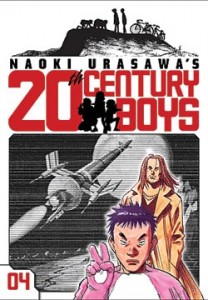
Reading Naoki Urasawa’s 20th Century Boys, however, convinced me that it is possible to tell a twisty, layered story about ordinary people saving the world from annihilation without succumbing to cliche or unduly testing the audience’s patience. The key to Urasawa’s success? A strong script with vivid characters and a clear sense of purpose, reassuring the reader that all the plot strands are just that: strands, not loose threads.

…

Read More

Filed Under: Manga Critic Tagged With: Naoki Urasawa, Seinen, VIZ

20th Century Boys, Vols. 1-6

January 9, 2010 by Katherine Dacey

Do you remember those first, glorious seasons of Heroes and Lost? Both shows promised to reinvigorate the sci-fi thriller with complex, flawed characters and plots that moved freely between past, present, and future. By the middle of their second seasons, however, it was clear that neither shows’ writers knew how to successfully resolve the conflicts and mysteries introduced in the first, as the writers resorted to cheap tricks — the out-of-left-field personality reversal, the all-too-convenient coincidence, and the arbitrary let’s-kill-off-a-character plot twist — to keep the myriad plot lines afloat, alienating thousands of viewers in the process. Heroes and Lost seemed proof that even the scariest doomsday scenario would fall flat if saddled with too many subplots and secondary characters.

Reading Naoki Urasawa’s 20th Century Boys, however, convinced me that it is possible to tell a twisty, layered story about ordinary people saving the world from annihilation without succumbing to cliche or unduly testing the audience’s patience. The key to Urasawa’s success? A strong script with vivid characters and a clear sense of purpose, reassuring the reader that all the plot strands are just that: strands, not loose threads.

In 20th Century Boys, humanity’s future rests in the hands of an unpromising lot. There’s Kenji, a college dropout who runs a convenience store; Maruo, a cheerful, plump soul who owns a shop down the street from Kenji; Yoshitune, a shy, bespectacled office man; Otcho, a scruffy renegade who’s been living off the grid in Thailand; and Yukiji, a K-9 officer who can’t control her drug-sniffing dog. All five were childhood friends, members of a secret club that wrote The Book of Prophecy, an elaborate doomsday scenario involving superheroes and giant robots. Now in their thirties, the gang has disbanded — that is, until their pal Donkey, a high-school science teacher, leaps to his death off a building.

Or did he? As Kenji begins pushing for answers, he discovers that Donkey was investigating a mysterious cult, known only as The Friends, that had appropriated the club’s “official” symbol. The more Kenji probes, the more parallels he discovers between The Friends’ clandestine activities and the Book of Prophecy, parallels that suggest the cult is headed by one of Kenji’s old schoolmates. Terrified that The Friends will attempt to recreate the story’s climatic battle, Kenji tracks down his clubmates one by one, assembling a small army to oppose the cult.

20thcentury4From the very first pages of volume one, Urasawa demonstrates an uncommon ability to move back and forth in time, juxtaposing scenes from Kenji’s past with brief glimpses of the future. The success of these scenes is attributable, in part, to Urasawa’s superb draftsmanship, as he does a fine job of aging his characters from their long-limbed, baby-faced, ten-year-old selves into thirty-somethings weighed down by adult responsibilities.
The integrity of Urasawa’s characterizations also contribute to the success of these temporal leaps; his characters’ adult behavior jives with what we know about them from childhood flashbacks. Otcho, for example, was the club’s most worldly member, the kid who introduced his pals to rock-n-roll and gave them the lowdown on Woodstock; it’s not surprising to see him reincarnated as a long-haired thug-for-hire who despises authority. Ditto for Yanbo and Mabo, twins who terrorized Kenji and friends back in the day. When Yanbo and Mabo resurface in volume five, Urasawa gives them a more pleasing appearance and demeanor than we might have expected, luring us into a false sense that they’ve outgrown their bullying ways. Urasawa then slaps us on the wrist for not trusting our original assessment of the twins, uncorking a fiendish plot twist that’s in keeping with what we already knew about them.

Urasawa uses these flashbacks and flash-forwards to build a dense network of connections among his characters, gradually revealing how and why Kenji’s childhood fantasies are providing the blueprint for a real-life apocalyptic scenario. Heroes and Lost attempted to do the same thing, but neither show succeeded in convincing us that those connections were lying just below the surface waiting for us to discover them; those connections had an arbitrary, bolt-from-the-blue quality. With 20th Century Boys, however, Urasawa makes us feel that we might have unearthed these links without any editorial guidance, as even the most surprising developments still make sense within the story’s elaborate framework.

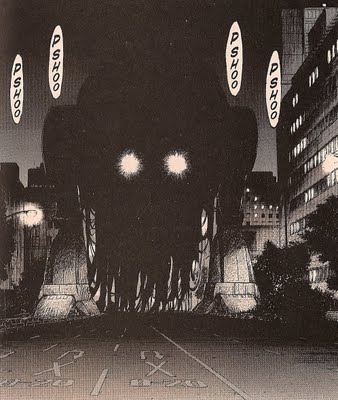
What gives the story its sense of urgency is Urasawa’s ability to create and sustain a strong sense of fear and anticipation. Six volumes into 20th Century Boys, we’ve had a few tantalizing glimpses of the robot that menaces Tokyo on the eve of the millennium, but we still don’t know what it looks like or what it can do. Urasawa has only shown us the enemy in silhouette:

20thcentury_robot

It’s a point I’ve raised in other reviews: an unseen menace is much scarier than one that’s routinely trotted out of the shadows to spook us. Consider the difference between Jaws and its sequels. In the original, Steven Spielberg hinted at the shark’s presence, showing us a dorsal fin or a dark outline moving rapidly beneath the water’s surface, but withholding the “money” shot (“tooth” shot, perhaps?) until the third reel. The few times that we see Jaws attack are genuinely scary because they finally put us face-to-face with those terrible teeth and dead eyes, confirming just how deadly the shark really is. In the sequels, however, the shark is featured prominently; we see it dine on boaters and swimmers in lurid detail. We may marvel at the stupidity of the shark’s victims, or feel disgusted by the gallons of fake blood, but we never feel scared, as we know what we’re up against from the very first scenes.

Urasawa takes a page from Spielberg’s book, showing us just enough of the robot’s form to engage our imagination. The robot’s silhouette hints at its size and strength; if anything, it looks like an enormous man-o-war lumbering through Tokyo. But what stays with us are those fierce, penetrating headlights, so evocative of a prison searchlight or a pair of eyes. As David Ford observes at Are You a Serious Comic Book Reader?, we feel a palpable sense of despair when we see the robot: how can Kenji hope to escape its all-seeing gaze? (By the way, I highly encourage you to read Ford’s essay, though spoiler-phobes should stay away until they’ve finished volume five.)

With more than ten volumes left in 20th Century Boys, I have no idea how Urasawa plans to tie all of the stories’ threads together. I’m confident, however, that he’ll do so with the skill of a master weaver, seamlessly incorporating all of the relationships, plot twists, and motives into an intricate, beautiful tapestry.

Review copies provided by VIZ Media, LLC. Volume seven will be released on February 10, 2010.

20TH CENTURY BOYS, VOLS. 1-6 • BY NAOKI URASAWA • VIZ • RATING: OLDER TEEN (16+)

Filed Under: Manga, Manga Critic, REVIEWS Tagged With: Naoki Urasawa, Sci-Fi, Thriller, VIZ, VIZ Signature

Town of Evening Calm, Country of Cherry Blossoms

January 4, 2010 by Katherine Dacey

town_coverIn The Idea of History, author R. G. Collingwood argues that nineteenth-century historians viewed their task in a different spirit than their predecessors. While previous generations of scholars treated history as a simple chain of events, the Romantics wanted to recreate the past through their writings. The Romantic historian, Collingwood explained, “entered sympathetically into the actions which he described; unlike the scientist who studied nature, he did not stand over the facts as mere objects for cognition; on the contrary, he threw himself into them and felt them imaginatively as experiences of his own.”
I found myself revisiting The Idea of History as I read Town of Evening Calm, Country of Cherry Blossoms, a project that might well have resonated with Collingwood’s pioneering nineteenth-century historians in its efforts to “enter sympathetically” into the lives of Hiroshima’s survivors, the hibakusha, a group both pitied and shunned by their fellow Japanese in the years following the 1945 bombing. In the introduction to Town of Evening Calm, manga-ka Fumiyo Kouno explains her approach to the subject in terms that are strikingly similar to Collingwood’s:

…

Read More

Filed Under: Manga Critic Tagged With: Last Gasp, Seinen

Town of Evening Calm, Country of Cherry Blossoms

January 4, 2010 by Katherine Dacey

In The Idea of History, author R. G. Collingwood argues that nineteenth-century historians viewed their task in a different spirit than their predecessors. While previous generations of scholars treated history as a simple chain of events, the Romantics wanted to recreate the past through their writings. The Romantic historian, Collingwood explained, “entered sympathetically into the actions which he described; unlike the scientist who studied nature, he did not stand over the facts as mere objects for cognition; on the contrary, he threw himself into them and felt them imaginatively as experiences of his own.”
I found myself revisiting The Idea of History as I read Town of Evening Calm, Country of Cherry Blossoms, a project that might well have resonated with Collingwood’s pioneering nineteenth-century historians in its efforts to “enter sympathetically” into the lives of Hiroshima’s survivors, the hibakusha, a group both pitied and shunned by their fellow Japanese in the years following the 1945 bombing. In the introduction to Town of Evening Calm, manga-ka Fumiyo Kouno explains her approach to the subject in terms that are strikingly similar to Collingwood’s:

I always thought all I needed to know about the bomb was that it was a terrifying thing that happened once upon a time, and a subject best avoided. After living in Tokyo for a while, however, I came to realize that people outside of Hiroshima and Nagasaki didn’t really know all that much about the ravages of the atomic bomb. Unlike me, they weren’t avoiding the subject—they never had the opportunity to learn about it even if they wanted to… I hadn’t experienced the war or the bomb first-hand, but I could still draw on the words of a different time and place to reflect on peace and express my thoughts.

Kouno’s decision to focus on the hibakusha and their descendants makes Town of Evening Calm an immediate, accessible work, one less concerned with recreating a specific historical moment than in imagining what it would be like to rebuild one’s life in the aftermath of that event. It’s a wise strategy, I think, given how difficult it is to convey the horror of war without relying on dramatic devices that can trivialize survivors’ experiences.

Kouno’s approach is not without pitfalls, however. In her review of Town of Evening Calm, Country of Cherry Blossoms, Casey Brienza argues that Kouno portrays her characters as victims of American aggression without acknowledging Japan’s role in precipitating the bombing, a tactic that could be interpreted as a “myopic… preoccupation with [Japan’s] wartime suffering” that “allow[s] the Japanese to forget that they started the war.” At the end of the first story, for example, a woman dying of radiation sickness wonders “if the people who dropped the bomb are pleased with themselves: ‘Yes! Got another one!'” It’s a powerful moment; the character’s comment is shocking in its raw honesty, especially for American readers. It’s an ambiguous moment, too; one could certainly read a note of national self-pity into the character’s words, as she never mentions the war itself, only the suffering caused by the bomb. Yet I think this passage invites a second reading as well, as a very human attempt to make sense of tragedy, to express the character’s understandable need to know why she — a civilian — was subjected to such unimaginable horror, rather than a denial of the suffering caused by the Japanese occupation of Korea, Manchuria, and the Philippines.

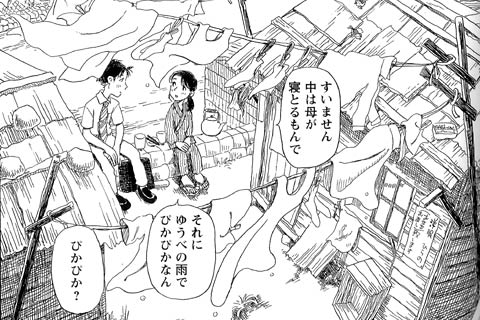
In less skillful hands, scenes like these might be mawkish, but Kouno crafts an emotionally authentic story from survivor narratives, deftly moving between present and past to show us how her characters hear the echoes of August 6th in their everyday lives. The first story, “Town of Evening Calm,” focuses on Minami, a young seamstress living in Hiroshima ten years after the atomic blast. Superficially, the city seems to be healing: its downtown is bustling with activity, as is the dressmaker’s shop where Minami works. Yet subtle signs of the devastation remain, from the ramshackle houses of the residential district to the scarcity of everyday goods. (In a particularly effective scene, we see Minami walk home barefoot so as to preserve her only pair of shoes.) Minami herself bears psychic wounds from the day, as is evident in her brusque demeanor with outsiders and her staunch refusal to leave her ailing mother’s side. Underneath her bravado, we see a fearful, guilt-ridden young woman who wonders when she will succumb to the long-term effects of the radiation, who cannot escape her horrifying memories, and who mourns the disintegration of her family. (Her father and sister perished in the blast; her brother was sent to live in Mito, and had yet to return to Hiroshima.)

town_interior1

The second story, “Country of Cherry Blossoms,” takes place nearly twenty years later in Tokyo. We first meet Nanami, a baseball-addled tomboy, as an eleven-year-old girl. Through a few telling details–Nanami’s dirty baseball uniform, Nanami’s interactions with classmates–we see that she suffers acutely from her mother’s absence. (Her mother, a hibakusha, succumbed to cancer.) Lacking a female role model, she latches onto Toko, a classmate who epitomizes girly grace. Kouno depicts a few ordinary moments from this odd pair’s childhood: a playground discussion of a homework assignment, a baseball game, a trip to the hospital where Nagio, Nanami’s younger brother, is hospitalized with severe asthma.

We then jump forward seventeen years. Nanami and Toko are estranged; Nagio, now healthy, is training to be a doctor; and Asahi, their elderly father, has been behaving oddly. Fearful that Asahi is losing his faculties, Nanami tails him through the streets of Tokyo, where she bumps into Toko. Their initial conversation is awkward and forced; seeing Toko dredges up some of Nanami’s most painful childhood memories. Toko, undeterred by Nanami’s rudeness, furnishes Nanami with a disguise, and the two set off for Hiroshima, where Asahi seems intent on completing a mysterious errand. As Nanami and Toko follow Asahi, we realize that Asahi is the link between the first and second stories; he is Minami’s “lost” brother, the one who was living with relatives when the Americans bombed Hiroshima, returning only after the death of his sister in 1955.

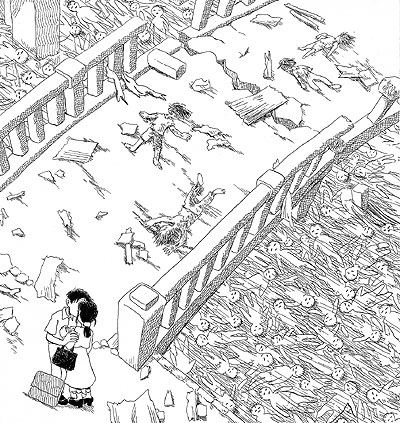
Kouno’s meticulously detailed illustrations create a strong sense of place, underscoring the contrast between Hiroshima’s orderly new business district and the crowded Aioi Doori neighborhood where the hibakusha live. In the few panels alluding to the actual events of August 6, 1945, Kouno’s art becomes more primitive and stylized, suggesting the horrific effects of the blast by depicting the victims as stick figures with swollen faces. The child-like simplicity and directness of these images are startling yet effective, a reminder both of Minami’s youth at the time of the attack and of the radiation’s devastating ability to rob its victims of their identities by destroying their hair, hands, and faces — in short, the very parts of their bodies that give them their individual appearance. These scenes are notable as well for the skillful way in which present and past co-exist within the same panels; we see the landscape as Minami does, alive with vivid, horrific memories of surviving the blast.

town_interior2

Kouno’s character designs exhibit a similar attention to detail and mood as her landscapes. Nanami, for example, bears a striking resemblance to her aunt Minami, not just in her behavior (Minami shared Nanami’s love of baseball and her brusque demeanor) but also in her facial expressions and carriage; she’s a subtle visual echo of the previous generation. Like all of Kouno’s characters, Nanami and Minami have a slightly rough, clumsy quality to them, with heads and hands that seem just a little too big for their wiry bodies. Yet these awkward proportions don’t detract from the beauty of the work; if anything, the illustrations make Kouno’s characters seem more vulnerable, more imperfect, more fragile—in short, more human and more believable. And that honest vulnerability, in turn, makes it possible for readers from all walks of life to enter sympathetically into Kouno’s haunting yet life-affirming story, to look past the politics of suffering and representation to understand the price that civilians pay in every war.

This is a revised version of a review posted at PopCultureShock on March 23, 2007. Click here for the original text; click here for a Japanese translation of the original review.

Filed Under: Manga, Manga Critic, REVIEWS Tagged With: Fumiyo Kōno, Hiroshima, Historical Drama, Last Gasp

The 2009 Manga Hall of Shame Inductees

December 22, 2009 by Katherine Dacey

I’m pleased to report that 2009 yielded fewer jaw-droppingly bad manga in the vein of Eiken, J-Pop Idol, or Shiki Tsukai — surely the most confusing manga ever written about weather — though it wasn’t devoid of clunkers. Below are my top five nominees for Worst Manga of 2009. Some earned demerits for lousy art or writing; others for gross sexism; and others for insulting my intelligence as a reader. Keep in mind that while I try to read widely, there are definitely titles I’ve missed or avoided — Tantric Stripfighter Trina, anyone? — so I encourage you to share you own nominees for The Manga Hall of Shame, as well as your reactions to this year’s dishonorees.

…

Read More

Filed Under: Manga Critic Tagged With: Bad Manga

The 2009 Manga Hall of Shame Inductees

December 22, 2009 by Katherine Dacey

I’m pleased to report that 2009 yielded fewer jaw-droppingly bad manga in the vein of Eiken, J-Pop Idol, or Shiki Tsukai — surely the most confusing manga ever written about weather — though it wasn’t devoid of clunkers. Below are my top five nominees for Worst Manga of 2009. Some earned demerits for lousy art or writing; others for gross sexism; and others for insulting my intelligence as a reader. Keep in mind that while I try to read widely, there are definitely titles I’ve missed or avoided — Tantric Stripfighter Trina, anyone? — so I encourage you to share you own nominees for The Manga Hall of Shame, as well as your reactions to this year’s dishonorees.

pigbride5. Pig Bride
By Huh Kook-hwa • Yen Press
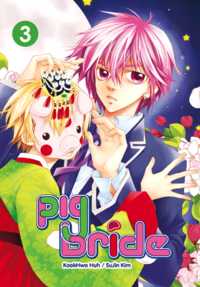
Si-Joon, scion of a powerful family, has a strange experience as a child: while lost in the woods, he accidentally becomes engaged to a girl cursed with a pig’s face. Mu-Jeon, she of porcine features, remains a hazy memory for Si-Joon until his sixteenth birthday, when she returns to claim him, demanding that they consummate their marriage right now. There’s just one problem: Si-Joon has his eye on Doe-Doe, a beauty who terrorizes her female classmates but makes nice with the boys. Lest Pig Bride sound like a wacky romantic comedy, let me say that there are few, if any, laffs to be found. The author’s contempt for women her female characters is palpable: the female characters girls are either hysterics (Mu-Jeon pursues Si-Joon with abandon, dignity or common sense be damned) or ice queens (Doe-Doe seems more interested in collecting hearts than actually being with anyone). The hyper-stylized art is similarly awful, with characters sporting grossly distended necks and chins so pointy that they’d made a razor bleed. I love manhwa as much as the next gal, but Pig Bride isn’t doing much for the cause of Korean comics in translation. (Text revised 12/24/09; see end of article for further commentary.)

zone00cvr_01.indd4. Zone-00
By Kiyo QJO • Tokyopop
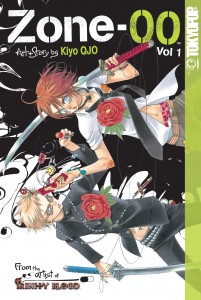
Zone-00 is easily one of the most confusing and unappealing books I’ve read this year, a fever dream of decapitations, impalements, and half-naked bodies. The layout is dark and busy — overstuffed, really — looking more like a Tokidoki handbag pattern than sequential art, with images and word balloons filling every inch of the page. From time to time, Kiyo Qjo’s rich, weird imagination shines through, as when she introduces a pair of possessed Harley Davidsons, or stages a hilarious conversation between a cat and a dog about the merits of fanservice. (The cat is pro-panty shot; the dog is more modest.) Too often, however, Zone-00 seems like a grab bag of half-baked ideas and pin-up drawings in search of a story; about the best I can say for Zone-00 is that the fanservice is equal opportunity, as almost every page features ladies with gravity-defying H-cups and men with granite six-packs. If your vision of the future includes stripper nuns armed to the teeth and shirtless motorcycle gangs, Zone-00 might be your cup of tea; all others are advised to stay away. (Reviewed 9/3/09.)

blackbird13. Black Bird
By Kanoko Sakurakouji • VIZ Media
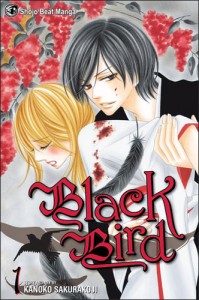
“You can be eaten, or you can sleep with me and become my bride.” So declares Kyo, a handsome demon who’s been waiting for years to make Misao his wife and secure his position as Head Tengu. (Or something along those lines; drinking her blood is key to becoming the World’s Most Powerful Supernatural Being, hence the scores of demons interested in sampling Misao’s goodies.) Kyo’s declaration underscores the main problem with Black Bird: the entire story revolves around its heroine’s repeated degradation, making a fetish of her injuries and her helplessness. Demons slash her throat, poison her, push her off rooftops, and slam her against walls, yet she never defends herself or runs away, relying instead on Kyo to save her. Kyo’s “rescues” are as icky as the attacks themselves, as Kyo licks Misao’s wounds (he says he’s healing her; I say,  ewwwwwwww), pins her down, and browbeats her for not sticking close to him. Some readers may find him sexy, but grouchy old feminists like me will see him for what he is: a wolf in knight’s clothing, posing as Misao’s savior while manipulating her for his own selfish interests. (Reviewed 7/21/09.)

LuckyStar2. Lucky Star
By Kagami Yoshimizu • Bandai Entertainment
Dear Manga Publishers: Please stop licensing 4-koma titles. Most of the translated material in this format is at best dull — wait, was that a joke? — and at worst incomprehensible — wait, the heroine has a semi-romantic relationship with her cat-eared clone? Lucky Star is a prime example of why 4-koma manga don’t work well in English: the punchlines aren’t funny, and the characters are so one-dimensional that their daily travails aren’t interesting enough to hold our attention. (If the only “personality trait” a character manifests is a preference for watching anime over doing homework, I’d say the manga-ka needs to flesh her out just a little bit more.) Add to the mix a translation that, in Melinda Beasi‘s words, “strips the characters of any recognizable voice” and kills the jokes, and you have a recipe for one seriously dull read.

mariaholic1. Maria Holic
By Minaru Endou • Tokyopop
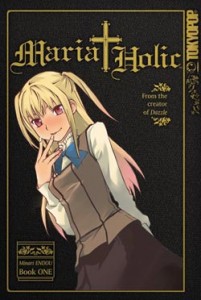
In a more charitable mood, I might characterize this mean-spirited comedy as a lame attempt at satirizing yuri manga. The jokes aren’t smart enough, however, to qualify as satire; most of them involve humiliating the series’ naive heroine, whose lesbianism is held up to constant ridicule. Author Minaru Endou beats a single joke into the ground, with poor Kanako developing crushes on all of her classmates and suffering nosebleeds whenever she catches sight of them changing, wearing gym clothes, tossing their hair, talking to friends… you get the idea. (Did I mention that Maria Holic runs in Monthly Comic Alive, a magazine aimed at men?) Mariya, Kanako’s cross-dressing nemesis, is a truly repellent character, threatening to expose Kanako and mocking her interest in women. I think we’re supposed to find Mariya deliciously evil — and gee, nothin’ says eeeeeeeeeeeeeeevil like cross-dressing — but he comes across as sadistic, homophobic, and desperate; I spent most of volume one wishing for a great big foot to drop from the sky and squash him, a la Monty Python’s Flying Circus. (Reviewed 9/23/09.)

UPDATE, 12/24/09: Kurt Hasseler of Yen Press posted an eloquent and thoughtful rebuttal to my assessment of Pig Bride, which you can read by clicking here. His comments prompted me to revise my review to make it clear that I’m not accusing the author of being a misogynist, but am critiquing the way in which she depicts her female characters. I want to thank Kurt for a spirited and intelligent debate, even if I remain unpersuaded about Pig Bride‘s merits.

Filed Under: Manga, Manga Critic, Manhwa Tagged With: Bad Manga

The Best Manga of 2009

December 17, 2009 by Katherine Dacey

I pity the poor critic who panned Up — it’s not fun to buck the tide of critical approbation, especially when it seems like everyone else is wholeheartedly embracing the film or book in question. I say this because my best-of-2009 list is missing two titles that I’ve seen on many others: Yoshihiro Tatsumi’s A Drifting Life and Fumi Yoshinaga’s Ooku: The Inner Chambers. The first, I’ll admit, is a beautifully crafted book, proof that manga can be a great medium for biography. Yet for all its artistry, I found A Drifting Life oddly uninvolving; too many chapters read more like historical pageants than personal drama. The second title I found more problematic. Yoshinaga starts from a humdinger of a premise, inverting the social order of Tokugawa Japan by placing women in charge of everything. Yoshinaga never fulfills the promise of her idea, however, saddling her narrative with long-winded conversations that are both tin-eared and dull, two adjectives I never thought I’d be applying to Yoshinaga’s work.

So what manga *did *I like this year? Read on for the full list.

…

Read More

Filed Under: Manga Critic Tagged With: cmx, DMP, Drawn & Quarterly, Fanfare/Ponent Mon, Jiro Taniguchi, Junko Mizuno, Last Gasp, Naoki Urasawa, VIZ

  • « Go to Previous Page
  • Page 1
  • Interim pages omitted …
  • Page 32
  • Page 33
  • Page 34
  • Page 35
  • Page 36
  • Interim pages omitted …
  • Page 39
  • Go to Next Page »
 | Log in
Copyright © 2010 Manga Bookshelf | Powered by WordPress & the Genesis Framework