• Skip to primary navigation
  • Skip to main content
  • Skip to primary sidebar
  • Home
  • About Us
    • Privacy Policy
    • Comment Policy
    • Disclosures & Disclaimers
  • Resources
    • Links, Essays & Articles
    • Fandomology!
    • CLAMP Directory
    • BlogRoll
  • Features & Columns
    • 3 Things Thursday
    • Adventures in the Key of Shoujo
    • Bit & Blips (game reviews)
    • BL BOOKRACK
    • Bookshelf Briefs
    • Bringing the Drama
    • Comic Conversion
    • Fanservice Friday
    • Going Digital
    • It Came From the Sinosphere
    • License This!
    • Magazine no Mori
    • My Week in Manga
    • OFF THE SHELF
    • Not By Manga Alone
    • PICK OF THE WEEK
    • Subtitles & Sensibility
    • Weekly Shonen Jump Recaps
  • Manga Moveable Feast
    • MMF Full Archive
    • Yun Kouga
    • CLAMP
    • Shojo Beat
    • Osamu Tezuka
    • Sailor Moon
    • Fruits Basket
    • Takehiko Inoue
    • Wild Adapter
    • One Piece
    • After School Nightmare
    • Karakuri Odette
    • Paradise Kiss
    • The Color Trilogy
    • To Terra…
    • Sexy Voice & Robo
  • Browse by Author
    • Sean Gaffney
    • Anna Neatrour
    • Michelle Smith
    • Katherine Dacey
    • MJ
    • Brigid Alverson
    • Travis Anderson
    • Phillip Anthony
    • Derek Bown
    • Jaci Dahlvang
    • Angela Eastman
    • Erica Friedman
    • Sara K.
    • Megan Purdy
    • Emily Snodgrass
    • Nancy Thistlethwaite
    • Eva Volin
    • David Welsh
  • MB Blogs
    • A Case Suitable For Treatment
    • Experiments in Manga
    • MangaBlog
    • The Manga Critic
    • Manga Report
    • Soliloquy in Blue
    • Manga Curmudgeon (archive)

Manga Bookshelf

Discussion, Resources, Roundtables, & Reviews

Reviews

Idol Dreams, Vol. 1

November 10, 2015 by Sean Gaffney

By Arina Tanemura. Released in Japan as “31 Ai Dream” by Hakusensha, serialization ongoing in the magazine Melody. Released in North America by Viz.

There are bits of humor sprinkled throughout the first volume, but in my opinion the funniest part of Idol Dreams comes in the author’s notes afterwards, where Tanemura talks about how she landed this assignment. She’s no longer exclusive to Shueisha, so lots of companies wanted her, and Hakusensha asking her for a magical-girl manga for adults. This intrigued Tanemura, who signed up right away with Melody, Hakusensha’s hybrid josei/shoujo title. And then the editor urged her to get rid of all of the things she’s gotten so used to when working at Ribon – flowery SFX, lots of wacky gags, extensive drawings of clothing – to the point where the editor supposedly said “get rid of everything that makes it a Tanemura series”. I’m with the editor, though – Idol Dreams feels refreshing and new in a way a lot of her recent Ribon work did not.

id1

When I first read the description of the series, I had assumed it was some sort of “Peggy Sue” story, where the heroine would go back in time and try to do her life over again better this time. It’s actually a different genre altogether – as the editor said, it’s a magical-girl story for adults, and will be very familiar to those who recall early series such as Tezuka’s Marvelous Melno or Creamy Mami, which featured little girls taking age pills that magically made them into adult idol singers. Indeed, Tanemura fans may recall Full Moon, which also had a premise like this. In Idol Dreams, though, the lead character, as seen on the cover, is a 31-year-old office worker who’s on the verge of losing it – she’s basically staked everything on a happy high school reunion, only to have everything fall apart when the fact that she’s still a virgin is screamed out loud by a classmate.

It’s startling to see Chikage, after this and a couple of other humiliations, actually trying to kill herself by drowning in the local river. But ultimately it leads to a different kind of fantasy, as another high school friend (who has a crush on her that he still can’t quite blurt out – and a girlfriend, which makes it harder still) has some magical – sorry, unproven scientific – age regressing pills that will make her body like a 15-year-old for a few hours. What are the odds that she would be scouted immediately as a replacement for an idol? Or bond with the troubled young genius singer of a boy band? Or find herself in a forbidden romance (which she really should know better about, we’ll see how future volumes develop yet another of the popular ‘age-difference’ relationships)?

So here we have a magical girl heroine who doesn’t go home and do homework after her battles, but goes out and gets drunk instead. Despite what Tanemura and her editor said, this isn’t totally far off from her usual titles, but it’s taken in a slightly new direction and has that fresh feel to it. I look forward to seeing where she takes us.

Filed Under: REVIEWS

One Piece, Vol. 76

November 8, 2015 by Sean Gaffney

By Eiichiro Oda. Released in Japan by Shueisha, serialization ongoing in the magazine Weekly Shonen Jump. Released in North America by Viz.

Let’s get the bad out of the way right off the bat: Rebecca has not remotely lived up to the hopes I had for her as a character. The reunion with her father, with all the overtones of “you should never have been a fighter, I’m so sorry you had to be strong and not a princess that needs protecting” left a bad taste in my mouth, and I’ve given up on it being subverted at this point. Unfortunately, this is not a sentiment that’s unique to One Piece, as we’ve seen it in countless manga and anime before this. I had hoped Oda might avoid it, but no, there it is. Luckily, it’s a low point in an otherwise excellent volume, so let’s talk about the rest of it.

OnePiece76

I have occasionally wondered if I praise Usopp too much, but then I wander on to forums and see more people talk about how useless he is, and so therefore I think no, there is not enough praise. Because he’s hella awesome here, taking out Sugar AGAIN with the help of a truly weird power from a minor character and what I believe is actual haki, which we haven’t heard much about since right after the timeskip. We’d seen Coby use it before, but it’s still awesome to see that a power that is basically “I am enforcing my will on reality” can be used not just by the brute force heroes but by support folks like Usopp.

Speaking of which, Robin and Usopp both have small speeches in this volume where they talk about their devotion to Luffy, and it’s worth noting how much of being a pirate captain in One Piece is creating a cult of personality around yourself. Luffy doesn’t do this deliberately, of course, but those who follow him know that he is the one, they one they can dedicate everything they have to protect and serve. It’s even given a parody over the last few volumes with Bartolomeo, whose idolization of the entire Straw Hat crew is a takeoff of the typical fanboy. It’s worth noting that Robin does not denigrate this love the way others have, though (and that she calls him rooster, I love that she still tends to give nicknames to everyone), as she’s a convert as well.

Meanwhile, Luffy and Law (finally out of the seastone cuffs) are ready to face off against Doflamingo, which means that we get two things that One Piece is most famous for – chaotic final battles with lots of punching, and flashbacks to explain a character’s tragic past, this time Law’s. Sure, we also get a bit of Doflamingo’s, which has a bit of a ‘fallen angel’ vibe to it, but Law, with his tragic white lead poisoning and massacre of his entire homeland (hmmm, seems familiar… Doflamingo even points this out, saying complete genocide is a standard World Government tactic) is the one we’re meant to feel bad for. This story leads us to the cliffhanger for this volume, and I suspect will take up the majority of the next. When it finishes, will we be finishing the Dressrosa arc? Don’t hold your breath. But keep reading One Piece anyway.

Filed Under: REVIEWS

Golden Time, Vol. 1

November 7, 2015 by Sean Gaffney

By Yuyuko Takemiya and Umechazuke. Released in Japan by ASCII Media Works, serialization ongoing in the magazine Dengeki Daioh. Released in North America by Seven Seas.

I’ve talked before about how difficult it can be to introduce an unlikable character early in a series and have their character growth be a part of it, mostly as fandom takes first impressions and encases them in amber forever. This is doubly true if the character is female, and quadrupley true (is this a word?) if it also happens to be a comedy romance, with harem overtones. Golden Time is starting off in a bit of a pickle, though, as its heroine, Kaga, is introduced to us as an obsessed stalker who’s also rich and beautiful, and rubs every single reader the wrong way. Luckily, we have our hero, Tada, who is determined to show that she has hidden depths, even if he can’t quite make them out. And, wonder of wonders, he is not the doormat that most of these series frequently use as male heroes, so as the volume goes on and we learn more about the two of them the good qualities of the series come to life.

goldentime1

That cover, to be honest, really doesn’t help, and panders to a fanbase that is more Monster Musume than Toradora. Oh yes, this is by the creator of Toradora, based on her light novels, which she started after finishing her other series. Toradora also featured an unusual lead male hero, and Golden Time’s Tada has a very good reason for sometimes acting out of character – he has amnesia of most of his life before the last year, and can’t recall what his character actually is. This is presented in the midst of a truly ridiculous chapter involving a religious cult who have kidnapped several students to indoctrinate them, so it’s no surprise that Kaga does not particularly believe him. As for Kaga, her backstory is more normal, being a lonely rich girl who has no idea how to do affection, so overdoes it to the point where it becomes terrifying.

Most of this volume just involved Tada, Kaga, and Kaga’s unfortunate crush Yanigasawa, who is thoroughly sick of her and horrified that she followed him to college (the fact that this is set in college – and indeed in the law program – is highly unusual for a harem comedy, and I hope more is done with it in future volumes). There’s another girl who gets cameos at the start and end, who I suspect will take on the position of chief rival/alternate heroine choice, but this is mostly a two-hander, relying on the two leads. They bond right away, and Tada is falling for Kaga while also clearly seeing her flaws – he just doesn’t really care, and also her flaws don’t impact *him*, as she’s in love with someone else.

I think fans of Takemiya’s other works will enjoy this, and fans of romantic comedies should give it a try, but be aware this is one of those series where you may need 2-3 volumes to star liking the heroine, and if you’re the sort who rolls out the word ‘psycho’ whenever it suits you, take my advice and don’t get involved.

Filed Under: REVIEWS

Junji Ito’s Cat Diary: Yon & Mu

November 6, 2015 by Ash Brown

Junji Ito's Cat Diary: Yon & MuCreator: Junji Ito
U.S. publisher: Kodansha
ISBN: 9781632361974
Released: October 2015
Original release: 2009

Junji Ito’s Cat Diary: Yon & Mu was one of the manga releases I was most looking forward to in 2015. Junji Ito is primarily known for horror manga–his Uzumaki is one of my personal favorites in the genre–but in 2008 he had the opportunity to serialize an autobiographically-inspired manga based on his experiences living in a house with two cats. The result was Junji Ito’s Cat Diary, ultimately collected in a single, slim volume and published in Japan in 2009. The English-language edition of the manga released by Kodansha Comics in 2015 also includes the contributions made by Ito and his wife (Ayako Ishiguro) to the 2011 Tohoku Earthquake relief anthology Teach Me, Michael! A Textbook in Support of Feline Disaster Victims. I thoroughly enjoy Ito’s brand of unusual horror and I, too, happen to have the privilege of feline companionship, so I was very interested in Junji Ito’s Cat Diary. I expected it to be a manga that I would enjoy and I wasn’t disappointed; I absolutely loved it.

J-kun is the proud owner of a new house in pristine condition from floor to ceiling and he’s looking forward to living there with his soon-to-be wife A-ko. What he didn’t initially realize was that by inviting her to live with him he would also become host to two more guests: Yon and Mu. J-kun is convinced that Yon, one of A-ko’s family’s cats, is cursed. He’s a strange-looking feline with skull-like markings that would seem to confirm J-kun’s suspicions. Mu, on the other hand, is an adorable kitten with a pedigree and cute enough to melt even J-kun’s dog-loving heart. And so begins J-kun’s trials and tribulations as a keeper of cats, slowly falling under their spell as he grieves the loss of his perfectly-kept house. He warms up to both Yon and Mu, but they don’t quite exhibit the same amount of warmth in return, more often than not preferring A-ko’s company. But J-kun is determined–one day he, too, will enjoy Yon and Mu’s love and affection.

Junji Ito's Cat Diary: Yon & Mu, page 31Junji Ito’s Cat Diary is immensely entertaining. Ito has kept his signature style used when drawing horror manga and has applied it to a collection of stories that are closer to being gag manga. The illustrations can be intentionally grotesque and creepy, with an emphasis on J-kun’s exaggerated expressions as he reacts (and overreacts) to the events occurring in his household and the horrors of pet ownership. A-ko, too, is drawn in such a way that her disconcerting appearance adds to the atmosphere of horror in the manga. For the most part, the cats are simply cats (at least when J-kun isn’t hallucinating from lack of sleep); it’s the humans who come across as maniacal. Junji Ito’s Cat Diary looks like it should be a horror manga and has all of the genre’s visual stylings, but it really isn’t. The humor is even funnier because of this deliberate disconnect between the actual stories being told and how they are being portrayed.

As someone who tends to enjoy Ito’s work and as someone who tends to like cat comics, I was already in a position to particularly appreciate Junji Ito’s Cat Diary. It may certainly not work for everyone, though–the manga is a weird mix of horror and comedy, the grotesque and the adorable–but I loved it. In general, the stories in Junji Ito’s Cat Diary are less about Yon and Mu’s antics and more about J-kun’s reactions to their behavior and his changing relationships with the two cats. Yon and Mu are actually very normal as cats go; the humans in the manga are the ones who come across as eccentric and a bit odd. Junji Ito’s Cat Diary is hilarious but at the same time the manga maintains and oddly disconcerting and even ominous atmosphere. Ito simply excels at taking the mundane and transforming it into something truly devious and bizarre. I’m not sure, but perhaps I should be concerned by how much I can identify with the stories found in Junji Ito’s Cat Diary.

Filed Under: REVIEWS Tagged With: Junji Ito, kodansha, Kodansha Comics, manga

Oresama Teacher, Vol. 19

November 5, 2015 by Sean Gaffney

By Izumi Tsubaki. Released in Japan by Hakusensha, serialization ongoing in the magazine Hana to Yume. Released in North America by Viz.

In my review of the last volume, I said that Hayasaka’s past was looking more serious than this manga usually gets, but I didn’t think it was going to get that dark. Boy howdy was I wrong. Not that Oresama Teacher has suddenly turned angsty and depressing, but certainly this volume hinges on the fact that Momochi’s mental manipulation of Hayasaka is being helped along naturally by his own traumas, and that he has in fact had this sort of thing happen before. Luckily, he has the Public Morals club to help him this time, and the volume ends on an upbeat note (albeit one with our heroes at the bottom of a cliff – what is it with Hana to Yume series and cliffs?)

oreasma-19-2

Tsubaki enjoys playing with reader preconceptions and that’s certainly the case here, as Hayasaka’s supposed family background is the sort of thing we’ve seen in manga and anime before, with the mistress kept in a locked room away from everyone. Only that turns out not to be the case, and in fact is something that Hayasaka has created to cover up the real tragedy that he refuses to accept. The scene with Hayasaka and his father at the funeral is heartrending, something I never really thought I’d say about Oresama Teacher. And in fact, again contrary to our expectations, Hayasaka’s family turn out to be mostly okay – his hatred of his father stems from something that isn’t happening anywhere but in his head, and his dad, while trying to keep Hayasaka’s past hidden, shows genuine concern for him.

There is some humor in this volume, rest assured, though I wonder if the story turned more serious when Tsubaki was starting off Monthly Girls’ Nozaki-kun. Most of it comes from Mafuyu and Yui, who continue to react in a hilarious way whenever called on to be normal or mature. Mafuyu also gets an emotional arc in her desperation to make Hayasaka recover his memories, though I wonder if that will come back to bite her in the end, as it’s hinted that the main reason that Hayasaka hasn’t realized Mafuyu is Natsuo or Super Bun is his own mental blocks, and those may be coming down. Her emotional tears in the last chapter are well earned, though.

We’re still not quite done with this arc, though, as Momochi is still a threat. We see she’s used her ‘hypnosis’ powers in the past, and has forced several students to withdraw from school – even non-delinquents. There are, of course, nasty rumors about her, and I have a feeling that Hayasaka may not be the only one with a tragic past. (And he has a first name now! Though I can see why he wants to keep it a secret – and an endnote might have helped there, Viz.) Oresama Teacher is still worth reading for the comedy, but as it barrels towards a theoretical conclusion soon, it’s also gaining real depth and heart.

Filed Under: REVIEWS

Horimiya, Vol. 1

November 3, 2015 by Sean Gaffney

By HERO and Daisuke Hagiwara. Released in Japan by Square Enix, serialization ongoing in the magazine GFantasy. Released in North America by Yen Press.

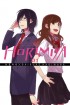
There’s been a strong market recently for repurposed web novels and webcomics licensed by major publishers and redone more professionally. Sword Art Online was originally published (fittingly) online. One-Punch Man was based on a webcomic band now has the Eyeshield 21 artist giving it a more manga feel. And then we have Hori-san to Miyamura-kun, a webcomic by HERO, which not only was popular enough to have Square Enix release the comic itself in 10 volumes several years ago, but now has a reboot with a new artist, running in Square Enix’s ‘we don’t have a shoujo magazine, so here it goes’ title GFantasy. And I’m happy that we’re getting it as well, as Horimiya is a delightfully fun and relaxed shoujo series about two people who find they can show each other their true selves, and how they then start falling for each other as well.

horimiya

Fans of Kare Kano may find the premise a bit familiar, but as you dig into it the differences stand out more. Kyouko is a bright, pretty, popular girl at school, but doesn’t hang out with her friends after as much as you’d expect. Izumi is a somewhat otaku-ish guy who always wears long sleeves and long hair no matter what, and who tends to keep to himself. The plot kicks off when Kyouko finds out that outside of school, he’s actually a pretty handsome guy with tattoos and piercings. And Izumi finds that Kyouko is actually a pretty diligent big sister who has to essentially raise her little brother while her mom is away for days at a time at work. Both of these are things they need to hide at school (though admittedly the whole “without my makeup I am plain and don’t want anyone to see this is how I relax” thing made me roll my eyes a bit), and Kyouko’s little brother really bonds with Izumi, so the two of them end up hanging out after school… and possibly more.

There’s no immediate hook to this series the way One-Punch Man had. It’s a standard shoujo with two likeable leads who are clearly going to end up together, it’s just a matter of when, and their friends who are slowly going to learn the terrible secrets contained within. But it’s one of those series that’s just very well told. The two leads are not overly naive and idealistic or sullen and rude, as you find in so many shoujo series these days. They’re just kids. The mood reminds me a bit of Love at Fourteen, only here they’re a couple of years older. The humor arises from the characters and situations, and sometimes made me laugh out loud. There’s even a good cliffhanger where Kyouko realizes that, despite being a nice kid, Izumi is indeed a teenage boy who might (gasp!) be sexually attracted to her.

Horimiya is a strong debut, and I recommend it not only to Yen’s followers but also to any Shojo Beat fans who might miss it because it’s from a different publisher. I eaglerly look forward to the second volume.

Filed Under: REVIEWS

Idol Dreams, Vol 1

November 2, 2015 by Anna N

Idol Dreams Volume 1 by Arina Tanemura

I was curious to check out this manga, mostly due to the fact that it is a slightly older skewing shoujo title. Also, the premise, about a 31 year-old office lady going back in time to relive her youth seemed interesting.

The hapless office lady in question is Chikage Deguchi, who is bullied at work. She’s let her 20s pass her by while she’s stuck in a style rut, repressed, and unable to find a boyfriend. Her humiliation is complete when she goes to a high school reunion. She’s humiliated even more at a high school reunion. She manages to make incidental conversation with a classmate named Tokita who happens to be a pharmaceutical rep, but her encounter with her high school crush doesn’t go well at all. Chikage is depressed and determined to end her life, when Tokita rescues her and tells her all about an experimental medication that will allow her to replay her wasted teenage years.

Chikage clearly operates under different human subjects rules than most people in the pharmaceutical industry, as he supplies Chikage with pills that transform her into a 15 year old and then sends her on her way, with instructions to check in often so he can gather data. Of course, as soon as teenage Chikage steps foot on the street, she’s recruited to be a stand-in model opposite the most popular member of a boy band, and thus her career as a budding teen idol begins!

Teen idol Hibiki looks a lot like Chikage’s old crush from her high school days, and she finds herself getting swept up in the life of a teen idol. She’s determined to master the social skills that she didn’t pay attention to as a young teen. The situation of a 31 year old woman in a 15 year old’s body and a 15 year old boy being paired up has the potential for a great deal of creepiness. I wasn’t taking this romance very seriously though, because it is clear that Tokita has an unexpressed crush on Chikage, and he seems to be one of the few men her own age that she can actually talk to without becoming self-conscious. So, even though there might be a bit of a wacky love triangle developing (like the original Amethyst Princess of Gemworld with reverse aging) I’m fairly confident that the romantic resolution to this manga will be non-squicky. We’ll see what happens in the next volume though.

Tanemura is always at her best when drawing super cute people, and the contrast between older Chikage and young idol version Akari is pronounced. I enjoyed seeing the friendship develop between Akari and the other boy band members, but I thought that Chikage’s occasional encounters with Tokita were much more promising in terms of any romance developing. Overall, I thought that this was a promising start to a new series, with the potential for the romance plots to derail and become off-putting. I generally enjoy Tanemura’s manga, and a series set in the world of teen idols is the perfect excuse for her to break out all the stops with the flourishes and detailed costumes that she does so well.

idoldreams1

Filed Under: REVIEWS Tagged With: Arina Tanemura, idol dreams, shojo beat, shoujo, viz media

Sword Art Online: Progressive, Vol. 3

November 1, 2015 by Sean Gaffney

By Reki Kawahara and abec. Released in Japan by ASCII Mediaworks. Released in North America by Yen On.

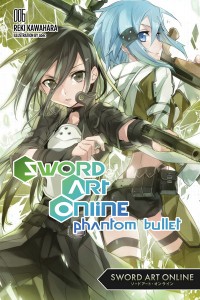
The cover of this volume of Sword Art Online features Asuna and Kirito shot from above, both relaxing happily as they float down a river in their gondola. It’s a fitting image, as this volume is also very relaxed and leisurely, and though there are some well done action scenes and sword battles, this volume lacks the tension that the first volume had, content to develop the themes it’s had since the beginning: how this world differs from the beta before it, how Kirito and Asuna are both getting closer to each other while also being socially awkward, the ongoing war between the Forest Elves and the Dark Elves, and the pretty scenery of the game itself.

swordart3

While Asuna once again gets no narrative voice, we as the audience are learning more about her slowly; she’s clearly from a rich family, and Kirito wonders if her talk of ‘real castles’ means she’s seen some before. But her mixed feelings on Christmas also show us a girl who’s grown up very lonely, and is finally coming into her own as a person thanks to the game – though I suspect she feels guilty about that. As for Kirito, he’s gotten better at seeing when Asuna’s upset, but he’s still terrible at guessing why. In this respect, much as he’s the elite gamer who cannot be defeated and always gets the Last Attack bonus (this remains a highly amusing running gag), he’s still very much a 14-year-old boy, one with his own family issues.

There are several cute bits written for the seasoned fan of Sword Art Online. Lisbeth isn’t named, but we do catch site of someone who clearly matches her description early in the book. Argo appears less than I’d like, but her one major appearance is possibly the best part of the entire novel, as she walks on the water alongside Kirito and Asuna’s gondola, showing off her amazing agility and ability to tease Kirito to the max. There are also some interesting quests, such as Asuna and Kirito’s attempts to get their gondola made by the grumpy retired shipwright in the region, which requires them to fight a giant mutant Prophecy bear, and a secret quest to spy on some fallen elves, which requires them to hide in a crate and leads to accidental gropings that are possibly “amusing” to some.

Which there are some serious moments in the book, particularly Kirito and Asuna both worrying about how long they’ll survive and also keeping pace with one another, overall this book is very light and pacey. If it has a fault, it’s that it may be a bit too light – it’s nice to see Kizmel again, and I sense we’ll get more elves as we go on, but honestly not a lot really happens in this book. It’s a shame, as we’ve now caught up with Japan, so I suspect a wait for the 4th book – where the author has promised a tougher boss fight than the one that barely gets three pages here – will be a while. Still, recommended to Sword Art Online fans, especially those who just like to focus on the two leads.

Filed Under: REVIEWS

A Certain Scientific Accelerator, Vol. 1

October 31, 2015 by Sean Gaffney

By Kazuma Kamachi and Arata Yamaji. Released in Japan as “Toaru Kagaku no Accelerator” by ASCII Media Works, serialization ongoing in the magazine Dengeki Daioh. Released in North America by Seven Seas.

The danger of spinoffs, as always, is that those unfamiliar with the series may be spoiled for later events when they read it. On the other hand, what reader is going to be picking this up having no idea what’s happened in Index already? That said, be aware that this manga series takes place sometime after the fifth novel, due out next month from Yen On, and that if you don’t know who Last Order is yet it may be wise to wait till you read that before digging in. On the other hand, if you are a fan of the index series but wish it had more action scenes, things blowing up, and girls being brutally murdered, this is an excellent series to get involved with.

accelerator1

For the more experienced Index fan, this manga is interesting primarily for Accelerator’s introduction to the Magical World, though he has no idea that’s what it is. Estelle Rosenthal is, as with everyone in Index who isn’t Touma, involved in some way with a shadowy organization, but for once she’s trying to bring it down. She also appears to be a necromancer, something which baffles Accelerator, who’s never heard of that sort of scientific ability. Given events of later Index books, it’s possible that the whole series may finish without him being any wiser as to her being a magician, but it makes for a good dynamic, particularly as she’s not the stuttering introvert I was expecting Accelerator to be paired up with. Indeed, her casual stripping in front of both him and Last Order shows she doesn’t seem to have too many social cues at all – and she has to be lectured about this by Last Order, who is hardly one to talk.

For those wondering, Last Order’s speech quirk is doubled, thus she sounds like the clones except she says “Misaka Misaka “. This is awkward, but honestly there’s no good way to convey the cutesy way she talks in English, so I’ll roll with it. Last Order herself is captured well here, as we get her hyperactivity and jealousy present and correct. As for Accelerator himself, he gets his defining moment right off the bat, as Estelle battles a mook right in front of his nose, and he never stops reading his book, having directed sound to not hit his ears. this is post-Vol. 5 Accelerator, meaning he’s still standoffish and basically a jerk, but is making the transition from villain to antihero, and nothing pisses him off more than people thinking that he’s been “brought down to Earth’ now, which is what leads to the best fight scenes in the volume.

Throw in a truly terrifying murder scene halfway through (it’s OK, she’s going to get her corpse reanimated so it’s all good), and you have a series that should appeal nicely to Index and Railgun fans, even though Touma and Misaka aren’t in it. Though the preview for Vol. 2 did note that one of the clones will have a big part in Vol. 2, which amused me. It’s spinoff fodder for sales, but done quite well. I look forward to more.

Filed Under: REVIEWS

Vinland Saga, Vol. 6

October 30, 2015 by Ash Brown

Vinland Saga, Omnibus 6Creator: Makoto Yukimura
U.S. publisher: Kodansha
ISBN: 9781612628035
Released: September 2015
Original release: 2012
Awards: Japan Media Arts Award, Kodansha Manga Award

After some delay, the sixth omnibus of Makoto Yukimura’s magnificent historical manga series Vinland Saga was finally released in 2015, nearly a year after the previous installment. It was a year in which I waited anxiously—Vinland Saga is one of my favorite manga series currently being published in English and I hope that it does well enough that Kodansha Comics can continue to released the manga. (Currently, English-reading audiences are only guaranteed to see one more omnibus, but even if the translation ends there the series is well-worth reading.) The sixth Vinland Saga omnibus collects the eleventh and twelfth volumes of the original Japanese edition, both of which were released in 2012, the same year the series won a Kodansha Manga Award. The series has also earned Yukimura a Japan Media Arts Award. As was the case with the last few omnibuses, sixth also includes a question and answer section exclusive to the English-language edition in which Yukimura discusses the series.

As the result of the Danish invasion of England in the eleventh century, Canute has successfully taken control of the county. He must still find a way to maintain that control, though. He is no longer the weak young man he once was, having grown into a powerful and cunning king who will do anything necessary to establish his ideal society. In order to gain his current position Canute had to arrange for the death of his father. Now he is turning his ambition towards Denmark and his older brother, hoping to secure rulership there as well. Meanwhile, Thorfinn, a young man from Iceland and a former mercenary who was once Canute’s bodyguard, lives his life in slavery. However, after working diligently for years clearing forested land for his master, his freedom is tantalizingly close. Thorfinn, too, wants to one day shape a world free from war and violence, but his current circumstances make such hopes little more than dreams. But as the political turmoil in Denmark increases it becomes difficult to foretell anyone’s fate, whether they be slave or king.

Vinland Saga, Omnibus 6, page 120I continue to be immensely impressed by the depth of storytelling and the character growth and development found in Vinland Saga. Particularly striking is the nearly complete reversal in Thorfinn and Canute’s respective outlooks on life. Thorfinn, who was once a fearsome warrior dealing in death and destruction, wants nothing more than peace and a way to somehow atone for everything that he has done. Canute, on the other hand, originally abhorred violence but now willingly employs it, considering it to be a necessary evil for the sake of creating a prosperous kingdom and protecting its people. I also find it fascinating that as both Canute and Thorfinn continue to mature and make their way in the world they are each beginning to follow in the footsteps of and even embody the ideals held by their respective fathers, for better or for worse. Canute has learned to successfully use his power politically and strategically as a leader while Thorfinn now fully understands how destructive such power can be.

Violence and the dynamics of power are major themes in Vinland Saga. In particular, the series explores what it means to turn away from violence and if it is even possible for someone to do that with the world and human nature being what they are. Yukimura has so far done an excellent job showing how a violent society affects the people living within it and how difficult it is for them to change that culture when it is held as an ideal. Vinland Saga incorporates many exciting and engaging fight scenes and battles which, like the rest of the manga, are dramatic and well-drawn. However, that violence hasn’t been glorified by Yukimura. Instead, a large focus has been put on the tragic consequences that result from those encounters. The action can be brutal and shockingly gruesome, but perhaps even more important is the tremendous psychological impact on the characters as violence perpetuates more violence in a seemingly endless cycle. Vinland Saga remains an exceptional series; I’m looking forward to reading more of the manga a great deal.

Filed Under: REVIEWS Tagged With: Japan Media Arts Award, kodansha, Kodansha Comics, Kodansha Manga Award, Makoto Yukimura, manga, Vinland Saga

No Game No Life, Vol. 3

October 29, 2015 by Sean Gaffney

By Yuu Kamiya. Released in Japan by Media Factory. Released in North America by Yen On.

The usual caveats apply: there’s lots of skeevy art of underage girls, Sora spends much time discussing how to secretly film naked girls, and the not-quite-incest plot I was desperately hoping would be avoided from now on gets another peek. That said, I imagine anyone for whom those are a deal breaker would not be reading Vol. 3, so let’s move on to discussing Sora and Shiro, our heroes. It was refreshing seeing the start of this book from Shiro’s perspective, particularly as once Sora returned it went back to being mostly him, as he’s the one that talks. Sora and Shiro not only love each other like family (or more in Shiro’s case), but also idolize each other, and they each get narratives at some point bemoaning that they aren’t good at what the other excels in. Sora at one point mocks those who think this series is about the two growing stronger and maturing, as he points out they’re both already perfect.

ngnl3

The amusing thing about this, of course, is that it’s almost immediately undercut by Sora’s own actions, something Jibril cheerfully points out. Like it or not, this world is going to make the two of them change. That said, Sora also has a point – in terms of actual gaming ability, and the narrative need for victory, [ ] are already at the pinnacle. We don’t read this series to see how these two learn how to be better players – if anything, Stephanie fulfills that role in a way, though she’s still used almost entirely as comic relief instead. No, our heroes are already the best, and there is simply no doubt they will win – the question is how. Reading the long action sequence in the middle of the book, where they compete in a virtual shooting game against the Werebeasts, it really is astounding how much of the surprise twists were long thought out in advance by Sora beforehand. The same applies to the Othello game at the start.

Speaking of the Werebeasts, Izuna is the one who gets the most development in this book. Before the game starts Sora asks her whether she’s ever had fun playing a game. Of course the answer is no – with the fate of her entire nation always on her shoulders, this is a heavy burden. Plus she always wins, so it’s a boring heavy burden. But after her loss, she quickly realizes how exciting it is to be able to play someone who can kick her ass, giving her something to strive for. As for the fate of her people, what was somewhat clear in the first two books is made more explicit – the main plot seems to be Sora and Shiro uniting all of the 16 species into one nation, and the main difficulty is convincing everyone that they aren’t actually evil.

I’ve mentioned the books main flaws above, but as I hinted before, I really wish the author would do more with Stephanie – we’ve seen flashes of how smart she can actually be when she’s not dealing with Sora and Shiro or being humiliated, and I long to see more. Sadly, the fourth novel looks like a fluffy beach story, so I suspect I won’t get it. Other than that, the humor I liked in the first two books is still there, with lots of popular gaming references. There’s also some vivid horror as well with Sora’s fate towards the start of the book, and later Chlammy’s as well. There’s a fascinating series here beneath all the ecchi posturing and naked fanservice.

Filed Under: REVIEWS

Akuma no Riddle, Vol. 1

October 27, 2015 by Sean Gaffney

By Yun Kouga and Sunao Minakata. Released in Japan by Kadokawa Shoten, serialization ongoing in the magazine Newtype. Released in North America by Seven Seas.

I admit I wasn’t paying too much attention to this when it was licensed. I hadn’t seen the anime, and “yuri in a girls’ private school’ has come to mostly mean cutesy fluff or cutesy angst. There’s certainly some angst in Akuma no Riddle, but it avoids the cutesy entirely, as the cover might suggest. Instead what we have here is a sort of survival game manga, but where almost all the stars are capable of taking care of themselves. And at the center is Azuma, a young girl who is not as cool and stoic as everyone thinks she is, and seems to be missing something essential – perhaps a killer instinct.

akuma1

This is another case where the cover design was changed at the last minute – the cover you’ll get has different typeface than the one above. In any event, Azuma is a star student at an academy devoted to assassination. She is being sent by her eccentric and somewhat nasty school administrator to another private academy, where she’s to join a class that technically doesn’t exist. Her goal is to assassinate a certain girl. Of course, neither she or we are told who the girl is, but it becomes pretty obvious right off the bat. As the volume goes on, we meet the rest of the cast, all varieties of young, female, and no doubt tragically broken girls who are there to kill said one person. And Azuma, who has her own past to deal with which makes her, as the manga puts it, an assassination virgin, has to decide which side she’s going to be on.

There is a strong sense of plot and character here, which is surprising given the entire volume is basically given over to just introducing about half the cast. Azuma is likeable in her awkward aloofness, and you can see her struggling to understand emotions that come easily to everyone else. Haru is adorable, outgoing, a fluffy bunny sort of person, and has an amazingly tragic past, and I’m not suite sure if the series if going to make her a shining beacon of hope of shatter her like a glass egg. Of the other girls we get a sense of, there’s an “arrogant bully” type, who ends up being our first attempted killer. There’s a girl with what appears to be multiple personalities. And there’s Nio, the only attendee of the class who originated with the school itself, and who is easily the most irritating character in the series to date – deliberately so.

Of course, looking at the credits I shouldn’t be remotely surprised that I enjoyed this so much – the story is by Yun Kouga, author of Earthian, Loveless, etc. She’s not doing the art this time around, but the artist gets her basic aesthetic, so that’s OK. I’m not quite sure where the series is going to go after the end of this volume – I suspect we will be getting an “And Then There Were None” type culling of the herd, so to speak – but ideally I’d like for Haru’s idealism to at least stick around a little longer, if only to avoid the series ending with a giant pile of corpses. Oh, and the yuri in this so far is mostly nonexistent. Doesn’t matter, recommended anyway.

Filed Under: REVIEWS

Kill La Kill, Vol. 1

October 25, 2015 by Sean Gaffney

By Ryo Akizuki, based on the anime by TRIGGER and Kazuki Nakashima. Released in Japan by Kadokawa Shoten, serialized in the magazine Young Ace. Released in North America by Udon.

There’s an episode of Monty Python that features John Cleese as a man who’s quite interested in shouting, so much so that he screams every line at the top of his lungs. As I worked my way through the first volume of Kill La Kill, it occurred to me that what this really needed was for everyone’s voice to be just John Cleese shouting. It starts with the volume at maximum and that’s where it ends too. And I don’t just mean the characters shouting, although boy do they shout. The situations, the fight scenes, the backstory, everything is so over the top that the whole manga is just 160 pages of “YES I’M INTERESTED IN SHOUTING, BRIAN!”

klk1

The premise, equally ridiculous, is that Ryuki has come to an elite private school academy in order to track down her father’s killer. She has one half of a giant pair of scissors that she uses as her chief weapon, and suspects the student council president has the other half. When she arrives, she is immediately befriended by a small, cheerful chatterbox who spends most of the volume being kidnapped and pseudo-tortured to drive the plot. Can Ryuki find out the truth and win as she battles everyone? And will she need the help of the sentient, perverse school uniform she’s forced to wear in order to do so?

As you can see, the plot is just as shouted as everyone else. I think even if you knew nothing about Kill La Kill you’d know this was based off of an anime just by the aesthetic. I’ve never seen the anime, but I’ve heard enough about it to know that it’s completely ridiculous and also somewhat polarizing. The polarizing elements are here as well – Ryuki’s battle outfit is fanservice personified, and she clearly hates it, but the manga enjoys lingering on her. And there’s a creeper teacher whose presence is entirely unwelcome, in my opinion. That said, honestly, the manga moves so fast and doesn’t really linger on anything long enough for me to get vaguely irritated before something else is already happening.

This isn’t the sort of thing I could read if it were a long series – it’s simply too exhausting,even after only one volume. Luckily, it only seems to be three total, which sounds about the right amount. I’m not sure fans of the anime would get much out of this – it honestly feels like a straight up port of the episodes, though I can’t actually verify that. But for those who were curious, and enjoy seeing a lot of goofy action and manly shonen poses (though it’s technically seinen, probably due to the costume), Kiss La Kill is a decent series provided you don’t take it remotely seriously.

Filed Under: REVIEWS

My Love Story!! Vol 6

October 24, 2015 by Anna N

My Love Story Volume 6 by Kazune Kawahara and Aruko

It is nice to have a go-to manga series to read when one feels stressed out, and My Love Story!! never fails to make me happy.

This volume focuses more on the arrival of Takeo’s new sibling, and the reader gets the treat of seeing a little bit of his parents’ courtship. Takeo’s mom is portrayed as unflappingly capable in her younger years, and his dad exhibits the same ridiculous amount of enthusiasm that Takeo often channels. When something goes a little wrong with the pregnancy, Takeo starts exclaiming “I’ve got to be reliable!” as he tries to take care of everything for his family. He’s supported all the way by Suna and Yamato.

The old valentine’s day storyline has got to be one of the most overused cliches in shoujo manga, but My Love Story!! pulls off one of the most adorable examples of this storyline, as Takeo is so excited to be receiving “true love’s chocolate from his girlfriend, he finds himself striking random celebratory poses as he walks along and discusses his relationship with Suna. I was glad to see that there are hints Suna might actually become involved with a girl at last. He’s deliberately aloof, and shuns any girl who speaks badly of Takeo, so he hasn’t experienced romance yet either. I’m really looking forward to the next volume now, where more of the focus will be on him.

mylovestory6

Filed Under: REVIEWS Tagged With: My Love Story, shojo beat, viz media

L♥DK, Vol. 1

October 22, 2015 by Sean Gaffney

By Ayu Watanabe. Released in Japan by Kodansha, serialization ongoing in the magazine Bessatsu Friend. Released in North America by Kodansha.

God knows that I am not the type of person to fault a manga for being too predictable. The industry runs on predictability, and anyone looking for a good adventure, comedy or romance title knows from the start at least the gist of what they’re going to get into. I’m used to many shoujo romances having the same sort of shape. But there’s an agreement you make with the author there, which is that there’s something in this series that will pull you in despite the predictability, be it dialogue, depth of characterization, degree of exaggeration, etc. If everything about a series is something that you can connect the dots, where you guess what’s going to happen 4 pages before it does… well, you probably have something like L♥DK.

ldk1

Stop me if you’ve heard this one before. Our heroine confronts our hero, who has just rejected her best friend’s confession, and they exchange words. She then goes back to her apartment to find that he’s now living next door. Though a not-so-amazing series of coincidences, his apartment gets ruined and they wind up living together as she feels it was her fault. Now she must keep it a secret from everyone she knows, which is hard as she’s starting to fall for him. It’s also hard because he enjoys flustering and teasing her to such an extent that it would be called bullying if this weren’t a shoujo romance.

Shusei is the guy, and oh my god. I haven’t thrown a book across the room in frustration in quite some time, but when he climbed into her bath and situated himself behind her while her best friend was knocking on the door, I did just that. I get that ‘bully the girl you love’ is a popular trope, and being a straight white male, I am absolutely not the one who gets to say whether it’s good or bad. As always, tropes are good and bad depending on the writing. But this seems a bit over the top even for this genre. Things aren’t helped later on when the two are accidentally handcuffed together by their landlady’s kid, and my first thought was ‘he has the key and is just doing this out of amusement and a really bizarre desire to stay with her’. And sure enough!

Now, this could be OK if we had a really good heroine, and Aoi shows flashes on occasion, mostly at the beginning. But honestly, I think she falls for this guy way too fast, particularly given this series is 18 volumes and counting in Japan. Most of the character beats are “Argh he is so frustrating” – he does something intimate – blushing and flustered – he is rude. Repeat as needed. And I’ve gotten to the point where if I have a blushing, flustered heroine who spends most of her time wondering why she’s in this situation, I can’t also have a guy who is ‘I tease and bully because I love’. This is a very popular shoujo type, and I suspect this series will do quite well here. But it’s just a no-sell for me. I’ve seen it all too often before. And not in a good way.

Filed Under: REVIEWS

  • « Go to Previous Page
  • Page 1
  • Interim pages omitted …
  • Page 224
  • Page 225
  • Page 226
  • Page 227
  • Page 228
  • Interim pages omitted …
  • Page 342
  • Go to Next Page »
 | Log in
Copyright © 2010 Manga Bookshelf | Powered by WordPress & the Genesis Framework