By Yuki Suetsugu. Released in Japan by Kodansha, serialization ongoing in the magazine Be Love. Released in North America digitally by Kodansha Comics. Translated by Ko Ransom.
I’d said in the last review that Chihayafuru is, in many ways, a sports manga. But this is not your average baseball or soccer title. Karuta is not really thought of as something that kids do these days, particularly once they enter high school, and especially if they’re good at other sports, which Chihaya is – everyone points out she should be on the track team. But Chihaya has a dream, and is very, very driven towards getting that dream, even if it means playing over and over without her two friends – we’re in high school now, and both have been away for years. Luckily, Taichi has returned, bringing his unspoken crush, his reluctance to get back into an “uncool” sport, and his ability to see flaws that Chihaya can’t see herself. Arata is another matter – not only does he still live far away, but he tells them in no uncertain terms that he isn’t playing karuta anymore.

The reason Arata abandoned karuta is not the most original one in the world – in fact it’s the most cliched part of the book – but it works anyway, especially as it helps to show off why Chihaya’s impulsiveness is not always a good thing. That said, it looks like it may work out in the end, which is good. Karuta is very much something that Chihaya associates with ‘having fun with friends’, and the group activity is the most exciting part about it. In fact, Chihaya’s enthusiasm is actually masking several issues – Taichi notes that her memorization at the start is still quite bad, and a new character who ends up joining the club, Ooe Kanada, who reminds her that the poems aren’t just there because they sound pretty – there’s meaning and depth behind each one. This is AMAZING to Chihaya, who is nice and sweet but her single minded determination means she can miss the obvious.
As for the Karuta itself, it’s actually still pretty exciting. I was not entirely certain whether Chihaya would win the match halfway through the book – in a series like this, the occasional loss is going to be inevitable, even if you promise that you’re going to win. I’m still somewhat amused at various antics going on during karuta that I would argue are fouls, but then I’m not a karuta player. It’s also a very old-fashioned game – it’s pretty obvious why the club is somewhat mocked, though honestly you get the sense it’s due to Chihaya’s overenthusiasm more than anything else. It’s also very clear why Kana thinks that they should be performing it in kimonos – a lot of karuta runs on aesthetic, and if you look the part it may help in other areas as well. As for any romance in the story, well, Taichi still has a crush on Chihaya, but that’s about it – she’s totally oblivious.
Chihayafuru may not be the most obvious josei series out there, but if you read it it will win you over on pure energy, just like its heroine.

 Even without knowing much about Dreamin’ Sun, I was sold by the fact that it’s an earlier series from Ichigo Takano, creator of orange, which I loved dearly. Dreamin’ Sun is more of a straightforward and comedic shoujo story in which characters do not contend with letters from their future selves or how to save a suicidal friend, but it still has a few poignant moments.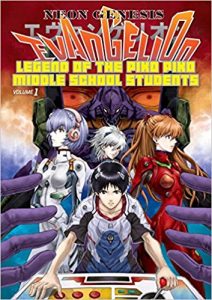

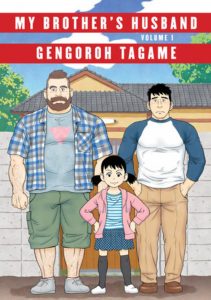 Yaichi is a single dad who works from home managing the rental property his parents left to him and his brother, Ryoji, after being killed in a car accident when the boys were teenagers. He considers his real job to be providing the best home he can to his daughter, Kana. On the day the story begins, Yaichi is expecting a guest—Mike Flanagan, the burly Canadian whom Ryoji married after leaving Japan ten years ago. Ryoji passed away the previous month and Mike has come to Japan to try to connect with Ryoji’s past and see for himself the many things he’d heard stories about from his husband.
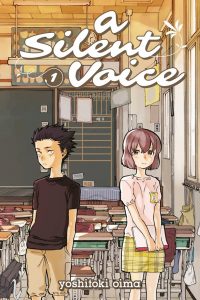 In elementary school, Shoya Ishida often engaged in foolhardy stunts to stave off boredom. When hearing impaired transfer student Shoko Nishimiya joins his class and causes disruption within the class, she becomes Shoya’s target. Initially, the other kids laugh at Shoya’s antics but when he goes too far and destroys several hearing aids to the tune of $14,000, they swiftly condemn him. Now he’s the one who’s ostracized and this status continues into high school, long after Shoko transferred out again. Full of self-loathing, he’s preparing to commit suicide, but a chance reunion with Shoko inspires him to try to change.
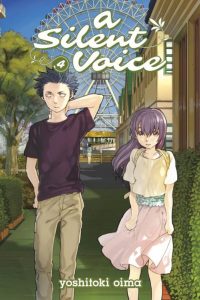 Back and forth things go, with this group continuing to try to establish themselves as friends without seeming to genuinely like each other much. Eventually, they decide to film a movie together. For one scene, they need to acquire permission to film at their old elementary school. Shoya is the unwilling emissary, and an encounter with his odious former teacher leaves him feeling so awful about himself that he ends up lashing out at all his friends, seemingly trying to drive them away as he feels he deserves. This has the unintended side effect of causing Shoko to feel like she’s the cause of his unhappiness, prompting a desperate act.
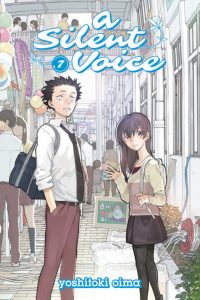 Less clear is what Oima was aiming for with their group of friends. Even though Naoka was far more outwardly nasty to Shoko, at least she was open about it and expressed a great deal of self-loathing because of her behavior. With the help of another friend, Miyoko, she is encouraged to have a bit more optimism, and will probably end up doing okay. Even though she could’ve been fleshed out further, I do like Naoka as a character. But man oh man, do I hate Miki. She makes everything about herself—at one point revising the bullying narrative so that she and Shoko were co-victims—and doesn’t seem to grow at all. Everything she does seems fake, because most of it is, and I was baffled when the boy she fancies declared her to be “kind” after some weepy episode. Miki should get hit by a bus.