• Skip to primary navigation
  • Skip to main content
  • Skip to primary sidebar
  • Home
  • About Us
    • Privacy Policy
    • Comment Policy
    • Disclosures & Disclaimers
  • Resources
    • Links, Essays & Articles
    • Fandomology!
    • CLAMP Directory
    • BlogRoll
  • Features & Columns
    • 3 Things Thursday
    • Adventures in the Key of Shoujo
    • Bit & Blips (game reviews)
    • BL BOOKRACK
    • Bookshelf Briefs
    • Bringing the Drama
    • Comic Conversion
    • Fanservice Friday
    • Going Digital
    • It Came From the Sinosphere
    • License This!
    • Magazine no Mori
    • My Week in Manga
    • OFF THE SHELF
    • Not By Manga Alone
    • PICK OF THE WEEK
    • Subtitles & Sensibility
    • Weekly Shonen Jump Recaps
  • Manga Moveable Feast
    • MMF Full Archive
    • Yun Kouga
    • CLAMP
    • Shojo Beat
    • Osamu Tezuka
    • Sailor Moon
    • Fruits Basket
    • Takehiko Inoue
    • Wild Adapter
    • One Piece
    • After School Nightmare
    • Karakuri Odette
    • Paradise Kiss
    • The Color Trilogy
    • To Terra…
    • Sexy Voice & Robo
  • Browse by Author
    • Sean Gaffney
    • Anna Neatrour
    • Michelle Smith
    • Katherine Dacey
    • MJ
    • Brigid Alverson
    • Travis Anderson
    • Phillip Anthony
    • Derek Bown
    • Jaci Dahlvang
    • Angela Eastman
    • Erica Friedman
    • Sara K.
    • Megan Purdy
    • Emily Snodgrass
    • Nancy Thistlethwaite
    • Eva Volin
    • David Welsh
  • MB Blogs
    • A Case Suitable For Treatment
    • Experiments in Manga
    • MangaBlog
    • The Manga Critic
    • Manga Report
    • Soliloquy in Blue
    • Manga Curmudgeon (archive)

Manga Bookshelf

Discussion, Resources, Roundtables, & Reviews

Features & Reviews

Manga the Week of 6/6

May 30, 2012 by Sean Gaffney

That’s a whole lotta Viz, that is.

Mind you, there is a Vertical title as well. In fact, it came out everywhere but Diamond this week. Vol. 3 of 14 Days in Shonan puts the series at 1/3 complete, but Onizuka’s work has barely begun! He has kids to inspire and adults to castigate! And old… friends?… to reunite with! Who knows, he may even get lucky! (OK, no, that will never happen.)

The big release from Viz, meanwhile, is the final volume of Ouran High School Host Club. And for those who are curious, unlike most harem manga, this one resolves its pairing. Fans have loved the story of Haruhi, Tamaki and the others – enough to bring the anime over here as well – and now we finally have closure. Thanks to Bisco Hatori for so much great romantic comedy.

There are other releases as well. More shoujo! Black Bird 14, which will no doubt continue to sell like hotcakes. Dawn of the Arcana 4, which I am horribly behind on. Devil and Her Love Song 3, which I am greatly looking forward to, as I love snark. Earl & The Fairy 2, which hopefully will improve a bit on its first volume. Kamisama Kiss 9 and Kimi ni Todoke 14, for you romantics out there. And Sakura Hime, for the Tanemura addicts.

This does not mean there is not a giant pile of shonen as well. Bakuman 11, now in its 2nd half! Not one, but two Bleach volumes, which I believe have some great stuff for IchiHime fans! A new Nura and Toriko, which don’t get to speed up as much as Bleach, but have less to catch up on. Slam Dunk 22, in case your daily basketball quotient needed filling. And Yu-Gi-Oh Zexal, the nth sequel to the popular franchise.

That’s a whole lot. An exhausting amount, in fact. Anything for you?

Filed Under: FEATURES

Manga Bestsellers: 2012, Week Ending 18 March

May 30, 2012 by Matt Blind 1 Comment

Comparative Rankings Based on Consolidated Online Sales

last week’s charts
about the charts

##

Manga Bestsellers

1. ↔0 (1) : Sailor Moon 4 – Kodansha Comics, Mar 2012 [467.0] ::
2. ↔0 (2) : Sailor Moon 3 – Kodansha Comics, Jan 2012 [451.7] ::
3. ↔0 (3) : Naruto 55 – Viz Shonen Jump, Mar 2012 [445.5] ::
4. ↔0 (4) : Sailor Moon 2 – Kodansha Comics, Nov 2011 [426.0] ::
5. ↔0 (5) : Sailor Moon 1 – Kodansha Comics, Sep 2011 [385.5] ::
6. ↑7 (13) : Sailor Moon 5 – Kodansha Comics, Apr 2012 [384.8] ::
7. ↓-1 (6) : Maximum Ride 5 – Yen Press, Dec 2011 [354.0] ::
8. ↔0 (8) : Sailor Moon Codename: Sailor V 2 – Kodansha Comics, Nov 2011 [342.9] ::
9. ↓-2 (7) : Black Bird 13 – Viz Shojo Beat, Mar 2012 [340.0] ::
10. ↔0 (10) : Sailor Moon Codename: Sailor V 1 – Kodansha Comics, Sep 2011 [306.8] ::

[more]

Top Imprints
Number of volumes ranking in the Top 500:

Viz Shonen Jump 74
Yen Press 72
Tokyopop 59
Viz Shojo Beat 58
Kodansha Comics 39
Viz Shonen Jump Advanced 36
DMP Juné 21
Seven Seas 20
Vizkids 17
Dark Horse 14

[more]

Series/Property

1. ↔0 (1) : Sailor Moon – Kodansha Comics [1,169.5] ::
2. ↔0 (2) : Naruto – Viz Shonen Jump [896.2] ::
3. ↔0 (3) : Black Butler – Yen Press [644.0] ::
4. ↔0 (4) : Maximum Ride – Yen Press [615.9] ::
5. ↔0 (5) : Black Bird – Viz Shojo Beat [522.6] ::
6. ↑1 (7) : One Piece – Viz Shonen Jump [472.0] ::
7. ↓-1 (6) : Bleach – Viz Shonen Jump [446.9] ::
8. ↑4 (12) : Pokemon – Vizkids [426.7] ::
9. ↔0 (9) : Negima! – Del Rey/Kodansha Comics [381.8] ::
10. ↑12 (22) : Pandora Hearts – Yen Press [377.0] ::

[more]

New Releases
(Titles releasing/released This Month & Last)

1. ↔0 (1) : Sailor Moon 4 – Kodansha Comics, Mar 2012 [467.0] ::
3. ↔0 (3) : Naruto 55 – Viz Shonen Jump, Mar 2012 [445.5] ::
9. ↓-2 (7) : Black Bird 13 – Viz Shojo Beat, Mar 2012 [340.0] ::
12. ↑4 (16) : One Piece 61 – Viz Shonen Jump, Mar 2012 [279.1] ::
13. ↑1 (14) : Naruto 54 – Viz Shonen Jump, Mar 2012 [272.1] ::
14. ↓-2 (12) : Dengeki Daisy 9 – Viz Shojo Beat, Mar 2012 [270.8] ::
16. ↑16 (32) : Bunny Drop 5 – Yen Press, Mar 2012 [255.8] ::
18. ↑15 (33) : Gate 7 vol 2 – Dark Horse, Mar 2012 [250.0] ::
21. ↑10 (31) : Fairy Tail 18 – Kodansha Comics, Mar 2012 [238.0] ::
23. ↓-8 (15) : xxxHolic 19 – Kodansha Comics, Feb 2012 [221.7] ::

[more]

Preorders

6. ↑7 (13) : Sailor Moon 5 – Kodansha Comics, Apr 2012 [384.8] ::
15. ↑10 (25) : Sailor Moon 7 – Kodansha Comics, Sep 2012 [264.6] ::
17. ↑6 (23) : Sailor Moon 6 – Kodansha Comics, Jun 2012 [255.0] ::
43. ↑33 (76) : Countdown 7 Days 2 – DMP, Apr 2012 [158.4] ::
47. ↑12 (59) : Negima! 34 – Kodansha Comics, Apr 2012 [154.7] ::
55. ↑20 (75) : Sailor Moon 8 – Kodansha Comics, Nov 2012 [142.4] ::
62. ↑10 (72) : Black Butler 9 – Yen Press, Jul 2012 [136.7] ::
73. ↑78 (151) : Warriors SkyClan & The Stranger 3 – HarperCollins, Apr 2012 [123.3] ::
83. ↑23 (106) : Dance in the Vampire Bund 12 – Seven Seas, Jun 2012 [110.7] ::
84. ↑88 (172) : Shojo Fashion Manga Art School Year 2: Draw Modern Looks – F+W Media, Apr 2012 [110.7] ::

[more]

Manhwa

353. ↓-52 (301) : Bride of the Water God 9 – Dark Horse, Oct 2011 [33.2] ::
378. ↑ (last ranked 18 Dec 11) : Angel Diary 7 – Yen Press, Oct 2008 [31.0] ::
566. ↓-283 (283) : Bride of the Water God 10 – Dark Horse, Jan 2012 [18.0] ::
670. ↑772 (1442) : INVU 5 – Tokyopop, Nov 2009 [13.5] ::
840. ↓-150 (690) : Priest Purgatory 1 – Tokyopop, Aug 2010 [8.6] ::
915. ↓-145 (770) : Arcana 4 – Tokyopop, Mar 2006 [6.9] ::
1042. ↓-1 (1041) : Ragnarok 1 – Tokyopop, May 2002 [4.9] ::
1116. ↑484 (1600) : Arcana 1 – Tokyopop, Jan 2005 [4.0] ::
1183. ↓-228 (955) : March Story 3 – Viz Signature, Oct 2011 [3.1] ::
1276. ↓-254 (1022) : March Story 1 – Viz Signature, Oct 2010 [2.3] ::

[more]

BL/Yaoi

53. ↑46 (99) : Maelstrom (ebook) 1 – Yaoi Press, Jun 2011 [148.6] ::
71. ↑23 (94) : Ice Cage (ebook) – Yaoi Press, Feb 2012 [128.3] ::
77. ↑6 (83) : Finder Series 5 Truth in the View Finder – DMP Juné, Dec 2011 [120.2] ::
95. ↓-9 (86) : Finder Series 6 Passion within the View Finder – DMP Juné, Jul 2012 [105.7] ::
100. (new) : Treasured Prince – Yaoi Press, Mar 2012 [99.5] ::
107. ↑187 (294) : An Even More Beautiful Lie – DMP Juné, Jan 2012 [96.1] ::
109. ↓-17 (92) : Ambiguous Relationship – DMP Juné, Mar 2012 [94.2] ::
114. ↓-12 (102) : Private Teacher 3 – DMP Juné, May 2012 [91.5] ::
155. ↑ (last ranked 12 Feb 12) : Butterfly of the Distant Day – DMP Juné, Jun 2011 [72.0] ::
159. ↑28 (187) : Black Sun 2 – 801 Media, Dec 2011 [69.5] ::

[more]

Ebooks

3. ↔0 (3) : Naruto 55 – Viz Shonen Jump, Mar 2012 [445.5] ::
7. ↓-1 (6) : Maximum Ride 5 – Yen Press, Dec 2011 [354.0] ::
13. ↑1 (14) : Naruto 54 – Viz Shonen Jump, Mar 2012 [272.1] ::
20. ↓-9 (11) : Naruto 53 – Viz Shonen Jump, Dec 2011 [242.0] ::
25. ↓-7 (18) : Maximum Ride 1 – Yen Press, Jan 2009 [212.0] ::
30. ↔0 (30) : Soulless 1 – Yen Press, Mar 2012 [187.3] ::
32. ↓-3 (29) : Maximum Ride 4 – Yen Press, Apr 2011 [182.0] ::
34. ↑12 (46) : Blue Exorcist 2 – Viz Shonen Jump Advanced, Jun 2011 [176.2] ::
40. ↑4 (44) : Bleach 37 – Viz Shonen Jump, Dec 2011 [165.4] ::
53. ↑46 (99) : Maelstrom (ebook) 1 – Yaoi Press, Jun 2011 [148.6] ::

[more]

Filed Under: Manga Bestsellers Tagged With: Manga Bestsellers

A Certain Scientific Railgun, Vol. 4

May 30, 2012 by Sean Gaffney

By Kazuma Kamachi and Motoi Fuyukawa. Released in Japan as “Toaru Kagaku no Railgun” by ASCII Media Works, serialization ongoing in the magazine Dengeki Daioh. Released in North America by Seven Seas.

This volume, as the back cover tells you, marks the start of the ‘Sisters’ story arc for Railgun. Which, if you’re only following the manga, means very little to you. But this is not a manga for those who merely read the manga (though it can be read on its own fairly easily, as I have shown). Franchise manga tend to lack the surprising plot twists that original titles may have, simply as they rely on an already existing base. So if you’re buying this 4th volume of the Railgun manga, it’s already expected that you’ll have bought the Index light novels, and the Index manga and anime, and indeed Railgun’s own anime, which is namechecked here. Higurashi does this too – I’ve been coyly pretending not to know who the villain is in my reviews, but of course I do – as did all the readers of the manga when it came out. Expectations are set differently.

That said, this volume has a lot to offer. It’s rather upfront about the way that it manipulates its cast – particularly its heroine, Misaki. We start right off with her being shown a boy with muscular dystrophy, and asked to donate some of her DNA to help fight such things. Which would be fine, if she had parents who were also giving consent, or if the scientist askin g didn’t have an evil leer on his face after she agrees. No, we know we’re going to be getting into evil clones right off the bat. (Well, the cover might have clued us in as well.)

Of course, the evil is debatable – the clone on the cover actually looks rather sad and vulnerable (and mysteriously missing genitalia, in the best time-honored tradition). And indeed, when we first meet Misaka 9982, she is immediately filled with likeable traits. She’s snarky, and intelligent, and deadpan, and talks in the third person (something I wasn’t sure Seven Seas would carry over – it sounds more awkward in English, but does help to set the clones apart from the original). This is contrasted with Misaka herself, who spends the entire volume frustrated and not sure how she should feel. She’s heard the rumors before, but being faced with the actual reality is a bit much.

As we see Misaka meet her clone, and have amusing arguments with her clone, and come to see her clone as a little sister sort of figure – complete with giving her a frog badge she got from a crane machine – we know, instinctively that we’re heading for tragedy, and that this clone is going to die. Of course, the number ‘9982’ after her name might also clue us in – these clones are being created as experimental subjects, and their purpose is to die for the greater good. I suspect Misaka is not going to see it that way, however, and the volume ends with her losing it and attacking the mysterious boy who is responsible.

All of this is handled quite well. The manga flies by, and we get just enough characterization from Misaka 9982 to feel horrible about what happens. And certainly we immediately loathe Accelerator, the young man who seems to be our heroine’s new villain. Ah well, I’m sure he will simply be a minor villain… you see? There I go again, pretending that this isn’t a franchise. :) Definitely recommended.

Filed Under: REVIEWS

Bookshelf Briefs 5/29/12

May 29, 2012 by MJ, Katherine Dacey and Michelle Smith 4 Comments

This week, Kate, MJ, and Michelle look at recent releases from Yen Press, VIZ Media, JManga, and eManga.


Amorous Women of the Floating World: Sex in Old Tokyo, Vol. 1 | By Kaoru Hazuki & Chinatsu Takamura | Leed Publishing Co., LTD – The cover copy for this manga begins, “Did you know that Japan in the 18th century was even more sexually permissive than it is today?” After reading this manga, however, it must be clarified that “sexually permissive” should be appended with”…for men.” This book is for men, of course, but it’s difficult to accept it as harmless sexual fantasy, when it works so hard to try to sell the subjugation of women as female empowerment. The book opens with lessons in “marital harmony.” “It is incredibly pleasurable for your lord to enter your mouth,” a young woman is told on the eve of her wedding night. “Do not deny him!” Later, we learn about the rural practice in which groups of local men set upon households of women in the middle of the night to ask for sex, which we’re told was empowering for the women because they were allowed to say no. While as a history of sexual behavior in Japan, this book offers some interesting information, as sexual fantasy it’s just kind of… icky. – MJ

Black Butler, Vol. 9 | By Yana Toboso | Published by Yen Press – You know the previous arc must’ve been a dark one when a murder mystery set in Phantomhive Manor seems positively lighthearted by comparison! Ciel is compelled by Her Majesty to play host to a distinguished German visitor, but when the man turns up dead (on the requisite dark and stormy night, of course), Ciel is the only one without an alibi. One guest believes in his innocence, however—a medically trained mystery writer named Arthur, whom one can only assume is meant to be Conan Doyle. Arthur narrates the tale, which is kind of neat, and though I don’t believe for one moment that Sebastian has truly become the killer’s latest victim, I must say that I was really bummed out that I didn’t have volume ten immediately to hand.– Michelle Smith

Cross Game, Vol. 7 | By Mitsuru Adachi | Published by VIZ Media – I’ve you’ve been keeping up with Cross Game, you pretty much know what to expect with this volume. The Seishu team has one last chance to make it to Koshien, and this omnibus (comprising volumes 14 and 15 of the original Japanese edition) offers lots and lots of baseball goodness as they make their way through the Tokyo tournament. Meanwhile, there’s a sort of romantic pentagram going on that provides some distractions. I really admire the elegant way that Adachi and co. depict the games—they are effortlessly easy to follow—as well as Aoba’s growing realization of Ko’s various good qualities, and am always left wanting more even after 300+ pages. Speaking of wanting more, I shall avail myself once more of the opportunity to express my wish for another Adachi series after Cross Game wraps in July. Please, VIZ? – Michelle Smith

A Devil and Her Love Song, Vol. 3 | By Miyoshi Tomori | VIZ Media – Miyoshi Tomori captures adolescence in all its messy confusion, addressing pack behavior, frenemies, and faculty bullies. To be sure, other manga explore the same terrain, but Tomori’s work is one the few that can transport an adult reader back to his or her high school days in a vivid, compelling fashion. What makes this series work is its cast: the characters are flawed, inconsistent, and sometimes unlikable — just like real people — but they’re also funny, smart, and occasionally brave in small ways — just like real people. Best of all, Tomori’s heroine is prickly and brash without being cartoonish; chances are, you knew someone just like Maria when you were 15, and secretly admired her candor, too. Recommended. -Katherine Dacey

Don’t Cry, Girl | By Tomoko Yamashita | JManga – Are wacky nudists the latest trend in manga? I ask because Don’t Cry, Girl was the second manga I’ve read that featured a naked character — in this case, Masuda, a bachelor who agrees to provide a home for Taeko, his friends’ chaste but sensible 17-year-old daughter. The story reads like an extended riff on Austin Powers, with Masuda strategically using bowls of fruit, house plants, and vacuum cleaners to block Taeko’s line of sight. It’s a giddy and stupid conceit, sustained by the chemistry between the unsparingly blunt Taeko and the irrepressibly childish Masuda. The volume is rounded out by a second story, “3322,” which explores the relationships among a trio of women who spend a summer living together. The second story is lush and atmospheric but a little disjointed, making it difficult to follow all the plot strands. Taken as a whole, however, Don’t Cry, Girl is a welcome addition to the small but growing body of josei in English. – Katherine Dacey

Rin-ne, Vol. 9 | By Rumiko Takahashi | VIZ Media – The latest volume of Rin-ne features several ghost-of-the-week stories. Some have a loopy charm: in “Ramen Kaedama,” for example, Rokudo’s feckless father teams up with another damashigami to open a noodle shop, while “The Wig’s Regret” features a possessed prop from a long-forgotten school play. Other chapters, however, feel like something that Rumiko Takahashi could produce on autopilot: the stories are pat and predictable, with magical elements that feel overdetermined. The artwork, too, lacks the detail and personality of Takahashi’s earlier efforts; the backgrounds are uncharacteristically sparse and bland, while the figure drawings look like pallid imitations of characters from Ranma and InuYasha. It’s not bad, just tired; we’ve seen Takahashi tell these kind of stories before with more spark and wit. -Katherine Dacey

Filed Under: Bookshelf Briefs

Puella Magi Madoka Magica, Vol. 1

May 29, 2012 by Katherine Dacey

The opening pages of Puella Magi Madoka Magica suggest a dreary retread of Sailor Moon: Kyubey, a talking cat, appears before Madoka Kaname, a perky yet otherwise unremarkable school girl, and asks her, “Would you like to change destiny?” Our first clue that Puella has something nastier up its be-ribboned sleeve occurs midway through the first chapter, when transfer student Homura Akemi confronts Madoka with a dire, if cryptic, warning: “You should never consider ‘changing yourself’ in any way,” she tells Madoka. “If you choose not to heed my words, those things that you hold dear will all be lost.” Homura then attacks Kyubey, accusing him of using “dirty tactics” to persuade Madoka to make a contract with him.

Though all the trappings of a traditional magical girl manga are in place — the costume changes, the cute familiars, the teamwork — Puella charts a darker, more violent course than other translated examples of the genre. Homura and Madoka operate in a world where magical girls routinely die; though their powers are formidable, magical girls are worked to the point of emotional and physical exhaustion. Moreover, their contracts are signed under duress; Kyubey frequently appeals to girls in desperate circumstances, using their vulnerability as leverage. (In exchange for battling witches, he explains to Madoka, “I fulfill one wish. Any wish you want!”)

In short, Puella manages to have its cake and eat it, too, faithfully adhering to the genre’s conventions while offering an explicit critique of its underlying message of courage and selflessness. The story is the antithesis of a wish-fulfillment fantasy: the powers that Kyubey bestows come with responsibilities that are too difficult for a young, inexperienced person to bear. Throughout the manga, we see examples of magical girls who have become competitive or embittered by their experiences, at risk of becoming witches themselves. We also meet girls who regret the haste with which they made their contracts, as their wishes were fulfilled at the expense of friends and family members.

As sharp as Puella‘s genre critique may be, the artwork is a disappointment. The character designs are faithful to the original anime, but the magical elements look smudgy on the page, the product of too much dark grey screentone. The anime’s surreal fight sequences have lost their visual punch as well. Creatures that looked strange and menacing in color have been defanged, reduced to cute video game monsters floating above the picture plane.

Most of the fight scenes have been compressed into a few pages, further curtailing their impact; we barely have time to register who the opponents are before one of the magical girls has eliminated the threat. As a result, the volume’s climatic scene lacks emotional resonance. Though the characters have repeatedly discussed how dangerous their vocation is, the fight is so fleeting and impressionistic that the stakes seem too low to yield such a devastating outcome.

If the artwork lacks the personality of a Magic Knight Rayearth or Cardcaptor Sakura, however, the actual story is on par with the best translated examples of the magical girl manga. Like the aforementioned CLAMP titles, Puella Magi Madoka Magica treats the magical girl as a character worthy of complexity and genuine interiority; the Puella girls may engage in magical combat, but they’re painfully aware that saving the world can be an ugly business — even if they’re wearing smart costumes.

Review copy provided by Yen Press.

PUELLA MAGI MADOKA MAGICA, VOL. 1 • STORY BY MAGICA QUARTET, ART BY HANOKAGE • YEN PRESS • 144 pp. • RATING: OLDER TEEN (16+)

Filed Under: Manga, Manga Critic, REVIEWS Tagged With: Magical Girl, Magical Girl Manga, Puella Magi Madoka Magica, shojo, yen press

BL Bookrack: May 2012

May 28, 2012 by MJ and Michelle Smith 7 Comments

Welcome to the May installment of BL Bookrack! This month, Michelle takes a look at est em’s Apartments of Calle Feliz (JManga) and the first volume of The Scent of Apple Blossoms (SuBLime), while MJchecks out western BL webcomic Honeydew Syndrome. In Brief: Doukyusei from JManga, and My Sweet Home from the Digital Manga Guild.


Apartments of Calle Feliz | By est em | Published by JManga – It seems that every time I turn around I am thanking JManga for something these days, and this quirky set of interconnected short stories from est em can now be added to the list!

Life’s not going well for aspiring novelist Luca. His editor is dissatisfied with his work, and he’s just been kicked out of his home because his boyfriend found a new guy. When he responds to a flyer advertising a room for rent, he ends up living with the landlord, Javi, instead. Luca’s intrigued by Javi, but keeps telling himself not to care about him, because it seems obvious that Javi has ousted a past lover from his apartment and Luca knows what that feels like.

Still, Javi is an inspiration, and his suggestion that Luca write stories with happy endings for the tenants of the apartment building—located on Calle Feliz (or “happy street”)—results in the tales included here. Residents include Dino and Salvator (a fashion designer and his nudist recluse boyfriend), Noe and the Twins (a man unable to decide which of a pair of twins he prefers), Matias and Pepe (a boy who reminds a puppetmaker of his lost love), and Jose and Eva (a hard-of-hearing guy and a crossdresser with a bunch of noisy roommates). A story about Javi and Luca and Javi’s past rounds out the collection.

The stories themselves are generally fun and charming—though I was disappointed that the Jose and Eva story seemed to end so abruptly—but what’s even more intriguing is wondering how much of this actually happened and how much is Luca’s imagination. Did Pepe’s lover really return to him? Did the designer and the nudist resolve their problems and live happily ever after? It’s nice to imagine they did, but est em floats the possibility that maybe things didn’t actually turn out so well, which is a narrative trick I just love.

This may not be as dramatic a collection as something like Seduce Me After the Show or Red Blinds the Foolish, but it is definitely worth reading all the same.

– Review by Michelle Smith


Honeydew Syndrome, Vol. 1 | By New Shoe | Rated Teen – A while back, I got an e-mail asking if I’d be willing to take a look at a North American comic called Two Keys from the creative team New Shoe (Chloe Chan and Aliena Shoemaker). I agreed. Included in the package when it arrived was the first print volume of the duo’s older BL webcomic Honeydew Syndrome, which immediately stole my attention with its sparse, melancholy cover art and manga-influenced character designs. I couldn’t help but read it, and though its promising first impression was marred somewhat by a small rash of typos and lettering mishaps, the truth is, I found myself rushing to my computer the moment I finished in order to read the rest (and I’ve just purchased volume two, which promises a bonus chapter and some prose stories). It’s just that charming.

So here’s the setup: High school student and emo-in-denial Metis (yes, like Athena’s mother, for those of you who are into Greek mythology) accidentally witnesses popular jock Josh being dumped by his cheerleader girlfriend, which somehow lands him in the way of Josh’s angry fist. To make things worse, he then gets paired up with Josh for a major school project. Though Metis is initially afraid for his well-being, fear soon turns to anger as he realizes that Josh has no idea who he even is, let alone that he recently punched him. Since this is BL, we know that teen angst and misunderstanding ultimately lead to love, but in romance, of course, it’s all about the journey, and this one is pretty delightful all-around.

Though romance is definitely the destination, what makes this series’ journey so worthwhile is its focus on friendship—specifically that between Metis and his collection of outsider friends, and especially his long-time best friend, Charles. Metis and Charles, with their impenetrable universe of two, embody all the best parts of teenage outcast friendship, including all the conversational shorthand, unspoken loyalty, and weirdly casual sexual tension that so often comes with the package. Other standouts include quietly colorful Jay and witheringly honest Sarah (who appears in later chapters).

New Shoe’s artwork lacks polish (at least in this early work), but it’s also unfailingly expressive, and the visual storytelling is solid. The characters’ emotional trajectory is crystal clear, panel-to-panel, even in the artwork’s most uneven moments. If I had the opportunity to register only one complaint regarding Honeydew Syndrome, it would be that there simply is not enough of it. The series ended abruptly in 2009 amid discontent on the part of both fans and creators, as evidenced by comments posted to its fan community at the time. But whatever controversy the series once generated, the existing work is well worth reading.

With its character-driven approach and thoughtful storytelling, Honeydew Syndrome holds its own alongside my small collection of Japanese and Korean favorites. Recommended.

– Review by MJ


The Scent of Apple Blossoms, Vol. 1 | By Toko Kawai | Published by SuBLime – I have yet to meet a Toko Kawai manga I didn’t like, and The Scent of Apple Blossoms proves to be no exception.

Born in America, salesman Haruna Mutsuki is a little more uninhibited than most, and when he meets the intriguing grandson of a sake brewery master during the course of business, he’s pretty forthright with his interest. The grandsom, known for most of the volume only as Nakagawa, presents a cold demeanor, but proves to be kindly in certain situations. I swear, never has the act of remaining sober so as to drive someone else home had so much sweet, romantic significance.

While this is definitely a romance, Kawai gives the story space to breathe and allows her characters ample time and opportunity to establish their personalities. While Haruna looks like the stereotypical uke, for example, and requires a bit of nursing on several occasions, he’s actually a pretty confident guy who’s very capable at his work. Nakagawa, meanwhile, is a ringer for the stereotypical gruff but sweet type who will come around eventually, but he’s actually got some legitimate reasons for shying away from Haruna’s romantic advances.

When the two eventaully get together (not really a spoiler in this sort of story), it’s a big leap for both of them that Kawai’s storytelling has allowed readers to really understand and appreciate. Although I get the sense that she was fine where the story ended in this first volume, The Scent of Apple Blossoms is actually a continuing series. The third volume was just released in Japan earlier this month, and though SuBLime’s digital release calendar doesn’t show volume two yet, I am hoping the wait won’t be too long.

– Review by Michelle Smith


In Brief:

Doukyusei | By Asumiko Nakamura | JManga | Rated Teen Plus – As far as I’m concerned, when it comes to romance, the more awkward the better, and that goes double if the characters are teens. Fortunately, Doukyusei gets this exactly right, and really so much more. Emotionally offbeat in the vein of Rihito Takarai & Venio Tachibana’s Seven Days series (but without the contrived setup), Asumiko Nakamura delicately explores the awkwardness of first love with a kind of frank delicacy, aided greatly by her unique art style and gangly character designs. The story’s themes and school-based situations may be standard genre fare, but Nakamura’s storytelling is decidedly not. Highly recommended. – MJ

My Sweet Home | By Kai Nanase | Digital Manga Guild | Rated Mature – This BL one-shot about a young real estate agent who finds himself showing luxurious apartments to an ex-lover sounds promising to start. (Adults with jobs? Check. Workplace awkwardness? Check.) Unfortunately, the book’s summary is its highlight, leading quickly to rushed, unsatisfying romance, incoherent plotting, and artwork so generic that only the change in main character names really distinguishes the book’s title story from the shorter one-shots that follow. Digital Manga Guild localizing team Kaedama Translations does their job, but there’s only so much that can be done with a clunker like My Sweet Home. With so much BL manga now flooding the market by way of the DMG, mediocre fare like this holds very little appeal. – MJ


Review copies provided by the publishers.

Disclosure: MJ is currently under contract with Digital Manga Publishing’s Digital Manga Guild, as necessitated for her ongoing report Inside the DMG. Any compensation earned by MJin her role as an editor with the DMG will be donated to the Comic Book Legal Defense Fund.

Other recent BL reviews at Manga Bookshelf: Apartments of Calle Feliz (JManga), Working Kentauros (JManga), Devil’s Honey (Sublime), The Boyfriend Next Door (Digital Manga Guild)

Filed Under: BL BOOKRACK Tagged With: yaoi/boys' love

Manga Bestsellers: 2012, Week Ending 11 March

May 28, 2012 by Matt Blind Leave a Comment

Comparative Rankings Based on Consolidated Online Sales

last week’s charts
about the charts

##

Manga Bestsellers

1. ↑1 (2) : Sailor Moon 4 – Kodansha Comics, Mar 2012 [485.3] ::
2. ↓-1 (1) : Sailor Moon 3 – Kodansha Comics, Jan 2012 [467.7] ::
3. ↑2 (5) : Naruto 55 – Viz Shonen Jump, Mar 2012 [446.9] ::
4. ↔0 (4) : Sailor Moon 2 – Kodansha Comics, Nov 2011 [404.3] ::
5. ↓-2 (3) : Sailor Moon 1 – Kodansha Comics, Sep 2011 [400.8] ::
6. ↔0 (6) : Maximum Ride 5 – Yen Press, Dec 2011 [385.5] ::
7. ↑7 (14) : Black Bird 13 – Viz Shojo Beat, Mar 2012 [376.3] ::
8. ↔0 (8) : Sailor Moon Codename: Sailor V 2 – Kodansha Comics, Nov 2011 [356.5] ::
9. ↓-2 (7) : Black Butler 8 – Yen Press, Jan 2012 [336.7] ::
10. ↔0 (10) : Sailor Moon Codename: Sailor V 1 – Kodansha Comics, Sep 2011 [311.1] ::

[more]

Top Imprints
Number of volumes ranking in the Top 500:

Viz Shonen Jump 78
Yen Press 70
Viz Shojo Beat 58
Tokyopop 51
Kodansha Comics 43
Viz Shonen Jump Advanced 34
DMP Juné 19
Vizkids 18
Dark Horse 17
Seven Seas 17

[more]

Series/Property

1. ↔0 (1) : Sailor Moon – Kodansha Comics [1,190.0] ::
2. ↔0 (2) : Naruto – Viz Shonen Jump [941.1] ::
3. ↔0 (3) : Black Butler – Yen Press [722.9] ::
4. ↔0 (4) : Maximum Ride – Yen Press [719.9] ::
5. ↑1 (6) : Black Bird – Viz Shojo Beat [607.1] ::
6. ↓-1 (5) : Bleach – Viz Shonen Jump [550.7] ::
7. ↑7 (14) : One Piece – Viz Shonen Jump [492.3] ::
8. ↑1 (9) : Fullmetal Alchemist – Viz [438.0] ::
9. ↓-2 (7) : Negima! – Del Rey/Kodansha Comics [429.9] ::
10. ↓-2 (8) : xxxHolic – Del Rey/Kodansha Comics [416.0] ::

[more]

New Releases
(Titles releasing/released This Month & Last)

1. ↑1 (2) : Sailor Moon 4 – Kodansha Comics, Mar 2012 [485.3] ::
3. ↑2 (5) : Naruto 55 – Viz Shonen Jump, Mar 2012 [446.9] ::
7. ↑7 (14) : Black Bird 13 – Viz Shojo Beat, Mar 2012 [376.3] ::
12. ↑108 (120) : Dengeki Daisy 9 – Viz Shojo Beat, Mar 2012 [292.4] ::
13. ↑6 (19) : Sailor Moon 5 – Kodansha Comics, Apr 2012 [292.3] ::
14. ↓-1 (13) : Naruto 54 – Viz Shonen Jump, Mar 2012 [285.5] ::
16. ↑15 (31) : One Piece 61 – Viz Shonen Jump, Mar 2012 [279.4] ::
19. ↓-2 (17) : Bleach 38 – Viz Shonen Jump, Mar 2012 [253.3] ::
30. ↑30 (60) : Soulless 1 – Yen Press, Mar 2012 [198.1] ::
31. ↑72 (103) : Fairy Tail 18 – Kodansha Comics, Mar 2012 [198.0] ::

[more]

Preorders

23. ↓-1 (22) : Sailor Moon 6 – Kodansha Comics, Jun 2012 [246.2] ::
25. ↓-4 (21) : Sailor Moon 7 – Kodansha Comics, Sep 2012 [232.8] ::
72. ↑8 (80) : Black Butler 9 – Yen Press, Jul 2012 [126.7] ::
75. ↑8 (83) : Sailor Moon 8 – Kodansha Comics, Nov 2012 [125.5] ::
86. ↑21 (107) : Finder Series 6 Passion within the View Finder – DMP Juné, Jul 2012 [117.7] ::
102. ↑7 (109) : Private Teacher 3 – DMP Juné, May 2012 [102.5] ::
103. ↑47 (150) : Naruto 56 – Viz Shonen Jump, May 2012 [102.2] ::
105. ↑ (last ranked 4 Mar 12) : Novus Karma (ebook) 1 – MangaMagazine, Aug 2012 [101.2] ::
106. ↓-18 (88) : Dance in the Vampire Bund 12 – Seven Seas, Jun 2012 [100.7] ::
144. ↓-5 (139) : Naruto 57 – Viz Shonen Jump, Jul 2012 [75.3] ::

[more]

Manhwa

283. ↓-29 (254) : Bride of the Water God 10 – Dark Horse, Jan 2012 [39.3] ::
301. ↑7 (308) : Bride of the Water God 9 – Dark Horse, Oct 2011 [37.5] ::
690. ↑ (last ranked 2 Oct 11) : Priest Purgatory 1 – Tokyopop, Aug 2010 [12.4] ::
770. ↑129 (899) : Arcana 4 – Tokyopop, Mar 2006 [9.7] ::
955. ↓-335 (620) : March Story 3 – Viz Signature, Oct 2011 [5.7] ::
1022. ↑756 (1778) : March Story 1 – Viz Signature, Oct 2010 [4.6] ::
1027. ↓-172 (855) : Toxic (anthology) 1 – Udon, Jul 2012 [4.6] ::
1041. ↓-347 (694) : Ragnarok 1 – Tokyopop, May 2002 [4.4] ::
1059. ↑720 (1779) : Jack Frost 4 – Yen Press, Dec 2010 [4.2] ::
1122. ↓-371 (751) : Jack Frost 2 – Yen Press, Nov 2009 [3.5] ::

[more]

BL/Yaoi

83. ↓-29 (54) : Finder Series 5 Truth in the View Finder – DMP Juné, Dec 2011 [121.1] ::
86. ↑21 (107) : Finder Series 6 Passion within the View Finder – DMP Juné, Jul 2012 [117.7] ::
92. ↓-11 (81) : Ambiguous Relationship – DMP Juné, Mar 2012 [113.3] ::
94. ↑7 (101) : Ice Cage (ebook) – Yaoi Press, Feb 2012 [111.5] ::
97. ↓-21 (76) : Seven Days Friday-Sunday – DMP Juné, Sep 2011 [109.1] ::
99. ↑3 (102) : Maelstrom (ebook) 1 – Yaoi Press, Jun 2011 [107.9] ::
102. ↑7 (109) : Private Teacher 3 – DMP Juné, May 2012 [102.5] ::
173. ↓-50 (123) : Private Teacher 2 – DMP Juné, Jan 2012 [62.9] ::
178. ↓-1 (177) : Finder Series 4 Prisoner in the View Finder – DMP Juné, Aug 2011 [61.8] ::
187. ↓-43 (144) : Black Sun 2 – 801 Media, Dec 2011 [60.0] ::

[more]

Ebooks

3. ↑2 (5) : Naruto 55 – Viz Shonen Jump, Mar 2012 [446.9] ::
6. ↔0 (6) : Maximum Ride 5 – Yen Press, Dec 2011 [385.5] ::
11. ↑5 (16) : Naruto 53 – Viz Shonen Jump, Dec 2011 [303.4] ::
14. ↓-1 (13) : Naruto 54 – Viz Shonen Jump, Mar 2012 [285.5] ::
18. ↓-3 (15) : Maximum Ride 1 – Yen Press, Jan 2009 [270.2] ::
24. (new) : SIN 1 – MangaMagazine, Sep 2011 [236.9] ::
26. ↑9 (35) : Maximum Ride 2 – Yen Press, Oct 2009 [227.1] ::
29. ↑3 (32) : Maximum Ride 4 – Yen Press, Apr 2011 [198.1] ::
30. ↑30 (60) : Soulless 1 – Yen Press, Mar 2012 [198.1] ::
40. ↓-4 (36) : Maximum Ride 3 – Yen Press, Aug 2010 [183.0] ::

[more]

Filed Under: Manga Bestsellers Tagged With: Manga Bestsellers

Convention report: TCAF 2012

May 24, 2012 by Megan Purdy 5 Comments

Guys, I really like TCAF. Which might sound strange, as this is the latest con report in the history of time, but there it is.

The Toronto Comic Arts Festival is a week long comics festival held all over Toronto’s downtown. It culminates in a weekend mini-convention hosted by the (not so) secretly awesome Toronto Public Library. Christopher Butcher, TCAF’s founder and director, didn’t want it to be your typical comic con, so he modelled it on literary festivals and conferences. There are none of the giant screens, booth babes, or pricey giveaways that you’ll find at most major North American comic cons, and you won’t hear much about the latest Marvel and DC releases. Instead, you’ll hear from Scholastic, First Second, Oni Press and Archaia, and mainly, comics creators themselves. You’ll get the chance to meet lots of up and coming and independent creators, from all over the world. You’ll get to participate in workshops, play indie games, indulge in kidstuff and check out great panel discussions, and you’ll do all of this mostly for free—only a few of TCAF’s events are ticketed.

I mention all of this not to boost the festival (it’s not without its flaws), but because TCAF is designed to cultivate a certain kind of festival experience for creators and fans, and overall, it’s a pretty good one. The festival is hosted by the downtown Reference Library and surrounding businesses, all of which maintain regular operating hours during the two-day explosion of comics love. While you’re collapsing into a lump of fannish bliss at Kate Beaton’s feet, someone’s studying for an exam, or enjoying an afternoon meal. And so, the festival is less an awesome assault on the senses, and more kicking comics book fair. Also, it’s on a smaller scale than the other two major dates on the Toronto comics scene’s calendar, Fan Expo and Anime North, and the character of the festival is just more relaxed, less overheated, and far more oriented to discussion of comic arts, than to promotion by publishers. If you’re a fan of indie, small press, or kids books, it’s a good show, is what I’m saying.

My usual con and festival buddy is my girl Maddy (of When Fangirls Attack). We’ve been attending local conventions for a couple of years now, and have it down to a special kind of socially awkward, anti-science. This time, while we were impeded by a forgotten cell phone, crowd aversion (Saturday was packed!), a general lack of proper hydration and nutrition, we managed to meet up with friends, hit most of the panels we were interested in, and with the help of a third friend and a Starbucks full of regretful witnesses, get into an hours-long argument about J.J. Abrams’ Star Trek. It’s why I missed the presentation of Allison Bechdel’s new book, and while I’m sore about it, I also can’t turn down a chance to complain about Kirk’s poor character development (Chris Pine, saved that script, ok?). Basically we had a great time, and we talked to all kinds of incredible people.

The Festival

Maddy and I are both Toronto locals, so we started our festival experience early, with a University of Toronto symposium that took advantage of TCAF, to bring in Kate Beaton (Hark A Vagrant) and Bryan Lee O’Malley (Scott Pilgrim). I can’t speak for the rest of the Bodies and Cities series, but this discussion was about art and place. Does art depend on where you are, or who you’re with? Is the internet making it harder for artists to make a living? These were questions the never entirely serious Beaton and O’Malley answered, with weird and funny anecdotes, and plenty of shade for North American Big Comics.

After the talk, we had mediteranian food and cake, and hit up BMV Books (quite possibly the best place to pick up cheap, used comics in Toronto) and The Beguiling (the festival’s mothership), where we got our festival guides, and started to plan our itineraries. We’re both panel people, so it was akin to shopping for a Christmas siege of the Reference Library, The Pilot Tavern and other TCAF venues. There may also have been an extended email chain involved. It was a whole thing.

O’Malley and Beaton both had interesting things to say about creation, ownership and the whys and wherefores of comic art, which set the tone for the weekend. The opening night talk with Jeff Smith (Bone), Fabio Moon and Gabriel Ba (Daytripper) picked up on these themes—perhaps a consequence of bringing together so many indie and small press creators. Smith, Moon and Ba have a bit of a mutual admiration society going on; their rapport makes it well worth checking out the talk, which has been posted in full by the library. It also reminds you of just how small a world comics is, that creators and fans from all over the world have such close personal and creative connections. This, it turns out, was another of the themes of the festival. Butcher and the rest of the TCAF staff worked hard to bring in an impressive slate of international guests. With everything from workshops, to exhibits (Gabriella Giandelli!) to panel discussions, TCAF celebrated the hell out of the international comics scene this year, and particularly, international comic art (double emphasis on art). Toronto is one of the most multicultural cities in the world, so it seemed a pretty natural fit, to be having this discussion here.

After the opening night talk, we headed over to the opening night party at The Pilot. We missed whatever festival activity resulted in all the cool kids having Hello My Name Is tags, but were in good time for its devolution into a nerdier version of any other bar in the world. There was a lot of comics talk over beers, is what I’m saying, and although that’s increasingly common, in these halcyon post-Dark Knight, post-Avengers days, the collective knowledge of the Summers-Grey family tree was still impressive. Unlike the big cons, TCAF doesn’t attract cosplay (did you catch the Homestuck/TCAF cosplay blowup?), so the bars around the festival aren’t filled with visible displays of nerdy enthusiasm. The bar scene is not mine though, even with an above average number of Green Lantern t-shirts in attendance, so we left after a few beers, without any awkward fan-creator stories to share.

Saturday and Sunday were a haze of panels, shopping, and arguing about Star Trek. A lot of panels and talks, you guys. I attended: Comics and Mental Health, Guy Delisle Spotlight, Fabio Moon and Gabriel Ba Spotlight, Kate Beaton Spotlight, Graphic Narrative, Writer’s Craft, and, hell, some other stuff that I can’t clearly remember. Maddy and I split up, so between the two of us, we covered about 70% of the festival’s programming. I’m a sucker for smart, passionate people, saying smart, passionate things, but I’m picky—TCAF’s programming though, was really quite good. Overwhelmingly, the conversation at TCAF is analytical (what are the boundaries of comic art? what does the future look like for small publishers and independent creators?) and informative (how to manage life as a self-employed creator, how to construct a page for maximum impact).

Aside from programming, there was still the festival floor to hit. Vendor and creator tables are set up on the library’s first and second floor. As with any con, space is at a premium, but because TCAF takes place in an open-for-business library, and not a convention centre, floorspace is even more precious. Attendance has been going up the last few years, but this year it was ludicrous—so well attended that Saturday was basically a wash, in terms of meaningful interaction. At one point, getting to a particular table involved five minutes of bobbing, weaving and inching forward, half a foot at a time. One of the biggest draws this year was Andrew Hussie, creator of Homestuck. His fans lined up, and lined up, and lined the hell up some more for his Q&A. There were a lot of Homestuck fans; adorable in their enthusiasm. Another big ticket was the Adventure Time creative team. A video of their panel is available here. By Sunday things tend to clear up (most locals have been and gone), and this year was no different. Finally we were able to enjoy meeting and chatting with creators, and do some shopping.

The Haul

For the last few years I’ve been doing this whole responsible adult thing, and trying to pay down my student debt at as blistering a pace as I can manage. As a result I’m perpetually cash strapped, and go into every book fair, festival and convention with the intention of not buying. Or at least, buying as little and as smartly as possible. Never has this plan survived the first engagement. When you go to a convention, you spend money. My resolve is strong… until I see Michael Cho (Back Alleys and Urban Landscapes), or Scott Chantler (Two Generals), or, or, oh god, is that Kate Beaton? OMG, I love her shoes! And then my plan to spend responsibly is revised into Operation: All The Things, Into My (not a plastic) Bag. You can probably relate.

This year I managed to avoid the admittedly adorable ephemera that sends me into fits of puzzled buyer’s remorse when I get home (five handmade felt bookmarks? really?) and double down on the things I really covet: books and prints.

Because Fabio Moon and Gabriel Ba made my TCAF weekend, I stopped by their table with the intention of buying all the things. But by the time I made it there, late in the day on Sunday, most of those things were gone. I picked up De:Tales though, a book I missed when it came out a couple of years back, and I have high hopes for. They weren’t the highlight of my festival experience just because they’re lovely guys, but also because they’re engaging speakers who used their showcase spot to put on a great talk about comic art and creative influence, and seemingly spent the weekend being laid back and intelligent all over the place.

Similarly, I went into TCAF weekend with the intention of picking up Guy Delisle‘s Jerusalem, and Alison Bechdel‘s Are You My Mother?, but their generally awesome showings at the festival made the experience of handing over my hard-earned Canadian dollars that much sweeter. Like the brothers, Delisle proved that PowerPoint can be wonderful, in the hands of an experienced comics professional. He showed in-progress art from his next project, sketches and pictures from previous projects, and bits and pieces of comics art that inspired him during his travels. Thus far, Delisle’s work has been something in the vein of thoughtful, personal (and hilarious) anti-travelogues, so seeing and hearing about that stuff made me even more excited for Jerusalem. As for Allison Bechdel, well, here’s a Wall Street Journal interview with her that demonstrates her inherent interestingness. (If you don’t think the grammar of comics is a cool subject, then I don’t know what to tell you. Also, at some point in the distant future, Scott McCloud will be rolling in his grave, because of you).

I also picked up two prints and the TCAF poster by Moon and Ba, and did a whole lot of shopping for other people. Their presents are in the mail, so hopefully I’m not spoiling things by mentioning Adrian Alphona, Chad Sell, Christina Strain and Bryan Lee O’Malley. Unicorns and drag queens—that’s all I’m prepared to say at this point. The Toronto streetscape above is part of a series by the always-friendly Michael Cho, and this lovely print is by Christina Strain and Jayd Aït-Kaci, who do the web comic Fox Sister. (Have you read Fox Sister? Get on that, for real). The print is of the eponymous fox sister, and will be framed and hung below my beloved Klimt print.

Overall I think I demonstrated admirable restraint. Which, hey, is why shopping for other people is the actual best.

The Conclusion (no hilarious anecdote?)

Even with all the people (18,000!), I managed to meet up with a few friends and acquaintances, get into two arguments about Star Trek, one argument about cyperpunk, and three debates about the future of online distribution and ownership. (I talk a lot. You might have noticed). I managed, somehow, to bump into two former classmates from the Toronto Cartoonist’s Workshop (holla!), and another two Twitter friends and their friends. And most importantly, I met the world’s most adorable Brony. Fluttershy, you guys, he was stealth cosplaying Fluttershy. My only regret is that I didn’t get a chance to check out the festival’s exceptional kids programming, or collapse into a lump of fannish bliss at Kate Beaton’s feet.

Oh well, there’s always next year.

Filed Under: FEATURES Tagged With: convention reports, TCAF

Manga the Week of 5/30

May 23, 2012 by Sean Gaffney

It’s a 5th week of the month, you know that means there’s virtually nothing. In fact, all three of these are available now… unless you order from Diamond.

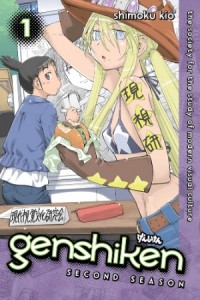
Kodansha gives us the first Genshiken omnibus, collecting three volumes of this otaku-loving series. I always tended to read it for Saki, but there’s something for everyone here. Unlike Negima, this does not feature any new translation, possibly as the old version was perfectly fine. We also get Vol. 34 of Negima, which I’ve already reviewed, possibly as it’s hitting Diamond a full month late. And we have Vol. 28 of The Wallflower, which I always enjoy, mostly as I expect laughs and nothing else. This volume apparently featured the obligatory Edo Period AU!

Aaaaaand that’s it. Thoughts?

Filed Under: FEATURES

Bringing the Drama: Rooftop Prince

May 22, 2012 by Anna N, Emily Snodgrass and Eva Volin 1 Comment

Rooftop Prince is available for streaming on Hulu, Viki, and Dramafever.

ANNA: I just finished watching the first episode of Rooftop Prince and I’m not quite sure what to make of it. There were so many elements that were all over the place, it is difficult to summarize!

The Rooftop Prince, His Retainers, and Their Tracksuits

There are two parallel stories set hundreds of years apart, cast with the same actors. Is everybody time traveling, or are we looking at some odd cases of reincarnation?

In the present day, Se Na reacts badly when her mother remarries, providing her with a new sister, Park Ha. Se Na torments her little sister, and eventually causes her to become lost. Park Ha grows up in the United States with no memory of her previous family. She finds out that her father was looking for her and travels back to Korea in time to attend his funeral. She’s reunited with her stepmother and evil older stepsister.

The two sisters also exist in the past, with the older one about to be passed over as a candidate for crown princess in favor of the younger one. A horrible accident (or was it?) results in the younger sister being scarred. The older sister becomes crown princess. The crown prince Lee Gak is extremely charming and light-hearted, but when he wakes up to find that his princess has drowned in the middle of the night, he becomes overcome with grief. Determined to find out the truth behind his wife’s death, he puts together an investigative supergroup consisting of a scholar, warrior, and a fabulously fashionable eunuch.

In the present, a rich young man named Tae Yong who closely resembles the crown prince notices Park Ha, but he doesn’t ask her out. He’s betrayed by his cousin and drowns. Two years later, the crown prince and his retainers show up in Park Ha’s apartment. I think I’ve covered everything! What were your thoughts on the first episode?

EVA:
You guys promised me a comedy! What the heck, man. The older sister isn’t funny, she’s evil! Awesomely evil, true, but still. Not a comedy!

In all seriousness, though, episode one is full of all the reasons why I usually give a series three chances before committing myself. It is clunky, disjointed, and not at all funny. Because the two storylines, one taking place in the Joseon era and the other in modern day, jump back and forth with no explanation, it’s hard to know if we’re dealing with a case of reincarnation or of doppelgangers. All I know for sure is, if it hadn’t been for the last scene where the prince and his retainers appear in the rooftop apartment after being sucked through a lunar eclipse after fleeing from Korean ninjas (that’s right, Korean ninjas), I’d have thought this show was going to be a straight up mystery.

The Rooftop Prince Scooby Gang

ANNA: I agree that the first episode was a bit confusing. I had no idea what to make of the doppelgangers, and the storylines seemed to tilt towards the tragic with all the bullying and death going on. The sudden switch of tone towards the end of the first episode where the prince forms his supergroup of retainers made me hope for much better things for the second episode, and I found myself liking it much better.

EMILY: Episode 1 was a lot more serious than the plot description I’d originally read of the series, but it is obvious that the whole episode is intended as set up for the hijinks to ensue later. The episode bounces back and forth between the story of a Joseon King, his beautiful Crown Princess, her scarred sister, and the story of modern reincarnations of the same people. Or are they reincarnations? There are a lot of questions and mysteries set up in the first episode. There are also two murder mysteries being set up. One in the past and one in the present. But they both have interesting twists. In the past, we aren’t entirely certain who the victim is, though it’s pretty much assumed to be the Crown Princess. Also, we don’t know who the killer is, though one piece of evidence points to an unlikely suspect. As for the accidental murder in the present, we know who the culprit is, but we aren’t entirely sure the victim is dead and not doing some sort of time-travel thing instead. You never know.

I enjoyed the first episode, and didn’t have any problems following the intertwined plots. I think Micky Yoochun is doing a great job in his role of the time-jumping King. His acting is a lot more animated than I’ve seen it in past dramas, and he sounds very funny with his historical accent (er, not that I’m one to judge Korean accents). I also must say, Micky looks fantastic in historical garb. He should stick to historical dramas forever and ever. Or at least, always wear that hat. I can see it now—Micky in some drama playing a lawyer, but wearing the historical hat. It would be awesome, I tell you.

Episode 1 ends right when things start to get funny, as our Joseon King and his sidekicks end up in a modern rooftop apartment. OF COURSE they land in a rooftop apartment. Given how often they appear in kdramas, the odds were fairly evenly split between them landing in a rooftop apartment, or a plush penthouse suite in a hotel. For comedic value, they obviously go for the rooftop.

Episode 2 promises to be very silly :)

Is it an elevator or a changing room? The modern world is so confusing!

ANNA: What did people think of episode 2? I liked the way it focused on the main thing I enjoyed in the first episode, the Joseon King and his merry band of sidekicks. Putting them in different colored tracksuits for modern dress was inspired, and there were so many funny moments when they were trying to learn how to survive in the modern world.

EVA: Well, I both enjoyed it and didn’t enjoy it. I loved the track suits and hated the slapstick. (I have a very low tolerance for slapstick.) I loved the hate/hate relationship that forms between Lee Gak and Park Ha, but hated how long it took Lee Gak to figure out that he has traveled through time. And, man, is Park Ha’s sister evil. Eeeeeeevil.

Here’s the thing: I know it sounds like I’m doing nothing but whine and complain about this show, but I’m actually enjoying it. I just wish I didn’t have to put my brain on hold to do so. Sure, this is a comedy and most situations are going to be played for laughs. But my ability to suspend disbelief is being sorely tested. As the series progresses through the first four episodes, Lee Gak is way too slow on the uptake. I’ll grant that it takes him a while to figure out the whole time travel/doppelganger thing, but don’t you think that once he understands that there is a guy in this world who looks just like him he’d be able to open his mind wide enough to embrace the possibility that there might also be a person in this world who looks just like the princess? Considering how quickly he grasped the concept of television, this shouldn’t have been such a stretch.

The other thing that’s bugging me are the merry henchmen. In episode one they were described to be intelligent, crafty free-thinkers. Sure, okay, they’re loyal to their king, but once they realized a) there isn’t a king in modern day Korea, b) their constant kowtowing draws a lot of unwanted attention, and c) that their best chance of returning to their time depends on the kindness of strangers, that they’d start trying to fit in? While I love the comedic aspects of the merry henchmen, I do wish they’d start living up to their potential.

A trunk full of adorable merry henchmen

ANNA: Overall, I’m enjoying this drama although it seems to reel me in gradually. I think that anyone considering watching it has to view at least the first two episodes because they are so different in tone. I didn’t feel truly hooked on this series until the very end of episode 4, where we see the dramatic tension of the show ratcheted way up as the whole reincarnation storyline that was introduced in the first series was finally addressed.

I liked the storyline with Park Ha’s business and the henchmen being willing to help out so much. I’m wondering what sort of outfits they will have to wear next, since they’ve already been in tracksuits and furry mascot costumes. After 4 episodes, Micky Yoochun’s performance is really starting to grow on me, and I can see why Emily is such a fan. The time-traveling prince is a tough role to pull off, and it looks like there will be plenty of challenging scenes ahead after the end of episode 4. While I’ve enjoyed this series, I think it took 4 episodes for me to become enthusiastic about it. I watched the first 4 episodes gradually over time, but with the twist scene at the end of 4 (even though it was a bit predictable), I can definitely see myself marathoning the next few episodes as soon as I get time to watch more.

EMILY: I’m having a hard time containing my thoughts to episodes 1-4 because I have gone ahead and watched all the episodes that are out now and am current :) I’m enjoying the show very much. It seems to have several mini story arcs. It begins serious, and then shifts to ridiculous for several episodes, as our spoiled prince and his color-coded Joseon Power Rangers adjust themselves to our times. This is played up for maximum silliness, as the writers find not just the major things (cars, elevators, etc) to baffle our time-travelers with, but also a lot of small details of modern life that we take for granted. From putting out a fire by spitting toilet water, to the deliciousness of omelet rice, to the fabulous black card that will let the prince buy anything (oh, the power of chaebol credit limits) there is a lot to get used to in our time. But once the hilarity ends, things start to take a more serious turn as the murder mystery heats up, the Prince finds his Princess, the villains step up their scheming, and romance begins to bloom. Through all of it, I like the chemistry between Park Ha and the Prince, the antics of the Power Rangers are endearing (poor lovelorn blue ranger), and I don’t even mind the obligatory kdrama Birth Secret that pops up. I will say that the villains in this series are in the running for worst villains ever. She, because of her skill at lying and ability to make me want to poke her eyes out, and him because of his total ineptitude. I don’t think he could manage to kill anyone even if he aimed and shot a gun directly at their heart.

I really look forward to how this drama will play out.

The Rooftop Prince wears a Texas Tuxedo

ANNA: I think you’re right about the series functioning in mini story arcs, as I can see a new arc developing at the end of episode 4 and start of episode 5. In some ways I like that structure because having the story presented in 3-4 episode bursts makes it easy to stop and start the series if you don’t have the time to watch the whole thing at once. I think I will be watching the entire series, even though I’m not going to be able to get through it as quickly as Emily.

EVA: I am glad you two have enjoyed what you’ve seen of the show so far, but the more I think about it, the more sure I become that I don’t need to see the rest of the episodes. Yeah, Mickey’s character begins to grow and the plot begins to thicken, but all the silliness has pulled me out of the story enough times that I don’t think I want to dive back in.

ANNA: So Rooftop Prince is a good show if you enjoy your kdramas with family angst mixed with slapstick, but not so great if you find yourself with a low tolerance for silly men dressed in tracksuits. Have you watched this show yet? What did you think?

Filed Under: Bringing the Drama Tagged With: rooftop prince

Oishinbo A La Carte, Vol. 2 (Sake)

May 22, 2012 by Sean Gaffney

By Tetsu Kariya and Akira Hanasaki. Released in Japan by Shogakukan, serialization ongoing in the magazine Big Comic Spirits. Released in North America by Viz.

It’s time for the Oishinbo Manga Moveable Feast, and though I had already reviewed the final volume a long time ago (see sidebar), I thought that I would take this time to revisit another volume, one which got a lot of buzz when it first came out over here. That would be the one devoted to sake, Japan’s national alcoholic beverage. And so we get several chapters, including one long multipart epic, devoted to what makes good sake – and why so much of it these days is bad.

Given that Oishinbo is about singing the praises of Japanese food, it’s not particularly surprising that much of it involves praise for Japan in general. One chapter here involves a businessman who has been ‘Westernized’ and has to be reminded of the joys of good old Japanese cooking and liquor. That said, it’s rather startling how much of this volume is just ripping into Japan’s sake trade over and over again. I’ve no idea if things are the same these days (these chapters were written 15-25 years ago), but much is made over the fact that popular sake in Japan tends to be watered down in order to increase profit, and have additives such as charcoal and MSG. It can get fairly depressing.

That said, of course, you knock them down in order to build them up. We also get much praise of the good old-fashioned small-time sake brewer, still using pure ingredients with no additives and storing it properly to bring out the best flavor. There’s actually a lot of comparison with French wine, in a way that reminded me of The Drops of God – it’s noted that France would never treat its wine the way Japan does its sake.

In these Viz compilations, characterization usually falls by the wayside – the danger of working with a 108+ volume series – but we still get a good sense of the main players, which is important for a series like this. You have to sympathize with Yamaoka and Yuka, and care about their lives, as otherwise you’re left with nothing but a manga that lectures you. (Which, admittedly, it can sometimes be anyway.) Yamaoka shows off his cleverness in the final chapter, which reminds us that sake is still an alcohol, and that there are some people who abuse that. And Yuka really shines in the multi-part story, managing to sweet-talk Yamaoka’s father, Yuzan (this is actually a running thing in the series, and Yuka is very, very good at it – note Yuzan’s retainers giggling). There’s no romance here, but if you want that go lean Japanese and then buy the original Vol. 47, which has the wedding.

At the end of the day, though, the way to judge Oishinbo is by its ability to make you want to search out more. After this volume, I wanted some sake – just as I wanted to visit an Izakaya after the final Viz volume. Oishinbo may be about a battle between father and son, or a growing romance between colleagues, but that’s just the spice. The real meat of the manga is its love of food and its burning passion for it being cooked and served properly. And it’s something yoou can’t really get in North American Comics, either, though I’d love Batman’s recipe for crumble apple pie.

Filed Under: REVIEWS

Bookshelf Briefs 5/21/12

May 21, 2012 by Sean Gaffney, Katherine Dacey, MJ and Michelle Smith 4 Comments

This week, Sean, Kate, MJ, and Michelle look at recent releases from Yen Press, VIZ Media, Digital Manga Publishing, and Kodansha Comics.


Ai Ore!, Vol. 5 | By Mayu Shinjo | VIZ Media – I have completely given up on these characters – especially Mizuki – growing or learning from any of their experiences. And honestly, doing that makes it much easier to get into the groove of this melodramatic, silly manga. From Akira’s desperately trying to be taken seriously as a guy while wearing a kitty hoodie, to Mizuki’s over-the-top “MY WORLD IS ENDING!” reaction to her first fight with Akira, the situations here are made for amusement. Sure, there’s some soap opera dramatics – the fight I mentioned earlier – but even the serious backstory for Akira, where he reveals that his tutor once brought in an older woman to “make a man of him” – is played with its tongue in cheek. The ending seems to hint we may be seeing the return of “Dark Akira”, though – let’s hope he’s merely firm and seductive, and not the callous ass he was at the start. Fun stuff. –Sean Gaffney

Arata: The Legend, Vol. 10 | By Yuu Watase | VIZ Media – The latest installment of Arata: The Legend features body-swapping hijinks. Usually these kind of comic interludes are a sign that the artist is marking time between big fight scenes, but Yuu Watase uses this time-honored trick to advance the plot in a meaningful fashion, allowing Hinohara to infiltrate Yataka’s stronghold. The body-swapping gimmick also provides the characters an opportunity to reflect on their feelings for one another, giving us greater insight into Hinohara and Mikusa’s personalities. The only drawback to the out-of-character behavior is that it grants Watase license for fan service — something that the series doesn’t need to be funny or sexy. That minor gripe aside, Arata remains engrossing, finding the perfect middle ground between shojo angst and shonen action. Recommended. -Katherine Dacey

Hana-Kimi, Vols. 4-6 Omnibus | By Hisaya Nakajo | VIZ Media – A lot of this second omnibus deals with the class culture festival, where most of Mizuki’s class is dressing up in drag. This gives her an excuse to wear a dress most of the time, even if it’s as Alice in Wonderland. After a strong start, the author seems to have realized that the series will be a long one, so the actual romance between Mizuki and Sano isn’t moved forward as much. Instead, Nakatsu gets the focus, as he struggles with his repressed feelings for a “guy”. He’s mostly comedic, but I liked how he handled telling the girl who likes him that he was breaking it off – he’s a sweetie pie that sadly is doomed in a series like this. The addition of a female friend – as well as a new rival – for Mizuki is also welcome, and I look forward to the third and presumably last teaser omnibus. –Sean Gaffney

Itazura Na Kiss, Vol. 8 | By Kaoru Tada | Published by Digital Manga Publishing – There are times when Itazura Na Kiss is so frustrating, one wants to hurl it against the wall. Usually this is because the protagonist, Kotoko, is almost aggressively incompetent. In this latest volume, she has decided that what she wants to do is become a nurse and help Naoki with his medical practice, so she enrolls in nursing school with practically no idea what this will entail. Naoki is cutting in his criticism, as usual, but what’s interesting is that one of Kotoko’s classmates objects to how Naoki treats his wife and eventually presents himself as an alternative. Naoki, faced with jealous feelings for the first time, is thrown for a loop and it’s what he does to win Kotoko back that makes up for every bit of irritation caused by other elements of the series. Still recommended, despite its flaws! – Michelle Smith

Pandora Hearts, Vol. 10 | By Jun Mochizuki | Yen Press – While the series’ last few volumes have posed many more questions than they have answered, things finally come to a head here in volume ten. This volume is chock full of revelations, particularly regarding Gil and Vincent Nightray, and the atmosphere is tense in exactly the way that shows off Jun Mochizuki’s fast-paced storytelling style to its best advantage. Though crystal-clear plotting has never been Mochizuki’s strong point, clarity in the moment is, which is what makes a volume like this work so well. Panel-to-panel, she maps out these characters’ emotional truths so clearly that the text becomes nearly irrelevant to our understanding of their plights. That said, some of Mochizuki’s dialogue is so delightful (Xerxes Break owns my soul), it would be a tragedy to do without it. Still recommended. – MJ

Psyren, Vol. 4 | By Toshiaki Iwashiro | VIZ Media – I’m starting to enjoy this the more I get into it. The lead is likeable and talented while retaining that ‘everyman’ spirit, the cast isn’t too overpowered yet, and of course hard work is emphasized, as in the best Jump works. The introduction of the Elmore Wood kids is well-handled – they act like typical kids, ranging from bratty to shy to stoic. They help Ageha to figure out how to control his powers (well, we presume – we haven’t seen it in action just yet) by virtue of a simpler mindset and learning at a younger age. And, as a cliffhanger shows, they may be mankind’s last, best hope. Of course, they may all be killed at the start of the next volume, too. The only downside here is Kabuto, who lacks enough likeable traits to make a good comic relief character – you want him to fail. Otherwise, very good stuff. –Sean Gaffney

Sayonara, Zetsubou-Sensei, Vol. 12 | By Koji Kumeta | Kodansha Comics – “We’ll have to start a new campaign with easier content so that even first-timers can understand Zetsubou-Sensei,” declares suicidal teacher Itoshiki Nozumu in the first pages of volume 12. What follows is a sharp, funny deconstruction of a common manga practice: the catch-up chapter. I wish the rest of the jokes in volume 12 were as accessible to a Western reader as “The First-Timer Condition,” but the intricate wordplay and cultural allusions often sailed over my head. (Word to the translator: I know what Comiket is! More explanation of the yakuza jokes and economic references, please!) Zetsubou-Sensei ought to be in my wheelhouse — there was a Stendahl joke in chapter 112, for Pete’s sake! — but requires too much explanation to elicit more than an appreciative, “Oh, I get it. Very clever.” -Katherine Dacey

Filed Under: Bookshelf Briefs Tagged With: Ai Ore!, arata: the legend, hana-kimi, itazura na kiss, pandora hearts, psyren, sayonara zetsubou-sensei

Until Death Do Us Part, Vol. 1

May 19, 2012 by Katherine Dacey

Until Death Do Us Part is a slickly packaged compendium of action movie tropes that reads like a story. That’s not to say it’s bad — it isn’t — but to warn you that you may experience a powerful sense of deja-vu as you thumb through its numerous shoot-outs, explosions, and speeches about terrorism.

The opening pages plunge us directly into the action: a solemn pre-teen girl leaps from a speeding car, accosts a blind man, and begs him to help her, promising him jewels and money in return for his assistance. That man, Mamorou, proves surprisingly adept at dispatching bad guys; he’s a modern-day Zaitoichi, using a pair of special goggles and a fine-edged sword to disarm Haruka’s captors, a group of thugs in the employ of the Ex Solid Corporation. (Which begs the question: how does such an ill-named company stay in business? But I digress.) Haruka’s ability to pick Mamorou from a crowd of thousands is no accident; like the pre-cogs in Minority Report, she has an uncanny ability to predict the future. For several years, she used that power to enrich her family — mostly by playing scratch tickets — but now she finds herself running from several powerful organizations, each of whom sees her precognition as a tool for advancing their own interests.

Whether Until Death‘s similarities to The Professional, Mission: Impossible, Minority Report, and the entire oeuvre of Jason Statham are intentional is difficult to say; some of the plots skirt the line between theft and homage. Mamorou’s fellow crime fighters, in particular, seem like IMF recruits, as they’re armed to the teeth with the latest spy technology and weaponry — an incredible feat for an off-the-the-grid vigilante organization with no ties to the government or the mob. (Just in case we don’t fully appreciate how awesome this weaponry is, there are several scientists on hand to explain in excruciating detail how they work.) The sheer abundance of borrowed characters and story lines, however, work in Death‘s favor, with no single borrowing overpowering the resulting fusion of sensibilities.

Like many action manga, the artwork tacks between static scenes of talking heads — usually imparting some key points of information about a bad guy’s history, or describing a hypothetical technology — and kinetic scenes of bone-crunching violence. Though the fights aren’t as inventively staged as a John Woo shoot-out, DOUBLE-S wins points for carefully delineating the space in which the gun battles unfold; the reader is conscious of how walls, objects, and sight lines influence the outcome of those battles. DOUBLE-S is overly enamored of slo-mo bullets — a visual gimmick so overused in the last fifteen years it’s become a parodic gesture — but he uses it to good effect, demonstrating how swiftly Mamorou moves, and how precisely his blade slices through solid objects:

Mamorou slices bullets with his scientifically modified katana.

DOUBLE-S has several other nifty tricks up his sleeve as well. In one of the manga’s recurring visual gambits, DOUBLE-S shows us how Mamorou perceives his environment through his special goggles:

A Tokyo street as viewed through Mamorou’s goggles.

Though the characters are recognizable in their computer-enhanced form, they have a spectral quality to them; if anything, they resemble echoes or after-images, rather than corporeal entities. The artist’s quick cuts between Mamorou’s perspective and ours neatly underscores how much Mamorou must rely on his other senses to give these incomplete forms flesh and blood: how else could he be so devastating, given the limitations of his goggles?

Perhaps the best compliment I could give Death‘s creators is to note the skill with which it recycles familiar action-movie conventions. We’ve seen Death‘s characters and plots and scientifically implausible weapons in other stories, but Hiroshi Takashige and DOUBLE-S stitch them together in such a fashion that the seamwork is almost invisible. The resulting manga isn’t original, exactly, but it has enough style and integrity to engage the reader’s interest, making it an agreeable beach or airplane companion.

Review copy provided by Yen Press.

UNTIL DEATH DO US PART, VOL. 1 • STORY BY HIROSHI TAKASHIGE, ART BY DOUBLE-S • YEN PRESS • 448 pp. • RATING: OLDER TEEN (16+)

Filed Under: Manga, Manga Critic, REVIEWS Tagged With: yen press

One Piece, Vol. 62

May 18, 2012 by Sean Gaffney

By Eiichiro Oda. Released in Japan by Shueisha, serialization ongoing in the magazine Weekly Shonen Jump. Released in North America by Viz.

Now that the gang is back together, we are off to Fishman Island. No, really! Really and truly, they do finally arrive at Fishman Island this time. Which sort of ends up being a mixed blessing, I will admit. I’m afraid that Fishman Island’s arc is similar to Skypeia and Thriller Bark – you like it more on a re-read, but at the time, it just annoyed you. Still, being annoyed by One Piece is still superior to being entertained by other, lesser shonen series.

Of course, first we have to get to the island, which is not as easy as it sounds. This is the better half of this volume, with each of the crew showing off why they’re awesome – everyone gets to fight (except Nami, whose navigation skills are what’s awesome here), we get another dumb goofy villain who actually seems to have more staying power than we expect, and Luffy tames a kraken. Of course he does.

Unfortunately, it turns out that Fishman Island is not quite as welcoming as you would have expected given our adventures with Cammie and Hachi. It turns out that the island was under protection by Whitebeard, and with him gone, power balances are quickly shifting. Another of the Four Emperors – Big Mom – is supposedly protecting them now, but this seems more like mafia protection than anything else. What’s more, the issues of prejudice – on both sides – that we’ve seen before in the Arlong and Sabaody arcs are still around, and there’s some particular nastiness when it becomes very hard to find a blood donor for Sanji, who is dying due to idiocy.

No, I won’t ever stop complaining about this. I will give Oda credit – when he decided to overuse a dumb idea, he really goes all out – but I still hate Sanji’s complete incompetence around women, even if you do acknowledge that he was on the okama island for two years. We see everyone else’s flaws here as well – including Nami’s lust for money, which hadn’t come up in a while – but it’s just harder to take with Sanji nosebleeding all over the place. Even if he is surrounded by gorgeous mermaids.

Having arrived at Fishman Island, our heroes are escorted to King Neptune and his beautiful daughter, but there’s already a conspiracy against them, as the local fortune teller has said Luffy will bring ruin to Fishman Island. Sounds like one of those self-fulfilling prophecies to me, honestly. A bigger problem is that we’re simply introduced to too many characters too fast here – there’s at least 20 new characters, each with boxes giving names and what time of Fishman they are – and there’s simply no way to know at this point who we have to be paying attention to. Well, except for Hody Jones, who appears to be the villain of the arc so far.

On a side note, the last cover page shows Makino with a baby?!?! Oh Oda, why you gotta destroy the Shanks/Makino shipper dreams? :)

There’s lots of cool action here, and some fun goofy humor. I also like that Oda is not forgetting about Nami’s past – there’s a great shot of her shuddering when she sees one pirate has an Arlong tattoo. But the arc is a bit too new to see where the plot is going, and thus this whole volume ends up being a bit more confusing than I think it really deserved to be. Hopefully next time we’ll see Jimbei and things will begin to get knit together.

Filed Under: REVIEWS

Off the Shelf: Ode to Lionel Richie

May 17, 2012 by MJ and Michelle Smith 5 Comments

MJ: Hello, hello!

MICHELLE: Is it me you’re looking for?

MJ: Heh. Yes. Though now I’m a little embarrassed about it.

MICHELLE: I had the sheet music to “Say You, Say Me,” if that makes you feel any better.

MJ: It does, it does. So. What have you been reading this week?

MICHELLE: Well, as promised, I undertook a marathon read of We Were There in order to finally get current with the series (now up to volume 14 in English). I must admit that I’m still kind of gathering my thoughts from the experience. But the thing that sticks in my head from when you talked about this volume last week is “That’s how you write a shoujo manga!” and I find that I couldn’t agree more.

There were several twists along the way that I totally didn’t expect, and I shan’t spoil them here, but I will say that I kind of love where the characters are at the moment, even though it’s pretty heartbreaking for some of them. I feel like mangaka Yuki Obata does an especially good job making readers understand exactly why Yano has the living situation he does without coming right out and saying, “it’s atonement.” I must also sing her praises in regards the “show, don’t tell” method of storytelling—in the volumes leading up to this one, we’d seen Yano referred to as kind but cold, and to see him so visibly, demonstrably moved in this volume shows how deeply he still loves Takahashi.

If I had any complaint at all, it would be that I could write multiple paragraphs about Yano, a couple of paragraphs about steadfast Takeuchi, and perhaps a sentence or two about Takahashi, the heroine. It’s not that she’s a flat character, exactly, but she is somewhat of an angelic figure, the only one who can heal Yano’s hurt. It struck me today that we see far more of a supporting character’s family than we ever see of hers!

Ultimately, I cannot stress enough how much I enjoyed catching up with this series, and how much I look forward to the final two volumes.

MJ: I feel like I could really write a lot about Takahashi, but maybe it’s just because I identified with her so strongly early on in the story. I suppose I feel like I *know* her in some way, despite the fact that she’s not as obviously fleshed-out. I could write a book about Takeuchi, though, mostly because I feel so freaking SORRY FOR HIM. Poor Takeuchi.

Seriously, though, this is a great shoujo manga.

MICHELLE: I definitely identify with her on some levels, to be sure. And man, Takeuchi. There are some especially painful moments for him in volume 14, too. I keep hoping he’ll get together with Sengenji in the end, but that’s a little bit Marmalade Boy.

Anyways, what have you been reading this week?

MJ: Well, first I read volume one of Shuzo Oshimi’s The Flowers of Evil, a new shounen series from Vertical. With the back cover tagline, “Aren’t you a perv too?” I wasn’t sure this would be a good fit for me, but I actually liked it quite a bit.

Kasuga is a bookish middle schooler who buries himself in Baudelaire poetry while admiring his pretty classmate, Saeki, from afar. One day after school, he finds himself alone in his classroom, along with Saeki’s gym bag, and impulsively steals her gym clothes to take home with him. He regrets this action pretty much right away, but by the time he has an opportunity to try to put the clothes back, the whole class is buzzing about a clothes-stealing pervert. Worse still, the class outcast, a foul-mouthed girl named Nakamura, saw him steal the clothes, and is using the information to blackmail him into hanging out with her.

Nakamura is obsessed with Kasuga’s bad deed, and with the idea of seeing Kasuga act out his fantasies (or what she imagines to be his fantasies) with the clothes, and she’s enough of a bully to get under his skin with it all, especially after Kasuga actually scores a date with his dream girl. This aspect of the story gives it a fetish-y feel, similar to something like Sundome, though the vibe is a bit different than that series, since the girl who’s controlling the hero isn’t the object of his sexual fantasies (at least not yet). If anything, it seems like she’s drawn to him mostly because she’s relieved to find out that she’s not the only person in her class having “perverted” thoughts, which is sort of heartwarming in an odd way.

What really makes this story work for me, is that both Kasuga and Nakamura are sympathetic characters, whose personal failures and perversions really ring true for their age. It’s hard not to relate to the boy who is aware that his obsession with foreign poetry is based in a kind of desperate pretension, but can’t stop himself from embracing that anyway, or the unpopular girl who is so grateful to find that she’s not all alone with her sexual fantasies, and can’t quite keep herself from wanting to know more, even if she has to be a bully to get it.

It may be too early to say this, but while I never would have recommended Sundome to *you*, Michelle, I think I actually might recommend The Flowers of Evil. And I certainly recommend it to everyone else.

MICHELLE: Yeah, I just don’t know. I’m a little intrigued and a little hesitant. I may just have to bolster my courage and give it a go.

MJ: I can at least reassure you that the first volume is very tame, sexually, so testing the waters should be relatively risk-free.

So what else have you got for us this week?

MICHELLE: To give a little bit of contrast to We Were There, I opted for another shoujo love story now in its fourteenth volume, Karuho Shiina’s Kimi ni Todoke: From Me to You.

Despite a few superficial similarities—the protagonists live in Hokkaido, there’s a girl named Takahashi and a somewhat inscrutable character named Yano…—the depiction of first love in these series could not be more different, with the sweetness of Kimi ni Todoke offering a bit of brain balm after the more-or-less realistic drama of We Were There.

The premise of the series is that Sawako Kuronuma has always unintentionally scared her classmates with her spooky behavior and resemblance to a horror movie character, but has now finally made a couple of good friends and found love with the popular Shota Kazehaya. The fourteenth volume finds the main characters on a school trip to Okinawa, and while Sawako and Kazehaya come reeeeeeally close to sharing their first kiss, and it’s all very adorable, the really emotional moments belong to her two friends.

Most of the time, tomboyish Chizu is rather ditzy, but when she realizes that her childhood friend, Ryu, likes someone and hasn’t told her who it is, it really bothers her. She is genuinely shocked to learn that she is the object of his affections, but the volume ends before she can really begin to process the information. Even more affecting is Ayane Yano’s failed attempt to fall in love—seeing her two friends confess their love in recent volumes (Chizu has long had a thing for Ryu’s brother) made this mature and rather private girl yearn to experience love, and when a boy in another class asked her out, she said yes, thinking she might be swept away on the tide of his feelings for her. Alas, things don’t go as planned, and she ends the volume in tears.

I love that a character as complex as Ayane exists in the realm of shoujo manga, usually populated by girls who don’t think much before they speak, and find myself rooting for her happiness even more strongly than I do for the main characters, now that they seem to be on the path to happily ever after. I wonder if Yuki Obata and Karuho Shiina are in secret communication and Ayane is, like, Motoharu’s long-lost cousin or something.

MJ: I’m a few volumes behind in this series, but I love the fact that its cheerful sweetness manages to feel just as rich and emotionally true as the delicate melancholy of We Were There—thanks largely to the awesomeness of Chizu and Ayane. I’m a real sucker for female friendship in manga, and these two are the greatest example of that since Fruits Basket‘s Uotani and Hanajima. I’m so glad to hear there’s so much of them in volume fourteen.

MICHELLE: I am sure that Chizu and Ayane would totally be friends with Uotani and Hanajima. Not only that, the four of them would look on proudly as Tohru and Sawako tentatively became friends.

What else did you read this week?

MJ: This week, I also read volume one of Kyudo Boys, a series of short shoujo manga by Keiko Nishi, available from JManga. I say “shoujo,” because the stories are school-based, and it ran in Wings, but for the record, JManga classifies it as josei.

The stories all revolve around the members of a high school archery club—both male and female members. Some of the stories are romantic, like one about a boy who can’t decide whether he has a crush on a new girl or her twin brother, or a later story (one of my personal favorites) about an archery nerd who discovers that it’s his very nerdishness that makes him attractive to a pretty team member. I should note, however, that not all the stories are romances, and even the ones that are, are more concerned with exploring the idiosyncrasies of their subjects than reaching any kind of romantic conclusion. I love romance—we all know that—but even I have to admit that it’s refreshing to read a shoujo manga in a school setting that isn’t playing by those rules.

Short stories have never been my favorite format for manga, but these make the best of their brevity, by focusing on small moments and embracing an open-ended feel. Nishi never gets too ambitious. She doesn’t rush. She presents us with a few deft snapshots that let us feel like we’ve really gotten to know and love these students, without ever giving us too much to handle, story-to-story. Her artwork is charming, and relatively sparse, with a light touch that matches the breezy tone of the book overall.

Though it may seem like I don’t have a lot to say about this manga, the truth is, it’s simply charming. It’s a very satisfying light read, and I’d recommend it without question.

MICHELLE: I’ve definitely had Kyudo Boys on my radar as a candidate for a future Going Digital column. That’s largely because Keiko Nishi was responsible for some of the first josei to hit American shores. Like you, I’m not particularly into short stories, but I am definitely, definitely down with idiosyncratic romance!

MJ: Unlike Flowers of Evil, I can *wholeheartedly* recommend this series to you. It’s absolutely your kind of manga.

MICHELLE: That’s good to know!

Filed Under: OFF THE SHELF

  • « Go to Previous Page
  • Page 1
  • Interim pages omitted …
  • Page 409
  • Page 410
  • Page 411
  • Page 412
  • Page 413
  • Interim pages omitted …
  • Page 538
  • Go to Next Page »
 | Log in
Copyright © 2010 Manga Bookshelf | Powered by WordPress & the Genesis Framework