• Skip to primary navigation
  • Skip to main content
  • Skip to primary sidebar
  • Home
  • About Us
    • Privacy Policy
    • Comment Policy
    • Disclosures & Disclaimers
  • Resources
    • Links, Essays & Articles
    • Fandomology!
    • CLAMP Directory
    • BlogRoll
  • Features & Columns
    • 3 Things Thursday
    • Adventures in the Key of Shoujo
    • Bit & Blips (game reviews)
    • BL BOOKRACK
    • Bookshelf Briefs
    • Bringing the Drama
    • Comic Conversion
    • Fanservice Friday
    • Going Digital
    • It Came From the Sinosphere
    • License This!
    • Magazine no Mori
    • My Week in Manga
    • OFF THE SHELF
    • Not By Manga Alone
    • PICK OF THE WEEK
    • Subtitles & Sensibility
    • Weekly Shonen Jump Recaps
  • Manga Moveable Feast
    • MMF Full Archive
    • Yun Kouga
    • CLAMP
    • Shojo Beat
    • Osamu Tezuka
    • Sailor Moon
    • Fruits Basket
    • Takehiko Inoue
    • Wild Adapter
    • One Piece
    • After School Nightmare
    • Karakuri Odette
    • Paradise Kiss
    • The Color Trilogy
    • To Terra…
    • Sexy Voice & Robo
  • Browse by Author
    • Sean Gaffney
    • Anna Neatrour
    • Michelle Smith
    • Katherine Dacey
    • MJ
    • Brigid Alverson
    • Travis Anderson
    • Phillip Anthony
    • Derek Bown
    • Jaci Dahlvang
    • Angela Eastman
    • Erica Friedman
    • Sara K.
    • Megan Purdy
    • Emily Snodgrass
    • Nancy Thistlethwaite
    • Eva Volin
    • David Welsh
  • MB Blogs
    • A Case Suitable For Treatment
    • Experiments in Manga
    • MangaBlog
    • The Manga Critic
    • Manga Report
    • Soliloquy in Blue
    • Manga Curmudgeon (archive)

Manga Bookshelf

Discussion, Resources, Roundtables, & Reviews

Features & Reviews

Utsubora: The Story of a Novelist

January 30, 2015 by Ash Brown

Utsubora: The Story of a NovelistCreator: Asumiko Nakamura
U.S. publisher: Vertical
ISBN: 9781935654766
Released: June 2013
Original release: 2010-2012

Although several of Asumiko Nakamura’s manga have been licensed for digital release, Utsubora: The Story of a Novelist is currently her only work that has been translated into English and made available in print. I truly hope it isn’t the last to be seen from her; although I was already familiar with Nakamura’s distinctive art style, Utsubora was my introduction to her manga and I loved it, and with each rereading love it even more. With the arrival of the Female Goth Mangaka Carnival, I was inspired to take another, deeper look at the manga. In Japan, Utsubora was a short, two-volume series published between 2010 and 2012. The English-language edition of the manga was released in 2014 by Vertical and collects the entire series in a single volume. Due to its mature themes and its erotic content, Utsubora is one of Vertical’s relatively few manga specifically intended for an audience of adults who are at least eighteen years of age.

Although Shun Mizorogi is still considered to be a successful and respected author, it has been quite some time since he has written anything of note. As a result, he has become withdrawn and is tormented by his lack of ability. Finally, his most recent work Utsubora shows great promise. A return to his roots as an author, Mizorogi has given his fans and critics what they have been waiting for. But when a young woman plummets from the top of a building to her death, the apparent suicide somehow connect to Mizorogi, the authorship of Utsubora begins to be called into question. Both Mizorogi’s close friend and fellow author Yatabe and his newly appointed editor Tsuji suspect something. Even Mizorogi’s niece Koyomi, who lives with and adores him, is able to recognize that her uncle has been behaving out of the ordinary. Utsubora and a young woman named Sakura Miki are the only remaining connections Mizorogi has to the death of Aki Fujino, and they are consuming him.

Utsubora is a dark and twisting tale. Nakamura’s distinctive artwork is exceptionally effective in adding to the manga’s moody, erotically charged, and slightly disconcerting atmosphere. The lines of her illustrations are very thin, creating at the same time a sense of sharpness and focus as well as a feeling of softness as they cut and curve across the page. Nakamura’s art in Utsubora is undeniably sensual and arresting. The eyes of her characters are particularly expressive and draw attention to themselves. The artwork of Utsubora, much like the manga’s story, can simultaneously be vaguely ominous and oddly beautiful. It’s really quite stunning and Nakamura is incredibly skilled. Through her artwork and through the body language of her characters, she is able to convey their uncertainties and their desires, their inner turmoil as well as their outward actions. Overall, Utsubora is an intense and even compelling work.

The plot of Utsubora is complex, the relationships and connections between the characters forming a tangled knot that is drawn tighter and tighter. The manga can be confusing and there is quite a bit of ambiguity that is never completely resolved. The only person who really understands everything that is going on is Sakura, and she is deliberately manipulating the situation, mixing together both truths and lies in order to influence those around her. She can’t control everything, though, and some matters in Utsubora are only tangentially related to what she is trying to accomplish. Although sometimes obscured by layers formed by the other characters’ personal struggles and pasts, the core of Utsubora is the despair surrounding Aki, Sakura, and Mizorogi. Granted, most of the characters are reaching their breaking points and are in danger of losing themselves completely; Aki’s death was simply the catalyst that triggered a dramatic sequence of events from which very few will emerge unscathed.

Filed Under: REVIEWS Tagged With: Asumiko Nakamura, manga, vertical

Manga the Week of 2/4

January 29, 2015 by Sean Gaffney, Ash Brown, Anna N, Michelle Smith and MJ 3 Comments

SEAN: Did you enjoy your quiet month? Good, cause February is back to business as usual, and every week has some chunky bites of manga. Let’s look at next week. FYI, Diamond Comics has every Viz title coming out 1-2 weeks earlier than usual, for some reason – I’m ignoring that. And JoJo’s was delayed.

ASH: Oh, no! JoJoooooo!

ANNA: I do not approve of this.

bbb7

SEAN: Dark Horse has the 7th Blood Blockade Battlefront, which I understand has an anime coming out soon.

Seven Seas gives us a 5th volume of oddball slice-of-A Centaur’s Life.

And the 10th volume of Haganai, whose cast still doesn’t have many friends.

The rest is all Viz. We have a new Assassination Classroom, filled with attempted death and heartwarming lessons.

ANNA: Bring it on!

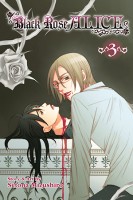
SEAN: We have a 3rd volume of Black Rose Alice, and I’d like to remind the Manga Bookshelf team that they can’t pick it two weeks in a row. :)

MICHELLE: I won’t, but I am still super happy to see it!

ASH: I’m happy to see it, too!

ANNA: I might pick it again! You can’t stop me!

MJ: Heh. I didn’t pick it last time, so it’s up for grabs!

SEAN: Bleach 63 features, I’m guessing, fights.

Food Wars 4 also features fights, but of a culinary kind. Save the Megumi!

MICHELLE: I have developed a serious fondness for Food Wars.

ANNA: I do not yet have a serious fondness, but I like it much more than I expected to.

SEAN: The 10th and final volume of Happy Marriage?! wraps up next week. It’s been a very up and down series, but overall I’ve enjoyed it.

MICHELLE: It’s not something I can picture myself rereading, but it has been entertaining.

ANNA: Me too. I’m glad to have read it, but I don’t think I’ll be rereading it.

hsd5

SEAN: High School Debut has its 5th and final omnibus. The big news is that it has lots of material that never came out in print before – I believe Vols. 14 and 15 are unique to this volume! It’s also print-only, so go get it.

MICHELLE: !!!!!!!!!!!!1 (Heh, I swear that typing that 1 was legitimately an accident, but I’m leavin’ it!)

ANNA: Woah! I’ve got to pick this up!

MJ: Ooooooooooh.

SEAN: If you thought Honey Blood was over last time, well… it was. But Tale Zero is an epilogue, or prologue, or pilot. Or something? In any case, this is the last Honey Blood-related product.

MICHELLE: I have a vague memory of one of the author’s note sections during the series proper mentioning that this would contain the original oneshot. Not sure about that, though.

ANNA: I’d like to see more from this author eventually.

SEAN: We have the 25th and final volume of Nura: Rise of the Yokai Clan. I enjoyed this a lot more than I’d expected, and probably more than it really deserved, but way to go, mid-range Shonen Jump title. You were licensed when many other 20-30 volume Jump series were not.

One Piece has its 11th omnibus. It’s in Water Seven now, one of its best arcs.

Spell of Desire hits Vol. 3, and I hope manages to resolve the rather icky cliffhanger Vol. 2 left us with.

Voice Over has its 9th volume, and seems to be slowly, very slowly, meandering towards its climax.

MICHELLE: Here’s another title I’ve grown to love unexpectedly.

MJ: I need to check back in with this series.

SEAN: World Trigger has Vol. 4, and is another on the list of ‘series I should know more about’.

Did you miss Yu-Gi-Oh! the first time around? Here’s an omnibus to catch up on.

And Yu-Go-Oh Zexal 6 gives you more Yu-Gi-Oh than human nature can possibly stand.

There’s a lot of ‘meat and potatoes’ shonen and shoujo here. What suits your fancy?

Filed Under: FEATURES, manga the week of

Hayate the Combat Butler, Vol. 25

January 29, 2015 by Sean Gaffney

By Kenjiro Hata. Released in Japan as “Hayate no Gotoku!” by Shogakukan, serialization ongoing in the magazine Shonen Sunday. Released in North America by Viz.

I had said last time that after the emotional catharsis and darkness of the Athena arc that we’d fall back towards comedy here, and that’s somewhat true, but the fallout from that arc still lingers. Athena describes to Hayate how she was rescued from the castle at the end of the world, and it turns out to have been none other than Hayate’s brother who achieved it. We’d seen him in silhouette before, but here we finally get to see his face, mostly so that he can have a distinguishing scar that lets Hayate reassure Athena he’s not dead or trapped. (Even though we haven’t seen him in years… he’d better have a damn good reason for leavin g Hayate to the mercies of his parents).

hayate25

Athena’s parting is also bittersweet, though there’s a tease that implies that she isn’t giving up entirely. But she sees Hayate talking about how much of his life he owes to Nagi, and realizes that she can’t take that away from him now. So she confesses to him, again, but in the past tense, implying that she’s moved on. I try to remain unbiased in my reviews, but I fully admit to being an Athena fan, so this saddened me. Don’t get me wrong, I love Nagi and Hayate’s relationship, but if they’re going to end up together I do think that a) she needs to mature a bit, and b) he needs to show at least a smidgen of attraction to her. We’re slowly seeing the first but not the second, and with Athena is was very nice to see two people who really did desire each other.

After this, it would be hard for the rest of the volume not to feel like an anticlimax, and it does struggle to keep the same level. Hina being cursed with donkey ears is amusing but goes nowhere, and Hayate trying to figure out what’s haunting an old mansion (turns out to be cats) is a bit pointless. Possibly the most interesting part of the volume is a flashforward showing Nagi rushing to the top of a tall building to scream in pain and frustration about someone named Ruka, followed by a title page featuring a new character (spoiler: it is Ruka). We wonder if we’ve done some sort of time skip, but no, it’s just a tease, and we’re soon back to the aftermath of Greece, with Nagi having to leave the mansion.

Nagi’s idea to be a landlord and rent out a building is actually quite clever, and of course will lead to many comedic situations – don’t be surprised to see the building fill with many of our cast. But it’s also a symptom of her biggest flaw, which is her dedication to inactivity – this is a way to make money by sitting around and doing nothing. Nagi can’t apply herself to any hard work that doesn’t pay off instantly, and it will come back to burn her in future volumes. For now, though, Athena is gone, and Hayate the Combat Butler prepares to enter a newer, less dramatic story arc. That said, don’t expect the drama to simply disappear. It just won’t be 24/7 like it was in the last two volumes.

Filed Under: REVIEWS

Manga Giveaway: Cinderalla Giveaway

January 28, 2015 by Ash Brown

It’s the end of the month which means it’s time for another manga giveaway! Because the Female Goth Mangaka Carnival is currently underway (featuring the work of Kaoru Fujiwara, Maki Kusumoto, Mitsukazu Mihara, Junko Mizuno, Asumiko Nakamura) I decided to do a tie-in giveaway. This month you all have a chance to win a copy of Junko Mizuno’s Cinderalla as published by Viz Media. And as always, the giveaway is open worldwide! (However, you must be at least eighteen years old to enter.)

Cinderalla

Way back in 2010, I had the opportunity to attend the Best Manga You’re Not Reading panel at the American Library Association’s annual conference. It was there that I was introduced to the work of Junko Mizuno, and specifically to her manga Cinderalla—a psychedelic retelling of the classic tale of Cinderella with zombies, yakitori, and pop idols added in for good measure. I had never seen anything like it before and I loved it. Mizuno’s brightly colored artwork in Cinderalla shows her mastery of a very distinctive and even beautifully stunning creepy-cute aesthetic. Quite a few of Mizuno’s manga have been released in English—and I’ve enjoyed many of them—but I will always remember Cinderalla as being my first.

So, you may be wondering, how can you win a copy of Cinderalla?

1) Have you ever read anything by Kaoru Fujiwara, Maki Kusumoto, Mitsukazu Mihara, Junko Mizuno, or Asumiko Nakamura? If so, tell me what you thought in the comments below. (And if you haven’t, you can simply mention that.)
2) If you’re on Twitter, you can earn a bonus entry by tweeting, or retweeting, about the contest. Make sure to include a link to this post and @PhoenixTerran (that’s me).

And there you have it. For this giveaway, each person can earn up to two entries and has one week to submit them. If needed or preferred, comments can also be sent directly to me via e-mail at phoenixterran(at)gmail(dot)com. I will then post them here in your name. The giveaway winner will be randomly selected and announced on February 4, 2015. Meanwhile, I hope you enjoy the Carnival!

VERY IMPORTANT: Include some way that I can contact you. This can be an e-mail address in the comment form, a link to your website, Twitter username, or whatever. If I can’t figure out how to get a hold of you and you win, I’ll just draw another name.

Contest winner announced—Manga Giveaway: Cinderalla Giveaway Winner

Filed Under: FEATURES Tagged With: Junko Mizuno, manga

Bookshelf Briefs 1/26/15

January 26, 2015 by Sean Gaffney and Michelle Smith 1 Comment

This week, Sean and Michelle look at recent releases from Seven Seas, Viz Media, and Kodansha Comics.

lizardaideAlice in the Country of Clover: The Lizard Aide | By QuinRose and Job | Seven Seas – It’s never a good sign when the main story of an Alice volume ends two-thirds of the way into the book, and it’s doubly bad when they have to pad it out with Crimson Empire. But the main problem with this is that it stars Gray Ringmarc, who is one of the characters we’ve met and cared about the least in these volumes. He’s introduced in Clover, and without the games as a base, there’s not as much impetus to care about him compared to major players like Blood or Ace, or even Boris, who got seven volumes to get fleshed out. Add to that that Alice is less damaged here (making her less interesting), and the art being subpar, and you have a thoroughly unessential volume. – Sean Gaffney

arpeggio3Arpeggio of Blue Steel, Vol. 3 | By Ark Performance | Seven Seas – Much of this volume involves the battle between the heroes and the bad guys’ and it’s well-told, making things tense and fleshing out the villains a bit more while still keeping them mysterious. Unsurprisingly, the villain that survives is the stoic one on the cover. More intriguing is the brief look at what makes Gunzou tick; Maruri clearly is carrying a torch for him, but says that she can’t be around him as he’s too perfect, which is also his greatest weakness. This scene was needed as Gunzou’s implacability was indeed becoming a weakness for the series, but now that we see there may be something behind it, it bears further study. A cut above the ‘girls and war machines’ subgenre. – Sean Gaffney

panzer3Girls Und Panzer, Vol. 3 | By Girls Und Panzer Project and Ryohichi Saitaniya | Seven Seas – Speaking of the ‘girls and war machines’ subgenre, as well as titles created by a committee, our band of tankery girls has another battle this time round, with the stakes raised considerably. Indeed, perhaps raised a bit too much: seeing Miho be told that if they lose, she’ll be disinherited is bad enough, but adding to that that the entire school will be shut down if they lose seems a bit over the top. That said, seeing this particular battle take place in snowy conditions adds a bit of spice to the tank battle, and while the outcome is not yet in doubt (it will be once we hit the finals), it’s close enough to keep us interested. This wraps up next volume, and should have a good ending. – Sean Gaffney

jacoJaco the Galactic Patrolman | By Akira Toriyama | Viz Media – Though I failed to love Dr. Slump and have yet to try Dragon Ball, I typically enjoy Akira Toriyama’s one-volume manga, and Jaco is no exception. Silly, charming, and absolutely suitable for all ages, this is the story of a diminutive, posturing (yet occasionally genuinely kind of badass) galactic patrolman who crash lands on earth and into the solitary life of widower scientist Omori. At first he’s ready to eliminate earthlings on account of all the crappy ones he meets, but he eventually encounters some good ones, too, and bravely saves a lot of lives without hesitation. Okay, yes, there are a couple of jokes about burps, boogers, and pee, but catering to the target demographic is certainly understandable and the end result wasn’t offputting to this totally middle-aged lady. I think it’s time I faced the fact that I clearly must try Dragon Ball – Michelle Smith

kiss2Kiss of the Rose Princess Vol. 2 | By Aya Shouoto | Viz Media -This series is nine volumes in total, which surprises me, as this reads more like the middle volume of a three-part series. We’re introduced to a childhood friend of Anise’s, and he not only turns out to be a missing knight, but also an evil knight, and also a love rival, and oh yes, an Osaka hothead. Plus we get a rather startling revelation about Seiran, which I won’t spoil here, but does shake things up quite a bit. Add to that the return of Anise’s emotionally abusive father, who needless to say is unhappy, and you have something that should be reaching a dramatic climax next time. Except it isn’t. Oh well. The title continues to hold my attention as good meat-and-potatoes shoujo. – Sean Gaffney

missions10Missions of Love, Vol. 10 | By Ema Toyama | Kodansha Comics – We continue to deal with the worst people ever, as Yukina finally gets a confession, but still has trouble dealing with the aftermath of her first love. She orders Shigure to make her forget, but that’s easier said than done, particularly with Akira still trying to sabotage things. This culminates in her going on romantic dates with both of them, which lets the reader know how she feels (Akira is the ‘like a brother’ sort of love), but she remains in the dark. Meanwhile, Mami seems to be trying to get over Shigure, and seems to like Akira, even if she doesn’t know it. And who’s this new guy? He has a sneer, must be evil. If all this sounds exciting to you, you’ll love it. If you think “they all sound like terrible people”… you may love it as well. – Sean Gaffney

mylovestory3My Love Story!!, Vol. 3 | By Kazune Kawahara and Aruko | Viz Media – Much of the first half of this third volume consists of Yamato trying to push their relationship forward a little – we’re talking kisses on the cheek here, but Takeo can’t even comprehend that, being the innocent sort who’s never really had to think about that aspect of love before. This suits Yamato just fine mostly, as I think she wants to take things slowly as well (just a little faster than he does), and she also likes his outgoing-do-good self the best and worries that he might try to change it to suit her – which indeed he does try (and fails) here. After all that romance, we then get a final chapter that’s filled with hilarity. This continues to be the sweetest shoujo around. – Sean Gaffney

Filed Under: Bookshelf Briefs

My Week in Manga: January 19-January 25, 2015

January 26, 2015 by Ash Brown

My News and Reviews

Last week I posted a review of Chōhei Kambayashi’s award-winning novel Good Luck, Yukikaze. Because I had enjoyed Yukikaze, the first novel in the series, I was looking forward to reading its sequel. Sadly, although there is some tremendously thought-provoking material in Good Luck, Yukikaze, I found it to be incredibly frustrating as a novel. Also posted last week was my first (and what will probably be my most substantial) contribution to the Female Goth Mangaka Carnival: a spotlight on Mitsukazu Mihara. I’ve previously written a little about her manga series The Embalmer, but this time I took a brief look at all of her manga that was released in English and examined some of the recurring themes found in her work.

Speaking of the Carnival, the hosts at The Beautiful World posted an excellent introduction which includes biographical information of the featured artists as well as an overview of gothic fashion and literary themes. Elsewhere online, Mangabrog has translated a conversation between Hiroaki Samura and Masashi Kishimoto. Chromatic Press has some additional comments on making Sparkler Monthly back issues free to read. (Most importantly, the magazine needs 1,000 subscribers by the end of July 2015 to ensure it survives into its third year.) And some great news from France, Jiro Taniguchi and Baku Yumemakura’s manga series The Summit of the Gods (a favorite of mine) is being adapted as an animated film.

Quick Takes

Corto Maltese: Under the Sign of CapricornCorto Maltese: Under the Sign of Capricorn by Hugo Pratt. A portion of Corto Maltese, a seminal comic created by Italian artist Hugo Pratt in 1967, was previously translated into English, however that release was criticized for its use of altered and reformatted page layouts among other things. Under the Sign of Capricorn is technically the third Corto Maltese collection, but it’s the first volume to be released in the series’ new English-language edition from EuroComics, IDW’s newest imprint. The goal is to release the entire twelve-volume series using the original artwork and oversized format over the next few years. Under the Sign of Capricorn is a great looking comic, the high-quality paper and large trim size shows off Pratt’s superb black and white artwork. The titular Corto Maltese is a sea-captain who, though he claims to have no enemies and to live only for himself, frequently finds his life in danger as he tends to side with the underdogs in their battles against those who hold power over them. (He’s a fantastic character.) Under the Sign of Capricorn is a collection of connected adventure stories, many with a slight touch of the supernatural and a lot more humor than I was anticipating. I’m looking forward to reading more of the series.

Noragami: Stray God, Volume 2Noragami: Stray God, Volumes 2-3 by Adachitoka. It took a little while for the first volume of Noragami to settle on its tone, but these two volumes have managed to achieve an excellent balance between the series’ humor and drama. They also explore more of the manga’s worldbuilding and delve more deeply into the mechanics of the gods’ relationships with their shinki. New characters and adversaries have been introduced as well. I initially thought that Noragami might be an episodic series–it certainly has a setup that would lend itself well to that format–but it looks like the manga will have an ongoing and increasingly complex plot. In a series about a low-level god of war who is trying to raise his status and gain followers, it’s not too surprising that other Japanese deities make an appearance in Noragami. However, some of them are portrayed very differently than their traditional counterparts. I was greatly amused by this, but then I already have some knowledge of Japanese religion and mythology. There are translation notes provided for readers who aren’t as familiar, but the delightful incongruities probably won’t be as effective without some prior understanding. However, overall enjoyment of Noragami doesn’t rely on esoteric expertise.

Tough Love BabyTough Love Baby by Shiuko Kano. While it’s not an exceptional boys’ love one-shot, Tough Love Baby was actually fairly solid. This was a pleasant surprise, especially considering my frustrations with some of Kano’s other early works. (And Tough Love Baby is one of her earliest.) Another pleasant surprise–since I’m into that sort of thing–was the somewhat reversible nature of two of the characters. Despite being the secondary couple, I was actually much more interested in the relationship between Tamotsu and Sora than I was in the relationship between Yoshino and Sachi. This was mostly because I ended up particularly liking Sora. (Tamotsu can be a bit of a jerk, though on occasion he does try not to be.) Sora is diminutive throughout high school, but undergoes a tremendous growth spurt upon entering college. Even though he’s much taller than everyone one else, adorable is still the best word to describe him. In some ways, Sora’s story actually parallels Sachi’s. After a three-year absence, Yoshino returns to discover that the cute thirteen-year-old boy he had developed feelings for has grown up to become a juvenile delinquent. Tamotsu is one of Sachi’s friends and a fellow tough guy, but he happens to be in love with Sachi, too. Which brings the story back to Sora, who greatly admires and falls for Tamotsu.

Filed Under: FEATURES, My Week in Manga Tagged With: Adachitoka, comics, Corto Maltese, Hugo Pratt, Noragami, Shiuko Kano

Akame Ga Kill!, Vol. 1

January 25, 2015 by Sean Gaffney

By Takahiro and Tetsuya Tashiro. Released in Japan by Square Enix, serialization ongoing in the magazine Gangan Joker. Released in North America by Yen Press.

I frequently say to people that I don’t read depressing manga, or horror manga, or anything where the basic plot is “let’s try to find a dim light of hope in between the chapters of lovingly detailed murder and torture.” And to a certain extent this is ridiculous, given how much I love Higurashi, Umineko, Kurosagi Corpse Delivery Service, etc. So I tend to give these series a try, to see if they’re my thing, or to see if they would appeal to their intended audience. So, regarding Akame Ga Kill!, I will admit straight up that it is not my thing. That said, if you like dark fantasy along the lines of Berserk, but with a few more strong women kicking ass, and don’t mind the constant brutal violence, this is absolutely a good title to start picking up, as it does those things very well.

akame1

I think most manga readers by now have learned never to read the solicitation or back cover copy for any given volume, as it has a tendency to spoil, especially for first volumes. That said, I think most readers would be savvy enough to know that when our hero, already depressed at how the big city is nothing but a pack of lies, and having all his money stolen by a buxom thief, is taken in by a very beautiful and nice young princess and her also beautiful and nice young family, that SOMETHING HORRIBLE IS COMING. Particularly when said girl is not the stoic swordswoman on the cover. And sure enough the sweet young thing has not only tortured to death many young people in the name of… well, being insane, but her older sister has a taste for the research scientist from hell. And worst of all, his two best friends are the last two victims, one surviving just long enough to tell him he he has to be strong and go on.

Enter our heroes, who the main lead will end up joining. They’re a wacky band of misfits, and include the cover girl, the buxom thief (who I notice never does give his money back, and seems to essentially be Mitsune from Love Hina), and the tsundere with twintails who totally isn’t falling for him (and also drags out a ‘wheel of morality’ with all of Gangan Joker’s main series on it, including many other Yen licenses, though they haven’t picked up Corpse Party just yet). Gradually our hero shows what he’s made of and begins to impress the others despite himself, and they open up to him, telling their backstories so that we don’t need flashbacks at all.

This may seem a bit cliched and yes, it is. But it’s laid out nicely, the art is good, and you begin to like this ragtag band of assassin misfits even as you realize that this is the soft of series where you shouldn’t get too attached to anyone. That last point is likely why I won’t stay aboard, but if you like dark fantasy with a bit of an otaku bent, Akame Ga Kill! should be right up your alley. Also, fear not, Akame does in fact kill in this volume, thus proving the untranslated title correct.

Filed Under: REVIEWS

Random Musings: Spotlight on Mitsukazu Mihara

January 23, 2015 by Ash Brown

For the last two weeks of January 2015, the Female Goth Mangaka Carnival is focusing on the works of Kaoru Fujiwara, Maki Kusumoto, Mitsukazu Mihara, Junko Mizuno, Asumiko Nakamura. While I’ve read and enjoyed manga created by almost all of those women, Mihara is the mangaka that I’ve read the most of and am most familiar with out of the group. (Granted, that may in part be due to the fact that of the five she has had the most manga licensed and released in English.)

The Creator

Mitsukazu MiharaSadly, there doesn’t actually seem to be very much information available in English about Mitsukazu Mihara beyond a few well-established facts. She was born in Hiroshima, Japan on October 17, 1970 and for a long time was based in Osaka. (I believe she may now be working out of Tokyo.) She made her manga debut in 1994 and has been writing and illustrating ever since. Mihara is often credited as being particularly influential in refining the Gothic Lolita sensibility and she frequently served as a featured illustrator for the Gothic & Lolita Bible magazine.

Between 2004 and 2007, Tokyopop released many of Mihara’s works in English, beginning with her series Doll. Mihara is particularly known for her short manga with twists–even her long-form works tend to be fairly episodic–and she frequently employs darker themes and includes heavy psychological elements in her stories. Her manga is influenced and inspired by the problems and issues that she sees in society as well as by her own personal traumas. As she states in an interview from 2008 in the debut issue of the North American edition of Gothic & Lolita Bible, “Often, my greatest work is born during the bad times.”

The Manga

IC in a SunflowerAlthough IC in a Sunflower (1997) contains some of Mitsukazu Mihara’s earliest work, the volume was actually the last of her manga to be licensed in English. A collection of seven unrelated short manga, the volume includes her award-winning debut “Keep Those Condoms Away from Our Kids.” Another of the collected stories, “The Sunflower Quality of an Integrated Circuit,” would later be tied into her series Doll.

R.I.P.: Requiem in Phonybrian While there is some absurdity and black humor in R.I.P.: Requiem in Phonybrian (2000), the volume’s darker elements take precedent. The manga follows the angel Transylvanian Rose who has rescued the soul of a suicide, but he isn’t particularly happy about this turn of events, nor is he particularly interested in his new responsibilities of cleansing other souls. The manga starts out fairly episodic but quickly coalesces.

Beautiful PeopleBeautiful People (2001) is another collection of Mihara’s short manga and includes six unrelated stories. The volume features a range of genres and sub-genres including science fiction, fantasy, magical realism, post-apocalyptic fiction, contemporary drama, and suspense. In general, like much of Mihara’s work, the manga included in the volume tend to be darker in tone, but there are moments of brightness as well.

Doll, Volume 1The manga that Mihara is probably most well-known for, at least in English, is her six-volume Doll (2000-2002). The manga is a series of loosely interconnected stories of androids and angst that are tied together by the end of the final volume. Although the Dolls are an important part of the series, the focus of the manga is much more on the humans and their relationships to the Dolls and to each other.

Haunted HouseBecause it’s primarily a comedy, Haunted House (2002) stands out from the rest of Mihara’s manga available in English. Granted, it still has elements of horror in an Addams Family sort of way. Sabato Obiga is a teenager who desperately wants two things in his life: a girlfriend and a normal family. Unfortunately, the eccentricities and occult interests of his “death flavored” relatives would seem to make both an impossibility.

The Embalmer, Volume 1My introduction to Mihara’s work was through her series The Embalmer (2003-2013) and it remains my personal favorite of her manga. Sadly, only four of the series’ seven volumes were released in English. I’ve actually written a little about the series before, specifically in regards to the main character and the role of embalming in the story. Less fantastic than many of Mihara’s other manga, the series has a strong grounding in reality.

The Themes

Princess White SnowThere are many themes and variations upon them that appear and reappear throughout Mitsukazu Mihara’s work. One of the most prominent elements in Mihara’s manga is the inclusion of families. Even Haunted House, which is so unlike many of her other works, has a family at its core. The families in Mihara’s manga are often broken and in need of healing, but underlying all that turmoil and trauma is an understanding of the immense importance of family and the profound influence, both positive and negative, that a family has on its individual members.

Similarly, there is an intense longing for love and connection that pervades Mihara’s work. Her characters are searching for someone they can be close to, someone they can trust, someone they can reach out to. Sometimes this is found within their families, and sometimes they are forced to look outside of them to satisfy those needs. Love takes on many different forms in Mihara’s stories, and its potential to end in tragedy is just as real as its potential to end in redemption.

Maturer themes dealing with sex and sexuality have been present in Mihara’s work since the very beginning. Her debut manga “Keep Those Condoms Away from Our Kids” (collected in IC in a Sunflower Circuit) tells the story of a near-future Japan in which the birthrate has plummeted because younger generations have completely lost interest in sex. In the post-apocalyptic vision of “World’s End” (collected in Beautiful People), a peculiar twist of fate means that a lesbian and a gay man may be the only survivors. Perversion, fetishism, bondage, and sadomasochism can be seen in much of Mihara’s work as well, but perhaps most obviously in Doll.

Although frequently viewed through the lens of speculative fiction, Mihara isn’t afraid to look at the harsher realities of life and the darker sides of human nature. Abuse, obsession, sexual violence, and other harmful deviant behaviors can all readily be found within her work. Many of Mihara’s characters are suffering, whether from the actions of others or from their own personal demons and psychological disturbances. There is tragedy, sadness, and pain in both their lives and their relationships. Life isn’t always pretty, and Mihara doesn’t shy away from that fact in her manga.

People can be cruel and are capable of terrible things. As is seen again and again in Mihara’s work, it takes a human to be inhumane. The monsters in her stories are often the ones showing the most empathy and caring for others. Sometimes those monsters are literal–like the vampire in “Blue Sky” (collected in Beautiful People). Sometimes they are beings of human design–like the clones in “Alive” (collected in IC in a Sunflower) or the Dolls. And sometimes they are other people who are for one reason or another shunned, abandoned, or reviled by the rest of society. But there is some hope in humanity that remains–people are changed, often for the better, by their interactions with those “monsters.”

The EmbalmerDeath and dying are themes that frequently make an appearance in Mihara’s work, but at the same time an immense respect and reverence for life can always be seen. Matters of life and death are most realistically examined by Mihara in The Embalmer, the series focusing on those left behind to grieve the deaths of their loved ones. The characters must respond to that loss of life in a very personal way and their relationship with death is constantly changing as a result. Requiem in Phonybrian and many of Mihara’s short manga take a more fantastic approach to death and the afterlife, but emotionally it is all still very real.

Mihara’s manga deal extensively with dualities. This is visually epitomized in the Gothic Lolita aesthetic which Mihara frequently incorporates into her work, but it is also present in the narrative themes that she explores. Light and darkness. Beauty and ugliness. Innocence and perversion. Love and hate. Purity and corruption. Human and inhuman. Hope and despair. Life and death. They are pairs of concepts that are so closely intertwined that it is simply impossible for them to be separated from each other.

They are all also qualities that exist simultaneously within a single person or a single story. Although often viewed as positive or negative characteristics, Mihara’s work shows that they aren’t necessarily inherently good or bad. Rather, it’s a fixation on a particular ideal or other imbalance in those qualities that truly causes harm. Mihara’s stories, just like individuals, contain many complexities, contradictions, and layers. They can be shocking and surprising and may often have more depth to them than might first appear.

Filed Under: FEATURES Tagged With: Doll, Embalmer, manga, Mitsukazu Mihara

Off the Shelf: Food & Fantasy

January 22, 2015 by MJ and Michelle Smith 2 Comments

MICHELLE: Hey, check it out! It hasn’t been a whole year and we’re totally back again!

MJ: It’s a Christmas miracle! Or something.

MICHELLE: It must be! This week there’s one debut that we both read—shall we start with that one? Would you like to do the summarizing honors, or shall I?

MJ: I’ll give it a try!

yukarismThis week, we both dug into the first volume of Yukarism, the latest from Chika Shiomi, author of Yurara and Rasetsu. The story centers around Yukari, a seventeen-year-old boy who, according to a fortune-teller, was born without forgetting his previous life. The fortune-teller seems to have been on to something, as Yukari has such a strong sense of Japan’s Edo period that he’s been able to write numerous historical novels set in that period without any research at all. But though Yukari is keenly aware that he has this uncanny sense for the past, the details only begin to come together for him when he meets a classmate named Mahoro, whose chance presence in his life awakens his full memories, sending him back in a dreamlike state to his previous life as an oiran in the pleasure district, and even to the scene of his death.

MICHELLE: Nicely done!

As this is a short series—complete in four volumes—we ought to get resolution to the low-key mystery of that death in a fairly straightforward fashion. Already there is a suspect in Takamura, one of Yumurasaki’s (the oiran) customers, who is pretty creepy and known to wield his curse-making talents as an assassin. As the volume concludes, it seems likely we have met his present-day incarnation as well, though I don’t get much sense of our present-day characters in peril.

Initially, I would’ve said I didn’t get much sense of our present-day characters at all, but once the reincarnation of Hitoha, Yumurasaki’s attendant, showed up, Mahoro did start acting a little more lively. It does seem, though, that in this first volume at least, the priority was on establishing the concept.

MJ: I’m find that I’m both distressed and pleased to hear that this series is complete in four volumes. On one hand, I applaud succinct storytelling when done well, and I do have a lot of faith in this artist. On the other, if it indeed is done well, I’ll be very sad to see it go. So far, I’m feeling optimistic, though I’ll agree that the present-day characters are less distinct at this point than their past-life counterparts, but as you say, that begins to ramp up a bit near the end of the volume. One exception on that front, however, is Yukari, at least in my opinion. His character is fairly well-established (and nicely linked) in both the past and present, and I do appreciate the way he so easily falls into his former self. He and Yumurasaki are so clearly the same person at the core, and this is only enhanced by Shiomi’s efficient yet expressive art style.

While this volume is mainly setup, it does set things up pretty clearly, at least. I suspect we’ll discover soon just why these people have been brought back together in this time period, and perhaps even why they’re so easily able to reconnect with their past selves. I’m quite looking forward to it.

MICHELLE: I absolutely agree about Yukari and Yumurasaki clearly being the same. It’s Mahoro who seems so different from her past self that it’s puzzling. Maybe Yukari’s wrong about who she really is? That’s an intriguing possibility. In any case, I am definitely on board for the rest of the series!

MJ: I suspect there’s a lot more to Mahoro (and her past self) than we yet know! And yes, I’m definitely on board for finding out!

So what else have you been reading lately?

MICHELLE: I actually checked out another Shojo Beat debut from VIZ, Kiss of the Rose Princess by Aya Shouoto!

kiss1This nine-volume series is about a girl called Anise Yamamoto who was given a choker by her father with the warning, “If you ever remove it, a truly terrifying punishment will befall you.” She duly wears it until one day a bat-like creature flies into her. The choker disappears, but in its place is a card. By kissing it, she can summon Kaede, her hot-headed classmate. Turns out she’s some sort of sovereign that has knights at her disposal. Instead of Anise going around collecting the rest of the cards, the bat (Ninufa) just gives them to her, so now she has four bishounen at her beck and call. Anise wisely wonders, “This isn’t punishment, is it?”

In addition to Kaede, there’s the princely student body president, a grumpy goth dude (who is apparently not quite human), and a frail and delicate boy. Supposedly, the power of the cards was sealed until a demon lord resurfaces, only he hasn’t yet, so… What is this story going to be? Is it a comedy? The reveal of the president’s masochistic predilections is played for laughs. Will the demon lord ever show up, or are we in for more stories with plots like “we’ll work together as a team to create a new main gate for the school festival”? I honestly don’t know what to make of this one.

Ultimately, I suppose I will read more in the hope that this will possibly turn out not to be something generic.

MJ: Right now, I feel like I’m reading some kind of alternate universe reboot of Cardcaptor Sakura. Am I wrong?

MICHELLE: I can see how you’d think that, and it is true that each knight supposedly has a different specialty (attacks, discovery, alchemy…), but because she isn’t compelled to collect more cards or go up against an enemy, Anise isn’t actually using these cards the same way Sakura does, and it’s much less compelling so far. That said, volume two has just come out, so perhaps that’ll give me a better idea of the direction in which the series is heading.

What else have you been reading?

whatdidyoueatyesterday6MJ: I’ve finally now caught up on the latest volumes of one of my favorite series, Fumi Yoshinaga’s What Did You Eat Yesterday?, specifically volumes five and six. I suppose it’s a testament to my harried life that I would have let more than one volume of this series linger in my to-read pile, but it’s also telling that when I have real time to sit down and read, this is the series I choose first.

Something I’m always struck by when I read this manga is just how well Fumi Yoshinaga’s style works with this foodie/slice-of-life mix. Her sense of humor and ability to infuse casual anecdotes with real relationship-building makes the storytelling feel substantial even when so much page time goes to food preparation. With that in mind, there’s quite a bit going on over the course of these two volumes, but perhaps the most significant bits of the storyline have to do with Shiro and Kenji’s new acquaintance with another couple, Mr. Kohinata and his younger boyfriend, Wataru.

Shiro is originally introduced to Mr. Kohinata by Mr. Tominaga, the husband of the woman with whom Shiro often splits groceries. Though both Shiro and Mr. Kohinata recognize the absurdity of the introduction (Mr. Tominaga seems to believe they’ll naturally have lots in common simply because they are both gay), they actually do strike up a friendly acquaintance, and soon the two couples are having dinner together and meeting up to watch Mr. Kohinata’s company baseball game. There’s a lot of humor involved, but the real significance of this new friendship is in the way it influences Shiro to begin feeling more comfortable as part of a gay couple in public. By the end of volume six, he’s even invited Kenji to go grocery shopping with him in their own neighborhood, which may seem like a small thing, but is a pretty big deal for Shiro—a fact that does not elude Kenji in the slightest.

I often see comments here from readers who dislike Shiro, and I admit that I really don’t understand it at all. Yes, he’s emotionally reticent, and yes, his professional life is a complication in terms of how open he feels he can be in his personal life. But he expresses his caring for Kenji in so many ways—and vice-versa. I am pretty deeply in love with their relationship and the ways in which they continuously learn to work around each other’s fears and insecurities in order to continue to support each other, emotionally and otherwise.

Also, the food. THE FOOD. I get so hungry when I read this manga. It’s a good thing I have a cooking-savvy husband of my own. How do I relate to Kenji? Let me count the ways.

MICHELLE: I am with you on being baffled that anyone would dislike Shiro! I would challenge those folks to read through the end of volume six, which not only includes the public grocery-shopping invitation but the real reason for Shiro’s intense frugality, and see how they feel about him then. He may not be demonstrative, but he really does care, and is thinking of Kenji’s long-term health and happiness.

It’s interesting how my reaction to the food works, because if it’s something unfamiliar, I kind of go, “Oh, that looks tasty,” but if it’s something known and delicious, then I will become a slavering craving-beast. Latest trigger? Gyoza!

MJ: Yum! Though of course that seems to be my reaction to everything they eat in this series. Now… time for some lunch!

MICHELLE: Suddenly, this Stouffer’s frozen entrée is not looking up to par.

MJ: I feel that.

Filed Under: OFF THE SHELF

Sword Art Online: Progressive Manga, Vol. 1

January 22, 2015 by Sean Gaffney

By Reki Kawahara, abec, and Kiseki Himura. Released in Japan by ASCII Mediaworks, serialized in the magazine Dengeki G’s. Released in North America by Yen Press.

These days fandom is used to seeing multiple tie-ins and spinoffs of popular franchises, and SAO is no exception. That said, usually they’re more along the lines of a cute 4-koma thing, or a side story following other characters (such as Girls’ Ops, which we’ll see in May.) This is an odd duck, though: it’s the author rewriting the series after he realizes he wanted to stay in his world a bit longer. SAO was originally a series of online web novels, and the main light novel adaptation is essentially a straight reworking of those. Here, though, Kawahara goes back into Aincrad proper and gives us a closer look at its early days… while also sort of retconning our lead couple into having been meant from each other from the day they met.

saoprog1

Fans of the anime may be very familiar with some of the material seen in this first manga volume, as it was made around the same time and many things were taken from it to use in the adaptations, such as the presence of Argo the informant, and much of Asuna’s somewhat suicidal attitude at the start. The main reason to read this, though, is that it’s mostly from Asuna’s point of view, with Kirito as the mysterious stranger who may have ulterior motives. We see a nightmare where she flashes back to her life in the real world before the game, and also her poor relationship with her mother, things that never really came out in the main series till the seventh book. And the reaction when Asuna speaks up at a strategy meeting from all the guys in the game reminds readers what women in Aincrad have to deal with all the time – and why Asuna is cloaked most of this volume. (The manga, of course, also features a long, lingering nude bath scene for Asuna – this is still a product made for its known market.)

While this is a reboot of sorts, I’d argue that it only works really well if you’re familiar with the source material. Asuna is a LOT more tsundere in this volume, as the creators lampshade, and while we see her obvious skills, she lacks the confidence and poise of the Asuna we know. Likewise, we know what Kirito is likely thinking in these early meetings, with all its discussion of “let’s find the beta testers and get our revenge’, as we saw his thought processes in the original SAO – without that, he would be something of a flat character. This is meant to complement, not replace, the original. It’s not perfect – the leader of the group planning to take out the boss of the first floor is a very flat character, and his death is signposted from the moment we meet him. And some of Kirito and Asuna’s interaction at the start falls into the standard comedy romance tropes – oh no, I just walked in on you in the bath! – which just made me sigh.

I suspect, like the main series, that I’ll be enjoying it even more once I read the light novel in March – note I had to add ‘manga’ to the header to differentiate in advance. For manga readers who enjoy SAO and would like to see a book from Asuna’s POV, this is a deent start, and I look forward to more.

Filed Under: REVIEWS

Manga the Week of 1/28

January 21, 2015 by Sean Gaffney, Michelle Smith, Ash Brown, MJ and Anna N Leave a Comment

SEAN: The final week of January, and a quiet, peaceful time for books. After last week, that’s a relief.

(Note: Diamond Comics is shipping some Viz stuff to me 1-2 weeks early; I’m assuming that’s them and going with the official release dates, so they’ll be in upcoming posts. I’m also getting Soul Eater late. Diamond gonna Diamond.)

gantz34

Dark Horse has the 34th volume of Gantz, which despite my occasional mockery has done very well for them, as can be seen by their license of another series by the same author. Still no HEN, though. Or even Hen.

Kodansha has a new Fairy Tail, the 46th. After this one, we go from monthly to bimonthly, so the Fairy Tail catchup seems to have finally slowed down. Kudos to all who stayed caught up.

MICHELLE: Which wasn’t me!

SEAN: I didn’t think Whispered Words’ 3rd omnibus was coming out from One Peace books till late March, but it was shipped to me last week, so yay for early bird releases. I’ve already reviewed it here.

ASH: My copy arrived early, too! I’m looking forward to finishing the series.

MJ: This is definitely something to look forward to!

MICHELLE: I haven’t checked back in with this title since the first omnibus, so an early conclusion is definitely an incentive.

SEAN: One Peace also has the 3rd through 5th volumes of Raqiya also coming out, which I believe completes the series.

ASH: It does indeed.

SEAN: Lastly, Diamond Comics has started shipping print copies of the final volume of Neon Genesis Evangelion, so even though I highlighted in in November when it came out digitally I will mention it again here.

Do you see something here you want? Or are you taking the week off?

ANNA: I’m taking the week off! More of an opportunity to make some headway with all the stacks of unread manga piled up in my house.

Filed Under: FEATURES, manga the week of

Good Luck, Yukikaze

January 21, 2015 by Ash Brown

Good Luck, YukikazeAuthor: Chōhei Kambayashi
Translator: Neil Nadelman
U.S. publisher: Viz Media
ISBN: 9781421539010
Released: July 2011
Original release: 1999
Awards: Seiun Award

Good Luck, Yukikaze is Chōhei Kambayashi’s second Yukikaze novel as well as his second novel to be released in English. A sequel to Yukikaze–which was originally written in 1984 before later being revised–Good Luck, Yukikaze was published in Japan in 1999 after being serialized between 1992 and 1999. Like Yukikaze, Good Luck, Yukikaze was translated into English by Neil Nadelman and released by Haikasoru, Viz Media’s speculative fiction imprint. The English edition of the novel was published in 2011 and also includes a concluding essay with commentary by Maki Ohno. The Yukikaze novels are some of Kambayashi’s most well-known and respected works. Yukikaze wold earn Kambayashi a Seiun Award when it was first written and Good Luck, Yukikaze would receive the same honor after its publication as well. I found the first Yukikaze novel to be thought-provoking and so looked forward to reading its sequel. A third volume in the series also exists, Unbroken Arrow, however it has yet to be translated into English.

Despite humanity’s best efforts the war against the JAM, a mysterious alien force, has continued for more than three decades. Although the end of the fighting is nowhere in sight, some progress has been made, especially in regards to the technology, computers, and weapons that humans employ. But those advances could possibly lead to humanity’s obsolescence and are a threat to its existence. Rei Fukai was one of the best pilots in the Special Air Force, but he was left in a coma after his highly advanced fighter plane Yukikaze took the initiative and ejected him during battle against his will. Eventually he awakens, bu he continues to suffer from the immense psychological blow–Yukikaze was the only thing beyond himself that he trusted and he was betrayed and discarded; he struggles to come to terms with all that has happened to him. Meanwhile the war goes on, as does Rei’s personal battle against the JAM. Like it or not, he and Yukikaze have caught the invaders’ attention.

When I read Yukikaze it took a few chapters before the novel was able to completely engage me, and so I wasn’t initially concerned when Good Luck, Yukikaze failed to immediately grab my attention. I kept waiting and waiting for the moment when it would finally all come together for me, but that moment never seemed to arrive. In fact, I found myself growing more and more frustrated with Good Luck, Yukikaze as a novel the more that I read. If I hadn’t already had some investment in the story and characters from reading the previous novel, I’m not sure Good Luck, Yukikaze would have been something that I would have been interested in–at least as fiction. The problem was that, despite a few intense action scenes, very little actually happens in Good Luck, Yukikaze. The characters seem to spend most of their time talking in circles, over and over again, interrupting the flow of the narrative. I approached Good Luck, Yukikaze expecting a novel, not a philosophical treatise.

Even though Good Luck, Yukikaze can be a bit of a slog at times, and even though I didn’t particularly enjoy it as a fictional narrative, the tremendous ideas, concepts, psychologies, and philosophies that Kambayashi explores through the novel are undeniably fascinating and thought-provoking. Good Luck Yukikaze challenges the characters’ and readers’ understanding of the nature of reality and what it means to exist. In the novel, Kambayashi examines the often tumultuous relationship humanity has with the technology and it has created, and speculates on the direction that relationship is taking as humans struggle to maintain control and autonomy. Computers have become so incredibly advanced that the line between true consciousness and artificial intelligence is blurring. One of the central questions posed by Good Luck, Yukikaze is if it even matters if there is or isn’t a difference between the two, or if functionally it’s simply the next logical evolutionary step.

Filed Under: REVIEWS Tagged With: Chōhei Kambayashi, Haikasoru, Novels, Seiun Award, viz media, Yukikaze

Whispered Words, Vol. 3

January 20, 2015 by Sean Gaffney

By Takashi Ikeda. Released in Japan in three separate volumes as “Sasameki Koto” by Media Factory, serialized in the magazine Comic Alive. Released in North America by One Peace Books.

In this final omnibus of Whispered Words, both Sumika and Ushio have come to terms with their feelings for the other, but Sumika realizes that there’s also other aspects to life besides love, and that staying together forever is not necessarily something easy to achieve. The rest of the cast watches the two of them struggle as they march towards graduation. And their own struggles and successes are also seen throughout, as we watch Mayu’s burgeoning crush and social ineptness come together in a horrible way, Akemiya being clueless about his love life but finding that he enjoys his newfound career, and Kyori being blissfully ignorant of everything.

ww3

As the cover might suggest, everything really does work out in the end. There’s a certain amount of angst on Sumika’s part, though, as she has to content with realizing that Ushio really does love her back, her family’s expectations for her “taking over the dojo” (meaning siring an heir), what she plans to do for a career (sports medicine? she’s not sure), and the fact that they aren’t in school anymore so she may not be seeing Ushio on a regular basis. Last volume we had a major Ushio breakdown, this time it’s Suminka who does the crying, as she realizes that she may have realized everything too late to do something about it. Ushio, meanwhile, has matured after her experiences in the last volume, and really comes into her own here, especially after being voted Student Council President. Admittedly, she and her brother are still playing “I can sacrifice my happiness for my sibling better than you”, but luckily neither of them succeeds.

A lot of this volume is told in a non-straightforward manner, which seems oddly fitting. There are flashbacks and present-day panels mixed together so that you really have to pay attention to the black borders to realize where you are. There’s lots of wordless dialogue, including whole pages where we see the characters dealing with fallout (usually caused by Mayu), but don’t hear them. We get the story of Ushio’s brother and his ex-girlfriend, who still have feelings for each other, mostly in the one-page ‘extras’ after each chapter. Oh yes, and Cooking Papa shows up towards the end, for reasons I can’t quite figure out.

In the end, the happiness outweighs the angst, and we get an unabashedly happy ending. Sumika and Ushio are openly together, and while some of the school mutters about it most seem to accept it. Akemiya becomes a famous model, and seems to be friends with Lotte, who has gained about 3 feet in height and 3 cup sizes as she hits puberty like a truck. Kyori finally finds out what’s been going on, and after some brief worry that she was in the way (which she totally was), she gets over it. Food helps. Mayu and Koi finally finish their ‘we are Sumika and Ushio two grades lower’ dance around each other. And our main couple is happily holding hands, as their brother, at his wedding, suggests they can’t get married now but maybe someday?

That someday is now, actually, and I’d like to think Sumika and Ushio are taking a trip to Tokyo Disneyland in their future. In the meantime, this was a great end to an excellent yuri story, and I think it worked very well in the omnibus format. A fantastic release from One Peace Books.

Filed Under: REVIEWS

Master Keaton Vol 1

January 19, 2015 by Anna N

Master Keaton Volume 1 by Naoki Urasawa, Takashi Nagasaki, and Hokusei Katsushika

I don’t have the best track record of finishing Naoki Urasawa series. I own all of 20th Century Boys and mean to read it all the way through again. I’ve checked out a couple volumes of Pluto and the first few volumes of Monster. One of these days I will finish an Urasawa series! This failing on my part didn’t stop me from trying out Master Keaton, and I enjoyed the first volume, even though there were a few aspects of the manga that didn’t quite come together for me.

Taichi Hiraga Keaton is a half Japanese half British archaeologist, apathetic professor, and insurance investigator with a unique set of survival skills due to his background in the SAS. He bounces between giving lectures and handling cases for Lloyd’s of London. Many reviewers have referred to Keaton as a mash-up between Indiana Jones and Macgyver, and that’s a good way to sum up the series. Keaton seems to have a bit more inner turmoil than a action hero though, and that’s what makes this series entertaining. We’re introduced to Keaton when a man named Leon Pappas with a substantial life insurance policy dies in Greece. Keaton is dispatched to investigate the murder, but he only has a certain number of days he can allocate to the task, since he has to get back into the classroom the following week.

Keaton’s sensitivity towards antiquities and his excellence in creating weapons out of random kitchen implements are showcased in this story, as he uncovers more facts about the subject of his investigation when he meets Pappa’s girlfriend and manages to fend off some unscrupulous and armed business associates. The rest of the volume is a bit meandering, as different chapters have Keaton explore new mysteries, deal with his teenage daughter, and confront a significant figure from his own past. Aspects of the story here and there are a bit didactic, as the reader is informed about illegal weapons trade, aspects of art forgery, desert survival tactics, and the opium trade. I enjoyed the way the manga skipped around from topic to topic, but I generally enjoy manga with infodumps more when there is some genuine enthusiasm behind conveying all the information. I would happily read chapters upon chapters of a Fumi Yoshinaga where the characters discuss nuances of vegetable chopping, but in Master Keaton I have to admit I found my attention wandering at times.

Keaton’s personality is so reserved and unaffected for the most part. He tends to create a random gadget that saves the day very casually, which is amusing, but it is difficult to see how his adventures are having any impact on him personally. I was glad when his daughter showed up and drew him into an adventure protecting an archeological site, and Keaton’s odd reflexive anxiety about his ex-wife getting married again hints at some deeper emotions. While Urasawa’s art isn’t as polished as his later works, the character designs are all unique and enjoyable and the action scenes are all capably handled. Early Urasawa art is way above the quality of what most artists could aspire to. The over ized deluxe signature edition is really nice, with color pages and a sound effects glossary in the back. I’m curious to see what the next volume of this series is like. In some ways, I liked the shift in focus from unraveling a mystery to family, back to a thriller type story dealing with the drug trade, but at the same time I’m wondering how well that will pan out if the plot continues to skip around like that too much in subsequent volumes.

I’m giving away a copy of this volume, so you can check it out yourself!

Filed Under: REVIEWS Tagged With: Master Keaton, viz media

My Week in Manga: January 12-January 18, 2015

January 19, 2015 by Ash Brown

My News and Reviews

I posted two reviews at Experiments in Manga last week. The first review was of Manazuru, Hiromi Kawakami’s first novel to be translated into English. It’s a slightly surreal but moving work about memory, loss, letting go, and moving on. I had previously read and enjoyed some of Kawakami’s short stories, but Manazuru is her first long-form work that I’ve read. The other review posted last week was a part of my monthly horror manga review project. In December I took a look at took a look at Setona Mizushiro’s After School Nightmare, Volume 1, but this month I started digging into Yuki Urushibara’s award-winning Mushishi, which happens to be one of my favorite manga series. (Next month will be After School Nightmare‘s turn once again, and I’ll continue to alternate between the series.)

On to other interesting news and reading! Sparkler Monthly has a new subscription model for the new year, which means even more of its content is now free. (But if you like what you see, please consider becoming a member!) Kodansha Comics announced several new licenses, including a new series from Blade of the Immortal‘s Hiroaki Samura among other intriguing manga. Amazon leaked Vertical Comics’ most recent acquisition announcement, Hajime Segawa’s Tokyo ESP. And speaking of Vertical, here’s a list of Vertical manga that may be going out of print in the near future. And completely unrelated, Gayumbos has an interview with Kazuhide Ichikawa, one of the creators featured in Massive: Gay Erotic Manga and the Men Who Make It.

Finally, I wanted to draw everyone’s attention to the Female Goth Mangaka Carnival which is currently under way and will continue through the end of January. Hosted by the The Beautiful World, which previously hosted the Kaori Yuki Manga Moveable Feast, the Carnival is focusing on Fujiwara Kaoru, Kusumoto Maki, Mitsukazu Mihara, Junko Mizuno, Asumiko Nakamura and their works. I have a few things in mind for the Carnival, including a spotlight on Mitsukazu Mihara, a manga giveaway that ties into the Carnival, and a review of Asumiko Nakamura’s Utsubora. Assuming all goes according to plan, my Carnival posts should start showing up by Friday.

Quick Takes

Ani-Imo, Volume 1Ani-Imo, Volume 1 by Haruko Kurumatani. I often enjoy body-swap manga, but I was somewhat wary of Ani-Imo. I’ll admit, the first volume actually wasn’t as terrible as I anticipated it would be. There were even parts of it that I legitimately liked. Still, overall I really can’t say that I enjoyed the manga. There’s a lot about Ani-Imo that frankly makes me uncomfortable. I’m actually not bothered by the potential incest itself (although the manga’s excuse that makes it not really incest seems awfully convenient and not particularly believable). However, I intensely disliked the doctor in the manga. He comes across as extremely predatory and unfortunately his bisexuality is used to emphasize that point. Also, the young women in the series, despite being high schoolers, look more like elementary grade students, which makes the sexual overtones of Ani-Imo even harder to take. Some of the manga’s creepiness I’m sure is intentional, but since the series seems to be trying to be a comedy. The balance of the series’ tone doesn’t seem quite right and the manga ends up being a bit off-putting.

Manga Dogs, Volume 2Manga Dogs, Volume 2 by Ema Toyama. Since Manga Dogs is more of a gag manga than anything else, there isn’t really much of a driving plot to the series. Instead there’s the initial setup (a high school with a new, but abysmally supported manga program) and the introduction of the main players (Tezuka and the three classmates who have attached themselves to her, as well as a small handful of supporting cast members) which serve as the starting point for all of the hijinks in the series. I’m not really sure where Manga Dogs is heading, or even if it is heading anywhere, but I do find it amusing. Granted, much of the humor depends on a reader having a deeper interest in and understanding of manga and its creation than the casual fan might generally possess. The other major source of the series’ comedy are the goofball antics of Tezuka’s enthusiastic yet delusional devotees–Specs, Prince, and Dream Kid. But, surprisingly enough, although they’re usually air-headed idiots, every once in a while the three of them actually do exhibit some common sense.

Witchcraft Works, Volume 1Witchcraft Works, Volumes 1-2 by Ryu Mizunagi. Witches seem to be showing up in anime and manga more and more often these days, but I don’t have a particular interest in them. I almost passed over Witchcraft Works because of that. But since it’s a manga being released by Vertical Comics, I was a little more inclined to check it out. That and I generally liked the artwork; the cover in particular is striking, but the interior art looks great, too (even if some of the character designs tend to be absurdly buxom). So far, Witchcraft Works is a delightfully strange and quirky manga, it’s ridiculousness and weirdness making it a lot of fun. I’m especially enjoying the reversals in the usual gender roles–Honoka, the male lead, is the one who needs saving and protecting while Ayaka, the female lead, is the strong and stoic hero. (I also love that she’s at least a head taller than him.) Ayaka is an incredibly powerful fire witch which means many of the action sequences are done and over with before they’ve really had the chance to begin, but at least she puts an end to things with flair. And often literally with flare.

TaishoBaseballGirlsTaisho Baseball Girls directed by Takashi Ikehata. Although I’ve discovered that I generally enjoy sports anime, I was particularly interested in Taisho Baseball Girls because of its historical setting. Not many series take place during the Taisho era, a time period in which Japan was becoming increasingly Westernized and there was some societal anxiety caused by that. Although the twelve-episode anime is based on an ongoing series of light novels written by Atsushi Kagurazaka, it tells a complete and very satisfying story. A group of nine high school girls band together to form a baseball team in order to challenge an all-boys team and prove that women’s place in the world shouldn’t be and isn’t limited to the household. The problem is that very few of the girls actually have any experience playing baseball. Taisho Baseball Girls is a charming and heartwarming series without being overly sentimental. Some of the girls’ family members, friends, and teachers oppose what they’re doing and their unladylike behavior while others are incredibly supportive of them and their hard work.

Filed Under: FEATURES, My Week in Manga Tagged With: Ani-Imo, anime, Ema Toyama, Haruko Kurumatani, manga, Manga Dogs, Ryu Mizunagi, Taisho Baseball Girls, Witchcraft Works

  • « Go to Previous Page
  • Page 1
  • Interim pages omitted …
  • Page 334
  • Page 335
  • Page 336
  • Page 337
  • Page 338
  • Interim pages omitted …
  • Page 551
  • Go to Next Page »
 | Log in
Copyright © 2010 Manga Bookshelf | Powered by WordPress & the Genesis Framework