• Skip to primary navigation
  • Skip to main content
  • Skip to primary sidebar
  • Home
  • About Us
    • Privacy Policy
    • Comment Policy
    • Disclosures & Disclaimers
  • Resources
    • Links, Essays & Articles
    • Fandomology!
    • CLAMP Directory
    • BlogRoll
  • Features & Columns
    • 3 Things Thursday
    • Adventures in the Key of Shoujo
    • Bit & Blips (game reviews)
    • BL BOOKRACK
    • Bookshelf Briefs
    • Bringing the Drama
    • Comic Conversion
    • Fanservice Friday
    • Going Digital
    • It Came From the Sinosphere
    • License This!
    • Magazine no Mori
    • My Week in Manga
    • OFF THE SHELF
    • Not By Manga Alone
    • PICK OF THE WEEK
    • Subtitles & Sensibility
    • Weekly Shonen Jump Recaps
  • Manga Moveable Feast
    • MMF Full Archive
    • Yun Kouga
    • CLAMP
    • Shojo Beat
    • Osamu Tezuka
    • Sailor Moon
    • Fruits Basket
    • Takehiko Inoue
    • Wild Adapter
    • One Piece
    • After School Nightmare
    • Karakuri Odette
    • Paradise Kiss
    • The Color Trilogy
    • To Terra…
    • Sexy Voice & Robo
  • Browse by Author
    • Sean Gaffney
    • Anna Neatrour
    • Michelle Smith
    • Katherine Dacey
    • MJ
    • Brigid Alverson
    • Travis Anderson
    • Phillip Anthony
    • Derek Bown
    • Jaci Dahlvang
    • Angela Eastman
    • Erica Friedman
    • Sara K.
    • Megan Purdy
    • Emily Snodgrass
    • Nancy Thistlethwaite
    • Eva Volin
    • David Welsh
  • MB Blogs
    • A Case Suitable For Treatment
    • Experiments in Manga
    • MangaBlog
    • The Manga Critic
    • Manga Report
    • Soliloquy in Blue
    • Manga Curmudgeon (archive)

Manga Bookshelf

Discussion, Resources, Roundtables, & Reviews

Features & Reviews

Manga the Week of 3/4

February 26, 2015 by Sean Gaffney, Ash Brown, MJ, Michelle Smith and Anna N 1 Comment

SEAN: It feels like a smaller first week than usual, even with 15 titles. Viz has recently wrapped up a number of series, so it could just be I’m not getting as much stuff personally.

Before we get to Viz, Dark Horse has the 4th New Lone Wolf and Cub.

ASH: Confession: I still haven’t finished reading the Old Lone Wolf and Cub. But I still plan on picking up the New.

SEAN: Kodansha gives us its 5th xxxHOLIC omnibus. Here be dragons. And Syaorans. Honestly, I’d have preferred the dragons.

MJ: I’m good with both. :D

mm6

SEAN: Speaking of things I dislike but am in a minority as they are really, really popular, there’s a new Monster Musume due out from Seven Seas.

Seven Seas also has a 7th volume of The Sacred Blacksmith, which has just been confirmed to be ending soon.

D.Gray-Man may have its regular series coming out at a crawl these days, but the 6th 3-in-1 shows it’s still going strong omnibus-wise.

Another long-running series is coming to an end – but not just yet. This is the 2nd to last volume of Claymore. Is a happy ending in the cards?

MICHELLE: Someday, I need to read this. I own quite a large chunk of it.

MJ: I love this series, and I’m certainly anticipating this volume with much eagerness!

SEAN: Another 3-in-1 as we get the 8th Dragonball omnibus (not to be confused with the other omnibus release it’s had).

Kamisama Kiss may have finally ended its long time-travel arc, but the series is still trucking along at Vol. 17. (Did it end yet? We’ve caught up with Japan, so it’s been a while since 16…)

I keep waffling back and forth on Kiss of the Rose Princess, so we’ll see if a 3rd volume sways me one way or another.

ANNA: I ended up liking it more after the second volume. I don’t LOVE it, but I enjoy reading it.

MICHELLE: I’m not sure about this one either, since the second volume as so different than the first. But I *am* planning to check out volume three.

SEAN: Naruto is over, but the volumes still have more to go, so here’s the 69th.

nisekoi8

I keep being surprised at how much I’m enjoying Nisekoi, a high school harem comedy with added yakuza. But I am enjoying it a whole lot. Vol. 8 is out in print next week.

It’s no surprise how much I love Oresama Teacher – in fact, the only surprise is that an even more popular series by the same author, Gekkan Shoujo Nozaki-kun, hasn’t been licensed by Yen Press yet. But I still have Oresama 18.

ANNA: I have a deep and profound love for this series. Consistently hilarious.

ASH: I really need to get around to reading this.

SEAN: Seraph of the End has a 4th volume. Does it still have vampires?

ANNA: I feel like this is a safe assumption! I’m also happy to see that Vertical licensed the light novel series!

SEAN: Another 3-in-1 series, but I think with this 10th volume Skip Beat! may be caught up for the most part.

ANNA: Skip Beat! is great.

MICHELLE: Super great! They could do an eleventh omnibus, since 33 volumes of Skip Beat! have come out so far. This spurred me to look up when the next one comes out, and we’ve only to wait until April 7th for volume 34. This was met with much rejoicing!

SEAN: Lastly, there’s Yu-Gi-Oh 5Ds 7, another series that for the life of me I can’t think of anything clever to say about it except “Welp – there it is.”

So what are you getting next week?

Filed Under: FEATURES, manga the week of

Requiem of the Rose King, Vol. 1

February 26, 2015 by Sean Gaffney

By Aya Kanno. Released in Japan as “Baraou no Souretsu” by Akita Shoten, serialization ongoing in the magazine Princess. Released in North America by Viz Media.

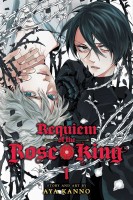
There should probably be “And William Shakespeare” somewhere in the credits above, but I don’t begrudge anyone for leaving it out – this is a very loose interpretation of four of Shakespeare’s earliest works: the famous historical tragedy Richard III, and the less famous and more problematic trilogy, Henry VI, Parts 1, 2, and 3. That’s Henry and Richard on the cover, both looking bishonen and troubled, and surrounded by rose thorns, as is appropriate to the Wars of the Roses. Kanno sticks with much of the basic plot of the Henrys here, but adds her own twists, primarily by having Richard and Henry meet in a secret grove without recognizing each other, and feeling a bond between the two f them. It’s not quite BL, and certainly won’t be once Richard realizes who Henry is, but it’s very shoujo manga.

rrk1

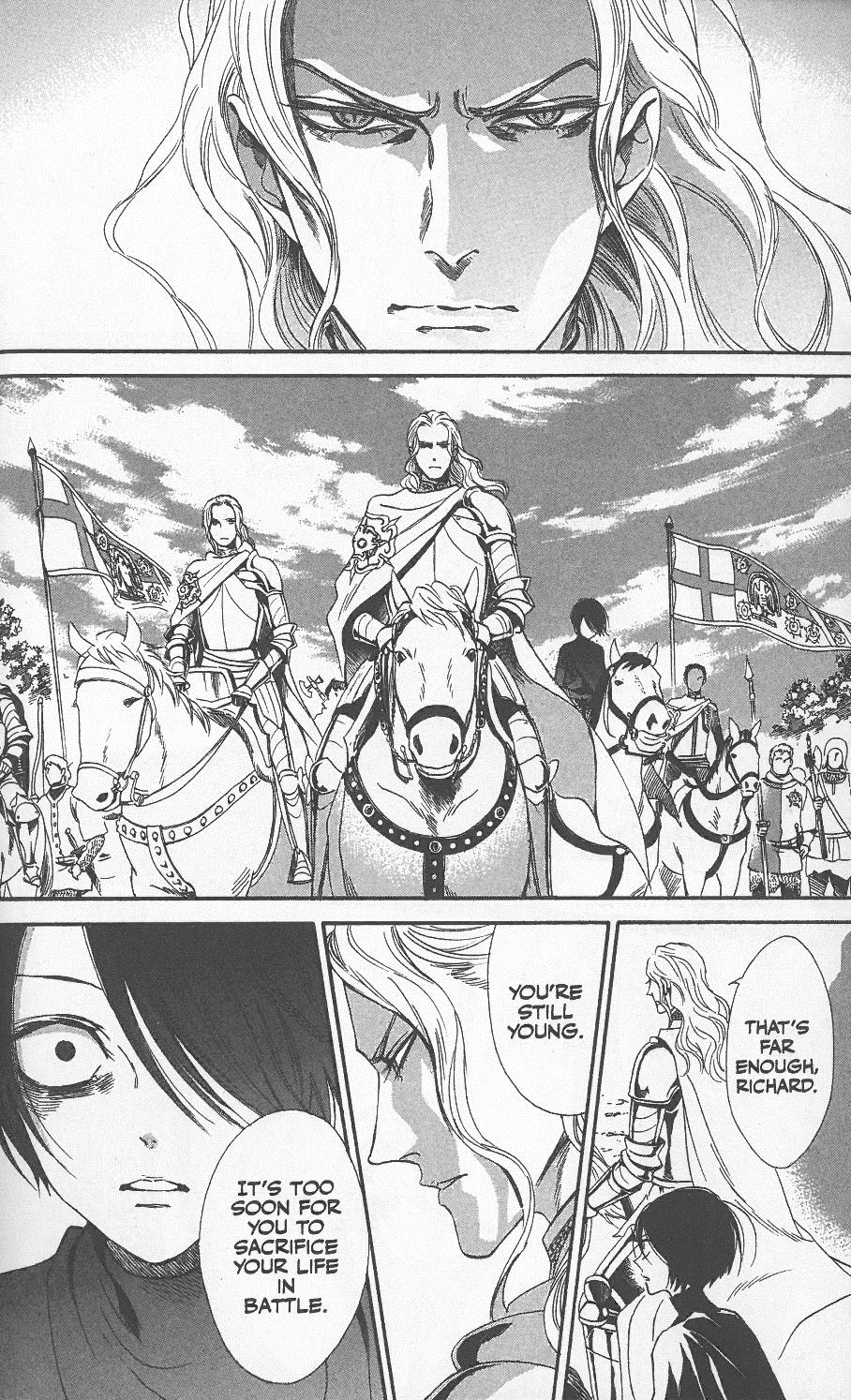
Richard himself is the primary focus, and rightly so. As you’d expect, the portrayal of Richard here is a lot more sympathetic than the villain of Shakespeare’s works. Rather than a deformed hunchback, Richard here seems to be intersex, much to the horror and loathing of his mother. His father doesn’t seem to mind as much, but still thinks Richard is a bit too frail and sickly to go into battle with him against the king – even though he can hear his son’s thoughts at dramatic times in the battle. There’s a nice shot of Richard as a child in the early part of this volume, before we realize that Kanno has shifted things up a bit with his background, where we see him looking almost exactly like Kitaro from the old 60s horror manga. Richard’s identity and body hatred fuels most of his anger and frustration.

Some of the Shakespeare has been left intact, of course. Queen Margaret is handled beautifully – one of Shakespeare’s strongest female roles, she gets short shrift these days as she’s not from a ‘famous’ play, but from the Henrys. She has no respect at all for her husband, and is fully prepared to step onto the battlefield and lead men against those who might claim the crown – and indeed innocents who may happen to be in the way. As for Henry himself, his piousness and weakness as a ruler is also portrayed very well here – he doesn’t want anyone to be hurt, but has no solution to offer except to keep praying. Kanno’s art excels here – a shot of Margaret looking down on Henry curled up in a ball, her face filled with disgust, is probably my favorite in the whole book. Oh yes, and the late Joan of Arc is here as well, her spirit seemingly haunting Richard, which fits with the negative portrayal of her in Shakespeare’s works, and adds a nice supernatural element to the mix.

Those who loved Otomen won’t find too many similarities here – this is a deliberate tonal change of pace from her previous series, filled with drama, intrigue, and betrayal. And a few battles, including one with Richard’s father the Duke of York that forms the cliffhanger of this volume. If you like Aya Kanno and Shakespeare, this is a very good pickup for you.

Filed Under: REVIEWS

Manga Giveaway: UQ Holder! Giveaway

February 25, 2015 by Ash Brown

Despite being the shortest month of the year, for me February always seems to stretch on forever. With that in mind, I thought it oddly appropriate to offer for this month’s giveaway a manga that features immortals. Specifically, this month you will all have the chance to enter for a chance to win the first volume of Ken Akamatsu’s most recent series UQ Holder!, a sequel of sorts to his manga Negima!: Magister Negi Magi, as published in English by Kodansha Comics. (Don’t worry if you’ve never read Negima!, UQ Holder! can be easily read on its own.) As always, the giveaway is open worldwide!

UQ Holder!, Volume 1

At this point it’s probably not much of a secret that I enjoy manga about immortals and the consequences of immortality. Hiroaki Samura’s Blade of the Immortal was one of the very first manga that I read and it continues to be a favorite. (It was even the focus of my first monthly manga review project.) More recently, manga series like Ken Akamatsu’s UQ Holder! and Tsuina Miura and Gamon Sakurai’s Ajin: Demi-Human have caught my attention specifically because immortals are involved. Granted, there are other elements in both of those series that intrigue and appeal to me as well. When it comes to immortals, UQ Holder! is interesting in that it features a variety of characters with different types of immortality; most series I’ve read tend to stick to just one.

So, you may be wondering, how can you win a copy of UQ Holder!, Volume 1?

1) In the comments below, tell me a little about your favorite immortal from a manga. (Never encountered an immortal in your manga reading? Simply mention that instead.)
2) For a second entry, name a manga featuring immortals that hasn’t yet been mentioned by me or by someone else in the comments.
3) If you’re on Twitter, you can earn a bonus entry by tweeting, or retweeting, about the contest. Make sure to include a link to this post and @PhoenixTerran (that’s me).

It’s as easy as that. Each person is able to earn up to three entries for this giveaway and has one week to submit comments. Giveaway entries can also be emailed to be directly at phoenixterran(at)gmail(dot)com. (I will then post your comments here in your name.) The giveaway winner will be randomly selected and announced on March 4, 2015.

VERY IMPORTANT: Include some way that I can contact you. This can be an e-mail address in the comment form, a link to your website, Twitter username, or whatever. If I can’t figure out how to get a hold of you and you win, I’ll just draw another name.

Contest winner announced–Manga Giveaway: UQ Holder! Giveaway Winner

Filed Under: FEATURES Tagged With: Ken Akamatsu, manga, UQ Holder

Lucifer and the Biscuit Hammer, Vols. 3-4

February 24, 2015 by Sean Gaffney

By Satoshi Mizukami. Released in Japan by Shonen Gahosha, serialized in the magazine Young King Ours. Released in North America by Seven Seas.

I’ve discussed before how series can sometimes be plotted in “short/medium/long” ways in Japan. The short is if the series is a failure – 2-3 volumes and it’s done. Long is when a series is a huge hit and basically can run as long as the author needs or editors demand. And mid-sized tends to be in the 10-20 volume range, where it’s a big enough hit to get room to grow. Biscuit Hammer falls into the second category, and I am happy that it has its ten volumes (or 5 omnibuses). That said, sometimes you can hear the screeching noises as the author realizes it’s not going to be cancelled and rolls out the rest of the plot. Having spent the first two volumes keeping the focus primarily on three people, these next two add the entire rest of the cast, plus the villain over the space of only a few chapters. It can feel exhausting.

biscuit3

That said, the cast is not without interest. Seeing two middle-school girls as two of the knights is rather jarring, and I liked the determination of the oldest of the knights to keep them out the battles, even as that quickly becomes moot. We get what seems to be the standard ‘childhood friends with secret crushes’ pair, only to realize that the girl is not only odd but a little worrying – given what happened with the Dog Knight, I wonder if she’ll survive the book. There’s not just youngsters, though – a 42-year-old ex-cop is one of the knights, an agent for justice whose cynicism won’t let him believe in it anymore. And the Swordfish Knight, now dead, gets probably the best backstory of the group, though it starts off in a ridiculous manner.

Then there’s our villain, Animus – assuming you aren’t thinking that the villains are our two heroes, who have after all vowed to destroy the Earth as well. He seems the typical smiling villain – he’s already corrupted one of the Knights, and goes after a second, though he’s unsuccessful – but he’s too laid-back to really fall into that stereotype – indeed, that may be a bit more disturbing, as his calm placidity works even better. I liked his intellectual faceoff with the Cat Knight, whose smackdown that gaining knowledge just for the sake of having it is a useless goal.

Overall, though, much of this omnibus feels like setup – lampshaded by Animus, who calls off the attack golems about 1/3 of the way through the book so that the author can show off his new characters and give us their backstories. It’s nice to learn about them, even if some seem a bit underdeveloped still, such as the Snake Knight. But I didn’t enjoy this quite as much as the first omnibus due to the sound of the grinding gears I heard in the background as the author realized he now has room to stretch things out. I’m still very interested in seeing how things go, though, and the next volume looks likely to have more action, if the cliffhanger is anything to go by.

Filed Under: REVIEWS

Gone Girl by Gillian Flynn

February 23, 2015 by Michelle Smith

gone-girl-book-cover-medDescription:
On a warm summer morning in North Carthage, Missouri, it is Nick and Amy Dunne’s fifth wedding anniversary. Presents are being wrapped and reservations are being made when Nick’s clever and beautiful wife disappears. Husband-of-the-Year Nick isn’t doing himself any favors with cringe-worthy daydreams about the slope and shape of his wife’s head, but passages from Amy’s diary reveal the alpha-girl perfectionist could have put anyone dangerously on edge. Under mounting pressure from the police and the media—as well as Amy’s fiercely doting parents—the town golden boy parades an endless series of lies, deceits, and inappropriate behavior. Nick is oddly evasive, and he’s definitely bitter—but is he really a killer?

Review:
I am one of those people who hears about a new movie generating some buzz and, instead of going to see it, thinks, “I should read the book that is based on.” And so it was that I came to read Gone Girl without actually knowing much about it. To sum up: Nick and Amy Dunne have been married for five years. They were happy at first, but things have not been going well recently. On the morning of their fifth anniversary, Amy disappears and suspicion quickly settles on Nick.

For the first half of the book, narration alternates between Nick in the present and Amy in the past (courtesy of her diary). While Nick deals with the police investigation, a steady stream of unsavory discoveries about him ensues. He has also seemingly inherited his father’s misogynist rage, even if he is better at not speaking those thoughts out loud. Amy, meanwhile, recounts how they met and the early, halcyon days of their relationship before recent entries depict her as afraid that her husband might do her harm. This segment of the novel is perhaps the strongest, as it forces readers to question whether they ought to have sympathy for Nick or not. Dislikable though he may be, some apparently damning incidents are really just due to (occasionally excruciating) ineptitude.

And then there is a big twist, which I shan’t spoil. Alas, rather than making things more interesting, it ushers in a period of boring interludes and exposes even more character flaws, of the “crass and profane” or “snivelly and petulant” varieties. Granted, no one enjoys reading about perfect people, but I usually prefer there to be at least one character to legitimately care about. Still, I carried on, but was beginning to look forward to the book simply being over already. And yet it seemingly refused to end. Something would happen and you’d think, “Okay, that’s the revelation that wraps everything up.” But then it wouldn’t be! It would just keep going.

True, the final twist was something that, although the clues were there, I failed to see coming. So kudos for that. And yet, I find I can’t really recommend the book. I suspect that the movie is much better, because the story is condensed into 149 minutes, and presumably omits Nick’s often odious inner thoughts, but I doubt I’ll ever feel the urge to watch it. I must, however, award some points for the reference to the classic Pace Picante Sauce commercial, as my involuntary reaction to anyone mentioning New York City is to think “New York City?!?!”

Filed Under: Books, Mystery, REVIEWS, Suspense Tagged With: Gillian Flynn

My Week in Manga: February 16-February 22, 2015

February 23, 2015 by Ash Brown

My News and Reviews

Happy (belated) Chinese New Year, everyone! It’s already been a busy season for me with multiple lion dance and taiko performances for the lunar new year over the last few days (with more to come!), but was I still able to get some reading and writing in, too. Last week was another two-review week at Experiments in Manga, except this time both in-depth reviews were actually of manga. First up was my review of Ken Niimura’s collection of short manga Henshin, which I enjoyed immensely. Niimura is actually a Spanish artist, but Henshin was first released online by the now sadly departed Ikki manga magazine. The second review was of Gamon Sakurai’s Ajin: Demi-Human, Volume 2. I had enjoyed the first volume, but things are starting to get really good with the second. Hopefully the trend continues.

So, earlier this year I wrote a quick take of Under the Sign of Capricorn, the first release in the new English-language edition of Hugo Pratt’s Corto Maltese comics. Much to my surprise, I ended up getting a brief mention in an Italian article about Americans’ responses to the comic. (I’ll admit, that was pretty cool.) Elsewhere online, Vertical’s survey for recommendations for Spring 2016 manga licenses is currently underway. Viz Media announced two new manga licenses of its own: Eiichi Shimizu and Tomohiro Shimoguchi’s Ultraman and Kohei Horikoshi’s My Hero Academia. And speaking of Viz, Hope Donovan, one of the publisher’s manga editors, was interviewed over at Panels. I also want to mention Purity, a new Kickstarter project featuring some fantastic creators. Described as a “post-yaoi anthology,” it’s a collection of comics from artists whose work has been influenced in some way by the boys’ love genre.

Quick Takes

BattleAngelAlitaLastOrder5Battle Angel Alita: Last Order, Omnibus 5 (equivalent to Volumes 13-15) by Yukito Kishiro. First of all, I just want to say that I absolutely love the cover of this omnibus; the Space Karate team as a group of rock stars is just about perfect. This may also very well be my favorite installment of Last Order that I’ve read so far. It features epic, over-the-top battles and action as well as some additional backstory. In particular, more about Zazie is revealed. Also, Sechs (who is still one of the characters I like best) plays a major role and gets to be a badass in addition to being an occasional source of comic relief. Although the styles of martial arts in Last Order are fictional, I appreciate that Kishiro actually incorporates small kernels of traditional teachings to create the super-evolved combat forms found in the series. The Space Karate team is prominently featured in this omnibus. As a karateka myself, I get a kick out of the characters and I particularly enjoyed seeing the progression of their tournament fights. Kishiro’s cyborgs and genetically modified creatures allow for some pretty incredible and entertaining combat feats and techniques that otherwise would be impossible.

Food Wars!: Shokugeki no Soma, Volume 2Food Wars!: Shokugeki no Soma, Volumes 2-4 written by Yuto Tsukuda and illustrated by Shun Saeki. While the fanservice certainly hasn’t disappeared from Food Wars!, each volume seems to tone down the overly sexually suggestive imagery a little more. Personally, I generally found the over-the-top reaction shots amusing rather than offensive. They’re becoming more and more ridiculous and absurd, however they may still present a barrier for some people. But to the creators’ credit, at least there’s eye-candy in Food Wars! for all sorts of readers–nudity and bare skin isn’t limited to just one gender. And then there’s the eye-candy for the foodies, too; the dishes in the series are gorgeously drawn. Saeki’s artwork in Food Wars! really is one of the highlights of the series. I’m liking the characters and their designs as well. Plenty more have been introduced in these volumes, all with their own personality quirks and culinary specialties. Which, of course, presents plenty of opportunities for some fantastically epic battles and competition in the kitchen. I also like that Soma isn’t the only student at Totsuki Institute who doesn’t come from a rich, high-class background.

RestartRestart by Shoko Hidaka. Since I’m loving Hidaka’s ongoing series Blue Morning, I figured that I should probably look into her other boys’ love manga that have been released in English. Restart is a collection of manga that includes some of her earliest professional work, including the titular “Restart”–her first story to be published in a magazine. Most of the stories follow Tadashi and Aki, two male models who end up in a relationship with each other. Tadashi is the older and more experienced professional of the two, but his popularity is fading while Aki’s star begins to rise, which understandably causes some tension and frustration. A tangentially related story features a fashion photographer and another young model who has yet to really break into the industry. The other short manga shares no connection with the others. It’s about a college student who was never able to confess his feelings because the young man he was in love with went missing. However, over time he finds himself growing closer to his crush’s younger brother. Perhaps unsurprisingly, I didn’t find Restart to be as compelling overall as Blue Morning but even Hidaka’s early manga exhibit solid story-telling and well-developed characters.

Filed Under: FEATURES, My Week in Manga Tagged With: Battle Angel Alita, food wars, manga, Shoko Hidaka, Shun Saeki, Yukito Kishiro, Yuto Tsukuda

Ajin: Demi-Human, Vol. 2

February 20, 2015 by Ash Brown

Ajin: Demi-Human, Volume 2Creator: Gamon Sakurai
U.S. publisher: Vertical
ISBN: 9781939130853
Released: December 2014
Original release: 2013

I tend to enjoy darker-toned stories about immortals, so I wasn’t particularly surprised that I enjoyed the first volume of Ajin: Demi-Human. The manga series was conceived of by writer Tsuina Miura and artist Gamon Sakurai, but by the second volume it appears as though Sakurai has taken over the story of Ajin as well. (Although, it should be noted that Miura and Sakurai’s pilot chapter for Ajin, “The Shinya Nakamura Incident,” is also included in the series’ second volume.) Ajin: Demi-Human, Volume 2 was originally published in Japan in 2013 while the English-language edition of the manga was released by Vertical at the end of 2014. The first volume of the series established an intriguing premise—immortal beings, considered to be less than human, who are persecuted and subjected to cruel experiments—as well as an exceptionally dark atmosphere, and so I was particularly interested in seeing where Sakurai would take the story next.

Kei is on the run. Recently discovered to be an immortal demi-human—only the third to have been officially confirmed to exist in Japan—he is trying to avoid capture by the Demi-Human Control Commission and hoping to find allies in other immortals. When he is contacted by two rogue demi-humans, Sato (also known as “Hat”) and Tanaka, it seems as though Kei’s hopes have been answered, except for the small matter of the two men having taken his sister hostage. But with a little bit of effort and some unexpected theatrics, Sato is able to readily explain away the kidnapping and even manages to earn Kei’s trust in the process. Though Kei is unaware of it at the time, that misplaced trust will have severe repercussions for him. Sato and Tanaka are very interested in the young man. Not only is he a demi-human, just like the two of them Kei is a variant immortal capable of manifesting and controlling a black ghost. However, it is a power that he has yet to understand or to completely control.

Ajin: Demi-Human, Volume 2, page 61Despite being a large focus of the first two volumes of Ajin and around whom much of the manga’s plot revolves, currently Kei is actually one of the least compelling characters in the series. The people and events surrounding Kei tend to be much more engaging. Sato in particular is a tremendous presence. It is easy to see why he instills such fear among those in the Demi-Human Control Commission—he cannot be controlled. Sato is a coldly calculating and ruthless strategist with extraordinary combat skills and the ability to manipulate both the people around him and the situations in which he finds himself. He is terrifyingly effective in the execution of his plans. At this point only some of those plans have been completely revealed, but it is obvious that Sato is willing to sacrifice anyone in order to accomplish them. In comparison, Kei seems to be incredibly weak-willed and naive, lacking a strong sense of self. Granted, almost anyone would when compared to Sato, but it’s also somewhat understandable since Kei’s entire worldview has been shattered. With his new-found immortality, he is still trying to understand who he is.

Ajin is a very dark and violent manga. The experiments carried out on the demi-humans are brutal and cruel. Generally, the most graphic moments are implied rather than seen, but that makes the torture no less disturbing. Demi-humans, especially those controlling black ghosts, are more than capable of fighting back, though. For example, Sato’s repeated attacks on research facilities associated with the Demi-Human Control Commission and his complete disregard for life are astonishing. Sakurai’s artwork is particularly effective during action sequences, of which there are plenty in the second volume of Ajin. The second volume also addresses some of the social issues surrounding demi-humans, in particular the fact that not everyone feels that demi-humans should be discriminated against just because they happen to be immortal. So far, Sakurai has been able to strike a good balance between the series’ intense action and horror and its exploration of deeper moral and ethical concerns. I’m certainly looking forward to seeing how the series continues to develop.

Filed Under: REVIEWS Tagged With: Ajin, Gamon Sakurai, manga, Tsuina Miura, vertical

Manga the Week of 2/25

February 19, 2015 by Sean Gaffney, Ash Brown, Michelle Smith, Anna N and MJ 1 Comment

SEAN: A fairly sedate last week of the month. Not much from Yen this month, oddly. What will we have to talk about—

DIO: HA! You thought this would be Manga the Week of, but it is I, Dio!

SEAN: Oh right.

Before we get to that, Dark Horse has a very interesting new title coming out: Seraphim 266613336 Wings. A collaboration between Mamoru Oshii and Satoshi Kon, I can only imagine how strange this is going to be. But also highly anticipated.

ASH: I know I’m looking forward to it!

SEAN: Kodansha has a 33rd Air Gear, which continues to be the model all other fanservice-laden roller blade manga aspire to be.

There’s the debut of Maria the Virgin Witch, which would surely have gotten more attention from me if it weren’t surrounded by Kon and Dio. The plot does not interest me, the fact that this is by the author of Moyasimon does.

ASH: That’s what interests me most, too, though I have been hearing good things about the series.

SEAN: And one of my favorite lost causes, The Wallflower, has its 34th volume. I believe the ending is actually coming soon!

jojo1

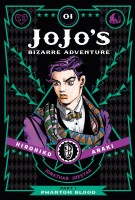
This has been out digitally since September, when I think I featured it here, but man, it deserves to be featured again. One of the most influential, over the top manga of the 20th century, we’ve seen its 3rd arc here before, but now you can see it again for the first time, in deluxe hardcover edition. I refer, of course, to JoJo’s Bizarre Adventure, and trust me, that title is not kidding around.

ASH: I am so excited for this!!

MICHELLE: I have to admit I have never read JoJo’s, even though I’ve had the first three volumes (or, rather, the first three volumes of whatever segment of the series VIZ released) for quite a while. Maybe I would love it.

ANNA: I liked it a ton. The hardcover release is very nice, and I enjoyed all the punching, blood, and references to Aztec sacrificial practices. Also, more punching!

MJ: This seems to be the only title on the list I’m really interested in this week, but I’m *really* interested.

SEAN: One of Yen On’s February releases had to be delayed, so the sole light novel this week is the 2nd A Certain Magical Index. I should mention… it has vampires! Well, sort of. Anti-vampires. Ish?

The 2nd Ani-Imo is out, and I suspect will continue to be as edgy as the first one was. A reminder: technically shoujo manga.

There’s also a 3rd Barakamon, which is also out digitally as of this volume, for those who love digital and were bummed it wasn’t available before.

I keep wishing BTOOOM! Added a new O for every volume it gets to, but to no avail, even at Vol. 9.

MICHELLE: Ugh. I didn’t set out wanting to say “ugh” about BTOOOM!, but now that is my reflexive reaction.

SEAN: The first volume of Gou-dere Sora Nagihara was so over the top in terms of its comedy, fanservice, and general attempts to offend that I’m almost tempted to read this second volume to see if it can keep up the pace. Almost. But not quite.

High School DxD has a 4th volume. I wonder if I’d enjoy it more if the light novel were licensed?

Lastly, we have the final volume of Judge, but don’t worry, more animal-headed survival games are coming soon.

Assuming you’re doing the obvious, what else are you buying besides JoJo’s this week?

ANNA: How could anyone want to NOT buy JoJo’s, is the question!

Filed Under: FEATURES, manga the week of

Nurse Hitomi’s Monster Infirmary, Vol. 1

February 19, 2015 by Sean Gaffney

By Shake-O. Released in Japan as “Hitomi-sensei no Hokenshitsu” by Tokuma Shoten, serialization ongoing in the magazine Comic Ryu. Released in North America by Seven Seas.

As longtime readers will know, I pay far more attention to which company is releasing a manga and what magazine it runs in, for good and ill. Sometimes this can give me a feeling of great anticipation (Love at Fourteen is a good example), and sometimes it can inspire a feeling of dread, such as with this title, which runs in Comic Ryu, home of Monster Musume, which is very, very popular in North America and I simply can’t stand. Luckily, even though it does feature a degree of fanservice and boob jokes, Nurse Hitomi is a far more palatable title, mostly as the fanservice is a distant fourth to its other aims: amusing comedy, amusing drawings of weird creatures, and monsters as a metaphor for teenagers.

hitomi1

This actually puts it closer to its other Comic Ryu neighbor, A Centaur’s Life. But whereas that’s more of a slice-of-life title that takes great pains in its worldbuilding, Shake-O is not particularly interested in why the world of Nurse Hitomi is filled with mythological people hybrids, or for that matter how a bear can father a cyclops. This is a manga that wants to have fun and be silly. And it certainly succeeds there. Hitomi is a nice teacher who genuinely wants to help her kids, but she has no depth perception, making her clumsy, and she tends to try to do everything herself, something pointed out by fellow teacher and childhood friend Kenjiro (you’d think they would have some unresolved tension between them, but sadly Ken is a lolicon, the final joke in the volume and a lousy one to go out on).

Rather than Hitomi, probably the best reason to read this title would be the kids who come to her with unusual problems, some of which are couched in subtle metaphor but most of which are as unsubtle as they come. One girl is horrified that as she gets older her tongue is getting longer and longer, and she can’t control when it comes out anymore. Two childhood friends are going in opposite directions – one is now a giant while the other has shrunk to the size of a 5-year-old. And a shy girl who has trouble speaking up has now found herself literally turning invisible. (To comedic effect – if you want Translucent, go bother Dark Horse.) As you can see, monster teens = puberty. Most of these titles try to have a heartwarming lesson in them, but the lesson is secondary to the humor, and that’s just fine.

There’s other things going on here – Hitomi’s assistant, Itsuki, seems to be gender-ambiguous, though Itsuki mostly exists to poke gentle fun at Hitomi. The story of the giant girl and her small friend has an undercurrent of yuri – though only an undercurrent – and I hear future chapters may do the same thing. For the most part, though, despite the occasional ‘this looks like tentacles but it’s really not’ art and ‘why are people staring at my large breasts’ jokes, this is a fairly cute and innocent look at teens and their problems, couched in monster language. It’s not essential, but if you like unusual comedies, give it a try.

Filed Under: REVIEWS

Henshin

February 18, 2015 by Ash Brown

HenshinCreator: J. M. Ken Niimura
U.S. publisher: Image Comics
ISBN: 9781632152428
Released: January 2015
Original release: 2014

J. M. Ken Niimura is probably best known for his collaboration as an illustrator with writer Joe Kelly on I Kill Giants, an award-winning American comic that was completed in 2008. Among many other honors, the work earned Niimura and Kelly the top International Manga Award in 2012. A Spanish artist of Japanese descent, Niimura currently lives and works in Tokyo. Henshin is his first major Japanese publication. The collection includes thirteen short manga that were originally released online between 2013 and 2014 on the website for Ikki, a magazine that has been the home to some of my favorite mangaka, before finally being collected into a single volume. (An interesting sidenote: I Kill Giants was also published in Japan by Ikki Comix.) Henshin was subsequently released in Spanish in 2014 by Norma Editorial and in English by Image Comics in 2015. Out of the three print releases of Henshin, the English-language edition has the largest trim size.

The manga collected in Henshin are short, anywhere from twelve to twenty-eight pages in length. Although there are a variety of genres and styles, the stories generally fall into one of two broad categories: those that are semi-autobiographical, focusing on either Niimura’s creative processes or his love of cats, and those that are fictional narratives largely set in or near Tokyo or otherwise featuring Tokyoites. For the most part, the individual manga are unrelated and stand perfectly well on their own, but the first and last stories do share the same lead characters and there is a running episodic story about Niimura and a cat that lives near his apartment. Henshin includes slice-of-life manga, as well as manga with science fiction and fantasy elements, pieces infused with nostalgia, family and friends, pieces where loneliness and missed connections predominate, stories with a bit of humor, and stories with a bit of sadness.

MerciAlthough the manga in Henshin are all different, they do share some thematic and narrative similarities. The first story, “No Good,” perfectly captures the tone of the volume as a whole. It starts out as a seemingly innocent tale but it suddenly shifts into something completely unexpected and outlandish. Most of the stories in Henshin have some sort of twist to them that require the reader to reconsider and reevaluate everything that has come before. Those surprising plot developments may be humorous, touching, absurd, disconcerting, or even morbid, in any combination. In Japanese, “henshin” means transformation, metamorphosis, or change, which is exactly what the stories collected in the volume have to offer—pivotal moments in which all of a sudden things are no longer the same, demanding a new and different understanding of reality.

Niimura exhibits a range of art styles in Henshin, drawing influence from Asian, European, and American comics traditions. Some of the illustrations are simple caricatures while others are more detailed or involved, some even reminiscent of classic ink wash paintings. The artwork in each of the short manga is tailored to fit the specific story and its mood, but in every case Niimura’s illustrations show impressive narrative strength. In general, Henshin uses minimal text and dialogue—one manga is even completely wordless—relying on the artwork (which performs magnificently) to actively aid in the telling of the stories. Henshin is an excellent and rather delightful collection of charming and quirky short manga that, in all of its strangeness and occasional absurdity, remains emotionally relevant and carries an impact. I enjoyed Henshin immensely and hope to have the opportunity to read more of Niimura’s comics and manga in the future.

Filed Under: REVIEWS Tagged With: Image Comics, J. M. Ken Niimura, manga

Bookshelf Briefs 2/16/15

February 16, 2015 by Sean Gaffney, Anna N and Michelle Smith Leave a Comment

This week, Sean, Anna, & Michelle look at recent releases from Seven Seas, Yen Press, and Viz Media.

centaur5A Centaur’s Life, Vol. 5 | By Kei Murayama | Seven Seas – This volume does a god job of balancing out the slice-of-life and the worldbuilding. ON the one hand we have chapters like the one with Kyoko and her brother, which reassures us that despite both being goat/human hybrids they’re still a typical family with rivalries and brattiness. On the other you have the last chapter, showing the history of how the centaurs gained rights, with this world’s Napoleon promising them freedom if they fight under his command. And in the middle we see Suu and her childhood friend appear to talk about manga romances not being the same as real life (she seems a bit creeped out). This series is decidedly odd, and that’s what keeps it so readable. – Sean Gaffney

foodwars4Food Wars!, Vol. 4 | By Yuto Tsukuda and Shun Saeki | Viz Media – With a minimum of fanservice, and a good heaping help of classic Shonen Jump tropes, this is the best volume of Food Wars! to date. Soma’s battle with Shinomiya is really Megumi’s battle, and she shows off once again why she’s an amazing chef if she can just learn to stop panicking. But for Soma, who knows they won on a technicality, the frustration of losing leads to self-harm (don’t worry, it’s just punching a wall). And while the last volume saw Megumi on the verge of expulsion as the cliffhanger, here we see Soma in the same situation, as his breakfast menu has not gained any support. There’s also the usual bevy of eccentric characters and amusing one-shot gags, and it may just be the lack of ‘this food is making me having an orgasm’ pages, but I’ve come to love this. – Sean Gaffney

happymarriage10Happy Marriage?!, Vol. 10 | By Maki Enjoji | Viz Media – In our final volume, most everything gets resolved. What I appreciated most was the implicit realization that both Hokuto and Chiwa married too soon, and how to fix that without simply breaking up, as they do love each other dearly. That said, they just can’t stop getting on each other’s nerves, and it’s fitting that the final chapters show off how they’re always going to be fighting each other, and have simply come to accept it. The series has existed on that sort of tension, so doesn’t just want to get rid of it with an overly soppy ending. But they’re married – again – and Chiwa may be pregnant, so all is well. The marriage parts of this were, in the end, the victor over all the ‘Hokuto’s backstory’ parts. – Sean Gaffney

honeyblood0Honey Blood: Tale Zero | By Miko Mitsuki | Viz Media – This volume collects the first chapters of Honey Blood, where we get a previous version of the story that is a bit more humorous and improbable, and the heroine has a slightly less strong personality. I think the changes in the version for the two volume manga were for the better, but it was interesting to get a peek into the creative process involved in reworking a story for longer serialization. The volume is rounded out with some additional short stories, one featuring a tomboyish girl with a crush on an aspiring male makeup artist, and a story between a boy and girl next door that doesn’t end well. This volume is probably best for completists only, the other two volumes of Honey Blood stand on their own. While I think this series didn’t completely come together, I’d like to check out other works by Mitsuki, because I did enjoy the art and aspects of the plot. – Anna N

roseprincess2Kiss of the Rose Princess, Vol. 2 | By Aya Shouoto | Viz Media – I was hoping the second volume of Kiss of the Rose Princess would help me decide what to make of this series, but it’s so different from the first—introducing a villain who attacks two knights and kidnaps a third, as well as a weakening seal on the demon lord that can only be repaired with a terrible sacrifice—that I remain kind of baffled. I appreciate the more serious moments, though there is still plenty of unfunny comedy, and it’s really jarring when what could’ve been an important moment is undermined by a stupid gag. Too, I suspect either Shouoto or her editor was a fan of Buffy the Vampire Slayer, because there are a couple of plot elements that are so similar they’ve got me wondering. Still, it’s an improvement overall, and I find myself willing to stick around a bit and see where this goes. – Michelle Smith

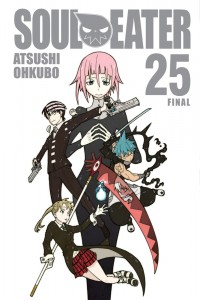
souleater24Soul Eater, Vol. 24 | By Atsushi Ohkubo | Yen Press – I appreciated the reminder midway through this volume of how terrifying the series can get, as Crona’s attack on the infiltrators is something that I will likely have nightmares about. That said, even Crona can’t stop Asura from being the final big bad, and it’s up to Maka, Black*Star and Death the Kid (who has a brief comedic detour back to Earth, the best joke in the volume) and their respective weapons to stop him. We’ve only got one more volume to go, and that sounds about right, as there’s time for one last battle, Shinigami-sama’s death (which is clearly lampshaded here), and a big celebration to end it all. Soul Eater has given us a bizarre skewed shonen manga, right to the end. – Sean Gaffney

toriko26Toriko, Vol. 26 | By Mitsutoshi Shimabukuro | Viz Media – It’s all battles again in this new Toriko, so I have less to talk about. It was interesting to see an actual death of a named character, as Tommyrod is finished off by Sunny in a battle of the disturbing. Meanwhile, Brunch’s battle against a supposed immortal invincible character shows off how little those attributes actually mean in a manga like this. The most troubling battle goes t Toriko, who is almost killed off before revived by the sound of Komatsu crying for him (in case you hadn’t figured out he’s the heroine by now). Is he actually ready to take on Starjun? And is this the real enemy, or is there now a 3rd party gumming up the works? Man, remember when this was all about food? More food, please. – Sean Gaffney

Filed Under: Bookshelf Briefs

My Week in Manga: February 9-February 15, 2015

February 16, 2015 by Ash Brown

My News and Reviews

Last week was a two-review week here at Experiments in Manga. I read and loved Ellery Prime’s Gauntlet, the first novel to have both started and finished in Sparkler Monthly. I’m not sure the review really does the book justice–the story is difficult to write about without spoiling it–but Gauntlet is really good stuff. Ever since reading the novel, I haven’t been able to get it out of my head. (Coincidentally, both Gauntlet and Jen Lee Quick’s marvelous comic Off*Beat are currently on sale!) The second review posted last week was of Setona Mizushiro’s After School Nightmare, Volume 2. So far, the series remains a disconcerting but compelling work. The manga has a lot of dark, psychological drama, which I tend to enjoy, although that can also make it a difficult read from time to time. Many of the characters simply aren’t very nice people. The review is a part of my monthly horror manga review project; next month it will be Mushishi‘s turn again.

On to other interesting reading and news from elsewhere online! The Young Adult Library Services Association has released its 2015 Great Graphic Novels for Teens. The annual list is always worth a look. The manga for 2015 include All You Need is Kill, My Little Monster, My Love Story, Seraph of the End, Summer Wars, Voice Over! Seiyu Academy, Wolf Children: Ame & Yuki (the only manga included on the top ten list), and World Trigger. Over at Organization Anti-Social Geniuses, Laura from Heart of Manga provides The 2015 Shoujo Manga Forecast, a comprehensive overview of the shoujo manga that has so far been announced for this year, listed by publisher and expected release date. And on the Vertical Tumblr there is a post Reviewing the “Best Manga of 2011” from a licensing angle which I found to be particularly fascinating. Speaking of Vertical, three new licenses!–Seraph of the End light novels, Ninja Slayer manga, and KizuMonogatari.

Quick Takes

Air Gear, Volume 32Air Gear, Volume 32 by Oh!Great. This is actually the first volume of Air Gear that I’ve ever read, and the only other manga by Oh!Great that I’ve been exposed to is the very beginning of Tenjo Tenge. From that limited experience, I expected there to be violence and a fair amount of fanservice in Air Gear, and there certainly is. Since I’m not particularly familiar with Air Gear, its plot, or its characters, unsurprisingly I was a bit lost reading the thirty-second volume. It didn’t help that Oh!Great’s use of flashbacks and flashforwards seems haphazard, making it difficult to maintain a firm grasp on the manga’s chronology, and therefore was not as effective as intended. There are only five more volumes in the series and even though I’m unaware of all of the details, it is quite obvious that there has been a tremendous buildup to reach the thirty-second. The volume concludes at least one major battle and leaves several important characters dead. Even though I wasn’t able to follow everything that was going on story-wise, I could still appreciate Oh!Great’s dynamic artwork (beginning with the stunning cover illustration) and the series’ over-the-top action. If nothing else, Oh!Great can draw.

Assassination Classroom, Volume 1Assassination Classroom, Volumes 1-2 by Yusei Matsui. The junior high students of class 3-E are the academic underachievers and juvenile delinquents whom no one else in the school wants to deal with, but they’re apparently also the only ones who have any chance of saving the world from being destroyed. The teens have less than a year to assassinate their teacher, a superpowered tentacle creature who plans on disintegrating the planet after their graduation. Although he has a few weaknesses, Koro Sensei is extremely powerful, impervious to most weapons, and able to move at Mach 20. A successful assassination will require a significant amount of creativity and teamwork. Surprisingly, even though he intends to destroy Earth, Koro Sensei is actually a great teacher who seems to genuinely care about his students, challenging them to better themselves and encouraging them not only in their studies but in their assassination attempts as well. Assassination Classroom is a strange but enjoyable series. 3-E is a class of losers and outcasts who, when given the opportunity and shown that someone actually believes in them, are able to overcome challenges even if they haven’t figured out a way to kill Koro Sensei yet.

From the New World, Volume 6From the New World, Volumes 6-7 written by Yusuke Kishi and illustrated by Toru Oikawa. The manga adaptation of From the New World frustrates me immensely. The story is fantastic, the setting intriguing, and the atmosphere incredibly dark. But overall the manga just isn’t very satisfying, suffering from tonal imbalance and uneven worldbuilding and plot development. Although there’s still some ridiculous fanservice–Saki’s breasts in particular are constantly being emphasized to the point of distraction–these volumes fortunately are mostly lacking in the explicit sex scenes found throughout the rest of the series that seem completely out-of-place and interrupt the narrative flow of the story. The final volume with its dramatic conclusion of the war between the morph rats and the humans, would have been one of the strongest in the series except for the fact that the last chapter, which serves as a lengthy epilogue, slightly fumbles what is perhaps the series’ biggest twist. Quite a few of the reveals in the final volumes likely would have been more powerful if they had been encountered earlier in the story. In the end, I still think what I really want is to read Kishi’s original novel.

Stones of PowerStones of Power by Isora Azumi. A few years ago I read and enjoyed the first quarter or so of Stones of Power when it was initially being serialized in the Gen anthology. The manga has since been collected into a single volume, including material that I believe hadn’t previously been released. Stones of Power is admittedly unpolished and its artwork fairly generic, but there are things I really like about the manga. It mixes the mundane with the supernatural in rather curious ways, especially in the beginning. Fujita is a young man with a passion for fish who ends up being hired to maintain the aquarium at a small cafe. That might not be a particularly strong hook for most readers, but I happen to really like fish and used to keep a tank of my own. It just so happens that the fish Fujita’s been put in charge of are actually dragon gods and the two siblings he works for are fox spirits. From there Stones of Power spins off into an increasingly strange and dangerous situation in which Fujita, who apparently has an unexpected affinity for the occult (or at least the dragons), is unwittingly dragged into a battle between the foxes and an ancient power that threatens the life of an innocent young girl.

Filed Under: FEATURES, My Week in Manga Tagged With: air gear, assassination classroom, From the New World, Isora Azumi, manga, Oh Great, Toru Oikawa, Yusei Matsui, Yusuke Kishi

Nura: Rise of the Yokai Clan, Vol. 25

February 15, 2015 by Sean Gaffney

By Hiroshi Shiibashi. Released in Japan as “Nurarihyon No Mago” by Shueisha, serialized in the magazine Weekly Shonen Jump. Released in North America by Viz.

We’ve come to the final volume of this Shonen Jump series, and as it turns out I had not done a full review of it since the very first. That first review is sort of retroactively hilarious, talking about what was mostly a high school comedy about Rikuo trying to hide his yokai heritage from his friends while dealing with a minor love triangle. Now here we are at the end, and I don’t think we’ve had a volume that wasn’t basically either a giant battle or preparations for a giant battle since around the early teens. When you have a hero that can transform into a handsome badass, and a large cast filled with eccentric but fascinating supernatural creatures, no one cares about your human childhood friend. Sorry, Kana.

nura25

But of course the tradeoff is that, while I’ve basically enjoyed myself throughout the series, there’s been very little to talk about with each individual volume, hence why I’ve kept my comments to the Bookshelf Briefs. Even here, the first half of the book is basically the climax of the final battle, which is as you’d expect – the villain is convinced he’s won, but with the help of all his yokai companion, as well as a reformed villain or two, our hero pulls it out despite risking death (as does his grandfather, who actually meets his wife in “heaven” before returning as his time is not yet over). With everything won, we return to the (somewhat beat up) clan house, where a giant party proceeds to end the volume. Well, except for several side-stories to pad it out to a proper length – by the end of the series, Nura was running in ‘Jump Next’, a side-magazine, which allowed it to have its 80-page finales but also hinted it was being put out to pasture.

And it’s for the best, really, as I’m not sure how much more Nura had to give. It’s always been one of those series that was good but not great, and you can’t see the ‘Final Volume!’ at the back cover without thinking “Oh good”. As ever with Jump series, we’d had an escalating scale of villains, but with the last one basically being a creation of absolute evil, there’s nowhere else to go after that. As for the romance, it was the typical non-romance you get in Jump titles like these. There’s enough tease to keep Tsurara fans happy, and it’s implied Rikuo returns her feelings, but nothing really happens. In a world where we recently saw Naruto trying to pair people up and fail so miserably (I actually do like Naruto/Hinata, but there’s no denying that rushed ‘epilogue’ was pretty miserable), and where Bleach fans await the end of their series with dread and prepared outrage, this seems quite satisfying.

The cover shows us three generations of Nuras, which is good as honestly in black and white I can’t tell them apart, and they’re all smiling and showing off their badass poses. It’s a good cover for a series that has never been amazing or addictive, but more solid and dependable. I enjoyed reading you, Nura. Now… GET OUT!

Filed Under: REVIEWS

Alice in the Country of Joker: Circus and Liar’s Game, Vol. 7

February 13, 2015 by Sean Gaffney

By Quin Rose and Mamenosuke Fujimaru, based on the game by Quin Rose. Released in Japan as “Joker no Kuni no Alice – Circus to Usotsuki Game” by Ichijinsha, serialized in the magazine Comic Zero-Sum. Released in North America by Seven Seas.

This review contains spoilers for the “Bad End” of the visual novels.

Of all the Alice spinoffs, this one is clearly my favorite, and I’ve said why in previous reviews I did for Bookshelf Briefs. The romance between Alice and Blood doesn’t overwhelm the story. There isn’t as much painful filler the way some of the lower-tier Alice spinoffs have, where you can find yourself in Crimson Empire at the drop of a Hatter subplot. But mostly I think I like it as the main plot is very much dedicated to psychological trauma, Alice’s in particular but also everyone else. Time after time in Circus and Liar’s Game we see her back in the prison, with her sister Lorina sitting in a cell that only Alice can open. Joker is taunting her, trying to get her to face up to the memories of her past that she avoids. And the entire rest of the cast tries to stop her, and get her to stay there and not remember.

alice7

We’re never going to get a ‘bad end’ in these spinoffs, and I think it’s a shame, because the more I read of this series the more I think I really want to see it. Alice remembers that her sister is dead, and wakes up back in the real world, clearly older than the franchise has been portraying her, and having apparently been completely devastated by the loss. Thus staying in Wonderland – kept in that “Sunday Afternoon” that Peter White represents – is denial of reality, and the inability to grieve and move on with her life. And it’s clear that the series, in almost all its endings, really wants you to pick ‘denial’. Throughout Circus and Liar’s Game, Alice is tempted by Joker, and we do cheer when Blood confronts Joker and even takes a wound in order to stop her giving in. In the end, she even marries Blood. But is it really a “happy ending”?

There are two reasons I ask this. The first is the epilogue of this volume, where Alice ends up in the Country of Diamonds after a fight with Blood, and is horrified to find that every relationship she’s had is lost. Blood in particular is not the one she knows, even though he’s still willing to protect her if need be. The best part of this is that it’s not Joker tempting Alice to return to reality in this world, but Ace. Ace has always functioned as the most dangerous protagonist, the one who only loves Alice when she’s upset, fretting or struggling. Here she’s his ideal (and it’s worth noting that we see “adult” Ace here, not the teenage one from the Diamonds VN). That said, the epilogue can’t bring itself to destroy its happy ending, and she chooses to return to her Blood, who she wakes up with.

The other interesting thing is what Alice chooses to become, and how it ties into Blood and Vivaldi. As with the main Alice series, their relationship is a key aspect of the plot here. We get flashback hints (which I suspect I’d understand more if I played the game, but that machine translation drives me up the wall) that they aren’t just brother and sister, but were once like Alice herself. And that’s what makes the ending extra disturbing, as Alice’s ‘Outsider’ status is now considered a Role, one she willingly takes on. Does this mean that she has a clock in her chest now? It’s possible I’m reading too much into this, but I think in the end I’m like Ace. I like the Alice series best when it’s troubled, disturbing, and has nasty implications. Even if Alice is getting great sex with Blood and happy endings. This Circus and Liar’s Game has been a terrific look at the psychology of the series.

(Also, Alice looks fantastic in that Negotiator outfit. She should wear it more often.)

Filed Under: REVIEWS

After School Nightmare, Vol. 2

February 13, 2015 by Ash Brown

After School Nightmare, Volume 2Creator: Setona Mizushiro
U.S. publisher: Go! Comi
ISBN: 9781933617176
Released: December 2006
Original release: 2005

The second volume of Setona Mizushiro’s After School Nightmare, a disconcerting shoujo manga series with dark psychological elements, was originally released in Japan in 2005. The English-language translation was published by Go! Comi in 2007. The entire ten-volume series is now out-of-print in English, but happily the individual manga can still be found relatively easily. I had initially read the first few volumes of After School Nightmare by borrowing them from a library before deciding to track down a set of my own. However, I never got around to reading the entire manga until now because, although the beginning of the series immediately captured my attention, the manga was honestly discomforting. The first volume introduces a surreal setting in which dreams can be just as terrifying and damaging as the realities from which the characters would like to escape. After School Nightmare is a manga that is both fantastically strange and oddly compelling.

Conflicted and confused over his gender due to having a body that is neither entirely male nor female, Mashiro has tried to keep his physical condition hidden from others by living his life as a boy, but now that closely kept secret is out. Every Thursday after school, he and a handful of other students participate in a special class required for their graduation. During the class they literally share a dream, or rather a nightmare, together. In the process their true selves are revealed to the other students, and so a few of Mashiro’s classmates have found out about his body. Within the dreams, Mashiro has fallen victim to the cruel Black Knight, another student whose identity he is unsure of but who he suspects may be Sou. In waking reality, Sou has forcibly kissed Mashiro, insisting that he is a girl and even going so far as to declare his love for him. It is not a situation that Mashiro is comfortable with and if he can get up the courage he intends to confront Sou, whether it be in the nightmare or outside of it.

After School Nightmare, Volume 2, page 56Frankly, Sou is a jerk. He may be earnest in his feelings for Mashiro, and he’s at least started to try to reign in his aggressiveness, but he has yet to show Mashiro any sort of respect. I can’t like the guy because of the way he treats Mashiro, however I do still have some sympathy for him. Sou, like all of the other students in the special class, suffers greatly from emotional abuse and trauma. Still, that does not excuse his behavior towards Mashiro. Even so, he is positioned as one of Mashiro’s two potential romantic interests in After School Nightmare, the other being Kureha. Although she has made an exception and is currently dating Mashiro, she hates and despises men. Mashiro and Kureha generally get along, but their relationship isn’t as healthy as it could be, mostly but not entirely due to Mashiro’s continued insecurities over his gender. He seems to believe that his identity is defined and determined by the person he is intimate with. Because he’s desperate to be seen as a man, this calls into question whether or not he’s actually in love with Kureha, or if he’s simply dating her as a way to prove his masculinity.

The shared dreams in After School Nightmare are a way of forcing the students to face and work through the darkness that exists within their hearts and psyches. In theory, those nightmares are supposedly intended to be kept separate from reality, but the two worlds do have an effect on each other. The distorted forms the students take within the dreams can be terrifying, but what really makes them so disturbing are the troubling truths and dark pasts that they reveal. The pain, suffering, and hatred that is readily visible in the nightmares still exists and is present in their waking lives. Usually hidden, suppressed, or otherwise concealed, the prejudices that the students carry within them occasionally erupt violently. The skills and maturity needed to deal with these emotional, psychological, and physical disturbances are at least in part being developed within the dreams. In After School Nightmare, Volume 2, Mashiro begins to learn the importance and power of mental strength and fortitude, but both he and his classmates all still have room to learn and grow.

Filed Under: REVIEWS Tagged With: after school nightmare, Go! Comi, manga, Setona Mizushiro

  • « Go to Previous Page
  • Page 1
  • Interim pages omitted …
  • Page 332
  • Page 333
  • Page 334
  • Page 335
  • Page 336
  • Interim pages omitted …
  • Page 551
  • Go to Next Page »
 | Log in
Copyright © 2010 Manga Bookshelf | Powered by WordPress & the Genesis Framework