• Skip to primary navigation
  • Skip to main content
  • Skip to primary sidebar
  • Home
  • About Us
    • Privacy Policy
    • Comment Policy
    • Disclosures & Disclaimers
  • Resources
    • Links, Essays & Articles
    • Fandomology!
    • CLAMP Directory
    • BlogRoll
  • Features & Columns
    • 3 Things Thursday
    • Adventures in the Key of Shoujo
    • Bit & Blips (game reviews)
    • BL BOOKRACK
    • Bookshelf Briefs
    • Bringing the Drama
    • Comic Conversion
    • Fanservice Friday
    • Going Digital
    • It Came From the Sinosphere
    • License This!
    • Magazine no Mori
    • My Week in Manga
    • OFF THE SHELF
    • Not By Manga Alone
    • PICK OF THE WEEK
    • Subtitles & Sensibility
    • Weekly Shonen Jump Recaps
  • Manga Moveable Feast
    • MMF Full Archive
    • Yun Kouga
    • CLAMP
    • Shojo Beat
    • Osamu Tezuka
    • Sailor Moon
    • Fruits Basket
    • Takehiko Inoue
    • Wild Adapter
    • One Piece
    • After School Nightmare
    • Karakuri Odette
    • Paradise Kiss
    • The Color Trilogy
    • To Terra…
    • Sexy Voice & Robo
  • Browse by Author
    • Sean Gaffney
    • Anna Neatrour
    • Michelle Smith
    • Katherine Dacey
    • MJ
    • Brigid Alverson
    • Travis Anderson
    • Phillip Anthony
    • Derek Bown
    • Jaci Dahlvang
    • Angela Eastman
    • Erica Friedman
    • Sara K.
    • Megan Purdy
    • Emily Snodgrass
    • Nancy Thistlethwaite
    • Eva Volin
    • David Welsh
  • MB Blogs
    • A Case Suitable For Treatment
    • Experiments in Manga
    • MangaBlog
    • The Manga Critic
    • Manga Report
    • Soliloquy in Blue
    • Manga Curmudgeon (archive)

Manga Bookshelf

Discussion, Resources, Roundtables, & Reviews

Features & Reviews

Manga the Week of 11/25

November 19, 2015 by Sean Gaffney, Ash Brown, MJ, Anna N and Michelle Smith 4 Comments

SEAN: Dark Horse are starting to irritate me with sliding release dates lately. Kodansha do it too, but at least they give a week’s notice or so. In any case, Kurosagi Corpse Delivery Service’s second omnibus is NOT coming out this week, sorry. (And let’s not even talk about what’s happening with Diamond Comics.) As for next week, let’s take a look.

Theoretically, the 2nd Oh My Goddess! omnibus is hitting comic shops next week. But see above.

Kodansha has a giant pile of stuff out next week (well, comparatively, we’re not talking Viz or Yen piles here). The 2nd Inuyashiki seems to feature our young villain on the cover.

The Seven Deadly Sins is doing really really well in Japan, so you know will not be ending with next week’s Volume 11.

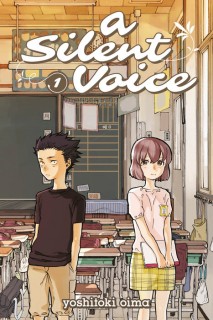
A Silent Voice has another volume, and I wonder if our leads will get closer or if events will conspire to destroy their lives again. Or both!

ASH: So far, I’ve been pretty impressed with this series.

SEAN: Tsubasa Reservoir Chronicle reaches its 6th omnibus, and I think we’re nearing peak crossover here.

UQ Holder also has a 6th volume coming out. I enjoy it, but can’t find much to say about it.

The final omnibus of Lucifer and the Biscuit Hammer is out, with the 9th and 10th volumes. It’s such a great series, and it has a great ending as well. Buy it.

mushoku1

Mushoku Tensei: Jobless Reincarnation is next week’s debut from Seven Seas. A NEET with a somewhat aimless life dies saving someone from a speeding car, and ends up reincarnated in a world of sword and sorcery, determined to make his life better. I know very little about this.

MJ: I’d be completely intrigued if “Seven Seas” didn’t make me suspicious about the content being… not for me.

SEAN: And there’s the penultimate volume of The Sacred Blacksmith.

And a new Witch Buster omnibus, with Vol. 15-16.

Vertical has a 5th volume of adorable comedy My Neighbor Seki. (Well, adorable unless you’re Yokoi.)

ASH: I continue to be utterly delighted by My Neighbor Seki.

MJ: Yes.

SEAN: Yen has moved their digital releases to a week after their print ones, possibly to save our Manga the Week of column the aggravation. I appreciate it. A lot of debuts, starting with Aphorism, which is a survival manga, meaning I don’t care. It’s a long-running series, though…

Crimson Prince is also a long-running series, and is a comedic supernatural fantasy, which means it definitely has an audience here.

ANNA: Is this shojo or shonen? Inquiring minds want to know!

SEAN: It runs in Shonen Gangan, but remember Square Enix doesn’t have a shoujo magazine. Many readers call it shoujo.

ANNA: Yay!

MJ: Ooooooh.

SEAN: There’s a second volume of Demon King Ena-sama Goes to a Manga School, which let’s face it is not the sort of title you’d see licensed here 15 years ago.

ANNA: Probably not!!!!

SEAN: Renaissance Eve’s description also makes it sound a bit like a survival manga, but it also says “blood” a lot, so maybe it has vampires as well?

se1

Scarlet Empire gets two volumes released, and seems to be a sort of Edo period samurai manga with time travel. Which sounds awesome, frankly.

ANNA: This does sound awesome! I am officially intrigued.

SEAN: This runs in GFantasy, so you can definitely assume it’s as close to shoujo as they get.

ANNA: Double yay!!!!

ASH: Well, now. That does sound intriguing!

MJ: I will basically try anything from GFantasy. In case you didn’t know that already.

MICHELLE: It’s always nice when things that weren’t on one’s radar before suddenly attain “must investigate” status.

SEAN: Sekirei is a harem manga with piles and piles of fanservice, and here is Vol. 1. At least with a digital release you can read it on a bus without showing everyone the cover art.

ASH: Heh.

SEAN: Lastly is Servant x Service, a comedic office worker comedy which has its first two volumes out digitally this month, and gets a print omnibus in April. It’s from the creator of Working!.

Does this list make you give thanks?

Filed Under: FEATURES, manga the week of

What Did You Eat Yesterday?, Vol. 8

November 19, 2015 by Ash Brown

What Did You Eat Yesterday, Volume 8Creator: Fumi Yoshinaga
U.S. publisher: Vertical
ISBN: 9781941220238
Released: May 2015
Original release: 2013

I have been a fan of Fumi Yoshinaga’s manga for quite some time now, so I was very happy when her series What Did You Eat Yesterday? was licensed for release in English. Although I’ve enjoyed all of Yoshinaga’s translated work, I was particularly interested in What Did You Eat Yesterday? because it promised and has since proved to be a manga realistically portraying the lives of two gay men (and boyfriends) living together in Japan. As can be safely assumed from the title of the series, What Did You Eat Yesterday? also happens to be a food manga, which is another niche genre that I especially enjoy. Unsurprisingly, with its well-developed characters a touches of humor, I find the series immensely appealing. What Did You Eat Yesterday?, Volume 8 was originally released in Japan in 2013 while Vertical published the English-language edition of the manga in 2015.

As a lawyer, Shiro often finds himself involved in sorting out other people’s relationships, helping to resolve child custody disputes and providing divorce consultations and such. In many ways, this allows him to better appreciate his relationship with his boyfriend Kenji. Shiro isn’t always the most outwardly or physically demonstrative with his affection, especially when in public or when compared to Kenji’s exuberance, but the two men have built a comfortable life together. Their relationship has its ups and downs, just like any other couple might encounter, though being gay in contemporary Japan still has its own particular challenges. While Kenji’s family is largely supportive, Shiro’s parents are still adjusting to the fact that their son is in committed relationship with another man and has been for years. Thankfully, both Kenji and Shiro have close friends and acquaintances who have no problems whatsoever with the two of them being together.

What Did You Eat Yesterday?, Volume 8, page 53While Shiro and Kenji are obviously a couple, What Did You Eat Yesterday?, Volume 8 offers several scenarios in which they’re actually acting as a couple. I honestly enjoyed all of the stories collected in the volume, but two that particularly stood out to me explicitly showed them as boyfriends. The first story featured a trip where the two of them visit Kyoto together for Kenji’s birthday in which Shiro acts more stereotypically romantic and boyfriend-like than he has during the entire rest of the series, stunning Kenji in the process. Granted, the underlying reason for Shiro treating Kenji to such an extravagant vacation is a little heartbreaking when it is revealed. A story taking place a few months later sees Kenji and Shiro baking brownies together to celebrate Valentine’s Day, which is all sorts of sweet and wonderful. That chapter is also an excellent example of how the food and recipes included in What Did You Eat Yesterday? can be directly incorporated into the story itself. Some chapters are more successful at this than others–occasionally the food in the series comes across as being tangential–but I absolutely love when Yoshinaga pulls it off well.

The relationships between the characters of What Did You Eat yesterday?, often expressed through the sharing and enjoyment of food, are a crucial part of the series. There are many different types of relationships portrayed, but What Did You Eat Yesterday?, Volume 8 in particular reminded me of the importance of family relations in the manga. Just like in real life, the opinions and actions of family members can have a tremendous impact on an individual. The eighth volume reveals more about Kenji’s family circumstances when he returns home on the occasion of the death of his father. The acceptance shown to him by his mother and his sisters and their children was comforting to see, giving hope that in time Shiro’s parents, too, will be able to more fully accept their son. Family isn’t necessarily limited by law or blood in the series, either–Shiro ends up becoming a godfather of sorts when the daughter of one of his friends has a baby. And, of course, there is the small family made up of Shiro and Kenji themselves. Though they have their disagreements, What Did You Eat Yesterday? makes it clear that they greatly care for each other.

Filed Under: REVIEWS Tagged With: fumi yoshinaga, manga, vertical, what did you eat yesterday?

Ranma 1/2, Vols. 21-22

November 17, 2015 by Sean Gaffney

By Rumiko Takahashi. Released in Japan by Shogakukan, serialized in the magazine Shonen Sunday. Released in North America by Viz.

I discussed in my last review that the reader of Ranma 1/2 has to hit that sweet spot of caring enough about the characters to want to read more, while also not caring enough about them to take them too seriously. Nowhere is that more evident in Ranma than with how Takahashi deals with parents. She’s always had issues with parents, especially fathers, being mined for comedy, and even today in Rin-Ne we have one of the worst fathers she’s ever introduced, which is impressive in a career that’s give us Mr. Fujinami and Genma Saotome. So when we have the opening story here, where we’re meant to wonder if Genma really does have deeper emotions and feelings, it doesn’t quite ring true for us, as we’ve seen 20 volumes of him being a gigantic uncaring ass.

ranma 21

And of course that’s exactly what she wants us to think. She’s going for humor, and having the characters believe that Genma might care about his son while having the reader know better is why we’re here. What we’re left with is a fairly standard Ranma comedy arc of about three chapters, but you are reminded that Ranma lived almost his entire life on the road with only Genma to teach him, which explains much. It sets up the best story in this collection, which is the introduction of Ranma’s mother, Nodoka Saotome, who has come to the Tendos in search of her long-lost husband and son. Naturally, they are still long-lost because (say it with me) Genma is an ass, and Ranma is getting dragged into it with him.

Nodoka is a new character, and gets a more serious introduction than what we’ve seen before (witness the introduction of Mariko in the cheerleading arc, which is pure 100% silliness from moment one). There are signs she could be used for comedy, mostly based around her somewhat disturbing tendency to carry around a sword in case she has to decapitate her husband and son for being dishonorable. But for the most part Nodoka herself is treated seriously, and the comedy comes from Genma’s increasing efforts to hide Ranma’s male identity from her. Indeed, Ranma reflects on the fact that he never even knew he had a mother, and Nabiki, of all people, reminds him that the Tendos will never have the ability to see their mother again, so he should reach out more. (Takahashi immediately undercuts this with Nabiki charging him for hiding his identity, but we’re used to that from this author.)

Sadly, this wonderful arc is followed by one of my least favorite. It’s not that it’s poorly written – on the contrary, Ranma is painfully in character. Everything about the ‘reversal jewel’ arc plays into Ranma’s biggest weakness, his pride and his ego, and thus he cannot stop trying to get Shampoo to fall in love with him again, even when everyone else realizes “you idiot, this solves your problem!”. It also has a lot of Mousse, which I also tend to dislike, but at least he’s been dialed back to desperate here, as opposed to madman, and we’ll see more of that in the next volume.

But this is life with reading Takahashi, and Ranma in particular. Every arc you like that shows off the sweet, heartwarming sides of our characters is followed by showing off their petty, vengeful sides. Never grow, never learn. We’ll see if that keeps up with the next omnibus, which features one of the most beloved arcs (by the old 90s Ranma fandom, at least) of the entire series.

Filed Under: REVIEWS

Bookshelf Briefs 11/16/15

November 16, 2015 by Sean Gaffney, Anna N and Michelle Smith Leave a Comment

The Bookshelf brigade brings you beaucoup des briefs!

bodacious2Bodacious Space Pirates: Abyss of Hyperspace, Vol. 2 | By Chibimaru | Seven Seas – This is definitely one of those movie adaptations where they assume you know everything about the source, and having not seen the BSP anime yet, I did feel at times like I was missing something. It also feels a bit cut short, but that’s not uncommon for movie adaptations. The humor is very well done, though, with Chiaki’s horrible day, and Grunhilde’s play script to allow for dramatics. In the end, though, it’s the story of a young boy and his feelings for his father, as well as that father’s legacy. It shows space is cool, computer viruses and conglomerations are bad, and that goodness and rightness will always win in the end. This was fluff, but pretty fun. -Sean Gaffney
centaur7A Centaur’s Life, Vol. 7 | By Kei Murayama | Seven Seas – I’m quite fond of manga that transcend genre and surprise you, but I think A Centaur’s Life may be taking it a bit too far. Some of the chapters are terrifying, such as the alien invasion story taking place in this world’s equivalent of the deep south (complete with casual racism by the father figure), and a land-grabbing story which seems to show that the snake people are literally infiltrating in order to gain some sort of political advantage? But then there’s more scenes of toddler centaurs using the toilet, and I just throw my hands in the air. Some of the cute stuff is quite cute, mostly involving the teenager monster kids—I liked seeing Nozomi’s rival/twin—but honestly, this series needs focus desperately. -Sean Gaffney

evergreen3Evergreen, Vol. 3 | By Yuyuko Takemiya and Akira Caskabe | Seven Seas – The angst is dialed back a bit in this volume (though there’s still a fair amount) in favor of heartwarming first-love type scenes, with Hotaka and Niki finally together and being self-conscious, blushing and adorable, as most teens are. More surprising to me was that On-chan wasn’t a nickname, but her real last name—and that she is at least able to admit to herself, and Soga, that she likes him. Which comes as a surprise to Soga, and possibly the reader. The trouble is he’s the sort to push people away, and he does so beautifully here. The bigger trouble is that next volume is the last, and I think it has a bit too much plot left to wrap up smoothly. We shall see. -Sean Gaffney

kissrose7Kiss of the Rose Princess, Vol. 7 | By Aya Shouoto | VIZ Media – It’s hard to believe this series is nearly over! Time surely flies. It’s also impressive just how much it has improved over the course of its run. Now I actually kind of care who Anise ends up with romantically, and was completely surprised by a plot twist that, had I been inclined to think critically, I might have seen coming. There’s a nice dramatic atmosphere to this volume, too, with much emphasis on this being their “last day,” so it seems as though the story will barrel on through to its conclusion, leaving behind the unfunny comedic gags that bothered me about early volumes. I’m pleasantly surprised to be looking forward to the finale. – Michelle Smith
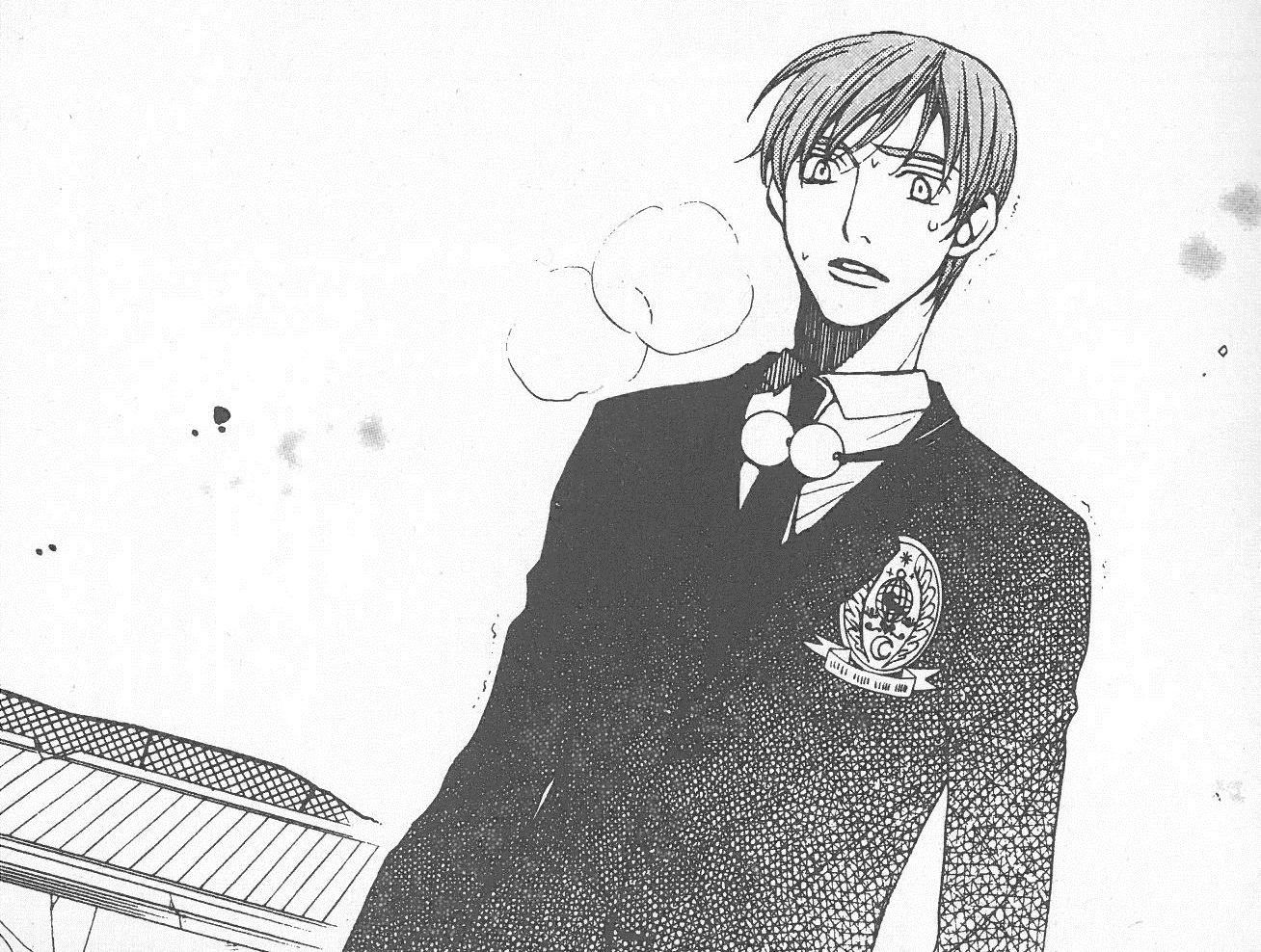
libwars14Library Wars: Love and War, Vol. 14 | By Kiiro Yumi and Hiro Arikawa | Viz Media – This volume contains all the thing I love about Library Wars: romance, action, convoluted statements about censorship, and evil being foiled. The Library Forces continue to advocate for an author who is being censored by trying to smuggle him out of the country. In the process Dojo gets wounded and Kasahara is left to deal with the situation on her own. As a librarian, the reference to IFLA amused me greatly. This series is might not be the flashiest shoujo series but it is consistently good, and I put down each volume with a smile. – Anna N

maidsama3-4Maid-sama!, Vols. 3-4 | By Hiro Fujiwara | VIZ Media –Although I lost count of how many times Usui put his hands on Misaki without her consent, these two volumes seemed to tone down his obnoxiousness level to some extent. Oh, he still attempts to be controlling, but the emphasis is more on Misaki being capable in her own right, and there were even a couple of moments between them that I liked. (I liked the “girls are not weak and delicate” message, too.) Still, I can’t help but feel that a character as great as Misaki really deserves to be in a different manga with a better love interest. I would be super happy if she were completely unaffected by his overtures and just called him out for being a tremendous ass, but alas, that is not how shoujo manga works. I hope my respect for Misaki can make it through this series intact. – Michelle Smith

nozaki1Monthly Girls’ Nozaki-kun, Vol. 1 | By Izumi Tsubaki | Yen Press – I’ve been looking forward to Monthly Girls’ Nozaki-kun for a long time, and it didn’t disappoint. Talented artist Chiyo Sakura has a crush on brawny Umetarou Nozaki, but when she attempts to confess her feelings, he thinks she’s a fan of his manga and recruits her to be his assistant. This is a 4-koma manga, so what follows are strips about Nozaki coming up with ideas, being inspired by kooky classmates, trying to grasp the logic of dating sim games, and accidentally drawing BL doujinshi. The layout and sensibility are 4-koma—thus far, most characters have a single personality trait—but it also is basically telling a chronological story, which I like. While it might not have made me laugh outright, I did smirk and snerk often, and I will definitely be continuing with this one. – Michelle Smith

Filed Under: Bookshelf Briefs

My Week in Manga: November 9-November 15, 2015

November 16, 2015 by Ash Brown

My News and Reviews

Last week was the first week of the temporary adjustment in my posting schedule at Experiments in Manga. I’ve got a lot going on right now and not enough time to do everything that I need to or would like. Hopefully I’ll have some good news to share soon, though! (I don’t want to jinx anything by saying too much, yet.) Anyway! Last week I reviewed Mushishi, Volume 6 by Yuki Urushibara as part of my monthly horror manga review project. I’ve read the series before so I already know that I like it (in fact, it’s a favorite of mine), but I’ve really been enjoying my reread.

A few interesting things that I came across online last week: Netcomics hinted on Twitter that it would have some exciting licenses to announce soon. Dark Horse has confirmed that it will be releasing Kenji Tsuruta’s Wandering Island. And Kodansha Comics has licensed Hiro Mashima’s Fairy Tail Zero prequel. The English Light Novels site has an interview with light novel translator Stephen Paul. And Shojo Beat posted the first part of an interview with Arina Tanemura.

Quick Takes

Monster Musume: Everyday Life with Monster Girls, Volume 4Monster Musume: Everyday Life with Monster Girls, Volume 4 by Okayado. I suspect it’s at least in part due to the enormous success of Monster Musume that Seven Seas has been able to expand its catalog and take a few more risks with its licenses of late. Monster Musume has been a bestseller since the release of its very first volume. I’m not exactly a member of the manga’s target audience though and so I haven’t really been keeping up with it. But I can easily understand why it’s so popular. And there actually are a few things that I like about the series in addition to the things that I don’t particularly care for. I enjoy the absolutely atrocious puns and wordplay, for one. I also appreciate the variety of monster girls and that new races are always being introduced. Considering the highly-sexualized nature of the manga and the obsession with breasts and nipples, the story can at times be surprisingly sweet and endearing. Kimihito is a legitimately nice guy who honestly cares for the well-being of the liminals that he meets and is put in charge of. Ultimately however, there’s no question that Monster Musume is an ecchi harem fantasy.

Noragami: Stray Go, Volume 6Noragami: Stray God, Volumes 6-7 by Adachitoka. The fifth volume of Noragami ended with one heck of a cliffhanger so I was very much looking forward to reading more of the series. The sixth volume is excellent and probably my favorite volume of the manga to date. It brings Yato and Bishamonten’s battle to an effective close, but there will still be lingering consequences and repercussions of the fight that will have to be dealt with moving forward. After the intense drama, emotions, and action of the sixth volume, Adachitoka takes the seventh in a different direction, bringing back some of the manga’s humor and goofiness while still building the underlying tension of the series. As the next story arc begins, new characters and antagonists are introduced and additional backstories are explored. One particularly important revelation is that Yato’s very existence is somewhat precarious, which is why maintaining his ties to other people is so critical. I’ve largely enjoyed the series since the beginning, but Noragami is starting to get really good. I’m like seeing the evolution of the characters and the changing dynamics of their relationships.

Showa: A History of Japan, 1953–1989Showa: A History of Japan, 1953-1989 by Shigeru Mizuki. Each volume of Showa has been massive, but this final installment covers the longest period of time. In fact, the fourth volume provides an outline of more years than the first three volumes combined. 1953-1989 follows Japan through the country’s postwar period, the falls and rises of the economy, and the political turmoil and change of the era. Woven into the history of Japan is Mizuki’s own personal story. One of the reasons that the fourth volume of Showa especially appealed to me was that it explores a bit of manga history as well, following Mizuki’s start and growth as a mangaka including the management of a studio of assistants. Sanpei Shirato, Ryoichi Ikegami, Yoshiharu Tsuge, and many other prominent creators and editors all make appearances. Mizuki’s interest in yokai is shown to become increasingly important as well. The final volume of Showa also includes some of Mizuki’s color work, which I’d never seen before. Mizuki’s black and white manga is great, but some of the color illustrations are simply stunning.

Filed Under: FEATURES, My Week in Manga Tagged With: Adachitoka, manga, Monster Musume, Noragami, Okayado, Showa: A History of Japan

Mushishi, Vol. 6

November 12, 2015 by Ash Brown

Mushishi, Volume 6Creator: Yuki Urushibara
U.S. publisher: Del Rey
ISBN: 9780345501660
Released: November 2008
Original release: 2005
Awards: Japan Media Arts Award, Kodansha Manga Award

I discovered Yuki Urushibara’s award-winning manga series Mushishi more by chance than anything else, but it quickly became a favorite and I made a point to collect the manga as it was being released in English. I’m very glad that I did–replacing my copies would cost a fair amount since Mushishi is currently out-of-print and increasingly difficult to find. Fortunately, Kodansha Comics released the entire series digitally in 2014. Mushishi, Volume 6 was first released in print in English in 2008 by the now defunct Del Rey Manga. In Japan the volume was initially published in 2005, the same year that the series’ first anime adaptation began airing. (The Mushishi anime is also a personal favorite and I re-watch it frequently.) In addition to being popular enough to warrant multiple adaptations in a variety of different media over the course of its publication, Mushishi was also a recipient of a Japan Media Arts Award and a Kodansha Manga Award.

Mushi are creatures which are invisible to most and which few people truly understand. But even so, they are an integral part of the natural world, said to be very similar to the original form of life. Mushi’s influences on humans, though not necessarily intentional or malicious, can be both good or bad depending on the circumstances. Some people, like Ginko, have made a profession out of studying mushi. These mushishi gather and share invaluable knowledge about mushi and about the world. By closely observing mushi and their environment, mushishi are able to recognize signs of impending disaster, explain what would seem to be the unexplainable, and identify when and where balance to the natural order must be restored to avoid dire consequences. The work of mushishi is inherently dangerous as they are frequently dealing with the unknown, but their perseverance can also be extremely rewarding, allowing them to some extent to leverage and even control the abilities of mushi for their own purposes.

Mushishi, Volume 6, page 133Mushishi, Volume 6 collects five chapters of the series. Except for the presence of Ginko and mushi, none of them are directly related to one another, however three of the stories deal in some fashion with the powerful phenomenon known as kōki. Whereas mushi could be considered primordial, kōki is an even purer and more basic form of life from which the varied multitude of mushi originate. Kōki is portrayed as a river of light, the glowing liquid proving to have both harmful and healing effects depending on how it is used. Mushi are intensely attracted to these rivers and will seek them out. In “Heaven’s Thread” this becomes a problem for humans living near the light flow–mushi that prey on other mushi sometimes catch a person instead. Humans can also be infected by decaying kōki, as is seen in “The Hand That Pets the Night,” negatively impacting families for multiple generations while also benefiting them. The third story in Mushishi, Volume 6 delving into kōki is “Banquet in the Farthest Field” in which a sake brewer unknowingly attempts to replicate the taste of the liquor of life with unintended consequences.

The other two stories collected in Mushishi, Volume 6, while still unrelated, both explore the loss of a loved one. Mushi’s involvement in “The Chirping Shell” is actually fairly minimal as the chapter focuses on a man coming to terms with the tragic death of his wife and learning to forgive in the face of an even greater imminent tragedy of which the mushi are an omen. “Under the Snow” is likewise about a young man in denial who is grieving the loss of the life of his little sister. In this story snow-like mushi literally suck the heat from his body, but they also serve as a metaphor–because of his sister’s death Toki has become numb to the people and the world around him. Many of the stories in Mushishi can be read on multiple levels like this, which is one of the reasons that I love the manga so much and find it so enjoyable to read and reread. The series frequently feels like a collection of folktales and stories of the supernatural, but at its heart Mushishi is very often about an individual’s personal struggle when confronted by something in their life beyond their control or understanding.

Filed Under: REVIEWS Tagged With: del rey, Japan Media Arts Award, Kodansha Manga Award, manga, mushishi, Yuki Urushibara

JoJo’s Bizarre Adventure: Battle Tendency, Vol. 1

November 12, 2015 by Sean Gaffney

By Hirohiko Araki. Released in Japan as “Jojo no Kimyou na Bouken” by Shueisha, serialized in the magazine Weekly Shonen Jump. Released in North America by Viz Media.

There was a bit of a worry in the Jump editorial offices when the 2nd part of this series began, Araki tells us, as Jump rarely killed off the hero and then kept going. This is why Joseph Joestar is a clone of his grandfather in terms of looks. Thankfully, he doesn’t act remotely like his grandfather, and we get to enjoy seeing a hero who is far more in the mold we’re used to today: brash, immature, confident, and a bit of a jerk. But he loves his grandma, and when it turns out that an ancient evil is upon them once more, he drops everything and bikes to Mexico to figure out what’s going on. Once again, no one does things in JoJo, they overdo them.

jojo2-1

The first half of this omnibus gives us a lot to work with, as Joseph Joestar arrives in New York City and immediately starts beating up cops, making friends of black pickpockets, and dealing with an old ally from the first series who has now turned evil fifty years later as he seeks to find a way to keep himself young and powerful. Yes, Straizo is our initial villain, as he and Speedwagon are no longer brothers in arms (see what I did there?), but he’s mostly just a teaser to show off that Joseph is starting out this series with an innate knowledge of the things Jonathan had to learn. Not that there won’t be training arcs in this series, but Joseph has an advantage from the start. He’s also cocky, with his tendency to predict the corny lines people will say to him endearingly dickish.

It’s a good thing that he has such a strong personality, as the rest of the cast doesn’t get as much of a chance to shine. Speedwagon and Erina are still around, but their function is the same even as they’ve become elderly: stare in awe at what is going on around them and comment aloud on it. Smokey too doesn’t do much here except be a standard sidekick, and he doesn’t even get to go to Mexico with Joseph. Indeed, the other character who gets the most development is one of the villains, von Stroheim (not named after a band, but a film director this time), who is a Nazi trying to use the newly discovered Pillar Men to help Hitler, but rapidly finds himself in over his head.

Those who enjoyed the first arc of JoJo’s should not be too worried about things being different here. Joseph may be a different personality, but the author isn’t, and there’s lots of things like his using Coca-Cola or cacti as amazing weapons to please the reader who just wants to see… well, bizarre things. This is a manga that can make a line like “How did he stop my Hamon-infused spaghetti al nero?!” into dramatic climaxes, and we wouldn’t have it any other way. The cliffhanger also implies that Jonathan wasn’t the only one to leave badass descendants. Fans of ridiculous Jump manga will find this is more ridiculous than the ones most influenced by it.

Filed Under: REVIEWS

Manga the Week of 11/18

November 11, 2015 by Sean Gaffney, Ash Brown, Michelle Smith, MJ and Anna N 2 Comments

SEAN: Next week sees the release of Monthly Girls’ Nozaki-kun from Yen Press. And some other books, I guess.

ASH: Woo!

SEAN: We’ll start with the 2nd omnibus of Kurosagi Corpse Delivery Service from Dark Horse, which if you haven’t read the series yet, and aren’t already getting Nozaki-kun, is well worth your time.

ASH: Definitely. Kurosagi is a delightfully quirky horror manga.

smh

SEAN: Shigeru Mizuki’s examination of the Showa years was fascinating but a bit low on actual Hitler himself, so now we get a one-volume manga from Drawn & Quarterly tackling that exact subject, Shigeru Mizuki’s Hitler.

Cage of Eden 19 from Kodansha is close to the end, and hasn’t had anyone die horribly in a while, so may get a bit serious here, possibly.

My Little Monster 11 will also likely be series as it deals with fallout from the last volume.

MICHELLE: Painful, yet wonderful. I love this series.

SEAN: Noragami has its 8th volume, and has gotten quite popular, the sort of popularity that Nozaki-kun will soon have.

Yamada-kun and the Seven Witches has a 5th volume of comedy, supernatural abilities, and teasing of bisexuality that is unlikely to ever deliver.

ASH: But one can hope!

SEAN: From One Peace, we have the first volume of the manga adaptation Rise of the Shield Hero, whose novel OP released earlier. It runs in Comic Flapper, always a good thing in my book.

MJ: I need to give this a look.

SEAN: Seven Seas gives us a 7th volume of Devils and Realist, which is I assume still battling over hell.

Evergreen gives us a 3rd volume of angst, teens with wasting illnesses, and “are they siblings or lovers?” back and forth.

Haven’t You Heard? I’m Sakamoto gives us a 2nd volume of Sakamoto being awesome. If you like this sort of series, go get Nozaki-kun as well.

ASH: Yes and yes.

ooku11

SEAN: I am very angry at Viz for releasing the 11th volume of Ooku next week, as it means that I likely won’t have a unanimous Pick of the Week for Monthly Girls’ Nozaki-kun.

MICHELLE: And this is the final volume of Ooku, as well, I believe.

MJ: I’m pretty psyched about this.

ASH: I think it might still be ongoing! (Or at least I hope.)

MICHELLE: Well, I’ll be! You’re right! Volume 12 just came out in Japan last week.

SEAN: Luckily, the 9th Terra Formars will not have that problem.

And a 2nd Ultraman volume is out as well.

ASH: The first volume ended with a pretty great hook; the series has definite potential.

SEAN: Yen On has 4 novels (Monthly Girls’ Nozaki-kun is not based on a light novel, in case you were wondering). Accel World 5 will hopefully be a bit lighter in tine after the first few leaning heavily on teen drama.

A Certain Magical Index’s 5th volume gives us an attempt to rehabilitate its previous horrible villain, as well as an adorable loli. But don’t worry, Touma and Misaka are in it as well.

Durarara!! has a 2nd volume, which focuses on a serial slasher who is making life chaotic in Ikebukuro… so situation normal for this series.

Log Horizon gives us a 3rd volume, which is I think the first of a two-parter. Will it continue to lean on politics, or will we get more battles?

You’d think Yen Press would release Monthly Girls’ Nozaki-kun by itself this week, but no, they also have 19 other releases. To start off, a 5th volume of creepy shoujo manga Ani-Imo.

Are You Alice? is up to double digits and has perhaps answered that by now. It’s headed for an ending, but not there yet.

Black Butler gives us Vol. 21. You can also now enjoy the individual chapters if you want instant gratification.

bride7

It’s time for our annual release of A Bride’s Story with Vol. 7. It will no doubt be excellent no matter what, but who will it focus on?

MICHELLE: I really need to get caught up on this but now I’m so far behind it’s daunting.

MJ: This is always a treat!

ASH: I love A Bride’s Story so much!

SEAN: BTOOOM! is at Volume 12 and shows no sign of stopping. I would say this proves there is no God, but the existence of Monthly Girls’ Nozaki-kun makes me reconsider that.

MICHELLE: Meanwhile, I have no desire to get caught up on this.

SEAN: I wasn’t impressed with The Devil Is A Part-Timer! High School!!, but perhaps a 2nd volume will try to do more with the high school AU premise.

The Disappearance of Nagato Yuki-chan looks like it might wrap up its love story in this volume, and the cover certainly looks like a final one. It is final? Nope.

A new series from Yen. No, not Nozaki-kun, that will be coming. Instead it is Dragons Rioting, a series that features a boy with an illness that kills him if he gets aroused, lots of big-breasted fighting women in high school, and runs in Dragon Age. Don’t say I didn’t warn you.

MICHELLE: Ugh.

MJ: Just reading the premise makes me want to die.

SEAN: Final Fantasy Type-0 Side Story Vol. 2 is the sort of series that exhausts me just typing it out.

High School DxD has a 7th volume, in case BTOOOM! and Dragons Rioting weren’t enough for you.

The Honor Student at Magic High School is a spinoff of a novel Yen licensed but had to delay, so once again we get the spinoff first. Hopefully I won’t get too spoiled.

Inu x Boku SS is rapidly heading to a climax with its 9th volume.

Is It Wrong To Try To Pick Up Girls In A Dungeon? has its 3rd manga volume, for those who avoid novels.

And there’s a 3rd omnibus of Karneval, which reminds me I still need to read the 2nd.

nozaki1

At last! the moment we’ve all been waiting for! The debut of Izumi Tsubaki’s Monthly Girls’ Nozaki-kun! You’ll laugh! You’ll cry! You’ll grow as a person. Well, no, you’ll only laugh. but that’s enough. BUY THIS.

ANNA: I am excited about this! I am going to buy it! Have I mentioned that I’m excited about this? I really really am!!!!

MICHELLE: Me, too! Especially after volume 19 of Oresama Teacher was so good! I’m in a Tsubaki state of mind!

MJ: After all the hype, how can I possible turn away?

ASH: You can’t! You must become one of us!

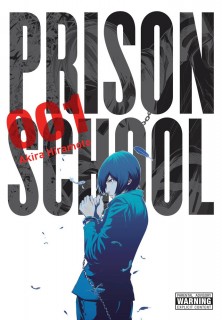
SEAN: It feels like an anticlimax to discuss books after Nozaki-kun, but here they are. A 2nd Prison School omnibus will continue to be the Prison School-iest manga ever.

ASH: Definitely not a series for everyone, but I’ll be reading more of it.

SEAN: Puella Magi Tart Magica is not over with Vol. 2, I hear, but still stars Jeanne D’Arc, so I can’t expect happy things.

School-Live! just had an anime air this past summer (Gakkou Gurashi in case you wondered), and this is the manga source, from Manga Time Kirara Forward. It’s supposedly a cute Kirara school club series… but let’s just say, expect zombies.

Secret has a 3rd volume, and yes, they’re still wearing animal masks.

Lastly, I could say something about the third Trinity Seven volume, but I will instead remind you to pick up Monthly Girls’ Nozaki-kun.

Besides that, what else are you getting next week?

Filed Under: FEATURES, manga the week of

Yukarism, Vol 4

November 10, 2015 by Anna N

Yukarism Volume 4 by Chika Shiomi

I’ve always liked manga by Chika Shiomi, and even though my favorite of her works is the older title Night of the Beasts, her art and storytelling skills have progressed greatly over the years. Yukarism’s final volume is a great way to wrap up the series, coming to a conclusion with a few nice plot twists that make it not at all like a standard supernatural shoujo manga.

As this series unfolded, we’ve seen the present day characters grow more and more affected by the past. Yukari is starting to show symptoms of illness that mirror the sickness of the courtesan Yumurasaki, while Mahoro is taking on the supernatural powers of Takamura. Edo bodyguard’s protectiveness is manifested in Satomi in the modern day. Not only are personality traits crossing over to the present day, as the volume progresses the past is physically manifesting in the present. While it seems like the present day trio is doomed to repeat the tragedy from the past, Shiomi manages to wrap things up in a much more satisfying and hopeful way.

I don’t want to give too much away of the resolution of the manga, but I thought it was very nice that the inevitable love triangle in most shouojo manga was sidestepped. Most of the problems of the past centered around the trio not communicating clearly with each other and making assumptions, and in the present day the high school students manage to work things out both in their own lives and for the spirits that possess them briefly. Even situations that seem very threatening get resolved, but not without enough of a struggle that the happy ending feels unearned.

Shiomi’s art is always clear and easy to follow, but the level of detail in the flashbacks to the Edo period, combined with the way the past is portrayed as bleeding into the present in this volume makes the illustrations stand out. In the hands of a lessor artist, the events could easily be a muddled mess, but both spirit possession and the physical struggles are portrayed with clear techniques that never confuse the reader. I honestly would have been happy if this series were stretched out over another volume or two, but by the end there is resolution for each character, both past and present. There’s a depth of emotion in this concluding volume that shows how Shiomi is able to be so precise in planning out her story, it never feels unearned. Yukarism is a series that I’m going to keep on the shelves for a long time, and I’m going to look forward to reading it again.

yukarism4

Filed Under: REVIEWS Tagged With: shojo beat, viz media, Yukarism

Idol Dreams, Vol. 1

November 10, 2015 by Sean Gaffney

By Arina Tanemura. Released in Japan as “31 Ai Dream” by Hakusensha, serialization ongoing in the magazine Melody. Released in North America by Viz.

There are bits of humor sprinkled throughout the first volume, but in my opinion the funniest part of Idol Dreams comes in the author’s notes afterwards, where Tanemura talks about how she landed this assignment. She’s no longer exclusive to Shueisha, so lots of companies wanted her, and Hakusensha asking her for a magical-girl manga for adults. This intrigued Tanemura, who signed up right away with Melody, Hakusensha’s hybrid josei/shoujo title. And then the editor urged her to get rid of all of the things she’s gotten so used to when working at Ribon – flowery SFX, lots of wacky gags, extensive drawings of clothing – to the point where the editor supposedly said “get rid of everything that makes it a Tanemura series”. I’m with the editor, though – Idol Dreams feels refreshing and new in a way a lot of her recent Ribon work did not.

id1

When I first read the description of the series, I had assumed it was some sort of “Peggy Sue” story, where the heroine would go back in time and try to do her life over again better this time. It’s actually a different genre altogether – as the editor said, it’s a magical-girl story for adults, and will be very familiar to those who recall early series such as Tezuka’s Marvelous Melno or Creamy Mami, which featured little girls taking age pills that magically made them into adult idol singers. Indeed, Tanemura fans may recall Full Moon, which also had a premise like this. In Idol Dreams, though, the lead character, as seen on the cover, is a 31-year-old office worker who’s on the verge of losing it – she’s basically staked everything on a happy high school reunion, only to have everything fall apart when the fact that she’s still a virgin is screamed out loud by a classmate.

It’s startling to see Chikage, after this and a couple of other humiliations, actually trying to kill herself by drowning in the local river. But ultimately it leads to a different kind of fantasy, as another high school friend (who has a crush on her that he still can’t quite blurt out – and a girlfriend, which makes it harder still) has some magical – sorry, unproven scientific – age regressing pills that will make her body like a 15-year-old for a few hours. What are the odds that she would be scouted immediately as a replacement for an idol? Or bond with the troubled young genius singer of a boy band? Or find herself in a forbidden romance (which she really should know better about, we’ll see how future volumes develop yet another of the popular ‘age-difference’ relationships)?

So here we have a magical girl heroine who doesn’t go home and do homework after her battles, but goes out and gets drunk instead. Despite what Tanemura and her editor said, this isn’t totally far off from her usual titles, but it’s taken in a slightly new direction and has that fresh feel to it. I look forward to seeing where she takes us.

Filed Under: REVIEWS

My Week in Manga: November 2-November 8, 2015

November 9, 2015 by Ash Brown

My News and Reviews

Keeping this short and sweet because boy do I have a lot of stuff going on right now! Last week at Experiments in manga the Barakamon manga giveaway winner was announced. The post also includes a list of manga with prominent countryside settings for anyone interested in exploring some of what has been published in English. As for the first in-depth manga review of the month, I took a look at Junji Ito’s Cat Dairy: Yon & Mu which I found to be highly entertaining. I expected that I would at least like the manga, but I absolutely loved its weird mix of not-exactly-horror and comedy.

A few things of interest that I came across online last week: The most recent Sparkler Podcast focuses on what it’s like Working in the Manga Industry. (The podcast is currently only free for Sparkler Monthly members. Non-members can either purchase it now, or simply wait a few weeks.) Over at Anime New Network, Deb Aoki has been talking to the folks at Kodansha about the upcoming Attack on Titan anthology and bridging the gap between American comics and manga. Finally, Seven Seas slipped in a new license announcement: Monster Musume: I ♥ Monster Girls, a yonkoma spinoff from Okayado’s main series.

Quick Takes

My Little Monster, Volume 10My Little Monster, Volume 10 by Robico. The last few volumes of My Little Monster have been getting progressively more serious to the point where, overall, the tenth seems to hardly have any humor at all. This is quite a change from the beginning of the series where the manga’s balance leaned more towards comedy and the more humorous aspects of the interactions between its oddball characters. I did really like this volume, though. Basically, Haru’s past and present are now colliding and the results are appropriately dramatic as everyone involved deals with the fallout. There are hurt and conflicted feelings, and many complications and frustrations. For one, Haru’s family circumstances are more fully explained, showing how the intense antagonism between him and his brother came about and just how awful a person their father is. A significant portion of My Little Monster, Volume 10 actually explores the story through the perspective of Haru’s brother Yuzan, which I was glad to see. He’s still not particularly pleasant, but being able to better understand his and Haru’s situation makes him less of an enigma and a much more sympathetic and interesting character.

Suikoden III: The Successor of Fate, Volume 6Suikoden III: The Successor of Fate, Volumes 6-11 by Aki Shimizu. I still haven’t played any of the Suikoden games, although based solely on the manga adaptation of the third, it’s likely a to be franchise that I would enjoy. I liked the first five volumes of Shimizu’s Suikoden III, but the final six cemented my appreciation for the manga–it’s a solid epic fantasy series with both magic and military might. Although it is a video game adaptation and in a few places the RPG mechanics can be seen if one is looking for them, the manga stands very well on its own and doesn’t really feel too game-like. The second half of the series more fully delves into the antagonist’s backstory which was needed as his motivations are much more complicated than would initially appear. One of the things I like the most about the Suikoden III manga is that nothing is strictly good or evil, the characters and their actions are more nuanced than that. Under the weight of war and inherited responsibilities they must all try to hold onto their ideals while at the same time making compromises in order to protect what and who they love. Enemies become allies and in some cases even friends, but it is a hard journey.

Taimashin: The Red Spider Exorcist, Volume 2Taimashin: The Red Spider Exorcist, Volume 2 written by Hideyuki Kikuchi and illustrated by Shin Yong-Gwan. Although all six volumes of Taimashin have been translated into English, only the first two were released in print; the other four volumes are only available digitally. It’s been a long while since I’ve read the first volume in the series, but I do distinctly recall liking it, or at being enthralled by Akamushi Fujiwara, the titular Red Spider Exorcist who may be a human, a demon, or something else entirely. Reading the second volume, Akamushi still fascinates me and is probably my favorite part of the manga. For the most part I would classify Taimashin as a horror manga although, as I’ve come to expect from Kikuchi’s works, it also has distinct elements of science fiction and fantasy. While it doesn’t always make a lot of sense, the manga can be both thrilling and creepy. This is actually something else that I associate with Kikuchi–he writes these bizarrely engaging stories with ominous atmospheres that end up being all over the place. Taimashin‘s artwork fits the story and characters particularly well, ranging from Akamushi’s otherworldly beauty to scenes that are frankly grotesque.

Filed Under: FEATURES, My Week in Manga Tagged With: Aki Shimizu, Hideyuki Kikuchi, manga, My Little Monster, Robico, Shin Yong-Gwan, Suikoden, Taimashin

Bookshelf Briefs 11/9/15

November 9, 2015 by Sean Gaffney and Michelle Smith Leave a Comment

Sean and Michelle weigh in on some new manga from Kodansha Comics and VIZ Media!

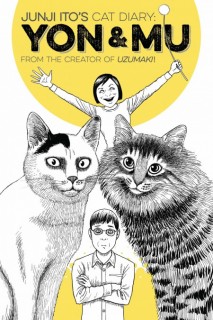
catdiaryJunji Ito’s Cat Diary: Yon & Mu | By Junji Ito | Kodansha Comics – I laughed, I cried, it was better than cats. Seriously, though, I enjoyed this tremendously. Manga artist J-kun is less than enthusiastic about his fiancée’s creepy-looking cat, Yon, coming to live with them in their pristine new home. Soon, however, he is learning to wield a cat toy in an appropriately tantalizing manner, attempting to convince a cat to sleep on his bed, and worrying desperately when kitten Mu has a health scare. There are some great examples of non-verbal storytelling here—I especially like the depiction of the battle for cat tower supremacy—and fabulous panels capturing the frenzy of kitties at play. It’s not all light-hearted, but that just makes it more wonderfully poignant. Very highly recommended. – Michelle Smith

maidsama3-4Maid-sama!, Vols. 3-4 | By Hiro Fujiwara | Viz Media – There are several things I enjoyed in this volume, such as the fact that Aoi’s desire to dress in women’s clothing isn’t treated as something perverse or strange, and basically anytime Misaki shows off how much she cares about everyone around her and how observant she is. But Usui continues to suck the joy out of the series. It’s not just that he’s perfect and does everything effortlessly—I’ve loved characters like that before. It’s that his presence makes Misaki weaker, and I don’t mean because she’s falling in love with him, I mean she becomes a weaker character in general. This puts me in the odd position of reading a romantic comedy for everything but the romance. Oh well. – Sean Gaffney

nisekoi12Nisekoi, Vol. 12 | By Naoshi Komi | Viz Media – There’s no overarching plot for this volume, which instead gives us a series of one-shots that seem like a Nisekoi’s Greatest Hits in a way. We show off Raku’s bond with Chitoge, his bond with Onodera, Onodera’s sister being jealous and also falling for Raku at the same time, Tsugumi’s continued issues with self-worth and self-hatred, Ruri’s stoic awesomeness, and everyone waffling about the love quadrangle. It all ends up at a summer festival, where the need to keep up the pretense of dating and the fairly large number of people who know that this is a false front hits a wall. It leads to a good cliffhanger. Overall, though, this is pretty much just killing time while the author spins out some longer plot points for the future. – Sean Gaffney

onepunch3One-Punch Man, Vol. 3 | By ONE and Yusuke Murata | Viz Media – There’s an expansion of the cast in this new volume, with several new heroes who may or may not crop up again. We also get a sense of the organization behind it, and how superheroing in this area has a lot of political back and forth behind it. But the series lives and dies on Saitama, and his reactions and lack of reactions are what make it worthwhile. There’s a lot of these here, and I’m not sure which I like more, his honestly inspirational speeches about perseverance to a superhero thinking of quitting, or his flat ‘what’ gaze at… well, many, many things. All this plus actual female heroes in the series, even if they’re just cameos. I look forward to seeing where this goes next. – Sean Gaffney

oresama19Oresama Teacher, Vol. 19 | By Izumi Tsubaki | VIZ Media – I never thought I’d say “wow!” about a volume of Oresama Teacher, but volume nineteen delivers! I absolutely loved the fairy-tale feel to the first few pages, where we get an inkling of the arrangement between Momochi and Hanabusa—it really gets one in the mood for what follows. And what does follow is Kurosaki, Yui, and Saeki going to Hayasaka’s house after he fails to return to school after being suspended, and discovering all sorts of things about his life, not the least of which is his first name. Tsubaki-sensei imbues the palatial Hayasaka home with a nicely creepy, “it was a dark and stormy night” sort of feeling, but in the end the truth of it all is both better and worse, and actually ties in with some things we’ve noticed about Hayasaka in the past. Tsubaki-sensei deserves a gold star for this one! – Michelle Smith

sayilove10Say “I Love You,” Vol. 10 | By Kanae Hazuki | Kodansha Comics – Given this runs in a sort of josei magazine in Japan (Dessert is one of those ‘borderline’ cases), I’m actually surprised that it took until the 10th volume to see the events that happen here. It makes sense, though—the main couple doesn’t have nearly as many issues as, say, My Little Monster, and given that the main obstacle to a deeper love has been Mei’s own self-worth issues, once those are dealt with with a truly wonderful and heartwarming Christmas, it feels earned. What’s more, the reaction of her friends is excitement and joy, something I also greatly appreciated. Each volume of this series builds on the last, and my only concern is that I expect some roadblocks to keep the manga active. -Sean Gaffney

yukarism4Yukarism, Vol. 4 | By Chika Shiomi | Viz Media – It is refreshing to read a series that seems exactly the right length, without plots drawn out or cut short. In its final volume, we get a resolution of the ongoing magical time-travel reincarnation, and it involves lots of self-sacrifice, anguished screams, and quite a bit of blood as well. The threat of a love triangle was always defused once we knew the relation of Kazuma and Yumarasaki, and instead we get misguided obsession, followed by forgiveness. I am also pleased that things were resolved without a mindwipe returning it all to the way it was before—that’s how it was headed, but the author refused to go down that road. This manga gets my vote as the biggest surprise of 2015—it’s a keeper. -Sean Gaffney

Filed Under: Bookshelf Briefs

One Piece, Vol. 76

November 8, 2015 by Sean Gaffney

By Eiichiro Oda. Released in Japan by Shueisha, serialization ongoing in the magazine Weekly Shonen Jump. Released in North America by Viz.

Let’s get the bad out of the way right off the bat: Rebecca has not remotely lived up to the hopes I had for her as a character. The reunion with her father, with all the overtones of “you should never have been a fighter, I’m so sorry you had to be strong and not a princess that needs protecting” left a bad taste in my mouth, and I’ve given up on it being subverted at this point. Unfortunately, this is not a sentiment that’s unique to One Piece, as we’ve seen it in countless manga and anime before this. I had hoped Oda might avoid it, but no, there it is. Luckily, it’s a low point in an otherwise excellent volume, so let’s talk about the rest of it.

OnePiece76

I have occasionally wondered if I praise Usopp too much, but then I wander on to forums and see more people talk about how useless he is, and so therefore I think no, there is not enough praise. Because he’s hella awesome here, taking out Sugar AGAIN with the help of a truly weird power from a minor character and what I believe is actual haki, which we haven’t heard much about since right after the timeskip. We’d seen Coby use it before, but it’s still awesome to see that a power that is basically “I am enforcing my will on reality” can be used not just by the brute force heroes but by support folks like Usopp.

Speaking of which, Robin and Usopp both have small speeches in this volume where they talk about their devotion to Luffy, and it’s worth noting how much of being a pirate captain in One Piece is creating a cult of personality around yourself. Luffy doesn’t do this deliberately, of course, but those who follow him know that he is the one, they one they can dedicate everything they have to protect and serve. It’s even given a parody over the last few volumes with Bartolomeo, whose idolization of the entire Straw Hat crew is a takeoff of the typical fanboy. It’s worth noting that Robin does not denigrate this love the way others have, though (and that she calls him rooster, I love that she still tends to give nicknames to everyone), as she’s a convert as well.

Meanwhile, Luffy and Law (finally out of the seastone cuffs) are ready to face off against Doflamingo, which means that we get two things that One Piece is most famous for – chaotic final battles with lots of punching, and flashbacks to explain a character’s tragic past, this time Law’s. Sure, we also get a bit of Doflamingo’s, which has a bit of a ‘fallen angel’ vibe to it, but Law, with his tragic white lead poisoning and massacre of his entire homeland (hmmm, seems familiar… Doflamingo even points this out, saying complete genocide is a standard World Government tactic) is the one we’re meant to feel bad for. This story leads us to the cliffhanger for this volume, and I suspect will take up the majority of the next. When it finishes, will we be finishing the Dressrosa arc? Don’t hold your breath. But keep reading One Piece anyway.

Filed Under: REVIEWS

Golden Time, Vol. 1

November 7, 2015 by Sean Gaffney

By Yuyuko Takemiya and Umechazuke. Released in Japan by ASCII Media Works, serialization ongoing in the magazine Dengeki Daioh. Released in North America by Seven Seas.

I’ve talked before about how difficult it can be to introduce an unlikable character early in a series and have their character growth be a part of it, mostly as fandom takes first impressions and encases them in amber forever. This is doubly true if the character is female, and quadrupley true (is this a word?) if it also happens to be a comedy romance, with harem overtones. Golden Time is starting off in a bit of a pickle, though, as its heroine, Kaga, is introduced to us as an obsessed stalker who’s also rich and beautiful, and rubs every single reader the wrong way. Luckily, we have our hero, Tada, who is determined to show that she has hidden depths, even if he can’t quite make them out. And, wonder of wonders, he is not the doormat that most of these series frequently use as male heroes, so as the volume goes on and we learn more about the two of them the good qualities of the series come to life.

goldentime1

That cover, to be honest, really doesn’t help, and panders to a fanbase that is more Monster Musume than Toradora. Oh yes, this is by the creator of Toradora, based on her light novels, which she started after finishing her other series. Toradora also featured an unusual lead male hero, and Golden Time’s Tada has a very good reason for sometimes acting out of character – he has amnesia of most of his life before the last year, and can’t recall what his character actually is. This is presented in the midst of a truly ridiculous chapter involving a religious cult who have kidnapped several students to indoctrinate them, so it’s no surprise that Kaga does not particularly believe him. As for Kaga, her backstory is more normal, being a lonely rich girl who has no idea how to do affection, so overdoes it to the point where it becomes terrifying.

Most of this volume just involved Tada, Kaga, and Kaga’s unfortunate crush Yanigasawa, who is thoroughly sick of her and horrified that she followed him to college (the fact that this is set in college – and indeed in the law program – is highly unusual for a harem comedy, and I hope more is done with it in future volumes). There’s another girl who gets cameos at the start and end, who I suspect will take on the position of chief rival/alternate heroine choice, but this is mostly a two-hander, relying on the two leads. They bond right away, and Tada is falling for Kaga while also clearly seeing her flaws – he just doesn’t really care, and also her flaws don’t impact *him*, as she’s in love with someone else.

I think fans of Takemiya’s other works will enjoy this, and fans of romantic comedies should give it a try, but be aware this is one of those series where you may need 2-3 volumes to star liking the heroine, and if you’re the sort who rolls out the word ‘psycho’ whenever it suits you, take my advice and don’t get involved.

Filed Under: REVIEWS

Junji Ito’s Cat Diary: Yon & Mu

November 6, 2015 by Ash Brown

Junji Ito's Cat Diary: Yon & MuCreator: Junji Ito
U.S. publisher: Kodansha
ISBN: 9781632361974
Released: October 2015
Original release: 2009

Junji Ito’s Cat Diary: Yon & Mu was one of the manga releases I was most looking forward to in 2015. Junji Ito is primarily known for horror manga–his Uzumaki is one of my personal favorites in the genre–but in 2008 he had the opportunity to serialize an autobiographically-inspired manga based on his experiences living in a house with two cats. The result was Junji Ito’s Cat Diary, ultimately collected in a single, slim volume and published in Japan in 2009. The English-language edition of the manga released by Kodansha Comics in 2015 also includes the contributions made by Ito and his wife (Ayako Ishiguro) to the 2011 Tohoku Earthquake relief anthology Teach Me, Michael! A Textbook in Support of Feline Disaster Victims. I thoroughly enjoy Ito’s brand of unusual horror and I, too, happen to have the privilege of feline companionship, so I was very interested in Junji Ito’s Cat Diary. I expected it to be a manga that I would enjoy and I wasn’t disappointed; I absolutely loved it.

J-kun is the proud owner of a new house in pristine condition from floor to ceiling and he’s looking forward to living there with his soon-to-be wife A-ko. What he didn’t initially realize was that by inviting her to live with him he would also become host to two more guests: Yon and Mu. J-kun is convinced that Yon, one of A-ko’s family’s cats, is cursed. He’s a strange-looking feline with skull-like markings that would seem to confirm J-kun’s suspicions. Mu, on the other hand, is an adorable kitten with a pedigree and cute enough to melt even J-kun’s dog-loving heart. And so begins J-kun’s trials and tribulations as a keeper of cats, slowly falling under their spell as he grieves the loss of his perfectly-kept house. He warms up to both Yon and Mu, but they don’t quite exhibit the same amount of warmth in return, more often than not preferring A-ko’s company. But J-kun is determined–one day he, too, will enjoy Yon and Mu’s love and affection.

Junji Ito's Cat Diary: Yon & Mu, page 31Junji Ito’s Cat Diary is immensely entertaining. Ito has kept his signature style used when drawing horror manga and has applied it to a collection of stories that are closer to being gag manga. The illustrations can be intentionally grotesque and creepy, with an emphasis on J-kun’s exaggerated expressions as he reacts (and overreacts) to the events occurring in his household and the horrors of pet ownership. A-ko, too, is drawn in such a way that her disconcerting appearance adds to the atmosphere of horror in the manga. For the most part, the cats are simply cats (at least when J-kun isn’t hallucinating from lack of sleep); it’s the humans who come across as maniacal. Junji Ito’s Cat Diary looks like it should be a horror manga and has all of the genre’s visual stylings, but it really isn’t. The humor is even funnier because of this deliberate disconnect between the actual stories being told and how they are being portrayed.

As someone who tends to enjoy Ito’s work and as someone who tends to like cat comics, I was already in a position to particularly appreciate Junji Ito’s Cat Diary. It may certainly not work for everyone, though–the manga is a weird mix of horror and comedy, the grotesque and the adorable–but I loved it. In general, the stories in Junji Ito’s Cat Diary are less about Yon and Mu’s antics and more about J-kun’s reactions to their behavior and his changing relationships with the two cats. Yon and Mu are actually very normal as cats go; the humans in the manga are the ones who come across as eccentric and a bit odd. Junji Ito’s Cat Diary is hilarious but at the same time the manga maintains and oddly disconcerting and even ominous atmosphere. Ito simply excels at taking the mundane and transforming it into something truly devious and bizarre. I’m not sure, but perhaps I should be concerned by how much I can identify with the stories found in Junji Ito’s Cat Diary.

Filed Under: REVIEWS Tagged With: Junji Ito, kodansha, Kodansha Comics, manga

  • « Go to Previous Page
  • Page 1
  • Interim pages omitted …
  • Page 298
  • Page 299
  • Page 300
  • Page 301
  • Page 302
  • Interim pages omitted …
  • Page 538
  • Go to Next Page »
 | Log in
Copyright © 2010 Manga Bookshelf | Powered by WordPress & the Genesis Framework