• Skip to primary navigation
  • Skip to main content
  • Skip to primary sidebar
  • Home
  • About Us
    • Privacy Policy
    • Comment Policy
    • Disclosures & Disclaimers
  • Resources
    • Links, Essays & Articles
    • Fandomology!
    • CLAMP Directory
    • BlogRoll
  • Features & Columns
    • 3 Things Thursday
    • Adventures in the Key of Shoujo
    • Bit & Blips (game reviews)
    • BL BOOKRACK
    • Bookshelf Briefs
    • Bringing the Drama
    • Comic Conversion
    • Fanservice Friday
    • Going Digital
    • It Came From the Sinosphere
    • License This!
    • Magazine no Mori
    • My Week in Manga
    • OFF THE SHELF
    • Not By Manga Alone
    • PICK OF THE WEEK
    • Subtitles & Sensibility
    • Weekly Shonen Jump Recaps
  • Manga Moveable Feast
    • MMF Full Archive
    • Yun Kouga
    • CLAMP
    • Shojo Beat
    • Osamu Tezuka
    • Sailor Moon
    • Fruits Basket
    • Takehiko Inoue
    • Wild Adapter
    • One Piece
    • After School Nightmare
    • Karakuri Odette
    • Paradise Kiss
    • The Color Trilogy
    • To Terra…
    • Sexy Voice & Robo
  • Browse by Author
    • Sean Gaffney
    • Anna Neatrour
    • Michelle Smith
    • Katherine Dacey
    • MJ
    • Brigid Alverson
    • Travis Anderson
    • Phillip Anthony
    • Derek Bown
    • Jaci Dahlvang
    • Angela Eastman
    • Erica Friedman
    • Sara K.
    • Megan Purdy
    • Emily Snodgrass
    • Nancy Thistlethwaite
    • Eva Volin
    • David Welsh
  • MB Blogs
    • A Case Suitable For Treatment
    • Experiments in Manga
    • MangaBlog
    • The Manga Critic
    • Manga Report
    • Soliloquy in Blue
    • Manga Curmudgeon (archive)

Manga Bookshelf

Discussion, Resources, Roundtables, & Reviews

Features & Reviews

Ranma 1/2, Vols. 37-38

March 22, 2017 by Sean Gaffney

By Rumiko Takahashi. Released in Japan by Shogakukan, serialized in the magazine Shonen Sunday. Released in North America by Viz. Translated by Kaori Inoue, Adapted by Gerard Jones.

And so at last we come to the end of the great Ranma 1/2 reissue. Inu Yasha may have had a broader reach, Urusei Yatsura may have had a bigger impact on Japan itself, and Maison Ikkoku may have had more maturity and resolution, but Ranma will still be THE anime gateway for many fans, along with Sailor Moon and Bubblegum Crisis. Having read the series again, I am able to see why it was so wildly popular, as well as why revisiting it can be frustrating. Ranma does not have depth – in fact, it actively leaps out of the way of depth – which makes it perfect for creative fans who want to give it that depth. It’s no coincidence that more than AMVs or fanart, it was fanfiction that was the biggest part of the mid-90s Ranma boom. Still, this does not mean that Takahashi’s manga is not good. It’s very good indeed.

Please do not be fooled by the cover – yes, there is a wedding at the end of the book, but we don’t even get to the ceremony before everything is completely destroyed and we return to the status quo. Well, status quo except that it seems that if there had not been chaos, Ranma and Akane might have gone through with the wedding. But there is always chaos in Ranma, it’s practically the main cast member. This manga ends much the same way that many of the classic UY anime episodes ended – with more and more of the cast showing up, each trying to beat up somebody else, until everything finally turns into a giant pile of destruction. Ranma 1/2 is not a romantic comedy, or a harem manga, or even a martial arts comedy. It’s pure slapstick.

The martial arts gets a good workout in the main part of this volume, though, as we return to China to battle another major villain. You get the sense that Takahashi is trying to figure out a way to top Herb, and she doesn’t manage it, really, but A for effort. The whole main cast is there (poor Ukyou, guess you were supporting after all), and there’s lots of cool fights and dramatic kicks and Akane and Shampoo in distress a lot of the time. That said, even when captured or dehydrated down to the size of a doll, Akane is still thinking hard and trying to get herself out of her predicament. Shampoo, alas, is merely mind-controlled most of the time. (I will note that Akane not noticing Ryouga transforming several times in this beggars belief, but hey.)

And so Ranma ends with our main couple waving goodbye to the readers as they head off to school again. It’s never quite confirmed that they do have mutual feelings for each other, mostly as I think Takahashi hoped people could read between the lines and see that she’d had them show their love without saying their love several times. (UY did this too – Ataru in particular was the poster child for “show, don’t tell”.) It didn’t quite work, and fans who disliked Akane were always quick to point out the open-endedness of the ending meant that they didn’t end up together. Takahashi later did one of those “character relationship charts”, filled with one-sided arrows, except for two – Ranma and Akane, and Ryouga and Akari. So she knew they loved each other.

But we don’t read Ranma for resolution of romantic tension. We read it for genderswapping and bizarre martial arts contests and so many fights and “Ranma no baka!” and in order to flesh out our 800,000 word epic fanfic with smatterings of actual canon. And we read it because we love the characters, flat as they are. Of course, we may not always love the SAME characters, but any Ranma fan is obsessed with at least one of them (except Happosai). Ranma 1/2 was a roadmap to modern anime fandom, and the road may be less traveled these days but it’s worth walking back over.

Filed Under: ranma 1/2, REVIEWS

Accel World: The Seven-Thousand-Year Prayer

March 21, 2017 by Sean Gaffney

By Reki Kawahara and Hima. Released in Japan by ASCII Mediaworks. Released in North America by Yen On. Translated by Jocelyne Allen.

And so, at last, we come to the end of the Armor of Catastrophe arc, which was not only deliberately meant to be a long arc but also grew out of the author’s control, as he’s admitted himself in the afterword. The volume gives us a lot of what readers like about this series: good battles with some nice analysis from Haruyuki, some amusing harem comedy, some heartwarming romance with Kuroyukihime, and an examination of the nature of negative emotions and how to cope with them every day, because they don’t just magically go away merely because everyone believes in you really hard. That said, it also has some things that fans tend to not like as well: Haruyuki is not only the bestest person to ever be possessed by the evil armor, but he’s a shining magical beacon of hope for all. Oh, and he gets another girl confessing to him, and is caught with her lying on top of him, because harem comedy. It’s a balance.

The significant development here is a bit of a spoiler, but worth talking about. We learn the true identity of Ash Roller, which turns out to be somewhat confusing, meshing up a tragic tale of an introverted girl and her comatose brother with the nature of the neurolinkers that are omnipresent in this world. It’s left deliberately up in the air what’s going on here, whether Rin is literally being possessed by her brother while in the Accelerated world, or if she’s merely taking on his role to an almost absurd extent. (She genuinely seems to be unaware of what transpires without wearing her brother’s neurolinker, so odds are on the first.) That said, I admit to a bit of irritation at the fact that one of Haru’s only male friends turns out to really be a shy young girl who’s in love with him in real life. (The shyness is conveyed via an odd speech pattern – Rin talks in sentence fragments, and it’s unclear if this is a mental issue like Utai’s or if it’s meant to be natural introversion.)

That said, once again after a lot of harem tease we are reminded that at the end of the day there is only one who is top of the heap, and it’s Kuroyukihime. We get a little more insight into her real-life background – she lives alone in a very rich neighborhood, and it’s implied that the murder of the Red King in the Accelerated World had a counterpart in real life as well. That said, just as Haruyuki is a Pillar of Hope for All despite his omnipresent self-hatred, Kuroyukihime tends towards the perfect accepting girlfriend much of the time, listening calmly as Haru pours out his fears, getting the crap beaten out of her in the AW waiting for him to overcome the Disaster, and bushing cutely when he’s accidentally proposing marriage to her without actually realizing it.

So in the end Accel World has much the same strengths and weaknesses as the author’s other series, Sword Art Online. Which means fans of one will enjoy the other, and those who hate Kirito with a passion probably will find themselves getting annoyed at Haruyuki here. The next book should be standalone and lighthearted, and I fear that may mean MAXIMUM HAREM ANTICS. We shall see.

Filed Under: accel world, REVIEWS

Ne Ne Ne, Chapters 1-4

March 20, 2017 by Katherine Dacey

Ne Ne Ne sounds like E.L. James fanfic: the lead character is a virginal lass who’s forced into an arranged marriage with a sexy, mask-wearing man twenty years her senior. The actual story, however, is much less kinky than my capsule summary would suggest. Like millions of other nineteenth-century couples, sixteen-year-old Koyuki and thirty-seven-year-old Shin begin their married life as strangers, their union one of familial expediency rather than romance. Each entertains different ideas about what constitutes a proper marriage: for Koyuki, being married means homemaking and child-rearing, while for Shin, being married means mindful companionship. Most of their conflict stems from Koyuki’s immaturity, as she bursts into tears every time she burns a meal, tumbles off a ladder, or ruins one of Shin’s yukatas.

Though Koyuki’s bungled chores and teary monologues scream “moe,” Ne Ne Ne retains a core of emotional honesty that’s missing from other rom-coms about clumsy young girls and their older male admirers. The secret lies with the manga’s nuanced portrayal of Koyuki and Shin. Artist Daisuke Hagiwara does a fine job of showing us the degree to which the characters’ ages influence their expectations about married life, using small gestures — a shrug of the shoulder, a chaste kiss, a longing glance — to reveal how carefully the two are approaching their new roles. Author Shizuno Totono also raises the question of sex, hinting at the characters’ mutual attraction while acknowledging the moral and ethical dilemmas posed by Shin and Koyuki’s age gap.

Ne Ne Ne isn’t all angst and meaningful glances; Totono and Daisuke dish out plenty of jokes and sight gags, too, going to great lengths to demonstrate that Shin never takes his mask off. (Not even when he’s doing the laundry! Or snoring on a futon!) Shin’s mask serves a legitimate purpose beyond generating jokes and occasional moments of erotic tension, however: it’s a symbol of his profession — priest — and his connection to the supernatural world. In one of the story’s loveliest scenes, Shin gives Koyuki an impromptu lesson on how to spot yokai. Koyuki’s face conveys her profound sense of wonder at seeing her first dragon, and her delight at forging a small but meaningful connection with Shin — something she’s struggled to do in their more routine interactions as husband and wife.

Totono and Daisuke are less successful at wringing humor out of the couple’s interactions with supporting players. These characters are two-dimensional at best, defined by a single trait or habit that determines how they react to Koyuki and Shin’s marriage. Their brash neighbor Shouta, for example, cracks wise about the age gap between Shin and Koyuki — at one point, he implores Koyuki to marry him “when that old guy dies” — but his comments are anachronistic; it’s hard to imagine a young man in Meiji-era Japan finding an arranged marriage unusual, or speaking to his elders with such blatant disregard for etiquette. Koyuki’s father is similarly two-dimensional, a walk-on role whose main function is to defend his daughter’s chastity with comic fury. (He forbids Shin to consummate the marriage until Koyuki turns 20.) As with Shouta, these scenes don’t contribute much to our understanding of the period setting or the family dynamics that brought Shin and Koyuki together; they do, however, remind us that Shin is waaaaaaaay older than Koyuki.

If Totono and Hagiwara sometimes seem too intent on proving to the reader that Ne Ne Ne is more than just a pervy tale about an old guy in a mask and his child bride, the manga nevertheless manages to be funny, sweet, and honest about the challenges of marital life — something I didn’t expect from a story with such a ludicrous premise. Recommended.

Yen Press is simultaneously publishing the English-language edition of Ne Ne Ne as it’s released in Japan. As of March 20, 2017, four chapters are available. They can be purchased individually or as a package through Amazon, Barnes & Noble, Book Walker, ComiXology, Google Play, iBooks and Kobo.

NE NE NE, CHAPTERS 1-4 • STORY BY SHIZUKO TOTONO, ART BY DAISUKE HAGIWARA • YEN PRESS • NO RATING (APPROPRIATE FOR TEENS 13+)

Filed Under: Manga, Manga Critic, REVIEWS Tagged With: Daisuke Hagiwara, Ne Ne Ne, Romance/Romantic Comedy, Shizuku Totono, yen press

Bookshelf Briefs 3/20/17

March 20, 2017 by Katherine Dacey and Sean Gaffney Leave a Comment

Barakamon, Vol. 13 | By Satsuki Yoshino | Yen Press – For a relaxed slice-of-life series set on an out-in-the-boonies Japanese island, Barakamon has had a surprising amount of character development, mostly coming from its lead, Seishuu Handa. He and Naru go to Tokyo as promised in the last volume, and he meets his supposed arranged marriage fiancée, who turns out to have lost about 150 pounds since she had the photo taken that he saw. They get on very well, but, as is noted in the text, it’s bizarre to see two people with so little sexual tension. (I assume Barakamon‘s BL fandom in Japan is as large as it is here, which might explain why.) Meanwhile, his decision to become a calligraphy teacher is pitch-perfect and flows well with what he’s been doing. A fantastic volume. – Sean Gaffney

Everyone’s Getting Married, Vol. 4 | By Izumi Miyazono | Viz Media – This series continues to tie all of its various plots together with ease, ranging from serious events like Kamiya’s aggressive courting of Asuka and the fact that Ryu is a celebrity and being seen with him would have a backlash on both their careers to lighter fare such as Asuka being upset that Ryu paying too much attention to her belly during sex reminds her she’s gained weight. Speaking of sex, we get the dreaded “here’s a story from earlier in the author’s career to pad out the volume” extra. Fortunately, it’s good. Moreover, it’s HOT—possibly the most erotic thing Viz has published in some time, with a frankness that blows away both the reader and the heroine. An excellent adult romance series. – Sean Gaffney

Happiness, Vol. 3 | By Shuzo Oshimi | Kodansha Volume three of Happiness offers further proof that Shuzo Oshimi’s teen vampire drama may be the best manga you’re not reading. Though Oshimi has a knack for introducing surprising plot twists, he never takes short cuts to get there; as volume three demonstrates, Oshimi makes these narrative twists and turns effective through meticulous character development and world-building. By the end of the volume, we have a clearer sense of what might happen to Makoto’s family and friends if he continues to live among them as a normal teenager. Expressive, trippy artwork adds special urgency to Makoto’s story, giving us a better sense of how hard it is to be a hormonal fourteen-year-old vampire with a conscience. Edvard Munch would approve, I think. – Katherine Dacey

Haikyu!!, Vol. 9 | By Haruichi Furudate | Viz Media – The tournament is over, and our heroes lost—not uncommon in long-running sports series. So it’s back to aggressive training—provided, of course, our two young phenoms can pass their midterms, as they won’t be allowed to go to Tokyo to practice otherwise. Fortunately, the team has a new team manager who’s learning the ropes from the old one, and gives us—horrors!—a second female regular in the series. Yachi is cute and somewhat introverted, and reels a bit from dealing with overtly in your face people like Shoyo. She’s also smart, though, and has an eye for design. I like her. Meanwhile, there’s a new rival on Nekoma’s team, a Russian kid who’s just as phenom as our heroes. What will we learn in the next volume? – Sean Gaffney

Nisekoi: False Love, Vol. 20 | By Naoshi Komi | Viz Media – We’re beginning to wrap up Nisekoi, and much as the fandom may have wanted it to end with an actual harem, that ain’t happening. The first to fall is the last one in, which is to say Yui, Raku’s older sister figure and teacher. She’s required to either marry Raku in a week or return to China for an arranged marriage, which is annoying as she’d just given Chitoge the “I want my beloved to be happy” speech. The best moment in the volume belongs to Marika, who heard said speech and finds it infuriating that Yui would simply leave her feelings unexpressed and not try her hardest to win Raku. And, of course, Raku is still clueless about the fact that Chitoge is now Best Girl, though the narrative will spin that out a bit longer. Very well-written if frustrating. – Sean Gaffney

Sword Art Online: Progressive, Vol. 5 | By Kiseki Himura and Reki Kawahara | Yen Press – Last time I noted that the manga changed a few things from the end of the first novel. This new volume, adapting the second novel, goes even further, adding a whole raft of new scenes that give more added depth to the Dark Elves—particularly Kizmel’s doomed sister and her fiancé. This allows us to have more extended fight scenes, and also gives the whole thing a feeling of growing tragedy, but it also helps emphasize one of the big plot points of book two—are the NPCs really sentient? Kirito says no, and points out that Tilnel, Kizme’s late sister, may have even been ‘modeled’ on Asuna after they encountered each other. Asuna, who is far more of a dreamer than Kirito, thinks differently. This has become essential. – Sean Gaffney

Welcome to the Ballroom, Vol. 3 | By Tomo Takeuchi | Kodansha Comics – After a couple of volumes that seemed to try to balance out possible romance with dancing, this third one tilts firmly towards the ‘dancing’ side of the equation, and it’s all the better for it. Tatara is a faster learner than anyone had really given him credit for, though he needs to build up his stamina, a fact that I suspect will come back to bite him in the next book. He also learns that as the male partner in a ballroom dancing team, his job is to better bring forth the beauty of his female partner. And then there is the art, which is the series’ main strength and reason to buy. It’s brilliant, making the reader feel as if they’re right there in the room. This series has gotten very good very fast. – Sean Gaffney

Filed Under: Bookshelf Briefs

My Week in Manga: March 13-March 19, 2017

March 20, 2017 by Ash Brown

My News and Reviews

Last week at Experiments in Manga I posted an in-depth review of Ichi-F: A Worker’s Graphic Memoir of the Fukushima Nuclear Power Plant by Kazuto Tatsuta. It’s an important and fascinating manga which reveals the day-to-day lives and work of the people who are directly involved with the ongoing cleanup following the 2011 earthquake, tsunami, and nuclear disasters in Japan. On a related note, a while back I also reviewed Lucy Birmingham and David McNeill’s Strong in the Rain: Surviving Japan’s Earthquake, Tsunami, and Fukushima Nuclear Disaster which provides a fairly comprehensive and approachable overview of the disasters themselves as well as some of the initial recovery efforts. As for future in-depth reviews, I’m currently working on one for Akira Himekawa’s The Legend of Zelda: Twilight Princess, Volume 1 which I hope to post sometime later this week. (That would mean two reviews from me this month!) Initially I was planning to write a quick take on Nagabe’s The Girl from the Other Side, Volume 1 for today’s post, but I loved it so much that I want to delve into it more deeply, so expect to see a more comprehensive review for that manga in the relatively near future as well.

Quick Takes

Erased, Omnibus 1Erased, Omnibus 1 (equivalent to Volumes 1-2) by Kei Sanbe. Although I haven’t actually watched it yet, Sanbe’s Erased manga was first brought to my attention due to its recent anime adaptation. I’ve heard very good things about it and so when Yen Press started releasing the original manga in a hardcover, omnibus edition it immediately caught my attention. Satoru Fujinuma has a peculiar ability which causes him to spontaneously travel back in time. Usually it happens just before some tragedy is about to occur, allowing him to try to prevent it, although doing so can sometimes cause problems for him personally. When a particularly traumatic event occurs, Satoru unexpectedly finds himself nearly two decades in his past, giving him the opportunity to try to stop a series of kidnappings and murders that haunted his childhood. While I found the story’s premise intriguing from the very start, it actually took me a little while to get into Erased. But by the end of the first volume I was hooked and by the end of the first omnibus I couldn’t wait to read more. (Also, fun fact!: Sanbe was one of Hirohiko Araki’s assistants and worked on JoJo’s Bizarre Adventure.)
The Legend of Zelda: Oracle of Seasons/Oracle of AgesThe Legend of Zelda: Oracle of Seasons/Oracle of Ages by Akira Himekawa. Despite being a fan of The Legend of Zelda, I haven’t actually read very many of the video games’ manga adaptations. However, the Legendary Edition of Himekawa’s The Legend of Zelda manga that Viz Media has recently begun releasing may very well change that. With the handsome book designs, larger trim, color pages, and previously unreleased material, the new edition of the series is tremendously appealing. Oracle of Seasons/Oracle of Ages is the second volume in the Legendary Edition to be released, adapting the two linked video games of the same name. I haven’t actually played the Oracle games so I can’t comment on the adaptation itself, but the manga is fun and energetic. The series is aimed at younger readers which isn’t inherently a bad thing, but the story and characters can occasionally come across as somewhat simplistic as a result. The antagonists in particular seem to lack nuance and tend to be evil for evil’s sake. But as a whole the Oracle manga are enjoyable adventures, following a young Link, a warrior of destiny but still a knight-in-training, as he tries to figure out what he wants to do with his life even while he’s saving the kingdom.

Samejima-kun and Sasahara-kunSamejima-kun and Sasahara-kun by Koshino. Currently, Samejima-kun and Sasahara-kun is the only boys’ love manga by Koshino to have been released in English in print, but I enjoyed it so much that I hope there will one day be more translated. For a while there Samejima-kun and Sasahara-kun had gone out-of-print, but it’s more-or-less available again. (Digital Manga seems to be using some sort of print-on-demand service to restock titles lately; sadly, though adequate, the production quality isn’t quite as good.) Samejima and Sasahara are both college classmates and coworkers at a convenience store. Everything seemed to be going along fine  between them until Samejima confesses that he has fallen in love with Sasahara, thereby putting their friendship in danger. At first Sasahara tries to ignore the development, wanting to just remain friends, but he comes to realize he enjoys the attention, if only he could get Samejima to believe him. Their relationship (as well as the eventual sex they have together) is endearingly awkward–Samejima obviously cares about Sasahara and vice versa, but they also annoy the hell out of each other in a way that only the closest friends can do. They’re an argumentative couple, but the manga’s humor makes it work.

Now with Kung Fu Grip!: How Bodybuilders, Soldiers and a Hairdresser Reinvented Martial Arts for AmericaNow with Kung Fu Grip!: How Bodybuilders, Soldiers and a Hairdresser Reinvented Martial Arts for America by Jared Miracle. It would be understandable, if inaccurate, to assume from its title and description that Miracle’s Now with Kung Fu Grip! is a work of popular history. I personally found the subject matter to be interesting and learned quite a bit, however the book is difficult to recommend to a casual reader. While Miracle’s style of writing isn’t overly academic, it is incredibly dense and as a whole the volume seems unfocused. Most people will do well to simply read the book’s conclusion which provides an adequate summary, foregoing the rest of the content unless more explicit detail is desired. The cover image, taken from the Chinese martial arts film Fearless, is somewhat misleading as well as the book is almost exclusively devoted to Japanese martial arts and the ways in which they’ve been incorporated into American culture. Now with Kung Fu Grip! is less about martial arts themselves and more about their social and historical contexts and the mythologies and stories that practitioners construct around them. In particular, Miracle ties the evolution of Japanese martial arts traditions in America to their commercialization and to the changing interpretations and expectations of idealized American masculinity over time.
Filed Under: FEATURES, My Week in Manga Tagged With: Akira Himekawa, Erased, Jared Miracle, Kei Sanbe, Koshino, Legend of Zelda, manga, Nonfiction

Hana & Hina After School, Vol. 1

March 20, 2017 by Sean Gaffney

By Milk Morinaga. Released in Japan as “Hana to Hina wa Houkago” by Futabasha, serialized in the magazines Comic High and Weekly Action. Released in North America by Seven Seas. Translated by Jennifer McKeon, Adapted by Shannon Fay.

This is the third of four quite similar yuri titles due out in February/March. I’ve already discussed Secret of the Princess and Kase-san And Morning Glories, and I have to save some of my energies and words for Kiss & White Lily for My Dearest Girl. Here today we have the new series from Milk Morinaga, author of many other yuri series that have been brought over to North America. It gives fans of sweet yuri exactly what they want – these are cute girls, one short and brunette and one tall and blonde, having a difficult first meeting but gradually growing closer, and the first volume ends with a lot of “but we’re both girls” angst. It doesn’t break any rules or step outside the box, but it performs its function well.

Hana is the short one, and she’s diligent and nice but tends to overthink things, and she works after school at a shop that sells what I’ve always called tchotchkes, borrowing from the Yiddish. Stuffed animals, mugs, things like that. One day she gets a new co-worker in Hina, a tall leggy blonde who appears very standoffish and cold. Of course, this is merely Hana’s read on her. As we learn more about Hina, including her love of all things cute (to the point of almost being a cute otaku), it’s clear that Hina is acting this way around Hana to avoid getting too close – which makes it all the more awkward when the new school year begins and Hina shows up at Hana’s school – yes, the tall leggy blonde is an underclassman to the petite girl. The minimal plot here involves the fact that part-time jobs are against the rules, and this is doubly bad for Hina, who’s also a model, though she’s going to give that up.

What follows is, as I indicated above, predictable, in a way that many Milk Morinaga titles are. Hana is adorable and upbeat, and every time they interact it becomes increasingly difficult for Hina to keep her hands off her. That said, Hina also has a tragic past where she’s been called out for this before, if the minimal flashback we see is any proof, and when she asks some other classmates if they’d think a confession from another girl was weird, they say no… provided it’s just the typical admiration that Japanese schoolgirls are supposed to have. If it’s real romantic feelings… yes, they think it’s weird. And so Hina’s stuck, and stressing about it as the volume comes to a close.

Actually, I’d argue this is a step forward from some other Milk Morinaga series we’ve seen that are even fluffier than this. Real life brings real problems, especially if a girl decides she likes other girls, and they can complicate a relationship even more than “but what if she doesn’t like me that way?”. I’m hoping that the remaining two volumes of the series go into that deeper. In the meantime, this is definitely recommended for fans of yuri.

Filed Under: hana & hina after school, REVIEWS

I Saved Too Many Girls and Caused the Apocalypse, Vol. 2

March 19, 2017 by Sean Gaffney

By Namekojirushi and Nao Watanuki. Released in Japan as “Ore ga Heroine o Tasukesugite Sekai ga Little Mokushiroku!?” by Hobby Japan. Released in North America digitally by J-Novel Club. Translated by Adam Lensenmayer.

This was a surprising license for J-Novel Club. Not because of the premise – honestly, the combination of harem parody along with the genre mashing of fantasy, SF, school life, and everything in between is highly appealing to North American markets. No, it’s just that this novel series is 16 volumes long in Japan, which is pretty lengthy, especially for a budding LN publisher. Thankfully, the 16th book seems to be the final one, so we don’t need to worry about it becoming a massive behemoth like A Certain Magical Index. And to be fair, judging by the lengths of these first two novels, 16 Little Apocalypses may be the equivalent of eight Devil Is a Part-Timers. The reason I bring all this up is because we not only get three heroines introduced here, but roles also for the first book’s heroines, and the introduction of (presumably) the next heroine at the end. By Book 16, what will the pileup look like? Well, probably like an apocalypse.

Of course, not all heroines are created equal. Poor Harissa doesn’t really get to do much here except fret and use the occasional spell, and Iris is sent off until the thrilling finale requires her. Satsuki plays a larger role, but that’s more due to her magical wikipedia ability than anything else. This makes sense, given that we get three new girls here, and have fun seeing Rekka try to intertwine their stories in order to solve the problem. Fortunately, two of them are already intertwined: Tetra is essentially a shrine maiden devoted to doing something about the seal that is currently holding back a powerful monster, and Leviathan (aka Lea), the monster in question who turns out to have been imprisoned there falsely. The third heroine is more down to earth: Akane Tendo (cough) pardon me, Tsumiki Nozomuno, who family owns a failing restaurant and needs her to come up with a dramatic menu item to save the day, despite the fact that anything she cooks ends up as a poisonous black sludge, and also the fact that she’s a massive tsundere.

This volume is not quite as good as the first – I suspect the author forgets that he’s writing a parody of the harem genre at times, and when he does, things get rather tedious. The villain was quite good, but the introduction reminded me a lot of Kyubey – possibly deliberately, as I think Madoka Magica was airing when this was being written. There are funny gags, although Rekka in a magical girl outfit is not as funny as the author – and indeed the rest of the cast – think. Worst of all, R’s snark is few and far between here, though when she does make a comment it’s as hilariously sarcastic and bitter as ever. She’s still easily the best part of the book.

As I said, we get a cliffhanger ending to this book, which seems to introduce the subject of the third book. Will it limit itself to just one girl this time around? If we assume 3 girls per book, that would be 48 girls, which is edging close to Negima territory, so I’m hoping that we back off a bit. I’m also hoping for a bit more making fun of the harem comedy and less conforming to it. Still, this is easy reading and fun enough for those who enjoy the genre.

Filed Under: i saved too many girls and caused the apocalypse, REVIEWS

Anonymous Noise, Vol. 1

March 18, 2017 by Sean Gaffney

By Ryoko Fukuyama. Released in Japan as “Fukumenkei Noise” by Hakusensha, serialization ongoing in the magazine Hana to Yume. Released in North America by Viz. Translated by JN Productions.

It was always going to be difficult to live up to that cover, let’s face it. Manga readers, even in North America, have been somewhat trained to think of one thing when they see high school girls wearing cold masks: gang members. That’s not the case here, but I’d argue that Nino, the girl on the cover, does not need to convey her repressed emotions through violence, like many shoujo gang members. She can do so through song, and in fact the best thing about this new manga is the way that her voice is portrayed. Nino loves to sing, but due to the events of the first chapter, her voice comes out as a cry from the heart, a scream to be heard, a cry of loneliness. It’s primal, and the art portrays it beautifully.

The premise will be very familiar to readers of manga – in fact, it may remind people of Chihayafuru, which debuted last month. Nino and her best friend and next door neighbor Momo sing together to try to forget about the fact that their parents fight. But then one day Momo’s family moves away suddenly, and if devastated. The cold mask is to stop her simply screaming out in rage and distress at what’s been taken from her. Fortunately, she meets another young boy, Yuzu, who’s not much like Momo, but he likes to write music. Nino can sight read even at that age, and begins to sing his songs after a brief argument (Yuzu is a lot less nice and cute than Momo was, being more of a brat). But then he has to vanish suddenly too (why are childhood goodbyes always avoided in stories like these?), and all Nino has left is her voice.

Cut to high school, and the hot new band is called In No Hurry To Shout, a terrific name, which is unfortunate as the band is breaking up. No, it’s not Nino’s band – she’s an anonymous high schooler, and still wearing the cold mask. But it is Yuzu’s band, and it quickly becomes apparent that the songs are being written for Nino, even if they’re being sung by her substitute, Miou, who I suspect is going to take Nino coming back into Yuzu’s life very badly. For indeed the two reunite, and before you know it Nino has to be the band’s lead singer at the high school event. This was the scene I alluded to earlier that’s the best in the book – Nino doesn’t even try to follow the actual lyrics, and her hands clutches her face as if she’s doing the Careful With That Axe, Eugene scream by Pink Floyd.

By the way, if you know shoujo you know what happens by the end of this volume – yup, Momo shows up as well, and he heard Nino. This seems to be one of the more dramatic Hana to Yume manga, a magazine that usually has a few more jokes in its material. But honestly, I’m totally on board as long as I can see more of Nino singing. It turns out the cold mask on the cover was holding her back from the reader as well – once you see her pouring her soul into her voice, you’ll have to read more. Definitely recommended.

Filed Under: anonymous noise, REVIEWS

Mixed Bathing in Another Dimension: The Fervent Sand Baths

March 17, 2017 by Sean Gaffney

By Nagaharu Hibihana and Masakage Hagiya. Released in Japan as “Isekai Konyoku Monogatari” by Overlap. Released in North America digitally by J-Novel Club. Translated by Sophie Guo.

The difficulty with coming up with a really wacky idea or gimmick in your otherwise fairly standard light novel is that you need to keep coming up with fresh new ways to use the gimmick. After all, that’s why some readers are there in the first place. So it is somewhat disappointing for me to say that in this second volume of a series where a hero is transported to another world with nothing but the ability to make a bathroom appear out of nowhere, there’s not nearly enough bathroom used here. We do see it “level up”, so to speak, as it’s now essentially a small hot tub with a changing room (and sleeping room by the end), and the villain is disposed of rather gruesomely via the bath, but really our hero ends up solving most problems through his newly learned earth magic. Which is fine, but makes him a bit more generic.

Having set up the premise in the first volume, much of this second is devoted to world building, as Touya and his companions set out to discover the truth about what happened five hundred years ago and the missing kingdom that is shrouded in myth and legend. Indeed, there may be a bit TOO much world building – the book could have used another good fight, and suffers occasionally from Touya feeling the need to tell us every action that’s being done as he does it – “We did this and this and this and this and this”. We see him in a different city which looks like it might be interesting in future books – the concept of semi-slavery used here is still uncomfortable – but it doesn’t really end up going anywhere.

I’m still enjoying the book, mind you. The hero is a nice guy, if obsessed with nude bodies the way a teenager would normally be. The girls are nice girls, sometimes to an unbelievable degree – Clena in particularly is like a tsundere that forgot to pack her tsun. We do check in with Haruno, the girl from Book One, and it’s nice to see that the two of them still really like each other – Touya is adding to his harem (sorry, party), but it’s clear that Haruno is Best Girl, and the others are having to come to terms with that. Again, the hero is very good about communicating whatever he’s about to do, searching for discomfort and consent. I still appreciate that. But the trouble with nice people traveling through a world nicely is there is a need for conflict. The Goldfish who is the villain of this book (no, really) is refreshingly duplicitous and evil, and it was nice to see.

So yes, the bloom is off the rose a bit. I wasn’t as taken with this as I was with Book 1. But it’s still a good series, and I really like everyone, despite that making them the teensiest bit dull. And now we appear to have added loli #2 in the form of the Goddess of Darkness. That should go well. Recommended to those who like harems but hate tsunderes.

Filed Under: mixed bathing in another dimension, REVIEWS

Manga the Week of 3/22/17

March 16, 2017 by Sean Gaffney, Michelle Smith, Ash Brown, Anna N and MJ Leave a Comment

SEAN: …eurgh.

Dark Horse has the 4th and final volume of Dangan Ronpa. Will anyone survive? And will any more manga spinoffs be licensed?

J-Novel Club debuts another series with a ludicrous-seeming premise, In Another World With My Smartphone. Still, they’ve won me over with ridiculous books before…

ASH: Though I’ve fallen way behind in my light novel reading, I do continue to be amused by the absurdity of some of these titles.

ANNA: That is sort of hilarious, but I’m just not a light novel reader. If only someone would bring back the 12 Kingdoms books…..

ASH: YES! I would love that so much.

MICHELLE: I was thinking about those books just the other day! I also would read the Saiunkoku light novels.

SEAN: Kodansha has a pile of stuff, including three more digital debuts. Altair: A Record of Battles is a long-running manga from Shonen Sirius, and it’s supposed to look fantastic. Also, more historical manga, yay! Basically, this is the sort of title the Off the Shelf column was made for.

ASH: I was not aware of this series at all! Definitely sounds like something that I’d be interested in reading.

MICHELLE: I don’t know much about it, but many of the covers are gorgeous, so that’s encouraging.

ANNA: Huh, this does sound intriguing.

MJ: Well, huh. I think you’re right!

SEAN: BLAME! Academy And So On is a spinoff of the main BLAME! manga that I think is similar to Spoof on Titan. It’s also digital only.

MICHELLE: I don’t know… I really loved BLAME!, perhaps to the point where I wouldn’t find a spoof amusing.

ANNA: I still need to read BLAME!.

SEAN: It’s not all digital. Clockwork Planet makes its print debut. It’s also Shonen Sirius, but seems to be more SF steampunk and fanservice.

And some series are ending, as we get the 7th and final volume of Forget Me Not.

The next digital debut next week is also a “Hey, Michelle and MJ!” sort of series. Hozuki’s Coolheadedness is a long-running series from Weekly Morning, about a deputy of the King of Hell and his daily life. It’s won awards.

ASH: I’ve seen a little bit of the anime adaptation and it was great fun. I suspect the manga is as well!

MICHELLE: Totally on my list!

MJ: Oh yeah, this, so much this.

SEAN: Kodansha has a 3rd volume of In/Spectre and its wonderfully annoying female lead, who I love.

Lastly (at least digitally) is Museum, which runs in Young Magazine and looks dark and depressing as hell.

MICHELLE: I don’t typically go for dark and depressing, but this one seems to be a mystery complete in three volumes, and that does have some appeal.

SEAN: And a 4th volume of That Wolf-Boy Is Mine.

MICHELLE: I’m looking forward to this, which I believe is also the final volume.

SEAN: UQ Holder has transitioned from weekly to monthly in Japan, and that seems to mean volumes are coming out slower here as well. Here’s the 10th volume.

Seven Seas has some stuff as well. A Centaur’s Life never fails to puzzle and confuse me with what demographic it’s actually aiming for, even at its 11th volume.

Lord Marksman and Vanadis has a 3rd volume of fantasy action.

And there’s a 6th Merman in My Tub, which I think may have caught up with Japan.

More BLAME!, as Vertical is releasing the 3rd of its giant omnibus editions.

MJ: These really look so nice.

SEAN: Viz has a 5th volume of peppy slice-of-life comedy Goodnight Punpun.

ASH: Goodnight Punpun continues to devastate me, but I still find it compelling.

ANNA: I don’t think I have the emotional fortitude to read it yet.

ASH: It does take a fair amount; I have to time my reading carefully.

MICHELLE: I feel much the same, Anna.

SEAN: As well as another volume of Master Keaton, now in double digits.

ANNA: I love this series.

SEAN: And there always seems to be more Terra Formars, with its 17th volume.

Hooray! That’s it… oh wait, Yen. In fact, we’re not even halfway there. (sobs)

Yen On has 4 books this month, i.e. it’s a very light month for them. First off, Accel World 9 finally finishes off its huge 4-book arc.

Durarara!! also wraps up another arc with its 6th volume. All I can say is: pen. DRRR fans will know what I mean.

Log Horizon’s 7th volume shows us what Shiroe and his group were doing while the events of Book 6 happened.

And Re: Zero shows us Subaru trying desperately not to get killed by his maids.

Oh yes, and for digital lovers, volumes 7-10 of Spice & Wolf’s novels are also out next week.

Now for all the manga they’re releasing. Accel World also has a manga release with its 7th volume.

There’s a 5th volume of the Akame Ga KILL! ZERO spinoff.

The Asterisk War gets a 3rd manga volume.

Always enjoyable Barakamon has lucky Vol. 13, and I find I no longer keep comparing it to Yotsuba&!.

MICHELLE: I still plan to get caught up on Barakamon soon. I have a huge pile.

SEAN: Blood Lad has an 8th omnibus, and is nearing the finale but is not quite there yet.

MICHELLE: Yay! I haven’t read this series in ages.

SEAN: There’s a 3rd volume of the Boy and the Beast manga adaptation.

As well as a 2nd Bungo Stray Dogs.

ASH: As someone who is somewhat well-versed in Japanese literature, I got a huge kick out of the first volume and plan on reading more. I’m not sure the series works as well for people who don’t catch most of the references, though.

MJ: I plan on checking this out.

SEAN: More manga adaptations of light novels! Here’s the second Death March to the Parallel World Rhapsody.

MORE manga adaptations of light novels! An 8th Devil Is a Part-Timer!.

Dragons Rioting has a 6th volume of what still appears to me to be mostly breasts.

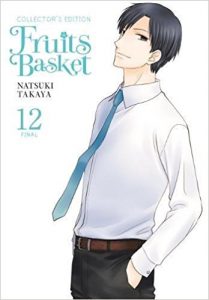
Fruits Basket’s Collectors Edition has reached its penultimate volume, and features more angst than you can shake a stick at.

MICHELLE: Heh.

MJ: YES.

SEAN: There’s a 5th print volume of Handa-kun as well.

We have reached the last volume of He’s My Only Vampire, and while I enjoyed it, I am also very happy to see it’s ending.

MICHELLE: Same!

ANNA: One of the few vampire titles I haven’t read!!!

SEAN: The Honor Student at Magic High School continues to be irritatingly ahead of the light novel release with Vol. 6.

Kiniro Mosaic has a 2nd volume of cute girls being cute and maybe sort of yuri.

Then more yuri with the debut of Kiss and White Lily for My Dearest Girl, which may be from Comic Alive but is apparently on the ‘sweet and cute’ end of the yuri spectrum.

ASH: I plan on giving this one a look! The cover is adorable if nothing else.

MICHELLE: I’m looking forward to this one, too! My friend said, “It’s S. A with lesbians!”

MJ: Absolutely on my list!

SEAN: Love at Fourteen finally returns with a 6th volume, and let’s face it, these kids are fifteen now.

MICHELLE: Heh. Another series on the read-me-soon pile.

SEAN: EVEN MORE manga adaptations of light novels, with the 4th OreGairu manga, which it too long to type out.

Speaking of long titles, a 6th Of the Red, the Light and the Ayakashi.

ASH: I really need to catch up with this series! I enjoyed the early volumes, but have fallen behind.

SEAN: Return of the Son of manga adaptations of light novels, with the 6th Strike the Blood manga.

Manga Adaptations of Light Novels Must Be Destroyed with the 5th Sword Art Online: Progressive manga, which as always needs MORE ARGO.

A third print volume of Today’s Cerberus.

Twinkle Stars has a 2nd omnibus, and I suspect will continue to deal with not being Fruits Basket.

MICHELLE: But it’s so good!

MJ: I am behind on this, and can’t even quite believe I let that happen!

SEAN: And there’s an 8th (really 9th) Ubel Blatt omnibus.

So that’s 48 titles, and that’s not even counting the 2 that Yen delayed to the week after next just because. I think this is a new record. What say you?

Filed Under: FEATURES, manga the week of

Ichi-F: A Worker’s Graphic Memoir of the Fukushima Nuclear Power Plant

March 16, 2017 by Ash Brown

Ichi-F: A Worker’s Graphic Memoir of the Fukushima Nuclear Power PlantCreator: Kazuto Tatsuta
Translator: Stephen Paul
U.S. Publisher: Kodansha
ISBN: 9781632363558
Released: March 2017
Original release: 2014-2015
Awards: Manga Open

Although Ichi-F: A Worker’s Graphic Memoir of the Fukushima Nuclear Power Plant isn’t Kazuto Tatsuta’s first manga, it is very likely the one for which he will be best known. Based on his experiences as a worker at the Fukushima Daiichi Nuclear Plant, the memoir provides an important and highly personal perspective on the ongoing recovery efforts following Japan’s combined earthquake, tsunami, and nuclear disasters of March 2011. Initially submitted as an amateur work, Ichi-F won the Manga Open Grand Prize in 2013 which led to its continuation as a three-volume series published between 2014 and 2015. The English-language edition of Ichi-F was released by Kodansha Comics in March 2017. The entire series, including Tatsuta’s original one-shot, has been collected into a single, massive omnibus formatted to read left-to-right. Also included is an introduction by the journalist Karyn Nishimura-Poupée and an exclusive interview with the creator. A tremendous amount of work from the translator Stephen Paul and others at Kodansha has gone into Ichi-F in an effort to make the manga as accurate and as widely accessible as possible.

On March 11, 2011 a massive earthquake centered off of the northeast coast of Japan triggered a devastating tsunami which ultimately lead to multiple meltdowns at the Fukushima Daiichi Nuclear Power Plant. Many people in Fukushima were required to evacuate and have yet been able to return to their homes due to the radiation levels in the area. Cleanup and recovery work, including the decommissioning of the plant, continues to this day and will continue for quite some time. Most of the people directly involved in the work are from the Fukushima area but others like Tatsuta (a pen name taken from the region for purposes of anonymity) are outsiders drawn by the promise of high wages, personal curiosity, and altruism. Despite the need for workers, it took Tatsuta more than a year after the disaster to secure clearance for employment at Ichi-F, one of the local names for the Fukushima Daiichi plant. Initially he was assigned to a shelter where he helped to manage a rest area for the construction workers, but eventually he would become one of those construction workers himself, at one point even serving on a team working inside one of the plant’s reactor buildings.

Ichi-F, page 39Ichi-F is primarily about the day-to-day lives and work of those employed at the nuclear power plant but Tatsuta also addresses some of the related recovery efforts and the issues caused by them in the Fukushima region as well as the some of the complications surrounding the publication of his memoir. In part the manga was created in response to the misleading, sensationalistic, and often inaccurate way that Fukushima and the surrounding areas are portrayed in the media. This is not to say there haven’t been problems with the decommissioning and cleanup–even Tatsuta’s account reveals social conflicts and questionable employment practices, not to mention that exposure to high levels of radiation is inherently dangerous–but some of Fukushima’s poor representation is due to ignorance and fearmongering. In fact, excepting the radiation concerns, much of the work outlined in Ichi-F, while being incredibly important, is outright mundane. Tatsuta explains in detail the safety procedures and regulations intended to protect the workers at the plant, showing just how difficult, time-consuming, and challenging the cleanup efforts are. Careful vigilance, caution, and concerted effort are absolutely necessary, especially to counter desensitization to the dangers involved, and there is always room for improvement.

Tatsuta’s own personal experiences while working in Fukushima are what inform Ichi-F. As such, it cannot provide a comprehensive look at the disaster and recovery efforts as a whole, but it does offer an individual perspective critical to the larger context. Tatsuta is an insider telling a story that’s often left untold because it isn’t particularly dramatic or exciting–the manga is a thorough, informative account of the work being done to decommission the Fukushima Daiichi Nuclear Power Plant. The manga can be a bit text-heavy at times, and the way that it has been modified to read left-to-right occasionally interrupts the narrative’s visual flow, but the memoir is both fascinating and accessible. Ichi-F is also the story of the people involved in the cleanup and the close relationships that Tatsuta develops while in Fukushima. What in many ways started out as just a job ends with Tatsuta caring deeply about and for his colleagues at the plant, the locals and residents of Fukushima, and the area itself. While the lasting effects of the nuclear disaster in Fukushima are tragic and some areas remain incredibly hazardous, conditions are slowly improving and recovery and revitalization is happening partly thanks to the efforts of Tatsuta and the other workers shown in Ichi-F.

Filed Under: REVIEWS Tagged With: Ichi-F, Kazuto Tatsuta, kodansha, Kodansha Comics, manga, Manga Open, Nonfiction

Skip Beat!, Vol. 38

March 16, 2017 by Sean Gaffney

By Yoshiki Nakamura. Released in Japan by Hakusensha, serialization ongoing in the magazine Hana to Yume. Released in North America by Viz. Translated by Tomo Kimura.

This volume has been a long time coming. 38 volumes, to be precise. And I’ve sort of known in the back of my head that we would eventually have to deal with it, and I’ve been half dreading and and… well, no, all dreading it. Because Kyoko is a child of abuse. Not physical abuse – as this volume takes pains to point out, by the way – but mental and emotional abuse. Along with Sho’s casual cruelty, it’s what has shaped Kyoko’s actions to this day. Her mother was cold, always regarded her with scorn, and later on insisted she had no child. Kyoko has had nervous breakdowns just thinking about her. And now we’re finally getting the backstory and explanation for what happened with Saena in the past and how, presumably, she came to have Kyoko. And of course it’s very well written, because Nakamura is excellent at this sort of thing. But I will stay worried till the 39th volume comes out. Thinking “will this be another easily forgiven abusive parent?”.

As I mentioned earlier, the writing in this volume is top notch. 38 volumes in, we know these characters better than almost any other translated shoujo manga out there, and we’re still getting new depth and layers. (Watch for Maria here, who I don’t think we’ve even seen in over a dozen volumes, being mature enough to realize that now is not the time to talk to Ren.) Oddly, it’s Ren who provides most of the lighthearted comedy in this otherwise serious volume, as his reactions to Kyoko’s moodswing flipouts are brilliant, and his teasing of Yashiro is also wonderful. But the volume is subsumed by the confrontation between Kyoko and her mother. Again, we get to see Kyoko’s growth and maturity in action – in fact, Nakamura lampshades it, showing that Kyoko is now able to look at Saena’s seemingly cold face filled with hatred and see nuance and layers that she had missed as a child. This comes from her observational skills as an actress, and I feel proud of her.

It just so happens that it was Kyoko running off to be with Sho at the start of the series that really set Saena off, as it reminded her of her own manipulation by a man in the past. (Speaking of which, Misonoi is a top tier smiling villain, and I hope he gets the shit kicked out of him in the next volume, though am realistic enough to know he likely gets away with everything.) Saena is really well done here, much as my teeth were grinding at times. “I was terrified that I would hurt you” made me want to reach out and slap a “YOU TRIED” sticker on her forehead. But of course, the main issue with this otherwise excellent volume is that we end mid-flashback, and I don’t know how things will ultimately be between Kyoko and Saena. And since we’re caught up with Japan, I have till September to cool my heels. But either way, this volume is a must read for any shoujo fan.

Filed Under: REVIEWS, skip beat!

Off the Shelf: Battles, ballrooms, & a baffling noise

March 14, 2017 by MJ and Michelle Smith Leave a Comment

MICHELLE: Hey, MJ! What do a plum and an elephant have in common?

MJ: Wow, Michelle, I have no idea! What do a plum and an elephant have in common?

MICHELLE: They’re both purple! (Except for the elephant.)

MJ: Ahhhhhh, now this feels right. Starting off with a bad joke. That’s the stuff Off the Shelf is made of.

MICHELLE: Quite possibly nobody else enjoys it, but it is tradition, after all!

We’ve dusted off the shelf to discuss a few recent series, including one title that we both read. But would you like to go first with your solo read?

MJ: I’d love to!

So, nobody will be surprised to hear this, unless they’re just surprised that it took so long, but I’ve been reading the first two volumes of Platinum End, the latest from one of my favorite manga artists, Takeshi Obata, and his frequent collaborator, Tsugumi Ohba of whom I am historically much less fond. But, y’know, I love Obata and I’ll take what I can get, so here we go.

Mirai is graduating from middle school, but he couldn’t be more miserable. Orphaned at a young age and forced to live with abusive relatives, all he wants is to end it all. But when he tries to do that by jumping off his roof, the intervention of an angel, Nasse, drags him instead into a deadly, Highlander-style tournament in which he is competing with 12 other humans to win the chance to become the next God. Armed with a few special powers—angel’s wings, red arrows that work like a love spell, and white arrows that kill on contact—Mirai must prove that he’s worthy of inheriting the power of God.

Okay, so besides humiliatingly showing my age, the Highlander reference is also somewhat inaccurate, at least in theory. There is no rule in the angels’ truly weird competition that requires the God contestants to kill each other in order to win. But in Ohba’s pessimistic (and probably depressingly accurate) view of humanity, there is inevitably a candidate who immediately decides that the surest path to victory is to kill the other candidates, creating an atmosphere of terror and violence in the competition right from the start. Just as typical of an Ohba manga is the specificity of the powers’ rules—the red arrows only work for 30 days, for instance—and the competition’s built-in inequity. The angels choosing the candidates from among the downtrodden are not all created equal, and their contestants only inherit whatever powers their personal angel can also wield. Mirai, luckily, has a special-rank angel who can give him all three, but he’s a rarity in the bunch.

I’m talking a lot of plot here—also an Ohba trademark, of course—so let’s get down to the business of reviewing this thing. I generally expect to have a love-hate relationship with an Ohba/Obata manga, and my expectations were even lower going into this one, since I tend to be bored by angel stories. Interestingly, I get the sense that Obata might feel the same way, as his angel characters are the least imaginatively drawn in the series so far. But that said, I came away from these first two volumes actually hating very little.

Like most of Obata’s collaborations with Ohba, the story leans very heavily on plotting and strategy, but the real story seems to be about Mirai figuring out the point of living. Though his new wings give him a taste of personal freedom he’s never before enjoyed, his true liberation comes from the destruction of his abusive family, which he unwittingly causes, sending him into a guilt spiral and forcing him to confront questions of morality on a level most middle-schoolers are years away from having to think about outside of YA novels and video games. He’s made immediately aware of the consequences of his anger, and the cost of manipulating others with his new powers. Meanwhile, he’s learning to forgive the manipulation perpetrated by those weaker than he is, starting with his middle-school crush—herself a God candidate—whose weaker angel advises her to take pre-emptive actions against Mirai in order to protect herself.

Obviously I can’t be sure where this series is headed, but getting to read a new Takeshi Obata manga that doesn’t present me with either an utterly hateful protagonist or outrageous sexism right from the get-go feels like a treat.

MICHELLE: I, too, am bored by angel stories and I confess that I expected you were going to say you disliked it. Now my curiosity is piqued!

It seems, too, like there might be some symbolism in Mirai’s name, as “mirai” means future. And that’s really what’s on the line for him.

MJ: I think it might help on the angel front that the story is really not about them. Also, they are pretty strange, amoral beings who seem perfectly comfortable advancing a sort of hyper-selfish, Ayn Rand vision of individual happiness over all on behalf of their candidates, one of whom uses his newfound power to make swaths of female idols fall in love with him, so that he can spend his life immersed in a 24-7 orgy. Meanwhile, Mirai’s angel is utterly unable to comprehend why enacting bloody revenge on his horrible relatives, despite their Dickens-level villainy, does not make him happy.

The nature of God is equally ambiguous, especially since we’ve seen that only those who have already given up on humanity are actually eligible for the post. All of this plays into the creative team’s strengths, as it gives them a lot of morally gray material to work with (and lots of shonen-friendly competitiveness), while avoiding some of the things that sometimes makes their work unreadable (for me, anyway) by letting Mirai be our gateway character who is just as weirded out by most of this as we are.

It works for me, at least so far, which is a bit of a relief!

MICHELLE: Yeah, it really does sound pretty interesting! I will have to check it out.

MJ: I think the rest of the Battle Robot so far has not enjoyed it as much as I, so ymmv. But for me, this is a win.

So what have you been reading, Michelle? Something less morally ambiguous?

MICHELLE: Oh, indeed. Nothing is ambiguous about Welcome to the Ballroom, after all. It’s all about passion and determination!

Specifically, I’ve been reading volume three, but I’ll give you a short introduction to the series in case you’re not familiar. Fifteen-year-old Tatara Fujita had nothing that he was especially good at. When he is saved from bullies by a champion ballroom dancer named Sengoku, he doesn’t have the courage to tell the other man that he was actually looking at a part-time job advertisement and not a flyer for the dance studio. Once he sees a recording of Sengoku in action, looking confident and self-assured, he vows to change himself by also entering into the world of dancesport. It doesn’t hurt that his lovely classmate, Shizuka Hanaoka, is also one of the top amateurs.

In volume three, Fujita is competing in his first tournament. He’s also got a wager on the line with Shizuka’s bellicose new partner, Gaju, who has tossed aside his sister and longtime partner, Mako. Because he’s a newcomer, he lacks the stamina and repertoire of the others, and his attempts to beat Gaju are not successful. However, once he realizes that his real goal ought to be helping Mako outshine Shizuka (and thus convincing Gaju to partner with her once more), there’s a palpable shift in his performance. He goes from merely leading to becoming the “frame” for the “flower,” executing moves that allow Mako to shine to her best advantage.

I really enjoyed seeing how a ballroom dancing competition works, but what I found especially impressive was that Tomo Takeuchi’s art actually conveys this change in Tatara’s attitude. There was a tension in his earlier performances, when he was essentially taking full responsibility upon himself, and once he internalizes the notion of becoming the “frame,” his whole body language changes. It’s difficult to explain in words, but to be able to depict that difference in a way that even an utterly ignorant-of-dance person like me could pick up on is seriously cool.

MJ: For some truly unfathomable reason, I have yet to pick up this series, and I really can’t believe it. Everything you describe just sounds both dramatically exciting and fun. Making a story about dance work with only still drawings is a huge challenge, but when it works, it’s just spectacular. The visual storytelling sounds incredible, from what you describe.

MICHELLE: I think you’d like it quite a bit. Another thing that’s neat is that, unlike a lot of sports manga with a male protagonist, the female characters aren’t cheering on the sidelines or serving as the team manager. They’re co-competitors. And, in fact, it’s by Tatara allowing Mako full agency and achieving nonverbal yet total communication with her that the pair really attracts notice.

MJ: That’s definitely a welcome feature in a “sports” manga, and possibly the push I needed to get me to the bookstore!

MICHELLE: I hope you do check it out. And, of course, one generally doesn’t dance without music, which is my not-so-subtle segue into discussing our mutual read for this column. Would you like to do the introductory honors?

MJ: I will give it a go, sure! Our mutual read this week was the first volume of Ryoko Fukuyama’s Anonymous Noise, recently released on Viz’s Shojo Beat imprint.

Nino loves to sing with her best friend, neighbor, and habitual punster, Momo, but when his family suddenly moves away, she’s left with the fear of using her voice at all, as all she wants to do is scream. She finds momentary salvation in the company of Yuzu (who nicknames her “Alice” as a shortened version of her surname “Arisugawa”), a kid she finds writing songs on the beach, but he ends up disappearing on her, too, after he realizes he has no shot at living up to her dreamy memory of Momo.

Flash forward a few years, and these three are thrown back together in high school, where Yuzu is the main songwriter for an Alice-in-Wonderland-themed pop band, Nino is destined to become their new lead singer, and Momo is a mysterious dude befriended by Yuzu whom Nino hasn’t yet recognized. Also, the pop band (who sing all their songs while wearing face masks?) is operating incognito as the pop music club at their school, and Yuzu has super-long eyelashes, which is somehow a plot point.

I think that’s the best I can do, here. Michelle?

MICHELLE: That about sums it up! (The repeated eyelash references were especially odd.)

Anyway, I’m not really sure what I expected from Anonymous Noise, but it wasn’t quite this. To me, it reads almost breezy (with dumb jokes and kooky supporting characters) and a bit muddled, though it’s possible the storytelling will calm down some now that everyone is at high school together. Some elements of the story come through clearly, like Nino’s longing to see Momo and Yuzu again and the way that singing eases her pain. But unlike, say, NANA, I’m not getting much sense of what Yuzu’s band sounds like, or what Nino’s singing voice sounds like. We are shown its power to transfix others, but is it high? Is it low? Is it raw? Is it pure? No idea!

Another slightly muddled area for me was Momo’s and Yuzu’s reactions to seeing Nino again. Yuzu, it seems, didn’t want to see her because he has been wanting to escape his obsession with her, but there’s some disembodied narration that I think is Momo, also wishing that he could escape being in Nino’s thrall. Or something? How did you read that part?

MJ: I, too, found myself comparing it to NANA, which really isn’t fair at all. And, like you, I couldn’t exactly say what my expectations were for this manga, but whatever they were, I didn’t expect what we got, and what we got was largely disappointing. I’m willing to give it more time to come together, and I think it still could end up being interesting, but so far it’s kind of a vague mess, with a few clear elements as you describe. I feel like I’m the most interested in Yuzu at this point, but it’s really because he’s the character we’ve gotten the clearest read on so far. His needs and desires are fairly transparent, and he ends up being my favorite character just by default. I don’t think that was the author’s intention, though.

As for that section of narration near the end… I read it the same way as you did, but I didn’t really understand it. Is Nino’s voice the cage? And if so, why? Or was that Yuzu’s narration? I was pretty confused by that sequence, I have to admit.

Maybe the expectation that wasn’t met was an idea that somehow this was written for an older audience than it actually was?

MICHELLE: That may be it. I think I was expecting a story about a determined girl who’s serious about her band. And that’s not what this is, at all. Now, maybe Nino will grow into that kind of girl—Fukuyama does make a point of showing how terrible she is singing with others, and maybe that was laying a foundation for growth—but I kind of doubt it at this point. It seems like “music leads to Momo” will always be her true obsession rather than music for its own sake.

MJ: I long for that, I admit, and also perhaps a clearer idea of what any of the music sounds like, besides her childhood obsession with “Twinkle, Twinkle Little Star.” In my mind, it’s all kind of “Twinkle, Twinkle” at this point, and that is just not very compelling.

That said, I’ll definitely read the next installment.

MICHELLE: Haha, yes, exactly. I agree on all points.

MJ: And so we live in hope. Until next time?

MICHELLE: ‘Til then!

Filed Under: OFF THE SHELF

Spirits & Cat Ears, Vol. 1

March 14, 2017 by Sean Gaffney

By Miyuki Nakayama. Released in Japan “Kudamimi no Neko” by Media Factory, serialization ongoing in the magazine Comic Alive. Released in North America by Yen Press. Translated by Leighann Harvey.

Sometimes, when you read a series, you are inevitably reminded of another earlier series, to the point where you can’t escape thinking about the similarities. Early volumes of Fairy Tail scream “this is One Piece, but at Kodansha”, for example. returning the favor, Black Clover’s early volumes have a very Fairy Tail quality to them. And this new series from Yen, Spirits & Cat Ears, has the same problem, as it’s hard to start reading it without thinking of another, recently completed series that Yen put out, Inu x Boku SS. In fact, given the really obvious similarities and the fate that the late Cocoa Fujiwara even has fanart at the end of the volume, I wonder if Nakayama-san is a former assistant of Fujiwara-san. That said, while there are obvious similarities, Spirits & Cat ears runs in Comic Alive, not Gangan Joker. And you know what that means: fanservice.

It’s actually rather surreal in many ways. Inu x Boku SS, like a lot of Gangan titles, had a large crossover female audience, and you can tell the series would not seem out of place in, say, Zero-Sum or Asuka. Spirits & Cat Ears has a similar premise – young people with powers paired up with attractive older men – but Comic Alive is decidedly a male-oriented magazine, and so… well, take a look at that cover. Neneko is also the “shy, constantly apologizing” sort of heroine, which unfortunately means she’s a pushover when she tries to stand up to her familiar, Shichikage. Ririchiyo could also be manipulated by her own lover/bodyguard, but at least she could not be described as a pushover. A lot of the plot to Spirits & Cat Ears revolves around “bring Neneko out of her shell”, which involves enforced socialization and annoying “punishment outfits”.

This is a ghosts and exorcism manga, and so you get the occasional tale of possession and the like, but the focus is firmly on Neneko rather than the situations she gets herself into. She’s joined by a seemingly sullen but really just shy fellow exorcist, and after the predictable misunderstanding the two become close fast. As for Shichikage, he too feels very much like the sort of guy you’d meet in a shoujo manga. Unfortunately, it’s more the Black Bird sort of shoujo manga hero. He’s right to think that Neneko firming her resolve and stating clearly what she needs him to do will increase her power (and his strength), but his sexualization and fetishization of her is just distasteful, especially as, thanks to the art style, she’s another girl who looks about nine but has a large bust and is really in high school.

This wasn’t completely terrible, but unfortunately the parts of it that were good are the sort of things I get in other, better manga series, and the parts that were bad seemed to stand out more. I’d recommend it to those who like nekomimis or series with a teasing sort-of boyfriend who likes dressing his girl in sexy outfits.

Filed Under: REVIEWS, spirits & cat ears

Bookshelf Briefs 3/13/17

March 13, 2017 by Michelle Smith and Sean Gaffney Leave a Comment

Haikyu!!, Vol. 9 | By Haruchi Furudate | VIZ Media – While the boys set their sights on the spring tournament and prepare for a field trip to Tokyo for practice games, Shimizu looks for someone who can take over as manager of the volleyball club after she retires. She ends up finding Hitoka Yachi, a girl in advanced classes (this comes in handy when several of the boys need help to pass finals before being allowed to go to Tokyo) who has never before felt needed, but who is impressed by the team’s passion. I like Yachi quite a bit, including how Furudate shows how smart she is without beating readers over the head with it. There’s also much talk about how Karasuno needs to evolve if they are going to have a chance at making it to nationals, and by the end of the volume, Hinata seems ready to do just that. Fun and addictive, as ever! – Michelle Smith

Interviews with Monster Girls, Vol. 3 | By Petos | Kodansha Comics – After talking about the lack of romance in my last brief, the author apparently heard me and decided to add some sparks. Thankfully it’s between the adults, as our still-a-virgin succubus seems to think she’s found the one guy who isn’t sexually excited by her in Takahashi. And when it’s pointed out he likely really is getting turned on and just is good at hiding it… well, that just makes her want him all the more. In the meantime, there’s more discussion of demis, as we hear about how to deal with molesters on the train when it’s a succubus, how people taste differently to a vampire, and the care and attention a dullahan needs to have to protect her head. Cute and fun. – Sean Gaffney

Kimi ni Todoke: From Me to You, Vol. 26 | By Karuho Shiina | VIZ Media – Seemingly even more so than usual, this volume of Kimi ni Todoke is cover-to-cover feelings. It’s especially gratifying that Sawako has finally gained enough confidence in her relationships that she’s able to speak freely and honestly without fear. Because of that, she’s able to explain herself clearly to Kazehaya, and they reconcile. The most riveting moment, however, comes during a sleepover with one-time rival Kurumi in which the latter reveals how absolutely horrible she feels about how she once treated Sawako, and how she doesn’t feel deserving to be called her friend, while Sawako attests that they are already friends. It’s very moving. And then, to top it all off, we get a chapter wherein Ayane seems to realize that she’s in love with Pin. I don’t think I’ve ever rooted for a student-teacher romance before, but this might be the exception! – Michelle Smith

Kimi ni Todoke: From Me to You, Vols. 26 | By Karuho Shiina | Viz Media – I will freely admit it—in the early days of this series, I totally shipped Ayane and Pin in a “this will never actually happen but I love their back-and-forth” sort of way. Then Kento arrived, and then Kento left (he’s not even in this volume), and Ayane is starting to realize that she is really, really falling for Pin, and I’m starting to worry, as it is a teacher/student thing. I’m fairly sure Pin won’t let this get anywhere, but in the meantime, at least we have some amusing faces from Ayane. We also get Kazehaya and Sawako fighting and making up, though I’m going to be honest most of the ship tease in this volume was between Sawako and Kurumi, who have a study sleepover and go over some extremely old and guilty memories. Very strong volume. – Sean Gaffney

Kiss Him, Not Me!, Vol. 9 | By Junko | Kodansha Comics – This series has a tendency to remind me of The Wallflower, and not just because of its reverse harem. Both authors seem far more comfortable and successful when they go for comedy. The first half of this book is absolutely hilarious, as Shinomiya is not only now on his own but also being stalked by a truly ridiculous number of people, and we also get the attempts to fulfill Kae’s ridiculous birthday wishes. The second half gets more serious, as an old upperclassman Igarashi liked shows up again and hears about the guys hanging around Kae, and urges her to make a decision. Which, spoiler, is not going to happen. This is a bit less fun, but does have some heartwarming mixed in among the comedy. Decent. – Sean Gaffney

Natsume’s Book of Friends, Vol. 20 | By Yuki Midorikawa | Viz Media – The author herself notes how much Natsume has changed over the course of the series, and it’s certainly true—he’s far more proactive and compassionate, even if he still occasionally tries to get away from obvious yokai with issues. This is most obvious in the first story, where a yokai “rewards” Natsume’s help by turning him back into a child—memories and all. Thankfully, Tanuma and Taki find him, and can be sensible about it. Seeing his somewhat stoic, untrusting self react to the obvious love and affection his two friends have for him is heartwarming. The series continues to be more episodic than anything else, but that’s fine—it plays to the author’s strong sense of character.-Sean Gaffney

Nichijou: My Ordinary Life, Vol. 7 | By Keiichi Arawi | Vertical Comics – Even for a volume of Nichijou this volume is really, really surreal. Some of the “jokes” are barely funny at all, seemingly designed to make the reader stare as blankly at the page as Sekiguchi stares at her manga. (That’s her on the cover with the rest of the Go Soccer Club, by the way.) The highlight may be Yukko and Mai’s long conversation on the hill, which was so popular the anime animated it very early, possibly as it has fake yuri confessions from Mai, who still takes honest joy in making Yukko freak out. Word of warning: those who dislike the Professor acting like a bratty child aren’t going to like this volume much. But for the rest of us, Nichijou remains a rewarding and very strange experience. – Sean Gaffney

One-Punch Man, Vol. 11 | By ONE and Yusuke Marata | Viz Media – I was worried that this volume would consist entirely of a tournament arc, but thankfully there’s only about 1/3 tournament. The rest is spent dealing with both the kidnapping monster from the last volume, which is battling Metal Bat, and Garo, who interrupts the fight because it’s all about him. We’re not meant to like Garo, and I don’t, but I especially dislike the way that he’s not particularly funny, and when the others are around him they get more serious as well, which can be deadly in a manga that relies so much on not taking itself seriously. Luckily, Saitama is always there for a deadpan one-liner. Also, Metal Bat’s little sister is adorable. Not as good as before, but still good. – Sean Gaffney

Skip Beat!, Vol. 38 | By Yoshiki Nakamura | VIZ Media – In this volume, bolstered by various good-luck charms given to her by Ren, Kyoko finally decides to confront her mother. Only, on the way there she learns some information that changes everything and goes a long way toward explaining her mother’s treatment of her. I honestly never thought I would feel even a little sympathetic towards Saena Mogami, but the entire second half of the volume is a flashback to Saena at age 28 and the circumstances under which she came to be pregnant with Kyoko, and it is very compelling. Alas, it all ends on another cliffhanger that we’ll have to wait six months to see resolved, but I’m very pleased that the truth ends up being more nuanced than I expected and yet still fascinating. I guess I should’ve known it’d be great. – Michelle Smith

Twinkle Stars, Vol. 2 | By Natsuki Takaya | Yen Press – For the most part, the focus in the second volume (comprising volumes three and four of the original release) is on the developing relationship between Sakuya and Chihiro—who initially ignores her pain, telling himself he can’t save her, only to have regrets that compel him to act at a crucial moment—and the stargazing club’s participation in summer camp, which concludes on a truly lovely moment orchestrated by Yuuri. There’s some interesting foreshadowing about Chihiro’s mysterious past, but the most powerful scenes are Sakuya’s present-day interaction with her terrible stepmother and the reveal of the circumstances that drove her from home. Her anguish is heartwrenching; it’s no wonder she feels like there’s a black hole inside her that sometimes threatens to swallow her. I hope for a nice story where she and Chihiro help heal each other, but I expect more darkness ahead. – Michelle Smith

Filed Under: Bookshelf Briefs

  • « Go to Previous Page
  • Page 1
  • Interim pages omitted …
  • Page 257
  • Page 258
  • Page 259
  • Page 260
  • Page 261
  • Interim pages omitted …
  • Page 538
  • Go to Next Page »
 | Log in
Copyright © 2010 Manga Bookshelf | Powered by WordPress & the Genesis Framework