• Skip to primary navigation
  • Skip to main content
  • Skip to primary sidebar
  • Home
  • About Us
    • Privacy Policy
    • Comment Policy
    • Disclosures & Disclaimers
  • Resources
    • Links, Essays & Articles
    • Fandomology!
    • CLAMP Directory
    • BlogRoll
  • Features & Columns
    • 3 Things Thursday
    • Adventures in the Key of Shoujo
    • Bit & Blips (game reviews)
    • BL BOOKRACK
    • Bookshelf Briefs
    • Bringing the Drama
    • Comic Conversion
    • Fanservice Friday
    • Going Digital
    • It Came From the Sinosphere
    • License This!
    • Magazine no Mori
    • My Week in Manga
    • OFF THE SHELF
    • Not By Manga Alone
    • PICK OF THE WEEK
    • Subtitles & Sensibility
    • Weekly Shonen Jump Recaps
  • Manga Moveable Feast
    • MMF Full Archive
    • Yun Kouga
    • CLAMP
    • Shojo Beat
    • Osamu Tezuka
    • Sailor Moon
    • Fruits Basket
    • Takehiko Inoue
    • Wild Adapter
    • One Piece
    • After School Nightmare
    • Karakuri Odette
    • Paradise Kiss
    • The Color Trilogy
    • To Terra…
    • Sexy Voice & Robo
  • Browse by Author
    • Sean Gaffney
    • Anna Neatrour
    • Michelle Smith
    • Katherine Dacey
    • MJ
    • Brigid Alverson
    • Travis Anderson
    • Phillip Anthony
    • Derek Bown
    • Jaci Dahlvang
    • Angela Eastman
    • Erica Friedman
    • Sara K.
    • Megan Purdy
    • Emily Snodgrass
    • Nancy Thistlethwaite
    • Eva Volin
    • David Welsh
  • MB Blogs
    • A Case Suitable For Treatment
    • Experiments in Manga
    • MangaBlog
    • The Manga Critic
    • Manga Report
    • Soliloquy in Blue
    • Manga Curmudgeon (archive)

Manga Bookshelf

Discussion, Resources, Roundtables, & Reviews

Features & Reviews

Falling Behind the Shojo Beat

October 1, 2018 by Michelle Smith

In which I catch up with several series that have recently debuted under VIZ’s Shojo Beat imprint.

Kenka Bancho Otome: Love’s Battle Royale, Vols. 1-2 by Chie Shimada
Based on the game created by Spike Chunsoft, Kenka Bancho Otome is the frothy tale of Hinako Nakayama, a friendless orphan who is accosted on the way to her first day of high school by her heretofore-unknown twin brother, Hikaru Onigashima, heir to a yakuza family. He’s supposed to be attending Shishiku Academy, famous for its delinquents, but he hates fighting, so he prevails upon Hinako—toughened by her orphan experience—to switch places with him. Once she begins attending Shishiku, she makes friends and has various adventures while becoming the boss of her year and fending off challengers.

I didn’t enjoy this series much, and mostly that is due to how shallow the storytelling is. Now, I realize this manga is based on an otome game, so perhaps I shouldn’t get hung up on the details and just appreciate theoretically hunky guys, but still… a little bit of effort would’ve gone a long way. The most glaring example of missed opportunities is the fact that Hinako never once stops to wonder “Hey, if I had a rich family, including an identical twin, why on earth did I grow up in an orphanage?!” Another drawback was that Hikaru has no redeeming qualities whatsoever and his omnipresent minion is just plain creepy.

Really, the best thing I can say about Kenka Bancho Otome is “at least it’s short.”

Kenka Bancho Otome: Love’s Battle Royale is complete in two volumes.

Takane & Hana, Vols. 1-4 by Yuki Shiwasu
When her older sister flakes on an arranged marriage meeting with her dad’s boss’s 26-year-old grandson, sixteen-year-old Hana agrees to go in her place. Takane Saibara is arrogant and critical and is surprised and intrigued when Hana tells him, “I don’t have even an ounce of interest in you.” From then on, he keeps turning up at her house and school, expecting her to cry for joy at his attention and gifts, but little by little he shows his good qualities. Although he’s a successful businessman, he does have an awkward side, and the ease with which Hana is able to push his buttons makes the age difference between them a lot easier to accept.

Over the course of these four volumes, Hana goes from zero interest in Takane to realizing that he’s a reliable, honest person whom she wants to keep seeing, despite the possibility that his career will be harmed by further association with a high-school girl. She hasn’t quite accepted that she has feelings for him, partly because their relationship is so competitive (and tsundere to the max) that admitting such a thing would be a major defeat. Indeed, the final page of the fourth volume depicts a gleefully gloating Takane who has just learned that, in the interest of keeping things simple, Hana has been telling her classmates he’s her boyfriend.

I really like both Hana and Takane a lot, and Shiwasu-sensei does great things with their facial expressions, particularly how Hana can be all smiles one moment and then blank the next (as she delivers the latest blow to Takane’s ego). Takane in smirk mode is fun, but I love the palpable sense of relief that emanates from him when he’s able to relax and just be himself around Hana. It’ll probably take a very long time for these two to get together, but if the road there is going to be this entertaining, then I’m in for the long haul!

Takane & Hana is ongoing in Japan; volume twelve comes out there later this month. VIZ will release the fifth volume in English tomorrow.

The Young Master’s Revenge, Vols. 1-3 by Meca Tanaka
As a child, Leo Tachibana was encouraged to befriend Tenma Tsuwabuki, the daughter of wealthy department store owners. She was a tomboy and frequently involved him in her escapades, which culminated in an incident where he fell into a turtle pond and was bitten on his butt by a pair of turtles, leaving scars that have become the symbol of his burning hatred for Tenma. Newly returned to Japan after living abroad for ten years, Leo is determined to get his revenge by making Tenma fall for him and then rejecting her. Yes, our hero has spent a decade obsessing over this plan all because some baby turtles chomped his butt checks.

Initially, Leo has a bunch of inner monologues about how he’ll discard Tenma like a used rag or shatter her heart to pieces, but at the same time he’s protecting her and helping her out. The Tsuwabuki store has gone bankrupt, so when the relatives she’s living with pressure her into an arranged marriage, Leo rescues her and provides her a place to stay. When she’s ostracized by her rich classmates, it’s Leo who eats lunch with her every day. Soon, Tenma learns that Leo holds her responsible for his turtle trauma, and she’s willing to let him torment her as a form of atonement. Of course, it’s obvious that he loves her, but it takes him a while to acknowledge the fact. After that point, he’s got to try to undo all the damage he did previously and try to convince Tenma he no longer has any intention of hurting her.

Leo is not especially endearing as a character, but to his credit, I will say that he very much supports and respects Tenma’s goal of becoming a veterinarian. Tenma is much more likable, being positive and dignified and with a clear-eyed goal in mind. I also liked the little subplot wherein the sheltered rich girl develops skills like cleaning house and understanding the value of money.

Ultimately, The Young Master’s Revenge is one of those shoujo series that has some truly ludicrous moments and one-note recurring characters but is somehow captivating enough to make one want to complete the series.

The Young Master’s Revenge is complete in four volumes. The final volume is due in December.

Review copies provided by the publisher.

Filed Under: Manga, REVIEWS, Shoujo Tagged With: Chie Shimada, Meca Tanaka, Yuki Shiwasu

Cutie Honey: The Classic Collection

October 1, 2018 by Sean Gaffney

By Go Nagai. Released in Japan by Akita Shoten, serialized in the magazine Weekly Shonen Champion. Released in North America by Seven Seas. Translated by Zack Davisson.

This one-volume omnibus of the original Cutie Honey came out here in North America after the sequel volume, Cutie Honey a Go Go!, and unlike the other recent classic property where the sequel came first (Harlock), I think it’s for the best. A Go Go had most of what made the original so attractive, but packaged it in a modern way, complete with Natsuko as an adult police officer. Here we get unfiltered Nagai, and… it can be a lot to take. The constant nudity, the lesbian tease used solely for male titillation, the cartoon violence and horror, the fourth wall breaking. This is almost a college course in what classic manga of the 70s was like, and reminds me why it didn’t get brought over for so long. Still, at its heart this is worth reading, if only to see why Cutie Honey also ended up inspiring female readers. Honey fights evil and wins WITHOUT the help of a guy. In fact, the guys are useless.

The premise, in case anyone was unaware: a scientists builds an android named Honey, who doesn’t even know she’s an android at first, and stashes her at a girl’s private school, where she befriends the young, cheerful, and prone to getting captured Natsuko. But the evil organization Panther Claw want the secrets that Honey has within her body… and kill her father to get at them. Together with a reporter who happened to be interviewing her father when Panther Claw attacked, his family, and Natsuko, Honey fights back against the all-female villain team of Panther Claw. Heads will roll. Indeed, they frequently do. Is there anything that can stop this senseless battle? Possibly one of the villains being attracted to Honey, but alas, the series is cancelled before that goes anywhere.

Yeah, that’s right, this is done in one because it got dropped pretty fast (though it wasn’t axed as fast as Cutie Honey a Go Go0. Honestly, in many ways it’s for the better. Cutie Honey is a Warner Brothers Cartoon in most ways. The characters are two-dimensional and stereotypical, the humor is broad and sometimes verges on gross, it can be fairly sexist despite its empowering premise, and it’s super violent, with most of the cast ending up dead. That said, the sheer verve and imagination of Go Nagai kept me turning pages, and I was never bored. The wisecracks may be vaudeville-style, but they’re frequently hilarious anyway. And the fights are really nice to see, with Honey pretty much going all out on her own – the reporter is far more useless here than he is in A Go Go – and showing off her assets. So to speak.

By the end of the book you can see that Nagai has sort of ground to a halt – the series should have ended after the school is destroyed and Natsuko dies, but the manga was tying in to the anime that was running at the same time, and so it staggers on a bit, complete with annoying cameos from one of Nagai’s other gag manga. It ends like a 5-car pile up, with a naked Honey singing her anime theme song while blushing and asking readers not to look. But they do. While certainly a product of its time, I can appreciate the zest that Cutie Honey brought to shonen manga, as well as a lighter side to Go Nagai’s works.

Filed Under: cutie honey, REVIEWS

Didn’t I Say to Make My Abilities Average in the Next Life?!, Vol. 4

September 30, 2018 by Sean Gaffney

By FUNA and Itsuki Akata. Released in Japan as “Watashi, Nouryoku wa Heikinchi de tte Itta yo ne!” by Earth Star Entertainment. Released in North America by Seven Seas. Translated by Diana Taylor. Adapted by Michelle Danner-Groves.

It has to be said, this book is not as funny as the first three books, and by definition is therefore not as strong, since I tend to read this series for the laughs. There’s still lots of amusing situations, Mile being ridiculous, people underestimating the Crimson Vow, etc. But the humor is also turning a little dark as well. We know that our four heroines are an unusual team, and have a certain tendency to be practical to the point of death, but the “let’s break all their legs and then break more legs because we need a complete set” gag verges a bit on sociopathy, which I’m pretty sure is not what the author intended. For the most part, this book is meant to show off how the Crimson Vow have sort of become too overpowered for the area they’re currently in. Fortunately, by the end of the book they’re moving on, touring other countries to see what trouble they can get in.

The main thrust of the plot involves our four girls going on a rescue mission, as several teams have gone to investigate in the woods and not come back. They find the teams captured in an archaeological dig that is being done by beastmen, who end up being mostly mooks for folks as powerful as Mile and company. Especially when Mile ends up coming up with the World’s Worst Stinkbomb, which is probably the funniest part of the book even if it’s also pretty gross. The most interesting part comes when we see who’s actually behind the beastmen digging for relics. It’s refreshing, after 150-odd pages of “this was going to be a dangerous fight–LOL, nope!”, to actually see Mile and company get their asses handed to them. (Honestly, when Mavis ended up overdosing on Mile’s “magical steroids” drug, I was wondering if we’d explore actual consequences, but apparently not.) That said, Mile ends up winning in the end, as she is Mile.

The discovery, once it is revealed, ends up being far more of a shock to Mile than it does the others, and it almost makes her decide she’s going to abandon the others and set out on her own – fortunately, Reina and Mavis are very good at reading Mile like a book. (Poor Pauline, though…) So now we get a world tour with the excuse of Mile trying to figure out what’s really happening with this world, and what it was like in the previous civilization. It’s implied we may run into Adele’s old companions in the next book, though we do get a short story devoted to Marcela, who is likely finding that “what would Adele do” is not alwayhs the best thought to have in any given situation, and is also a quintessential ojou-sama.

So I’m still reading this, but it wasn’t quite as fun as the previous books. I hope things tick upward next time.

Filed Under: Didn't I Say to Make My Abilities Average in the Next Life?!, REVIEWS

Hayate the Combat Butler, Vol. 32

September 29, 2018 by Sean Gaffney

By Kenjiro Hata. Released in Japan as “Hayate no Gotoku!” by Shogakukan, serialized in the magazine Shonen Sunday. Released in North America by Viz. Translated by John Werry.

Despite Athena (in her adult body) getting a cheesecake cover shot, she doesn’t appear in this volume. In fact, chibi-Athena only gets one chapter, and has to share it with the girl who’s still reminding everyone she’s the heroine, Nagi. Nagi is still recovering from her loss from the last volume, and while her usual indolent torpor is certainly an option she tries exploring, if this damn manga is going to move forward at all, something else needs to happen. Something like the introduction of a new character. Kayura manages to out-nerd everybody else in this already pretty nerdy cast, and after seeing everyone telling Nagi she needs to make her manga more understandable and mainstream, it’s refreshing to see Kayura telling Nagi the exact opposite. I’m not sure this will translate into the sales Nagi wants to achieve, but it may actually lead her to get out of her creative slump.

Every Hayate volume usually has one chapter that stands out among the others, even when it’s in “gag” mode rather than “plot” mode, and in this case it’s the chapter where Isumi decides that she needs a maid. She decides this mostly as she notes that Nagi and Sakuya have maids, not because she has any use for one. Honestly, I think any maid Isumi had would have trouble merely getting her anywhere in a timely fashion. But her mother and Hayate ponder the idea, and come up with the absolute WORST possible maid for any girl whatsoever: Fumi, who is always there to be hilariously terrible. Her short-lived maid attempt has a terrific punchline, and were it to end there, the chapter would be fine. But afterwards, Hayate wonders out loud to Nagi why Isumi doesn’t have a maid, and the answer is quite touching and also very sad. Even Hayate can’t say anything when he hears it.

If you’re looking for forward plot development that doesn’t involve Nagi’s manga, you are mostly out of luck here. Wataru’s store is just about ready to go, though it’s his relationship with Saki that’s more of a concern. Ruka is also still lingering around the edges of the narrative, and reminding Ayumu that Hayate tends to attract gorgeous rich and famous girls. The former “main rivals” to Nagi, Maria and Hinagiku, have almost completely become comedy relief characters, with Maria’s attempts at a garden being an excuse for a flurry of punchlines (and some errant birds), and Hinagiku not even able to ask Hayate for a shoulder massage without it becoming a big to do. Hayate may be clueless at romance, but for the most part that’s because, with the exception of Ayumu and Athena, the women in his life are simply not clear enough about their own feelings.

Ruka may change that, though, and I wouldn’t be surprised if the next minor plotline involves her again. Till then, fans of Hayate can read about Nagi getting her groove back, and laugh while feeling vaguely frustrated at the lack of forward momentum in this series.

Filed Under: hayate the combat butler, REVIEWS

Der Werwolf: the Annals of Veight, Vol. 1

September 28, 2018 by Sean Gaffney

By Hyougetsu and Nishi(E)da. Released in Japan by Earth Star Entertainment. Released in North America by J-Novel Club. Translated by Ningen.

As we’ve been seeing more and more isekai light novels lately, some of them are becoming very casual about the actual reincarnation/teleportation/what have you that gets our Japanese protagonist over to the fantasy world the author really wants to write about. Der Werwolf is an extreme example of this – we never find out much of ANYTHING about Veight, our hero, from before he was reborn in this world. There’s not even a flashback to his death or anything like that. We do see the occasional mention of soy sauce and tea, and this actually turns out to be a pretty interesting plot point later on, but it’s striking how little the author cares about showing Veight adapting to a new world. No, the main reason for the isekai is to show us why Veight is not like other werewolves, and why he’s very suited to be a leader of a military brigade, de facto ruler of a human city, and apprentice to a brilliant (yet stuck as a little girl… sigh) mage. He’s not like other werewolves.

With all that said, the conceit works here, mostly because Der Werwolf is not content to sit back and rest on its isekai laurels: it’s a good story, well-told. It’s not all that original, but that’s not all that important. Veight died and was reincarnated as a werwolf. As an adult, he’s joined his fellow wolves in the Demon Lord’s army, fighting back against humanity, who has hunted most of the demon races to damn near extinction. Veight’s job is to conquer a mid-sized trading village in the South, which he does quickly and relatively painlessly. Indeed, the Viceroy of the city, who is the young woman who’s on the cover because, well, a light novel needs a pretty young woman on it, is impressed and grateful to Veight that he didn’t conquer the city through mass slaughter. The other werewolves are a bit surprised as well – what’s wrong with mass slaughter? But Veight is made of sterner stuff, and wants to spare the conquered humans, not destroy them. This is easier said than done, though.

This is a book that has plot and characterization as its main positives, which is always a good sign. The scenes flow smoothly from one to the next (indeed, the entire book is one long chapter, with a short story at the end of Veight’s youth), and we also occasionally get someone else’s POV of Veight so that we can get the contrast of how he views himself versus what others think of him. Word of warning: this is a light novel, so of course Veight is a clueless harem protagonist. The Viceroy seems to have fallen for him almost immediately, and he also has a “big sister-type” werwolf and a centaur girl added to the mix. He has absolutely no idea, of course. In the end, Der Werwolf actually reminded me a bit of The Faraway Paladin, in that it’s straightforward, not concerned with the Japan the protagonist came from all that much, and the reader comes back because the story is well-told. I’ll definitely be reading more.

Filed Under: der werewolf, REVIEWS

Manga the Week of 10/3/18

September 27, 2018 by Sean Gaffney, Anna N, Ash Brown, Michelle Smith and MJ Leave a Comment

SEAN: It’s fall! At last! What manga do we have?

We start, as we often do, with Dark Horse, which has the debut of Eromanga-sensei. It’s by the creator of, and if I’m being honest for the fans of, Oreimo. Slightly less incest this time, though. It runs in Dengeki Daioh.

J-Novel Club gives us a 16th volume of Invaders of the Rokujouma!? After a one-month break, I am ready for more.

Kodansha is burying us in THINGS. Let’s start with print, as we debut Boarding School Juliet, which already came out digitally. It’s Romeo and Juliet meets a boarding school, as the title suggests.

ASH: Hmm, I’m vaguely curious.

SEAN: The Seven Deadly Sins also debut a spinoff called Seven Days, which no doubt appeals to The Seven Deadly Sins fans.

ASH: It features Ban, who is probably the character from The Seven Deadly Sin that I get the biggest kick out of.

SEAN: There’s also a 5th Again!!, 9th Descending Stories, a 9th Heroic Legend of Arslan.

ASH: I’ll admit I’ve fallen behind, but I actually am following all of these series.

MICHELLE: I finally read the first couple Descending Stories volumes and liked them very much!

SEAN: There *is* a new Kodansha digital title out next week, but as Kodansha hasn’t announced it yet, I’ll wait till they do. There is, however, Vols. 15-22 of Beck, Can’t You Just Die, My Darling? 5, A Kiss, for Real 4, My Boy in Blue 3, Peach Girl NEXT 2, and The Prince’s Romance Gambit 3.

ANNA: Too much! Too much digital!

MICHELLE: The covers of A Kiss, for Real are promising, but I haven’t had a chance to dip into any of these yet.

SEAN: Seven Seas has a 2nd hardcover of the Captain Harlock Classic Collection. There’s also Crisis Girls 2 and Miss Kobayashi’s Dragon Maid: Kanna’s Daily Life 3.

ANNA: OOH, I forgot to get the first Captain Harlock!

ASH: I enjoyed it!

SEAN: Udon has a 2nd volume of Dragon’s Crown.

Vertical and Viz, hilariously, have two of the biggest debuts of the year, and they are RIGHT NEXT TO EACH OTHER, so I can’t use both for images. Fortunately, I am aware already what Manga Bookshelf will have as Pick of the Week. Thus, here’s a big slab of Pop Team Epic’s cover art. The first volume debuts next week, and we shall see if its cult audience will actually buy manga.

Viz Media debuts Ao Haru Ride, the title that was so requested they’re still calling it Ao Haru Ride and not Blue Spring Ride! It’s from the creator of, and better than, Strobe Edge. And given I quite liked Strobe Edge, it has a lot to live up to. It ran in Betsuma from 2011-2015.

ANNA: YES YES YES YES YES YES YES YES YES YES YES YES YES YES YES YES YES!

MICHELLE: What she said!

MJ: OMG YES.

SEAN: The other debut is the manga version of Juni Taisen: Zodiac War, NISIOISIN’s attempt at doing a survival game manga. The novel was… good, but not his best. Will the manga work better?

ASH: I think the story is much more suited to manga.

SEAN: One finale next week, but it’s a biggie: the 74th and final Bleach, in which ICHIHIME WINS! HAH! (cough) Sorry. There is also the 24th Bleach 3-in-1.

MJ: It’s hard to believe this day has come.

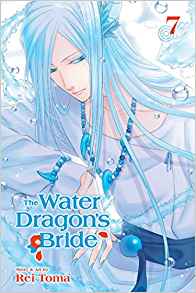
SEAN: And we get… get your pencils ready… Blue Exorcist 20, Food Wars! 26, Haikyu!! 28, Kuroko’s Basketball 2-in-1 14, My Hero Academia 15, My Hero Academia Vigilantes 2, the 24th and final Naruto 3-in-1 (NARUHINA WINS!… ow. Ow, ow, stop with the hitting…), Natsume’s Book of Friends 22, The Promised Neverland 6, Rurouni Kenshin’s 8th 3-in-1, Takane & Hana 5, The Water Dragon’s Bride 7, and Yona of the Dawn 14. I have to say, this may be the single best week I have ever seen Viz put out. Not kidding, there’s like 10 must reads on my list, and they’re ALL COMING OUT NEXT WEEK. Give me a break…

ANNA: So good! So much good stuff from Viz!

ASH: I’ve definitely got my eyes on more than a few!

MICHELLE: I’ve got my eyes on most of those, frankly.

MJ: Well, wow.

SEAN: Are you upset? If you’re not upset, what are you buying next week?

ANNA: I’m not sure if you can tell, but I’m a little excited about Ao Haru Ride.

Filed Under: FEATURES, manga the week of

My Brother’s Husband, Vol. 2

September 27, 2018 by Sean Gaffney

By Gengoroh Tagame. Released in Japan in two separate volumes by Futabasha, serialized in the magazine Gekkan Action. Released in North America by Pantheon Books. Translated by Anne Ishii.

Last time I wondered if Mike giving advice to a young Japanese teen who was also gay would lead to larger drama, and I’m happy to report that it did not. Not that this final volume is conflict-free, but the conflict is as low-key as the first volume was, In fact, it’s almost lampshaded by the author, as Mike has apparently said that Japan is not as bigoted about homosexuality as the West. But that’s only overtly, and we see some good examples of it being something that people quietly want to go away. This leads to Yaichi having a meeting with Kana’s teacher, who is upset that Kana is mentioning a gay an to her classmates, as the teacher says being gay is “an adult topic” kids shouldn’t discuss. Yaichi’s inner monologue comes to life again, as we saw in the first volume, and once again he represses the emotion, but this time he does not repress the objection, and this leads to a great moment where he defends Kana.

Speaking of Kana, she continues to be a terrific kid, and we see her bond with Mike grow more as the book goes forward. This actually leads to a bit of an emotional climax, as of course Mike can’t stay there forever – he’s going back home, and Kana is trying her best to repress her emotions (as her father does naturally), but isn’t really making it work as well. (Earlier she was given a version of Romeo and Juliet to read by a classmate – it devastated her, and we see her sobbing.) This leads to one of the best scenes in the book, where she asks Mike if he swears he’ll come back to Japan again, and he says he can’t do that, because he swore to Ryoji they’d come to Canada, but then Ryoji died. This leads to him teaching her the English phrase “see you soon”, which immediately lightens the mood and is quite heartwarming. Each moment of emotion or turmoil in the book is quickly followed by release or a gentle scene.

We also see more of Natsuki, Yaichi’s ex-wife. There’s a few more scenes that show they still have feelings for each other, but any reunion on their part is left implied on the final page, because this is not meant to be about Yaichi, but about the relationship between Yaichi and Mike. Yaichi’s growth in a mere three weeks is great to see, as is the final hug between the two men. And I loved the pictures we saw of Ryoji and Mike’s wedding, which looked like an absolute blast, though also led to us hearing that Ryoji blamed himself for the rift between him and his twin. As with the first volume, there isn’t a lot of big emotion here – many pages go by with no dialogue and just facial expressions, and sometimes the facial expressions are ambiguous. But Tagame is such a good artist that you understand what he’s trying to convey despite the ambiguity.

This ran in a mainstream magazine for young men, and thus tries its hardest to be friendly and easy to read. It succeeds brilliantly, and I finished the second volume wanting to immediately go back and read the first. Everyone will want to read the story of Yaichi, Mike, and Kana, and I urge them to add this series to their library as soon as they are able.

Filed Under: my brother's husband, REVIEWS

Infinite Dendrogram: The Shield of Miracles

September 26, 2018 by Sean Gaffney

By Sakon Kaidou and Taiki. Released in Japan by Hobby Japan. Released in North America by J-Novel Club. Translated by Andrew Hodgson.

This is another second half of a two-parter where the second half is a bit too short. The author attempts to say something in the afterword about not wanting to do short-story volumes, which is why he puts them after volumes occasionally (as he does here), but it does mean that the climax of this arc feels a bit underwhelming. Ray, Nemesis and B3 finish their investigation of the Master who married and had a child with a tian, but it’s cut short by a monster from the past who has once more risen at this exact time to start killing everyone. (I will give props to the monster, as most of these ‘black shapeless thing that fires beams that kill you’ sorts are mindless, implacable types, but this monster wants to see dying people despair, and has a nice line in maniacal laughing.) Naturally, Ray and Nemesis have to save the day, and they do, pretty simply. This allows us to read a story about Rook as a detective trying to catch a egocentric Master.

One thing that Dendrogram does here is play a bit with the idea of being darker than it is. For the most part, so far this series has been as shiny as Ray, with lots of life-or-death situations but very little real death. Being an actual game rather than a “trapped in a game world” game helps, but the actual plotting lampshades itself at times. We get a master who Ray and B3 realize is, in reality, a terminal patient. It is strongly hinted that the reason he has not come back to the game world is that he is dead. And, I feel it’s OK to spoil this since it’s of no surprise whatsoever, in the end he turns out to have survived the miracle surgery and is merely recovering. This is not a book that is going to make pregnant women and young idealistic kids sad. Likewise Tsukuyo, who we met last time when she was trying to get Ray to join her Society and baiting him with healing his arm, ends up magically healing EVERYONE (including Ray, and Ray’s arm) from the monster attacks, and her reasoning is essentially “I’m such a ditz, tee hee”. She and Ray are eerily similar in mnny ways.

Of course, not everyone is as into Dendrogram as Ray is. B3 treats this game as a game, and the tians as NPCs. She also really likes to roleplay her character, and really really likes to kill other players. Since this is an actual game this time, and the players she kills are actual jerks and losers, your sympathy naturally falls with her. It’s a refreshing contrast from Ray, who is essentially the exact same person in the game as he is outside it. Here B3 actually is her “outside” self most of the time, but when she gets her killing on she puts on her mask and turns into a sneering villain sort. I hope we see more of her. I’m less excited at seeing Gerbera, Rook’s opponent in the short story who does not really come off very well until we get inside her head for the epilogue. I think Rook finds her annoying. I did too.

So not the best volume of Dendrogram, but it didn’t really do anything wrong either. A solid effort.

Filed Under: infinite dendrogram, REVIEWS

The Delinquent Housewife!, Vol. 1

September 25, 2018 by Katherine Dacey

The Spouse With a Secret ranks among the top five narrative devices of all time, as it lends itself to so many different genres: horror stories, costume dramas, lurid thrillers. The Delinquent Housewife! puts a humorous spin on the concept, pitting a seemingly demure newlywed against her in-laws. Though her husband assures Tomugi that his family will embrace her as a cherished member, she isn’t so sure, as Tohru’s younger sister Yukari seems determined to prove to the rest of the Komukai clan that Tomugi is a poor match for Tohru.

Sustaining this premise is a delicate balancing act; if the author hides Tomugi’s secret from the reader or the other characters for too long, the story might become tedious, but if she puts that information out in the open too soon, the story might lose momentum. Nemu Yoko splits the difference, teasing the reader about Tomugi’s big secret for the first thirty pages before dropping a bombshell: Tomugi belonged to a bosozoku (bike) gang. Yoko wisely doesn’t put all her cards on the table, however, leaving the reader to guess how and why the clean-cut Tohru fell for Tomugi.

Yoko makes another smart choice in removing Tohru from the picture just a few pages into volume one, sending him on a mysterious business trip of indefinite length. Though this plot development is a capital-C contrivance, it serves two important functions: it hints that Tohru may be harboring an even bigger secret than Tomugi, and it forces Tomugi to interact with the entire Komukai clan. In particular, Tohru’s absence exacerbates the conflict between Tomugi and Yukari, who views her older brother in a hagiographic light; Yukari spends several chapters scheming ways to expose Tomugi’s culinary deficits, certain that Tomugi’s terrible cooking will be the demise of her marriage to Tohru.

While many of the comic devices are straight out of Moliere — eavesdropping at the door, sneaking around under cover of darkness — The Delinquent Housewife! never feels rote; Yoko puts just enough spin on familiar scenarios to make the jokes’ punchlines seem fresh. Grandpa Komukai, for example, presents like a befuddled old pervert but turns out to be more perceptive about his new in-law than the skeptical Yukari, while Tomugi’s bosozoku buddies prove a fount of useful information about housework. (Her friend Ami’s cooking lesson is a highlight of volume one, a gleeful marriage of foul language, insults, and no-nonsense tips for mastering kitchen basics.) Perhaps the most surprising thing about The Delinquent Housewife! is that Yoko is unsparing in her portrayal of Tomugi’s immaturity, depicting her as a self-pitying leech who’s still blaming her parents for her shortcomings. Yet Tomugi isn’t a monster; even in her worst moments, her interactions with Ami, Dai (Tohru’s kid brother), and Tohru suggest that Tomugi is, at bottom, someone who’s just looking for a family to call her own, even if she’s using questionable tactics to get one.

If I had any criticism of The Delinquent Housewife!, it’s that Tomugi’s tough-girl talk sounds stilted, see-sawing between Noo Joisey realness and teenage text-speak — a tonal problem that might be an artifact of the original script, rather than a by-product of the translation process. On the whole, however, The Delinquent Housewife! is a welcome addition to the Vertical Comics catalog, an energetic comedy that earns its laughs with thoughtful characterizations, appealing art, and juicy plot twists. Recommended.

THE DELINQUENT HOUSEWIFE!, VOL. 1 • STORY & ART BY NEMU YOKO • TRANSLATION BY DAVID MUSTO • VERTICAL COMICS • NO RATING • 192 pp.

Filed Under: Manga, Manga Critic, REVIEWS Tagged With: Bosozoku, Comedy, Nemu Yoko, Seinen, Vertical Comics

Bookshelf Briefs 9/24/18

September 24, 2018 by Ash Brown, Sean Gaffney and Michelle Smith Leave a Comment

Anonymous Noise, Vol. 10 | By Ryoko Fukuyama | Viz Media – Finally, the concerts are going well. Seeing the band actually being fantastic and getting the audiences going is a joy to watch. That said, though, this is still primarily a romance manga. Yuzu manages to confess, but Nino’s just not that into him—she still is in love with Momo. That said, she’s upset about hurting Yuzu, and (in the best scene in the book) opens up to Miou about it. This allows Miou to finally put aside her own demons and admit that she’s in love with Haruyoshi, though he admittedly connects a lot of the dots there in his own favor. That said, Black Kitty absolutely just tore it up. Can In No Hurry top them? This is still one of the better potboiler shoujo manga out there. – Sean Gaffney

As Miss Beelzebub Likes, Vol. 3 | By Matoba | Yen Press -The shotacon I grumped about last time is noticeably absent from this volume (it’s even lampshaded), and I’m not sure that’s the reason I liked it more, but it’ll do. Frankly, I want to see Beelzebub and Mullin get together. I know I will be very, very frustrated as this series goes on, but I’m sorry, they’re just too cute! I’m not quite as fond of the other romance in this book, mostly as I just don’t like Astaroth all that much, and I feel that Sargatanas could do better. There’s also some amusing humor here, including a swimsuit-buying chapter filled with a lot of jokes and fanservice. This series is never going to be anything but froth, but the froth is tasty, and I enjoy it way more than I expected. – Sean Gaffney

Astra: Lost in Space, Vol. 4 | By Kenta Shinohara | Viz Media – There’s a new character introduced at the start of this volume, who was in cryostasis from her own spaceship wreck. At first I thought she’d be a villain character, but it actually turns out that she’s there to be the viewpoint character, as the rest of our cast are getting further and further away from that as we learn their big secret. It certainly explains why they were all mysteriously in that accident—not so mysterious. I feel bad for Aries, who ends up being the only one with a parental figure who wasn’t awful. I’ve no idea where this will end up, but we do get another (amusing) pairing happening here, so my guess is it will wrap soon. – Sean Gaffney

Barakamon, Vol. 16 | By Satsuki Yoshino | Yen Press – To my surprise, Handa actually seems to be getting legitimate students for his school, as well as taking inspiration from his father to do some awesome calligraphy and also worry about Naru. That said, this is Hiroshi’s book. He graduates, and despite Rina’s attempts to confess he goes off to Tokyo single as he’s a bit clueless, but also apparently not really all that into Rina, so it’s probably for the best. There’s lots of nice relaxing stuff about Hiroshi growing up and standing on his own, and it really does feel as if the manga is quietly coming to a close at this point. I’m not sure if it will have a “real” ending per se, but as long as it turns out nice, relaxing volumes like this I’m still reading happily. – Sean Gaffney

Escape Journey, Vol. 1 | By Ogeretsu Tanaka | SuBLime – Naoto Hisami and Taichi Hase dated in their first year of high school, but were better as friends than as a couple and eventually broke up after harsh words were exchanged. Now reunited in their first year of university, they try to be friends but eventually fall back into the same unhealthy pattern. At first, things are consensual, but Naoto wants there to be more to their relationship than just sex. He rents a DVD to watch together, but after Taichi sees a text from a girl on Naoto’s phone, he gets jealous and ends up sexually assaulting Naoto. Are there any kind of ramifications for his actions? No, reader, there are not. For some reason, Naoto takes part of the blame and then it’s all glossed over. I like broken characters, and their relationship dynamics are interesting, but I don’t think I can read any more of this. – Michelle Smith

The Girl from the Other Side: Siúil, a Rún, Vol. 5 | By Nagabe| Seven Seas – I hadn’t really thought that this series could get any creepier and darker, but way to prove me wrong, Girl from the Other Side. Shiva’s aunt may not be “dead” in a normal sense, but as a character she certainly is. I felt some empathy for her plot-related backstory, as she’s presented with a choice that has no good options. There’s also a brutal fight between Teacher and two guards who have been cursed, which would be quite nasty if the art weren’t so abstract. And so Teacher and Shiva are on the run, and hoping that a different village will make things slightly more relaxing. I’m pretty sure it won’t, but I am interested in seeing how this finally ends—is there any way it can end happily? – Sean Gaffney

Interviews with Monster Girls, Vol. 6 | By Petos | Kodansha Comics – It’s been over a year since the last volume of this, and since then the anime has made its impression. This may be why all of a sudden the relationship (or rather lack thereof) between Tetsuo and Sakie really comes to the fore here, and there’s much less focus on the girls. Not that I’m complaining—the author is really good at writing sexual tension, and by the end of the volume you will be screaming for these two to just screw already. The other major focus of this book is Yoko, Tetsuo’s niece, and her zashiki-warashi, who turns out to possibly be in Yoko’s head all along? Or not? If I were to take one monster girl manga to a desert island, it would be this one. – Sean Gaffney

My Brother’s Husband, Vol. 2 | By Gengoroh Tagame | Pantheon Books – I am still thrilled that My Brother’s Husband was released in English. The second half or the series may be even better than the first, perhaps in part because it had such a strong foundation upon which to build. Yaichi remains the most well-developed character—understandably as his growth as a person is a major focus of the series—but more is revealed about Mike as well, and through him Yaichi’s brother Ryoji. The story is beautifully structured with ending scenes paralleling those from the beginning, showing how much Yaichi has matured in such a short period of time, confronting and overcoming the homophobia he hadn’t at first realized he had internalized. My Brother’s Husband is not a subtle manga, but it is a legitimately moving one. By realistically portraying how prejudice and discrimination directly impact the characters’ lives and deeply inform their relationships, Tagame’s message of love is made abundantly clear. – Ash Brown

My Brother’s Husband, Vol. 2 | By Gengoroh Tagame | Pantheon Books – Oh, don’t mind me. I’m just over here sniffling because one dude told another dude “You’re family, Mike” and then later they hugged. It’s true that at times the revelations Taichi has about homosexuality fall squarely in “no crap, dude” territory, but at least he’s having them. (It’s especially gratifying that he refuses to indulge the homophobia of Kana’s teacher, as well.) He gradually realizes that not only has he become completely comfortable in Mike’s presence, but Mike has become so important over the course of his three-week visit that Yaichi is starting to envision the Canadian being a real part of their lives going forward. I liked the implication that Yaichi and Kana will visit Canada someday and Yaichi will get the opportunity to be the tourist, learning about a part of Ryoji’s life he’s unfamiliar with. This was a really touching conclusion. Highly recommended. – Michelle Smith

Filed Under: Bookshelf Briefs

The Champions of Justice & the Supreme Ruler of Evil

September 24, 2018 by Sean Gaffney

By Kaede Kikyou and Tobari. Released in Japan as “Seigi no Mikata to Aku no Sōtō” by the author on the Syosetu website. Released in North America digitally by Cross Infinite World. Translated by Jekaterina Bält.

As with Obsessions of an Otome Gamer, the other Cross Infinite World title I’ve read, I went into this because the concept intrigued me. Honestly, it sounded like Excel Saga, and I am nothing if not a fan of anything possibly related to Excel Saga. We have a young girl who is trying to take over the world but is a bit of a flake. We have an organization that essentially fills the role of a sentai team trying to stop her. That said, that’s about where the similarities end. Instead of Il Palazzo, Mia has her late father, who drilled into her daily the rules on how to use magic but seems to have forgotten (on purpose, as we later find) to tell her what being “evil” actually means. As for the Champions of Justice, they’re cops, and while they have some flaws, for the most part they are all adults who see this Supreme Ruler of Evil they’ve been assigned to stop for what she is: a lonely young girl living alone with genuine magical powers.

Changing up my usual style, I’ll start with the good and move to the bad. It’s mostly good – I was quite entertained by this, which is a LOT deeper and more dramatic than I’d really been expecting. There’s lots of humor, sure, as Mia has a tendency to act like a stereotypical cackling villain at the drop of a hat. But I loved how her attempts to “do evil” are all rather pathetic, and that at heart she is obviously meant to be catching bad guys instead – there’s a bit of Ran from Super GALS! in her, only Ran’s just in denial, whereas Mia genuinely does not seem to know what good and evil are as concepts. The five officers are divided up fairly easily: the serious one who wants to make sure Mia eats properly, the blase one who has a secret I could have done without (more on that later), the angry guy who’s trying to date someone long-distance; the romantic lead who is constantly sexually harassing Mia as a way to distance himself from the fact that he’s fallen in love at first sight (more on that later as well), and the token woman, who is there essentially to be a big sister sort. Gradually they get Mia to open up and get closer, and honestly I think the book may have been better (if less marketable) if it removed the romance and stuck with “found family”.

There are some things I didn’t like. The book was noted as being somewhat racy, and I wasn’t quite sure why till we got to the chapter dealing with Shou, the cheerful yet sneaky blonde guy. At one point, when fighting with Mia, Mia’s magical attacks tear his jacket, which seems to cause him to go dark, and he takes her back to his apartment… which is set up like a bondage fetish room. With lots of toys, lovingly described in great detail. And a rape threat (which Shou clearly doesn’t mean but I don’t care). Honestly, this entire section could be removed with no damage to the story – sure, Shou would get no development, but Aya didn’t either. As for Ren, the love interest, he’s acknowledged in story as sexually harassing Mia, a high school student who is not yet 18, from day one. It’s done in that “this is a romance title” sort of way so I wasn’t as annoyed with it as I was with Shou, but it’s there. I did like Aya at the end admitting that she let him get away with it as she could see he was working through his issues and if he screws this up now she’ll kick his ass to hell and back.

This is another of those really long books, though at least it is complete in one volume. Overall, I’m glad I read it, as I loved the bonding between this group of rough yet gentle police officers and their wayward charge who is a “Supreme Ruler of Evil” who can’t help but do good to anyone she comes across. If you like shoujo romances, I’d definitely give it a try.

Filed Under: champions of justice & the supreme ruler of evil, REVIEWS

Dr. STONE, Vol. 1

September 23, 2018 by Sean Gaffney

By Riichiro Inagaki and Boichi. Released in Japan by Shueisha, serialization ongoing in the magazine Weekly Shonen Jump. Released in North America by Viz Media. Translated by Caleb Cook.

It’s always difficult to judge these Jump titles because the beginning feels like a prologue even when the series takes off, as this one has. Here we have the new series from the writer who brought us Eyeshield 21 and the artist who brought us Sun-Ken-Rock. So they’re both seasoned veterans, and there’s no doubt the new series feels confident. I’m just not sure who I’m supposed to be focusing on. The guy on the cover, Senku, starts the book as the seeming “intelligent sidekick” type to the classic idiot Jump hero-type guy, Taiju. That said, Inagaki has learned his lessons well from his days at Eyeshield 21 and knows that no one read that series for Sena, likeable as he was. No, Eyeshield’s popularity was entirely due to Hiruma. As such, it’s pretty clear the the intelligent, verbally abusive guy is who we need to keep an eye on. (I’m fairly certain he’s not a real doctor, though.)

Our story begins with Taiju, for whom the words ‘lovable lunk’ seem to have been invented, finally manning up and preparing to tell the cute Yuzuriha that’s he is in love with her. Sadly, as he’s about to do this, something flashes across the entire world and every single human on it is turned to stone. Their consciousnesses survive, they’re just… trapped in stone. (It’s not just humanity, some birds are caught as well, but most animals seem to have survived. Fast forward to the year 5738, and Taiju finally is able to escape his stone body. It turns out Senku, his science friend, has been awake over half a year earlier, and has big plans. Together, they’re going to find a way to un-stone people and revive humanity. Naturally, Yuzuriha is one of the first revived, as, well, you need a cute girl in a Jump series. Unfortunately, their other revival proves a bit more unfortunate.

I’m going to leave aside the likelihood of everyone being turned to stone yet alive and conscious for over four thousand years and being mostly fine when they are revived, because that’s clearly handwave plot powers. I’m also going to leave Yuzuriha aside, because as I said earlier her sole purpose seems to be pretty and female – hopefully the manga will get a few more well-defined women in it soon, but honestly, Eyeshield 21 wasn’t great on that front either. Senku and Taiju are much better defined characters – despite his Dragon Ball hair, Senku is clever (and knows it) and pragmatic, and is ready to rebuilt the world with the help of Taiju’s muscle. The antagonist is also interesting, as he points out this is the perfect time to only revive the best, while Senku, our hero, thinks they should revive everyone regardless of whether they’re evil or not. I’m not entirely sure how you can guess the morality of a person from their stone statue self, but given our antagonist seems perfectly happy to break apart little kid’s stone bodies, I suspect he’s not really meant to be much other than ‘the bad guy’.

The art here is good, and I do like Senku, but it feels very much like a prologue. I think I’ll need one or two more volumes before I see where Dr. STONE is going. Till then, Jump fans should like this. Also, Boichi seems to have studied at the Masakazu Katsura school of female character design. Yuzuhira could have stepped off the pages of Video Girl Ai.

Filed Under: dr. stone, REVIEWS

Amagi Brilliant Park, Vol. 1

September 22, 2018 by Sean Gaffney

By Shouji Gatou and Yuka Nakajima. Released in Japan by Enterbrain. Released in North America by J-Novel Club. Translated by Elizabeth Ellis.

In the beginning there was Full Metal Panic!, a long series of light novels that sadly will probably never be rescued but which spawned a long-running anime franchise. Then there was the spinoff, Fumoffu, which was FMP as a gag comedy and featured Sousuke dressed up as an amusement park mascot. As the author admits in the afterword, the design of the mascot was so perfect that the author just poached it outright (with permission) for his new series Amagi Brilliant Park. Sousuke is not inside the costume this time, but fortunately we have Isuzu, who is sort of a gender-reversed Sousuke with about the same amount of social skills and the tendency to use guns as the first and only option. Fortunately, the male protagonist is not a Kaname expy, but instead Seiya is a young man (and former child star) who is smart, handsome, athletic, and smug about all of this. He’s clearly the perfect person to take hostage and beg to save your magical theme park. Which is what Isuzu does.

For most of this book, I will admit, I was a tad underwhelmed. Isuzu and Seiya were flawed characters, but it sort of felt that the flaw was meant to be a “quirk” rather than lead to actual character development. The same applied to other characters – the other heroine is blind, but this is apparently so irrelevant the anime didn’t bother to adapt the blindness. In addition, as part of his job to save the magical amusement park, Seiya is given a magic power, but it’s hilariously useless and for the rest of the book he simply never bothers. The writing itself is solid – no surprise, given the author’s experience – and it definitely does not have the “I am adapted from a webnovel” feel that so many titles do these days. But I really wanted something more from the series, and as the deadline to save the park crept up I was wondering what weird plan our hero would come up with to save the day.

Then came the revelation of what that plan was, which I will do my darndest not to spoil. At first I was sure it was a fakeout, because there was absolutely no way that they were going to go down that dark, cynical road. But they absolutely do, and I literally said “Holy shit” out loud when I read it. It’s a horrible thing to do, and while Seiya wins the day and the amusement park is (for now) saved, both he and Moffle (one of the “mascots” who is the spitting image of Bonta-kun and also the only one we care about in this volume) feel like it is a bitter, undeserved victory. It absolutely is. And it made the book so much better for me, knowing that in among all the wackiness of Isuzu shooting things and the mascots talking about getting it on with hot moms, the author is ready to pull the rug right out from under his readers with this sort of thing. It made me sort of ill. Bravo.

The next volume is supposed to be more lighthearted, and I’m not sure that’s really what I’ll want. But for now, I recommend Amagi Brilliant Park to fans of FMP or ‘comedy workplace’ series who don’t mind the hero coming off as something of a tortured sociopath. I’ll be reading more.

Filed Under: amagi brilliant park, REVIEWS

Otherworldly Izakaya [Nobu], Vol. 1

September 21, 2018 by Sean Gaffney

By Natsuya Semikawa and Virginia Nitouhei. Released in Japan as “Isekai Izakaya “Nobu”” by Kadokawa Shoten, serialization ongoing in the magazine Young Ace. Released in North America by Udon Entertainment. Translated by Caleb D. Cook.

There’s a small subset of isekai series that seem to involve a restaurant that is modern Japanese and yet caters to fantasy characters. This one is particularly odd in several ways, though. It’s based on a light novel series, which makes sense if you think of it as an isekai manga but no sense whatsoever if you think of it in its real genre, which is a “everyone enjoys food and describes it” manga. (I’m not sure it’s technically a foodie manga as there are no recipes. You aren’t supposed to make these yourself.) That said, if you DO see it as an isekai manga, it’s probably one of the few I’ve seen shown almost entirely from the POV of the existing fantasy characters. The “Chief” and Shinobu are the staff of the izakaya in question, and by the end of the first book we know the same thing about them which we knew at the start – nothing. It’s about the fantasy cast, and food.

Even the isekai part of the series is a bit vague. The plot involves this izakaya (think pub) in a side street of a medieval town, which gets traffic at first mostly from the guards who are exhausted after a day’s work (just like real izakayas). They are poleaxed by things like cold beer, oden, etc. – basic Japanese pub fare. It becomes somewhat clear as the book progresses that the izakaya has a “back area” that is connected to modern-day Japan, where Shinobu and the Chief get ingredients and (presumably) live. In other words, they are the ones who are transported to another world. But, as I said earlier, this is a series about the food and the people eating it. boisterous guards, their grumpy captain, an uptight tax collector (who is not Gustav St. Germain from Baccano!, but happens to look just like him), and a spoiled rich girl wander in, think they’re not going to like the food, and like the food.

In the end, you have to think of the series as a food manga to really appreciate it. The attention given to the food is, of course, excellent, and the characters make you really want to dig in. As I said earlier, Shinobu is the waitress girl on the cover, and she’s bright and helpful and that’s about it – likewise, Chief is straightforward and somewhat stoic. There’s some sort of language barrier that isn’t quite made clear – Shinobu using untranslated Japanese at times (particularly her long, drawn-out “haaaaaiiii!”) is meant to show this, but she can also clearly communicate with everyone. The other very odd thing about this isekai is that, as far as I can tell, there’s no magic or fantasy in this world whatsoever. It’s in some sort of German medieval world, but the only isekai think is the Japanese pub. It’s a very odd combination, but the relaxed mood and food descriptions in this volume means I’ll be coming back for more. And hopefully getting at least some backstory for our staff.

Filed Under: otherworldly izakaya nobu, REVIEWS

Manga the Week of 9/26/18

September 20, 2018 by Sean Gaffney, Michelle Smith, Ash Brown, Anna N and MJ Leave a Comment

SEAN: September has ended. Go in peace, to love and serve the manga.

Let’s break this down, cause there’s a lot. First of all, Bookwalker snuck out The Ryuo’s Work is Never Done 4 last week and I missed it. Sorry, loli shogi fans!

Ghost Ship has the 5th To-Love-Ru omnibus.

J-Novel Club has the 7th Demon King Daimaou.

Kodansha has its usual pile o’ digital, but print first. We see Kiss Me at the Stroke of Midnight 7, The Seven Deadly Sins 28, and the 6th and final volume of Wake Up Sleeping Beauty. I suspect MB peeps are most interested in the last one.

MICHELLE: Yep!

ASH: It’s true!

SEAN: The digital debut looks amusing. Ao-chan Can’t Study (Midarana Ao-chan wa Benkyou ga Dekinai), a shonen series about a girl who has (to her shame) inherited her father’s dirty mind, and a guy who loves her and won’t take a hint.

Ongoing? There’s Ace of the Diamond 15, Beauty Bunny 7, Defying Kurosaki-kun 4, Is Kichijoji the Only Place to Live? 3, Liar x Liar 6, My Boyfriend in Orange 5, and The Quintessential Quintuplets 4.

MICHELLE: Ace and Kichijoji for me.

SEAN: Lately Seven Seas has been backloading all their series to the end of the month, which means there is SO MUCH out next week. The debut is a digital one (print comes out at the end of October: The Ancient Magus’ Bride Supplement I is another Guidebook to the world of this popular series.

ASH: I’ll be waiting for the print edition, personally, but am glad it’s coming out digitally, too.

SEAN: And so many ongoing series. We see the 6th 12 Beast (not to be confused with the 12th 6 Beast), A Centaur’s Life 15, Devilman Grimoire 4, the 2nd Dragon Half omnibus, Generation Witch 5, The Girl from the Other Side 5, Hachune Miku’s Everyday Vocaloid Paradise 4, Hour of the Zombie 7, Magical Girl Site 7, Magical Girl Spec-Ops Asuka 4, New Game! 3, Not Lives 10, Precarious Woman Executive Miss Black General 2, and Soul Liquid Chambers 2. There’s a lot of grimdark and fanservice (and both) in that, but I’m excited for Dragon Half, The Girl from the Other Side (which is admittedly pretty dark), and New Game.

MICHELLE: I’m always excited for more of The Girl from the Other Side.

ANNA: Me too! Such a unique series!

ASH: Wow, you weren’t kidding about the number of Seven Seas title! The first Dragon Half was certainly entertaining and The Girl from the Other Side remains one of my favorite series currently being released.

SEAN: Vertical has been debuting a lot this month, as we now get After the Rain (Koi wa Ameagari no You ni), which is not by the creator of School Rumble despite seemingly having Yakumo on the cover. It’s a seinen manga from Big Comic Spirits, about a high school girl and her romantic pursuits. It’s gotten some good buzz.

MICHELLE: I like its cover!

ANNA: Ok, I’m curious.

SEAN: Viz has a digital-only release of the 9th Boys Over Flowers Season 2.

ANNA: One day I want to give into nostalgia and catch up on this series.

SEAN: Lastly, Yen Press has some digital titles and some runoff from last week. The digital is the 18th volume of Sekirei. The print is the 16th Barakamon and the 4th (and I believe last) No Game No Life Please!.

And for fans of A Bride’s Story, Vol 1-5 are finally out digitally next week, with the other 5 volumes arriving in October.

We also have the print debut of a series that came out digitally by chapter a while back, Hinowa Ga CRUSH!. With a title like that, you can guess it’s from the creator of Akame Ga KILL!, and appears to be tied into it. It runs in Big Gangan.

Any manga for next week before everyone starts saving for Pumpkin Spice?

MJ: So if I’m not that into anything here, does it mean I’m stuck with Pumpkin Spice?

Filed Under: FEATURES, manga the week of

  • « Go to Previous Page
  • Page 1
  • Interim pages omitted …
  • Page 203
  • Page 204
  • Page 205
  • Page 206
  • Page 207
  • Interim pages omitted …
  • Page 538
  • Go to Next Page »
 | Log in
Copyright © 2010 Manga Bookshelf | Powered by WordPress & the Genesis Framework