By Jin (Shinzen no Teki-P) and Sidu. Released in Japan by Enterbrain. Released in North America by Yen On. Translated by Kevin Gifford.
For all that I’ve joked about the Kagerou Daze light novels being short – and they really are, they’re easily the shortest books that Yen is putting out right now – that’s not a complaint about their quality, which has steadily improved with each volume. Kagerou Daze does not really give the reader a lot of information directly, so one can get very easily confused reading the first three books. As we move on, though, and discover backstories and connections between characters, everything starts to come together as we realize that there is an overarching plot here, we have a main villain, and we almost know what the villain is doing, though not why. It can also help flesh out previous books, and no volume does that more than this new one, which is a mirror to the second book, A Headphone Actor.

In that book we had the POV of Takane, the eternally angry high school girl who likes her tall, airheaded classmate Haruka but can’t do anything but take shots at him, because hiding embarrassment, etc. A tsundere with very little dere. This new book gives us Haruka’s perspective of the same events, and we can see that he does actually sort of like Takane, but unfortunately due to her actions he doesn’t think that she likes him much at all. If you’re going to haev a stereotypical angry anime girl, it’s always nice to show off how it can work against them in the long run. As for Haruka himself, he’s a bit shy, straightforward, nice… and dying, something that he’s known about for some time but hasn’t really told anyone about. The knowledge that he’ll be dead in a year informs many of his actions, especially as he begins to open up to both Takane and his new friends Ayano and Shintaro.
Shintaro is a bit of a revelation here, as from Takane’s perspective in Volume 2, he was quite different back in school from the emotional hot mess we know and love. Here we see Shintaro slowly open to to Haruka’s aggressive overtures of friendship, and we can see that the emotional turmoil is not all that far from the surface. There’s lots of bits in this book that work because we know the cast and their pasts from previous books – when Ayano walks in on Haruka and begins to act in a completely non-characteristic way, it’s easy to see that it’s really Kano. We also see the start of Momo’s idol career, and the fact that literally everyone but Shintaro can see how gaga Ayano is over him. Of course, Ayano is dead in the future, which also makes this a bit tragic as well.
In fact, the book ends darkly, as not only do we see Haruka and Takane getting turned into Konoha and Ene from his perspective, but we also see that Konoha seems to be somewhat possessed by evil, and also that Shintaro is possibly dead as well. Given that we’ve seen time loops in this series before, I highly doubt this is meant to be permanent, but our heroes still have a long way to go to fix things. Definitely worth a read, even if you’re not a fan of the songs.



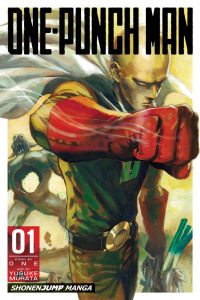 My name is Saitama. I am a hero. My hobby is heroic exploits. I got too strong. And that makes me sad. I can defeat any enemy with one blow. I lost my hair. And I lost all feeling. I want to feel the rush of battle. I would like to meet an incredibly strong enemy. And I would like to defeat it with one blow. That’s because I am One-Punch Man.
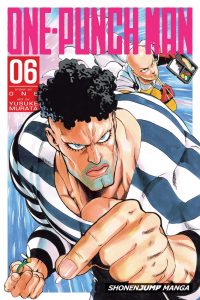 The balancing act ONE and Murata achieve here is impressive. On the one hand, One-Punch Man is gloriously silly. Heroes and foes alike are apt to be ludicrous, and some of the former have terrific names like Tank Top Vegetarian or Spring Mustachio (although I actually think he’s pretty cool). On the other hand, there is a lot of excellent shounen manga storytelling going on. The way Saitama lives his life without criticism for others makes me think he’d get along well with One Piece‘s Luffy, and the devotion his pupil Genos shows for him means they can always rely on each other. Too, after Saitama joins the Hero Association, we get regular updates on how his rank is improving, and this puts him in contact with even more heroes, some of whom are inept, some of whom are capable, and one of whom might actually be an enemy. He doesn’t seek glory, so many are unaware of his true strength, but I assume that eventually he will attain the rank he deserves (currently, due to poor performance on the written test, he’s far below Genos).
 As of volume eleven, there are several plotlines in play. Monsters are appearing everywhere, and appear to be organizing. Is this tied in with the prediction of an extinction-level event within the next six months? What about that hint of a possible traitor that was dropped a few volumes back? While a rogue martial artist named Garo is hunting heroes, Saitama is off at a martial arts tournament to learn more how to defeat Garo (not knowing that he totally already did) and seems destined to face off against another strong fighter who is desperate for a challenge. I admire how this story has widened in scope in a natural way, without compromising the balance of narrative and humor. It could conceivably go on for a very long time, and I deeply hope it does.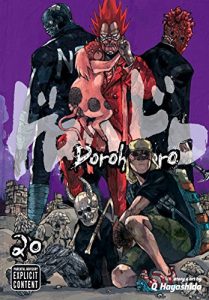
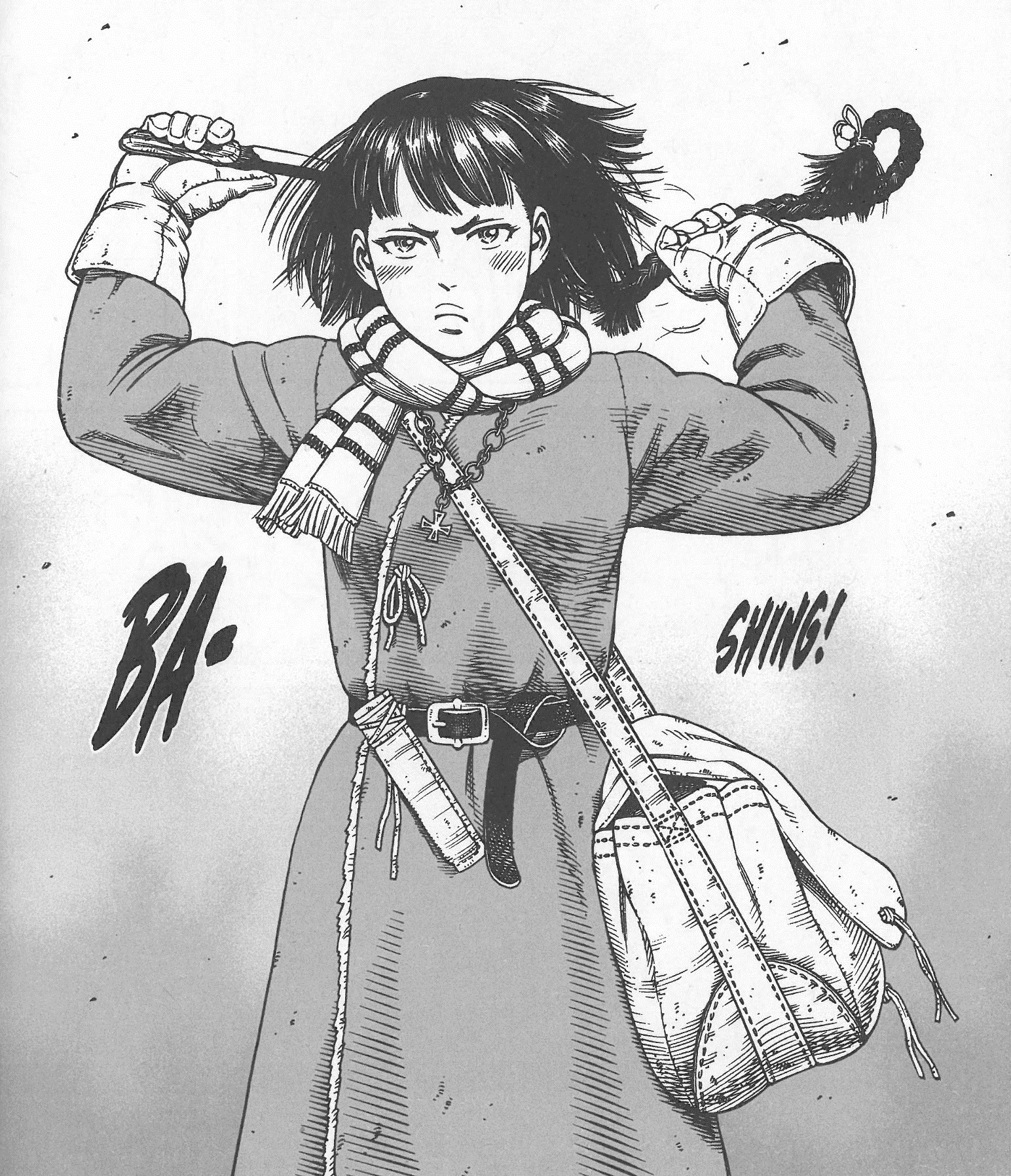
 and
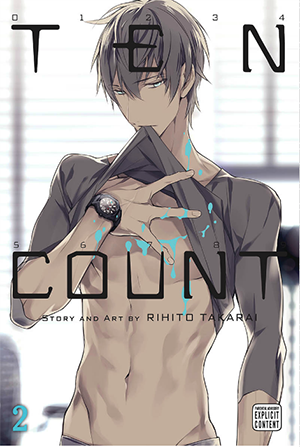
and  ) by Rihito Takarai, published here by SuBLime. From what I understand, the series has reached five volumes (ongoing) in Japan. The third volume is due out from SuBLime next month.
  Shirotani is a lifelong germaphobe, resigned to his condition, though it keeps him isolated from others. Fortunately, with the help of his understanding employer, he is able to tolerate his job as secretary to a corporate CEO. It is in the corporate line of duty, then, that he first meets Kurose, a therapist at a local mental health clinic. Kurose notices Shirotani’s condition immediately, and suggests he seek help, but though Shirotani is able to make his way to the clinic, he can’t bring himself to go inside. Acknowledging this difficulty, Kurose offers to help him in a non-clinical capacity, as a friend, an arrangement to which Shirotani eventually agrees. As Kurose slowly helps him accomplish progressively difficult tasks (touching a doorknob with his bare hand, buying a book from a bookstore), the two become close in ways that complicates their relationship and threatens the fragile boundaries between them.
  MICHELLE: Another thing that strikes me about the questions Kurose poses is how detached and clinical they can seem, even after a sexual act. One example is, “Were you more concerned with the possibility that I found you unpleasant than whether or not you found the situation itself unpleasant?” Leaving aside the tacit admission that he knows Shirotani could’ve been finding the situation unpleasant, attempting to reassert the therapist/patient dynamic at such a moment is, well, kind of creepy.

