• Skip to primary navigation
  • Skip to main content
  • Skip to primary sidebar
  • Home
  • About Us
    • Privacy Policy
    • Comment Policy
    • Disclosures & Disclaimers
  • Resources
    • Links, Essays & Articles
    • Fandomology!
    • CLAMP Directory
    • BlogRoll
  • Features & Columns
    • 3 Things Thursday
    • Adventures in the Key of Shoujo
    • Bit & Blips (game reviews)
    • BL BOOKRACK
    • Bookshelf Briefs
    • Bringing the Drama
    • Comic Conversion
    • Fanservice Friday
    • Going Digital
    • It Came From the Sinosphere
    • License This!
    • Magazine no Mori
    • My Week in Manga
    • OFF THE SHELF
    • Not By Manga Alone
    • PICK OF THE WEEK
    • Subtitles & Sensibility
    • Weekly Shonen Jump Recaps
  • Manga Moveable Feast
    • MMF Full Archive
    • Yun Kouga
    • CLAMP
    • Shojo Beat
    • Osamu Tezuka
    • Sailor Moon
    • Fruits Basket
    • Takehiko Inoue
    • Wild Adapter
    • One Piece
    • After School Nightmare
    • Karakuri Odette
    • Paradise Kiss
    • The Color Trilogy
    • To Terra…
    • Sexy Voice & Robo
  • Browse by Author
    • Sean Gaffney
    • Anna Neatrour
    • Michelle Smith
    • Katherine Dacey
    • MJ
    • Brigid Alverson
    • Travis Anderson
    • Phillip Anthony
    • Derek Bown
    • Jaci Dahlvang
    • Angela Eastman
    • Erica Friedman
    • Sara K.
    • Megan Purdy
    • Emily Snodgrass
    • Nancy Thistlethwaite
    • Eva Volin
    • David Welsh
  • MB Blogs
    • A Case Suitable For Treatment
    • Experiments in Manga
    • MangaBlog
    • The Manga Critic
    • Manga Report
    • Soliloquy in Blue
    • Manga Curmudgeon (archive)

Manga Bookshelf

Discussion, Resources, Roundtables, & Reviews

Blog

The Sharing Knife: Horizon by Lois McMaster Bujold: B-

July 9, 2010 by Michelle Smith

From the front flap:
In a world where malices—remnants of ancient magic—can erupt with life-destroying power, only soldier-sorcerer Lakewalkers have mastered the ability to kill them. But Lakewalkers keep their uncanny secrets and themselves from the farmers they protect, so when patroller Dag Redwing Hickory rescued farmer girl Fawn Bluefield, neither expected to fall in love, join their lives in marriage, or defy both their kin to seek new solutions to the perilous split between their peoples.

Fawn and Dag see that their world is changing, and the traditional Lakewalker practices cannot hold every malice at bay forever. Yet for all the customs that the couple has challenged thus far, they will soon be confronted by a crisis exceeding their worst imaginings, one that threatens their Lakewalker and farmer followers alike. Now the pair must answer in earnest the question they’ve grappled with since they killed their first malice together: when the old traditions fail disastrously, can their untried new ways stand against their world’s deadliest foe?

Review:
If I didn’t like Dag and Fawn, The Sharing Knife: Horizon would be one of the most boring books I’ve ever read.

Having reached the end of their river voyage, Dag and Fawn pause long enough to witness the marriage of Whit and Berry before parting ways with Fawn’s brother and his new bride and heading to New Moon Cutoff, a Lakewalker camp where a renowned medicine maker, Arkady Waterbirch, lives. There, Dag finds an explanation for some of his abilities that is far more positive than the dark alternatives he’d been fearing and apprentices with the fastidious Arkady for several months.

Arkady is opposed to Dag practicing medicine on “farmers,” but when a child stricken with lockjaw needs his help, Dag goes willingly, knowing that he might be sacrificing the incredibly valuable apprenticeship as a result. The boy survives, but Dag’s actions throw New Moon camp into a tizzy so he decides to head back up north with newly pregnant Fawn rather than succumb to the restrictions the camp leader wants to oppose on him. A little way down the road, he’s joined by Arkady, staging his own protest against the leader’s decision.

Along the way they acquire various traveling companions—farmers and Lakewalkers both—until their party numbers more than two dozen. Dag fashions a trio of necklaces designed to help veil farmers’ grounds and protect them against malices. These are put to the test right at the end of the book when the party stumbles upon a particularly awful malice and Fawn (with help from Whit and Berry) proves again how resourceful and useful farmers can be if allowed to help. The implication is that the tale of this deed will spread far and wide and help foster a sense of cooperation between the two peoples.

Most of the book focuses on what Dag is learning and, true, it can be kind of interesting sometimes. Bujold has created an admirably consistent world for her characters to inhabit, so all of the detail about the healing techniques Dag is learning pretty much makes sense. It’s just that the narrative moves so slowly. I never do particularly well with a story whose whole plot is, “And then they walked a lot,” and that’s essentially what this book becomes in its second half.

Also, there’s too many characters at the end. Some of the new ones are interesting—I’m fond of Dag’s patroller niece, Sumac, and I can see why the half-Lakewalker siblings Calla and Indigo are important as a preview of what Dag and Fawn’s own children might be like—but many are nondescript. It’s easy to forget some of them are even there; I certainly did so more than once.

Ultimately, I did enjoy The Sharing Knife series and, though it’s easy to fault it for being too long and rambly, I don’t have any particular recommendations for how it could be made shorter.

Additional reviews of The Sharing Knife: Horizon can be found at Triple Take.

Filed Under: Books Tagged With: Lois McMaster Bujold

Himeyuka & Rozione’s Story

July 9, 2010 by Katherine Dacey

HIMEYUKAAnthologies serve a variety of purposes. They provide established artists an outlet for experimenting with new genres and subjects; they introduce readers to seminal creators with a representative sample of work; and they offer a window into an early phase of a manga-ka’s development, as he or she made the transition from short, self-contained works to long-form dramas. Himeyuka & Rozione’s Story serves all three purposes, collecting four shojo stories by prolific and versatile writer Sumomo Yumeka, best known here in the US for The Day I Became A Butterfly and Same Cell Organism. (N.B. “Sumomo Yumeka” is a pen name, as is “Mizu Sahara,” the pseudonym under which she published Voices of a Distant Star and the ongoing seinen drama My Girl.)

If the stories in Himeyuka & Rozione aren’t groundbreaking — one focuses on a yakuza princess falling in love with a commoner, another on an inept witch trying to increase her magical mojo in the human world — they are full of nicely observed moments and subtle but effective twists. In “The Princess of Kikouya in District 1,” for example, a feisty young woman tries to delay a marriage intended to consolidate two crime families’ power, only to discover that the qualities she admires in her regular-guy paramour are, in fact, the result of his long involvement with the mob, while in “My Very Own Shalala,” a young witch tries to trick a brusque young man into crying (his tears will enhance her magical power), only to discover that he’s perfectly capable of expressing genuine sadness. The best story of the bunch, “Himeyuka & Rozione,” takes another common shojo trope — the emancipated teen trying to make it on her own — and turns it into a thoughtful parable about the value of maintaining your ties to the past, even as you move into the world of adult responsibility.

…

Read More

Filed Under: Manga Critic Tagged With: shojo, yen press

Off the Shelf: Six for Six!

July 7, 2010 by MJ and Michelle Smith 9 Comments

Welcome to another edition of Off the Shelf with MJ & Michelle! As always, I’m joined by Soliloquy in Blue‘s Michelle Smith.

It’s hard to believe we’re already on our sixth installment! This week, we’ve finally come down from our manhwa high, ready to look at some recent releases from Yen press, Viz Media, Dark Horse Manga, and Digital Manga Publishing.

MJ: So, we’ve been wallowing in manhwa for a couple of weeks, but now it’s time to return to our original 3+3 manga format. I’ve been doing some reading this week and I bet you have too! What have you pulled off the shelf recently?

MICHELLE: Well, I’ve recently read The Clique, originally a YA novel by Lisi Harrison that’s been adapted into a graphic novel by Yishan Li (who might be best known for Shoujo Art Studio and her work for Yaoi Press). It’s essentially the story of two 7th graders—Massie, the richest and most popular girl in school, …

Read More

Filed Under: OFF THE SHELF Tagged With: crown of love, millennium prime minister, nabari no ou, off the shelf, okimono kimono, rasetsu, the clique

My Favorite Shojo Manga: Kaze Hikaru

July 7, 2010 by Katherine Dacey

In Manga: Sixty Years of Japanese Comics, author Paul Gravett argues that female mangaka from Riyoko Ikeda to CLAMP have often used “the fluidity of gender boundaries and forbidden love” to “address issues of deep importance to their readers.” Taeko Watanabe is no exception to the rule, employing cross-dressing and shonen-ai elements to tell a story depicting the “pressures and pleasures of individuals living life in their own way and, for better or worse, not always as society expects.”

Kaze Hikaru begins in 1863, a period of immense political and social upheaval in Japan, as the ruling class divided into factions loyal to the emperor (whose seat was in Kyoto), and factions loyal to the shogun (whose government was housed in Edo, or present-day Tokyo). Exacerbating the tension between these groups was the looming question of sakoku, or isolationism, a centuries-old policy that was crumbling in the face of military and economic pressure from the West, an unstable currency, and the dawning realization that certain Western technologies might have a role to play in the modernization of Japan. Taeko Watanabe draws on the events of the Bakumatsu (or late shogunate era, 1863 – 1867) for Kaze Hikaru, incorporating real historical figures into the story and dramatizing some of the major and minor conflicts of the period, from the Ikedaya Affair of 1864 to the Shinsengumi’s ambivalence about adopting rifles and canons into the samurai arsenal.

In the opening pages of Kaze Hikaru, Sei Tominaga, the heroine, lives a sheltered existence under the watchful eye of her father and older brother. Local rabble-rousers accuse the Tominagas of harboring spies at the medical clinic they operate and burn it to the ground, leaving Sei homeless and orphaned. Determined to avenge her family, Sei disguises herself as a boy, adopts the name Kamiya Seizaburo, and joins the Mibu-Roshi, a band of ronin who are fiercely loyal to the Tokugawa Shogunate. (The Mibu-Roshi would come to be known as the Shinsengumi, or “newly chosen corps.” At the height of their power, their ranks numbered around 300, and included a few members who were not born into the samurai caste.) Sei finds a mentor in the slightly older Okita Soji, an accomplished swordsman who acts as a den mother for new recruits. He accidentally discovers Sei’s identity, agreeing to keep her secret if she can demonstrate her worth as bushi, or an honorable warrior.

Watanabe’s art is clean and crisp, conveying enough period detail to firmly establish the setting without overwhelming the eye. A similar attention to facial features and body shapes also informs her nuanced and varied character designs, a godsend for a such a densely populated series. The action sequences are staged simply but effectively, conveying the skill and physical strength necessary to best an opponent in hand-to-hand combat, or suggesting the dangers of a night-time raid. But it’s in the everyday moments that Watanabe’s artistry really shines, as she has a talent for depicting the energy and activity of an urban marketplace, a soliders’ encampment, or a red-light district. We see the Shinsengumi recruits train, squabble, drink, gamble, and abuse their power with innkeepers and merchants, with careful attention paid to the objects they handle, the clothing they wear, and the posture they adopt as they interact with people of higher and lower social status.

Much of the drama — as well as the humor — in Kaze Hikaru stems from Sei’s attempts to fit in with her fellow soldiers by proving her worth as a man — no mean feat, given her small size, feminine appearance, and cultivated upbringing. (This is one of the few cross-dressing stories in which characters routinely ask the question on readers’ minds: “Aren’t you a little too pretty to be a guy?” Not surprisingly, some of the men desire Sei as an exceptionally handsome boy, further confusing our protagonist.) Sei’s greatest challenge, however, is concealing her deep love for Okita as both a mentor and a man. She wants Okita to respect her as a warrior, yet fears that her gender-bending transgression may prevent him from reciprocating her romantic feelings. It’s a classic shojo predicament — think of Lady Oscar and her manservant Andre — that simultaneously reveals Sei’s vulnerability and resolve. Her fierce commitment to the Shinsengumi, however, eventually prevails over her desire to reclaim her feminine identity, as she decides to honor Okita’s wish that she be Seizaburo and not Sei.

When contrasted with other Shojo Beat titles, Kaze Hikaru seems a little old-fashioned. Watanabe tends to favor neat grids and clearly-defined panels over the freer, more expressive layouts used in series like We Were There, Sand Chronicles, and Vampire Knight. The pace, too, is more stately, demanding a higher level of attention from the reader than most Shojo Beat titles; Watanabe’s characters discuss political matters, clan rivalries, and military strategy in considerable detail, giving some scenes the feeling of a Kurosawa movie. Even Sei and Okita’s friendship, rooted as it is in mutual warrior regard, seems out of step with the racier romances depicted in Absolute Boyfriend and B.O.D.Y.: would a school council president or magical girl swoon when she received a customized katana from the object of her affection, even if it was a sincere expression of his respect for her skill and courage?

Yet for all its squareness — or perhaps because of it — Kaze Hikaru remains my all-time favorite shojo manga. What makes Kaze Hikaru so compelling is the way in which Watanabe appropriates a very tired story — samurai seeks revenge in a time of social and political turbulence — and infuses it with a fresh, feminine sensibility. I might call it Satsuma Gishiden for Girls, but I think that downplays Watanabe’s achievement. She’s created an action-filled drama in the vein of The Rose of Versailles or They Were Eleven but transplanted the setting from the relatively safe, romanticized worlds of the French Revolution and outer space to a period in Japanese history in which the male-identified virtues of courage, discipline, and patriotism dominated public discourse. She may not have intended it as a bold political statement, but Watanabe has done something extraordinary: she’s given girls the freedom to project themselves into Japan’s past without gender constraints. American artists looking to connect with female readers would do well to read Kaze Hikaru for inspiration — there’s a great graphic novel to be written about a cross-dressing Minuteman or Union solider, and Sei would make a terrific prototype for its spunky heroine.

Review copies of volumes 17 and 18 provided by VIZ Media, LLC. This is an expanded version of a review that appeared at PopCultureShock on 5/17/07.

KAZE HIKARU, VOLS. 1-18 • BY TAEKO WATANABE • VIZ • RATING: OLDER TEEN (16+)

Filed Under: Manga, Manga Critic, Recommended Reading, REVIEWS Tagged With: Samurai, shojo, shojo beat, VIZ

My Favorite Shojo Manga: Kaze Hikaru

July 7, 2010 by Katherine Dacey

kazehikaru1In Manga: Sixty Years of Japanese Comics, author Paul Gravett argues that female mangaka from Riyoko Ikeda to CLAMP have often used “the fluidity of gender boundaries and forbidden love” to “address issues of deep importance to their readers.” Taeko Watanabe is no exception to the rule, employing cross-dressing and shonen-ai elements to tell a story depicting the “pressures and pleasures of individuals living life in their own way and, for better or worse, not always as society expects.”

Kaze Hikaru begins in 1863, a period of immense political and social upheaval in Japan, as the ruling class divided into factions loyal to the emperor (whose seat was in Kyoto), and factions loyal to the shogun (whose government was housed in Edo, or present-day Tokyo). Exacerbating the tension between these groups was the looming question of sakoku, or isolationism, a centuries-old policy that was crumbling in the face of military and economic pressure from the West, an unstable currency, and the dawning realization that certain Western technologies might have a role to play in the modernization of Japan. Taeko Watanabe draws on the events of the Bakumatsu (or late shogunate era, 1863 – 1867) for Kaze Hikaru, incorporating real historical figures into the story and dramatizing some of the major and minor conflicts of the period, from the Ikedaya Affair of 1864 to the Shinsengumi’s ambivalence about adopting rifles and canons into the samurai arsenal.

…

Read More

Filed Under: Manga Critic Tagged With: Samurai, shojo, shojo beat, VIZ

Manhwa Monday: July Preview

July 5, 2010 by MJ 3 Comments

Welcome to another Manhwa Monday!

It’s a fairly quiet month for manhwa releases, with the only new print volumes coming from Yen Press, including the final volume of Pig Bride. Other releases include volume twelve of Angel Diary, volume five of Sugarholic, volume three of Jack Frost, and my personal pick of the bunch, volume three of Yun JiUn’s collection of ghost stories, Time and Again.

Time and Again has gotten quite a bit of attention this past week, beginning with the recent Off the Shelf column, in which Michelle Smith and I discuss the series’ first volume. Michelle later makes good on her promise to review volumes 1-3 at Soliloquy in Blue.

Then, at Manga Maniac Cafe, Julie takes a look at volume three, “Wow, this series really hits its stride with this volume. Each of the chapters held me enthralled…

Read More

Filed Under: Manhwa Bookshelf, Manhwa Monday Tagged With: manhwa monday

Portrait of M & N 1-2 by Tachibana Higuchi: B-

July 4, 2010 by Michelle Smith

Much as with Natsuki Takaya’s Tsubasa: Those with Wings, I had been looking forward to the English release of Portrait of M & N by Tachibana Higuchi only because I enjoy later work, Gakuen Alice. Aaaand, much as with Tsubasa: Those with Wings, I ended up somewhat disappointed.

Portrait of M & N is a love story starring a beautiful girl named Mitsuru Abe and a handsome boy named Natsuhiko Amakusa. Matters are complicated, however, because each character harbors an embarrassing secret: Mitsuru is a masochist (or M) and Natsuhiko is a narcissist (or N). Ostensibly, these conditions developed as a result of the way they were treated by their parents—the most attention Mitsuru received from her mother was when she was being punished, while sickly Natsuhiko was forbidden to go outside and play with other kids, and thus developed a fixation for his own reflection.

Both Mitsuru and Natsuhiko are hoping for a normal, peaceful high school life, and things seem to be off to a good start because their good looks have attracted positive notice from their classmates. That is, until Mitsuru’s masochistic tendencies are triggered in Natsuhiko’s presence. It’s almost as if she has a split personality: when she is hit in the face, she suddenly becomes aggressively submissive, offering anybody who happens to be nearby the chance to do whatever they want to her. Against his better judgment, Natsuhiko becomes friends with Mitsuru and attempts to protect her whenever she goes into M mode, and thus reveals his own secret to her, one that turns him into a tearful, blushing fool whenever he catches sight of himself in a mirror.

If you’re looking for an accurate, sensitive portrayal of masochism or narcissism, you’re not going to find it here. This is a comedy, after all, and Higuchi seemingly delights in inventing ridiculous situations for the characters to endure—like a mandatory game of dodgeball, for example. A third character, Hijiri, enters the mix in toward the end of the first volume and, realizing Mitsuru’s secret pretty quickly, uses it to extract her cooperation in protecting him from a particular dog (he has a secret phobia of his own) on his way to and from school. Mitsuru’s closeness with two of the hottest guys in school does not go over well with the other girls, who treat her very poorly. These are the most tiresome scenes in the series, by far.

Setting aside the ridiculous and the tiresome, however, there really are some things I genuinely like about Portrait of M and N. Most of the time, a shoujo romance is presented from the girl’s point of view. She falls in love with the boy and we’re privy to her emotions, but we rarely, if ever, get inside his head. That is not the case here and, in fact, I believe there has been more attention paid to Natsuhiko’s developing feelings than Mitsuru’s.

As one bit of text reads, “She swiftly fell in love in spring, he realized he was falling in love in summer.” For Mitsuru, it was easy to fall in love with Natsuhiko, who is kind and understands her, but for Natsuhiko, the realization that he is falling in love with someone else is doubly important because it means that he can. All of his life, relatives and classmates have been vocal in their doubts that such a thing would ever be possible, but he has proved them wrong, and his happiness is mixed with not a little relief.

While I find Hijiri generally annoying, he is useful in that his interactions with Mitsuru force Natsuhiko to confront how he feels about her, and they end volume two by sharing an awkwardly cute moment together. It’s for scenes like these that I’ll continue to read Portrait of M & N and hope that there’s less to irk me in volumes to come.

Portrait of M & N is published by TOKYOPOP. The series is complete in Japan with six volumes, and two have been released in English so far.

Review copies provided by the publisher.

Filed Under: REVIEWS Tagged With: Tachibana Higuchi, Tokyopop

Magical JxR, Vol. 1

July 4, 2010 by MJ 3 Comments

Magical JxR | By Lee Sun-Young | Published by Udon Entertainment | Rated Teen (13+) – Jay and Aru are young wizards, ready to graduate from wizarding school. To fulfill their final graduation test, they must make a contract to help a human girl, Cho-Ah. Hidden in the fine print, however, are the contract’s real terms, mandating that the two of them spend an entire year with her!

Though the previous appears to be the intended plot for this manhwa (as evidenced by very similar copy on the back of its cover), it’s difficult to know for sure, since the concept doesn’t actually appear until halfway through the volume. Though the earlier chapters do revolve around the two wizards as little boys, they read like false starts, as though Lee (or her editor) changed her mind several times before deciding on a story to tell.

As a result, the series’ first volume is a fairly frustrating read that really doesn’t get anywhere until the last few pages, in which it introduces the story’s main plot before cruelly coming to an end. Fortunately, it is the story’s most intriguing characters, Jay, Aru, and Cho-Ah, who will advance to the series’ next volumes.

Jay and Aru may be wizards, but it is their contrasting personalities (ice cold Jay and smiling Aru) that make them worth reading about, not their run-of-the-mill magical powers. Their relationship as partners is fun to watch as well, though this is more effectively established in the volume’s later chapters than in the early bits of backstory.

The real star, however, is Cho-Ah, who struggles between her natural abilities as a martial artist and her desire to be seen as a girly-girl. And it is the prospect of learning more about her that makes the most compelling argument for moving on to further volumes.

Lee’s artwork is a mishmash of beauty and chaos, with pretty, pretty character designs (quite similar to those by Sirial in Yen Press’ One Fine Day) and over-crowded panels that are sometimes so spastic and so full of different types of text, it’s difficult to tell what to read first. The worst of the mess has calmed by the volume’s later chapters, however, providing much hope going forward.

Though Magical JxR is by no means original or even particularly coherent, Lee’s pretty artwork and likable female lead provide enough genuine charm to warrant moving on to the next volume.

Review copy provided by the publisher.

Filed Under: Manhwa Bookshelf, MANHWA REVIEWS

The Best Manga You’re Not Reading

July 2, 2010 by Katherine Dacey

On Saturday, June 26th, Brigid Alverson, Robin Brenner, Martha Cornog, and I gave a presentation at the American Library Association’s annual conference called “The Best Manga You’re Not Reading.” The goal of our talk was to remind librarians about all the weird, wonderful, and diverse offerings for older teens and adults. Recommendations ran the gamut from Junko Mizuno’s Cinderalla (one of Martha’s picks) to ES: Eternal Sabbath (one of Brigid’s), with an emphasis placed on titles that are in-print and appealing to readers who self-identify as manga fans — and those who don’t. Below are my four picks, plus a “mulligan” (to borrow a term from Brigid).

fourimmigrantsThe Four Immigrants Manga
Henry Yoshitaka Kiyama • Stone Bridge Press • 1 volume
In 1904, aspiring artist Henry Kiyama sailed from Japan to the United States in search of economic opportunity. After living in San Francisco for nearly twenty years, Kiyama documented his experiences in the form of 52 short comics. His memoir — one of the very first examples of a graphic novel — examines the racism and economic hardships that he and his friends encountered on a daily basis. Kiyama also addresses major events of the day, critiquing several Congressional acts designed to curtail Asian immigration, and remembering what it was like to live through the Great Earthquake of 1906, attend the Panama Pacific International Exposition of 1915, and survive the flu pandemic of 1918.

What makes these autobiographical comics truly extraordinary, however, was that they were originally published in 1931 in a bilingual edition right here in America. As Frederik Schodt explains in his introductory essay, Kiyama’s work was aimed at other first-generation immigrants who, like him, were caught between two worlds, trying to make sense of their place in both. The visual style and subject matter may not strike contemporary readers as manga-esque (Schodt notes the influence of American cartoonist George McManus on Kiyama), but the intimate quality of the stories will leave as lasting an impression as graphic memoirs such as Marjane Satrapi’s Persepolis and Alison Bechdel’s Fun Home.

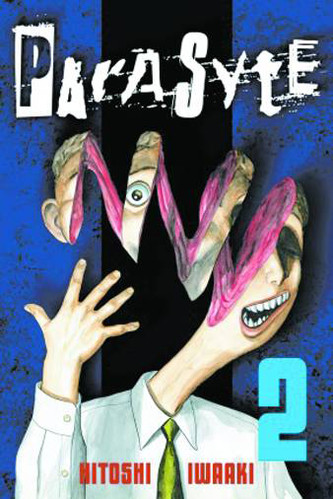
parasyte-v2Parasyte
Hitoshi Iwaaki • Del Rey • 8 volumes, complete
Imagine, if you can, a manga that combined elements of My Left Foot, Invasion of the Body Snatchers, and The Defiant Ones with the witty banter of a good buddy cop picture, and you have some idea of what Hitoshi Iwaaki’s Parasyte is all about. The story focuses on Shin, a high school student who wakes up one night to find a worm-like alien tunneling up his right arm towards his brain. In a moment of panic, Shin applies a tourniquet, arresting the creature’s progress but creating a brand-new problem in the process: the parasite takes up residence in his right hand, manifesting itself as a snail-like entity with googly eyes, a mouth, and the ability to transform itself into an astonishing array of shapes. Recognizing that their bodies are becoming interdependent, Shin and Migi (as he decides to call the parasite) agree to an uneasy truce. It isn’t long before other aliens are alert to Shin and Migi’s presence, forcing Shin and Migi to flee when it becomes apparent that the other parasites won’t tolerate their symbiotic existence. Shin and Migi can’t go to the human authorities, either, without risking imprisonment, quarantine, or worse.

Like a good B-movie, Parasyte uses elements of science fiction and horror to explore Big Questions about human nature while scaring the hell out of readers; the series is filled with nail-biting scenes of Shin and Migi trying to escape detection or fight other parasites. The violence is graphic but not sadistic; most of the action takes place between panels, with only the grisly aftermath represented in pictorial form. (Read: no torture scenes, no female characters being sexually assaulted before becoming an alien’s dinner.) The script is clever and funny, as Shin and Migi trade barbs with the antagonistic affection of Ernie and Bert, Oscar Madison and Felix Unger, or Detectives Mike Logan and Lenny Briscoe. Their relationship is one of Parasyte‘s greatest strengths, adding an element of novelty to a familiar story while deftly critiquing the idea that human beings’ intellect and emotional attachments place them squarely atop the food chain.

satsumaSatsuma Gishiden
Hiroshi Hirata • Dark Horse • 3 volumes, suspended
With its heady mix of social commentary, political intrigue, and battlefield action, Hiroshi Hirata’s Satsuma Gishiden reads like Kagemusha as told by Sam Peckinpah. Hirata dramatizes the plight of a powerful southern province that rebelled against the shogunate in the late eighteenth century (and would again, more famously, in the nineteenth). The story unfolds in a kaleidoscopic fashion, introducing us to the the sanpin and goshi, low-born samurai who eked out a living as farmers and laborers between military engagements; the daimyo, the leaders of Satsuma’s ruling Shimazu clan; and the administrators, spies, and chonin swept up in the violent conflict.

In the wrong hands, this material would be horribly dull; the initial showdown between Satsuma and shogunate stems from a public works project. (Makes you wonder: was Satsuma Gishiden the favorite manga of Robert Moses?) But Hirata successfully balances historical narrative and dramatic action. He explains the caste system and politics of the Edo period, the ritual of hiemontori, the concept of nise — even the type of water works found in eighteenth-century Japan — tossing in some jokey panels of winged ryo and money-grubbing donjon to illustrate the shogunate’s corruption. Some readers may find these passages didactic, but they provide an essential foundation for grasping nuances of plot and character. Lest the tone become too pedantic, Hirata liberally sprinkles the story with passages of bawdy humor and baroque violence. In one gruesomely funny scene, for example, a dying character uses his own broken rib to puncture an opponent’s skull. Top that, Mr. Peckinpah!

The chief attraction of Satsuma Gishiden, however, is its distinctive visuals. Hirata’s layouts evoke the films of mid-century masters such as Kurosawa, Kobayashi, and Ozu, blending cinematic realism with the rough-hewn aesthetic of woodblock prints. The characters, costumes, and horses are rendered in meticulous detail, yet the artwork is never static; through creative use of perspective, Hirata immerses the reader in vivid battle scenes, lively clan meetings, and ocean voyages. (Just a thought: Satsuma Gishiden would be awesome in 3-D. Maybe Dark Horse could repackage future editions with goggles to enhance the effect?) Recommended for samurai movie buffs, amateur Japanese historians, and readers who’ve exhausted the Kazuo Koike canon. (Originally reviewed at PopCultureShock on 2/16/07.)

town_coverTown of Evening Calm, Country of Cherry Blossoms
Fumiyo Kouno • Last Gasp • 1 volume
If Barefoot Gen shows readers what it was like to live through the Hiroshima bombing and its horrific aftermath, Town of Evening Calm, Country of Cherry Blossoms shows readers what it was like to live with the memories of that day ten, twenty, and forty years later. Fumiyo Kouno’s book is divided into two stories. The first, “Town of Evening Calm,” is set in 1955, and focuses on one young woman’s attempt to preserve the remnants of her family, while the second, “Country of Cherry Blossoms,” is set in the 1990s, and focuses on the strained relationship between a survivor and his adult daughter. Both stories are simply but beautifully illustrated, avoiding the kind of visual tropes (big eyes, tiny noses, super-cute deformations) that many Western readers find jarring when reading Serious Manga.

In the few panels alluding to the actual events of August 6, 1945, Kouno’s art becomes more primitive and stylized, suggesting the horrific effects of the blast by depicting the victims as stick figures with swollen faces. The child-like simplicity and directness of these images are startling yet effective, a powerful representation of the radiation’s devastating ability to rob its victims of their identities by destroying their hair, hands, and faces. These scenes are notable as well for the skillful way in which present and past co-exist within the same panels; we see the landscape as the survivors do, alive with vivid memories of the blast. None of these images are graphic, though they are an unsettling reminder of the characters’ deep emotional scars.

The book’s strong anti-war message is balanced by the story’s emphasis on quiet, everyday moments, preventing Town of Evening Calm, Country of Cherry Blossoms from succumbing to didacticism or sensationalism. Though Kouno did not grow up in Hiroshima, her meticulous research and careful reading of survivor memoirs lends her work a kind of emotional authenticity that a more dramatic story might have lacked. The result is a moving work that challenges readers to imagine how they might rebuild their lives in the aftermath of incomprehensible tragedy. (Reviewed at The Manga Critic on 1/4/10.)

phoenix7BONUS PICK: Phoenix: Civil War
Osamu Tezuka • VIZ • 2 volumes
A quick glance through Phoenix: Civil War might not suggest that this is the stuff of high art. The characters bear an uncanny resemblance to the denizens of Popeye and jokey anachronisms abound. (Although the story ostensibly takes place in twelfth-century Japan, one character receives a telephone call and chows down on a bucket of KFC.) But flip to the back pages, where VIZ has included a brief statement from the manga-ka explaining the origins and meaning of Phoenix, and you’ll learn that Tezuka claimed Igor Stravinsky’s ballet The Firebird as the inspiration for Phoenix. Tezuka saw parallels between Stravinsky’s firebird and a similar creature from Japanese legend, Hou-ou. The phoenix, Tezuka decided, was a powerful symbol of “man’s attachment to life and the complications that arise from greed.” Using the phoenix as a touchstone, Tezuka constructed an elaborate, twelve-volume series exploring Japan’s historic past and possible future. He planned a final volume set in present-day Japan (“where past and future converge”), but passed away without completing his epic.

One of the best things about Phoenix is that readers can enjoy it as a series or a collection of stand-alone stories. Though I love Sun (the series’ epic, two-volume conclusion) and Karma (the fourth volume of the English edition), I think the two-volume Civil War (the seventh and eight volumes of the English edition) make the best introduction to Tezuka’s masterpiece. Civil War is set in Heian-era Kyoto, where several powerful families vie for control of the city. We experience the conflict through myriad perspectives: a lowly woodcutter and his fiancee, a ragtag band of samurai, an apolitical sage, and two powerful clan leaders, both of whom seek the phoenix in an effort to consolidate their political victories and perpetuate their bloodlines. The story may remind readers of The Hidden Fortress as it moves between epic battles and domestic drama, romance, and earthy comedy. While Tezuka isn’t above a little flatulence humor, he never condescends to his characters, using such lowbrow moments to demonstrate the common humanity of his entire cast. The character designs may be too cartoonish for some tastes, but Tezuka’s artwork is never short of spectacular; his imaginative layouts and flair for caricature are as distinctive as Igor Stravinsky’s brilliant orchestrations, churning rhythms, and pungent octatonic harmonies. (Originally reviewed at PopCultureShock on 10/26/06.)

* * * * *

Click here to read Brigid and Martha’s recommendations; click here to read Robin’s. Have a title you’d like to suggest? Let me know in the comments — we’re hoping to do this panel again at another convention, and would welcome your feedback.

Filed Under: Manga, Manga Critic, Recommended Reading, REVIEWS Tagged With: Classic, Dark Horse, del rey, Last Gasp, Osamu Tezuka, Samurai, VIZ

The Best Manga You’re Not Reading

July 2, 2010 by Katherine Dacey

On Saturday, June 26th, Brigid Alverson, Robin Brenner, Martha Cornog, and I gave a presentation at the American Library Association’s annual conference called “The Best Manga You’re Not Reading.” The goal of our talk was to remind librarians about all the weird, wonderful, and diverse offerings for older teens and adults. Recommendations ran the gamut from Junko Mizuno’s Cinderalla (one of Martha’s picks) to ES: Eternal Sabbath (one of Brigid’s), with an emphasis placed on titles that are in-print and appealing to readers who self-identify as manga fans — and those who don’t. Below are my four picks, plus a “mulligan” (to borrow a term from Brigid).

fourimmigrantsTHE FOUR IMMIGRANTS MANGA: A JAPANESE EXPERIENCE IN SAN FRANCISCO, 1904 – 1924

Henry Yoshitaka Kiyama • Stone Bridge Press • 1 volume

In 1904, aspiring artist Henry Kiyama sailed from Japan to the United States in search of economic opportunity. After living in San Francisco for nearly twenty years, Kiyama documented his experiences in the form of 52 short comics. His memoir — one of the very first examples of a graphic novel — examines the racism and economic hardships that he and his friends encountered on a daily basis. Kiyama also addresses major events of the day, critiquing several Congressional acts designed to curtail Asian immigration, and remembering what it was like to live through the Great Earthquake of 1906, attend the Panama Pacific International Exposition of 1915, and survive the flu pandemic of 1918.

…

Read More

Filed Under: Manga Critic Tagged With: Classic, Dark Horse, del rey, Last Gasp, Osamu Tezuka, Samurai, Seinen, VIZ

  • « Go to Previous Page
  • Page 1
  • Interim pages omitted …
  • Page 932
  • Page 933
  • Page 934
  • Page 935
  • Page 936
  • Interim pages omitted …
  • Page 1054
  • Go to Next Page »
 | Log in
Copyright © 2010 Manga Bookshelf | Powered by WordPress & the Genesis Framework