• Skip to primary navigation
  • Skip to main content
  • Skip to primary sidebar
  • Home
  • About Us
    • Privacy Policy
    • Comment Policy
    • Disclosures & Disclaimers
  • Resources
    • Links, Essays & Articles
    • Fandomology!
    • CLAMP Directory
    • BlogRoll
  • Features & Columns
    • 3 Things Thursday
    • Adventures in the Key of Shoujo
    • Bit & Blips (game reviews)
    • BL BOOKRACK
    • Bookshelf Briefs
    • Bringing the Drama
    • Comic Conversion
    • Fanservice Friday
    • Going Digital
    • It Came From the Sinosphere
    • License This!
    • Magazine no Mori
    • My Week in Manga
    • OFF THE SHELF
    • Not By Manga Alone
    • PICK OF THE WEEK
    • Subtitles & Sensibility
    • Weekly Shonen Jump Recaps
  • Manga Moveable Feast
    • MMF Full Archive
    • Yun Kouga
    • CLAMP
    • Shojo Beat
    • Osamu Tezuka
    • Sailor Moon
    • Fruits Basket
    • Takehiko Inoue
    • Wild Adapter
    • One Piece
    • After School Nightmare
    • Karakuri Odette
    • Paradise Kiss
    • The Color Trilogy
    • To Terra…
    • Sexy Voice & Robo
  • Browse by Author
    • Sean Gaffney
    • Anna Neatrour
    • Michelle Smith
    • Katherine Dacey
    • MJ
    • Brigid Alverson
    • Travis Anderson
    • Phillip Anthony
    • Derek Bown
    • Jaci Dahlvang
    • Angela Eastman
    • Erica Friedman
    • Sara K.
    • Megan Purdy
    • Emily Snodgrass
    • Nancy Thistlethwaite
    • Eva Volin
    • David Welsh
  • MB Blogs
    • A Case Suitable For Treatment
    • Experiments in Manga
    • MangaBlog
    • The Manga Critic
    • Manga Report
    • Soliloquy in Blue
    • Manga Curmudgeon (archive)

Manga Bookshelf

Discussion, Resources, Roundtables, & Reviews

Blog

BL Bookrack: March 2013

March 10, 2013 by MJ and Michelle Smith 2 Comments

Welcome to the March installment of BL Bookrack! This month, Michelle takes a look at Where a Person Is Most Vulnerable at JManga, while MJchecks out the latest volumes of Awkward Silence and His Favorite from SuBLime. In Brief: Punch Up!, Vol. 3 (SuBLime).


awkward-coverAwkward Silence, Vols. 2-3 | By Hinako Takanaga | Published by SuBLime | Rated Mature – As a somewhat finicky BL fan, I have a complicated relationship with Hinako Takanaga. Though I have several favorites among her works (You Will Fall in Love springs immediately to mind), I often find her romances too rushed to be satisfying (Little Butterfly). Furthermore, even some of my favorites of her work (The Tyrant Falls in Love) include elements I dislike so thoroughly that they send me hurtling from hatred to love and back again. Though Awkward Silence is far too mild-mannered a title to incite anything like hatred, its first volume fell easily into the “too rushed” section of Takanaga’s catalogue, thus robbing itself of the emotional resonance required to elicit anything close to love.

Volume two opens with blank-faced Satoru (who carefully reminds us every chapter that his face is incapable of expressing emotion) sulking over his boyfriend Keigo’s upcoming sleep-away baseball camp. Having been unable to properly express his feelings to Keigo before he departed, Satoru is tormented over the fact that Keigo may have left believing that Satoru was angry with him for going in the first place. Naturally, the only option is for Satoru to sneak into the camp in the middle of the night in order to explain himself. He does, and the two have sex.

Okay, a little bit more than that happens. Satoru’s antics lead Keigo’s baseball team to believe that the west wing of the school is haunted and minimal wackiness ensues, but the series’ chapters are so carefully formulaic, it’s obvious that the point of it all is to create an opportunity for the obligatory sex scene. And this is really the crux of the issue. While I certainly have no objection to sex scenes in a BL manga—and such scenes can contribute significantly to both plot and characterization—as is all too common in contemporary romance, Takanaga’s scenes are largely just… in the way. With so few pages available per chapter in which to develop her characters’ relationship, every panel is precious, and panels spent on perfunctory sex scenes are, frankly, nothing more than a waste.

Volume three plays a bit stronger, as it shifts its focus from Satoru and Keigo to a couple of amusingly mismatched upperclassmen (whose relationship vibe is not unlike Morinaga and Souichi’s in Tyrant), and Satoru’s charming (also blank-faced) mom is an unexpected highlight. But this relationship, too, suffers from a whirlwind approach that doesn’t feel quite earned. Takanaga’s expressive artwork particularly shines in this volume, making its shortage of emotional substance even sadder, in my view. Not recommended.

– Review by MJ


hisfavorite3His Favorite, Vols. 2-3 | By Suzuki Tanaka | Published by SuBLime | Rated Mature – If I’m a sucker for any particular romance trope, it’s “friends-turned-lovers”—a predilection largely responsible for my obsession with writers like Keiko Kinoshita and Yeri Na, among others. In volume one of His Favorite, author Suzuki Tanaka proved that she’s got my number as well, with her story of childhood friends, Sato and Yoshida, whose developing “hot guy”/”spazzy guy” pairing is the best thing since Doumeki and Watanuki (with fewer ghosts and bento lunches).

In volume one, class stud Sato revealed to unpopular goofball Yoshida that he was the (once overweight, bullied) boy whom (once popular, badass) Yoshida fiercely protected all through grade school. Having nurtured a crush on Yoshida for years, Sato’s new “hot guy” status gives him the confidence to finally pursue Yoshida romantically, though the entire thing is baffling to both Yoshida and the rest of their high school class.

Volume two opens with Yoshida beginning to acknowledge that he has reciprocal feelings for Sato, though he’s desperate to hide it—not only from Sato, but from his group of misfit friends who expect him to share their unrequited longing for female companionship. This escalates in volume three when Yoshida is coerced into attending a disastrous group date. Meanwhile, Sato’s dealing with his frustration by bullying their classmates, whom Yoshida (in true form) angrily defends, leaving Yoshida feeling even more conflicted over his growing attraction for Sato. Nothing comes easy for the two of them, but despite the fact that what I’ve described so far sounds rather like a serious teenage drama, it’s absolutely romantic comedy in every way. And, really, that contradiction is what makes the series work so well.

Though nearly everything in His Favorite is deliberately overblown and played for laughs, the entire thing is firmly anchored by real emotional truth, which renders the series not only genuinely funny, but also genuinely affecting on a number of levels. Amidst the laughs, we really feel Yoshida’s inner turmoil over his unpopularity and small size, his fierce sense of fairness, and his developing feelings for a guy who pushes all his buttons in not-always-positive ways. And like Yoshida, we both love and revile Sato’s messy mix of loyal devotion and outright sadism. Tanaka’s characterization is deceptively effortless—clearly established with just a few deft strokes—allowing her to tell a emotionally complex story with the light touch of a screwball comedy. Even the story’s secondary (firmly comedic) romance, about a steadfast guy who only falls for sleaze-balls, manages to operate on multiple levels. And Tanaka’s clean, energetic artwork is just icing on the cake.

Obviously I’ve become a fan, but the best news of all is that there’s more of this series to come! His Favorite stands at five volumes and counting in Japan, so now’s the time to jump on board! Heartily recommended.

– Review by MJ


vulnerableWhere a Person Is Most Vulnerable | By Fumiko Shusai | Libre Publishing/JManga | Rated Mature – “I put all my short pieces I forgot about in one book,” writes Fumiko Shusai in the Afterword to Where a Person Is Most Vulnerable, and man does it show.

The anthology starts off promisingly enough. The title story is about neurotic Yamashita, who hates ants, and his bug-loving neighbor, Shimabara, who helps him overcome his fears a bit. “Strays Will Leave, Over and Over Again” is also pretty good, featuring a gigolo who keeps returning to his friend’s place every time he gets dumped. Less successful is “The End Is in a Dream, Silent,” about a guy who’s repaying a debt to a clotheshorse by cleaning his messy “room.” It’s okay, but extremely rushed.

In the titular story, the “place” in question refers to the delicate nether-regions where ants dared to crawl when Yamashita was a boy—as well as to his heart—but after the third story I began to think that apartments were somehow a theme, too. That while we might feel safe in our own homes, this complacency would also cause us to let down our guard. And it may even be true that Shusai meant to make some point along those lines, but the rest of the stories in this collection are so thoroughly disappointing that I soon began to doubt that such an intent ever existed.

Brief and insubstantial “Sculptures of Us” is about friends who get into fisticuffs over whether they had a drunken hookup the night before. “Love That Reaches the Other Side of Earth!,” about a seemingly hopeless boy and the childhood friend who takes care of him, had the potential to be something good, but is rushed beyond redemption. The real villain of the piece, however, is the horrible “Daddy, My Love” strip, all about the way in which a guy accidentally mistreats/mishandles his ex-girlfriend’s abandoned toddler, culminating with a panel suggesting they’ll become lovers in the future. EW! Gallon of brain bleach, stat!

So, are the first two stories worth 499 JManga “points”? I must regretfully conclude that they are not.

– Review by Michelle Smith


In Brief:

PunchUp_03_Cover_print_5x7.125.inddPunch Up!, Vol. 3 | By Shiuko Kano | Published by SuBLime | Rated Mature – For its first two volumes, I wasn’t quite sure what to make of Punch Up!. On the one hand were the well-defined protagonists, Kouta and Maki, who had plausible conflicts and insecurities, but on the other were the frequent and explicit sex scenes that left nothing whatsoever to the imagination. Was this a compelling drama or a smutty romp? Volume three caters to my personal preferences by establishing itself clearly as a drama (or melodrama, at least) when a workplace accident leaves Kouta with no memory of the last four years and effectively returns him to his mindset as a fifteen-year-old. This development could’ve easily taken the story in a cheesy direction, but it actually doesn’t, instead providing even more opportunity for conflicts and insecurities to flare. I had debated whether to continue with this series, but now I am truly glad I did! – Michelle Smith


Review copies provided by the publishers.

Filed Under: BL BOOKRACK

One Piece, Vol. 66

March 10, 2013 by Sean Gaffney

By Eiichiro Oda. Released in Japan by Shueisha, serialization ongoing in the magazine Weekly Shonen Jump. Released in North America by Viz.

The cover to this volume of One Piece is very telling, given that this volume ends one arc and begins another. In the foreground, we have Luffy, Jimbei and Shirahoshi, but new events are creeping in in the background, with Big Mom’s pirates one the right and Smoker and Tashigi on the left. Things are in a state of flux, and we aren’t quite sure where the manga is headed next. (That is, if we’re reading the manga only by volumes, Most North American readers can now read Shonen Jump weekly on Viz’s site, where Punk Hazard has just finished. Viz seems content to have the volumes be about a year behind the weekly chapters.)

onepiece66

Hody Jones having been defeated at the end of the last volume (and his comeuppance is highly amusing, and makes for a good capper to the “drugs are bad” plotline he and his mates had), all that’s left is to stop the ark crashing into the island and sinking it. Which is done, with the help of some ancient and powerful sea monsters who are mostly there to be mysterious. Then there’s the standard “we’ve won, let’s have a party” finale, which always gives us a nice two-page spread.

Most of what’s interesting about this volume, though, is the backstory we don’t really see. Robin has discovered the true nature of Shirahoshi, and it’s quite surprising. (And makes me wonder about Alabasta, which told of the location of another one of those ancient weapons – man, if it turns out to be Vivi, I’ll be highly amused.) Jimbei tells us that Akainu and Aokiji fought to see who would be leader of the Marines. It’s not a big surprise that Akainu wins, but Aokiji then resigning might lead to more surprises down the road. Oda sometimes compresses manga stories for time, and I suspect this is a battle he wanted to show but just never got a chance to. And of course this means the Marines are still after them, with Smoker and Tashigi, both now promoted, hot on their trail.

Speaking of Tashigi, the Marines seem to be treating her as they did Hina, which is to say half-awesome Captain and half sexpot. Hina, like Nami and Robin, didn’t really give a rat’s ass what they said. But Tashigi is obviously bothered by the sexism, and calls it out. Of course, I doubt very much this will stop it. Oda’s less sexist than some other Jump authors, but it creeps in here and there (look at how he draws most of the women now vs. 10 years ago), and I think Tashigi drawing attention to it just makes it more obvious. But hey, I’m glad to see her back regardless.

The Straw-Hat crew, meanwhile, leave Fishman Island to travel to, naturally, the most dangerous place Luffy can find (this is after going through a deathtrap waterspout with the help of some whales who aren’t Laboon, but could be his parents). There’s some lovely art here, and I like that, while the spout itself terrifies the designated crew members who get scared (Nami, Usopp, and Chopper), the terrifying visage of the New World just makes everyone happy. Well, happy till they reach Punk Hazard, with its ravaged landscape, fire-breathing dragons, and bottom halves of samurai. Oh, and half the crew already captured. Never let it be said that Oda paces things slowly.

If you love One Piece, you’ll love this. If not, this is absolutely not the perfect place to start – go back and read the early volumes.

Filed Under: REVIEWS

Comic Conversion: Nursery Rhyme Comics

March 8, 2013 by Angela Eastman 1 Comment

Nursery Rhyme Comics | Edited By Chris Duffy | Published by First Second

Nursery Rhyme ComicsMost people gain some familiarity with nursery rhymes as children, reciting “Humpty Dumpty” in school or picking out favorites from a big collection. This introduction usually comes through a Mother Goose story book, but that fictional old lady (or goose in a bonnet, depending on what book you have) isn’t with whom these rhymes originated.

While a lot of rhymes can be traced back to a certain time and place, many came to be the same way as folklore and fairy tales—passed down over the centuries with no precise origin or even meaning. Because of that, not only has some of the wording of the rhymes changed over time, but any version can be treated with varying interpretations and imagery. Despite their age, these sing-songy, fun, sometimes weird rhymes continue to resonate with children, so it makes perfect sense for publisher First Second to reinterpret the stories through one of the more popular mediums today—comic books—in their collection Nursery Rhyme Comics.

Altogether there are 50 rhymes presented in this book, each one drawn by a different artist. In my experience, such a wide variety of creators almost inevitably leads to just as much variety in quality. Somehow, this is not the case. Instead, First Second has gathered 50 amazingly talented artists who, despite their differences in design and technique, make each page a treat.

Thanks to the brevity of the rhymes, the comics take up no more than three pages each, so very little time is spent with any single artist. These sudden shifts do create a little bit of abruptness as you move from short rhyme to short rhyme. Fortunately, editor Chris Duffy managed to arrange the comics in a sort of arc, beginning with “The Donkey” playing a saxophone “to wake the world this sleepy morn,” moving into more active comics, and then slowing down towards the conclusion of “Wee Willie Winkie” as the story’s children fall asleep with their own copy of Nursery Rhyme Comics.

The DonkeyWith so many great artists on board, it would have been a shame to have them all adhere to a certain theme or mood, and it seems that First Second wisely allowed their artists to interpret the rhymes in any way they wanted. Style and mood range from things like the calm watercolors of Patrick McDonnell’s “The Donkey” to Reina Telgemeier’s bright cartoons. But the artists also give us their own takes on the rhymes themselves. Telgemeier’s “Georgie Porgie,” for instance, is a kid at his birthday party getting pie all over the girls he kisses. And in Andrew Arnold’s version of “Hot Cross Buns,” a pigeon steals cakes from a pair of bratty kids.

Artists interpreting some of the more nonsensical rhymes, like the weird non sequitor at the end of “I Had a Little Nut Tree,” have fun with stories that just don’t make much sense anymore. Then there’s “Hush Little Baby”—a song with pretty general action—transformed by its artist into an active conversation between a father and his daughter, making excellent use of word bubbles and creative panels.

Some of the artists did choose to take more traditional or literal views of the rhymes, like in Richard Sala’s version of “Three Blind Mice”, and while these are still well done, they aren’t quite as memorable as some of the other selections. But even some of the more literal takes do an excellent job evoking emotion, like the blow-by-blow account of the very short rhyme “The North Wind Doth Blow,” in which we see a robin tumble through the air before finally coming to a rest, or the pure romance of Edward Lear and Craig Thompson’s “The Owl and the Pussy-cat.”

One thing Nursery Rhyme Comics proves by the end is how effectively nursery rhymes can converted into comics. These sing-songy stories have no narration that the artist must carve out, and no descriptive prose that they must decide whether to write or visualize. Instead, these are stories so simple that the artists may come at them with all their creative talent.

This collection serves as a pretty great introduction to nursery rhymes for kids, covering all the bases, from weird and funny to calm and peaceful rhymes. This book can also be used as a sly way to introduce comics into the life of a kid you know—offering up so many styles and tones that any kid is sure to find a graphic novel niche to enjoy. Dialogue and narration are spaced out nicely, preventing the pages from becoming overly cluttered with words, which makes this an easy book to read out loud with a child, but also fun for an older kid (or an adult) to read by him/herself.

Thanks to the artists First Second gathered together, this was a thoroughly enjoyable book. And whether or not you’re already acquainted with the rhymes included, it’s so much fun to see how the artists chose to adapt them.

Filed Under: Comic Conversion, FEATURES & REVIEWS Tagged With: First Second, Nursery Rhyme Comics

Manga the Week of 3/13

March 7, 2013 by Sean Gaffney, Michelle Smith, MJ and Anna N 3 Comments

SEAN: I have a sneaky suspicion I know what the Pick of the Week is going to be next week… regardless of that, let’s see what publishers have to offer.

Blade of the Immortal may have come to a close recently in Japan, but Dark Horse still has a few more to go. The back cover to Vol. 26 hints that Tonight Someone Dies, so it is no doubt very important that everyone grab this.

MICHELLE: Someday I will continue with this series.

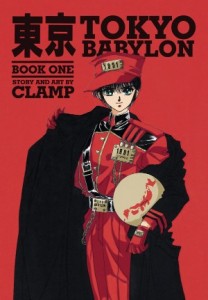
tokyobabylon1SEAN: And then there’s the first Tokyo Babylon omnibus. Which is filled with Hokuto, who is awesome and the only real reason to read this early CLAMP title! Oh yeah, there’s her brother as well. And some guy. I suppose a few people might read it for them instead.

MJ: TOKYO BABYLON TOKYO BABYLON TOKYO BABYLON. Okay, yes, I’m a fangirl on a massive level, here, but there are so many reasons why this is my favorite CLAMP series (and one of my favorite manga series of all time). I’ll save my loudest raving for Pick of the Week (and Off the Shelf), but out of all the CLAMP re-releases Dark Horse has undertaken over the past few years, this is the one I’ve anticipated most eagerly. I’m so looking forward to re-reading the series.

MICHELLE: I agree, but cannot possibly match MJfor sheer enthusiasm!

ANNA: Maybe I should give this series another try? I read the first few volume and found it so much less gripping than X\1999 that I don’t think I ever finished it. That being said I do have feelings of pleasant nostalgia whenever I think of early CLAMP series in general.

SEAN: SubLime has the third volume of His Favorite, whose cover makes it look like this is a manga about Luffy the uke and Robin the seme. I’m sure it’s not about that at all. Not that that would not be a highly entertaining title in its own right.

MJ: This is one of my favorite recent series from SuBLime, though your comment adds an element of hilarity I hadn’t considered!

MICHELLE: Wow, I had never noticed the similarity in scars before.

SEAN: Vertical has the 3rd and final re-release of Paradise Kiss, which most everyone else got this week. It’s a terrific series, and I particularly love the ending. If you didn’t get it yet, get it.

MJ: I’m a bit sad that the debut of Dark Horse’s Tokyo Babylon omnibus will probably overshadow the end of Paradise Kiss, so I’ll do my best to rave about both. I had some quibbles early on regarding Vertical’s adaptation of some beginning chapters, but these have long since been made up for by subsequent volumes. And if I had to choose the loveliest of Vertical’s work on this series, I’d have to go with volume three, which is stunning in every way. This is absolutely a must-buy this week. It’s on my personal top ten as well!

MICHELLE: There are things about the ending to Paradise Kiss that give me geekbumps to even *recall*, even though it’s been years since I last read it.

ANNA: I’ve been enjoying the Vertical editions of this series and plan on buying this!

SEAN: The rest is all Viz. 07-Ghost hits Vol. 3 and shows us that the best answer for ‘who is ready to lead the Church’ is ‘how much TRAINING have they had’? I bet the Papal Conclave doesn’t concentrate on that at all.

MJ: I never got any further than volume one of this series, but I’ll catch up eventually! And I’m looking forward to it, too.

MICHELLE: Ditto.

ANNA: I have been hoarding the 2nd and 3rd volumes and plan to read them together very soon. I enjoyed the world building and action in the first volume very much.

SEAN: Arata the Legend hits lucky Vol. 13, whose luck is to come out a week after a Fushigi Yuugi release and thus likely be ignored. Shame.

MICHELLE: Aw. Arata is quite good, too, though it’s true I don’t love it as well as Genbu Kaiden.

ANNA: I don’t think Genbu Kaiden can help it though because it is so intrinsically loveable.

SEAN: Fullmetal Alchemist has a 3-in-1 out, covering Vols. 10-12. This is, in my opinion, the only shonen manga to give One Piece a run for its money at perfection. It’s that good.

MJ: Since this series also made my all-time top ten list, I certainly agree with you. Wow, it’s a banner week for my favorites, isn’t it?

MICHELLE: It is. And it’s high time you read some One Piece, missy, so that could be your favorite, too!

evangelion2ANNA: I agree that Fullmetal Alchemist is a magnificent series and it is unfortunately one that I stopped reading due to it having so many volumes. I intend to reread the whole thing and finally finish it one day though.

SEAN: Neon Genesis Evangelion also says it’s a 3-in-1, but the first volume was deluxe, more like their VizBIG line. Re-reading the start of the series re-kindled my interest in it again, so I’ll definitely be taking a look at it.

Lastly, RIN-NE Vol. 11 continues to have cute little one-shots, occasional dramatic mini-plots, and no forward progression. (sniffle) It makes me so nostalgic for Ranma and UY’s lack of any progress… it’s like Takahashi has come home!

MICHELLE: I really enjoy RIN-NE for what it is, and without any expectations for it to be anything else. I’ve described Takahashi’s comforting, homey works before as “manga meatloaf,” and I think RIN-NE epitomizes that ethos.

SEAN: What are you folks reading this week?

Filed Under: FEATURES, manga the week of

GFantasy, Where Girls’ Fighting Fantasies Live

March 6, 2013 by Erica Friedman 1 Comment

img_hyoushiOn Magazine no Mori we’ve discussed the issue of the demographic categories of manga several times. Today’s review is a perfect example of when those categories fail to be useful.

GFantasy, published by Square Enix, (along with what often seems like an endless number of magazines that have the word Gangan in the title) is listed by the publisher as a shounen magazine. And it is, quite likely, read by some number of young males. There is a lot of action in this magazine. But. The series best known from this magazine, has another audience entirely.

For GFantasy is the home of  Black Butler by Yana Toboso. It is true that Jun Mochizuki’s Pandora Hearts and Ryhogo Narita’s Durarara! have as much to appeal to men as women, however there is an extraordinary amount of “pretty boys in ridiculous clothes” and a fair dollop of slashable male pairs for a typical “shounen” magazine. A series like Cuticle Detective Inaba makes more sense, really, when you assume that the audience is female. Pretty boys with animal ears, shotacon, a cross-dressing boy…these are not typical tropes meant for a male audience.  GFantasy is really better understood as “shounen for women” with a fair bit of cross-over audience, as indicated by Peach Pit’s Zombie-Loan, and the Higurashi series.

As you can see from the many titles that have been translated, Yen Press has a pretty well-developed relationship with Square Enix and the Gangan imprint manga. (The anime for many of these series have been picked up  by Funimation and Sentai Filmworks.)

GFantasy began life back in 1993 as Fantastic Comic, had a few special releases and in 1994 was renamed GFantasy. There are no circulation numbers for GFantasy on the JPMA website. At 580 yen ($6.43 at time of writing) for 650 pages, it’s a good bet you’ll get your money’s worth, as long as you like fantasy adventure, perhaps spiced with a little romance.

The GFantasy website is quite good, with excited focus on the enclosed giveaway that month, news of series that have been transformed to anime and other media and a sample comic in 2 parts. More sample chapters can be found listed under “G Stories” and they have  a running prize for submissions to the magazine. (I really like manga magazines that do that. Recruitment for the next generation is an every-day job.) Unusually, the magazine has a blog on their website, as well as the usual news and fan mail form.  In my experience, this indicates a slightly higher than usual understanding of fan community by the editors and, probably, a slightly higher than usual engagement by the audience.

GFantasy Magazine, from Square Enix:  http://www.square-enix.co.jp/magazine/gfantasy/

Filed Under: Magazine no Mori Tagged With: Erica Friedman, Magazine no Mori, Manga Magazine, square enix, yen press

Strobe Edge, Vol. 3

March 6, 2013 by Anna N

Strobe Edge is the manga equivalent of comfort food and I find myself liking it more and more with each volume. The third volume explores the emerging love triangle between Ninako, reformed womanizer Ando, and unavailable but perfect Ren. Ninako is struggling a bit with wanting to be friends with Ren after being rejected previously, and things become even more emotionally traumatic when it seems like Ren is deliberately acting cold to her. Ren actually being a good guy, he is attempting to protect Ninako from the attentions of the Rejected by Ren Girl Squad, who have targeted Ninako with their bullying ways. This gets cleared up relatively quickly, but more complications are on the way as Ando’s feelings towards Ninako grow and deepen. The two guys in love with a slightly oblivious girl is a well-word shoujo plot device, but Ninako is oblivious and friendly that it is difficult to get annoyed with her. Sakisaka does a good job portraying the subtle ways that Ren and Ninako continue to be drawn towards each other. They have a random conversation about sweets and Ren reveals that he doesn’t think that his girlfriend even knows that fact about himself because he pretends to dislike them around her because she’s always watching her figure. Ren’s general protectiveness towards Ninako is unusual given is general indifference towards other girls. Ren’s actions like helping Ninako out at a school festival and providing extra math tutoring seem to go a bit beyond the limits of normal guy niceness.

Ando has plenty of feelings for Ninako but seems to be holding back both due to his awareness of her feelings for Ren and his realization that she probably couldn’t handle it. He hints around about his feelings and even confronts Ninako about her feelings for Ren, saying “You can’t love someone forever…without getting something back from them.” Ando’s brash personality is a big contrast to Ren’s more quiet thoughtfulness, but it is clear that he does actually care about Ninako and isn’t trifling with the idea of having a relationship with her.

I feel like Sakisaka’s art has grown a bit after three volumes. While the first volume focused a bit too much on Ninako’s blushing naivete, there are more comedic moments in this volume, mostly at Ando’s expense as he gets crushed in a subway car while Ren protects Ninako. When Ninako, Ren, and Ando all start a part-time job in a cafe, Ren and Ando are portrayed as the ultimate desirable waiters, smoothly taking care of everything, while Ninako’s enthusiasm almost makes up for her clumsiness. It is easy to see how well Strobe Edge fits into the Shojo Beat line and with so many series ending or about to end, I’m glad to have a newer series to follow.

Filed Under: REVIEWS Tagged With: shojo beat, Strobe Edge, viz media

Weekly Shonen Jump Recap: March 4, 2013

March 5, 2013 by Derek Bown Leave a Comment

CoverThe bad part about an excellent week of chapters is that the following week has to work that much harder just to seem passable. And while this week’s chapters were not quite as excellent as last week’s, we still got a good bunch of manga this week. We also got a lot of it, since Rurouni Kenshin and Blue Exorcist returned to the lineup for their monthly appearances.

Rurouni Kenshin Ch. 008
I will say this for this month’s Rurouni Kenshin: It did not frustrate me quite as much as last month’s. Sure, Kanryu is an absolute joke of a villain, and the fact that he would even be remotely considered a threat for Yahiko—even an untrained Yahiko—stretches my suspension of disbelief to the maximum. Still, I did get a chuckle (and then a groan) out of the end of Sanosuke’s fight. Sure it was amusing, but at the same time I wasn’t really looking for comedy out of this series. As with every month, this project feels more and more like a tired attempt to cash in on the movie’s publicity rather than a labour of love or anything.

I guess one way of expressing my disappointment is that I was really hoping for a sequel. Oh well, it is what it is, and critiquing it based on what I want it to be rather than what it is isn’t fair. Unfortunately what it is isn’t very impressive in the first place.

Naruto Ch. 622
Speaking of misplaced comedy, Naruto is a series about Ninja and the impact war has on children, though one could be forgiven for missing that point, considering that this chapter started with an unfunny comedy segment. Kishimoto’s humor is very hit or miss—most often miss it seems like. I’ve only really laughed at one of his jokes in months. And even that was probably misplaced comedy. In this case, starting off an attempt at establishing pathos in your story with a goofy scene isn’t the best way to go.

And while I lauded him for connecting Naruto and Obito thematically, if he’s trying to do the same thing with Hashirama and Madara I will go on strike. It’s clever if done once. Done twice, it becomes the damning evidence that it’s the only tool in your box.

Naruto

Still, the point that war is bad and children dying in war is bad is always a good point to make. Too bad the execution left plenty to be desired.

One Piece Ch. 700
While I find it odd that Kinemon and Law seem to be getting along just fine, considering Law was responsible for holding up Kinemon’s search for Momonosuke, it’s a minor concern in an otherwise great chapter. There is so much material to go through that I feel more inclined to just say this was a great chapter and leave it at that. There are, however, a few points worth noting. For one, we get confirmation that Buggy is one of the seven warlords, and his inappropriate title amuses me to no end. Second, Luffy and Doflamingo interact for the first time, and it’s good to see that Luffy still can’t take anything seriously. Thirdly, Law is slowly, against his own will, becoming accustomed to the crew. And hilarity ensues. Fourthly, Nami finally put on a damn shirt. Far be it from me to complain if beautiful women want to wear skimpy. But it becomes very hard to sell the series to non-fans when one of the main characters wears nothing but bikini tops for two solid arcs.

One Piece

World Trigger Ch. 004
World Trigger continues to ask questions, but the answers seem to still be off in the distance—for the moment at least—but not in the way that frustrates me, more in the way that I am interested to know more. In execution, World Trigger is playing it a bit more standard shounen than I would necessarily want. Even as a shounen fan, I need a bit more to really grab my attention. For now I am willing to come back to see my questions answered, but I hope at least a few of those questions will be answered soon. Though, to be fair, I am willing to wait if it means the story is paced properly. The jury is out on World Trigger for the moment.

Nisekoi Ch. 064
As I’ve said before, if you want a manga that gives you romantic comedy that doesn’t get too drenched in melodrama, then Nisekoi is the manga for you. This chapter somehow manages to give all the girls their time in the spotlight, and it does so at Rakku’s constant expense. It’s a necessary element for a harem manga that the main character be the butt end of a few jokes. Otherwise the readers (the male readers at least) would start hating them for being so unreasonably lucky with girls. Somehow Rakku is one of the few who can escape that scorn, and still be a fitting candidate for a bit of punishment here and there. Also, once again, Chitoge wins the chapter for her facial expressions.

Nisekoi

Toriko Ch. 224
This chapter didn’t quite have as much material as in the past few weeks. We spent a lot more time focused on Coco, and a bit on Sunny, that we didn’t get to see much of the battle as a whole. Which works plenty fine, since now it is time to focus in on the individual battles now that the battle as a whole has been established. Still, the material provided seems a bit less bountiful than last week. At least we get an explanation for why cooks are so important. That and Sunny’s fight promises to be the absolute most entertaining part of this war.

Bleach Ch. 528
It’s cute how Kubo pulls out these big reveals, only to have his readers say, “Uh…yeah, we kinda figured it out when you dropped the first hint months ago.” That’s not to say the reveal of what exactly Ichigo’s mother was is bad, it’s just that literally everybody following this manga figured it out back when Ichigo first fought whatshisface the Quincy King.

The problem lies in the fact that Kubo drops hints, and those hints point at literally the only single explanation. And then when the only explanation is revealed, it comes across as underwhelming. This would be easily overcome if he broadened his strokes a little. Make the hints point at an obvious conclusion, and then have the reveal be something completely different but completely logical. But, considering that we are almost at the end of the series, I’ll take what I can get.

For a Bleach chapter, there was a surprising amount of content this week. Action scenes usually go by so fast that reading a completely plot centric chapter seems like suddenly reading War and Peace. And what I said last week is true, when Bleach is good, Naruto suffers. And this week Bleach was quite good.

One-Punch Man Ch. 007
As usual, One-Punch Man was excellent. The joke continues to be the same, but it continues to be funny. Rather than have the one punch be the punchline at the end of the chapter, the joke is carried through the whole chapter. The introduction of Genos, and an ongoing set of antagonists, helps give this series more body. Also, it’s just really funny every week.

Dragon Ball Z Ch. 005
The fight starts, and this is the first time we are really introduced to the idea that power levels are unreliable. I can’t really think of much to say, beyond how ridiculous it is to see Raditz winning, in hindsight at least. Still, it’s a shame that Toriyama introduced him as Goku’s brother, and then never decided to do anything with him after this arc. It seems almost pointless to introduce him as Goku’s brother and then never use him again. Sure it may be unique to have what should be a major character in the hero’s life be relegated to a oneshot villain. But in that case, why bother establishing the relationship in the first place.

Cross Manage Ch. 023
Cross Manage continues to stay an enjoyable series for me. Sure the focus isn’t on the sport, which is a bit odd for a sports series. But I enjoy it for the characters. With the development they’ve gotten in the past few chapters, I’m finally looking forward to these chapters, and would be severely disappointed if this series ends. It’s that right balance of quirky characters with high school and sports drama that I can enjoy reading.

Cross Manage

Blue Exorcist Ch. 044
This series must be maddening for anyone invested in any kind of romantic relationship between the characters. First Shiemi appears to be a romantic interest for Rin, then chapters like this emphasize her feelings for Yuki, etc. Were I not an unfeeling Cyberman I would be frustrated by this series. Fortunately I was instead able to focus on the growing friendship between Rin and Godaiin, as well as the potential world building promised to us by Mephisto. This chapter focused more on the different characters, building up their relationships and inner turmoil with each other. It lacked a big climax, but I suppose that is not to the chapter’s detriment. I’m still waiting to see where this next arc will be headed exactly, so I hope next month’s chapter picks up the pace.


If you want to hear more, check out the Manga^3 Podcast Archives. Or go directly to last week’s episode, Episode 037 – February 25, 2013 – What is Seinen Manga? | Hyrule Historia.

Filed Under: FEATURES & REVIEWS, WSJA Recaps

It Came from the Sinosphere: My Lucky Star, Part 1

March 5, 2013 by Sara K. Leave a Comment

luckystartop

Jewel thieves! Car racing! Beautiful scenery! Melodrama! Silly sexual humor! This drama has a lot going for it. Let’s set the mood with a song:

Now, a scene from the first episode.

Example Scene

Ou Yaruo is getting married today. Or at least that’s what she thinks.

lucky01

When the door opens, she assumes that it’s her fiance.

lucky02

Actually, it’s her ex-boyfriend.

lucky03

Clearly, this is not good news.

lucky04

Ou Yaruo tells him to get out.

lucky05

He does not get out.

lucky06

In fact, he gets closer to her. She apparently broke his heart when she dumped him.

lucky07

He’s very interested in her necklace.

lucky08

The sneak tabloid photographer has arrived on the scene…

lucky09

… and he’s just in time to take a picture of them kissing.

lucky10

After the kiss, he leaves, leaving her wondering what the meaning of this encounter was. Does she still love him? Did he come to take back the jewel of her heart?

lucky11

Then she realizes, no, he did not come to steal the jewel of her heart. He just wanted to steal the big jewel in her necklace, which he has slipped off her neck while kissing her.

The Heroine

lucky14

From all of the Taiwanese idol dramas I’ve seen, I think Xia Zhixing is my favorite female protagonist. She’s one of the most honest and compassionate characters in the entire drama – which is ironic, considering she’s a con artist dating another con artist.

Well, Zhong Tianqi catches her in the act, and she gets sent to prison for two years. Not only does she spend two years in prison, but when she gets out, she discovers that she’s lost her con artist boyfriend.

But wait! She catches Zhong Tianqi stealing a jewel too! He got her sent to prison while he’s a thief himself. No fair!

So why did Xia Zhixing become a con artist in the first place? It’s revealed that she’s an orphan, and she grew up in poverty. Being a con artist was the only way she was able to find out of her poverty, and after leaving prison, she finds herself back in financial distress. The fact that she now has a criminal record makes it hard for her to make an honest living which, ironically, is the only thing pushing her back into a career of crime.

Because of her own difficult experiences, Xia Zhixing has a lot of empathy for other people in unfortunate circumstances, especially people who ended up in them through no fault of their own. At one point, she makes a HUGE sacrifice for the sake of an innocent child she barely knows.

When she’s not trying to pull off a con, she is not afraid to be herself, even when this might make people uncomfortable. For example, she does not try to hide her criminal past to anybody that she cares about.

Many of her cons revolved around selling fake jewels. During this “job,” she learned a lot about jewelry, and developed an interest in jewelry design. Is this the path to an honest living, or will her past hold her back? Or will she put others’ needs before her own?

The Guys

luckystar12

Much as I love Xia Zhixing, this drama is make even better by a good set of male protagonists.

Guy #1: Zhong Tianqi

lucky13

He is the black sheep of his rich family. He’s handsome, he speaks French, and he races cars. Most of all, he’s fearless, whether that means defying his father, standing up for what he feels is right, or car racing while blindfolded.

I am not kidding about the blindfolded car race.

He also takes things very, very deeply to heart. That means that, when somebody is important to him, he will dedicate himself to that person 100%. On the other hand, when he feels betrayed, he gets very, VERY nasty (see the above scene where he ruins his ex-girlfriend’s wedding).

It’s a common trope in Taiwanese idol dramas for Guy #1 to turn into a jerk at some point, and in my opinion Zhong Tianqi does this better than any other Guy #1. First of all, it’s clear that he becomes a jerk because of intense personal suffering, but most of all, I like that he’s a colorful jerk. He is the standard to which I hold up all other Guy #1 jerks. If the male protagonist must turn into a jerk, he at least should be as much fun as Zhong Tianqi.

Oh, and he’s also a prince.

lucky16

Guy #2: Zhong Tianjun

lucky17

Zhong Tianjun is Zhong Tianqi’s older brother. He is one of the sweetest male characters I have encountered in a Taiwanese drama, He’s patient, forgiving, understanding. He protects people from sexual harassment. And he tries very very hard to be romantic. Oh, and he’s handsome and wealthy.

He’s the perfect romantic hero. In fact, he’s too perfect. That is why there is Guy 2.5.

Guy #2.5: Han Zhiyin

lucky18

Han Zhiyin is hot celebrity from Thailand who is, ah, flirtatious and promiscuous. However, he finds himself having deeper feelings for her than he’s felt for anyone else. And while he’s a hotshot model, he grew up in the slums of Bangkok, so he can relate to Xia Zhixing’s background in a way that Zhong Tianqi and Zhong Tianjun cannot.

He also does things with as much, if not more, flair than Zhong Tianqi. Then again, as a celebrity, it’s his job to do things with flair.

The Bechdel test highlights the lack of deep female-female relationships in fiction, but in Taiwanese idol dramas, there is also a dearth of male-male relationships too. However, the relationship with the Zhong brothers is quite touching and interesting in its own right, and the relationship between Zhong Tianqi and Han Zhiyin is also quite fun.

Not that female-female relationships are completely neglected. Though Xia Zhixing and Ou Yaruo most certainly are not friends, I actually think their relationship is one of the most intriguing in the entire story.

Ou Yaruo

lucky20

Ou Yaruo is a jewelry designer who works for the company owned by the Zhong family. She loves her job, she’s a rising designer, and she is Zhong Tianqi’s first love. Seems like she has exactly the kind of life Xia Zhixing wants, doesn’t it?

Well, on the surface that’s the case. But Ou Yaruo has a terrible secret.

Her past is possibly even sadder than Xia Zhixing. Xia Zhixing is an orphan who grew up in poverty, but at least she was cared for by a loving uncle. Instead, Ou Yaruo wishes that she had been an orphan, and least then she would not have been traumatized by her abusive father, who currently is in prison.

She is terrified by the thought that somebody will find out the truth about her family, and that if the truth comes out, she’ll lose career and that the people who love her will hate her. In fact, she is literally willing to kill to protect this secret.

The people close to Xia Zhixing, on the other hand, know that she was a con artist, and that she has a prison record, so she has no dark secret which may cost her livelihood and the love of the people around here.

Ou Yaruo has the career Xia Zhixing wants, and possibly the heart of the man Xia Zhixing is in love with. But Xia Zhixing has the integrity, bravery, and emotional security that Ou Yaruo wishes she had.

But Wait, There’s More…

You have probably figured out by now that this is one of my favorite idol dramas, which meant this post was getting a bit too long. I hope this post has piqued your interest enough to bring you back next week, when I will talk about this drama some more.


Sara K. saw swarms of purple butterflies in Maolin last week. Some of those butterflies flew all the way from Japan. Maolin itself is a gorgeous place. On a different note, she also has a guest post up at Yago.

Filed Under: Dramas, It Came From the Sinosphere Tagged With: idol drama, Jimmy Lin, My Lucky Star, taiwan

Viz gets busy; Okazu gets a new home

March 5, 2013 by Brigid Alverson

I talked to Kevin Hamric, director of publishing, marketing, and sales for Viz Media, about his company’s digital program and the logistics of simultaneous U.S./Japan publication of Shonen Jump. Lori Henderson responds by calling on Viz to offer digital manga on 10″ Android tablets.

Viz has been busy lately. Last week, they announced two new box sets, the full run of Bakuman (vols. 1-20 plus the mini-comic Otter #11 and a poster) and the first 23 volumes of One Piece. If you like your manga all in one place these are the products for you; both will be out next fall. Another fall release is an updated My Neighbor Totoro artbook and a new novel, marking the 25th anniversary of Hayao Miyazake’s film.

Reset your bookmarks: Erica Friedman has moved Okazu to its own domain! Go pay her a visit in the new digs, and savor the design by Kuriousity’s Lissa Pattillo. While you’re there, check out her most recent Yuri Network News post.

The Manga Bookshelf bloggers discuss their Pick of the Week.

At Heart of Manga, Laura looks forward to the new shoujo volumes coming in March.

Reviews: Check out the latest round of Bookshelf Briefs at Manga Bookshelf.

Kristin on vols. 1 and 2 of 07-Ghost (Comic Attack)
Anna on vol. 1 of Alice in the Country of Joker: Circus and Liar’s Game (Manga Report)
L.B. Bryant on vol. 1 of Barrage (ICv2)
Leroy Douresseaux on vol. 1 of Barrage (I Reads You)
Johanna Draper Carlson on vol. 8 of Cross Game (Comics Worth Reading)
Leroy Douresseaux on vol. 2 of Demon Love Spell (The Comic Book Bin)
Leroy Douresseaux on vol. 8 of Dorohedoro (The Comic Book Bin)
Lori Henderson on vols. 3 and 4 of Durarara!! (Manga Xanadu)
Sean Gaffney on Emerald and Other Stories (A Case Suitable for Treatment)
Erica Friedman on vol. 17 of Hayate x Blade (Okazu)
Leroy Douresseaux on vol. 21 of Hayate the Combat Butler (The Comic Book Bin)
Sean Gaffney on vol. 21 of Hayate the Combat Butler (A Case Suitable for Treatment)
Connie on Message to Adolf, Town of Evening Calm, Country of Cherry Blossoms, and Barefoot Gen (Comics Should Be Good)
Leroy Douresseaux on vol. 14 of Otomen (The Comic Book Bin)
Serdar Yegulalp on vols. 2 and 3 of Paradise Kiss (Genji Press)
Anna on vol. 30 of Skip Beat (Manga Report)
Johanna Draper Carlson on vol. 3 of Strobe Edge (Comics Worth Reading)
Leroy Douresseaux on vol. 11 of Tenjho Tenge (Full Contact Edition) (The Comic Book Bin)
Ken Haley on vol. 2 of Trigun (Comics Should Be Good)

Filed Under: MANGABLOG

Skip Beat, Vol. 30

March 4, 2013 by Anna N

Skip Beat Volume 30 by Yoshiki Nakamura

I continue to be an absolute fangirl over the current Skip Beat storyline about the Heel siblings. It says a lot that 30 volumes into this series I’m still so excited each time I pick up a new volume. Even with some of my other beloved shoujo series like Boys Over Flowers, I think I was starting to get impatient for things to wrap up around volume 30 but as far as I’m concerned I would be perfectly happy for Skip Beat to continue on indefinitely.

Nakamura is very clever about how she’s structured Skip Beat, because while there are plenty of shoujo series out there that use show business as a superficial setting, she really uses the idea of acting and the challenge of portraying other characters to highlight the inner psychological turmoil of her characters. I begin to get a better sense of why Kyoko and Ren are portraying the abnormally close punked-out Heel siblings. Ren playing a actor playing a role of a violent criminal gives him a certain amount of distance from the role in his new movie, a role that is dangerously close to the person he used to be as Kuon. This volume shows Ren’s legendary control slipping a bit as even with the protective layer of Cain Heel, the self he thought was buried starts to resurface.

Kyoko as Ren’s sibling functions as an important anchor for him, but she’s beginning to get a bit disconcerted by her physical proximity to Ren, and while she is attempting to carry out her real life role as best she can, she isn’t able to stay entirely in character. One of the things I’ve always appreciated about Skip Beat is how visually dynamic it is. There’s an extended action sequence at the start of this volume, but there’s plenty of visual interest as Kyoko and Ren both just process their thoughts about their situation. Ren cycles through different aspects of himself as we see the violent and non-reflective Kuon from the past, the grim Cain Heel role, and then glimpses of present-day Ren slip through the cracks in his performance as he interacts with Kyoko. It is nice to be able to count on Skip Beat for a reliable dose of shoujo manga goodness.

Filed Under: REVIEWS

  • « Go to Previous Page
  • Page 1
  • Interim pages omitted …
  • Page 686
  • Page 687
  • Page 688
  • Page 689
  • Page 690
  • Interim pages omitted …
  • Page 1048
  • Go to Next Page »
 | Log in
Copyright © 2010 Manga Bookshelf | Powered by WordPress & the Genesis Framework