My News and Reviews
The Boys’ Love Manga Moveable Feast came to an end last week. Khursten at Otaku Champloo did a fabulous job as the host and posted some great content. Sadly, it may be the last Manga Moveable Feast to be held, at least in the foreseeable future. I did have one last offering for August’s Feast before it ended: I announced the 801 Manga Giveaway Winner. The post also includes a wishlist of boys’ love manga. (And speaking of manga giveaway winners, the winner of the Umineko giveaway from a few months ago created a video of the unboxing of her prize.)
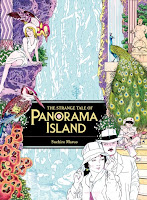
Last week I also posted two in-depth reviews. The first was for Suehiro Maruo’s The Strange Tale of Panorama Island. I have literally been waiting for this manga for years and am thrilled that it is finally available in English. Last Gasp has done a beautiful job with the release. The manga is an adaptation of Edogawa Rampo’s novella Strange Tale of Panorama Island which I reviewed earlier this year. The second review that I posted last week was for Isuna Hasekura’s light novel Spice & Wolf, Volume 8: Town of Strife I. Although I had previously enjoyed the series, with this volume Spice & Wolf has finally lost its charm for me.
I also updated the Resources page, adding a couple of sites. Last week I mentioned Deb Aoki’s new site Manga Comics Manga which is definitely worth checking out if you haven’t already. I also recently discovered Seth T. Hahne’s review site Good Ok Bad. I really like the site which includes reviews of manga in addition to other comics and graphic novels.
On to other interesting things found online! Nippon.com has the very interesting article Urasawa Naoki Talks with Top European Artists. The most recent Speakeasy podcast at Reverse Thieves is about American comics recommended for manga readers. Reverse Thieves also posted a review with Melissa Tanaka talking about her work translating Mobile Suit Gundam: The Origin. (I loved the first volume of the series and my review of the second should be coming soon.) If you’re interested in what Viz Media is up to these days, ICv2 has a two part interview with Leyla Aker and Kevin Hamric and Comic Book Resources has an interview with Ken Sasaki.
Also last week was Otakon. Sean Gaffney at A Case Suitable for Treatment takes a quick look at some of the recent manga announcements. Vertical has licensed Fumi Yoshinaga’s What Did You Eat Yesterday? which I am extremely excited about. Viz Media is bringing Naoki Urasawa’s Monster back into print in a deluxe omnibus edition. I already own the series and probably won’t be double-dipping, but I’m very happy to see this re-release. Finally, Seven Seas will be publishing Milk Morinaga’s most recent yuri series Gakuen Police. I really enjoyed Morinaga’s Girl Friends and Kisses, Sighs, and Cherry Blossoms Pink, so I plan on picking up Gakuen Police, too.
Quick Takes
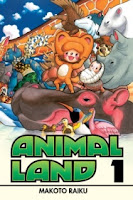 Animal Land, Volumes 1-4 by Makoto Raiku. I’m not sure why I was so reluctant to read Animal Land but after repeated urging from a few fans of the series I decided to finally give it a try. And I’m very glad that I did. It took me a volume or so to really settle into the story, but I definitely want to read more. Taroza is a human who was abandoned as a baby only to be rescued and raised by a young female tanuki in a world of animals. The art in Animal Land is kind of strange, mixing realism, anthropomorphism, and just plain goofiness even within the same species. Despite its cuteness, the story in Animal Land can be very dark. It’s also not particularly subtle, but it is engaging. Animal Land surprised me; so far it’s a great series.
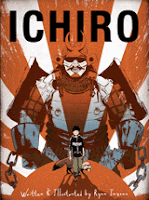 Ichiro by Ryan Inzana. Ichiro is a young man living with his Japanese mother in New York City after his American father dies. When her work takes them both to Japan, Ichiro has the chance to get to know his grandfather who he’s never met and learn more about the country’s history and culture. One night he unexpectedly stumbles into an even stranger world. I did find the sections dealing with Ichiro’s real life to be much more compelling than his adventures in the land of the gods and immortals. However, I really liked the blend of story, mythology, and reality in Ichiro and I loved the artwork. Inzana smoothly shifts his style of art and use of color throughout the graphic novel depending on the tale being told in a very effective way.
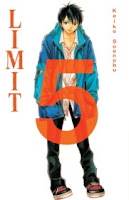 Limit, Volumes 5-6 by Keiko Suenobu. Limit has been very hit-or-miss for me. Overall, I did like it, but I had a few problems with the story. There weren’t plot holes per se, but significant suspension of disbelief is required. (I’m still trying to figure out how Usui’s bandage ended up on the ground and why no one seemed to hear the helicopters.) But the series had some truly great moments and intense, dramatic group dynamics. The fear that the characters deal with as they struggle to survive is almost palpable. I liked most of the fifth volume which revealed some great plot twists, but found the final volume to be rather unsatisfying. Everything is tied up too neatly and nicely and there’s a fair amount of moralizing.
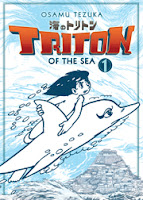 Triton of the Sea, Omnibus 1 (equivalent to Volumes 1-2) by Osamu Tezuka. I was delighted when Triton of the Sea was licensed as part of one of Digital Manga’s Kickstarter projects. Although I don’t have a particular affinity for merfolk, I have always enjoyed stories involving oceans and other bodies of water. Triton is a merman, one of the last of his kind when his clan is wiped out by Poseidon, the king of the sea. Unaware of his true nature, Triton is adopted by a human family. As he grows older he is drawn into a fight against Poseidon. Triton of the Sea isn’t as strong or as innovative as some of Tezuka’s other manga, but it’s still a solid adventure story. I particularly enjoyed Triton’s relationship with his family and his interactions with humans.