• Skip to primary navigation
  • Skip to main content
  • Skip to primary sidebar
  • Home
  • About Us
    • Privacy Policy
    • Comment Policy
    • Disclosures & Disclaimers
  • Resources
    • Links, Essays & Articles
    • Fandomology!
    • CLAMP Directory
    • BlogRoll
  • Features & Columns
    • 3 Things Thursday
    • Adventures in the Key of Shoujo
    • Bit & Blips (game reviews)
    • BL BOOKRACK
    • Bookshelf Briefs
    • Bringing the Drama
    • Comic Conversion
    • Fanservice Friday
    • Going Digital
    • It Came From the Sinosphere
    • License This!
    • Magazine no Mori
    • My Week in Manga
    • OFF THE SHELF
    • Not By Manga Alone
    • PICK OF THE WEEK
    • Subtitles & Sensibility
    • Weekly Shonen Jump Recaps
  • Manga Moveable Feast
    • MMF Full Archive
    • Yun Kouga
    • CLAMP
    • Shojo Beat
    • Osamu Tezuka
    • Sailor Moon
    • Fruits Basket
    • Takehiko Inoue
    • Wild Adapter
    • One Piece
    • After School Nightmare
    • Karakuri Odette
    • Paradise Kiss
    • The Color Trilogy
    • To Terra…
    • Sexy Voice & Robo
  • Browse by Author
    • Sean Gaffney
    • Anna Neatrour
    • Michelle Smith
    • Katherine Dacey
    • MJ
    • Brigid Alverson
    • Travis Anderson
    • Phillip Anthony
    • Derek Bown
    • Jaci Dahlvang
    • Angela Eastman
    • Erica Friedman
    • Sara K.
    • Megan Purdy
    • Emily Snodgrass
    • Nancy Thistlethwaite
    • Eva Volin
    • David Welsh
  • MB Blogs
    • A Case Suitable For Treatment
    • Experiments in Manga
    • MangaBlog
    • The Manga Critic
    • Manga Report
    • Soliloquy in Blue
    • Manga Curmudgeon (archive)

Manga Bookshelf

Discussion, Resources, Roundtables, & Reviews

Blog

Massive goes to Fantagraphics

January 2, 2014 by Brigid Alverson

Fantagraphics has picked up the gay manga anthology Massive, which was originally slated to be published by PictureBox. I talked to the translators, Anne Ishii and Graham Kolbeins, about the book and its predecessor, The Passion of Gengoroh Tagame, as well as the genre of gay manga in Japan.

Shonen Jump will run Takeshi Obata’s adaptation of All You Need Is Kill on the same day it appears in Young Jump magazine in Japan.

David Brothers writes, in depth, about two manga he really enjoyed in 2013: Slam Dunk and Bleach.

The Manga Bookshelf bloggers take the long view and discuss their Pick of the Year, and they also take a look at this week’s new manga.

Freelance manga editor Daniella Orihuela-Gruber writes about her struggles with depression and how that has been interwoven with her work life.

Hirofumi Watanabe, the suspect in the Kuroko’s Basketball threat letters case, has given an interview to the magazine Tsukuru; the first item released is his message to users of the bulletin board 2chan, denying that he is a zainichi (foreigner).

News from Japan: Say Hello to Black Jack creator Shuho Sato is adapting Orson Scott Card’s Ender’s Game into manga form; it will be published on his website, Manga on Web. Dan Brown, author of The DaVinci Code, is the latest literary character to show up with superpowers in Bungō Stray Dogs. Suehiro Maruo is working on a new series, Tomino no Jigoku (Tomino’s Hell), which will debut in the March issue of Monthly Comic Beam. Toriko will go on hiatus for one month at the end of the current story arc. Keisuke Itagaki’s martial arts series Baki is returning to Weekly Shōnen Champion. Sora no Otoshimino/Heaven’s Lost Property will come to an end next month.

Reviews: Ash Brown looks back on a week’s worth of manga reading at Experiments in Manga. The Manga Bookshelf team finish out 2013 with the year’s last set of Bookshelf Briefs.

Rebecca Silverman on vol. 1 of Alice in the Country of Hearts: The Mad Hatter’s Tea Party (ANN)
Katherine Hanson on vol. 8 of Aoi Hana (Yuri no Boke)
Leroy Douresseaux on vol. 16 of Arata: The Legend (The Comic Book Bin)
Lesley Aeschliman on vol. 1 of Battle Angel Alita (Lesley’s Musings… on Manga)
Sean Gaffney on vol. 1 of Bloody Cross (A Case Suitable for Treatment)
Leroy Douresseaux on vol. 11 of Dorohedoro (The Comic Book Bin)
Sean Gaffney on vol. 11 of Dorohedoro (A Case Suitable for Treatment)
AstroNerdBoy on vol. 33 of Fairy Tail (AstroNerdBoy’s Anime and Manga Blog)
Leroy Douresseaux on vol. 3 of Happy Marriage?! (The Comic Book Bin)
Matt Cycyk on Helter Skelter: Fashion Unfriendly (Matt Talks About Manga)
Leroy Douresseaux on vol. 3 of Magi (The Comic Book Bin)
Johanna Draper Carlson on vol. 5 of Missions of Love (Comics Worth Reading)
Ash Brown on vol. 4 of No. 6 (Experiments in Manga)
Leroy Douresseaux on vol. 69 of One Piece (The Comic Book Bin)
Sakura Eries on vol. 15 of Oresama Teacher (The Fandom Post)
Johanna Draper Carlson on vol. 3 of Sankarea: Undying Love (Comics Worth Reading)
Sean Gaffney on vol. 2 of Summer Wars (A Case Suitable for Treatment)
Leroy Douresseaux on vol. 2 of Tiger & Bunny 2-in-1 Anthology (I Reads You)
Johanna Draper Carlson on vol. 1 of Vinland Saga (Comics Worth Reading)
Sean Gaffney on vol. 6 of Wandering Son (A Case Suitable for Treatment)
Filed Under: MANGABLOG

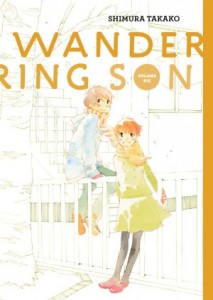
Wandering Son, Vol. 6

January 2, 2014 by Sean Gaffney

By Shimura Takako. Released in Japan by Enterbrain, serialized in the magazine Comic Beam. Released in North America by Fantagraphics.

Wandering Son has ended in Japan at 15 volumes, so we are now sure that we’re entering the middle third of this story. And things sort of simmer along here. There are no major crises this time around, as we slowly develop some of the things that started in the prior volume. Chiba and Mitori continue to rewrite Romeo and Juliet to suit their tastes and desires, though in the end neither one really get what they want. Nitori makes a confession to Takatsuki, but finds the answer far more ambiguous than he’d really like. And remember when I said Chiba was now stoic rather than emotional? Yeah, nevermind.

wanderingson6

Chiba continues to be the character that most interest me, which meant this volume was particularly suited towards me, as she stomps through it like Godzilla (Ariga even notes at one point that she walks angrily), taking offense at everything and particularly the fact that people’s feelings may not match up with her own. She gets a boy who likes her here, but the feeling does not seem to be mutual, and she’s more determined than ever to get closer to Nitori, even as he tries to get closer to Takatsuki. Both succeed about the same amount, which is to say not at all.

Speaking of Takatsuki, she’s still going through her own issues. The bra thing is really bothering her, and someone talking about wearing a chest wrapping may provide a solution. In the meantime, though, she clearly cherishes her relationship with Nitori, but gets uncomfortable when it’s made explicit that he likes her, something that I suspect will bounce back on her in a bad way in the future. They are really cute, though, going on picnics together and dates where they can each dress as they want to. It’s very cute, and very safe. Nitori is getting bolder as well, trying on his sister’s bra and panties despite his feelings of guilt – it reads as uncomfortably as it sounds, but that’s not necessarily a bad thing.

As for the rest of the cast, Ariga gets the most development here, as he ends up being cast as Juliet opposite Chiba’s Romeo. He seems to be the one who understands her the most, and tries occasionally to calm her raging emotions, though his success rate is low. It’s not helped by his own poor self-image, which drives Chiba nuts as she demands he have more confidence in himself. We only see bits and pieces of the play, but it’s good to see that after a bad start, he grows more confident in the role as he goes along.

Other things to note: I liked Sasa being asked about love, and noting that she hasn’t really loved anyone like that, both because I felt it realistic and also because it does sort of close her out of her immediate peer group, all of whom are dealing with crushes of one sort or another (I loved her reaction to Ariga noting he’d felt this way “a few times”). Sarashina hasn’t really advanced much beyond ‘being loud’ and ‘saying the wrong thing at the wrong time’, but I’m sure we’ll get more in the coming volumes. She does get the best gag, though, as Maho’s fellow models wear semi-obvious disguises and go to her culture festival, and Sarashina notes Anna is “the mean one”, to Maiko’s amusement.

Wandering Son continues to be a heartwarming series that is not afraid to focus on the awkward moments of teenage life and put them under a microscope. If you aren’t reading this series, you’re really missing out.

Filed Under: REVIEWS

Bringing the Drama: Mischevious Kiss: Love in Tokyo

January 1, 2014 by Anna N, Nancy Thistlethwaite, Emily Snodgrass and Eva Volin 1 Comment

Mischievous Kiss: Love in Tokyo!

Mischievous Kiss: Love in Tokyo!

Mischevious Kiss: Love in Tokyo is available on Dramafever.

Anna: I tend to think of Itazura Na Kiss as one of those eternally fresh manga series just because it has inspired such a wide variety of adaptations in different countries, much like Hana Yori Dango (Boys Over Flowers). I was happy when the latest Japanese version was licensed since we don’t tend to get as many Japanese dramas as opposed to Korean dramas and I was also looking forward to experiencing the story of Itazura Na Kiss again. The basic plot about a dimwitted girl relentlessly pursuing a boy who is intellectually brilliant and emotionally distant is something that has been done over and over again in manga, but very few variations actually manage to pull the story off with as much humor and heart as Itazura Na Kiss. What were your initial thoughts about this series? Eva, I understand that you found this series stupefyingly boring! Had you also read the manga, or was this your first time encountering this story? I enjoyed the series quite a bit, but part of that might have been due to being able to see a live action version of a manga I’d read and enjoyed.

Kinnosuke focuses on Kotoko with laser-like precision.

Kinnosuke focuses on Kotoko with laser-like precision.

Nancy: I’m already a fan of the manga Itazura na Kiss, and I do like the Naoki in this version. All the leads were charismatic. I was also impressed with the adaptation until the last few episodes. I thought the story arc of Naoki’s little brother falling ill was done very well. Kinnosuke, Naoki’s rivals, also pretty much steals the show. I would definitely recommend it to fans of the manga.

Anna: I thought that for existing fans of the manga, the casting for this version was just really well done. There wasn’t a single character who I thought was miscast. I thought Kinnosuke was great, as was the captain of the tennis team.

Kotoko and Sudou stalk the objects of their affection!

Kotoko and Sudou stalk the objects of their affection!

Emily: I’ve been a fan of the manga for years, and I also think they did a great job at adapting the story. They hit all the major milestones for the first half of the series. I really look forward to season 2. The casting was well done as well. I was a little bothered by the huge age gap between the leading actors – she is 16 and he’s about 25, but he convincingly fit in with the others and looked good with her. This is a very… shoujo manga… story that may not seem all that original to modern viewers, but I think it’s because this is the series that influenced so many other series after it. Yet at the same time, it does things other shoujo-manga series usually don’t do– it follows the characters into college. How refreshing to see the romance (or lack of) go beyond high school into the larger world of college life.

Eva:
I am a fan of the manga, which may be why it was so tough for me to make the move to the live-action show.

I absolutely agree that the show was beautifully cast. Naoki is a perfectly dreadful person with floppy hair and an attitude. Kin-chan takes a healthy bite out of every scene he’s in. Kotoko is as silly and twitchy as she is in the manga. All of these are things I loved in the books and (except for the awesome Kin-chan) are things that made me tired while watching the TV show. Somehow Kotoko’s live-action lack of agency drove me crazy while the same lack of agency was endearing in the books.

Kotoko with Irie's enthusiastic and somewhat insane mother.

Kotoko with Irie’s enthusiastic and somewhat insane mother.

Anna: That’s really interesting! I didn’t have the same reaction, but I can see how something that is easier to take in manga format would become annoying in a live action format. Perhaps because the lack of agency in the manga can be resolved more quickly by moving on to the next chapter, but it might stick around for one or two episodes in the live action version.

Nancy: So that means it’s not just three to one, but four to zero, so people should give it a try. ;) Have we been keeping a record of our tallies?

Eva: Oh, I absolutely agree that people should give it a try. I wish more people would give the manga a try, too. I think it’s been tragically overlooked. But as we know from previous installments, my dumb-threshold is very, very low. Once around the dumb-bush was enough for me.

Anna: My overall reaction to the series was just that it was very adorable and heartwarming. The great casting, and the opportunity to see some signature scenes from the manga in live action format, like the tennis captain Sudou’s transformation into a demon on the court, or Kotoko’s horrible disguises as she stalks Naoki were very amusing. 4 out of 4 of us agree that you should give it a try!

Watch at Dramafever!

Filed Under: Bringing the Drama, Dramas, FEATURES & REVIEWS

Manga Giveaway: 4-Koma for You Winner

January 1, 2014 by Ash Brown

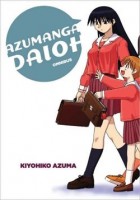
Azumanga Daioh OmnibusAnd the winner of the 4-Koma for You manga giveaway is…Cassandra!

As the winner, Cassandra (who currently writes at The Huge Anime Fan) will be receiving the Yen Press omnibus of Kiyohiko Azuma’s yonkoma manga Azumanga Daioh. For this giveaway, I asked entrants to tell me a little about the four-panel manga that they had read. Check out the 4-Koma for You comments for all of the details. And if you’re looking for some yonkoma manga to read, I’ve taken this opportunity to pull together a list of some of the titles that have been licensed in English.

4-Koma Manga in English (in print)
.hack//4Koma by Koichi Sumimaru
Azumanga Daioh by Kiyohiko Azuma
Bloody Brat written by Yuuki Kodoma, illustrated by Kanata Yoshino
ChocoMimi by Konami Sonoda
Crayon Shinchan by Yoshito Usui
Dojin Work by Hiroyuki
GA: Geijutsuka Art Design Class by Satoko Kiyuduki
Great Place High School by Naduki Koujima
Hetalia: Axis Powers by Himaruya Hidekaz
Ichiroh! by Mikage
K-ON! by Kakifly
Lucky Star by Kagami Yoshimizu
Neko Ramen by Kenji Sonishi
Palepoli by Usamaru Furuya (excerpted in Secret Comics Japan)
Oh My Goddess!: Adventures of the Mini-Goddesses by Kosuke Fujishima
Shoulder-a-Coffin Kuro by Satoko Kiyuduki
Shugo Chara Chan! by Peach-Pit
S.S. ASTRO: Asashio Sogo Teachers’ Room by Negi Banno
Sunshine Sketch by Ume Aoki
Suzunari! by Shoko Iwami
Tori Koro by Hairan
Welcome to Wakaba-soh by Chaco Abeno

Filed Under: UNSHELVED Tagged With: manga

Summer Wars, Vol. 2

December 31, 2013 by Sean Gaffney

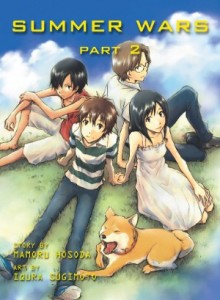
By Mamoru Hosoda, Iqura Sugimoto, and Yoshiyuki Sadamoto. Released in Japan by Kadokawa Shoten, serialized in the magazine Young Ace. Released in North America by Vertical.

The second volume of Summer Wars is, by virtue of its plot, a lot more action-oriented than the first one was. All our guns have been set up, and we see them fired off. But this volume continues to give us the best parts of the first volume as well, showing the importance of family, maturing and growing up, taking responsibility for your own actions, and even throwing in a bit of a love story to boot.

summerwars2

I was especially pleased to see the development of Natsuki, who not only grows as a character but almost takes on a messianic role in the final showdown with the AI. She’s been fairly indecisive and uncertain so far – using Kenji as an excuse to avoid questions and conflict – well, the wrong sort of conflict – and the death of her grandmother puts her at a mental standstill for the first half of this book. Luckily, finding her grandmother’s late words galvanizes her, and she is able to do what her young cousin could not. (I actually liked that fakeout – we assumed, since King Kazma had lost once, that he would come back and defeat the AI once and for all. But no, in the end, our heroine needs an action equivalent to our hero, so instead of punching the problem to death we get a giant game of hanafuda.

I absolutely loved seeing the hanafuda game – or its variant used here, Koi Koi – in the final battle. It’s been a favorite of mine for a few years (it was included on an early Nintendo DS cartridge, Clubhouse Games) and is a good choice here as it relies on both luck AND skill in equal measure. Skill can’t always save a bad hand – but knowledge of strategy and what your opponent has discarded are a must, and we see that here. The virtual reality environment helps to dramatize what is still a card game, and we also get to have that comeback from when all is lost, as Natsuki loses all her accounts and then gains even more thanks to the trust of everyone watching her.

The 20 Minutes Into The Future aspect of this world works quite well – we do have this huge virtual reality thing that can, if taken over by a rogue AI, destroy the world. But mostly we see, things haven’t changed much, which feels right. It helps that Natsuki’s family lives out in the sticks. The rest of the family doesn’t get quite as much attention, but like Natsuki they also have to deal with the death of the family head, and we see how badly it affects the group – which splinters off into different groups before coming together. Then at the end everyone is there for the final battle of Kenji vs. the AI, even if it may mean certain death (the computer has decided to drop a satellite on everyone’s head), and they all hug each other as it descends (it gets diverted, in case you were worried).

In the end, Summer Wars is a sweet and heartwarming manga about the ties of family, becoming confident in your own abilities, and math. Definitely recommended for romance fans – or even those who like techno-thrillers.

Filed Under: REVIEWS

My Week in Manga: December 23-December 29, 2013

December 30, 2013 by Ash Brown

My News and Reviews

Last week I posted a review of Hinoki Kino’s manga No. 6, Volume 4. The series has been getting better with each installment and things are starting to get really good. I also wrote a little bit about some of the manga, comics, and fiction releases that for me were particularly Notable in 2013. It’s not exactly a “best of” list, and it isn’t exactly a list of my favorite manga of the year, either. Basically it’s a list of interesting releases from 2013. And speaking of 2013, there’s still time to enter the last manga giveaway of the year! Check out the 4-Koma for You manga giveaway for a chance to win the omnibus edition of Kiyohiko Azuma’s yonkoma manga Azumanga Daioh.

Quick Takes

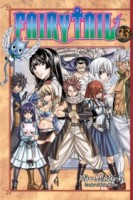
FairyTail, Volume 33Fairy Tail, Volume 33 by Hiro Mashima. It’s the second day of the Grand Magic Games and it’s still not looking good for the two Fairy Tail teams, although some of their members have surprising victories. Unfortunately, considering their prior string of defeats, it’s not enough to make much of a difference this early in the tournament. There are some great battles and moments of humor in this volume, but I still don’t find the tournament arc to be as compelling as the arcs that came before it. New characters continue to be introduced; I particularly enjoyed the addition of Bacchus, a powerful wizard from the Quatro Cerberus guild. Personality-wise, he can be a bit of a drunken jerk and isn’t always particularly likeable. What caught my interest is that his style of magic is based on Piguaquan, a legitimate Chinese martial art. Not too surprising considering his name, Bacchus combines this with Zui Quan, or “drunken fist.” Granted, it’s the fictionalized version of drunken fist that requires the practitioner to actually be intoxicated, but this is fitting and meshes well with the existing magic systems in Fairy Tail.

SmugglerSmuggler by Shohei Manabe. Originally released in English by Tokyopop, Smuggler is now available in a new edition from One Peace Books. I missed the manga the first time around, and since it also received a live-action film adaptation, I was particularly curious to read it. Kinuta is a failed actor who has accumulated a fair amount of debt. In order to pay back what he owes he has been smuggling and illegally dumping cargo outside of Tokyo. What he didn’t initially realize was that he was helping to transport and dispose of dead bodies for the yakuza. And now that he does know, Kinuta owes the mob his life as well as his money. When a job goes terribly wrong and an extraordinarily dangerous assassin escapes on his watch, Kinuta suddenly finds himself pulled even deeper into Japan’s underworld. Smuggler is a dark and violent manga, quickly paced, and unrelenting. It’s definitely not for the faint of heart. Smuggler held my interest, and there were some marvelously gut-wrenching scenes, but in the end I can’t say that the manga left much of a lasting impression on me.

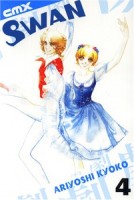
Swan, Volume 4Swan, Volumes 4-9 by Kyoko Ariyoshi. I am still completely in love with Swan and am astounded that it has taken me this long to actually get around to reading it. The series is incredibly well done–it’s just so intense and passionate, not to mention beautifully drawn. I’m also learning a bit more about ballet and its history as I read, which I count as a bonus. There are quite a few themes being addressed in these particular volumes. One of the themes that is especially prominent deals with sacrifice and what people are willing to give up in order to pursue what the truly love. It’s not always an easy decision. As someone who was deeply involved in the performing arts (in my case music, not dance), it’s a conflict with which I can personally identify. The characters in Swan all have to struggle to find the balance between their lives as dancers and their relationships with other people. Matters of love and romance complicate things greatly, but they also serve as a source of inspiration for creative expression. Swan piles on the drama and it’s fantastic.

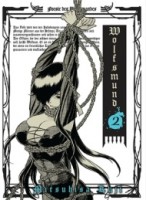
Wolfsmund, Volume 2Wolfsmund, Volume 2 by Mitsuhisa Kuji. While the first volume of Wolfsmund was violent and intense, the second volume is arguably even more so. In response to the rebellion gaining strength and numbers, the questioning of those trying to cross through the Wolf’s Maw at Sankt Gotthard Pass has become even more invasive and thorough. The gate’s overseer Wolfram–who is almost always shown with a terrifyingly pleasant smile on his face–seems to take particular delight in this. In order to get the information he needs, he’s more than willing to order the death or torture of a person no matter who they are. Cruelty isn’t limited to Wolfram. Even the rebellion’s heroes are capable of terrible deeds. I am a fan of dark historical manga, so Wolfsmund is right up my alley. Wolfsmund is definitely for mature readers. Considering its brutal nature (women and girls in particular suffer greatly in this volume) it’s not a series that I would recommend to just anyone. That being said, I am looking forward to the next volume.

Filed Under: FEATURES, My Week in Manga Tagged With: Fairy Tail, Hiro Mashiba, Kyoko Ariyoshi, manga, Mitsuhisa Kuji, Shohei Manabe, Smuggler, swan, Wolfsmund

Pick of the Year – 2013

December 30, 2013 by MJ, Sean Gaffney, Michelle Smith, Ash Brown and Anna N 2 Comments

MJ: 2013 was a pretty dramatic year for manga in many ways, both good and bad. I can’t help but feel pangs of sadness and regret when I look back at last year’s column, in which I named now-defunct digital publisher JManga as my Pick of the Year. Their titles dominated both my BL and digital “best of” lists as well.

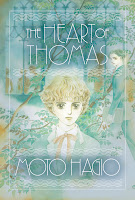
heartofthomasDespite that tragedy, I gaze fondly back at 2013, as the year that brought me new favorites like Knights of Sidonia and Sunny. When thinking about my final Pick this year, however, I guess I’ve little choice but to sound like a broken record, because for me, there can be no other than Moto Hagio’s The Heart of Thomas. When Michelle and I discussed this book back in January, I wrote:

“In case it isn’t obvious to anyone reading this, I loved this manga with my whole heart. And I’ll admit that’s not exactly what I expected. I expected to find it visually beautiful and worthy as a classic, but I also expected it to be very dated and I thought the story might not appeal to my tastes as a modern fan. Instead, I found it to be both beautiful and emotionally resonant to an extent I’ve rarely experienced—especially in BL manga. This is a book I’d wholeheartedly recommend to any comics fan, without reservation. It’s an absolute treasure.”

We were working from digital review copies at the time, and though I’d clearly fallen in love, it wasn’t until my own print copy finally shipped later that month that I realized just how much of a treasure this book truly is. It is glorious to behold. As the year passed, nothing else has come close.

gundamoriginSEAN: There was a lot of great manga released in 2013, even if you just stick with titles that began this year. My mind keeps drifting over to one title in particular, and that’s the deluxe hardcover release of Mobile Suit Gundam: The Origin from Vertical. Leaving aside the fact that it looks expensive and fantastic with lovely paper and color and everything, it’s a terrific story. Gundam wouldn’t be what it is today without that original story, and reading about the slow maturation (very slow at times) of Amuro Ray, the increasing leadership abilities of Bright Noah, and the political backstabbing of everyone on the Zeon side (but particularly Char Aznable) is as addicting as anything.

With 4 hardcover volumes out so far this year and more on the way, this has to be the Pick of the Year for me.

knights1MICHELLE: I am finding this profoundly difficult. I picked Taiyo Matsumoto’s Sunny for our gift-giving edition last week, so I obviously love it a great deal and think it’s something every manga fan should check out. But if we’re talking about the new-for-2013 manga that pushes my personal buttons the most, it would have to be Tsutomu Nihei’s Knights of Sidonia. Quite simply, I love everything about it, especially Nihei’s art and how the interior nooks and crannies of Sidonia are depicted. It’s also the most accessible of his works that I’ve read, with an endearing cast thrown into a desperate, seemingly impossible conflict.

I very much want to read more Sunny, but I’m kind of desperate to read more Knights of Sidonia, and so it gets the edge and becomes my official Pick of the Year.

seiichi-hayashi-gold-pollen-and-other-stories-3ASH: Oh, this really is difficult! I always have a hard time choosing bests or favorites, but I did recently manage to write about some of the manga from the last year that were particularly notable for me. As for my selection for Pick of the Year, I’m actually going to cheat a little and choose the publisher PictureBox. Sadly, PictureBox will not be releasing any new titles, but I was greatly impressed and intrigued by all of the manga it published in 2013.

PictureBox was taking manga publishing in some very exciting directions. The releases were high-quality, too. I was especially interested in the two series helmed and edited by Ryan Holmberg: Ten-Cent Manga (which brought us The Last of the Mohicans by Shigeru Sugiura and The Mysterious Undergound Men by Osamu Tezuka) and Masters of Alternative Manga (which brought us Gold Pollen and Other Stories, an anthology of short manga by Seiichi Hayashi). Plus, PictureBox actually had the guts to release The Passion of Gengoroh Tagame: The Master of Gay Erotic Manga. So, while PictureBox may not be releasing any more manga, I’m very grateful for the risks it took in 2013.

helterskelter
ANNA: I’m relieved that Sean picked Gundam: The Origin because that gives me room to pick something else. And I’m happy that Ash decided to cheat a little, because I’m going to do that too!

My pick of the year isn’t a manga volume or series, but a genre. I want to highlight josei manga! Just when I was about to give up hope of seeing much more josei manga published in English, 2013 ended up being a great year for manga targeted at older female readers. Viz Media had the commercial but incredibly addictive Midnight Secretary and Happy Marriage, Vertical highlighted more challenging and edgy fare by translating works of Kyoko Okazaki, and Digital Manga Publishing released a ton of Harlequin manga on emanga.com. This makes me a very happy reader! I hope for more josei in 2014.

Readers, what manga made your year?

Filed Under: PICK OF THE WEEK Tagged With: Josei, knights of sidonia, mobile suit gundam, picture box, the heart of thomas

Bookshelf Briefs 12/30/13

December 30, 2013 by Michelle Smith, Sean Gaffney and Anna N Leave a Comment

This week, Michelle, Anna, & Sean look at recent releases from Yen Press and Viz Media.


demonlovespell5Demon Love Spell, Vol. 5 | By Mayu Shinjo | Viz Media – Miko’s father allows his daughter and Kagura, the lecherous incubus, to move out together, but not only will he be withholding financial support, he also places a curse on Kagura’s nether regions that prevents the advent of sexy times. Miko is determined to become more powerful than her dad so that she can break the curse, and it’s nice to see both her abilities improving and a teenage girl with a healthy interest in getting it on with her hot boyfriend. Briefly it seems that she and Kagura will be opening a demon consultation office, but this gets derailed when Kagura becomes a pop idol to earn money and various jealousies and complications ensue. Demon Love Spell may not be the best shoujo manga I’ve read, but it’s definitely the best Mayu Shinjo manga I’ve read, by a wide margin. I think I might even go so far as to recommend it! – Michelle Smith

magi3-200x300Magi, Vol. 3 | By Shinobu Ohtaka | Viz Media – Morgiana graces the cover of Vol. 3, but she really only appears at the end (there’s also a surprise reappearance of Layla from Chapter One). That said, she makes good use of her minimal screen time, deciding to effectively become Batman/El Santo in order to stop some bandits. As for Aladdin, he’s still trying to figure out his purpose in life, which is given new direction by defining our title – well, semi-defining it. Magi are those who can choose a king. I have a sneaking suspicion that I know who will be chosen by the end of this series, but let’s leave that aside for now. The rest of the volume deals with noble Queens, evil Viziers, and the benefits and drawbacks to your village coming under protection. Not quite as awesome as the first two volumes, but still solid. – Sean Gaffney

Nisekoi1Nisekoi: False Love, Vol. 1 | By Naoshi Komi | VIZ Media – The back cover blurb for this debut volume describes Nisekoi as a “laugh-out-loud feel-good manga series,” but I only mustered a smile once and halfway through wanted nothing more than to be able to stop reading it, already. Getting tired of a premise and characters 100 pages in is not a good sign! Raku Ichijo and Chitoge Kirisaki are the children of rival gangsters, but they don’t realize this until their fathers force them to pretend to be in love in order to prevent all-out gang war. But there’s nothing amusing about their pretense, because practically all they do is hurl insults at each other until finally one of them does something fractionally nice, causing the other to reevaluate them a tiny bit. I think my synopsis makes it sound less grating than it really is, actually. Suffice it to say that Nisekoi is definitely not my cup of tea. – Michelle Smith

soulless3Soulless: The Manga, Vol. 3 | By Gail Carriger and REM | Yen Press – After her werewolf husband reacts badly to her should-be-impossible pregnancy, Alexia and friends flee London to escape both the ruthless gossip and the vampire assassins intent on preventing the birth of her child. As someone who is not steeped in the mythology of the novels upon which Soulless: The Manga is based, I sometimes find the adaptation to be a bit confusing and disjointed. Such is the case in volume three, which has the added problem of an antagonist who is glimpsed only briefly. (Seriously, a scene-stealing yappy dog makes more of an impression.) Still, I thoroughly enjoyed the read! The dialogue is witty (a line about hedgehogs made me laugh out loud) and I like the characters. REM is also especially good at drawing amusing facial expressions and portraying werewolves’ personalities while they’re in their lupine forms. I may feel a bit lost sometimes, but I’m always entertained! – Michelle Smith

strobeedge8Strobe Edge, Vol 8 | By Io Sakisaka | Viz Media – I have to confess that this is the point where I started feeling a tiny bit impatient with Strobe Edge Ando’s ex shows up and as one might expect, immediately throws an obstacle in the progression of Ninako and Ren’s budding romance. She tells Ninako that Ren and Ando used to be best friends until she came between them, and now the love triangle with Ninako will make things even worse. Ninako is determined to suppress her feelings yet again, just when she was on the verge of confessing to Ren. The couple prevented from getting together because of good intentions and lack of communication is a shoujo staple, and I’m starting to wish that this series would start wrapping up even though I do like reading it. Sakisaka’s art gets better and better, and while the plot might be a little pedestrian, this is one of the prettiest and most visually well-executed shoujo titles out there. Still recommended! – Anna N.

toriko19Toriko, Vol. 19 | By Mitsutoshi Shimabukuro | Viz Media – Most of this volume is dedicated to two things: 1) Watching Toriko eat food no matter what the cost to his body (with a brief break to beat up a giant bear monster) and 2) Everyone loving Komatsu, and I do mean everyone. Here his devotion to food and food preparation help to turn a man who specializes in cheating, draining memories and generally being evil towards the light side simply by sheer virtue of Komatsu’s… well, virtue. (Mustn’t forget about Coco, who also does a terrific job here as the brains of the team.) The fact that this is a very popular manga with BL fans should surprise absolutely no one. All that said, we are basically watching a giant game of Memory for an entire volume, so be prepared for a bit less action and punching than previous volumes. But just as much food. -Sean Gaffney

Filed Under: Bookshelf Briefs

Dorohedoro, Vol. 11

December 29, 2013 by Sean Gaffney

By Q Hayashida. Released in Japan by Shogakukan, serialization ongoing in the magazine Ikki. Released in North America by Viz.

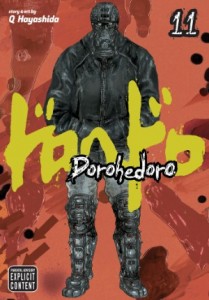
I’ll be honest, it can be pretty easy when you’re reading Dorohedoro to simply forget about the plot and characters and just let yourself be led along. Not that the plot and characters aren’t terrific – they are, even if 3 volumes a year means that ti can be hard to recall who is what much of the time. No, it’s just that Dorohedoro is possibly the most sensory manga being released over here now that Children of the Sea (also an Ikki title, you’ll note) has finished. Chapter 63 in particular would be hilarious or terrifying if it weren’t just so fascinating, watching these partial corpses go about their day inside the fractal dreams of Caiman and Nikaido – well, perhaps Caiman. We’re *really* not sure about him anymore.

dorohedoro11

See, that’s Caiman on the cover – only it isn’t. He has a regular head, and is calling himself Aikawa. In fact, the similarities to Ai from flashbacks are unmistakable. And he seems to have some memories from before – he certainly wants to avoid Nikaido, and after she forcibly makes him show his face, promptly runs off again. As for whether he’s a good guy or a bad guy, let’s remember that this is Dorohedoro. There are no good guys here. I assume he will continue to be a major plot point.

As for other heroes, they’re not having the best volume either. Nikaido is back in En’s clutches, but seems determined to not help even if it means her death – her memory of her childhood past is still holding her back. It looks as if En is going to force the issue… but then comes the end of the volume. Remember last time when I said it showed off how overpowered En was? Well, he’s just run into Curse, and may be firmly dead now. Yikes. Fujita fares slightly better, managing to restore Ebisu to something resembling life… sadly, she has a lucky hairpin stuck in her brain, and so her mind is somewhat broken. Of course, that’s not really a big change from before.

In a series where no one is quite what they seem, and identities change from day to day (oh look, there’s Risu – whoops), that may be why I keep getting drawn back to the art. It seems more sinister and horror-movie than usual this time around, and even the gratuitous fanservice comes in the middle of a big action sequence. The artist recently revealed that she’s trying to end the series with Volume 20 (one volume more than planned by her publisher), so we’ve just passed the halfway mark. As such, if everything is accelerating downward, it should be no surprise.

There’s not even a lot of humor here, beyond the dark as pitch kind. As I said, the images of all the head and torsoless bodies wandering around the city, doing their daily business is sort of creepy-amusing in a Shintaro Kago sort of way. And there’s the thought process of Judas’ Ear, one of the few characters, along with Natsuki of the Cross-Eyed gang, who can still be described as innocent. (You could throw Fujita in there as well, but I find it hard to do so in a volume he spends trying to resurrect his dead crush.)

In short, reading Dorohedoro remains a head trip, and you have little choice but to let it drag you along. Even if it’s headed to hell, as is becoming increasingly apparent.

Filed Under: REVIEWS

Random Musings: Notable in 2013

December 28, 2013 by Ash Brown

Despite having written at Experiments in Manga for over three years, I have never once attempted to create a “best of the year” list and I’m not about to start. However, I thought it would be interesting to write a post reflecting on what I have read in the past year. This isn’t a best of list. It’s not even necessarily a list of my favorite releases of the year (although, some of them certainly are). Instead, it’s a collection of manga, comics, and fiction from 2013 that, for one reason or another, were particularly notable for me.

The Heart of ThomasI’ll start out with Moto Hagio’s The Heart of Thomas. Fantagraphics released the entire series in a beautiful, hardcover omnibus. Technically, I think it was published at the end of 2012, but I wasn’t able to get my hands on one until 2013. I adore Hagio’s manga and wish more of it was available in English. The Heart of Thomas in particular is a historically significant work and one of the precursors to the boys’ love genre. Plus, it’s a wonderful work in its own right.

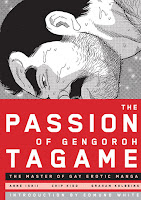
The Passion of Gengoroh TagameThe Passion of Gengoroh Tagame: The Master of Gay Erotic Manga probably couldn’t be more different from The Heart of Thomas, but I anticipated its release just as much. Tagame is an incredibly influential gay comics artist. The volume was not only the first collection of his work to be released in English, it was also the first collection of bara manga to be released in print. Happily, it won’t be the last. More of Tagame’s manga is already scheduled to be published.

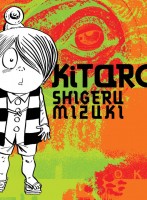
KitaroI have become increasingly interested in yokai over the last few years. And so I was thrilled when Drawn & Quarterly released Kitaro by Shigeru Mizuki. The volume collects stories from the first few volumes of Mizuki’s GeGeGe no Kitaro which is the yokai manga that started it all and which continues to influence creators to this day. I found Kitaro to be utterly delightful and can understand why it’s so well-loved. I hope more of the series will be translated.

Mobile Suit Gundam: The Origin, Volume 1I picked up Mobile Suit Gundam: The Origin for one reason–it was written and drawn by Yoshikazu Yasuhiko. I’m not at all a Gundam fan, but I am a fan of Yasuhiko’s work. Even so, I didn’t anticipate how much I would enjoy The Origin. The manga ended up being an extremely well done space opera. It doesn’t hurt that Vertical’s edition of the series is one of the highest quality manga releases available in English, either. I’m still not a Gundam fan, but I am a fan of The Origin.

UnicoAnother manga that I was pleasantly surprised by was Osamu Tezuka’s Unico. As much as I appreciate Tezuka’s work, I will admit to have grown a little tired of it. (I wish that other classic manga received the same amount of attention in English.) I approached Unico more as a curiosity than anything else; the full-color artwork and unusual page layouts had caught my attention. It turned out to be an endearing manga that is both heartbreaking and charming.

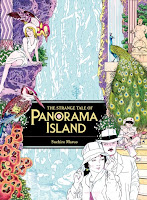
The Strange Tale of PanoramaAfter years of delay, Suehiro Maruo’s The Strange Tale of Panorama Island was finally released by Last Gasp in 2013. The manga is an adaptation of Edogawa Rampo’s novella Strange Tale of Panorama Island which, coincidentally, was also released in English in 2013. I cannot think of a more perfect artist to adapt Rampo’s work; Maruo’s exquisite, sensual, and erotically charged illustrations with hints of the macabre are an ideal fit. The Strange Tale of Panorama Island was worth the wait.

Wandering Son, Volume 4As for continuing series in 2013, Takako Shimura’s Wandering Son remains a manga that is incredibly important to me on a very personal level. I’m pretty sure that I’ve mentioned it before, but Wandering Son has quite literally been life-changing for me. In addition to that, I simply think it’s a wonderfully sensitive and sincere look at personal identity. Fantagraphics released both the fourth and fifth volumes of Wandering Son in 2013; I’m looking forward to reading more of the series great deal.

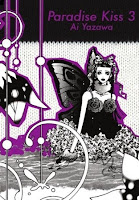
Paradise Kiss, Part 32013 also saw the release of Ai Yazawa’s Paradise Kiss, Part 3–the third and final volume in Vertical’s edition of the series. I missed out on the manga when it was originally licensed by Tokyopop and I’m very glad to have had the opportunity to read it. Over the last year, I have been extremely impressed by Yazawa’s work. I don’t have a particular interest in fashion, but the complex characters and complicated relationships in Paradise Kiss were extraordinary.

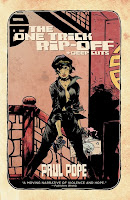
The One Trick Rip-Off + Deep CutsThe One Trick Rip-Off + Deep Cuts is a fantastic anthology which collects fifteen comics by Paul Pope, including those he created for Kodansha while in Japan. The volume makes a great introduction to Pope’s comics, exhibiting a nice range of styles and stories selected from nearly a decade of his work. The influence of manga can be seen in the collection, but Pope definitely has his own approach to comics. I’ve become very fond of his work and the quirkiness of his stories and characters.

BoxersWritten and illustrated by Gene Luen Yang with colors by Lark Pien, the Boxers & Saints duology is honestly one of the best comics that I read in the past year. It’s a powerful retelling of the Boxer Rebellion–a violent uprising in China that began in the late 1800s–from two different sides of the conflict, neither of which were entirely in the right. Yang put a tremendous amount of research into the work, making it historically accurate while still maintaining a very human element to the story.

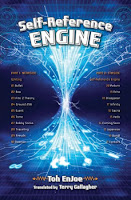
Self-Reference EngineI already knew that I enjoyed Toh EnJoe’s short stories and essays and so I was excited for the release of Self-Reference Engine, the first book-length work of his to be translated into English. It’s not quite a novel, and it’s not quite a collection of short stories, but whatever it is it’s good stuff. I expected Self-Reference Engine to be intellectually stimulating as well as entertaining, and it was, but I wasn’t prepared for how funny and mind-bending it would be.

Filed Under: FEATURES Tagged With: comics, manga, Novels

  • « Go to Previous Page
  • Page 1
  • Interim pages omitted …
  • Page 630
  • Page 631
  • Page 632
  • Page 633
  • Page 634
  • Interim pages omitted …
  • Page 1048
  • Go to Next Page »
 | Log in
Copyright © 2010 Manga Bookshelf | Powered by WordPress & the Genesis Framework