• Skip to primary navigation
  • Skip to main content
  • Skip to primary sidebar
  • Home
  • About Us
    • Privacy Policy
    • Comment Policy
    • Disclosures & Disclaimers
  • Resources
    • Links, Essays & Articles
    • Fandomology!
    • CLAMP Directory
    • BlogRoll
  • Features & Columns
    • 3 Things Thursday
    • Adventures in the Key of Shoujo
    • Bit & Blips (game reviews)
    • BL BOOKRACK
    • Bookshelf Briefs
    • Bringing the Drama
    • Comic Conversion
    • Fanservice Friday
    • Going Digital
    • It Came From the Sinosphere
    • License This!
    • Magazine no Mori
    • My Week in Manga
    • OFF THE SHELF
    • Not By Manga Alone
    • PICK OF THE WEEK
    • Subtitles & Sensibility
    • Weekly Shonen Jump Recaps
  • Manga Moveable Feast
    • MMF Full Archive
    • Yun Kouga
    • CLAMP
    • Shojo Beat
    • Osamu Tezuka
    • Sailor Moon
    • Fruits Basket
    • Takehiko Inoue
    • Wild Adapter
    • One Piece
    • After School Nightmare
    • Karakuri Odette
    • Paradise Kiss
    • The Color Trilogy
    • To Terra…
    • Sexy Voice & Robo
  • Browse by Author
    • Sean Gaffney
    • Anna Neatrour
    • Michelle Smith
    • Katherine Dacey
    • MJ
    • Brigid Alverson
    • Travis Anderson
    • Phillip Anthony
    • Derek Bown
    • Jaci Dahlvang
    • Angela Eastman
    • Erica Friedman
    • Sara K.
    • Megan Purdy
    • Emily Snodgrass
    • Nancy Thistlethwaite
    • Eva Volin
    • David Welsh
  • MB Blogs
    • A Case Suitable For Treatment
    • Experiments in Manga
    • MangaBlog
    • The Manga Critic
    • Manga Report
    • Soliloquy in Blue
    • Manga Curmudgeon (archive)

Manga Bookshelf

Discussion, Resources, Roundtables, & Reviews

Blog

Adventures in the Key of Shoujo: Princess Knight, Vol. 1

January 22, 2014 by Phillip Anthony Leave a Comment

PrincessKnight volume 1Princess Knight Vol.1 | By Osamu Tezuka | Published by Vertical Inc. | Rated: Unknown
“The Prince is here!”

Looking at Osamu Tezuka’s work, I would be hard pressed to pick one thing the man was most famous for. 150,000 individual pieces of artwork, dozens of works in manga and anime, almost single handedly popularising manga as we know it in Japan plus innovations in genre and work ethic. The last point is interesting as it pertains to my review. Shoujo is a genre that had existed before Tezuka came along but he is indelibly linked to it. Princess Knight is a title that many creators of manga in Japan cite as an influence and it’s not hard to see why. A magical fairytale setting, a prince/princess to root for, a cast of evil villains to hate and a wonderful Wagnerian background. So does the book have it’s share of problems? Yes, but I’m not that annoyed by them. Let’s begin, shall we?

I imagine that Princess Knight volume 1 starts much like the 1959 Walt Disney version of Sleeping Beauty. Don’t ask me why, the two art styles are miles apart, the tempo is all wrong and the movie came out three years after the first version of the book finished in Shojo Club. But two things stay true in both cases: the sweeping nature of the story (Princess Sapphire is carried through her adventure by the people conspiring against her, Aurora is carried along by the plotting of Maleficent, dragons, witches, sword fights) and the fact that both stories deserve epic, classical scores. Shame only Sleeping Beauty has that score.

In creating Princess Knight, Tezuka seeks to both subvert and add to the Happily Ever After idea by having the Princess take on the attributes of the Prince arch type. Sharing two hearts, the Prince is daring and brave while being graceful and light (the story goes a bit overboard with some of these traits but I’ll save that for later). It’s hard to decide where Sapphire wants to go as a character from the start of the book. She fulfills all her roles as Prince because she has to but then, in her off time, she likes to be a princess and wear dresses and do all the things that Princess’ are supposed to want to do (need to find that particular rule book and beat up its author) in these tales. But she’s constantly having to walk a tightrope between what she wants and what’s demanded of her. If she slips for an instant, the Duke will strike and that will be the end of the fairy tale. You get the sense from the first five or so pages that Sapphire is screwed no matter what she does. Tink (or Choppy depending on what version you’re reading) is a nice enough character but he reminds me a little too much of Dororo from the title of the same name but with a little more reserve. The characters Tezuka has on display are varied and I do like them but it’s frustrating for me to have to read this as I’m not and was never supposed to be the target audience. You could argue that Tezuka was primarily creating the story for young girls exclusively but since that time the title has taken on a life of it’s own with people of all ages enjoying it. I have read commentary on the story in regards to how Sapphire reacts to danger in both of her guises, male and female. I will get into that in a minute.

But for now let us talk about how the book looks at times to veer into silly country and how it always seems to pull out at the last second. Tezuka is famous for his gags in the middle of high drama and Princess Knight is no exception. In our modern times, this sort of pop culture reference assembly line might seem trite but Tezuka was doing stuff like this years before it was expected. Like calling for the villains to photograph the Princess in a compromising position only to be told cameras haven’t been invented yet. Or the fact that the good and true characters all have named after natural minerals (Silverland, Sapphire) versus the synthetic names of the villains (Nylon, Duralumin). Couple that with Tezuka having characters like Madame Hell (Madame Hell!!!) being entirely superfluous and then Tezuka will draw a whole page panel scene with her bringing the elements of nature down on someone. It’s always hard to gauge whether or not to laugh at what he’s trying to say. What can’t be argued with is the fact Tezuka really keeps the pace going. The use of Looney Tunes-esque sword fighting is quirky, I must admit. It really looks like “Take this! And That! Touché!!! Ha! I meant to lose my sword like that!” in sequentially paced panels. Sapphire doesn’t get a chance to herself and goes from one adventure to another, one life or death moment to another. While Prince Franz goes from wandering pretty boy to foil for Sapphire’s male persona and onto love interest. All while the evil elements conspire against the Princess and her family. Tezuka takes a Disney approach to pacing. In fact, early Disney movies might be the best way of describing the tone and pace of the whole endeavour. Films like Snow White and Sleeping Beauty are reflected in this story with a European style of storytelling (good always triumphs, animals are your friend and yes, there’s magic involved). For me, I like the whole tone and would have liked to see more from Tezuka in this genre.

The tricky thing about this story is two-fold: does the story still hold up against other shoujo works and secondly does the dual-gender identity story have weight today? For my money, it doesn’t really hold up as a shoujo story as the whole genre has moved on from what Tezuka helped to pioneer. It sits more as the story that started it all in a manner of speaking to borrow one of Disney’s taglines. When put against a franchise monster like Sailor Moon, Princess Knight feels quaint but I give it a pass because of the time it was made in and the fact that the story still works as a fairy tail. As a gender identity story, I must say it has things to say in today’s world. I would preface the next statement by saying that it is my opinion that Tezuka didn’t foresee how the manga’s unique twist would be interpreted. How could he as the things that today’s youth and people in general face as personal difficulties couldn’t have been imagined in 1953? Sapphire’s want to be a boy AND a girl goes to the heart what people of all walks of life must go through in the name of love. Who do I love and how does their gender make a difference to me? How does my gender make a difference to them? You don’t have to be one specific gender to know that crosses like these are hard to bear. The fact that Tezuka wrapped it up in a fairy tail makes the transmission of the story’s heart to modern times amazing to see.

When we leave the volume, Sapphire gets involved with the Prince Franz, finds her mother turned to stone and facing enemies both real and supernatural. So where could Tezuka go at the end? Have Sapphire board a pirate ship, of course! I wasn’t expecting that. We’ve gone from Disney to Burt Lancaster high adventure. Where will we and Tezuka goes from here? I am looking forward to find out.


More Princess Knight at Manga Bookshelf: Manga Artifacts: Princess Knight (Katherine Dacey) | Off the Shelf: Princess Knight (MJ & Michelle Smith)
Filed Under: Adventures in the Key of Shoujo Tagged With: shojo, shojo beat, vertical

Genkaku Picasso, Vol. 2

January 21, 2014 by Ash Brown

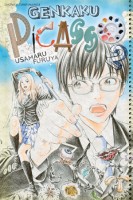
Genkaku Picasso, Volume 2Creator: Usamaru Furuya
U.S. publisher: Viz Media
ISBN: 9781421537542
Released: February 2011
Original release: 2009

Genkaku Picasso was the second multi-volume manga series by Usamaru Furuya to be released in English. The first was a seinen gag manga called Short Cuts which, like Genkaku Picasso, was published by Viz Media. Genkaku Picasso is very different from Short Cuts. It’s an example of one of Furuya’s few shōnen manga and is currently his only shōnen series available in English. Furuya is an extremely versatile artist, changing styles, genres, and demographics to suit his needs. He had his start in alternative manga, but Genkaku Picasso, while quirky, is a more mainstream title. Initially serialized in Jump SQ, the second volume of Genkaku Picasso was released in Japan in 2009. Viz Media published Genkaku Picasso, Volume 2 under its Shonen Jump imprint in 2011. I found the first volume of Genkaku Picasso to be intriguing, but more uneven and less compelling than some of the other manga by Furuya that I had read. But with the second volume, the series finds its footing.

After a bizarre near-death experience, Hikari Hamura, given the nickname Picasso by his classmates, finds himself in an even stranger predicament. Chiaki Yamamoto, a victim of the same accident that nearly killed Picasso, is now small enough to fit in his pocket and is sporting angel wings. Picasso himself has gained the ability to see into people’s hearts and minds. Compelled to draw what he sees, he can literally enter into the psyches of others through his illustrations. Using this newfound power, Picasso is able to help his fellow classmates. Not that he really wants to go to all that effort. In fact, he’d much rather be left alone to concentrate on his artwork. But unless he wants to let his arm rot away–another peculiar consequence of his accident–Picasso must do what he can to help those around him. With Chiaki’s assistance and prodding he has successfully resolved some of his classmates problems and has even gained a few friends in the process, but Picasso is still incredibly reluctant to get involved.

Although there has always been an ongoing story in the series, the beginning of Genkaku Picasso felt fairly episodic. However, with the second volume the series starts to become a bit more cohesive. The stories in the first volume seemed to be resolved a little too simply and cleanly, but as Genkaku Picasso progresses it becomes apparent that it’s not really that easy. Picasso has helped some of his classmates (though they are only aware of that subconsciously) but they continue to have problems; he hasn’t solved everything for them. The first volume’s stories had a “one and done” sort of feel to them while the issues in the second volume, even after they are initially resolved, are long-lasting challenges. They are things that the characters may very well struggle with for the rest of their lives. I much prefer this approach since realistically matters of the heart and mind are not so easily mended. I think Genkaku Picasso becomes a stronger, better series with the inclusion of these more complicated and nuanced narratives.

From the very beginning one of Genkaku Picasso‘s strengths has been its artwork, something that continues to be a highlight in the second volume. Furuya uses a variety of art styles in the series. Picasso enters the drawings he creates of other people’s hearts. They are filled with beautiful, surreal, and even disturbing imagery, allowing Furuya to creatively illustrate and explore the characters’ internal states of mind. But probably the greatest reason that I find the second volume of Genkaku Picasso to be more effective than the first is that the problems that Picasso must help to try to solve happen to be more relevant to me personally. For me, many of the stories in the first volume were little far-fetched while those in the second volume are a bit more realistic and universal. Most of them focus on love, romance, gender, or sexuality which are themes that I have a particular interest in. I could personally identify with the characters in Genkaku Picasso, Volume 2 in ways that I previously couldn’t. I did enjoy the first volume of Genkaku Picasso, but I was able to appreciate the second volume even more.

Filed Under: REVIEWS Tagged With: genkaku picasso, manga, Shonen Jump, Usamaru Furuya, viz media

Alice in the Country of Joker: Circus and Liar’s Game, Vol. 2

January 20, 2014 by Anna N

I enjoyed the first Alice in the Country of Hearts series much more than I expected to. I’ve since tried out some of the sequels here and there, and I think this series is one that I’ve enjoyed the most, just because the storyline seems to echo back to the first series in both theme and tone. While most of the other Alice series that I’ve read tend to focus more on what I think of as the core cast of characters, Alice in the Country of Joker introduces the Circus as a new place and the mysterious Joker accompanies the Circus. It is April season, which is a different and unsettling time for the inhabitants of Wonderland.

The second volume of the series continues with many of the things I enjoyed about the first. There are flashbacks to Alice’s previous life that hint at the psychological issues that might cause her to take refuge in Wonderland. Alice is reminded of her sister as she spends time with the obsessive white rabbit, Peter White. Blood Dupre continues his flirting campaign, but the influence of the Circus and the barrier that Nightmare placed in Alice’s mind are in conflict. There seems to be a cyclical conflict between the Circus and the rest of Wonderland, and Alice is trapped in the middle of it. The unsettling tone and hints of suspense were more of what I tend to look for in one of these many Alice stories. So far, this is the main spinoff series I would make a point of recommending to fans of the first Alice in the Country of Hearts. I still miss the art from Soumei Hoshino in the original series. There isn’t anything really wrong with the illustrations of the adapter here, but Hoshino’s art was more delicate and surreal, adding another dimension to the Wonderland portrayed in these stories.

Filed Under: REVIEWS

My Week in Manga: January 13-January 19, 2013

January 20, 2014 by Ash Brown

My News and Reviews

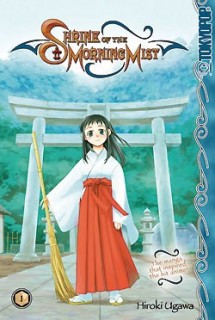
There were three posts at Experiments in Manga last week, only two of which were mine. First up was my review of Negi Banno’s S.S. Astro, Volume 1, a yonkoma manga about a group of young, twenty-something high school teachers. Sadly, the series was canceled before a second volume could be released. The review is the second manga for my Year of Yuri review project. My other post last week is a part of my continuing efforts to track down manga podcasts. Discovering Manga: Podcasts, Part 3 takes a look a three ongoing podcasts that started in 2013. Also last week, I was happy to welcome Jocilyn Wagner as a guest to Experiments in Manga with her review of Hiroki Ugawa’s Shrine of the Morning Mist, Volume 1.

On to interesting things found online! Alexander Hoffman posted a Lessons from the Crater Project over at Manga Widget, which is a great summary of the events surrounding the Kickstarter project for Osamu Tezuka’s The Crater. The Daily Dot has an excellent overview of the debate over Zoë Hange gender in Attack on Titan, which has apparently become rather heated in some circles. Opening Ceremony took time to talk to the wonderful folks behind Massive–New-to-OC Brand MASSIVE on Husky Gay Asian Erotica. I also particularly enjoyed reading Tony Yao’s post The Beautiful Negativity of Seinen over at Manga Therapy.

One last thing: Usamaru Furuya’s birthday is on January 25. In honor of that, I’m declaring this week Usamaru Furuya Week at Experiments in Manga. Basically, it’s an excuse for me to get around to reviewing the rest of his manga, which I’ve been meaning to do ever since I hosted the Usamaru Furuya Manga Moveable Feast a couple of years ago. So, I’ll be posting a whopping five reviews this week! I hope you enjoy.

Quick Takes

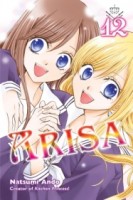
Arisa, Volume 12Arisa, Volume 12 by Natsumi Ando. Since its beginning Arisa has gone through so many disconcerting twists and turns, how is it possible that the twins look so utterly happy on the cover of the final volume? For the most part, I was satisfied with the ending of Arisa. Things aren’t resolved as happily as the cover might imply, which I find appropriate considering the darker aspects of the story. And I wouldn’t want everything to be tied up neatly. Once again though, some of the plot twists are a little ridiculous and over-the-top. I’m all for heightened drama, but I also like it to at least make some logical sense. Admittedly, Arisa can be a bit of a mess. Even so, I really enjoyed reading the series. Also included in this volume is a rather silly side story that takes place before the events of the main series. In this case it’s Arisa posing as her sister instead of the other way around. The results are amusing though not particularly believable. Granted, at this point I’m not expecting Arisa to be particularly believable anyway.

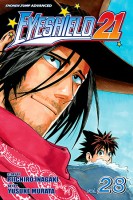
Eyeshield 21, Volume 28Eyeshield 21, Volumes 28-31 written by Riichiro Inagaki and illustrated by Yusuke Murata. I’ve discovered that, for some reason, I really like sports manga, even when that sport is something that I’m not particularly interested in in real life. For example, American football. Yet here I am thoroughly enjoying Eyeshield 21, completely caught up in the Deimon Devil Bats’ fight to reach the Christmas Bowl. And a fight it is. These volumes focus on the game between the Devil Bats and the Hakushu Dinosaurs with an emphasis placed on football as a combat sport. (I’ve actually never really thought of football that way before, so that was an interesting take on the sport for me.) The Dinosaurs have a habit of intentionally sending their opponents to the hospital, so it’s a fairly rough game. The face-off between the two teams also shows just how far Sena has come as a player since the beginning of the series. Once a weakling pushover, he’s now become much more confident in his abilities and in himself. I’m very excited to read more of Eyeshield 21.

Hetalia: Axis Powers, Volume 4Hetalia: Axis Powers, Volumes 4-5 by Hidekaz Himaruya. I know just as many people who absolutely hate the Hetalia franchise as I do people who absolutely love it. I wouldn’t necessarily call myself a rabid fan, but it is a series I follow. I do, however, generally prefer the anime adaptation over the original manga. For some reason, even though the anime and the manga both make the same jokes, I find the anime to be funnier. There are times that I just can’t seem to figure out what the punchline is supposed to be in the manga. The manga still can make me laugh, though, and I even occasionally learn a bit of history in the process, which I appreciate. The number of countries involved in Hetalia continues to grow with these volumes, including more female personifications which is nice to see. The Netherlands in particular seems to get a fair amount of page time this time, too. Hetalia does rely heavily on stereotypes for its humor, but I don’t get the feeling that they’re being used maliciously or to be deliberately offensive.

White BrandWhite Brand by Youka Nitta. Although I didn’t realize it until reading the afterword, apparently White Brand was Nitta’s first collection of boys’ love short stories. I’ve now read several of Nitta’s manga, but it seems that they tend to be fairly hit-or-miss for me. Despite Embracing Love actually being one of my favorite yaoi series, none of Nitta’s other works have really grabbed me. That hasn’t especially changed with White Brand, though I did like it more than The Prime Minister’s Secret Diplomacy. White Brand collects five short boys’ love manga. I’m not sure if it was an intentional or not, but a recurring theme throughout most of the stories is opposites. “White Brand” is about cousins with different color skin tones. “Teal End” is about two men from different countries. “Exhibition Painting” features men from very different classes and walks of life. “One Size Fits All” is somewhat frivolous story about a tall model and a much shorter man. “Hasta la Vista, Baby” is the only story that this play on opposites isn’t immediately obvious.

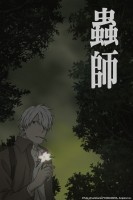
MushishiMushishi: Sun-Eating Shade directed by Hiroshi Nagahama. I won’t lie–I love both the Mushishi manga and the anime. I was very excited when the special episode was announced and thrilled when Crunchyroll picked it up so that I could actually watch it. Although about twice as long as the individual episodes of the anime series, Sun-Eating Shade matches the tone, atmosphere, and ambiance perfectly. I was very happy to see that the same animation style was kept for the special episode. The backgrounds are still gorgeous, the music is still haunting, the pacing is still relaxed and unhurried. Mushishi has always been a rather episodic series, but I liked how Sun-Eating Shade made references to and loosely tied together several stories adapted in the first season of the anime. If someone didn’t enjoy the original anime series, there is nothing in Sun-Eating Shade that will change their mind. But established Mushishi fans (like me) probably won’t be disappointed with the special episode. I’m looking forward to the second season of Mushishi a great deal.

Filed Under: FEATURES, My Week in Manga Tagged With: anime, arisa, Eyeshield 21, Hetalia, Hidekaz Himaruya, manga, mushishi, Natsumi Ando, Riichiro Inagaki, Youka Nitta, Yusuke Murata

Fairy Tail, Vol. 32

January 20, 2014 by Derek Bown 1 Comment

fairytail32Fairy Tail, Vol. 32 | by Hiro Mashima | Yen Press – The Grand Magic Games start in earnest with a game of “The Hidden” where the contestants must discern which of their opponents is real, in a way that makes me think Hiro Mashima was playing a bit of Assassin’s Creed at the time he wrote this story. Gray and Juvia try to win it for Fairy Tail, but the sinister Raven Tail marks them and constantly harasses them until they end the game at the bottom ranks.

From there, the tournament continues into regular combat with Fairy Tail doing their best but due to outside influence both Lucy and Jellal (who is disguised as Mystogan) lose their battles, ending with both their teams in dead last. It all ends, after some other battles from the different competing guilds, with Charle making a dire prediction for their future.

Where I enjoyed the last volume a lot more than I thought I would, this volume was a couple steps backward for me. The biggest problem is that we see exactly why tournament arcs are such a tiresome trope in action manga. It’s nothing but fights for several chapters as we get through all the non-Fairy Tail wizards. That’s not to say the fights aren’t interesting. In fact Mashima does mix things up by including other types of competition, and Lucy and Jellal’s fights are well done. In Jellal’s case it’s a matter of just being really funny, but Lucy’s fight is another matter.

While the outside interference and unfair methods practiced by Raven Tail during Lucy’s fight really make us hate them, I find that the fight falls flat because I am unable to suspend my disbelief that nobody would notice that Flare is threatening Bisca and Alzack’s kid to keep Lucy from fighting back. Are we seriously supposed to believe that these two don’t even bother looking at their kid from time to time? Even if they aren’t worried about her being kidnapped, being surrounded by friends and all, isn’t it common practice for parents to at least glance at their child every once in a while? I’m pretty sure that if I were a parent I would like to keep my child at least in my peripheral vision.

And if they were keeping her in their peripheral vision, how did they not notice the speck of bright red that suddenly appeared in the corner of their eyes! It’s all used to make Natsu look cool, which we’ve had more than enough of, when a different manga artist would have played how obvious the whole thing was as a laugh.

But the biggest problem with the volume is the stretch of individual fights right towards the end. We get the big game, we get Lucy’s fight, but then suddenly we get a bunch of characters fighting that we don’t care about. And while Jellal and Jura’s fight is great, we’ve still been fatigued on fights in general by the end and the volume itself doesn’t leave a good taste in our mouths. So as far as essential volumes of Fairy Tail go this one is not among them. There certainly are worse volumes out there but were I not an avid collector, as most manga fans are, I’d consider skipping this one.

A major problem this time around, even compared to last month’s volume, is the excessive fanservice. The fight with Lucy and Flare is impossible to take seriously solely because most of the panel layout seems to be to show off the assets of the fighters in the most erotic way possible. I don’t like to dismiss Lucy as the fanservice character, since she has had some great moments in the series, but her inclusion in the story is feeling more like she’s the one selling all the copies of this series to a target demographic of teenagers who haven’t figured out how to type the word “hentai” into google.

And yet, complain though I might, I do still enjoy this series. This just happens to be a volume that doesn’t have the useful distraction of good story or humor to distract from Mashima’s descent into complete ecchi artist.

Filed Under: FEATURES & REVIEWS, MANGA REVIEWS, REVIEWS Tagged With: Fairy Tail, manga, MANGA REVIEWS

Pick of the Week: Manhwa & More

January 20, 2014 by Michelle Smith, Ash Brown, Sean Gaffney and MJ 1 Comment

potw-1-19MICHELLE: Typically when a series I read is ending, I devote my pick of the week to its final volume, but not even that can compel me to rank Arisa above Goong: The Royal Palace this week. I am just so very grateful that Yen Press has resumed publishing this series that I will avail myself of every opportunity to encourage folks to check it out!

ASH: Oh, this is a tough week for me, there’s so much that I’m interested in! I’m very excited to read the next omnibus of Vinland Saga, I’m always glad to see more Ooku, and I’m curious to see how No Matter How You Look at It, It’s You Guys’ Fault I’m Not Popular! develops. But in the end, I think I’ll have to go with the most recent volume of one of the first manga that I ever read, Blade of the Immortal.

SEAN: As one might expect, my pick of the week is Book Girl And The Scribe Who Faced God, Part 2. The whole series has been terrific, even if the lead male has been intensely frustrating, and the sheer love of books and reading that drips through every page is worth its weight in gold. I hope the series does well enough that we can get a couple of the short story and side story collections, but even if we don’t, it’s been a terrific run of light novels.

MJ: Oh, what a choice! Being faced with any new volume of a Fumi Yoshinaga manga and not choosing it is a bit of a PotW nightmare for me, but if I’m being really honest, the truth is that I’m with Michelle all the way this week. There are few soapy things I love with the kind of fervor I feel for Goong, and anticipating a new volume is almost too much to handle. I, too, am grateful that Yen Press has continued this series–the last remnant of its once-generous catalogue of Ice Kunion manhwa. I simply can’t wait to dig in.

What looks good to you this week?

Filed Under: PICK OF THE WEEK

Bookshelf Briefs 1/20/14

January 20, 2014 by Sean Gaffney, Anna N and Michelle Smith Leave a Comment

This week, Sean, Anna, & Michelle look at recent releases from Seven Seas, Viz Media, SuBLime, and Kodansha Comics.


madhatter2Alice in the Country of Hearts: The Mad Hatter’s Late Night Tea Party, Vol. 2 | By QuinRose and Riko Sakura | Seven Seas – If this were the first Alice volume that a casual reader had read, I think they’d be pretty satisfied. At only two volumes, Alice and Blood not connecting doesn’t last long, there’s lots of discussion of the basic themes of this world, and we get some mafia madness with a few timely rescues. As someone who’s been following all the spinoffs, though, it’s all a bit same-y. It’s likely a lot easier with the game, where you can purchase one copy and explore all the different routes. Here, as individual manga series, it’s like starting over again each time, with a slightly diminished return. Some of the spinoffs make it worth seeing what they do to poor Alice, but while this is skillfully done, there’s nothing here we haven’t read before, so in the end it’s inessential. – Sean Gaffney

crimsonemp3Crimson Empire: Circumstances To Serve A Noble, Vol. 3 | By QuinRose and Hazuki Futaba | Seven Seas – With the Alice series, while she’s quite a good protagonist, I tend to be more interested in her male partners. In this series, it’s the reverse – I find the men rather dull, but Sheila fascinates me. There’s a core of self-loathing to her that Alice simply doesn’t have, even with the tragedy in her life that she’s forgotten. Indeed, even after her lover wins the day, and the two admit they’re in love, Sheila still thinks nothing has changed, except now she’ll be bodyguard for a different man. Sheila IS her profession, which is assassin/bodyguard ninja maid. Anything else is just beyond her, both subconsciously and consciously. And that’ means that despite its happy ending, Crimson Empire seems a lot more melancholy than Alice in the Country of Hearts. – Sean Gaffney

fairytail3Fairy Tail, Vol. 33 | By Hiro Mashima | Kodansha Comics – After a somewhat teeth-grinding Vol. 32, it’s nice to see *some* things go our heroes’ way in this volume. Mirajane wins, as expected, but she gets the comedic fanservice win – though it does end in a powerful finish. Elfman also impresses, taking the fight that was supposed to be Erza’s and managing to be the manlier man. There’s a few other amusing things here as well, which is good, because there are implications of very dark things to come. Saber Tooth and Raven Tail are looking like even worse guilds than we expected, and the way they’re treating their members (female, of course – Mashima tends to have his women suffer nobly) is horrid. And what does Lucy have to do with everyone’s plans? This volume has a good balance between ‘tournament battle’ and other plot, overall.. – Sean Gaffney

natsume15Natsume’s Book of Friends, Vol. 15 | By Yuki Midorikawa | Viz Media – I don’t even know where to begin in expressing my utter adoration for this series in general and this volume in particular. There’s just so much to love: the wistful tone, the episodic stories that still advance the overall plot; the comic relief provided by Nyanko-sensei; the yokai, who are often sweet, sad, and endearing; and, of course, Natsume himself, who is better able to discover the reasons for yokai activity at a former exorcist’s home than anyone else and single-handedly responsible for resolving things peacefully. As if all of this weren’t great enough (and it is), the last chapter in the volume is a special episode about Toko and Shigeru, the distant relatives who took Natsume in when the rest of his family had written him off as disturbed. It is simply lovely and prompted many a sniffle. Natsume’s Book of Friends is a true gem. – Michelle Smith

nightsNightS | By Kou Yoneda | SuBLime Manga – Having enjoyed Kou Yoneda’s No Touching At All back in 2011, I was pretty eager to check out NightS, even though it’s a compilation of short stories, which aren’t really my thing. None of the stories included here is terribly unique in premise—an attraction between a “transporter” and a yakuza, a fairly standard high school romance, love blooming at the car dealership—but Yoneda fills her stories with intelligent, natural-seeming dialogue and characters (well, at least the adult ones) with interesting personality quirks and flaws that impact how they approach relationships. While the format prevents achieving much depth, and hence prevents the volume from matching No Touching At All for quality, it’s nonetheless an enjoyable read. – Michelle Smith

pokemanPokemon the Movie: Genesect and the Legend Awakened | by Momota Inoue | Viz Media I have to admit, I am not really all that interested in Pokemon, but Pokemon fever is raging through my kids’ elementary school, so I read this book with them. This is a stand alone one-shot movie adaptation centering around the story of an ancient Pokemon called Genesect who has suddenly awakened, causing trouble for the present day Pokemon and their trainers. Mewtwo takes on an important role in dealing with the Genesect, although Ash and Pikachu also contribute. The art is consistent, my kids enjoyed spotting all the Pokemon, and they smuggled it out of the house to show off at school. So if you have young Pokemon fans, I feel safe in predicting that this manga will appeal to them! – Anna N

rurounirestoration2Rurouni Kenshin: Restoration, Vol. 2 | By Nobuhiro Watsuki | Viz Media – This wraps up the revisiting of Rurouni Kenshin prompted by the recent live action movie. Really, the original series was so great, revisiting the series in a slightly different form wasn’t really all that necessary. Still it was nice to be reminded of Watsuki’s facility with character design, especially the villians, and most characters from Kenshin got a little bit of a showcase. This second volume featured more turns from Saito and Yahiko, as they also battle in the Meiji era. Even Watsuki’s author notes seem to indicate that he was going through the motions a little bit, pointing out small things that he changed that he ended up regretting. Really, the original series is so much more charming than this version, most people would be better off just picking up some of the VizBig versions if they are interesting in reading this shonen classic. – Anna N

Filed Under: Bookshelf Briefs

Shrine of the Morning Mist, Vol. 1

January 19, 2014 by Jocilyn Wagner

I am very pleased to introduce Jocilyn Wagner to readers of Experiments in Manga. Jocilyn doesn’t currently have a platform of her own, but she was still interested in occasionally writing about manga. And so, I’m happy to offer up some space here and welcome her to Experiments in Manga as a guest.

Greetings and Salutations! Some of you might know me from my love of yuri and occasional manga and light novel translations, but that’s not what I’m doing this time. Instead… I thought I’d introduce you to some of the most forgotten and/or unappreciated (usually for good reason) manga I own, which have, in all likelihood, never before been reviewed on a Manga Bookshelf blog!

* * *

I’d like to begin with a title that was so under-sold and under-appreciated it literally debuted at number 92 in graphic novel sales. The year was 2006; it was the end of an era. I’d just wrapped up my undergrad and year-long stint as president of the Western Michigan Anime Addicts and my heart was still full of some of the incredible anime we’d enjoyed: Paradise Kiss, Madlax, Last Exile, Read or Die, the list goes on. In my youthful vigor and utter boredom I was working on one of the many anime subtitling teams (in the days before Crunchyroll a great many of these existed if you can believe it!) editing scripts for #Ishin, when I was asked to finish up work on a silly series no one was watching. It was bizarre, ugly and ridiculously cute, and the episodes were so short it would be a breeze. I’m speaking of course of Asagiri no Miko (朝霧の巫女). You may now groan and pinch your noses in despair and hopefully save yourself the trouble of reading the following review of TokyoPop’s 2006 edition of the series they called “Shrine of the Morning Mist.”

Shrine of the Morning Mist, Volume 1

The name has always been something of a sticking point with me since a literal translation would be closer to “shrine maiden of the morning mist” but then, I suppose TokyoPop didn’t want to confuse people with the bull in a china shop, Kannazuki no Miko, for which they’d already used the term (never mind the fact that the miko in Asagiri no Miko actually resemble real miko and Himeko and Chikane are rather infamous, but not for their pious purity), but I digress.

Ugawa Hiroki’s story is usually seen as a seinen action comedy, but I always thought of it as a supernatural slice-of-life romance. In the fine tradition of early 2000s dating sims, the story revolves around a loner teenage dude (Amatsu Tadahiro, usually referred to as Hiro) who returns to the home of his childhood and some of the girls he left heartbroken in his wake. In this case, the brokenhearted is his cousin Yuzu who is painted to be a fiery but loveable tsundere, as well as his closest childhood friend. Yuzu is the middle child of three girls: Kurako, the eldest, is quiet, thoughtful and spiritually driven and has made it her goal to bring the two star-crossed lovers back together. She reminds me of a cross between Belldandy and Toudou Shimako. Yuzu’s younger sister Tama-chan is the fun rascal who dotes on “Hiro Onii-chan” but often speaks with a maturity beyond her years. Actually she very closely resembles Yukino’s sister Kana from Kare Kano, except she isn’t a manga geek. Their father, in his insane knee-jerk reactions to everything, sketchy behavior and extreme unpopularity could easily be mistaken for Shimura-sensei of Azamanga Daioh! fame. A chapter or two into the series, we’re introduced to the girls’ mother Miyuki. I’m not at all sure how to describe Miyuki since she isn’t given a lot of dialogue in this volume. She’s really rather unlike other manga moms: she arrives on the scene with a samurai-like speed, agility and appearance, wielding a bouken and saves Hiro from becoming breakfast to a giant cyclops. The reader’s told she’d been sent to Izumo, so one might infer she’s a gifted Shinto priestess, but it’s not at all clear at this point. Finally, we’re introduced to Koma-san, a mysterious short-tempered but otherwise solemn woman who claims to have known Hiro’s father, though he had died before Hiro was born and this woman looks to be in her mid-to-late 20s. The way Koma is drawn, I can’t help but be reminded of Yumura Kirika, except Koma is endowed with some rather annoying feline qualities. No doubt inspired by a little known game at the time, Tsukihime.

The plot is tragically somewhat thin. Hiro has been traveling, searching out his way in life and has finally come home to the quiet town of his childhood (Miyoshi, in Hiroshima Prefecture). His cousins, the Hieda sisters put him up for the night but are hesitant to let him go since it’s obvious Yuzu still has feelings for him. From the moment he arrives, Hiro is hellhounded by a mysterious sorcerer who wears a tengu mask and summons a host of cruel-intentioned spirits to eliminate Hiro and his spiritual potential before it upsets the balance of something or other. Tengu-san and Hiro have many annoying random encounters in which Tengu-san is always easily defeated by the sisters, and a thoroughly incompetent yet nevertheless unappreciative Hiro is saved from certain doom in the nick of time. One might compare Hiro to Morisato Keiichi, except Hiro’s not all that nice or mature. He’s also unmoved by Yuzu’s total red-faced embarrassment (which comes into play whenever he’s around), though he obviously remembers what transpired between them five years ago. Yuzu’s mom and sisters are constantly trying to push Hiro and Yuzu together. That’s basically the entire plot.

Tune in next time for another segment of The Manga That Time Forgot/Was Hoping To Forget. ~jocilyn

Filed Under: FEATURES Tagged With: Hiroki Ugawa, manga, Shrine of the Morning Mist, Tokyopop

Excel Saga, Vol. 27

January 19, 2014 by Sean Gaffney

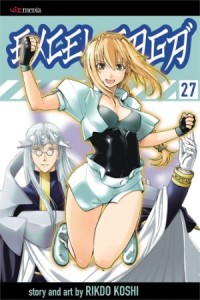
At last, after 11 years, we have the 27th and final volume of Excel Saga translated. To sum up my review, I was pretty much satisfied with the ending. it still managed to be very confusing, and I’m still a bit iffy on the details of Il Palazzo’s origin and the Cores, but emotionally, the story hits all the right beats, and thematically, it resolves itself beautifully. With that in mind, let’s go through some things one by one and see if we can dig deeper into things, though in no particular order.

excel27

Misaki and Iwata, first of all. We started the series off with Misaki as pretty much the only one in the entire group who had normal reactions. Indeed, the one time we were supposed to infer that she was upset and blushing deeply, she had her back to us so that we couldn’t see her expression. I have no doubt that Rikdo was doing this deliberately to save it all for this ending. Misaki’s had a very bad last few days, and her nerves were already starting to get a little shredded even while they were trapped in ACROSS’s base. Then she has to deal with Iwata, who she’s always had complicated romantic feelings towards, having sacrificed himself for her. Except… as they arrive back at their own base, it turns out that this was in fact a robot controlled by Iwata while his body healed – a fact that Umi is rather surprised everyone was not aware of.

While Iwata’s robot body has, at times, been occupied by various opposing forces, I think we have to accept that some of the time we’ve seen him act more maturely it has actually been him acting more maturely. Character development in Excel Saga is rather hit-and-miss, to be honest, but if we can accept that Misaki has come to terms with her feelings for Iwata – as she seems to do after the big reveal here – than we have to accept that Iwata has become less goofy and more heroic because of his own feelings for her. Honestly, saving her at the cost of his own life is the sort of super sentai thing that Iwata would love anyway, and I suspect even if that was his real body he’d have done the same thing.

In any event, after seeing Iwata’s malnourished but very much human body, alive and reasonably well, Misaki snaps and gives him a Big Damn Kiss. And then a Big Damn Beatdown. And then she finally cracks, sobbing helplessly in a full-page closeup, as we finally see everything catch up to her in the best/worst way possible. Naturally, for someone like Misaki this is the most humiliating thing imaginable, so it’s not surprising she immediately bolts. That said, after recovering she and Iwata have seemed to come to terms with whatever it is they have, and he’s even living with her (Mostly as he’s still legally dead), which she can deal with with only the most minor of blushes. It’s very heartwarming.

Watanabe and Sumiyoshi get less focus, but each also gets resolution in their lives, even if they can’t quite escape working for Kabapu. (I will leave the revelation that they’re all his descendents to the side, and then walk away and leave it to be thrown out by the waitress afterwards.) Watanabe gets his heart’s desire, only to have it ripped away from him when ACROSS revives and takes over the world. But then, at the very end, he does get Hyatt back, or at least “Ayasugi”. (This is actually a change from the ending in the Young King Ours magazine, but I’ll get into that later). Likewise, Sumiyoshi is alive and well, though how much he actually wanted the return of Ropponmatsu 2 into his life is questionable.

As for Shiouji and Umi… sigh. This is one of the bits of the ending I’m not thrilled with, to be honest. Shiouji being a lolicon has been with us since the moment he was introduced, though, and even though Rikdo tried to dial it back a bit and explain it through the introduction of Miwa, it’s never really gone away. As for Umi, well, she’s in love with Shiouji, and if he’s found a way to loli-fy her FOR SCIENCE, I can see her going along with it just to make him happy. But it’s not remotely healthy, as he himself indicates. I find it more interesting that Menchi ends up with Umi… I suppose it might be the closest thing to Teriha that Excel can give her. (This was also changed for the book ending.) In any case, let’s leave the scientist and his loli off to the side as well.

Momochi, it turns out, was nothing more or less than the most capable executive assistant in the world, and though I wish she’d gotten more depth, I will content myself with that. As for Kabapu, I’ve never really liked him, mostly as he’s not all that likeable. There’s a brief fakeout here where you think that Rikdo might actually kill him off, but in the end he’s back to laughing insanely and plotting wars against Il Palazzo, mostly as he really doesn’t know how to do anything else. It ends in his abject surrender much faster than usual, though, and he’s forced to dress in an embarrassing costume (not that he is remotely embarrassed by it) and join ACROSS himself Even post-invasion, he’s bored and wants to blow stuff up. Kabapu is an eternal child, really.

Hyatt and Elgala get to survive and live on Earth having some modicum of a regular life. This is a change, as I’ve noted earlier, from the original magazine ending, where Hyatt, Elgala and Menchi were forcibly abducted and taken on Il Palazzo’s ship along with Excel. It was an amusing ending, but it was a bit too cynical and comical, I expect. Seeing Hyatt get the change to start over with Watanabe (who is thankfully no longer remotely evil) and Elgala grump about life but at least no longer being a fugitive from justice, is more heartwarming. There’s also some interesting dialogue that implies that Hyatt and Elgala are similar to Excel in many ways, and it notes that Excel “fixed” them by returning them to the apartment complex like this – indeed, the core notes they were “unique failures”. Both have occasionally exhibited supernatural endurance – in Hyatt’s case, though undeath, and in Elgala’s by merely surviving being near Excel. They are untapped potential. I wish them well.

Sigh. OK, let’s talk Cores. There is still much of this I don’t quite get, I will admit, but suffice it to say that there seem to be multiple cores that can control multiple artificial humans. This is complicated by Tenmangu, Shiouji’s father and the maddest of the mad scientists we’ve seen. (Notably, his face is never quite shown, leaving him to look a lot like the hero of a dating sim – perhaps School Days, given what a loathsome man he is at heart.) He’s the one who’s seen controlling Il Palazzo – basically, he’s the “competent” Il Palazzo. There are also two cores, a chaos and an order core. The chaos core is the one that’s put into Miwa’s body – through Tenmangu – but I think it’s also what was “let out” by Excel’s hand at the cliffhanger for Vol. 26. This is the ‘horndog’ Excel we briefly see here – the core is enjoying being back in a human body, and is quite willing to experiment on Misaki, Umi, Il Palazzo, or anyone else who might want to get it on.

This leads me to a side note – how much does this tie into Holy Brownie? Holy Brownie is an untranslated/unscanlated fantasy series that Rikdo wrote for the tie-in magazine Young King Ours+ at the same time he was writing a lot of Excel Saga. It stars two ‘Brownies’ – Piola and Fio – who are sent to Earth by God to try and advance humanity by urging them to attempt impossible tasks. It was filled with nudity, sexual situations (sometimes involving minors), and comedic violence, and was a lot darker than the premise suggests, so do not ever expect to see it over here – it’s also out of print, so scanlations are also unlikely. In any case, the relationship between Il Palazzo and the Chaos Core possessing Excel reads a lot like Holy Brownie, it changes Excel’s hair black and develops ‘flat line’ eyes much like Holy Brownie, and things aren’t helped by the Core calling Il Palazzo ‘Pio’. Honestly, I expect even if I had read Holy Brownie translated, I’d still be confused, but clearly there’s a tie in somewhere here.

In any case. The Chaos Core has a lot of memories that look familiar to us – we’ve seen them as far back as Vol. 4, when Excel first got amnesia – and seem to imply that much of what went on throughout Excel Saga was carried out for the benefit of Il Palazzo. That said, Excel doesn’t really care much about any of this. We see a sort of ‘Herman’s Head’ landscape in her mind (yes, yes, go Google it), where the ‘default’ snarky Excel watches those memories and rails about how confused she is (probably speaking for the reader, to be honest). We also see Teriha, who is only concerned for the safety of Umi and the others – and once ‘reabsorbed’ into Excel, Excel suddenly grows concerned as well, so therefore we might think of Teriha as her conscience in some way. We also see a crabby military sergeant Excel type, who seems to represent the ACROSS soldier in her. The end of the manga implies she has almost infinite personalities that she can control, and the two amnesia arcs we saw in the series were different ones coming to the foreground.

Excel makes a very good point to Tenmangu here, though – she isn’t a follower who simply trails after Il Palazzo. She’s his John the Baptist, blazing a trail so that he may pass without hindrance. She’s the advance guard. And more to the point, her love for Il Palazzo is pure and innocent (given her implied creation by Il Palazzo, I think this is a good thing), so what really gets her to fight back and take over her own mind once more is the chaos core starting to make out with him – this makes her cry tears of blood. But take control she does, and once Excel is back in the house, there’s no stopping her. Remember the incompetent goofball of Vol. 1? Yeah, she’s long gone. Excel can eliminate the Chaos Core, beat the crap out of Tenmangu and make him her lackey, start a war (with many mini-Excels also strongly reminiscent of Holy Brownie) to take over Fukuoka, and eventually use a robot army to take over the world. This is how far she’s come.

…and then they’re ll bored, and decide to abandon earth and leave. Il Palazzo and Kabapu’s boredom has been an issue throughout the series, with each noting that, as Mai famously put it, “Victory is boring.” Excel has no desire to actually FIX Earth, despite its corrupt nature, or even run it via their secret organization. World Conquest is simply the end goal, and once that’s done, there’s nothing keeping her there (old ladies aside – nice final joke there, Rikdo). What matters is that she’s succeeded and pleased Lord Il Palazzo, and that the others who helped her are as reasonably happy as they can be. With that, it’s off to outer space, because that’s where Il Palazzo wants to go. It’s not a satisfying ending in terms of the plot so much as a satisfying ending in terms of the mood. The themes of Excel Saga are resolved.

Favorite moments in this volume:
—Possessed Excel groping Elgala and Misaki, one last blast of fanservice from our perverted author.
—the aforementioned crying blood
—the shot of Excel holding her arm back from killing everyone in the room
—”Umi, you’ve got to call her name LOUDER!”
—”Is it your core that feels sad?”
—’Il Palazzo’s dramatic rope pull to save the day (briefly)
—all of what follows, as Excel reaffirms her core values and defeats the Chaos Core
—”Whoa, check it out! It’s like a solidified mass of my abstract loyalty!”
—”Doing things is what I, Excel, do!” (What would Elgala say about Excel stealing her speech patterns?)
—the cliffhanger with Misaki falling into the abyss
—Iwata’s Big Damn Hero moment
—Misaki’s complete breakdown
—Elgala and Hyatt’s faith in Excel, complete with “she wouldn’t die even if you killed her”.
—Kabapu falling asleep, looking as ancient as he ever has.
—”IS THIS THE DRUNKARD’S DEN?!”
—seeing Dr. Black Jack and his nurse, as well as our favorite Matsumoto parodies, one last time
—the last third of the book essentially being Excel Saga’s Greatest Hits
—Golgo 13 Hyatt, with little chibi-Excels
—the “fuck everything” expression on Misaki, Iwata and Sumiyoshi’s faces
—Elgala strapped into a dangerous death machine, just because we needed her humiliated one last time
—”Suicide bombers are so lame.”
—Misaki dressed as an ACROSS member
—Kabapu’s ridiculously tight-crotched outfits.
—Excel browbeating Tenmangu
—the Excel Robot Army conquering the world in two pages
—Watanabe and “Miss Ayasugi” meeting cute – again – and Elgala’s disgust at this
—the final two page spread of Excel, happy and content in Il Palazzo’s arms

I offer tremendous thanks to Carl Gustav Horn, Kyoko Kondo, Viz Media, and everyone involved in bringing us this series. My love knows no bounds. It’s also entirely available digitally in North America, for which I thank Shonen Gahosha giving permission. I love this series to death. Go buy it. HAIL IL PALAZZO!

Filed Under: REVIEWS

Discovering Manga: Podcasts, Part 3

January 17, 2014 by Ash Brown

Manga Dome PodcastOver the last few years, I’ve made an effort to track down podcasts that feature manga. I haven’t found that many that focus on manga exclusively, but there are anime and comics podcasts that address manga at least on occasion. A few months ago I posted Discovering Manga: Podcasts Redux which was a quick update and overview of podcasts that I had discovered and written about in the past. The post also included a list of podcasts that I was aware of but hadn’t written about yet. And so, as promised, here is a quick look at a few of the podcasts from that list, all of which happen to have started in 2013.

The first episode of the Manga Dome Podcast was released in April 2013. The podcast generally updates weekly around Sunday and is the work of Lori Henderson of Manga Xanadu, a manga blog that I’ve been following for a few years now. The blog has written posts as well, but nowadays the focus seems to be on the podcast. Generally, Manga Dome is a one-person show although recently the podcast had its first guest. Each episode is around ten minutes or so in length and features news, reviews, and other commentary. As might be implied by its name, the focus of Manga Dome is on manga. Lori knows her own taste in manga quite well but is still willing to try manga that might be out of her comfort zone. She doesn’t tend to enjoy manga with heavy ecchi elements, nor is she a particular fan of horror and gore. Shoujo, mysteries, and fantasy are more to her liking. What I probably appreciate most about Manga Dome is Lori’s emphasis on digital manga. It’s nice to be able to get a quick rundown on the digital landscape as well as other manga news.

Another podcast devoted to manga is the Weekly Shonen Jump Podcast which started in May 2013. This podcast is put together by a crew of manga editors and others who work for Viz Media. It provides an insider’s look into Viz’s digital Weekly Shonen Jump and includes a recap of the most recent issue. Released on Mondays, each episode is around an hour in length and generally follows the same format, starting out with introductions (which is handy as different people participate each week), followed by news, the Weekly Shonen Jump review, and ending with questions from listeners (gathered from the show comments, Twitter, Facebook, and surveys.) Although the focus of the Weekly Shonen Jump podcast is on Weekly Shonen Jump, it’s also about manga in general. I particularly like listening to the Weeekly Shonen Jump podcast to learn more about the publishing side of the manga industry, but everyone participating are fans as well. Since there is a group involved the podcast’s style tends to be somewhat conversational, which I enjoy.

As part of August 2013’s 801 Manga Moveable Feast, Otaku Champloo’s Khursten Santos invited two of her fellow fujoshi to talk with her about boys’ love manga. It went over very well and she had so much fun that the Fujojocast was born. Fujojocast doesn’t have a set schedule and there have only been three episodes so far, all over an hour in length. Despite some sound and microphone issues, I’ve enjoyed them all. Fujojocast features fans, translators, and academics from all over the world who share an unabashed love for boys’ love. I appreciate the women’s enthusiasm and intelligent conversation immensely. As the host, Khursten sets the episodes’ themes and leads and organizes the discussions. Fujojocast isn’t always about manga specifically, and it’s not always strictly about boys’ love, either. Other topics discussed include anime (the second episode is all about Free!: Iwatobi Swim Club, for example), conventions, merchandise, shipping, and general fujoshi fandom. I’m definitely looking forward to future episodes, whenever they might come out.

Filed Under: FEATURES Tagged With: manga

  • « Go to Previous Page
  • Page 1
  • Interim pages omitted …
  • Page 627
  • Page 628
  • Page 629
  • Page 630
  • Page 631
  • Interim pages omitted …
  • Page 1048
  • Go to Next Page »
 | Log in
Copyright © 2010 Manga Bookshelf | Powered by WordPress & the Genesis Framework