• Skip to primary navigation
  • Skip to main content
  • Skip to primary sidebar
  • Home
  • About Us
    • Privacy Policy
    • Comment Policy
    • Disclosures & Disclaimers
  • Resources
    • Links, Essays & Articles
    • Fandomology!
    • CLAMP Directory
    • BlogRoll
  • Features & Columns
    • 3 Things Thursday
    • Adventures in the Key of Shoujo
    • Bit & Blips (game reviews)
    • BL BOOKRACK
    • Bookshelf Briefs
    • Bringing the Drama
    • Comic Conversion
    • Fanservice Friday
    • Going Digital
    • It Came From the Sinosphere
    • License This!
    • Magazine no Mori
    • My Week in Manga
    • OFF THE SHELF
    • Not By Manga Alone
    • PICK OF THE WEEK
    • Subtitles & Sensibility
    • Weekly Shonen Jump Recaps
  • Manga Moveable Feast
    • MMF Full Archive
    • Yun Kouga
    • CLAMP
    • Shojo Beat
    • Osamu Tezuka
    • Sailor Moon
    • Fruits Basket
    • Takehiko Inoue
    • Wild Adapter
    • One Piece
    • After School Nightmare
    • Karakuri Odette
    • Paradise Kiss
    • The Color Trilogy
    • To Terra…
    • Sexy Voice & Robo
  • Browse by Author
    • Sean Gaffney
    • Anna Neatrour
    • Michelle Smith
    • Katherine Dacey
    • MJ
    • Brigid Alverson
    • Travis Anderson
    • Phillip Anthony
    • Derek Bown
    • Jaci Dahlvang
    • Angela Eastman
    • Erica Friedman
    • Sara K.
    • Megan Purdy
    • Emily Snodgrass
    • Nancy Thistlethwaite
    • Eva Volin
    • David Welsh
  • MB Blogs
    • A Case Suitable For Treatment
    • Experiments in Manga
    • MangaBlog
    • The Manga Critic
    • Manga Report
    • Soliloquy in Blue
    • Manga Curmudgeon (archive)

Manga Bookshelf

Discussion, Resources, Roundtables, & Reviews

Blog

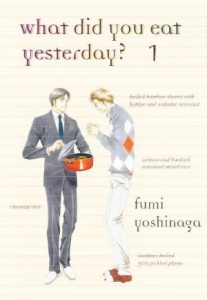
What Did You Eat Yesterday?, Vol. 1

April 10, 2014 by Sean Gaffney

By Fumi Yoshinaga. Released in Japan as “Kinou Nani Tabeta?” by Kodansha, serialized in the magazine Morning. Released in North America by Vertical.

This series has been demanded by the manga cognoscenti almost since it began serialization, and particularly since Yoshinaga’s other titles made it big over here (well, semi-big – no one’s comparing sales between Antique Bakery and Vampire Knight). The story of a gay couple and their everyday lives and eating habits, it’s an intriguing title if only as, unlike other BL titles released over here, it’s very much slice of life rather than oriented towards BL fans like many other series with gay men released in North America. In a couple of ways it reminded me of the Odd Couple, if you replaced Oscar with another, slightly different Felix and made them both gay.
whatdid1

Our three lead characters are Shiro, a dapper lawyer who looks younger than his age and loves bargains; Kenji, a hairstylist who seems to live around the emotional extremes; and the food that they eat each chapter. Yes, trust me, the food is a main character, as loving attention is devoted to purchasing, cooking and eating it. Indeed, at times it seems the only thing keeping the characters sane and happy is delicious meals, as they (as well as the minor side characters) have a bunch of personal problems and neuroses that are equally on display here.

I must admit, while I found Shiro to be endearingly dorky at times, particularly when he’s fretting about bargains, I’m not sure I’ve really warmed to him, as he’s rather hard to like. He’s still in the closet at work, and takes pains to remain so. He and Kenji fight a couple of times here, but nothing is particularly resolved, it more or less just goes ignored or gets papered over with delicious meals. Which I admit is very true to life and absolutely what some couples are like, but it doesn’t make for entertaining reading. Shiro works a little better when he’s dealing with others, such as the housewife he befriends who shares his love of food bargains.

As for Kenji, he seems nice enough, but there are undercurrents there as well. He’s far too passive and accepting in his relationship, though he does show signs of jealousy when he sees Shiro shopping at a bakery owned by his ex-girlfriend from college (an attempt to ‘play straight’ that didn’t last long). On the whole, though, he seems to be a bit more at peace with his life than Shiro is, though I’m sure he’d appreciate being more open about their relationship.

And the food? It looks delicious. Some chapters get recipes after them, but not all – Shiro thinks aloud as he cooks, letting us know the details of exactly what he’s doing. Cooking and eating seem to be the one thing that relieves him of his daily stress. I wouldn’t call this a ‘foodie manga’, though – the food is a spice, giving you another reason to read the story about two men and their everyday lives together. It’s definitely a title worth checking out, and features a lot of what people love about Yoshinaga. Just be aware that sometimes you’re going to want to shake the protagonists and say “What are you acting this way? Stop it!”
Filed Under: REVIEWS

Yukikaze

April 9, 2014 by Ash Brown

YukikazeAuthor: Chōhei Kambayashi
Translator: Neil Nadelman
U.S. publisher: Viz Media
ISBN: 9781421532554
Released: January 2010
Original release: 1984
Awards: Seiun Award

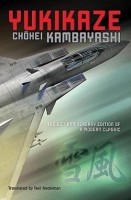
Chōhei Kambayashi is an award-winning, well-respected, and popular author of science fiction in Japan. His novel Yukikaze is one of his best known works and has even been adapted into a short anime series. It is also his first book to be translated and released in English. Originally published in Japan in 1984, Yukikaze would go on to win a Seiun Award in 1985. Kambayashi revisited and slightly revised the novel in 2002 in preparation for the volume’s sequel Good Luck, Yukikaze. Neil Nadelman’s translation of Yukikaze, published by Viz Media’s speculative fiction imprint Haikasoru in 2010, is based on this 2002 edition. Haikasoru’s release of Yukikaze also includes two very interesting essays about the novel by Ran Ishidou and Ray Fuyuki. Haikasoru also released an English translation of Good Luck, Yukikaze. Kambayashi has written a third volume in the series, Unbroken Arrow, which has yet to be translated.

Rei Fukai is one of the best pilots that the Faery Air Force has, surviving numerous encounters with the JAM, an alien force threatening humanity’s very existence. It has been more than three decades since the JAM first appeared on Earth. They were quickly pushed back to the planet from where their invasion was launched, however the prolonged war against the JAM continues with no obvious way to secure a complete victory. Survival is Fukai’s primary order and goal. A member of an elite squadron associated with the Special Air Force, his mission is to collect and record massive amounts of data about the JAM and their tactical capabilities. He is to return with that information no matter what, even if that means leaving his comrades behind to die. Because of this, he and the others in his squadron have earned the reputation of being cold-hearted bastards. Outside of himself, the only thing that Fukai believes in, cares about, or trusts is the Yukikaze, the highly advanced fighter plane that he pilots.

Kambayashi addresses several themes in depth in Yukikaze: what humanity’s purpose is within the context of war, what it means to be human or inhuman, and perhaps most strikingly what the impact of the convergence of human intelligence and the technology it develops could be. Yukikaze is an engaging war story, with kinetic and hazardous air battles that have terrifying implications, but like all great science fiction the novel is also incredibly thought-provoking. The members of the Faery Air Force, and especially those in the Special Air Force, are primarily made up of criminals, those with anti-social tendencies, and other people who are unwanted or have no place back on Earth. They are treated more like expendable resources than they are like human beings. The war and the fighting is so far removed from those living on Earth that they are mostly oblivious to what is occurring on Faery. Protecting Earth is a thankless task for those engaged in the war, people who have very few ties to the planet left but who have no better options other than to fight.

Considering all of this, it isn’t that surprising that Fukai and some of the other pilots would prefer their planes to people. I’ll admit, as unsociable as Fukai can be, I did like the guy. It did take me a couple of chapters to really settle into Yukikaze, but by the end of the novel I was completely engaged. A large reason behind that was because of Fukai and his development as the novel progressed as well as the evolution of the Yukikaze. In the chaos of war, Fukai’s relationship to his fighter is one of the only stable things remaining in his life, but even that begins to change. The members of the Faery Air Force are often called inhuman and compared to machines. At the same time those machines are becoming more and more advanced, raising the question of whether humans are even necessary anymore. The war against the JAM that humanity is waging may not be the only battle of survival that it should be concerned about fighting. After an interesting but somewhat clunky beginning, I was actually quite impressed with the depth of Kambayashi’s ideas in Yukikaze. I look forward to reading its sequel.

Filed Under: REVIEWS Tagged With: Chōhei Kambayashi, Haikasoru, Novels, Seiun Award, viz media, Yukikaze

Insufficient Direction by Moyoco Anno

April 8, 2014 by Anna N

Vertical is such a great publisher. I’m turning into even more of a fangirl because Gundam: The Origin, What Did You Eat Yesterday?, and Insufficient Direction all make me very happy. Some of the online reviews I’ve skimmed about this manga tend to focus more on the opportunity to find out what Hideaki Anno is like, but I always found myself more intrigued by getting a bit of an autobiographical glimpse into Moyoco Anno’s home life. She’s obviously fiercely intelligent, with a cynical edge to her manga like Happy Mania and Sakuran.

Insufficient Direction
is an affectionate and humorous look at what it is like to be married to the Ultimate Otaku. Anno portrays herself as a toddler wearing a one piece suit named Rompers and her husband looks like a bearded five-year-old with a beer belly, who is referred to as Director-kun. The manga details the hazards of geekdom, including how to shop for wedding outfits when one part of the couple wants to cosplay as Ultraman, anime song earworms, large collections of action figures and dvds, and superhero posing contests. Rompers gradually finds her personality slowly adjusting to Director-kun’s as she accidentally binge watches Gundam and finds herself making random geeky cultural references.

Anno’s style in Insufficient Direction is basically a cartoonish chibi way of drawing both her and her husband, but I was amused by the panels here and there where her normal manga style peeked through, when she was sitting around talking to her assistants or portraying a goofy story made up by her husband. Overall, this manga is an affectionate portrayal of a marriage, with give and take on both sides as Rompers tries to get Director-kun to be more healthy and Director-kun tries to get his wife to become the ultimate otaku bride.

There’s an essay by Hideaki Anno in the back of the book, and it is clear how much he respects his wife’s talent. I also appreciated the copious notes included in this volume, which are necessary for anyone who doesn’t have a ton of knowledge about Japanese tv shows and anime from the 60s and 70s. I enjoyed the episodic nature of this manga, which made it easy to pick up and put down if I was just in the mood to read a chapter or two. This is a must read if you enjoy slice of life manga, or if you are a fan of either Hideaki or Moyoco Anno.

Filed Under: REVIEWS Tagged With: Moyoco Anno, vertical

Google Cultural Collection features Osamu Tezuka!

April 8, 2014 by Brigid Alverson

The Google Cultural Collection has put up an exhibit on Osamu Tezuka—the first one to feature manga or anime.

Ken H files his con report on Anime Boston.

News from Japan: Mike Masick of TechDirt writes about concerns among doujinshi creators that the Trans Pacific Partnership will lead copyright holders to shut them down; he seems to be quoting from another article, but I can’t find a source. The print run for the 13th volume of Attack on Titan was a record-shattering 2.75 million. Along those lines, ANN translates a list published by the magazine The Tsukuru of the top print runs of manga from Kodansha, Shueisha, and Shogakukan.

Reviews

Ken H on vol. 1 of My Little Monster (Comics Should Be Good)
Alice Vernon on No Matter How You Look at It, It’s You Guys’ Fault I’m Not Popular (Girls Like Comics)
Rebecca Silverman on vol. 1 of Phantom Thief Jeanne (ANN)
Lori Henderson on Pokemon Black and White Pocket Comics (Good Comics for Kids)
Maggie on vol. 1 of Rensou (Organization Anti-Social Geniuses)
Kristin on vols. 29-31 of Slam Dunk (Comic Attack)
Matthew Alexander on vol. 5 of Triage X (The Fandom Post)

Filed Under: MANGABLOG

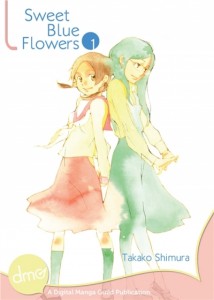
Sweet Blue Flowers, Vol. 1

April 8, 2014 by Sean Gaffney

By Takako Shimura. Released in Japan as “Aoi Hana” by Ohta Shuppan, serialized in the magazine Manga Erotics F. Released in North America digitally by Digital Manga Publishing.

DMP’s digital only line of books has been cruising along for some time, with a broad selection of BL, hentai, and obscure shoujo titles to choose from. Lately they’ve pulled a couple of fan favorites out of their hat, as they announced Kimagure Orange Road, the old-school 80s romantic comedy that was a huge influence on North American fandom (in both good ways and bad), and Aoi Hana, released here as Sweet Blue Flowers, which is a yuri manga by the creator of Wandering Son, Takako Shimura. It ran in the oddball magazine Manga Erotics F, and to a certain degree feels similar to Wandering Son – we’re introduced to a cast of schoolgirls, two of whom are clearly the leads, and discover their psyches, problems, and crushes.

aoihana1

Our two leads are Akira, who is bubbly, straightforward, and easy to get along with, and Fumi, who is tall, cries a lot, and starts off the volume devastated to find that her cousin, who had been sleeping with her, is getting married to a guy and hadn’t told Fumi as she’d have taken it badly. Which she does. Fumi tends to be an emotional wreck for most of this volume, but to be fair she’s going through many things that would leave a delicate persona an emotional wreck – besides her cousin, there’s the reappearance of childhood friend Akira in her life, and recalling just how much Akira meant to her as a child (I suspect these two are the ‘end couple’, but who knows?), and her tentative relationship with cool beauty Yasuko, who seems to be hiding a secret relationship from her past.

The fourth member of our ensemble is Kyoko, who has a fiance already picked out for her (male), but clearly has a giant crush on Yasuko. She’s also there so that Akira can bounce ideas off of, as Akira and Fumi are at two different schools, though the two schools quickly end up working together on a stage play. If Fumi is emotional leaning towards tears, Kyoko is emotional leading towards anger, and I do wonder if we’ll see her blow up at some point in the future. As for Akira, she’s not sure what to think, especially when Fumi comes out to her, but resolves to be supportive like a good friend. There’s no indication that Akira has any romantic feelings towards Fumi as of yet – she seems more the level headed older sister type, though a bit flakey to truly fit that role – but we’re only at Volume 1 of 8.

As with Wandering Son, Shimura’s manga is matter of fact about both its school life and its relationships. I’m not sure how much of this is meant to be the akogare ‘it’s just a phase’ type of teen girl relationship seen in many Japanese manga – certainly the three ‘Greek chorus’ girls we see with our heroes fall into that pattern – but Fumi’s past and present relationships are treated with seriousness and a depth of sadness – it’s really clear that Yasuko is not the true love she was looking for either. It’s easy to see why this series is beloved, and I look forward to seeing Fumi’s growth in future volumes.

Filed Under: REVIEWS

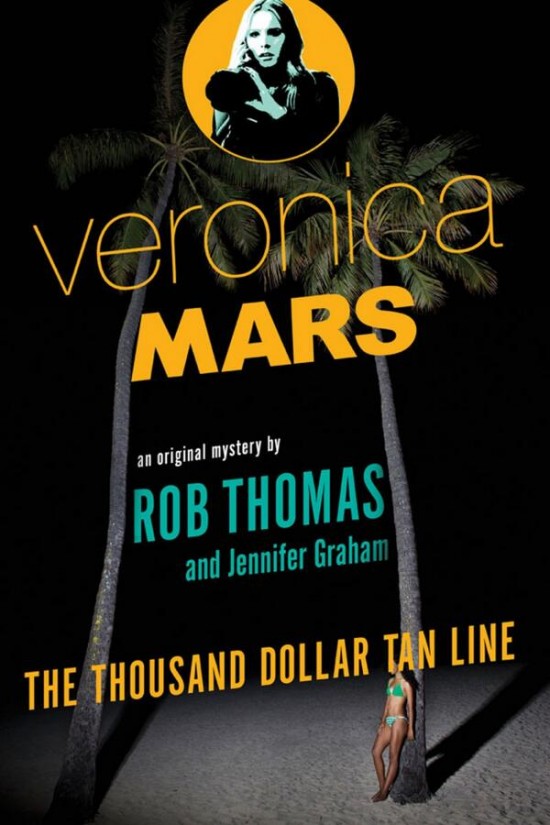
The Thousand Dollar Tan Line by Rob Thomas and Jennifer Graham

April 7, 2014 by Michelle Smith

thousand-dollarFrom the back cover:
Ten years after graduating from high school in Neptune, California, Veronica Mars is back in the land of sun, sand, crime, and corruption. She’s traded in her law degree for her old private investigating license, struggling to keep Mars Investigations afloat on the scant cash earned by catching cheating spouses until she can score her first big case.

Now it’s spring break, and college students descend on Neptune, transforming the beaches and boardwalks into a frenzied, week-long rave. When a girl disappears from a party, Veronica is called in to investigate. But this is no simple missing person’s case. The house the girl vanished from belongs to a man with serious criminal ties, and soon Veronica is plunged into a dangerous underworld of drugs and organized crime. And when a major break in the investigation has a shocking connection to Veronica’s past, the case hits closer to home than she ever imagined.

Review:
I have been a fan of Veronica Mars from almost the beginning. I tuned in about midway through the first season, after reading about the show on the sadly now-defunct Television Without Pity website, and vividly recall how it quickly became appointment television, and how absolutely riveted I was watching the season finales for the first and second seasons. I mourned the show when it was cancelled, and when a friend forwarded me the link to the Kickstarter campaign for the movie last spring, I was practically delirious with squee. Finally, a few weeks ago, I went to see the movie (after pre-ordering tickets the minute they were available, naturally).

I admit I was a little disappointed the first time through—ninety minutes just wasn’t enough time to flesh out both relationships and the case—but I did like it more upon a second viewing. The Thousand Dollar Tan Line continues the story from where the movie leaves off, and while I was a little unsure at first, I was soon won over by the characterization and the luxury of more time to spend with these characters, inhabiting their world.

A couple months have passed since the events of the movie. While Keith has been recuperating from his injuries, Veronica has been manning Mars Investigations, not that any challenging cases have come along. When a college girl in Neptune for spring break goes missing, however, a representative from the city’s chamber of commerce comes to the Mars family for help, since Sheriff Lamb’s inactivity on the case is resulting in canceled reservations and the loss of tourist revenue. Veronica’s ensuing investigation feels a lot like an episode from the third season of the show, from her dorm room interrogation of one suspect, to her tried-and-true drunk ditz routine at a party full of suspects. When a second girl with surprising ties to Veronica goes missing, things get even more complicated.

I thought the case was reasonably well executed, and the personal stakes for Veronica were intriguing, as well. Dialogue for all characters was great and easy to imagine in the actors’ voices; I even giggled a few times. I’ve seen some reviewers complaining about the book being written in the third person, saying that it lacks the same feel as the series, but I found plenty of internal contemplation from Veronica that read just like the show’s voiceover narration to me. (I can only imagine this will be even more true in the unabridged audio version, read by Kristen Bell. I bought that, too, and plan to listen to it very soon.) Plus, we’re able to get some insights into her thoughts that she might not even narrate, like this nice quote about Wallace: “There weren’t many people in this world who would let you be vulnerable and still believe you were strong.”

Speaking of Wallace, another complaint I’ve seen regards the lack of Logan in this book—he’s on an aircraft carrier thousands of miles away, so it only makes sense—but I actually welcome it. The movie put their relationship front and center; now it’s time to focus on Veronica’s other relationships. To that end, we get several really nice scenes involving Mac (who’s now a technical analyst for Mars Investigations), Wallace, and Keith. There was just enough Logan to my reckoning.

I did have one complaint of my own for a while—two if you count that nobody caught Gia Goodman being referred to as Gia Goodwin. I wished we saw Veronica embarking on an even bigger case, like actively working to expose the corruption at the Sheriff’s Office or to find out who was responsible for the hit and run that injured her father and killed Deputy Sacks. However, I eventually realized that there actually was a big plot on the go—bringing Keith around to the idea that Veronica is doing what she’s meant to do (as opposed to being safe, well paid, and bored as a New York lawyer) . The ultimate resolution here is extremely satisfying, and I find myself very excited at the notion that the two of them could really function as full-fledged partners on a future case. More Keith is always a good thing!

Currently, only a second book in this series is guaranteed, and it has neither a title nor publication date at present, though Rob Thomas has promised more Logan. I suppose it goes without saying that I really, really hope for more beyond that. Give the diehard fans an inch, and they’ll ask for a mile!

Filed Under: Books, Media Tie-In, Mystery, REVIEWS Tagged With: Rob Thomas and Jennifer Graham

Pick of the Week: Dawn of the Arcana & more!

April 7, 2014 by Michelle Smith, Ash Brown, Anna N, Sean Gaffney and MJ Leave a Comment

potw-4-8MICHELLE: Since I don’t have too many more chances to plug it, I’ll cast my vote for the second-to-last volume of Dawn of Arcana. I’ve really enjoyed this shoujo fantasy series, especially how the relationship between the romantic leads has developed. It definitely has a better plot than I was expecting, and I think it has reread potential.

ASH: My pick of the week goes to Ayano Yamane’s smutty and surprisingly humorous boys’ love fantasy Crimson Spell. With the third volume we’ve now reached the part of the manga that has never been seen before in English! I’m still very happy that SuBLime rescued this series.

ANNA: I’ll have to second Michelle’s choice. Dawn of the Arcana is a great shoujo series that should be more hyped up!

SEAN: I’m going with Magi again. I’ve always been a huge Arabian Nights fan, and this pastiche is a lot of fun, particularly now that they’ve added Sinbad.

MJ: My only strong choice this week is the eighth volume of Tsutomu Nihei’s Knights of Sidonia, out this week from Vertical. So often this manga is referred to as “confusing,” but I rather like the way that Nihei manages to lead me ever forward, not always with clarity so much as control. I am compelled as though in a dream, and that works for me stunningly well, as it turns out. I’ll be sticking with this series for the long haul.

What looks good to you this week?

Filed Under: PICK OF THE WEEK

My Week in Manga: March 31-April 6, 2014

April 7, 2014 by Ash Brown

My News and Reviews

Last week was one of Experiments in Manga’s slower weeks, but there was still some good stuff to be had, if I do say so myself. First up was the announcement of the Battle Angel Alita Giveaway Winner, which also includes a list of some of the cyborg manga available in English. Next came March’s Bookshelf Overload, which was not nearly as an absurd month for preorders as April will be for me. Finally, we get to the really good stuff. The honor of the first in-depth manga review for April goes to Inio Asano’s Nijigahara Holograph, one of my most highly anticipated releases for 2014. It’s a dark and disturbing work, but also very beautiful. Probably one of the best comics that I’ve read so far this year.

As for a few thing found online: Kim Hoang translated an interview of Kaoru Mori from the French site madmoiZelle. Sean Gaffney at A Case Suitable For Treatment investigates some of Japan’s recent manga bestsellers with an eye towards license requests. Akira Himekawa, the creative team behind the various The Legend of Zelda manga, will be featured guests at the Toronto Comic Arts Festival in May. The most recent Mike Toole Show takes a look at the three incarnations of To Terra… (or Toward the Terra), originally a manga by Keiko Takemiya. And last but not least, I was very excited to see that the Manga Connection blog has been rebooted! (Which reminds me that I really need to do some cleanup and maintenance on my resources page…)

Quick Takes

Bad Teacher's Equation, Volume 2Bad Teacher’s Equation, Volumes 2-3 by Kazuma Kodaka. While I wasn’t blown away by it, I did enjoy the first volume of Bad Teacher’s Equation well enough to track down the rest of the boys’ love manga. I had heard that the series gets better as it goes along, but surprisingly enough, so far I think I actually prefer the slightly more absurd first volume. I seem to like Bad Teacher’s Equation best when it is being particularly ridiculous. The more obviously comedic aspects of the series work better for me than when the story takes a more serious turn. I was also happy to see the feelings that Masayoshi held for his brother Masami dealt with fairly quickly so that the series’ focus could turn elsewhere. The dynamics of that particular relationship were probably the least interesting in the entire series. One of the things that Bad Teacher’s Equation really has going for it is the manga’s large ensemble cast–their interactions can be very entertaining to watch. And as a result, there’s actually some legitimate character development to be seen, too.

Black Jack, Volume 10Black Jack, Volumes 10-13 by Osamu Tezuka. Because of Tezuka’s Star System, it’s not uncommon to encounter a character from another of his series in a different role. Due to that, I was particularly looking forward to the story “Ashes and Diamonds” collected in the tenth volume of Black Jack because it features Hyakkimaru in the role of Dr. Hyakki. (Hyakkimaru is from Dororo, one of my favorite Tezuka manga.) These volumes also reveal more about Black Jack’s unfortunate family situation. According to an editor’s note in the eleventh volume, the edition of Black Jack upon which Vertical’s release was based was initially intended to be a “best of” collection. However, it proved to be so popular that, excepting for a few stories which were deemed objectionable or inappropriate in some way, the edition became a complete collection. In the past I’ve mentioned that I generally prefer the more realistic scenarios in Black Jack, but I’ve come to really enjoy the more fantastical chapters as well. On occasion, aliens, ghosts, and the supernatural all have their own part to play in the series.

Dictatorial Grimoire, Volume 2: Snow WhiteDictatorial Grimoire, Volume 2: Snow White by Ayumi Kanou. I was intrigued by the first volume of Dictatorial Grimoire. It was a mess, but it was a fun mess. I was less enamored with the second volume, though I do still plan on reading the third and final installment in the series. The story in Snow White is still a mess. This time though, for whatever reason, I found it to be more frustrating than entertaining. So much of Dictatorial Grimoire makes very little sense and Kanou relies heavily on standard tropes and character types. Because of this, the story developments don’t really come as a surprise and readers are left to fill in the actual details themselves as Dictatorial Grimorie progresses from one expected plot point to the next. As might be assumed from the subtitle, Snow White features heavily in the second volume. Sadly, his bustier does not. He does, however, gain a pair of glasses for all of those megane fans out there. (Yes, that would include me.) I also do appreciate that Hiyori, though she’s portrayed as somewhat brainless, is very competent and dependable when it comes to a fight.

Shinobi Life, Volume 1Shinobi Life, Volumes 1-6 by Shoko Conami. Shinobi Life was originally created as a one-shot story but ended up being developed into a thirteen-volume series, seven of which were released in English by Tokyopop. The transition from what was supposed to be a standalone story into an ongoing series is awkward. Story elements are dropped or forgotten (in some cases actually for the better) as the plot is forced into something that wasn’t initially planned. In general, Shinobi Life is a manga that I like much better in concept than I do in execution, although it does improve greatly as the series progresses. I specifically like the time travel elements. However, I’m much fonder of the series when it’s dealing with the past than I am of its contemporary storyline. The art, though not especially original, is pretty, too. All of the adults in Shinobi Life are despicable, so it’s probably not too surprising that the teenage leads have significant personal issues to deal with; their parents don’t make particularly good role models.

Filed Under: FEATURES, My Week in Manga Tagged With: Ayumi Kanou, Bad Teacher's Equation, black jack, Dictatorial Grimoire, Kazuma Kodaka, manga, Osamu Tezuka, Shinobi Life, Shoko Conami

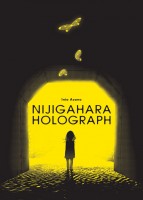
Nijigahara Holograph

April 6, 2014 by Ash Brown

Nijigahara HolographCreator: Inio Asano
U.S. publisher: Fantagraphics Books
ISBN: 9781606995839
Released: March 2014
Original release: 2006

Nijigahara Holograph, the third manga by Inio Asano to have been licensed in English, was one of my most highly anticipated manga releases for 2014. Originally published in Japan in 2006, Fantagraphics’ English-language edition is collected in an attractive, large-trim hardcover much like its other manga releases. I had previously read and greatly enjoyed Asano’s other manga currently available in English–What a Wonderful World! and Solanin, both published by Viz Media–so I was naturally interested in Nijigahara Holograph. But after seeing an early preview of the manga, I knew that I would need to read it no matter what. The sequence, taken from near the end of Nijigahara Holograph, was so chilling and unsettling and at the same time so striking and beautiful that it left a huge impression on me. I couldn’t get that short segment of Nijigahara Holograph out of my mind, my anticipation only growing stronger the closer the manga’s release date came.

Eleven years ago Arie Kimura, a young girl bullied by her classmates, fell down a well. As a result of her injuries she has been in a coma ever since. She told a story about a monster that lived in a tunnel along the Nijigahara embankment that would bring the world to an end, which terrified the other children. Arie’s accident is only one small part of an ongoing pattern of fear and violence. It isn’t a pleasant memory for anyone involved. Her friends, classmates, teachers, and family members have continued living their lives, but even more than a decade later they still can’t escape their pasts and the consequences of their actions. Some of them live in denial while others have tried to move on and to forget, but for some that is a complete impossibility. They have no choice but to remember, tormented with the knowledge of the suffering and pain caused by the unnecessary tragedy. The story of the monster in the tunnel may be more real than any of them could have imagined.

Nijigahara Holograph is a dark and disconcerting work. The manga deals with some very heavy subjects: suicide, incest, abuse, and sexual and physical violence, among many other serious matters. Instead of being sanitized or romanticized, Asano has created an intensely disturbing tale in which all of these elements are incorporated and intertwined. Nijigahara Holograph is open to several interpretations. It’s dreamlike ambiguity makes it difficult to determine just how much of Nijigahara Holograph is real and how much of it is simply the product of the damaged psyches of the characters. It cold be a waking nightmare, it could be some sort of afterlife, or it could all be true. It would almost be comforting if Nijigahara Holograph was a portrayal of hell or purgatory; the possibility that it shows the characters’ reality is terrible to contemplate. But life isn’t always pretty and sweet, and it certainly isn’t in Nijigahara Holograph where innocence, minds, and bodies have been shattered.

As horrifying and distressing as Nijigahara Holograph is, the manga is also extraordinarily compelling and engaging. It is both brutal and beautiful. Nijigahara Holograph is also remarkably complex and layered–the characters, their lives, and their stories connect and overlap, often in unexpected and surprising ways. This is reinforced by Asano’s artwork. Visual cues are incorporated throughout Nijigahara Holograph which tie the narrative together, drawing upon the similarities between the characters and their circumstances. The parallels found in both the artwork and the story of Nijigahara Holograph are marvelously effective, underscoring the ever-increasing sense of despair as the characters are caught in a never-ending cycle of anguish and misery. Nijigahara Holograph is a work that can be and maybe even should be read several times. The clues are all there from the very beginning, but many of the subtle connections can only be seen in retrospect. It’s challenging and not always an easy read, but Nijigahara Holograph is definitely a manga that I’ll be thinking about for quite some time.

Filed Under: REVIEWS Tagged With: Fantagraphics Books, Inio Asano, manga

License Request Day – More Bestsellers in Japan

April 6, 2014 by Sean Gaffney

Last time I did this, back in July, I lucked out – 20 of the 32 bestsellers were already licensed, so I didn’t have as much to talk about. No such luck here, as only 8 of the Top 30 I looked at this week are licensed in North America in some way, shape or form. Plus it’s the week where all the shoujo came out and hit the charts. Needless to say, there are a LOT of potential Shojo Beat series here. Shall we take a look?

Firt, let’s set aside what’s licensed. Kimi ni Todoke, One Piece, Fairy Tail, Skip Beat!, Watamote, and Haganai all come out here physically. Space Brothers is up on Crunchyroll’s site, and Kadokawa’s new Comic Walker is putting out Kagerou Days, so I am counting those as licensed, if only digitally.

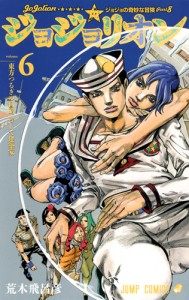
jojolion

JoJo Lion (Shueisha, Ultra Jump) is the latest in the JoJo’s Bizarre Adventure epic tale, and its popularity has been resurgent lately, what with the new anime. That said, JoJo’s manga did not sell well here, and this is technically Vol. 110 if you think of it as one big series. It’s possible Viz might take a flyer on this, but I’d be surprised.

Yokai Watch is a franchise based off of a 3DS game that seems to be a cross between Natsume’s Book of Friends, Doraemon, and Yu-Gi-Oh. This particular volume is the shonen manga version from Corocoro, there’s also a shoujo manga that just started in Ciao. Oh, and there’s an anime as well. If Viz does license this, it might be via Perfect Square.

Kobayashi ga Kawai Sugite Tsurai!! is a shoujo manga running in ShoComi, which just got an OVA series. It is not based on a light novel, despite the title translating as Kobayashi Has It Tough Being So Cute!!. It features a twin brother and sister who go to single-sex schools. One day, they decide to dress as each other and switch. The plot spins out from there. Sounds a bit odd for a Shojo Beat title, but you never know.

Moyashimon has just wrapped up in Japan, and Volume 13 is the final one. It was once licensed by Del Rey, but never got past Vol. 2. You could try asking Kodansha for a license rescue, but make sure you’re surrounded by witnesses so you don’t get demoned away.

ReRe Hello, a Betsuma manga from Shueisha, has what sounds like a very cliched premise. Hardworking earnest girl who’s lost her family, aloof boy who falls for her, etc. That said, it’s not like titles are licensed for originality here anyways. This has gotten some very positive buzz, and it’s only about 3 volumes to date, so it’s definitely a possibility.

honey

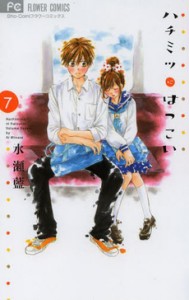
Hachimitsu no Hatsukoi translates as ‘First Love is Like Honey’, basically. It’s a childhood friend romance, and another ShoComi title. The artist used to be Tanemura’s assistant. This has gotten to Vol. 7, so it’s doing pretty well in Japan.

Hirunaka no Ryuusei is a Margaret title that is a teacher/student romance, so moving on.

Neko to Watashi no Kinyoubi has a very good chance of being licensed, mostly as it’s a title by Arina Tanemura, running in Margaret. Its male lead is quite young, and it also has a cousin romance, which would normally I suspect prevent it from coming out over here, but given its creator and her huge popularity I expect we’ll see it before long. Girl has a crush on guy but is too shy to say anything, her young cousin loves her. More on Tanemura later this post.

Ace of Diamond is a baseball manga that is now at 40 volumes, so moving on.

Ayakashi Hisen is another ChoComi title, this one with a touch of the supernatural to it, something Shojo Beat always likes. The premise seems quite similar to Kamisama Kiss and Demon Love Spell, so I would not be too surprised to see it, even though at 12+ volumes to date it’s hitting the top end for shoujo manga length.

I’m skipping the Kagerou Days anthology, which will only get licensed if the Kagerou Days manga is a big success here. Which means it would have to get into print somehow, I suspect.

31ai

31 Ai Dream is another title that would have no chance to come out over here except it’s by Arina Tanemura, who is doing multiple series in Japan at the moment. It runs in Melody, home to Gatcha Gacha and Ooku, so you know it’s going to be odd. The premise is dark: a former class president and idol of the school never confessed to her love. Now, at a reunion where she’s 31 years old, she sees he’s with another girl and decides to kill herself. Instead, she gets a medicine that sends her back to when she was 15. Readers of fanfics will recognize this premise as a standard ‘Peggy Sue’, but I’d be very interested to see where Tanemura goes with it. Want to see Shojo Beat get this, even if it’s an odd fit there.

Kaze Hikaru is actually licensed by Viz, something I keep forgetting. This is Vol. 35, which should see release here in 2027. But it is still coming out, I note, and I’m sure if more folks bought it it would come out more often.

Bokura wa Minna Kawaisou just had an anime start, so there’s potential there. The Kawai Complex Guide to Manors and Hostel Behavior is a seinen ‘apartment life’ manga from Young King Ours, and I’m honestly unsure which company it would fit best with. Shonen Gahosha does business with everyone, so…

Clover Trefle is the sequel to a very popular josei manga called Clover (no, not that one) (no, not that one either), which is 24 volumes and would need Viz to put those out first before its sequel comes out.

Sora no Otoshimono is relatively popular, and has an anime, but it’s 20 volumes, so I’d have to assume if it was going to be licensed it would be. It’d be the perfect Tokyopop title were they still around.

17-sai, Kiss to Dilemma is classic ShoComi smut. It has a lot of creeptasticness to it, apparently, so I’d suspect Shojo Beat would look at other titles first, as the smut they’re doing now is more of a josei bent than high schooler smut.

Shinrei Tantei Yakumo. See my entry for Sora no Otoshimono, then cut and paste it here, only ’11 volumes’.

silverspoon

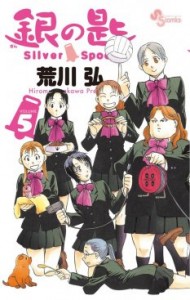
Silver Spoon is an incredibly heartwarming, funny and awesome manga that sadly continues to be about farming. Still, I am hoping Viz’s defenses are weakening against this series.

Mujaki no Rakuen is a Young Animal title, and I think far too lolita complex/pedophilic overtones for the North American market. It’s also a Peggy Sue, like 31 Ai Dream. A loser NEET is mocked at a reunion by his female classmates. Then he goes back in time to where they were all 5th graders, but with his adult memories/experiences. A lot of naked 5th grade girl art follows. Of all the titles I discuss here, this is the one I expect is least likely. And thank God for that.

Angel Heart’s ‘2nd Season’ is up to Vol. 8, but the 33 volumes of its first season were never licensed, and anyway, why would you license something with a dead Kaori? Finish the series with living Kaoris, City Hunter!

Lastly, Kuroko’s Basketball has all the drawbacks of sports manga in North America. That said, now that Slam Dunk is finished, it’s possible. It certainly has a large female fanbase over here.

And there you have it. Of all these titles, which do you want to see the most? Which do you think is the most likely to be announced? Which makes you weep bitter tears you’ll never see it?

Filed Under: FEATURES, LICENSE REQUESTS

  • « Go to Previous Page
  • Page 1
  • Interim pages omitted …
  • Page 613
  • Page 614
  • Page 615
  • Page 616
  • Page 617
  • Interim pages omitted …
  • Page 1048
  • Go to Next Page »
 | Log in
Copyright © 2010 Manga Bookshelf | Powered by WordPress & the Genesis Framework