• Skip to primary navigation
  • Skip to main content
  • Skip to primary sidebar
  • Home
  • About Us
    • Privacy Policy
    • Comment Policy
    • Disclosures & Disclaimers
  • Resources
    • Links, Essays & Articles
    • Fandomology!
    • CLAMP Directory
    • BlogRoll
  • Features & Columns
    • 3 Things Thursday
    • Adventures in the Key of Shoujo
    • Bit & Blips (game reviews)
    • BL BOOKRACK
    • Bookshelf Briefs
    • Bringing the Drama
    • Comic Conversion
    • Fanservice Friday
    • Going Digital
    • It Came From the Sinosphere
    • License This!
    • Magazine no Mori
    • My Week in Manga
    • OFF THE SHELF
    • Not By Manga Alone
    • PICK OF THE WEEK
    • Subtitles & Sensibility
    • Weekly Shonen Jump Recaps
  • Manga Moveable Feast
    • MMF Full Archive
    • Yun Kouga
    • CLAMP
    • Shojo Beat
    • Osamu Tezuka
    • Sailor Moon
    • Fruits Basket
    • Takehiko Inoue
    • Wild Adapter
    • One Piece
    • After School Nightmare
    • Karakuri Odette
    • Paradise Kiss
    • The Color Trilogy
    • To Terra…
    • Sexy Voice & Robo
  • Browse by Author
    • Sean Gaffney
    • Anna Neatrour
    • Michelle Smith
    • Katherine Dacey
    • MJ
    • Brigid Alverson
    • Travis Anderson
    • Phillip Anthony
    • Derek Bown
    • Jaci Dahlvang
    • Angela Eastman
    • Erica Friedman
    • Sara K.
    • Megan Purdy
    • Emily Snodgrass
    • Nancy Thistlethwaite
    • Eva Volin
    • David Welsh
  • MB Blogs
    • A Case Suitable For Treatment
    • Experiments in Manga
    • MangaBlog
    • The Manga Critic
    • Manga Report
    • Soliloquy in Blue
    • Manga Curmudgeon (archive)

Manga Bookshelf

Discussion, Resources, Roundtables, & Reviews

Blog

Ani-Imo, Vol. 1

November 21, 2014 by Sean Gaffney

By Haruko Kurumatani. Released in Japan by Kodansha, serialization ongoing in the magazine Aria. Released in North America by Yen Press.

The inside color pages of this book helpfully reveal that the title is short for “Big Brother Becomes Little Sister, Little Sister Becomes Big Brother”, which should help to explain why Yen went for the shorter version. The author, Haruko Kurumatani, has bounced around the shoujo world for many years, usually in Shogakukan’s Shoujo Comic, but I believe this is her first North American license. A quick visit to a page listing her works might tell you why – they’re all riding the edge of what’s appropriate for that age group, and they all seem to focus on ‘forbidden’ passions, particularly between siblings. And that’s what we have here, even though the story makes it clear right away that they are only stepsiblings – in fact, that’s the discovery that drives the plot.

aniimo1

But there’s a twist, as this isn’t just a romantic comedy about pseudo-incest, it’s also a bodyswap comedy. We meet our hero, Youta, as the older brother of a set of “twins”, and he’s the sort of over-the-top “I love my sister so much” type we’ve seen time and again in these sorts of manga. His sister Hikaru is another type, though they aren’t usually paired together – she’s introverted to the point where her mere presence terrifies her family, and seems a bit overattached to her brother, the only one who “gets” her. The twist is that when the stepsiblings reveal comes, Youta is the only one in the family who didn’t know about it… and Hikaru is horrified to find he really *does* only love her like a sister. She then runs off to get hit by a car, he tries to save her, they end up in the hospital, and well, yeah. Bodyswap.

If you’re thinking this sounds out of place in a shoujo manga, you’re not alone, but pseudo-incest in shoujo has been around forever – anyone remember Marmalade Boy? – and Aria is somewhat ‘edgy’ for a shoujo title. In any case, that’s all in Chapter 1, and the rest of the volume is the fallout from what turns out to be the actual big reveal: Hikaru, now in Youta’s body, doesn’t want to switch back, really wants to have sex with her “sister”, and is something of a sadist (in other words, Youta’s personality now matches the character design he’s gotten). He’s helped along by a somewhat perverse doctor (who reminds me of the doctor from Excel Saga in some ways) and the girl in school that Youta always had a crush on, who turns out to be sadistic as well – and gay, with designs on Hikaru’s body. (The character design is also worth noting – the girls look extra young, appearing to be in elementary school even though they’re all high schoolers.)

How much you like this depends on how much you like comedy with overtones of creepy humiliation. I won’t deny there are a few situations here where the sheer ridiculousness of what was happening made me smile, but in the end, I couldn’t help but feel that everyone in the book bar Youta was terrible – and Youta’s a siscon! (I was highly amused at the girls in school noting he’s attractive and nice, and they all just avoided him as his obsession with his sister was beyond creepy.) Take these terrible people and turn them loose in a manga which once again has the offputting “once siblings find out they’re not related, it’s totally OK for them to bang” vibe and you have, oddly, a shoujo manga that I would only recommend to young men who like this sort of vaguely sexual comedy.

Filed Under: REVIEWS

More from Masashi Kishimoto

November 20, 2014 by Katherine Dacey

zone00Viz has picked up Zone-00, originally licensed by Tokyopop, as a digital release.

Naruto creator Masashi Kishimoto talks about his plans for the next few months, which include a Naruto spinoff that will launch in April, some other Naruto-related business, and spending some quality time with his wife and child. He will start working on a brand-new series in the summer, but he cautions fans that he is turning 40 and may not be up to the rigors of another monthly series.

Wondering what’s in the pipeline for next year? The Fandom Post shares VIZ’s April 2015 release list.

If you’re a Weekly Shonen Jump reader, you may have noticed that VIZ just added a new title to the mix, Takujo no Ageha: The Table Tennis of Ageha. In the coming weeks, VIZ will launch two more series: Ryohei Yamamoto’s E-ROBOT (11/24) and Nobuaki Enoki and Takeshi Obata’s Gakkyu Hotei: School Judgment (12/1).

The Manga Bookshelf gang strongly recommend the latest volume of Takehiko Inoue’s Real, which arrived in stores this week, and preview next week’s coming attractions.

The Q2 gallery in Los Angeles threw a party to commemorate the 30th anniversary of Dragon Ball‘s publication.

In her latest House of 1000 Manga column, Shaenon Garrity explores the GEN Manga catalog.

Good news: translator Jocelyne Allen is posting reviews again, focusing on offbeat, funny, and weird manga that haven’t yet crossed the Pacific. On her nightstand: Mahoshojo Ore, a series featuring magical girl men, and Yume Kara Sameta, a collection of short stories by Natsujikei Miyazaki.

News from Japan: Ken Akamatsu, Tetsuya Chiba, and Hideaki Anno were among the manga and anime insiders who were guests at the first meeting of the Japanese Parliamentary Association for manga, anime, and games, a.k.a. Manga Giren. The Association, which is mostly made up of councilors from the Liberal Democratic Party, will promote tax breaks for the industry and work toward relaunching the mothballed International Media Art General Center.

Rei Toma, author of Dawn of the Arcana, will be launching a new series in the February issue of Shogakukan’s Monthly Cheese! Also in the works: an anime adaptation of Rumiko Takahashi’s Rin-ne, which will debut in spring 2015.

Reviews: Remember Top Shelf’s AX anthology? One of the stand-out contributions, “Rainy Day Blouse and The Umbrella,” was by Akino Kondoh. Indie publisher Retrofit Comics has just published a new collection of her stories in English, with translations by manga scholar Ryan Holmberg. Alex Hoffman has a review at Sequential Slate.

Sean Gaffney on vol. 1 of Ani-Emo (A Case Suitable for Treatment)
Leroy Douresseaux on vol. 12 of Blue Exorcist (Comic Book Bin)
Lesley Aeschliman on vol. 23 of Full Metal Alchemist (Lesley’s Musings on Anime & Manga)
Sakura Eries on vol. 16 of Goong (The Fandom Post)
Megan R. on Lovers in the Night (Manga Test Drive)
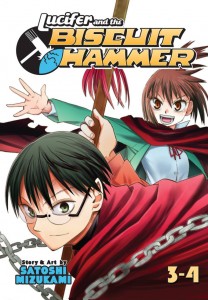
Sean Gaffney on vols. 1-2 of Lucifer and the Biscuit Hammer (A Case Suitable for Treatment)
Lesley Aeschliman on vol. 24 of Naruto (Lesley’s Musings on Anime & Manga)
Nicholas Smith on Naruto (Ka Leo)
Ken H. on vols. 6-7 of No. 6 (Sequential Ink)
Mad Manga on Takujo no Ageha (Cartoon Geek Corner)
MJ on They Were Eleven (Manga Bookshelf)
Matthew Warner on vol. 00 of Ubel Blatt (The Fandom Post)

Filed Under: MANGABLOG Tagged With: GEN Manga, viz media, Weekly Shonen Jump

Manga the Week of 11/26

November 20, 2014 by Sean Gaffney, Ash Brown, MJ, Anna N and Michelle Smith 1 Comment

SEAN: The last week of the month is usually a nice breather after the deluge of the previous three weeks, giving us a chance to catch up on the piles of manga still out there. But there are still a few tasty bits of manga for (American) Thanksgiving.

opus

We’ll start with the tastiest, the long-awaited release from Dark Horse of Satoshi Kon’s Opus. It’s an omnibus of the original 2-volume Japanese release, and also apparently fairly metatextual. It’s also by Satoshi Kon, which is reason enough to buy it.

ASH: Oh! I knew this one was in the works, but hadn’t realized it was being released so soon!

MJ: Wow, this snuck up on me!

ANNA: This does sound interesting.

SEAN: From the sublime to the ridiculous, as Kodansha has the 2nd omnibus release of Attack on Titan Junior High. A lot of fans of the regular Titan series I think found this humor a bit too broad for their tastes, but I loved it, and appreciated the focus it gave to some of the minor characters from the main series. For anyone who likes comedy gag manga.

ASH: I agree. The first omnibus was surprisingly entertaining.

SEAN: Fairy Tail has its 44th volume, and we’re only 4 months behind Japan now!

There’s also the 2nd volume of xxxHOLIC Rei, where I keep hoping they’ll ignore that something is clearly wrong with this universe and keep giving me wonderful short unconnected supernatural stories.

MJ: I’m totally on board with whatever is wrong with this universe, and definitely looking forward to this volume! Hurray!

SEAN: If Syaoran shows up, I’m blaming you.

ANNA: I never thought the day would come when I would be very ambivalent about a CLAMP book, but here we are.

MICHELLE: I’m not exactly ambivalent about it, but I never finished the first xxxHOLiC, so Rei is sort of putting the cart before the horse for me.

SEAN: Cardfight!! Vanguard has its fourth volume come out from Vertical Comics. I hear the manga and anime are quite different.

Lastly, we have a digital only release (the physical volume is out in February), but it’s one we have been waiting almost 20 years for. The final volume of Neon Genesis Evangelion drops next week, and fans keep wondering if its finale will be slightly less apocalyptic and bleak than the anime or movies. We’ll find out soon.

Anything whet your appetite as you wait for all that turkey?

Filed Under: FEATURES, manga the week of

Review: Barakamon, Vol. 1

November 19, 2014 by Katherine Dacey

Yoshino_Barakamon_V1_TPBarakamon, Vol. 1
By Satsuki Yoshino
Rated T, for Teens
Yen Press, $15.00

Barakamon is a textbook fish-out-of-water story: an impatient city slicker finds himself in the country where life is slower, folks are simpler, and meaningful lessons abound. Its hero, Seishuu Handa, is a calligrapher whose fiery temper and skillful but unimaginative work have made him a pariah in Tokyo. His foils are the farmers and fishermen of Gotou, a small island on the southwestern tip of Japan that’s inhabited by an assortment of eccentrics, codgers, and naifs.

If this all sounds a little too familiar, it is; you’ve seen variations on this story at the multiplex, on television, and yes, in manga. (I think I liked it better when it was called Cold Comfort Farm, and starred Kate Beckinsale and Rufus Sewell.) Satsuki Yoshino does her best to infuse the story with enough humor and warmth to camouflage its shopworn elements, throwing in jokes about internet pornography, dead frogs, and bad report cards whenever the story teeters on the brink of sentimentality. The mandates of the genre, however, demand that Handa endure humiliations and have epiphanies with astonishing regularity—1.5 times per chapter, by my calculations.

From time to time, however, Yoshino finds fresh ways to show us Handa’s slow and fitful progress towards redemption. The first chapter provides an instructive example: Handa angrily dismisses his six-year-old neighbor Naru when she declares his calligraphy “just like teachers write.” After seeing Naru’s wounded expression, Handa chastises himself for lashing out at a kid. Handa never musters an apology to Naru, but makes restitution by joining her for a series of small adventures. The experience of swimming in the ocean, scrambling over a wall, and watching a sunset prove liberating, leading Handa to an explosive outburst of creativity punctuated by a few high-flying kicks. (Now that’s what I call action painting.) The results are messy, but the message is clear: Handa has the potential to be a genuine artist if he can connect with his playful side.

Like the story, the artwork is serviceable if not particularly distinctive. Yoshino creates enough variety in her character designs that the reader can easily distinguish one islander from another—an important asset in a story with many supporting players. Yoshino’s grasp of anatomy, however, is less assured. When viewed from the side, for example, Handa’s Tokyo nemesis has a cranium like a gorilla’s and a chest to match; when viewed from above, however, the Director appears small and wizened. Other characters suffer from similar bodily distortions that exaggerate their necks, arms, and torsos, especially when Yoshino attempts to draw them from an unusual vantage point.

Yoshino is more successful at creating a sense of place. Through a few simple but evocative images of the harbor and coastline, she firmly establishes the seaside location. She also uses architectural details to suggest how old the village is; though locals enjoy such modern conveniences as television, their homes look otherwise untouched by modernity. Yoshino is less successful in creating a sense of space, however. It’s unclear, for example, if Naru lives a stone’s throw from Handa’s house—hence her frequent intrusions—or if she lives a mile down the road.

The dialogue, too, plays an important role in establishing the setting. Faced with the difficult task of rendering the Gotou dialect, translators Krista and Karie Shipley chose a broad Southern accent for the local population. That decision neatly illustrates the cultural divide between Handa and his neighbors, but at the cost of nuance; a few jokes that hinge on vocabulary simply can’t be conveyed by this particular adaptation strategy. (The Shipleys’ translation notes are helpful in demystifying these exchanges.) Most of the punchlines, however, need no such editorial interventions to enjoy; certain elements of city slicker/country bumpkin humor transcend culture.

My verdict: Barakamon has enough charm and energy to engage the reader, even if the story isn’t executed with enough precision or subtlety to transcend the basic requirements of the fish-out-of-water genre.

Filed Under: MANGABLOG, REVIEWS Tagged With: Barakamon, yen press

Boogiepop Returns: VS Imaginator, Part 2

November 19, 2014 by Ash Brown

Boogiepop Returns: VS Imaginator, Part 2Author: Kouhei Kadono
Illustrator: Kouji Ogata

Translator: Andrew Cunningham
U.S. publisher: Seven Seas
ISBN: 9781933164236
Released: October 2006
Original release: 1998

Boogiepop Returns: VS Imaginator, Part 2 is the third volume in the Boogiepop light novel series written by Kouhei Kadono and illustrated by Kouji Ogata. It is also the third out of four Boogiepop novels to have been released in English. Translated by Andrew Cunningham, the second part of Boogiepop Returns was published by Seven Seas in 2006. In Japan, the volume was released in 1998, the same year as the first two books in the series. Boogiepop Returns is actually a two-part story, and so after reading the first novel in the arc I was particularly anxious to read the second. With all of the setup and steadily increasing tension in the first part, the story needed a conclusion and the final volume of the arc promised to deliver just that. Boogiepop is kind of an odd series which freely mixes the surreal with the real, making use of multiple genres in the process. But it’s also a series that I find peculiarly appealing because of that and because of its willingness to explore the more troubling aspects of the psyche.

A year ago a young woman committed suicide under the influence of an entity known only as the Imaginator. Her life was ended when, being pursued by Boogiepop, the Imaginator failed to change the world through her. But now the Imaginator has returned to inspire yet another person, this time with much greater success. Asukai Jin, with the Imaginator as a catalyst, has begun to use his unique abilities to not only read the hearts of other people but to manipulate them as well. Meanwhile, the mysterious Towa Organization also has a vested interest in the direction humankind is taking. Spooky E, a synthetic human and one of its agents, is actively hunting Boogiepop in order to prevent the spirit’s interference with the organization’s affairs. In an effort to draw Boogiepop out, he has arranged for the love-besotted Taniguchi Masaki to serve as a decoy by impersonating Boogiepop. Masaki didn’t initially realize he was being used as a pawn, and even if he had there was very little he could do to stop the developing crisis.

Despite the title being Boogiepop Returns, the real Boogiepop actually plays a very small albeit very important role in the two novels and is mostly relegated to the edges of the narrative while the other players take center stage. Granted, when Boogiepop finally does make an entrance during the second volume’s finale, it’s pretty spectacular. But until then the story largely follows the more mundane characters, the seemingly normal teenagers who have been caught up in the battle over the fate of humanity and who frequently are the victims of the supernatural and superhuman forces at work. At the same time, they are also dealing with their own personal issues and troubled relationships. In many ways I actually found these smaller struggles to be more emotionally immediate than the novel’s grander schemes, probably because they’re more relatable and the more realistic elements help to ground the stranger aspects of the Boogiepop series.

The doomed love story between Masaki and the girl he likes, Orihata Aya, has always been an important part of Boogiepop Returns but it become especially prominent in the second volume. It is because of his love for her that he “becomes” Boogiepop, his feelings and the burgeoning romance becoming closely entwined with the larger events of the novel. The second part of Boogiepop Returns has some fantastic fights and action sequences, but the  novel also has deeper contemplative and philosophical aspects to it as well. Employing the trappings of science fiction and the supernatural, the Boogiepop novels explore thought-provoking themes of free will, personal identity, the individual’s place within society, sacrifice, and what it truly means to be human. The characters are all damaged or suffering in some way but it’s how they choose to live their lives despite that pain that makes them who they are and makes Boogiepop Returns such an interesting and at times even compelling story.

Filed Under: REVIEWS Tagged With: Boogiepop, Kouhei Kadono, Kouji Ogata, Light Novels, Novels, Seven Seas

Morning Manga Spotlight: They Were Eleven

November 18, 2014 by MJ Leave a Comment

they-were-eleven-floppiesI’ll admit that it’s been tough trying to curb my “classic” inclinations when it comes to recommending manga for my teen students, and there are days when it becomes impossible. Today is one of those days, as I find myself irresistibly drawn to the work of Moto Hagio, specifically her early short series, They Were Eleven.

Originally serialized over three issues in Shojo Comic in 1975, They Were Eleven follows a young student named Tada through the final stage of his entrance exam to the elite Galactic University. From my write-up of the series at Comics Should Be Good:

“Sometime in the distant future, hopeful students from all over the galaxy gather for the difficult entrance exams at the elite Galactic University. For the final test, [the students] are divided into computer-generated groups of ten students each and sent off to various locations where they must survive as a group for fifty-three days without pushing the provided emergency button, which immediately summons a rescue team, resulting in automatic failure of the entire group. One group is deposited on a derelict ship, devoid of engine power and filled with dangerous explosives, which they must safely maintain in orbit for the length of the test. As the group arrives on the ship, however, it becomes apparent that there are eleven students rather than the assigned ten, indicating that one of them must be an impostor. Potential disasters pile up quickly, including an unstable orbit and the presence of a deadly disease, and in the midst of it all the group begins to suspect Tada, a young Terran (Earth descendent) with intuitive powers and uncanny knowledge of the ship’s layout, of being the eleventh member.

With the ship’s mechanical problems and deadly health threat driving things forward, it is young Tada’s story that takes focus, as he struggles to understand his relationship with the decrepit ship while also attempting to clear himself of the other students’ rapidly-mounting suspicion. Despite the fact that his intuition saves the group early on, it also becomes the greatest point of contention amongst the group, and as more about Tada’s own history comes to light, each revelation seems to point more clearly to his potential guilt.”

fssAs a psychological drama wrapped in a sci-fi package, They Were Eleven is glorious, and benefits particularly from Hagio’s clear, expressive artwork and her minor obsession with gender identification. On the flip side, like a lot of older manga, the gender discussion can be problematic. Again from my write-up:

“Two of the characters in the story are species whose gender is not determined until adulthood. One of these, Frol, who is decidedly feminine in appearance (referred to hereafter as “her” and “she”), is taking the test because she will be allowed to become male if she passes, a privilege otherwise only granted to a family’s oldest child. On Frol’s planet, “men govern and women work,” and becoming a woman would mean relinquishing all autonomy and joining the harem of the neighboring lord (eighteen years her senior), so it is understandable why she would want to instead take advantage of her society’s male privilege and collect a harem of her own. Still, it’s a little bit jarring that when the story finally reaches a point where it becomes clear that they may very well not pass the test, the only other alternative presented to Frol is for her to leave her own people, become a woman, and marry someone else.

The fact that in every scenario her future as a woman leads directly to marriage is not a fantastic message for today’s young girls (nor is the fact that Frol, the story’s only obviously “feminine” character, is depicted as capricious and “simple”) and it is this that dates the series more than anything else.”

This attitude towards femininity is perhaps best reflected in the tagline of Viz’s Four Shoujo Stories, in which They Were Eleven appeared alongside works by Keiko Nishi and Shio Sato. “It’s Not Just Girls’ Stuff Anymore” the cover proudly proclaims, assuring us in advance that its content is smarter and better than that (“It’s for girls, but it’s still good, I swear!”)

So why am I recommending this to teens, you’re asking? I’m recommending it because it’s beautifully-drawn, fantastic storytelling. I’m recommending it because it was part of a female-led revolution in girls’ comics, which had previously been drawn mostly by men. I’m recommending it because, despite its issues, it presents us with a very stark view of Hagio’s own struggles as a woman and an artist in a time not so far removed from the present, and the hopelessness of a world in which the only imaginable destination for a woman is marriage (also not so far removed from the present). Most of all, though, I’m recommending it, because it’s a great comic.

They Were Eleven was published twice by Viz, first as a series of four floppies in 1995, and then later in Four Shoujo Stories. Both are out of print (though the floppies show up often on eBay, which is how I acquired mine). Fortunately for my students, I own the series in both formats, so they have a couple of options to choose from. Fortunately, too, some of Hagio’s other works are available in English now as well, thankfully in print, thanks to Matt Thorn and Fantagraphics (students: these are available from the MJLibrary as well). I hope we’ll see a lot more!

Filed Under: Morning Manga Spotlight

Lucifer and the Biscuit Hammer, Vols. 1-2

November 18, 2014 by Sean Gaffney

By Satoshi Mizukami. Released in Japan by Shonen Gahosha, serialized in the magazine Young King Ours. Released in North America by Seven Seas.

(This review contains spoilers.)

I reviewed the first half (i.e., Volume 1) of this series when it was digitally released by JManga a while back, but want to revisit it. It’s a new translation, and we get the addition of the 2nd volume, where things start getting a lot more serious. But also it’s a story that really holds up well when you reread it. What appears to be a standard story of superheroes uniting to defend the planet has a lot more going on under the hood, and you wonder if our hero and heroine are actually the least trustworthy people in the entire book… or if they’re just angsty teenagers dealing with life for the first time.

lucifer1

Yuuhi is a really fascinating and messed up character. The second time around I wasn’t as fond of the resolution of his past childhood traumas, which seemed a bit too pat to me, but then that was the point – Yuuhi was so angry that all the hardships he grew up with that twisted him into what he currently is could be resolved without his input or presence. He’s clever and calculating, and has latched onto Samidare in order to gain a tether he lost when his grandfather apologized, but there’s also a lack of an emotional center in the young man, something the series will slowly draw out of him, starting with the shocking events at the end of the first omnibus.

Biscuit Hammer is hardly the first series to introduce an amazingly cool and competent cast member and then kill them off – it’s actually a very common Japanese trope – but all the beats are handled well, including his nascent romance with Samidare’s sister (who is fantastic throughout) and the mere fact that he’s so powerful – he’s a giant threat to Yuuhi’s plans of world destruction, and thus his death settles on Yuuhi like a giant ball of guilt (with, of course, perfect timing in his younger brother immediately showing up). For the audience, the death of Hangetsu lets us know this series is going to be more seinen than shonen, and that we shouldn’t get too attached to our main cast.

As for Samidare herself, she’s just as screwed up as Yuuhi, but in a more extroverted way. Fatalistic due to her illness and its remission while she has powers, she’s determined to make the most of her short life, and one of the best (and most chilling) moments in the book is when she turns to Yuuhi, smiling, and asks him to die with her. It’s especially chilling as she’s such a great person otherwise – gung ho, cheerful, smart – and you can absolutely see why Yuuhi has started to fall for her.

There’s a lot more to discuss, such as the fact that the Yuuhi and Samidare that show up in dreams seem to be entirely different characters to their waking selves, or the suffering that is Noi’s daily life, where he deals with the fact that a talking lizard is the only sane character in this series – but again, that’s the beauty of a series like this. It has enough complexity to reward a reader more than just on a first read through. I suspect we’ll be seeing a lot more Knights in the next omnibus, and that makes me happy. Enjoy this twisted take on superheroes saving the Earth.

Filed Under: REVIEWS

Naruto creator speaks

November 17, 2014 by Brigid Alverson

Shonen Jump’s latest “Jump Start” manga are Ryohei Yamamoto’s E-ROBOT and Nobuaki Enoki and Takeshi Obata’s Gakkyu Hotei. The magazine will run the first three chapters of each series.

In an interview with the Asahi Shimbun, Naruto creator Masashi Kishimoto talks about how he was different as a child than the character he created:

“I was unable to do well in school and felt a strong sense of inferiority,” he said. “When Naruto said, ‘I will be Hokage,’ people surrounding him laughed at his dream. Since childhood, I also told others that I would be a manga artist but had no foundation.

“Unlike Naruto, I did not have the courage to declare that I will become a manga creator at any cost. So I would just say in my mind, ‘It may be possible.’”

Erica Friedman updates us with a new Yuri Network News post at Okazu.

News from Japan: The Osaka Prefectural Police have filed charges against 16 people, including manga-ka Rensuke Oshikiri, in the Hi Score Girl copyright infringement case. A new volume of Doraemon Plus will be released on December 1, the 80th birthday of creator Fujiko F. Fujio. A One Piece spinoff, One Piece Party, will launch in the January issue of Saikyo Jump; it will feature super-deformed versions of the One Piece cast. The next issue of Morning magazine will include a one-shot by Go Nagai, titled Kaiketsu Furo Zukin (The Amazing Bath Hood).

Reviews: Ash Brown takes us through a week of manga reading at Experiments in Manga. Three Steps Over Japan reviews the Osamu Tezuka manga Neo Faust, which has not been published in English.

Connie on vol. 2 of Castle Mango (Slightly Biased Manga)
Matthew Warner on vol. 8 of Happy Marriage?! (The Fandom Post)
A Library Girl on vols. 1-5 of Kobato (A Library Girl’s Familiar Diversions)
Connie on vol. 2 of Moon and Blood (Slightly Biased Manga)
Connie on vol. 2 of Neon Genesis Evangelion (3-in-1 edition) (Slightly Biased Manga)
Leroy Douresseaux on vol. 1 of Resident Evil: The Marhawa Desire (The Comic Book Bin)
Sean Gaffney on vols. 9 and 10 of Ranma 1/2 (A Case Suitable for Treatment)
Connie on vol. 10 of Rin-Ne (Slightly Biased Manga)
Connie on vol. 9 of Sailor Moon (Slightly Biased Manga)
A Library Girl on vol. 1 of Soulless (A Library Girl’s Familiar Diversions)
Matthew Warner on vol. 1 of Void’s Enigmatic Mansion (The Fandom Post)

Filed Under: MANGABLOG

Pick of the Week: So Many Books, So Little Time

November 17, 2014 by Sean Gaffney, Ash Brown, Michelle Smith, Anna N and MJ 1 Comment

potwSEAN: This may be the last chance I get to do it, so I apologize to all the other worthy series out this week. But my pick of the week is Higurashi: When They Cry: Dice-Killing Arc. An epilogue that delves further into the psychology of Rika Furude, it’s a lot darker than you’d expect, and while some of its motivations don’t make sense to me, it’s a fitting conclusion to the series (barring other side-stories that might get licensed in future). Also, Rika’s mom!

ASH: So many great manga are being released this week that it’s difficult to pick just one. But then I realized that the most recent volume of Takehiko Inoue’s Real was an option and that I couldn’t choose anything else. Real is a fantastic series and, in my opinion, one of the best comics currently being released in English.

MICHELLE: It is no exaggeration to say that I literally make a noise of delight upon realizing that another volume of Real is due for release, so I am going to have to go with Ash on this one.

ANNA: I knew there would be a lot of love for Real this week, which it certainly deserves. I’m going to make my pick the fourth volume of Gangsta though. This stylish seinen manga alternates between being gritty and heartwarming, and I’m looking forward to the further adventures of Worick and Nik as they navigate issues with the local mafia, the city of Ergastulum, and their own traumatic pasts.

MJ: Okay, wow, there are so many things here for me to choose from, I honestly do not know what to do. I’m always thrilled to see new volumes of Ooku and Real. They accumulate so slowly, I feel that I must carefully savor each new volume. And with both a new volume of Pandora Hearts *and* the art book Pandora Hearts Odds & Ends, I’m running the risk of fangirl overload this week. But the cover art alone has persuaded me to go with Yen Press’ new manhwa series, Milkyway Hitchhiking. I had a lot of love for the author’s earlier series One Fine Day (and I still maintain that if people aren’t actively ‘shipping No-Ah/Aileru, I don’t know what they’ve been doing with their time). The more I think about a new series from Sirial, the giddier I become. Gimme, gimme. Like. Now.

What looks good to you this week?

Filed Under: PICK OF THE WEEK

My Week in Manga: November 10-November 16, 2014

November 17, 2014 by Ash Brown

My News and Reviews

Last week I posted two reviews at Experiments in Manga. The first review of was of Ajin: Demi-Human, Volume 1 written by Tsuina Miura and illustrated by Gamon Sakurai. It’s a manga with a rather dark atmosphere that deals with immortals, which is right up my alley. The first volume was a good start to the series; I’m looking forward to seeing how it continues to develop. The second review was of The Legend of Bold Riley, created by Leia Weathington and illustrated by a number of different artists. The review was actually the final review in my Year of Yuri project, so over the weekend I posted a wrap-up for the project as a whole. Later this week, most likely on Friday, a poll will go live so that readers of Experiments in Manga can vote to help me select my next monthly review project.

I came across a few fun and interesting things elsewhere online last week, too. Mangabrog has a translation of a conversation between Katsuhiro Otomo and Takehiko Inoue from 2012. Kate Beaton posted the second part of her collection of comics based on Natsume Sōseki Kokoro (a novel that I’ve reviewed in the past). The Ceiling Gallery posted “Girl Talk”, an article about “the life, friends and music of manga author Okazaki Kyoko” which is well worth reading. Anna Madill, a professor at The University of Leeds, is currently conducting research into boys’ love fandom. If you’re an English-speaking boys’ love fan, please consider assisting her research by completing a brief BL Fandom Survey.

Quick Takes

Lucifer and the Biscuit Hammer, Omnibus 1Lucifer and the Biscuit Hammer, Omnibus 1 (equivalent to Volumes 1-2) by Satoshi Mizukami. I really wasn’t sure what to expect from Lucifer and the Biscuit Hammer, but I ended up enjoying the first volume immensely. One morning, college student Amamiya Yuuhi wakes up to discover a talking lizard in his bed, requesting his help to protect a princess destined to save the world from an evil mage bent on destroying Earth by using a giant hammer floating in space. Despite his initial reluctance to get involved in the whole mess, Yuuhi decides to become her knight because of one simple fact: The only reason Samidare (who need little protection) wants to save the world is so that she can destroy it herself. Much like its title, Lucifer and the Biscuit Hammer is kind of strange. Both the characters and story are quirky, a little goofy, and rather bizarre. The manga is also quite a bit darker than it first appears; the characters are all revealed to have twisted pasts and tragedies to work through. It’s particularly interesting to see protagonists who are closer to being supervillians than superheros. I’m still not entirely sure where Lucifer and Biscuit Hammer is heading, but I’m really looking forward to reading more of the series and finding out.

My Japanese Husband Thinks I'm Crazy!My Japanese Husband Thinks I’m Crazy by Grace Buchele Mineta. A companions of sorts to her blog Texan in Tokyo, My Japanese Husband Thinks I’m Crazy! is a collection of autobiographical comics and essays about Mineta’s life in Japan, her work as a freelancer, and her intercultural marriage. I’ll admit, I haven’t actually read much of Texan in Tokyo, but the comics made me laugh, so I decided to pick up the book. Some of the material collected is new to the volume while other material comes directly from the blog. My Japanese Husband Thinks I’m Crazy! is a wonderfully amusing and at times even enlightening collection. The main “characters” are Mineta herself, her salaryman husband Ryosuke, and Marvin–a talking rabbit who’s a figment of her imagination, the result of “stress, coffee, and loneliness from being a freelancer in Tokyo.” The comics are sweet, charming, and short, generally only a single page consisting of a few panels. Many of the comics are personal in nature, but some of Minata’s experiences are certainly shared by other foreign residents and visitors to Japan. My Japanese Husband Thinks I’m Crazy! is a fun way to learn little tidbits about Japan and Japanese culture.

Yakuza in Love, Volume 1Yakuza in Love, Volumes 1-3 by Shiuko Kano. Despite being one of the boys’ love creators with the most manga published in English, which I assume would be an indicator of her popularity, I generally find Kano’s work to be fairly hit-or-miss with me. Sadly, Yakuza in Love largely falls into the miss category. The short series is one of Kano’s earliest works, and it shows. The pacing is all over the place and frequently rushed, the action is difficult to follow, the sex and supposed romance doesn’t always mesh with the story, the plot doesn’t distinguish itself from any other generic yakuza-themed boys’ love manga, and she can’t quite seem to decide if she’s going for comedy or drama. She probably should have stuck with the humor–as a whole, Yakuza in Love simply doesn’t work as well when it takes itself too seriously. It wasn’t all bad, though. Just perhaps a little too ambitious. The best part of Yakuza in Love is actually all of the extras at the end which take up the last half of the third volume. Kano relaxes and just has fun with her characters, actually giving them more depth while parodying her own story. As a result, the extras end up being much more enjoyable.

Monthly Girls' Nozaki-kunMonthly Girls’ Nozaki-kun directed by Mitsue Yamazaki. Based off of an ongoing yonkoma manga series by Izumi Tsubaki, Monthly Girls’ Nozaki-kun is an absolutely delightful twelve-episode anime series. The titular Nozaki is a tall, stoic, and slightly oblivious high school student who, despite what most people would assume from his appearance, also happens to be a published shoujo mangaka. Sakura has a crush on Nozaki, but when she tries to confess her love to him she somehow winds up as one of his assistants instead. Monthly Girls’ Nozaki-kun is a very funny and enjoyable series which freely plays around with shoujo manga tropes and character types. Nozaki finds inspiration for his manga from the other students at school, usually in slightly unexpected ways. He’s also amassed a handful of assistants in addition to Sakura, all with their own quirks and relationship problems which provide plenty of material for Nozaki to work with which eventually ends up in his manga. For the most part the anime tends to be fairly episodic, though there are several recurring characters and running jokes. Overall, the series is a tremendous amount of fun with a large cast of likeable characters.

Filed Under: FEATURES, My Week in Manga Tagged With: anime, comics, Grace Buchele Mineta, Lucifer and the Biscuit Hammer, manga, Monthly Girls' Nozaki-kun, Satoshi Mizukami, Shiuko Kano, Yakuza in Love

  • « Go to Previous Page
  • Page 1
  • Interim pages omitted …
  • Page 581
  • Page 582
  • Page 583
  • Page 584
  • Page 585
  • Interim pages omitted …
  • Page 1054
  • Go to Next Page »
 | Log in
Copyright © 2010 Manga Bookshelf | Powered by WordPress & the Genesis Framework