• Skip to primary navigation
  • Skip to main content
  • Skip to primary sidebar
  • Home
  • About Us
    • Privacy Policy
    • Comment Policy
    • Disclosures & Disclaimers
  • Resources
    • Links, Essays & Articles
    • Fandomology!
    • CLAMP Directory
    • BlogRoll
  • Features & Columns
    • 3 Things Thursday
    • Adventures in the Key of Shoujo
    • Bit & Blips (game reviews)
    • BL BOOKRACK
    • Bookshelf Briefs
    • Bringing the Drama
    • Comic Conversion
    • Fanservice Friday
    • Going Digital
    • It Came From the Sinosphere
    • License This!
    • Magazine no Mori
    • My Week in Manga
    • OFF THE SHELF
    • Not By Manga Alone
    • PICK OF THE WEEK
    • Subtitles & Sensibility
    • Weekly Shonen Jump Recaps
  • Manga Moveable Feast
    • MMF Full Archive
    • Yun Kouga
    • CLAMP
    • Shojo Beat
    • Osamu Tezuka
    • Sailor Moon
    • Fruits Basket
    • Takehiko Inoue
    • Wild Adapter
    • One Piece
    • After School Nightmare
    • Karakuri Odette
    • Paradise Kiss
    • The Color Trilogy
    • To Terra…
    • Sexy Voice & Robo
  • Browse by Author
    • Sean Gaffney
    • Anna Neatrour
    • Michelle Smith
    • Katherine Dacey
    • MJ
    • Brigid Alverson
    • Travis Anderson
    • Phillip Anthony
    • Derek Bown
    • Jaci Dahlvang
    • Angela Eastman
    • Erica Friedman
    • Sara K.
    • Megan Purdy
    • Emily Snodgrass
    • Nancy Thistlethwaite
    • Eva Volin
    • David Welsh
  • MB Blogs
    • A Case Suitable For Treatment
    • Experiments in Manga
    • MangaBlog
    • The Manga Critic
    • Manga Report
    • Soliloquy in Blue
    • Manga Curmudgeon (archive)

Manga Bookshelf

Discussion, Resources, Roundtables, & Reviews

Blog

Mushoku Tensei: Jobless Reincarnation, Vol. 1

December 1, 2015 by Sean Gaffney

By Fujikawa Yuka and Rifuin Na Maganote. Released in Japan as “Mushoku Tensei – Isekai Ittara Honki Dasu” by Media factory, serialization ongoing in the magazine Comic Flapper. Released in North America by Seven Seas.

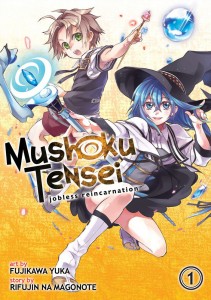
Never let it be said that companies don’t know their core audience. Someone like Viz might have simply called this ‘Jobless Reincarnation’ and be done with it, but Seven Seas knows that the folks most interested in it also wouldn’t recognize it unless it had its original Japanese title. Hence the hyphenated name. And Media factory knows their audience as well, which is why the front cover stars the cute teenage girl who’s a mere mentor for our hero, with our hero himself in the back. That said, some of the editorial decisions, while I can sort of guess why they happened, baffle me a little bit, the first one being why we have this story’s framing device at all.
mushoku1

Our story starts off with a chubby goateed guy at his computer eating instant ramen. He’s quickly kicked out on the streets by his family, as it turns out he’s a NEET with no job or desire to get one. As he bemoans his useless life, he sees a truck barreling towards an arguing young couple and decides to rescue them, even as it means the truck kills him. He dies with a desire to do his life over properly. We next cut to a standard ‘fantasy’ world, where Rudy, our hero, is a 3-year-old precocious brat learning swordfighting, but he can also do magic. He’s that guy reincarnated, but he still has all his prior memories. Now he buckles down and learns as fast as possible, so that he can live a life he’s proud of.

This is all very well and good, but aside from creepy moments when we see a little kid perving on a young teenage girl, or the odd traumatic reference to his death from the start of the book, there’s no real reason why this had to happen at all. Why not just have it be a story of a bright and precocious young kid in a fantasy universe? I fear the answer may be that ‘ordinary guy gets trapped in a fantasy universe’ is the in thing right now, and the author knew it. It’s based on a series of light novels, so that wouldn’t surprise me. It could also be a way to ward off criticism of his hero, who’s doing things at 3 years old that most folks can’t pull off till their teens.

That niggle aside, this was better than I expected, and shows off Rudy’s boyish young charms (when he’s not being a 34-year-old otaku) very well. His conflict resolution is also based off his prior memories, and while this does give him a vocabulary no little kid should have yet, it does actually resolve the conflicts to some degree. There’s also a suggestion that this might get into some darker areas, not least of which is the cliffhanger. I’ll check out the second volume, but I wish the series had simply dumped the wraparound and been a straight up fantasy.

Filed Under: REVIEWS

Bookshelf Briefs 11/30/15

November 30, 2015 by Sean Gaffney and Anna N Leave a Comment

Shake off the food coma and partake of some briefs!

sakamoto2Haven’t You Heard? I’m Sakamoto, Vol. 2 | By Nami Sano | Seven Seas – It’s always a battle each chapter to see who’s more interesting, Sakamoto or the people reacting to him. Because, while Sakamoto is the star and the catalyst, the plot is driven by those other people, those who find themselves changed by Sakamoto’s eccentric yet ultra-cool behavior. A teacher frustrated and determined to catch Sakamoto doing something against the rules ends up two chapters later yelling “don’t make me worry, dammit” in the best tsundere way. A gang leader finally finds a way to make Sakamoto angry, but the battle which follows still is nothing like he expects. For all that everyone wants to be near, love, or impress Sakamoto, at the end of the day they’re all marching to his beat. – Sean Gaffney

seki5My Neighbor Seki, Vol. 5 | By Takuma Morishige | Vertical Comics – Unlike Sakamoto-kun in the above review, Seki still struggles with controlling the narrative of his own title, mostly as he has to deal with the main heroine, Yokoi, who’s long since given up pretending she doesn’t want to be entertained and get involved, even if she keeps telling herself it’s to punish him and make him pay attention. Sometimes this still backfires on her, such as during parents’ day (when we meet Seki’s non-speaking but frustrated mother), but more often than not, Yokoi is starting to gain the upper hand. Even if this means that other people view their relationship as something more than it is. Seki-kun will never be deep, or even pretend to, but it’s a lot of fun. – Sean Gaffney

skipbeat35Skip Beat!, Vol. 35 | By Yoshiki Nakamura | Viz Media – As this series progresses, Nakamura is able to dial up the emotional stakes for her characters more and more. At first I thought that the enforced closeness of the Heel Siblings storyline was about as intense as it was going to get, but when Kyoko encounters Ren as Corn, her long-lost childhood fairy, the reader sees some vulnerability and uncertainty from Ren/Kuon/Corn that is absolutely disarming. The mental gymnastics that Kyoto goes through to justify her friendship with Corn while she’s thinking of Ren are quite amazing, and Ren dealing with jealousy towards his own alter ego is hilarious. Yet another great volume of Skip Beat!, one of my shoujo favorites. – Anna N

uqholder6UQ Holder, Vol. 6 | By Ken Akamatsu | Kodansha Comics – This volume seems packed with things that are designed to make any Shonen Magazine reader happy. A genuine zombie invasion, with many, many people killed off—luckily we have a supporting character who can reverse time. An onsen scene that allows readers to get their fill of Akamatsi’s nude bodies, still popular after all these years, and also lets him further develop Kuromaru’s anxiety about gender identity—not helped by everyone else saying “you’re acting like a girl, so be one.” And the presence of Mana at the end, which reminds us that this is still a sequel to Negima, whose cast was filled with students who were half-demon, supernatural, or just robots, so are still around 100 years later. We’ll see what happens with her in the next volume. – Sean Gaffney

yamadakun5Yamada-kun and the Seven Witches, Vol. 5 | By Miki Yoshikawa | Kodansha Comics – For the most part this volume is content to spin its wheels a bit—the fire subplot with Sarushima is stopped with a minimum of fuss and a lot of comedy (including some panty flashing and boob showing, as this is a Magazine title). We also get a new club member, who sadly seems totally uninteresting. Luckily Yamada and Shiraishi are still the best part of this title, and their kind of sort of love story is heartwarming when used properly. The next arc combines witch-hunting with that old shonen favorite, “your club will be used to do the Student Council’s dirty work,” and it will be interesting to see how this develops, though I suspect it will again involve a lot of comedy and panty flashing. – Sean Gaffney

Filed Under: Bookshelf Briefs

Pick of the Week: Vampires, Brides, or Curry?

November 30, 2015 by Sean Gaffney, Michelle Smith, Anna N, Ash Brown and MJ Leave a Comment

magus3SEAN: I suspect many of the rest of our team will be looking towards vampires, but I’m going with magic instead, as The Ancient Magus’ Bride’s third volume is my pick. Wife husbandry aside, this is a sweet and gentle supernatural manga that is just what I need to relax before the holidays.

MICHELLE: No vampires for me! I am all about the Food Wars!!

ANNA: I feel like I have to be utterly predictable and go with shoujo vampires, so Bloody Mary for me!

ASH: I’ll be tagging along with Sean this week and picking The Ancient Magus’ Bride. I’ve really been enjoying the series and look forward to reading more.

MJ: Okay, I’m at a bit of a loss here this week, but I’ll throw caution to the wind and nervously try Bloody Mary. I’m past the point of being saturated on vampires—so far past that they almost seem okay again. What’s that about? Hm. Anyway, I’ll give it a shot!

Filed Under: PICK OF THE WEEK

My Week in Manga: November 23-November 29, 2015

November 30, 2015 by Ash Brown

My News and Reviews

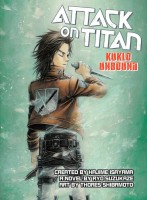
Last week was Thanksgiving in the United States, which means that I was fairly busy traveling and visiting family. I still posted a couple of things at Experiments in Manga, though. Because it’s the end of the month, it’s also time for a manga giveaway. And, because it’s November, the giveaway is for multiple volumes. The winner will be announced on Wednesday, so there’s still time to enter for a chance to win four first volumes of manga in the Kodansha Shoujo Smorgasbord giveaway. I also posted a review last week of Attack on Titan: Kuklo Unbound, which is an omnibus edition of the last two volumes in Ryo Suzukaze’s trilogy of novels which form a prequel to Hajime Isayama’s Attack on Titan manga series. It’s a pretty quick read, and provides an interesting perspective and backstory that fans of the franchise will appreciate.

Because I was traveling and visiting family, I didn’t spend much time online last week, but there were a few things that managed to catch my attention. Comics Forum’s Manga Studies column continued with “What are you reading? Approaches and reasons for looking at language in manga” by Giancarla Unser Schutz. Gengoroh Tagame’s Otouto No Otto (My Brother’s Husband) won a Japan Media Arts Award, which is kind of a big deal. Viz Media posted its Fall 2015 survey about anime and manga buying habits and convention attendance. And, in much sadder news, mangaka and yokai enthusiast Shigeru Mizuki has passed away.

Quick Takes

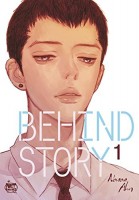
Behind Story, Volume 1Behind Story, Volume 1 by Narae Ahn. I’ve been trying to make a point to sample some of Netcomics’ recent releases which is what first brought Ahn’s boys’ love manhwa Behind Story to my attention. I wasn’t previously aware of the series, and I actually haven’t been able to find much information about Ahn, either. The the story didn’t initially engage me, likely because of the school setting which didn’t do much to distinguish itself, but by the end of the first volume I was left wanting more. Johann is a transfer student who is rumored to be gay, which means that most of his classmates avoid him, but recently Taehee has developed an interest in him. One of their teachers has, too, and Johann finds himself the target of an unhealthy and abusive obsession. Behind Story has tumultuous emotions and drama, with the potential to go in some very dark and dangerous directions. While the cover art of Behind Story is particularly striking, the interior artwork is attractive, too, although some of the transitions between scenes and flashbacks were occasionally difficult to follow.

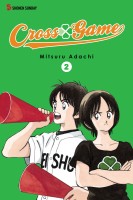
Cross Game, Omnibus 2Cross Game, Omnibuses 2-5 (equivalent to Volumes 4-11) by Mitsuru Adachi. It’s been a long while since I read the first Cross Game manga omnibus or watched the anime series; I’d forgotten just how good the story is. I’m not even especially interested in baseball, and yet I find myself completely absorbed by Cross Game. Probably because the manga really is about more than just baseball, although the way that Adachi paces the games does makes them very exciting. And after reading the manga, I am able to better appreciate and understand the strategy involved in the sport. But for me, the baseball in Cross Game takes a backseat to the series’ exploration of love and loss. In more than one way, the characters are dealing with the utter unfairness of life. Sometimes they are able to triumph over adversity and it’s magnificent, but sometimes there is nothing to be done but to live and learn and try to move on as best as they can. Cross Game is a series that manages to be very emotionally resonant; I find that I’ve come to care about the characters and their well-being a great deal.

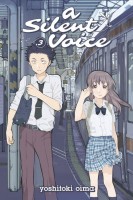
A Silent Voice, Volume 3A Silent Voice, Volume 3 by Yoshitoki Oima. I continue to be impressed with A Silent Voice and Oima’s willingness to include characters who are simply awful people. It does make the series a little difficult or unpleasant to read at times, but the manga is still very well done. Fortunately, the series isn’t completely depressing. There’s hope for redemption and the promise that, while the mistakes of the past can’t be undone, people can indeed change for the better. It’s a lesson that Shoya is still learning as he is constantly reminded of and trying to make up for how horrible he once was. Though he has apologized and sincerely regrets the actions of his sixth-grade self, he’s uncertain whether or not he actually deserves to be forgiven and what his motivations in seeking forgiveness truly are. Shoya is still a little oblivious and self-centered when it comes to his relationships with other people, and he still makes plenty of mistakes, but he is slowly beginning to grow and mature and form honest friendships. His heart at least is in the right place, and he has become a much more sympathetic character over the last few volumes.

Filed Under: FEATURES, My Week in Manga Tagged With: Behind Story, cross game, manga, manhwa, Mitsuru Adachi, Narae Ahn, Silent Voice, Yoshitoki Oima

Monthly Girls’ Nozaki-kun, Vol. 1

November 29, 2015 by Anna N

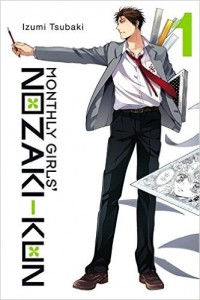
Monthly Girls’ Nozaki-kun, Vol. 1 by Izumi Tsubaki

This was by far one of my most anticipated new manga titles of the year. I generally don’t get into 4-koma manga all that much, but Oresama Teacher is one of my favorite shoujo comedy titles, so I was looking forward to reading this.

Poor Chiyo has a crush on the handsome yet mysterious Nozaki. When she confesses her affection to him, he assumes that she’s a rabid fan and hands her an autograph – as it turns out he’s secretly a successful shoujo manga-ka. Chiyo soon finds herself serving as his assistant, along with a quirky supporting cast. Nozaki is incredibily odd, as the main thing that he’s an expert in are shoujo manga tropes, which causes plenty of real-life confusion. He also finds inspiration from his classmates, turning one awkward boy nicknamed Mikorin into his shoujo heroine and making a tomboyish girl his inspiration for a new male character. Shoujo and manga conventions are constantly lampooned, for example Nozaki has a habit of always drawing his favorite face, making his characters indistinguishable from each other. Also, his relationship with his deadpan editor is hilarious, as Nozaki is always determined to believe the best of his editor, even when his drawings get a lukewarm or negative response.

One of the things I like about Tsubaki’s work is that she’s able to quickly assemble a large and exceedingly quirky supporting cast, providing plenty of fodder for humor. That she’s able to go from two characters to over half a dozen within the constraints of a 4-koma strip in one volume is impressive. This is a genuinely funny manga, and the perfect thing to get for a manga fan for the holidays if they haven’t snagged it already. I will never think about tanuki the same way again after reading this volume!

monthlygirlsnozaki

Filed Under: REVIEWS

The Disappearance of Nagato Yuki-chan, Vol. 8

November 29, 2015 by Sean Gaffney

By Nagaru Tanigawa and Puyo. Released in Japan as “Nagato Yuki-chan no Shoushitsu” by Kadokawa Shoten, serialization ongoing in the magazine Young Ace. Released in North America by Yen Press.

It is not particularly surprising that, having resolved its main relationship in this volume, Nagato Yuki-chan continues. After all, the main Haruhi novels are still in limbo, and may remain there permanently. The anime, unlike this spinoff manga, is not allowed to use Sasaki (indeed, the anime of the Nagato Yuki-chan manga took pains to avoid having her appear). And Haruhi-chan, while fun, is still just a gag manga. Thus is is this title which has almost become the series flagship, despite featuring characters who remain, at heart, really nice and sweet. And so we continue to toddle along, vaguely discussing graduation plans and learning how to cook, and occasionally teasing the main continuity, such as when Yuki gets sick.

nagato8

Now that Kyon and Yuki have resolved their affections, most of the stress in this volume is carried by Ryouko, who remains my favorite and gets a lot of face time this time around. She’s not made aware that anything has changed till the very end of the book, mostly as Kyon and Yuki are too embarrassed to say anything. And it’s honestly easier, when repurposing material that may have been used in prior spinoffs or the main series, to use Ryouko’s POV, as she wasn’t in them by virtue of being evil and erased. She goes back and forth between being a mom, a big sister, a shipper, and a nervous wreck here, and once again it’s Haruhi who is forced to play the minder to the minder and comfort Ryouko when she begins to cry in happiness at Kyon and Yuki’s relationship.

Speaking of Haruhi, she’s still trying to do interesting things, but she’s also the one who, along with Tsuruya, actually has her act together and is thinking about what comes next. She’s given up on Kyon, but in this title is OK with that, and appears to be content to move on. (Koizumi is still sticking with her, but again she appears to regard him more as a useful tool than anything else). Mikuru is useless in the original series, adult form aside, but here Tsuruya admits that she’s genuinely trying to change that, and give Mikuru the experience with people she desperately needs to move forward when Tsuruya can’t be there to take care of her.

And so it looks as if the next volume of the series (and yes, there is one) will discuss graduation plans. Ryouko is undecided, mostly as she really hasn’t focused on her own life as much as living vicariously through Yuki. As for everyone saying Yuki is the housewife type, given Kyon’s less than zero ambition, I’m not sure that’s such a good idea. But of course this is a mild, sweet, happy title, so I suspect any crises of faith will be resolved in about 50 pages or so. It may not be the Haruhi we’d like to see, but if all we can get now is this continuity, I’m perfectly happy, and want to see what the cast will do in the future.

Filed Under: REVIEWS

Rising of the Shield Hero Vol 1

November 27, 2015 by Anna N

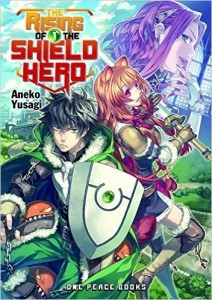
Rising of the Shield Hero Volume 1 by Aneko Yusagi

It has been some time since I’ve read a light novel, and so when One Peace sent me Rising of the Shield Hero, I decided to give it a try. The plot centers around Naofumi Iwatani, a disaffected otaku who abruptly finds himself transported into an alternate universe where he suddenly has to take on the role of the Shield Hero, on a quest that closely resembles a Japanese RPG.

I found the first couple chapters of the book a bit difficult to get into, partially because Naofumi is such an unsympathetic character who narrates his daily existence with flat declarative sentences. He soon finds himself in possession of an odd book which promptly transports him to another world, along with 3 other young men. They are the heroes of the sword, spear, bow, and shield respectively. Naofumi gets the shield, and finds himself scorned and mistreated partially due to his attitude and partially due to his only having a defensive weapon. The heroes all are assigned companions, and have to go out and get more experience to improve their abilities, just like one would have to grind in a typical game. Naofumi gets a female sidekick named Myne, but she promptly betrays him and leaves him penniless and alone.

The events centering around Myne’s betrayal of Naofumi were my least favorite part of the book, because she claims that he attempted to rape her. A woman making a false rape claim is not a plot point I enjoy reading, and shortly after his betrayal, Naofumi gets yet another female sidekick in the form of a slave tanuki girl named Raphtalia. He decides that he might enjoy owning a female slave because he now hates all women. Naofumi and Raphtalia embark on leveling up in their world by killing a number of low level demons that resemble orange balloons. Each time Naofumi defeats a different monster, his shield gains additional abilities. This was the part of the book I enjoyed the most, because Naofumi can’t use weapons due to his status as a shield hero. So he has to have a companion around to actually stab at things in order to get points and loot, and he manages to be fairly clever about coming up with ways to make money to get better equipment. Since he’s the shield hero, Naofumi has a great deal of personal defense. He decides to carry around orange balloon monsters underneath his cloak, and if people give him a hard time, he sets them loose. Naofumi’s bartering and blackmailing of the townspeople in order to get better equipment were one of the more amusing aspects of the book

Naofumi has an incredibly selfish way of thinking about things, but his actions often turn out to be less self-serving than I was expecting. Despite his dark thoughts, he actually treats Raphtalia more like a younger sister or companion. However, as she levels up, she grows up, so there is undoubtedly a romance ahead between the two main characters, which seems skeevy to me, since Naofumi met her when she was 10 years old.

The book needed a good solid pass from a copy editor, there were quite a few punctuation and spelling errors. The illustration included in the book were quite nice. Overall, this was a mixed read for me. I enjoyed aspects of the world building and Naofumi’s ingenuity. His general crankiness is also a nice contrast from the type of character that gets caught up in an adventure in another world. The flat, non-descriptive writing style made The Rising of the Shield Hero a bit of a slog in the earlier chapters, and I find myself creeped out by the prospect of romance developing in the later volumes.

riseshieldhero

Filed Under: REVIEWS Tagged With: light novel, One Peace Books

Attack on Titan: Kuklo Unbound

November 27, 2015 by Ash Brown

Attack on Titan: Kuklo UnboundAuthor: Ryo Suzukaze
Illustrator: Thores Shibamoto

Translator: Ko Ransom
U.S. publisher: Vertical
ISBN: 9781939130877
Released: May 2015
Original release: 2012

Between 2011 and 2012, three light novels written by Ryo Suzukaze and illustrated by Thores Shibamoto were released in Japan, forming a prequel trilogy to Hajime Isayama’s massively popular manga series Attack on Titan. All three novels were translated into English by Ko Ransom and published by Vertical. The first novel was released as Attack on Titan: Before the Fall, which is the title that the entire trilogy is known by in Japan. The second and third novels, originally published in 2012, were released together in English as an omnibus in 2015 called Attack on Titan: Kuklo Unbound. The manga series Attack on Titan: Before the Fall adapts the same story found in Kuklo Unbound. I’ve been reading the Before the Fall manga and I enjoyed the first Before the Fall novel well enough, so I was interested in reading Kuklo Unbound as well.

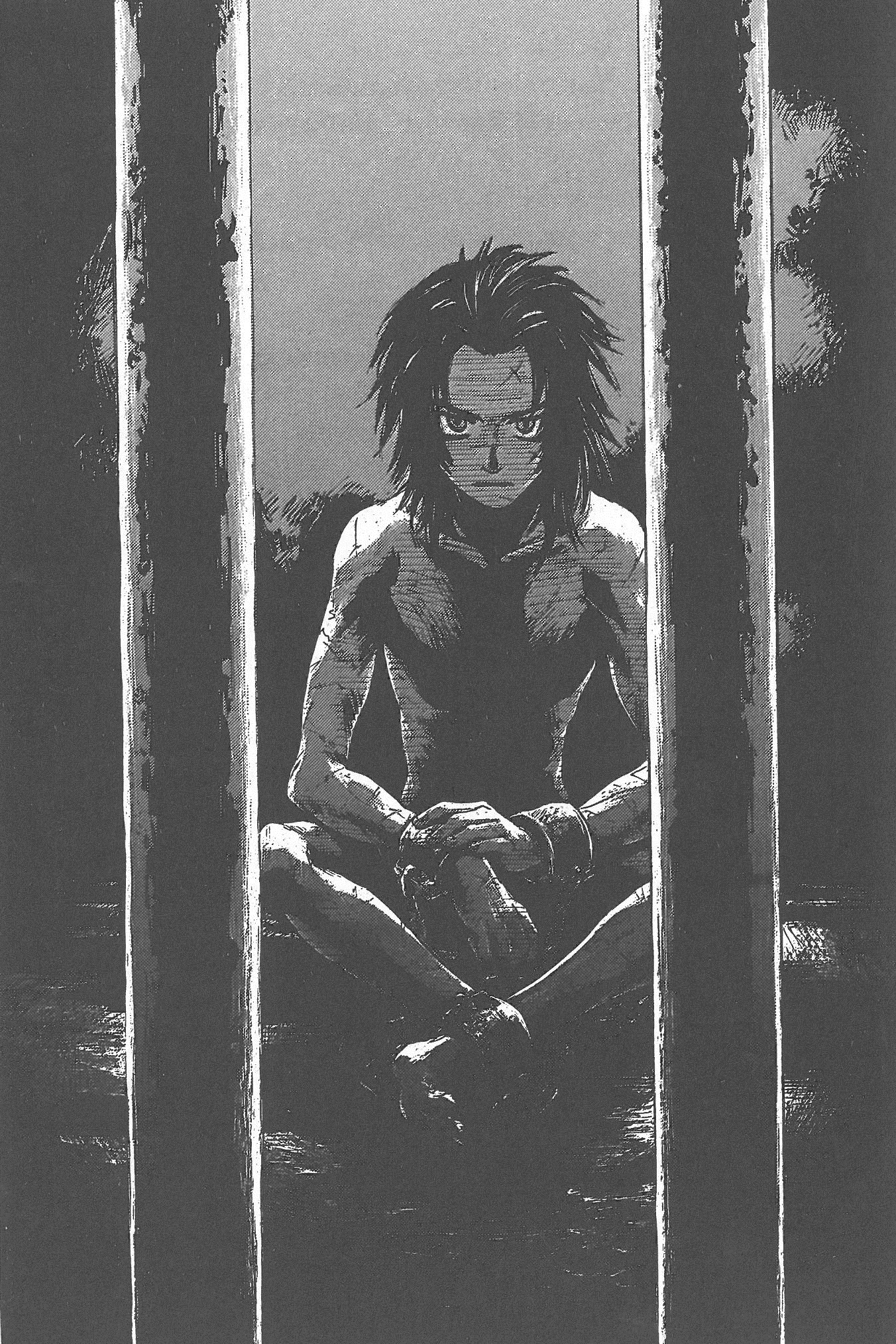
Roaming the earth in search of humans to feast upon are the Titans–giant, monstrous creatures of mysterious origins which nobody completely understands. In order to protect itself, humanity literally walled itself off from the outside world. The Titans are nearly invincible and very few people manage to live through a direct encounter with them, but Kuklo is one such survivor. Swallowed whole by a Titan while still in his mother’s womb, against all odds Kuklo was somehow saved. However, he has never been able to completely rid himself of the stigma of being born the “son” of a Titan. Feared and hated during a time when very few people have actually even seen a Titan, Kuklo is an orphan who is abused, held captive, and treated as a sideshow oddity. As he grows older he desires nothing more than to escape his cruel fate and to prove to himself and others that he is indeed human. And though his birth was ill-omened, Kuklo may in fact be the key needed to unlock humanity’s full potential in the fight against the Titans.

Attack on Titan: Kuklo Unbound, page 52Since I have been reading the ongoing Before the Fall manga series, I was already familiar with a fair amount of the story of Kuklo Unbound and wasn’t especially surprised by any of the developments. I do think that out of the two versions the original novels are the stronger, though. The manga doesn’t always capture the internal thoughts and feelings of the characters very well, and that perspective is very important to understanding Kuklo Unbound. I feel that Kuklo Unbound is better written than the first Before the Fall novel, too, or at least it was overall more enjoyable to read. Parts of Kuklo Unbound did feel very repetitive–there was a tendency to restate obvious and well-established plot points and even use the exact same descriptions over and over again–but for the most part the pace of the narrative is quick enough that the redundancy wasn’t too frustrating. As a whole, many of the characters in Kuklo Unbound seemed to be slightly better-developed and less reliant on worn tropes when compared to those of Before the Fall, too.

Kuklo Unbound works well as an omnibus, telling Kuklo’s entire story, but the two novels contained are distinct in their focus. In the first novel, Kuklo is the undisputed star. In the second novel attention is still primarily turned towards Kuklo, but by that point in the trilogy the story is really about the Vertical Maneuvering Equipment, the most recognizable technological innovation to be found in Attack on Titan. The predecessor of the Vertical Maneuvering Equipment was created in the Before the Fall novel, so this ties the prequel together quite nicely. While being different from most other Attack on Titan stories, the prequel trilogy also feels familiar, incorporating the types of scenes that have been seen before, including deadly battles with Titans, political intrigue and religious turmoil, and intense military training sequences. What makes Before the Fall and Kuklo Unbound particularly interesting is that they serve as an origin story, showing not only the development and implementation of the Vertical Maneuvering Equipment, but also the beginnings of the Survey Corps when it was still celebrated instead of despised.

Filed Under: REVIEWS Tagged With: attack on titan, Light Novels, Novels, Ryo Suzukaze, Thores Shibamoto, vertical

The Manga Revue: Deadman Wonderland and Livingstone

November 27, 2015 by Katherine Dacey

The November release of Jinsei Kataoka and Tomohiro Maekawa’s Livingstone provided me a nifty excuse to try Deadman Wonderland, an earlier series written and illustrated by Katoaka. Fans of Deadman Wonderland may know its complex licensing history here in the US: Tokyopop was its first publisher, releasing five volumes before going bankrupt in 2011. VIZ acquired the series in 2013, and is now just two volumes shy of the series’ grand finale, which arrives in February 2016. Whether you’re new to Kataoka’s work or have been a long-time fan, this column has something for you–so read on!

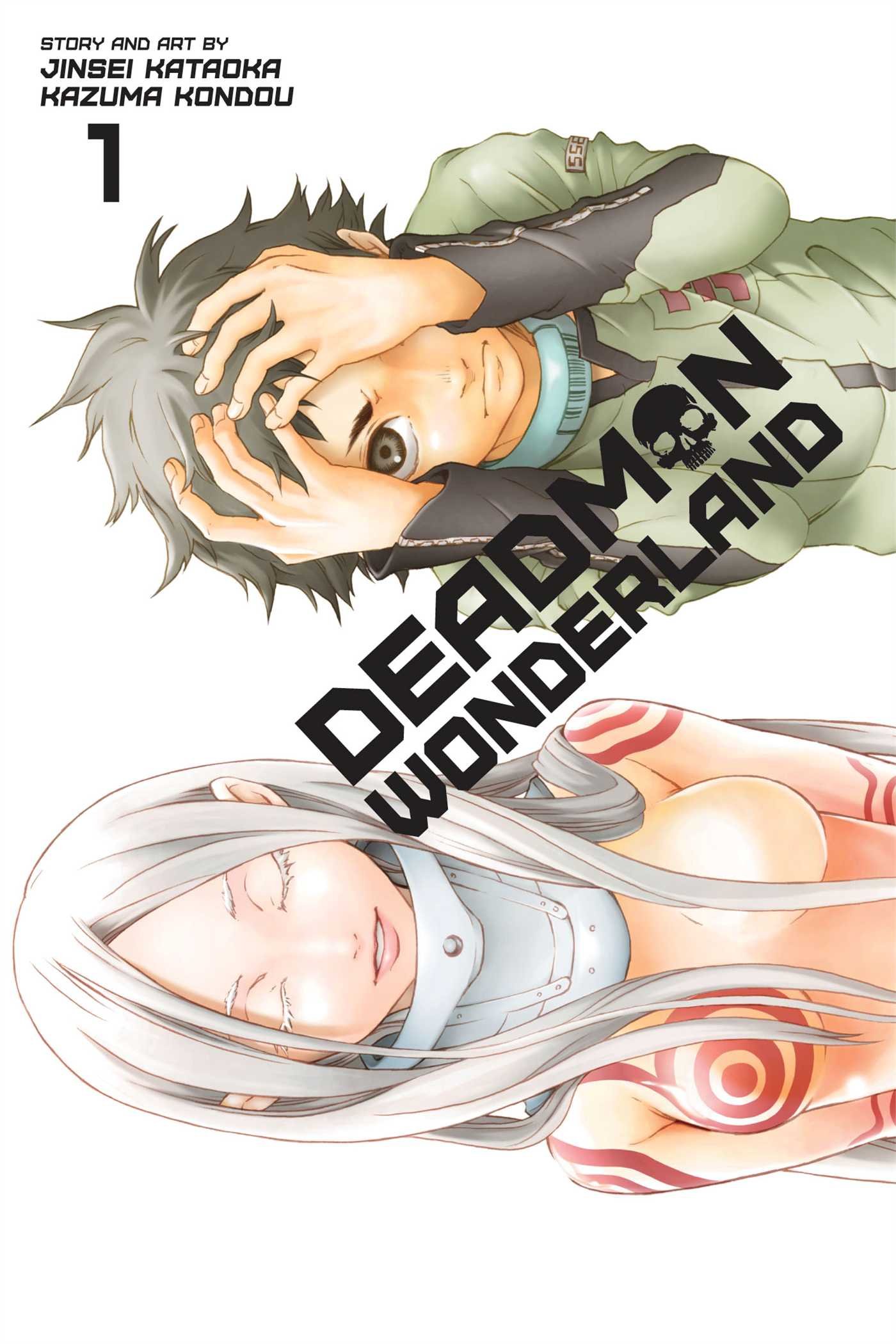
deadman_wonderland1Deadman Wonderland, Vol. 1
Story & Art by Jinsei Kataoka and Kazuma Kondou
Rated T+, for Older Teens
VIZ Media, $9.99

In the not-so-distant future, visitors flock to Deadman Wonderland, a prison-cum-theme park in Tokyo Bay where inmates fight to the death in front of paying crowds. Our guide to this Roman circus is newly minted prisoner Ganta Igarashi, an ordinary fourteen-year-old who’s been wrongfully convicted of murdering his classmates. Ganta’s fundamental decency is challenged at every turn; try as he might to cling to his humanity and clear his name, the prison’s arbitrary rules and roving gangs make it hard to be principled.

From my thumbnail description, you might conclude that Deadman Wonderland was cobbled together from parts of Judge Dredd, Rollerball, and Escape from New York–and you wouldn’t be wrong. What prevents Deadman Wonderland from reading like Rollerball 2: The Revenge is imaginative artwork. Jinsei Kataoka and Kazuma Kondou have created a Bizarro World Disneyland with rides, concessions, grinning animal mascots, and attractions like the Happy Dog Run, a lethal obstacle course featuring swinging blades and spike-filled pits. The characters who inhabit this landscape are a motley crew: though some telegraph their bad-guy status with tattoos and goofy haircuts, there are enough ordinary-looking prisoners that it’s impossible to judge who’s trustworthy. That uncertainty creates a strong undercurrent of tension in every scene, making Ganta’s routine activities–a conversation in the bathroom, a trip to the cafeteria–as fraught with peril as an actual contest.

The manga’s other great strength is pacing. Kataoka and Kondou resist the temptation to dole out too much information in the first volume; we’re never more than a clue or two ahead of Ganta, though perceptive readers may finish volume one with some notion of the prison’s true purpose. The authors’ expert timing also prevents us from dwelling on the story’s most shopworn elements, instead focusing our attention on how Ganta responds to new characters and new challenges.

All of which is to say: Deadman Wonderland is more fun than it has any right to be, considering the high body count and recycled plot points. Count me in for the next twelve volumes!

The verdict: Great art, smart pacing, and an appealing lead character make Deadman Wonderland a winner. (A note to parents, teachers, and librarians: this manga’s rating is justified.)

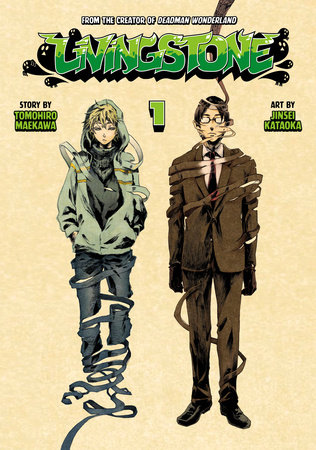
livingstoneLivingstone, Vol. 1
Story  by Tomohiro Maekawa, Art by Jinsei Kataoka
Rated 16+
Kodansha Comics, $10.99

Livingstone is a handsomely illustrated bore, the kind of manga in which the writer has dressed up a simple concept with a profusion of fussy details that don’t add depth or interest to the story. The title refers to human souls–or, more accurately, the rock-like form that human souls take after a person dies. Sakurai and Amano, the manga’s protagonists, work together to harvest livingstones, thus ensuring that a soul is properly passed from one person to the next. If a person dies before his appointed time, however, his soul curdles into a gooey blob of bad juju.

The manga has the rhythm of a cop show: in each chapter, Sakurai and Amano solve or prevent one unscheduled death, usually by negotiating with someone who’s planning to kill himself. Livingstone‘s intense fixation on suicide is off-putting; none of the would-be victims are particularly sympathetic, and Sakurai and Amano’s ministrations are so tone-deaf that it’s hard to know what message author Tomohiro Maekawa is hoping to impart to readers. Sakurai and Amano’s antagonistic bickering is supposed to inject a note of levity into the proceedings, I think, but the timing of the jokes and the staleness of the characterizations do little to offset the dour tone. By the end of volume one, I found myself feeling bummed out and irritated–never a good sign for a series that’s exploring a subject as serious as death.

The verdict: Nice art, lousy script; I liked this story better when it was called The Kurosagi Corpse Delivery Service.

Reviews: At Comics Worth Reading, Johanna Draper Carlson dives into the eleventh volume of Fumi Yoshinaga’s Ooku: The Inner Chambers, which she describes as “something like Macbeth in kimonos.” Megan R. of The Manga Test Drive offers an in-depth assessment of Oishinbo, “the longest running food manga in Japan,” while Seth Hahne, proprietor of Good OK Bad, weighs in on Yamada-Kun and the Seven Witches. Feeling crafty? Vertical Comics shares some early reviews of their latest Arnazi Aronzo book Cuter Stuff.

Connie on Alice in the Country of Hearts: Ace of Hearts (Slightly Biased Manga)
Lindsey Tomsu on The Celebration of Haruhi Suzumiya (No Flying No Tights)
Sean Gaffney on vol. 5 of A Certain Magical Index (A Case Suitable for Treatment)
Wolfen Moondaughter on vol. 27 of Claymore (Sequential Tart)
Allen Kesinger on vols. 1-2 of D-Frag (No Flying No Tights)
ebooksgirl on vol. 2 of The Devil Is a Part-Timer! High School! (Geek Lit Etc.)
Ken H. on vol. 1 of Devil Survivor (Sequential Ink)
Connie on vol. 32 of Eyeshield 21 (Slightly Biased Manga)
Kory Cerjak on vol. 50 of Fairy Tail (The Fandom Post)
Troy Nikandler on vol. 1 of Is It Wrong to Try to Pick Up Girls in a Dungeon? (Otaku Review)
Holly Saiki on Junji Ito’s Cat Diary: Yon & Mu (Examiner)
Karen Maeda on vol. 1 of Komomo Confiserie (Sequential Tart)
Sean Gaffney on vol. 1 of Log Horizon: Game’s End (A Case Suitable for Treatment)
Connie on vol. 1 of Meteor Prince (Slightly Biased Manga)
Wolfen Moondaughter on vol. 2 of My Hero Academia (Sequential Tart)
Johanna Draper Carlson on vols. 4-6 of My Love Story!! (Comics Worth Reading)
Justin Stroman on Oh! My Goddess (Organization Anti-Social Geniuses)
Kane Bugeja on vol. 6 of Seraph of the End: Vampire Reign (Snap 30)
Matthew Warner on vol. 18 of Tegami Bachi (The Fandom Post)
Wolfen Moondaughter on vol. 8 of Tiger & Bunny (Sequential Tart)
Frank Inglese on vol. 7 of World Trigger (Snap 30)
Sheena McNeil on vol. 1 of Yo-Kai Watch (Sequential Tart)
Dustin Cabeal on vols. 1-2 of Yo-Kai Watch (Comic Bastards)
Paige Sammartino on vols. 1-2 of Yo-Kai Watch (Women Write About Comics)

PS: Our Manga Bookshelf colleague Ash Brown is giving away the first volumes of four awesome shojo titles from Kodansha Comics, including LDK, Let’s Dance a Waltz, My Little Monster, and one of my personal favorites Say I Love You. Don’t dally; the contest closes on December 2nd!

Filed Under: MANGABLOG, REVIEWS Tagged With: Deadman Wonderland, Jinsei Kataoka, Kodansha Comics, Livingstone, Manga Review, viz media

Manga the Week of 12/2

November 26, 2015 by Sean Gaffney, Ash Brown, Anna N, Michelle Smith and MJ Leave a Comment

SEAN: The last month of the year is upon us next week, and manga companies are here to make sure it’s filled with STUFF. What have we got this time around?

Dark Horse gives us a 7th volume of not-so-new-anymore New Lone Wolf & Cub.

nss1

Kodansha figures we like Noragami so much that we’ll pick up a volume of Stray Stories. They’re probably right.

ASH: They probably are.

SEAN: Seven Seas has a 3rd volume of the sweet fantasy series The Ancient Magus’ Bride.

ASH: I’m greatly enjoying this series; looking forward to more!

SEAN: And also a 3rd volume of Clay Lord: Master of Golems.

Udon has a 2nd volume of punctuationally challenged Stein;s Gate.

Viz has a slightly smaller giant pile for this December. We get a 7th volume of Assassination Classroom, the most heartwarming kill-your-teacher manga out there.

ANNA: I’m so far behind with this series, but I do enjoy it!

SEAN: Bloody Mary is the debut this month, from the Shojo Beat line, and with a title like that, I’ll give you two guesses what supernatural element it features. Give up? Vampires! ZOMG!

MICHELLE: *snerk* Still, I will probably check this one out.

ANNA: Woo hoo!

ASH: And not just vampires, but beautiful vampires with a hint of BL!

MJ: Well, of course.

bm1

SEAN: Dragon Ball must be running out of omnibuses soon, but not yet with this 11th 3-in-1.

Do you like curry? Then read Food Wars! 9.

MICHELLE: Yay! I have been holding onto volume eight so I could have a little mini-marathon.

ANNA: I enjoy both Food Wars! and curry!

ASH: Same!

SEAN: Komomo Confiserie has a 2nd volume of twisted personalities and delicious desserts.

MICHELLE: Somehow it seems like it has taken forever for volume two to come out.

ANNA: I liked the first volume, looking forward to reading this.

SEAN: One Piece has a 14th 3-in-1, containing possibly my favorite volume in the entire series.

Seraph of the End is up to Volume 7.

ANNA: Shonen vampires! Tortured orphans! Weapons possessed by demons! Evil machinations!

SEAN: And So Cute It Hurts!! has two more volumes than it does exclamation marks.

ANNA: One of those super cute but not very deep shoujo series. Still fun to read.

SEAN: Toriko’s Vol. 31 starts a new story arc, I believe.

And lastly, an 11th volume of Stan Lee’s collaboration with Japan, Ultimo.

Are you picking up anything next week?

Filed Under: FEATURES, manga the week of

  • « Go to Previous Page
  • Page 1
  • Interim pages omitted …
  • Page 513
  • Page 514
  • Page 515
  • Page 516
  • Page 517
  • Interim pages omitted …
  • Page 1049
  • Go to Next Page »
 | Log in
Copyright © 2010 Manga Bookshelf | Powered by WordPress & the Genesis Framework