• Skip to primary navigation
  • Skip to main content
  • Skip to primary sidebar
  • Home
  • About Us
    • Privacy Policy
    • Comment Policy
    • Disclosures & Disclaimers
  • Resources
    • Links, Essays & Articles
    • Fandomology!
    • CLAMP Directory
    • BlogRoll
  • Features & Columns
    • 3 Things Thursday
    • Adventures in the Key of Shoujo
    • Bit & Blips (game reviews)
    • BL BOOKRACK
    • Bookshelf Briefs
    • Bringing the Drama
    • Comic Conversion
    • Fanservice Friday
    • Going Digital
    • It Came From the Sinosphere
    • License This!
    • Magazine no Mori
    • My Week in Manga
    • OFF THE SHELF
    • Not By Manga Alone
    • PICK OF THE WEEK
    • Subtitles & Sensibility
    • Weekly Shonen Jump Recaps
  • Manga Moveable Feast
    • MMF Full Archive
    • Yun Kouga
    • CLAMP
    • Shojo Beat
    • Osamu Tezuka
    • Sailor Moon
    • Fruits Basket
    • Takehiko Inoue
    • Wild Adapter
    • One Piece
    • After School Nightmare
    • Karakuri Odette
    • Paradise Kiss
    • The Color Trilogy
    • To Terra…
    • Sexy Voice & Robo
  • Browse by Author
    • Sean Gaffney
    • Anna Neatrour
    • Michelle Smith
    • Katherine Dacey
    • MJ
    • Brigid Alverson
    • Travis Anderson
    • Phillip Anthony
    • Derek Bown
    • Jaci Dahlvang
    • Angela Eastman
    • Erica Friedman
    • Sara K.
    • Megan Purdy
    • Emily Snodgrass
    • Nancy Thistlethwaite
    • Eva Volin
    • David Welsh
  • MB Blogs
    • A Case Suitable For Treatment
    • Experiments in Manga
    • MangaBlog
    • The Manga Critic
    • Manga Report
    • Soliloquy in Blue
    • Manga Curmudgeon (archive)

Manga Bookshelf

Discussion, Resources, Roundtables, & Reviews

Blog

Mushishi, Vol. 7

January 15, 2016 by Ash Brown

Mushishi, Volume 7Creator: Yuki Urushibara
U.S. publisher: Del Rey
ISBN: 9780345505590
Released: May 2009
Original release: 2006
Awards: Japan Media Arts Award, Kodansha Manga Award

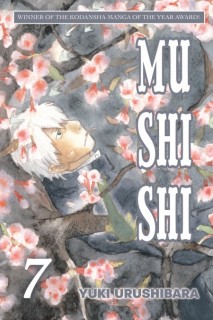
Mushishi, Volume 7 by Yuki Urushibara was originally published in Japan in 2006. It was the first volume of the award-winning manga series to be released after the first of several anime adaptations began airing. 2006 was also the year that Mushishi earned Urushibara a Kodansha Manga Award, having previously won a Japan Media Arts Award in 2003. In English, the seventh volume of Mushishi was initially published in print in 2009 by Del Rey Manga and then was later re-released in a digital edition by Kodansha Comics in 2014 along with the rest of the series. Mushishi is one of my favorite manga and one of the first series that I made a point to follow and collect as it was being released in translation. I love the manga’s atmosphere, subtle horror, and the obvious influence that traditional Japanese folklore and legends have had on Urushibara’s storytelling in the series.

The seventh volume of Mushishi collects four stories. Interestingly, the mushi in these particular chapters tend to be somewhat tangential to the real issues that the characters are struggling with. While the mushi have an impact on the way events unfold and develop, it is the interaction between people that forms the core of the individual stories. “Lost in the Blossoms” is about several generations in a family of skilled landscapers who obsessively care for the embodiment of a peculiarly beautiful and ancient cherry tree. In “The Mirror in the Muck,” a young woman falls ill after the man she loves leaves her behind, her love sickness putting her life in real danger. A young boy has become a host to a mushi that attracts lightning in “At the Foot of Lightning,” but the even greater problem is the nearly nonexistent relationship between him and his mother. The volume concludes with the series’ first multi-part story, “The Ragged Road,” about the head of the Minai, a clan of mushishi responsible for investigating forbidden mushi no matter what the personal cost.
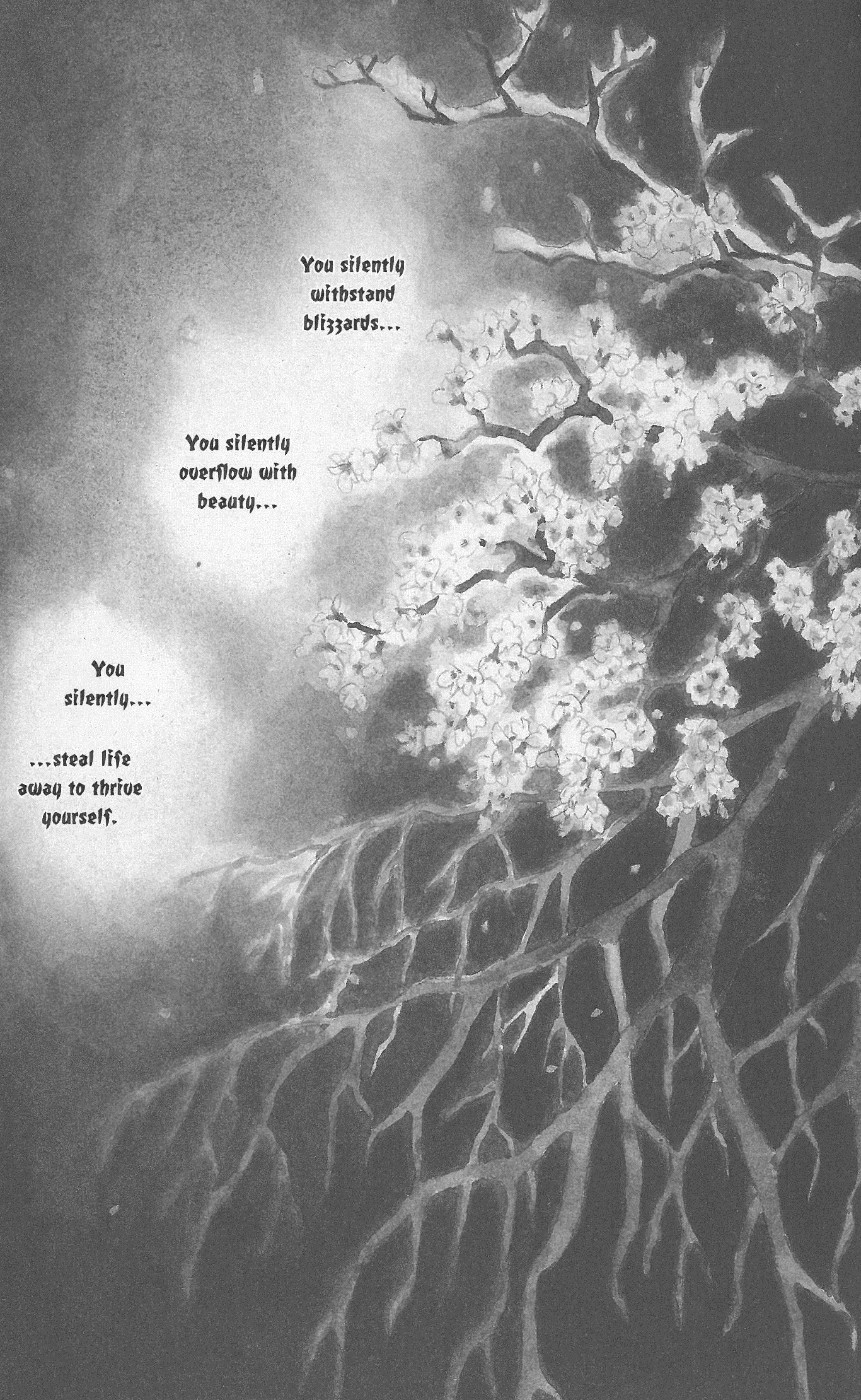
Mushishi, Volume 7, page 3While Mushishi generally tends to be episodic, “The Ragged Road” directly ties in with an early story, “The Sea of Brushstrokes,” collected in Mushishi, Volume 2. The Minai family serves under the Karibusa family which is responsible for recording and protecting information about mushi; the fate of both families is intertwined with that of the forbidden mushi. I especially like “The Ragged Road” because it further develops the world of Mushishi. The other three stories in Mushishi, Volume 7 technically do as well, but because they’re only loosely connected to previous chapters their contributions to the series’ lore generally add more breadth rather than depth. Still, bits of the characterization of Ginko, the manga’s protagonist, continue to be revealed with the telling of each story, showing just how much of an outsider he is even within the community of mushishi.

Although the plots of the individual stories collected in Mushishi, Volume 7 aren’t directly connect to one another, they do all share some similar themes. In some ways, the manga feels more horror-like than some of the previous installments of the series. Mushi in the case of this volume are creatures that can steal away a person’s senses, identity, life, or even soul. But as terrifying as that can be, the most chilling thing that Ginko encounters aren’t mushi but failed human relationships. I find these four stories to be some of the most heartbreaking in the series for that reason. Ginko is faced with situations where, while he can deal with the mushi, he is powerless to completely ease the distress of the people involved and their troubled families. However, as sad and tragic as some of the stories in Mushishi can be, there’s still an underlying sense of hope that in time people will be able to heal and move forward through their pain.

Filed Under: REVIEWS Tagged With: del rey, Japan Media Arts Award, Kodansha Manga Award, manga, mushishi, Yuki Urushibara

The Manga Revue: Idol Dreams and Monthly Girls’ Nozaki-Kun

January 15, 2016 by Katherine Dacey

Happy New Year! (Is it too late to extend that greeting to readers?) For my first column of 2016, I dove into my pile of unread books and chose two that I’d meant to review last year. The first is Arina Tanemura’s Idol Dreams, a body-swap comedy about a thirty-something office lady; the second is Izumi Tsubaki’s Monthly Girls’ Nozaki-Kun, a 4-koma series about a hunky high school manga artist who just happens to be the author of a popular girls’ comic.

idol-dreams-vol-1Idol Dreams, Vol. 1
By Arina Tanemura
Rated T, for readers 13 and up
VIZ Media, $9.99

Chikage Deguchi is at a crossroads: once a pretty, popular high school student, she’s become a sexless, thirty-something office drone who’s mocked by her co-workers. After making a fool of herself at a high school reunion, Chikage’s childhood friend Tokita stages a unique intervention, offering Chikage a drug that transforms her into a 15-year-old girl for a few hours a day. Chikage then does what any self-respecting 31-year-old would do: she pursues a (part-time) career as a teen idol.

Setting aside the question of whether anyone would voluntarily relive their teenage years, Idol Dreams has a bigger problem: tone. Arina Tanemura can’t decide if her story will revel in its absurdity or play things straight, and veers wildly between wacky show-biz hijinks and clumsy office scenes that are meant to establish just how awful Chikage’s adult life is. In the afterword to the story, Tanemura cheerfully vents her frustrations at being asked to do “a magical girl series for adults” without recourse to “too much screentone,” “gags and comedic touches,” or “super-stylish atmosphere.” Oddly enough, I don’t think these restrictions are the true source of the problem; if anything, Tanemura’s artwork is more polished and appealing in Idol Dreams than in Phantom Thief Jeanne or I.O.N. The real issue is the lead character: Tanemura never really explains why temporarily impersonating a 15-year-old would solve any of Chikage’s issues, especially since Chikage’s teenage alter ego is a wet noodle, too. The underlying message seems to be that recapturing youthful beauty is a pathway to empowerment–not a particularly novel or uplifting idea, given the developed world’s obsession with Botox, face lifts, wrinkle cream, and 17-year-old models.

The bottom line: I never thought I’d say this, but Idol Dreams is the rare Tanemura manga that would benefit from more zaniness and sparkly backgrounds.


monthly_girlsMonthly Girls’ Nozaki-Kun
, Vol. 1
By Izumi Tsubaki
Rated T, for teen readers
Yen Press, $13.00

Monthly Girls’ Nozaki-Kun is a textbook example of what happens when a great idea bumps up against the limitations of a restrictive format. The set-up is comedy gold: tenth-grader Chiyo Sakura confesses her romantic feelings to hunky classmate Umetarou Nozaki, only to have him casually respond, “Do you want to come to my place right now?” Flustered, Chiyo agrees but is surprised when Nozaki doesn’t put the moves on her; instead, he puts her to work on a chapter of his hit shojo manga Let’s Fall. Chiyo’s attempts to extricate herself from Nozaki’s employ or clarify her feelings for him only make things worse, as Nozaki is both romantically inexperienced and genuinely obtuse.

So far, so good: the concept provides plenty of fodder for jokes and pratfalls. The four-panel format, however, locks each character into a holding pattern in which he or she is doomed to repeat the same behavior over and over again. The supporting cast is big enough to prevent Monthly Girls from reading like a month’s worth of Cathy or Garfield strips, but the rhythm of every gag is virtually the same, whether author Izumi Tsubaki is introducing a new character, poking fun at shojo manga cliches, or demonstrating just how socially inept Nozaki really is; long stretches of Monthly Girls read like a Henny Youngman set, albeit with stranger–and funnier–material. Take my manga… please!

The bottom line: Some of the jokes are genuinely funny, but the series already feels like it’s chasing its tail by the end of chapter three.

Odds and Ends: Organization Anti-Social Geniuses has a new look, a new name, and a new URL. You’ll now find Justin Stroman and the gang at http://www.theoasg.com/. Manga vlogger Pluto Burns took a break from reviewing books and conducted a great interview with Carolina Manga Library founder Laura Mehaffey. If you’re not familiar with the good work that Mehaffey and her staff are doing, click here to learn more about this traveling book collection.

Reviews: Sean Gaffney, Anna N. and Michelle Smith post their first Bookshelf Briefs column of 2016. On the agenda: D-Frag!, My Love Story!!, Pandora Hearts, and Saki. Elsewhere on the web, Rebecca Silverman and Kory Cerjak review the first volume of Yowamushi Pedal, my pick for Best New Manga of 2015.

Chris Kirby on vol. 1 of 7 Billion Needles (The Fandom Post)
Karen Maeda on vol. 7 of Assassination Classroom (Sequential Tart)
Matthew Warner on Ayako (The Fandom Post)
Sheena McNeil on vol. 1 of Bloody Mary (Sequential Tart)
Megan R. on CLAMP School Detectives (The Manga Test Drive)
Justin on Confession (The OASG)
Kate O’Neil on vol. 5 of Demon from Afar (The Fandom Post)
Sean Gaffney on vol. 3 of Emma (A Case Suitable for Treatment)
Sean Gaffney on vol. 1 of Honey So Sweet (A Case Suitable for Treatment)
Ash Brown on vol. 3 of JoJo’s Bizarre Adventure, Part 1: Phantom Blood (Experiments in Manga)
Sheena McNeil on vol. 19 of Kamisama Kiss (Sequential Tart)
Ken H on vol. 1 of LD♥K (Sequential Ink)
Rebecca Silverman on vol. 1 of Livingstone (Anime News Network)
Lori Henderson on vol. 1 of Monthly Girls’ Nozaki-Kun (Manga Xanadu)
Dustin Cabeal on vol. 2 of My Hero Academia (Comic Bastards)
Sean Gaffney on vol. 1 of Of the Red, the Light, and the Ayakashi (A Case Suitable for Treatment)
Kane Bugeja on vol. 3 of One-Punch Man (Snap 30)
David Brooke on vol. 4 of One-Punch Man (AiPT!)
Dustin Cabeal on vol. 4 of One-Punch Man (Comic Bastards)
SKJAM! on vol. 18 of Rin-ne (SKJAM! Reviews)
Ken H. on vol. 9 of Say I Love You (Sequential Ink)
Helen on vol. 1 of Student Council’s Discretion (The OASG)
Patrick Moore on vol. 8 of Tiger & Bunny (Bento Byte)
Che Gilson on Tokyo Ghoul (Otaku USA)
Marion Olea on vol. 2 of Tokyo Ghoul (No Flying No Tights)
Frank Inglese on vols. 8-9 of Vagabond: VIZBIG Edition (Snap 30)
Ash Brown on vol. 7 of Vinland Saga (Experiments in Manga)
SKJAM! on vol. 7 of Vinland Saga (SKJAM! Reviews)
Megan Rupe on vols. 1-2 of Yo-Kai Watch (No Flying No Tights)


Filed Under: MANGABLOG, REVIEWS Tagged With: 4-koma, Arina Tanemura, Manga Review, shojo, viz media, yen press

Honey So Sweet, Vol. 1

January 15, 2016 by Sean Gaffney

By Amu Meguro. Released in Japan as “Honey” by Shueisha, serialized in the magazine Bessatsu Margaret. Released in North America by Viz.

In general I try to avoid reading back cover copy when I get a book, as it frequently tends to spoil the entire volume, particularly with manga titles. That said, I wouldn’t have to worry about that with Honey So Sweet, which wastes absolutely no time telling us what our premise is. Bad boy delinquent is secretly a big sweetie pie. We’ve seen this before, and not just in shoujo, and if that’s all there was to this title I’d likely be saving it fro a Brief review and moving on. But it also has the heroine, Nao, who is shy in all the worst ways – life has left her with an intense desire to avoid conflict, and so when Taiga confesses to her the initial reaction is “if I say no, he’ll kill me’.

sweet1

I’ve talked before about how difficult it can be to keep readers from abandoning a series when you write someone with major character flaws. To be fair, it is easier to do so when your heroine is of the wallflower variety than if she’s a selfish ball of temper. But Nao is the early parts of this volume is someone that is seemingly making all the wrong choices in an effort to just slide by in life – and she knows it, as she keeps repeating it to herself. Her parents have passed away at an early age, and much of her narrative monologue is done as communication with their souls in heaven. Her She’s living with her mother’s younger sister, who she has a massive complex for since he took her in and has sacrificed quite a bit for her. And she (not surprisingly) always seems depressed.

So it’s great seeing Taiga slowly manage to get Nao to have fun, and show actual effort, and elicit feelings from her that aren’t “go along with him because SCARED!”. We learn less about him in this volume, except that he tries a bit too hard to help out everyone, particularly Nao, but that’s the point – he’s the nice guy at heart, and you have to look past his face. By the end of the volume, Nao’s uncle is remarking on the fact that she’s smiling a lot more these days, and it’s a great thing to see, as now we can see her moving forward in life and doing things she’s good at.

In many ways this is very typical shoujo romance – we’ve seen Taiga’s sort in hundreds of other titles. We have two others who form a core group with our hero and heroine, and one is the tsundere hothead guy who speaks before he thinks, which again we’ve seen before. The other is Kayo, who’s grumpy, stoic, and seemingly written as a gift to me – I really want to see more from her in future volumes. Together they don’t make this title unmissable, but they make it enjoyable, and by the end Nao has developed enough so that you’re rooting for her as well.

Filed Under: REVIEWS

Manga the Week of 1/20

January 14, 2016 by Sean Gaffney, Ash Brown, Michelle Smith and MJ 1 Comment

SEAN: Next week’s releases really run the gamut of styles and genres. Let’s see what we’ve got.

Kodansha gives us a 2nd volume of Devil Survivor, meaning I am now officially behind.

And a 5th A Silent Voice, which I am definitely caught up on.

ASH: A Silent Voice continues to be a very strong series.

SEAN: And there’s also a 6th Yamada-kun and the Seven Witches. I am also caught up here. Will we see more witches?

ASH: Time will tell!

SEAN: On the Seven Seas end, we have a 2nd volume of Golden Time, from the Toradora! author.

And the debut of The Testament of New Sister Devil, which sounds like it might hit every single current popular fetish out there, and a few more besides. We’ll see if I’m wrong.

shore

Vertical gives us A Girl on the Shore, a complete omnibus of an Inio Asano series from the cult and sadly cancelled Manga Erotics F magazine. It’s Inio Asano, so I expect good, if depressing, things.

MICHELLE: This should be interesting.

ASH: I’m very much looking forward to this release.

MJ: Okay, this. Yes, this.

SEAN: And there’s a 6th volume of My Neighbor Seki, which is possibly the antidote if you’re read too much Inio Asano at once.

ASH: Ha!

SEAN: Viz gives us a 5th Master Keaton volume, having pushed it back from its original December release date.

MICHELLE: I need to resume my catchup efforts!

ASH: As do I!

MJ: Always welcome!

SEAN: And a 7th Monster Perfect Edition.

MICHELLE: Yay, Monster!

ASH: Monster is one of my favorite Urasawa series. I’m so glad to see it back in print!

SEAN: And Terra Formars has reached double digits with Volume 10.

Most of Yen’s stuff is the week after next, but two novels seem to be coming out next week as of this writing. Pandora Hearts has finished its Caucus Race light novels with the third volume, so at least MJcan’t get any further behind.

MJ: Oops?

SEAN: And there’s a 2nd volume of Strike the Blood, which will hopefully feel more genuine and less calculated than the first volume did.

Does something from this list sing to you? Crying out, “read me and be sad yet enriched”? Or perhaps “Read me and get suggestive succubi who say oniichan a lot”?

Filed Under: FEATURES, manga the week of

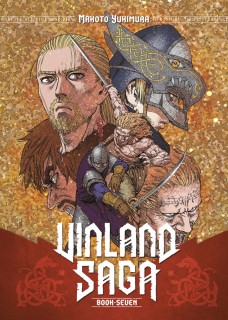
Vinland Saga, Omnibus 7

January 13, 2016 by Ash Brown

Vinland Saga, Omnibus 7Creator: Makoto Yukimura
U.S. publisher: Kodansha
ISBN: 9781612628035
Released: September 2015
Original release: 2013-2014
Awards: Japan Media Arts Award, Kodansha Manga Award

I honestly believe Makoto Yukimura’s Vinland Saga to be one of the best manga series currently being released in English. An epic tale of revenge, idealism, and the tremendous cost of violence, Vinland Saga is an incredibly engaging work with impressively compelling characters. In addition to being a personal favorite of mine, over the course of its publication the series has also won a Japan Media Arts Award and a Kodansha Manga Award among other honors. Kodansha Comics has been releasing Vinland Saga in English as a series of hardcover omnibuses. The seventh omnibus, released in late 2015, collects the thirteenth and fourteenth volumes of the manga originally published in Japan in 2013 and 2014 respectively. The seventh omnibus of Vinland Saga also includes two exclusives: the continuation of “Ask Yukimura,” where Yukimura responds to questions about the series, and a four-panel tribute comic by Faith Erin Hicks, another creator whose work I greatly admire.

After years of hard labor, Thorfinn’s freedom was near at hand until he and his fellow slave Einar became involved in an escape attempt. They helped Arnheid, Ketil’s favorite slave and mistress, aid her enslaved husband as he tried to run away from another farm. The attempt failed, resulting in multiple deaths. Now the three of them—Thorfinn, Einar, and Arnheid—must face the terrible consequences of their actions. Meanwhile, Ketil and his sons are returning from Jelling with King Canute and his finest warriors following close behind. In addition to dealing with his slaves, Ketil must also prepare for Canute’s inevitable attack before the farm falls into chaos. Canute plans on taking Ketil’s farm and wealth for his own in order to expand his kingdom, determined to create a paradise on earth for all who suffer from war and violence. Although he would prefer a peaceful resolution, Canute is more than prepared to stake his claim through questionable political maneuvering and force.

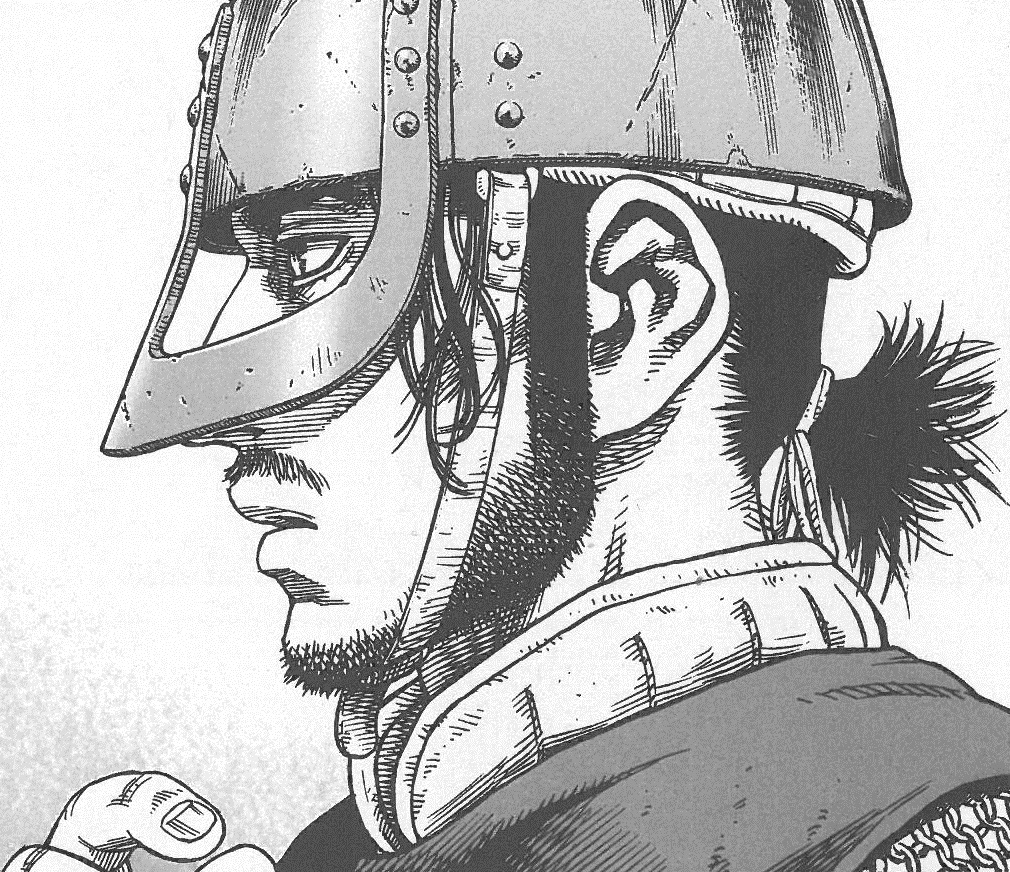
Vinland Saga, Omnibus 7, page 92Like so many of the other omnibuses of Vinland Saga, the seventh is brutal and at times even gruesome. The artistic detail and research that Yukimura has applied to the portrayal of the day-to-day lives of eleventh-century nobility, warriors, merchants, and slaves has also been applied to the battles and wars they wage. Men and women are beaten to the brink or point of death; limbs are severed; skulls are crushed; eyes are gouged out—Vinland Saga is an intense and violent series. But that violence isn’t idealized or glorified by Yukimura. Even while an individual’s martial skill and battle prowess are respected and admired, violence is shown to be the truly terrible and destructive force that it is, not just physically, but mentally and emotionally as well. Some of the most important themes in Vinland Saga revolve around violence, how it impacts people and society, and whether it can be avoided or whether humanity is trapped in a never-ending cycle of bloodshed.

In addition to the plot of Vinland Saga as a whole, violence and its effects are also crucial to the development of the individual characters. Many of them are trying to break free from the violence that pervades their lives, facing moral quandaries over how to enact their ideals. The characters of Vinland Saga aren’t safely philosophizing over what is ethical, they are literally risking their lives for what they believe in. But even when their ultimate goals are the same, they approach them differently. Canute is now in a position of power as king and will use any method necessary to ultimately achieve his earthly paradise. Thorfinn, on the other hand, is reluctant to use violent force in order to gain peace. And there are plenty of other characters in the series who fall somewhere between these two perspectives. Seeing the realistic interplay among all of these different worldviews in the series has been immensely engrossing. Vinland Saga is well-worth reading even in part, but I sincerely hope to see the rest of the series translated as well.

Filed Under: REVIEWS Tagged With: Japan Media Arts Award, kodansha, Kodansha Comics, Kodansha Manga Award, Makoto Yukimura, manga, Vinland Saga

The Island of Misfit Manga, Monthly Comic Birz

January 13, 2016 by Erica Friedman Leave a Comment

BirzMy stated intention for writing the Magazine no Mori column is to introduce the western audience to the vast, complex mass of manga magazines that are published in Japan. Where we have Shonen Jump only, a visit to a major Japanese anime/manga store will paralyze a western fan with the sheer number of magazines to choose from. But once you get past the number of magazines, what really impresses is the variety. And that variety is what I hope you can see when you look at my column. Action, romance for guys and girls, comics for children, for adult men and women and some interesting, creepy, creative and weird stuff around the edges. Which brings us this month to Gentosha Publishing’s Monthly Comic Birz (月刊コミックバーズ) magazine.

Birz‘s major claim to fame here in the west is as the official home of Hidekaz Himaruya’s Hetalia – Axis Powers. And it totally fits the “island of misfit manga” feel that the magazine has always cultivated. I wasn’t at all surprised to learn that gothic horror Red Garden manga (illustrated magnificently by Kirihito Ayamura and written by Gonzo) has run in this magazine  – it was worth reading for the clothes alone, as was Peach-Pit’s Rozen Maiden. Just about the time I came across the manga for Penguindrum (illustrated by  Hoshino Lilly, written by Ikuhara Kunihiko as Ikunichowder) and Yurikuma Arashi (illustrated by Morishima Akiko and written by Ikuhara as Ikunigomakinako) which are running simultaneously right now, I suddenly realized that Birz series are probably better known in America as anime than as the manga that run in the magazine. Also interestingly, Comic Birz is the home to the most recent series by popular creator Kia Asamiya, Kanojo no Carrera, in which he is able to draw sexy adult women and sports cars to his heart’s content.

The website for Comic Birz has sample chapters for all the currently running stories, upcoming releases, an editor’s blog, and links to various other Gentosha magazines. The magazine costs 650 yen/issue ($5.47 at time of writing) for about 650 pages.

Comic Birz has, for at least the last decade, cultivated a sense of the weird, with one foot firmly in the Horror genre, as you can see by the cover illustrating this review. Birz comics are sometimes disturbing, often outrageous, occasionally violent and almost always unrepentant, which is what I especially like about it. They’ve also just invested themselves heavily in Yuri manga, which I know means we’ll get stuff that makes me cringe, but it’s also more likely to have murder and mayhem than blushing confessions. Phew.

Monthly Comic Birz from Gentosha Publishing: http://www.gentosha-comics.net/birz/

Filed Under: Magazine no Mori Tagged With: Erica Friedman, Gentosha, Magazine no Mori, Manga Magazine

Pick of the Week: Unanimity

January 12, 2016 by Michelle Smith, Sean Gaffney, Anna N, Ash Brown and MJ Leave a Comment

roseking3MICHELLE: Well, Sean predicted it. My pick of the week is Requiem of the Rose King. While I’m linking to what my compatriots have said, go see why MJnamed this series her Pick of 2015.

SEAN: Unlike the rest of the team, I’m reading several things this week. But yeah, the one that’s clearly head and shoulders above the rest is Requiem of the Rose King. It’s an obvious Pick.

ANNA: I agree, Requiem of the Rose King is such a standout series it is my Pick as well!

ASH: Like Sean, there are actually several releases that I’m looking forward to this week, including Lone Wolf & Cub and His Favorite, but by and far the one that I’m most excited about is the third volume of Requiem of the Rose King. I’m adoring the series.

MJ: Since Requiem of the Rose King was my Pick of the Year, it can’t be a huge surprise that I’m in agreement with everyone else. That’s the Pick for me!

Filed Under: PICK OF THE WEEK

David Bowie

January 12, 2016 by Sean Gaffney

Yesterday I said that instead of a review today I would write a post about David Bowie. This then left me with the same problem as countless other people had yesterday: what on earth can you possibly say? He’s been around my entire life – I was born the week Aladdin Sane came out. I wasn’t old enough to really get the impact that he made on music from 1972-1978, but certainly in the 1980s I was listening to him, even though until college I was never really obsessed with music. You’d hear his singles on the radio – Ashes to Ashes, Let’s Dance, Modern Love – WELI, my local AM radio station, would play Modern Love incessantly, possibly due to its ‘retro’ nature.

letsdance

When I got to college, I began to obsess about music to a ridiculous degree, and of course that meant Bowie as well. My first mixtape that I ever made had a Bowie song on it – Suffragette City, still one of my top 5 Bowie songs. Like many, I gravitated more towards the glam Bowie – I still do, and my first choice of albums to listen to yesterday were Hunky Dory and Ziggy Stardust. But I knew that the musicians that I liked, those whose CDs I bought, and whose interviews I read in the NME, they all talked about a different period that I had trouble getting into – not quite as immediately rewarding, but with greater depth. This would, of course, be the Berlin Trilogy, which was Bowie’s equivalent of The Velvet Underground and Nico, i.e. everyone who listened to the albums formed a band. Except they sold a lot more than TVUAN ever did.

Bowie also touched some of my other musical obsessions. First of all it was nice to have a singer who was in my vocal range – Under Pressure was doable if I didn’t have to sing Freddie’s part! J.G. Thirlwell posted a lovely tribute to Bowie yesterday, talking about how his music influenced his work as Foetus (and likely his current instrumental scoring for The Venture Brothers). Frank Zappa disliked Bowie – stealing Frank’s lead guitar player mid-tour certainly didn’t help – but used Bowie’s then stunning music video iconography in one of his best 80s satirical songs, Be In My Video. There were punk rockers who cited Bowie as an influence, less for the musical style and more for the attitude and exaggeration. And of course as a Doctor Who fan I had to like Bowie – it was a well-known fact that Bowie was secretly a Time Lord, and would never die but merely regenerate.

But sadly that hasn’t happened, and we once again are left with little to say except perhaps “fuck cancer”. I feel bad that I never listened to more of his later period – when I was in college, finally listening to his early 70s period, Black Tie White Noise and Tin Machine II were coming out to critical shrugs. It seemed for a time that every new Bowie album was the comeback… then the next one would be the new comeback, and you’d realized the critics had written off the prior. But that’s music criticism for you, and by the time those reviews came out he’d likely moved on to something else anyway. In the end, I suppose all I’m left with is what everyone else has been saying. David Bowie’s music spoke to outsiders, kooks, weirdos, and those who felt distanced from everyone else. I hope that each new generation who feels the same way can find inspiration and solace in his work, and use it to create their own ethereal, otherworldly beauty. Even if they may find it hard to sing “let all the children boogie” with a straight face.

Filed Under: UNSHELVED

My Week in Manga: January 4-January 10, 2016

January 11, 2016 by Ash Brown

My News and Reviews

The new year is now well on its way, and I finally feel like I’m getting back into my writing groove; my regular posting schedule has mostly returned, though there might be a slight interruption in February. Anyway. In addition to the regular My Week in Manga feature, there were two other posts at Experiments in Manga last week. The first was the announcement of the Merman in My Tub Giveaway Winner which also includes a compiled list of some of the giveaway participants’ favorite manga that were released in 2015. The second post last week also happened to be the second in-depth manga review for the year—JoJo’s Bizarre Adventure, Part 1: Phantom Blood, Volume 3 by Hirohiko Araki. It’s such a ridiculous, over-the-top series, but I’m sincerely enjoying it.

As for some of the interesting things I’ve discovered online recently: The news was previously leaked, but Dark Horse has now officially announced its two new manga licenses, Kenji Tsuruta’s Wandering Island and CLAMP’s RG Veda. I thought I had mentioned it a few weeks ago when it first launched (apparently I forgot), but Digital Manga’s boys’ love imprint Juné has a new Kickstarter project to publish four titles by Sakira in print. At least three of the four manga were Digital Manga Guild publications that were previously only available digitally. The project has already succeeded, but Digital Manga’s plan is to put a fair amount of the money pledged into restocking/reprinting some of its older, hard-to-find boys’ love titles. Finally, over at MangaBlog, Kate Dacey, Brigid Alverson, and Deb Aoki talk about some of their most anticipated manga of 2016, many of which happen to be some of my most anticipated releases as well.

Quick Takes

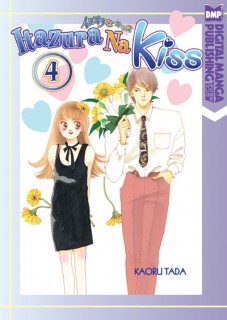
Itazura na Kiss, Volume 4Itazura na Kiss, Volumes 4-6 by Kaoru Tada. For the most part, I’m continuing to enjoy Itazura na Kiss. At this point in the series, Naoki and Kotoko are in college, each trying to figure out what to do with their lives. Kotoko’s infatuation with Naoki is the most important impetus for her to do just about anything, whether it be joining the tennis club, becoming a waitress, or trying her hand at office work. Normally, this would probably annoy me, but I appreciate her gusto, individuality, and willingness to follow through with what she’s started. Even though Kotoko is so incredibly focused on Naoki, her world actually doesn’t completely revolve around him and she’s not defined by him either, which I think is what makes her character work for me. Were it otherwise, I don’t think that I would enjoy the series nearly as much. Naoki continues to be aloof and more often than not a jerk. One particular instance in which Kotoko is unnecessarily treated very poorly could have been avoided entirely if he would have just had the courtesy to tell her what was going on, and there was no good reason for him not to. Thankfully, this sort of behavior isn’t romanticized or idealized in the manga.

Love in All Forms: The Big Book of Growing Up QueerLove in All Forms: The Big Book of Growing Up Queer edited by Serafina Dwyer. I follow the work of Kori Michele Handwerker who contributed to Love in All Forms which is how I first learned about the collection. I was also thrilled to discover that Jennifer Doyle, another artist whose work I enjoy, was also a contributor. The anthology collects fourteen comics by queer creators about queer children. Most of the creators were actually new to me, so I’ve definitely found some new artists to follow. As for the comics themselves, some of the stories are based in reality, while others are fantasy or science fiction, but they all deal with love and personal identity in one way or another. Many of the characters skew towards the feminine side of the gender non-conforming spectrum, but there’s a nice range of representation in the anthology with an emphasis on acceptance. Generally the stories tend to be fairly optimistic, which is marvelously refreshing. The name of the anthology might be a little misleading, or at least overly broad or ambitious, but it’s a lovely collection of beautifully heartfelt and touching queer comics.

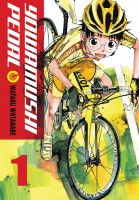
Yowamushi Pedal, Omnibus 1Yowamushi Pedal, Omnibus 1 (equivalent to Volumes 1-2) by Wataru Watanabe. I’ve watched and enjoyed part of the Yowamushi Pedal anime adaptation, so I wasn’t especially surprised by any of the developments found in the original manga. Even so, the first omnibus was great fun and I enjoyed it a great deal. Onoda is a fan of anime and manga whose surprising natural talents and regular trips by bicycle to Akihabara using less than ideal equipment have granted him some impressive cycling skills. He doesn’t even recognize his own abilities, though, not at all identifying with the more athletically inclined students at his school. But after several curious turns of events, he finds himself joining the bicycle road racing club. Watanabe isn’t very subtle when working information about cycling and bicycles into the story, which can be a little jarring, but the manga is still entertaining and I really like the characters. I’m glad that Yen Press is taking a chance on a long-running sports manga (the series is already over forty volumes in Japan and is still ongoing) and I sincerely hope that Yowamushi Pedal is a success.

Filed Under: FEATURES, My Week in Manga Tagged With: comics, itazura na kiss, Kaoru Tada, manga, Wataru Watanabe, Yowamushi Pedal

Of the Red, the Light, and the Ayakashi, Vol. 1

January 10, 2016 by Sean Gaffney

By nanao and HaccaWorks*. Released in Japan by Media Factory, serialization ongoing in the magazine Comic Gene. Released in North America by Yen Press.

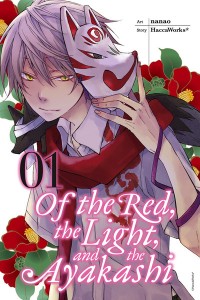
I’ve spoken before about how it can sometimes be difficult to review a new volume of a shoujo romance whose basic premise is ‘girl in high school likes guy, feelings ensue’, as there’s just so many of those out in North America. I am very happy to say that I’m starting to feel that way about the influx of yokai manga over here as well. We have all different types of yokai titles over here, including those for kids, for young adults, for men, for women. After a year that saw the loss of Shigeru Mizuki, it’s heartwarming to see his legacy, and that of Japan’s folklore, carry on. And so we have this new series, which is actually based off of a visual novel, and brings together the yokai genre with mystery, horror, and a bit of not-quite-BL – exactly what a shoujo reader would enjoy.

ayakashi1

Our hero is Yue, a name that longtime readers of manga will know always seems to be connected to the supernatural in some way. (I believe in Chinese it means moon.) He’s a yokai, and seems to be very important, but is unfamiliar with much of the world beyond the temple area in which he lives. So he and his friend/familiar descend the mountain to attend a festival, and run into two contrasting humans, one quiet and serious, the other angry and a bit over the top. As the series goes on, and he gets permission to visit his new wannabe friends, though, we discover the village where this is taking place is slightly off to begin with, and that there’s more going on here than meets the eye.

This series is an excellent example of what you want in a first volume. It gives you enough backstory and characterization to satisfy while making you want to read more to see what happens. Yue is sweet and naive without seeming foolish, and Tsubaki is reserved but shows a genuine love of family. As for Akiyoshi, he provides some of the series’ few laughs with his stalker-ish ways, but also gets to carry the bulk of the exposition, as he knows about the yokai without being part of them. Honestly, the three leads make a good team.

As for the horror and mystery, well, it would appear the danger is not just of having your life taken, as if a typical vampire manga, but having your very existence removed from the world. An old kindly elementary school principal vanishes one day, and those connected to the school deny he was ever there – or that they even had a principal. It gives an extra frisson of creepy to the whole deal. For more old-fashioned horror, there’s also the standard scary black ghosts that try to eat you, which also pop up a lot in these sorts of manga. Basically, AkaAka (its fan nickname) may not tread all that much original ground, but it hits all the right notes and really makes you want to read on. A definite good read, despite a double bad sign of both a name all in lowercase *and* a name with a special character in the authors.

Filed Under: REVIEWS

  • « Go to Previous Page
  • Page 1
  • Interim pages omitted …
  • Page 506
  • Page 507
  • Page 508
  • Page 509
  • Page 510
  • Interim pages omitted …
  • Page 1049
  • Go to Next Page »
 | Log in
Copyright © 2010 Manga Bookshelf | Powered by WordPress & the Genesis Framework