• Skip to primary navigation
  • Skip to main content
  • Skip to primary sidebar
  • Home
  • About Us
    • Privacy Policy
    • Comment Policy
    • Disclosures & Disclaimers
  • Resources
    • Links, Essays & Articles
    • Fandomology!
    • CLAMP Directory
    • BlogRoll
  • Features & Columns
    • 3 Things Thursday
    • Adventures in the Key of Shoujo
    • Bit & Blips (game reviews)
    • BL BOOKRACK
    • Bookshelf Briefs
    • Bringing the Drama
    • Comic Conversion
    • Fanservice Friday
    • Going Digital
    • It Came From the Sinosphere
    • License This!
    • Magazine no Mori
    • My Week in Manga
    • OFF THE SHELF
    • Not By Manga Alone
    • PICK OF THE WEEK
    • Subtitles & Sensibility
    • Weekly Shonen Jump Recaps
  • Manga Moveable Feast
    • MMF Full Archive
    • Yun Kouga
    • CLAMP
    • Shojo Beat
    • Osamu Tezuka
    • Sailor Moon
    • Fruits Basket
    • Takehiko Inoue
    • Wild Adapter
    • One Piece
    • After School Nightmare
    • Karakuri Odette
    • Paradise Kiss
    • The Color Trilogy
    • To Terra…
    • Sexy Voice & Robo
  • Browse by Author
    • Sean Gaffney
    • Anna Neatrour
    • Michelle Smith
    • Katherine Dacey
    • MJ
    • Brigid Alverson
    • Travis Anderson
    • Phillip Anthony
    • Derek Bown
    • Jaci Dahlvang
    • Angela Eastman
    • Erica Friedman
    • Sara K.
    • Megan Purdy
    • Emily Snodgrass
    • Nancy Thistlethwaite
    • Eva Volin
    • David Welsh
  • MB Blogs
    • A Case Suitable For Treatment
    • Experiments in Manga
    • MangaBlog
    • The Manga Critic
    • Manga Report
    • Soliloquy in Blue
    • Manga Curmudgeon (archive)

Manga Bookshelf

Discussion, Resources, Roundtables, & Reviews

Blog

A Certain Magical Index, Vol. 8

August 30, 2016 by Sean Gaffney

By Kazumi Kamachi and Kiyotaka Haimura. Released in Japan as “To Aru Majutsu no Index” by ASCII Mediaworks. Released in North America by Yen On. Translated by Andrew Prowse.

For the most part, the Index series has Kamijou Touma as the viewpoint character, with most of the books being from his perspective. The exceptions we’ve seen are the 5th book, which has a substantial chunk from Accelerator’s POV, and this novel, which has Shirai Kuroko taking center stage, though honestly the way the book is framed also seems to imply that she really shouldn’t be doing this. Not that she isn’t badass and awesome – she does a number of amazing things throughout the book – but the book puts her through even more damage than Touma, and suggests that this is sort of the thing that happens to protagonists. In addition, she and Touma have the same general outlook as to why they’re getting involved, at least when Misaka is involved – protect her worldview. And if Misaka is an optimistic girl who thinks people are basically swell except a few bad apples, then by god it will be so. Which is fine, except Touma is much better equipped to take on said world, which has a lot more to it than Misaka’s clone experiment.

index8

Introduced in this volume: Uiharu Kazari, Kongou Mitsuko (For once I refuse to acknowledge Yen’s official spelling), Musujime Awaki. Technically we’d seen Awaki twice before, but we didn’t know it was her. Continuity-wise… eurgh. This is the volume where it’s very clear that this is being written before A Certain Scientific Railgun has really gotten off the ground – it comes out a full year before the Railgun manga debuts. As such, Uiharu’s characterization seems very odd with her obsession with being ladylike. The “teasing Kuroko” thing is still around, though, and Kuroko still does not react well. This is right around the time Kongou is introduced in the Railgun manga, which is why it sounds like she’s meeting Kuroko for the first time, and talking about Cliques. That said, in the anime, where she’s introduced much earlier, this makes no sense. This is why spinoffs give me a headache. Oh, and Accelerator and Last Order are still in hospital, being watched by Aiho, who it’s revealed here is friends with Yoshikawa Kikyou.

Whenever I’ve discussed Kuroko before, I’ve said I’ll save my beef with her till this review, and here we are. So let’s face it: Kuroko is a “Comedy Lesbian”, something much beloved among Japanese anime and manga authors. Kuroko is a bit more single-focused than many others, but exhibits the same symptoms – a constant desire to get into Misaka’s pants, even if that means sexually assaulting her without her consent. This is OK to the reader because it’s clearly meant as “comedy” scenes, not to be taken seriously, and Misaka always fends her off. It drives me nuts. It particularly drives me nuts as whenever she’s not in that mode, Kuroko is quite a nice character, devoted to keeping the peace as part of the student task force “Judgment”. At least I won’t get as much of it in the novels, where Kuroko is a minor character by dint of simply not being all that involved with Touma.

The storyline itself ties together many of the loose ends from Books 3 and 5, as Awaki helpfully notes, being very much in the “school of villains who love to hear themselves talk’. She is very clearly set up to be a dark counterpart to Kuroko, right down to similar hairstyles and similar powers – they’re both even Level 4! But Awaki’s villainy is based around selfishness and fear, and Kuroko’s heroism, comedy lesbian antics aside, around selflessness and pride. There is much discussion of the powers that Academy City is developing, and how students who are found to have that kind of power really feel about them. There is also a LOT of technobabble, and Kamachi’s flaws as an author sometimes become apparent in that he will get more excited about his worldbuilding than he will about what’s actually going on. That said, the fights in this are top notch, and Accelerator vs. Awaki at the end has a great quotable line.

So another good book for Index fans, and quite short too – I think it’s the shortest in the series to date. Next time won’t be that, though, as we get Index’s first two-book arc, devoted to the Citywide School Athletic Festival.

Filed Under: REVIEWS

Pick of the Week: For a Few Yen More

August 29, 2016 by Michelle Smith, Sean Gaffney, Anna N and Ash Brown Leave a Comment

emma5MICHELLE: What a dilemma! A new volume of Fruits Basket versus a new volume of Yowamushi Pedal! I love both series, but I think the advantage here has to go to the content that hasn’t been released here before, in which case it’s Yowamushi Pedal by a handlebar!

SEAN: An embarrassment of stuff this week. Emma, Furuba, Nozaki-kun, YowaPeda, and light novels galore. My pick is the second Baccano! novel, because Jacuzzi and Nice are sweeties, and Ladd and Lua are terrifying, albeit in different ways.

ANNA: There is so much stuff coming out! I have to go with the title I’m most likely to read very soon, which is Nozaki-kun.

ASH: Wow, it’s a really great week for Yen Press manga! I’ll definitely be picking up Yowamushi Pedal and Monthly Girls’ Nozaki-Kun, but my official pick of the week goes to the final omnibus volume of Emma. I’m so glad that the series was rescued! I’m looking forward to completing my collection.

Filed Under: PICK OF THE WEEK

My Week in Manga: August 22-August 28, 2016

August 29, 2016 by Ash Brown

My News and Reviews

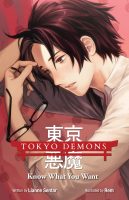
A new review was posted last week at Experiments in Manga! I’ve been meaning to get around to it since the book was first released back in February, but I’ve finally written up my thoughts on Know What You Want, written by Lianne Sentar. It’s a collection of short, sexually-charged side stories related to Tokyo Demons which is a series that I absolutely love. Reading Know What You Want isn’t necessary to understand the main series, but it does provide more character development, worldbuilding, and background information. Also, like Tokyo Demons proper, the stories can often be heartwrenching.

As for other interesting things found online: Two Tsutomu Nihei interviews were recently posted, one from Brigid Alverson for Barnes & Noble and one from Deb Aoki for Anime News Network. Taiyo Nakashima has a write up of a dialogue between Tetsuo Hara and Kentaro Miura for the Silent Manga Audition website. Publishers Weekly’s podcast More to Come recently featured Frederik L. Schodt discussing Osamu Tezuka. The second episode of the Translator Tea Time podcast is now available. Also at The OASG, eleven translators of anime and manga answer how they learned Japanese.

Quick Takes

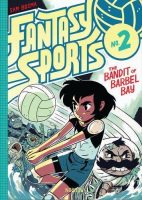
Fantasy Sports, Volume 2: The Bandit of Barbel BayFantasy Sports, Volume 2: The Bandit of Barbel Bay by Sam Bosma. I adored the first volume of Fantasy Sports. While I was looking forward to the next volume, I was also a little afraid that it wouldn’t live up to expectations. Happily, The Bandit of Barbel Bay is just as good as the first Fantasy Sports. I actually may have somehow enjoyed it even more. After defeating an ancient mummy in an epic game of basketball in order to secure an impressive amount of treasure, Wiz and Mug are trying to return to the pyramid of the Order of Mages when they end up robbed and stranded in Barbel Bay. This time they will have to win an ultimate volleyball tournament if they want to escape with the treasure and their lives. All goes well until they must face the champions of Barbel Bay, a pair of twins with godlike powers who rule the court. The story definitely has its fair share of silliness, but there’s also something sinister about the Order of Mages that is slowly being revealed. The Bandit of Barbel Bay is fantastic. Bosma’s artwork and colors are great; the characters are wonderful (the twins in particular are highly entertaining); the comic’s sense of humor is marvelous. Fantasy Sports is an absolute delight and incredibly charming; I can’t wait for the next volume to be released!

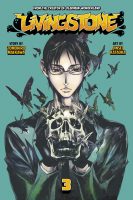
Livingstone, Volume 3Livingstone, Volume 3 written by Tomohiro Maekawa and illustrated by Jinsei Kataoka. For the most part, Livingstone continues to be a largely episodic manga. However, there is also an underlying story about Amano and the truth behind his existence that seems to be taking some precedence. Livingstone is apparently only four volumes (for some reason I thought it was longer than that), so I suspect that the fourth volume will largely be devoted to Amano. I was actually a little surprised by some of the recent developments in Livingstone and their implications–either I completely misunderstood some of the worldbuilding in the series or the creators have completely changed what they originally established. Either way, while the ambiguity is a little frustrating, overall I do find the series interesting. The individual stories, all of which deal with death in some way, range from uplifting to depressing although the series does have comedic undertones. Kataoka’s artwork fits the tone of the series well, creating a vaguely unsettling and disconcerting atmosphere while still managing to convey the humor. (One of primary reasons I was interested in Livingstone to begin with was actually because of Kataoka’s involvement.) Livingstone is a kind of a strange and uneven manga, but I’m still curious enough to want to see how it concludes.

Real Account, Volume 3Real Account, Volume 3 written by Okushou and illustrated by Shizumu Watanabe. The end of the second volume of Real Account included a major revelation about Ataru and ended with a pretty major twist on top of that. Not everything thing has been explained yet about that particular development, but the third volume abandons Ataru entirely to follow a new lead, Yuma. The creators do mention that Ataru isn’t completely gone from the series, but he doesn’t make even a token appearance in the third volume. Yuma is understandably similar to Ataru in many key ways, but the sudden shift in protagonists doesn’t work especially well. Despite knowing a fair amount of Yuma’s backstory before the volume begins, readers aren’t given much opportunity to really empathize with him before he’s thrown into the same life-or-death game as Ataru. And while I understand why the series is emphasizing how alike Yuma and Ataru are, the first chapter of the third volume feels extremely repetitive. For those reasons, I didn’t enjoy this particular installment of the series as much as the two that came before, but the series is still intriguing and the social media-inspired games are clever (though I did feel a bit cheated by some of their solutions). And I did appreciate that the third volume showed more of what is happening outside of Real Account, too.

Filed Under: FEATURES, My Week in Manga Tagged With: comics, Fantasy Sports, Jinsei Kataoka, Livingstone, manga, Okushou, Real Account, Sam Bosma, Shizumu Watanabe, Tomohiro Maekawa

Complex Age, Vol. 1

August 29, 2016 by Michelle Smith

By Yui Sakuma | Published by Kodansha Comics

complex1

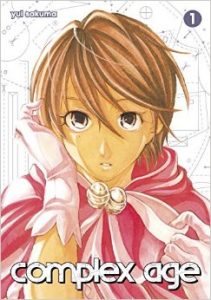
Twenty-six-year-old Nagisa Kataura is a perfectionist when it comes to cosplay. As a result, she has a tendency to critique the subpar efforts of others, but when she overhears a critical comment at an event that might be directed at her, she is suddenly plunged into self-doubt. Self-conscious of her height and age, she’s further troubled when she meets Aya, a younger and more petite cosplayer who is physically perfect to cosplay Ururu, the magical girl heroine Nagisa is most known for portraying.

Before reading Complex Age, it had never occurred to me that the world of cosplay could be so emotionally fraught. What I like best about it is how Sakuma is using this niche fan culture to explore universal themes like realizing you’re actually not the best at the thing that you love and struggling to accept that though you may not be perfect, you still have something unique and worthwhile to bring to the table. (I also enjoyed learning about things like how to make a custom wig.)

Another important plot thread is that Nagisa is hiding her hobby from most of the people in her life. She doesn’t want anyone’s negativity to defile her world, nor does she feel compelled to ask them to understand her. We glimpse her a few times at her temp job—and I have to wonder, are her work clothes a costume of their own?—where she doesn’t socialize with anyone except a snooty full-timer, only to end on a horrible cliffhanger as said full-timer spies her at a cosplay event.

I was pretty disheartened to find that, instead of the resolution to that encounter, we were getting the original one-shot instead. However, I was in for a pleasant surprise, because rather than an earlier iteration of the same story, the one-shot version of Complex Age is more of a companion piece, exploring similar themes as married thirty-four-year-old Sawako must decide whether it’s time to give up her Gothic Lolita fashions.

Ultimately, I enjoyed Complex Age a lot and look forward to volume two!

Complex Age is complete in six volumes. Kodansha will release volume two next month.

Filed Under: REVIEWS Tagged With: Yui Sakuma

Tokyo Demons: Know What You Want

August 26, 2016 by Ash Brown

Tokyo Demons: Know What You WantAuthor: Lianne Sentar
Illustrator: Rem, Romy-chan, Tacto

Publisher: Chromatic Press
ISBN: 9780993861185
Released: February 2016

Ever since reading You’re Never Alone, the first novel in Lianne Sentar’s Tokyo Demons, I have been nearly consumed by everything even tangentially related to the trilogy. I find Tokyo Demons to be remarkably engaging and as the series has progressed I have become increasingly invested in both the story and its characters. Tokyo Demons has a small but very loyal fanbase, so perhaps it isn’t too surprising that it became one of the flagship titles not only for Chromatic Press and the Sparkler Monthly magazine but also for Cherry Bomb, an imprint that provides an opportunity for Sparkler Monthly creators to explore more mature, sexually-charged stories and themes. Know What You Want, released in 2016, is the first Cherry Bomb collection to be compiled. It brings together four Tokyo Demons Cherry Bomb stories–”Building Up,” “Coming Down,” “Never Again,” and “Save Me/Don’t Save Me”–originally published online between 2014 and 2015. The volume also includes illustrations by Rem and Romy-chan and collects “Once,” a related short story previously released in You’re Never Alone, and “Unsaid,” a comic illustrated by Tacto which was created specifically for Know What You Want.

Some of the stories collected in Know What You Want take place before the beginning of Tokyo Demons, effectively serving as prequels, while others actually take place during the events of the main series. Rather than being organized chronologically, the stories are arranged by character beginning with Ayase and Jo who are the two primary point-of-view protagonists of Tokyo Demons. “Building Up” shows Ayase consciously and subconsciously struggling to come to terms with her complicated and conflicted feelings for Kiyoshi while “Coming Down” delves into some of the more unfortunate parts of Jo’s past. The following three pieces–”Once,” “Never Again,” and “Save Me/Don’t Save Me”–form a triptych which turns to Sachi, a somewhat unexpected Tokyo Demons fan favorite, and more specifically to the shifting dynamics of his relationship with Kadoyuki. (Appropriately enough, Sachi is also the character featured on the collection’s front cover.) Know What You Want closes with “Unsaid” which examines Miki, another member of the series’ extended cast, and the painful ramifications of his devotion to Mitsuko.

"Coming Down"Know What You Want epitomizes what Cherry Bomb is all about. The content is mature but it has purpose and meaning behind it. While there is sex, the real focus is on the characters and their relationships with themselves and with one another. The stories collected in Know What You Want provide additional background details and greater insight into the characters and story of Tokyo Demons. The situations portrayed are alluded to within the novels, but reading Know What You Want isn’t at all necessary to understand the main series. Readers who aren’t interested in erotica can still enjoy Tokyo Demons without needing to delve into Know What You Want, but those who are will discover that the collection expands and deepens the already impressive characterization and worldbuilding present in the trilogy. To varying degrees, all of the stories in Know What You Want can stand on their own satisfactorily, but the collection is really intended for people who have read and who are familiar with Tokyo Demons–the stories lose some of their impact and underlying meaning if removed from the context of the series as a whole.

The Tokyo Demons Cherry Bomb stories have been affectionately termed miserotica by both their creators and fans and rightfully so. Know What You Want is an intentionally uncomfortable, heartwrenching, and heartbreaking collection. Many of the characters in Tokyo Demons are teenagers who come from broken or nearly nonexistent families and homes. They are young, awkward, and apt to make terrible but well-meaning decisions in their social and emotional immaturity. While they are strong in some ways they are fragile in others, understandably desperate for and terrified of intimacy and human connection. The characters of Tokyo Demons are all incredibly well-developed and relatable, but it’s Sachi with his heightened empathy who tends to be the character with whom I most personally resonate. Partly because of this, the fraught relationship between Sachi and Kadoyuki is one of my favorites in the series, so I’m happy to see it receive so much attention in Know What You Want. “Save Me/Don’t Save Me” is a particularly powerful and moving piece (I have honestly cried every time that I’ve read it), but the entire collection is a provocative exploration of the complexities of love, longing, and acceptance.

Filed Under: REVIEWS Tagged With: Cherry Bomb, Chromatic Press, Lianne Sentar, Rem, Romy-chan, Tacto, Tokyo Demons

Manga the Week of 8/31

August 25, 2016 by Sean Gaffney 1 Comment

SEAN: August ends with a giant pile of manga, mostly via Yen Press, but as always we’ll start alphabetically.

lostgirls1

Kodansha gives us the first volume of the Attack on Titan: Lost Girls manga. This is an adaptation of the visual novel that focused on Mikasa and Annie, there’s also a novel that Vertical released. It promises to be quite good.

ASH: Oh! I somehow overlooked the manga being licensed, though I did know about the novel.

SEAN: There’s also a 4th volume of Maga-Tsuki, as well as a 9th Your Lie In April. You know I have little to say when I combine releases into the same line.

ASH: I didn’t care much for Maga-Tsuki, but for the most part I have been enjoying Your Lie in April. It can be a bit melodramatic, but I’m always down for music manga!

SEAN: Seven Seas gives us a 9th volume of runaway monster girl hit Monster Musume.

And they also have a 2nd volume of Shomin Sample, whose full title I won’t bother with. Volume 1 was not very good, but did make me laugh more than I expected to.

Vertical Comics also has a Vol. 9, this one is Witchcraft Works.

OK, that’s it for non-Yen titles. Let’s start with digital, there are new digital volumes of Aoharu x Machinegun (5), Black Detective (5), Corpse Princess (6), and Saki (5). I’m falling behind on Saki, I will admit.

ASH: Still happy if somewhat stunned that Saki is being translated!

SEAN: Yen On has a full 8 light novels out this month; luckily, we already had two of them out this week. For next week, we get the debut of The Asterisk War, a stunning expose of modern copyediting in Japan. Wait, no, this is another fantasy series with magic, swords, and cute girls. But, on the bright side, it does not have anyone getting trapped in a game.

baccano2

Baccano! has a 2nd light novel, this the first of a 2-part arc subtitled The Grand Punk Railroad (this is the “Local” novel.) It is worth noting that one of the protagonists in this book is named Jacuzzi Splot. This alone should make everyone want to read it.

MICHELLE: Haha. At some point, I will get around to these.

SEAN: And a 4th Black Bullet, which will have to figure out how far down the rabbit hole it can go after last volume’s “kill an entire classroom of adorable children”.

The Devil Is A Part-Timer! is always a treat, and I look forward to the 5th volume.

ASH: I’ve fallen behind on the series, but was greatly amused by its beginning.

SEAN: Likewise, Is It Wrong To Try To Pick Up Girls In A Dungeon? continues to have a batting average above its premise, and the 6th volume should continue that.

And Sword Art Online has an 8th volume, this one devoted to two large novellas and a short story, taking place both during the time in Aincrad and after.

MJ: I’m still reading this, so… that’s something.

SEAN: On the manga front, Yen has a 2nd volume of Anne Happy, a story of several unlucky students and their bizarre classroom.

And there’s a 2nd omnibus of Corpse Party: Blood Covered, which as you can tell from the title is filled with heartwarming fluff.

Yen has a 3rd volume of sci-fi thriller Dimension W.

ASH: I recently picked up the first two volumes since I generally like Yūji Iwahara’s manga. Also, the covers glow in the dark!

SEAN: And a 4th volume of fanservice-heavy Dragons Rioting.

MJ: I know fanservice sells, but it’s become so overwhelming in Yen titles generally, I’ve started to wonder what’s left for me. Then I remember things like Emma and Fruits Basket.

SEAN: Well, Yen Press allied with Kadokawa Shoten, and is now putting out a bunch of its titles. Between Dragon Age and Comic Alive, there’s a lot of titles that cater to the male otaku.

emma5

We have reached the end of Emma with its 5th and final omnibus. This one is mostly side stories, but does also give us some time with the main characters themselves. So happy Yen rescued this.

MJ: Yep.

ASH: Yes! I was one of the people who discovered the series after it had gone out of print. I’m thrilled that I can now own it, and Yen has done a beautiful job with the release.

ANNA: I got it the first time around, but am so happy that people who hadn’t read it before have a chance at a nice rerelease.

SEAN: And a 4th omnibus of Fruits Basket, which introduces us to Hiro, who is one of my favorite underappreciated characters.

MICHELLE: This is coming out so fast!

MJ: Delightfully fast!

ANNA: Fruits Basket EEEE! I have all the TokyoPop volume, so I have held off on this but I am delighted it is in print again!

SEAN: Monthly Girls’ Nozaki-kun is always at the top of my pile when it comes out, because it will always be the funniest thing to read.

MJ: I gotta get into this.

ASH: Definitely! I think you’ll like it. The anime adaptation is great, too.

ANNA: I like it, and it is genuinely funny.

SEAN: School-Live! has a 4th volume of adorable schoolgirls and horrific zombies.

Trinity Seven, Volume Six. I’ve made this joke too many times already, so just insert your football results gag here.

Lastly, there is a 3rd omnibus of Yowamushi Pedal, filled with earnest cycling and the sweat and tears of male athletes. It’s actually quite awesome.

MICHELLE: I love it!

ASH: I enjoy this series so much.

ANNA: I haven’t picked this up yet, which I’m sure indicates that there is something wrong with me.

SEAN: As always, so much stuff you could be behind forever. What are you reading?

Filed Under: FEATURES, manga the week of

Otherworld Barbara, Vol. 1

August 23, 2016 by Sean Gaffney

By Moto Hagio. Released in Japan as “Barbara Ikai” by Shogakukan, serialized in the magazine flowers. Released in North America by Fantagraphics. Translated by Matt Thorn.

For many readers, no review is necessary – just seeing the words “Moto Hagio” on the cover will make this a must-buy. But for those of you who have not yet been captivated by one of Japan’s premier artists, let me assure you that this first omnibus volume of Otherworld Barbara is absolutely worth the extra expense of a hefty hardcover. At times melancholy, amusing, heartbreaking and terrifying, it’s a trip through the senses, as with Hagio’s other work that’s recently come out over here (A Drunken Dream). This has the added benefit of being a complete story, and so you can see how she sets up various plot points and then allows them to sit percolating until they can be used again to devastating effect.

otherworld1

I was faked out at first, I admit. We’re introduced to an odd fantasy hybrid of a world, where a little girl who has difficulty flying like her friends do has happy fun adventures, but right away we see that Aoba is odd – eating the book gives it away if nothing else. It’s an odd hybrid of Peter Pan-style fantasy and reality, as there are several quasi-connections with the Tokyo we know. Then all of a sudden we’re away from that, and following the story of Dr. Watarai, a man whose job it is to enter other people’s dreams, and the troubled relationship he has with his teenage son Kiriya, who is a teenage boy in so many ways. I had assumed that the manga would now shift back and forth between the two “worlds”, but no, we don’t go back to the fantasy world till the second half of the book, where it becomes far more relevant – and creepy.

The fantasy stuff is excellent, but the book really shines when getting involved in the interpersonal relationships Dr. Watarai has with everyone from his bitter, slightly hysterical ex-wife to a somewhat overenthusiastic young protege. His fractured relationship with his son feels very real, especially as there are no good, easy fixes. Kiriya is also dealing with difficult times, as aside from his father he’s being courted – well, stalked to a degree – by a classmate, and also dreaming of Dr. Watarai’s latest patient, a woman who’s been in a coma for years ever since a devastating accident involving her parents. Where the two worlds collide is that this woman is named Aoba, and is clearly the same person as the young girl in the fantasy world.

There’s a lot more going on here, including age regression that almost turns into personality overlay, deadly psychic tornados, terrifying killer dolls, and a seeming suicide that makes you go back to the title page for the chapter and say “Really? You really went there?”. It’s definitely not a book for kids. But there’s so much going on here – in plot, which the reader figures out at the same time as the characters do, and in mood, which is always my go-to reason to read Hagio’s manga. things promise to get a lot more complex for the second and final book, as we also find out about a connection to Mars, and a sinister conspiracy led by a not-so-noble priest. If you enjoyed manga that rewards endless rereads with both its art and style, you can’t go wrong with Otherworld Barbara.

Filed Under: REVIEWS

Bookshelf Briefs 8/22/16

August 22, 2016 by Sean Gaffney and Michelle Smith Leave a Comment

assclass11Assassination Classroom, Vol. 11 | By Yusei Matsui | Viz Media – This is a volume I’d been expecting for some time, and it’s a story that needed to be told. When you take a group of bullied, persecuted students, given them amazing skills and actual teaching and care, and then watch them succeed beyond their wildest dreams, you’re going to have something like this happen. Our heroes are getting too self-satisfied and too cocky. And so, naturally, they make a mistake, which is bad enough, and then try to weasel out of it, which is much worse. Koro-sensei’s punishment was much needed, and of course it also reassures us that they’re still good kids at heart. For a manga about a yellow blob in a classroom where everyone’s trying to kill the teacher, this is still top-drawer stuff. – Sean Gaffney

blackclover2Black Clover, Vol. 2 | By Yuki Tabata | Viz Media – This seems to be another one of those titles that I enjoy almost despite itself. It really is astounding how many other popular titles you can see it trying to emulate. I mentioned Fairy Tail last time, but there’s a lot of Naruto here as well, as well as The Seven Deadly Sins. But the big obvious one this time is Magi, which again fulfills the rule of being a title from another company that is now being given a Jump spin. Oh yes, and one of the bad guys, Lotus, reads like Shunsui from Bleach as well. But the kids are nice and likeable, the fights are fairly interesting, and there were one or two times I laughed. Black Clover is anti-original, but it’s not actively bad, and those who enjoy “a Jump manga” will enjoy it. – Sean Gaffney

haikyu2Haikyu!!, Vol. 2 | By Haruichi Furudate | Viz Media – As you’d expect, most of this volume deals with the first competition our heroes have, even if it’s just a practice match. This allows Hinata to deal with the hideous nerves he has due to finally being able to achieve his dream and worrying that he’ll screw it up. Kageyama’s response to this mid-game, by the way, is probably the funniest moment of the book. We also meet the stars of the other team, and a new player for Hinata’s team, whose amusing secret ends up being both a cliffhanger and a punchline. For the most part, though, this volume is about breaking down the volleyball game and why Kageyama and Hinata, when they’re finally in sync, are so dangerous together. It’s good shonen sports fun. – Sean Gaffney

itazura11Itazura Na Kiss, Vol. 11 | By Kaoru Tada | Published by DMP – It’s here, it’s here! A new installment of Itazura Na Kiss is so very welcome, it almost supersedes any irritation over Kotoko’s perpetual incompetence. As the volume begins, she and Naoki have been separated for a year while he interns at a hospital in Kobe. While her continued mistakes can be frustrating, they often lead to sweet scenes in which Naoki is remarkably patient and reassuring, so that’s a plus. I also really liked the scene in which he challenges her to assist him in an emergency surgery and, for the first time, they end up saving someone’s life together. Too, they also helped some other characters get together; Naoki advising Yuuki, who’s so like him and yet also his own person, about acknowledging his feelings for Konomi was another highlight. I don’t know how long it’ll be ’til the twelfth and final installment, but my enthusiasm has been rekindled. – Michelle Smith

magi19Magi: The Labyrinth of Magic, Vol. 19 | By Shinobu Ohtaka | Viz Media – I’ve talked before about the author’s constant need to undercut any awesome moment Alibaba has the potential to have with either abject defeat or an amusing gag. That happens here as well, but it seems to be part of a larger aspect of Magi: anyone, no matter how confident or powerful, is capable of failing miserably in the right circumstances. OK, maybe not Sinbad, but he’s not here right now, is he? (Nor is Morgiana, and I really want to see her soon.) But our heroes and villains fight on anyway, being driven by those who inspire them out of strength (Koha and Koen) or determination (Marga and Titus). That said, this is still a volume that’s mostly just fighting, which again means all I can say to sum it up is: huh, cool. – Sean Gaffney

myhero5My Hero Academia, Vol. 5 | By Kohei Horikoshi | Viz Media – Yeah, I was not about to see Uraraka win as I’d hoped, but she put on an impressive showing against Bakugo, even if the audience didn’t quite seem to notice and thought he was bullying her. (He noticed, trust me.) More surprising, though, was seeing Midoriya losing in the semis, as the stage was clearly set for him to battle Bakugo in the finals. But there’s a more important lesson to be delivered here, about expectations and parents and doing what you want to do with all you’ve got, and Todoroki needed to learn it—though he had trouble applying it to the final, much to Bakugo’s frustration. In any case, we have the tournament arc out of the way early, so I suspect we’ll see a few more villains next time. – Sean Gaffney

op79One Piece, Vol. 79 | By Eiichiro Oda | VIZ Media – Well, it’s not quite the end of the Dressrosa arc, but it’s close! Although Luffy’s “Gear Four” has dealt Doflamingo a blow, it’s not a state he can sustain, and he needs ten minutes before he can use it again. In the meantime, gladiators, citizens, and even the sympathetic Navy admiral Fujitora rally together to try to buy time by delaying the approach of Doflamingo’s razor-sharp birdcage. It’s pretty suspenseful, and we also get welcome flashbacks as to where Sabo’s been all this time, but my favorite part is how Luffy defeating Doflamingo (for, of course, he eventually does) earns him many new enemies, especially those who had yet to receive the shady products they had already paid for. The world is widening once again, but first, the Straw Hats must get off the island before the Navy nabs them. Stay tuned! – Michelle Smith

sily15Say “I Love You,” Vol. 15 | By Kanae Hazuki | Kodansha Comics – I was surprised when the last few volumes focused more on the secondary cast than our hero and heroine (who had finally gotten together), but that’s nothing compared to my surprise at the end of this volume, where everyone graduates from high school and yet the manga does not end. This is so unexpected that the author feels the need to address it in her notes, stating this was what she planned on. I’m not quite sure I buy that, but it will hopefully lead to more interesting places. Much of the volume is spent reminding us how far Mei has come since the start, and she seems to have grown up beautifully. Can her relationship be sustained after “happily ever after,” though? – Sean Gaffney

Say I Love You., Vol. 15 | By Kanae Hazuki | Kodansha Comics – All things considered, this is a pretty melancholy volume. The first few chapters focus on Ren, who finally confesses his feelings to Mei and then tries to convince himself that being rejected didn’t hurt. Kai and Megumi say some awful things to each other, though they eventually patch things up. And the gang graduates from high school, “splitting up to find new versions of ourselves,” with much wistfulness and a farewell tour for high school memories. The manga is continuing, which I think is good news, but I have absolutely no idea what it’s going to look like, or which characters we’re going to keep following. Have we seen the last of the Aoi siblings, for example? I guess I’ll have to wait until October to find out. – Michelle Smith

Filed Under: Bookshelf Briefs

Pick of the Week: Old Friends and Repeat Offenders

August 22, 2016 by Sean Gaffney, Michelle Smith and Ash Brown 1 Comment

itazura11SEAN: I admit, if it weren’t for Yen On not delaying two of their books this week, I might not have anything to pick at all. As it is, I’ll pick the 8th volume of A Certain Magical Index. Kuroko may drive me crazy with her “comedy lesbian” antics, but it’s still a great read for me.

MICHELLE: I don’t really read light novels much, so I *am* in the position of not having something to pick. So, instead I will pick Itazura Na Kiss volume eleven, which came out last week. Get yours from Akadot!

SEAN: And only from Akadot, it would seem. Grump.

ASH: As for me, I’ll be taking advantage of this slower week to try to catch up on The Heroic Legend of Arslan!

Filed Under: PICK OF THE WEEK

My Week in Manga: August 15-August 21, 2106

August 22, 2016 by Ash Brown

My News and Reviews

After a somewhat tumultuous year, last week marked the sixth anniversary of Experiments in Manga! Though at one point I was very stressed out about the fate and state of the blog, I’m now honestly looking forward to year seven, even if I’m not able to write as much anymore. Thank you to everyone who has read and supported Experiments in Manga in the past, present, and future!

Elsewhere online, Speculative Fiction in Translation interviewed Tyran Grillo, translator of Yusaku Kitano’s award-winning Mr. Turtle, the most recent offering from Kurodahan Press. And Barnes & Noble posted a list of 8 Great Japanese Books in Translation That Aren’t by Haruki Murakami. It’s a great list–I’ve only reviewed one of the novels included (Manazuru by Hiromi Kawakami), but I’m very fond of Keigo Higashino‘s work and several of the other books are very high on my to-be-read pile.

Quick Takes

Forget Me Not, Volume 3Forget Me Not, Volume 3 written by Mag Hsu and illustrated by Nao Emoto. I was taken a little by surprise by how much I enjoyed the first two volumes of Forget Me Not and so I was looking forward to reading the third volume as well. The series delves into the life and past loves of Serizawa, a young man who so far has been shown to have very little luck when it comes to romance. Some of his relationship woes can be credited to the fact that he’s still immature and inexperienced, but that’s starting to become less and less of an excuse for him now that he’s in college. Perhaps because of that, the third volume of Forget Me Not didn’t work quite as well for me as the previous volumes did. It is very clear that the relationships shown in the third volume are heading towards an absolute train wreck. Considering the beginning of the series it’s already a known fact that Serizawa ends up alone and full of regret, but it’s still painful to watch the whole mess unfold. I feel just as badly for the two young women involved as I do for Serizawa. They both like him and he likes them both; Serizawa just hasn’t been able to figure out exactly what that means yet. Apparently, he still has quite a bit of growing up left to do. Despite my frustration with the most recent volume of Forget Me Not, I am curious to see how this unfortunate past ties in with the mystery of Serizawa’s current situation.

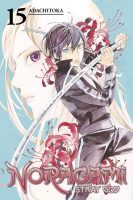
Noragami: Stray God, Volume 15Noragami: Stray God, Volumes 15-16 by Adachitoka. Although the series’ quirky humor hasn’t completely disappeared, Noragami has become increasingly dark and dramatic over time. Adachitoka does still find appropriate moments within the series to insert a bit of levity, but for me what makes the manga compelling is its characters. The real heart of the much of the conflict in Noragami–the frequently unpredictable relationships between the various gods as well as the turbulent relationships between the gods and mortals–has once again been thrust to the forefront of the series with the manga’s most recent story arc. One thing that I found particularly interesting about these two volumes of Noragami is that Adachitoka introduces several deities of indigenous origins in addition to recognizing the existence of foreign gods. I’m not sure that they will necessarily have a large role to play in the series (then again, it seems as though they might), but this expansion is marvelous from a worldbuilding perspective, especially as Noragami is currently dealing heavily with the court and political intrigue of the Heavens. Along with that also comes a few tremendous fight sequences. Ocassionally some of the individual actions can be a little difficult to follow amidst the chaos of battle, but overall the scenes are effective and at times even impressive.

Ten Count, Volume 1Ten Count, Volume 1 by Rihito Takarai. Although the art style in Ten Count looked familiar to me, I actually didn’t make the connection at first–Takarai was the artist of the short boys’ love series Seven Days which I loved. Ten Count, however, is a very different manga than Seven Days. Even before it was licensed in English, I was aware of Ten Count. It’s a massively popular boys’ love manga, but the series also has a fair number of detractors and understandably so. Only one volume in and Ten Count is already a deliberately uncomfortable and troubling story with dark psychological elements, dubious ethics, and emotional manipulation. The manga follows Shirotani, a young man with a severe obsessive-compulsive disorder which has remained untreated since it first manifested. After a chance meeting Shirotani catches the attention of Kurose, a clinical psychotherapist who would seem to have some emotional issues of his own. Kurose takes a particular and decidedly unprofessional interest in Shirotani, offering to help Shirotani deal with his condition off-the-record and off-the-clock. Without realizing it, as Shirotani begins to be able to more easily function within society, he has also become more and more reliant on Kurose. Romantic it certainly is not, but at least for the moment I’m part of the group that finds Ten Count compelling and definitely plan on reading more.

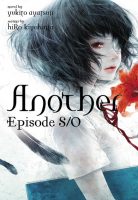
Another: Episode S/0Another: Episode S/0, novel by Yukito Ayatsuji, manga by Hiro Kiyohara. While I was left feeling a little cheated by how some of the major reveals were handled in the horror-mystery novel Another, for the most part I did like the book. And so I was excited when Yen Press licensed both the not-exactly-sequel Another: Episode S (the main action of the novel takes place during the original Another but is only tangentially related) and the short prequel manga Another 0, releasing them together in a single, beautiful hardcover volume. (Out of all the North American manga publishers, Yen Press has had some of the best book designs of late.) Sadly, Episode S has many of the same narrative problems found in Another, namely important reveals that, while they make sense, seem a bit unfair to the readers. I actually really liked the plot twists themselves in Episode S, it’s just that their execution falls short; once again left feeling unsatisfied by the story’s developments. Tonally, Episode S is a little different from Another–while it’s still a ghost story of sorts and there are some marvelously disturbing scenes, the mystery is emphasized far more than the horror. The atmosphere of Another 0, written and illustrated by the creator who helmed the Another manga adaptation, is much closer that of Another. The prequel relies heavily on readers’ familiarity with the original while Episode S largely stands on its own.

Ultimate Conditioning for Martial ArtsUltimate Conditioning for Martial Arts by Loren Landow. From an athletic standpoint, I have found several of the books published by Human Kinetics to be useful resources in supplementing my study of traditional Okinawan karate. Ultimate Conditioning for Martial Arts, one of the publisher’s most recent titles, can technically apply to any martial artist, but the book does tend to be geared more towards athletes and competitors. Landow also assumes that readers already have basic knowledge of anatomy, physiology, and sports training methods. While perhaps not suitable for absolute beginners, Ultimate Conditioning for Martial Arts does provide a good starting point for established martial artists who want to begin incorporating speed, agility, and conditioning work into their training. In addition to providing suggested conditioning exercises and programs, Landow also incorporates an overview of relevant and closely-related topics such as the evaluation and establishment of fitness baselines, warmups and flexibility, rest and recovery, and nutrition. The book includes a generous number of helpful photographs to accompany the descriptions of the specific exercises, but the photographs selected aren’t always the ones that would be most illustrative or useful. Additionally, rather than explaining the particular functions and applications of the individual exercises, Landow tends to broadly generalize and categorize their benefits. This lack of specificity and guidance can make the creation of an individualized conditioning program challenging for someone who has never developed one before. Ultimate Conditioning for Martial Arts groups commonly practiced martial arts disciplines together as either striking and kicking arts or wrestling and grappling arts. Landow suggests specific conditioning exercises for each category but also emphasizes the benefits of using a blended approach when developing a training program. Mixed Martial Arts is the only discipline that’s addressed in-depth but Ultimate Conditioning for Martial Arts is still broadly applicable to other martial arts and a valuable resource, providing a fine overall introduction to conditioning and endurance training.

Filed Under: FEATURES, My Week in Manga Tagged With: Adachitoka, Another, Forget Me Not, Hiro Kiyohara, Loren Landow, Mag Hsu, manga, Nao Emoto, Nonfiction, Noragami, Novels, Rihito Takarai, Ten Count, Yukito Ayatsuji

  • « Go to Previous Page
  • Page 1
  • Interim pages omitted …
  • Page 475
  • Page 476
  • Page 477
  • Page 478
  • Page 479
  • Interim pages omitted …
  • Page 1048
  • Go to Next Page »
 | Log in
Copyright © 2010 Manga Bookshelf | Powered by WordPress & the Genesis Framework