• Skip to primary navigation
  • Skip to main content
  • Skip to primary sidebar
  • Home
  • About Us
    • Privacy Policy
    • Comment Policy
    • Disclosures & Disclaimers
  • Resources
    • Links, Essays & Articles
    • Fandomology!
    • CLAMP Directory
    • BlogRoll
  • Features & Columns
    • 3 Things Thursday
    • Adventures in the Key of Shoujo
    • Bit & Blips (game reviews)
    • BL BOOKRACK
    • Bookshelf Briefs
    • Bringing the Drama
    • Comic Conversion
    • Fanservice Friday
    • Going Digital
    • It Came From the Sinosphere
    • License This!
    • Magazine no Mori
    • My Week in Manga
    • OFF THE SHELF
    • Not By Manga Alone
    • PICK OF THE WEEK
    • Subtitles & Sensibility
    • Weekly Shonen Jump Recaps
  • Manga Moveable Feast
    • MMF Full Archive
    • Yun Kouga
    • CLAMP
    • Shojo Beat
    • Osamu Tezuka
    • Sailor Moon
    • Fruits Basket
    • Takehiko Inoue
    • Wild Adapter
    • One Piece
    • After School Nightmare
    • Karakuri Odette
    • Paradise Kiss
    • The Color Trilogy
    • To Terra…
    • Sexy Voice & Robo
  • Browse by Author
    • Sean Gaffney
    • Anna Neatrour
    • Michelle Smith
    • Katherine Dacey
    • MJ
    • Brigid Alverson
    • Travis Anderson
    • Phillip Anthony
    • Derek Bown
    • Jaci Dahlvang
    • Angela Eastman
    • Erica Friedman
    • Sara K.
    • Megan Purdy
    • Emily Snodgrass
    • Nancy Thistlethwaite
    • Eva Volin
    • David Welsh
  • MB Blogs
    • A Case Suitable For Treatment
    • Experiments in Manga
    • MangaBlog
    • The Manga Critic
    • Manga Report
    • Soliloquy in Blue
    • Manga Curmudgeon (archive)

Manga Bookshelf

Discussion, Resources, Roundtables, & Reviews

Blog

JoJo’s Bizarre Adventure: Stardust Crusaders, Vol. 1

November 13, 2016 by Sean Gaffney

By Hirohiko Araki. Released in Japan as “Jojo no Kimyou na Bouken” by Shueisha, serialized in the magazine Weekly Shonen Jump. Released in North America by Viz Media. Translated by Evan Galloway, original translation and adaptation by Alexis Kirsch and Fred Burke.

Though this is the third arc in the JoJo’s series, it was actually the first released in North America, as Viz released it on its own in 2005. I never read it, mostly as it was the 3rd part of a series, and from what I hear its sales were no great shakes. But now JoJo’s is becoming more of a phenomenon, and the hardcovers seem to be doing OK, and so thankfully we get to read this somewhat in context, as we are introduced to Joseph Joestar’s grandson, Jotaro Kujo, his somewhat airheaded mother, Holly (she must get it from her own mother), and another epic quest, as Dio has returned from the dead to stir up trouble, kill off a few helpless victims, and make life miserable for the Joestars. And so the stage is set for an epic battle. Sadly, the first volume of said epic battle mostly falls flat for me.

jojo3-1

Jotaro is Japanese, unlike his English great-great grandfather or American grandfather, and shows it off by taking on the staple of 80s manga destined never to be licensed here, the delinquent uniform, complete with peaked cap that is worn slightly off-kilter. Unlike his overearnest/cocky (delete where applicable) ancestors, Jotaro is mostly stoic and cool, which is nice but makes him a lot more of a flat character than his predecessors. Thankfully, Joseph is here, albeit mellowed, and we get a few of the classic JoJo’s types – the mentor and friend, the villain turned good guy, the smug asshole minor villains, and the piles of cannon fodder that lead to many sort-of deaths. (The deaths are not as numerous as you’d expect – the school nurse who is possessed by evil literally has her head ripped off, but should be fine if she’s treated soon. What the hell?)

Of course, the main driving force of this arc is that Dio is back, and clearly up to his old tricks, using Jonathan’s body with his head stapled into it to possess people with parasitic brain worms and casually rape and murder random women in his castle of doom. What’s more, people are now exhibiting new Superpowers, called “Stands” for a reason so stupid I’d rather forget about it. Sometimes these can be cool, like JoJo’s, but they can also be deadly, like his mothers, which is causing her to slowly die by mutating into a plant, as far as I can tell. Thus our heroes must fly to Cairo to take on Dio, provided of course their plane is not hijacked, which it is. This arc is apparently a road movie, so expect lots of foreign settings in amongst the cool poses and piles of gore.

If you read JoJo’s for such things, you should enjoy this volume. There’s cool fights, there’s grotesque violence (the insect pulling the tongues out of an entire aisle of innocents on the plane wins), and there’s occasional stabs at humor, including a bad pun as the cliffhanger. But unfortunately, this was the first JoJo’s that I came away from thinking it was rather dull compared to its predecessors. Given it’s longer than both its predecessors combined, I’m hoping it fixes that soon.

Filed Under: REVIEWS

Aoharu x Machinegun, Vol. 1

November 12, 2016 by Sean Gaffney

By Naoe. Released in Japan by Square Enix, serialization ongoing in the magazine GFantasy. Released in North America by Yen Press. Translated by Leighann Harvey.

I have to admit, I wasn’t looking forward to this one. It’s clearly popular, given it’s a Yen Press digital-only title that escaped into print (6 volumes are currently out digitally). But I saw the words ‘survival game’ and groaned, having grown incredibly weary of Battle Royale wannabes, ever decreasing casts, and heartwarming character development followed by murder. Fortunately, Aoharu x Machinegun isn’t any of these things, instead being about a survival game we have here in reality – paintball wars. Only no paint here, instead we have bb pellets, and the party that is shot has to announce it. You can imagine how often that works out. Luckily, the two guys who make up our viewpoint team have found a new, good and earnest young man to be their third. Except what they don’t know is… she’s a woman!

aoharu1

This title runs in GFantasy, so probably deserves to be called shoujo, as that’s as close as Square Enix really gets to the genre. Our heroine, who sadly isn’t badass enough to get the cover art, is Hotaru, who goes to school dressed in a male uniform, is fairly flat-chested, and has a strong sense of justice that leads her to be hot-blooded and violent. Ergo, no one really assumes she’s a girl at all – only her best friend seems to know. The sense of justice is what leads to our plot, as in order to get revenge for said friend, she ends up invading a host club to take on the guy who was responsible. Naturally, he challenges her to a gun duel, and naturally, she loses. But she does have mad skills, so (not knowing she’s female – he literally tells the others he refuses to have girls on his team) he gets her to join him in outdoor survival gun battles.

So yeah, less Battle Royale and more Ouran High School Host Club. Unlike Ouran, though, the artist seems content to have Hotaru’s secret be a secret for now, which is fine, as neither Masamune (the aforementioned guy) or Tooru (the somewhat creepy next door neighbor who has an unhealthy obsession with Masamune) seem to be falling for her despite themselves. I was actually rather surprised that this trope didn’t pop up immediately, given its appearance in almost all shoujo featuring cross-dressing female leads. But romance is not the point of this first volume. This first volume is driven by Hotaru stressing out, bonding with her new friends, and being so overearnest that it drives everyone to distraction. It’s a good contrast for the guys, who are far more devious, though that sometimes doesn’t work out for them, particularly Tooru.

Nothing in this volume blew me away, but it’s quietly competent, with good action scenes and a likeable hero. And of course it hits on a current trend, while also managing to keep itself light and fluffy. And Hotaru’s very likeable. “Decent” is not really much of a recommendation, but that’s how I come away from Aoharu x Machinegun. Tell you what, I’ll add to it. “Mostly decent.”

Filed Under: REVIEWS

Bookshelf Overload: October 2016

November 11, 2016 by Ash Brown

October brought quite a few interesting things to my shelves. The University of Hawaii Press, which publishes some excellent Japan-related materials, had a major sale celebrating its 69th anniversary. So as not to go overboard (which would have been incredibly easy to do) I limited myself to five books. I was especially excited that Modanizumu: Modernist Fiction from Japan, 1913-1938 was included in the sale–it’s been on my wishlist since I wrote my spotlight on Kaita Murayama a couple of years ago. Kodansha Comics continues to impress me with the range and variety of manga that it’s publishing this year. Some of the great Kodansha manga from October included (but certainly wasn’t limited to) the shoujo tribute anthology Neo-Parasyte F, The Ghost and the Lady, Volume 1 by Kazuhiro Fujita and of course Princess Jellyfish, Omnibus 3 by Akiko Higashimura. (Technically, that last one is a November release; my copy just arrived early). High on the list of other October manga for which I was particularly excited there’s Blue Morning, Volume 6 by Shoko Hidaka (actually released in September, but I finally got my hands on a copy) and Kitaro Meets Nurarihyon by Shigeru Mizuki. As for non-manga October releases, I’m hoping to make time to read the second novel in Ken Liu’s Dandelion Dynasty trilogy, The Wall of Swords, sooner rather than later. (The first volume, The Grace of Kings, was one of my favorite books from last year.) I must also mention the wonderful children’s book and poetry collection Are You an Echo?: The Lost Poetry of Misuzu Kaneko which I recently reviewed and highly recommend.

Manga!
Ajin: Demi-Human, Volume 8 by Gamon Sakurai
Attack on Titan: Lost Girls, Volume 1 by Ryosuke Fuji
Blue Morning, Volume 6 by Shoko Hidaka
Cells at Work!, Volume 1 by Akane Shimizu
Dawn of the Arcana, Volumes 1-7, 9, 12-13 by Rei Toma
The Ghost and the Lady, Volume 1 by Kazuhiro Fujita
I Am a Hero, Omnibus 2 by Kengo Hanazawa
Interviews with Monster Girls, Volume 1 by Petos
Kitaro Meets Nurarihyon by Shigeru Mizuki
My Love Story!!, Volume 10 written by Kazune Kawahara, illustrated by Aruko
Nekogahara: Stray Cat Samurai, Volume 1 by Hiroyuki Takei
Neo-Parasyte F by Various
Platinum End, Volume 1 written by Tsugumi Ohba, illustrated by Takeshi Obata
Princess Jellyfish, Omnibus 3 by Akiko Higashimura
Samejima-kun and Sasahara-kun by Koshino
The Secret Sakura Shares by Akira Hagio
Sweetness &Lightning, Volume 2 by Gido Amagakure
Ten Count, Volume 2 by Rihito Takarai
Yona of the Dawn, Volume 2 by Mizuho Kusanagi

Manhwa!
Goong: The Royal Palace, Volumes 2-7, 9-10 by Park SoHee

Comics!
Adulthood Is a Myth by Sarah Andersen
Eat Me by Megan Rose Gedris
Godzilla in Hell by James Stokoe
Food Baby by Lucie Byron
Hotblood!: A Centaur in the Old West by Toril Orlesky
Humanescent written by Jacques Nyemb
Kill 6 Billion Demons, Volume 1 by Tom Parkinson-Morgan
Love! Love! Fighting! by Sharean Morishita
Romeo X Julien, Act 2: The Lovers by Marina
Tetris: The Games People Play by Box Brown

Artbooks!
Fat Mermaids edited by Paige Hall
Hotblood! Foundry: Materials Book (1871-2016) by Toril Orlesky

Novels!
Deep Red by Hisashi Nozawa
Dandelion Dynasty, Book 2: The Wall of Swords by Ken Liu

Anthologies!
Modanizumu: Modernist Fiction from Japan, 1913-1938 edited by William Jefferson Tyler
Three-dimensional Reading: Stories of Time and Space in Japanese Modernist Fiction, 1911-1932 edited by Angela Yiu

Nonfiction!
Are You an Echo?: The Lost Poetry of Misuzu Kaneko written by David Jacobson, illustrated by Toshikado Hajiri
Bodies of Evidence: Women, Society, and Detective Fiction in 1990s Japan by Amanda C. Seaman
Reading Food in Modern Japanese Literature by Tomoko Aoyama
She Changed Comics: The Untold Story of the Women Who Changed Free Expression in Comics by Various
Whisky Japan: The Essential Guide to the World’s Most Exotic Whisky by Dominic Roskrow

Anime!
Monthly Girls’ Nozaki-kun directed by Mitsue Yamazaki
Natsume’s Book of Friends, Seasons 1-2 directed by Takahiro Omori
Escaflowne: The Movie directed by Kazuki Akane

Filed Under: Bookshelf Overload, UNSHELVED

A Clutch of Monster Manga

November 11, 2016 by Sean Gaffney

Readers of this blog may know that I am not wild about the new Monster Girl genre, with one or two exceptions, such as My Monster Secret. That said, I do try to read Vol. 1 of most everything these days, and then try to have something to say about it. But sometimes it’s not a lot. So here we have four books mostly involving monsters, which are mostly monster girls. None of them are horrible, so I wanted to talk about them, but none of them are great either.

interview1

Interviews with Monster Girls. By Petos. Released in Japan as “Demi-chan wa Kataritai” by Kodansha, serialization ongoing in the magazine Young Magazine the 3rd. Released in North America by Kodansha Comics. Translated by Kevin Steinbach.

At its heart, this is essentially a less ecchi version of Nurse Hitomi’s Monster Informary. The difference is that the teacher and counselor here is a normal human, and he’s in a school that is also normal, but with a few “demihumans”, which is the term preferred here for Monster Girls. There’s a vampire, a snow woman, a dullahan who carries her head around, etc. Oh, and one of the teachers is a succubus. While this may sound like the start of a harem, it doesn’t read that way, really. The girls deal with the difficulties of who they are, and the teacher supports and helps them. Its main issue is that originality is really off the table – the dullahan in particular has a lot of Durarara!! in her. As long as it avoids everyone falling for the teacher, it should be OK for monster girl fans.

dragonmaid1

Miss Kobayashi’s Dragon Maid. By Coolkyousinnjya. Released in Japan as “Kobayashi-san Chi no Maid Dragon” by Futabasha, serialization ongoing in the magazine Monthly Action. Released in North America by Seven Seas. Translated by Jenny McKeon. Adapted by Shanti Whitesides.

Here we have a yuri take on the genre, though how yuri it actually is depends on your rose-colored glasses. Miss Kobayashi is a introverted young office worker who has, through various circumstances, a dragon living in her apartment. Luckily, said dragon can also turn into a cute girl. Things proceed from there, as we see coworkers, and of course other supernatural girls showing up. It’s played very much for comedy – I was amused at Kobayashi’s behavior when drunk, as she releases her inner otaku – though there are moments of sweetness when you realize that things might progress if the author was interested in any romantic progression. I doubt they are, though, so it’s mostly just OK. the author has also done I Can’t Understand What My Husband Is Saying and Miss Komori Can’t Decline!, whose anime has come out here but whose manga are unlicensed.

t-rex1

My Girlfriend Is a T-Rex. By Sanzo. Released in Japan as “T-REX na Kanojo” by Media Factory, serialization ongoing in the magazine Gene Pixiv. Released in North America by Seven Seas. Translated by Wesley Bridges. Adapted by David Lumsdon.

The title is basically the plot – dinosaurs evolved rather than dying off, and now we have a girl who’s top half is human, whose bottom half is a dinosaur, but whose personality is basically ‘well-meaning clumsy strong girl’. She’s probably the least interesting part of this title, which gets far more mileage out of its hero and side characters. Despite the title, however, Churio (the dino girl) and Yuuma aren’t officially dating. Yuuma is the reason I enjoyed this – he starts off looking like a bland romance manga hero, and then we discover that’s by design – he’s an ex-gang leader and troublemaker who’s trying to straighten up after graduation. This turns out to be more difficult than you’d think. We also get Churio’s best friend, Torika, also a dinosaur girl, but also a vamp who loves using men to get presents. She’s hilarious. I enjoyed this probably more than it deserved.

remonster

Re:Monster. By Kogitsune Kanekiru and Haruyoshi Kobayakawa. Released in Japan by Alpha Polis, serialization ongoing in the magazine Alpha Polis. Released in North America by Seven Seas. Translated by Lu Huan. Adapted by Rebecca Schneidereit.

I’m cheating a bit here – this is not a Monster Girl manga, but another in a long line of “I was transported to a fantasy world” titles. That said, all the main characters, including the girls, are goblins of some sort or other, so let’s let it slide. This has the most intriguing premise of the four – the surprise being that the guy who’s now a goblin had superpowers in his previous world, which was filled with espers who could do cool things. After getting killed by a jealous childhood friend, he’s now a lowly goblin, in a world where stats, levels and powerups are real. Sadly, the premise is the best thing about this manga, which means well but is incredibly tedious. There’s not much dialogue – it’s almost all narrative voice, which makes sense given this was adapted from a novel, but the narrator is so dry and boring that everything drags. The other issue is that we have a standard male power fantasy here. Gob-Rou never loses a fight, wins the respect of the goblins, becomes their leader, and by the end of the first book has started to amass a harem. Some self-doubt or failure would help.

Filed Under: REVIEWS

Manga the Week of 11/16

November 10, 2016 by Sean Gaffney, Michelle Smith, Ash Brown, Anna N and MJ Leave a Comment

SEAN: Life goes on. Somehow. And so does manga. Let’s see what’s coming out next week.

MICHELLE: *heavy sigh*

logh3

SEAN: Haikasoru has the 3rd volume of Legend of the Galactic Heroes, as a corrupt democracy battles a fascist dictatorship, with a third party making money off of both of them. Insert dark joke here.

MICHELLE: Heh.

ASH: Eyup.

ANNA: Sounds like a good time for me to finally pick this up.

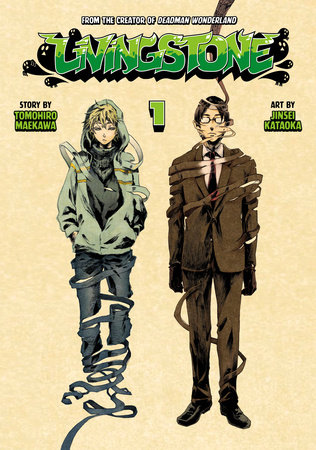
SEAN: Kodansha gives us the 4th and final volume of Livingstone.

ASH: Intriguing premise with a somewhat uneven execution, but I’m still interested in seeing how it ends.

SEAN: And the 11th Yamada-kun and the Seven Witches, which many thought would be the final volume, but… it isn’t.

ASH: Already the series has had some good stopping points. I do enjoy the manga, but I also wonder how long it can be stretched.

SEAN: Vertical has the second to last Tokyo ESP.

gundam1

Do you like Gundam? Do you like serious, hardboiled, probably depressing Gundam? By the creator of the tragically unlicensed Moonlight Mile? You will love Viz’s debut of Mobile Suit Gundam Thunderbolt, then. Plus it ran in Big Comic Superior. Do you know how often that magazine gets a license? Never, that’s how often.

ANNA: I do like Gundam in general, but am not sure I am in the mood for depressing Gundam.

SEAN: Viz also has our yearly release of Ooku, with its 12th volume. If you like digital manga, Ooku 1-12 are also available digitally for the first time next week!

MICHELLE: Commence Kermit flail.

ASH: Always glad to see more of this series!

ANNA: EEEEEE!

MJ: Yes!

SEAN: And there’s a 6th and final volume of Sunny, probably my favorite Taiyo Matsumoto manga to date, even though I’ve fallen way behind on it.

MICHELLE: As have I.

ASH: It is a very good series.

tfm15

SEAN: Terra Formars continues to be a resounding success despite all my best efforts. Here’s the 15th volume.

And Ultraman’s 6th volume is ultra good. (Sorry, witty comments are thin on the ground today.)

And Yen On has most of its November releases ship next week (one was moved to the week after), starting with the 9th volume of A Certain Magical Index. What happens when you combine science, magic, a citywide athletics festival, and a terrorist attack? If you guessed “shenanigans”, you win.

Durarara!! has a 5th volume that starts up a new story arc, as Izaya gets revenge for the lack of hotpot invites, and Mikado learns that running a “colorless” gang is not as easy as he thinks.

Log Horizon’s 6th volume is focused on Akatsuki, who finds her skills hitting a wall and her relationship with Shiroe doing much the same.

And lastly, another volume of Re: Zero, where we see if our hero can survive the next day, or if he keeps getting horribly murdered.

Take your mind off things. Read manga!

Filed Under: FEATURES, manga the week of

One Piece, Vol. 80

November 10, 2016 by Sean Gaffney

By Eiichiro Oda. Released in Japan by Shueisha, serialization ongoing in the magazine Weekly Shonen Jump. Released in North America by Viz. Translated by Stephen Paul.

The Dressrosa arc drags to a conclusion here, featuring many of what we’ve come to accept as typical One Piece cliches. Townspeople pretend to start an angry riot in order to help Luffy and company get away. A noble Marine takes them on only to change his mind and let them go at the last minute because he knows they aren’t really evil. Luffy once again rejects the basic ideas that make up what most of the world thinks of piracy, preferring to create his own definition. And before starting a new arc, we once again get a roundup from around the world of how various people are doing, seeing Rob Lucci of CP9, Buggy and company, Dragon and his revolutionaries, and the marines and Blackbeard pirates. All are there to make us recall that the world is complex and not easy to fit into a bio, and Luffy’s job is to fit it into that box anyway.

op80

Given this is the final time I’ll be talking about Dressrosa, let me once again take the opportunity to talk about what a wasted character Rebecca was. It was always going to be difficult to see her arc because, well, we already had her arc with Vivi, and we love Vivi. So many of the same beats of this arc had also been hit in Alabasta. But Vivi, while she was a stated pacifist, and occasionally would cry, was not set up to be the ‘pretty princess’ quite like Rebecca was. I think the arc may have been helped by showing us Rebecca as a shy, sheltered girl before we saw her as a gladiator, which would at least show us that she was meant to be painfully out of place. The trouble is that Oda can’t help but make her fights look really cool, and thus we react viscerally when the narrative keeps hammering us with “you don’t have to fight anymore, step back and be pretty”. In any case, Rebecca can now be reunited with her father, and I can move on.

The other thing to talk about here is the Straw Hat Pirate Alliance, suggested by many of the pirates who have helped Luffy in Dressrosa, among them Bartolomeo and Cavendish. It’s the next logical step on Luffy’s quest to be the Pirate King, the most important pirate in the world – a fleet of allies. But Luffy is not interested in the logical way to anything, and doesn’t want the responsibility of commanding a fleet of pirates. Honestly, he’s barely interested in commanding his own nakama. It is somewhat awkwardly spelled out in the narration – to Luffy, this is about freedom, not power. That said, he gains his alliance anyway, and they swear to come to his aid if he ever needs it, which will no doubt crop up in the future. Again, we hit a core truth of One Piece – Luffy’s piracy is not everyone else’s, and that’s why his crew love him so much.

And now we prepare to start a new arc, which begins in a truly weird way as only Oda can do, with a floating island that’s actually an elephant, anthropomorphic minks who no doubt will bond quickly with our heroes (heck, Nami is already loaning out her clothes to them), and a cliffhanger as Nami has something horrible to tell us about Sanji. If this leads to a Sanji arc, I’ll be quite happy – I’ve disliked comedy Sanji at times, but serious Sanji can be excellent. One Piece’s flaws are now openly visible every book, but it’s still well worth reading.

Filed Under: REVIEWS

Bookshelf Briefs 11/7/16

November 7, 2016 by Sean Gaffney and Michelle Smith Leave a Comment

haikyu5Haikyu!, Vol. 5 | By Haruichi Furudate | Viz Media – Well, I was wrong about training harder. They do, but we don’t see it much. Instead, we head right into the big tournament proper, and get the first two matches. The first one is against an old classmate of Sawamura’s, and we see how far along our heroes have come compared to the other teams. There’s a great shot halfway through showing all the losing teams—including the Karasuno Girls’ team, whose captain clearly has a crush on Sawamura, always a danger in a manga with a 99% female fandom. The rest of the book shows their match against the team that beat them last year, though, and they’re still tough as nails. But now we have our short but valiant secret weapon! Very shoneny, in the best way. – Sean Gaffney

liselotte2Liselotte & Witch’s Forest, Vol. 2 | By Natsuki Takaya | Yen Press – Well, I did ask for more on Liselotte’s past, and I certainly got it. We also get a lot of her channeling her inner Tohru, trying to meet the witches in the forest to assure them that she means them no harm but merely wants to live here in peace and harmony. Of course, that’s easier said than done, especially when an assassin is sent after her, complete with an eyepatch so that you know he’s a true rogue. And we learn a bit more about Engetsu, who is sort of Liselotte’s old dead love Enrich, but also sort of not. How this plays out is anyone’s guess, but it certainly looks pretty, and has some nice cool fighting. I still find it a bit underwhelming, but honestly that’s been true of any non-Furuba Takaya title. – Sean Gaffney

magi20Magi: The Labyrinth of Magic, Vol. 20 | By Shinobu Ohtaka | Viz Media – The most important thing in this volume for me is that Morgiana returns, and she does what we love to see her do best: rescue Alibaba and princess carry him. She seems to be a lot less stoic after her trip of awesome training. The rest of this volume consists of a) lots of battling against the big evil thing of evil, which proves quite difficult to defeat as it is literally made of evil; b) a lot of backstory that shows that Aladdin has a lot more going on than everyone expected, which honestly most readers had guessed; and c) theoretically killing off some characters (I’ll believe it while I see it), while bringing the most obvious one back from the dead right after he’s passed. Fun, but I really want a new arc. – Sean Gaffney

maidsama11-12Maid-sama!, Vols. 11-12 | By Hiro Fujiwara | VIZ Media – This is a fairly uneven installment of Maid-sama!, though the one constant throughout is Misaki attempting to come to grips with and then successfully express how she feels about Takumi. First, they go on a double date to the hot springs, and then Takumi’s family drama suddenly ramps up. Next, it abruptly turns back into a comedy as his half-brother has a penchant for making his valet dress up like a ninja as he spies on Takumi. Throughout, there are various assertions that Misaki isn’t good enough for Takumi, with Takumi dissenting, et cetera. And then, at the end, Aoi designs some costumes and briefly stops being a jerk. I don’t know why I kind of expected a volume of Maid-sama! to be uniformly good, but I did. In any case, it’s decent enough and the story is moving along. Sort of. – Michelle Smith

missions13Missions of Love, Vol. 13 | By Ema Toyama | Kodansha Comics – You know how most people were about Black Bird? Or Hot Gimmick? That’s how I’ve come to feel about Missions of Love. Don’t get me wrong, I absolutely love it. I love seeing these damaged, deeply manipulative teens walk all over each other. I love the fact that Yukina is amazed that she might still be ignorant of what love is, despite the entire series being based around that premise. (“Apparently I’m frigid.” made me laugh out loud.) And then there’s Mami and Akira, whose plotline keeps happening just off camera, all the better to keep Yukina guessing. And of course there’s Shigure, who is understandably frustrated at being away from all of this. Good thing she’s dragged to him for the cliffhanger. Read this amazing trash. – Sean Gaffney

onepunch9One-Punch Man, Vol. 9 | By ONE and Yusuke Marata | Viz Media – The deeper stuff I mentioned last time is continuing, as the villain we met last time decides to go around beating up literally everyone he comes across, and most of the heroes seem to be able to do little to stop him. I’m sure Saitama and Genos will end up in his path eventually, but in the meantime we have Blizzard, a stereotypical yakuza boss who’s also a hero, and decides that Saitama is good enough that she wants him to be part of her hero gang. Naturally, Saitama is unimpressed, and has some nice lectures on what it means to be a hero. Also naturally, most of her bluster is just that—she’s the Tornado of Terror’s little sister, and it weights on her. I love how this series views superheroes. Highly recommended. – Sean Gaffney

oresama21Oresama Teacher, Vol. 21 | By Izumi Tsubaki | VIZ Media – For a while there, it looked like we weren’t going to get any follow-up to the “Hayasaka finds Super Bun’s scarf in Mafuyu’s closet” cliffhanger, and so I was doubly disappointed by the boring hometown interlude set during winter break. Happily, once school reconvenes, we learn that Hayasaka has been waiting for the opportunity to ask Mafuyu about it, but just then, a Super Bun impostor is sighted, and the rest of the volume primarily consists of chase scenes. That probably sounds boring, but it’s actually something fun and different. I can’t remember if we’re supposed to recognize the dude who’s behind it all, and I’m sure it’ll end with Hayasaka still not learning the truth, but for now it’s quite enjoyable. – Michelle Smith

shuriken2Shuriken and Pleats, Vol. 2 | By Matsuri Hino | VIZ Media – Mikage Kirio is attempting to leave her past as a ninja behind and fulfill her late master’s wish for her to lead the life of a normal high school girl. There are a couple of nice moments when she achieves this, reflecting on the warm welcome she receives from her new group of friends, and marveling at their skill in finding the most delicious meat buns in town, but most of the volume is in a hurry to wrap up the not-very-interesting seeds-as-bioweapon plot. It’s not exactly unsuccessful—it all makes sense, at least, which is more than I can say for some series—but it’s terribly rushed. Still, it’s nice to see serious Mikage smiling for once, and overall the series has left a pleasant impression. – Michelle Smith

toriko36Toriko, Vol. 36 | By Mitsutoshi Shimabukuro | Viz Media – We wrap up one arc and start another here, so there’s not really a lot of fighting. What there is is backstory and explanations, so many of them in what is almost one big infodump. Some of it is truly interesting—I love the idea of the Earth as a meal that’s almost finished cooking, and it’s nice to see that the chefs are all going to have their own little adventure (led, no doubt, by Komatsu, who apparently awoke his own gourmet cells—he’s come a long way.) But yeah, much of this is setup for the volumes to come, with Sunny griping as always, Coco being the sensible one, and Toriko and Starjun having to work together—something which comes surprisingly easy to them. Solid, but unexceptional. – Sean Gaffney

Filed Under: Bookshelf Briefs

Pick of the Week: Still the King

November 7, 2016 by Michelle Smith, Sean Gaffney, Ash Brown, Anna N and MJ Leave a Comment

roseking5MICHELLE: My pick of the week is absolutely the third Princess Jellyfish omnibus, which has graduated from being in my Amazon cart to actually being pre-ordered.

SEAN: There are titles I may be looking forward to more, but I think my pick this week has to be Neo Parasyte f, simply as the idea of a bunch of shoujo artists giving their take on one of the iconic bizarre horror series is something I’d never have expected to get licensed here. Well done.

ASH: I am so glad that Princess Jellyfish and Neo Parasyte f have already been mentioned because that frees me to pick the most recent volume of Requiem of the Rose King! I love the series’ dark fantasy reimagining of the War of the Roses and Shakespeare’s plays. The manga’s artwork and the drama are both very striking, and I look forward to reading more.

ANNA: I am also torn between Princess Jellyfish and Requiem of the Rose King, but I have to go with Requiem of the Rose King, just because it is so unique and surreal.

MJ: I’m sure this is predictable for any long-time reader, but Requiem of the Rose King always, for me! It is exactly my kind of manga.

Filed Under: PICK OF THE WEEK

My Week in Manga: October 31-November 6, 2016

November 7, 2016 by Ash Brown

My News and Reviews

Last week at Experiments in Manga the winner of the Sweetness & Lightning manga giveaway was announced. The post also includes a list of some of the manga available in English that feature notable fathers or father figures. As for more in-depth features, I’m (still) currently working on some random, but rather personal, musings about Ichigo Takano’s manga series Orange. Progress on that post is a little slower than I would like it to be, but hopefully I’ll have something to share in the relatively near future.

As for interesting things that I’ve recently found online: The Honolulu Museum of Art recently hosted a series of lectures and discussions called Manga in Japan, Hawai‘i, and Throughout the World; many of the recordings can now be watched online. The proceedings of the Manga at a Crossroads symposia are available to read or download from The Ohio State University. Anna Madill has also posted the slides from her 2016 Comics Forum keynote address–Genre, genealogy, and gender: Reflecting on Boys’ Love manga–which includes some interesting results from her BL Fandom Survey. And speaking of boys’ love, Digital Manga’s Juné imprint is seeking the print rights for Asumiko Nakamura’s Classmates (Doukyusei).

Quick Takes

Haikyu!!, Volume 3Haikyu!!, Volumes 3-5 by Haruichi Furudate. The new Karasuno team has made it through its first game, but the members still have some practicing to do before they can completely shed the nickname of the fallen champions. But considering their tremendous talent and potential, that might not take them too long. With these volumes, a few more Karasuno veterans are introduced, as are their rivals, before the series quickly moves from training to tournaments. Although there are some very exciting moments, I actually find the games to be the least interesting part of Haikyu!!, which may (but not necessarily) present a problem in the long run for what is primarily a sports manga.  Some of the action was a little difficult for me to follow until I got used to Furudate’s visual language, probably because I’m not actually all that familiar with volleyball gameplay. Growing up, my family’s anything-goes backyard games followed vastly different rules; Haikyu!! is actually teaching me how volleyball as a sport is really played. However, I am still enjoying Haikyu!! immensely. I particularly love the series’ focus on teamwork and even more so its unflagging positivity. Haikyu!! manages to be competitive without being mean. I also really like the distinctive personalities of the characters, and Furudate’s sense of humor and comedic timing is great. The manga continues to be great fun.

Neo-Parasyte fNeo-Parasyte F by Various. Hitoshi Iwaaki’s series Parasyte happens to be not only one of my favorite horror manga, but one of my favorite manga in general. That’s probably the main reason I was so excited that the Parasyte shoujo tribute anthology Neo-Parasyte F was licensed, but the list of contributors is exciting in and of itself, too. I was especially happy to have the chance to read more of Asumiko Nakamura’s work, but there are other creators that English-reading fans will likely recognize as well, such as Ema Toyama, Kaori Yuki, and  Yuri Narushima among others. Neo-Parasyte F collects fifteen short manga that in one way or another pay tribute to Parasyte. Some of the stories take place within the same world as Parasyte–Shinichi and Migi, the main characters of the original series, even make a few appearances–while others are set completely apart. Many of the manga are still horror-themed, but there are a surprising number that actually take a more humorous approach. Ever wonder what Parasyte would be like as an otome game? Neo-Parasyte F presents one possible interpretation of just that. Overall, the volume is a great anthology containing an excellent variety of genres and styles. Neo-Parasyte F will likely appeal most to readers who are fans of or at least familiar with Parasyte, although a few of the contributions can stand completely on their own.

The Prince in His Dark Days, Volume 1The Prince in His Dark Days, Volume 1 by Hico Yamanaka. In Japan, Yamanaka is probably better known for her boys’ love manga, but that’s not all that she’s done. For example, The Prince in His Dark Days, Yamanaka’s English-language debut, does not fall into that particular genre. However, it is poised to explore gender and sexuality in interesting ways, which is what first brought the series to my attention. The story follows Atsuko, a high school student from a broken and abusive family who is struggling to make ends meet. She is more or less coerced into becoming the stand-in for Itaru, the wealthy heir to a major corporation who has gone missing. Very possibly he ran away due to some of his own unfortunate circumstances. Until Itaru is found, Atsuko will be taking them on in his place. Although she’s not exactly leading a life of luxury–parts of Itaru’s own life are less than ideal–at least she’s no longer quite as miserable as she once was. The initial setup of The Prince in His Dark Days is a little rough and feels a somewhat forced, but it does establish understandable reasons for everything that follows. Admittedly, the whole situation is rather strange, but once Atsuko has adopted her new role she devotes herself completely to it. In the process, she begins to create meaningful if somewhat peculiar relationships with the people around her. I’m not entirely sure where The Prince in His Dark Days is heading, but I do know that I want to find out.

Princess Jellyfish, Omnibus 3Princess Jellyfish, Omnibus 3 (equivalent to Volumes 5-6) by Akiko Higashimura. I am still incredibly pleased that Princess Jellyfish manga series is being released in print. I thoroughly enjoyed the anime adaptation and was left wanting more after it ended, so I’m thrilled to finally have the chance to read the original manga. The anime began around the same time that the sixth volume was originally being released in Japan, so from this point on more and more of what is seen in the manga will either be new or significantly different. It has been a while since I’ve watched the anime so I may be misremembering parts of it, but already I can identify where notably different choices were made as to plot and characters. However, the heart of both the manga and the anime are definitely the same. Despite the various romantic and relationship dramas, Princess Jellyfish is largely a comedy. Serious matters like familial and social expectations are addressed and explored in the series, but Higashimura primarily does so through humor, sometimes more successfully and sometimes less so. Princess Jellyfish is an energetic manga that can be over-the-top and ridiculous, but it can also be very touching. As the women of Amamizukan search for a way to save their beloved home they are finding new ways to express themselves through skills and talents that they never realized they had, slowly coming out of their shells in ways they never expected.

Filed Under: FEATURES, My Week in Manga Tagged With: Akiko Higashimura, Haikyu!!, Haruichi Furudate, Hico Yamanaka, manga, Parasyte, Prince in His Dark Days, Princess Jellyfish

Scum’s Wish, Vol. 1

November 6, 2016 by Sean Gaffney

By Mengo Yokoyari. Released in Japan as “Kuzu no Honkai” by Square Enix, serialization ongoing in the magazine Big Gangan. Released in North America by Yen Press. Translated by David Rowe-Caplan and Megan Denton.

This story begins in a very cute, heartwarming way, but I suspect the reader is not going to fall for it. The ‘scum’ in the title is the clue, and there’s also the cover art, showing our heroine, Hanabi, with her shirt mostly off, winking and sticking her tongue out at the reader. So when you discover almost right away that they’re actually both in love with their teachers (hers at least is her childhood “big brother” figure that she grew up with, but as always teacher/student romance is accepted far more by Japanese readers than Western ones), you aren’t particularly surprised. Mugi, the guy, and Hanabi are pretending to date while they pine away from someone else. And, because they’re both giant pots full of teenage hormones, they also take care of each other’s physical needs – there’s explicitly no going all the way, but there’s lots of making out and physical contact to a disturbing degree. It’s fascinating yet sordid.

scum1

I mentioned on Twitter while reading this volume that it’s like an evil mirror image of another Yen Press title, Love at Fourteen. That one also deals with a first time student romance, and also features an awkward teacher student relationship. But while equally realistic, and occasionally has the odd crisis, it is for the most part cute and heartwarming. You like these kids and want them to be together. Scum’s Wish shows us a relationship of convenience that isn’t good for either one of the couple, but you still end up rooting for them, as while they’re not all that sympathetic, they’re both very likeable. Hanabi especially grew on me, especially when it became clear that she was not going to be a meek and passive victim here. She’s actually somewhat cynical and snarky, something she tries to hide from her teacher whenever possible, and can be quite possessive, not just of her real love, but even of her fake one.

Towards the end we also meet a new girl who seems completely out of place to the somber, bittersweet anti-love story going on here. I loved her to bits. Moka first appears in a flashback where we’re getting an otherwise depressing but well told backstory for Hanabi, and we see her as a spoiled brat princess sort. Come high school, that hasn’t changed. If anything, she’s got a bad case of Eighth Grader Syndrome, demanding to be called Moka instead of Noriko and describing Mugi as her Prince Charming come to take her away from all this. You’d think she would be horribly wrong for a series like this one, but she actually releases the tension that’s built up from the start, and I find her nuttiness soothing. I also loved Hanabi’s casual threat to her, not letting her even get a toehold in between the fake relationship he’s built up.

I’m not sure that I’m going to love where this goes, and I fear it will be one of those sorts of series I call ‘potboiler’. But some potboilers are fascinating for all the right reasons, and Scum’s Wish caught my eye from the start and didn’t let it go. Good art, too, capturing the sensuality and furtiveness that most teen romance writers tend to forget is the majority of what’s going on there. Definitely recommended, provided you don’t mind feeling you need to wash up afterwards.

Filed Under: REVIEWS

  • « Go to Previous Page
  • Page 1
  • Interim pages omitted …
  • Page 477
  • Page 478
  • Page 479
  • Page 480
  • Page 481
  • Interim pages omitted …
  • Page 1061
  • Go to Next Page »
 | Log in
Copyright © 2010 Manga Bookshelf | Powered by WordPress & the Genesis Framework