• Skip to primary navigation
  • Skip to main content
  • Skip to primary sidebar
  • Home
  • About Us
    • Privacy Policy
    • Comment Policy
    • Disclosures & Disclaimers
  • Resources
    • Links, Essays & Articles
    • Fandomology!
    • CLAMP Directory
    • BlogRoll
  • Features & Columns
    • 3 Things Thursday
    • Adventures in the Key of Shoujo
    • Bit & Blips (game reviews)
    • BL BOOKRACK
    • Bookshelf Briefs
    • Bringing the Drama
    • Comic Conversion
    • Fanservice Friday
    • Going Digital
    • It Came From the Sinosphere
    • License This!
    • Magazine no Mori
    • My Week in Manga
    • OFF THE SHELF
    • Not By Manga Alone
    • PICK OF THE WEEK
    • Subtitles & Sensibility
    • Weekly Shonen Jump Recaps
  • Manga Moveable Feast
    • MMF Full Archive
    • Yun Kouga
    • CLAMP
    • Shojo Beat
    • Osamu Tezuka
    • Sailor Moon
    • Fruits Basket
    • Takehiko Inoue
    • Wild Adapter
    • One Piece
    • After School Nightmare
    • Karakuri Odette
    • Paradise Kiss
    • The Color Trilogy
    • To Terra…
    • Sexy Voice & Robo
  • Browse by Author
    • Sean Gaffney
    • Anna Neatrour
    • Michelle Smith
    • Katherine Dacey
    • MJ
    • Brigid Alverson
    • Travis Anderson
    • Phillip Anthony
    • Derek Bown
    • Jaci Dahlvang
    • Angela Eastman
    • Erica Friedman
    • Sara K.
    • Megan Purdy
    • Emily Snodgrass
    • Nancy Thistlethwaite
    • Eva Volin
    • David Welsh
  • MB Blogs
    • A Case Suitable For Treatment
    • Experiments in Manga
    • MangaBlog
    • The Manga Critic
    • Manga Report
    • Soliloquy in Blue
    • Manga Curmudgeon (archive)

Manga Bookshelf

Discussion, Resources, Roundtables, & Reviews

Blog

Pick of the Week: Lesbians or Melting Faces?

January 31, 2017 by Sean Gaffney, Anna N, Ash Brown, Katherine Dacey and Michelle Smith Leave a Comment

MICHELLE: Hm, probably I shouldn’t pick Wave, Listen to Me! for two weeks in a row, so this time I’ll go for Kindred Spirits on the Roof, which has been on my to-get list for quite a while.

SEAN: There’s lots I’m interested in, including lots of light novels and some amusing/disgusting horror. But yes, my pick is definitely Kindred Spirits on the Roof. This makes three Seven Seas picks this month. Kudos to them.

ASH: While I’m certainly interested in Kindred Spirits on the Roof there can be no other pick for me this week than Dissolving Classroom. Josei horror by Junji Ito? Count me in!

KATE: My vote goes to Junji Ito’s The Dissolving Classroom. It looks gross — in the best possible way — and funny — as all of Ito’s manga are. I don’t know if it’s studded with references to Umezu’s Drifting Classroom, but it seems as if there’s drinking game potential here!

ANNA: I’m with the folks who are choosing The Dissolving Classroom, it isn’t every week a quality horror release comes out!

Filed Under: PICK OF THE WEEK

Bookshelf Briefs 1/30/17

January 30, 2017 by Anna N, Katherine Dacey, Michelle Smith and Sean Gaffney Leave a Comment

Alice in Matchaland | By Mosoko Miyatsuki | Manga University – This slim volume is both picture and cook book, offering readers a playful riff on Lewis Carroll’s most famous work as well as recipes for matcha-infused snacks. For tween manga lovers, the button-cute character designs, Technicolor palette, and gentle pokes at manga cliche may be enough to justify purchasing Alice in Matchaland. Anyone intent on making Matcha Energy Bites, however, will need a conversion table handy, as the recipes freely mix teaspoons with grams and milliliters. The book doesn’t offer any tips for procuring matcha powder, either—a curious omission, since many Americans won’t find it on the shelves of their local grocery stores. A little more attention to the recipes would have made this book less of a stocking stuffer and more of a must-buy for tea-drinking manga enthusiasts. (The publisher provided a review copy.) -Kate Dacey

Behind the Scenes!!, Vol. 3 | By Bisco Hatori | VIZ Media – It’s not that Behind the Scenes!! is awful, but that every chapter is essentially filler. In this volume, there’s the one about the bratty child actor whom the team helps emote, the one about protecting a group filming in a park, the one about fundraising through shrinky dinks (yes, really), and the one about creating a haunted house. At times, attempts are made to flesh out the other members of the art squad, but it’s never building on character traits previously established and then paying off in a satisfying way. It’s always Ranmaru noticing on one page that Ruka gives in too easily and then on the next page encouraging her not to give in because shrinky dinks (yes, really). Probably it’s time to accept that this series is just not for me and move on. – Michelle Smith

Behind the Scenes!!, Vol. 3 | By Bisco Hatori | Viz Media – There isn’t a ton of plot or character development in Behind the Scenes!!, but it does reliably deliver a pleasant escape in the adventures of a college art club that supports various film projects. The first story line in this volume deals with the redemption of a child actor who at first seems spoiled, then there is detour into the value of crafts as the gentle rich girl Ruka stands up for herself. The gang also has to fine tune a haunted house, when they make it dangerously realistic. Even if this series isn’t the most memorable thing Hatori has created, it still is diverting in the moment. I enjoy the interactions between all the characters, and this volume also featured several bonus one page manga at end. – Anna N

Horimiya, Vol. 6 | By Hero and Daisuke Hagiwara | Yen Press – I said last time that Hori and Miyamura hadn’t quite taken the next step in their relationship yet. They do that here, but blink sand you’ll miss it—unlike most manga of this type, their first time—while sweet—is not earth-shattering and does not really change either of them. Indeed, Miyamura is far more concerned about the required swimming event, mostly as it could get him expelled. We also see Hori being jealous again, but she’s at least cognizant of how annoying it is, and it’s funnier when she uses her anger against other people, like Miyamura’s old teasing classmates from junior high. This is not particularly going anywhere, even with the sex, but it’s still a well-written leisurely ride. – Sean Gaffney

Interviews with Monster Girls, Vol. 2 | By Petos | Kodansha Comics – This is sort of a harem series—there’s certainly enough students and one teacher in love with Takahashi-sensei. But it feels so laid-back and leisurely, and he’s so non-sexual in general, that I can’t really define it as a classic harem comedy. At heart, it’s about the girls and their monster issues—though the best chapter in the volume has the teacher pointing out that you can’t just think of them as monsters OR girls, but you have to balance both sides. Much of the volume deals with a yuki-onna who worries she may live up to her stereotype, and she’s just as sweet and cute (and somewhat boring) as the other girls. This is a nice series, and monster girl fans will like it. It is, however, not a book that will get your pulse racing. Leisurely. – Sean Gaffney

Liselotte & Witch’s Forest, Vol. 3 | By Natsuki Takaya | Yen Press – At last, a volume of Liselotte I can honestly say was excellent throughout. The bargain that she has to strike to save Engetsu’s life essentially resets things to square one, but that’s really for the best, as I think the baggage was crushing them both a bit. We also get more flashes to what Lise was like before the rebellion, and it’s rather sad and also a bit eerie. There’s also still some comedy, mostly coming from Alto and Anna, though the return of a witch from the previous volume also helps. I suspect things may not stay comedic for long, though, as it appears that Lise is not going to be allowed to be merely exiled for much longer. The less fluffy this gets the more I like it, though the fluff is still fun. – Sean Gaffney

Liselotte & Witch’s Forest, Vol. 3 | By Natsuki Takaya | VIZ Media – Man, I can already tell that it’s going to be pretty painful when Liselotte goes on hiatus after two more volumes. Although some of what happens in this installment feels like things I’ve seen before—the heroine who unhesitatingly hacks off her own long hair, the love interest who loses his memories of the heroine, the determined optimism and welcoming spirit—there are some unique things about this story, chief among them the reveal in the final pages that someone has been watching Liselotte and reporting back to her brother, who is being pressured to do something about her. It’d be an interesting development if her world were to get a bit darker; the Akito vibes I got from the tree spirit in this volume were pretty fantastic. – Michelle Smith

Scum’s Wish, Vol. 2 | By Mengo Yokoyari | Yen Press – I have to say, so far this is currently at the top of my “most surprising new series” list, as the second volume is just as strong as the first was. Even as it appears that Mugi and Hanabi may have deeper feelings for each other than they expected, it is shown over and over again how bad this relationship really is, and how much they’re hurting from it. Of course, not having the relationship would not ease the source of the hurt. Meanwhile, we also meet Ebato, Hanabi’s friend who turns out to be in love with her, something that gets revealed a lot more than she’d like at a sleepover, and ends just as ambiguously as you’d expect. This is a fantastic car crash of a romance manga, where even the omake extra is tragic and sad. Well-written and brutal. – Sean Gaffney

Scum’s Wish, Vol. 2 | By Mengo Yokoyari | Yen Press – After making a brief appearance in volume one, a lot of this volume focuses on Hanabi’s only female friend, Ecchan, who has been in love with her ever since the day they took the entrance exam. When she’s invited to a sleepover, she’s unable to contain her feelings anymore and confesses, but more importantly gets Hanabi to confirm that she doesn’t love Mugi. Ecchan offers to be the surrogate herself, but by volume’s end, Hanabi’s in bed with Mugi, seemingly ready to have sex with him. One thing I particularly liked about this volume is though her relationship with Mugi might seem twisted and strange, in a way she’s more pure than other classmates, because she’s acting out of love and not merely juggling two guys, trying to decide who has more to offer her. Looking forward to volume three! – Michelle Smith

Filed Under: Bookshelf Briefs

My Week in Manga: January 23-January 29, 2017

January 30, 2017 by Ash Brown

My News and Reviews

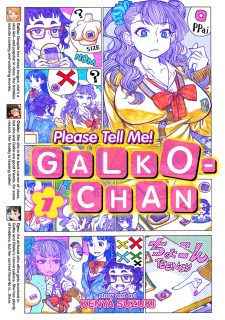
The end of the month is approaching which means it’s time for Experiments in Manga’s monthly giveaway. The winner of the most recent giveaway will be announced on Wednesday, so there’s still a little time left to enter for a chance to win the first volume of Kenya Suzuki’s delightful full-color manga series Please Tell Me! Galko-chan. Speaking of manga giveaways, there’s also an opportunity to win a copy of the first omnibus in Kei Sanbe’s Erased over at The OASG.

Elsewhere online, I came the Young Adult Library Services Association’s 2017 Great Graphic Novels for Teens. As usual, the list includes a fair number of manga along with all of the other excellent comics. Ichigo Takano’s Orange (which was also one of my notable manga from 2016) even made the top ten list. Out of the many other manga included as part of YALSA’s larger list, I have in-depth reviews of Junji Ito’s Cat Diary: Yon & Mu and Akiko Higashimura’s Princess Jellyfish, Omnibus 1, both of which I loved.

Another list I came across recently was BookRiot’s feature on Japanese speculative fiction in translation. Overall, I think it’s a great list–I’ve previously reviewed three of the books included (Miyuki Miyabe’s The Book of Heroes, Yusuke Kishi’s The Crimson Labyrinth, and Taiyo Fujii’s Gene Mapper) and most of the others I’ve been meaning to read for quite some time or were already high on my list of books to read in the near future.

It’s been a while since I’ve mentioned Kickstarter projects here, but there are a few campaigns for print comics that have caught my eye lately: Maya Kern is looking to print the second volume of the adorable webcomic Monster Pop; Amanda Lafrenais is campaigning to release the second Titty-Time print collection of erotic comics; and Deandra Tan is hoping to release a print edition of her graphic novel Love Debut!.

Quick Takes

Aoharu X Machinegun, Volume 1Aoharu X Machinegun, Volume 1 by Naoe. I picked up the first volume of Aoharu X Machinegun more on a whim than anything else but I ended up enjoying it much more than I expected. On the surface there are a few things about the beginning of Aoharu X Machinegun that are oddly reminiscent of Ouran High School Host Club–Masamune works in a host club and Hotaru, who is often mistaken for a boy, gets wrapped up in his schemes after she needs to earn some money for damaging the club’s property–but the similarities mostly end there. Hotaru has an overly-strong sense of of justice and has a tendency to get into fights because of it. Masamune is the leader of a competitive survival/war game team and has decided the Hotaru should become its third member after her aggressiveness leaves a distinct impression on him. Initially, the team’s second member Tooru, who also happens to be well-known hentai mangaka, is less than thrilled about this. They’re both completely unaware that Hotaru is a girl, too, which could cause some trouble later on. Aoharu X Machinegun is kind of ridiculous but fun. I enjoyed its action and sense of humor and this point would be interested in reading more.

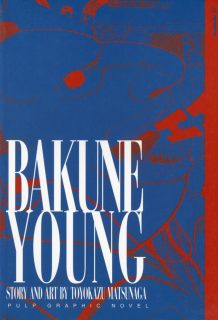
Bakune Young, Volume 1Bakune Young, Volumes 1-3 by Toyokazu Matsunaga. I’ve been meaning to read Bakune Young for quite a while now but the short series is long out-of-print and can be somewhat difficult to find. (Fortunately, it turned out that my library actually owns a complete set.) Reading Bakune Young is quite an experience to say the least. Matsunaga’s artwork, while it’s frequently and deliberately grotesque and at times could even be described as ugly, is tremendous. The story itself is nearly nonsensical, but it does manage to have a bizarre sort of logic to it. The series opens with the titular Bakune Young in a pachinko parlor before he begins targeting yakuza in a killing spree. His rampage quickly escalates and eventually not only the yakuza, but Japanese police, a ninja assassin from the French Foreign Legion, psychics, and even the American military all become involved as the death count increases exponentially. Bakune Young is certainly not for the faint of heart. It’s incredibly violent, viciously dark, and legitimately absurd, but assuming one isn’t bothered by all that, it can also be extraordinarily funny. I suspect Bakune Young is a manga that readers either love or hate without there being much middle ground.

The Encyclopedia of Early EarthThe Encyclopedia of Early Earth by Isabel Greenberg. I recently read and absolutely loved Greenberg’s The One Hundred Nights of Hero and so immediately made a point to seek out more of her work. The Encyclopedia of Early Earth was Greenberg’s first graphic novel and received great acclaim when it was published. The comic’s premise is simple: a nameless storyteller as travels the world in search of a missing piece of his soul. The graphic novel shares some obvious similarities to The One  Hundred Nights of Hero in its structure, themes, artwork, and setting. Both comics take place in the pre-prehistoric Early Earth and utilize the same mythologies, cosmologies, and pantheons. Both comics, in addition to love, are also about the importance of stories and storytellers; they find inspiration in and retell existing folktales while intertwining them with those of Greenberg’s own making. Otherwise, the two comics aren’t directly related. The Encyclopedia of Early Earth feels less politically-charged than The One Hundred Nights of Hero which may make it more palatable to some audiences but as a result it isn’t nearly as powerful a work overall in comparison. Even so, The Encyclopedia of Early Earth is wonderful.

Wolf MagicWolf Magic by Natsuki Zippo. So far, Wolf Magic is the only manga by Zippo to have been released in English. As far as I can tell, Wolf Magic is also Zippo’s first professional work. Especially considering that, it’s a very strong collection of boys’ love manga, and I’d certainly be interested in seeing more from Zippo translated. Wolf Magic opens with “The Water of Love for the Withered Flower” which is about Hanasaki, a florist whose severe appearance is at complete odds with what most people would associate with his profession. However, he still manages to unintentionally catch the eye of Hata. The manga then turns to the various “Wolf Magic” stories which follow Nagase, a young gay man, as he falls in and out of love during high school and then continues to look for “the one” in college. In the process, he develops a surprising relationship with Higuchi. While the two story arcs are unrelated and are quite different from each other, thematically they are very similar. Both Hanasaki and Nagase are searching for love and acceptance and both ultimately find it in unexpected places and ways. Overall, with its attractive artwork and excellent characterizations, Wolf Magic is quite well done.

United States of JapanUnited States of Japan by Peter Tieryas. I’ve often heard United States of Japan described as a spiritual sequel or successor to Philip K. Dick’s The Man in the High Castle. In some ways that is certainly true–Tieryas’ novel probably would not have existed were it not for Dick’s and makes multiple references to The Man in the High Castle–but the two novels are drastically different from each other in tone and style. The underlying premise, however, is the same. Emerging victorious from World War II, Japan now controls a significant portion of what was once the United States of America. The grim cyberpunk alternate history presented in United States of Japan (complete with mecha battles and graphic torture) can be extraordinarily brutal and gruesome. The lead characters aren’t exactly the most likeable or sympathetic people, either, though they become slightly more so as the novel progresses. Captain Ben Ishimura, whose only talent seems to be hacking and programming, is a censor who comes to the attention of Agent Akiko Tsukino when an illegal video game which imagines America winning the Second World War threatens to embolden resistance against the rule of Japan.

Filed Under: FEATURES, My Week in Manga Tagged With: Aoharu X Machinegun, Bakune Young, comics, Isabel Greenberg, manga, Naoe, Natsuki Zippo, Novels, Peter Tieryas, Toyokazu Matsunaga

Decapitation: Kubikiri Cycle

January 29, 2017 by Sean Gaffney

By NISIOISIN, illustrations by take. Released in Japan as “Kubikiri Cycle: Aoiro Savant to Zaregototsukai” by Kodansha. Released in North America by Vertical, Inc. Translated by Greg Moore.

I had thought that I had reviewed this volume when it first came out almost ten years ago from Del Rey books. But no, I hadn’t quite begun my blog yet, though I have reviewed the second (and sadly last) book in the series. But of course that was almost ten years ago. Since then I’ve gotten obsessed with Medaka Box, and I finally joined the herd in getting obsessed with the Monogatari series. So I was ready to revisit the first in Nisioisin’s Zaregoto series, which is finally getting an anime in Japan after so many years. (It also never had a manga, except for an original story spinoff.) If you’re familiar with Nisio’s later works, you’ll find much here that’s familiar, particularly the idea of what “geniuses” are. But those works lack the most important element of these books, and that’s the narrator, Ii-chan.

Nisio loves to take his main characters and have them disparaged, either by the narration himself or by other characters. But usually it’s the other characters that get all the attention. In Medaka Box Medaka is not remotely the most popular character with fans, and I doubt you’ll find many Monogatari fans saying Koyomi is “best girl” either. Zaregoto is all about Ii-chan, though. His seemingly deadpan narration, his seeming stoicism, his seeming need to not care about anything that happens to him or what anyone thinks of him. Seeming being the repeated word, because it’s pointed out repeatedly by the entire cast just how much nonsense his entire attitude is. Which is, of course, the point: he is the “nonsense user” of the subtitle, and at times he almost seems to utter it like a mantra, usually when it’s becoming too apparent that’s he’s slipping out of character.

Ii-chan (real name never given throughout the series, much like Kyon) is the friend and minder of a technological genius, Tomo Kunagisa, who’s been invited to a remote island by an eccentric ex-heiress who likes surrounding herself with these sorts of types. Of course, if the words “remote island” seem suspicious to you, you’ve probably guessed that someone is murdered while they’re there. Now Ii-chan, who is merely a normal boy among all these geniuses, must solve the crime. And that’s a lie as well, as we’re told that Ii-chan himself went to an exclusive school in America just for geniuses, though he maintains that it doesn’t count because he dropped out. Also, despite professing a bad memory and ignorance of many basic principles, he’s quoting obscure philosophy and literature throughout. He is a lying liar who lies, and by the end of the book you can see why many in the story are disgusted with him. He won’t try. He refuses to strive. He goes with the flow. Except of course that is not completely true either. He just wishes it was.

There is a lot of backstory given here, some of which comes up again later in the series and some of which does not. Ii-chan talks about a child who was not allowed to have any contact with the outside world for the first ten years of their life, but it’s unclear if he means Kunagisa or himself. Certainly Kunagisa seems to suffer from a case of arrested development – she’s supposedly the same age as Ii-chan, who’s about to start college, but looks and acts about eleven years old. She’s also the head of a former cyber-terrorist group that terrified the world while also advancing its tech beyond most people’s wildest dreams. And she and Ii-chan are clearly used to corpses and investigating – one of the funniest parts of the book is their blank disbelief at why Yayoi is so upset and edgy – after all, it’s just a murder.

Honestly, the murder mystery is possibly the least interesting part of the book – again, not uncommon with this author, where frequently you read things for the dialogue or narrative tone rather than what’s actually happening. I’d actually say it’s overly complex, with two too many twists and turns at the very end – I think Nisio agreed with me, as around the 3rd book in the series he simply stopped making the books mysteries at all. That said, I still love and highly recommend the book, if only for its fascinating and frustrating narrator. And I’m hoping it does well enough that Vertical might put out the second in the series, which is even better.

Filed Under: REVIEWS, zaregoto

Happiness, Vols. 1-2

January 27, 2017 by Katherine Dacey

The first chapter of Happiness reads like a teenage boy’s answer to Are You There, God? It’s Me, Margaret. Makoto, the principle character, is doing his best to cope with the indignities of being fourteen: he’s bullied by the popular kids, pestered by his well-meaning but clueless mother, and embarrassed by his lustful reactions to pretty girls. Though he has one friend — the equally uncool Nunota — Makoto spends most of his time alone.

A nighttime trip to the convenience store, however, jolts Makoto out of his routine. In a dark alley, a female vampire tackles and pins him to the ground, offering the following ultimatum: “Do you want to die like this, or do you want to be like me?” With tears and snot streaming down his face, Makoto whimpers, “I don’t want to die,” thus beginning his transformation from ordinary teen to bloodsucker.

If Makoto thought that wet dreams and wedgies were awful, he soon discovers that they pale in comparison with the first stages of vampirism. He suffers from an unquenchable, almost violent thirst and finds direct sunlight blisteringly painful. Worse still, his sense of smell is now so acute that he swoons and sweats in the presence of bloody noses, cuts, and girls, a symptom that sends him into an even deeper spiral of shame. The only potential upside to his condition is his supernatural strength: though he still looks like a 100-pound weakling, he can leap from great heights and deliver a lethal karate chop when the scent of blood is in the air.

Given Makoto’s age, it’s not surprising that author Shizuno Oshimi treats his hero’s transformation as a metaphor for puberty itself. In the manga’s earliest scenes, Oshimi frankly documents Makoto’s efforts to cope with hormonal surges and maternal helicoptering, capturing Makoto’s discomfort in his own skin. As Makoto begins turning into a vampire, however, his increasingly urgent thirst for blood amplifies the very aspects of puberty that most embarrass him — his keen interest in sex, his inability to conceal his arousal from others — making him feel even more powerless.

To capture Makoto’s turbulent emotions, Oshimi employs a variety of artistic styles. Some panels are rendered in smudgy pastels, suggestive of a foggy evening, while other panels are rendered in swirling, pulsating lines reminiscent of The Scream. These visual interludes last only a page or two, but vividly capture the nausea, pain, and confusion Makoto experiences in the grips of bloodlust.

Perhaps no scene is as evocative as that first encounter between Makoto and the female vampire. Oshimi uses rapid shifts in perspective and a few fleeting images — a shadowy figure plunging through space, a dark smear of blood — to indicate what’s happening. The extreme close-ups and feverish pacing neatly mimic Makoto’s growing sense of panic as he considers the possibility of dying in an alleyway — and not just any death, but a potentially humiliating one. (And really, what could be worse than that from a fourteen-year-old’s perspective?)

The pacing, like the artwork, is expertly handled. Oshimi has a knack for lulling readers into a false sense of security that Makoto will transcend (or master) his vampirism and silence his tormentors. Then — bam! Oshimi inserts a twist or introduces a new character who contradicts our sense of how socially maladroit or invulnerable Makoto really is. The appearance in volume two of a new bloodsucker, for example, reveals the extent to which vampires pose an active threat to one another — something that Makoto in his solipsistic misery never considered when he agreed to become a vampire himself.

And speaking of volume two, Oshimi does an excellent job of expanding and developing the cast of characters. By volume’s end, there’s more at stake than Makoto’s desire to escape humiliation; Makoto must decide whether to become a full-fledged vampire or fight for his humanity, a decision complicated by his budding friendship with a female classmate. How Makoto resolves this dilemma remains to be seen, though his struggle should provide plenty of dramatic grist for volume 3 (available February 14th).

The bottom line: Happiness is a rare vampire manga with bite: it’s smart, stylish, and unsettling, drawing readers into Makoto’s world with an honest look at the horrors of being fourteen. And what could be scarier than that?

HAPPINESS, VOLS. 1-2 • BY SHIZUNO OSHIMI • KODANSHA COMICS • RATING: OT, for OLDER TEENS (16+)

Filed Under: Manga, Manga Critic, REVIEWS Tagged With: Happiness, Horror/Supernatural, Kodansha Comics, Shizuno Oshimi, Shonen, Vampires

Manga the Week of 2/1/17

January 26, 2017 by Sean Gaffney, MJ, Michelle Smith, Ash Brown and Anna N 3 Comments

SEAN: For a ‘5th week’, this is a pretty huge one. Longtime readers know that when the 1st falls on a Wednesday, it’s not really the first week, but there’s still tons of stuff.

J-Novel Club has made its name mostly with typical “light novel” fare for standard anime fans. That said, the release of The Faraway Paladin is really being touted by them as a good novel in general. It’s a dark fantasy, and they’re REALLY pushing it as not your typical light novel fare.

They are also releasing Mixed Bathing in Another Dimension, which is absolutely your typical light novel fare.

If you enjoyed the first volumes of Deathtopia and Wave, Listen to Me! when they came out digitally Tuesday, well, Kodansha is releasing the 2nd volumes next week.

MICHELLE: Hooray!

ASH: I’m hoping we’ll eventually see a print edition, but I might not be able to wait for it.

ANNA: Nice! Preparing for a good digital only edition of manga binge.

SEAN: Many may remember the Alice in the Country of Hearts series coming out primarily from Seven Seas. It’s not anymore, for reasons that remain murky, but Seven Seas has tried to retain the spirit by doing Captive Hearts of Oz, which is an original manga series based on the Oz books with art by Mamenosuke Fujimaru, the most popular Alice in the Country of artist.

ASH: I’m actually really curious about this collaboration!

ANNA: I’m a little curious, but also wary because I’m burnt out on both Oz and Country of Hearts stuff. The art should at least be very pretty!

SEAN: I really enjoyed the visual novel Kindred Spirits on the Roof when it came out here last year, being a “yuri” title that actually cared about character depth and not just bodies squishing. There was a short manga spinoff as well, and Seven Seas is putting it out as one omnibus. The good news is it’s NOT an adaptation of the game – these are new stories, and stars some new cast members (it takes place after the game proper, I believe). If you like “non-skeezy” yuri, you must pick this up.

MICHELLE: This one was definitely on my list.

MJ: I’ll put it on mine as well.

ASH: Oh, interesting! I had assumed that it was an adaptation. I guess I’ll need to move it up on my list.

SEAN: And there is also a 2nd and final volume of the Love in Hell spinoff Death Life.

Udon’s Persona schedule has been slipping a bit, but here’s the 2nd volume of Persona 3.

ASH: Since I’ve actually played some of Persona 3, I’ve been meaning to check this series out. Apparently I’ve already fallen behind, though.

Vertical has a 1-volume Junji Ito title, Dissolving Classroom, which comes from a series of stories that ran in Motto!, Akita Shoten’s josei horror title. It’s Junji Ito, so it should be great (and also gross) (and also terrifying).

MJ: I like the sound of that!

ASH: I’m very excited for this release! I like josei, I like horror, I like Ito, so I expect that I’ll like Dissolving Classroom, too.

ANNA: Also curious to check this out.

SEAN: Yen has some new digital only releases. Aphorism 8, Corpse Princess 8, and Sekirei 8.

They also have their light novel titles for the month, beginning with the debut. Death March in the Parallel World Rhapsody had its manga adaptation come out this week, meaning I already discussed it in last week’s Manga the Week of. But hey, prose!

There is a 6th volume of cult favorite Kagerou Daze, which if nothing else promises to be short, and also hopefully clear up a few more mysteries.

The 3rd Overlord novel is unlikely to be short, and will continue to feature our evil protagonists having evil adventures.

Spice & Wolf has its 2nd and 3rd books released digitally for those (like me) who never read it in print years ago.

And Strike the Blood’s 5th volume hopes to resolve the cliffhanger from the last volume and also astound me with its originality. I suspect it will achieve one of those. But the fights will be cool.

Yen also held over two titles to next week. Alice in Murderland gives you more Kaori Yuki goodness (is the entire cast dead yet?).

And they debut Big Order in omnibus format. I had hoped this was a baseball manga, but alas. It’s from the creator of Future Diary.

MICHELLE: I wish it had been a baseball manga, too!

SEAN: Do you have a favorite title you’re picking up?

Filed Under: FEATURES, manga the week of

Wave, Listen to Me!, Vol. 1

January 26, 2017 by Sean Gaffney

By Hiroaki Samura. Released in Japan as “Nami yo Kiite Kure” by Kodansha, serialization ongoing in the magazine Afternoon. Released in North America digitally by Kodansha Comics. Translated by Adam Hirsch.

The digital-only manga is something we’ve seen pop up quite a bit over the last few years, and now the big print companies are getting into it as well. Hiroaki Samura is well-known and beloved for his classic samurai series Blade of the Immortal, so you’d think that his next project would be an obvious get. But just like you don’t necessarily pick up the Fullmetal Alchemist creator’s new work when it’s a farming manga, you don’t necessarily have a built in audience for the samurai guy writing about a brash young woman who finds herself recruited for the wonders of the local radio station. Luckily, Kodansha is releasing this digitally, and I think it’s strong enough that with good word of mouth, it could warrant a print release.

Wave, Listen to Me! runs 100% on its heroine, and if you don’t like her, you’re not going to like the book. She doesn’t exactly make it easy to like her, either. When we meet Minare she’s drunk, talking to an older guy in a bar simply because he’s there, and bemoaning her recent failed relationship. You’d expect that this is the sort of behavior that would only come out when she’s drunk, and that she’ll regret it later. This is only partially true – she regrets some of the whining and bad relationship talk she gave, but it turns out that she’s pretty much like this when sober as well. Why is she regretting what she said to some guy in a bar? Well, turns out he recorded her… and that he’s a radio producer. When she hears her ranting monologue on the air, it leads to the possibility of a brand-new career. Which is good, because Minare’s life right now is a hot mess.

This is a fun, funny manga, and I enjoyed that it allowed us to be amused at all of Minare’s horribly wrong choices without actually making her look pathetic or annoying. (Also, ten points for her athleticism in taking out the guy who supposedly is assaulting her – though again, this turns out to be an error in judgment.) Minare says what she thinks and tends to act impulsively, which is why she’s a walking disaster, but is also why she has guys like Nakahara who are totally smitten with her. The parts of the book dealing with her radio career are more interesting than the romance, and I am very wary of the “other woman” who shows up to allegedly help at the restaurant Minare works at to make up for her brother’s running over the owner (as is Minare). But honestly, I would read 200 pages of this woman reading the phone book to us. It is very much a one-character title, and I really love the character.

Luckily, I won’t have too long to wait – the second volume is out next week. If you enjoy manga about strong, loud, flawed adult women and their misadventures in living, or even if you just love radio, this is a winner. Go buy it so we can get it in print.

Filed Under: REVIEWS, wave listen to me

Demon Prince of Momochi House Vols. 5 and 6

January 25, 2017 by Anna N

As I was trying to get caught up on this series one of the things that struck me about Demon Prince of Momochi House is that Aya Shouoto has developed a unique sensibility for the series. It manages to blend warm heartfelt moments about a found family (even if that family is a house of beautiful spirits) with moments of unsettling menace and a general lingering sense of unease due to the fact that as the human in Momochi house, a wrong decision by Himari might have profound consequences. The tension between these two themes is part of what makes reading this series so rewarding.

Demon Prince of Momochi House Volume 5 by Aya Shouoto

One of the things I appreciate about manga series with an expanded cast of characters is the chance to delve into the motivations and feelings of characters who aren’t as central to the main story. This volume opens with a story centering on Yukari. The house is sweltering, but he seems to be unaffected. Yukari reveals that he used to be human, but this revelation isn’t followed up on very much as the gang decide to travel somewhere to escape the horrible weather. They visit a spring from Yukari’s past where the dragon god Ryujin used to be a guardian. There’s something wrong with the water though, and Yukari wonders if if it might be an indication of trouble for Ryujin. Himari is quick to jump in and offer to help. They call the god Ryujin and he takes Himari away. Aoi in his spiritual form as the Nue goes after her immediately. In the end, Yukari and Ryujin renew their connection and the found family in Momochi House feels as though it has expanded once again.

One thing I was intrigued by was the continuing presence of Aoi’s old childhood friend Hayato. His memories of the supernatural and Aoi were erased, but he continues to be a bit of a melancholy presence at school, and he does represent a possible friend for Yukari who isn’t tied to the supernatural world. He and Yukari get thrown together at school, but she ends up openly talking about her feelings with Aoi, and he denies thinking of her romantically.

Demon Prince of Momochi House Volume 6 by Aya Shouoto

The next volume finds Yukari and Aoi dealing with the aftermath of her confession. She wakes up in the morning to a teenage girl’s worst nightmare as everyone at Momochi house knows that her feelings have been rejected. They start throwing a party to commemorate her rejection. Even school isn’t a refuge, as Hayato guesses what’s wrong and starts patting Yukari on the head in commiseration. There’s some distraction in the form of a new teacher, who looks suspiciously like Aoi, and who happens to have a mysterious mirror that sends Yukari into a dream of a mirror dimension comprised of her own thought projections and feelings.

Back at Momochi house, Aoi is distracted and Ayakashi are starting to pop up from all over. A giant malicious cat spirit who seems to be a bit emotionally fixated on Aoi moves in temporarily and sets up a number of tests designed to torment Yukari, except she sails through them with her usual good cheer and indefatigable work ethic.

While at times this manga seems like a series of short episodes, at the end of each volume the relationships between the characters have shifted, sometimes in a dramatic fashion and sometimes in more subtle ways. The mysterious ties of Aoi to Momochi house continue to make the reader feel uneasy for the young couple and intrigued to see their next adventures.

Filed Under: Manga Reviews, REVIEWS

Manga Giveaway: Please Tell Me! Galko-chan Giveaway

January 25, 2017 by Ash Brown

I realize that it’s the end of the month rather than the beginning, and that I’ve probably already said this, but happy new year, everyone! I’d like to help get 2017 off to a good start with a great giveaway at Experiments in Manga. And so, this month you will all have the chance to win the first volume of Kenya Suzuki’s delightful manga series Please Tell Me! Galko-chan as published in English by Seven Seas. As usual, the giveaway is open worldwide!

Please Tell Me! Galko-chan, Volume 1

I really enjoyed the first volume of Please Tell Me! Galko-chan, perhaps even more than I expected that I would. It’s a bright and cheerful manga, in part because it’s artwork is bright and cheerful, too. Please Tell Me! Galko-chan is somewhat unusual in that it’s completely in color. Although it isn’t uncommon for a manga to include a few color pages here or there, relatively few full-color manga have been licensed in English. While I love the monochromatic illustrations typical of most manga, the deliberate but sparing use of color can create a tremendous narrative impact (I’m thinking of a specific scene in Naoki Urasawa’s Pluto) and full-color manga can be very appealing as well.

So, you may be wondering, how can you a copy of Please Tell Me! Galko-chan, Volume 1?

1) In the comments below, tell me a little about a manga with color artwork that you’ve read, whether color was used for an entire volume or only a few pages. (If you haven’t encountered any, you can simply mention that.)
2) If you’re on Twitter, you can earn a bonus entry by tweeting, or retweeting, about the contest. Make sure to include a link to this post and @PhoenixTerran (that’s me).

That’s all there is to it. Participants in the giveaway can earn up to two entries and have one week to submit comments. If needed or preferred, comments can also be sent via email to phoenixterran(at)gmail(dot)com and I will then post them here in your name. The giveaway winner will be randomly selected and announced on February 1, 2017. Good luck!

VERY IMPORTANT: Include some way that I can contact you. This can be an e-mail address in the comment form, a link to your website, Twitter username, or whatever. If I can’t figure out how to get a hold of you and you win, I’ll just draw another name.

Contest winner announced–Manga Giveaway: Please Tell Me! Galko-chan Giveaway Winner

Filed Under: FEATURES, Giveaways Tagged With: Kenya Suzuki, manga, Please Tell Me Galko-chan

Bookshelf Briefs 1/23/17

January 23, 2017 by Michelle Smith and Sean Gaffney Leave a Comment

Golden Time, Vol. 6 | By Yuyuko Takemiya and Umechazuke | Seven Seas – Getting past the fanservice of the volume—and not necessarily for guys, that’s Banri in the maid outfit on the cover—Golden Time always works best when it focuses on developing its leads, and it does a very good job. Banri is terrified the “old him” will take over again, Kouko is trying to change her old obsessive ways but it’s really hard, especially when she sees Bari and Linda pocky-kissing, and as for Linda, she’s trying to let go of her love for Banri without actually telling him about it, and just like Kouko, this is proving to be really hard. As you’d expect from this author, the manga does a really good job of providing depth to its romantic triangle. Recommended for romantic dramedy fans. – Sean Gaffney

Honey So Sweet, Vol. 5 | By Amu Meguro | Viz Media – I talked last time about how much I enjoyed the fluffy angst, and I do, but I feel that it doesn’t work as well when it’s obviously manufactured by the writer to create conflict that shouldn’t be there. Taiga’s mother pretending to be “a mean person” so that Nao could show her resolve was entirely unnecessary, especially since it only lasted about three pages. The rest of the volume fares better, especially with Nao’s fight with her brother, which spins its conflict very well indeed. And as with so many shoujo manga, we get to see the seasons pass, so get ready for Christmas dates and Valentine’s chocolate. Always good, but sometimes tries a bit too hard. – Sean Gaffney

Horimiya, Vol. 6 | By Hero and Daisuke Hagiwara | Yen Press – We’ve reached the stage where the lead couple is reasonably happy, so it’s time to focus on their friends’ romantic prospects. I was unexpectedly entertained by spending more time with Sengoku, who is every bit as scrawny and weak as Miyamura is, which doesn’t bother the girl who likes him one bit. Speaking of Miyamura, I think he and Hori manage to sleep together in this volume, but the fade-to-black is so demure that I’m not 100% sure. While I do celebrate how naturally the moment occurred, it does still trouble me that by the end of the volume he’s wearing a bandage because Hori went berserk when she thought a girl had called him. At least their friends are both telling Hori she’s to blame and Miyamura not to just let it go, but I wish her violent tendencies would be treated a little more seriously. – Michelle Smith

In/Spectre, Vol. 2 | By Kyo Shirodaira and Chashiba Katase | Kodansha Comics – There is a mystery here, and it’s a decent one, delving into the sordid business world of gravure idols and showing us how hard things can be for a practical girl who wants to get ahead in the business starting with “spunk” (and large breasts). But as with the first volume, the reader is likely more inclined to follow the hilarious back and forth between Kuro’s ex-girlfriend and his current girlfriend. As with the last volume, Kotoko is so comical in her arrogance and jealousy it’s actually hilarious, and Saki’s not much better. Kuro, being (mostly) a stoic, is the weak link. There’s also some cool fighting and amusing monsters. It’s a greatly enjoyable yokai series. – Sean Gaffney

Nichijou: My Ordinary Life, Vol. 6 | By Keiichi Arawi | Vertical Comics – In between volumes of Nichijou, I forget how passionately I hate the professor. And then I read chapters where she whines and throws a trantrum over getting an undeserved treat and Nano tries to stand firm, but eventually gives in and rewards her awful behavior. Or a chapter in which Sakamoto objects to, say, being put in the washing machine, but she won’t listen and eventually falls asleep and he just gives up on talking to her. I mean, she’s just a little kid. Why do I want to see a violent fate befall her?! It feels so wrong. There are a few other surreal and/or vaguely amusing stories this volume, but I honestly don’t think I even smiled. Perhaps it’s time to give up on Nichijou. – Michelle Smith

Yamada-kun and the Seven Witches, Vol. 12 | By Miki Yoshikawa | Kodansha Comics – Now that it’s clear that the series is trundling along with a whole set of new witches, new powers, but the same old Yamada-kun, I will try to get over my annoyance and find things to enjoy. I liked the first new Witch we meet, a basketball jock who finds that power corrupts. We don’t see much of Shiraishi, but what little we do see shows how much she’s struggling with Yamada-kun having to go around kissing all these girls, and unfortunately her stoicism is not helping. And the two new Student Council members are amusingly dumb. But again, this really seems like it’s spinning through the same old tricks, and it’s not as good as the first time around. – Sean Gaffney

Filed Under: Bookshelf Briefs

  • « Go to Previous Page
  • Page 1
  • Interim pages omitted …
  • Page 450
  • Page 451
  • Page 452
  • Page 453
  • Page 454
  • Interim pages omitted …
  • Page 1048
  • Go to Next Page »
 | Log in
Copyright © 2010 Manga Bookshelf | Powered by WordPress & the Genesis Framework