• Skip to primary navigation
  • Skip to main content
  • Skip to primary sidebar
  • Home
  • About Us
    • Privacy Policy
    • Comment Policy
    • Disclosures & Disclaimers
  • Resources
    • Links, Essays & Articles
    • Fandomology!
    • CLAMP Directory
    • BlogRoll
  • Features & Columns
    • 3 Things Thursday
    • Adventures in the Key of Shoujo
    • Bit & Blips (game reviews)
    • BL BOOKRACK
    • Bookshelf Briefs
    • Bringing the Drama
    • Comic Conversion
    • Fanservice Friday
    • Going Digital
    • It Came From the Sinosphere
    • License This!
    • Magazine no Mori
    • My Week in Manga
    • OFF THE SHELF
    • Not By Manga Alone
    • PICK OF THE WEEK
    • Subtitles & Sensibility
    • Weekly Shonen Jump Recaps
  • Manga Moveable Feast
    • MMF Full Archive
    • Yun Kouga
    • CLAMP
    • Shojo Beat
    • Osamu Tezuka
    • Sailor Moon
    • Fruits Basket
    • Takehiko Inoue
    • Wild Adapter
    • One Piece
    • After School Nightmare
    • Karakuri Odette
    • Paradise Kiss
    • The Color Trilogy
    • To Terra…
    • Sexy Voice & Robo
  • Browse by Author
    • Sean Gaffney
    • Anna Neatrour
    • Michelle Smith
    • Katherine Dacey
    • MJ
    • Brigid Alverson
    • Travis Anderson
    • Phillip Anthony
    • Derek Bown
    • Jaci Dahlvang
    • Angela Eastman
    • Erica Friedman
    • Sara K.
    • Megan Purdy
    • Emily Snodgrass
    • Nancy Thistlethwaite
    • Eva Volin
    • David Welsh
  • MB Blogs
    • A Case Suitable For Treatment
    • Experiments in Manga
    • MangaBlog
    • The Manga Critic
    • Manga Report
    • Soliloquy in Blue
    • Manga Curmudgeon (archive)

Manga Bookshelf

Discussion, Resources, Roundtables, & Reviews

Blog

How a Realist Hero Rebuilt the Kingdom, Vol. 2

May 18, 2017 by Sean Gaffney

By Dojyomaru and Fuyuyuki. Released in Japan by Overlap, Inc. Released in North America digitally by J-Novel Club. Translated by Sean McCann.

This second volume of Realist Hero details a war fought on several fronts, and will no doubt delight those who enjoyed running campaigns in various roleplaying games. There are several ‘thinking outside the box’ moments that made me smile, most of which are lampshaded by excerpts from a future history book that show how the outside the box idea led to an idiom that is now in common use. And once again, I’m pleased w3ith how the cleverest ideas are not always left to Souma, the titular Realist Hero, and he’s occasionally allowed to be caught flat footed. That said, the thing that struck me the most about this second volume is that I was far more invested in the characterization than I was in the first volume, mostly due to one of the more subtle and unemotional nervous breakdowns I’ve seen.

(As a sidenote, if you’re going to have the cover of Vol. 2 feature the elf girl bodyguard, you might want to give her something to actually do in the book. Carla would have been more appropriate.)

Our king, Souma, may be a history expert who can map war scenarios onto old Japanese campaigns and spout Machiavelli with the best of them (though that thankfully happens less this time around), but he’s still a young man who grew up in modern Japan, and this whole King thing is wearing down at him. Interestingly, we never see this reflected in his own narration – it’s only when Liscia or one of the others is observing Souma that they note that something seems off about him. It’s also interesting to see how the polyamory is handled in this series – most of the other LNs I’ve seen with ‘multiple wives are legal’ scenarios mostly just have it as an excuse to not write jealousy, but Realist Hero looks into how its world handle this, and shows that the pecking order in such relationships is actually class-based more than anything else. It’s both amusing and disquieting to see Liscia pushing hard for Souma to take Carla as a secondary Queen, even showing off her hot body like a car dealer. Liscia and Carla are best friends who ended up on opposite sides in this war, and Liscia knows if Souma doesn’t marry Carla she’ll likely be executed.

The first book left several plotlines dangling for the second, and some of them are dealt with, though not all. Moreover, this second volume has quite a big open ending, as we don’t actually see what happens to Carla, her father, or any of the other nobles who rose up against Souma (bar the obvious cartoon villain nobles who get theirs at the end). Given the “realist” nature of this book, I’m not actually sure if Castor will be executed or not (Carla, being a young hot girl and friend to Liscia, I’m pretty sure is safe.) We get a few more details on the kingdoms and empires surrounding our Realist Hero’s kingdom, and are introduced to a few more potential future harem members. The series could go in any number of directions from here. The writing of Realist Hero is merely OK, and sometimes I suspect that what I’m seeing as subtle underplaying is actually just being dull, but I must admit that I want to know what happens next far more in this series than I do in other light novels.

(Also, more fantasy isekais need therapists.)

(Also also, did Liscia dramatically cut her hair just to stop me saying that she’s a duplicate of Red Saber?)

Filed Under: how a realist hero rebuilt the kingdom, REVIEWS

Dreamin’ Sun, Vol. 1

May 17, 2017 by Michelle Smith

By Ichigo Takano | Published by Seven Seas

Even without knowing much about Dreamin’ Sun, I was sold by the fact that it’s an earlier series from Ichigo Takano, creator of orange, which I loved dearly. Dreamin’ Sun is more of a straightforward and comedic shoujo story in which characters do not contend with letters from their future selves or how to save a suicidal friend, but it still has a few poignant moments.
Shimana Kameko’s mother died in a car accident three years ago. Now, her father has remarried and with her new step-mom and baby brother, Shimana only feels visible when she’s being criticized. “I feel like this isn’t even my home anymore,” she thinks, as she decides to run away. Promptly, she encounters a weird kimono-wearing guy in the park named Taiga Fujiwara who offers her a cheap place to stay. Luckily for her, he isn’t a creep, and after assigning her the task of finding a spare key for his place (since he’s locked out), he also gets her to admit the real reason she left home: accepting the new arrangement felt like betraying her mother.

Thus, Shimana moves in with Taiga and two of her male classmates, Zen Nakajou and Asahi Tatsugae. Zen is the hyper, panda-loving one and Asahi the considerate, studious, princely one. Soon Shimana is developing feelings for Asahi, but he’s in love with his childhood friend who is, herself, in love with someone. In fact, there’s a lot of unrequited love going around. Zen seems to have unacknowledged feelings for Shimana, one of Taiga’s coworkers fancies him, but knows she’s not the one he really wants, etc.

These wistful feelings elevate Dreamin’ Sun beyond the “plain girl lives with several hot guys” trope. In addition, I really loved how much Taiga cares for the kids in his charge. He’s the one who’s able to convince Shimana’s parents to let her remain at his house and concocts a few situations to help her maybe get something going with Asahi. He also encourages each of them to have a dream, and claims his dream is “for all of you to grow up.” Could he be atoning for something? Too, at the end of the volume, we learn that he’s actually a prosecutor and that his father helped out Shimana’s family three years ago. Will some accident-related secret be forthcoming?

Even if no mystery arises, Dreamin’ Sun is still an appealing series, and I definitely plan to continue it.

Dreamin’ Sun is complete in ten volumes. Seven Seas will release volume two in July.

Filed Under: Manga, REVIEWS, Shoujo

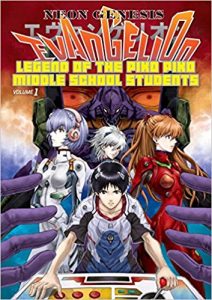
Neon Genesis Evangelion: Legend of the Piko Piko Middle School Students, Vol. 1

May 17, 2017 by Sean Gaffney

By Yushi Kawata and Yukito. Released in Japan as “Shin Seiki Evangelion – Pikopiko Chuugakusei Densetsu” by Kadokawa Shoten, serialization ongoing in the magazine Young Ace. Released in North America by Dark Horse Comics. Translated by Michael Gombos. Adapted by Carl Gustav Horn.

For the most part, if I have reviewed any of the endless Evangelion spinoffs at all, I’ve reviewed them as Briefs, mostly as for the most part it’s very difficult to try to work up 500+ words on the topic. The Evangelion manga is excellent, but its spinoffs and side stories have amounted to a creepy shoujo supernatural comic that barely felt like Eva at all (Campus Apocalypse), a Lowest Common Denominator romantic “comedy” (Shinji Ikari Raising Project), a mystery with BL overtones (Detective Diary), *another* lowest common denominator romantic comedy (Angelic Days, if anyone remembers it), and various gag anthologies. This new title is definitely on the “gag anthology” side, being a spinoff of one of the stories from the Evangelion Comic Tribute that was popular enough to get its own series.

In my review of the Comic Tribute anthology (which I guess I did give a full review to), I noted that the stories by these creators were the best part of the book, so it makes sense that they’d get a chance to add more wacky humor and dense references. The “plot” is mostly irrelevant, but essentially we see NERV trying to defeat the Angels by training gaming nerds to defeat them, and Shinji, Asuka and Rei are the three biggest. What follows is a string of gags, both visual and verbal, which range from average to quite good, though I don’t know that I laughed out loud. Characterization is, for the most part, exaggerations of the “fanon” view, so Shinji is a bit meek and overserious, Asuka’s angry all the time, Rei is stoic, and Kaworu is super gay. But above all else, there’s the boke/tsukkomi comedy we’ve come to expect from Japan, and everyone (well, OK, just Shinji and Asuka) are quick with the retorts.

Those with an observant eye may note that Carl Horn adapted this himself, and it’s very much an adaptation in the nature of his Excel Saga work, i.e. he takes the original and crafts it into something else. If you like overly literal translations, you’ll hate this, but for the most part it works out very well, especially as the original is there to help, being filled with fourth wall breaking, bizarre gaming references, and stupid running gags (it’s just a t-shirt!). Adapting manga that’s solely devoted to comedy can be tricky, but they do a good job. Of course, the drawback is that there is only comedy here – if you like Evangelion for literally anything other than gags, you’re wasting a purchase with this. But the comedy is finny, everyone is exaggerated but not totally loathsome (except Gendo, of course), and the fanservice is surprisingly minimal, something actually pointed out by the characters as they lament their lack of a beach episode. Piko Piko Middle School Students is here to crack dumb jokes and chew bubblegum, and they’ve run out of bubblegum.

Filed Under: evangelion, REVIEWS

Arifureta: From Commonplace to World’s Strongest, Vol. 1

May 16, 2017 by Sean Gaffney

By Ryo Shirakome and Takayaki. Released in Japan as “Arifureta Shokugyou de Sekai Saikyou” by Overlap. Released in North America digitally by J-Novel Club. Translated by Ningen.

First of all, it is very hard for me to read this book and not have ‘Arifureta, gentille arifureta, Arifureta, je te plumerai.” in my head, so I want you all to have it there as well. Secondly, this book in many ways reads like Isekai Smartphone’s dark mirror. They’re both intensely serious attempts at the classic isekai, but while Smartphone is content to be light as air and coast along on the awesomeness of his hero and the goodwill of the reader, in the grim darkness of Arifureta there is only hatred and revenge. Except, of course, we never see the actual revenge that we expect, and the hatred mostly manifests itself as our hero getting impossibly overpowered and badass. It’s a teenage power fantasy, but it has not gone the way most of those types of fantasies go – at least not yet.

The first third of the book starts you off on the wrong foot, leading you to believe this will be a far more traditional isekai than it actually is. Our hero is Hajime, a normal high school student who happens to be bullied by the majority of the class, mostly because the cutest girl in the class, Shirasaki, has taken it upon herself to interact with him every day. This becomes seemingly irrelevant when the entire class is transported to another world, there to become heroes and fight for the sake of the new country they’re now in. All of the class has cool adventurer stats and awesome powers… except Hajime, whose stats are awful and who is basically a blacksmith. So he’s bullied AGAIN, physically and emotionally. Worse, Shirasaki is still interested in him. And so one day, when the class are fighting a horrible battle far above their skill level (which Hajime actually helps out with more than anyone else), one jealous classmate turns to murder and Hajime falls into the deepest, darkest depths of the dungeon.

So far so dull, but then the plot and the writing take a dive off a cliff, just like our hero. Hajime, due to the happenstance of various things I won’t bother to get into, ends up leveling up so much his stat level is ???, acquires innumerable powers, and uses his basic blacksmith stats so do amazing things, and also build lots of guns, because kids who get transported to another world tend to be gun nuts. This is the point of the book where the reader has to throw up their hands and just go with it, because it is absolutely overblown and ridiculous, and the prose verges on the hilarious. It also may be the best part of the book, because he shortly meets a vampire princess trapped in the dungeon with him, and after rescuing her the series (again) becomes far more predictable.

That said, I expected by the end of the novel that he would get back to the surface and get revenge on those who once wronged him. This doesn’t happen, though we do cut back to the surface occasionally to check in on the rest and show how Shirasaki was very, very much in love with dull ol’ Hajime. Instead, the last third of the book relies on long battle scenes (which are done pretty well) and the interaction between Hajime and Yue, which is done less well. Hajime has a tendency at times to act as tsukkomi to Yue, which is a shame as it makes him sound like Araragi from the Monogatari series, especially bad given Yue is a blonde loli vampire. Another surprise, and a warning of sorts: Hajime and Yue have sex, several times. It’s implied rather than shown, but it is worth noting, simply as that sort of thing rarely actually happens in isekai harems like this, and likely shows off its web novel roots. You will have to trot out the old “it’s OK as she’s really hundreds of years old, she just LOOKS nine” chestnut.

Arifureta was less terrible than I was expecting, but there are better isekais out there. I’d only recommend it to those who really like this sort of thing and don’t mind overpowered, overserious heroes.

Filed Under: arifureta, REVIEWS

Pick of the Week: Take Me to the Other Side

May 15, 2017 by Sean Gaffney, Michelle Smith, Katherine Dacey, Ash Brown and Anna N Leave a Comment

SEAN: Most of the titles I’m interested in this week are digital. My pick is the second volume of Chihayafuru, because I still can’t believe it got licensed at all.

MICHELLE: On any ordinary week, I would be seconding that pick heartily, especially since my love of Chihayafuru is significantly tinged with gratitude. I’m really looking forward to Drowning Love and Our Precious Conversations, too, but I gotta award my vote to the second volume of The Girl from the Other Side. It’s a lovely, magical series with the sort of main character who I just can’t help but love with all my heart.

KATE: This week, I only have eyes for one manga: the latest volume of The Girl From the Other Side. It’s easily the best thing I’ve read this year, with a hauntingly beautiful story and gorgeous pen-and-ink drawings. I had to pinch myself when I realized that it’s published by Seven Seas, everyone’s favorite purveyor of monster girl T&A.

ANNA: Like many people, I’m excited about both The Girl From the Other Side and Chihayafuru, two very different manga. I think I’m going to have to give the edge to Chihayafuru though, the extended flashback in the first volume has me very curious about what’s happening with a more grown-up version of the characters. I’ve been waiting impatiently for the second volume!

ASH: Likewise, I’m interested in both Chihayafuru and The Girl from the Other Side, but in my case The Girl from the Other Side is the obvious choice for my pick of the week. I absolutely loved the first volume with it’s striking artwork, intriguing characters, and mysterious atmosphere. I’m really glad that Seven Seas licenses such a wide variety of material!

Filed Under: PICK OF THE WEEK

My Week in Manga: May 8-May 15, 2017

May 15, 2017 by Ash Brown

My News and Reviews

The Bookshelf Overload for April was posted at Experiments in Manga last week; otherwise, things were pretty quiet. Initially I had an in-depth feature scheduled for this week, but I’ll probably end up pushing that back to next week instead. I spent last Thursday through Sunday in Canada with the family for vacation and the Toronto Comic Arts Festival (TCAF) which I’ll be writing up like I have in years past. We had a great time, although not everything went exactly as planned.

Speaking of TCAF, Heidi MacDonald, Brigid Alverson, Deb Aoki, and Erica Friedman were apparently all sharing a hotel room for the event. I haven’t had a chance to listen to it yet, but they took advantage of that fact by recording a podcast in which they (and eventually Robin Brenner and Eva Volin as well) discuss a wide variety of topics including manga, queer comics, food, libraries, and more: Episode 1, Episode 2, Episode 3, Episode 4. I only found out about the details after I got back home, but once again some people had trouble crossing the border between the United States and Canada in order to attend TCAF. In one notable case, Anne Ishii, one of the folks behind Massive and Gengoroh Tagame’s interpreter and translator, was detained for over two hours before eventually being allowed to enter the country.

A few things from elsewhere online last week: Anyone who picked up the Attack on Titan choose-your-own-path book from Kodansha Comics will want know about the corrections and errata that were recently released online. Kodansha also confirmed it would be releasing the Neo Parasyte M manga anthology (a sort of companion volume to Neo Parasyte F which I greatly enjoyed). In other licensing news, although an official public announcement hasn’t been made, The OASG received some confirmation that Udon Entertainment is currently “deep into the localization” of Rose of Versailles and Sugar Sugar Rune. No release dates have been set yet, though. Seven Seas hasn’t mentioned any release dates for its most recent set of licensing announcements, either, though I wouldn’t be surprised to see Okayado’s MaMaMa: Magical Director Mako-chan’s Magical Guidance, Mintarou’s DNA Doesn’t Tell Us, Tekka Yaguraba’s Sorry For My Familiar, Hiroaki Yoshikawa’s Crisis Girls, Tsuina Miura and Takahiro Oba’s High-Rise Invasion, and Coolkyoushinja’s Mononoke Sharing all released first.

A couple of Kickstarters that have recently caught my attention, too. Chromatic Press’ latest campaign is raising funds to print the first volume of Magical How? by Eurika Yusin Gho (aka Eyugho). Though on occasion I’ve mentioned Magical How? on Twitter, I haven’t really wrote much about the comic here at Experiments in Manga. (Or at least not yet.) It’s a pretty fun series though, a sort of magical girl/boys’ love mashup with energetic, full-color artwork and lots of humor. The other project I specifically want to mention is for the second volume of Beyond, a queer speculative fiction comics anthology. If successful, the project will also allow the award-winning first volume (which is great) to be reprinted.

Quick Takes

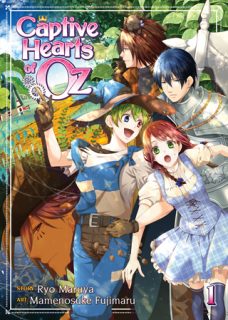
Captive Hearts of Oz, Volume 1Captive Hearts of Oz, Volume 1 written by Ryo Maruya, illustrated by Mamenosuke Fujimaru. One of the most interesting things about Captive Hearts of Oz is that the English-language release is actually the first time the manga has been published; rather than licensing existing content, the series is a direct collaboration between Seven Seas and the creators. Captive Hearts of Oz is Maruya’s debut work in English, but Fujimaru already has a notable presence due to the numerous Alice in the Country of… manga that have been translated. I suspect that it’s intentional then that Captive Hearts of Oz has a similar vibe to those series. Interestingly, there’s no explicit romance in the series yet although the manga is reminiscent of an otome game. Dorothy has simply been swept into an unfamiliar world where she meets a number of unusual people, many of whom just happen to be attractive young men. Captive Hearts of Oz is a somewhat unusual reimagining of a Western classic which may (or may not) have more depth to it than initially appears. At the very least there’s something dark and mysterious going on, although after only one volume it’s not entirely clear exactly what that is. The narrative is frustratingly disjointed in places, but I am curious to see how Captive Hearts of Oz continues to develop.

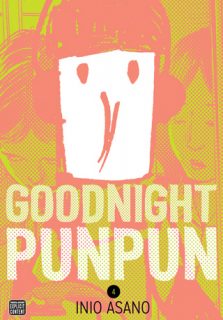
Goodnight Punpun, Omnibus 4Goodnight Punpun, Omnibuses 4-5 by Inio Asano. At this point in Goodnight Punpun, the series’ titular protagonist has entered early adulthood and his life largely remains a directionless disaster not entirely of his own making. He’s not completely blameless, though. I find that I have to time my reading of Goodnight Punpun very carefully. The manga has a very pessimistic worldview with which I can very easily identify, so if I’m already feeling mentally or emotionally exhausted, it’s usually a good idea for me to wait to tackle the series. On the other hand, it can sometimes be extremely cathartic to completely acknowledge the unfairness and darkness of the story and its real-life parallels. Either way, Goodnight Punpun is an incredible and powerful work, but it’s also very hard-hitting. Asano seems to be very aware of this and very aware of some of the related criticisms that have been leveled at the series. I, for one, have at times questioned whether or not all of the pain and suffering in Goodnight Punpun ultimately serves a purpose or if the manga is simply reveling in gloom and despair. I’ll admit that I’m still not sure and probably won’t be convinced one way or another until the manga’s conclusion, but Asano does directly recognize those concerns by having the creative work of some of the series’ characters similarly criticized.

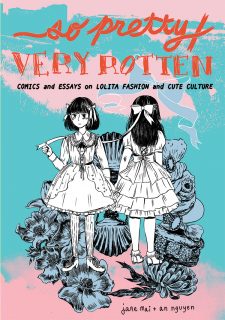
So Pretty / Very RottenSo Pretty / Very Rotten: Comics and Essays on Lolita Fashion and Cute Culture by Jane Mai and An Nguyen. I don’t have a particular interest in fashion, so if it wasn’t for the fact that I make a point to follow the work of Nguyen (aka Saicoink) I might not have gotten around to reading So Pretty / Very Rotten for quite some time. That would have been a shame because So Pretty / Very Rotten is both a terrific and fascinating work. I was certainly aware of Lolita culture previously, but I can confidently say that I have a much better understanding of it and even appreciation for it after reading So Pretty / Very Rotten. The volume examines numerous topics related to Lolitas–history, culture, fashion, identity, gender, expression, community and more–through approachable and accessible essays, both personal and academic (the Lolita lifestyle is one of the areas of Nguyen’s research), as well as through comics and illustrations. It’s a mix that works quite well. The essays are informative and the comics are cute and engaging, effectively demonstrating the concepts addressed through visual narratives. So Pretty / Very Rotten also includes an interview with and essay by Novala Takemoto, a prominent figure in Lolita culture who is probably best known in North America as the creator of Kamikaze Girls.

The Whipping Girl by Nuria Tamarit. I’m not entirely certain, but I believe that The Whipping Girl is the first published solo comic by Tamarit, an illustrator from Valencia, Spain. Even if it’s not, I certainly hope that there will be more in the future if for no other reason than Tamarit’s striking artwork is gorgeous. Color pencils are prominently used to illustrate The Whipping Girl and the effect is lovely. Writing-wise, the work isn’t quite as strong; The Whipping Girl feels like it ends rather abruptly, even considering that it’s a short comic to begin with, but it’s still an enjoyable tale. The story largely follows Agape, the whipping girl of Prince Dalibor. He’s a bit of a jerk, intentionally behaving improperly in order to get back at Agape who is generally much more capable than he is. She finally gets so fed up with the whole situation that she decides to make a run for it. Neither she nor Dal are able to anticipate the complete extent of the repercussions of her actions, and both are surprised to discover how close their bond really is. Overall, The Whipping Girl is a very satisfying comic with beautiful artwork, expressive characters, and a great sense of humor. Agape in particular is a delight, an intelligent, strong-willed young woman with an attitude.

Filed Under: FEATURES, My Week in Manga Tagged With: Captive Hearts of Oz, comics, Goodnight Punpun, Inio Asano, Jane Mai, Mamenosuke Fujimaru, manga, Nonfiction, Nuria Tamarit, Ryo Maruya, Saicoink

My Brother’s Husband, Vol. 1

May 14, 2017 by Michelle Smith

By Gengoroh Tagame | Published by Pantheon Books

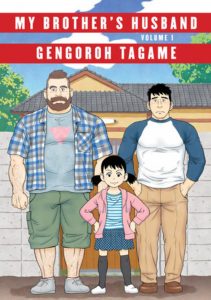
Yaichi is a single dad who works from home managing the rental property his parents left to him and his brother, Ryoji, after being killed in a car accident when the boys were teenagers. He considers his real job to be providing the best home he can to his daughter, Kana. On the day the story begins, Yaichi is expecting a guest—Mike Flanagan, the burly Canadian whom Ryoji married after leaving Japan ten years ago. Ryoji passed away the previous month and Mike has come to Japan to try to connect with Ryoji’s past and see for himself the many things he’d heard stories about from his husband.

Initially, Yaichi is reserved and wary around Mike. It’s not to his credit that the first thing he thinks when effusive Mike moves in for a hug is “Let go, you homo!,” though he at least mostly keeps a lid on his feelings. Mike is never anything but lovely, and Kana quickly comes to adore him. It’s through her openness and innocence, untainted by prejudice, that Yaichi comes to rethink some of his actions concerning Mike. Why did he hesitate to invite Mike to stay with them, when he’d recently insisted a visiting cousin do the same, for example? Kana is able to ask Mike things that Yaichi feels unable to, and he benefits from Mike’s super-patient explanations, eventually realizing how wrong he’d been about various aspects of the gay experience.

Not only wrong, in fact, but willfully ignorant. When Ryoji came out to him as a teenager, Yaichi didn’t object but never talked about it with him, either. He never considered how difficult that conversation was for his brother, or what other kind of turmoil he might’ve been experiencing. Too late, he’s realizing that he missed the opportunity to truly know his brother. I did appreciate that Yaichi is willing and able to recognize his own failings, and that he vows to protect Kana from others’ negative opinions about Mike and from being as closed-off as he was. True, he’s still not able to introduce Mike to an acquaintance without downgrading his relationship to Ryoji, so he’s got a ways to go. But at least he is headed in the right direction.

“Heartbreaking yet hopeful” is how Anderson Cooper describes My Brother’s Husband in his endorsement blurb, and he is definitely right. MJalso wrote movingly about the series in our latest Off the Shelf column.

My Brother’s Husband is complete in four volumes. Pantheon Books is releasing the series in two-in-one volumes.

Review copy provided by the publisher.

Filed Under: LGBTI, Manga, REVIEWS, Seinen

Off the Shelf: Not entirely unanticipated

May 11, 2017 by MJ and Michelle Smith 11 Comments

MJ: Heeeeey, look at this, it’s been less than two months and we’re already back again. That’s a huge improvement on our recent record, no?

MICHELLE: Considering that there was a two-year gap before our last column, I’d certainly say so!

MJ: Heard any good jokes lately?

MICHELLE: Hmm.. Here’s one! Why did the old lady fall in the well?

MJ: Wow, I don’t know! Why did the old lady fall in the well?

MICHELLE: She didn’t see that well.

MJ: Hey, that was actually pretty funny!

MICHELLE: Your reaction was unanticipated!

MJ: Speaking of “unanticipated”… no, wait, this is totally anticipated. Wanna talk about some manga?

MICHELLE: Sure! I’ve just finished the third volume of Hiroaki Samura’s Wave, Listen to Me!, a Kodansha digital exclusive.

It’s the story of Minare Koda, a waitress with a gift of fluency that catches the attention of a local radio producer, Mato. After secretly recording her drunken rant about her thieving ex and playing it over the air, he eventually takes the chance of giving her her own weekly show in a late-night time spot where she has the freedom to do some really kooky things. The first episode, for example, is a surreal audio drama about murdering said ex, Mitsuo. The next week, it’s time to bury the body on Mt. Fuji!

In this volume, Koda finds that going through those crazy plotlines has actually helped her set aside her bitterness about how Mitsuo done her wrong, and she must think about what she wants the show to be going forward. I really like the scenes wherein Mato mentors her about radio and the relationship between host and linstener. “TV viewers are guests. Radio listeners are participants,” he says at one point. This proves to be true when one of her listeners sends a fax that leads ultimately to the discovery of… well, perhaps I’ll play coy about its exact nature, but it definitely proves that reality is sometimes stranger than the occult.

Minare is a fascinating character. Full of energy and charisma, capable of selfish acts that she’s later thoroughly horrified by… She finally found a goal in life and she’s going for it, but doesn’t exactly know what she’s doing. I like her very much.

MJ: Okay, I gotta admit this sounds fantastic. It reminds me a little of a time when I played a lot of Quake so that I could imagine I was repeatedly blowing up my ex, only much more creative and generally productive. Is this series as delightful as it sounds?

MICHELLE: It’s delightful, but it’s also really a genius concept, since letting Minare do many things in many genres allows Samura the same liberty. So, on top of watching Minare’s skills and career progress, there are also wacky happenings to enjoy, too. I very heartily recommend it.

MJ: It’s hard for me to resist a Michelle recommendation, especially when it is something so obviously up my alley. You especially got me at “reality is sometimes stranger than the occult.” I mean… I have to know more. I just have to.

MICHELLE: Oh, that reminds me of another fun aspect… because Samura has already drawn out a couple of the audio dramas as if they’re actually happening, when strange things start to happen, it made me question whether he might have started another one without telling us. This is the sort of manga that would totally do that.

Anyway! What have you been reading lately?

MJ: I’ve been reading the first volume of Gengoroh Tagame’s My Brother’s Husband, just released by Pantheon Books. If, like me, you’re primarily familiar with Tagame’s work as a bara artist, this slice-of-life seinen manga is certainly a departure, but it feels so natural in his hands, you’d never know that it wasn’t a genre he’s always drawn.

Yaichi is a single dad, earnestly raising his young daughter, Kana, whose life is upended by the arrival of Canadian visitor, Mike, husband to Yaichi’s estranged twin brother, Ryoji, who has just passed away. Yaichi greets Mike with awkwardness and not just a little homophobia, but is forced to invite him to stay after Kana, blissfully unaware of her father’s discomfort, insists that he must be welcomed into their home. Mike, stricken with grief, but anxious to connect with Ryoji’s family and childhood, gratefully accepts Yaichi’s grudging hospitality and settles into Ryoji’s old room.

As the manga continues, we watch Yaichi confront his preconceptions about Mike (and gay people in general), with considerable nudging from Kana, who adores their new houseguest. It’s rough going at first, but as Yaichi gets to know the man who so deeply loved his brother, he is increasingly able to see past his prejudices, to the point that, by the end of the volume, he’s defending Mike’s snoring problem to Kana and fighting the desire to rage at a neighbor who declines to let her child visit Kana’s house, fearing “negative influence.”

True to expectation, this is a pretty moving manga, made all the more poignant by its quiet, slice-of-life atmosphere, The artwork and visual storytelling are downright adorable, as somehow Tagame has managed to create something that wouldn’t look out of place on the shelf alongside, say, Yotsuba&!, without sacrificing his own artistic sensibility. But, of course, it’s not the artwork that makes this book so important.

As a westerner, I’m always wary of imposing my own cultural expectations on books like this, and I’m very much aware that queer culture in Japan is as different from what I’m accustomed to here as is Japanese culture in general. And with that in mind, it’s pretty great to know that a series like this was run in Monthly Action, which, despite its “indie” aspirations, is clearly aimed mainly towards straight men (so many boobs, my friends, so many). Perhaps because of that, it was difficult for me to warm to Yaichi, who is obviously intended as the stand-in for the reader, in all his discomfort over the concept of gay people and how he’s supposed to interact with one. Watching Yaichi’s progress is painful and, yes, eventually heartwarming, but what is most striking to me, as a reader, is Mike’s patience, kindness, and general agreeability throughout. Watching this sweet, hulking man smile with gratitude in every moment, even when he’s being treated with barely-concealed suspicion, is just… heart-wrenching. I can only imagine how this must read for someone who has experienced the same.

MICHELLE: Oh, man. I knew the general premise of this but not that Yaichi would be quite so awful at the outset. And it’s bad enough that Mike’s being treated this way, but when he’s grieving and so desperate for any scrap of his beloved that he’ll take it. From how you describe him, it doesn’t sound as if Mike tries to stand up for himself at any point.

MJ: I feel like I should rephrase, perhaps… I mean, yes, from my perspective Yaichi is being awful, but that’s where my western perception is failing me, I think. I think we can all agree, however, that what’s astonishing and awesome about Mike (also a westerner) is that he seems to be naturally accounting for differences in culture, and is just ceaselessly kind and giving. And when Yaichi becomes moved by that, it is what really changes his perspective, perhaps even more than Kana’s influence.

There’s obviously a lot more here, too, than just Yaichi overcoming homophobia. We find out a little about his estrangement from his twin brother and also about how his own marriage broke down, and I think in the end he and Mike are going to be strong healing influences for each other, and probably also for Kana, who didn’t even know she had an uncle!

MICHELLE: That does sound reassuring. I’m about to begin reading My Brother’s Husband this evening, in fact, so I’ll do my best not to get too riled up. Especially since I’m so very grateful that Pantheon has brought it to us!

MJ: Oh, go ahead and get riled up! But I really think you’ll love it in the end. It’s one of my favorite manga I’ve read so far this year.

So, we also have a mutual read this week… do you want to do the honors?

MICHELLE: Sure!

From Rei Toma, whose Dawn of the Arcana I liked and also featured a protagonist whose unusual red hair is viewed with suspicion, comes The Water Dragon’s Bride.

Asahi is spending a pleasant afternoon with her parents and she’s just about to go in and have some cookies when the backyard pond reaches out and ensares her, transporting her to another world. There, she meets a friendly boy named Subaru who unfortunately has some very ruthless parents, who immediately decide to offer Asahi to the water dragon god to obtain prosperity.
Asahi meets the dragon god who is, of course, a bishounen. He decides she’ll do for entertainment and shows off various tricks, but she’s unimpressed and protests so much that he steals her voice, promising to return it when she becomes his bride. Subaru mounts a valiant rescue, but the villagers prove to be just as crappy the second time around and the god decides to intervene.

How’s that?

MJ: That’s about the size of it! So. Okay. Honestly, I’m having a hard time coming up with a lot to say about this series so far. It’s definitely kind of adorable. Asahi is a spunky, likable heroine. Subaru, the obvious love interest, is sweetly earnest, and the bishounen water dragon god is pleasantly crusty. But man… haven’t we read this book before? Like a thousand times? Am I too much of a bitter, old schoolgirl-in-another-land fogey to enjoy this… again?

MICHELLE: It was certainly a very lightweight volume! I do think there’s potential, especially in the character of the water god. He’s cold, distant, and uncaring. At one point he simply watches as she wastes away in starvation. And he only intervenes at the end to preserve his entertainment. I’m sure he’ll feel love eventually, since that sort of thing always happens, but he’s definitely the most interesting character so far. Too, at least with the fish imagery and the pond, I had a little bit of Moon Child feels, and that’s always welcome.

MJ: I hadn’t thought about Moon Child, but I can see where you’re coming from, though the artwork isn’t nearly as beautiful as Shimizu’s, nor does it hold up well to what was the obvious comparison for me, Yun Mi-kyung’s Bride of the Water God, which, whatever you think of the series in general, I think is objectively visually stunning. Of course Bride of the Water God is a much more serious take on the sacrificial maiden theme, and Moon Child is weird and darkly whimsical like no other manga I’ve ever read. So it’s not really fair to hold this sweet little volume to either of those standards.

That said, I agree that the bishounen god has some possibilities (even if the long hair and excessive lounging just made me wish we were getting a new volume of Loveless anytime soon), and I expect there will be more substance as we go forward. But I kinda hope it hurries.

MICHELLE: Me, too! I did think of Bride of the Water God, but I although I did collect the volumes for a while, I never actually read them.

MJ: Well, perhaps this little manga will fare better on your shelves! I guess time will tell!

MICHELLE: I will least give it a few volumes to see how it fares. But it won’t assuage my sorrow that volume four of Wave, Listen to Me! is not even out in Japan yet.

MJ: That is a tragedy, indeed.

Filed Under: OFF THE SHELF

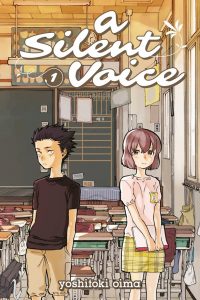
A Silent Voice, Vols. 1-7

May 11, 2017 by Michelle Smith

By Yoshitoki Oima | Published by Kodansha Comics

asv1In elementary school, Shoya Ishida often engaged in foolhardy stunts to stave off boredom. When hearing impaired transfer student Shoko Nishimiya joins his class and causes disruption within the class, she becomes Shoya’s target. Initially, the other kids laugh at Shoya’s antics but when he goes too far and destroys several hearing aids to the tune of $14,000, they swiftly condemn him. Now he’s the one who’s ostracized and this status continues into high school, long after Shoko transferred out again. Full of self-loathing, he’s preparing to commit suicide, but a chance reunion with Shoko inspires him to try to change.
One of the first things Shoya does is accept the friendship of a tubby, pushy classmate called Tomohiro Nagatsuka. Tomohiro doesn’t have much depth or subtlety as a character, but he proves to be a reasonably faithful friend and helps Shoya become more sociable. Soon, he meets Yuzuru, Shoko’s tomboyish sister, and reunites with more girls from his elementary school class. Many of the middle volumes involve frictions between this group of people, particularly between a volatile girl named Naoka and Shoko. Shoya tries to help patch their relationship, but things do not go well at all. There is a lot of punching and hair-pulling, in fact.

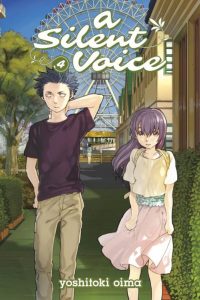
asv4Back and forth things go, with this group continuing to try to establish themselves as friends without seeming to genuinely like each other much. Eventually, they decide to film a movie together. For one scene, they need to acquire permission to film at their old elementary school. Shoya is the unwilling emissary, and an encounter with his odious former teacher leaves him feeling so awful about himself that he ends up lashing out at all his friends, seemingly trying to drive them away as he feels he deserves. This has the unintended side effect of causing Shoko to feel like she’s the cause of his unhappiness, prompting a desperate act.
Throughout, I enjoyed Shoya’s arc. I like that gaining some people to hang out with is not enough to immediately banish self-hatred or prevent negative feelings. Only at the end of the series does Shoya gain the courage to face people honestly, accepting criticism for his faults and misdeeds while also being open to the possibility that not everyone is hostile towards him. I do wish we got more emphasis on Shoko’s inner life, however, even though I liked the direction she’s headed at the end of the series.

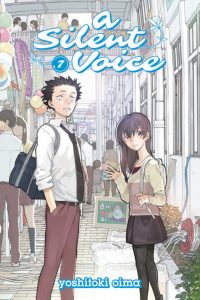
asv7Less clear is what Oima was aiming for with their group of friends. Even though Naoka was far more outwardly nasty to Shoko, at least she was open about it and expressed a great deal of self-loathing because of her behavior. With the help of another friend, Miyoko, she is encouraged to have a bit more optimism, and will probably end up doing okay. Even though she could’ve been fleshed out further, I do like Naoka as a character. But man oh man, do I hate Miki. She makes everything about herself—at one point revising the bullying narrative so that she and Shoko were co-victims—and doesn’t seem to grow at all. Everything she does seems fake, because most of it is, and I was baffled when the boy she fancies declared her to be “kind” after some weepy episode. Miki should get hit by a bus.

Lastly, there were some thoughtful depictions of how characters perceive the spoken word. In later volume there’s a chapter from Shoko’s point of view where all of the dialogue in the speech bubbles is only about sixty percent legible. It’s a neat effect. Too, on several occasions Shoya seems to overhear his classmates making derogatory comments about him. The scenes are depicted in such a way that the reader has doubt—is he just imagining what they’re saying, or are they really saying it? This struggle to interpret conversation is something he and Shoko have in common.

Despite a couple of complaints, I’d say A Silent Voice is well worth reading!

A Silent Voice is complete in seven volumes, all of which are now available in English.

Filed Under: Manga, REVIEWS, Shounen

Bookshelf Overload: April 2017

May 11, 2017 by Ash Brown

I started at my new job in April, which has gone pretty well so far, but it has still been a bit of a stressful transition moving from one library to another. As a result, considering my tendency to stress-buy books, my personal library increased in size a fair bit. (Still, I did do a little better reigning myself in in April than I did in March.) Lately I’ve also noticed that my buying habits have changed somewhat, too. I’m not pre-ordering as much as I once was and so each month am playing more catch-up with past releases. Which is why I’ve only recently discovered that I tremendously enjoy series like Natsuki Takaya’s Twinkle Stars. As for more current releases that I was particularly excited about, the fifth omnibus of Inio Asano’s Goodnight Punpun and Wataru Waanabe’s Yowamushi Pedal were both published in April. I’ve apparently also been craving prose works. One of the more interesting projects that I’ve come across in a while is Keshiki, a series of eight chapbooks from a new publisher, Strangers Press, which are translations of short fiction by Japanese authors. (You’ll find them individually listed below in the section for novels, even though that’s not an entirely accurate categorization.)

Manga!
Aoharu X Machinegun, Volume 2 by Naoe
Earthian, Volumes 1-2 by Yun Kouga
Flying Witch, Volume 1 by Chihiro Ishizuka
Food Wars!: Shokugeki no Soma, Volume 17 written by Yuto Tsukuda, illustrated by Shun Saeki
Goodnight Punpun, Omnibus 5 by Inio Asano
Haikyu!!, Volume 10 by Haruichi Furudate
I am a Hero, Omnibus 3 by Kengo Hanazawa
Kase-san and Morning Glories by Hiromi Takashima
Love Com, Volume 4 by Aya Nakahara
Mobile Suit Gundam: Thunderbolt, Volume 1 by Yasuo Ohtagaki
My Hero Academia, Volume 2 by Kouhei Horikoshi
Nichijou, Volume 2 by Keiichi Arawi
Of the Red, the Light, and the Ayakashi, Volumes 4-5 by Nanao
Pet Shop of Horrors, Volumes 1-8 by Matsuri Akino
Record of Lodoss War: Lady of Pharis, Volumes 1-2 written by Ryo Mizuno, illustrated by Akihiro Yamada
Twinkle Stars, Omnibuses 1-2 by Natsuki Takaya
Yamada-kun and the Seven Witches, Volumes 10-12 by Miki Yoshikawa
Yona of the Dawn, Volume 5 by Mizuho Kusanagi
Your Lie in April, Volumes 10-11 by Naoshi Arakawa
Yowamushi Pedal, Omnibus 5 by Wataru Watanabe

Manhwa!
Lethe by Kimjin

Comics!
Afar by Leila Del Duca and Kit Seaton
Bird Boy, Volumes 1-2 by Anne Szabla
Cafe Suada, Volumes 1-5 by Jade Sarson
Creature Feature, Volume 1 by Kelly Matthews and Nichole Matthews
Diana’s Electric Tongue by Carolyn Nowak
Girl Town by Carolyn Nowak
Head Lopper, Volume 1 by Andrew MacLean
Henchgirl by Kristen Gudsnuk
In These Words, Chapter 16 by Guilt | Pleasure
The Meek by Der-shing Helmer
My Favorite Thing Is Monsters, Volume 1 by Emil Ferris
The Nameless City, Volume 2: The Stone Heart by Faith Erin Hicks
Pang, The Wandering Shaolin Monk, Volumes 1-2 by Ben Costa
Radishes by Carolyn Nowak
Small Favors by Colleen Coover
Sweaty Palms edited by Liz Enright and Sage Coffey

Artbooks!
Chain Reaction by Jo Chen

Novels!
At the Edge of the Wood by Masatsugu Ono
Belka, Why Don’t You Bark? by Hideo Furukawa
Bullfight by Yasuhi Inoue
Devils in Daylight by Junichiro Tanizaki
Friendship for Grown-ups by Naocola Yamazaki
Frontier by Can Xue
The Girl Who Is Getting Married by Aoko Matsuda
The Hunting Gun by Yasuhi Inoue
The Impossible Fairy Tale by Han Yujoo
The Longshot by Katie M. Kitamura
Mariko/Mariquita by Natsuki Ikezawa
Me Against the World by Kazufumi Shiraishi
Mikumari by Misumi Kubo
Punk Samurai Slash Down by Kou Machida
Record of a Night Too Brief Hiromi Kawakami
Spring Garden by Tomoka Shibasaki
Spring Sleepers by Kyoko Yoshida
Time Differences by Yoko Tawada
Transparent Labyrinth by Keiichiro Hirano
White Elephant by Mako Idemitsu

Anthologies!
Ground Zero, Nagasaki by Yūichi Seirai
Life of a Counterfeiter and Other Stories by Yasuhi Inoue
March was Made of Yarn edited by Elmer Luke and David Karashima

Poetry!
When I Grow Up I Want to Be a List of Further Possibilities by Chen Chen

Nonfiction!
Goodbye Things: The New Japanese Minimalism by Fumio Sasaki
The Tale of the Heike translated by Royall Tyler

Anime!
Bodacious Space Pirates directed by Tatsuo Sato
Tegami Bachi: Letter Bee, Seasons 1-2 directed by Akira Iwanaga

Film!
Tampopo directed by Juzo Itami

Filed Under: Bookshelf Overload, UNSHELVED

  • « Go to Previous Page
  • Page 1
  • Interim pages omitted …
  • Page 430
  • Page 431
  • Page 432
  • Page 433
  • Page 434
  • Interim pages omitted …
  • Page 1048
  • Go to Next Page »
 | Log in
Copyright © 2010 Manga Bookshelf | Powered by WordPress & the Genesis Framework