• Skip to primary navigation
  • Skip to main content
  • Skip to primary sidebar
  • Home
  • About Us
    • Privacy Policy
    • Comment Policy
    • Disclosures & Disclaimers
  • Resources
    • Links, Essays & Articles
    • Fandomology!
    • CLAMP Directory
    • BlogRoll
  • Features & Columns
    • 3 Things Thursday
    • Adventures in the Key of Shoujo
    • Bit & Blips (game reviews)
    • BL BOOKRACK
    • Bookshelf Briefs
    • Bringing the Drama
    • Comic Conversion
    • Fanservice Friday
    • Going Digital
    • It Came From the Sinosphere
    • License This!
    • Magazine no Mori
    • My Week in Manga
    • OFF THE SHELF
    • Not By Manga Alone
    • PICK OF THE WEEK
    • Subtitles & Sensibility
    • Weekly Shonen Jump Recaps
  • Manga Moveable Feast
    • MMF Full Archive
    • Yun Kouga
    • CLAMP
    • Shojo Beat
    • Osamu Tezuka
    • Sailor Moon
    • Fruits Basket
    • Takehiko Inoue
    • Wild Adapter
    • One Piece
    • After School Nightmare
    • Karakuri Odette
    • Paradise Kiss
    • The Color Trilogy
    • To Terra…
    • Sexy Voice & Robo
  • Browse by Author
    • Sean Gaffney
    • Anna Neatrour
    • Michelle Smith
    • Katherine Dacey
    • MJ
    • Brigid Alverson
    • Travis Anderson
    • Phillip Anthony
    • Derek Bown
    • Jaci Dahlvang
    • Angela Eastman
    • Erica Friedman
    • Sara K.
    • Megan Purdy
    • Emily Snodgrass
    • Nancy Thistlethwaite
    • Eva Volin
    • David Welsh
  • MB Blogs
    • A Case Suitable For Treatment
    • Experiments in Manga
    • MangaBlog
    • The Manga Critic
    • Manga Report
    • Soliloquy in Blue
    • Manga Curmudgeon (archive)

Manga Bookshelf

Discussion, Resources, Roundtables, & Reviews

Blog

Descending Stories: Showa Genroku Rakugo Shinju, Vol. 1

May 23, 2017 by Katherine Dacey

In the opening pages of Descending Stories, we’re introduced to Yotaro, an amiable ex-con with an unusual plan for going straight: he wants to become a rakugoka, or rakugo artist. To learn the ropes of this venerable performing tradition, Yotaro cajoles Yakumo, a rakugo master, into accepting him as an apprentice — something that Yakumo has resisted doing in the past, even when more suitable candidates have presented themselves. Descending Stories then follows Yotaro’s first clumsy efforts at telling stories, making people laugh, and resisting the temptations of his old life.

Rakugo, for the uninitiated, is Japan’s answer to continuous vaudeville. In lieu of acrobats and jugglers, however, yose (venues) offer customers a steady flow of rakugokas who regale the audience with humorous stories, each adhering to a clearly defined format that begins with the makura (prelude), moves to the hondai (main story), and concludes with the ochi (punchline). Unlike a vaudeville artist — or a manzai duo, for that matter — the rakugoka remains seated while delivering his material, using only two simple props — a fan and a cloth — to convey what’s happening.

In theory, rakugo sounds like an ideal topic for a manga: it’s a storytelling genre that relies almost exclusively on facial expressions and physical gestures to bring the story to life, actions that translate well to a silent, static medium like comics. The audible dimension of a rakugo performance also lends itself to graphic depiction, as a well-chosen typeface can suggest the register, volume, gender, and age of the person speaking. Yet the rakugo performances in Descending Stories capture little of the magic that would explain the genre’s enduring appeal in Japan. Too often, Haruko Kumota cross-cuts between a snippet of performance and a snippet of conversation in which audience members praise the rakugoka‘s technique, or comment on how much everyone else seems to be enjoying themselves. The net result feels more like watching a football game on television than attending a theatrical performance; we can see what’s happening, but the relentless stream of chatter and clumsy framing of the action keep us at arm’s length.

The flatness of these performances stand in sharp contrast to the vibrant story that surrounds them. Though the principal cast is small — Yotaro, Yakumo, and Konatsu, Yakumo’s adopted daughter — Kumota squeezes plenty of dramatic juice out of their interactions. In chapter three, for example, Konatsu accuses Yakumo of murdering her biological father, Sukeroku, who was also an accomplished performer. She vows to exact revenge by taking up rakugo herself, a gesture designed to provoke the staunchly traditionalist Yakumo. “Women can’t perform rakugo,” he tells her:

That’s just the way it is. They can’t enjoy stupidity, for one thing. Even if they can, their art doesn’t deepen as they age. And should they somehow master the art… well, there’s nothing more unpleasant than a woman who can do a good impression of a man. There’s just too much to overcome.

Yet Yakumo is no soap opera villain, intent on crushing the spirit of a plucky heroine; he’s a realist who bears deep — and as yet unrevealed — wounds from collaborating with Konatsu’s dad. He recognizes the depth of Konatsu’s pain, and her sincere desire to preserve her father’s legacy by memorizing and performing his material. As a conciliatory gesture, Yakumo begins reciting “The Naughty Three,” one of Sukeroku’s stories. This eight-panel sequence offers a fleeting glimpse of Yakumo’s true artistry, showing us how he twists his face and bends his torso to portray the story’s main characters. Only a solitary panel of Konatsu sobbing, “My father… He’s alive,” undercuts the effectiveness of the scene, baldly stating what’s apparent from the illustrations.

And that, in a nutshell, is what makes Descending Stories simultaneously frustrating and compelling. On the one hand, Kumota tries so hard to persuade us that rakugo is a funny, spellbinding, and vital tradition that the performances never take flight on the page; even the best scenes are marred by comments that feel like a poke in the ribs: “Didja get it?” On the other hand, Kumota creates such passionate, complex characters that it’s fundamentally impossible to dislike Descending Stories; I want to know whether Yotaro becomes a rakugoka, or if Konatsu finds an outlet for her own storytelling gift. My suggestion: read the omake for insights into rakugo, and read the main chapters for the drama.

DESCENDING STORIES: SHOWA GENROKU RAKUGO SHINJO, VOL. 1 • BY HARUKA KUMOTA • KODANSHA COMICS • RATING: YOUNG ADULT (13+)

Filed Under: Manga, Manga Critic, REVIEWS Tagged With: Descending Stories, Haruko Kumota, Kodansha Comics, Rakugo

Pick of the Week: Many Options

May 22, 2017 by Sean Gaffney, Michelle Smith, Katherine Dacey, MJ, Ash Brown and Anna N Leave a Comment

MICHELLE: While I am undoubtedly excited for the debut volumes of Descending Stories and Delicious in Dungeon, the second volume of The Full-Time Wife Escapist ended on such a terrific cliffhanger than I am most eager to get my (digital) hands on volume three!

SEAN: My pick is your name., the novel by Makoto Shinkai. Being the only person in the world who hasn’t seen the movie, I know nothing about it except that it was a huge phenomenon and will likely involve a boy and girl in some way. I’m hoping fro more sweet than bittersweet, but given it’s Shinkai, not expecting that.

KATE: The first volume of Descending Stories was solid but not swoon-worthy, so I’m going to make a pitch for Yen’s two big debuts: Delicious in Dungeon, a manga that promises to combine gustatory adventures with D&D action, and Girls’ Last Tour, a “post-apocalyptic slice-of-life” series (Sean’s words, not mine).

MJ: I’m with Sean this week. I did see your name. (and loved it, of course) but I’m pretty excited to read the novel that started it all. It’s an unusual order of things for Shinkai, and I’m really interested to see what (if anything) he did differently once he was making the movie.

ASH: Oh, there are so many great and interesting things being released! The second volume of Murcielago, the debuts of Delicious in Dungeon and Girls’ Last Tour, the continuation of Monthly Girls Nozaki-kun, and more. (It looks like Yen Press has it out for me this week; my wallet weeps for me.) My pick, however, goes to Descending Stories: Showa Genroku Rakugo Shinju which I’ve been eagerly anticipating ever since Kodansha Comics first announced its license.

ANNA: This is a really good week for manga! There are many great series coming out this week, but like Michelle I am most eagerly looking forward to the third volume of The Full-Time Wife Excapist, I’ve been enjoying this series very much and can’t wait to read the next installment in the series.

Filed Under: PICK OF THE WEEK

My Week in Manga: May 15-May 21, 2017

May 22, 2017 by Ash Brown

My News and Reviews

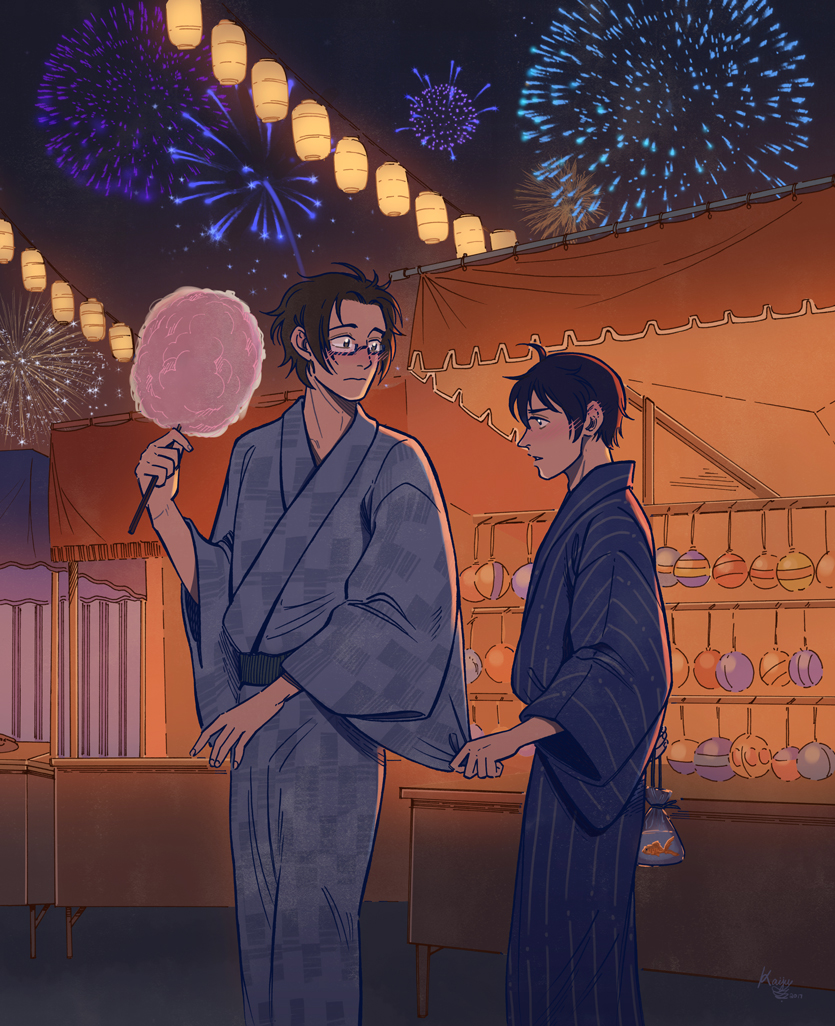
Other than the usual My Week in Manga, I didn’t manage to post any other features at Experiments in Manga last week. This was largely expected since I’m still catching up from my trip to the Toronto Comic Arts Festival. I have, however, been working on writing up some of my random musings about this year’s festival and hope to have those ready to post within the next few days. There is one thing that happened last week that I’d definitely like to share with everyone, though: the artwork that I commissioned from KaiJu was finished!

KaiJu Tokyo Demons Commission

The illustration is of the characters Sachi and Kadoyuki from Lianne Sentar’s Tokyo Demons, a series which I love very, very much. I’m also quite fond of KaiJu’s original work as well, some of which I’ve previously reviewed here at Experiments in Manga. The creative team’s current comic is Novae which is absolutely wonderful and well-worth checking out.

Elsewhere online: Lilian Min talks to Jane Mai and An Nguyen about their new book So Pretty / Very Rotten in the article The Complex Femininity of Japanese Lolita Fashion. One of Tofugu’s most recent podcasts, Interpreting for Osamu Tezuka, features Frederick L. Schodt. Also at Tofugu, manga translator Zack Davisson has some advice for learning Japanese. Speaking of Davisson, he’ll be translating two of Seven Sea’s recently announced acquisitions: Go Nagai’s original Devilman manga series (this is huge!) as well as Go Nagai and Team Moon’s Devilman vs. Hades manga. In other licensing news, Viz Media will be releasing Hinodeya Sankichi’s Splatoon manga.

Quick Takes

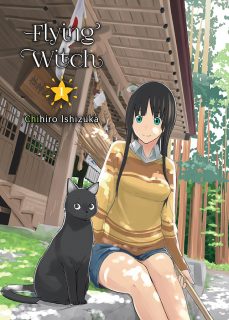
Flying Witch, Volume 1Flying Witch, Volume 1 by Chihiro Ishizuka. I was only vaguely aware of Flying Witch before Vertical Comics licensed the manga; although I haven’t actually watched it, a twelve-episode anime adaptation of the series first aired a little over a year ago. Flying Witch is a manga about Makoto, a fifteen-year-old witch who has moved to the country to stay with her relatives while she completes her magic training. She’s a bit of an airhead and has a terrible sense of direction, but she’s earnest and kind and quick to make friends with the locals. The focus of Flying Witch is on the everyday lives of Makoto, her relatives, and friends. It’s a gentle and harmless manga that much of the time isn’t even about magic though it can still occasionally be charming. The manga’s artwork, much like the story itself, is functional but not particularly distinctive and even the worldbuilding is somewhat lacking. Flying Witch isn’t a bad series, but it didn’t really grab me, either. Granted, I don’t have a particular interest in witches. However, I did really like the series’ countryside setting. Additionally, The Harbinger of Spring, a nature spirit introduced in one of the final chapters of the first volume, was a fascinating addition and easily my favorite part of the manga.

Jane EyreJane Eyre adapted by Crystal Silvermoon Chan and illustrated by SunNeko Lee. Charlotte Brontë’s Jane Eyre holds a very special place in my heart; I first read it in high school and it remains one of my favorite novels. To varying degrees, I’ve enjoyed the numerous films, novels, comics, and other works inspired by Jane Eyre that I’ve encountered as well. And so I was very curious to read one of the most recent adaptations, Chan and Lee’s Jane Eyre comic from Udon Entertainment’s Manga Classics line. (This is the same creative team which worked on the adaptation of Victor Hugo’s Les Misérables, one of Manga Classics debut titles.) Though overall Lee’s artwork is attractive, I wasn’t entirely satisfied by the character designs of the leads–Jane as a young woman doesn’t look much older than when she was a child, and Mr. Rochester comes across as too traditionally handsome. Other than that relatively minor complaint, Chan and Lee’s Jane Eyre remains true to Brontë’s original and is an enjoyable and very accessible rendition. Some small changes have been made, as Chan describes in the essay about the adaptation process, but all the major characterization and plot points remain. The volume also includes additional historical background information. Now I really want to reread the novel again.

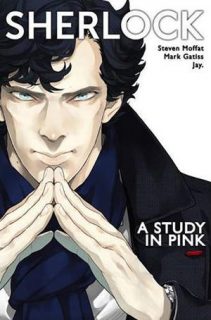
Sherlock, Volume 1: A Study in PinkSherlock, Volume 1: A Study in Pink by Jay. I believe Sherlock is the very first manga to be released by Titan Comics, recently followed by Yano Takashi and Kenji Oiwa’s Assassin’s Creed: Awakening. The fact that Titan isn’t a typical manga publisher and hasn’t released many manga may partly explain why Jay’s adaptation of the BBC’s television series Sherlock was first released in English as six individual comic issues before being collected into a single volume. Titan’s catalog largely consists of comic adaptations of Western television and video game franchises, so Jay’s Sherlock fits in nicely with the rest. Sherlock is a modern reimagining of Sir Arthur Conan Doyle’s Sherlock Holmes stories, A Study in Pink influenced heavily by Doyle’s novel A Study in Scarlet. It’s been a while since I’ve actually watched A Study in Pink, but Jay’s interpretation does seem to be a very faithful one, including character designs that are based on the show’s actors, most notably Benedict Cumberbatch (Sherlock) and Martin Freeman (Watson). Some of the action can be a little difficult to follow, but otherwise I largely enjoyed Jay’s version of A Study in Pink. However, because it is such a close adaptation and nothing much is added or taken away I’m not entirely sure who the best or intended audience for the Sherlock manga would be; most people would likely be satisfied with the original episode.

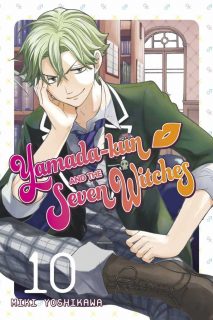
Yamada-kun and the Seven Witches, Volume 10Yamada-kun and the Seven Witches, Volumes 10-12 by Miki Yoshikawa. From the beginning Yamada-kun and the Seven Witches wasn’t without its problems, but I thoroughly enjoyed the first part of the manga. However, I’m now starting to find the series somewhat wearisome even though there are some things that are quite well done and that I still like about it. With these three volumes, Yoshikawa brings the second major story arc of Yamada-kun and the Seven Witches to a close and begins yet another one. To the Yoshikawa’s credit, each time the story is more or less restarted it makes logical sense, but at this point it feels like the series is being stretched out far longer than it was originally intended. (I suspect that Yamada-kun and the Seven Witches may be a victim of its own popularity and success.) The first story arc was highly entertaining, but I wasn’t as impressed with the second and the third hasn’t instilled much confidence in me that it will greatly improve. On top of that, the manga’s fanservice has become more and more forced as the series has progressed. Where at one point it was incorporated well into the story, more recently the fanservice is haphazard at best. Because at first I did greatly enjoy Yamada-kun and the Seven Witches and appreciated its gender play and themes of friendship, it saddens me to see the series’ decline.

Filed Under: FEATURES, My Week in Manga Tagged With: Chihiro Ishizuka, comics, Crystal Silvermoon, Flying Witch, Jay, manga, Manga Classics, Miki Yoshikawa, Sherlock, SunNeko Lee, Yamada-kun and the Seven Witches

Bookshelf Briefs 5/22/17

May 22, 2017 by Michelle Smith and Sean Gaffney Leave a Comment

Ace of the Diamond, Vol. 3 | By Yuji Terajima | Kodansha Comics (digital only) – Although the first years finally manage to score in their game against the upperclassmen, victory eludes them. Still, Eijun’s ability to fire up his teammates does not go unnoticed and his performance on the mound sees him promoted to the Junior Varsity squad. He’s not satisfied with the catcher he’s paired up with for practice, though. After attending the first game of the Kanto Tournament and seeing how much better a pitcher Furuya is, he accuses the morose catcher (Chris) of having given up on getting to Varsity, something he will never do. And then after he learns how completely wrong he was, he actually humbles himself and starts seriously trying to learn about baseball. Sniff! Our little shounen hothead is growing up! – Michelle Smith

Anonymous Noise, Vol. 2 | By Ryoko Fukuyama | Viz Media – I am probably liking this a lot more than I should, really. I am far too old to really be drawn in by teen angst, and there’s a lot of soap opera-ish stuff happening here. But I’m a sucker for untrained singers who make up for the lack of training through passion, mostly as it’s the sort of thing that in real life always sounds awful—but on the printed page it’s fine. Nino and Yuzu are drawn to each other in both healthy and unhealthy ways, and when we finally meet Momo again, he’s being just as unhealthy. These are three kids who have hit their teenage years with a whump, and drama is the watchword. But I dunno, something about the writing and characters makes me like this a lot. We’ll see how long it lasts. – Sean Gaffney

Bloom into You, Vol. 2 | By Nakatani Nio | Seven Seas – For parts of this volume, Bloom into You feels like a fairly standard yuri manga. There’s the part where a fellow student council member happens to see Touko and Yuu smooching, and the part where the vice-president clearly thinks she’s the only one Touko needs by her side. But towards the end of the volume, it veers once more into darker and more fascinating territory, as we learn that Touko is so driven to appear perfect due to family pressure to live on in the place of her amazing older sister who died seven years ago. She can’t bear for anyone to love either the real or the fake her, which is why she’s chosen Yuu, who ends up swearing never to fall in love with her even though she privately wishes she could. It’s nice to be reminded what turmoil lurks beneath the pleasant surface! – Michelle Smith

The Full-Time Wife Escapist, Vol. 2 | By Tsunami Umino | Kodansha Comics (digital only) – While there is still a lot of goofy charm in this title, mostly due to Mikuri’s imagination (we get a Les Miz takeoff here, as well as an enka number and some cheerleading chibis), the reality of the arrangement she’s entered into with Hiramasa is starting to fall apart at the seams. It’s really hard to pretend to be married, as there’s a lot of little details you can miss. Plus there’s also house-hunting (but do they really need one?), dental cavities (yes, she really does need a filling but what kind?), and Hiramasa’s growing feelings, which are… not really mirrored all that much by Mikuri, who sometimes seems almost asexual. We’ll see how well the marriage holds up in volume three, as there’s a nasty cliffhanger here. – Sean Gaffney

The Girl from the Other Side: Siúil, a Rún, Vol. 2 | By Nagabe | Seven Seas – The Girl from the Other Side loses just a teensy bit of its luster in this volume by actually trying to provide, or at least hint at, some answers. When Teacher catches an Outsider touching Shiva, he protects her valiantly, over her own protestations. Later, though, they seek out the creature again because it had hinted that it knew the whereabouts of Shiva’s aunt. It doesn’t, but leads them to a giant lake where Teacher encounters a mysterious hole in the ground and hears the Outsiders’ perspective on why the humans are the source of the curse. He doesn’t know what to believe, and meanwhile examines Shiva daily for symptoms. Then those odious humans get involved again and another volume ends with Shiva in peril. This time, Teacher’s seemingly not in a position to protect her. Still bringing the love, sorrow, and loneliness! – Michelle Smith

Haikyu!!, Vol. 11 | By Haruichi Furudate | Viz Media – This volume consists of Karasuno High’s team failing over and over again, trying things that don’t quite work, and getting pissed off with each other. But that’s as it should be, because you can’t stay static if you want to make it to the next level. The author does a very good job of showing a team that’s on the cusp of being great, if they can just pull everything together. And we’re beginning to see it… but it’s not quite there. And this being training camp, they can get advice from other teams, showing off super secret special moves that allow Hinata and company to add new talents to their repertoire. The goal here is to combine volleyball talent and instinct with intelligence. I wonder what will happen next. – Sean Gaffney

Interviews with Monster Girls, Vol. 4 | By Petos | Kodansha Comics – The whole point of this series is to see Takahashi-sensei interact with his demi students and see how they tick, and a lot of this happens outside of the classroom, so the reader may be forgiven for thinking that there are only demis in the school. But there’s lot of normal kids as well, and the charge comes down that Takahashi is not paying enough attention to them. While this is true in a sense, it’s also true that the demis do need more attention than the other students in various ways. What’s more, the “normal” students realize that treating the demis as if they’re just normal students as well may not be the best way to go. The metaphor for disabilities doesn’t always work, but this is still interesting for monster girl fans. – Sean Gaffney

My Hero Academia, Vol. 8 | By Kohei Horikoshi | Viz Media – While Midoriya is the star of this series, it’s very much an ensemble show, and this volume gives us a chance to see the entire class show off their smarts—or not in some cases. Sometimes you have to get over jealousy and dislike, sometimes you need to regain the confidence you once lost, and sometimes you’ve got to rely on your instincts (as well as being in denial about your feelings for the hero). But of course Midoriya is the star, and so a lot of the back half of the volume goes to him, as he’s accosted by Shigaraki, who’s ironically even scarier when he takes the severed hand off his face. In the meantime, more training, more horrible situations designed to make a hero stronger. Also, Mineta is the worst, y’all. – Sean Gaffney

My Neighbor Seki, Vol. 9 | By Takuma Morishige | Vertical Comics – Seki is down to twice a year, but this is still a good solid volume, relying very much on the core plot of My Neighbor Seki—what is he doing this time, and how will Yoroi react? As with volume eight, there seem to be more examples of Seki’s games rebounding on him rather than making trouble for Youko. The best chapters see him working with transparent glue, taking the bear family for a helicopter ride gone horribly wrong, and getting so caught up in roleplaying that he loses himself in the role (twice). Best of all, Yoroi ends up at a sweets shop where Mrs. Seki works, and has to hide the increasingly desperate artwork apologizing for her son’s antics, showing that such tactics do run in the family. – Sean Gaffney

Tokyo Tarareba Girls, Vol. 3 | By Akiko Higashimura | Kodansha Comics (digital only) – This volume made me seriously consider giving up on Tokyo Tarareba Girls. Not because it is bad, but because the three main characters keep making such awful decisions. Koyuki finds out that her married boyfriend lied about being separated from his wife and failed to mention he had kids, but forgives him. Kaori knows she’s not even the only woman on the side for her ex, but she still comes when he calls. They’re both so desperate for someone to be nice to them that they’ll accept something that isn’t real. It’s so depressing! And then there’s Rinko, who botches a big assignment and makes a total lush of herself and UGH. They’re all making their own problems worse and it’s hard to watch. That said, I get creepy vibes from Rinko’s new boyfriend, so will at least have to check out volume four to see what his deal is. – Michelle Smith

Filed Under: Bookshelf Briefs

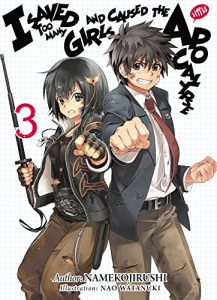
I Saved Too Many Girls And Caused The Apocalypse, Vol. 3

May 22, 2017 by Sean Gaffney

By Namekojirushi and Nao Watanuki. Released in Japan as “Ore ga Heroine o Tasukesugite Sekai ga Little Mokushiroku!?” by Hobby Japan. Released in North America digitally by J-Novel Club. Translated by Adam Lensenmayer.

I had made much in my review of the first volume of this being a parody of the harem genre, and also talked about the humor in it. Book 3 is sadly lacking in good humor (R is barely in it), and the parody aspect is also starting to slip a little too, as we meet our hero’s female counterpart and find that she’s luring him to the dark side. Not that he’s turning evil or anything. But Hibiki also gets caught up in stories, as the heroine, and one of her friends – OK, if we’re being honest, her only friend – was injured because of that and is now in a coma. So ‘the dark side’ in this case means the darkness of the soul, where you wind up pushing everyone away because you don’t want to see them get hurt. And she infects Rekka with this mindset, which is a problem, because the entire premise of the series is therefore at risk.

Fortunately, despite this volume being far more serious than the previous two, it holds up pretty well. The situations are still cliched, but having only one heroine to worry about much of the time streamlines things a bit, even as we still have to solve multiple promises. (Arguably the fox girl is a second heroine, despite Rekka’s cluelessness, but I’ll worry about that if she ever comes back). Rekka manages to overcomes his self-doubt, pushed along by a lack of confidence (something R lampshades, as she is wont to do). And the old heroines all get something to do. The scenes with Satsuki and Harissa are quite good, as thanks to Rekka pushing her away Satsuki has her own crisis of conscience. She’s known him the longest, after all. But Harissa is the ‘purest’ of the girls in terms of her love for Rekka, so she’s able to teach the valuable lesson this time, at least once she wakes up.

The big drawback to this volume, unfortunately, are its heroines. Hibiki is meant to be a female mirror of Rekka, and also show what he could be if he went down the wrong path. As such, she’s a bit of a mess, starting off strong but eventually just hanging off the villain’s arm waiting to be rescued. Also, it feels weird to have one tsundere a mere volume after the classic example of Tsumiki. Hibiki’s crush on Rekka simply doesn’t feel earned, not the way the other girls’ do. As for the other ‘heroines’ here, the fox girl is cute but basically frets constantly the entire book, and Meifa is a living reward who doesn’t even get to speak at the end of the book. I realize that it’s hard to create strong characters every time, but given the premise the author has made for himself, it’s something he’s going to have to muscle up and do.

So I’m a bit annoyed, but in the end turning more serious did not break the series, and there were several cool fight scenes. It looks as if Rekka has remembered the core to his series, which is ‘solve one girl’s problems using another girl’s talents’, and given Vol. 4 is back to three girls on the cover, he should be fine.

(Oh yes, and don’t use alien races as a metaphor for racism if your magic solution is “turn everyone white”. Just… don’t do that.)

Filed Under: i saved too many girls and caused the apocalypse, REVIEWS

Kitaro: The Great Tanuki War

May 21, 2017 by Sean Gaffney

By Shigeru Mizuki. Released in Japan as “Gegege no Kitaro” by (among others) Kodansha, serialized in various magazines. Released in North America by Drawn & Quarterly. Translated by Zack Davisson.

The large majority of this book is made up of the title story, the first really huge epic tale we’ve seen from this collection of Kitaro stories by Drawn & Quarterly. And it’s a real pip, showing off the best qualities of Kitaro in the 1960s. He’s far more heroic here than he’s been in the past two books, but it’s a pretty thankless task, especially when he’s going up against shifty Japanese politicians. Honestly, you’d think he’d be used to dealing with them given that he’s best friends with Nezumi Otoko, who is in peak form here, always siding with whatever appears to be the winning side, and showing no moral qualms about throwing humanity under the bus. There’s also a larger role for Itta Momen, a yokai made up of flying cloth that I thought was meant to be toilet paper for the longest time.

The villains in this story are the titular Tanuki, who have featured in many Japanese folktales, though not usually as yokai per se. These are The 800 Tanuki of Shikoku, who are here to reclaim earth and take over. They’ve got many and varied ways of doing this, each of which seems to set a higher bar of “how on Earth will Japan get out of this one”? What’s worse, they really do a number on Kitaro, taking him out several times via various fatal traps – and I mean literally fatal, by the end of this story Kitaro has to regenerate from a baby for a month or so. It’s very much in the classic serial vein, which unfortunately means that the ending reads like “OK, wrap it up in this chapter” – it’s very sudden. But the grotesque ideas and imagery are pure Mizuki, and really stand out in this epic story, which also borrows from kaiju-style tales.

I was somewhat surprised by seeing the two-faced Japanese Prime Minister tell Kitaro that they will rely on him to save Japan just like Moshe Dayan saved Israel, till I realized that this was running in Shonen Magazine only two months or so after the Six Day War. You don’t think of Kitaro as referencing too many current events, but there are times it does, particularly when he gets involved in politics, as seen here. (Speaking of references, I was rather startled to see the Tanuki declare that they were going to have the Japanese woman serve them as maids – if only they’d been 30 years later they could have gone to a cafe instead!) The final two stories feel a bit like filler compared to the epic Tanuki war, but we do get to see a rare example of Nezumi Otoko coming out on top for once – it reminds me of the rare cartoons where Tom won over Jerry.

This is a very strong volume of Kitaro, though the reader should be prepared for bad things to happen to him – he spends some of the book as a literal puddle of liquid. As always, a must for fans of classic manga, as well as modern yokai readers who want to read something by the master.

Filed Under: kitaro, REVIEWS

Bluesteel Blasphemer, Vol. 1

May 20, 2017 by Sean Gaffney

By Ichirou Sakaki and Tera Akai. Released in Japan by Hobby Japan. Released in North America digitally by J-Novel Club. Translated by James Rushton and Kevin Steinbach.

If you’ve grown tired of novels where our hero is either transported to another world or dies and is reincarnated in another world, well, this is another one of those. There’s so many that you really need to figure out what it is about this particular one that makes it worth reading over the other 87,326 series released this year alone. In the case of Bluesteel Blasphemer, the answer may be its pedigree. This is not a case of a newbie writer who was putting his fiction on the web and got discovered by a publisher. Ichirou Sakaki has written such things as Scrapped Princess, Chaika the Coffin Princess, and Outbreak Company, which does feature a princess. And now we have one of his newer series, Bluesteel Blasphemer, which does not have princesses – at least not yet – but has a mayor’s daughter, a sacrificial victim, and a Rei Ayanami expy, because god knows we don’t have enough of those.

Our hero is Yukinari, a young man who is rescued from modern-day Japan, where he was dying in a fire that killed his older sister, and reincarnated in a cool body (with a few tricks up its sleeve) by a young alchemist who seems very similar to his older sister, and Dasa, her younger sister and the Rei clone I mentioned above. After stuff happens, he and Dasa are on the run through the backwaters of the country, and run across Berta, a beautiful young orphan about to be sacrificed to appease the local erdgod, which is a nasty piece of work. It’s not clear whether the sacrifices work or not, and the mayor’s daughter Fiona, who’s in charge while her father is in ill health, has her doubts as well, but hey: it’s tradition. Unfortunately, Yukinari and Dasa proceed to massacre tradition, and now have to deal with his being the assumed local erdgod replacement – as well as the unfortunate arrival of the local Inquisition, here to enslave the village into their religion.

There are pluses and minuses to this series. The pluses are the plot and the writing, which are both excellent. You can tell the author is far more experienced, as there’s no long introductory sequence like most isekai. Instead, we get the feeling we’re starting with Book 2, which gets a bit confusing but pays off in the long run. The action sequences, of which there are many, work fine, and the plot twists happen at just the right moment. On the down side, well, the characters are not nearly as good as the book being written around them. Yuknari is fairly faceless, Dara is, as I said, another in a long line of snarky deadpan barely legals, and Berta’s desire to serve Yukinari as the new replacement erdgod is rather disturbing, as she seems to be confusing love and worship in her head. Fiona was probably the best character of the lot. (Honestly, as the author himself admits in the afterword, the harem aspect seems totally tacked on and uninspired). Also, the two older sisters who both die to inspire the heroes… bleah. I bet they both had that dead mom sidetail, didn’t they?

So it’s a decent, but not stellar, debut for this series. I’m willing to give it another volume to draw me in more. That said, I’m rather glad it’s only 4 volumes total.

Filed Under: bluesteel blasphemer, REVIEWS

The Full-Time Wife Escapist, Vols. 1-2

May 20, 2017 by Michelle Smith

By Tsunami Umino | Published digitally by Kodansha Comics

Mikuri Moriyama is a 25-year-old licensed clinical psychologist who hasn’t been able to find a job after grad school. She’s been living with her parents and working for a temp agency, and when she’s laid off her father arranges for her to assume housekeeping duties for a guy he used to work with. Hiramasa Tsuzaki is 36 and single. He seems humorless and particular at first, but Mikuri finds that working for a hard-to-please guy makes it easier to know when she’s been successful. She performs her duties well, even managing to nurse Tsuzaki through an illness in such a business-like way that it’s not awkward for him. Things go well for a few months, then Mikuri’s father prepares to retire and move to the countryside. Rather than lose their mutually beneficial arrangement, Mikuri and Tsuzaki decide that she’ll move in with him and, for the sake of propriety, become his common-law wife. They proceed to perpetuate the ruse that they’re actually a real couple.

I am really enjoying The Full-Time Wife Escapist so far! Mikuri is an interesting character. She’s outwardly educated and competent—equally able to engage in conversations about globalization and maintain a meticulous budget—but has these inward flights of fancy that only the reader is privy to. She often imagines herself being interviewed about the state of her life, be it with an unsympathetic talk show host or a man-on-the-street segment about middle-aged virgins (which Tsuzaki appears to be), or performing heartbreaking Les Miserables-style songs about the woes of unemployment. The injection of whimsy is fun and reminds me a little of Tokyo Tarareba Girls, but Mikuri is a lot more practical (and a lot less boozy) than the characters of that series.

As Tsuzaki’s coworkers learn that he’s gotten married, his social calendar suddenly fills up in a way it never did before, while Mikuri notices that her aunt Yuri, with whom she’s very close, has been hesitant to invite her out as much as she used to before Mikuri got married. Spending time with Numata and Kazami is enjoyable for the couple, but it’s also risky, because nosy Numata snoops and learns there’s only a twin bed in the bedroom, and by volume two, Kazami is convinced that they’re faking it. Kazami is perhaps as equally developed as Tsuzaki himself, as we hear a great deal about his reservations about marriage, which all leads up to the big cliffhanger ending of volume two (which I shan’t spoil). Tsuzaki, meanwhile, is attempting in vain to keep from developing feelings for Mikuri. She persists in being business-like, and he 100% believes there’s no chance she’d ever reciprocate, so he often looks emotionless in front of her, only revealing his feelings when he’s alone. I love that neither one of them is spazzy; they’re in a somewhat trope-y arrangement, but they’re handling it like adults.

I really can’t wait for volume three. There’s so many interesting ways the story could go, though I admit I actually do want it to go in the standard “they fall in love and live happily ever after” direction.

The Full-Time Wife Escapist is ongoing in Japan; nine volumes have been released so far.

Review copies provided by the publisher.

Filed Under: Josei, Manga, REVIEWS

Chihayafuru, Vol. 2

May 19, 2017 by Sean Gaffney

By Yuki Suetsugu. Released in Japan by Kodansha, serialization ongoing in the magazine Be Love. Released in North America digitally by Kodansha Comics. Translated by Ko Ransom.

I’d said in the last review that Chihayafuru is, in many ways, a sports manga. But this is not your average baseball or soccer title. Karuta is not really thought of as something that kids do these days, particularly once they enter high school, and especially if they’re good at other sports, which Chihaya is – everyone points out she should be on the track team. But Chihaya has a dream, and is very, very driven towards getting that dream, even if it means playing over and over without her two friends – we’re in high school now, and both have been away for years. Luckily, Taichi has returned, bringing his unspoken crush, his reluctance to get back into an “uncool” sport, and his ability to see flaws that Chihaya can’t see herself. Arata is another matter – not only does he still live far away, but he tells them in no uncertain terms that he isn’t playing karuta anymore.

The reason Arata abandoned karuta is not the most original one in the world – in fact it’s the most cliched part of the book – but it works anyway, especially as it helps to show off why Chihaya’s impulsiveness is not always a good thing. That said, it looks like it may work out in the end, which is good. Karuta is very much something that Chihaya associates with ‘having fun with friends’, and the group activity is the most exciting part about it. In fact, Chihaya’s enthusiasm is actually masking several issues – Taichi notes that her memorization at the start is still quite bad, and a new character who ends up joining the club, Ooe Kanada, who reminds her that the poems aren’t just there because they sound pretty – there’s meaning and depth behind each one. This is AMAZING to Chihaya, who is nice and sweet but her single minded determination means she can miss the obvious.

As for the Karuta itself, it’s actually still pretty exciting. I was not entirely certain whether Chihaya would win the match halfway through the book – in a series like this, the occasional loss is going to be inevitable, even if you promise that you’re going to win. I’m still somewhat amused at various antics going on during karuta that I would argue are fouls, but then I’m not a karuta player. It’s also a very old-fashioned game – it’s pretty obvious why the club is somewhat mocked, though honestly you get the sense it’s due to Chihaya’s overenthusiasm more than anything else. It’s also very clear why Kana thinks that they should be performing it in kimonos – a lot of karuta runs on aesthetic, and if you look the part it may help in other areas as well. As for any romance in the story, well, Taichi still has a crush on Chihaya, but that’s about it – she’s totally oblivious.

Chihayafuru may not be the most obvious josei series out there, but if you read it it will win you over on pure energy, just like its heroine.

Filed Under: chihayafuru, REVIEWS

Manga the Week of 5/24/17

May 18, 2017 by Sean Gaffney, Michelle Smith, Ash Brown and Anna N 1 Comment

SEAN: Either you ride with the manga tide or you let it drown you. Looking at next week… blub blub blub.

MICHELLE: I thought this list was huge enough as it is!

SEAN: Dark Horse has a 2nd volume of Psycho Pass prequel Inspector Shinya Kogami.

J-Novel Club gives us a 3rd volume of Mixed Bathing in Another Dimension, which I still find much better than its title would suggest.

Kodansha has a pile, of course. In the Del Rey rescue category, we have Nodame Cantabile 19 (get ready for weekly releases of this), and Princess Resurrection 14.

MICHELLE: I continue to be asquee about Nodame. Looks like they’ll have the final volume out by the end of June!

ASH: Wow! I wasn’t expecting such a rigorous schedule for Nodame!

SEAN: Their debut is Descending Stories: Showa Genroku Rakugo Shinju, a josei title from Itan magazine. Its anime was insanely popular, so I’m expecting good things.

MICHELLE: I’m definitely looking forward to this one!

ASH: As am I! It’s actually one of my most anticipated debuts for the year.

ANNA: Sounds great!

SEAN: The Full-Time Wife Escapist has a 3rd volume digitally, and I still want more of it.

MICHELLE: I still need to read 1-2!

ANNA: This is one series I’m actually not behind on reading!

SEAN: Hozuki’s Coolheadedness also has a new volume out digitally, its 2nd.

ASH: So many things I’m interested in are only being released digitally right now!

SEAN: Missions of Love 14 is here to make me grind my teeth but enjoy it anyway. It’s still a while away from an ending.

There is also a 3rd Peach Heaven out digitally.

The Seven Deadly Sins is almost old enough to drink with its 20th volume.

And Welcome to the Ballroom has a 5th book, no doubt starting the next arc.

And now for Seven Seas. First off, we have the 7th Golden Time manga, a good solid romantic dramedy.

Kase-san and Bento is the 2nd in the “Kase-san” series, and I would guess will involve bento lunches.

MICHELLE: That’s a good guess. The first one wasn’t profound or anything, but it was pleasant, so I reckon I’ll read this one, too.

ASH: I’ve been meaning to give the series a try for a while now, but there being a food theme does bump it up on the to-be-read list.

SEAN: And a 7th volume of sleepy slice of life Non Non Biyori.

Vertical gives us an 8th volume of Cardfight!! Vanguard, which seems to have gotten over whatever licensing issues had it on hold.

I’ve been forgetting about Boys Over Flowers Season 2, which Viz is still releasing digitally – the 5th volume is out next week.

MICHELLE: I wish I could love this as much as the original. Sadly, it hasn’t grabbed me.

ANNA: I liked the first couple volumes, but I agree, not as compelling as the original series.

MICHELLE: The Yoko Kamio series I *would* be excited about is Cat Street.

SEAN: The rest is Yen, but so much Yen. On the novel side, we get an 11th A Certain Magical Index, now on location in Italy.

Death March to the Parallel World Rhapsody has a 2nd volume. I understand it is one of them newfangled trapped in another world thingummies.

The much delayed My Youth Romantic Comedy Is Wrong As I Expected finally gets its 2nd novel, which may require me to reread the first to remind me what’s going on.

And a 4th volume of Overlord, this time focusing on some Lizardman Heroes who will no doubt be destroyed by our title antihero in some way.

Strike the Blood will have a 6th volume of eminently readable and totally uninspiring antics.

The big novel release this month is your name, whose lack of capital letters did not prevent it from becoming a huge movie. It’s complete in one volume, though a sequel is out later this fall.

MICHELLE: I’m a little wary of this, since I loved the movie so much. What if it taints my experience?

ASH: I’m interested in seeing how the novel reads. The manga adaptations of Shinkai’s works have generally been quite good, though.

SEAN: And there’s 3 more Spice & Wolf digital releases, 15-17, which I believe finishes the catch up.

In manga news, there’s a 5th Anne Happy, which wrings laughs out of misfortune. Well, chuckles at least.

Big Order has its second omnibus, as it continues to try to outdo Future Diary.

This isn’t manga, but I don’t care. Brave is out next week! From creator Svetlana Chmakova, it’s a semi-sequel to her hit Awkward, taking place in the same universe but focusing on new kids. It’s super good.

Following something like Brave with the 17th volume of BTOOOM!, a series still best known for its bomb-breast-bouncing scene, seems cruel.

The Case Study of Vanitas gets a 2nd volume. I understand there are vampires.

ASH: And pretty artwork, from what I hear.

SEAN: Corpse Party: Blood Covered must have killed its way through the cast, as this is the 5th and final omnibus. Not to worry, a sequel is out later this year.

Several exciting new debuts this week, starting with Delicious in Dungeon (Dungeon Meshi), a seinen series from Enterbrain’s Harta magazine that manages to combine dungeon crawls and a cooking manga.

MICHELLE: I am excite!

ASH: Same! I love the premise of the series so much. Granted, the few times that I’ve played tabletop rpgs, the groups had a tendency to put a lot of emphasis on food, both in the game and outside of it.

ANNA: Oh yeah, this sounds good!

SEAN: Dimension W has a 6th volume for those of you who enjoy the things Dimension W provides. (Can I get any vaguer?)

Girls’ Last Tour (Shoujo Shuumatsu Ryokou) is also debuting, coming from Shinchosha and one of its many Bunch magazines. It’s post-apocalyptic slife-of-life, and probably the closest to Yokohama Kaidashi Kikou anyone is going to get.

ASH: I’m very curious about this one, actually.

SEAN: Karneval has a 7th omnibus.

Kiss and White Lily for My Dearest Girl has a 2nd volume, which seems fast but recall the first volume was delayed a month. In any case, yay!

MICHELLE: Forsooth!

Log Horizon: The West Wind Brigade has a 5th volume, and is one of the more enjoyable fluffy spinoffs out there.

Monthly Girls’ Nozaki-kun remains a highlight every time it comes out, even with its 7th volume.

ASH: Yes! It is so consistently great! I love it so much!

SEAN: And if you want hyperviolent fanservicey trash (which I sort of like anyway), there’s a 2nd Murcielago.

ASH: Definitely not a series for everyone, but I liked the first volume, too.

SEAN: Re: Zero’s manga starts to adapt the 2nd novel with Chapter 2: A Week at the Mansion. Yes, folks, you’ll get your Rem here.

Rokka: Braves of the Six Flowers has a 2nd volume of its manga adaptation as well.

We get the 3rd and final volume of Rose Guns Days Season 2. Worry not, fans, Season 3 is on the schedule. (Are there Rose Guns Days fans?)

Yen released this digitally ages ago, but it’s popular enough to get print now (the upcoming anime may have something to do with it). Enjoy The Royal Tutor!

ASH: Glad to see more digital titles released in print! I wanted to give this series a try when it was first licensed, and now I finally can.

SEAN: Spirits & Cat Ears has a 2nd volume, and while I wish we’d get more of the former and less of the latter I expect to be disappointed.

There is a 9th Trinity Seven.

Lastly, Black Butler fans will take interested in the 2nd Yana Toboso Artworks book, which is devoted to the series.

Keeping your head afloat? What are you getting?

Filed Under: FEATURES, manga the week of

  • « Go to Previous Page
  • Page 1
  • Interim pages omitted …
  • Page 429
  • Page 430
  • Page 431
  • Page 432
  • Page 433
  • Interim pages omitted …
  • Page 1048
  • Go to Next Page »
 | Log in
Copyright © 2010 Manga Bookshelf | Powered by WordPress & the Genesis Framework