• Skip to primary navigation
  • Skip to main content
  • Skip to primary sidebar
  • Home
  • About Us
    • Privacy Policy
    • Comment Policy
    • Disclosures & Disclaimers
  • Resources
    • Links, Essays & Articles
    • Fandomology!
    • CLAMP Directory
    • BlogRoll
  • Features & Columns
    • 3 Things Thursday
    • Adventures in the Key of Shoujo
    • Bit & Blips (game reviews)
    • BL BOOKRACK
    • Bookshelf Briefs
    • Bringing the Drama
    • Comic Conversion
    • Fanservice Friday
    • Going Digital
    • It Came From the Sinosphere
    • License This!
    • Magazine no Mori
    • My Week in Manga
    • OFF THE SHELF
    • Not By Manga Alone
    • PICK OF THE WEEK
    • Subtitles & Sensibility
    • Weekly Shonen Jump Recaps
  • Manga Moveable Feast
    • MMF Full Archive
    • Yun Kouga
    • CLAMP
    • Shojo Beat
    • Osamu Tezuka
    • Sailor Moon
    • Fruits Basket
    • Takehiko Inoue
    • Wild Adapter
    • One Piece
    • After School Nightmare
    • Karakuri Odette
    • Paradise Kiss
    • The Color Trilogy
    • To Terra…
    • Sexy Voice & Robo
  • Browse by Author
    • Sean Gaffney
    • Anna Neatrour
    • Michelle Smith
    • Katherine Dacey
    • MJ
    • Brigid Alverson
    • Travis Anderson
    • Phillip Anthony
    • Derek Bown
    • Jaci Dahlvang
    • Angela Eastman
    • Erica Friedman
    • Sara K.
    • Megan Purdy
    • Emily Snodgrass
    • Nancy Thistlethwaite
    • Eva Volin
    • David Welsh
  • MB Blogs
    • A Case Suitable For Treatment
    • Experiments in Manga
    • MangaBlog
    • The Manga Critic
    • Manga Report
    • Soliloquy in Blue
    • Manga Curmudgeon (archive)

Manga Bookshelf

Discussion, Resources, Roundtables, & Reviews

Blog

Combatants Will Be Dispatched!, Vol. 1

September 7, 2019 by Sean Gaffney

By Natsume Akimoto and Kakao Lanthanum. Released in Japan as “Sentouin, Hakenshimasu!” by Kadokawa Sneaker Bunko. Released in North America by Yen On. Translated by Noboru Akimoto.

Sometimes you can have an isekai without all of that pesky dying and being reincarnated, or being transported to another world by a magic spell. It’s as easy as making the “fantasy world” on another planet, and having our heroes sent to it to see if it can be taken over… erm, colonized. That’s the basic premise of this series, which features the nameless Combat Agent Six and his android partner Alice Kisaragi sent via a teleport (that is totally tested and functional, honest) to a planet that is apparently dealing with a demon lord invasion. On the one side we have the kingdom of Grace, with knights, princesses, castles, etc. and the demon lords, who have golems and are your standard demonic types. On the other side we have Six, Alice, and their newly befriended band of misfits… erm, crack squad, and modern weaponry. Oh, yes, and one other thing that should be noted: Six and Alice work for an evil organization, and can only get weapons and equipment by doing evil acts.

Actually, one other thing should be noted: this is by the author of KonoSuba. Actually, it was written online before Konosuba, and picked up by Kadokawa after the latter’s success as a light novel/manga/anime franchise. This means, needless to say, that the best reason to get this is the comedy. It’s not a full-on parody like KonoSuba, but the humor tends to be along the same lines. (Actually, the humor can sometimes, like KonoSuba, cross a line or two – I was not all that pleased with the “take photos of the evil sorceress in a certain pose” moment, even if it’s a PG-rated version of same.) The cast may also ring a bell as well – Six is not that far from Kazuma, and Snow is basically what would happen if Aqua and Darkness had a kid. There’s a lot of great humor, provided you don’t mind the cast all being horrible people to one degree or another.

The best reason to get the book is the bantering relationship between Six and Alice. Like Kazuma and Aqua, there’s no real romantic tension between these two. Instead, they function as snark factories, ready and willing to tear down anything for the sake of evil and/or their own amusement. The other good reason to get this is the few moments when the protagonists are allowed to be cool. Because it’s not a parody like KonoSuba, the cool moments are allowed to exist without getting undercut, and actually impressed me a bit, even when they were also hilarious (Rose and Grimm’s “you shall not pass!” moment, the land mine trap, the chainsaw ending). There’s also some nice character development for Snow, who is arrogant and sword-obsessed but also has something of a righteousness to her, which contrasts well with Six, who is supposedly working for an evil organization but relies on petty, assholish acts to cover up the fact that he can’t be REALLY evil when it counts.

The color pages note that Snow is “this volume’s heroine”, so I expect the next book will focus on either Rose, a chimera girl who’s trying to follow in her grandfather’s footsteps, or Grimm, an archbishop of death who actually uses a wheelchair most of the book – something rarely seen in a light novel. (Yes, she can on occasion get out of it, but for the most part really does need it.) A must-read for KonoSuba fans, and those who enjoy comedy light novels and don’t mind characters whose default is “jerK” will also be happy.

Filed Under: combatants will be dispatched!, REVIEWS

Silver Spoon, Vol. 10

September 6, 2019 by Sean Gaffney

By Hiromu Arakawa. Released in Japan as “Gin no Saji” by Shogakukan, serialization ongoing in the magazine Weekly Shonen Sunday. Released in North America by Yen Press. Translated by Amanda Haley.

It has to be said, the love story in Silver Spoon can sometimes be frustrating. Not so much on the Hachiken/Mikage end, as I’m perfectly content with these two to slowly make their way into a relationship. It’s more the reaction of the rest of the students. There are not any noticeable “beta couples” in this series, which is not primarily a romantic comedy in any case, so what you end up having is a bunch of teenage farm kids watching their friends be adorable AND oblivious at the same time. They want to be happy deep down, I’m sure. But in reality… they’re pissed. And you get the sense the author is as well. So for every cute, heartwarming moment, such as Mikage’s New Year’s text, you get the inevitable crushing of it – literally, in this case, as Hachiken’s phone is destroyed via horse and via the obnoxious Ookawa. Fortunately, the rest of the book devotes itself to Ookawa’s downfall (honestly, the series as a whole also does this).

One of Silver Spoon’s general themes is that this may be shonen manga but things are not always magically going to work out. Mikage is studying now, but her grades aren’t suddenly terrific. The kids make sausage (which takes up a third of the book – again, Silver Spoon is a farming manga) but a lot of it is misshapen and weird. And then there’s Komaba, who lurks around the edges of this volume. He’s not back at school, but he is doing about eight jobs a day in order to earn money to pay back debt. As a result, he runs into Hachiken over the holidays, and then is lured into showing up at the Winter Festival. Sometimes we can’t achieve our dreams, and reality ensues. That’s certainly what happened to Komaba, and it sucks. But when you don’t achieve your dreams, that does not really mean you give up and resolve to never have fun or see your old friends again ever. This lesson he still needs to learn.

Speaking of lessons, Hachiken and Mikage might want to look over at his brother, who met a Russian girl and married her almost immediately. As always, the brothers end up being completely different. We meet said wife, Alexandra, towards the end of the book. That said, their relationship is glossed over and we get a whole bunch of Russia jokes instead. A lot of these are well-researched and amusing, but it does sort of remind me of the old 80s sitcoms where Yakov Smirnoff was the guest star. The “Silver Spoon” joke in particular is hilarious but also tremendously cliched. Still, it’s nice to see that she likes Hachiken, and I’m glad we get to see an actual functional couple, even if Hachiken’s brother still can’t cook to save his life. (Or Ookawa’s life. RIP, death by borscht.)

The next volume promises to lean a bit harder on the romance, as it’s Valentine’s day. Will we get a kiss? Don’t count on it. But do expect more of these lovable and frustrating farming goofballs.

Filed Under: REVIEWS, silver spoon

Manga the Week of 9/11/19

September 5, 2019 by Sean Gaffney, Michelle Smith, Anna N and Ash Brown Leave a Comment

SEAN: No time to talk! Manga is coming!

J-Novel Club have new volumes for Cooking with Wild Game (4) and How NOT to Summon a Demon Lord (10).

Kodansha debuts the “official” adaptation of Fate/Grand Order, called mortalis:stella. It’s one of many FGO manga out, but this is the “story” one, apparently. That said, it only ran two volumes, so I suspect the story is compressed, though there is a sequel of sorts. It ran in Ichijinsha’s Zero-Sum.

ASH: Oh, interesting! That makes it on the shoujo and josei end of things, doesn’t it?

SEAN: In print, Kodansha also has Eden’s Zero 4.

Digitally the debut is Queen Bee (Seishun Otome Banchou!), from an author familiar to readers with long memories, Shizuru Seino. She did Heaven!!, Power!!, and Love Attack!. Love Attack! never finished over here, which is a shame, as this is about the daughter of the leads from that series. She has a scary face… and disposition… but is still a girl in love. This ran in Betsufure.

MICHELLE: Oh, I actually read all of Power!! (released by TOKYOPOP as Girl Got Game) back in the day! I failed to make the connection.

ANNA: I read some of Love Attack! back in the day, and I think I have a couple volumes of Girl Got Game somewhere in my stacks of unread manga.

ASH: I rather enjoyed what I read of Love Attack!.

SEAN: We also get Giant Killing 16, The Knight Cartoonist and Her Orc Editor 2, Red Riding Hood’s Wolf Apprentice 3 (this is a final volume), The Slime Diaries 2, and Tokyo Revengers 11.

MICHELLE: Hooray for more Giant Killing! It’s been quite a while.

SEAN: Seven Seas has THREE debuts. The first is a spinoff, Arifureta Zero, adapting the spinoff light novel with the same title. It runs in Overlap’s Comic Gardo.

Become You (Kimi ni Nare) is the latest series from the author of orange. Like orange, it’s likely “shoujo in a man’s magazine”, as this runs in Futabasha’s Monthly Action. It’s got guys, and bands, and childhood dreams.

MICHELLE: I hope this is as good as orange.

ASH: Me, too! I’m also interested in it for the music aspects.

SEAN: The Brave-Tuber (Haishin Yuusha) is your standard fantasy world with adventurers, etc… except it has the Internet. Two guys try to find a way to build subscribers and defeat monsters. This runs in Mag Garden’s Comic Blade and is also a short, two-volume series.

Seven Seas also gives us Mushoku Tensei: Roxy Gets Serious 2 and There’s a Demon Lord on the Floor 7.

SuBLime has Candy Color Paradox and the 9th Deluxe Edition of Finder for its BL readers.

ASH: I finally picked up a copy of the first volume of Candy Color Paradox! (Now I just have to read it.)

SEAN: Vertical has the 5th volume of My Boy.

Viz gives us the 34th volume of Hayate the Combat Butler, still entertaining readers in the West thanks to the wonders of contractual obligation. They also have Radiant 7, Splatoon 7, and Yo-Kai Watch 12.

Lastly, Yen Press has a 5th volume of Chio’s School Road. It’s not like those OTHER roads.

ASH: Nope, not at all like those other roads.

SEAN: Thoughts? Concerns? Complaints?

Filed Under: FEATURES, manga the week of

The Genius Prince’s Guide to Raising a Nation Out of Debt (Hey, How About Treason?), Vol. 1

September 5, 2019 by Sean Gaffney

By Toru Taba and Falmaro. Released in Japan as “Tensai Ouji no Akaji Kokka Saisei Jutsu ~Sou da, Baikoku Shiyou~” by GA Bunko. Released in North America by Yen On. Translated by Jessica Lange.

While the word “treason” in the title is technically accurate, I feel that it might do a disservice to the genius prince, who is not nearly as bad as that title makes him out to be. Sure, he wants to pass the leadership of the country off to someone else, and is totally fine with that someone else being another country, but this does not mean he’d do it if it meant that the people in the country would suffer. Instead this book is along the lines of a few other LNs featuring “genius” characters, who are always brilliant but not quite brilliant enough to stop misunderstandings or prevent things happening elsewhere that destroy their clever plans. Which is good, as otherwise Prince Wein might be insufferable. As it is, he’s a pretty likeable guy, though it helps that he has a beautiful childhood friend/aide who is willing to stick potatoes up his nose when he screws up.

In the mountainous and remote Kingdom of Natra, the old King is dying, and the Prince Regent, Wein, is running the country. To his subjects, court, and little sister, he’s the perfect thoughtful and intelligent King. To Ninym, his childhood friend, and only Ninym, he’s a whiny selfish brat who desperately wants to slack off and be lazy but can’t because he’s a Prince with a country to look after. He tries making overtures towards the Empire that controls half the country to take it over… then the Emperor dies and that goes south. When a neighboring country invades, he tries to have a quick little war that will end in negotiations, but that goes south in a hurry. Even holing up in a newly conquered gold mine just means finding out that it’s nearly out of gold. Fortunately, Wein really is brilliant. He’ll need that brilliance.

This ended up being a lot of fun. For one thing, we’re in a “medieval kingdom” sort of world that does NOT appear to be filled with magic and monsters. There are the Flahm, a race who seem to be regarded as slaves by some other countries but not in Natra, as Ninym is a Flahm and treating her as a slave would… not be advisable. I was expecting elf ears or similar, but it looks like “albinism” might be the only difference. I was also pleased to see that, despite Wein occasionally taking note of the large-breasted Imperial Ambassador, this does not really appear to be a harem series at all. Ninym clearly loves Wein, and worries about whether he feels the same. Given that he literally has people killed who belittle or insult her, I think that might be a clue, but hey. They make an awesome power couple even if they’re not a couple, and their back and forth is the main highlight of the book. (Future book covers also feature only the two of them, meaning we’re unlikely to have a “stack up a new heroine every volume” syndrome many LNs have.)

If you enjoy warfare and politics but are sick of isekai and gaming-style fantasy worlds, this book may be the perfect antidote. It’s fun and entertaining.

Filed Under: genius prince's guide to raising a nation out of debt, REVIEWS

Bookshelf Briefs 9/4/19

September 4, 2019 by Ash Brown, Sean Gaffney and Michelle Smith Leave a Comment

Ace of the Diamond, Vol. 23 | By Yuji Terajima | Kodansha Comics (digital only) – Seido is reeling from their surprising loss in the final round of the West Tokyo qualifiers. Promptly, the third years retire to focus on college while the rest of the team gears up for the fall tournament. Many pivotal spots have been left vacant, so the junior varsity players are fired up to finally secure a place on the varsity squad. Not fired up are Eijun, who has trouble shaking the image of his pitch hitting a batter, and Kawakami, who squandered Seido’s lead and ruined the upperclassmen’s hopes of making it to Koshien. I always appreciate anything that leads Eijun to a more humble state of being and also really liked seeing Miyuki seriously step up to a leadership role after he is made the new team captain. I’m excited to see how this iteration of the team fares. – Michelle Smith

Barakamon, Vol. 18 | By Satsuki Yoshino | Yen Press – Much of the final volume in this series involves showing us that time is slowly marching on. There’s no time skip or anything, but life keeps happening. Tama gets a manga published. Miwa’s father is leaving to work on a ship, similar to Naru’s father, and Naru and Hina move on to the next grade, though the island is so small that they don’t get any underclassman to be sempai to. As for Handa, he’s become the stable part of the group; still teaching calligraphy, still being a bit of a goofball, but not going anywhere—this is where he belongs now. The overall tome of this series was relaaxing and fun, and that’s how it ended up, with the characters undergoing mild but meaningful journeys. I’ll miss it. – Sean Gaffney

Count Fujiwara’s Suffering | By Mahito Aobe | Yen Press – I’ve talked before about how I think that omnibuses of comedy manga are a bad idea, and this 540-page volume bears that out. That said, I don’t think I’d love this even in single volumes. Count Fujiwara is a cat, whose thoughts we are privy to. He’s dealing with two sisters—one an airheaded NEET who stopped going to school after a past event we only find out about near the end; the other is a more “normal” girl who has an unfortunate crush on her sister—unfortunate in that it contains all the annoying “comedy lesbian” tropes. There’s a speck of a storyline here about what happened to make Shizuka like this, but for the most part it’s “look at the silly girls and their frustrated cat.” You can do better. – Sean Gaffney

Hatsu*Haru, Vol. 8 | By Shizuki Fujisawa | Yen Press – I have occasionally wondered as I read a manga where a character discusses the fact that they’ve never felt love like other people if said character will actually end up being asexual. It’s rarely happened, and I don’t expect it to happen here, but it’s an interesting thought. Ayumi’s thoroughly analytical personality is great for a career as a newshound, but very bad when dealing with Takaya, who we’ve known for a while has fallen for her in his quiet, hard-to-read way. Her thesis paper on why they should or shouldn’t go out doesn’t help. Fortunately, we have Kai and Riko being adorable fluffs in love to balance things out. And this time Kagura’s on the cover, but STILL gets nothing to do. Arc when? -Sean Gaffney

Komi Can’t Communicate, Vol. 2 | By Tomohito Oda | VIZ Media – Much of this volume is cute. A classmate declares herself Komi’s rival in the national health exams. Komi attempts to tell (lame) jokes in writing. The gang goes out for ramen after school. Najimi encourages Komi to go shopping for clothes and the gang all chooses different outfits for her to try on and rate. And then there’s Ren Yamai, who has a crush on Komi and promptly goes into scary, knife-wielding psycho mode. I liked that Yamai’s threats against Tadano prompted Komi to firmly state (in writing) that she decides who her friends are, as well as the fact that this whole situation prompted Komi to “talk” a lot with Tadano and allowed for some funny Najimi moments. But I really disliked that, after all Yamai’s terrible, alarming behavior, Komi consents to be friends with her after all. Yamai is the Mineta of an otherwise really fun series. Sad face. – Michelle Smith

Murcielago, Vol. 11 | By Yoshimurakana | Yen Press – The police have had a very odd relationship with Kuroko, for obvious reasons, but they find themselves more drawn into the current case than usual. The people getting eaten by sharks rapidly led to brains in jars, including the wife of Tsuru, who he’s been trying to avenge but sadly reality gets in the way. Also, his partner may be secretly evil? Fortunately, Suiren is saved, and deals with her grief. She’s not even seduced by Kuroko—yet. And so we move on to a new arc, which involves someone going around killing master swordsmen. Murcielago will never win any good taste awards, and its leads are all sociopaths (even the police, to a degree), but it’s fun, and there are some great Kuroko faces here. – Sean Gaffney

One-Punch Man, Vol. 17 | By ONE and Yusuke Murata | Viz Media – When the hell did this get so boring? Its strength remains its humor, and the best parts of the volume are showing off that humor, such as Fubuki desperately trying to rally the incredibly apathetic troops, or Saitama only getting really pissed off because the hero hunter keeps ignoring him. But for the most part, it’s serious fights between serious heroes and serious villains, and honestly I can get that much better in My Hero Academia. The world is also pretty nihilistic here—we need the heroes because the villains are not going to stop and wait for them, as a Private Merc Force finds out when they are quickly beaten and enslaved. I want more funny stuff, please. – Sean Gaffney

Sleepy Princess in the Demon Castle, Vol. 8 | By Kagiji Kumanomata | Viz Media – It’s time for new employee orientation, including a field trip and a hot springs visit. This actually means a bit more fanservice than the other seven volumes combined, as of course Syalis goes along with everyone—they have to pretend she’s working as a demon in order not to give it away. (This being a comedy manga, the author lampshades that Syalis is in a swimsuit twice within three chapters.) The jokes are the same, though—Syalsi is spoiled and a bit appalling but also too difficult to say no to, and also sort of cute and adorable. At least she’s not gleefully killing everyone anymore, so that’s a plus. It even feels a bit like an extended family now. – Sean Gaffney

Tales of Wedding Rings, Vol. 7 | By Maybe | Yen Press – We’ve hit a new harem manga record with this volume, as fully HALF THE BOOK is set up to have Satou and his fiancées get it on so that they can gain the power needed to defeat the Abyss King. Sadly, for anyone hoping for a payoff, there’s lots of skin and titillation but everyone is still a virgin by the end of the book. We also get some details of the prior hero, who was seemingly corrupted by the situation of “get to bone all these girls” and ended up getting killed by said girls, one of whom is still around thanks to the long lives of elves. Will Satou end up going down the same path? Well, not if this keeps up. This is a good series for fantasy fans but harem fans may be getting irritated. – Sean Gaffney

We Never Learn, Vol. 5 | By Taishi Tsutsui | Viz Media – As with the series’ spiritual successor, Nisekoi, We Never Learn is very good at balancing out each girl in the romantic comedy stakes so that they all get something to do. Unlike Nisekoi, the choice is not obvious from chapter one, either. It doesn’t help that Fumino seems to be honestly trying to help Naruyuki get together with someone else… even as she gets the shippiest chapter in the book, the classic “we have to share a hotel room and there is only one bed” trope. But the others get their moments as well (including the teacher, which I suppose I will have to get used to), and it’s cute, fun, and a bit sweet and romantic as long as you don’t mind it then snapping back to status quo. – Sean Gaffney

Wotakoi: Love Is Hard for Otaku, Vol. 3 | By Fujita | Kodansha Comics – Sometimes series can falter after their respective love interests get together, but so far that hasn’t been an issue with Wotakoi. There are some chapters that I find less engaging (generally the few that take place “in game”—I prefer the manga’s exploration of real life experiences), but as a whole it’s still consistently entertaining. I especially appreciate the importance placed on the series’ non-romantic friendships. The fact that Hirotaka and Narumi are dating is still being kept a secret in the workplace, so one of my favorite running gags in the third omnibus of Wotakoi is that their coworkers are all essentially rooting for them to hook up. In part this requires Fujita to introduce a few new recurring side characters who end up being a rather amusing addition to the manga. I continue to greatly enjoy Wotakoi. – Ash Brown

Yuri Life | By Kurukuruhime | Yen Press – Yuri Life is a collection of 4-koma vignettes about various cohabitating couples, the vast majority of whom are working women in their twenties. Some stories are kind of cute, but none is in the least bit funny, so it’s not that kind of 4-koma. Probably the best story in the lot is “Life with a Grim Reaper,” in which a grim reaper falls in love with a woman who’s supposed to die soon. I could see a concept like that filling at least one volume, but not so much the rest. The collection also includes “Life with a Yandere,” in which we get creepy inner monologues like, “If I snipped off those small, slim fingers, would I be the only one you touched?” Um, that is seriously fucked up! Why is that in the same collection as these other frothy tales? This is definitely a mixed bag. – Michelle Smith

Filed Under: Bookshelf Briefs

Der Werwolf: The Annals of Veight, Vol. 5

September 3, 2019 by Sean Gaffney

By Hyougetsu and Nishi(E)da. Released in Japan by Earth Star Entertainment. Released in North America by J-Novel Club. Translated by Ningen.

Honestly, I’m starting to feel that the author is spoiling me at this point. Der Werwolf 5 has Veight and Eleora going to Rolmund, which is essentially not-Russia, pretending that she defeated Meraldia in order to suss out the political situation back in her country. And thus we get an entire book filled with political machinations, double-dealing, duels, and Veight telling everyone he’s just a humble vice-commander. It’s excellent, and reminds you how good this author can be at making just two people sitting in a room discussing economics interesting. Which is a good thing, as we’re not done with this arc yet, nor does it sound like we will be next time. Rolmund still runs on a lords and serfs-style of rule, and their agricultural yield has not been all that great lately. And, honestly, no one was really expecting Eleora to win. (Which she didn’t, but let’s not split hairs.) As a result, things are… complicated. At least till Veight gets through with them.

Given that Veight is in diplomacy mode here, there’s not quite as much derring-do, especially as he and his fellow werewolves have to keep their true nature hidden during the visit. (I don’t expect THAT to last either.) He does get a duel against Count Von Evilcount, who he wipes the floor with despite the count having the sword equivalent of an Agonizer. Actually, he ends up fighting LOTS of duels, though only a few are people legitimately trying to cause him harm, and it gets to the point where by the end of the book he’s telling old war stories (edited for state secrets) to the easily impressionable son of one of the crown princes. Actually, he’s feeling out all the royals, be it eating not-so-poisonous berries from a private garden, having blunt discussions with the most ambitious of the group, and realizing that at the rate it’s going, Rolmund is going to be dealing with mass starvation and death in a generation or two.

There is a running gag here (among the many running gags in Der Werwolf) about Eleora being very repressed and precise, and everyone except Veight noting how much she’s relaxed and mellowed out since the invasion of Meraldia. She does not, thankfully, seem to be joining the group of women in love with Veight – honestly, this is still a harem with one big front-runner, and things will likely not be helped by Veight, to provide a cover story, says that Airia is his fiancee. Pretty sure that will get back to her, and also pretty sure that she won’t mind one bit, provided he doesn’t try to walk it back. But with Eleora we don’t get that dynamic, we just see that Veight has the ability to change those who come into contact with him, as we see when she manages to overcome her trust issues and reunite (sort of) with her uncle.

We’re just at the start of this arc, and I’m pretty sure things are going to go pear-shaped next time. Till then, enjoy the light novel equivalent of a John le Carré book.

Filed Under: der werwolf, REVIEWS

Idol Dreams Vol. 6

September 2, 2019 by Anna N

Idol Dreams Volume 6 by Arina Tanemura

Idol Dreams! The manga that I read compulsively but also dread a little bit every time I pick it up because I wonder in the back of my mind if something truly problematic is going to happen in this story of an emotionally stunted office lady who returns to her youth in the form of an idol singer with the aid of magic pills who then becomes romantically entangled with some of her teen contemporaries from the music world.

Idol Dreams 6

One of the reasons why I enjoy Tanemura so much is that she brings the melodrama in a way that few other manga creators can aspire to. In this volume alone, there’s a death, a pregnancy, and a wedding crisis. Few other series can hit these heights of melodrama in just six chapters. All of these things happen to friends of Chikage’s and it is interesting to see how she reacts as the people she is closest to suffer through some severe emotional trauma. The volume kicks off with an illness followed by a death in Hibiki’s family. Chikage in her Akari persona tries to support him as best she can, but the pressures of Hibiki’s idol career cause him to not take time off work because he doesn’t want to disappoint the fans who support him. He doesn’t have the luxury of taking time to grieve, and I wonder in some ways if his professionalism is a way for him to escape confronting tragedy.

In the adult side of her life, Chikage is way too invested in the success of Tokita and Hanami’s wedding. As I read this volume I was reflecting on the ways that Chikage has changed as a character, from having almost no emotional connection with other people, to now having far too much invested in seeing a particular relationship succeed. Part of this is due to the fact that she’s still repressing her own deeper emotions. There is a moment where she runs into Haru when she is actually able to relate to him as a potential friend without becoming flustered, which made me think that while she’s come pretty far in terms of becoming more self-possessed since her teen adventures. I left this volume wondering how Chikage is going to come out on the other side of these tragedies, but she’s shown enough personal growth that I’m hoping she continues to become stronger. Tanemura’s art is always best when she has an opportunity to be unabashedly girly, and the illustrations of many wedding dresses in this volume are a real treat, in addition to the dramatics of all the tear-stained faces.

Filed Under: Manga Reviews, REVIEWS Tagged With: idol dreams, shojo beat, shoujo, viz media

Pick of the Week: Phantom Tales and Other Stories

September 2, 2019 by Sean Gaffney, Katherine Dacey, Michelle Smith, Ash Brown and Anna N Leave a Comment

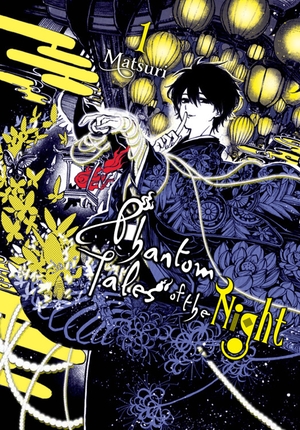
KATE: Last week’s INSANE manga haul has left me scarred: there was so much good stuff to choose from that I felt paralyzed when trying to choose one or two for our weekly round-up. This week, by contrast, I only have eyes for one series: Phantom Tales of the Night, which sounds a lot like Pet Shop of Horrors and has a pretty snazzy-looking cover to boot.

SEAN: I’ll go with a digital debut this week. Everything I’ve heard about Smile Down the Runway suggests it’s a josei title in shonen’s clothing, and apparently it has a terrific look at fashion and the struggle between doing what you love and earning a living. I want to take a look.

MICHELLE: There’s lots of Shojo Beat goodness, but for me this week is all about the sports boys. When Yowamushi Pedal is pitted against Haikyu!!, much as I love the former, I have to go with the volleyball kids. They’re just so dang endearing!

ASH: I certainly enjoy both Haikyu!! and Yowamushi Pedal, but I’m with Kate this week for my pick. I generally like horror manga, but I find shoujo horror particularly difficult to resist, so <Phantom Tales of the Night it is!

ANNA: There’s so much to choose from! I’m going to go with Daytime Shooting Star just because we don’t get much teacher-student romance shoujo here.

Filed Under: PICK OF THE WEEK

The Poe Clan, Vol. 1

September 2, 2019 by Sean Gaffney

By Moto Hagio. Originally released in Japan as “Poe no Ichizoku” by Shogakukan, serialized in the magazine Betsucomi. Released in North America by Fantagraphics. Translated by Rachel Thorn.

As with a lot of stories by Moto Hagio, it can be hard to describe how The Poe Clan works as a collected manga story because the reader has a tendency to get lost in the feel of it. Indeed, sometimes I got a bit too lost – the final story in the book, The Birds’ Nest, made me feel at times as if pages with important continuity had been removed to add to the impact. But of course the impact IS the point. This is especially clear in the first part of the book, which features the introduction of Edgar, his sister and Lost Lenore Marybelle, and Alan, the teenage boy who gets entangled in Edgar’s life and later becomes his companion. It actually reads like it was written after the later material (it may well have been – chronological publishing order is not required, especially in early manga collections) and has a lot more action and violence than the back half of the book, which relies on menace and mood. It’s hard to put down.

Oh yes, I haven’t mentioned, this is about a clan of vampires. Or vampirnellas, as they are referred to throughout the book. Edgar and Marybelle are adopted into the family, which tends to live its life on he run and trying to live like typical English aristocrats while not getting noticed. Unfortunately, Edgar is very good at getting noticed, being a gorgeous teenage boy and also having that brooding thing going on. His sister is also highly noticeable, but for the opposite reason – she is a ray of sunshine in everyone’s lives, causing even passing strangers to be mesmerized by her (or accidentally shoot her – you know how it is). Needless to say, her eventual fate, while not a surprise (with a cover like that, you aren’t expecting Edgar and Marybelle to have wacky adventures) hangs over the rest of the book, as well as most of Edgar’s actions. As for Alan, well, there are some homoerotic elements to their relationship, particularly in the final story, but Alan is so far not as good a character as the siblings.

The art is, as you’d expect, amazing. Flip to a random page and chances are you’ll find something that will have you staring. A possible exception to this are the ‘comedy’ elements of the final story, particularly the production of As You Like it, which has lots of goofy faces that help to alleviate the mood from the rest of the plot, which involves a seeming murder that may be a suicide and tortured young men in love. Much is made of the almost inhuman beauty of the vampirnellas, particularly Edgar, an no linework is spared in conveying that to the reader. This is absolutely a work you will want to keep on your shelf. (That said, the spine of my copy has “The Poe Clan” written from bottom to top, which contrasts sharply with most books in my collection, so use caution when shelving.)

The second and final volume of this series hasn’t been scheduled yet by Fantagraphics, but I hope to see it sometime next year. If only for more shots of brooding boys and gentle girls.

Filed Under: poe clan, REVIEWS

A Barrage of Buffy

September 1, 2019 by Michelle Smith

Because I am a great big geek, one of my personal goals is to read all of the novels inspired by Buffy the Vampire Slayer. This is the second in a series of posts collecting relatively short reviews of these books. All of the following are set during the show’s third season.

Obsidian Fate by Diana G. Gallagher
obsidian_fateIn 1520, a Spaniard conveying stolen Aztec treasure to a secret hiding place was killed by a mudslide while holding a particular obsidian mirror. Now, his remains have been found in an archaeological dig in Sunnydale. It turns out that the mirror contains the essence of the Aztec god of night, Tezcatlipoca, who quickly makes a graduate student working on the dig his High Priestess and adopts a jaguar form to prowl around and do some chomps. The gang must prevent his brainwashed followers from offering enough human sacrifices to empower Tezcatlipoca to banish the sun forever.

There were definitely things I liked about Obsidian Fate. I liked that Buffy is worrying about her friends leaving for distant universities and colleges and trying to figure out what she herself is going to do. I liked that Angel has begun to think about moving away to let Buffy live her life. I liked that Giles is still grieving Jenny. A lot of the characterization and dialogue was good—especially Oz, which is pretty difficult to do. Surprisingly, Kendra and Faith both get a mention, though the latter is nowhere to be seen (and this is all set before she goes bad). No Wesley at all. It’s also really neat that the Mayor and Mr. Trick are facilitating Tezcatlipoca’s rise!

But oh man, so many descriptions of temples and stones and boulders and pillars. It’s very tedious. Also, one of their fellow students has become temporary host to part of Tezcatlipoca’s essence and plans to sexually assault Willow prior to sacrificing her. Nobody, besides Oz, seems to be quite as pissed off about this as they should be. Lastly, a subplot about how one of Buffy’s prophetic dreams showed Angel’s demise offers zero suspense. Still, their reunion on the final page does produce a genuinely cute moment.

Is this one worth a read? Eh, it could be worse.

Power of Persuasion by Elizabeth Massie
power_persuasionThis was a bit of a clunker, I’m afraid. The awkward teen daughter of a culinarily disinclined restaurant owner grows fed up with catering to her incompetent father’s whims and, by chanting supplications whilst surrounded by random items from the restaurant’s pantry, somehow successfully summons a Greek goddess and her two muse daughters to help her change things. They proceed to compel a lot of female students (including Willow) to join their “womyn power” crusade, which mostly involves campaigning for girls to have the right to try out for the vacancies on boys’ teams that arise when male athletes keep turning up dead.

Many of these Buffy media tie-in novels have similarly mediocre plots, but are usually made more tolerable by the author having the ability to capture how characters speak and interact. Not so much here, unfortunately. I appreciated that with Willow, Giles, and Xander falling under the sway of the villains and Angel out of town, Buffy had to rely on Cordelia and Oz to help her. But, while Cordelia’s scenes were fine, much of Oz’s dialogue and demeanor seemed wrong to me. Also, some weird abilities are ascribed to vampires, like one scene where a struggling vamp leaves scorch marks where her heels have dug into the earth.

I suppose the best praise I can muster is, “It’s pretty lame, but at least it’s short.”

Prime Evil by Diana G. Gallagher
prime_evilSeldom have I read a book so starkly divided between enjoyable parts and excruciating parts!

Set after “Doppelgangland,” the plot of Prime Evil involves a witch attuned to “primal magick” who was first born 19,000 years ago and who keeps being reincarnated and gathering sacrificial followers in an attempt to access “the source.” Her current identity is Crystal Gordon, a new history teacher at Sunnydale High, and her latest crop of doomed devotees is composed entirely of students. Obviously, it’s the Scooby Gang’s job to stop her.

First, the good. Most of the scenes with the main characters are fun, with dialogue that I could easily hear in the actors’ voices. Anya and Joyce have significant roles, and there was notable awkwardness between the latter and Giles. Although this was presumably the result of their dalliance in “Band Candy,” I liked that the explanation wasn’t explicitly stated. I thought it was interesting that Crystal tempts Willow to join her disciples by promising a cure for Oz, and I did have to snicker at a scene in which Angel, for the sake of expedience in getting to safety, has to sling Xander over his shoulder.

The bad, however, cannot be denied. There are many tedious flashbacks to Crystal’s past incarnations and these quickly became literally groan-inducing. In addition, the theoretically climactic magical battle at the end is full of prose like “The great source-river of wild magick coursed in violent abandon through the orbits of comets so ancient and distant they had never been warmed by the sun” and succeeded only in making me profoundly sleepy.

In summation… zzz.

Resurrecting Ravana by Ray Garton
resurrecting_ravanaA rash of cattle mutilations has the Scooby Gang suspecting hellhound activity, but when several people turn up eaten, after each has spontaneously killed their dearest friend, it’s clear something else is up. There’s more of a mystery here than these books generally offer, with a plot that features Hindu gods, an elderly collector of magical artifacts, his lonely granddaughter, and a certain statue that can resurrect a deity who will reward one richly for this service (and whose minions will kill everyone else).

Along the way, a new guidance counselor of Indian descent is introduced (replacing the guy who got killed in “Beauty and the Beasts”). At first, I thought this was going to be another one of those “Willow falls under the sway of a new female staff/faculty member who is secretly evil” storylines, but, refreshingly, that did not turn out to be the case. Willow just talks to her about problems with her relationship with Buffy, which come to a head in a couple of full-on brawls in the library. It takes a really long time for anyone to put together that their situation parallels the murders/devourings happening elsewhere in town, but it does lead to a nice final moment for the book.

Characterization is spotty. Pretty much each character has a moment that feels especially right as well as one that feels especially wrong. Xander and Cordelia’s bickering is even nastier than usual, and it’s never outright said that they’re being affected by the same creatures who manipulated Buffy and Willow. That said, I did enjoy all of Buffy’s interactions with her mother, particularly a late-night trip to Denny’s. All in all, Resurrecting Ravana wasn’t bad!

Return to Chaos by Craig Shaw Gardner
return_chaosReturn to Chaos is a bit different from most of the other Buffy tie-in books I’ve read. Instead of a new big villain coming to town, the plot is mostly about some new allies coming to town. A quartet of Druids, specifically, consisting of an older guy named George and his three nephews, one of whom develops feelings for Buffy. George wants to enlists the Slayer’s help in performing a spell on the Hellmouth that will supposedly prevent bad things from crossing over, but he’s really vague about his plans, and it soon becomes evident that he isn’t in his right mind. The nephews genuinely are allies, though, which is kind of refreshing.

This book was written in 1998, and it seems that the author was not privy to much that was going to happen in season three. A couple of vague references are made to Angel coming back, and about Buffy trying to move on romantically, but Xander and Cordelia are still very much together as a couple. That would put this somewhere between “Beauty and the Beasts” (episode four) and “Lover’s Walk” (episode eight), except that it is very clearly spring and we know that “Amends” (episode ten) is Christmas. Oopsies. There are a couple of other small errors, too, concerning Buffy’s eye color and Giles’ glasses.

This is another book in which there’s more of Oz than I’d been expecting. Some of his scenes and thoughts are okay, and I appreciated that the author wrote a teensy bit about Oz’s family, but at other times he just seems far too verbose. (This, combined with the errors mentioned above, makes me wonder just how familiar the author was with these characters.) Cordelia has a subplot of her own, as well, in which she falls under the thrall of a former rival turned vampire. The Druids recognize that the vampire is using a “mastery” spell, which is likened to the power Drusilla exhibited when she was able to kill Kendra so easily. I thought that was kind of neat.

In the end, despite some flaws, it turned out to be pretty decent.

Revenant by Mel Odom
revenantIn 1853, 35 Chinese laborers were killed in a mine cave-in on a site owned by some of Sunnydale’s forefathers. The incident was covered up and families were unable to provide their loved ones with a proper burial. Now, the unquiet spirits of those men want vengeance on the owners’ descendants and have managed to communicate with the troubled brother of one of Willow’s friends, who enlists her help. Honestly, this plot doesn’t make a whole lot of sense, but there’s a rich importer involved (who’s receiving help from the mayor) and chanting and statues and dragons and warehouses what go boom and demons that turn into goop.

Sometimes, Odom has a bit of trouble with characterization—Oz’s dialogue often doesn’t feel quite right, and sometimes Buffy comes off as vapid, like an early scene where she’s worried about her hair while Willow is running for her life—but other scenes are spot-on. I particularly liked a moment where Giles is forced to hotwire a truck (“I was not always a good boy”) and the final scene wherein Xander attempts to parlay his latest romantic disappointment into Buffy’s half of a Twinkie they’re sharing. Odom also incorporates and elaborates on some of the issues characters are worrying about at this point in the show: Buffy ponders her future with Angel, Xander dreads being left behind after graduation, and Cordelia seeks to avoid trouble at home by helping with research. The action scenes are easy to envision, as well.

Unlike most other books set during this season, the brief Xander/Willow fling and its fallout are acknowledged. Like the others, neither Faith nor Wesley is mentioned, and the former’s absence is particularly glaring, given the evident difficulty of the big battle. Still, Revenant ended up being a pleasant surprise.

Filed Under: Books, Media Tie-In, REVIEWS, Supernatural Tagged With: Buffy the Vampire Slayer, Craig Shaw Gardner, Diana G. Gallagher, Elizabeth Massie, Mel Odom, Ray Garton

  • « Go to Previous Page
  • Page 1
  • Interim pages omitted …
  • Page 298
  • Page 299
  • Page 300
  • Page 301
  • Page 302
  • Interim pages omitted …
  • Page 1048
  • Go to Next Page »
 | Log in
Copyright © 2010 Manga Bookshelf | Powered by WordPress & the Genesis Framework