• Skip to primary navigation
  • Skip to main content
  • Skip to primary sidebar
  • Home
  • About Us
    • Privacy Policy
    • Comment Policy
    • Disclosures & Disclaimers
  • Resources
    • Links, Essays & Articles
    • Fandomology!
    • CLAMP Directory
    • BlogRoll
  • Features & Columns
    • 3 Things Thursday
    • Adventures in the Key of Shoujo
    • Bit & Blips (game reviews)
    • BL BOOKRACK
    • Bookshelf Briefs
    • Bringing the Drama
    • Comic Conversion
    • Fanservice Friday
    • Going Digital
    • It Came From the Sinosphere
    • License This!
    • Magazine no Mori
    • My Week in Manga
    • OFF THE SHELF
    • Not By Manga Alone
    • PICK OF THE WEEK
    • Subtitles & Sensibility
    • Weekly Shonen Jump Recaps
  • Manga Moveable Feast
    • MMF Full Archive
    • Yun Kouga
    • CLAMP
    • Shojo Beat
    • Osamu Tezuka
    • Sailor Moon
    • Fruits Basket
    • Takehiko Inoue
    • Wild Adapter
    • One Piece
    • After School Nightmare
    • Karakuri Odette
    • Paradise Kiss
    • The Color Trilogy
    • To Terra…
    • Sexy Voice & Robo
  • Browse by Author
    • Sean Gaffney
    • Anna Neatrour
    • Michelle Smith
    • Katherine Dacey
    • MJ
    • Brigid Alverson
    • Travis Anderson
    • Phillip Anthony
    • Derek Bown
    • Jaci Dahlvang
    • Angela Eastman
    • Erica Friedman
    • Sara K.
    • Megan Purdy
    • Emily Snodgrass
    • Nancy Thistlethwaite
    • Eva Volin
    • David Welsh
  • MB Blogs
    • A Case Suitable For Treatment
    • Experiments in Manga
    • MangaBlog
    • The Manga Critic
    • Manga Report
    • Soliloquy in Blue
    • Manga Curmudgeon (archive)

Manga Bookshelf

Discussion, Resources, Roundtables, & Reviews

Blog

Manga the Week of 11/6/19

October 31, 2019 by Sean Gaffney, Michelle Smith, Anna N, Ash Brown and MJ Leave a Comment

SEAN: November brings an absolutely ludicrous amount of stuff, and December’s no better, so get used to it.

ASH: I’m ready for the cooler weather and avalanches of new manga and novels!

SEAN: J-Novel Club has a lot. Starting with Invaders of the Rokujouma!? 26, 27, and 28, which are actually out now.

The novel debut (digitally) is Demon Lord, Retry!, which had an anime recently. It seems to be Overlord with less skeleton.

The manga debut (digitally) is Discommunication, an ancient manga (it began in 1992!) that ran in Kodansha’s Afternoon, from the creator of Mysterious Girlfriend X. It’s gotten VERY good buzz, and I’ve been told does not have quite as much drool as MGX, so I’ll be taking a look.

MICHELLE: Hm. I’ll wait for the results of the drool analysis.

ANNA: I too, am concerned about drool.

ASH: Drool aside, I enjoyed what I read of Mysterious Girlfriend X.

MJ: I like early 90s manga, so I may risk the drool.

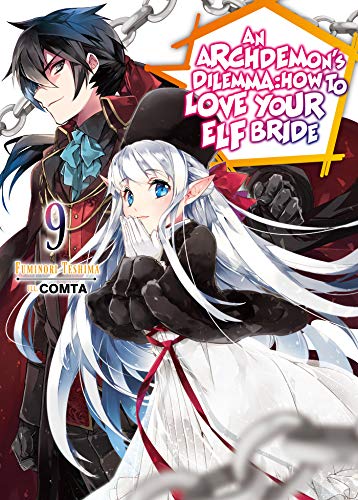
SEAN: J-Novel Club also debuts An Archdemon’s Dilemma: How to Love Your Elf Bride in print, along with print for Ascendance of a Bookworm (2) and Infinite Dendrogram (3). Also, digital volumes for Arifureta (10), The Combat Baker and Automaton Waitress (2), and Sorcerous Stabber Orphen (5), and the 2nd A Very Fairy Apartment manga digitally.

ASH: I just got my hands on the first volume of Ascendance of a Bookworm. Good to know I won’t need to wait long to get my hands on the second if desired!

SEAN: In print, Kodansha has Cells at Work: Code BLACK 2 and The Quintessential Quintuplets 6.

Digitally, our debut from Kodansha is Our Fake Marriage (Usokon), a shoujo/josei title that runs in Ane Friend. 29-year-old woman, no job, nowhere to live, runs into her old childhood friend, now a handsome successful architect, and he suggests… well, look at the title.

ANNA: I enjoy faked marriages in fiction!

ASH: There are some really good ones out there.

MJ: I would like to see one where the love interest is not a handsome, successful architect, but like… a nerdy school teacher or something.

SEAN: Also digitally? Cells NOT at Work 2, Fairy Tail: City Hero 2, My Sweet Girl 8, Our Precious Conversations 5, Seven Shakespeares 12 (where had this gone?) and Smile Down the Runway 3.

MICHELLE: I’ll be reading several of these!

SEAN: Denpa Books has a new BL line, called KUMA, and their debut is a done-in-one called Melting Lover. It runs in Futabasha’s Comic Marginal, and looks pretty interesting. BL fans, support this new imprint!

MICHELLE: Nice to see a new imprint!

ASH: Melting Lover is an interesting BL collection with some speculative fiction flair to the stories. Also, KUMA will yuri in its lineup, too!

MJ: Very interested in what Denpa has to offer for BL!

SEAN: Seven Seas debuts two titles, one print, one an early digital. The print is Nicola Traveling Around the Demon’s World (Nicola no Oyururi Makai Kikou), from Kadokawa’s Harta. Adorable human child, land full of demons, just wandering around… this has become a genre by now. Still, I’ll try anything from Harta.

ASH: I like this genre a lot.

MJ: I can also get behind this genre.

SEAN: The early digital light novel is Magic User: Reborn in Another World as a Max Level Wizard (Magic User: TRPG de Sodateta Mahoutsukai wa Isekai demo Saikyou Datta), whose sole point of interest seems to be that it’s from a rare LN publisher, Gentosha. Otherwise, well, look at the title.

Seven Seas also has Accomplishments of the Duke’s Daughter 5, and the 7th Make My Abilities Average! in print.

Tokyopop gives us a 6th Futaribeya.

Vertical has the 14th and final volume of Mobile Suit Gundam Wing.

Viz time! No debuts, still lots stuff. Shoujo: Anonymous Noise 17, Daytime Shooting Star 3, Shortcake Cake 6, Skip Beat! 43, Snow White with the Red Hair 4, and the 11th and final Water Dragon’s Bride.

MICHELLE: I will read every one of these! Of course, I’m particularly asquee for more Skip Beat!.

ANNA: So much great shoujo, I am excited.

ASH: We all should be!

MJ: I’m behind on many of these, but I should fix that!

SEAN: On the shonen end, we see Black Clover 18, Boruto 7, Demon Slayer: Kimetsu no Yaiba 9, Dr. STONE 8, Haikyu!! 35, JoJo’s Bizarre Adventure Arc 4 Vol. 3, Kaguya-sama: Love Is War 11, My Hero Academia SMASH! 2, and One Piece 92.

MICHELLE: I enjoyed My Hero Academia SMASH! more than anticipated, and so look forward to volume two!

ASH: I’m getting a kick out of the Diamond Is Unbreakable arc of JoJo’s Bizarre Adventure. I’ve fallen behind with the anime, so this is all new content for me!

SEAN: Finally we get Yen, who have quite a bit as well. Debuting from Yen On is Suppose a Kid from the Last Dungeon Boonies Moved to a Starter Town (Tatoeba Last Dungeon Mae no Mura no Shounen ga Joban no Machi de Kurasu Youna Monogatari), which is about– whoops, ran out of space.

Ending next week is The Empty Box and Zeroth Maria, with its 7th volume. There’s also new volumes of The Hero Is Overpowered But Overly Cautious (2), Is It Wrong to Try to Pick Up Girls in a Dungeon: Sword Oratoria (10), My Youth Romantic Comedy Is Wrong As I Expected (8), and Woof Woof Story: I Told You to Turn Me Into a Pampered Pooch, Not Fenrir! 3. As you can see, long titles are the new Alice in the Country of.

On the manga end, we debut the manga version of Our Last Crusade or the Rise of a New World. Also getting manga volumes are A Certain Magical Index 19, Durarara!! Re;Dollars 5, and High School Prodigies Have It Easy Even in Another World 5.

I was reincarnated into another world and ended up with manga release date analysis as my only power! What are you getting next week?

MICHELLE: *snerk*

Filed Under: FEATURES, manga the week of

The World’s Strongest Rearguard: Labyrinth Country’s Novice Seeker, Vol. 1

October 31, 2019 by Sean Gaffney

By Tôwa and Huuka Kazabana. Released in Japan as “Sekai Saikyou no Kouei: Meikyuukoku no Shinjin Tansakusha” by Kadokawa Books. Released in North America by Yen On. Translated by Jordan Taylor.

I’ve talked before about the times when I read a bad book and people ask me “is it bad in an MST3K way?” and I have to tell them no, it is bad in a bad way. However, we may finally have a winner. The World’s Strongest Rearguard is sort of what happens if you tell an author all the pitfalls they should avoid when writing a Japanese light novel, only he mishears you and uses them as must haves. It is a gloriously over the top power fantasy starring a hero who is so beige he verges on see-through, a harem of adoring women, and his magical job, which we’re assured is super perfect though it’s never quite made clear why he’s the only one who’s ever done this. It should be like dragging yourself across broken glass, but… it’s very readable and guileless. There are tons of “game stat” battles, which I will never ever enjoy, but aside from that, this is some of the finer trash I’ve seen in a light novel.

Arihito Atobe is a corporate wageslave who’s too good at his job, so he’s overworked by his manager – who’s also younger than him. And super hot. On their way to a corporate event, along with various other folks, their bus crashes and they are killed. Reincarnated in a world filled with labyrinths where you need to seek and defeat monsters to be able to have a place to sleep at night, Arihito is forced to choose a class – Rogue, Vakyrie, Shrine Maiden, etc. Getting an explanation from the guild receptionist, he chooses “Rearguard”, a far too general classification that is nevertheless accepted. Now he discovers that while he’s not good at attacking on his own, with the right party, he can provide fantastic buffs, restore vitality, and improve morale. But who would possibly form a party with a man such as himself? Oh, right, everyone.

I’m not even sure where to begin, so let’s start with the other cast. Kyouka, the Valkyrie, is his former boss, who apparently left her tsun back in Japan when she reincarnated and ends up all dere. The author says in the afterword that the webnovel version was too mean, so he toned her way down. I think he overdid it. She’s had a crush on him for ages. Theresia is a lizard woman… not what you (or Arihito) is thinking, it’s almost a costume. She looks like a small Japanese woman put on her robe and lizard hat. She’s a demi-human who was defeated in the dungeons by a lizard monster and so became this, and is also mute. Now she works as a mercenary, and Arihito (presumably) is the first to treat her with kindness. (Actually, this is one of the book’s few clever ideas, and I like how it avoided just making her a slave like other books would.)

Elitia is a Level 8 swordswoman who’s been here a while, but everyone avoids her due to her cursed sword. Suzuna is a sweet and mellow shrine maiden, and Misaki is her friend (they were on the bus together) who is the classic genki girl who lives for the moment and tends to get in trouble because of this. She’s a Gambler. Finally we have Louisa, the guildwoman, who is boggled by the fact that Arihito’s generic “rearguard” job was accepted and that his party keeps defeating stronger and stronger monsters. Every single one of them falls for Arihito almost immediately, and all seem to have issues accepting any sort of compliment, so any time a battle is won there’s a round of “it was all thanks to you”, “no, it was really your win”, etc. They think Arihito is their leader and let him make all the decisions. Oh yes, and he also exudes some sort of magic that, when asleep and behind them, makes them aroused. Nothing explicit happens. Yet.

As you can see, this is absolutely bonkers. It should be terrible beyond belief. It sort of is? Arihito has the personality of lint, and I started to refer to him as Huckleberry Hound due to his blase reaction to everything (he also seems to spend the entire book in his suit and tie), but let’s face it, if he had a personality this would be unreadable. The “reincarnation” aspect of the book reads like a job fair, with everyone keeping all their memories and appearance, they’re just shifted to this new world, which is explicitly designed to be “game world”. The sheer amount of rewards he gets for everything made me giggle. By the end of the book he’s found the secret level that no one else knows of and awakened a sleeping God (who, of course, is a naked robot sort of god) who vows to give her support from afar… though even SHE has severe self-hatred issues and is over the moon when Arihito and his party say they want to work with her. And there are a few plotlines that clearly are being introduced for further books (Elitia, Louisa and Theresia’s backstories, the “other gods”, why Arihito’s job works the way it does), so things are not going to get less extra.

So, again: this isn’t a good book. But, coming at it from the right angle, it’s a fun book. You won’t want to throw it away in disgust. Just read it as if Joel and the Bots were at the bottom of the page making comments, and you can’t go wrong. I can’t wait for Book 2.

Filed Under: REVIEWS, world's strongest rearguard

Cats of the Louvre

October 30, 2019 by Katherine Dacey

Weird. Uncanny. Melancholy. Beautiful. Those were just a few of the adjectives I jotted down while reading Taiyo Matsumoto’s Cats of the Louvre, the latest volume in the museum’s ongoing graphic novel series. Like Nicholas De Crécy’s Glacial Period and Jiro Taniguchi’s Guardians of the Louvre, Cats of the Louvre is less an illustrated guide to the museum than a story that happens to take place within its walls—in this case, the attic, where a colony of cats have taken up residence. Through a series of eighteen vignettes, Matsumoto gradually reveals that the cats’ primary caretaker—an elderly night watchman—has dedicated his life to searching the museum for his missing sister, who disappeared into one of the paintings when she was a child.

The key to finding Arrieta turns out to be Snowbébé, a kitten who frequently escapes from the attic to roam the galleries, hiding inside canvases to avoid detection. Snowbébé’s gift is both an essential plot point and an opportunity for Matsumoto to luxuriate in the smaller details of his favorite paintings, as is evident in a lovely, strange sequence that unfolds inside Henri Lerambert’s The Funeral Procession of Love (1580). From a modern viewer’s standpoint, Lerambert’s painting seems a little kitschy, with its parade of cherubs, poets, and philosophers strolling under the watchful eye of the goddess Diana:

Once Snowbébé steps into the painting, however, the landscape comes to life in unexpected ways: the flowers grin, the animals speak, and the laws of gravity disappear. In one brief but delightful sequence, for example, Snowbébé and Arrieta cavort across the ceilings and walls of a temple, while in another they board Diana’s chariot for a ride through the Milky Way. Yet for all the joyful (and weird) imagery, there’s a wistful quality to these two chapters, as Snowbébé slowly realizes that he cannot remain inside the Parade forever; his presence has disturbed the painting’s equilibrium, bringing storm clouds and disrupting the flow of time itself, forcing him to choose between staying with his new friend, or returning to the “cold and smelly and noisy” world of the Louvre.

What prevents Snowbébé’s odyssey from seeming twee or precious is Matsumoto’s studied primitivism; his characters’ mask-like faces, oddly proportioned bodies, and grotesque smiles are genuinely unnerving, creating a surreal atmosphere in which the boundaries between reality and imagination are blurred. Nowhere is this tendency more obvious than in the way he draws Snowbébé and his friends: the cats look like animals to their caretakers, but assume a humanoid form when interacting with each other. In Matsumoto’s hands, they look more like people in cat costumes than pussycats, with their essential feline features—ears, whiskers, tails, elongated limbs—rendered in an exaggerated fashion that gives them a faintly alien appearance.

Matsumoto’s depiction of the Louvre is more straightforward, recreating iconic works with fidelity to the originals, whether he’s drawing a lesser-known genre painting or a genuinely famous sculpture. His rendition of the physical environment—the claustrophobic, dusty garret where the cats live, the grand staircases and hallways that lead to the galleries—is similarly precise, helping the reader envision the sheer size and opulence of the museum. As a result, the Louvre transcends its basic function as a setting, taking on the qualities of a living, breathing organism whose vaulted ceilings and majestic columns invite comparisons with dinosaurs or whales:

And while all the comics in the Louvre Collection have done an admirable job of depicting the museum, Cats of the Louvre approaches its subject matter without didacticism or pedantry; though Matsumoto’s human characters express strong feelings about art, those conversations spring organically from the story. Equally important, Cats of the Louvre has its own personality; unlike Hirohiko Araki’s Rohan at the Louvre, which recycled ideas and characters from JoJo’s Bizarre Adventure, Matsumoto’s story stands on its own, capturing his unique response to the museum and its collection. But the best reason to read Cats of the Louvre is its hero Snowbébé, whose quest to find his place in the world invites us to see the Louvre through fresh eyes, as a place of danger and sadness, but also of wonder, magic, and possibility. Recommended.

A review copy was provided by VIZ Media. To read a short preview, click here.

CATS OF THE LOUVRE • STORY AND ART BY TAIYO MATSUMOTO • TRANSLATED BY MICHAEL ARIAS • RATING: TEEN • 432 pp.

Filed Under: Manga, Manga Critic, REVIEWS Tagged With: Cats, Louvre Museum, Taiyo Matsumoto, VIZ, VIZ Signature

Outbreak Company, Vol. 11

October 30, 2019 by Sean Gaffney

By Ichiro Sakaki and Yuugen. Released in Japan by Kodansha. Released in North America by J-Novel Club. Translated by Kevin Steinbach.

This volume is still short, but a bit longer than the 10th book. That said, I’m still struggling to find 500+ words to say about it. The series is good, I enjoy it, but it’s not really trying for anything other than “be entertaining” with a small side of “treat all people equally”. It doesn’t help that this book is an expanded short story, blown up to book format when the author realized he didn’t have the room. The thrust of the plot is that Amatena, Elvia’s cold, paranoid sister, and Clara, who held him captive while he was kidnapped, are on the run from the authorities of their nation, who have decided that they’re a liability – possibly as they’ve been passively helping Shinichi smuggle anime and manga into the country. Elvia helps them hole up at the mansion, but they have to hide themselves. This leads to an extra maid (which stresses Myusel out, though not for the reason you might think) and an extra (disguised) Elvia. Hijinks ensue.

There’s a subplot in the book of Shinichi’s class getting a hold of digital cameras, and Shinichi and a very grumpy Hikaru end up having to teach them that it’s not OK to just take pictures of everyone all the time – you need permission, and sneak shots are right out. This is a good reminder that a lot of the “lessons learned”, heavy-handed as they can be, are as much for any young readers the series might have as for the fantasy elves and dwarves of Outbreak Company. Consent is important, even though Shinichi frames it as “you don’t want to catch them out of character”. The other small subplot is Amatena’s cool, overly suspicious attitude is contrasting hideously with Elvia’s puppy-ish mood, something that’s more vital than you’d expect given Amatena is supposed to be pretending to be Elvia. This leads to another obvious, but still welcome lesson: if you don’t trust anyone, why should anyone trust you? You have to open up a LITTLE bit.

Meanwhile, the series’ slow-boiling romance may finally be getting somewhere, though this may all vanish by the next book. The difficulty is on both sides, as Shinichi still tends to think of himself as a “loser” that nobody could like. He’s also, despite his perversions, still relatively innocent, and Clara reminds us of how he fended her off when he was kidnapped – by pretending that if he has sex with a woman, he’ll die. On Myusel’s end, more and more people are accidentally seeing Shinichi naked, and this frustrates her though she’s not sure why. After talking things through with Clara, she may have finally realized how deep her feelings for Shinichi are, but then she’s also dealing with a poor self-image, so it’s unclear whether she’ll actually act on this – certainly Elvia’s “heat” interrupts her at the end of this book.

It was nice to be back in Eldant for this book, despite it reading very much like a padded-out short story. We may get that next time too. Still recommended for those who enjoy the series.

Filed Under: outbreak company, REVIEWS

I Saved Too Many Girls and Caused the Apocalypse, Vol. 16

October 29, 2019 by Sean Gaffney

By Namekojirushi and Nao Watanuki. Released in Japan as “Ore ga Heroine o Tasukesugite Sekai ga Little Mokushiroku!?” by Hobby Japan. Released in North America digitally by J-Novel Club. Translated by Mana Z.

The final volume of Little Apocalypse, and I’ll try to keep my general thoughts above the picture and then get into actual spoilers below it. It’s a good final volume, I was pleased. The series knows what it does best and does it. Big ol’ melee fights, lots of humor, lots of self-doubt, Rekka being Rekka – indeed, you could argue the plot of this book is Rekka being Rekka. Including Rekka being dense, which he confirms here is sometimes deliberate, but also confirms here that sometimes he really is just that dense. Also, to my relief, despite appearing on the cover at last, R does not become a “heroine” in the romantic sense. There’s explanations for previous major plot points, each of the girls gets to do at least something, even if it’s sit on the sidelines and write/direct (you can guess who I’m talking about there). Fans of the series should not really have any issues with it at all… well, OK, except maybe for one thing.

Yes, if you wanted romantic resolution, first of all, you were deluding yourself, but second of all, you will be disappointed as Rekka does not, in fact, choose anyone. Indeed, the villain of the piece, if you can call him that, is Rekka from the future, and he makes it clear that he’s saved hundreds of heroines and loves all of them. The trouble, of course, is that Rekka loves all these heroines in the earnest, hero sense of love. There is no romantic or sexual love here, and indeed beyond getting flustered occasionally when confronted with boobs, Rekka is a decidedly uninterested hero. This applies to him, to his female self (and one big drawback of the book is that we never met any of the heroes that she saved – or did she save heroines? Her sexuality is just as absent as Rekka’s). As for future Rekka, he may be an immortal vampire with cyborg arms, but at heart he’s still the same guy, which means he has the same self-doubts.

The goddesses who are the cause of all this are perhaps the least interesting part of the book – I joked that one reminded me of Aqua, but that was more the way she was initially introduced. There is an interesting idea here in that the gods literally CANNOT stop making and destroying worlds as that is their function, it’s what they do. This is what led to the surprisingly bloodless War of All, whose sole casualty that we know about (Iris’ father) is undone by the ending fight presumably making it so the war never happens. It also felt right that the one who helped our Rekka to finally defeat his future self was R, and that she did it not through caustic words and innuendo – her weapons so far – but just by giving him a big push. If only getting him to pick a girl was that easy.

And so the series is over, everything is back to where it was, and Rekka will no doubt keep saving heroines, though hopefully on a slightly smaller scale. This started out as a parody of the harem genre, but by the end it had embraced what it mocked, and I feel it’s the better for it.

Filed Under: i saved too many girls and caused the apocalypse, REVIEWS

Pick of the Week: It’s That Manga Again

October 28, 2019 by Michelle Smith, Sean Gaffney, MJ, Katherine Dacey, Ash Brown and Anna N 1 Comment

MICHELLE: There are some pretty interesting things coming out next week, namely the debut of another digital-only josei series from Kodansha Comics, but my heart belongs to volume six of The Night Beyond the Tricornered Window, which actually came out last week. I love this series so very much and am always excited when a new installment pops up. Because of its creepy atmosphere, the timing is just right, too!

SEAN: There’s quite a few things I like this week, but I’m going to go with good old Silver Spoon, because I love it and it is wonderful.

MJ: I was surprised to note that, in such a full week, the only thing on my Absolute Must Buy list is Silver Spoon. But also, YAY SILVER SPOOOOON! Seriously, I could not love this series more.

KATE: At the risk of sounding like a broken record, I am Team Silver Spoon 100%. It’s one of most consistently funny, honest, and gut-wrenching manga being published in English right now, and it deserves waaaaay more love and support from the mangasphere.

ASH: Silver Spoon really is a tremendous series! And so, for all of the reasons that everyone else has already outlined, it gets my pick. On top of that, I always get a little nostalgic reading the manga… it reminds me a lot of the people and places in my hometown growing up.

ANNA: I am feeling so guilty for not reading Silver Spoon yet, although I think I have a couple volumes stashed around my house. I’m not going to break the streak for pick of the week. I’m going to read the first volume this week for sure!

Filed Under: PICK OF THE WEEK

Invaders of the Rokujouma!?, Vol. 25

October 28, 2019 by Sean Gaffney

By Takehaya and Poco. Released in Japan as “Rokujouma no Shinryakusha!?” by Hobby Japan. Released in North America digitally by J-Novel Club. Translated by Warnis.

Well, I guess I’m going to be dealing with the villain I don’t like for a bit longer. Vandarion is mostly absent from this volume, which sees Elexis and Darkness Rainbow making their big move. It relies on trying to win Koutarou over to their side in some way, shape or form, his identity as the (seeming) Blue Knight, and appointing a Regent who an be manipulated and controlled, but is also sweet as pie and likeable. All these things happen, and yet our heroes prove to be one step ahead of the villains once more, leading to a giant battle in, of all places, a cemetery for the the finale. This despite the fact that Koutarou is minus his main weapon as using it is slowly killing Harumi, and also despite the fact that he has to abandon half his group and run off with “the smart girl” of the harem to solve things. This doesn’t go over well when he returns…

There’s a lot of very clever plotting in this volume, as Elexis’ plan depends on Koutarou being the Blue Knight, but not THE Blue Knight. He (and most everyone else) had been running on the assumption that Koutarou was a descendant or merely taking up the name. The clever bit (you can tell Kiriha was behind this) is that Koutarou reveals not only that he’s the Blue Knight, but also tells everyone about the time travel accident. This means he is the real, honest to god Blue Knight. And, thanks to the second and even more clever plot twist, which I won’t spoil as it’s so clever, he now has Forthothe completely over a barrel. As expected, this means that Elexis has no choice but to kill him NOW – they may respect each other, but Elexis is still a villain. This leads to the final battle, where Koutarou and company try to silently escape but are caught anyway.

The location of the battle is interesting, as it’s in an ancient cemetery that has some of the graves of Koutarou’s lost allies from back two thousand years ago. This means that when the chips are down, as Koutarou can’t use his cool sword, the other girls are mostly tactical rather than battle geniuses, and the arrival of the rest of the girls does not help quite as much as they would like, he manages to literally get help from ghosts of the past, rallying to save Alaia and the Blue Knight. I will admit I am not a monarchist, but seeing the fervor that everyone shows Alaia reminds the reader just what it must have been like back in the days when Kings and Queens were revered and loved. Indeed, Harumi is seriously feeling that pressure now, as she thinks that if she can’t take on Alaia’s aspect to help Koutarou, she’s worthless – something everyone tries to convince her isn’t true, but they don’t quite manage it.

We’re in the home stretch here, and it’s noted once again that there’s going to be a lot more lives lost as this fight keeps going. Will the author dare to kill off some of the harem? Probably not, but you never know. In any case, another strong volume in this series. Go support the Kickstarter and get it all in print!

Filed Under: invaders of the rokujouma!?, REVIEWS

How a Realist Hero Rebuilt the Kingdom, Vol. 10

October 27, 2019 by Sean Gaffney

By Dojyomaru and Fuyuyuki. Released in Japan by Overlap, Inc. Released in North America digitally by J-Novel Club. Translated by Sean McCann.

Once we found out that the world of Realist Hero is one that supports polyamory, the romantic pairings started flying fast and furious. The main focus of this volume is the marriage between Souma and his five wives, and that does happen. But Souma wants to have a lot of other weddings at the same time. His reasoning is solid: he wants lots of babies now so that everyone is available later on, as he suspects soon he’ll be battling Fuuga and other higher-ups for control of the kingdom and other lands, and needs all the help he can get. As a result, he goes around resolving all the sort of romances we’ve had to date that don’t involve him. (Sometimes he doesn’t even need to get involved. Julius marries the princess we saw in Book 8, and Haruhi – sorry, Kuu – proposes to the Realist Hero equivalent of Yuki and Mikuru.) So Hal is marrying Kaede and Ruby, and may also get an elf bride in a few years as a third. The resident mad scientist is marrying her minder. And Poncho also resolves his OT3… well, no. All these marriages are resolved by women. Indeed, the core of this book is that the guys have the nominal power, but the women are the more mature ones who resolve things.

Having had Saber Red on the cover of the first book, we get Saber Lily here for the 10th. Of course, both are Liscia, but the artist has never quite managed to hide their Fate fanart origins. It seems appropriate for this book, which reads almost like a fanfic writer decided to resolve all the uncommitted pairings at once. The “make babies at once” edict also seems like a fan thing, and while there’s no sex in this book, we glide around the topic quite a bit, going from another “Excel Walter Explains It All For You” bridal meeting to Liscia explicitly telling Souma he’ll be bedding everyone one night after another right after the wedding (Aisha is first up) to Serina making sure that Poncho is eating aphrodisiac foods at their own wedding reception. I am not sure if Book 11 will be filled with babies, though. Oh yes, and in non-wedding news, the identity of a certain masked ninja is made a lot clearer.

The best story is saved for last, though, as Liscia’s mother Elisha tells her own life story, and how she discovered her horrible power and used it in order to marry the right man, set up the kingdom so that it would not end in bloodshed, and when all that failed at least send the memories of the one thing she did wrong to the Elisha of OUR world. Yes, that is a plot twist I am spoiling, but it’s brilliant, and I applaud. Elisha’s similarity to Liscia as a child was amusing, but it’s her compassion that is how we remember her. I also liked the callback to an earlier volume where Elisha tells Souma of the fate he and Liscia suffered in that world, and Souma suggests the old “they never saw the bodies” defense, which turns out o be rather relevant after all. In a book filled with sweet, sappy love stories, this one really made me grin.

If I recall, the webnovel this is based on slightly changed the title for future books, implying this is the end of Season 1. I doubt the official books will do the same, but I do expect a change of pace next time. Till then, enjoy all the weddings.

Filed Under: how a realist hero rebuilt the kingdom, REVIEWS

Silver Spoon, Vol. 11

October 26, 2019 by Sean Gaffney

By Hiromu Arakawa. Released in Japan as “Gin no Saji” by Shogakukan, serialization ongoing in the magazine Weekly Shonen Sunday. Released in North America by Yen Press. Translated by Amanda Haley.

As promised, we get the Valentine’s Day arc in this volume. That said, it pretty much relies on the sort of thing that I talked about in the last review: everyone is sort of pissed off watching the happy not-yet-a-couple while they themselves are single. Indeed, we even get a breakup here from one of the minor characters, and it’s pointed out that “eldest son of a farmer” is not a big plus for women looking for a man. In fact, it’s the opposite. That said, there is hope on the horizon. Hachiken successfully conveys that he wants chocolate from Mikage. Despite enormous obstacles, she manages to give it to him. And even with an immediate mood-killer, it’s not destroyed like Hachiken’s phone was in the last book. The same applies to Mikage’s grades – they aren’t great, but they’re now good enough that she can see about getting a recommendation for her college. Steady progress is important – in fact, that’s the key to this whole volume.

Everyone is moving up a grade – and in many cases, that means moving out of the dorms. Hachiken decides that he wants a place of his own, and manages to barter with his parents to get it. Less successful is his attempt to explain to his dad that he wants to start a business and would like funding. He has the ideas and the fortitude – and his father is impressed that he actually stands up for himself – but he has no real plan beyond “stuff happens”, so is coldly rejected. Fortunately, he has the sense to ask Tamako for help, as she’s the economic genius of the bunch. Hachiken’s dad is not made magically nicer here, but we do start to see why he was so frustrated at Hachiken passively doing what others wanted before, and it’s Hachiken (and Mikage!) standing up to him that means that the door is not permanently shut. That said, Hachiken’s dad is still sort of a scary ass.

I’ve made no secret of the fact that I’m not all that fond of “lovable idiot” characters like tokiwa and Ookawa. We get a lot of Ookawa in this book, as he’s finally forced to graduate (literally, they have to physically make him take the diploma) and face up to unemployment. There isn’t a job of “ruin Hachiken’s life”, sadly, which is a shame as he’s perfectly qualified for it. We also get a long, serious and heartwarming explanation of the Silver Spoon in the title from the headmaster, though again Arakawa can’t resist undercutting things by having the teacher point out it’s his “standard speech”. It still works, and by the end of the volume you get the sense that Hachiken is on the right path, using the resources of abandoned and half-finished projects that the school still has lying around for his own.

This seems to end the “Winter” arc, and the next arc, “Four Seasons”, is the final one (assuming the manga ever comes off of hiatus again). It remains essential reading for anyone who loves a great story and characters.

Filed Under: REVIEWS, silver spoon

The Irregular at Magic High School: Steeplechase Arc

October 25, 2019 by Sean Gaffney

By Tsutomu Sato and Kana Ishida. Released in Japan as “Mahouka Koukou no Rettousei” by Dengeki Bunko. Released in North America by Yen On. Translated by Andrew Prowse.

When you’re doing a series set in high school, and it actually moves forward in time, it can be hard to find new material for the same thing you’ve seen before. Last time on Irregular at Magic High School we saw everyone searching for new club members – again – and this time we get the second time around for their equivalent of the athletic festival, the Nine Schools Competition. So, naturally, the author decides to have things changed around at the last minute, in order to better serve the plot. Three events are different, much to Azusa’s horror, as it means they have to do a lot of last-minute planning. Why the last-minute changes? Well, it’s all part of a powerplay involving the military, the parasites from previous books, an some Chinese defectors – who we don’t actually meet in this book, but I’ve no doubt will appear soon. Not that the schools know this. Fortunately, First High has Tatsuya, who can do anything.

That said, even Tatsuya is having trouble keeping up. In addition to ferreting out the saboteurs who plan to put parasite-infected androids in the steeplechase course to maim magic students – rather cruelly, we’re told it’s OK to ruin the student’s lives and magic career as long as they aren’t killed – but he also has to do prep for all the students competing in the various events this year. At least he’s not IN the events, but it’s so exhausting that he barely even notices his sister having a mental meltdown one night and “warming his body” with her own. Fortunately for my sanity, this low point is followed by the book’s high point, as Tatsuya is about to go out and invade the Steeplechase course to take out the androids before the events, and Miyuki correctly notes that he’s about to fall over exhausted, and why does he have to do absolutely everything all the time? Miyuki works so much better as a caring little sister than as a thirsty one.

As for the rest of the book, it’s Mahouka-by-numbers, but in a series like this that’s not a bad thin. There’s lots of intrigue, and we get to see various characters show off how talented they are, including Ayako and Fumiya, who are on the cover, making this the second cover in a row starring twins. We’ve met these two before, but here they show off that they too can clean up at the competition, taking events for Fourth High and generally showing off. I also like Minami, who gets to use her all-powerful barrier, though finds that it can be a drawback when the enemy runs away and the cops show up to question her. Minami has absolutely had it with the incestual subtext, and I completely agree. And I was also amused by one event where Subaru pronounces that she will defeat Honoka and ensure that it’s not just “everyone who has Tatsuya as their engineer wins”, but forgets which series she’s in – one word of encouragement from Tatsuya and Honoka cleans up. Yes, it IS everyone who has Tatsuya wins. Please bow to him.

The usual irritations aside, this was a pretty decent Mahouka. Next up is apparently a two-part arc, which will no doubt continue to deal with China or its equivalent in this world. Worth picking up if you like really powerful stoic heroes.

Filed Under: irregular at magic high school, REVIEWS

  • « Go to Previous Page
  • Page 1
  • Interim pages omitted …
  • Page 297
  • Page 298
  • Page 299
  • Page 300
  • Page 301
  • Interim pages omitted …
  • Page 1055
  • Go to Next Page »
 | Log in
Copyright © 2010 Manga Bookshelf | Powered by WordPress & the Genesis Framework