• Skip to primary navigation
  • Skip to main content
  • Skip to primary sidebar
  • Home
  • About Us
    • Privacy Policy
    • Comment Policy
    • Disclosures & Disclaimers
  • Resources
    • Links, Essays & Articles
    • Fandomology!
    • CLAMP Directory
    • BlogRoll
  • Features & Columns
    • 3 Things Thursday
    • Adventures in the Key of Shoujo
    • Bit & Blips (game reviews)
    • BL BOOKRACK
    • Bookshelf Briefs
    • Bringing the Drama
    • Comic Conversion
    • Fanservice Friday
    • Going Digital
    • It Came From the Sinosphere
    • License This!
    • Magazine no Mori
    • My Week in Manga
    • OFF THE SHELF
    • Not By Manga Alone
    • PICK OF THE WEEK
    • Subtitles & Sensibility
    • Weekly Shonen Jump Recaps
  • Manga Moveable Feast
    • MMF Full Archive
    • Yun Kouga
    • CLAMP
    • Shojo Beat
    • Osamu Tezuka
    • Sailor Moon
    • Fruits Basket
    • Takehiko Inoue
    • Wild Adapter
    • One Piece
    • After School Nightmare
    • Karakuri Odette
    • Paradise Kiss
    • The Color Trilogy
    • To Terra…
    • Sexy Voice & Robo
  • Browse by Author
    • Sean Gaffney
    • Anna Neatrour
    • Michelle Smith
    • Katherine Dacey
    • MJ
    • Brigid Alverson
    • Travis Anderson
    • Phillip Anthony
    • Derek Bown
    • Jaci Dahlvang
    • Angela Eastman
    • Erica Friedman
    • Sara K.
    • Megan Purdy
    • Emily Snodgrass
    • Nancy Thistlethwaite
    • Eva Volin
    • David Welsh
  • MB Blogs
    • A Case Suitable For Treatment
    • Experiments in Manga
    • MangaBlog
    • The Manga Critic
    • Manga Report
    • Soliloquy in Blue
    • Manga Curmudgeon (archive)

Manga Bookshelf

Discussion, Resources, Roundtables, & Reviews

Blog

Baccano!: 1705 The Ironic Light Orchestra

September 15, 2019 by Sean Gaffney

By Ryohgo Narita and Katsumi Enami. Released in Japan by ASCII Mediaworks. Released in North America by Yen On. Translated by Taylor Engel.

In general, those who are really obsessive about the Baccano! series fall into two camps: anime obsessives and light novel obsessives. The anime obsessives tend to stick to the 1930s, which is, after all, what the anime adapted, with the exception of one episode. The light novel obsessives, though, really love the non-1930s books and their deep look at some of the more… broken members of the cast. In particular Huey Laforet, the “mastermind villain” of some books in the 1930s, last seen escaping from Alcatraz, and Elmer C. Albatross, who loves to try to make everyone smile but has something distinctly wrong with his way of thinking and moral compass in regards to smiling. They both cried out for an origin story, and we get it in in this, the first of the “1700s trilogy”, and possibly the most anticipated book since the series was initially licensed. This is the story of a city in Naples, Lotto Valentino. In particular, three students who are learning alchemy at a secret library: Huey, Elmer, and Monica Campanella. And let me say this: they are written as the OT3 you never knew you wanted.

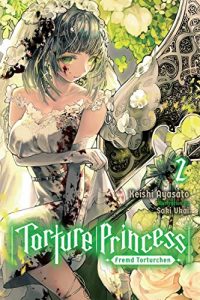
The subtitle is, of course, a take on the 70s band ELO, aka the Electric Light Orchestra. No, Monica’s not the meek-looking brunette in the foreground; that’s Niki, a teenage girl and slave who spends most of the book awaiting her longed-for death, only to run into the power of Elmer and decide to live a little longer after all. Monica’s the blonde inn the background. You get the sense that Narita may have had the idea of Niki and Elmer as a beta couple to Huey and Monica, only to find that he simply could not remove Elmer from their orbit. I was rather startled to see how much of this book read like a genuine rom-con, and even the darker moments are about “will you still love me if you find out my SECRET” stuff. These are three adorable kids who, well, hate the world and want to destroy it in many ways. Elmer isn’t quite like that, but it’s clear that if it would make everyone smile, he’d be totally fine with the world’s destruction as well. Cute broken kids.

There are other things going on in the book, of course. Huey’s past is told via flashback and is a tragic nightmare, revolving around the just-dying out practice of witch-hunting in Europe. Monica’s is barely touched on, and I suspect we may go into it more in the next book. And Elmer’s is also just barely touched on, likely as it would simply be TOO horrific to do anything but merely glance at it. Remember, none of these folks are immortal yet (except, oddly, their teachers, who seem to be immortal from some other source than the one we know), so bad, permanent things can still happen to them. There’s a woman-loving Count who is an odd combination of Isaac Dian and Chikage from Durarara!!. There’s also a young gang member named Aile, who seems familiar but we’re not sure how familiar till the end. This book is a great example of why you shouldn’t read this series in chronological order by date. And a main plotline that reminds me a bit of The Lottery by Shirley Jackson.

The end of the book really makes you want to see the ongoing adventures of Huey, Monica and Elmer, which is why I hate to break it to you, but we’re jumping forward again. This time we go all the way to 2002, to see Firo and Ennis’ long-awaited (no, seriously, very, very long awaited) honeymoon on a luxury liner. Surely nothing can possibly go wrong!

Filed Under: baccano!, REVIEWS

Konosuba: God’s Blessing on This Wonderful World!: Crimson Fate

September 13, 2019 by Sean Gaffney

By Natsume Akatsuki and Kurone Mishima. Released in Japan as “Kono Subarashii Sekai ni Shukufuku o!” by Kadokawa Sneaker Bunko. Released in North America by Yen On. Translated by Kevin Steinbach.

This is another one of those books where the last sixth or so of the novel completely dwarfs everything that comes before it, so let’s use the time before the cover art to talk about the rest of it. Despite wanting to hang around the mansion and do nothing aside from get involved in wacky binding adventures with Darkness, Kazuma is coerced into going to a nearby castle that is beset by another Demon General. This one seems familiar to Kazuma, as he’s seen her before in the hot springs about five books ago. She’s also very familiar to Megumin and Yunyun, for backstory reasons that drive a lot of the plot. The demon general keeps blowing up the castle every day with Explosion. Fortunately, they have Aqua’s extraordinary public works gifts (no, really, not making a joke here) and also the ability to beat her at her own game. But whose Explosions are best? And oh yes, will Megumin find time to confess?

I’ve always been impressed with Konosuba, despite the occasional murmur of other girls, keeping itself to a simple love triangle. Megumin and Darkness both love Kazuma, despite his… well, Kazuma-ness. That said, one of these girls is MUCH MORE POPULAR among fans than the other. And it has to be said, at a base personality level that leaves out eccentricities, Megumin and Kazuma are the most compatible and similar. Here she does confess, and though there’s no kiss there’s a little snuggling. He also says he loves her back, but she accurately points out this is because he doesn’t want to upset her, and his own feelings are somewhat ambiguous. I was very amused by his apologizing to all the other waffling harem protagonists he always yelled at for not jumping the girl’s bones in manga he read. I also liked Megumin and Darkness inviting him to wash their backs at one point knowing he’s never going to actually do it.

ARE they now together? Well, Kazuma is wondering that himself at the end of the book. The author, though, implies that they plan to put romance on the back burner for the next volume, so it might be a while before we see any further development here, and in any case, few people are reading KonoSuba primarily for the sweet romantic bits. This isn’t good news for Darkness, though she does get an extended scene at the start of the book, possibly to apologize for doing almost nothing else the rest of the book. Darkness is Kazuma’s “type” more than Megumin, but her own eccentricities, i.e her masochism, is much more difficult to turn off than Megumin’s chuuni behavior, so a realistic relationship doesn’t seem in the cards. As for Aqua, once again the story emphasizes how they’re like brother and sister and not romantic. Which, honestly, thank God. That said, Aqua’s skills at building walls in this book may be the best part of the volume. Stop being a goddess, become a foreman!

As with the last book, this one ends with a cliffhanger where Princess Iris writes to say that she’s being married off. No way Kazuma lets that happen. In the meantime, enjoy a very good KonoSuba volume, essential for Megumin fans.

Filed Under: konosuba, REVIEWS

Manga the Week of 9/18/19

September 12, 2019 by Sean Gaffney, Anna N, Michelle Smith, Ash Brown and MJ Leave a Comment

SEAN: It’s time to do the list in reverse! Why?

Because I wanted to start with Viz’s ridiculous amount of new titles out next week. We begin with the eagerly anticipated The Way of the Househusband (Gokushufudou), a series about a former yakuza who is trying to stay straight, nut… stuff keeps happening. It runs in Shinchosha’s Kurage Bunch.

ANNA: I am excited for this!

MICHELLE: I love the cover for the first volume.

ASH: Personally, this is one of my most anticipated debuts of the year!

SEAN: No Guns Life is a science fantasy series from Ultra Jump, and is apparently much like many other Ultra Jump titles in that vein.

Speaking of Ultra Jump, we also get Levius, a done-in-one series that actually ran in the late lamented Ikki, but has moved to Ultra Jump after this volume. It looks like Battle Angel Alita for MEN.

ASH: I generally enjoy Ikki titles, so I’ll be giving this one a look.

SEAN: And for those who wanted Taiyou Matsumoto, author of Tekkon Kinkreet and Sunny, to draw cats, here is Cats of the Louvre, a Big Comic Original series that’s also done in one.

MICHELLE: I am here for this.

ASH: Yes! More Taiyou Matsumoto is always a good thing. This is also part of the same series that brought us Hirohiko Araki’s Rohan at the Louvre and Jiro Taniguchi’s Guardians of the Louvre.

MJ: Okay, this is necessary in my life.

SEAN: As if that weren’t enough, Dorohedoro is ending with its 23rd and final volume. I’m amazed how obsessed I became with this violent series about a busty sorcerer and her lizard-headed pal, but I love it to bits.

ASH: As do I. I’m so glad this series survived the unfortunate fall of Ikki.

SEAN: And Viz also has Children of the Whales 12, Beastars 2, and 20th Century Boys Perfect Edition 5.

ASH: Wow! It really is a great week for Viz manga! I am really looking forward to seeing where Beastars goes next.

Vertical also ends a series with the final omnibus of May-December romance After the Rain, and they also have the 13th Ajin.

MICHELLE: I’ve been meaning to read After the Rain. One of these days.

SEAN: Seven Seas’ debut looks trashy but I am well-informed is more slice-of-life than anything else: Uzaki-chan Wants to Hang Out (Uzaki-chan wa Asobitai!) runs in Kadokawa’s Dra-Dra-Dragon Age, a spinoff magazine to the already trashy Dragon Age, and is about an aggravated college student and his teasing busty underclassman.

They also have a 3rd volume (digital for now) of Restaurant to Another World’s light novel; Magical Girl Spec-Ops Asuka 7, Magical Girl Site 10, Made in Abyss 7, The Ideal Sponger Life 3, How a Realist Hero Rebuilt the Kingdom’s 4th print light novel, and Dragon Quest Monster + 4. Of that pile, Ideal Sponger Life is most interesting.

One Peace has a 2nd volume of I Hear the Sunspot: Limit.

ANNA: I need to read the first volume!

ASH: It’s good! I’m happy to get to read more of the series.

MJ: There can never be too much of I Hear the Sunspot!

SEAN: Kodansha’s print debut is If I Could Reach You (Tatoe Todokanu Ito da to Shite mo), a more drama-laced series than usual from Ichijinsha’s Comic Yuri Hime, about a teenage girl in love with her brother’s wife.

In print, Kodansha also has The Seven Deadly Sins 34, Magus of the Library 2, and I’m Standing on a Million Lives 3.

ASH: Oops, I haven’t read the first Magus of the Library yet. Better get on that before I get too far behind.

SEAN: Digitally the debut is the first of FOUR digital-only spinoffs of exiting franchises. Fairy Tail: Happy’s Heroic Adventure is what it sounds like.

There’s also Tokyo Alice 15, The Quintessential Quintuplets 10, Living-Room Matsunaga-san 6, The Great Cleric 2, and Defying Kurosaki-kun 12.

J-Novel Club “debuts” The Combat Baker and Automaton Waitress, a series previously exclusively released through Bookwalker. It’s had another editing pass, and now is available on all platforms.

There’s also The Master of Ragnarok & Blesser of Einherjar 9 and Amagi Brilliant Park 7.

Lastly, Dark Horse has Dangan Ronpa Another Episode: Ultra Despair Girls, an adaptation of the side story game starring Naegi’s little sister. It ran in Famitsu Comic Clear.

I assume you’re getting something from Viz this week. What else?

Filed Under: FEATURES, manga the week of

Fate/Grand Order: mortalis:stella, Vol. 1

September 12, 2019 by Sean Gaffney

By Type-Moon and Shiramine. Released in Japan by Ichijinsha, serialized in the magazine Comic Zero-Sum. Released in North America by Kodansha Comics. Translated by Kevin Gifford.

Sometimes you really have no choice but to do a series of spinoffs. Fate/Grand Order is huge, the visual novel/game that everyone is playing on their phone or tablet these days. Well, everyone but me, of course, as while I started it, and liked the visual novel aspects, the”pick these cards and see if you win” part drove me nuts. That said, I like to think I have enough of a passing familiarity with Fate in general that I’d have no issues with this. It does approximately the right things, adapting the start of the game, where you as a player (you’re male in this adaptation, because in general Fate adaptations don’t go the yuri route) arrive at a top secret facility for a top-secret mission, assisted by your new friend and possible love interest Mash. Sadly, halfway through the book everything blows up and you end up in a Fuyuki that’s had the Grail War go horribly wrong. Unfortunately, this is also about where the manga loses me as well.

Some of the problems seem to be things I suspect I’d have issues with in the original as well. Mash is a fairly passive, bland female protagonist, some of which is explained seemingly by her origins, but we don’t really get into those here. She turns out to be a Servant of some sort, but doesn’t seem to be the Saber or Archer sort. She needs the sort of development that you get in a visual novel which can use 20 hours of text to go deeper, and she’s not getting that here. Likewise Ritsuka is a ‘you are the player’ sort of protagonist, which means that he’s also fairly bland, as PCs never have much personality so that the reader/player can overlay themselves on them. He’s sort of Shirou-esque at times, minus the complete lack of self-worth. Perhaps most aggravatingly, a death scene that I think is meant to be both horrifying and tragic is so confusing, and the person being killed got so little attention, that it ended up being “what just happened?” more than anything else. Sorry about the black hole, Olga. Whatevs.

It’s not all bad, of course. Lancer is here and is awesome, though amusingly he’s not Lancer, but Caster. (I suppose I should call him Cu Chulainn instead, really.) He grumbles several times about this totally not being a class he’s best at, and I can’t blame him really. On the bright side, he’s also missing Lancer’s tremendously bad luck stat, meaning he’s allowed to be competent and do things. It’s also nice to see Archer (erm, EMIYA, I guess) and Saber Alter (Arturia Alter?), who are there to show off that this is a Fuyuki gone wrong. And we get the first of the main reason a lot of people play Fate/GO, which is too see famous historical figures as hot babes. Leonardo da Vinci is pretty hot. Honestly, if this were 9-10 volumes long, like Fate/Zero or Stay Night, I’d be more inclined to cut it some slack. But it ends in Vol. 2, and as a result I’m not even sure it was worth starting. Play the game instead.

Filed Under: fate grand order, REVIEWS

Bookshelf Briefs 9/11/19

September 11, 2019 by Ash Brown, Sean Gaffney and Michelle Smith Leave a Comment

Atsumori-kun’s Bride-to-Be, Vol. 1 | By Taamo | Kodansha Comics (digital only) – Nishiki loves to study, so when family acquaintance Atsumori suggests attending high school in Tokyo and finding love there as a way to get out of the engagement her father has arranged (to the boy her best friend is in love with), she goes for it. Seizing control of her own future is one facet of her motivation, but so far she seems mostly concerned with getting Atsumori to fall in love with her, since he pledged to take responsibility if she couldn’t find anyone else. Nishiki is okay as a character, but I really like Atsumori. He at first comes across as somewhat snooty and imperious (reminiscent of Naoki Irie), but soon shows a kinder side. I read a few volumes of Taamo’s House of the Sun, but it didn’t really stick with me. I suspect Atsumori-kun’s Bride-to-Be will fare much better at keeping my attention. – Michelle Smith

Blank Canvas: My So-Called Artist’s Journey, Vol. 2 | By Akiko Higashimura | Seven Seas – The second volume of Higashimura’s autobiographical manga Blank Canvas shows her as a young artist making the difficult transition from high school to art school. Granted, for a moment there, it looked like she might have completely failed her entrance exams. And she continues to struggle once she’s actually made it to art school, losing her confidence and creative drive. Blank Canvas comes across as a very honest work. Higashimura softens her story with humor, but there’s still a sense of sadness and regret expressed, especially when it comes to her community art teacher Hidaka. Even though she’s now at art school and she doesn’t see him much at all (and in many cases tries to actively avoid him), Hidaka and his support are still an incredibly important part of her life and of her development as an artist. It can be hard-hitting at times, but Blank Canvas‘ excellence continues. – Ash Brown

D-Frag!, Vol. 13 | By Tomoya Haruno | Seven Seas – So this is now officially a yearly release, I suppose. This is due to Japanese releases rather than low sales, though. The gags still come thick and fast, though, as the game clubs try to game even though it’s too hot and no one wants to leave the house, infiltrate the school to steal back a precious anime figurine, and play virtual-reality games so realistic that they turn intruders in the real world into enemies. And there’s also Takao, her massive crush, and her massive breasts, which as ever get the bulk of the gags. Unfortunately, the long time between volumes means it’s hard to remember anyone, something briefly lampshaded as the club recalls their faculty advisor, who we last saw… when? – Sean Gaffney

Dr. STONE, Vol. 7 | By Riichiro Inagaki and Boichi | Viz Media – I will admit, it’s refreshing to see Dr. STONE actually make you believe that they can create a smartphone in this technologically bereft village. Of course, finding someone to really test it may be a challenge. In the meantime, this very shonen series continues to have very shonen moments, as Senku and Chrome win over one of their former antagonists while spelunking in a cave for minerals. And of course there’s the ridiculous poses, which will make you cry out “YES! TUNGSTEN!” just like the rest of the cast. It’s pretty clear that all the humor that recently vacated One-Punch Man has ended up here, and it’s all the better for it, because honestly would you want this title to be serious? – Sean Gaffney

The Girl from the Other Side: Siúil a Rún, Vol. 7 | By Nagabe | Seven Seas – This series is bad for my heart. I just love Teacher and Shiva so much and bad things keep happening to them! Why can’t they just have adorable snowball fights forever? In this volume, the cursed soldiers have found them and, contrary to the Black Children who believe Teacher is one of them, suggest that Teacher might’ve once been a human doctor named Albert. He’s been clinging to the belief that he was once human this whole time, but once Shiva begins to show signs of the curse at long last, he immediately sheds all those pretenses and actively attempts to use Black Children powers to steal a new soul for her. “If it is for your sake, I will be as monstrous as I must.” It almost feels like a new beginning for the series, and I both dread and deeply anticipate seeing where things go from here. – Michelle Smith

Kaguya-sama: Love Is War, Vol. 10 | By Aka Akasaka | Viz Media – There’s some nice depth added here to Hayasaka, who is bossed around by Kaguya once too often and snaps a bit, though is eventually defeated by the power of Shirogane’s awful singing. We also—finally, after ten volumes of seeing her staring in horror as a background character—meet Maki Shijo, who turns out to be Kaguya’s third cousin twice removed or something, and just as mood swingy if not more than Kaguya is. But the tear-jerking and heartwarming chapters of the volume have Kaguya breaking her cell phone, so ancient she can’t get the pictures restored, and the others sending her new phone photos so she can start to create new memories. This is sweet and funny, as always. – Sean Gaffney

Kino’s Journey: The Beautiful World, Vol. 3 | By Iruka Shiomiya, based on the novels by Keiishi Sigsawa | Vertical Comics – Kino is a lot more active in this one than usual, for reasons that we don’t really figure out until midway through the book. Kino’s in a city where you fight for citizenship, and after discovering it can be lethal decides to join in, even though they’re moving on in three days. Kino’s final opponent, though, is also very invested in this battle—and also has a talking familiar, in this case a dog. As the cover shows, they compare very nicely, and are essentially distaff counterparts of each other. If you want to see some painful moral lessons with a dose of action and badassery, this is a very good volume for that. – Sean Gaffney

My Monster Secret, Vol. 17 | By Eiji Masuda | Seven Seas – This volume devotes most of its page time to Okada, one of “those three guys” and his somewhat half-assed, passive love for Mikan. I do appreciate how the nature of his “confession” is called out for what it is, and like the rest of this cast he has to go through a lot of emotional humiliating shouting before he can actually be redeemed. Of course, Mikan is still in love with Asahi, but let’s face it, that’s not going to be happening in the future. Actually, we’re still not QUITE sure what is going to be happening in the future. At least Akari won’t be immediately fired, though I still dislike this particular relationship. This was OK. – Sean Gaffney

Ran and the Gray World, Vol. 4 | By Aki Irie | VIZ Media – I am so torn about Ran and the Gray World. There are scenes I genuinely like, such as Sango using her thread magic and Ran practicing with her teacher (and new rival pupil) to control her powers. This volume also finally follows up on Otaro getting attacked by bugs and that huge door that Shizuka had been guarding. But it seems like this series’ main mandate is “Get Ran into teen mode and then get her clothes off, ASAP!” It’s not Otaro this time—in fact, he doesn’t avail himself of an opportunity to kiss her—but her tutor, with Irie-sensei putting them into sexy quasi-bondage poses as Tamao attempts to help Ran recognize the breadth of her powers. The action at the end is kind of neat, but do I care enough to finish the series? I’m undecided. – Michelle Smith

Reborn As a Polar Bear: The Legend of How I Became a Forest Guardian, Vol. 1 | By Houki Kusano and Chihiro Mishima | Yen Press – I have to say I thought it would be fine. Yes, it was a reincarnation isekai. Yes, there was a group of cute girls. Yes, the protagonists saves the girls from getting raped, the standard isekai introduction for this sort of character. But he’s a freaking Polar Bear! He doesn’t transform, we don’t see him as a human—he’s a big old bear, out to protect a group of werewolf girls. As such, the fact that they seem to be falling in love with him, and asking about having his children, is even more jarring than it would be if it were something like Bunny Drop or Daughter Demon Lord. HE’S A BEAR! Like Fozzie Bear, but… well, not very much like Fozzie Bear. In any case: no. – Sean Gaffney

Yowamushi Pedal, Vol. 12 | By Wataru Watanabe | Yen Press – There are manga that I enjoy more than this on a fannish level, or a shipping level, or on an overanalysis level. But pound for pound there are very few manga that I enjoy as I’m reading them like I do YowaPeda, which manages to turn a cycling race into the most dramatic thing ever. More manly sacrifices are made, more trash is talked, Okita continues to somehow keep up with everyone through the sheer power of being the lead character, and even Midousuji gets through the volume without being the most annoying person ever. The omnibuses also help a lot, as this race is STILL GOING, though all signs point to it ending in the next book. One of the best sports manga coming out here. – Sean Gaffney

Filed Under: Bookshelf Briefs

An Archdemon’s Dilemma: How to Love Your Elf Bride, Vol. 7

September 11, 2019 by Sean Gaffney

By Fuminori Teshima and COMTA. Released in Japan by Hobby Japan. Released in North America digitally by J-Novel Club. Translated by Hikoki.

As the author indicates in the afterword, this series has gotten reasonably successful, to the point where they can now plan foreshadowing and deeper plots for future volumes. It also means that they can afford to have the cast simply hanging out on the beach for half the book as well. We get lots of swimsuit watching, everyone goes deep-sea fishing, there’s a barbecue, there’s yukatas, and everyone has lots of fun watching Chastille and Barbatos be the worst Ranma and Akane ripoff ever. Yes, it’s all fun and games till someone loses an eye… that someone being a mysterious man who has been going around killing archdemons (well, an archdemon) and has now decided he wants to go after Zagan using the strength of his mighty fists and the power of his mystical silver cursed eye giving him tons of mana. Unfortunately for him, Zagan has both of those to spare. Fortunately, there are a few additional twists and turns to help the story along its merry path.

Zagan’s past has always been given to us in dribs and drabs, but we get a lot more of it now than we did before, including mention of other kids on the streets he was living with in his pre-archdemon days (stories of which seem to reduce his entourage to tears). And I hate to spoil things, but if you’re surprised you haven’t read too many light novels; it turns out those same kids may now be getting involved with his life as adults! One is a older brother figure wearing glasses, so he has to be a Big Bad going down the road. The other is more of a spoiler I won’t give away, but I was very impressed with how the author handled it, making it obvious to the reader just before the actual revelation, in the best mystery tradition, though this isn’t much of a mystery. We also meet a new Archangel who helps us to understand that the relationship between the Church and the Archdemons is not nearly as cut and dry as some people think it is, and they also provide the best battle scene in the book.

Nephy and Zagan both mention in this volume how much they’ve changed since they first met, and it’s a good reminder that in Vol. 1 Zagan was stiff and sullen and inclined to brutally murdering bandits in front of young women just because he didn’t really think much of it, while Nephy was a death-seeking stoic who was an abuse survivor. It’s quite heartwarming to see how far they’ve come, even though they STILL have not gone on a cliched love-ydovey date the way that Zagan really wants, nor has their relationship advanced physically. Still, they’re way ahead of Chastille and Barbatos, who are trapped at the “embarrassment = love” stage of things, or Richard (assistant to Chastille) and Nephteros, in the “hopeless suitor” stage. They’re still the best couple to watch.

The final scene implies that future volumes may get darker. That said, I suspect they won’t get that dark. We know why readers want to read this series, and it can be summed up in one word: ‘D’awww!’.

Filed Under: archdemon's dilemma, REVIEWS

No Guns Life, Vol. 1

September 9, 2019 by Katherine Dacey

No Guns Life is a textbook example of  “robo noir,” a story that borrows tropes from Double Indemnity and The Maltese Falcon and transplants them to a not-too-distant future where old and new technologies rub shoulders, and damsels in distress might, in fact, be androids. The hero is Juzo Inui, a bodyguard-for-hire who has a strong moral code and an aversion to “humidity and kids.” Like the cyborg clientele he serves, Juzo’s body has been cybernetically enhanced, his head replaced with a giant revolver. Yes—you read that right. Juzo’s head can fire a round of ammunition, a creative decision that skirts the line between funny and horrific; only Juzo’s strong moral code makes the gun-as-head concept palatable.

And speaking of that moral code, volume one focuses on Juzo’s efforts to honor a contract with a fellow cyborg. That cyborg shows up at Juzo’s office with a 12-year-old boy in tow and a request: hide the boy from the Berühen Corporation, a powerful organization that manufactures top-secret weapons. With the police and Berühen’s goons on his trail, Juzo stashes Tetsuro with his friend Mary, a back-alley surgeon, and sets out to discover why Tetsuro is such a hot commodity.

While Juzo’s exploits are entertaining, No Guns Life is a mixed bag. On the plus side, the story is briskly paced and well drawn; Tasuku Karasuma creates a strong sense of place in his establishing shots, drawing a sprawling modern city that still has hole-in-the-wall office buildings, dingy basements, and crowded tenements, all populated by characters with memorable mugs. On the minus side, the story traffics in cliches, from the beautiful assassin who carries out her duties in a skimpy costume to the villains who deliver lengthy, exposition-dense monologues before pulling the trigger. The fight scenes, too, leave something to be desired; there are too many flash-boom panels that bury the action under sound effects and speed lines, leaving the reader to guess what’s happening. None of these shortcomings are fatal, but they emphasize the fact that No Guns Life is chiefly memorable because the protagonist looks like a Second Amendment poster boy, not because the story has something new to say about the boundaries between man and machine, or the ethics of human experimentation.

The bottom line: Fans of the anime will probably enjoy No Guns Life, but readers versed in sci-fi and noir conventions may find it too pedestrian to make a lasting impression.

A review copy was provided by VIZ Media, LLC. Volume one will be released on September 17, 2019. Read a free preview here.

NO GUNS LIFE, VOL. 1 • STORY AND ART BY TASUKU KARASUMA • TRANSLATED BY JOE YAMAZAKI • VIZ MEDIA • RATED T+, FOR OLDER TEENS (VIOLENCE, SCANTILY CLAD WOMEN) • 248 pp.

Filed Under: Manga, Manga Critic, REVIEWS Tagged With: No Guns Life, Post-Apocalyptic Sci-Fi, Sci-Fi, Ultra Jump, VIZ Signature

Pick of the Week: Manga Becomes You

September 9, 2019 by Sean Gaffney, Michelle Smith, Katherine Dacey, Ash Brown, Anna N and MJ Leave a Comment

SEAN: It’s always tempting to pick Hayate the Combat Butler, if only to remind people it exists, and Become You looks promising. That said, the retro shoujo fan in me wants to read Queen Bee, the next-gen sequel to Love Attack!, which Tokyopop released back in 1839. I’ll pick that.

MICHELLE: I am very happy to see more Giant Killing at last, as its seinen take on sports manga is something different, but I am really looking forward to the debut of Become You. I loved orange very much and although Dreamin’ Sun (an earlier work) wasn’t as good, I still enjoyed it. This is Ichigo Takano’s latest series, so I am hoping for great things.

KATE: Hot guys playing the guitar–sign me up! My pick is Become You.

ASH: Eyup! I’m here for the musicians of Become You, too! Though if Queen Bee ever sees a print release, that’s another debut I’d be interested in.

ANNA: I’m going to be relentless in my love for shoujo, and pick Queen Bee as well!

MJ: Okay, I’ve gotta go with Become You. There’s a kid on the cover with a guitar. I’ve been promised childhood dreams. This is a winning combination.

Filed Under: PICK OF THE WEEK

Ascendance of a Bookworm: I’ll Do Anything to Become a Librarian!, Part 1: Daughter of a Soldier, Vol. 3

September 9, 2019 by Sean Gaffney

By Miya Kazuki and You Shiina. Released in Japan as “Honzuki no Gekokujou: Shisho ni Naru Tame ni wa Shudan wo Erandeiraremasen” by TO Books. Released in North America digitally by J-Novel Club. Translated by quof.

Tempting as it is to have the series be 20+ volumes of Myne and Lutz sitting around and making paper, it’s no surprise that we’re going in a different direction. More accurately, the moment that Myne found out there was an easier way to get at books, she was going to go after it no matter what. Of course, Myne being Myne, she chooses the one thing that will upset everyone, as the way to get to books is to become a shrine maiden at the local temple… which is composed mostly of orphan children abandoned by society who are worked to death. No wonder the family is against it. But of course, this is the thing. Myne is weak. Even after a temporary cure of the Devouring (though it’s just putting it off), she’s still really, really weak. So honestly, provided she gets some leverage, shrine maiden might be a perfect job for her. Fortunately, finding leverage is what Myne is all about.

I will admit that I wish the religion had been given a bit more emphasis in earlier volumes. As it is, it feels like the Church comes up right about when the plot requires it to. It at least gets a bit of development, with a nice story about how the Gods work, and a prayer pose that unfortunately looks like a very popular Japanese meme image, causing Myne to lose it with laughter during her own baptism. (It also provided the inside color image, because really it deserved illustration.) On the same note, Myne finds out more information about The Devouring right when the plot requires it as well – there doesn’t seem to be a taboo on discussing it, so it’s a mystery as to why Myne just now finds out that it’s due to too much mana inside her. It is clever to show that the only reason she hasn’t died yet is due to the reincarnated memories, which allow her more adult brain to control it better.

There is, believe it or not, an actual action sequence in this very inactive light novel series, as when Myne shows up with her parents to the temple, the bishop has an attitude of “we’re taking your daughter forever now, goodbye”, and gets upset when both she and her family refuse. This allows her father to kick ass and take out several priests at once, in a sequence that would be ridiculous if it lasted any longer than the two paragraphs it does. Likewise, Myne had better start learning how to control her Devouring/mana, as in her rage she ends up nearly killing the Bishop for attacking her family. It’s a startling scene. That said, it does given Myne the leverage she was seeking out, and fortunately the High Priest is a lot more sensible than the Bishop.

So Myne is off to the Temple, but can still see Lutz and her family and innovate. Oh, and she gets to be treated like a noble shrine maiden, not a slave shrine maiden. And, most importantly, BOOKS! But will it really be that easy? We’ll find out in the next arc of Bookworm, which seems to be four books long.

Filed Under: ascendance of a bookworm, REVIEWS

Star Blazers 2199: Space Battleship Yamato, Vol. 1

September 8, 2019 by Sean Gaffney

By Michio Murakawa, originally written by Yoshinobu Nishizaki. Based on the series created by Leiji Matsumoto. Released in Japan as “Uchuu Senkan Yamato 2199” by Kadokawa Shoten, serialization ongoing in the magazine Newtype Ace. Released in North America by Dark Horse Comics. Translated by Zack Davisson.

I was very much of two minds about this modern reboot of the classic 70s space opera. On the one hand, it does everything that you’d want to have done in a retelling updating Matsumoto to the 21st century. The character development gains greater depth, there’s more room for the story to breathe, there are significant female characters (and some of them aren’t even blondes!). It’s pretty good. On the other hand, it does everything you’d expect to have done in a retelling as well. The relationship between Mori and Kodai reminds me of Ranma and Akane at times, and Mori reads far more like a tsundere than I’d really want. There’s also a lot of really gratuitous fanservice, including many, many ass shots of the female cast, and one bizarre moment when they go through warp that is supposed to show it’s a mental experience as well but also mostly shows off naked breasts for the crew. So it’s pretty good, but there are issues.

The basic plot is the same as the original. The Earth is under attack from the alien Gamilans, who have basically destroyed Earth. Fortunately another alien race, the Iscander, are offering hope for the ever-popular in SF faster-than-light drive. The trouble is getting there… and that’s why we have the Yamato and its motley crew (a bit less motley in this version as it’s not being drawn by Matsumoto). We’ve got Admiral Okita, who is as good as ever as being “top Naval commander”. We’ve got crack pilot Susumu Kodai and his best friend Daisuke Shima. We’ve got Yuki Mori, who gets off to a bad start with Kodai but also has “love interest” written all over her. But there’s also a bunch of new characters, most of the notable ones women. Niimi seems like “the smart one”, the nurse Harada, who serves as a combination of comedy relief, fanservice, and romantic shipper. There’s Yamamoto, another hotshot pilot sort. And there’s also the robot, though as of yet he’s not as fun as the original.

There are lots of nice shots of space and the Yamato traveling through it, though we don’t get pages and pages of it the way the original series did. Those pages are taken up by plot and characterization, and it’s up to the reader to determine if they make the remake better or worse. I’d say “different”. Certainly I do feel like continuing the story, and I love seeing these characters all over again. It just lacks the space opera grandeur of the original – it’s not as operatic as Matsumoto at his best. But it’s also a lot longer than the original manga, so we’ll see what direction it decides to take its story in the future.

Filed Under: REVIEWS, space battleship yamato

  • « Go to Previous Page
  • Page 1
  • Interim pages omitted …
  • Page 297
  • Page 298
  • Page 299
  • Page 300
  • Page 301
  • Interim pages omitted …
  • Page 1048
  • Go to Next Page »
 | Log in
Copyright © 2010 Manga Bookshelf | Powered by WordPress & the Genesis Framework