• Skip to primary navigation
  • Skip to main content
  • Skip to primary sidebar
  • Home
  • About Us
    • Privacy Policy
    • Comment Policy
    • Disclosures & Disclaimers
  • Resources
    • Links, Essays & Articles
    • Fandomology!
    • CLAMP Directory
    • BlogRoll
  • Features & Columns
    • 3 Things Thursday
    • Adventures in the Key of Shoujo
    • Bit & Blips (game reviews)
    • BL BOOKRACK
    • Bookshelf Briefs
    • Bringing the Drama
    • Comic Conversion
    • Fanservice Friday
    • Going Digital
    • It Came From the Sinosphere
    • License This!
    • Magazine no Mori
    • My Week in Manga
    • OFF THE SHELF
    • Not By Manga Alone
    • PICK OF THE WEEK
    • Subtitles & Sensibility
    • Weekly Shonen Jump Recaps
  • Manga Moveable Feast
    • MMF Full Archive
    • Yun Kouga
    • CLAMP
    • Shojo Beat
    • Osamu Tezuka
    • Sailor Moon
    • Fruits Basket
    • Takehiko Inoue
    • Wild Adapter
    • One Piece
    • After School Nightmare
    • Karakuri Odette
    • Paradise Kiss
    • The Color Trilogy
    • To Terra…
    • Sexy Voice & Robo
  • Browse by Author
    • Sean Gaffney
    • Anna Neatrour
    • Michelle Smith
    • Katherine Dacey
    • MJ
    • Brigid Alverson
    • Travis Anderson
    • Phillip Anthony
    • Derek Bown
    • Jaci Dahlvang
    • Angela Eastman
    • Erica Friedman
    • Sara K.
    • Megan Purdy
    • Emily Snodgrass
    • Nancy Thistlethwaite
    • Eva Volin
    • David Welsh
  • MB Blogs
    • A Case Suitable For Treatment
    • Experiments in Manga
    • MangaBlog
    • The Manga Critic
    • Manga Report
    • Soliloquy in Blue
    • Manga Curmudgeon (archive)

Manga Bookshelf

Discussion, Resources, Roundtables, & Reviews

Blog

Re: ZERO ~Starting Life in Another World~, Vol. 11

December 2, 2019 by Sean Gaffney

By Tappei Nagatsuki and Shinichirou Otsuka. Released in Japan by MF Bunko J. Released in North America by Yen On. Translated by Jeremiah Borque.

I was sort of expecting this volume of Re: ZERO to be a lot of dying and repeating, and that’s what it is, but we have the added factor, which is good for the reader but bad for Subaru, that things are not repeating in the same way. Due to the nature of Subaru’s Return by Death, every time he dies and comes back the people he needs to convince distrust him more and more as a possible Witch Cultist. Also concerning (and thankfully pointed out by the text) is that Subaru is getting perhaps a little too used to his Return by Death, to the point that his normal emotions are getting a bit flattened. Now, admittedly, the end of the book shows this is not necessarily the case, but if Subaru is going to be a pragmatist I would like him to be one who shouts and waves his hands and is sarcastic to people he dislikes. Grimdark Subaru is not a thing I want.

Having been ignominiously killed by a familiar face at the end of last book, Subaru wakes up in the Tomb, having just completed the first task. He now informs the reader that the one who killed him was Elsa. Remember Elsa? From Book 1? She’s back, and as he finds out when he returns to the mansion again, this time with Ram, she’s there for slaughter and not much else. Even when he can escape her he’s eaten by some sort of beast creature. And things aren’t much better back at the Sanctuary. As I said earlier, Garf is disliking him more and more due to the “witch smell” he gives off the more he returns by death, Roswaal is being very cagey and suspicious (Subaru asks him point blank at one time “are you the enemy?”), and Emilia is sadly still not passing her trial – in fact, she’s barely in this book, much to the annoyance of fans who would like to see her at least try to pull even with Rem.

A lot of this series relies on really good scenes that stick with you long after you’ve finished reading, and here the best of those is at the end of another Bad End in the mansion where Elsa is killing everyone. Subaru is already near death’s door from wounds and missing limbs when he happens upon the door to Beatrice’s library. Unfortunately, he was trying to rescue Rem at the time, so she’s toast. And Beatrice heals him, making it harder for him to go back and die. The ensuing temper tantrum that comes from him is understandable but also awful, and Beatrice’s hurt reaction, and then her enraged response, not only makes the reader feel horrible but also provides very important plot details. I suspect it may be Beatrice who gets development before Emilia here. Also nice to see Petra here again. Let’s give her a hand, people. (Sorry.)

So this was very much still a setup book, being Book 2 of 6 in this arc. There’s a lot of witches I didn’t really get into, including one familiar one who shows up right at the cliffhanger ending. Fans of the series will find a lot to sink their teeth into, though. Just… Subaru, are you OK?

Filed Under: re: zero, REVIEWS

How Heavy Are the Dumbbells You Lift?, Vol. 1

December 1, 2019 by Sean Gaffney

By Yabako Sandrovich. Released in Japan as “Dumbbell Nan Kilo Moteru?” by Shogakukan, serialization ongoing in the magazine Ura Sunday. Released in North America by Seven Seas. Translated by Wesley O’Donnell. Adapted by Sam Mitchell.

I must admit, I’ve seen titles devoted to giving the reader a bunch of fanservice. I’ve also seen titles that are “instruction” manga, where they’re teaching a lesson to the reader, usually via an unknowing protagonist. But, aside from maybe Futari Ecchi, I can’t think of a title that’s managed to balance them fairly equally as much as How Heavy Are the Dumbbells You Lift?, a series that really wants to go into great detail about how to properly work out and gain muscles, but also really wants to show you that it has a bunch of cute, large-breasted young women who frequently bend over, take showers, get very sweaty indeed, etc. It should be terrible, but somehow you get the feeling that, if asked to choose one, the author would jettison the service in favor of the lessons. (They wrote a long series about muscular men, Kengan Ashura, that supports this – though to be fair, if you like heavily muscled men, they are in this title.)

Hibiki is a high school girl who loves to eat, to the point where she’s getting a bit too chubby for her uniforms and swimsuits. She tries running… and gives up. Exercise at home… failure. Clearly she needs something more regimented. So she goes to a local gym. There she is surprised to meet the student council president, who is also there for gym membership. Hibiki, who feels a bit uncomfortable (she’s a “gal” sort, Akemi is the “pure” type), and notices the gym is filled with muscular men being beefy, is about to bail, but then she sees the instructor, Machio, who is a total bishie!… at least till he takes off his jacket, then he becomes a poster boy for beefcake. But Hibiki is smitten anyway, and, with Akemi and Machio helping her, she gradually begins to gain muscle mass (though she’s not losing weight yet) and learn the ins and outs of keeping in shape.

To a large degree this is a comedy. Hibiki is good at reacting to extremely silly situations (she also lampshades the fanservice frequently, even though she’s the most frequent body used) and noticing things like Akemi’s muscle fetish being disturbingly sexual, as well as the fact that Machio’s upper body seems to be a TARDIS. But the advice on weight training really is quite good, and I actually learned a thing or two. Plus, while there is an awful lot of fanservice, it doesn’t ever descend into mean-spiritness, and as I said earlier, the author wants to draw the girls working out just as much as looking hot. We also do see their muscle mass – Hibiki’s friend Ayaka looks at first to be the “normal” one in the group, then it turns out she’s part of a boxing family. (Speaking of which, Hibiki’s own undiscovered strength shows she might want to lean in that direction as well.)

It’s definitely for the male reader, make no mistake, but compared to what I was expecting, I found the first volume of this dumbbell manga to be rather interesting. I’m definitely going to be reading more.

Filed Under: how heavy are the dumbbells you lift?, REVIEWS

Bookshelf Briefs 11/30/19

November 30, 2019 by Ash Brown, Sean Gaffney and Michelle Smith Leave a Comment

Let us give thanks for a hearty helping of briefs!

Beastars, Vol. 2 | By Paru Itagaki | Viz Media – If there was any doubt after reading the first volume of Beastars that I would be following the series, it has been completely banished after finishing the second. The sensitive gray wolf Legoshi continues to be a major draw for me, but so is Louis, the driven red deer who becomes an even more prominent character in the second volume (in addition to being featured on the cover). The scenes that the two share together are particularly intense, their contrasting personalities clashing and complementing each other in interesting ways. In part, using the framework of herbivore versus carnivore and the seemingly natural order of things, Beastars‘ narrative explores personal identities that challenge the expectations placed on individuals by a society that tries to neatly categorize them. But people are complicated and relationships are messy, something that Itagaki captures extremely well. Beastars is a dramatic and compelling series; I’m hooked. – Ash Brown

CITY, Vol. 6 | By Keiichi Arawi | Vertical Comics – Again, I feel that Arawi is not playing to his strengths by making this story of a city try to be as broad as possible. It’s best when there’s a through plot we can enjoy, such as seeing the restaurant owner/chef suffer from his cooking being average and his restaurant failing. There’s also some chapters that succeed by showing off amusing faces, such as the one where they try to figure out if one girl is mad or not (she’s not… at first), or trying to tell two identical twins apart when they insist on doing the exact same thing despite yelling about their differences. Unfortunately, when it’s random people doing random gags, it’s merely an average title. I’d like to be able to recall the names of anyone in this the way I can for Nichijou. – Sean Gaffney

Delicious in Dungeon, Vol. 7 | By Ryoko Kui| Yen Press – This volume concentrates on fleshing out the cast and backstory, possibly at the expense of the humor—there’s been less and less each book—but it’s not unwelcome. particularly when we get Senshi’s backstory. Elsewhere, Laios may be a child of prophecy, and he and his group had better find his sister and somehow get her back or the elves will get there first and destroy the entire dungeon… which will lead to massive loss of life. That said, rest assured that there’s still some eating of delicious monsters in this book, which is one reason people started to read it. It’s just that now there’s a plot that is more important. Now that this series comes out so infrequently, each volume is even more of a treasure. – Sean Gaffney

Dr. STONE, Vol. 8 | By Riichiro Inagaki and Boichi | Viz Media – We’re finally leaving the village, as Senku and company decide to take the fight to Tsukasa, which involves building a car. Yes, they build a car. That said, that’s hardly the most surprising thing in this volume, as we’re reintroduced to Taiju and Yuzuriha, last seen seemingly being written out of the manga for being too boring. But now, six volumes later, they’re back, and they’re in Tsukasa’s camp. Which is good, as Chrome has been captured. There’s slightly less science and slightly more action in this volume, but that just helps remind you that this is a Jump title at heart, and it will be nice to see the original three stars back together again. Though can Taiju and Yuzuriha magically get interesting? – Sean Gaffney

Guilty, Vol. 1 | By Ai Okaue | Kodansha Comics (digital only) – Sayaka and Kazu have been married for ten years, but only now has Sayaka actually told him she wants a child. Kazu does not. You’d think they’d have had this conversation over a decade ago! While he initially seems like a kind husband, readers soon learn that he is carrying on an affair with Rui, a woman who has positioned herself as Sayaka’s confidante at the bar she frequents, and is essentially keeping Sayaka trapped in a lie and denying her what she really wants. He’s utter trash, but Sayaka’s hard to sympathize with, as she is all too ready to believe his flimsy excuses. Drama involving GPS trackers, a coworker’s extramarital affair, and Sayaka’s first love ensues. I don’t really like these characters—though I have to admire how conniving Rui is—but I will probably be back for more. – Michelle Smith

Kaguya-sama: Love Is War, Vol. 11 | By Aka Akasaka | Viz Media – The ‘serious’ plots here are Ishigami deciding to try and get serious about studies to woo the girl he likes, only to find out how hard that is when you’ve slacked off for so long, and the cliffhanger ending, where Shirogane reveals what he plans to do about college. There’s also some great stuff with Hayasaka having to once again pretend to be Kaguya’s butler in order to fool Fujiwara. But all that pales next to the extended chapters of rap battles we get which reminds you that when the series is trying to be as funny as possible there’s no equal. This was around when the anime was announced (there’s a chapter lampshading it), and I honestly can’t wait to see these chapters done. Still great. – Sean Gaffney

Melting Lover | By Bukuro Yamada | Kuma – This is a collection of BL short stories with a supernatural bent. In “Bottom of Heaven,” a reluctant hitman is followed by a hedonistic angel who helps his victims rest in peace. In “The Circus After Midnight,” troupe dancer Luce exposes his animal trainer roommate’s most closely held secret after said roommate fails to believe his father figure could be guilty of sexual assault. The best story of the bunch is “Melting Lover,” in which a typhoon carries a shapeshifting blob onto the balcony of Keisuke, who is obsessed with his (straight) senpai from high school. Does he fuck the blob? You bet he does. The worst is “Noisy Jungle,” in which an android tells himself it’s natural to boff his human pet, while clearly thinking of it as an animal. Ick. Overall, though, I liked these dark stories and would read more by this author. – Michelle Smith

My Next Life As a Villainess: All Routes Lead to Doom!, Vol. 2 | By Satoru Yamaguchi and Nami Hidaka | Seven Seas – There’s another prose short story at the end of this second volume, which mostly just involves Katarina dreaming she’s in another universe, based on a standard shoujo private school manga, and because it lacks the “fantasy” elements her fate is… far more tolerable? As for the main manga, Katarina’s reactions to everything are the reason to get it, as it can give us all the faces that the light novel art wasn’t able to convey. She meets Maria here, who (to no one’s surprise) falls for Katarina just as hard as everyone else has, and Katarina is just as unaware of it. Still, Maria is still being bullied, so the plot of the game is still happening. A great adaptation. – Sean Gaffney

The Night Beyond the Tricornered Window, Vol. 6 | By Tomoko Yamashita | SuBLime (digital only) – I sometimes forget what an amazing balance Yamashita-sensei strikes between moments of romantic progress between Rihito and Mikado—like the scene where Rihito says, “I’ll help you. As long as it keeps you with me.”—and ominous reminders that Rihito has been through some terrible trauma and is a broken and dangerous person. In this volume, there are some parallels between his plight and that of Erika Hiura, who is trying to get away from the cult leader who’s compelling her to curse people. It was great seeing five to six characters in a scene together all working towards this common goal and feels like we might be heading towards a conclusion fairly soon. I hope Mikado emerges unscathed, but I do love that I am actually feeling some doubt about that. Can’t wait for the next volume! – Michelle Smith

One Piece, Vol. 92 | By Eiichiro Oda | VIZ Media – I was so worried going into this volume that Luffy was going to mess up the plans of the Wano rebels, which involve careful coordination and laying low for two weeks, neither of which he appears capable of. And, indeed, when he thinks Kaido has killed Tama, the little girl with whom he’s bonded, he picks a fight with the Emperor of the Sea. (I did appreciate seeing Luffy laid out by a single hit, though.) He ends up in a labor camp and, actually, this is for the best story-wise as it allows his more competent crewmates to help with the plan instead. It was so nice seeing Usopp distribute fliers, and Franky attempt to track down building plans for a mansion, and Robin snoop around in her geisha guise. I’ve missed those characters! This is shaping up to be a pretty fun arc! – Michelle Smith

Skip Beat!, Vol. 43 | By Yoshiki Nakamura | VIZ Media – I can’t recall there ever being a bad volume of Skip Beat!, but this one was exceptionally good. Kyoko has been cast as Momiji, but Moko did not get the role of Chidori, so Kyoko is worrying a lot about her (and feeling guilty). It turns out, however, that another challenging role has come Moko’s way. I very much love how these friends can talk to each other about their professional setbacks and opportunities. Meanwhile, Yashiro contrives for Ren and Kyoko to spend some time together, but it backfires when Kyoko, still beliving that Ren is in love with the horrible Morizumi, gets so overwhelmed by how he makes her feel that she gets mad. Poor baffled Ren. Still, I can’t help but feel that this is the start of some real progress for them. We shall see! – Michelle Smith

Skull-Face Bookseller Honda-san, Vol. 2 | By Honda | Yen Press – This is a fun title to read, but there’s not particularly much to review here. Honda-san walks us through more problems that Japanese bookstores have, from author signings to employee turnover and reassignments, to the difference between BL manga and gay manga. We meet wholesalers, go to a drinking party, and once again deal with a wide variety of customers, including possible yakuza and those who simply buy 90 pounds of titles and can’t carry them out the door. And there’s also the fact that Honda’s manga is now out, which means trouble when one of the prior plotlines, the customer service coaching one, annoyed the bosses. Still good, but you may want to stick to the anime. – Sean Gaffney

Teasing Master Takagi-san, Vol. 6 | By Soichiro Yamamoto | Yen Press – It’s hard to top the last volume, which contains the two most famous chapters in the series to date. But this volume remains cute as a button, with an extended plotline involving a visit to a water park that shows off Nishikata’s nice side as well as his embarrassed and scheming sides, and reminds you why Takagi likes him so much. Even better is a chapter where she’s depressed (and thus not teasing him) all day, and he tries to find out why and cheer her up. Not that she’s willing to give up her place as the winner of every battle. That said, even the chapter with the eyedrops (which is another “will they try for a kiss” moment) has a tag reminding us these are still innocent middle-schoolers. Which is why this is so cute. – Sean Gaffney

Filed Under: Bookshelf Briefs

The Dirty Way to Destroy the Goddess’s Heroes: No Reply. It’s Just a Saint.

November 30, 2019 by Sean Gaffney

By Sakuma Sasaki and Asagi Tosaka. Released in Japan by Famitsu Bunko. Released in North America by Yen On. Translated by Jordan Taylor.

Sometimes I get a bit ahead of myself. I was really enjoying this second volume of Dirty Way to Destroy the Goddess’ Heroes, and tweeted as such. The second “hero” they had to face off with was very different from Arian, Shinichi’s plans were clever enough, the banter between him and Celes was fun. It was a really fun book, despite the occasional lecherous joke that made me wince. And then came the last quarter or so, where the lecherous jokes that made me wince became the resolution of the entire plot, and the bottom dropped out of the whole thing, leaving it once again something I can only recommend to those who don’t mind the usual light novel perversions, with an added slice of homophobia. It’s really irritating, as the characters are engaging, the plot lends itself well to a 6-book series (as this is), and some of the humor is great. Just… stop with the pedophilia and “gays are predators” jokes. I beg you.

The religious oligarchy trying to take down the demon lord (for their own personal gain, of course) now sends “the Saint” after him. Sanctina has been raised in a box since she was a baby, the daughter of talented magic users who were bribed to have a child and leave it with the Church. There were four others like her, but one by one none of them were quite as “devoted” (read: unwilling to question) as she was, so they vanished or were sent away. Now she’s in a neighboring kingdom taking people’s life force to power a magical container big enough to destroy the demon lord once and for all. Shinichi and company quickly figure out that, because her personality is somewhat blank due to her upbringing, normal means aren’t going to cut it. And so they decide to make Rino, the demon lord’s daughter, into… a pop idol?

As I said, most of this is fun. It mocks idol culture, and Sanctina does make a genuinely disturbing villain. Then we get the climax. First of all, Shinichi hired an incubus to disguise themselves as Sanctina and go around anally raping muggers (and later, after the denouement, Sanctina’s other “Holy Knights”). No. Do not do this. I don’t care how evil the muggers and knights are, and they’re pretty bad, don’t. Do. This. Secondly, Sanctina’s jealousy and hatred of Rino, who is not only a popular idol who can also heal the sick but shows a genuine love and compassion for everyone around her that Sanctina lacks, finally causes her to break. Which is fine. And be sexually attracted to Rino. Who is underage. We’d had a few pedophilia jokes scattered though the book that grated, but this is the climax, and given Sanctina returns with the protagonists, is likely not going away. Shinichi even observes “Great, she’s a lesbian”. Again, just… fuck this.

So yeah, I retract my prior tweet. Dirty Way to Destroy the Goddess’ Heroes has a lot of potential, but in the way can’t quite escape its tendency to wallow in nasty stereotypes for both humor and plot resolution. As such, recommended only to those who are used to that sort of thing and don’t care.

Filed Under: dirty way to destroy the goddess's heroes, REVIEWS

Is It Wrong To Try To Pick Up Girls In A Dungeon? On The Side: Sword Oratoria, Vol. 10

November 29, 2019 by Sean Gaffney

By Fujino Omori and Kiyotaka Haimura. Released in Japan as “Dungeon ni Deai o Motomeru no wa Machigatte Iru Darou ka? Gaiden – Sword Oratoria” by Softbank Creative. Released in North America by Yen On. Translated by Dale DeLucia.

The long delay in the 14th book in the main series reaching North America has meant that the side series has been able to catch up quite a bit, and this book benefits from covering two books in the main series, the 10th and 11th, from the perspective of Loki Familia. Last time was very Aiz-heavy, and so she ends up not quite as featured in this book, though that does not mean that she’s not completely devastated by the end of it. And no, that doesn’t mean it’s Lefiya-heavy either, though she does get to barrel through the entire book fueled on pure rage at Bell, and also gets some of the more badass fight scenes. No, it’s Finn who’s the biggest protagonist in this book, as you might guess from the cover, which shows him, Aiz and Bell in a three-way standoff sort of situation. Bell inspires Aiz, much as he is unaware of this… and also, by the end of this book, Finn.

The majority of this book revolves around the Xenos getting out of Daedalus Street and back to the dungeon, only from the perspective of Loki Familia, who are here to kill them… well, that’s a secondary goal, but the primary goal is to use them to draw out the Evils and get another key (or two… or three…) to Knossos. Things are not helped by Hestia Familia, who are driving Finn and company to distraction (we see Lilly’s deception in this book from the Loki Familia side, where it just looks like picking on Raul, and it’s a lot less triumphant). Oh yes, and Hermes family is in there as well. And then there are the random adventurers who are simply really pissed at Bell, and the poor and orphaned who live here, who are also a little pissed at Bell, though they’re less certain about that.

Finn has no doubt that Bell is NOT being a selfish adventurer, but when he figures out his actual motive it’s tremendously difficult to accept. The story of Loki Familia has featured, time and again, folks who lost their families and loved ones to monsters. Aiz, Finn, Bete…it’s no wonder that Finn’s response, on hearing that these are intelligent monsters with emotions and morals of their own, is “I don’t care”. But seeing him gradually piece together what’s been happening, and fighting against his own instincts (which tell him not to kill these particular monsters), along with one of Riveria’s elves being saved by a Xenos taking the bullet, essentially, shows that he can’t simply stick by his rock-solid principles. He has to move forward just as fast, if not faster than Bell Cranel, and if that means changing how he thinks about monsters, then he will.

Of course, that doesn’t mean he’s not above using them, and he now has another group that can help them take on Knossos. The next two books seem to be tied together, and may be more Lefiya-centric. Which, given that Aiz ends this volume somewhat shattered, is probably a good thing. If you haven’t been reading this as it’s a spinoff, or because you hated the anime, please change your mind and get it immediately.

Filed Under: is it wrong to try to pick up girls in a dungeon?, REVIEWS

Manga the Week of 12/3/19

November 28, 2019 by Sean Gaffney, Michelle Smith, Anna N, Ash Brown and MJ Leave a Comment

SEAN: Last month of the year. Gotta squeeze in all the manga and novels you can.

SEAN: J-Novel Club has a bunch of stuff, mostly print. We get print versions of An Archdemon’s Dilemma 2 (the novel) and a digital version of the same (only it’s the manga). Adventures of a Bookworm also gets a 2nd digital manga. Cooking with Wild Game has a 5th novel digitally. How NOT to Summon a Demon Lord has print (7) and digital (11) novels, which may catch us up with Japan. There’s print Vol. 6 of If It’s for My Daughter, etcetc., Etc. Smartphone, and the Magic etc. Is Too Far Behind 6. (Look, it’s hard to type those all out.) We get the print debut of the Marginal Operation manga, and the 10th Master of Ragnarok and Blesser of Einherjar novel digitally. I’m sure that paragraph makes total sense.

ASH: It makes me so happy that J-Novel Club releases print editions. (Still hoping for Faraway Paladin one of these days…)

SEAN: In print, Kodansha has Attack on Titan 29 and L*DK 14.

The digital debut is To Write Your Words (Kuchiutsusu), a josei manga from Kiss about an author who is great at platonic stories asked to being write something more sexual. She ends up getting help from… a dentist?

MICHELLE: As you do.

ANNA: That sounds hilarious, but I can’t keep track of all the digital manga!

MJ: I mean, that sounds great.

SEAN: There’s also Drifting Dragons 5, My Sweet Girl 9, Our Fake Marriage 2, Smile Down the Runway 4, and The Tale of Genji: Dreams at Down 9. There’s also digital debuts for the Satoshi Kon titles Dream Fossil and Tropic of the Sea, which came out a few years ago.

Seven Seas debuts PENGUINDRUM (Mawaru Penguindrum), a manga adaptation of the famous anime. It ran in Comic Birz.

ASH: Curious to see how the adaptation plays out since sometimes manga based on Ikuhara’s works can be dramatically different than their anime counterparts.

SEAN: They also have Harukana Receive 5, Magical Girl Spec-Ops Asuka 8, and a digital edition of the 4th Reincarnated As a Sword.

Tokyopop has a 4th Aria the Masterpiece omnibus and the 3rd Hanger.

Vertical has a gorgeous omnibus 20th Anniversary Edition of Paradise Kiss, which does admittedly remind me it’s also the 20th anniversary of fans begging for Neighborhood Story to be licensed.

MICHELLE: Yep.

ANNA: I would like to beg for Neighborhood Story! I have already bought Paradise Kiss two times, so I will probably not be getting this but it is great for those who haven’t already read the series.

ASH: Paradise Kiss is really, really good. Glad to see it’s being kept in print.

MJ: What everyone else has said so far! We need all the Ai Yazawa we can get, in whatever form it happens to appear.

SEAN: Viz has its usual pile. Debuting is Jujutsu Kaisen, a new Shonen Jump series that starts with a boy eating a finger and only gets weirder from there. For dark fantasy adventure fans.

MICHELLE: Urg. I was somewhat intrigued by this but finger-eating is pretty dang gross.

ANNA: Huh. I am curious although finger-eating does give me pause.

ASH: The cover of the first volume gives me Parasyte vibes, so I’m in, finger-eating and all.

MJ: Count me in.

SEAN: More Jump? Sure. Dragon Ball Super 7, Food Wars! 33, My Hero Academia 22, One Piece’s 30th 3-in-1 (which I think catches it up), One-Punch Man 18, Platinum End 10 (which still amazingly has not killed their careers), and We Never Learn 7.

MICHELLE: Several good things here!

MJ: I have not kept up with Platinum End, and I wonder if I’ve made a mistake.

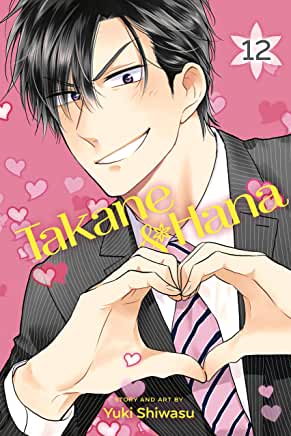
SEAN: On the Shojo Beat end, we have Ao Haru Ride 8, Queen’s Quality 8, Takane & Hana 12, and Yona of the Dawn 21. Winners, all.

MICHELLE: Indeed, *all* good things, here!

ANNA: Yay!!!!!

ASH: A good week for good shoujo!

MJ: Even I’m reading most of these!

SEAN: Yen has a few titles that drifted into the first week of December. Debuting is You Call That Service?, a light novel series from Yen On from the creator of I’ve Been Killing Slimes for 300 Years. It stars a man who winds up in the mountains and meeting a vampire girl. Expect humor.

Also from Yen On is Re: ZERO 11, So I’m a Spider, So What? 7, and Wolf & Parchment 4.

Just two manga from Yen: Happy Sugar Life 3 and KonoSuba’s 9th manga volume.

Have you finished your shopping yet?

Filed Under: FEATURES, manga the week of

Didn’t I Say to Make My Abilities Average in the Next Life?!, Vol. 8

November 27, 2019 by Sean Gaffney

By FUNA and Itsuki Akata. Released in Japan as “Watashi, Nouryoku wa Heikinchi de tte Itta yo ne!” by Earth Star Novels. Released in North America by Seven Seas. Translated by Diana Taylor. Adapted by Maggie Cooper.

It has to be said, our four heroines are getting just a wee bit famous, especially when they return to the area near where they went to hunter’s school. Sometimes this is good, as it means that we don’t have to have quite as many reaction shots of everyone boggling at their OP selves. And sometimes this is bad – for them, at least, as the funniest scene in the entire book as them running up against a guild master who saw their final exam battle way back in the early volumes. And bought the figures. With poses that… seemed cool at the time. Though it may not look like it, our heroines are slowly growing up, and part of that process is looking back on the dumb things you did in your youth and cringing. And nothing hammers this home quite like a figure of you in a dorky pose you thought was really cool being venerated by a creepy middle-aged man.

The book is divided into four large sections. The first has Mile and company returning to her homeland to save the kingdom. The interesting thing here is that, because of Adele’s sheltered upbringing both before and after her mother’s death, no one remembers her very well. So when Mile shows up, she’s actually assumed to be her late mother, literally returning from heaven to help them. (The best part of this is finding out that Mabel, Adele’s mother, was basically the spitting image of her daughter, and was also highly eccentric. Even without the reincarnated memories, Mile would still likely have been Mile.) The invasion is handled relatively easily, and starts up a nice running gag of Pauline and company charging everyone for food and drink that they desperately need. The second section has them returning to base… and immediately setting out again, before they can be married off or otherwise ensnared.

The third section has Mile and company, along with two other hunting parties, helping a group of soldiers battling an infestation of monsters that are sent by the neighboring enemy kingdom. This is probably the weakest section, and drives home the point that our heroes needs stronger enemies or they risk being bored… and having the reader be bored as well. The final section leads to a cliffhanger, and has the Crimson Vow go to a village of dwarves, who are unable to craft their materials anymore as the mountainside is infested with orcs and ogres. Abnormally strong orcs and ogres. This works very well as Mile is genuinely startled by this, and actually encourages everyone to fight their hardest. It promises a strong beginning next time. It also shows off something relatively rare: Mile plans ahead for the village by buying a lot of high-quality alcohol to sell to the dwarves, and… then sells it, despite the lampshading about it being the perfect plan. I was waiting for it to go wrong.

The anime adaptation of the series has now begun, and I hear adds a lot more fanservice. This volume does, like the previous ones, talk about everyone’s breasts more than anyone cares, but other than that (and Mile’s ludicrous Goddess costume) is content to let the characters and humor drive the book. A lot of fun.

Filed Under: Didn't I Say to Make My Abilities Average in the Next Life?!, REVIEWS

Urusei Yatsura, Omnibus 4

November 26, 2019 by Sean Gaffney

By Rumiko Takahashi. Released in Japan in two separate volumes by Shogakukan, serialized in the magazine Shonen Sunday. Released in North America by Viz Media. Translated by Camellia Nieh.

I’ll be honest, I wasn’t looking forward to this volume quite so much. Don’t get me wrong, I love UY with all my heart. But I knew we were going to get a heaping helping of Ten here, and Jariten has always grated on me. That said, as I re-read these manga chapters, he didn’t come off quite as badly as I’d expected. The thing is, Ten was SUPER popular when he first appeared in Japan – if not with the readers, then definitely with the animators of the soon-to-come anime series, which took the liberty of inserting Ten into the third episode and having him shoehorned into most episodes after that. But “bratty little kid” has always been a harder sell in the West, particularly if they’re not the ‘sarcastic adult’ kind of brat – look at the four or five failed attempts to sell Crayon Shin-chan here. So it was always hard for me to not just grit my teeth. But here, in the manga chapters written specifically for him, he’s a lot of fun.

Ten, like Mendo before him, is meant to set up a basic truth of the series. Many of the male characters are set up to be contrasts to Ataru, only for it to turn out in the end that they’re exactly the same as Ataru. Ten is a “cute little baby” to most of the women around him, which he uses shamelessly, as he notes he’s not into young girls his own age. (What age that is is left up in the air – he certainly seems very angry when someone calls his tiger skin a diaper.) But of course, Ataru never gets anywhere with any girl not named Lum, and the same applies to Ten – sure, he can snuggle in some bosoms, but he’s essentially just as much of a sad sack as everyone else in the book. He’s also naive enough to be taken in by Ataru’s really, really obvious schemes – see the chapter where he and Sakura go on a “date” that is meant to have her beat him like Ataru but doesn’t work as Ten is a x-year-old boy.

Elsewhere, Ran settles in as a main cast member, though when the focus isn’t on her, her characterization can vary – during the poetry competition, she seems like a different person! There’s a 3-chapter arc set during the Heian period… sort of, note they’re all watching TV and have electricity… which is basically there to show that the cast’s crazy adventures are timeless. Probably my favorite chapter is one where Ataru has made an “anti-teenage gang” movie for the school. It’s absolutely terrible, and Mendo tries to have it destroyed, but instead, thanks to Lum’s alien projector, the delinquents in the movie come to life and terrorize the school… then fend off an invasion by delinquents from another school. From seeing the main cast dressed up as stereotypical delinquents, to movie-Ataru’s ‘LOVE AND PEACE!’, to movie-Lum and Shinobu literally being able to fire huge missiles from under their skirts, it’s pure Takahashi hilarity.

With Ten’s arrival, we’re almost at UY’s middle period here. Takahashi has settled in and is doing what she does best – writing zaniness. Anyone who loves seeing what comedy manga was like at its peak should be reading this.

Filed Under: REVIEWS, urusei yatsura

Pick of the Week: Of Mice and Manga

November 25, 2019 by Michelle Smith, Sean Gaffney, Anna N, Katherine Dacey, Ash Brown and MJ Leave a Comment

MICHELLE: I have wanted to read The Cornered Mouse Dreams of Cheese for quite a few years, so to me there is really no other choice.

ANNA: Me too, I am excited for The Cornered Mouse Dreams of Cheese!

SEAN: I’m going with Seven Little Sons of the Dragon, which has an amazing cover and I love its author’s other series. Short story collection 4tw.

KATE: I feel like a Vegas gambler stumbling across an all-you-can-eat buffet after being on a losing streak: I just want to fill up my plate with as much delicious manga as possible! Any week that brings a new volume of Blank Canvas, a one-shot manga by Setona Mizuhiro, and a collection of short stories by Ryuko Kui is a good week in my book. If I had to pick just one title, though, it would be Akiko Higurashima’s Blank Canvas, a funny, insightful, and brutally honest look at how she became a manga artist; it’s the perfect antidote for the testosterone-fueled nonsense in Bakuman.

ASH: I’m going to echo everyone here, Blank Canvas, The Cornered Mouse Dreams of Cheese, and Seven Little Sons of the Dragon are all at the top of my list this week! It’s American Thanksgiving in a few days… no one minds if I take a couple extra helpings of manga picks, do they?

MJ: Even if I knew nothing about it, I’d pick The Cornered Mouse Dreams of Cheese based on the title alone. The fact that this is a much-anticipated title is just a bonus.

Filed Under: PICK OF THE WEEK

Do You Love Your Mom and Her Two-Hit Multi-Target Attacks?, Vol. 4

November 25, 2019 by Sean Gaffney

By Dachima Inaka and Iida Pochi. Released in Japan as “Tsujo Kogeki ga Zentai Kogeki de Ni-kai Kogeki no Okasan wa Suki desu ka?” by Fujimi Fantasia Bunko. Released in North America by Yen On. Translated by Andrew Cunningham.

There is a certain weariness to this volume of Do You Love Your Mom?. The author implies at the afterword that they had not expected this series to run quite as long as this, and taking that one gag and making it go over and over is hard. It shows in this volume’s villain, who manages to make the villain of Book 3 look competent. She has one trick, and when it doesn’t work she essentially whines and moans. There’s also a pile of mothers who are lured into the plot because, well, they’re not all that good at being mothers. It’s meant to set up the final moral, which is that it doesn’t matter if you’re bad at cooking and sewing as long as you have feelings for your children, but I do wonder: are there any dads in this world at all? Why can’t they do the housework? It likely won’t come up, as the premise is moms and children, but I am curious.

Our heroes wind up in Casino Town, and the goal is immediately to get rich so they can buy items and not have Mamako steal all the glory and level ups. Naturally, this goes badly. Masato and his mom end up going on a day-long date where Mamako dotes on him to a hideous degree (the entire “let me wash your back” scene can just go away), while the other three try to cheat at the casino and are immediately captured and converted into bunny girls. Yes, even Porta. Now Mamako and her son must invade the casino to win back the others, and also find out about a sinister plot that involves the mothers of this town disappearing, and their children imprisoned. Fortunately, Mamako has had an entire day of spoiling her son, so her mom powers are higher than they’ve ever been…

I am, as always, most pleased by the appearance of Shiraaase, a one-gag character whose gag never gets old to me. (Oddly, her gag seems stunted in this book, possibly as the villain talks in looooong, draaaaawn-out vowels and thus Shiraaase holds back to avoid confusing the two of them.) She even manages to achieve things before getting thrown back in her coffin. Speaking of which, the most satisfying scene of all may be one where Masato has to get through an army of skeletons to get at the big bad. He’s alone, and the fact that he actually has to rely on his own strength and weapon makes him so happy that he simply mows them down like they’re weeds. Now, this is undercut by the Big Boss essentially letting up on him because of a mom thing, but hey! He briefly did a thing!

The series is 9 volumes and counting in Japan, so any danger of the main plot wrapping up is nil. And the fanservice aspect of the series is, to be blunt, really irritating. If you really like Shiraaase or enjoy the main conceit, it’s still worth reading, but if you’re looking for a series to drop as it’s not good enough anymore, this one works fine.

Filed Under: do you love your mom?, REVIEWS

  • « Go to Previous Page
  • Page 1
  • Interim pages omitted …
  • Page 285
  • Page 286
  • Page 287
  • Page 288
  • Page 289
  • Interim pages omitted …
  • Page 1048
  • Go to Next Page »
 | Log in
Copyright © 2010 Manga Bookshelf | Powered by WordPress & the Genesis Framework