• Skip to primary navigation
  • Skip to main content
  • Skip to primary sidebar
  • Home
  • About Us
    • Privacy Policy
    • Comment Policy
    • Disclosures & Disclaimers
  • Resources
    • Links, Essays & Articles
    • Fandomology!
    • CLAMP Directory
    • BlogRoll
  • Features & Columns
    • 3 Things Thursday
    • Adventures in the Key of Shoujo
    • Bit & Blips (game reviews)
    • BL BOOKRACK
    • Bookshelf Briefs
    • Bringing the Drama
    • Comic Conversion
    • Fanservice Friday
    • Going Digital
    • It Came From the Sinosphere
    • License This!
    • Magazine no Mori
    • My Week in Manga
    • OFF THE SHELF
    • Not By Manga Alone
    • PICK OF THE WEEK
    • Subtitles & Sensibility
    • Weekly Shonen Jump Recaps
  • Manga Moveable Feast
    • MMF Full Archive
    • Yun Kouga
    • CLAMP
    • Shojo Beat
    • Osamu Tezuka
    • Sailor Moon
    • Fruits Basket
    • Takehiko Inoue
    • Wild Adapter
    • One Piece
    • After School Nightmare
    • Karakuri Odette
    • Paradise Kiss
    • The Color Trilogy
    • To Terra…
    • Sexy Voice & Robo
  • Browse by Author
    • Sean Gaffney
    • Anna Neatrour
    • Michelle Smith
    • Katherine Dacey
    • MJ
    • Brigid Alverson
    • Travis Anderson
    • Phillip Anthony
    • Derek Bown
    • Jaci Dahlvang
    • Angela Eastman
    • Erica Friedman
    • Sara K.
    • Megan Purdy
    • Emily Snodgrass
    • Nancy Thistlethwaite
    • Eva Volin
    • David Welsh
  • MB Blogs
    • A Case Suitable For Treatment
    • Experiments in Manga
    • MangaBlog
    • The Manga Critic
    • Manga Report
    • Soliloquy in Blue
    • Manga Curmudgeon (archive)

Manga Bookshelf

Discussion, Resources, Roundtables, & Reviews

Ash Brown

My Week in Manga: March 31-April 6, 2014

April 7, 2014 by Ash Brown

My News and Reviews

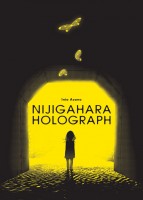
Last week was one of Experiments in Manga’s slower weeks, but there was still some good stuff to be had, if I do say so myself. First up was the announcement of the Battle Angel Alita Giveaway Winner, which also includes a list of some of the cyborg manga available in English. Next came March’s Bookshelf Overload, which was not nearly as an absurd month for preorders as April will be for me. Finally, we get to the really good stuff. The honor of the first in-depth manga review for April goes to Inio Asano’s Nijigahara Holograph, one of my most highly anticipated releases for 2014. It’s a dark and disturbing work, but also very beautiful. Probably one of the best comics that I’ve read so far this year.

As for a few thing found online: Kim Hoang translated an interview of Kaoru Mori from the French site madmoiZelle. Sean Gaffney at A Case Suitable For Treatment investigates some of Japan’s recent manga bestsellers with an eye towards license requests. Akira Himekawa, the creative team behind the various The Legend of Zelda manga, will be featured guests at the Toronto Comic Arts Festival in May. The most recent Mike Toole Show takes a look at the three incarnations of To Terra… (or Toward the Terra), originally a manga by Keiko Takemiya. And last but not least, I was very excited to see that the Manga Connection blog has been rebooted! (Which reminds me that I really need to do some cleanup and maintenance on my resources page…)

Quick Takes

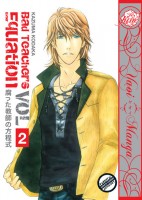
Bad Teacher's Equation, Volume 2Bad Teacher’s Equation, Volumes 2-3 by Kazuma Kodaka. While I wasn’t blown away by it, I did enjoy the first volume of Bad Teacher’s Equation well enough to track down the rest of the boys’ love manga. I had heard that the series gets better as it goes along, but surprisingly enough, so far I think I actually prefer the slightly more absurd first volume. I seem to like Bad Teacher’s Equation best when it is being particularly ridiculous. The more obviously comedic aspects of the series work better for me than when the story takes a more serious turn. I was also happy to see the feelings that Masayoshi held for his brother Masami dealt with fairly quickly so that the series’ focus could turn elsewhere. The dynamics of that particular relationship were probably the least interesting in the entire series. One of the things that Bad Teacher’s Equation really has going for it is the manga’s large ensemble cast–their interactions can be very entertaining to watch. And as a result, there’s actually some legitimate character development to be seen, too.

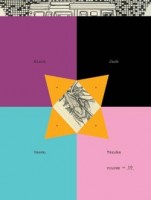
Black Jack, Volume 10Black Jack, Volumes 10-13 by Osamu Tezuka. Because of Tezuka’s Star System, it’s not uncommon to encounter a character from another of his series in a different role. Due to that, I was particularly looking forward to the story “Ashes and Diamonds” collected in the tenth volume of Black Jack because it features Hyakkimaru in the role of Dr. Hyakki. (Hyakkimaru is from Dororo, one of my favorite Tezuka manga.) These volumes also reveal more about Black Jack’s unfortunate family situation. According to an editor’s note in the eleventh volume, the edition of Black Jack upon which Vertical’s release was based was initially intended to be a “best of” collection. However, it proved to be so popular that, excepting for a few stories which were deemed objectionable or inappropriate in some way, the edition became a complete collection. In the past I’ve mentioned that I generally prefer the more realistic scenarios in Black Jack, but I’ve come to really enjoy the more fantastical chapters as well. On occasion, aliens, ghosts, and the supernatural all have their own part to play in the series.

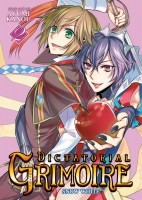
Dictatorial Grimoire, Volume 2: Snow WhiteDictatorial Grimoire, Volume 2: Snow White by Ayumi Kanou. I was intrigued by the first volume of Dictatorial Grimoire. It was a mess, but it was a fun mess. I was less enamored with the second volume, though I do still plan on reading the third and final installment in the series. The story in Snow White is still a mess. This time though, for whatever reason, I found it to be more frustrating than entertaining. So much of Dictatorial Grimoire makes very little sense and Kanou relies heavily on standard tropes and character types. Because of this, the story developments don’t really come as a surprise and readers are left to fill in the actual details themselves as Dictatorial Grimorie progresses from one expected plot point to the next. As might be assumed from the subtitle, Snow White features heavily in the second volume. Sadly, his bustier does not. He does, however, gain a pair of glasses for all of those megane fans out there. (Yes, that would include me.) I also do appreciate that Hiyori, though she’s portrayed as somewhat brainless, is very competent and dependable when it comes to a fight.

Shinobi Life, Volume 1Shinobi Life, Volumes 1-6 by Shoko Conami. Shinobi Life was originally created as a one-shot story but ended up being developed into a thirteen-volume series, seven of which were released in English by Tokyopop. The transition from what was supposed to be a standalone story into an ongoing series is awkward. Story elements are dropped or forgotten (in some cases actually for the better) as the plot is forced into something that wasn’t initially planned. In general, Shinobi Life is a manga that I like much better in concept than I do in execution, although it does improve greatly as the series progresses. I specifically like the time travel elements. However, I’m much fonder of the series when it’s dealing with the past than I am of its contemporary storyline. The art, though not especially original, is pretty, too. All of the adults in Shinobi Life are despicable, so it’s probably not too surprising that the teenage leads have significant personal issues to deal with; their parents don’t make particularly good role models.

Filed Under: FEATURES, My Week in Manga Tagged With: Ayumi Kanou, Bad Teacher's Equation, black jack, Dictatorial Grimoire, Kazuma Kodaka, manga, Osamu Tezuka, Shinobi Life, Shoko Conami

Nijigahara Holograph

April 6, 2014 by Ash Brown

Nijigahara HolographCreator: Inio Asano
U.S. publisher: Fantagraphics Books
ISBN: 9781606995839
Released: March 2014
Original release: 2006

Nijigahara Holograph, the third manga by Inio Asano to have been licensed in English, was one of my most highly anticipated manga releases for 2014. Originally published in Japan in 2006, Fantagraphics’ English-language edition is collected in an attractive, large-trim hardcover much like its other manga releases. I had previously read and greatly enjoyed Asano’s other manga currently available in English–What a Wonderful World! and Solanin, both published by Viz Media–so I was naturally interested in Nijigahara Holograph. But after seeing an early preview of the manga, I knew that I would need to read it no matter what. The sequence, taken from near the end of Nijigahara Holograph, was so chilling and unsettling and at the same time so striking and beautiful that it left a huge impression on me. I couldn’t get that short segment of Nijigahara Holograph out of my mind, my anticipation only growing stronger the closer the manga’s release date came.

Eleven years ago Arie Kimura, a young girl bullied by her classmates, fell down a well. As a result of her injuries she has been in a coma ever since. She told a story about a monster that lived in a tunnel along the Nijigahara embankment that would bring the world to an end, which terrified the other children. Arie’s accident is only one small part of an ongoing pattern of fear and violence. It isn’t a pleasant memory for anyone involved. Her friends, classmates, teachers, and family members have continued living their lives, but even more than a decade later they still can’t escape their pasts and the consequences of their actions. Some of them live in denial while others have tried to move on and to forget, but for some that is a complete impossibility. They have no choice but to remember, tormented with the knowledge of the suffering and pain caused by the unnecessary tragedy. The story of the monster in the tunnel may be more real than any of them could have imagined.

Nijigahara Holograph is a dark and disconcerting work. The manga deals with some very heavy subjects: suicide, incest, abuse, and sexual and physical violence, among many other serious matters. Instead of being sanitized or romanticized, Asano has created an intensely disturbing tale in which all of these elements are incorporated and intertwined. Nijigahara Holograph is open to several interpretations. It’s dreamlike ambiguity makes it difficult to determine just how much of Nijigahara Holograph is real and how much of it is simply the product of the damaged psyches of the characters. It cold be a waking nightmare, it could be some sort of afterlife, or it could all be true. It would almost be comforting if Nijigahara Holograph was a portrayal of hell or purgatory; the possibility that it shows the characters’ reality is terrible to contemplate. But life isn’t always pretty and sweet, and it certainly isn’t in Nijigahara Holograph where innocence, minds, and bodies have been shattered.

As horrifying and distressing as Nijigahara Holograph is, the manga is also extraordinarily compelling and engaging. It is both brutal and beautiful. Nijigahara Holograph is also remarkably complex and layered–the characters, their lives, and their stories connect and overlap, often in unexpected and surprising ways. This is reinforced by Asano’s artwork. Visual cues are incorporated throughout Nijigahara Holograph which tie the narrative together, drawing upon the similarities between the characters and their circumstances. The parallels found in both the artwork and the story of Nijigahara Holograph are marvelously effective, underscoring the ever-increasing sense of despair as the characters are caught in a never-ending cycle of anguish and misery. Nijigahara Holograph is a work that can be and maybe even should be read several times. The clues are all there from the very beginning, but many of the subtle connections can only be seen in retrospect. It’s challenging and not always an easy read, but Nijigahara Holograph is definitely a manga that I’ll be thinking about for quite some time.

Filed Under: REVIEWS Tagged With: Fantagraphics Books, Inio Asano, manga

Bookshelf Overload: March 2014

April 4, 2014 by Ash Brown

Compared to some past months, the number of my March acquisitions seems completely reasonable to me. I’ve looked ahead to what April has in store for me (and my wallet) and it’ll be a bit ridiculous, so I’m glad that March ended up being relatively light. Even so, there were some things I was very happy to see arrive last month. Gengoroh Tagame had a second gay manga published by Bruno Gmünder, Gunji. Two of my most anticipated releases for 2014 made their appearance in March, too: the first volume in Fumi Yoshinaga’s What Did You Eat Yesterday? from Vertical and Inio Asano’s Nijigahara Holograph from Fantagraphics. (Reviews to come soon!) I was also happy to see Bento Books newest release, Kaoru Ohno’s novel Cage on the Sea. Not too long ago I reviewed Jeffery Angle’s Writing the Love of Boys, which got me interested in the work of Taruho Inagaki. By some miracle, I actually managed to find a copy of his extremely out-of-print novel Miroku, which had a very small print run from a very small press which, as far as I can tell, doesn’t even exist anymore.

Manga!
Castle Mango, Volume 2 written Muku Ogura,illustrated by Narise Konohara
Embracing Love, Omnibus 2 by Youka Nitta
From the New World, Volumes 2-3 by written by Yusuke Kishi, illustrated by Toru Oikawa
Gunji by Gengoroh Tagame
Hide and Seek, Volume 2 by Yaya Sakuragi
The Incredible Kintaro by Naomi Guren
Japan, Inc.: An Introduction to Japanese Economics by Shotaro Ishinomori
Mobile Suit Gundam: The Origin, Volume 5: Char & Sayla by Yoshikazu Yasuhiko
Monster Musume, Volume 2 by Okayado
Nijigahara Holograph by Inio Asano
Train Train, Volumes 1-3 by Eiki Eiki
What Did You Eat Yesterday?, Volume 1 by Fumi Yoshinaga
Ze, Volume 8 by Yuki Shimizu

Manhwa!
Stone Collector, Book 1 written by Kevin Han, illustrated by Zom-J.

Comics!
Black is the Color by Julia Gfrörer
Brody’s Ghost, Book 5 by Mark Crilley
In These Words, Chapter 11 by Guilt | Pleasure
The Sleep of Reason: An Anthology of Horror edited by C. Spike Trotman
The Undertaking of Lily Chen by Danica Novgorodoff

Novels!
The Budding Tree by Aiko Kitahara
Cage on the Sea by Kaoru Ohno
God’s Boat by Kaori Ekuni
Miroku by Taruho Inagaki

Nonfiction!
Understanding Manga and Anime by Robin E. Brenner
One Thousand Years of Manga by Brigitte Koyama-Richard
Twelve Views from the Distance by Mutsuo Takahashi

Filed Under: Bookshelf Overload, UNSHELVED

Manga the Week of 4/9

April 3, 2014 by Sean Gaffney, MJ, Ash Brown, Michelle Smith and Anna N Leave a Comment

SEAN: After a large first week, things settle down a bit, but there are several tasty titles coming out next week.

Amazon had the 7th and 8th volumes of Ze bouncing around in release date hell for so long, I feel like these books have already come out five years ago. In any case, Vol. 8 is listed for next week, so let’s cross our fingers.

MJ: I… seriously did not realize that this series went on so long.

ASH: It does! Eleven volumes total. We should see the end of the series in English sometime in 2015.

crimsonspell3

SEAN: Between the clouds, the shirts, and the hair fluttering around the cover of Crimson Spell 3, it’s sort of hard to tell where the guys are, though I assume they’re fondling each other with dark, serious expressions. (As one normally wears when fondling.)

ASH: Fondling is serious business!

SEAN: Knights of Sidonia has reached its 8th volume, and I still only half understand what’s going on at any point in the narrative. But it looks nice, and manages to keep me riveted and longing for more. Just a confused kind of riveted.

ASH: I experienced a similar sort of riveting confusion reading Nihei’s Biomega, too.

MICHELLE: Sidonia is actually lots easier to decipher than Nihei’s BLAME!, if you can believe it.

MJ: I rather love being confused in this manner.

ANNA: I also love being confused by Nihei. This is very tricky for an author to pull off, but he manages it very well!

SEAN: I can’t believe Case Closed has hit 50 volumes. Kindaichi Case Files is burning with jealousy. BURNING.

MICHELLE: The phrase “BURNING” conjures up Prince of Tennis flashbacks.

SEAN: We’re at the penultimate volume of Dawn of the Arcana, a series I got behind on and never really caught up to. I hear it had some really nice things going on, though.

MICHELLE: Yep! I like this one a lot.

ANNA: This series is really good, I enjoy it.

deadman2

SEAN: Deadman Wonderland 2 also hits from Viz, and will no doubt give new meaning to the word nihilistic, at least if my impression of the first volume continues into this one.

MJ: I. Hm. Yeah. I will read it, but I don’t know.

ANNA: I read the first 2 volumes or so from the Tokyopop translation and enjoyed it, although it is incredibly dark.

SEAN: Itsuwaribito has a long ways to go before it gets to its endpoint, but it has at least hit its double digits. Vol. 11 ships next week.

ASH: Almost halfway there!

SEAN: Lastly, the 5th volume of Magi comes out, and if it has as much of Morgiana kicking ass as the 4th one did, I will be very pleased.

MICHELLE: I’m a few volumes behind with Magi now; perhaps it’s time to get caught up.

SEAN: Anything appeal?

Filed Under: FEATURES, manga the week of

Manga Giveaway: Battle Angel Alita Giveaway Winner

April 2, 2014 by Ash Brown

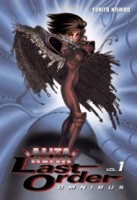
Battle Angel Alita: Last Order, Omnibus 1And the winner of the Battle Angel Alita Giveaway is…Anna-neko!

As the winner, Anna-neko will be receiving the first omnibus in Kodansha Comics’ release of Battle Angel Alita: Last Order by Yukito Kishiro. The omnibus collects the first three volumes of the series as well as additional stories by Kishiro. The titular Alita is a kick-ass cyborg, and I have a particular fondness for cyborgs, so I asked those entering the giveaway to tell me a little about their favorite cyborgs from manga. Check out the Battle Angel Alita Giveaway comments for all of the details, and check out the list of some of the manga available in English that feature cyborgs below!

Cyborg manga in English:
Appleseed by Masamune Shirow
Ashen Victor by Yukito Kishiro
Battle Angel Alita by Yukito Kishiro
Battle Angel Alita: Last Order by Yukito Kishiro
Blame! by Tsutomu Nihei
B’t X by Masami Kurumada
Cyborg 009 by Shotaro Ishinomori
Cowboy Bebop by Yutaka Nanten
Cowboy Bebop: Shooting Star by Cain Kuga
Descendents of Darkness by Yoko Matsushita
Eden: It’s an Endless World by Hiroki Endo
Ghost in the Shell by Masamune Shirow
Ghost in the Shell: Stand Alone Complex by Yu Kinutani
Gunslinger Girl by Yu Aida
Heavy Metal Warrior Xenon by Masaomi Kanzaki
Kamen Rider by Shotaro Ishinomori
Knights of Sidonia by Tsutomu Nihei
Madara written by Eiji Otsuka and illustrated by Shou Tajima
Made in Heaven written by Ami Sakurai and illustrated by Yukari Yashiki
Mardock Scramble by Yoshitoki Oima.
One-Punch Man written by ONE and illustrated by Yusuke Murata
Star Wars: Return of the Jedi by Sin-ichi Hiromoto
Trigun by Yasuhiro Nightow
Trinity Blood written by Sunao Yoshida and illustrated by Kiyo Kyujyō
Vassalord by Nanae Chrono
The World of Narue by Tomohiro Marukawa

Thank you to everyone who participated in the giveaway and shared a bit about their favorite cyborgs from manga. I hope to see you all again for the next giveaway, too!

Filed Under: UNSHELVED Tagged With: Battle Angel Alita, manga, Yukito Kishiro

My Week in Manga: March 24-March 30, 2014

March 31, 2014 by Ash Brown

My News and Reviews

Posts last week at Experiments in Manga included a new manga giveaway as well as two new in-depth manga reviews! There’s still time to enter the giveaway, too. Head over to the Battle Angel Alita Giveaway to enter for a chance to win the first omnibus in Yukito Kishiro’s manga series Battle Angel Alita: Last Order. As for the reviews: I took a look at the most recent Moyoco Anno manga to be released in English, Insufficient Direction. It’s an autobiographical manga about her married life with Hideaki Anno and is quite funny. I adore Anno’s work, so was happy to learn a little more about her. I also wrapped up my Manga March Madness project. I was rather pleased that I managed to pull it off. Every weekend in March I reviewed a volume of Takehiko Inoue’s basketball manga Real. Since there were five weekends in March and I started with the first volume in the series, my last review for the project was for Real, Volume 5. I hope I was able to at least begin to express why Real is such a fantastic manga in my reviews, because it really is a phenomenal series.

Speaking of Takehiko Inoue, David Brothers, writing for Comics Alliance back in 2010, had a great article that was recently brought to my attention again–From Samurai to Shooting Hoops: Takehiko Inoue, Art Chameleon. As for other things found online: Nahoko Uehashi (the author of Moribito) won the 2014 Hans Christian Andersen Author Award, which is a pretty big deal. As usual, Organization Anti-Social Geniuses had some great manga content last week. I particularly enjoyed What Manga Publishers Can Actually License in The US and Advice on Manga Editing, From Manga Editors. Tokyopop’s Stu Levy participated in a recent “Ask Me Anything” on Reddit. The daughter of Osamu Tezuka opened a drawer of her father’s desk that had been locked since 1985 and found some pretty cool stuff. And finally, I was pointed towards a brief biography of Takashi Nagasaki, who works closely with Naoki Urasawa.

Quick Takes

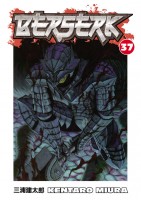
Berserk, Volume 37Berserk, Volume 37 by Kentaro Miura. I love the early story arcs of Berserk and continue to enjoy the series, so I’m always excited when another volume of the manga is finally released. After reading the thirty-seventh volume, I’m particularly anxious to get my hands on the next installment, whenever that may be. The battle between Guts and the rest of the crew against the sea god and its minions reaches its climax in this volume. They are aided by the merrow, Berserk‘s mermaids. Even though Miura’s version of mermaids is fairly traditional, though perhaps slightly more fish-like, I did like them. The thirty-seventh volume also contains a long flashback to Guts’ past as a young mercenary, which I particularly enjoyed reading. It’s set during a time when magic and the supernatural were more hidden and uncommon in the world, though hints of it could still be seen. The end of the volume also turns towards the current activities of Griffith’s army, which recently hasn’t had much prominence in the manga. After so much action and fighting, which I do enjoy, I’m very glad to see more story and plot development.

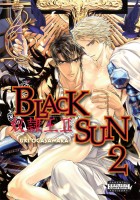
Black Sun, Volume 2Black Sun, Volume 2 by Uki Ogasawara. It’s been quite a while since I read the first volume of Ogasawara’s boys’ love manga Black Sun. I had a few issues with the story itself, mostly that the lead characters’ relationship moved a little too quickly from lust to possible love, but overall I thought the manga had good potential. I particularly liked the setting of Black Sun, a medieval fantasy inspired in part by the Crusades. Ogasawara’s artwork was also excellent, with particular attention given to the beautiful details of clothing and weaponry as well as attractive, muscular men. When I read the first volume of Black Sun I didn’t actually realize that it was a first volume. I appreciated it’s somewhat ambiguous ending, but was ultimately glad to discover that there was more to the series. The ending of the second and final volume is much less ambiguous, and much happier than I expected that it would be. Black Sun is part of Digital Manga’s 801 Media imprint, so unsurprisingly there is a fair amount of sex to go along with the plot. And Black Sun actually does have a plot. The relationship between Jamal and Leonard plays out against a backdrop of war and political intrigue.

From the New World, Volume 2From the New World, Volumes 2-3 written by Yusuke Kishi and illustrated by Toru Oikawa. I was very torn over the first volume of the From the New World manga. I absolutely loved its dark tone, but found the blatant, pandering fanservice to be a bit off-putting and out-of-place. Thankfully, the fanservice in the second volume is greatly toned down. The outfits worn by the young women are still fairly ridiculous and revealing, though, especially when compared to the male characters who tend to be covered from head to toe in oversized clothing. The lesbian sex returns in the third volume, but it makes much more sense within the context of the series than it did in the first volume. Part of this is because the worldbuilding has progressed significantly. From the New World suffers a little from large info dumps, but at least all of the information is new to the characters, too, so it’s not as egregious a problem as it could be. I’m still loving the actual story of From the New World. The series atmosphere is creepy and ominous, contrasting magnificently with what is supposed to be a perfect and pristine society. What humanity is willing to give up and the terrible steps that have been taken to maintain that system are now being revealed.

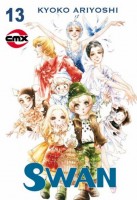
Swan, Volume 13Swan, Volumes 13-15 by Kyoko Ariyoshi. In Japan, Swan lasted for twenty-one volumes, only fifteen of which were released in English. It’s too bad that CMX folded before the series could be completely released. Swan is fantastic, and I’m very glad for the fifteen volumes that were translated. These last three volumes of the English edition follow Masumi as she travels to New York with Leonhardt to continue her study of ballet following the aftermath of the Tokyo World Ballet Competition. It’s the beginning of an important new story arc. Masumi has grown tremendously as a ballerina as well as a person, but her time in the United States presents new challenges. Her foundation is in classical ballet but now she is faced with modern ballet which is completely outside of her experience. She has trouble understanding modern ballet and so struggles greatly with its performance. Also introduced in these volumes are new characters and even a potential new love interest, which offers another set of problems for Masumi to deal with. Swan is a beautiful and surprisingly intense series; I was very impressed by it.

Arakawa2Arakawa Under the Bridge x Bridge, Season 2 directed by Akiyuki Shinbo. I enjoyed the first season of Arakawa Under the Bridge a great deal. I very much enjoyed the second season, too, but for some reason wasn’t quite as taken with it. I’m not really sure why that is though since not much really changed between the two. Arakawa Under the Bridge is still funny and absurd. I still like the humor and the characters. While the first season focused on Rec as he gets to know everyone living along the banks of the Arakawa River, everyone’s personalities and quirks have been well established by the start of the second. Maybe it’s that sense of newness and discovery that the second series lacks. But then again maybe not: the second season introduces new cast members as well as a storyline that provides an ongoing framework for some of the gags. (Ultimately it doesn’t really end up going anywhere, though.) One of the things that particularly amused me about the second season of Arakawa Under the Bridge is that Rec has more or less become a shoujo heroine, complete with flowers and sparkles. Nods to Riyoko Ikeda’s series are right at home alongside references to Fist of the North Star and other “manly” anime.

Filed Under: FEATURES, My Week in Manga Tagged With: anime, Arakawa Under the Bridge, Berserk, Black Sun, From the New World, Kentaro Miura, Kyoko Ariyoshi, manga, swan, Toru Oikawa, Uki Ogasawara, Yusuke Kishi

Pick of the Week: Library Wars & Others

March 31, 2014 by Michelle Smith, Sean Gaffney, Anna N, Ash Brown and MJ Leave a Comment

potw-4-2MICHELLE: I’m going to have to go with volume eleven of Library Wars: Love & War this week. I still struggle with the overall premise and the depiction of a supposedly elite military unit, but I can’t help but enjoy each volume and the slow burn of Iku’s growing relationship with her commanding officer. It’s become a series I genuinely look forward to.

SEAN: Since Michelle got Library Wars… it’s rare I recommend a pick of the week that I don’t actually read, but really, the release of Eden: It’s An Endless World 14 is really exciting. The story of a world in chaos following a worldwide pandemic, it’s incredibly well-written, and also filled with depressing things happening to nice people, so naturally I couldn’t get through it, because I never read that sort of series. Except when I do. In any case, many people I respect love this, so check it out.

ANNA: I am also very fond of Library Wars, but since Michelle already gave it a shout-out, I’m going to have to go with the Hana Kimi omnibus. Sure, a plucky cross-dressing heroine and a surly yet secretly empathetic hero have been done to death in shoujo manga, but Hana Kimi is one of the best examples. I’ve kept the series on hand since it came out for my every third year ritual rereads, and I enjoy it every time.

ASH: Well, because Library Wars has already been mentioned several times I guess that instead I’ll choose…wait, who am I kidding? I’m still going to pick Library Wars. I’m enjoying the series much more than I actually think I should be. Maybe it’s because I’m a librarian myself, but I get a kick out of the manga’s version of librarianship. It’s certainly one of the more unusual portrayals that I’ve come across.

MJ: So, apparently I’m the only person at Manga Bookshelf who does not read Library Wars. And really, I wish I did, because there isn’t a lot strongly compelling me otherwise this week. I will take a moment, though, to give a shout out to the 4th omnibus edition of Lone Wolf and Cub. I missed this classic the first time around, and have been very grateful to get a second chance at it—especially in its new, larger format! Readable text becomes so much more important to me as my poor eyes get older. If, like me, you never gave the original editions of Lone Wolf and Cub a try, now’s the time to start!

What looks good to you this week?

Filed Under: PICK OF THE WEEK

Real, Vol. 5

March 29, 2014 by Ash Brown

Real, Volume 5Creator: Takehiko Inoue
U.S. publisher: Viz Media
ISBN: 9781421519937
Released: July 2009
Original release: 2005
Awards: Japan Media Arts Award

When I first started reading Takehiko Inoue’s prize-winning manga series Real, I didn’t expect to appreciate it as much as I do. Real has actually become one of my favorite series. I wasn’t particularly interested in wheelchair basketball, one of the main subjects of Real, although that has since changed. Instead, I was initially drawn to the manga because it was created by Inoue, whose artwork I greatly admire. I also am very impressed by his storytelling skills, especially in Real, but also in his other manga available in English, Slam Dunk and Vagabond. As much as I enjoy those two series, in the end it’s Real that I find to be the most compelling. It is a very powerful work. I’ve said it many times before, but it is still true–I honestly believe Real to be one of the best comics that is currently being released in English. The fifth volume of Real was originally collected in Japan in 2005 while the English-language edition, released under Viz Media’s Signature imprint, was published in 2009.

Ever since his motorcycle accident, Nomiya’s life has been falling apart. Although he has tried to earn his drivers’ license, it has taken him quite some time since he is terrified to be on the road. Nomiya is even more terrified of facing Natsumi, the young woman who was in the accident with him. While Nomiya was barely injured, Natsumi has lost the ability to walk and must now use a wheelchair. Nomiya blames himself for the accident and Natsumi’s current condition. The guilt has nearly brought his life to a standstill. He wants to do all that he can to move forward, but this means confronting his fears and confronting Natsumi. Unsurprisingly, she’s not particularly interested in seeing Nomiya, either–she blames him for the accident, too. Her rehabilitation is going well, but Natsumi’s life has been changed forever. Takahashi’s rehabilitation has actually taken a turn for the better, too, after a visit from Nomiya that ends rather badly. It’s been about six months since Takahashi’s own accident which cost him the use of his legs, but he has recently shown enough improvement that he will soon be able to leave the hospital.

Whereas the previous volumes of Real thoroughly introduced the lead characters–Nomiya, Togawa, and Takahashi– and explored their personal, internal struggles, the fifth volume addresses some of the more practical problems and challenges experienced by those who are disabled in an world and environment designed for the able-bodied. This can particularly be seen when Takahashi is considering returning to Nishi High to finish school. Not only is he not yet in a position where he can take of himself, the school itself isn’t at all accessible to someone in a wheelchair and the needed accommodations are prohibitively expensive. These external issues and concerns are inexorably tied to how Takahashi and the others view themselves and and see themselves as people of worth. Takahashi in particular is obsessed with ranking people and assigning them value. He used to consider himself one of the elite, but now his self-worth has been severely compromised. It’s understandable that this is something that he continues to struggle with, especially as he no longer feels that there is a place for him.

Takahashi isn’t the only one suffering from a crisis of self-worth in the series. A major theme in Real deals with what it means to be a good person and a decent human being. Takahashi’s attitude and efforts to be the best in whatever he does comes across as extremely arrogant, but people are beginning to see through his facade of perfection. Nomiya has made, and continues to make, plenty of mistakes in his life, but his honest desire to improve himself and the care and acceptance that he offers others show that he is a much better person than he recognizes. This search for self-worth isn’t limited only to the series’ leads, either. All of their friends and family members are struggling with it as well. In a particularly heart-wrenching development, Togawa’s close friend Yama, who has always been vibrant and maintained an admirably positive outlook, is frightened of who is becoming now that his disease is overtaking his body and mind. Inoue’s characterizations in Real are fantastic. The series is compelling because it is so easy for anyone to identify with the personal struggles being portrayed in the manga even if the characters’ particular situations are unique.

Filed Under: REVIEWS Tagged With: Japan Media Arts Award, manga, real, Takehiko Inoue, viz media, VIZ Signature

Insufficient Direction

March 28, 2014 by Ash Brown

Insufficient DirectionCreator: Moyoco Anno
U.S. publisher: Vertical
ISBN: 9781939130112
Released: February 2014
Original release: 2005

I picked up the first few volumes of Moyoco Anno’s manga series Happy Mania more on a whim than anything else. After reading them I immediately went out and tracked down all of the manga by Anno available in English that I could find. I have been a fan ever since and even went so far as to host the Moyoco Anno Manga Moveable Feast. Anno is an extraordinarily talented creator. I adore her work and so was extremely happy when Vertical released Insufficient Direction in 2014. Originally published in Japan in 2005, the manga is a somewhat fictionalized account of Anno’s married life with her husband Hideaki Anno of Neon Genesis Evangelion fame. Now, I know quite a few people who were interested in Insufficient Direction primarily because of the Hideaki Anno connection. In addition to being one of the manga’s main subjects, an essay in which he discusses Insufficient Direction is also included as part of the volume’s extra materials. But for me, my interest in Insufficient Direction was all about Moyoco Anno. I was excited to have the chance to learn a little more about her and her life directly from her own perspective.

Rompers (aka Moyoco Anno) and Director-kun (aka Hideaki Anno) are getting married. It just so happens that Director-kun is one of the “big four” of Japanese otaku. A director of both film and anime, he is also a huge fan and obsessive collector of Japanese pop culture. Rompers has her own otaku tendencies and enjoys manga, anime, and such, but she has tried to keep those impulses under control in order to lead a more “normal” life. However, Rompers’ marriage to Director-kun makes that almost impossible and she slowly becomes bona-fide ota wife. Although Rompers obsesses over some of her own interests, it’s nothing when compared to Director-kun. Instead of denying her otakuness, Rompers begins to embrace it, partly out of self-preservation. She and Director-kun are able to share their love of Japanese television, anime, and manga, but how much is too much? Their home quickly fills with their collections and they can be embarrassingly enthusiastic over the smallest bits of trivia. In the end, it is a way of life and they love it (although Rompers continues to have some reservations). But more importantly, they love each other.

There are a ton of references to tokusatsu, anime, manga, and other Japanese pop culture and celebrities. In fact, there are thirty pages of annotations to help interested readers keep a handle on everything. Sometimes reading the notes actually takes longer than reading the chapters they’re associated with. However, understanding all of the minutia and details isn’t absolutely needed to enjoy Insufficient Direction; simply recognizing the extreme levels of geekiness and nerd cred involved should be enough. Rompers and Director-kun make an adorable and loving couple. The reason that there are so many pop culture references isn’t just because that is what they are interested in, it’s also one of the ways they connect and communicate with each other. Entire conversations can be held that consist of nothing but quotes from anime and other media. Singing theme songs at the top of their lungs brings them even closer together. Vacations and excursions are based on locations from films and television shows. Fortunately, because they do share so many interests, they usually can happily spend time enjoying them as a couple.

Although Insufficient Direction is fictionalized–mostly to emphasize the more humorous aspects of Rompers and Director-kun’s relationship–I find it to be entirely and completely believable. As a bit of an otaku myself, I am very familiar with relationships that work in similar ways to theirs and am all too aware of some of the challenges faced by avid collectors. Insufficient Direction shows both of the Anno’s to be very relatable people. At least I could certainly identify with them. Insufficient Direction is quirky, smart, and very funny. Compared to some of Anno’s other manga, the artwork in Insufficient Direction tends to be simpler in style, suitable for what basically amounts to a real-life gag manga. The individual chapters are short and there isn’t really an overarching plot so much as there is an ongoing challenge for Rompers and Director-kun to put up with each other’s quirks and interests. There’s quite a bit of good-natured teasing in Insufficient Direction and quite a bit of love, not just for each other but for art and entertainment as well. I found Insufficient Direction to be a very enjoyable read and am very happy to have it in English.

Filed Under: REVIEWS Tagged With: manga, Moyoco Anno, vertical

Manga Giveaway: Battle Angel Alita Giveaway

March 26, 2014 by Ash Brown

Perhaps because March follows the shortest month of the year it seems to have lasted a particularly long time for me. Granted, that feeling may attributed to how incredibly busy I’ve been recently. Regardless, the end of March is almost here, which means it’s time for another manga giveaway! This month you’ll all have the chance to win the first omnibus in Yukito Kishiro’s Battle Angel Alita: Last Order as published by Kodansha Comics. The omnibus collects the first three volumes of the series as well as additional stories by Kishiro not previously released in English. As always, the giveaway is open worldwide!

Battle Angel Alita: Last Order, Omnibus 1

It’s not at all a secret that I am a fan of androids (I blame the absurd amount of Isaac Asimov that I read in my youth), so it probably isn’t too surprising that I’m rather fond of cyborgs as well. That’s one of the reasons that Battle Angel Alita particularly appeals to me. The existence of ancient Martian martial arts and space karate in the series doesn’t hurt, either. In general, cyborgs aren’t a particularly uncommon element in near future science fiction and I’m aware of quite a few from manga specifically. Much as with android stories, I enjoy stories about cyborgs because they allow creators a way to explore what it means to be human in interesting ways.

So, you may be wondering, how can you win a copy of the first Battle Angel Alita: Last Order omnibus?

1) In the comments below, tell me a little about your favorite cyborg from manga. (If you don’t have one, you can simply mention that.)
2) For a second entry, name another manga that features a cyborg that hasn’t been mentioned yet by me or by someone else.
3) If you’re on Twitter, you can earn a bonus entry by tweeting about the contest. Make sure to include a link to this post and @PhoenixTerran (that’s me).

That’s all there is to it. Each person can earn up to three entries for the giveaway and has a week to submit comments. If you have trouble leaving a comment, or if you would prefer, entries may also be submitted via e-mail to phoenixterran(at)gmail(dot)com which will then be posted in your name. The giveaway winner will be randomly selected and announced on April 2, 2014. Best of luck to you all!

VERY IMPORTANT: Include some way that I can contact you. This can be an e-mail address, a link to your website, Twitter username, or whatever. If I can’t figure out how to get a hold of you and you win, I’ll just draw another name.

Contest winner announced–Manga Giveaway: Battle Angel Alita Giveaway Winner

Filed Under: FEATURES Tagged With: Battle Angel Alita, manga, Yukito Kishiro

My Week in Manga: March 17-March 23, 2014

March 24, 2014 by Ash Brown

My News and Reviews

Experiments in Manga featured two manga reviews as well as something a little different last week. First up, I took a look at Saki Nakagawa’s Attack on Titan: Junior High, Omnibus 1. It’s a rather absurd and ridiculous series, but I was amused. The manga does require some familiarity with both Attack on Titan and Attack on Titan fandom to fully appreciate it, though. Not too long ago, I read Jeffrey Angles’ Writing the Love of Boys which introduced me to the work of Kaita Murayama. Not much about Murayama has been written in English, and only two of his short stories have ever been translated, but I was interested in learning more about him and his work. The result was a Spotlight on Kaita Murayama. (I’m actually very happy with how the post turned out!) Finally, as the actual March Madness begins, I posted the penultimate review in my own Manga March Madness–Real, Volume 4 by Takehiko Inoue, which delves more deeply into Togawa’s past. Real is a fantastic series, and one of my favorite manga.

And now for a few things found online! Vertical’s tumblr often has something interesting to read. Last week’s response to a question about licensing old Tokyopop titles was particularly informative. I enjoy House of 1000 Manga, but the most recent column focuses on Usamaru Furuya and his work, which I’m always happy to read more about. Sequart has a great interview with Kumar Sivasubramanian, the translator of some of my very favorite manga. Gay Manga posted an excellent article about the censorship of a billboard designed by artist Poko Murata promoting HIV awareness which also addresses some of the history of gay artwork in Japan. And in other censorship news, it looks like the manga series Barefoot Gen, after running into some trouble last year, may end up being banned again in parts of Japan.

Quick Takes

Brody's Ghost, Book 4Brody’s Ghost, Book 4 by Mark Crilley. It’s been quite a while since I’ve read any of Brody’s Ghost, but I do enjoy the series. Each installment is frustratingly thin though (each is less than a hundred pages) and only one book is released per year. Once the story is finished, I’d love to see Brody’s Ghost collected into a single omnibus. I think the series would benefit from being read in larger chunks or all at once. Which is not to say the individual books aren’t enjoyable. Each one has a great mix of action, story, and character development. I enjoy Crilley’s artwork, too. I also enjoy the bonus content that Crilley includes, outlining some of his design choices and storytelling decisions. In this particular volume of Brody’s Ghost, Brody is doing everything that he can to track down the Penny Murderer, including impersonating a detective. His ex-girlfriend, who he still cares about, may very well be the next victim and he is desperate to prevent that from happening. Things are even more complicated now that he has discovered that Talia–the ghost who pressured him into the investigation–has been lying to him.

FlutterFlutter by Momoko Tenzen. I appreciate it when a boys’ love manga includes a character who is actually openly gay, so that aspect of Flutter particularly appealed to me. Mizuki is that man–a respected and skilled project leader at his company. He presents himself as someone who is extremely well put together, but that public face is deliberately crafted to hide his weaknesses and insecurities. Asada is one of Mizuki’s coworkers. He finds himself inexplicably drawn to Mizuki. After the two of them are assigned to the same project they get to know each other, first as friends and then as something possibly more as Mizuki begins to drop his guard around Asada. Flutter is a slowly paced and relatively quiet manga, which is somewhat surprising as Mizuki’s backstory is fairly melodramatic. However, that melodrama is completely lacking from Mizuki and Asada’s somewhat awkward relationship; I enjoyed watching it develop. Asada’s personality is very kind and candid and his inability to hide what he is thinking and feeling is adorable. This open honesty is just what Mizuki needs, whether he realizes it or not.

Missions of Love, Volume 1Missions of Love, Volumes 1-4 by Ema Toyama. I’ll admit it, I’m addicted to Missions of Love. I actually began reading the series with the fifth and sixth volumes, but I enjoyed them enough that I wanted to go back and read it from the beginning to learn how the whole mess between Yukina, Shigure, Akira, and Mami came to be. Missions of Love isn’t the most believable series and some of it is admittedly silly, but I don’t think I would enjoy the manga as much as I do if Toyama took a more serious or realistic approach. The story itself might be somewhat ridiculous, but the complicated relationships and emotions are real enough. Ultimately, that’s what appeals to me about Missions of Love–the intensity of the characters’ feelings paired with a plot that can be over-the-top. In the beginning, Yukina and Shigure don’t even like each other which is what allows them to resort to blackmail and manipulation. But as the series progresses, they come to care for and rely on each other in a way that is incredibly twisted. All of the relationships in Missions of Love are like that. I can’t help but want to watch the emotional chaos and turmoil unfold.

The Mysterious Underground MenThe Mysterious Underground Men by Osamu Tezuka. The Mysterious Underground Men is the second volume in Ryan Holmberg’s Ten-Cent Manga series which explores classic manga influenced by classic American comics and cartoons. Tezuka, often called the grandmaster of contemporary manga and anime, has had many of his works released in English. Granted, only a small fraction of his total output has been translated. As much as I appreciate Tezuka’s manga and his importance as a creator, I’m actually much more interested in the work of other classic mangaka who are less likely to be licensed. Initially, I wasn’t even planning on reading The Mysterious Underground Men. But because I was so impressed by the first volume of Ten-Cent Manga, I decided to give it a try after all. I’m glad that I did, not so much for the manga itself (which I did enjoy), but more for the supplementary material–Tezuka’s afterword, in which he describes The Mysterious Underground Men as his first story manga, and Holmberg’s essay which puts the manga into historical context, specifically noting its Western pop culture influences.

Time of EveTime of Eve directed by Yasuhiro Yoshiura. It’s not a secret that I have a fondness for stories about androids, so it probably shouldn’t be too surprising that I liked Time of Eve, a six episode anime series that was first released online. The series revolves around an unusual cafe, the titular Time of Eve, where humans and androids can interact while ignoring the laws that normally separate them. The cafe has only one rule, that there is to be no discrimination between the two groups. Rikuo discovers the cafe while looking into the unexpected behavior of “Sammy,” his household’s android. Along with his close friend Masaki, Rikuo’s assumptions about androids and how humans treat them are challenged as he gets to know the other customers at the cafe. Time of Eve doesn’t break any new ground when it comes to androids and makes good use of Asimov’s Three Laws of Robotics. I’ve read and watched so much android fiction that nothing about the series surprised me (including what were supposed to be dramatic reveals), but I still found the anime to be immensely enjoyable.

Filed Under: FEATURES, My Week in Manga Tagged With: anime, Brody's Ghost, comics, Ema Toyama, manga, Mark Crilley, missions of love, Momoko Tenzen, Osamu Tezuka, Ten-Cent Manga, Time of Eve

Pick of the Week: What Did You Eat Yesterday?

March 24, 2014 by Sean Gaffney, Michelle Smith, Anna N, Ash Brown and MJ 7 Comments

whatdidyoueatyesterdaySEAN: There’s a lot of great things coming out this week – some of which I even forgot to put in my weekly post! (Sorry, Wolf Children, I’ll get to you next week.) That said, there’s only one title that’s *the* Pick of the Week, and that’s Vertical’s debut of long-awaited seinen manga What Did You Eat Yesterday?, from Fumi Yoshinaga. The story of a couple and their daily lives and meals, it’s a story with two gay men that isn’t “Boys’ Love” as we know it. Can’t wait to read this one.

MICHELLE: I think I’ve been pestering publishers to license this one for about seven years, so yes. Pick of the Week. Possibly Pick of the Decade.

ANNA: No argument from me, I’m also very much looking forward to this manga!

ASH: No arguments here, either. I’m very excited for the release of What Did You Eat Yesterday? and have been looking forward to it ever since the license was announced by Vertical. Actually, like Michelle, this is a series that I’ve been clamoring for for years. I’m thrilled that we’re finally getting it in English!

MJ: I honestly can’t think of a title I’ve wished for more than this one—and it’s obviously not just me! This title has inspired heartfelt pleas from both Manga Bookshelf columnist Travis Anderson and the Battle Robot’s much-missed left leg, David Welsh. I’ve waxed eloquent many times over Fumi Yoshinaga’s particular talents with slice-of-life dialogue, food, and gay characters, and given that this manga includes all three, my only occasional worry has been that I’ve built it up too much in my own head for even Yoshinaga to live up to. I can’t wait to find out. Thank you, Vertical, for bringing us this manga!

What looks good to you this week?

Filed Under: PICK OF THE WEEK

Real, Vol. 4

March 23, 2014 by Ash Brown

Real, Volume 4Creator: Takehiko Inoue
U.S. publisher: Viz Media
ISBN: 9781421519920
Released: April 2009
Original release: 2004
Awards: Japan Media Arts Award

I am a huge fan of Takehiko Inoue’s illustrations and manga. Everything that I have read by him has impressed me; his artistic skills and storytelling, as well as his complex characterizations, are fantastic. When I first began reading Inoue’s manga I fully expected to enjoy his series Vagabond the most. Vagabond is marvelous and I love it, but it was Inoue’s wheelchair basketball series Real that became my favorite. Real also happens to be the first manga by Inoue that I read. Since I don’t follow sports of any sort very closely, I was somewhat taken by surprise by how much I enjoyed Real. But the series is about so much more than basketball. Inoue adeptly portrays hard-hitting challenges and life-changing events in Real; basketball is just one part of the whole. The fourth volume of Real was published in Japan in 2004 while the English-language edition was released under Viz Media’s Signature imprint in 2009. Inoue received a Japan Media Arts Award Excellence Prize for Real in 2001, the same year the manga began serialisation.

After a violent falling-out with the captain of his wheelchair basketball team, Togawa has only recently returned to the game. There is still a fair amount of tension between the members of the Tigers, but with the Sunflower tournament coming up the team has started to pull together in a way that it hasn’t been able to in a long time. Togawa’s hard work and enthusiasm for basketball have served as an inspiration for some of his teammates. Unfortunately, some of the other players aren’t as appreciative of his attitude and the grueling practices that he leads. It is very likely that the Tigers forward momentum is only temporary and that the team will soon fall apart again. For Togawa, playing basketball and playing for the Tigers means everything to him. Having his right leg amputated as a middle school student because of bone cancer brought his dream of becoming a sprinter to an abrupt end. Togawa struggled immensely with this loss and it wasn’t until he discovered wheelchair basketball that he was able to find himself and his passion as an athlete again.

Just as the third volume of Real largely focused on the beginning of Takahashi’s rehabilitation, the fourth volume in the series delves more deeply into Togawa’s past, looking closely at the state of his life immediately following the amputation of his leg. It shows how the young track star, after having his ambitions crushed, came to play wheelchair basketball. The loss of his leg was devastating for Togawa. He became withdrawn, cutting himself off from his classmates and his friends, and his father unintentionally reinforced this isolation. Along with his leg, Togawa lost his sense of purpose, drive, and direction in his life. Even greater is the tremendous loneliness that he experiences. Togawa doesn’t want pity from others, he wants understanding. At the same time he is shunning contact and pushing people away, he is desperate to ease the loneliness that he feels. Togawa is extremely fortunate to meet a man by the name of Tora who helps drag Togawa back out of the shell he created for himself, serving as a much-needed role model–something that Takahashi has yet to find.

Despite all of the sweat and tears in Real, Volume 4, it tends to be slightly more ruminative and quiet than the volumes that precede it. One of the major themes that Inoue explores in the series–the meaning and purpose of a person’s life–becomes particularly prominent in the fourth volume. Both Togawa and Takahashi are faced with enormous challenges and changes in their lives which require them to completely reevaluate who they are as people. They are both struggling to rediscover and redefine their identities. Having lost something incredibly important to them, they anguish over the reasons why and what could have been done to prevent it. Ultimately, these are questions that don’t have an easy answer or solution. Over the course of the series, Takahashi frequently lashes out at those around him. In contrast, as seen in Real, Volume 4, Togawa tends to internalize his anger and despair. The similarities and differences in their situations and personalities are striking and an extraordinary effective part of the series. Real is a powerful and emotionally engaging work.

Filed Under: REVIEWS Tagged With: Japan Media Arts Award, manga, real, Takehiko Inoue, viz media, VIZ Signature

Random Musings: Spotlight on Kaita Murayama

March 21, 2014 by Ash Brown

Kaita Murayama Self-Portrait, 1916Kaita Murayama, born in 1896, was a Japanese artist, poet, and author. He was best known for his work as an artist, and especially for the originality and vibrancy of his paintings. Although some of his writings were printed while he was alive, most of Murayama’s poetry and prose was collected and published by his friends after his death in 1919 of tuberculosis. Very little has actually be written about Murayama in English. Likewise, very little of his work has been translated. This is unfortunate because both Murayama and his writings are fascinating.

Writing the Love of BoysI had previously encountered a few of Murayama’s paintings, but it wasn’t until I read Jeffrey Angles’ academic work Writing the Love of Boys: Origins of Bishōnen Culture in Modernist Japanese Literature (released by the University of Minnesota Press in 2011) that I discovered Murayama as an author. This isn’t terribly surprising as only two of Murayama’s short stories have so far been released in English in their entirety–“The Bust of the Beautiful Young Salaino” and “The Diabolical Tongue”–both of which are discussed at length in Writing the Love of Boys and both of which were translated by Angles. Writing the Love of Boys is a particularly interesting examination of the portrayal of male-male desire in Japanese literature during the early twentieth century with a specific focus on Kaita Murayama, Edogawa Rampo, and Taruho Inagaki. After reading Angles’ translated excerpts and analyses of Murayama’s work, and because I wasn’t previously aware of Murayama’s writing, my curiosity was piqued; I wanted to experience his stories for myself.

ModanizumuThe first short story by Murayama to be translated and published in English was “The Bust of the Beautiful Young Salaino,” which was included in Modanizumu: Modernist Fiction from Japan, 1913–1938. The volume, edited by William J. Tyler and released by the University of Hawai’i Press in 2008, is the first major anthology of Japanese modernist short stories to be translated and analyzed in English. “The Bust of the Beautiful Young Salaino” isn’t a well-known story in Japan. However, it is the first work included in Modanizumu and is noted as being representative of early, experimental modernist prose. It incorporates themes of same-sex desire and the spectacular, both of which were not at all uncommon in modernist Japanese literature. Murayama wrote “The Bust of the Beautiful Salaino” between 1913 and 1914, soon before making the decision to leave Kyoto to study art in Tokyo, but it wasn’t actually published until 1921. The story is short, barely over two pages long, but it leaves a strong impression. In it a young man is wandering through a city at night when he has a vision of the head of Salaino, a beautiful youth whom he loves, after which he is confronted by an apparition of Leonardo da Vinci. Murayama’s writing is highly visual and descriptive, almost hallucinatory, and intensely erotic. This atmospheric quality can be seen beginning with the very first line–“It was a night thick with yearning, a yearning so viscous that it was as if dark purple and precious black liqueurs had replaced the air and covered the earth.”–and continues through to the very end. “The Bust of the Beautiful Young Salaino” is a lush, surreal, and dreamlike tale, but it can also be read as an allegory challenging the dominance of Western art.

Kaiki: Uncanny Tales from Japan, Volume 3: Tales of the MetropolisThe second of Murayama’s stories to be translated into English was “The Diabolical Tongue.” It was included in Tales of the Metropolis, the third and final volume of Kurodahan Press’ series Kaiki: Uncanny Tales from Japan, released in 2012. Kaiki, which collects weird and supernatural Japanese short stories, is edited by Higashi Masao, who specializes in kaidan–tales of the strange and mysterious. “The Diabolical Tongue” was published in 1915 and was one of Murayama’s last works to overtly deal with male-male desire, though it is perhaps not as obviously homoerotic as “The Bust of the Beautiful Salaino.” It reminded me quite a bit of some of Edogawa Rampo’s stories, which makes sense as Murayama was one of Rampo’s direct inspirations. “The Diabolical Tongue” was a precursor of ero guro nonsense, a literary movement which came into prominence in Japan in the 1920s and 1930s. The story incorporates themes which are frequently found in ero guro–decadence, eroticism, mystery–as well as archetypal elements of the bizarre, grotesque, and taboo. Like “The Bust of the Beautiful Salaino,” an important part of “The Diabolical Tongue” focuses on a young man who wanders a city at night in search of his desires. He satisfies his unusual appetite and cravings by eating stranger and stranger things until he is finally driven to cannibalism. He is particularly drawn towards beautiful young men and women, imaging how exquisite they will taste. Unlike “The Bust of the Beautiful Salaino,” which ends in ecstasy, “The Diabolical Tongue” is fundamentally a tragic and horrifying tale that begins and ends in death. It is deliciously disconcerting, very much in the same vein as the ero guro literature which would soon follow.

Personally, I would love to see more of Murayama’s work translated into English and to read more of his poetry (examples of which can be found in Writing the Love of Boys) as well as his prose. I am aware and do understand how unlikely that is to happen. Poetry is notoriously difficult to translate and the demand for century-old short stories, as much as I and others would be interested in reading them, is generally low. However, I am glad that “The Bust of the Beautiful Salaino” and “The Diabolical Tongue” have been translated. The two stories share some commonalities but are ultimately very different from each other, exhibiting the versatility and range of Murayama’s creative output.

Filed Under: FEATURES Tagged With: Kaita Murayama

Manga the Week of 3/26

March 20, 2014 by Sean Gaffney, Ash Brown, Anna N, Michelle Smith and MJ 9 Comments

SEAN: Lots of things to enjoy in the very busy final week of the month, from a variety of publishers.

I’m not entirely certain who Kintaro is or why he’s so incredible, but 801 Media’s The Incredible Kintaro is here to preach the good word to BL fans everywhere.

ASH: I have it on very good authority that The Incredible Kintaro is one of the most ridiculous BL manga to have been recently released in English.

ANNA: I am looking forward to seeing someone review this! How ridiculous is most ridiculous? Inquiring minds want to know!

SEAN: I have to think that Castle Mango is a very unthreatening name for a castle, and hope it’s not a really sexy yaoi euphemism. Vol. 2 is being released from DMP.

MICHELLE: Thanks for consistently making me giggle with this column, Sean!

ASH: I don’t think it’s a euphemism, but it is the name of a love hotel…

ANNA: That seems logical, I suppose.

SEAN: When Kodansha says they’re doing a speedup, they don’t mess around. Fairy Tail has been coming out so fast it’s almost too hard to keep up, and here’s Vol. 36.

seven1

There’s also a new shonen debut, the 4th one this month and the only one not connected with another Kodansha property. The Seven Deadly Sins is the new hot ticket in Japan, so it’s no surprise that it’s getting a release over here. A fantasy adventure manga with holy knights and fanservice, as you’d expect from Shonen Magazine, it should appeal to Fairy Tail fans.

ASH: I’ve heard good things about this one, so I’m interested in giving it a try.

SEAN: Readers may be surprised that I did not reserve the feature image for this post to Vertical’s What Did You Eat Yesterday?, the new seinen manga about a gay couple and the meals that they eat. The reason I did not is I have a sneaking suspicion the Pick of the Week will be unanimous, and therefore the image should be saved for that. As evidence, see the comments below.

MICHELLE: (incoherent “eeeeeeeeeeeee” noise)

ASH: Eeeeeeeeexcitement!!!

ANNA: Sooooooo Eeeeeeeeeexcited!

MJ: I am down with the flu, but I must perk up just a little to join in on this little celebration. Woooooo! *cough* Woo.

SEAN: And there’s a giant pile of Yen, starting with Vol. 4 of fantasy headtwister Are You Alice?

For those who enjoy Blood Lad but wish it was more of a 4-koma series, we bring you the first volume of spinoff Bloody Brat.

MICHELLE: Normally, this wouldn’t be my sort of thing, but I enjoy the humor in Blood Lad so much that I’m gonna give Bloody Brat a try.

SEAN: And if that’s not enough blood for you, have some more with Bloody Cross 2, along with a plethora of religious imagery.

MICHELLE: I was moderately intrigued by volume one, so I’d say it merits checking out the second installment.

differentstory1

SEAN: I keep forgetting about the Kingdom Hearts releases from Yen, so my apologies. This time around we have the 3rd volume of bafflingly named Kingdom Hearts 358/2 Days.

The new Madoka Magica spinoff, A Different Story, seems to star Kyouko and Mami, and ties into the movie. We shall see how different the story really is.

Soul Eater 19 promises a battle between Black*Star and the corrupted Death The Kid, and if I recall correctly will finally give us an origin story for Liz and Patti.

Lastly, Yen debuts Sword Art Online, a fantasy about MMORPGs based on a light novel series (which debuts from Yen next month). The 2 volumes of the debut arc, Aincrad, seem to have been combined into one omnibus for North America.

MJ: I’ll also mention, I guess, that I’ve seen some of this anime, so I’m actually a little excited about both the light novel and the manga.

SEAN: What manga are you discussing over the dinner table?

Filed Under: FEATURES, manga the week of

  • « Go to Previous Page
  • Page 1
  • Interim pages omitted …
  • Page 123
  • Page 124
  • Page 125
  • Page 126
  • Page 127
  • Interim pages omitted …
  • Page 140
  • Go to Next Page »
 | Log in
Copyright © 2010 Manga Bookshelf | Powered by WordPress & the Genesis Framework