• Skip to primary navigation
  • Skip to main content
  • Skip to primary sidebar
  • Home
  • About Us
    • Privacy Policy
    • Comment Policy
    • Disclosures & Disclaimers
  • Resources
    • Links, Essays & Articles
    • Fandomology!
    • CLAMP Directory
    • BlogRoll
  • Features & Columns
    • 3 Things Thursday
    • Adventures in the Key of Shoujo
    • Bit & Blips (game reviews)
    • BL BOOKRACK
    • Bookshelf Briefs
    • Bringing the Drama
    • Comic Conversion
    • Fanservice Friday
    • Going Digital
    • It Came From the Sinosphere
    • License This!
    • Magazine no Mori
    • My Week in Manga
    • OFF THE SHELF
    • Not By Manga Alone
    • PICK OF THE WEEK
    • Subtitles & Sensibility
    • Weekly Shonen Jump Recaps
  • Manga Moveable Feast
    • MMF Full Archive
    • Yun Kouga
    • CLAMP
    • Shojo Beat
    • Osamu Tezuka
    • Sailor Moon
    • Fruits Basket
    • Takehiko Inoue
    • Wild Adapter
    • One Piece
    • After School Nightmare
    • Karakuri Odette
    • Paradise Kiss
    • The Color Trilogy
    • To Terra…
    • Sexy Voice & Robo
  • Browse by Author
    • Sean Gaffney
    • Anna Neatrour
    • Michelle Smith
    • Katherine Dacey
    • MJ
    • Brigid Alverson
    • Travis Anderson
    • Phillip Anthony
    • Derek Bown
    • Jaci Dahlvang
    • Angela Eastman
    • Erica Friedman
    • Sara K.
    • Megan Purdy
    • Emily Snodgrass
    • Nancy Thistlethwaite
    • Eva Volin
    • David Welsh
  • MB Blogs
    • A Case Suitable For Treatment
    • Experiments in Manga
    • MangaBlog
    • The Manga Critic
    • Manga Report
    • Soliloquy in Blue
    • Manga Curmudgeon (archive)

Manga Bookshelf

Discussion, Resources, Roundtables, & Reviews

Ash Brown

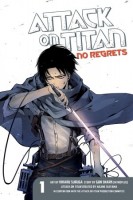
Attack on Titan: No Regrets, Vol. 1

June 18, 2014 by Ash Brown

Attack on Titan: No Regrets, Volume 1Creator: Hikaru Suruga
Original story: Gun Snark

U.S. publisher: Kodansha
ISBN: 9781612629414
Released: June 2014
Original release: 2014

I think it’s probably safe at this point to call Hajime Isayama’s manga series Attack on Titan a worldwide phenomenon. It has spawned successful anime adaptations as well as multiple manga spinoffs, a series of novels, and games, among other media. Most of those have been, or soon will be, released in English, too. When it comes to the side manga, I was especially curious about Attack on Titan: No Regrets because so far it has been the only explicitly shoujo offering to be included as part of the franchise. (I was therefore very happy to receive a review copy.) The short manga series in an adaptation by Hikaru Suruga of a Nitroplus visual novel written by Gun Snark and supervised by Isayama himself. The first volume of No Regrets was released in Japan, and then soon after in English by Kodansha Comics, in 2014. Kodansha’s English-language release also collects the story’s prologue chapter, which was included as part of Japan’s special edition of Attack on Titan: No Regrets, Volume 1.

Behind Wall Sheena lies the royal capital and the surrounding city where those who are lucky enough are able to live in luxury. But below it all is the Underground, where outcasts and criminals live in slum-like conditions. It’s there that Levi and his two comrades Isabel and Furlan call home, but they swear to one another that one day they will leave their criminal pasts and the Underground behind and live up above. Their chance comes in the form of Erwin, a young, talented, and devoted Survey Corps squad leader. Levi’s exceptional vertical maneuvering skills have caught Erwin’s attention and after some effort he has caught Levi as well. Erwin offers Levi and his crew a choice: join the Survey Corps themselves, lending their natural strengths to humanity’s fight against the Titans, or submit to the Military Police to answer for their many crimes. The decision isn’t a difficult one to make, but being forced to join the Survey Corps against their will doesn’t sit at all well with Levi; he plans to have his revenge against Erwin.

Arguably, Erwin and Levi are two of Attack on Titan‘s most beloved characters. (Not to mention one of the pairings that I’ve most frequently seen shipped.) There’s a certain intensity to their relationship in the original series–it’s obvious that they share a history and a past with each other–which means exploring their origins and how that bond developed in No Regrets makes a good deal of sense. Personally, I’ve always found Levi and Erwin to be particularly interesting characters, making No Regrets a welcome addition to the Attack on Titan canon. In the first volume of No Regrets their relationship is a volatile and antagonistic one. It’s an extremely important element of the series, but the manga also explores who they are as individuals, which is just as crucial. Each in their own way, both Levi and Erwin are intimidating and formidable men. Erwin may actually be the more terrifying of the two–he’s cool, calm, collected, and incredibly calculating–but Levi’s more obvious aggressiveness and propensity towards violence also leaves an impression.

In addition to focusing on Erwin and Levi, No Regrets features cameos from a few of the other key players from the original Attack on Titan and also introduces new characters, most notably Furlan and Isabel. Granted, seeing as this is still Attack on Titan and that No Regrets already has a considerable death count, there’s certainly no guarantee of their survival. All of the main characters in No Regrets, and to some extent the series’ side and background characters as well, have very distinct personalities which are exhibited through their facial expressions, body language, and individual manners of speech. Suruga’s artwork in No Regrets takes its cues from Isayama’s original series but in general is much cleaner and consistent. Story-wise, the series exhibits an excellent balance between political intrigue and action, including fantastically dynamic vertical maneuvering sequences. For the most part No Regrets stands fairly well on its own, although those familiar with Attack on Titan will get the most out of it. I quite enjoyed the first volume of No Regrets and look forward to reading the rest of the series.

Thank you to Kodansha for providing a copy of Attack on Titan: No Regrets, Volume 1 for review.

Filed Under: REVIEWS Tagged With: attack on titan, Gun Snark, Hikaru Suruga, kodansha, Kodansha Comics, manga

Pick of the Week: Old Favorites & New

June 16, 2014 by MJ, Sean Gaffney, Michelle Smith, Ash Brown and Anna N 1 Comment

potw-6-16MJ: Though I’m interested in a few of this week’s releases, including the latest from the author of Girl Friends, I’m unable to restrain myself from recommending the second omnibus volume of CLAMP’s xxxHolic. These volumes are some of my favorites in the early series, responsible for much laughter, tears, and for my everlasting Watanuki/Doumeki ‘shipping (seriously, if you are not on board by the end of volume six, there’s no help for you). In fact, I think I must reread them in honor of this release. If you never picked up this gorgeous and occasionally maddening series, now is your chance!
SEAN: I’ll chime in here, then, and make Gakuen Polizi my pick for this week. It’s got a lot of things that people like Morinaga Milk for: yuri tease (though a lot less than Girl Friends, obviously), broad comedy between an outgoing young girl and her more introverted friend, and of course high school antics (even though our leads are technically police officers). Sometimes you just want to read something FUN. This should fit the bill nicely.

MICHELLE: I’m going to have to cast my vote for the xxxHOLiC omnibus, too. Especially since this reissue will give me the opportunity to pick up the final few volumes of the series that I originally missed!

ASH: Vertical’s deluxe release of Mobile Suit Gundam: The Origin is always worth mentioning, but my pick of the week actually goes to Battle Royale: Angels’ Border. In addition to a new translation of the original novel and The Battle Royale Slam Book (which was great), the manga makes the third Battle Royale release from Viz this year.

ANNA: Since no one else is picking Mobile Suit Gundam: The Origin, I’ll have to go with that! Civil war! Mecha! Space! Char Aznable being evil! Seriously, what else does a reader need?

What looks good to you this week?

Filed Under: PICK OF THE WEEK

My Week in Manga: June 9-June 15, 2014

June 16, 2014 by Ash Brown

My News and Reviews

I posted two in-depth manga reviews at Experiments in Manga last week. The first was of Baku Yumemakura and Jiro Taniguchi’s The Summit of the Gods, Volume 3. It’s the middle volume of a five-volume, award-winning series and is a critical turning point for the story and characters. The Summit of the Gods is my favorite Taniguchi collaboration as well as one of my favorite manga series in general. And if manly mountain men don’t interest you, perhaps my review of Mari Okazaki’s out-of-print josei collection Sweat & Honey might entice you to track down a copy for yourself. The short manga included in the anthology focus on the close and often complicated relationships between women. The post is a part of my Year of Yuri monthly review project and makes the seventh installment. Only five more reviews to go!

Elsewhere online there were plenty of interesting things to read. Yen Press has a new set of license announcements. Organization Anti-Social Geniuses had two posts last week that I particularly liked: an interview with Cho, the founder of the site English Light Novels (which is an incredibly useful resource that I was previously unaware of), and a look at some of the reasons why people tell publishers they read illegal version of manga. Otaku USA has a nice interview with Helen McCarthy, whose newest book A Brief History of Manga will be released soon. The Lobster Dance has posted Revealing and Concealing Identities: Cross-Dressing in Anime and Manga, Part 4, with at least one more part to come. Lastly, the second manga studies column at Comics Forum is now available, focusing on the history of manga and Kitazawa Rakuten.

Quick Takes

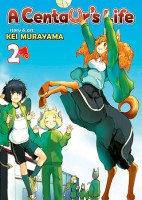
A Centaur's Life, Volume 2A Centaur’s Life, Volumes 2-3 by Kei Murayama. The more I read of A Centaur’s Life, the more I like the series. It can be incredibly sweet and adorable, and Murayama’s world-building is fascinating. Not all of that world-building makes it into the series proper (at least not yet), but the extra material between chapters and at the beginning and end of the volumes. Is interesting, delving into the politics, history, and mythology of A Centaur’s Life. It’s obvious that a lot of thought has been put into the series to make it as realistic as possible; Murayama takes into account even the smallest details of everyday life and how things like cars, furniture, and buildings have to be modified to accommodate races with completely different anatomies. A Centaur’s Life is fairly episodic, but more and more recurring characters are introduced as the series progresses. These two volumes in particular frequently feature the youngest generation of centaurs and other folk. Like any kids, they can be hellions but they can be super cute, too.

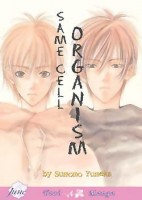
Same Cell OrganismSame Cell Organism by Sumomo Yumeka. Much like Yumeka’s later manga, The Day I Become a Butterfly, Same Cell Organism tends to be fairly quiet and subdued. Yumeka’s artwork is lovely, with a light, airy touch to it, though her character designs from one story to the next are similar enough to cause some brief confusion from time to time. Same Cell Organism is a collection of some of her earliest boys’ love manga. It’s a somewhat uneven volume, mostly do to the fact that one of the stories, “To Make an Angel” was never actually completed. All of the set up is there, but then it suddenly ends with no real conclusion. However, I absolutely adored the titular story “Same Cell Organism” and its subsequent chapters. The story follows two young men in high school who might seem like unlikely friends because their personalities are so different: Yokota is loud, enthusiastic, and outgoing while Nakagawa is much quieter and reserved and has a more difficult time expressing himself. However, their relationship develops naturally and is delightfully loving and sweet.

Say I Love You, Volume 2Say I Love You, Volume 2 by Kanae Hazuki. I was a little surprised by how much I enjoyed the first volume of Say I Love You and so was very interested in seeing how the characters’ stories and relationships continued to develop in the second. I particularly like the leads, Mei and Yamato. Mei especially is marvelous; she’s confident enough in herself to avoid bad situations involving other people, which made me very happy to see. Yamato obviously cares for Mei and is very respectful of her. However, many of the other characters aren’t likeable at all, and much of the second volume is devoted to them. Hayakawa is a womanizer and an absolute asshole. His story arc in this volume is a bit uncomfortable–he gets his comeuppance, but he also gets the girl. (I worry about her, so I truly hope that his colors have changed having been redeemed by love.) Aiko, who apparently used to be a lovely young woman, is simply not a nice person at all anymore. She has her reasons, but she’s still not sympathetic. Say I Love You deals very honestly with sex and its emotional repercussions at such a young age. Some of the relationships in the series aren’t at all healthy, making the budding romance between Mei and Yamato refreshing in comparison.

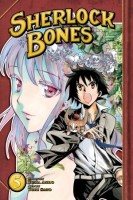
Sherlock Bones, Volume 5Sherlock Bones, Volume 5 written by Yuma Ando and illustrated by Yuki Sato. Sherlock Holmes reincarnated as a puppy is still a rather silly premise, but I’ll admit that I’ve largely been enjoying the series. Occasionally there’s an unnecessary flash of underwear, but generally that’s fairly easy to pass over. The mysteries in the series are interesting with some very clever, though sometimes outlandish, twists. The artwork provides clues for readers to pick up on if they’d like a more interactive story experience, too. One of the things that I actually liked best about this particular volume of Sherlock Bones is that the story moves from Takeru being a high school student to his entry into the workforce. Unsurprisingly, coming from a police family and considering his recent work solving crimes with Sherdog, Takeru becomes a patrol officer. Already it’s proving to supply even more cases for him and Sherdog to investigate, and a few new characters are introduced as well. Sherlock Bones continues to be an entertaining series, and I look forward to reading the remaining two volumes.

Filed Under: FEATURES, My Week in Manga Tagged With: Centaur's Life, Kanae Hazuki, Kei Murayama, manga, Say I Love You, Sherlock Bones, Sumomo Yumeka, Yuki Sato, Yuma Ando

Sweat & Honey

June 13, 2014 by Ash Brown

Sweat & HoneyCreator: Mari Okazaki
U.S. publisher: Tokyopop
ISBN: 9781591827979
Released: February 2005
Original release: 2002

Back in 2005 Tokyopop launched a short-lived line of josei manga called Passion Fruit, describing it as a collection of innovative and edgy works. Only two volumes were ever released before Passion Fruit faded out of existence: Mari Okazaki’s Sweat & Honey and Junko Kawakami’s Galaxy Girl, Panda Boy. I learned about all of this long after the fact and only discovered the Passion Fruit line while searching for more translated manga by Okazaki after rereading her series Suppli (which was sadly left incomplete in English after Tokyopop’s decline.) Currently, Sweat & Honey is her only other work available, which is a shame. Sweat & Honey was originally published in Japan in 2002 before being released in English in 2005. I didn’t realize it when I first picked up a copy–initially I was interested in the fact that it was by Okazaki more than anything else–but Sweat & Honey incorporates sapphic elements and yuri undertones which made me even more curious to read it.

Sweat & Honey collects five short, unrelated manga, most of which focus on the close, personal, and intimate relationships between women, ranging from friendship to love and even more complicated bonds. The volume opens with “After Sex, A Boy’s Sweat Smells Like Honey,” from which the collection draws its name. In it, a young woman is staying with her cousin; her attitudes toward and dislike of men has her cousin reevaluating her own romantic relationships as the two women grow closer. In “About Kusako,” Moeko stumbles upon a girl literally growing out of the ground. It’s a curious story and the most fantastical one included in Sweat & Honey. “Sister” follows Chinami, a highschool girl, and Kayo, her 35-year-old neighbor who leads a much more fulfilling life than most realize. The longest story, “The Land Where Rain Falls,” is told in three parts. It delves into the intense and twisted connections between Kumi, her classmate Kaya, and Kaya’s older brother. The volume closes with “Iced Tea,” in which a young man looks back on one of his first crushes, his seventh-grade teacher.

Sweat & Honey, though occasionally lighthearted, is a manga that deals with very mature themes–death, coming of age, self-discovery, nostalgia–and can frankly be disturbing from time to time. Okazaki’s artwork aids tremendously in creating this atmosphere in the volume. Her illustrations are sensuous and provocative, with a languid heaviness to them. They are beautiful, but also somewhat disconcerting and ominous, too. The page layouts in Sweat & Honey are also interesting, often featuring a large background panel which sets the scene with smaller, overlapping panels that focus a reader’s attention on a particular detail of the people who inhabit it. The elegant line of a neck, hesitant glances or a sly smile, an exposed breast, shifting legs and feet, entwined fingers or tightly clasped hands, all are accentuated. Because of this, the young women in Sweat & Honey seem to exist both in their world and apart from it. Okazaki reveals their personal and private thoughts and feelings while at the same time exposing their physical selves.

Although the short manga collected in Sweat & Honey aren’t related by characters or by plot, they all share an emphasis on the inner and outer lives of women and their relationships with each other. Even “Iced Tea,” which is told from the perspective of a young man, is focused on his female teacher. Although the ties between the women in Sweat & Honey are the most crucial, their associations with men and how those associations impact their other relationships are also very important. The older cousin in “After Sex, A Boy’s Sweat Smell s Like Honey” has a boyfriend, but she isn’t able to connect with him in the same way that she does with her younger relative. Moeko drifts away from Kusako when a boy enters the picture. Kayo’s seeming lack of romantic involvement is one of the things that bothers Chinami the most. And in “The Land Where Rain Falls,” the nearly incestuous relationship instigated by Kaya is one of the key elements of the story. But in the end, while the men have their place in the manga, the true focus of Sweat & Honey is on its young women and their experiences.

Filed Under: REVIEWS Tagged With: manga, Mari Okazaki, Passion Fruit, Tokyopop, Year of Yuri

Manga the Week of 6/18

June 12, 2014 by Sean Gaffney, Michelle Smith, Ash Brown, Anna N and MJ 1 Comment

SEAN: It’s no Week 1, but the 3rd week of the month gives us a chunky pile of manga, which should have something for most everyone.

The Shinji Ikari Raising Project manga from Dark Horse has now reached the same number of volumes as the regular Evangelion manga, and I don’t think it’s finished. Will this lighter take on the Evaverse surpass its predecessor? …mmmm, probably not. But it’s fun.

I swear I’ve had Alice the 101st Vol. 4 coming out from DMP before this week. But in any case, here it is again, and I suspect I will be confused all the way to Vol. 101.

MICHELLE: I forgot this series existed.

hentaiprince2

SEAN: I enjoyed Vol. 1 of Hentai Prince and the Stony Cat, which came out right before DMP’s print hiatus. Now that it’s back, I look forward to seeing what wacky comedy Vol. 2 can give us, especially since the anime has now come and gone.

Fairy Tail has hit its Jack Benny volume, and I am starting to fall behind. I believe this is one of the more serious volumes. Lotsa harsh battle scenes. (Vol. 39, for those of you who are wondering what the hell I’m talking about.)

There’s also the 7th volume of No. 6, which simply ruins the symmetry and makes me bitter. So bitter. Why must manga be numbered anyway? Manga should be free!

ASH: The beautiful symmetry may have been ruined, but this is one of the best volumes in the series yet!

SEAN: The 2nd xxxHOLIC omnibus has some really excellent stories, and a minimal amount of crossover with Tsubasa. Neither of those two will last.

ANNA: I feel sort of bad that I never finished either xxxHOLIC or Tsubasa, and then I remember how long they are and I feel OK with it all.

MICHELLE: I didn’t finish them either, actually. But I intend to one of these days!

ASH: And the omnibus releases make it easier than ever!

MJ: I feel somewhat out of place here admitting that I finished them both, and with great enthusiasm! I’m very happy to see these omnibus releases coming out.

SEAN: In case you thought Seven Seas had put out everything Dance in the Vampire Bund-related, here are some Forgotten Tales. Probably fell behind the desk or something.

Haganai: I Don’t Have Many Friends hits the 7th volume of wacky comedy with Kodaka and the friends he insists he doesn’t have.

gakuen1

I’m a big fan of Morinaga Milk, author of Girl Friends, so am looking forward to the new series from Seven Seas, Gakuen Polizi. Which is not translated as School Police, for reasons why I do not know. I don’t think this one’s yuri, but I bet it’s cute.

ASH: I’ve enjoyed the other manga by Morinaga released in English, so I’m looking forward to this series’ debut.

MJ: Same here!

SEAN: The Sky That Connects Us is the next in the Strike Witches franchise, and will give you lots of cute girls and aerial battles, but less pants than most series.

Vertical’s deluxe release of Mobile Suit Gundam hits its 6th collection, which I believe may be the halfway point? In any case, still essential.

ANNA: So deluxe! I’ve been buying these as they come out but am a couple volumes behind. I see a Gundam reading binge in my future.

MICHELLE: Much mecha.

ASH: I believe this volume will once again feature a fair amount of Char, which pleases me greatly.

SEAN: Lastly, Viz has the Battle Royale: Angels’ Border manga, which ran in Akita Shoten’s Young Champion and focuses on six girls who got short shrift in the main series.

ASH: As a fan of the original novel, I’ve been enjoying the recent Battle Royale releases from Viz, so I’m happy to see this one, too.

SEAN: Is there something here that appeals to you?

Filed Under: FEATURES, manga the week of

The Summit of the Gods, Volume 3

June 11, 2014 by Ash Brown

The Summit of the Gods, Volume 3Author: Baku Yumemakura
Illustrator: Jiro Taniguchi

U.S. publisher: Fanfare/Ponent Mon
ISBN: 9788492444335
Released: June 2012
Original release: 2002
Awards: Angoulême Prize, Japan Media Arts Award

Based on an award-winning novel by Baku Yumemakura, The Summit of the Gods is a five-volume manga series written by Yumemakura and illustrated by Jiro Taniguchi. The manga itself has also won several awards, including a Japan Media Arts Excellence Award and an Angoulême Prize for Artwork among other honors. The Summit of the Gods, Volume 3 was originally released in 2002 in Japan. The English-language edition was published ten years later in 2012 by Fanfare/Ponent Mon. The Summit of the Gods is one of my favorite manga that Taniguchi has worked on, not to mention one of my favorite manga series in general. It’s an engaging story with compellingly flawed characters and its artwork is fantastic. Two years passed between the release of the second English volume and the third. Though I wish it could be published more quickly, The Summit of the Gods is a series worth waiting for. The books have a larger trim size than most other manga being released, which allows Taniguchi’s artwork to really shine, and the hefty page count allows the storytelling room to breathe, too.

Makoto Fukamachi has returned to Nepal, continuing his search for the legendary mountain climber Jouji Habu, who is now going by the name of Bikh Sanp. Habu may have found the camera carried by George Mallory on his last, fateful ascent of Mount Everest. The camera and its film could hold the answer to one of the climbing world’s greatest mysteries: who the first person to stand on the summit of Everest was. While researching the camera, Fukamachi became more and more interested in Habu himself, but finding a man who doesn’t want to be found proves to be an extremely difficult task. It is only after Ryoko Kishi arrives in Kathmandu that Fukamachi is able to make any headway with his investigation. Her brother died in a climbing accident, and Habu carries a tremendous amount of guilt because of it, but Ryoko was also one of the people closest to Habu in Japan. However, even she hasn’t heard from him in more than three years. As Fukamachi and Ryoko’s search for Habu progresses, others become curious about him and the camera as well, which only complicates matters further.

Compared to previous volumes in the series, except for the opening chapter which focuses on the many failed attempts to reach the summit of mount Everest before success was achieved, The Summit of the Gods, Volume 3 devotes less time to mountain climbing and more time to Fukamachi’s investigation and its unfortunate fallout. The emphasis in this volume has moved from the mountains and the wilderness to the surrounding cities and villages. While I do miss the drama and grandeur of nature so expertly captured in Taniguchi’s artwork, his portrayal of Kathmandu, Patan, and the various Sherpa villages is equally impressive in the amount of detail included. The city- and villagescapes are just as important as the landscapes. Aspects of Nepalese politics and culture are incorporated into the series as well. But even though climbing isn’t always at the forefront of this volume of The Summit of the Gods, it still plays and extremely important role in the story and it is vitally important to the characters as well.

While Fukamachi may be the protagonist of The Summit of the Gods, the series is really more about Habu and his story. As he has proved time and again, Habu is an incredible climber. In the third volume he pulls off an astonishing rescue–scaling a cliff with one arm while carrying another person–that leaves the others in awe of him. This is not the first, and I am sure it will not be the last, amazing feat that Habu performs. He is so singly devoted to and passionate about climbing that he has made many sacrifices in his life just so that he can continue to push himself to his limits. When it is finally revealed, the ultimate goal that Habu has set his sights on is enormous, beyond anything that anyone else has ever seriously considered attempting. Habu both intimidates and inspires Fukamachi, forcing Fukamachi to evaluate and reevaluate himself and his own capabilities and desires. The Summit of the Gods, Volume 3 is a critical turning point in the development of the series’ characters and plot, bringing a resolution to one story arc and beginning the next.

Filed Under: REVIEWS Tagged With: Angoulême Prize, Baku Yumemakura, Fanfare/Ponent Mon, Japan Media Arts Award, Jiro Taniguchi, manga, summit of the gods

Pick of the Week: Staples & Surprises

June 9, 2014 by Ash Brown, Michelle Smith, Sean Gaffney and MJ 2 Comments

potwASH: With only six new volumes of manga being released this week, you might think that it would be easy to pick just one, but no. I’m already following more than half of the series. Still, if I have to choose, I’ll once again go with Crimson Spell. I continue to be very happy that SuBLime rescued the series.

MICHELLE: You know, I never thought I’d say this, but Tiger & Bunny has really grown on me with recent volumes, so I’m gonna award its fifth volume my pick for this week. It’s fun, with easy-to-follow action and enough focus on characters to keep me interested. I’m surprised by how much I’ve come to like it considering how underwhelmed I was initially.

SEAN: I think I’ll go for the 2nd volume of Say “I Love You” this week. It’s rapidly going in directions I hadn’t expected, and it’s refreshing to see both a lot of casual sex happening in high school, and also some of the consequences, mostly mental and emotional, that come from that. Add to this our heroine’s natural introversion and you have something that’s more addicting now than it was in the first volume.

MJ: I’ve been staring at the shipping list with desperation, and I’ll admit that there’s nothing really crying out to me this week, so I’ll throw caution to the wind and go along with Sean and Say “I Love You.” I haven’t yet read the first volume, but his description here is compelling as hell, so I’m just going to have to check it out for myself. I’m sold.

What looks good to you this week?

Filed Under: PICK OF THE WEEK

My Week in Manga: June 2-June 8, 2014

June 9, 2014 by Ash Brown

My News and Reviews

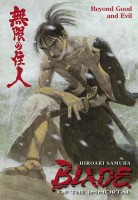
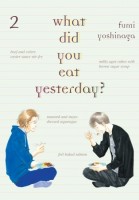
Three posts last week! The first was the announcement of the Oi, Oishinbo! manga giveaway winner, which also includes a list of some of the food manga that has been licensed in English. And speaking of food manga, last week I reviewed Fumi Yoshinaga’s What Did You Eat Yesterday?, Volume 2. I’m really enjoying the series and am thrilled that it’s being released in English. I also reviewed Blade of the Immortal, Volume 29: Beyond Good and Evil by Hiroaki Samura, which is pretty much the beginning of the end of the series. I love Blade of the Immortal, so I’m interested to see how Samura will wrap everything up and who, if anyone, will survive its conclusion.

Things have been a bit hectic in my life lately, so I’ve not been able to pay attention to all of the news and announcements recently, but I did catch a few things on Vertical’s Twitter account. Apparently, its warehouse is down to the last 24 copies of Message to Adolf, Part 1 and it may or may not be reprinted. So, if you want a copy, you should probably grab it sooner rather than later. Adolf was my introduction to Osamu Tezuka, and it remains one of my favorite works by him. Also, Vertical was at AnimeNEXT and made a new license announcement—Dream Fossil: The Complete Short Stories of Satoshi Kon. Though it wasn’t perfect, I enjoyed Kon’s Tropic of the Sea a great deal, so am looking forward to this collection as well as the other Kon manga announced by Dark Horse a couple of months ago.

Quick Takes

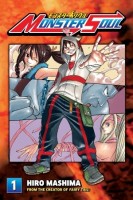
Monster Soul, Volume 1Monster Soul, Volume 1 by Hiro Mashima. For readers intimidated by the length of Fairy Tail or Rave Master, Mashima’s two-volume Monster Soul sets a much lower bar for entry to his work. During the Human-Monster War, the Black Airs were an elite group of exceptionally powerful monsters. Now that the war is over, and the monsters have lost, they mostly try to keep to themselves. But with human poachers, a ghost with an agenda, and another monster picking a fight, trouble seems to find them anyway. Monster Soul is somewhat episodic, but Mashima does seem to be developing some sort of underlying plot. Since the series is only two volumes long though, it probably can’t be particularly convoluted or in-depth. That being said, I’m not entirely sure what direction Monster Soul will be taking. The story moves along very quickly, there are numerous fights, and the characters are boisterous. I wasn’t blown away, but the first volume of Monster Soul could be entertaining.

Otomen, Volume 16Otomen, Volumes 16-18 by Aya Kanno. I’m not sure that Otomen really needed to be eighteen volumes long, but I enjoyed every volume of it. The series just makes me so incredibly happy. It can be ridiculous and eyeroll-worthy at times, usually deliberately so, but I love it. The characters, while they don’t have much depth, are incredibly endearing. Kanno plays around with gender roles and expectations in Otomen, that’s one of the major points of the series, but never in a denigrating way. The not-so-subtle message of Otomen is that it is just fine to be whoever it is you are. These final three volumes find Asuka and many of the others in their last year of high school. They begin drifting apart for various reasons, the biggest being the influence of Asuka’s mother, and it is heartbreaking to see. Kanno has never hesitated to make use of well-worn tropes and plot developments in Otomen–frequently the series verges on parody because of that–but I was a little unsure about the memory loss arc. Ultimately though, the series ends in a very satisfying way.

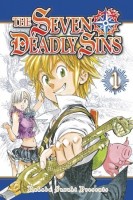
The Seven Deadly Sins, Volume 1The Seven Deadly Sins, Volumes 1-2 by Nakaba Suzuki. Back in my undergrad days I took a fantastic course that focused on the use and portrayal of the seven deadly sins in music and literature, and so Suzuki’s The Seven Deadly Sins manga immediately caught my attention. At first, I was a little uncertain about The Seven Deadly Sins. It took a few chapters to really grow on me, and when present Meliodas’ lecherous tendencies still seem more like a tired cliché rather than any sort of legitimate character development, but the series has great potential. The Seven Deadly Sins are a group of extremely talented warriors who may be the only ones capable of stopping the Holy Knights from destroying Britannia. It isn’t yet known why the group goes by “The Seven Deadly Sins,” or what sins the members have committed to earn their monikers, but I’m assuming that will be revealed sometime in the future. The Holy Knights are the ones being framed as the series’ villains, but the Sins aren’t entirely good, either, which I appreciate. With interesting characters and epic battles, I’m looking forward to reading more.

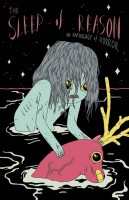
The Sleep of ReasonThe Sleep of Reason: An Anthology of Horror edited by C. Spike Trotman. Edited by the same person who has been coordinating the new Smut Peddler anthologies, The Sleep of Reason collects twenty-six short horror comics. Some of the creators (like Jason Thompson and Carla Speed McNeil, among others) I was already familiar with, but there were plenty of other contributors whose work I was encountering for the very first time. That’s one of the things I love about anthologies like The Sleep of Reason–they introduce me to new artists that I want to follow. I also love being exposed to so many different styles of art and storytelling. There is some blood, death, and gore in The Sleep of Reason, but the collection isn’t a splatter fest and relies much more heavily on the psychological aspects of horror rather than on violence. As with any anthology, some of the stories are stronger than others. I’m not sure that I even completely understood some of them, but they all were eerie, disconcerting, and creepy. The Sleep of Reason is a great collection; definitely recommended for fans of horror.

Filed Under: FEATURES, My Week in Manga Tagged With: Aya Kanno, comics, Hiro Mashima, manga, Monster Soul, Nakaba Suzuki, otomen, Seven Deadly Sins

Blade of the Immortal, Vol. 29: Beyond Good and Evil

June 8, 2014 by Ash Brown

Blade of the Immortal, Volume 29Creator: Hiroaki Samura
U.S. publisher: Dark Horse
ISBN: 9781616553371
Released: May 2014
Original release: 2011
Awards: Eisner Award, Japan Media Arts Award

Beyond Good and Evil is the twenty-ninth volume in the English-language release of Hiroaki Samura’s award-winning manga Blade of the Immortal. Published by Dark Horse in 2014, Beyond Good and Evil is equivalent to the twenty-eighth volume of the Japanese edition of Blade of the Immortal released in 2011. Blade of the Immortal is a long-running series. The collected volumes of the manga first began to be released in Japan in 1994 while the first collection in English was published in 1997. Personally, I discovered Blade of the Immortal in 2007 and have been reading it ever since. The series is now in its final volumes and is drawing closer and closer to its conclusion. Since I’m fond of Blade of the Immortal, I’m both excited and saddened to see it end. Beyond Good and Evil is the beginning of the series’ last battle as all of the surviving characters are brought together to face one another and to confront their destinies.

The members of the Ittō-ryū who were escaping Edō by way of the Mito road have been annihilated. They put up a magnificent fight against Habaki Kagimura’s Rokki-dan and there were casualties on both sides, but in the end it was the Ittō-ryū that was brought closest to its demise. A very small group of the Ittō-ryū’s most elite warriors, including its leader Anotsu Kagehisa, still remain and are on the run. They stayed behind in Edō long enough to wreak havoc at the city’s castle before fleeing, hoping to reunite with the rest of the Ittō-ryū at the port of Hitachi before sailing for Satsuma. But with their companions dead, a few unexpected allies, and no small number of enemies, Anotsu’s carefully laid plans will have to change. As for Habaki, who has very little left to lose, he is willing to do anything that it takes and to commit any atrocity necessary in order to ensure that Anotsu and the remaining Ittō-ryū members, as well as anyone who might lend them their aid, are completely wiped out.

One of the things that has always impressed me about Blade of the Immortal is its complex, morally grey characters. The protagonists and antagonists of the series are constantly shifting, making it difficult to strictly categorize them as being good or bad guys; they are simply extremely flawed people. The confrontation between Habaki and Anotsu and the rest of the survivors has been building over the last few volumes. They all finally meet again, likely for the last time, in Beyond Good and Evil. It’s an aptly named volume. None of the characters are entirely in the right and they are all guilty of countless deaths. There is no turning back for them and they must see their chosen paths through to the end, even knowing that there is a strong possibility that they will fail or have failed already. Anotsu, Habaki, and the others may or may not survive, but even if they do, survival does not necessarily mean victory.

With the final battle of Blade of the Immortal approaching, one might expect it to be a heroic showdown of epic proportions, except for the fact that there aren’t really any heroes in the manga. Instead, the atmosphere surrounding the characters and their confrontation is one of inevitability and futility. There will be a battle and because those who have managed to survive for this long are the most skilled fighters it will be intense. However, very little will be accomplished by the skirmish except for perhaps mutual destruction. The Ittō-ryū barely exists anymore and it is very unlikely that Anotsu’s hopes and dreams of restoring the way of the sword to Japan will come to fruition. For Habaki, destroying the Ittō-ryū won’t allow him to regain his lost honor or to erase his heinous deeds. At one point both men were fighting to change Japan and to right the wrongs that they saw in their society, but their ideals and ambitions may come to nothing in the end.

Filed Under: REVIEWS Tagged With: Blade of the Immortal, Dark Horse, Eisner Award, Hiroaki Samura, Japan Media Arts Award, manga

What Did You Eat Yesterday?, Vol. 2

June 6, 2014 by Ash Brown

What Did You Eat Yesterday?, Volume 2Creator: Fumi Yoshinaga
U.S. publisher: Vertical
ISBN: 9781939130396
Released: May 2014
Original release: 2008

Fumi Yoshinaga’s series What Did You Eat Yesterday? is a manga which I have been hoping would be released in English for years. Happily, Vertical stepped up and recently began publishing the series. In addition to featuring a fairly realistic portrayal of a gay couple in contemporary Japan (two forty-something men who are living together), What Did You Eat Yesterday? also includes plenty of delicious food. I read and enjoyed the first volume a great deal and so was looking forward to reading the second as soon as I could get it into my hands. What Did You Eat Yesterday, Volume 2 was originally released in Japan in 2008 while Vertical’s English-language edition was published in 2014. The series is currently eight volumes long and is still being serialized, so I’m hoping and expecting to be able to enjoy the manga for some time yet. It makes me extraordinarily pleased to know that Vertical is releasing What Did You Eat Yesterday?. So far, the publisher has done a fine job with it.

Shiro Kakei and Kenji Yabuki have been living together for the last three years or so and have known each other for a little while longer than that. It’s an arrangement that works well for them. Shiro happily cooks the meals for the household while Kenji, unlike some of Shiro’s past flames, is more than willing to help out with the chores. Kenji also happens to be an appreciative audience for Shiro’s culinary creations. Shiro has a passion for food and derives great pleasure in preparing delicious meals as frugally as possible. Entire menus can be inspired by a single ingredient that just happens to be on sale at the time and he is very careful not to let anything go to waste. Granted, there seems to be only so many different ways for a person to use celery. But with a little help from his coworkers and friends, not to mention his natural creative talent in the kitchen, Shiro is usually able to figure something out. And generally Kenji doesn’t take too much convincing to happily eat whatever it is Shiro comes up with.

There are two major aspects to What Did You Eat Yesterday?: the characters and their lives, and the food itself. I feel the series does best when these two things are working in tangent to tell the stories, but quite frequently the meals and their preparation seem to be separate elements entirely. Shiro has the habit of narrating every step as he is cooking. This means that each chapter includes at least one recipe detailed enough that it could be replicated, but people who more interested in the manga’ stories will likely find it to be tedious. However, those sections can easily be skimmed by readers who don’t care for the cooking minutia without too much being lost from the narrative or plot of What Did You Eat Yesterday?. In general, Yoshinaga’s beautiful illustrations of the food and Shiro’s techniques are more than enough to follow along with what is happening in the kitchen. In some cases, the time spent and the complexities of the recipes are actually used make a point: the extra effort put into a meal imbues it with additional value and meaning for those preparing and eating it.

I do love the food in What Did You Eat Yesterday?, but I love the characters and the stories that Yoshinaga is telling even more. In this volume I was particularly delighted to learn how Shiro and Kenji first met and started living together. (One of my favorite moments is Shiro recognizing that Kenji’s not even his “type,” but that he is still incredibly lucky to have him.) I also appreciate how the two of them have important relationships outside of each other. Their friends, families, and coworkers all have their roles to play in the series. A major theme that becomes apparent in the second volume of What Did You Eat Yesterday? is communication. Usually it’s Kenji that needs to be verbally heard; Shiro tends to be more reserved, expressing himself more through his cooking than through words, but he knows when he needs it Kenji will be there to listen to him, too. I’m looking forward to learning more about the series’ characters and their relationships in the next volume of What Did You Eat Yesterday? immensely.

Filed Under: REVIEWS Tagged With: fumi yoshinaga, manga, vertical, what did you eat yesterday?

Manga the Week of 6/11

June 5, 2014 by Sean Gaffney, Michelle Smith, MJ, Ash Brown and Anna N Leave a Comment

SEAN: After this week’s deluge, the six books coming out next week feel like a mild summer breeze in comparison. Makes me feel fine.

MICHELLE: Okay, Seals.

sayiloveyou2

SEAN: Kodansha has the second volume of Say “I Love You”. It runs in Dessert, which is technically shoujo in the same way that Shoujo Comic is technically shoujo, but there really is an awful lot of nudity and sex in this volume, so it really edges towards josei a lot more than My Little Monster (which runs in the same magazine).

MJ: I haven’t delved into this series, but I’m interested. Though I can’t decide whether all the nudity and sex is a plus or a minus. :D

MICHELLE: I liked the first volume, and I have a feeling the second will wring all the dramatic potential out of its sex scenes. So… probably a plus. :)

ASH: I also liked the first volume and am interested in seeing where it leads.

ANNA: This series hasn’t been on my radar before, but now I find myself intrigued.

SEAN: SubLime has quieted down a bit, but they’re still giving us some top quality BL. Vol. 4 of Crimson Spell has almost the same cover situation as Vols. 1-3, and I like to imagine that the entire title is just 800 pages of one man slowly taking the shirt off of his lover and nothing else. With many stern, dangerous looks passing between them.

ASH: I need to catch up with Crimson Spell now that we’ve made it past what was previously released in English. I suspect more happens than just a loss of a shirt, though.

ANNA: I keep meaning to check this out. One day!

arata18

SEAN: There’s Vol. 18 of Arata the Legend, which is now in terms of length Watase’s most successful series, though I suspect it has a ways to go before it catches up to Fushigi Yuugi’s obsessive fanbase.

And there’s Vol. 3 of Deadman Wonderland, whose cover is trying to exude cool, but isn’t quite getting there for me.

MJ: Same here, though I’m still giving it a chance.

SEAN: Magi has Vol. 6, and has barely begun to mine The Arabian Nights for characters and plots, so we are no doubt in for a long ride. Can’t wait.

MJ: I’ve finally caught up on some of this series, so I’m looking forward to more!

MICHELLE: Whereas I am somewhat behind, but I really did like the first couple of volumes.

SEAN: Lastly, Tiger & Bunny 5 catches us up with Japan, which means the next one could be a while. That said, this fandom knows how to create its own content, so I suspect they’ll be fine.

What manga is blowing through the jasmine of your mind?

MICHELLE: *snerk*

Filed Under: FEATURES, manga the week of

Manga Giveaway: Oi, Oishinbo! Winner

June 4, 2014 by Ash Brown

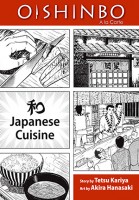
Oishinbo, A la Carte: Japanese CuisineAnd the winner of the Oi, Oishinbo! manga giveaway is…AshLynx!

As the winner, AshLynx will be receiving a copy of Oishinbo, A la Carte: Japanese Cuisine by Tetsu Kariya and Akira Hanasaki. Oishinbo is one of the most successful and well-known food manga out there (at least in Japan), so for this giveaway I asked that people tell me a little about their own favorite food manga. Check out the giveaway comments for everyone’s responses. As usually, I’ve also taken the giveaway as an opportunity to compile a list. Below you’ll find some food-centric manga, as well as a few manga where food isn’t the focus but still plays an important role.

Some of the food manga licensed in English:
Antique Bakery by Fumi Yoshinaga
The Drops of God written by Tadashi Agi and illustrated by Shu Okimoto
Eat For Your Life! by Shigeru Tsuchiyama
Food Wars!: Shokugeki no Soma written by Yuto Tsukuda, illustrated by Shun Saeki
Gente by Natsume Ono
Iron Wok Jan by Shinji Saijyo
Kitchen Princess written by Miyuki Kobayashi, illustrated by Natsumi Ando
Mixed Vegetables by Ayumi Komura
Moyasimon: Tale of Agriculture by Masayuki Ishikawa
Neko Ramen by Kenji Sonishi
Noodle Fighter Miki by Jun Sadogawa
Not Love but Delicious Foods Make Me So Happy! by Fumi Yoshinaga
Oishinbo, A la Carte written by Tetsu Kariya, illustrated by Akira Hanasaki
Project X: Cup Noodle written by Tadashi Kato, illustrated by Akira Imai
Ristorante Paradiso by Natsume Ono
Seiwa High School Bento Club! by Umitamako
Takasugi-San’s Obento by Nozomi Yanahara
Toriko by Mitsutoshi Shimabukuro
What Did You Eat Yesterday? by Fumi Yoshinaga
Yakitate!! Japan by Takashi Hashiguchi

I love food, and I love manga, so food manga is a great combination for me. Thank you to everyone who shared their favorites; now we all have something to tide us over until the next manga giveaway!

Filed Under: UNSHELVED Tagged With: Akira Hanasaki, manga, Oishinbo, Tetsu Kariya

Pick of the Week: Buy all the things?

June 2, 2014 by Sean Gaffney, Michelle Smith, Ash Brown, Anna N and MJ 1 Comment

potwSEAN:  There’s so much stuff coming out this week that it’s simply impossible to narrow it down.  So I apologize to the 87 other Shojo Beat titles I’m passing up this time.  But I have to go with the 2nd volume of Shigeru Mizuki’s Showa, which does a fantastic job of showing just how appalling and grueling to everyone involved the Second World War really was, and also what a personal toll it took on Mizuki himself, even if he does try to present it as comedically as possible.  One of the best manga history/biographies I’ve ever read.
MICHELLE: I, too, have had a hard time making a pick this week. I narrowed it down to two, but in the end the 16th volume of Natsume’s Book of Friends (thoroughly excellent though it truly is) got edged out by volume 71 of Eiichiro Oda’s One Piece. I mean, the fact that it’s still genuinely fun and exciting at volume freakin’ 71 surely qualifies it as a masterpiece, right?!

ASH: Well, since Sean has Showa covered, I think I’ll take this opportunity to pick one of this week’s debut titles: New Lone Wolf & Cub. Same author but with a different illustrator than the original, I know a lot of people who are excited for this series.

ANNA: There are so many good things coming out this week! I think I’ll have to highlight the rerelease of Millennium Snow just because it is so rare for a mangaka to go back and finish an unfinished series. (Excuse me for a minute while I give CLAMP the stinkeye over X/1999). I enjoyed Millennium Snow when it first came out, so the new omnibus followed by a third volume sounds like a treat to me.

MJ: I’m interested in pretty much everything that’s been mentioned so far, and had figured I’d put my vote behind the long-awaited third volume of Millennium Snow. But since Anna has taken care of that so nicely, I’ll give a little shout-out to the latest volume of Vertical’s Knights of Sidonia. I’ve been a fan of this beautifully-drawn, emotionally frenetic series since the beginning, and I’m always thrilled to pick up a new volume.

What looks good to you this week?

Filed Under: PICK OF THE WEEK

My Week in Manga: May 26-June 1, 2014

June 2, 2014 by Ash Brown

My News and Reviews

Last week was a slower week at Experiments in Manga, which is just as well because I spent a long weekend with my family in Ohio for my youngest sister’s high school graduation. I was pretty busy with things there, but I was still able to post a few things here. The most recent manga giveaway, for example. There are still a couple of days left to enter for a chance to win Oishinbo, A la Carte: Japanese Cuisine, too. All you have to do is tell me a little about your favorite food manga (if you have one). May’s Bookshelf Overload was also posted. Interestingly enough, I think I actually bought more comics last month  than manga. (I largely blame TCAF for that.) As for reviews, I took a look at Yoshikazu Yasuhiko’s Mobile Suit Gundam: The Origin, Volume 5: Char & Sayla. Char happens to be one of my favorite Gundam characters, so it probably shouldn’t be too surprising that this volume is one of my favorites in the series thus far.

There were a few things that I found to read online last week that were particularly interesting, too: Manga Therapy is writing and hosting a series of posts for Mental Health Month, including Lauren Orsini’s article about Mushishi as a metaphor for mental illness. FanboyNation had an interview with Tokyopop. Brigid Alverson interviewed Akira Himekawa for Comic Book Resources. And finally, Revealing and Concealing Identities: Cross-Dressing in Anime and Manga, Part 3 was posted at The Lobster Dance. I’m sure there were plenty of other interesting articles and new to be found last week, but as I mentioned I was rather occupied with traveling, helping out at home, and visiting with family. If I missed anything major, please do let me know!

Quick Takes

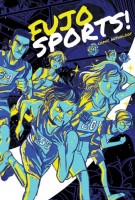
Fujosports!Fujosports! by Various. The most recent anthology from the Love Love Hill collective, Fujosports! collects six sports-themed comics with a female-gaze. These aren’t necessarily the sports you might be expecting, though: logging competitions, roller derby, free-form rollerblading, Turkish oil wrestling, field hockey, and competitive dodge-ball. All of the stories tend to be generally upbeat and optimistic, but the artists’ styles are distinct. As might be expected from the “fujo” in the title, the anthology includes a bit of bromance and boys’ love potential, but there’s some girls’ love, too, and plenty of general team bonding. Each comic is followed by a short freetalk by the creators, which is a very nice addition and makes the stories even more personable Fujosports! is a cute, sweet, and humorous collection. Every contribution in the anthology left me with I huge grin on my face, or at least a smile. Simply put, Fujosports! is a lot of fun; I’m really glad that I picked it up.

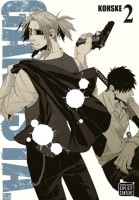
Gangsta, Volume 2Gangsta, Volume 2 by Kohske. I enjoyed the first volume of Gangsta so much that I immediately went out and preordered the second. The series is quickly becoming one of my favorite manga currently being released. Gangsta has plenty of action in addition to a wide range of interesting characters (both women and men, young and old), many of whom have dark, tragic pasts. More characters are introduced in the second volume, some of them even manage to survive to the end of it, and the larger, overarching plot continues to develop. The Three Laws binding the Twilights (should they actually choose to follow them) are directly lifted from Asimov’s Three Laws of Robotics, nearly word-for-word. While this certainly emphasizes the inhuman characteristics of the Twilights, I did find it to be an odd choice. Still, the Three Laws provide excellent narrative frameworks for robot and android stories, so I’m willing to reserve my judgement and wait to see how Kohske uses them Gangsta.

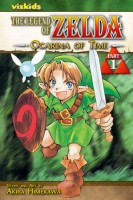
The Legend of Zelda: Ocarina of Time, Volume 1The Legend of Zelda: Ocarina of Time, Volumes 1-2 by Akira Himekawa. After meeting Akira Himekawa at TCAF, I realized that although I was familiar with some of their work, I hadn’t actually read much of their manga. Granted, only The Legend of Zelda has been licensed for print release in English so far. I actually happen to be a fan of the Zelda video games, so I wasn’t surprised that I’m enjoying the manga series, too. Ocarina of Time was the game which inspired Himekawa to pursue The Legend of Zelda manga. The Ocarina of Time manga is accessible even to those who haven’t played the game, but those who have will be able to appreciate the nods to the original more. The manga follows the same basic plot as the video game, though Himekawa adds a few touches of their own. The Ocarina of Time manga is definitely an adventure story aimed at younger readers, there’s more action than there is nuanced character or plot development, but it’s fun.

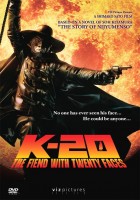
K-20: The Fiend with Twenty FacesK-20: The Fiend with Twenty Faces directed by Shimako Satō. K-20 is a live-action film based on the novels of Soh Kitamura (which sadly haven’t been translated into English) which were in turn inspired by the works and characters of Edogawa Rampo, specifically his famous detective Akechi Kogorō and his nemesis “Twenty Faces.” Akechi’s young assistant Kobayashi also has a role to play. It was because of this Rampo connection that I decided to watch the film in the first place, but even those unfamiliar with the references will be able to enjoy the movie. Packed with action and stunts, a little bit of romance, a great cast, and a large dose of humor, K-20 was extremely entertaining. The film is set in the late 1940s in an alternate history in which the Second World War was never fought but in which a strict hierarchical class structure is enforced. The story follows Endo Heikichi, an acrobat who is arrested for being the master thief K-20 after being set up, and his attempts to prove his innocence, basically by becoming as skilled as K-20 himself.

Filed Under: FEATURES, My Week in Manga Tagged With: Akira Himekawa, comics, film, Gangsta, Kohske, Legend of Zelda, manga

Bookshelf Overload: May 2014

June 1, 2014 by Ash Brown

Not counting the big box of review copies that arrived at the very end of the month, May actually has the distinction of my comics acquisitions outnumbering my manga acquisitions for the month. This is partly due to the fact that I went to TCAF and came away with a lot of goodies. This included picking up the first volume of Hotblood!: A Centaur in the Old West by Toril Orlesky, which is one of my new favorite things, as well as est em’s doujinshi Carmen among many others. As for the preorders that I was particularly excited to receive in May: the third-to-last volume of Blade of the Immortal and the second volume of What Did You Eat Yesterday? were released (reviews to come very soon), as was the second volume of Gangsta, which is a series I’m really looking forward to reading more of. It wasn’t exactly a preorder, but Massive also recently released Caveman Guu by Jiraiya. It’s only sixteen pages, but it’s pretty great. (Caveman Guu will actually be included in Massive: Gay Erotic Manga and the Men Who Make It from Fantagraphics later this year, too.)

Manga!
Android Angels by Kosuke Kabaya
Attack on Titan: No Regrets, Volume 1 written by Gun Snark, illustrated by Hikaru Suruga
Blade of the Immortal, Volume 29: Beyond Good and Evil by Hiroaki Samura
Carmen by est em
Caveman Guu by Jiraiya
Clan of the Nakagamis, Volumes 1-2 by Homerun Ken
Devils and Realist, Volume 1 written by Madoka Takadono, illustrated by Utako Yukihiro
An Even More Beautiful Lie by Kei Kanai
Fairy Tail, Volume 38 by Hiro Mashima
Gangsta, Volume 2 by Kohske
Hard Rock by Akane Abe
Haunted House by Mitsukazu Mihara
Hetalia: Axis Powers, Volume 6 by Himaruya Hidekaz
Kine In! by est em
Monster Musume, Volume 3 by Okayado
Monster Soul, Volume 1 by Hiro Mashima
My Little Monster, Volume 2 by Robico
No. 6, Volume 7 by Hinoki Kino
Otomen, Volume 18 by Aya Kanno
Palepoli by Usamaru Furuya
Sankarea: Undying Love, Volume 7 by Mitsuru Hattori
Say I Love You, Volume 2 by Kanae Hazuki
The Seven Deadly Sins, Volume 2 by Nakaba Suzuki
Sherlock Bones, Volume 5 written by Yuma Ando, illustrated by Yuki Sato
Ultras by est em
What Did You Eat Yesterday?, Volume 2 by Fumi Yoshinaga
A Wish of My Sister by Masahiro Itosugi

Comics!
All You Need is Kill adapted by Nick Mamatas, illustrated by Lee Ferguson
Andre the Giant: Life and Legend by Box Brown
Before You Go by Denise Schroeder
By Chance or Providence by Becky Cloonan
Carciphona, Volumes 1-4 by Shilin Huang
Dinner Ditz by Alexis Cooke
Erogenous by Creative Alchemy
Finn and Charlie Are Hitched, Volume 4: Everyone Is Someone’s Fetish by Tony Breed
Foodwise by Tony Breed
Fujosports! by Various
Hotblood!: A Centaur in the Old West, Volume 1 by Toril Orlesky
The Less Than Epic Adventures of TJ and Amal, Volume 3: Ten Days of Perfect Tunes by E. K. Weaver
My New Fighting Technique is Unstoppable by David Rees
Oafanthology: A Collection of Wuvable Oaf Drawings & Stories edited by Ed Luce
This One Summer written by Mariko Tamaki, illustrated by Jillian Tamaki
The True Lives of the Fabulous Killjoys written by Gerard Way and Shaun Simon, illustrated by Becky Cloonan
Yuri Monogatari, Volume 2 by Various

Novels!
Malice by Keigo Higashino
You and the Pirates by Jocelyne Allen

Collections!
Akiba Anime Art Magazine, Volume 00
Granta: The Magazine of New Writing, Issue 127: Japan

Anime!
Yukikaze, Volumes 1-3 directed by Masahiko Ōkura

Filed Under: Bookshelf Overload, UNSHELVED

  • « Go to Previous Page
  • Page 1
  • Interim pages omitted …
  • Page 124
  • Page 125
  • Page 126
  • Page 127
  • Page 128
  • Interim pages omitted …
  • Page 145
  • Go to Next Page »
 | Log in
Copyright © 2010 Manga Bookshelf | Powered by WordPress & the Genesis Framework