• Skip to primary navigation
  • Skip to main content
  • Skip to primary sidebar
  • Home
  • About Us
    • Privacy Policy
    • Comment Policy
    • Disclosures & Disclaimers
  • Resources
    • Links, Essays & Articles
    • Fandomology!
    • CLAMP Directory
    • BlogRoll
  • Features & Columns
    • 3 Things Thursday
    • Adventures in the Key of Shoujo
    • Bit & Blips (game reviews)
    • BL BOOKRACK
    • Bookshelf Briefs
    • Bringing the Drama
    • Comic Conversion
    • Fanservice Friday
    • Going Digital
    • It Came From the Sinosphere
    • License This!
    • Magazine no Mori
    • My Week in Manga
    • OFF THE SHELF
    • Not By Manga Alone
    • PICK OF THE WEEK
    • Subtitles & Sensibility
    • Weekly Shonen Jump Recaps
  • Manga Moveable Feast
    • MMF Full Archive
    • Yun Kouga
    • CLAMP
    • Shojo Beat
    • Osamu Tezuka
    • Sailor Moon
    • Fruits Basket
    • Takehiko Inoue
    • Wild Adapter
    • One Piece
    • After School Nightmare
    • Karakuri Odette
    • Paradise Kiss
    • The Color Trilogy
    • To Terra…
    • Sexy Voice & Robo
  • Browse by Author
    • Sean Gaffney
    • Anna Neatrour
    • Michelle Smith
    • Katherine Dacey
    • MJ
    • Brigid Alverson
    • Travis Anderson
    • Phillip Anthony
    • Derek Bown
    • Jaci Dahlvang
    • Angela Eastman
    • Erica Friedman
    • Sara K.
    • Megan Purdy
    • Emily Snodgrass
    • Nancy Thistlethwaite
    • Eva Volin
    • David Welsh
  • MB Blogs
    • A Case Suitable For Treatment
    • Experiments in Manga
    • MangaBlog
    • The Manga Critic
    • Manga Report
    • Soliloquy in Blue
    • Manga Curmudgeon (archive)

Manga Bookshelf

Discussion, Resources, Roundtables, & Reviews

Ash Brown

Adaptation Adventures: Udon Entertainment’s Manga Classics

October 8, 2014 by Ash Brown

One day long ago when I was still very small my parents brought home for me a box filled with Great Illustrated Classics–small, compact adaptations of classic literature with illustrations on almost every other page intended to introduce younger readers to some of the great, influential stories of the Western canon. I devoured them. It’s largely thanks to that series that I became so well versed in the classics. When I was older I would go on to read the originals of some of my favorites. And even those that I never got around to, I became familiar enough with their stories that I could hold my own in conversation and understand references made to them.

Literacy is something that I care very deeply about. Closely related to that, I also feel that exposure to the classic stories that have gone on to become such an integral and influential part of Western culture and world literature is important. However, I realize how intimidating those classics can be, especially for those who are reluctant readers to being with, or who simply don’t enjoy the authors’ styles of writing or find the length of some of the originals to be formidable. Because of that, I believe that efforts to adapt these stories in a way that is more approachable and appealing to a larger audience can be extremely valuable, which brings me to Manga Classics.

Manga Classics

Manga Classics is a line of graphic novel adaptations jointly released by Udon Entertainment and Morpheus Publishing. Their aim is to present faithful, high-quality adaptations of classic stories in a format intended to be especially appealing to young adults–that is, full-length, manga-style graphic novels. Udon isn’t the only publisher to attempt something similar to this. Recently I’ve seen other comics, graphic novel, and manga adaptations of classics released by publishers like Marvel and One Peace Books (to provide just two examples) with varying levels of success.

Strong adaptations can be notoriously difficult to achieve. Purists will often outright shun adaptations as they almost never carry the same nuance and complexity found in the source material or because they may stray too far from the original. Adaptations are especially challenging when trying to present a story in an entirely different medium, such as adapting prose into comics or film. For me, I consider an adaptation to be a great one if it is entertaining and engaging in its own right while at the same time inspiring readers (or viewers) to seek out the original stories. I feel that Manga Classics’ first two adaptations have accomplished this.
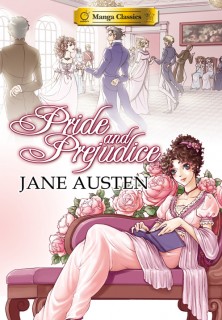
Pride & PrejudiceThe Manga Classics series debuted in 2014 with adaptations of Jane Austen’s Pride & Prejudice and Victor Hugo’s Les Misérables. Out of the two, I am most familiar with Pride & Prejudice. I’ve read the original, I’ve seen many of its film and television adaptations (if you’ve not already discovered the recent webseries The Lizzie Bennet Diaries, I highly recommend it), and back in high school I was actually even a main cast member in a Pride & Prejudice stage production.

The original Pride & Prejudice was first published in England in 1813. The story follows Elizabeth Bennet, the second-oldest daughter of an English family with a country estate outside of London. Elizabeth’s mother is determined to see her five daughters married, and married well, so when the wealthy (and young) bachelor Mr. Bingley moves into the neighborhood, her scheming immediately begins. Fortunately, Bingley and Jane, the eldest Bennet daughter, hit it off. Unfortunately, due to some misunderstandings and interference from Bingley’s best friend Mr. Darcy, their romance is cut short. And because of that, Elizabeth’s opinion of Darcy suffers greatly, not that she held him in very high regard to begin with. To add to the awkwardness, Darcy, to his dismay, seems to have developed feelings for Elizabeth. Things get even more complicated from there as manners, social standing, morals, and some very strong personalities come into play before the Bennet daughters find their way in life and love.
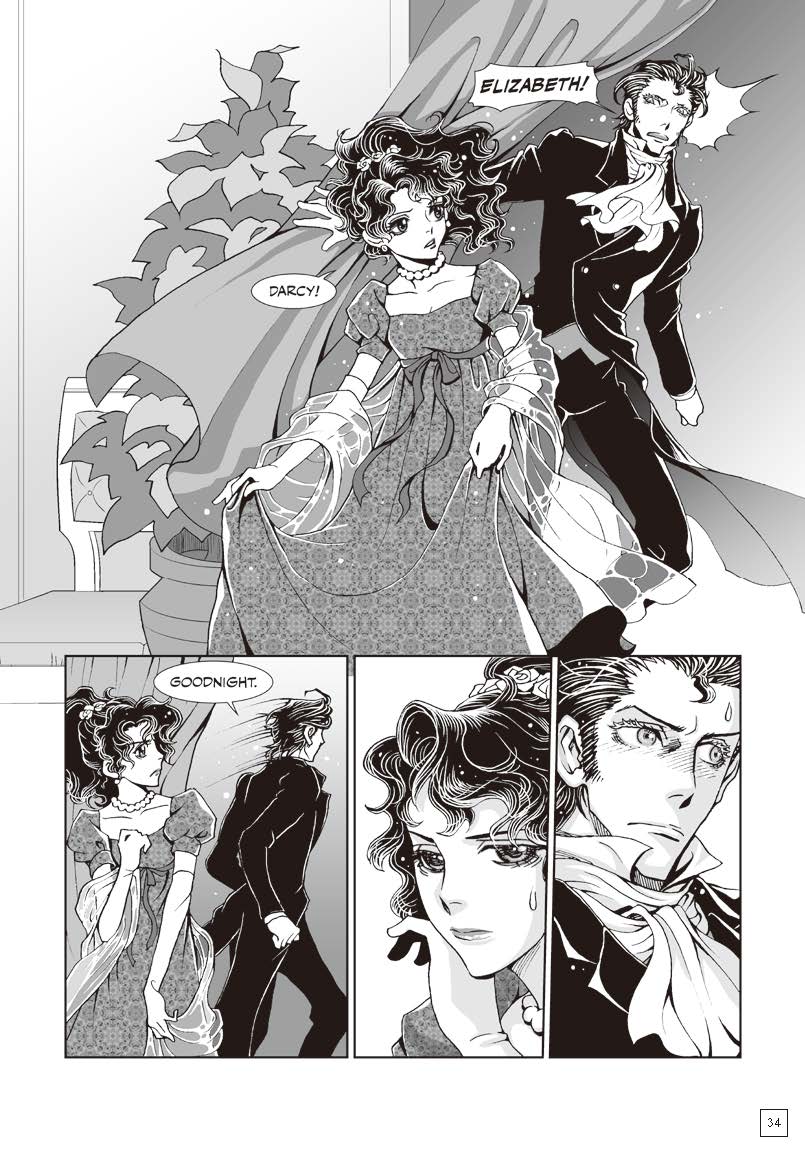
Elizabeth Bennet and (blushing!) Mr. Darcy

Elizabeth Bennet and (blushing!) Mr. Darcy

Reading the Manga Classics version of Pride & Prejudice reminded me how much I enjoy the original novel, its story, and its characters. I was also struck by how perfectly Austen’s work is suited for shoujo. The story has been adapted by Stacy King and illustrated by Po Tse. The narrative has been slimmed down and largely focuses on Elizabeth and the ups and downs of her delightfully antagonistic relationship with Darcy. All of the major plot points are still there although some of the other characters (such as Elizabeth’s younger sisters) aren’t as fully developed. But the story still works and works quite well. The only thing I didn’t really like about Manga Classics’ Pride & Prejudice was the portrayal of Mr. Collins, the heir to the Bennet estate. To some extent he serves as the story’s comic relief, but he comes across as too much of a caricature in the graphic novel (visually and narratively) which clashes in style from the rest of the comic. Generally though, Po Tse’s artwork is quite lovely and occasionally even stunning. Elizabeth and Jane’s hair is gorgeously drawn and particular attention has been given to Regency period clothing and architecture as well. (A preview of the first chapter is available here!)
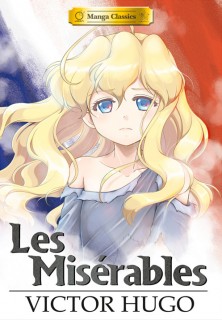
Les MisérablesI am much less familiar with Les Misérables. Although I know the basic story of the novel, I’ve never actually read the original. Nor have I seen any of its direct adaptations. However, I have listened to multiple sound recordings of the musical many, many times. I’ve seen the recent 2012 film adaptation of the musical as well, but that’s a couple steps removed from Hugo’s original.

Les Misérables was first published in France in 1862. The novel (one of the longest ever written) is an epic work of historical fiction set in the first half of the 19th-century, a rather tumultuous time in France. The novel begins in 1815 after the defeat of Napoleon Bonaparte and, following a large cast of characters, digressions, and subplots, climaxes with the June 1832 uprising in Paris. The most well-known story out of Les Misérables is that of the ex-convict Jean Valjean, the officer Javert whose goal is to recapture Valjean, and a young orphan girl named Cosette who becomes Valjean’s charge. Those three individuals and their relationships and connections to one another and the rest of the characters form the core of Les Misérables. Politics, religion, economic and social conditions, philosophy, morality, redemption, and love all have an important role to play in the novel as well.
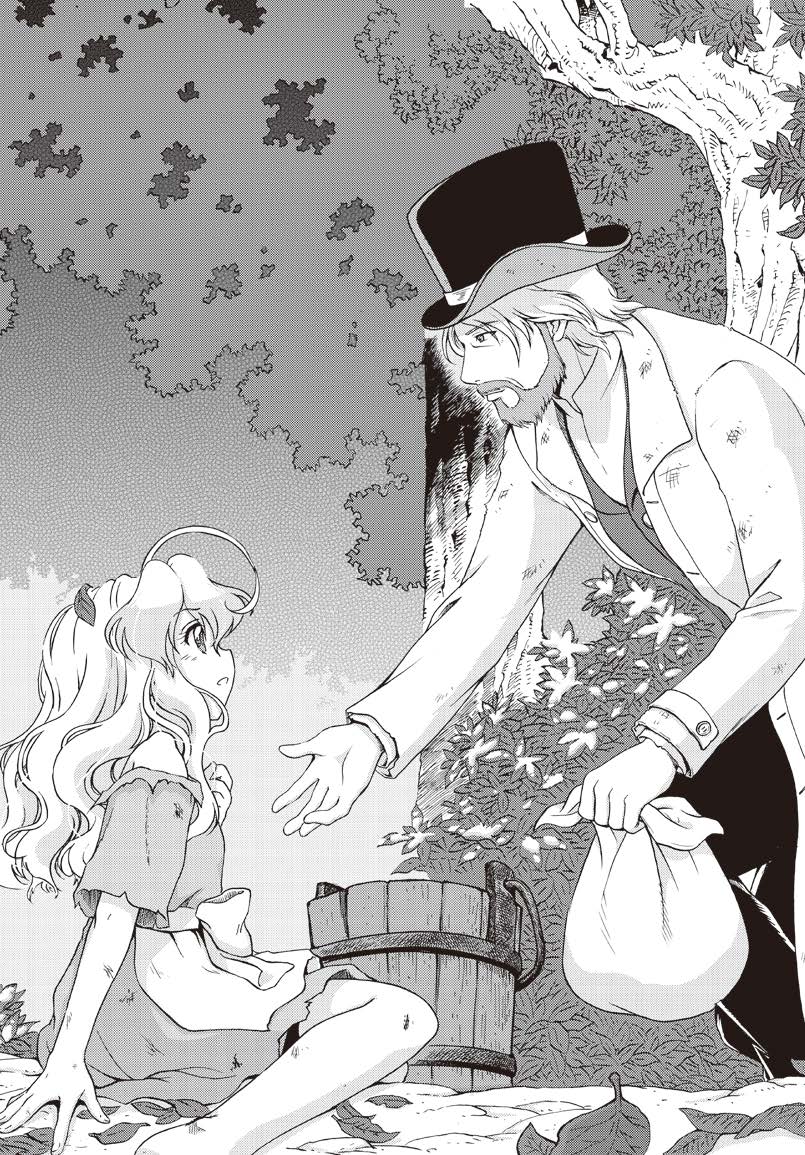
Cosette and Jean Valjean

Cosette and Jean Valjean

Because I’m not as familiar with the original Les Misérables it’s difficult for me definitively say how the Manga Classics’ adaptation directly compares. However, I can say that it reads very well. Most of the subplots have been dropped in favor of the main storyline following the Valjean and Cosette and those who are directly involved with them. The adapter, Crystal Silvermoon, has taken great care to consider other adaptations of Les Misérables in addition to the original in the creation of the graphic novel. Because Les Misérables is so lengthy and complex there would be no possible way to include everything, but the most iconic scenes are all present in the Manga Classics adaptation. Stacy King provided additional assistance with the scripting and SunNeko Lee served as the volume’s illustrator. Stylistically, the art is a little simpler than that found in the Pride & Prejudice adaptation. However, it is more even in tone which suits the story’s serious and dramatic nature. Once again, particular attention has been given to the setting. I found the Les Misérables graphic novel to be engaging and, perhaps more importantly, it’s the first adaptation that has really made me interested in picking up the original.

Because it is so easy to create an unsatisfying adaptation of any work, let alone a work that is well-loved or held in high esteem, and after seeing so many poor adaptations, I’ll admit that I approached Manga Classics with some apprehension. However, I was very happy to discover that the line’s first two adaptations were very well done. Though I might have a small nitpick here or there, I sincerely enjoyed both volumes. I could easily see Manga Classics being used in a classroom setting, but I think the graphic novels will appeal to readers outside of that context as well. I am very pleased that new audiences will have the opportunity to be introduced to some of the classic works of literature in such an approachable format. Hopefully, like Great Illustrated Classics did for me, Manga Classics will inspire new generations to seek out those original stories.

Spring 2015 will bring three more adaptations to the Manga Classics line, graphic novel versions of Jane Austen’s Emma, Charles Dickens’ Great Expectations, and Nathaniel Hawthorne’s The Scarlet Letter. So far, Manga Classics has approached the source material of its adaptations with care and respect; I can honestly say that I’m looking forward to seeing future Manga Classics releases.

Thank you to Udon Entertainment for providing copies of Pride & Prejudice and Les Misérables for review.
Filed Under: FEATURES Tagged With: comics, Crystal Silvermoon, Jane Austen, Manga Classics, Po Tse, Stacy King, SunNeko Lee, Udon Entertainment, Victor Hugo

My Week in Manga: September 29-October 5, 2014

October 6, 2014 by Ash Brown

My News and Reviews

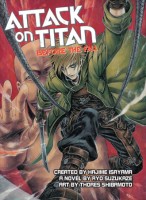
Last week at Experiments in Manga there were three posts in addition to the usual My Week in Manga feature. To start with, the winner of the Triton of the Sea manga giveaway was announced. The post also includes a list of some of the manga available in English that feature mermaids and/or mermen. Next was my review of Ryo Suzukaze’s novel Attack on Titan: Before the Fall, which is a prequel to Hajime Isayama’s original Attack on Titan manga series. I liked the premise of the novel much more than I did its execution, but it should still be pretty interesting for Attack on Titan fans. And finally, over the weekend, September’s Bookshelf Overload was posted. As for other interesting things online…I’ve been so busy at work lately that I’ve not really been able to keep up with all that’s going on. However, I do know that Seven Seas is currently in the process of revealing seven new licenses via Twitter. I’m pretty sure that Sean will be doing a wrap-up at A Case Suitable for Treatment soon which I’ll link to, but in the meantime you can always check out Seven Seas’ Twitter timeline. (There have been some really interesting choices so far!)

Quick Takes

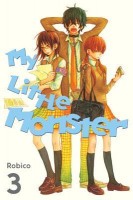
My Little Monster, Volume 3My Little Monster, Volume 3 by Robico. I have been thoroughly enjoying My Little Monster and its cast of rather quirky characters. However, the third volume doesn’t seem to really move the plot along much, nor does it really develop the characters further. If anything, the series has lost its forward momentum and undoes some of the progress that has been made. After the various confessions of love from the previous volumes, Haru and Shizuku spend most of the third going through it all again. Shizuku has once more decided that she doesn’t have time for friendships or romantic relationships and wants to focus on her studies. Haru is fitting in a little better at school and is actually able to put the fact that everyone except Shizuku is terrified of him to good use, although he’s still fairly volatile and his behavior and obliviousness of others occasionally causes some real problems. So overall, not much has really changed in My Little Monster except that a few more hints have been dropped about Haru’s brother, whom I’m very curious about. I’m still enjoying the series and find its deadpan humor amusing, but I do hope to see more plot and character development in future volumes.

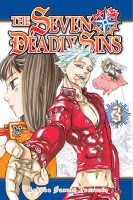
The Seven Deadly Sins, Volume 3The Seven Deadly Sins, Volume 3 by Nakaba Suzuki. As can be safely assumed from the cover, the third volume of The Seven Deadly Sins heavily features the newly introduced Ban, the Fox Sin of Greed. I’m okay with this because, well, I actually like Ban as a character. Despite being one of the Seven Deadly Sins and therefore being one of the series’ heroes (or at least one of its protagonists), Ban’s really not that nice of a guy. Frankly, he’s an unapologetic jerk (with a very nice set of abs and a fondness for alcohol, though he really can’t hold his drink). But, like the other Sins, Ban has a tragic past to go along with his arrogant personality. He’s also kind of a goofball. One of the things that I particularly enjoy about The Seven Deadly Sins is the ridiculously overpowered battles between the ridiculously overpowered characters. The action can sometimes be a little difficult to follow, but the resulting destruction is quite obvious. I’m also rather impressed by how well Suzuki visually handles Diane, the giantess of the Seven Deadly Sins. She’s huge, but her presence always seems very natural on the page and Suzuki does a nice job of incorporating her into the artwork.

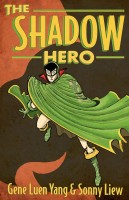
The Shadow HeroThe Shadow Hero written by Gene Luen Yang and illustrated by Sonny Liew. Initially I wasn’t planning on picking up The Shadow Hero, most likely because I’m generally not that interested in superheroes. Fortunately I realized that was a very silly reason not to read the comic, especially considering that Yang is a fantastic writer and I really like Liew’s artwork and use of color. Long story short, I absolutely loved The Shadow Hero. The story of The Shadow Hero was inspired by an obscure superhero from the 1940s called the Green Turtle which was created by Chu Hing, one of the first Asian Americans to work in American comics. (The volume also contains a reproduction of the first Green Turtle comic, which was a nice addition.) The Shadow Hero serves as the Green Turtle’s origin story. Hank Chu is the son of a Chinatown grocer who looks forward to taking over his father’s store. His mother, however, has much bigger plans for her son and has decided that he will become a superhero, despite the complete lack of any superpowers. With a great story and great art, and plenty of humor to balance the more serious aspects of the comic, The Shadow Hero is definitely recommended.

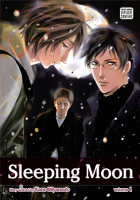
Sleeping Moon, Volume 1Sleeping Moon, Volumes 1-2 by Kano Miyamoto. I tend to really enjoy Miyamoto’s work, so I was pretty excited when SuBLime licensed her short boys’ love series Sleeping Moon. I was particularly looking forward to it due to its supernatural elements, but in the end I didn’t find it as compelling as some of her other manga which are more firmly based in reality. Part of that is probably because much of the romantic relationship between two of the leads felt as though it was tacked on simply because the series was supposed to be boys’ love. Still, there were parts of Sleeping Moon that I enjoyed, and Miyamoto’s artwork is as lovely as ever. Akihiko’s family is cursed–the male heirs all die young, never making it past their thirties. And since his thirtieth birthday is fast approaching, Akihiko has a vested interest in discovering the truth behind the curse in order to prevent his own death and the death of his cousin. And that’s when the time slips begin–Akihiko finds himself spontaneously traveling to the Meiji era where one of his distant relatives is trying to unravel the same mystery. The moody supernatural and horror elements work better than the manga’s romance and the time traveling is handled quite well, too.

Filed Under: FEATURES, My Week in Manga Tagged With: comics, Gene Luen Yang, Kano Miyamoto, manga, My Little Monster, Nakaba Suzuki, Robico, Seven Deadly Sins, sleeping moon, Sonny Liew

Pick of the Week: Shoujo & Slaughter

October 6, 2014 by Sean Gaffney, Ash Brown, Michelle Smith, Anna N and MJ Leave a Comment

potwSEAN: There’s an embarrassment of riches to pick from this week, but there’s one title that will be an obvious immediate read ASAP: Oresama Teacher. It’s simply the funniest shoujo manga out there, and I hope that anime fans who enjoyed Monthly Girls’ Nozaki-kun, a shounen series also by Izumi Tsubaki, will give this one a try and see why the silliness may be partly biographical.
ASH: Any other week and I probably would have picked Vinland Saga, but I’ll stand with Sean this time in going for hilarious shoujo. Except my must read for the week is My Love Story!! I adored the first volume and am extremely curious to see how the manga works as a series.

MICHELLE: Despite a few of my favorites also on this list (it does give me a pang not to pick Natsume’s Book of Friends, given how much I’ve been loving it lately), the fact that volume two of My Love Story!! has been in my Amazon cart for at least a month makes it the obvious choice this go ’round.

ANNA: I love both hilarious and heartwarming shoujo. However, with autumn coming I find myself thinking that it would be fun to read manga where the main characters are bundling themselves up in furs, trudging through snow, and slaughtering the innocent. Therefore, the excellent Vinland Saga is my pick of the week.

MJ: I suppose I also come down on the side of slaughter, for though there are a number of interesting releases on the way this week (and, like others here, I’m very enthusiastic about the second volume of My Love Story!!), but it’s hard for me to look elsewhere in the wake of a new volume of Knights of Sidonia. This is still one of my favorite series currently running, and not just for its compelling mix of romance, sci-fi, and horror. I love its artwork so much, that if Vertical stopped releasing it today, I’d continue buying it in Japanese just so I could look at it. Definitely my must-buy title for the week.

What looks good to you this week?

Filed Under: PICK OF THE WEEK

Bookshelf Overload: September 2014

October 5, 2014 by Ash Brown

The number of September acquisitions was definitely more reasonable than August’s, which is a good thing especially since it looks like October will be pretty rough on my wallet. What was unusual about September was the arrival of a nicely sized box of Japanese manga that I had shipped to me from Japan. I wanted to read the endings and side stories of a couple of series that sadly were never finished in English–Kaori Ozaki’s Meteor Methuselah (aka Immortal Rain) and Nari Kusakawa’s Ryuu no Hanawazurai (Two Flowers for the Dragon)–and I had some coupons that were almost ready to expire. I also ended up with a random box full of mostly out-of-print hentai. As for the preordered manga that I was particularly looking forward to in September, Vertical made a good showing with What Did You Eat Yesterday?, Volume 4 by Fumi Yoshinaga (which I reviewed not too long ago) and Yoshikazu Yasuhiko’s Mobile Suit Gundam: The Origin, Volume 7: Battle of Loum (review to come soonish). Vertical released Before the Fall, Ryo Suzukaze’s light novel prequel to Hajime Isayama’s Attack on Titan manga series, too. (I recently reviewed that one as well.) September also brought Haikasoru’s Phantasm Japan anthology and Peter D. Shapinsky’s Lords of the Sea, which I was very happy to see.

Manga!
Alice in the Country of Hearts, Omnibus 1 by Soumei Hoshino
Angel Sanctuary, Volumes 1-20 by Kaori Yuki
A Centaur’s Life, Volume 4 by Kei Murayama
Domin-8 Me! by Sessyu Takemura
The Four Immigrants Manga by Henry Yoshitaka Kiyama
From the New World, Volume 6 written by Yusuke Kishi, illustrated by Toru Oikawa
Juicy Fruits by Yumisuke Kotoyoshi
Kamen, Volume 1 by Gunya Mihara
Kinou Nani Tabeta?, Volume 1 by Fumi Yoshinaga
Meteor Methuselah, Volumes 9-11 by Kaori Ozaki
Misty Girl Extreme by Toshiki Yui
Mobile Suit Gundam: The Origin, Volume 7: Battle of Loum by Yoshikazu Yasuhiko
The Original Bondage Fairies, Volumes 1-2 by Kondom
Ryuu no Hanawazurai, Volume 7 by Nari Kusakawa
The Spirit of Capitalism by Tuna Empire
Terra Formars, Volume 2 written by Yu Sasuga, illustrated by Ken-ichi Tachibana
Touhou Shinigami: Meteor Methuselah Gaiden by Kaori Ozaki
What Did You Eat Yesterday?, Volume 4 by Fumi Yoshinaga

Comics!
DAR: A Super Girly Top Secret Comic Diary, Volumes 1-2 by Erika Moen
Family Portraits, Issues 1-3 by Sam Orchard
Impatience by Kori Michele
Megahex by Simon Hanselmann
Les Misérables adapted by Crystal Silvermoon, illustrated by SunNeko Lee
Musashi adapted by Sean Michael Wilson, illustrated by Michiru Morikawa
Portals by Kori Michele
Pride & Prejudice adapted by Stacy King, illustrated by Po Tse
The Rise of Aurora West written by Paul Pope and J. T. Petty, illustrated by David Rubín
Speculative Relationships by Various

Light Novesl!
Attack on Titan: Before the Fall by Ryo Suzukaze
Boogiepop at Dawn by Kouhei Kadono
Boogiepope Returns: Vs. Imaginator, Parts 1-2 by Kouhe Kadono
Cold Light by Narise Konohara

Anthologies!
Phantasm Japan edited by Nick mamatas and Masumi Washington

Nonfiction!
Attack on Titan Guidebook by Hajime Isayama
Lords of the Sea by Peter D. Shapinsky

Anime!
Arakawa Under the Bridge, Seasons 1-2 directed by Akiyuki Shinbo.

Filed Under: Bookshelf Overload, UNSHELVED

Attack on Titan: Before the Fall

October 3, 2014 by Ash Brown

Attack on Titan: Before the FallAuthor: Ryo Suzukaze
Illustrator: Thores Shibamoto

Translator: Ko Ransom
U.S. publisher: Vertical
ISBN: 9781939130860
Released: September 2014
Original release: 2011

Hajime Isayama’s manga series Attack on Titan has become extraordinarily successful not only in Japan but worldwide as well. The series has inspired numerous manga spinoffs, anime, games, and more. Attack on Titan: Before the Fall is the first of three light novels written by Ryo Suzukaze and illustrated by Thores Shibamoto which serve as a prequel to Isayama’s original series. The second and third novels have been adapted as the manga series Attack on Titan: Before the Fall, illustrated by Satoshi Shiki, which is being released in English by Kodansha Comics. The first Before the Fall novel, however, was licensed and released by Vertical in 2014 with an English translation by Ko Ransom. Currently the novel, which was originally published in Japan in 2011, is chronologically the earliest story set in the Attack on Titan universe. I’m fascinated by the Attack on Titan phenomena and the large fanbase that it has developed, not to mention the series itself, so I was very interested in reading the Before the Fall prequel.

Angel Aaltonen may be young, but his ingenuity is impressive. A master craftsman, he and the others at the workshop he is a part of strive to design, create, and improve the weapons used in humanity’s fight for survival against the Titans. Except that Angel has never actually seen a Titan. Neither has most of the human population which seeks safety within a series of enormous walls. But while for a time they may be safe, they are also trapped by their own defenses. Only the members of the Survey Corps and Garrison forces have directly confronted the Titans, gigantic monstrosities that devour humans and bring destruction and terror. Even more dire is the fact no one knows how to stop or defeat the Titans. Angel and many others fear that one day the unthinkable will happen and the walls will fail. They are determined to discover the Titan’s weaknesses before that can happen, but the existing political and religious situation will make that prospect even more difficult than it already is to accomplish.

Most of the stories in Attack on Titan as a whole follow those characters who serve in the military–the people who are on the front lines directly fighting the Titans. Before the Fall, however, focuses on those who work behind the scenes to make those battles possible–the scientists, craftsmen, and engineers. (Granted, by the end of Before the Fall, Angel has become fairly hands-on himself.) It’s an interesting approach, giving a slight spin to an already familiar story, and one that I particularly liked and appreciated. Among other things, Before the Fall shows the development of some of the most iconic technology in Attack on Titan, the three-dimensional maneuvering gear. But as intriguing as the story is in Before the Fall, sadly the writing itself isn’t particularly engaging and the novel ends up being fairly slow going despite several intense action sequences. There were also a few frustratingly obvious oversights made by the characters; I found it difficult to believe that their logic would have been so flawed. Ultimately, I liked the premise of Before the Fall much more than its execution.

Although the writing might not be the best, where Before the Fall excels is in providing Attack on Titan with more thoroughly grounded worldbuilding, backstory, and lore. Suzukaze not only explores the development and creation of the equipment and weapons that will be used to fight the Titans, he also shows the beginning of the unrest between the general population, the military and government, and the religious cults and factions. There is enough of a basic introduction to the world that even readers who aren’t familiar with Attack on Titan should be able to easily follow Before the Fall, but the novel will appeal most to those who already know and enjoy the franchise. Before the Fall doesn’t tend to have the overwhelmingly bleak atmosphere of the original manga series, but it is still definitely a part of Attack on Titan, meaning that there are many casualties and several gruesome and horrifying turns of events. The air of dark mystery generally found in Attack on Titan remains in Before the Fall, as do the desperate punctuations of human hope and determination in the face of annihilation.

Filed Under: REVIEWS Tagged With: attack on titan, Light Novels, Novels, Ryo Suzukaze, Thores Shibamoto, vertical

Manga the Week of 10/8

October 2, 2014 by Sean Gaffney, Ash Brown, Michelle Smith, Anna N and MJ 3 Comments

SEAN: Manga. Lots. Let’s go.

It wasn’t on Amazon 2 weeks ago, but now I see there is a release for Volume 9 of Ze. A series whose release dates are almost as convoluted as its content.

ASH: I was wondering what was going on with Ze‘s releases.

mangadogs1

SEAN: Sadly, Kodansha did not stick with the original title for this series, GDGD-DOGS. But Manga Dogs works just as well, and for fans of Missions of Love it’s by the same author, and has another reverse harem.

MICHELLE: Huh. While Missions of Love was not for me, I kind of liked Toyama’s I Am Here!. Still, I dunno… the temptation is pretty faint.

ANNA: I like reverse harem as much as the next gal, but this isn’t really on my radar.

SEAN: And there’s also the 9th volume of Missions of Love as well, featuring the most likeable, well-adjusted cast in all of shoujo.

ASH: Ha!

SEAN: And the 5th volume of Vinland Saga, which is unlikely to get a shoujo spinoff in Aria anytime soon, unless Ylva ends up going to high school in Japan or somesuch.

ASH: I… would actually read that. (And I’m definitely reading Vinland Saga!)

ANNA: I would also read that! Vinland Saga is so well-executed, each new volume is a treat.

SEAN: Seven Seas has the first volume of Magical Girl Apocalypse, which seems to be for folks who thought Madoka Magica to be too light-hearted and cheerful. But hey, Akita Shoten license! A rarity these days.

And there’s a 2nd Strike Witches: 1937 Fuso Sea Incident.

Vertical has an 11th volume of Knights of Sidonia, which I hope will have more cute romance and action sci-fi (and perhaps a bit less tragic horror?).

ASH: One can never tell with Knights of Sidonia.

MICHELLE: I absolutely must get caught back up on this series. Looks like we’ll be caught up to Japan fairly soon, too.

ANNA: I need to get caught up too! I am so pleased that we have so many manga titles set in SPACE!

MJ: This!!

SEAN: The rest is Viz. If you didn’t pick up the 2nd Food Wars! When it came out digitally, it’s now available in print. I’m hoping for slightly less naked food reactions, but I know there will be some.

ASH: I still prefer my manga in print, so I’ve been waiting to pick up the second volume until now.

MICHELLE: I’m actually kinda looking forward to this.

ANNA: I thought that there were glimmerings of an interesting title here, but I have to admit when I read the first volume I was put off by all the upskirt panels and naked food reactions.

MJ: I’m cautiously optimistic.

SEAN: Happy Marriage?! continues to be a very ironic title as we hit Vol. 8.

MICHELLE: This series has grown on me, so I’ll definitely be checking out volume eight.

ANNA: I think it has gotten a bit meandering as the series go along, but I’ll still read every volume shortly after it comes out.

honeyblood1

SEAN: Then there’s Honey Blood, which (say it with me, folks) has vampires in it! The cover art makes me go >_> a bit, but I’m hoping that the relationship in this series is not as unequal as it first seems.

ANNA: Did someone say supernatural shoujo!? I hope this is more like Midnight Secretary than Black Bird. Will be checking it out for sure.

SEAN: Heartwarming supernatural shoujo #1: Kamisama Kiss, which has gotten up to Vol. 16, and shows no sign of ending anytime soon.

MICHELLE: Yay! I like it, but I think I still prefer the author’s Karakuri Odette.

ANNA: I actually like it more than Karakuri Odette! This series is consistently charming.

SEAN: I was a huge fan of the first My Love Story!!, despite the multiple exclamation marks, and look forward to seeing where it goes from here.

ASH: I absolutely loved the first volume of My Love Story!! So much so, here are a few extra !!! for good measure.

MICHELLE: My Love Story!! is a glorious thing. Volume two has been in my Amazon cart for a few weeks now.

ANNA: I have read this volume and loved it just as much as the first!!!!!!!!!

MJ: Definitely looking forward to this… so sweet.

SEAN: Naruto seems to be finally grinding to a slow halt, but that still leaves several volumes to go. And several more times for Sasuke to turn evil.

Heartwarming supernatural shoujo #2: Natsume’s Book of Friends, which has gotten up to Vol. 17, and shows no sign of ending anytime soon.

MICHELLE: Yay! I suppose this means I am a sucker for heartwarming supernatural shoujo.

SEAN: Nura: Rise of the Yokai Clan has started its final arc, but that’s going to be a few volumes as well. Here’s the 23rd.

If you missed One Piece the first time around, the 3-in-1 is the perfect catchup, and it’s at Vol. 10.

Oresama Teacher is not supernatural, and I wouldn’t call it consistently heartwarming, but if you want funny shoujo, this is the manga for you, and I adore it. Here’s Vol. 17.

MICHELLE: Maybe it’s the lack of heartwarmitude that makes me only like this one. I catch up on it periodically, but I don’t love it.

ANNA: I do love it, just because it is so ridiculous. This is the only long-running comedy title that has consistently captured my interest.

toriko24

SEAN: The new arc in Toriko will apparently focus on Komatsu rather than Toriko, as it’s a cooking battle. Should be fun.

Voice Over: Seiyu Academy is over halfway done, and I’m hoping we see a bit more fleshing out of the male lead soon beyond “CATS”.

MICHELLE: *snerk* I do like the cat bits, though. And, surprisingly, I’m rather enjoying Voice Over.

SEAN: Lastly, we get the debut of a new Jump title as well as its 2nd volume, as Viz pushes a fast start to World Trigger. It’s at 8+ volumes in Japan, so has broken the “early Jump cancellation” curse. Should be interesting.

ASH: I’ve recently heard some good things about World Trigger. And two volumes at once? I may have to check it out.

MICHELLE: Whereas I have heard precisely zero things about it! I’ll wait for Ash’s review to decide.

ANNA: I know nothing about this but I will be reading it!

MJ: I’ll be checking this out for sure.

SEAN: Are you exhausted yet? What manga here makes you want to take it home?

Filed Under: FEATURES, manga the week of

Manga Giveaway: Triton of the Sea Giveaway Winner

October 1, 2014 by Ash Brown

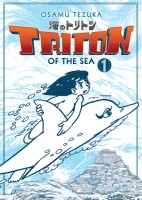
Triton of the Sea, Volume 1And the winner of the Triton of the Sea manga giveaway is…Haley S.!

As the winner, Haley will be receiving a copy of the first omnibus in Osamu Tezuka’s series Triton of the Sea. About a year ago, I came to the realization that I had read quite a few manga that featured merfolk of one sort or another. And so for this giveaway, I was interested in learning about all of the mermaids and mermen that other people had come across while reading manga. I’ve complied a list below of manga that feature merfolk, but be sure to check out the giveaway comments for more details on some of them.

Some of the manga in English featuring merfolk:
Castle of Dreams by Masami Tsuda
Children of the Sea by Daisuke Igarashi
A Centaur’s Life by Kei Murayama
Berserk by Kentaro Miura
The Earl and the Fairy by Ayuko
Legendz written by Rin Hirai, illustrated Makoto Haruno
Mermaid Saga by Rumiko Takahashi
Monster Musume: Everyday Life with Monster Girls by Okayado
Moon Child by Reiko Shimizu
One Piece by Eiichiro Oda
Pichi Pichi Pitch written by Michiko Yokote, illustrated by Pink Hanamori
Princess Mermaid by Junko Mizuno
Selfish Mr. Mermaid by Nabako Kamo
Triton of the Sea by Osamu Tezuka
Tropic of the Sea by Satoshi Kon

I was a little lenient with the definition of merfolk above (mostly because I wanted an excuse to include Daisuke Igarashi’s Children of the Sea) and I’m certain that it’s not a comprehensive list, either. But, it should be a good place to start if you’re looking for some mermen or mermaids in manga. Thank you to everyone who participated in this month’s giveaway; I hope to see you all again for the next one, too!

Filed Under: UNSHELVED Tagged With: manga, Osamu Tezuka, Triton of the Sea

Pick of the Week: Priapus & more

September 29, 2014 by Ash Brown, Sean Gaffney, Michelle Smith, Anna N and MJ 2 Comments

potwASH: It’s a very small shipping list this week for manga, but it also contains one of the volumes that I’m especially excited to see being released in English—Mentaiko Itto’s Priapus. After Gengoroh Tagame’s work, Priapus will be the first gay manga to receive a wide release in English as Bruno Gmünder expands its Gay Manga line. Itto’s work will probably appeal to a broader audience as well, seeing as Tagame’s can be rather…intense.

SEAN: It’s not really in my wheelhouse, but I can’t deny that Priapus should definitely be the pick of the week. That said, I’ll go with a title I will actually be reading, which is the new volume of My Little Monster, a fun shoujo series from our friends at Kodansha.

MICHELLE: I’m in the same boat as Sean. Priapus could be awesome, but the one I’m guaranteed to buy is the latest installment of My Little Monster. It’s in my Amazon cart as we speak!

ANNA: It is cool that more gay manga is being made available in English! That being said, I’m excited for the latest volume of Gundam: The Origin. I’m looking forward to setting aside a long afternoon soon to get caught up on all the space battles and Char Aznable being all Aznably.

MJ: I’ll bring things full-circle here, because the only thing on my list this week is Priapus. I’m thrilled that it is being released, and even though I realize I’m not its intended audience, I’m pretty psyched to read it as well.

What looks good to you this week?

Filed Under: PICK OF THE WEEK

My Week in Manga: September 22-September 28, 2014

September 29, 2014 by Ash Brown

My News and Reviews

Last week unintentionally turned into an Osamu Tezuka Week at Experiments in Manga…sort of. First of all, this month’s manga giveaway features Tezuka’s Triton of the Sea. Tell me a little about the merfolk you’ve encountered in manga for a chance to win the first omnibus of the series. (The winner will be selected and announced on Wednesday, so you still have a little time!) I also reviewed Dororo, Volume 3. Out of all of Tezuka’s manga that has so far been released in English, Dororo is one of my personal favorites. It’s currently available from Vertical in an omnibus edition which contains the entire series, however it may not be reprinted. I highly recommend picking up a copy sooner rather than later if it seems like a series you’d be interested in. And then for something completely different, over the weekend I reviewed the tenth-century classic The Tale of the Cavern (also known as The Tale of the Hollow Tree) which has absolutely nothing to do with Tezuka, but everything to do with music, love, and Heian-era court life.

In other news, the second volume of Lianne Sentar’s Tokyo Demons is now available for purchase as an ebook from the Sparkler Shop, which means the print edition will be released in the near future as well! (If you missed my early review of the novel, I loved it.) And speaking of Sparkler, the membership drive is still going on. If Sparkler Monthly doesn’t get at least 1,000 subscribers it most likely won’t be able to continue beyond its second year, which would make me extraordinarily sad. Please consider supporting Sparkler Monthly, if you can!

Elsewhere online, Shonen Jump is soliciting questions for Takeshi Obata, who will be a guest at New York Comic Con this year. If, like me, you can’t make it out to NYCC, Obata’s panel will thankfully be streamed live online. (Hopefully it will also be recorded.) In London, the Cartoon Museum is currently showing the exhibit Gekiga: Alternative Manga from Japan. To coincide with the exhibition, The Cartoonists’ Club of Great Britain wrote a brief introduction to gekiga. Finally, Vertical released a particularly interesting post on its Tumblr account about manga’s English-language market and specifically about the pricing of books.

Quick Takes

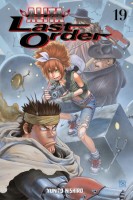
Battle Angel Alita: Last Order, Volume 19Battle Angel Alita: Last Order, Volume 19 by Yukito Kishiro. Last Order was my introduction to the Battle Angel Alita universe. It’s probably best described as an alternate ending to the original series. While I was never as taken with Battle Angel Alita as much as other people seem to be, there were parts that I really enjoyed: interesting characters and character designs, martial arts, great action scenes, and so on. But the plot just never seemed to pull together in a way that satisfied me. I didn’t realize or expect that the nineteenth volume would be the final volume of Last Order. It’s also one of the most frustrating volumes as Kishiro seems to rush through the story in order to bring everything to some sort of conclusion and, in my opinion, fails to do so. Even more disappointing is the fact that Alita doesn’t even really make much of an appearance in it. Apparently there is yet another Battle Angel Alita series that will soon be starting in Japan, but I have no idea how it relates to Last Order. There was certainly enough left confused and unresolved in Last Order that there’s plenty of material for Kishiro to choose from.

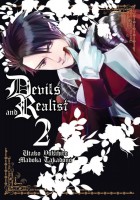
Devils and Realist, Volume 2Devils and Realist, Volume 2 written by Madoka Takadono and illustrated by Utako Yukihiro. Although I mostly enjoyed the first volume of Devils and Realist, I was unsure how far I wanted to pursue the series and so decided to read at least one more volume. After reading the second installment, I can say that I’ll probably be reading even more of Devils and Realist in the future. Generally stronger than the first volume and more even in tone, the second volume takes a slightly more serious and dramatic turn. The series’ humor is still present though, interspersed among the more life-threatening events of the manga and the story’s other dangerous mysteries. Yukihiro’s artwork and character designs are very attractive, and as a whole there are some definite homoerotic undertones to the manga as well. Readers’ enjoyment of Devils and Realist will probably largely depend on how well they like the lead and his personality. I, for one, am greatly amused by William’s refusal to believe in the supernatural despite it staring him in the face as he stubbornly tries to come up with any other possible explanation for the strangeness going on in his life.

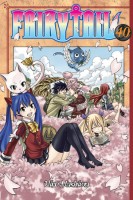
Fairy Tail, Volume 40Fairy Tail, Volumes 40-42 by Hiro Mashima. I’ve only read two series by Mashima–Fairy Tail and Monster Soul–but out of those two, I find that Fairy Tail is the better manga. The long Grand Magic Games tournament arc has now finally reached its conclusion with the fortieth volume. While I did find some of the Games enjoyable, for the most part I’m happy to be moving on to battles that actually have some real purpose and meaning behind them beyond securing bragging rights; I tend to enjoy Fairy Tail more when it feels like there’s something at stake. I’m glad to see the beginning of a new story arc that promises just that–things are starting to get a bit more serious again. (Granted, there was the whole dragon invasion during the Games arc; the possibility that the world will be destroyed is a pretty big deal.) It also looks like Gray will be getting some significant page time, too, which I’m not going to complain about. The Fairy Tail Guild’s latest mission requires Gray to confront his painful memories and past tragedies. It isn’t a pleasant experience for him, but he is also able to draw incredible strength from it.

Hetalia: Axis Powers, Volume 6Hetalia: Axis Powers, Volume 6 by Hidekaz Himaruya. Perhaps by this point I should no longer be surprised, but I always seem to unexpectedly learn something new whenever I read Hetalia. Sometimes it’s a historical tidbit, and sometimes it’s actually something more closely related to current events. This particular volume of Hetalia features micronations and Molossia makes an appearance among several others. (I had never even heard of Molossia before, and it’s in Nevada!) The Nordic states are also an important part of the sixth volume, which includes Iceland. (Ever since writing a report on Iceland in the sixth grade, I’ve always been interested in and fond of the country, so I did get a kick out of that.) Often the humor in Hetalia does require some familiarity with or prior knowledge of world history and politics to really appreciate it, so in the process of trying to make sense of some of the jokes I find that I’m learning about all sorts of interesting things. Admittedly, Hetalia frequently makes use of stereotypes as part of its gags, which some people may find offensive and has generated a fair amount of controversy.

Filed Under: FEATURES, My Week in Manga Tagged With: Battle Angel Alita, Devils and Realist, Fairy Tail, Hetalia, Hidekaz Himaruya, Hiro Mashima, Madoka Takadono, manga, Utako Yukihiro, Yukito Kishiro

The Tale of the Cavern

September 27, 2014 by Ash Brown

The Tale of the CavernAuthor: Minamoto no Shitagō
Translator: Ziro Uraki
Publisher: Shinozaki Shorin
ISBN: 9784784104376
Released: 1984
Original release: 10th Century

While reading The World of the Shining Prince: Court Life in Ancient Japan, I encountered quite a few references to a work of fiction called Utsuho Monogatari. Written in the late tenth century, most likely by the famous scholar and poet Minamoto no Shitagō, it is considered to be one of the first, if not the first, long-form narratives of Japan. That in and of itself caught my attention, but I became even more interested in reading Utsuho Monogatari (sometimes written as Utsubo Monogatari) when I learned how important of a role music played in the tale and that it was an immediate precursor to and major influence on The Tale of Genji. However, I did have a bit of trouble finding a translation of the complete work. Thankfully, with some help from other readers of classic Japanese literature, I discovered Ziro Uraki’s 1984 English translation from the Japanese publisher Shinozaki Shorin The Tale of the Cavern. (Somewhat unusual, as the title is more often translated in English as The Tale of the Hollow Tree.) Uraki was also the first person to translate Utsuho Monogatari from tenth-century Japanese into modern Japanese.

During the reign of Emperor Saga lived a young nobleman named Toshikage who was admired for his beauty, talent, and learning. At the age of sixteen he was ordered to join the embassy to China. However, the three ships that set sail for the continent encountered a large tempest and Toshikage, shipwrecked on the coast of Persia, was the only survivor. It would be many, many years before Toshikage would be able to return to Japan, bringing with him impressive musical skill and a collection of mystical koto gifted to him by the Heavens during his wanderings. These koto and the secrets to playing them–songs that could cause great storms and make the earth tremble or heal those who heard them–would be kept and cherished by his family for four generations. Toshikage’s descendents and their musical abilities were highly sought after, bringing them both strife and fortune in politics as well as love. Their lives would become closely entwined with those of the other nobility in the capital and even with those of the members of the Imperial family itself.

While the beginning of The Tale of the Cavern contains many fantastical elements, the rest of the novel tends to be much more realistic, following the political and romantic affairs of its many characters. However, the magic never entirely disappears from the tale and the novel both begins and ends with the magnificence and marvel of music. Proficiency in the arts–music, calligraphy, dance, poetry, and so on–was a highly desired quality among Heian-era nobility. Those who had such skill in The Tale of the Cavern were rewarded for their diligent study and natural talent, rising quickly through the ranks and securing advantageous marriages and promotions for themselves and their relatives. In addition to music, poetry in particular was a very important part of both court life in Heian-era Japan and in the novel iteself. The Tale of the Cavern is filled with poetry and numerous declarations of love–skillful wordplay was appreciated nearly as much as a person’s status and influenced the regard and esteem in which they were held by others.

As a story of music and love, I couldn’t help but be drawn to The Tale of the Cavern. I don’t think it will necessarily appeal to a general, modern audience, but readers who are interested in classical Japan and Japanese literature would be fortunate to read the novel. (If they can find it, that is.) The narrative does wander a bit, and the plot of the story isn’t especially driving, either. The individual chapters and the characters and events in them are related, but they aren’t always closely tied together; it can sometimes be difficult to tell just exactly how much time has passed between one and the next. Even so, The Tale of the Cavern provides a fascinating glimpse into Heian court life and all of the social and political maneuverings involved; granted, with a heavy dose of romance and just a touch of the fantastic and supernatural added to the novels’ more realistic elements. But I, for one, was glad to have the opportunity to read Utsuho Monogatari in its entirety.

Filed Under: REVIEWS Tagged With: Minamoto no Shitagō, Novels

Dororo, Vol. 3

September 26, 2014 by Ash Brown

Dororo, Volume 3Creator: Osamu Tezuka
U.S. publisher: Vertical
ISBN: 9781934287187
Released: August 2008
Original run: 1968-1969
Awards: Eisner Award

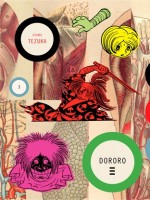
Osamu Tezuka was an extraordinarily prolific and influential creator of manga and anime. So far, only a small fraction of his total output has been released in English. Out of those, one of my personal favorites is his short manga series Dororo. With yokai, an accursed swordsman, and the inclusion of historical elements, I can’t help but like Dororo. Although eventually releasing an omnibus containing the entire series, initially Vertical published Dororo in three separate volumes which earned an Eisner Award in 2009. Dororo, Volume 3, released in 2008, contains the portion of the series that was originally serialized in Japan between 1968 and 1969. It was also during that time period that Dororo went on hiatus. Tezuka abandoned the manga for a year, leaving it without an ending, before returning to it when the Dororo anime series began. The manga was then given a proper conclusion, albeit a much shorter one than was first envisioned. The finale admittedly ended up being a bit rushed, but I love Dororo anyway.

Chased by demons and in turn chasing them down, Hyakkimaru is slowly regaining his forty-eight missing body parts one at a time; each demon he defeats brings him closer to becoming whole. Often it’s not the terrifying supernatural beings that Hyakkimaru must really worry about, though. Humans–with all of their failings, greed, and lust for power–can be just as dangerous as any monster. Hyakkimaru’s father, who selfishly sacrificed his own son’s body in exchange for demonic aid, has become an oppressive warlord. Hyakkimaru isn’t the only one suffering because of his father’s ambitions. The country is being torn apart by war and it’s the farmers and commoners who are being forced to support and fight for leaders they didn’t choose. Dororo, Hyakkimaru’s young traveling companion, also has a family legacy left to deal with. The diminutive thief’s late father was a bandit who amassed a significant amount of wealth. The map to the location of his treasure was tattooed upon his child’s back and now Dororo is pursued by those who want the riches for their own corrupt purposes.

Dororo is one of Tezuka’s transitional works as he began to develop more mature, adult-oriented stories in contrast to his more lighthearted manga generally intended for younger audiences. Dororo addresses serious issues like war and discrimination, but it also incorporates charm, humor, and bittersweet joy. One particular bright spot to balance the darker elements of the series is the titular Dororo. The small thief has led a hard life and can empathize with others and their misfortunes, becoming an exuberant and enthusiastic champion for their causes, while somehow remaining optimistic and cheerful in the face of all the unfairness and tragedy. Hyakkimaru, on the other hand, has an even more dire past than Dororo and has grown weary of the injustices in the world. But the time Hyakkimaru has spent with Dororo as they travel across Japan has changed him. Dororo’s positivity has rubbed off on Hyakkimaru and he has come to care for the youngster immensely. Whether Hyakkimaru realizes it or not, he desperately needed someone like Dororo in his otherwise bleak life.

The relationship that develops between Hyakkimaru and Dororo is only one component of many that makes me appreciate what Tezuka is doing with the series, even if it did end up being truncated. I was initially drawn to Dororo because of Hyakkimaru’s horrifying origin story and his fight to regain what he lost, searching for somewhere to belong and wanting nothing more than to live in peace. His specific situation may be unique, but that desire to be accepted by others is nearly universal. I also liked the supernatural elements in Dororo and how Tezuka slowly shifts the focus of the series to issues more firmly based in reality. The demons and monsters never completely disappear from Dororo, but as the manga progresses the historical influences and more realistic aspects of the manga become increasingly prominent. Among other things, Tezuka’s artwork and storytelling in Dororo takes inspiration from traditional legends and tales, samurai films, and events from Japan’s Warring States period, but he also incorporates his own touches and imagination and pulls it all together in a way that only Tezuka can.

Filed Under: REVIEWS Tagged With: dororo, Eisner Award, manga, Osamu Tezuka, vertical

Manga the Week of 10/1

September 25, 2014 by Sean Gaffney, MJ, Ash Brown, Michelle Smith and Anna N Leave a Comment

SEAN: There are sixty-five different manga titles coming out in October. The mind reels. Luckily, this October 1st is really September 30th in book publishing terms, so the four titles featured here do not add to that total (which is good, as it would then be sixty-nine, and I’d feel obliged to make a tasteless joke) and also allow the reader to have a brief respite.

priapus

For those of you who are looking for gay manga written by an actual gay man, Priapus is likely the title for you. The premise is somewhat comedic – Zeus sends an emissary to turn all the men of the world gay so that the population dies off, as he is tired of violence and hatred. Thus we have a lot of straight men suddenly questioning their sexuality. The cover certainly makes it look like a lot of fun.

MJ: I’m definitely interested in this. In fact, it may be the only thing this week I really have my eye on.

ASH: I’m extremely excited for Priapus! I’m also very happy to see Bruno Gmünder’s Gay Manga line continue to expand.

MICHELLE: Hm, I’d been unaware of this one before now. Could be fun!

ANNA: This does sound like it might possibly be hilarious.

SEAN: Fairy Tail has its 42nd volume, which no doubt will have the answer to the ultimate question of life, the universe, and everything.

My Little Monster hits Volume 4. Can our screwed up cast figure out how to balance love, school, future careers, and not irritating the heck out of each other? We’ll likely not find that out here, but it should be fun anyway.

ASH: I’ve been rather enjoying My Little Monster.

MICHELLE: Me, too!

SEAN: Lastly, we have the 7th volume of the amazing Vertical release, Mobile Suit Gundam: The Origin. This one apparently features the Battle of Loum, and it’s a must read, assuming you aren’t horribly behind on it as I am. In which case, buy it anyway and save it for a rainy day.

ASH: The Origin is still one of the manga with the best presentation and design in English right now. The contents are pretty good, too.

ANNA: I have a few volumes stacked up of this, but this is one of those titles that I faithfully buy even if I am behind. Such a lovely edition!

Are you taking a break? Or buying something?

Filed Under: FEATURES, manga the week of

Manga Giveaway: Triton of the Sea Giveaway

September 24, 2014 by Ash Brown

The end of the month is almost here which means it’s time for another manga giveaway at Experiments in Manga! For this giveaway, participants will have the chance to win a copy of the first omnibus in Osamu Tezuka’s Triton of the Sea as published by Digital Manga. (The omnibus contains the first half of the series!) And, as always, the giveaway is open worldwide.

Triton of the Sea, Volume 1

I think it was when I finished Satoshi Kon’s Tropic of the Sea that I realized just how many manga I had read that included merfolk of one sort or another. Triton of the Sea is just one of many. Every creator seems to have a slightly different take on mermaids and mermen, which I find to be particularly fascinating. Some draw upon Eastern traditions, some are influenced by Western legends, and some freely incorporate elements from a variety of different sources, including their own personal imaginings.

So, you may be wondering, how can you win a copy of Triton of the Sea, Omnibus 1?

1) In the comments below, tell me a little about the merfolk that you’ve encountered while reading manga. (Never come across mermaids or mermen in manga before? Simply mention that.)
2) If you’re on Twitter, you can earn a bonus entry by tweeting, or retweeting, about the contest. Make sure to include a link to this post and @PhoenixTerran (that’s me).

And there it is! Each person has one week to submit comments and can earn up to two entries for this giveaway. If necessary, entries can also be sent via e-mail to phoenixterran(at)gmail(dot)com which I will then post in your name. The giveaway winner will be randomly selected and announced on October 1, 2014. Good luck!

VERY IMPORTANT: Include some way that I can contact you. This can be an e-mail address in the comment form, a link to your website, Twitter username, or whatever. If I can’t figure out how to get a hold of you and you win, I’ll just draw another name.

Contest winner announced–Manga Giveaway: Triton of the Sea Giveaway Winner

Filed Under: FEATURES Tagged With: manga, Osamu Tezuka, Triton of the Sea

Pick of the Week: Goong & more!

September 22, 2014 by Sean Gaffney, Michelle Smith, Ash Brown, Anna N and MJ 2 Comments

potwSEAN: I realize that the rest of the team will be focusing on only one or two titles this week, but honestly, there’s TOO MUCH for me to choose. But since it only comes out once in a blue moon, I will push the others reluctantly aside and cast my vote for the 4th volume of dark fantasy Shoulder-a-Coffin Kuro. If I recall, the 3rd volume ended with us worrying if Kuro would survive past the fourth, so I look forward to seeing how far she makes it.
MICHELLE: I guess my reaction to the release of a new volume of Goong pretty much sums up my feelings about the series. And we’re getting rather near the end, too!

ASH: The manga I’m probably looking forward to the most (and longest) this week is A New Season of Young Leaves. It takes something special for a school-based BL to catch my attention. In this case it’s the author, Venio Tachibana, whose previous work in English I’ve enjoyed tremendously.

ANNA: Like Michelle, I have to go with Goong. This manhwa has one of the most addictive soapy storylines and the elaborate illustrations of the characters are always lovely to look at. The new volumes can’t come out fast enough for me!

MJ: I’m also interested in A New Season of Young Leaves, but I admit there’s really only one way for me to go this week, and that’s Goong. Goong, Goong, Goong. There aren’t a lot of soapy series I’m following these days, but this one will be a favorite always. And it doesn’t hurt that it is released here in hearty, omnibus-sized chunks. It’s always satisfying, and always lovely to look at. I can’t wait to read more.

What looks good to you this week?

Filed Under: PICK OF THE WEEK

My Week in Manga: September 15-September 21, 2014

September 22, 2014 by Ash Brown

My News and Reviews

Two manga reviews were posted at Experiments in Manga last week, both with a bit of queer bent to them. First, I took a look at Wandering Son, Volume 7 by Takako Shimura. Wandering Son is a series that means a tremendous amount to me personally, so I’m always happy when a new volume is released. (And speaking of releases–Fantagraphics assured me that the eighth volume will be published sometime next year.) My second review from last week was of Fumi Yoshinaga’s What Did You Eat Yesterday?, Volume 4, which I continue to thoroughly enjoy (even though it can sometimes make me hungry when I’m reading it).

A while back I, and a handful of other people, were interviewed by Justin Stroman about why we buy manga. He turned it into a pretty great article, so I hope you’ll check out Why It’s Worth It to Buy Manga over on Manga Bookshelf. As a followup of sorts, Justin also posted Life As a Manga Fan in the United Arab Emirates at Organization Anti-Social Geniuses which was a fascinating read. Another interesting interview from last week was Tofugu’s conversation with translator and interpreter Jocelyne Allen who has translated a ton of manga among other things. Also of note: Breakdown Press recently announced its next alternative manga publication–Masahiko Matsumoto’s “The Man Next Door.”

Quick Takes

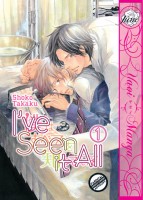
I've Seen It All, Volume 1I’ve Seen It All, Volumes 1-2 by Shoko Takaku. The featured guest of this year’s YaoiCon was Shoko Takaku. I realized that I hadn’t actually read any of her work, so I decided to pick up I’ve Seen It All. Dr. Saikawa is a specialist in men’s health, specifically addressing concerns dealing with genitals. By chance he meets and soon falls in love with Asano who is blessed with a “cock of peerless beauty.” I’ve Seen It All easily has the most references to penises that I’ve ever come across in a boys’ love manga. Saikawa is completely unfazed about it–it is his job after all–and no one else seems to be either which just makes the manga even funnier. Asano and Saikawa are adorable as a couple. It was also nice to see that they both try to make sure that the other enjoys their more intimate moments (of which there are plenty). The other characters are pretty great, too. Despite some of the more realistic elements of the series, I’ve Seen It All leans slightly more towards the silly and sweet. Happily, there is at least one more volume of I’ve Seen It All; I just hope that the rest of the series will be translated because I loved the first two volumes.

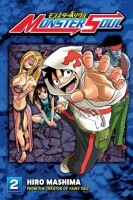
Monster Soul, Volume 2Monster Soul, Volume 2 by Hiro Mashima. I’ll admit, I did enjoy the second and final volume of Monster Soul slightly more than the first, but it’s still not a series that left much of an impression on me. Where the first volume was largely episodic, the majority of the second volume of Monster Soul focused on one story–the Black Airs’ efforts to rescue the souls of an entire kingdom of humans from the clutches of the Drei Kommandos. In the process, Mashima takes the opportunity to delve into the back stories of the individual members of the Black Airs. I personally appreciated that the characters were further developed, but the series is too short to really take advantage of it all. Although Monster Soul doesn’t stand out much, it is generally entertaining. The action sequences in particular are fairly well done. Admittedly, there are a few annoying character quirks that don’t make much sense within the context of the story as a whole, such as Mummy’s propensity for stripping for no particular reason. Overall, Monster Soul feels more like a prototype than anything else. It is very energetic, though.

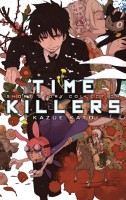
Time KillersTime Killers by Kazue Kato. While I largely enjoyed Kato’s manga series Blue Exorcist, I never seemed to be quite as taken with the story as so many others were. However, I’ve always been fond of Kato’s artwork. And so, I was very interested in reading Kazuo’s short story collection Time Killers. The anthology collects eleven short manga selected from over a decade’s worth of Kazuo’s work, including some of her earliest and debut stories. Many of the manga included in Time Killers simply consist of whatever elements Kazuo felt like exploring and mashing together, completely disregarding what readers might be interested in. The manga ends up being a somewhat odd conglomeration with a strong indie feel to it, but I rather enjoyed its quirkiness. The collection also includes a story that is derived from the same source material as Blue Exorcist, which was interesting to see. It’s also worth noting that Time Killers is probably the nicest release that I’ve seen from Viz Media’s Shonen Jump imprint. It has a slightly larger trim size, includes beautiful color pages, and is printed on high-quality, glossy paper, too.

Filed Under: FEATURES, My Week in Manga Tagged With: Hiro Mashima, I've Seen It All, Kazue Kato, manga, Monster Soul, Shoko Takaku

  • « Go to Previous Page
  • Page 1
  • Interim pages omitted …
  • Page 118
  • Page 119
  • Page 120
  • Page 121
  • Page 122
  • Interim pages omitted …
  • Page 145
  • Go to Next Page »
 | Log in
Copyright © 2010 Manga Bookshelf | Powered by WordPress & the Genesis Framework