• Skip to primary navigation
  • Skip to main content
  • Skip to primary sidebar
  • Home
  • About Us
    • Privacy Policy
    • Comment Policy
    • Disclosures & Disclaimers
  • Resources
    • Links, Essays & Articles
    • Fandomology!
    • CLAMP Directory
    • BlogRoll
  • Features & Columns
    • 3 Things Thursday
    • Adventures in the Key of Shoujo
    • Bit & Blips (game reviews)
    • BL BOOKRACK
    • Bookshelf Briefs
    • Bringing the Drama
    • Comic Conversion
    • Fanservice Friday
    • Going Digital
    • It Came From the Sinosphere
    • License This!
    • Magazine no Mori
    • My Week in Manga
    • OFF THE SHELF
    • Not By Manga Alone
    • PICK OF THE WEEK
    • Subtitles & Sensibility
    • Weekly Shonen Jump Recaps
  • Manga Moveable Feast
    • MMF Full Archive
    • Yun Kouga
    • CLAMP
    • Shojo Beat
    • Osamu Tezuka
    • Sailor Moon
    • Fruits Basket
    • Takehiko Inoue
    • Wild Adapter
    • One Piece
    • After School Nightmare
    • Karakuri Odette
    • Paradise Kiss
    • The Color Trilogy
    • To Terra…
    • Sexy Voice & Robo
  • Browse by Author
    • Sean Gaffney
    • Anna Neatrour
    • Michelle Smith
    • Katherine Dacey
    • MJ
    • Brigid Alverson
    • Travis Anderson
    • Phillip Anthony
    • Derek Bown
    • Jaci Dahlvang
    • Angela Eastman
    • Erica Friedman
    • Sara K.
    • Megan Purdy
    • Emily Snodgrass
    • Nancy Thistlethwaite
    • Eva Volin
    • David Welsh
  • MB Blogs
    • A Case Suitable For Treatment
    • Experiments in Manga
    • MangaBlog
    • The Manga Critic
    • Manga Report
    • Soliloquy in Blue
    • Manga Curmudgeon (archive)

Manga Bookshelf

Discussion, Resources, Roundtables, & Reviews

Ash Brown

Manga the Week of 10/1

September 25, 2014 by Sean Gaffney, MJ, Ash Brown, Michelle Smith and Anna N Leave a Comment

SEAN: There are sixty-five different manga titles coming out in October. The mind reels. Luckily, this October 1st is really September 30th in book publishing terms, so the four titles featured here do not add to that total (which is good, as it would then be sixty-nine, and I’d feel obliged to make a tasteless joke) and also allow the reader to have a brief respite.

priapus

For those of you who are looking for gay manga written by an actual gay man, Priapus is likely the title for you. The premise is somewhat comedic – Zeus sends an emissary to turn all the men of the world gay so that the population dies off, as he is tired of violence and hatred. Thus we have a lot of straight men suddenly questioning their sexuality. The cover certainly makes it look like a lot of fun.

MJ: I’m definitely interested in this. In fact, it may be the only thing this week I really have my eye on.

ASH: I’m extremely excited for Priapus! I’m also very happy to see Bruno Gmünder’s Gay Manga line continue to expand.

MICHELLE: Hm, I’d been unaware of this one before now. Could be fun!

ANNA: This does sound like it might possibly be hilarious.

SEAN: Fairy Tail has its 42nd volume, which no doubt will have the answer to the ultimate question of life, the universe, and everything.

My Little Monster hits Volume 4. Can our screwed up cast figure out how to balance love, school, future careers, and not irritating the heck out of each other? We’ll likely not find that out here, but it should be fun anyway.

ASH: I’ve been rather enjoying My Little Monster.

MICHELLE: Me, too!

SEAN: Lastly, we have the 7th volume of the amazing Vertical release, Mobile Suit Gundam: The Origin. This one apparently features the Battle of Loum, and it’s a must read, assuming you aren’t horribly behind on it as I am. In which case, buy it anyway and save it for a rainy day.

ASH: The Origin is still one of the manga with the best presentation and design in English right now. The contents are pretty good, too.

ANNA: I have a few volumes stacked up of this, but this is one of those titles that I faithfully buy even if I am behind. Such a lovely edition!

Are you taking a break? Or buying something?

Filed Under: FEATURES, manga the week of

Manga Giveaway: Triton of the Sea Giveaway

September 24, 2014 by Ash Brown

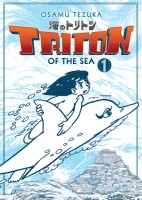
The end of the month is almost here which means it’s time for another manga giveaway at Experiments in Manga! For this giveaway, participants will have the chance to win a copy of the first omnibus in Osamu Tezuka’s Triton of the Sea as published by Digital Manga. (The omnibus contains the first half of the series!) And, as always, the giveaway is open worldwide.

Triton of the Sea, Volume 1

I think it was when I finished Satoshi Kon’s Tropic of the Sea that I realized just how many manga I had read that included merfolk of one sort or another. Triton of the Sea is just one of many. Every creator seems to have a slightly different take on mermaids and mermen, which I find to be particularly fascinating. Some draw upon Eastern traditions, some are influenced by Western legends, and some freely incorporate elements from a variety of different sources, including their own personal imaginings.

So, you may be wondering, how can you win a copy of Triton of the Sea, Omnibus 1?

1) In the comments below, tell me a little about the merfolk that you’ve encountered while reading manga. (Never come across mermaids or mermen in manga before? Simply mention that.)
2) If you’re on Twitter, you can earn a bonus entry by tweeting, or retweeting, about the contest. Make sure to include a link to this post and @PhoenixTerran (that’s me).

And there it is! Each person has one week to submit comments and can earn up to two entries for this giveaway. If necessary, entries can also be sent via e-mail to phoenixterran(at)gmail(dot)com which I will then post in your name. The giveaway winner will be randomly selected and announced on October 1, 2014. Good luck!

VERY IMPORTANT: Include some way that I can contact you. This can be an e-mail address in the comment form, a link to your website, Twitter username, or whatever. If I can’t figure out how to get a hold of you and you win, I’ll just draw another name.

Contest winner announced–Manga Giveaway: Triton of the Sea Giveaway Winner

Filed Under: FEATURES Tagged With: manga, Osamu Tezuka, Triton of the Sea

Pick of the Week: Goong & more!

September 22, 2014 by Sean Gaffney, Michelle Smith, Ash Brown, Anna N and MJ 2 Comments

potwSEAN: I realize that the rest of the team will be focusing on only one or two titles this week, but honestly, there’s TOO MUCH for me to choose. But since it only comes out once in a blue moon, I will push the others reluctantly aside and cast my vote for the 4th volume of dark fantasy Shoulder-a-Coffin Kuro. If I recall, the 3rd volume ended with us worrying if Kuro would survive past the fourth, so I look forward to seeing how far she makes it.

MICHELLE: I guess my reaction to the release of a new volume of Goong pretty much sums up my feelings about the series. And we’re getting rather near the end, too!

ASH: The manga I’m probably looking forward to the most (and longest) this week is A New Season of Young Leaves. It takes something special for a school-based BL to catch my attention. In this case it’s the author, Venio Tachibana, whose previous work in English I’ve enjoyed tremendously.

ANNA: Like Michelle, I have to go with Goong. This manhwa has one of the most addictive soapy storylines and the elaborate illustrations of the characters are always lovely to look at. The new volumes can’t come out fast enough for me!

MJ: I’m also interested in A New Season of Young Leaves, but I admit there’s really only one way for me to go this week, and that’s Goong. Goong, Goong, Goong. There aren’t a lot of soapy series I’m following these days, but this one will be a favorite always. And it doesn’t hurt that it is released here in hearty, omnibus-sized chunks. It’s always satisfying, and always lovely to look at. I can’t wait to read more.

What looks good to you this week?

Filed Under: PICK OF THE WEEK

My Week in Manga: September 15-September 21, 2014

September 22, 2014 by Ash Brown

My News and Reviews

Two manga reviews were posted at Experiments in Manga last week, both with a bit of queer bent to them. First, I took a look at Wandering Son, Volume 7 by Takako Shimura. Wandering Son is a series that means a tremendous amount to me personally, so I’m always happy when a new volume is released. (And speaking of releases–Fantagraphics assured me that the eighth volume will be published sometime next year.) My second review from last week was of Fumi Yoshinaga’s What Did You Eat Yesterday?, Volume 4, which I continue to thoroughly enjoy (even though it can sometimes make me hungry when I’m reading it).

A while back I, and a handful of other people, were interviewed by Justin Stroman about why we buy manga. He turned it into a pretty great article, so I hope you’ll check out Why It’s Worth It to Buy Manga over on Manga Bookshelf. As a followup of sorts, Justin also posted Life As a Manga Fan in the United Arab Emirates at Organization Anti-Social Geniuses which was a fascinating read. Another interesting interview from last week was Tofugu’s conversation with translator and interpreter Jocelyne Allen who has translated a ton of manga among other things. Also of note: Breakdown Press recently announced its next alternative manga publication–Masahiko Matsumoto’s “The Man Next Door.”

Quick Takes

I've Seen It All, Volume 1I’ve Seen It All, Volumes 1-2 by Shoko Takaku. The featured guest of this year’s YaoiCon was Shoko Takaku. I realized that I hadn’t actually read any of her work, so I decided to pick up I’ve Seen It All. Dr. Saikawa is a specialist in men’s health, specifically addressing concerns dealing with genitals. By chance he meets and soon falls in love with Asano who is blessed with a “cock of peerless beauty.” I’ve Seen It All easily has the most references to penises that I’ve ever come across in a boys’ love manga. Saikawa is completely unfazed about it–it is his job after all–and no one else seems to be either which just makes the manga even funnier. Asano and Saikawa are adorable as a couple. It was also nice to see that they both try to make sure that the other enjoys their more intimate moments (of which there are plenty). The other characters are pretty great, too. Despite some of the more realistic elements of the series, I’ve Seen It All leans slightly more towards the silly and sweet. Happily, there is at least one more volume of I’ve Seen It All; I just hope that the rest of the series will be translated because I loved the first two volumes.

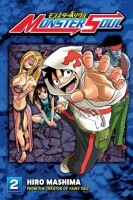
Monster Soul, Volume 2Monster Soul, Volume 2 by Hiro Mashima. I’ll admit, I did enjoy the second and final volume of Monster Soul slightly more than the first, but it’s still not a series that left much of an impression on me. Where the first volume was largely episodic, the majority of the second volume of Monster Soul focused on one story–the Black Airs’ efforts to rescue the souls of an entire kingdom of humans from the clutches of the Drei Kommandos. In the process, Mashima takes the opportunity to delve into the back stories of the individual members of the Black Airs. I personally appreciated that the characters were further developed, but the series is too short to really take advantage of it all. Although Monster Soul doesn’t stand out much, it is generally entertaining. The action sequences in particular are fairly well done. Admittedly, there are a few annoying character quirks that don’t make much sense within the context of the story as a whole, such as Mummy’s propensity for stripping for no particular reason. Overall, Monster Soul feels more like a prototype than anything else. It is very energetic, though.

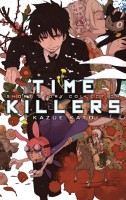
Time KillersTime Killers by Kazue Kato. While I largely enjoyed Kato’s manga series Blue Exorcist, I never seemed to be quite as taken with the story as so many others were. However, I’ve always been fond of Kato’s artwork. And so, I was very interested in reading Kazuo’s short story collection Time Killers. The anthology collects eleven short manga selected from over a decade’s worth of Kazuo’s work, including some of her earliest and debut stories. Many of the manga included in Time Killers simply consist of whatever elements Kazuo felt like exploring and mashing together, completely disregarding what readers might be interested in. The manga ends up being a somewhat odd conglomeration with a strong indie feel to it, but I rather enjoyed its quirkiness. The collection also includes a story that is derived from the same source material as Blue Exorcist, which was interesting to see. It’s also worth noting that Time Killers is probably the nicest release that I’ve seen from Viz Media’s Shonen Jump imprint. It has a slightly larger trim size, includes beautiful color pages, and is printed on high-quality, glossy paper, too.

Filed Under: FEATURES, My Week in Manga Tagged With: Hiro Mashima, I've Seen It All, Kazue Kato, manga, Monster Soul, Shoko Takaku

What Did You Eat Yesterday?, Vol. 4

September 19, 2014 by Ash Brown

What Did You Eat Yesterday?, Volume 4Creator: Fumi Yoshinaga
U.S. publisher: Vertical
ISBN: 9781939130792
Released: September 2014
Original release: 2010

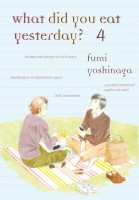
With each new volume of Fumi Yoshinaga’s series What Did You Eat Yesterday? that is released in English, I seem to fall in love with the manga just a little more. What Did You Eat Yesterday? probably isn’t my favorite series by Yoshinaga, but I still enjoy the series immensely. Granted, What Did You Eat Yesterday? has a few things going for it that particularly appeal to me. First of all, I’m already a well-established fan of Yoshinaga’s work in general. I also happen to be a fan of food and food manga which What Did You Eat Yesterday? most definitely is. But perhaps most importantly, I appreciate the series’ realistic portrayal of a devoted gay couple and some of the issues that queer people face in contemporary Japan. Food and gay men are frequently found in Yoshinaga’s manga–often together for that matter–so it’s not a terribly surprising combination to see in What Did You Eat Yesterday?. I’m certainly not going to complain about it, though. The fourth volume of the What Did You Eat Yesterday? was published in Japan in 2010 before being released by Vertical in English in 2014.

Although he is a successful and respected lawyer, Shiro much prefers his time spent in the kitchen over his time spent at the office. Cooking has its challenges too though, like when Shiro’s boyfriend Kenji decides that they should have friends over for a dinner party rather than eating out. This solves the problem of Shiro’s constant worrying over being outed as gay while in public, but now he is left to fret over what to serve two men with very discerning palates. (Fortunately, Kenji is more than happy to eat whatever it is Shiro cooks up.) Every once in a while it’s actually Kenji who is set loose in the kitchen. Shiro is more particular when it comes to cooking and preparing meals so he’d much rather be the one in charge, but occasionally that’s just not possible. Kenji might not have the same confidence or natural flair that Shiro has for food, but he can still make a pretty good dish when he needs or wants to. From time to time even Shiro is faced with a technique that he hasn’t quite mastered yet. And so while cooking is often a way for Shiro to unwind, it can sometimes cause a bit of stress, too.

As always, food, it’s preparation, and the resulting recipes are all a major part of What Did You Eat Yesterday?. Some readers will find the minute details tedious, especially if they have no inclination or ability to actually try making any of the dishes, but those sections can easily be skimmed over or simply appreciated for Yoshinaga’s artwork. Her illustrations of food and cooking techniques are beautifully drawn and nearly photorealistic in many instances. Yoshinaga is able to convey a wide variety of textures which is especially important, and impressive, as she is working in black and white without the aid of color. But what particularly struck me about the cooking scenes in the fourth volume of What Did You Eat Yesterday? is how Yoshinaga skillfully captures the different moods pervading the kitchen through Shiro and Kenji’s body language and facial expressions: Shiro’s intense preoccupation when trying to put together the perfect meal, his gloom and frustration when something doesn’t turn out quite right, Kenji’s frenetic happiness when he gets a chance to take care of Shiro for a change, and so on.

Even though a fair amount of What Did You Eat Yesterday? is spent in the kitchen, Yoshinaga’s focus on the characters is a particularly important component of the manga. The series tends to be episodic from chapter to chapter, but growth and change can still be seen as Kenji and especially Shiro are further developed. The fourth volume of What Did You Eat Yesterday? shows Shiro struggling with his anxieties about still being partially in the closet, admiring and perhaps even envying how open, easygoing, and carefree Kenji is able to be about his sexuality. Kenji and their friends are exceptionally considerate and accommodating of Shiro’s fears, but those fears still understandably cause some tension in his relationships. Another interesting developement in this volume of the series is that both Shiro and Kenji at least temporarily become the confidants of their respective bosses who have a few family issues of their own to work out. While the food in What Did You Eat Yesterday? is appealing, it’s really these sorts of connections and moments between characters that make the series so engaging.

Filed Under: REVIEWS Tagged With: fumi yoshinaga, manga, vertical, what did you eat yesterday?

Manga the Week of 9/24

September 18, 2014 by Sean Gaffney, Michelle Smith, Ash Brown, MJ and Anna N 4 Comments

SEAN: I’ve been joking about the large amount of manga coming out last month and this month, but a look at what’s coming in October tells me I should have held back. October is vicious. That said, next week has a far greater amount of manga than usual on 4th weeks of the month, so let’s take a look.

MICHELLE: I just really cannot be bummed about that.

SEAN: Dark Horse has a 6th Lone Wolf & Cub Omnibus, which unsurprisingly has nothing to do with Spice & Wolf at all.

ASH: That it does not.

SEAN: DMP has a trio of new BL manga releases. Apple & Honey is apparently quite heartwarming, A New Season of Young Leaves is a schoolboy romance, and Twittering Birds Never Fly seems to be the darkest and most psychological of the three.

ASH: I’m really happy to see A New Season of Young Leaves finally being released after being delayed so many times. It has the same author as Seven Days (which I loved), so I have high hopes for the manga.

MJ: Oh, I also loved Seven Days… I will have to check this out.

SEAN: Kodansha has a 3rd xxxHOLIC omnibus, which hopefully continues to show off Watanuki, one of the best male leads they’ve ever had.

MJ: Hurrah! I will always applaud xxxHolic.

raqiya1

SEAN: One Peace books has two volumes of a new series that could not be farther away from its previous license, Whispered Words. Raqiya: New Book of Revelation is a seinen manga from Kodansha’s Morning magazine, and deals with God returning to Earth, sort of.

ASH: It also deals with heavily armed heretical cults. And lots of things explode, too.

ANNA: Explosions and cults sound good!

MJ: Agreed!

SEAN: I enjoyed the first volume of D-Frag! more than I expected, with its focus on the weird rather than the cute. I’m hoping for more with Vol. 2.

Seven Seas has a third volume of Dance in the Vampire Bund: The Memories of Sledge Hammer, and yet I betcha he still hasn’t said “Trust me – I know what I’m doing” anywhere in it.

I enjoyed the first volume of Girls Und Panzer more than I expected, with its focus on the tanks and teamwork rather than the cute. I’m hoping for more with Vol. 2.

Series based on Alice in Wonderland are to the last two years what vampires were to the two years before that. Here’s I Am Alice: Body Swap In Wonderland, from the author of Dictatorial Grimoire. I’m hoping for some nice snark.

ASH: Oh, I had missed the Dictatorial Grimoire connection. It should have interesting character designs then, if nothing else.

SEAN: World War Blue has got to be running out of old-school video games to turn into fantasy kingdoms, given it’s up to Vol. 7.

If you enjoyed the first volume of the Accel World light novel from Yen On, perhaps you will also be entertained by its manga equivalent. I look forward to seeing if our hero’s weight is drawn purely for comedy or not.

MJ: I’m interested in this, and your question, too.

SEAN: Are You Alice Volume 6? Or are you any one of 10,000 other Alice titles?

ASH: Heh.

SEAN: I suspect Bloody Cross 4 will be the volume that finally makes me decide to continue with the series or not. Let’s hope it’s a good one.

The Disappearance of Nagato Yuki-chan has its 6th volume of being mild, adorable, and having minimal conflict. Can it keep this up?

drrryellow1

Each adaptation of a Durarara!! light novel seems to get its own separate manga series, so this 3rd series adapts the 3rd novel. After focusing on Mikado and Anri in the first two, Masaomi should get focus here.

I love GA Art Design Class, probably more than it deserves, and definitely more than any other bloggers out there. Don’t care. Cannot wait for Vol. 6.

And for the rest of the Manga Bookshelf team who aren’t waiting for moe slice-of life art school antics, there’s Goong 16.

MICHELLE: *Kermit flailing arms!*

ANNA: SQUEEEEEEEEEEEE!

MJ: SO MUCH SQUEE.

SEAN: And for those angry at GA for taking up all the artist’s time, there’s a 4th volume of the much darker series by the same artist, Shoulder-a-Coffin Kuro.

And speaking of dark, Soul Eater’s covers are going to be pure black before too long.

If you’ve only been following the Spice & Wolf light novels, why not check out the manga? It’s up to Vol. 9! I understand there is some spice, and perhaps even a wolf (or wolf girl).

ASH: No swordsmen or young children in carts?

SEAN: Lastly, we get a 7th omnibus of the thrilling epic action movie manga Until Death Do Us Part.

MICHELLE: I really need to get caught up with this. I liked the first volume much more than I expected to.

SEAN: That’s a lot. What’s for you?

Filed Under: FEATURES, manga the week of

Wandering Son, Vol. 7

September 17, 2014 by Ash Brown

Wandering Son, Volume 7Creator: Takako Shimura
U.S. publisher: Fantagraphics Books
ISBN: 9781606997505
Released: August 2014
Original release: 2007

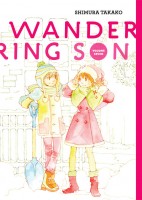
The wait between the release of each new volume of the English-language edition of Takako Shimura’s manga series Wandering Son can seem torturous, but without fail I’m exceptionally glad when the next installment is finally available. Wandering Son is a manga that is personally very meaningful to me, so I’m always a little worried that Fantagraphics won’t be able to complete the series, which would be a shame. Fantagraphics’ edition of Wandering Son is beautiful, complete with color pages and hardcover binding. Wandering Son, Volume 7 was originally published in Japan in 2007 while Fantagraphics’ English translation by Matt Thorn was released in 2014. The series concluded in Japan with the fifteenth volume, which means that the English-language release has just about reached the midway point of Wandering Son. I sincerely hope the rest of the series will be able to be published, too.

The seventh graders’ production of a gender-swapped Romeo & Juliet for their school’s cultural festival is over, but there doesn’t seem to be any end in sight for the drama unfolding in the classroom. Although a few of the students were dissatisfied with their own parts and performances, the play was generally well received, resulting in the theater club attempting to scout some of the best talent. This does cause some tension as the members of the various school clubs shift around to follow their personal interests, leaving friends behind in the process. Some friendships are being severely tested while other, more antagonistic, relationships appear to be on the mend. As Shuichi, Takatsuki, and the others grow and mature, their connections to one another change and evolve, too. Puberty continues to progress as well, bringing with it unwanted changes, anxieties over developing bodies, and concerns over physical appearances. What to wear, what not to wear, acne, and skin problems are all legitimate worries, providing opportunities for both teasing and bonding.

Wandering Son is told in a somewhat non-linear, almost fragmented sort of way. Shimura takes individual moments and memories, often from different points in the characters’ lives, and then layers them together, drawing connections between the separate pieces that would not necessarily have been obvious otherwise. This makes it easier for readers to see that the characters, though they all have their own unique perspectives and individual experiences, are dealing with some very similar issues. Their approaches to those issues and how they deal them are often quite different, though. This layering and revealing of parallels, as well as the other narrative and storytelling techniques that Shimura uses, are very effective in building on some of the themes that Wandering Son explores–namely personal identity–by exhibiting the depth and nuance of the series’ sensitive portrayal of the characters as individuals. The realism and authenticity of the characterization in Wandering Son is one of the manga’s greatest strengths.

Another related aspect of the manga that is handled particularly well is the natural changes in the characters’ relationships with one another. Wandering Son has a large cast of both primary and important secondary characters and it’s a close-knit group. When something happens between two of the members, the social dynamics of the entire circle is influenced. Major developments occur when Shuichi and Anna begin dating, helping to trigger some unexpected changes in Chiba and Takatsuki’s relationship which were particularly interesting to see. Chiba is incredibly self-centered and at times exceptionally unlikeable, but she’s also perceptive and seems to be very sure of herself and who she is. Takatsuki, on the other hand, is still working all of that out but is fiercely determined in other ways. It’s because of Takatsuki’s persistence, despite Chiba’s prickliness, that their friendship has a chance of improving–something that everyone would be happy about. It won’t be an easy process, though, and will take some time. Wandering Son excels in capturing the real-life messiness of relationships.

Filed Under: REVIEWS Tagged With: Fantagraphics Books, manga, Takako Shimura, Wandering Son

My Week in Manga: September 8-September 14, 2014

September 15, 2014 by Ash Brown

My News and Reviews

Two reviews were posted at Experiments in Manga last week. Coincidentally, they both happened to be for works that are a bit disconcerting. First up was my review of Boogiepop and Others, the light novel by Kouhei Kadono which launched the entire Boogiepop franchise. The book is a fantastic mix of science fiction, mystery, and horror with a particularly interesting narrative structure. I’ll definitely be tracking down more of the series to read. The second review was a part of my Year of Yuri monthly review project. I took a look at Erica Sakurazawa’s Between the Sheets, one of the very first josei manga to be released in English. It’s a story about obsessive love and is legitimately disturbing, but in an entirely different way than Boogiepop and Others.

I’ve been super busy at work recently (actually, life in general has been pretty busy) so I’ve not been able to keep up with a lot of manga news, but I did catch a couple of license announcements from this year’s YaoiCon. SuBLime has a new slate of digital and print manga to look forward to (I was particularly excited to see a Tomoko Yamashita manga licensed; sadly, I think it’s digital-only at this point) and Digital Manga will be releasing a collection of Kou Yoneda’s No Touching at All side stories, among other things. Also, Mangabrog posted translation of a Q Hayashida interview from a few years ago. As a fan of Hayashida’s Dorohedoro, I was very happy to have a chance to read the interview.

Quick Takes

From the New World, Volume 4From the New World, Volumes 4-5 written by Yusuke Kishi and illustrated by Toru Oikawa. I continue to be completely torn by From the New World. There are parts of the manga that I absolutely love, but there are several things that frustrate me immensely and greatly inhibit my enjoyment of the series. I am not a prude and am generally not offended by fanservice, but the sex scenes in From the New World seem so incredibly out-of-place. I know that sexual relationships are an important aspect of the worldbuilding in From the New World, but the manga does not integrate them very well at all. I can only assume the original novel handles it better. Thankfully, the sex scenes in the manga are relatively rare. Unfortunately, they are very difficult to ignore and are only ever shown when young girls are involved. From the New World does much better with the story’s science fiction and horror elements. It is dark and disturbing, and these two volumes are particularly graphic and violent, as well. Despite my reservations–of which I have quite a few–I do plan on finishing the series. There are only two more volumes after all.

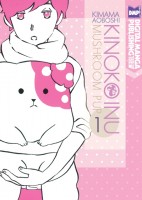
Kinoko Inu: Mushroom Pup, Volume 1Kinoko Inu: Mushroom Pup, Volume 1 by Kimama Aoboshi. The first volume of Mushroom Pup may very well be one of the oddest manga that I’ve read recently. And even though I enjoyed the volume, I’m still not exactly sure what to make of it. Calling Mushroom Pup quirky would be putting it extremely lightly. Hotaru Yuyami writes and illustrates horror books for children, but ever since his beloved dog Hanako died his creative impulse has completely left him. One evening a strange pink mushroom growing in his garden turns into an even stranger intelligent dog-like creature which attempts to help Yuyami get over his loss in some very bizarre ways. (This isn’t even attempted to be explained.) Also invading Yuyami’s life as he tries to grieve is his childhood friend-cum-editor and a mushroom researcher (with an amazing mohawk) who just so happens to be a huge fan of Yuyami’s work. For all of its strangeness, Mushroom Pup is actually rather subdued and even the humor tends to be straight-faced, which in some ways makes it even funnier. At the same time, it’s also a bit melancholy and heartwarming.

Raqiya: The New Book of Revelation, Volume 1Raqiya: The New Book of Revelation, Volumes 1-2 written by Masao Yajima, illustrated by Boichi. One Peace Books doesn’t tend to do much in the way of marketing or press releases, so it seems as though the publisher’s manga appears almost out of nowhere. Raqiya is a five-volume series focused around a young woman named Luna who seems to be the harbinger for the end of days. She has caught the interest of a small but extreme cult of heretical Christians as well as the attention of a secret and heavily armed Catholic organization charged with hunting down such heretics. It’s interesting to see Christianity play such a huge role in a manga, even if it is a highly fictionalized version of the religion. There’s also plenty of destruction and action in Raqiya–explosions, gun fights, car chases, and so on. Boichi’s artwork is effectively dynamic and extremely intense, if occasionally a bit over the top. Raqiya is definitely a violent and extreme manga; Boichi doesn’t hold back. Boichi is a Korean artist now working and living in Japan. His series Sun-Ken Rock has been available digitally, but Raqiya is his first manga to be released in English in print.

UQ Holder!, Volume 1UQ Holder!, Volumes 1-2 by Ken Akamatsu. Technically a sequel of sorts to Negima!: Magister Negi Magi (or at least set in the same universe), UQ Holder! seems to stand completely on its own and requires no knowledge of the earlier series. (Which is a good thing seeing as I haven’t read it.) So far I am fairly underwhelmed by UQ Holder!, though there are a few things I like about the series. Akamatsu’s fight and action sequences can be fairly entertaining, for one. Also, I tend to enjoy manga that explore the repercussions of immortality, which UQ Holder! is set up to do. Unfortunately, it hasn’t quite followed through on that potential yet, despite a wide variety of different types of immortals and immortality being introduced (vampires, genetically modified humans, cursed beings, and many others). In general, the story of UQ Holder! is lacking a clear direction with far too many different genre elements, tropes, and cliches being forced to share the same series. It doesn’t help that the goals and motivations of the series’ protagonist are left deliberately vague as well; Akamatsu tries to make a joke of it, but it either doesn’t quite work or just isn’t funny.

Filed Under: FEATURES, My Week in Manga Tagged With: Boichi, From the New World, Ken Akamatsu, Kimama Aoboshi, manga, Masao Yajima, Mushroom Pup, Raqiya, Toru Oikawa, UQ Holder, Yusuke Kishi

Pick of the Week: Titans & Sparklers

September 15, 2014 by Ash Brown, Michelle Smith, Sean Gaffney, Anna N and MJ 1 Comment

potwASH: It’s a rather light week for manga releases, but even so there are still a few series, like Genshiken that I’m currently following. However, the releases I’m most curious about this week aren’t even manga, though they are manga-related. Kodansha’s branching out with the Attack on Titan guidebook, but I’m particularly interested in reading Before the Fall from Vertical, which generally shies away from light novels.

MICHELLE: I have fallen several volumes behind on Bokurano: Ours, so I don’t know for certain that it’s still as depressing yet fascinating as it was early on. Perhaps the kids find a way out of their predicament! With that hope in mind, I recommend the final volume!

SEAN: I’m a sucker for infodumps, so the appearance of the Attack on Titan Guidebook is good news for me. I look forward to seeing the likes and dislikes of the entire cast in their biographies.

ANNA: There isn’t much coming out this week that appeals to me, so my pick of the week is Sparkler Monthly. I checked out their offerings recently, and I’ve enjoyed the online comics I’ve read from them. Check out their membership drive!

MJ: Anna, what an inspired idea! I will join you in your enthusiasm for Sparker Monthly! Though I admit I initially subscribed pretty much solely for the latest chapters of Jen Lee Quick’s Off*Beat, I’ve stuck around for the rest, including Quick’s new comic Gatesmith, which is very intriguing so far.

What looks good to you this week?

Filed Under: PICK OF THE WEEK

Between the Sheets

September 12, 2014 by Ash Brown

Between the SheetsCreator: Erica Sakurazawa
U.S. publisher: Tokyopop
ISBN: 9781591823230
Released: May 2003
Original release: 1996

Between 2003 and 2004, Tokyopop published six manga by Erica Sakurazawa, some of the very first josei manga to be released in English. More than a decade later josei has still yet to establish a firm foothold in North America, though things seem to be improving and publishers continue to make an effort. Most of the josei that I have read I have thoroughly enjoyed. I wish that there was more available in English, but in the meantime I make the point to support what is currently available and to track down those titles, like Sakurazawa’s, that have gone out of print. The first of Sakurazawa’s manga to be translated was Between the Sheets, which was originally published in Japan in 1996. The volume was not my introduction to her work but out of all of Sakurazawa’s manga that I have so far read, I feel that it is one of the strongest in terms of storytelling. Between the Sheets was initially brought to my attention due to the elements of same-sex desire that play a critical role in the manga’s story.

Minako and Saki are extraordinarily close friends. They frequently hang out together, enjoying the bars and party scene where Saki, despite having a boyfriend, is constantly on the lookout for men. But when Saki and Minako share a drunken kiss in order to convince an undesirable suitor that they’re a couple and to leave them alone, Minako finds her feelings for her best friend beginning to change. Minako had always admired and cared deeply for Saki, but now her love has turned obsessive. She wants to be with Saki. In some ways she wants to be Saki. Saki views Minako as an extremely important person in her life but nothing more than a friend while Minako wants to be everything for Saki: her lover, her protector, her one and only. Convinced she knows what’s best for Saki, Minako will do anything to get closer to her and to drive others away, including sleeping with Saki’s boyfriends.

Frankly, Between the Sheets is an exceptionally disturbing and even horrifying work. Minako’s obsession with Saki creates an ominous and foreboding atmosphere. Each turn of the page seems as though it could reveal some sort of horrible tragedy worse than what has already occurred. Minako’s feelings become self-destructive and her way of dealing with them hurt not only herself but Saki and the men in their lives as well. Often in fiction and romance one person’s utter devotion to another is held as an ideal. However, Between the Sheets takes a much more realistic approach to this sort of extreme, obsessive desire. Minako’s fixation on Saki becomes all-consuming. It’s not flattering and it’s not romantic. In fact, it can hardly even be called love anymore. Her friendship with Saki has evolved into something much darker and much more dangerous. The damage done may be irreparable.

Because of its subject matter Between the Sheets can be a tough and uncomfortable read; it is not at all a feel-good story and there is very little happiness to be found. The characters are entangled in a web of lies, cheating, and betrayal. Unpleasant emotions like hatred, anger, and jealously overshadow those of adoration, love, and affection. However, Sakurazawa handles the intensity of those feelings in a believable way. That realism is probably one of the reasons that Between the Sheets is so troubling. Minako appears to be normal and innocent, her twisted way of thinking hidden safely from view. Sakurazawa’s artwork reflects this–on the surface nothing seems amiss. If readers weren’t privy to Minako’s inner thoughts, they might never suspect the unhealthiness of her state of mind. But eventually her actions and their tragic consequences cannot be ignored and make it quite clear to everyone involved how unbalanced she has become.

Filed Under: REVIEWS Tagged With: Erica Sakurazawa, manga, Tokyopop, Year of Yuri

Manga the Week of 9/17

September 11, 2014 by Sean Gaffney, Ash Brown, MJ and Michelle Smith 2 Comments

SEAN: Given the beginning and end of September have far more manga than is really sensible, it makes sense that there are also weeks where very little comes out. This is one of those weeks.

tit

Guidebooks are quite popular in Japan, but have never sold well in North America for some reason. Kodansha hopes that changes with the publication of Attack on Titan Guidebook: INSIDE & OUTSIDE. I think this omnibuses two separate guides from Japan, and will tell you far more than you could imagine about the world of the Titans.

ASH: I’m rather curious to read this one, especially since Kodansha has been so adamant about only publishing manga until now.

SEAN: Actually, back in the Del Rey days they released guidebooks for Tsubasa.

Kodansha also has the 5th volume of Genshiken 2nd Season, which continues to fascinate with its attempts to grab a new BL audience while still courting its old one via the harem antics.

MJ: So, I never picked this up, because I’d never read the original Genshiken and so on… but I do sort of want to let them attempt to grab me as a BL audience. That’s always fun. So. Hm.

ASH: Well, I can say that I’ve been enjoying the second season!

SEAN: Speaking of Attack on Titan, for those who enjoyed Kodansha’s release of Before the Fall, the prequel series, the novel it was based on comes out via Vertical, who have said it’s selling even better than hotcakes – and you know how well hotcakes sell.

MJ: Mmmmm, hotcakes.

ASH: Mmmmm, light novels. If I recall correctly, Vertical has already had to order a second printing of Before the Fall, and it hasn’t even been released yet!

SEAN: The final volume of Bokurano: Ours from Viz has been anticipated for so long that I made the joke about it back a month ago when Ikigami ended. So go look at that entry instead.

MICHELLE: I should muster my fortitude and finish Bokurano. I think I will have to do it on a sunny day amidst frolicking unicorns or something, just to keep my spirits up.

SEAN: Viz also has the second volume of Terra Formars.

So, ignoring that deliberate silence, what will you be picking up next week?

Filed Under: FEATURES, manga the week of

Boogiepop and Others

September 10, 2014 by Ash Brown

Boogiepop and OthersAuthor: Kouhei Kadono
Illustrator: Kouji Ogata

Translator: Andrew Cunningham
U.S. publisher: Seven Seas
ISBN: 9781933164168
Released: January 2006
Original release: 1998
Awards: Dengeki Novel Prize

Boogiepop and Others is the first volume in a series of light novels written by Kouhei Kadono and illustrated by Kouji Ogata. The novel was originally released in Japan in 1998 after winning the Dengeki Game Novel Prize (now known simply as the Dengeki Novel Prize). Boogiepop and Others has been credited with igniting the light novel trend in Japan. Whether that is true or not, the novel has inspired more than a dozen other volumes in the Boogiepop novel series as well as other books, short stories, manga, music, a live-action film adaptation, an anime, and more. Out of the fairly large franchise, four of the light novels–including Boogiepop and Others–two short manga series, the anime, and the film have been released in English. The English-language edition of Boogiepop and Others, translated by Andrew Cunningham, was published by Seven Seas in 2006. Although I had been aware of the Boogiepop Phantom anime series for quite some time, Boogiepop and Others was actually my introduction to the franchise and is set before the events of the anime.

No one is entirely sure who or what Boogiepop is, but there are several rumors and theories among the students of Shinyo Academy. Stories are told about a spirit of death, an assassin who can kill instantly and painlessly. When a number of female students at Shinyo Academy go missing, many naturally assume that Boogiepop must have had something to do with their disappearances. Others believe Boogiepop to be nothing more than a myth or urban legend, but they can’t deny that something very strange and very wrong is going on at their school. Most of the missing girls are written off as runaways by the police and their cases are quickly dropped. And so a few of their classmates take it upon themselves to investigate since they can’t rely on the adults to pursue the matter. But it’s already too late. Some of the girls who have disappeared have lost their lives and there will be even more deaths before those who are responsible can be stopped. If they can be stopped. Any survivors will be left struggling to comprehend everything that occurred at Shinyo Academy.

Boogiepop and Others isn’t told from a single point of view, within a single time frame, or even through a single narrative. Instead, each chapter is seen from the perspective of a different student. Some of the characters are directly involved with the events unfolding at Shinyo Academy while others are only tangentially related. However, none of them know everything about what is going on, though they may have their suspicions. There’s Takeda Keiji, who becomes one of the people closest to Boogiepop, Suema Kazuko, who once was almost the victim of a serial killer herself, Saotome Masami, a deceptively unassuming underclassman, Kimura Akio, one of several boyfriends of one of the missing students, and Niitoki Kei, the president of the discipline committee. They each have their own story to tell, and each version of the events is accurate, but the complete truth can only be understood when all of the individual accounts have been completely disclosed and are then considered and taken together as a whole.

The narrative structure of Boogiepop and Others is actually quite effective in creating and sustaining the mystery and mood of the novel. It’s a slow build as little by little information is revealed and connections are made between characters and their stories. Piecing together everything is an incredibly engaging part of the novel. At times, Boogiepop and Others can be legitimately creepy and disconcerting. The elements of horror in the novel are just as strong as those of science fiction and mystery. Several of the characters are dealing with extreme mental and psychological disturbances and unfortunate family circumstances in addition to the apparent supernatural occurrences. Personally, I preferred Kadono’s exploration of the more reality-based issues over the more outrageous ideas, but in combination even those could be oddly compelling in their strangeness. I thoroughly enjoyed Boogiepop and Others, perhaps even more than I initially anticipated. I definitely plan on reading more of the series.

Filed Under: REVIEWS Tagged With: Boogiepop, Dengeki Novel Prize, Kouhei Kadono, Kouji Ogata, Light Novels, Novels, Seven Seas

Pick of the Week: Legal Drug & More

September 8, 2014 by Sean Gaffney, Michelle Smith, Anna N, Ash Brown and MJ Leave a Comment

potwSEAN: My pick is fairly obvious, so I will start. It’s well known among Hayate the Combat Butler fans that when Athena Tennos arrives, the comedy gives way to emotional drama with potentially tragic consequences. Vol. 24 of the series features the climax of that story. Not to say there’s no comedy at all – when one of your allies is dressed as a Power Ranger, there’s always something to laugh at. But the stakes are higher here than they’ve ever been, and Hayate fans, unless they hate Athena, should be ecstatic to finally see this in English.

MICHELLE: I’m going to have to go with the Dark Horse omnibus reissue of Legal Drug this week. I’m always delighted to see a former TOKYOPOP title back in print, and now fans can read it without the frustration of its unfinished status, as Dark Horse also plans to bring out the sequel next year! It’s definitely a good time to get on board.

ANNA: I’ll go ahead and pick the concluding volume of Dawn of the Arcana, since we left it off the list last week. This shoujo fantasy series was a delightful read, featured an occasionally sassy heroine, and delved into geopolitical issues much more than many readers would expect. There’s a sudden plot twist at the end that actually does put everything that happened in the previous volumes in an entirely new perspective.

ASH: I’ll admit, the release that I’m most interested in this week is the new Legal Drug omnibus. I still have my old TOKYOPOP volumes, but Dark Horse been doing a nice job with its CLAMP releases so I may end up picking it up anyway. Plus, it’s great to see the series finally available again for new readers.

MJ: It is pretty much impossible for me not to pick Dark Horse’s re-release of CLAMP’s Legal Drug. Yeah, I’m well-known as a CLAMP fan, but this is one of the series’ I’ve waited to see continued with the most verve, and this re-issue of the original series is the first step forward. Additionally, I was a huge fan of Carl Horn’s updated translation of Tokyo Babylon, so that’s something I’m looking forward to in this release as well. I’m really quite excited!

What looks good to you this week?

Filed Under: PICK OF THE WEEK

My Week in Manga: September 1-September 7, 2014

September 8, 2014 by Ash Brown

My News and Reviews

There were three posts of note at Experiments in Manga last week in addition to the usual My Week in Manga feature. First of all, the winner of the Nana manga giveaway has been announced. The post also includes a short list of manga that people gave a second chance only to discover that they enjoyed them better than they did the first time they read them. I also posted August’s Bookshelf Overload, revealing how out of hand things can get when it comes to the number of manga I obtain over the course of a month. The first in-depth manga review of the month was also posted, the honor going to Hinoki Kino’s No. 6, Volume 8, the series penultimate volume. As a bonus, the first print run of the volume also includes sixteen color pages!

A few things of note from elsewhere online: The Beautiful World, which hosted the Kaori Yuki Manga Moveable Feast a while back, has issued a call for participation for a blog carnival to feature female goth mangaka in January. Sean has a nice roundup of some of the recent license announcements at A Case Suitable for Treatment. And Anna at Manga Report checks out Sparkler Monthly, which is currently running a membership drive for its second year. Please consider subscribing if you can; Sparkler Monthly has some great content and I hope for its continued success.

Quick Takes

AliveAlive by Hajime Taguchi. Gen Manga publishes independent manga, mostly focusing on the seinen demographic. Often, Gen’s releases are the first time the creator’s doujinshi have received any sort of “official” publication. Alive is a collection of over a dozen short manga of varying lengths by Hajime Taguchi. There’s not really a central theme to the volume, and the stories aren’t related to each other, but they all tend to be fairly melancholy. A few of the tales have some fantastical or surreal elements to them–a pair of glasses that obscures everything the wearer dislikes, a bizarre frog-like creature that talks, and so on–but most of the manga in the collection tend to be realistic, slice-of-life stories. Alive primarily explores the emotional lives of the stories’ characters. Love, heartbreak, self-confidence, guilt, personal growth, and loss are all present within the manga. Generally Alive focuses on the darker aspects of the human psyche and experience, but there are glimpses happiness as well. As with any collection, some stories are stronger than others, but as a whole Alive is a satisfying and somewhat unusual read.

The Heroic Legend of Arslan, Volume 1The Heroic Legend of Arslan, Volume 1 by Hiromu Arakawa. Based on a series of fantasy novels by Yoshiki Tanaka, Arakawa’s The Heroic Legend of Arslan is one of several adaptations that have been made. Although the animated film had previously been released in English, Arakawa’s manga was actually my introduction to The Heroic Legend of Arslan. The first volume feels a bit like a prologue, introducing the characters and setting the stage for the story which will be the series’ real focus. Arslan is the young prince of Pars, mostly ignored by his parents but hoping to be seen as worthy by them. His chance to prove himself comes when the kingdom of Lusitania invades Pars, bringing war and destruction with it. In the first volume alone there have already been several battles and betrayals. Blood and death will not be strangers to Arslan, though it seems he would much prefer to find peaceful solutions to the fighting. So far, I’m enjoying The Heroic Legend of Arslan. It’s shaping up to be a solid fantasy series and the setting, which is influenced by historical Persia, is particularly interesting. I certainly look forward to reading more of the series to see how it develops.

Kokoro Connect, Volume 1 Kokoro Connect, Volume 1 written by Anda Sadanatsu, illustrated by CUTEG. I tend to enjoy series that involve body-swapping of some sort (it often provides clever opportunities for the exploration of personal identity), so I was curious about the Kokoro Connect manga, especially after hearing good things about the anime. In most of the body-swapping series that I’ve been exposed to generally only two people are involved, usually of the opposite gender. Kokoro Connect, however, involves five high school students–two boys and three girls–who one day begin to spontaneously switch places in all sorts of different combinations. This means that there are plenty of comedic possibilities for the series, but for the most part Kokoro Connect seems to be taking a more serious approach, addressing some of the more sobering implications of involuntarily swapping places with another person. The group does seem to be handling the whole situation remarkably well so far, though. There is a half-hearted attempt to begin to explain the whole swapping phenomenon, but it’s not especially compelling at this point.

Rabbit Man, Tiger Man, Volume 2Rabbit Man, Tiger Man, Volume 2 by Akira Honma. It might not be the most believable boys’ love series out there, but I was amused by and rather enjoyed the first volume of Rabbit Man, Tiger Man. While there is still plenty of humor in the second volume of the series, the manga has really started to take a turn for the serious. The yakuza plotline has become more prominent, introducing a significant amount of danger to the story. However, the delightful awkwardness between the series’ two leads still remains. Nonami and Uzuki are complete opposites in personality and demeanor. (They would be the titular tiger and rabbit.) It’s actually rather funny and sweet to see how hard the rough, tough yakuza boss has fallen for the meek, diminutive surgeon. I do think that I probably enjoyed the first volume of Rabbit Man, Tiger Man slightly more than the second, but I definitely want to read the third and final volume. Sadly, there’s no indication that it has or will be licensed. This is particularly frustrating since the second volume ends on one heck of a cliffhanger.

Filed Under: FEATURES, My Week in Manga Tagged With: Akira Honma, Anda Sadanatsu, CUTEG, Hajime Taguchi, Heroic Legend of Arslan, Hiromu Arakawa, Kokoro Connect, manga, rabbit man tiger man

Bookshelf Overload: August 2014

September 7, 2014 by Ash Brown

Well, it was bound to happen eventually. After several months of what I would consider to be fairly reasonable amounts of manga and such making it onto my shelves, August comes along and proves that things can still occasionally go a little overboard. Granted, I actually have a few good excuses this time: a larger than usual box of review copies arrived, a friend who is preparing to move out of the state bequeathed a fair number of books to me so she wouldn’t have to pack them, and a bunch of my Kickstarter rewards arrived. So, even though the number of August’s acquisitions is a bit absurd, at least my wallet didn’t take as big of a hit as it might initially seem.

As for what I was particularly happy to see arrive in August, first and foremost was Wandering Son, Volume 7 by Takako Shimura. (Review to come soon!) Sadly, there doesn’t seem to be a release date yet for the eighth volume, so I have no idea when we’ll see another installment. I was also very excited for the release of Jen Lee Quick’s Off*Beat, Volume 3, which is the final volume in the series. (My review of that one has already been posted.) Black Rose Alice, Volume 1 by Setona Mizushiro is another manga from August that I particularly enjoyed, as was the most recent volume in Kohske’s Gangsta. I haven’t read it yet, but there’s a new volume of Crimson Spell by Ayano Yamane, too! And of course I must mention that the Cardcaptor Sakura anime is now once again available, which pleases me greatly.

Manga!
Attack on Titan, Volume 13 by Hajime Isayama
Attack on Titan: Before the Fall, Volume 2 written by Ryo Suzukaze, illustrated by Satoshi Shiki
Battle Angel Alita: Last Order, Volume 19 by Yukito Kishiro
Black Rose Alice, Volume 1 by Setona Mizushiro
Chirality: To the Promised Land, Volume 1 by Satoshi Urushihara
Chi’s Sweet Home, Volume 11 by Konami Kanata
Crimson Spell, Volume 5 by Ayano Yamane
Devils and Realist, Volume 2 written by Madoka Takadono, illustrated by Utako Yukihiro
Dog X Cat, Volume 4 by Yoshimi Amasaki
Dorohedoro, Volume 13 by Q Hayashida
Dorothea, Volume 1 by Cuvie
Food Wars!: Shokugeki no Soma, Volume 1 written by Yuto Tsukuda, illustrated by Shun Saeki
From the New World, Volume 5 written by Yusuke Kishi and illustrated by Toru Oikawa
Fairy Tail, Volumes 40-41 by Hiro Mashima
Gangsta, Volume 3 by Kohske
Gunslinger Girl, Volumes 1-6 by Yu Aida
The Heroic Legend of Arslan, Volume 1 by Hiromu Arakawa
Kinoko Inu: Mushroom Pup, Volume 1 by Kimama Aoboshi
Knights of Sidonia, Volume 10 by Tsutomu Nihei
Kokoro Connect, Volume 1 written by Anda Sadanatsu, illustrated by CUTEG
Library Wars: Love & War, Volume 12 by Kiiro Yumi
Loveless, Volume 12 by Yun Kouga
Lust, Volume 1 by Tenjiku Ronin
Monster Musume, Volume 4 by Okayado
Monster Soul, Volume 2 by Hiro Mashima
MPD-Psycho, Volume 11 written by Eiji Otsuka, illustrated by Shou Tajima
My Little Monster, Volume 3 by Robico
Nabari no Ou, Volume 1 by Yuhki Kamatani
No. 6, Volume 8 by Hinoki Kino
Noragami: Stray God, Volume 1 by Adachitoka
Nyotai-ka!, Volume 1 by Ru-en Rouga
Off*Beat, Volume 3 by Jen Lee Quick
The Prince of Tennis, Volumes 1-7 by Takeshi Konomi
Project X Challengers: Cup Noodle by Tadashi Katoh
Raqiya: The New Book of Revelation, Volumes 1-2 written by Masao Yajima, illustrated by Boichi
Say I Love You, Volume 3 by Kanae Hazuki
The Seven Deadly Sins, Volume 3 by Nakaba Suzuki
A Strange Kind Of Woman, Volume 2 by Inu
Time Killers by Kazue Kato
UQ Holder!, Volumes 1-2 by Ken Akamatsu
Wandering Son, Volume 7 by Takako Shimura
Wolfsmund, Volume 5 by Mitsuhisa Kuji
Yubisaki Milk Tea, Volumes 1-8 by Tomochika Miyano

Manhwa!
Martin & John, Volume 1 by Hee-Jung Park
U Don’t Know Me by Rakun

Comics!
Bad Company, Part 1 by Guilt | Pleasure
Devil’s Cake, Volume 1-2 by Angi Mauri
Golden Rules by Seth T. Hahne
Hell, Nebraska written by Shaun Manning, illustrated by Anna Wieszczyk
If This Be Sin by Hazel Newlevant
Nonbinary by Melanie Gillman
A Rainy Day Love Song by Seth T. Hahne
The Shadow Hero written by Gene Luen Yang, illustrated by Sonny Liew
Take 2!: Mahou Shounen Breakfast Club Zine by Katie O’Neill and Toril Orlesky
Through the Woods by Emily Carroll
Water Baby by Ross Campbell
The Wonderful Wizard of Oz written by Eric Shanower, illustrated by Skottie Young

Artbooks!
Dragon Girl and Monkey King by Katsuya Terada

Novels!
Good Luck, Yukikaze by Chōhei Kambayashi
Quantum Devil Saga: Avatar Tuner, Volume 1 by Yu Godai

Nonfiction!
The Pillow Book of Sei Shōnagon by Sei Shōnagon
Samurai Confidential by Ryuto Kanzaki

Anime!
Cardcaptor Sakura directed by Morio Asaka
Wonder by Mirai Mizue

Filed Under: Bookshelf Overload, UNSHELVED

  • « Go to Previous Page
  • Page 1
  • Interim pages omitted …
  • Page 114
  • Page 115
  • Page 116
  • Page 117
  • Page 118
  • Interim pages omitted …
  • Page 140
  • Go to Next Page »
 | Log in
Copyright © 2010 Manga Bookshelf | Powered by WordPress & the Genesis Framework